


For decades, the promise of a truly autonomous car that everyday people could actually buy has been the stuff of science fiction and auto show fantasies. From RCA’s road-embedded detector prototypes to the GM Firebird III to Mercedes-Benz’s robotic van to the DARPA Grand Challenge, self-driving cars always felt like a someday thing. As it turns out, someday is coming soon. Tesla is opening orders for the Cybercab, the first truly autonomous car for private individuals. However, it comes with some serious limitations that might not make you want one, even if you’re invited to buy one.
Even though the two-seat Cybercab is objectively impressive, it’s been born into awkward context. I’m not just talking about how Tesla claimed it’s road-legal despite not having a brake pedal, NHTSA launched an investigation into how it’s road-legal, and Tesla responded both with a sworn answer and a confidentiality request. At the time of writing, we don’t know how the Cybercab complies with that aspect of federal motor vehicle safety standards. Yet it’s still available for order. In addition to that, I’m also talking about a history of fine print and missed targets.


In 2024, Elon Musk stood awkwardly on stage and announced that anyone would be able to buy a Cybercab before 2027 for under $30,000. Even in the moment, there were plenty of reasons to be skeptical. Firstly, time and money must work differently for Mr. Musk because his vehicular endeavours have an exceptionally poor track record of delivering things on-time, as-promised and within budget. How many people were duped by the promise of a $39,900 Cybertruck? What ever happened to the second-generation Roadster that was first shown in 2017? Where the heck is the full-sized Cyberquad? Based on that track record, there wasn’t much reason to believe that the Cybercab would fulfil all its promises without any asterisks.
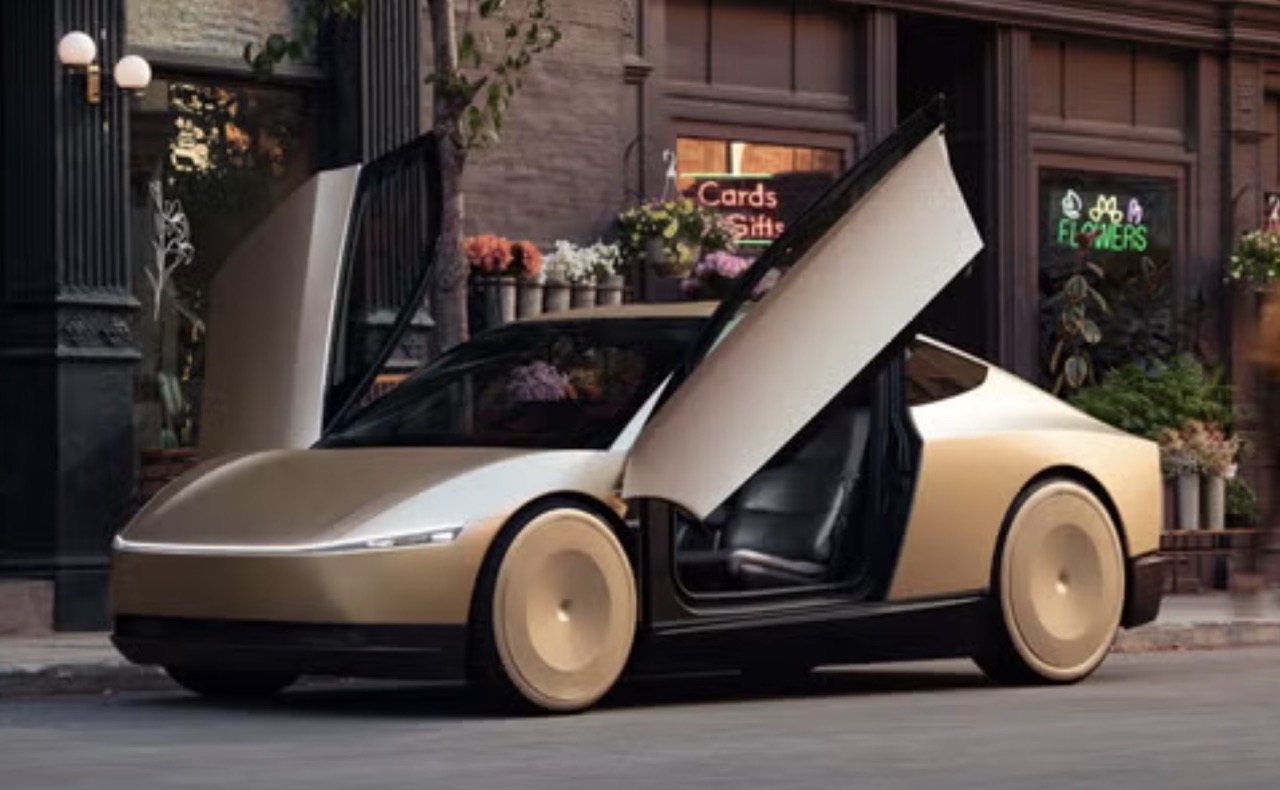
Tesla recently released more details on the Cybercab and its streak of overpromising and underdelivering seems to continue. Firstly, the Cybercab will initially only be available by private invitation. Unless that changes in the next 45 days or so with proof of delivery, the average person won’t be able to just buy one before 2027. Secondly, the Cybercab is a geofenced Level 4 autonomous vehicle, meaning it can’t just go absolutely everywhere to start. Tesla claims that the Cybercab is “Only available in supported service areas.” That most likely means existing Robotaxi service areas, meaning Miami, Orlando, and Tampa in Florida, and Austin, Dallas, Houston, Fort Worth, and San Antonio in Texas. According to an order form shared to Twitter by Marques Brownlee of MKBHD fame, who’s been invited to purchase a Cybercab, buyers must take delivery in Austin, Dallas, Houston, San Antonio, or Fort Worth. Beyond those locales, it’s simply not expected to work for the time being, unless you tow it between approved cities.
Alright chat I’m in. Here’s the deal
Cybercab order page is live. Invite only. Must accept delivery to one of these cities in Texas. Only operates in those existing geofenced areas. Requires a $300 monthly subscription to operate. One vehicle per customer. “Estimated delivery” December
— Marques Brownlee (@MKBHD) November 14, 2026
Then there’s the asterisk on the price. Tesla claims a starting price of $29,990 which is a cool ten bucks below the $30,000 promise, but there’s no word on whether that includes freight, and just buying the car isn’t enough to use it. That’s because Tesla is bundling the Cybercab with everyone’s least favorite modern thing, a digital subscription. In this case, it’s for the software and support that makes it drive autonomously in the first place. As per Tesla’s order page, that subscription costs $299 per month, which works out to $3,588 per year. Tesla throws in one complementary month of the subscription, but beyond that, buyers are on their own. It’s worth noting that Elon Musk replied directly to Brownlee on X, stating that “the monthly fee is too high. Should match the cost of Tesla FSD and connectivity for other models, which is more like ~$115/month.” However, I cannot confirm that the figure’s been updated since then.

Here’s a bigger question: Does the Cybercab actually make any financial sense? After all, $29,990 financed over five years at the average Q2 Super Prime new car loan rate of 4.41 percent works out to $557.88 per month before any taxes and fees. If the autonomy subscription ends up being $115 per month like Musk said, you’re looking at an effective monthly payment of $672.88. If the subscription ends up costing $299 per month, you’re looking at an effective monthly payment of $856.88. That’s before maintenance, fees, charging, and the big one, insurance. There’s no precedent for insuring a privately owned Level 4 autonomous vehicle, and since car insurance usually accounts for a driver’s risk factors, what’s the risk factor for a Cybercab since it’s the one doing the driving? Exactly how the Cybercab will be insured is unclear, and that makes estimating running costs challenging. All for a vehicle that only works in a few select geofenced areas for now, and oh yeah, can’t actually be used as a taxi.

That’s right, the invitations to buy a Tesla Cybercab stipulate that the vehicle’s “for personal use” as opposed to for commercial use, and autonomous taxi service definitely falls under commercial use rather than personal. While this makes sense given the liability concerns of operating an autonomous taxi, it doesn’t seem to live up to the biggest promise that the Cybercab had when it debuted: That it could take rides and make money for you when you weren’t using it.

For now, buying a Cybercab just seems like a more expensive, more cumbersome, more logistics-intensive alternative to just hailing a cab or a ride-share or an autonomous vehicle. After all, if you can’t drive it, can only have it serve personal use, it only operates in certain areas, and it requires a subscription to operate, do you really own it in a traditional sense? The concept of owning an autonomous car is an interesting idea, and it can definitely give mobility back to those living in more rural areas not well-serviced by taxi and ridesharing companies, but the current asterisks and limitations of the Cybercab make for some serious turn-offs.
Top graphic image: Tesla


This is going to sell worse than the Cybertruck, and that’s saying something.
put in driver controls and this thing would sell like crazy. New-world CRX!?
Nah. The photos are all incredibly flattering. Having seen more than a few out and about it’s strangely bulbous and pinched in all the wrong ways. Very awkward looking in reality, and not at all sporty.
Yep, the skinny tires and huge wheel covers aren’t doing it any favors there.
I’ll walk, thanks.