


The infamous Oil Embargo of 1973 was a watershed moment in the automotive industry. America once thrived on large vehicles with comically thirsty engines, but these stopped making sense due to fuel shortages and high gas prices. As America’s cars downsized and lost weight, the automotive industry searched for a technology that was better than gasoline engines. One experiment was the coal-fired turbine engine, and General Motors made a functional 1978 Cadillac Eldorado and 1977 Oldsmobile Delta 88 that ran on powdered coal.
The automotive engineers of the 1970s had a slew of fascinating technologies to play with, and all of them promised a brighter future. Small diesel engines weren’t powerhouses back then, but they did get better fuel economy than gas engines and did so using cheaper fuel. Wankel engines had fewer moving parts than piston engines and promised higher power-to-weight ratios than equivalent gas engines.


Then there was the turbine. This completely different kind of motive power had proven itself in aviation, and crafty engineers had trickled it down into land-based vehicles like locomotives and trucks. Turbines promised a future of buttery-smooth operation, smaller packaging, and better efficiency than piston engines of the era. Some manufacturers saw the turbine as the holy grail.

But just how does coal fall into all of this? One of the proposed advantages of turbine power was that turbines could run a wide variety of fuels, a flexibility that was great in a world of gas shortages and high fuel prices. Still, these fuels were the likes of gasoline, diesel, kerosene, and jet fuel. Getting a turbine to run on coal was different, and research into coal-burning turbines continued for decades.
Why coal? America used to have a nearly unfathomable amount of coal. In the 1970s and 1980s, it was estimated that America had a 600-year supply of coal. So, instead of making cars run on gasoline, which was subject to shortages and price spikes in those days, why not just make cars run on abundant coal?
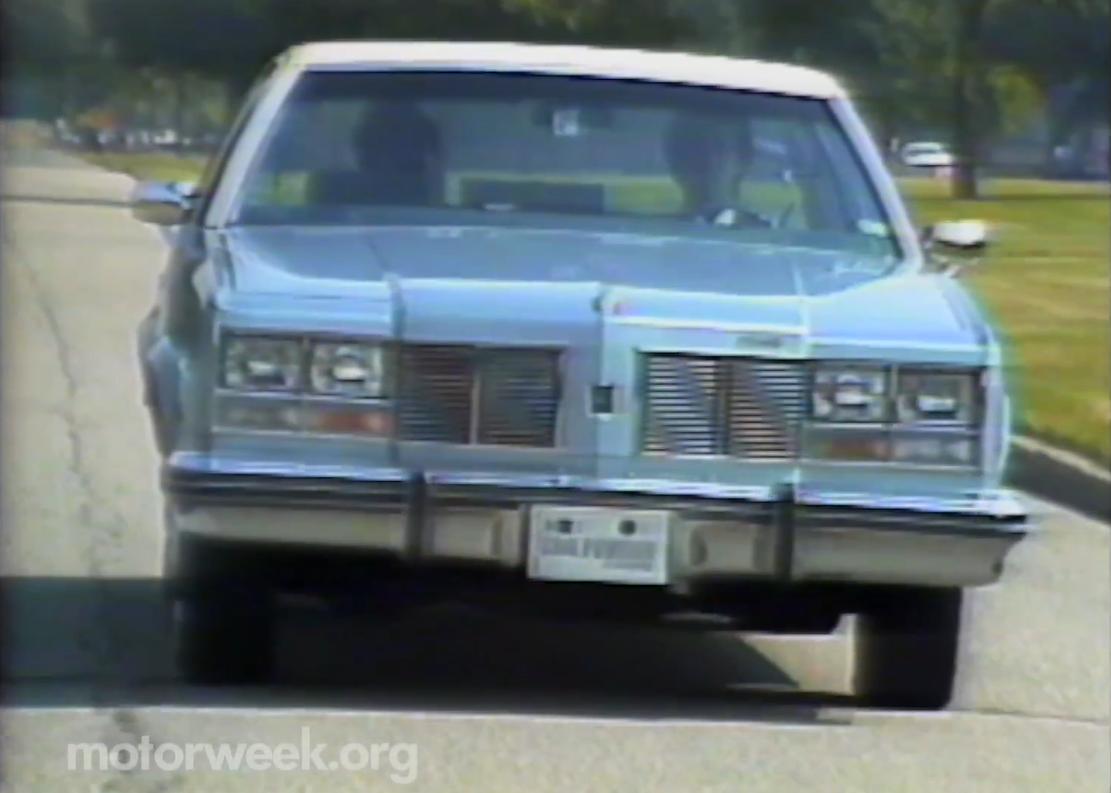
General Motors carried out such an experiment, and surprisingly, it wasn’t just limited to laboratories. It made a running and driving Cadillac and an Oldsmobile that rode down the road burning coal with a turbine.
General Motors’ Three-Decade Obsession With Turbines
Turbine fever kicked off in earnest after World War II. While there had been turbine developments before the war, the advancements made during the war blasted the door open for the turbine to make its mark. Turbines were known best for their use in aviation, but it wasn’t long before the brains of automakers and railroads began thinking about how turbines could change the world right here on the ground.
General Motors and Chrysler kicked off turbine programs in the 1940s. The promises of high power-to-weight ratios, high efficiency, fewer moving parts than piston engines, and the ability to run on multiple fuels were all too tantalizing to pass up. General Motors claims to have beaten Chrysler to the production of a turbine car prototype with the 1954 XP-21 Firebird 1, a car that GM says “first gas turbine automobile ever to be built and tested in the United States.”

This was a test vehicle, and its job was to help engineers determine if a turbine car was truly realistic. From General Motors:
The idea for Firebird I originated with Harley J. Earl, the legendary GM Styling Vice President, who also designed the car’s aircraft-inspired fiberglass-reinforced plastic body. The engine, termed “Whirlfire Turbo-Power,” was developed under the direction of Charles L. McCuen, then general manager of GM Research Laboratories Division.
Unlike a jet airplane, which develops thrust through the action of exhaust gas through a tailcone, the Whirlfire Turbo-Power engine propelled the Firebird I through a power turbine acting on the rear wheels via a transmission. The engine was capable of 370 horsepower at a power turbine speed of 13,000 rpm.
Every surface of the vehicle was refined in the California Institute of Technology wind tunnel, one of the first examples of the application of aerodynamic theories to automobile vehicle design. The negative angle of attack of the wings and the 6-square-foot area of the tail fin were all optimized through this ground-breaking work.

General Motors would go nuts with turbines after this. Two more Firebird turbine test cars were built, the last of which rolled out in 1959. While General Motors was hard at work crafting the Firebird cars, it also put turbines into more practical applications. In 1953, General Motors purchased back a GMC TDH 4512 “Old Look” transit bus from Detroit Transit, and bolted a turbine into it. GM says this was the world’s first turbine-powered bus, and called it the Turbocruiser (Turbo-Cruiser was also used in some GM documentation). The company was so proud of the Firebird and the Turbocruiser that both were displayed for a whole month at GM’s Powerama showcase alongside diesel power.
General Motors then became quite obsessed with putting turbines in commercial vehicles. The Turbocruiser would get four sequels over two decades, with the last ones being the RTS-3T and RTX. GM never put a turbine bus into production, but some innovations developed for GM’s experimental buses would find their way into the iconic, but flawed GMC RTS-II.

The General, like its competition, also dropped turbines into semi-tractors. While GM was developing its turbine cars and turbine buses, it was also working on the Turbo Titan I and Turbo Titan II semis. Like early Turbocruiser buses, the first two generations of Turbo Titan truck prototypes were based on piston engine-powered trucks that General Motors bought back from its customers.
Then, in 1965, General Motors came out with a true Jet Age-style turbine truck with the Turbo-Titan III. If you want a more complete history of GM’s turbine exploits, click here to read my previous coverage.
The Whirlfire Turbine
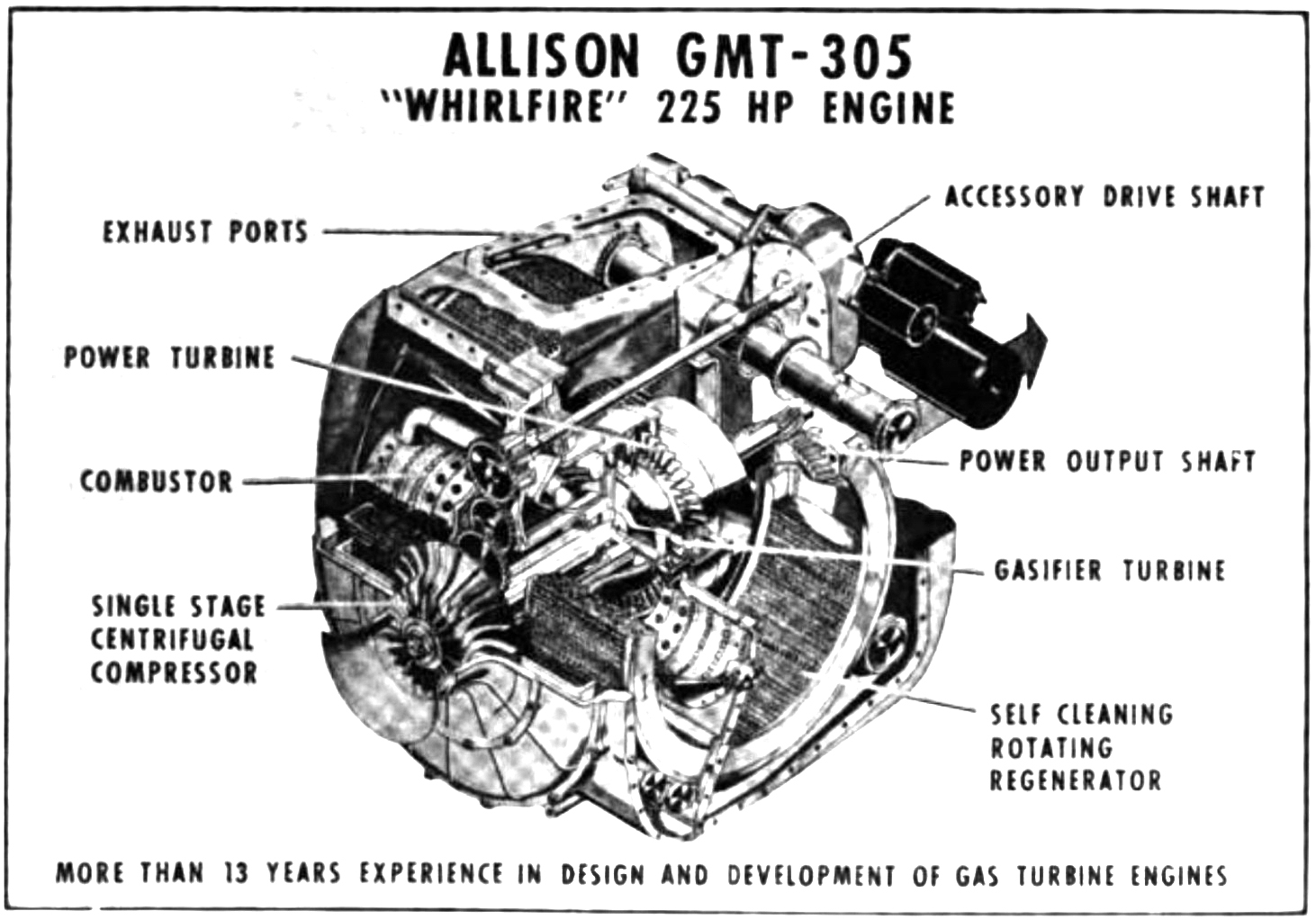
At the heart of all of GM’s turbine developments was the Whirlfire turbine. These engines were initially the work of GM Research, and in 1954, GM explained how the engines worked in the Firebird I:
Mechanically, this gas turbine car is the reverse of conventional automobiles. In the nose, ahead of the driver, is a 35-gallon glass fiber-plastic fuel tank. Behind the driver is an integrated power “package” with an engine consisting of two mechanically independent parts-the gasifier section and the power section. The gasifier section provides a source of compressed hot gas, and energy from this gas is delivered by the power section to the car’s rear wheels. Thus, the gasifier section replaces the engine and torque converter pump in a conventional automobile, while the power section replaces the torque converter turbine, transmission and rear axle gears.
The Whirlfire gasifier section closely resembles a complete small jet engine. The exhaust gas, instead of firing through a tailcone to propel the car, is funneled through a power turbine that is directly connected with the car’s rear wheels through a transmission. Backbone of the gasifier section is a so-called compressor rotor and a gasifier turbine wheel, both attached to the same shaft. Air enters the compressor where its pressure is raised to more than 3½ times atmospheric pressure, before it enters the engine’s two combustion chambers. Kerosene is burned in these chambers, raising the gas temperature to approximately 1500 degrees Fahrenheit.
The hot gas goes through the gasifier turbine which drives the compressor. The blast of hot gas from the gasifier turbine is funneled toward the second turbine, the power section turbine, which is connected with the car’s rear wheels via a two-speed transmission.

The GT-302 turbine that powered the Firebird I made 370 HP when the gasifier turbine was spinning at 26,000 RPM, and the power turbine was spinning at 13,000 RPM. A complete early Whirlfire weighed 775 pounds.
Cracks appeared in GM’s turbine development early on. According to GM, one problem was that its turbines had scorching exhaust temperatures that sometimes exceeded 1,000 degrees Fahrenheit. I don’t need to tell you how bad a 1,000-degree car exhaust would be. GM also found out that its turbines were shockingly inefficient. The turbine in the first Turbocruiser bus burned twice as much fuel as the same bus with a GM 6-71 diesel. General Motors also says it found out that its turbines were terrible for the environment and were far too expensive to build.
Yet, engineers didn’t want to give up. GM’s turbine development would surge forward into the 1980s. One workaround to the insane fuel consumption issue was to make the turbine burn fuel that was so cheap that a driver could burn twice as much of it and still come out on top. In the 1980s, General Motors took this to a crazy conclusion and made turbine cars that ran on coal.
Rolling Coal

Last week, I wrote about the Union Pacific Railroad’s exploits with turbine power. Back in the 1950s, the railroad saw the turbine as the future because turbines made far more power than equivalent diesel engines of the era. Union Pacific had an unquenchable thirst to build the king of locomotives, and spent most of the 20th century searching for single locomotives that were so powerful that they could do the work of two locomotives.
A branch of the turbine experiment, which resulted in the Gas Turbine-Electric Locomotive, was the coal turbine-electric locomotive. Here’s what I wrote:
According to Popular Science in 1948, some researchers had seen a coal-burning turbine as the holy grail of coal-burning locomotives. Since 1944, nearly two dozen organizations have been trying to figure out how to get aviation turbines to run on coal. The promise was that a coal-fired turbine would make more power than a diesel with greater efficiency and a lower cost. There were also tons of coal just sitting around America, or fuel just sitting there, waiting to be used. Turbines were also thought to be a step toward a future where trains would be powered by nuclear reactors.
However, there were always two fundamental issues with this idea. The first was that the coal had to be ground down into a fine powder so it could be gasified and burned by the turbine. The second was that the ash content of coal is even worse than the ash content of bunker fuel, which meant that a turbine running on coal would more or less eat itself alive as it eroded its own blades away into nothing.
In 1948, nine railroads and four coal producers sponsored a $2,800,000 development program to figure out how to solve these two issues.

If you want to read more about that history, click here. But what you need to know is that the first coal turbine-electric locomotive, Union Pacific No. 80 (later renamed to No. 8080), went into service in 1962. The locomotive pulled trains for only 20 months and 21,848 miles before the railroad threw in the towel. Trains.com described what happened:
Predictably, the turbine blade damage was worse with coal than with Bunker C fuel, even though the coal was so minutely pulverized that it behaved as a fluid inside the turbine. A fly ash separator was used to clean up the combustor exhaust before it entered the turbine.
Unfortunately, the ash separator was not up to the task. Unconscionable by today’s standards, the fine coal particles removed by the ash separator were released into the atmosphere in the turbine’s exhaust stream.
With less than 500 miles of coal-fired operation, inspection revealed that the combustor nozzles and turbine buckets were damaged by extensive corrosion. An earlier attempt by multiple parties to design and begin building a workable pulverized coal-burning GTEL had failed in large part for the same reason.
The Oil Crisis And Coal
The idea of coal-burning turbines didn’t really die off after the failure of UP No. 8080, and development ramped up hard again during the 1970s. As the New York Times wrote, the fuel shortages and the oil crises of the 1970s had engineers genuinely thinking that America’s oil reserves were going to run out. Thus, GM’s turbine team sought to find a cheap, abundant fuel that wouldn’t be affected by oil embargoes.
As we established earlier, turbines will run on tons of different fuels, and, according to GM’s engineers of the era, solid coal has a higher energy content than its liquid derivatives. Add in America’s hundreds of years’ worth of coal reserves, and engineers thought they had found just the fuel.
GM’s engineers weren’t alone. In the 1970s, the U.S. Department of Energy and General Electric conducted research into getting locomotives to run on coal slurry. There were other parties interested in coal, too, including Florida Power & Light, American Electric Power, and Westinghouse. There were even industries developing cleaner coal-based fuels, one of the biggest names of which was Otisca Industries, which had its name all over government reports and patents. Otisca joined forces with American Electric Power to produce powdered coal that was 90 percent ash-free. In the 1980s, the Department of Energy launched its ‘Clean Coal’ program in an effort to make coal burning cleaner.
GM’s Coal-Burning Turbines

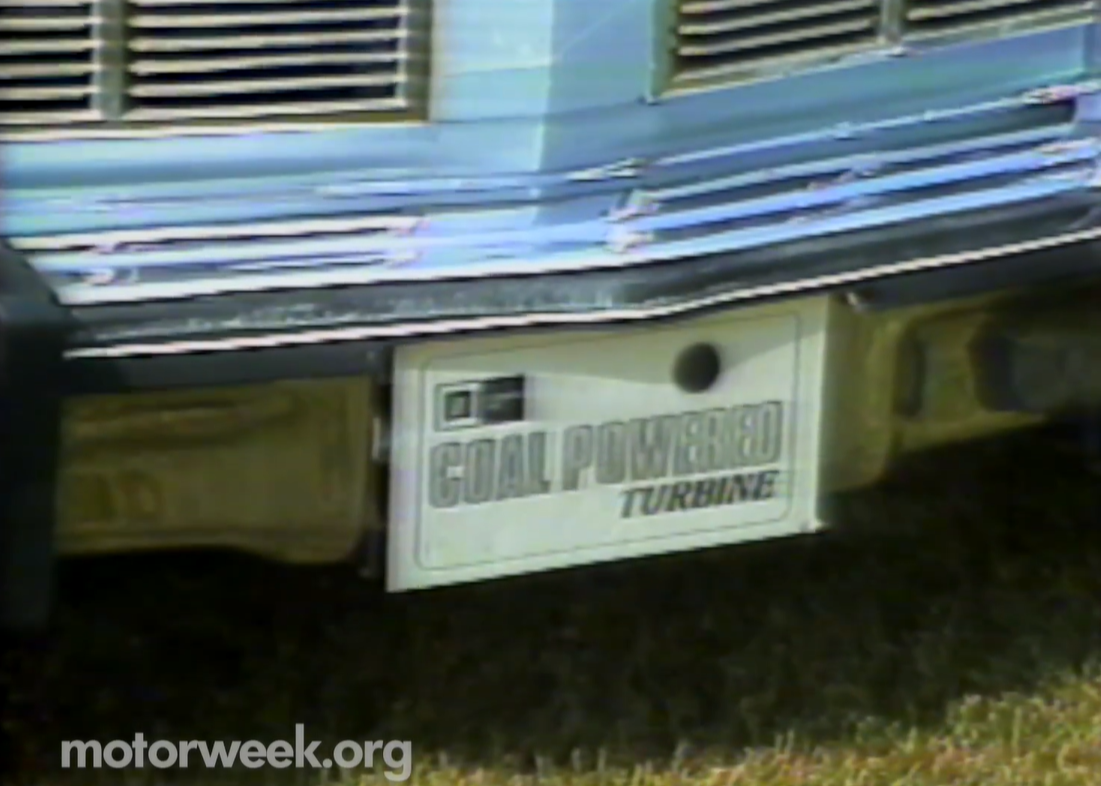
In 1981, General Motors presented its first coal turbine-powered car to the world. It was a repowered 1978 Cadillac Eldorado that, according to Time magazine, GM lovingly called the Coal-Dorado. The General Motors coal-burning turbine was based on the Whirlfire turbine, and the corporation’s engineers figured out a fascinating way to get it to run on coal. Paul Ulrich, one of the engineers from GM’s turbine team, explained the process to the New York Times.
The first piece of the puzzle was the coal itself. One of the big problems with UP’s coal turbine was that the locomotive needed an onboard processing plant to pulverize large chunks of coal into a fine powder. The locomotive’s coal processing system required its own diesel engine to generate the necessary power. That wouldn’t work for a car, of course.
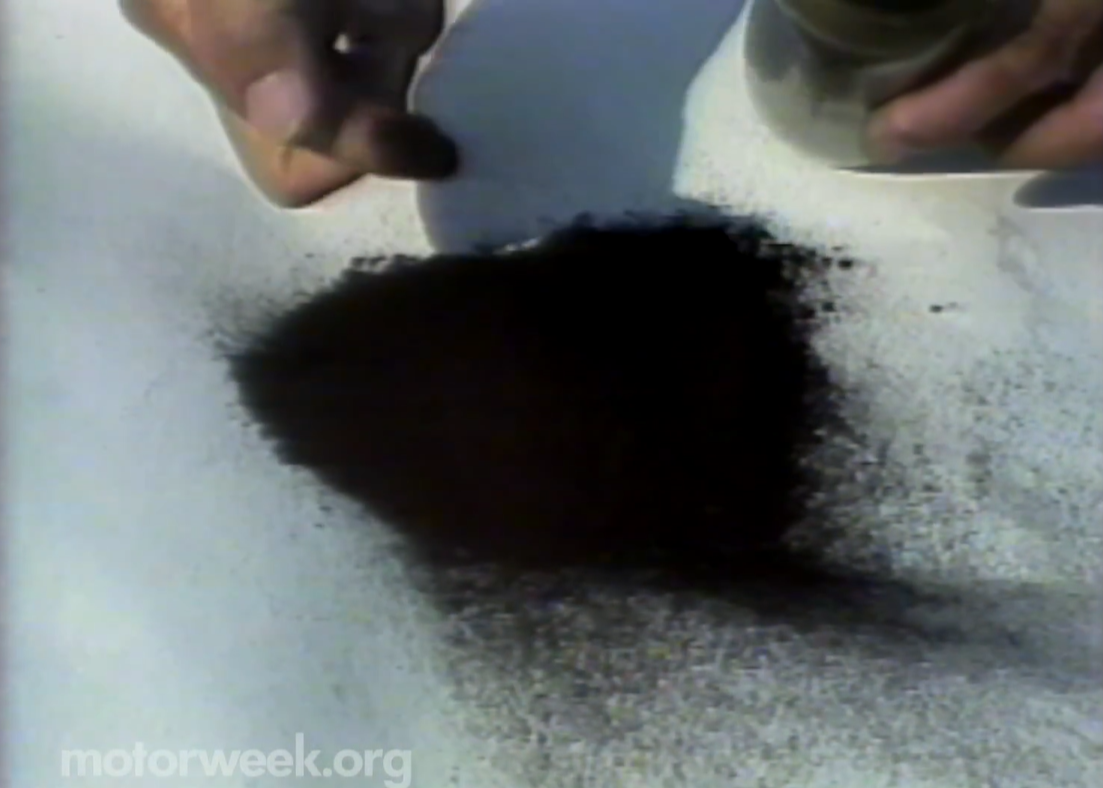
In GM’s case, Otisca’s low-ash powdered coal was available, and that was what would fuel the GM turbines. That way, the car wouldn’t need to pulverize the coal before sending it to the turbine. Ulrich said that the powdered coal was so fine that if you rubbed it between your fingers, it would turn into a kind of grease. It was otherwise described as being as fine as confectioners’ sugar.
Then things got funny, from the New York Times:
The coal was stored in the engine compartment, a feat made possible by the Eldorado’s apartment-sized space under the hood. The fuel delivery system, as described by John Schult, an engineer who worked on the project in the early 1980s, was something of a Rube Goldberg contraption.
“To keep the coal dust ready for delivery to the engine, it had to be continuously agitated,” he said. “Then a small conveyor belt delivered the coal to the gasifier,” the first section of G.M.’s automotive turbine engine. “When you stepped on the gas pedal, it actually moved a potentiometer that varied the speed of the coal conveyor belt. More fuel resulted in more power.”
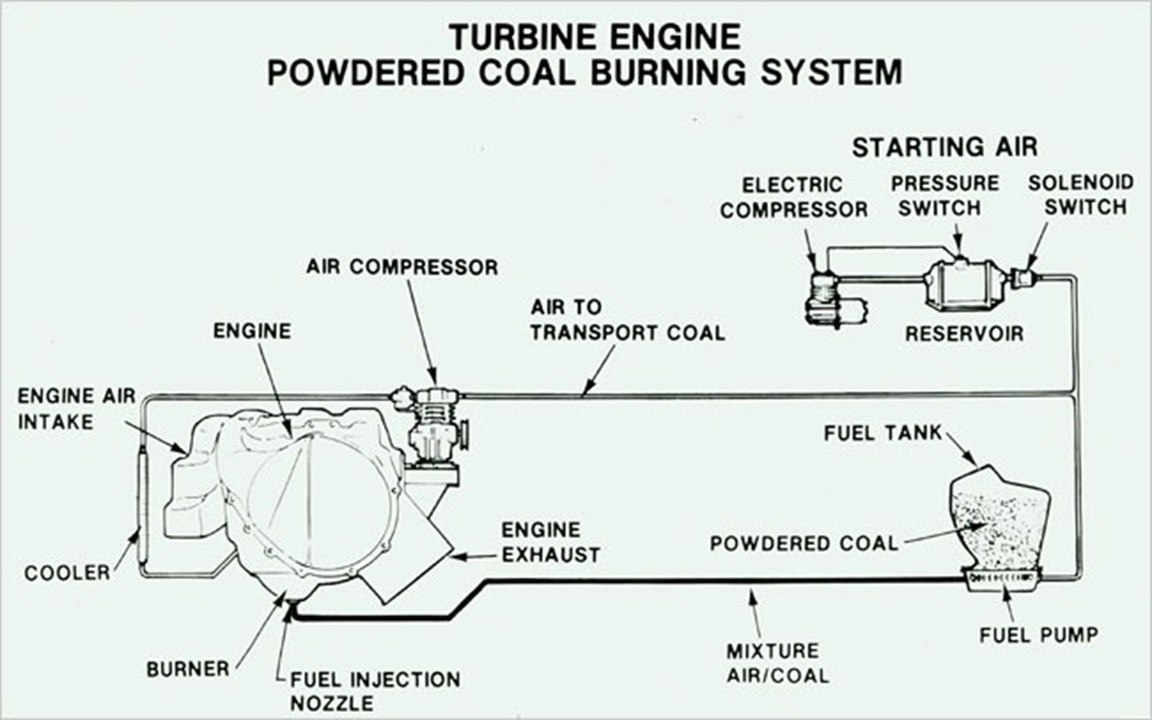
The Christian Science Monitor further explained how the engine worked:
The combustion system consists of a burner, a fuel injection nozzle, and ignition system. A liquid fuel pilot light ignites the powder as it enters the burner.
Technician at GM and Ford who have worked with methanol derived from coal say the methanol burns cleaner than powdered coal and could more easily be used to run automobiles. But GM says the combustion of powdered coal offers the maximum utilization of the energy in coal. Both mechanically cleaned and solvent-refined powdered coal retain more than 80 percent of the energy initially present in the mined coal. This compares with about 55 percent for the liquid fuels derived from coal.
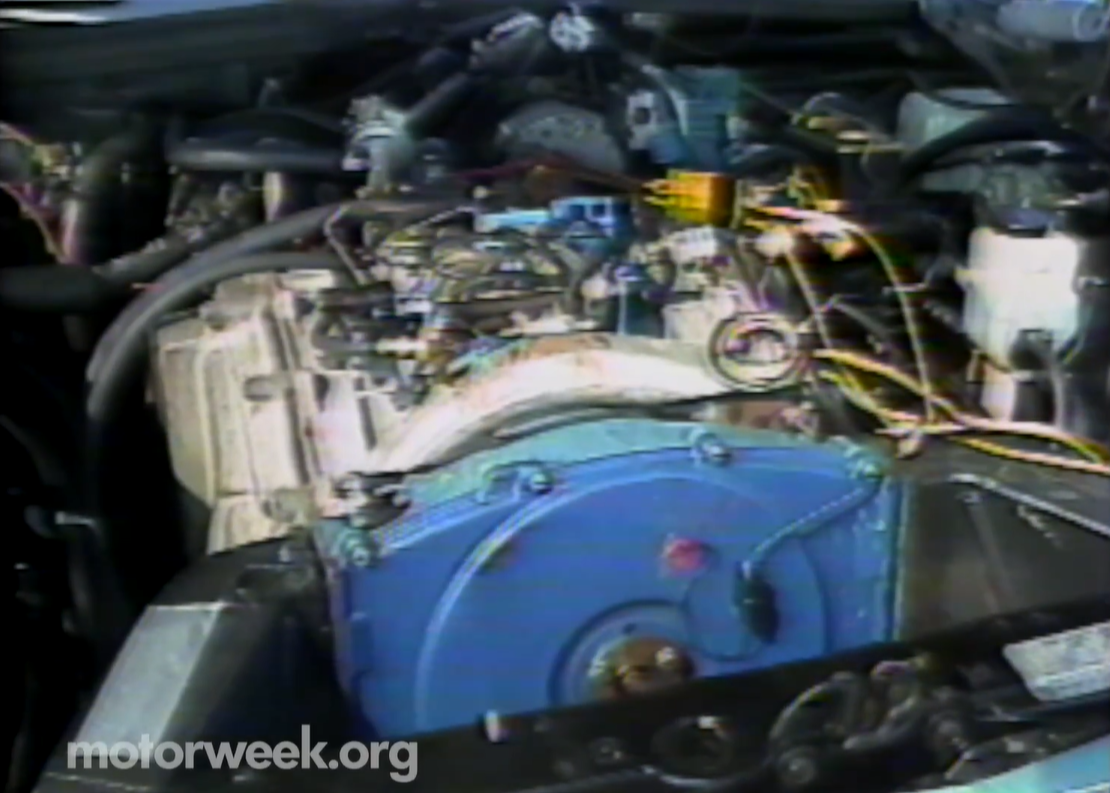
You’ll note that it does appear that GM’s engine did not have an ash separator like the earlier railroad coal turbine. In this case, it was necessary for the vehicle to be fueled with coal that had already been cleaned first.
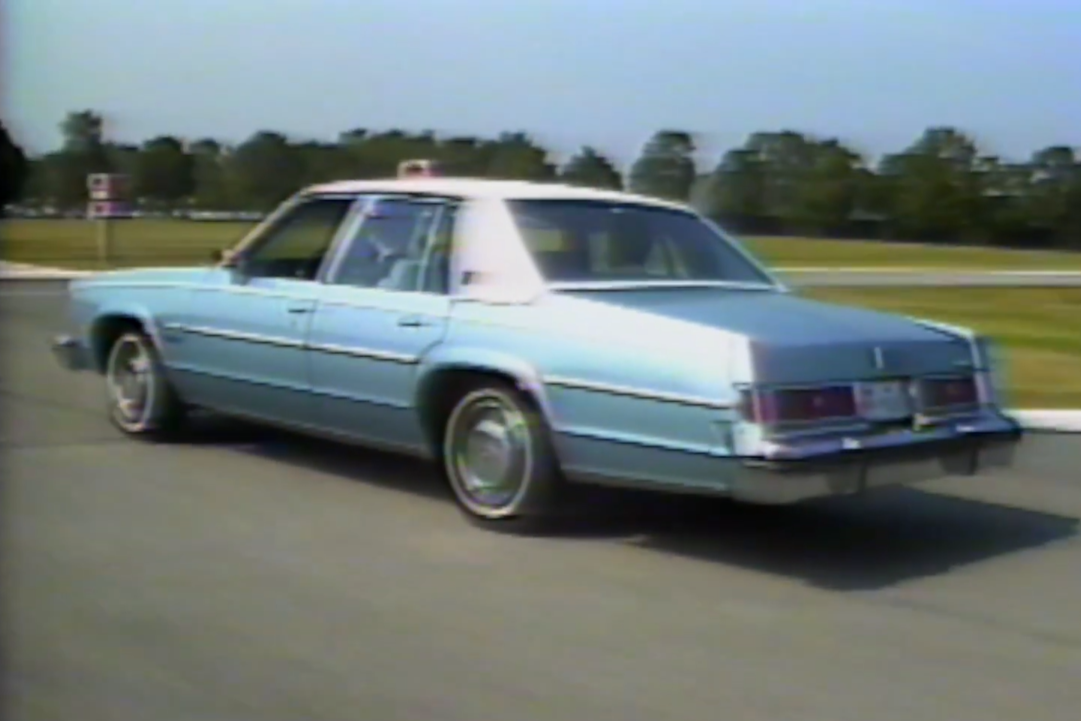
What GM’s engineers achieved is phenomenal, because the engine left the lab and found itself in not just one but two cars. MotorWeek was lucky enough to check out GM’s coal turbine in 1977 Oldsmobile Delta 88 form:
I love how John Davis compared the sound and dashboard of the ‘Coal-dsmobile’ to the attributes of a Boeing 727. Please do watch that video, because MotorWeek includes some short sound clips, and it sounds like the car is driving around an airport.
The New York Times continued about the quirks of GM’s coal turbine, at least as it was in the Cadillac:
The car was not jetlike to drive. “Any of the turbines we had running back then suffered from some throttle lag compared to the V-8 engines,” Mr. Schult said. “The coal-powered turbine had extra delay due to the fuel’s transport system. But turbine engines make excellent torque at low engine speeds, so once the engine did respond, the car launched pretty well.”
Compared with a piston engine that normally operates at 800-6,000 revolutions per minute, the G.M. turbines idled at 35,000 r.p.m., easily ran at 65,000 r.p.m. and could withstand 90,000 r.p.m. For that reason, a gear reduction system was added to the turbine engine, finally connecting to a conventional G.M. three-speed automatic transmission. While the engine and fuel were experimental, the engineers tried to use as many production parts as possible to keep costs down and to ease the task of possibly putting the car into production.
Mr. Schult also recalled the unusual starting procedure and sound of the Eldorado. “The engine started using diesel fuel, and then once running it switched over automatically to the coal,” he said. “The sound was unique, that characteristic whine of a jet engine. And then there was the constant high-frequency buzz of the agitator that kept the coal dust ready for delivery, overlaid with the noise of the compressed air system that blew the coal from the conveyor into the gasifier. It didn’t sound anything like a regular car engine.”.
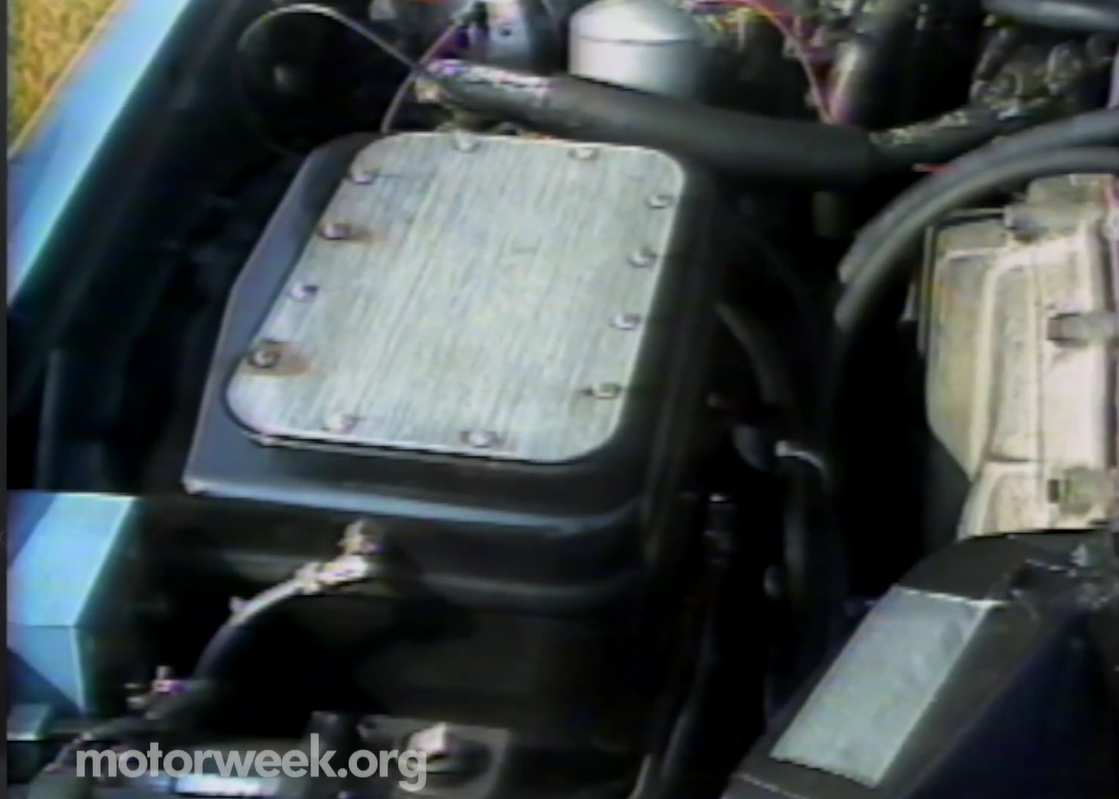
Then GM vice chairman Howard Kehrl kept consumer expectations low, saying that the turbines were “products of the next century.” Engineers admitted that their coal turbines were functional proofs of concept, but perhaps a bit too exotic to put into production.
GM would have had to figure out a few difficult issues, including the loud sound of the turbine, the dangerously hot exhaust gas, coal emissions, and the fact that coal powder wasn’t exactly easy for a consumer to buy. A report by the Mother Earth News in 1985 also claimed that the turbines were damaged by particulates, but didn’t go into further detail.
Cleaning the emissions alone was going to be a big task, and it was believed that mechanical cleaning of the coal would raise the price of the coal dust by 67 cents per million BTU. Meanwhile, chemical cleaning would add $2.80 per million BTU to the tab. Of course, GM would have also had to figure out how to mass-produce affordable turbine cars.
Yet, GM didn’t give up immediately. Coal turbine development continued into the 1990s, with the project being handed off to Allison. According to a different NYT piece, Ford also got in on turbine development and believed that a turbine that it could have launched in the 1990s might have been able to burn coal, too.
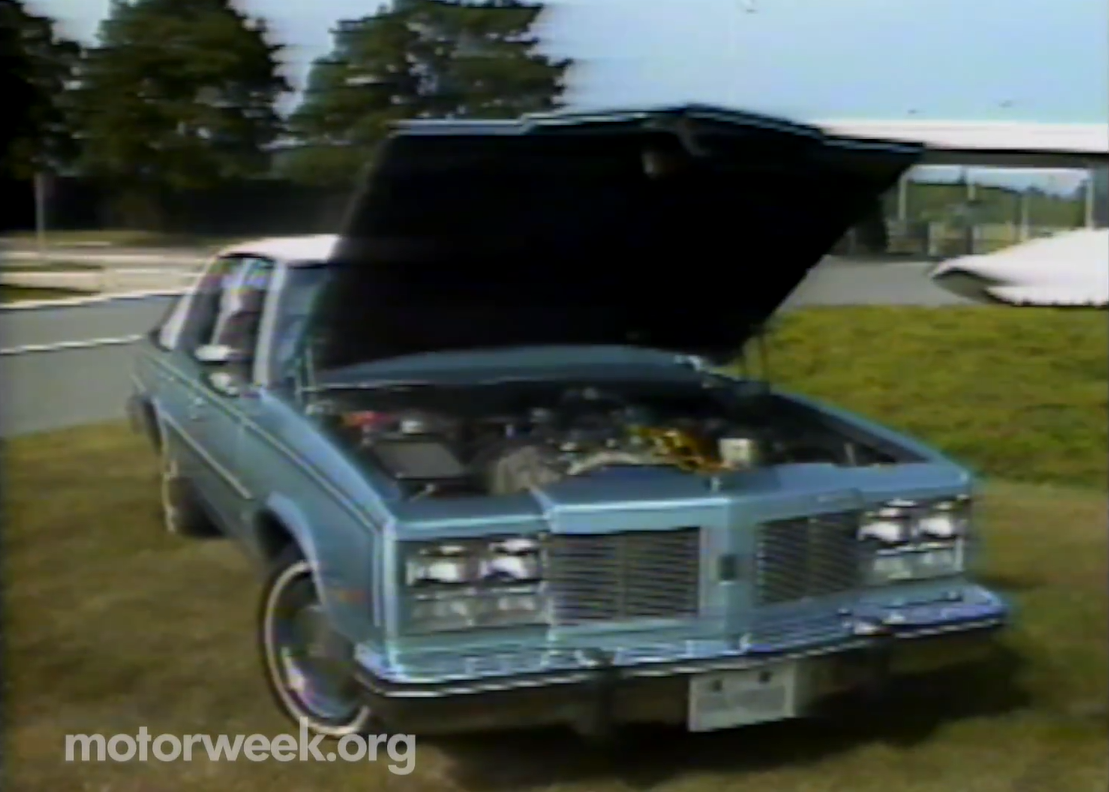
Ultimately, that didn’t happen. Instead, the 1990s brought on an era of zero-emission vehicles. Companies trying to put turbines into cars eventually gave up and moved on to electrification or other alternative power sources. It’s unclear what Allison did with the turbine prototype.
Looking at this through modern lenses generates plenty of giggles. Normally, we’d associate “rolling coal” with modified diesel vehicles, but the smoke from GM’s coal-fired cars would have been exhaust from the burning of real coal. It’s also hard to imagine anyone being crazy enough to make such a vehicle today.
However, it seemed to have made sense to some companies and engineers at the time. Turbines promised a better future and burned so many different fuels. America was just sitting on mountains of coal, too. But there were just too many problems. Still, I love that engineers spent decades trying to make this work, and actually succeeded in making some turbine-powered locomotives and cars run on coal. It just makes you think that if you could get a car to run on coal, maybe anything really is possible if you try hard enough.
Hat tip to Mthew_M!
Top graphic image: Saratoga Auto Auction


I used to work with a few people involved in the creation of these prototypes, and the anecdotal evidence was that they could be pretty cantankerous. According to the stories, they went through most of the running gear, bearings etc to polish everything in order to reduce rolling resistance as much as possible since the fuel consumption on the coal turbine was so bad. That came in handy one time for a press event when the olds wouldn’t start, so it got pushed up to speed by another vehicle out of sight, the other vehicle peeled off before it could be seen, and the very low rolling resistance let the olds coast past the event as if under it’s own power…
There was an even more bonkers version of a turbine power train that GM research had running in a car… The Hyprex engine. It basically replaced the gasifier turbine with a cross flow two-stroke free-piston engine wherein the pistons end positions (normally denoted top and bottom dead center) were not mechanically limited; instead they were a result of the combination of the piston inertia and the forces on it from the combustion chamber, air charge chamber and bounce chamber, making it essentially a variable compression ratio engine that automatically responded to the combustion event that was occurring at the time. They also the work of supercharger with the air charge chambers, and since there was no crank-slider mechanism to take work out of the system, that was done by driving a power turbine with the high pressure exhaust gas from the Hyprex engine instead of the exhaust from a gasifier turbine.
They were wasting their time with the coal turbine. Should have been refining the coal fired boiler to put back into automotive use lol. Nothing like honking at that asshole that cut you off with a good old locomotive steam whistle.
Seriously though, did Union Pacific and other railroads consider rebuilding and putting their old steam locomotives back into service during the oil crisis??? Run them on cheap coal with zero shortages. Or had that day long passed and they were all scrapped by then?
Watched a YT video about a coal turbine locomotive the other night. It was built right at the beginning of the transition to diesel locomotives. Didn’t last b/c the coal caused such bad wear on the turbine blades.
I think this one was the one I watched:
https://youtu.be/en1J2oLJqkE?si=xguLOuxGx2UF4oZh
I saw that video, too. It’s being recommended to basically everyone right now! Sadly, it’s highly inaccurate, and that whole channel reeks of AI shenanigans.
The C&O M1 was a steam turbine locomotive, not a coal turbine locomotive. The difference is that the M1’s turbine was driven by steam generated by burning coal. UP No. 8080 was the only operational turbine locomotive where the coal was directly fed into the turbine and burned by the turbine.
Crazy thing is, when I was in school (many, many moons ago) The world would be out of oil by now and we’d be living in ice. The propaganda never ceases, apparently. One of my uncles bought a Deisel Olds 98 in 1978. Big POS. always in the shop.
Henry Ford: PER MY LAST EMAIL…
(Ford advocated for using bio-methanol from wood and corn stover as a motor fuel. He also started Kingsford Charcoal to reuse wood waste from auto manufacturing. And here we are 100 years later using the good parts of the corn for motor fuel instead!)
(And also he was a terrible antisemite.)
The current administration has announced that GM will be bringing back the coal powered car. They said that just slowing down the transition to EVs was not enough. Then they made fun of kids with asthma and gave each other high fives.
I’m dying from stage 4 COPD/asthma, can relate to this comment. Let’s make coal rolling with a cummings diesel legal, yippee!
the powdered coal was that anthracite or bituminous? I used to burn anthracite
Different coal hopper, different price at the coal station. Just like 87 octane and 94 octane. 😉
I’d normally think anthracite, because it is not nearly as messy as bituminous, but since they ground it to a fine powder, it was going to make a mess anyway. Plus anthracite is much more rare.
Are you in PA? I grew up there in the anthracite region and we had an anthracite stove when I was a kid.
Yup PA resident. I remember my one grandfather always talking up how great coal was. Then my first house I bought a house that had a coal stove because the previous owner was an older gentleman who never wanted anything else. I was going to the breaker to pick up the coal for a few years, then the Ukraine war happened and that breaker stopped selling to the public. I found another local guy who was good on price, then I moved to a nicer house with an oil furnace, and my back thanks me.
Interesting about the breaker stopping sales when the Ukraine war started. I know anthracite is also used in specialty steel manufacturing; I wonder if the coal was going for some kind of war production instead.
i considered getting a coal stove when I owned a house in PA, but storage was an issue and a wood pellet stove worked out better.
Ukraine was the largest supplier of anthracite in Europe, War happened and they stopped selling. European needed the anthracite not for heat but more for manufacturing. Its not just steel, glass production and water filtering uses it also. The breaker started selling to the public a few years later but even if I had a coal stove I would not buy from them. I also think about getting a pellet stove also. Its easier to just go to home depot and get some fuel.
The production process for Otisca Fuel is crazy.
“In the Otisca T-Process, water is added at two primary stages to transform raw coal into a stable, clean liquid fuel:
Final Fuel Composition
While the chemical cleaning process removes much of this “process water,” the final commercial fuel product was typically a coal-water slurry composed of:
70% finely ground, ultra-clean coal.
29% water (acting as the carrier liquid).
1% chemical additives (dispersants and stabilizers to keep the coal from settling).”
So the coal is pulverized, mixed with water, and then the sulfur is removed with pentane. It is definitely powdered coal suspended in water.
GM should have tried using the coal to run a boiler and generate steam for a turbine. Give the car a big vertical exhaust stack and tow the coal behind the car in a tender. Let the kids stoke the firebox as you drive.
Simultaneously fascinating and impressive, while also being the stupidest idea I’ve yet heard from GM.
Do NOT let the current administration here about this! They’ll be mandating coal-fired vehicle production in no time flat.
And why not? They say coal is clean burning. I didn’t know that and I’m soooo glad they told me.
Ah America. Never great at pivoting or adapting to changed circumstances. The 5.7 Olds Diesel was supposed to be proof that you didn’t have to “give up” anything. You can still enjoy your big floaty boat in limousine comfort, no need to adapt or give up an personal inconvenience or sacrifice. Not surprising they thought running a car by burning prehistoric rocks dug up from the ground was some “innovative” “solution.” Fast forward 50 years and once again our foreign policy remains focused on, and re-committed to securing petroleum supply and trade routes, while the rest of the world is moving on.
This morning, if you told me that that GM was designed a car to run on coal in the ’90s, I’d, of course, have thought 1890’s.
Consider my mind blown.
Rolling coal at 90,000 rpm. Impressive.
I wonder how the things would have done in an accident. Coal bunker explosions were a real problem back before ships converted to fuel oil.
Good point, and finely powdered coal puffed into the air anywhere near a 1000 degree exhaust sounds like a disaster waiting to happen with even just a minor system leak, never mind an actual impact.
Remember the Maine!
Flour mill explosions are a real thing. It would probably be dangerous to even make coal particles that small if they were not wet.
I think the true ultimate coal fueled train would be an electric train running on power from stationary coal plants and using rails and overhead cables that doubled as HV transmission lines.
Well, we still get somewhere between 17 and 20% of our electricity from coal, so I guess technically you could say that almost 1 in 5 Teslas on the road are coal powered. I mean, not exactly, because coal power capacity isn’t evenly distributed across the country, some regions use virtually none, some much more, but, as a generalization
Nobody seems exactly sure what the accurate percent is these days, it fluctuates up and down a bit with the seasons, and is obviously trending downward over time
Officially about 16% as of 2023:
https://www.eia.gov/energyexplained/electricity/electricity-in-the-us.php
India has just recently completed rail electrification that they started decades ago.
“and overhead cables that doubled as HV transmission lines.” I do not know about this because 25kV lines do not need to carry many amps to run trains, and thinner is cheaper.
Well if that power line needs to be there anyway move the power from generator to power customers then train duty is a bonus isn’t it? Time it right and the train might even act as a kinetic battery or buffer.
There could be another power line between the places that actually need it in the same right of way. Like another line high in the air above the existing lines running a much higher voltage. The standard 25kV overhead train line is low voltage compared to a transmission line.
Sure, might as well take advantage of the clear path of a train track. That won’t work in tunnels though.
Data lines OTOH can, just like the telegraph lines of old.
Tunnels would need a conduit
Tunnels are the conduit for the cables and cables are the conduit for the power, right?
And allow me to clarify, >>25kV HV can go through tunnels but I think its probably better those lines have their own dedicated bores or are at least well separated from the train.
Instead of novel pulverized powdered coal, you’d almost have thought they’d have been better off designing it to run on old fashioned town gas (coal further pulverized down into a gas), since that way they could have at least bragged about some sort of multifuel capability with propane and natural gas. Though, I suppose we weren’t really a major natural gas producer at the time, the way we are now, and propane is still oil derived, so maybe that’s why they weren’t thinking about gas
The article mentions that burning the powdered coal was much more efficient than burning a coal derived liquid fuel, so I’m assuming similar losses would have been incurred when producing coal gas.
Well, less energy used in the refining process definitely, but town gas is probably the least dirty coal derivative when it comes to burning it at the user end
I’m also guessing that since this was an engineering experiment they also wanted to try something new. Burning a liquid or gas coal derivative would likely just be tuning one of their existing power plants differently, maybe with a couple of modifications.
The most expensive part of making methanol from coal is making the town gas, which is then fed to a pressurized reactor containing Cu/ZnO/Al2O3 catalyst. The article sounded like the engineers at the time did not really understand why they were not just making a piston engine that could run on methanol. Gasoline sold in China contains between 5-15% methanol, so really it is the coal technology that won.
I was wondering that about the coal-powered locomotive, but the article mentions that direct combustion yields 80% of the energy vs. 55% from methanol made from town gas, so directly using town gas would probably be in the middle there.
“the fact that coal powder wasn’t exactly easy for a consumer to buy”
That seems like the obvious concept killer to me, and I can see how GM’s bureaucratic system was prepared to blip over it completely.
Just getting diesel widely distributed in corner gas stations was a huge challenge in the 1970s, and carmakers never really put everyday carbuyer worries about availability to rest. And diesel was something that could piggyback off existing distribution and sales outlets. I can’t begin to imagine how coal would work at a practical level.
And I think GM’s stovepiped management was conditioned to push projects far down the line before engaging in questions like this.
I can see in the abstract how coal might make sense for big vehicles like bus fleets and trucks where vehicles were fueled at centralized locations. But this was being worked on by car engineers, and the design constraints for relatively tiny vehicles were different. Potentially more important, the engineering team mindset was different..
I’d love to know the bureacratic history of this project, and what kind of turf battles and budget fights were going on in the background. To a large extent GM’s struggles in the 70s weren’t just about questionable decisions about design and engineering, it was about questionable decisions about how decisions were made.
I think you’d buy it in 30 lb sacks in the grocery store. You know how flour “leaks” out of the paper bags? Like that, except it’s coal. They’d keep it stacked outside next to the propane.
I’m curious how it pencils out: how many miles do you get out of your 30lbs of coal?
Coal sacks would now be 13.75 lbs due to shrinkflation. Cue the back in my day sack of coal was 59 cents…
“New EZ-Lift™ Bags!”
Nah, you’d have to visit a GM dealer for OEM coal for warranty purposes.
The only coal with BladeGuard Technology™ designed to remove contaminants and keep your turbine running smooth and clean!
The real value in all of this would have been in the coalcharger nationwide network of fueling stations they would have established to lock up the coal-fueled car market.
1960’s Chrysler:
“Lets develop a unique turbine car and make it look like a Thunderbird!”
1980’s GM:
“Lets develop a turbine engine – just put it in that Oldsmobile and old Cadillac over there…”
To be fair, most of Chrysler’s turbine prototypes over the decades were installed in ordinary production body shells, they just wanted to do something really splashy and attention grabbing for the large scale real world test program. Their final turbine car was a late ’70s LeBaron
According to Popular Science in 1948, some researchers had seen a coal-burning turbine as the holy grail of coal-burning locomotives.
Que the music….
You’re ridin’ the COOOAAALL TRAIN!!!!!
The turbine engine was obsoleted when the Mr. Fusion was released.
Imagine if GM used their vast engineering forces for good. (snark)
Yeah, they could have built a practical electric car in the ’90s!
Not exactly. Charging EVs wasn’t solved in the mid 90s. Back then there were two ideas on how to charge:
If you look at how modern EVs charge, the Plug in design won. Getting the plug idea to work was NOT easy and took 10 years of development and testing.
The Paddle idea lost. GM EV1 was the only car that tried it. I don’t know the exact details of why that concept was abandoned, but I would guess that efficiency was a major problem and have heard that it generated dangerous EMF to anyone with a pacemaker.
Yeah, the paddle was extreme overengineering (I used to be on their PR mailing list for some reason; every so often they’d send me a beautifully printed folio about the EV1. I do wish I kept them.) and if I recall correctly, they claimed it was for shock safety and weather resistance. Apparently people in the 90s had a deadly fear of exposed plugs. If I had to hazard a guess, paddles were never widely adopted because they’re extremely limited – 6.6kw apparently, which is 1/10th of what even the first ChaDeMo standard could provide – and while designing a charging plug is nontrivial, I imagine the challenges of making an updated Magecharge paddle that could deliver sufficient current for fast charging while maintaining backward compatibility would be worlds more difficult.
I also suspect GM would never license it, even if it was practical.
I have reasons to know that shock hazards with early EV connectors was a major issue, as was extreme temperatures of the handles as well. I don’t want to risk an NDA where I used to work to go into details.
The issue was not the connectors but the communication. Modern connectors will connect and send no current. They will send 0s and 1s to the car that will send them back. Tests will be made, checks will be passed and once the car and charger are happy with each other and how well the connector is seated, the actual charge kicks on, typically with a slow ramp up in current.
The designs from the 90s were that the cable was live. Plug it in and it gave the juice to the car. What I cannot give details about was involving 480V 3 phase AC with 200A. Connecting that sort of power with the terminals live was… well why I think I have to be careful about that old NDA.
The paddles did dramatically better with the plug it in and see what happens portion of the program. However, I understood it had issues with EMI, which was more of a problem then with a lot less equipment designed to not act up with it. I didn’t do anything with them, but I remember that the story was you couldn’t use an EV1 if you had a pacemaker, just to be safe.
No lessons were learned from that oil crisis, the Iranian Revolution crisis or any others since, triggered by various wars and political upheaval. Addictive dependence upon a globally traded, volatile substance whose only allegiance is to money and not nationalism will continue to be an issue.
To paraphrase a recent Technology Connections video on renewable energy.
“Imagine what we could do if we focused all our efforts on building new things, instead of burning the fruits of our labor? (gasoline and oil in general)”
I love cars, but that statement really stuck with me.
You stopped me cold with that sentence, but I fear much of the public won’t understand the implications. Technology Connections? I take it that’s a podcast? It appears to connect with my STEM background and interests.
it’s a youtube channel. and fantastic.
I have not made it through the whole video (it’s an hour and a half) but here’s a link:
https://www.youtube.com/watch?v=KtQ9nt2ZeGM
Is that the one where he lights however many tablepoons of gas on fire to demonstrate the amount of fuel being consumed while going 65mph? That visual has stuck with me. It’s A LOT of fire. And, as he pointed out, now imagine being on a highway full of cars all doing the same thing.
Yeah, it’s incredibly poignant.
This x1000.
No, silly, the lesson was that more shootings and deportations will make alllll the Bad Stuff go away.
The whole idea is so wild it seems more like something from Bosnian Ape Society than a real automaker.
It was a hybrid then, running with Diesel and Coal.
Peak GM, always killing great ideas lol
Great article! Looks like it never got far enough, but I can’t imagine how you’d “refuel” these without creating a massive plume of coal dust. Also “1,000 degree exhaust temp” seems like another pretty big hurdle.
Melting other people’s front bumpers at stoplights
And pedestrians’ legs. I guess you’d aim the exhaust up. We’d all unintentionally be playing the world’s worst game of Duck Hunt.
Imagine what the underside of bridges next to a stoplight would look like!
hopefully not too melty. But given there’d be SOME unburnt coal dust getting shot up there, every now and then there’d be a bridge fire. Or a stupid amount of infrastructure to periodically spray them with water so all the coal dust/soot would go down the storm drains (where it belongs!). Oy. I know we regularly think “dang, if such-and-such tech had caught on we’d be so much better off.” Here’s an example where we can be incredibly grateful that something never did.
The coal used was a coal-water slurry, which would not create a plume of dust.
I know they use the term “slurry,” but everything in the article implies it is a powder, including the schematics referring to an “air/coal mixture” making its way to the turbine and the image of coal dust used as an example.
“Otisca’s low-ash powdered coal was available”
Otisca coal comes in a barrel mixed with 30% water
““To keep the coal dust ready for delivery to the engine, it had to be continuously agitated”
How would this part even work if the coal dust was not suspended in a liquid? And why would a screw feeder not work on a container full of dry solid powder?