

The first models of some beloved imported cars arrived on our shores almost perfect. When the first 240Zs and Mazda Miatas dropped, many were even terrified that “improvements” the makers would inevitably make for the model years to follow could only diminish the perfect recipes of the first-gen cars.
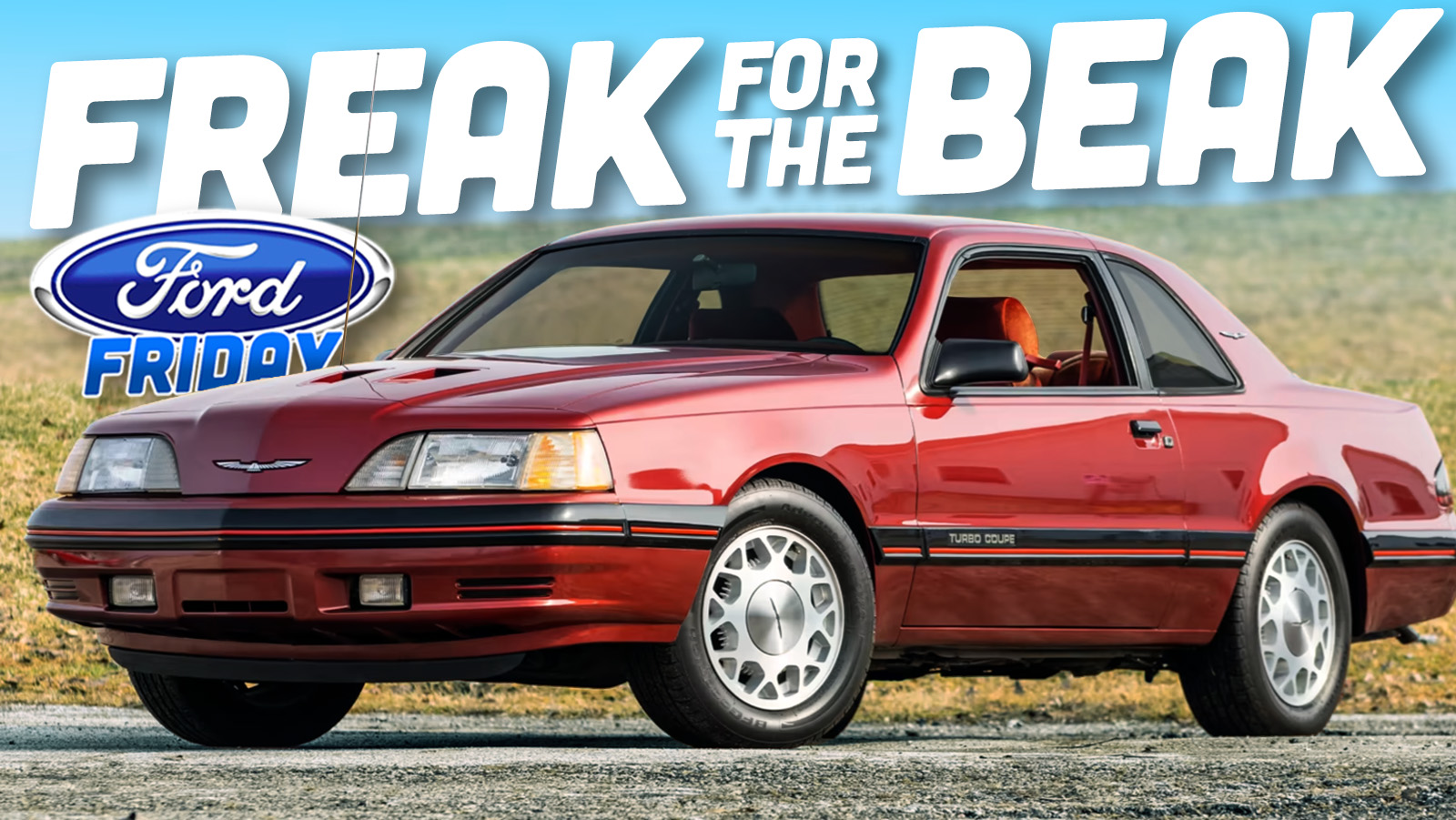
American manufacturers during the eighties often had the opposite problem. They’d launch promising new cars that seemed full of potential but were essentially unfinished when released. One such car was the 1983 Ford Thunderbird. Thankfully, the Blue Oval rather quickly corrected some of the half-baked elements of this return-to-form version of the Thunderbird to eventually give us the car we wanted all along: the 1987 “Beak Bird” Turbo coupe


Dark Days In Dearborn
Many car historians worship “salesman supreme” Lee Iacocca, who made sometimes-junky products that sold like crazy. Others buy into the hype of “car guy” Bob Lutz, who championed “enthusiast” stuff that often didn’t sell at all. However, there are a number of very successful auto executives over the years who have not gotten the spotlight they deserve. To me, Donald Peterson of Ford seems to fall into that category: a man who gave us products that both sold and that people who cared about cars actually enjoyed.
Much has been said about how Iacocca saved a dying Chrysler, but it’s overlooked that the Ford Iacocca left behind in 1978 was not in much better shape. Peterson was the one tasked with pulling off the brand’s comeback. One pivotal moment of his early tenure is chronicled in an article by Greg Easterbrook in Washington Monthly:
On a very dark day in 1980, Donald Petersen, newly chosen president of Ford Motors, visited the company design studios. Ford was in the process of losing $2.2 billion, the largest single-year corporate loss in U.S. history. The future seemed equally bleak. Most Fords could charitably be described as iron thunder lizards. There was no minimum to the number of them Petersen could sell.
Petersen had come to review proposals for a new Thunderbird–the model that had been Ford’s flagship but through the 1970s had grown about as exciting as a tuna trawler. He was shown the customary sketches of big, boring boxes. Ford designers, truth be told, hated their own designs. Often they had tried to propose interesting cars like the Europeans and Japanese were building. Top management always shot them down. There was only one kind of car headquarters wanted to hear about: A Car Just Like Last Year’s.
Indeed, the all-new 1980 Thunderbird being sold that year was based on the smaller, economical, and decent-driving Fox platform instead of the previous year’s Torino-based boat. However, the styling was, by almost anyone’s standards, just awful.

I can only imagine what kind of landau-roofed madness Ford’s execs had in mind for the replacement; Peterson took a look at what the creative staff had been tasked to develop.
After examining some sketches, Petersen looked up at the designers and asked, “Are you proud of these?’ There was a pause. In big corporations, people are handsomely paid not to say what they think.
“No. I’m embarrassed by them,’ Jack Telnack, Ford’s chief of design, answered. Then the designers wheeled out clay models of a different type of Thunderbird –aerodynamically smooth, European influenced. There was even a sporty version configured for the BMW crowd with a small high-tech engine, a five-speed transmission, and no chrome. When was the last time anyone saw a stick in a Thunderbird? Maybe 1956.
This Thunderbird design represented everything cars are supposed to be and Detroit products never are. Functionality. Taking the driver seriously. Appealing to the consumer’s better judgment, rather than the market research department’s lowest common denominator. Headquarters was bound to hate it.
Petersen said go ahead.
With that, the renaissance at Ford began. The Thunderbird would lead the way for the “aero revolution” with a style that looked more like a German car at the time than a product of Detroit.
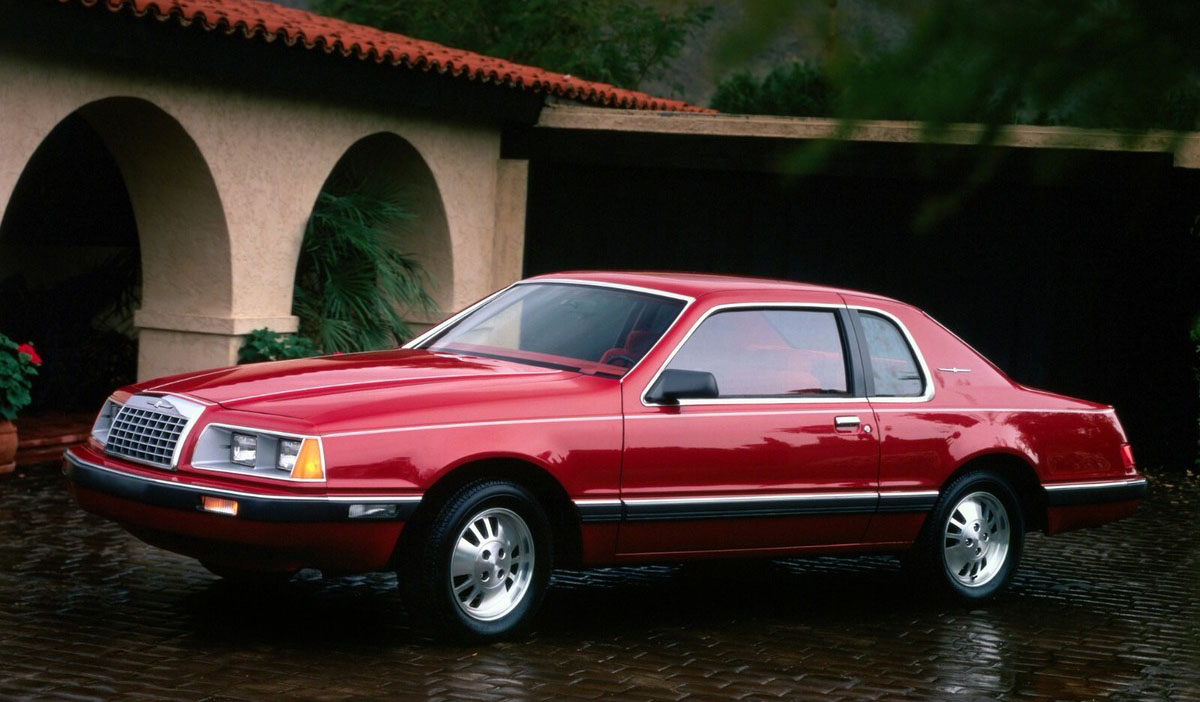
The big news, though, was that the top-of-the-line T-Bird was not going to be some “Heritage” edition or similar with fender skirts and a vinyl roof. No, the Turbo Coupe was marketed as a grand touring two-door to be a sort of cut-rate BMW 635csi.
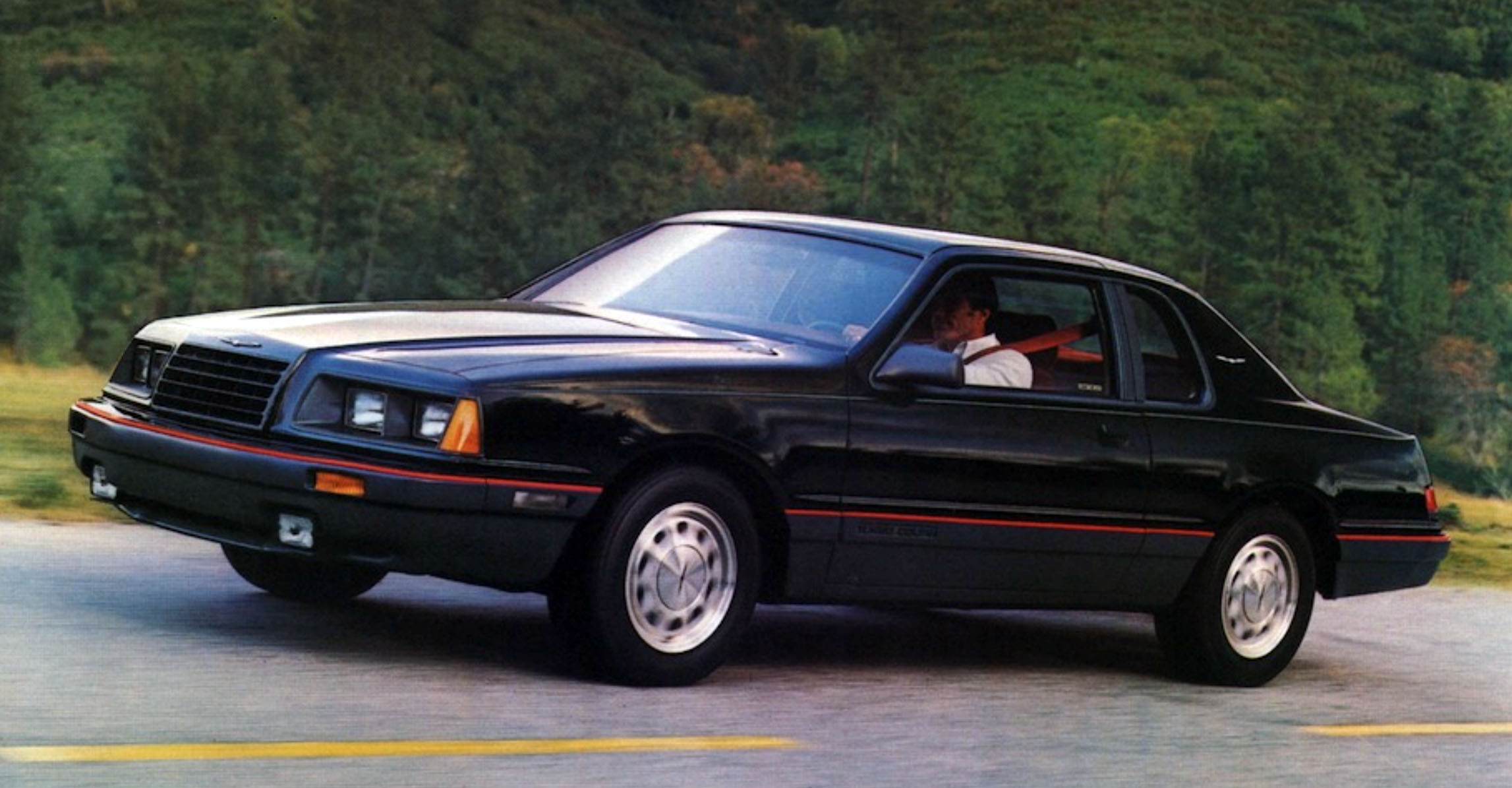
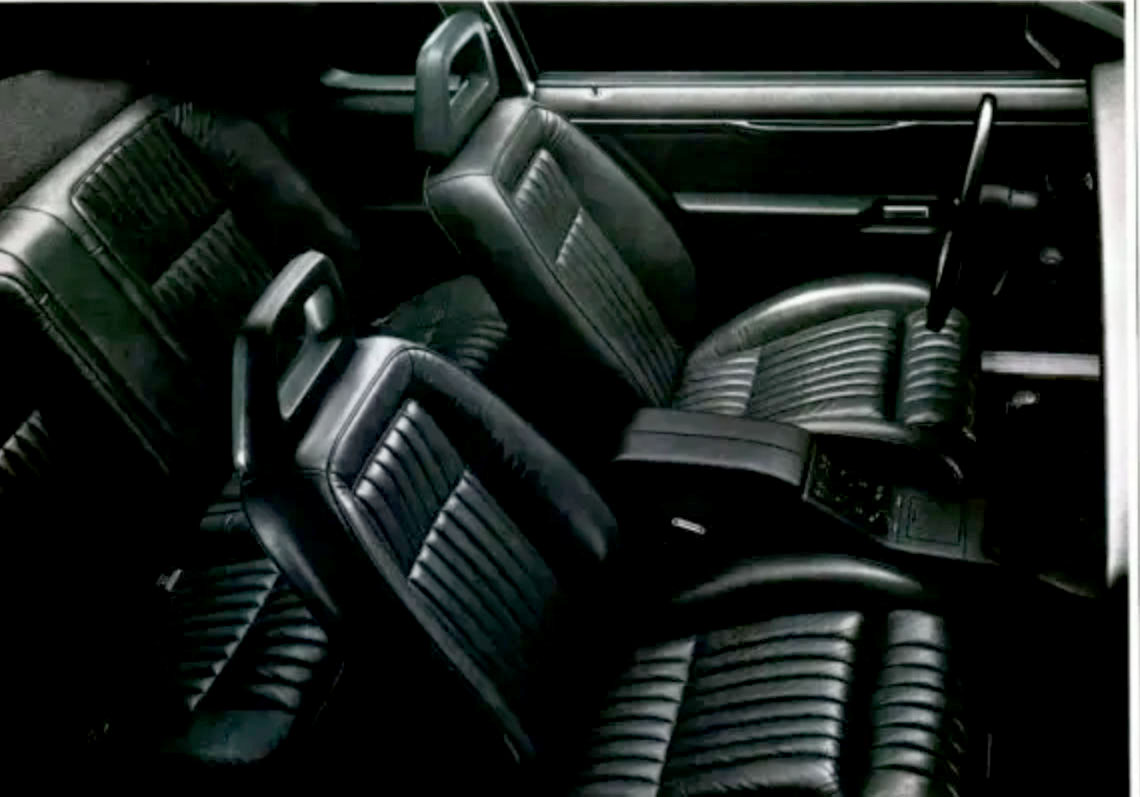
Bucket seats. Manual transmission with a shifter in a console on the floor. Alloy wheels and, under the hood, a turbocharged four-cylinder engine; essentially half the size of the standard mills in T-Birds from a few years before. This 2.3-liter “Pinto” four finally had fuel injection, which solved the problems of the carbureted “draw through” turbo motors offered from ’79 to ’82.
With 145 horsepower, it was still five short of the Windsor V8, but admittedly the lighter, more efficient, and “higher tech” engine was a far better fit for this sophisticated coupe’s image. Road & Track managed a zero to sixty run of 9.7 seconds, which is pretty bad until you realize that’s the same number the got out of their Camaro Z28 test car the year before! Welcome to the malaise.
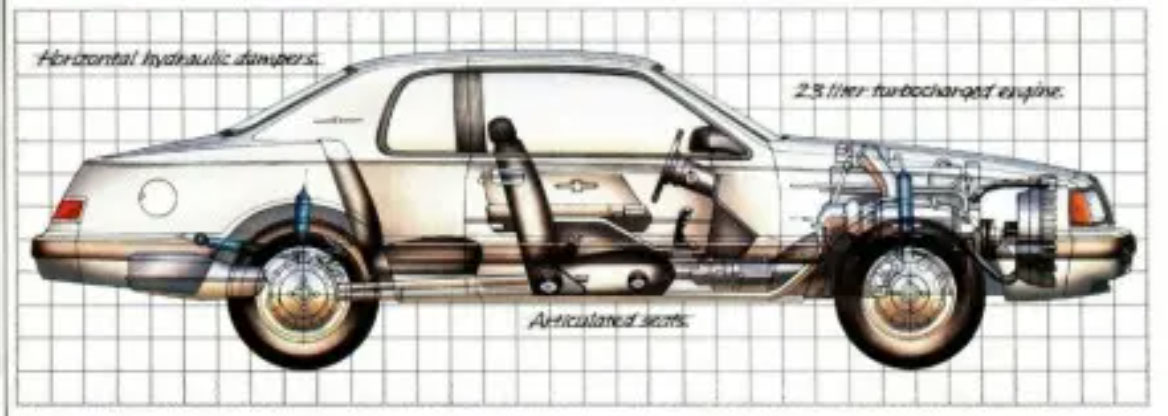
The Fox chassis received some tweaks from the Mustang, most notably the “quad shock” rear end. These extra set of shocks acted as dampers to help control some of the nasty habits of a live axle, particularly the hopping you might get under power.

As was the case in much of the American malaise, the first aero ‘Birds were not perfect; far from it, actually. That turbo four was a bit clunky with all the lag you’d expect. The suspension, brakes, and wheel/tire combos could use some work. Worst of all, cash-strapped Ford had obviously run out of funds when it came to the instrument panel, which was shared with lesser Fox body products.
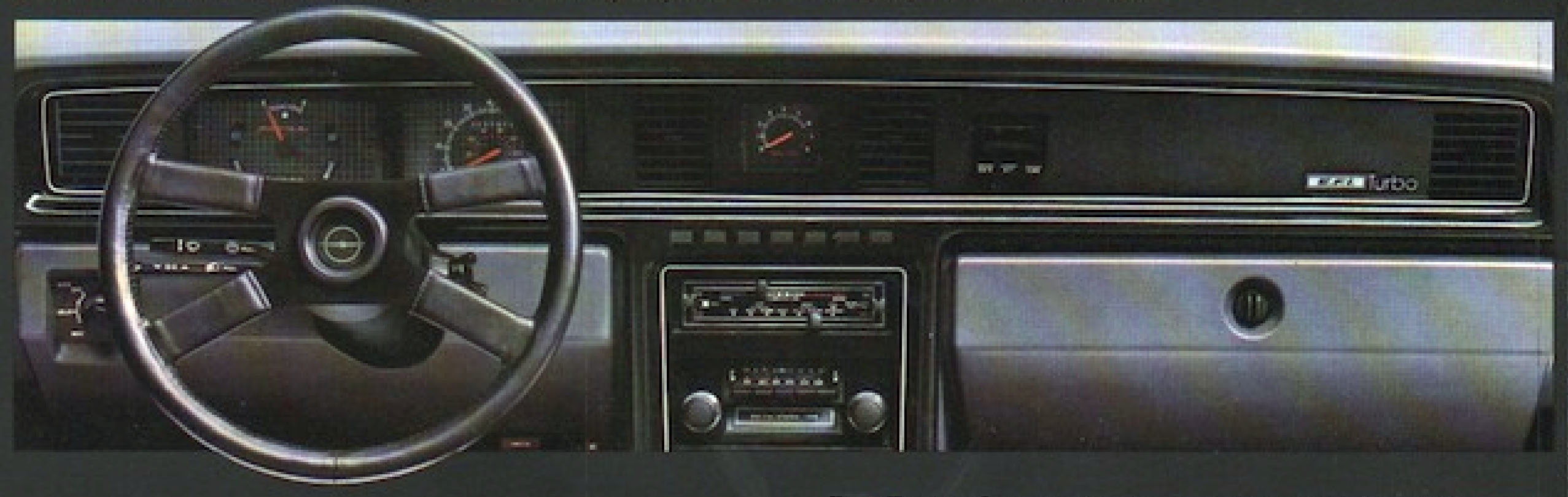
The tachometer in the center of the dash thankfully didn’t make production despite appearing in the ad, but that’s a good illustration of just how half-assed much of this early sports coupe was. The makers knew this, of course, and in this Golden Age of Ford products, they were continually making things better; for once, the potential of an American product would be fully realized. Well, almost.
The Bird Learns To Fly
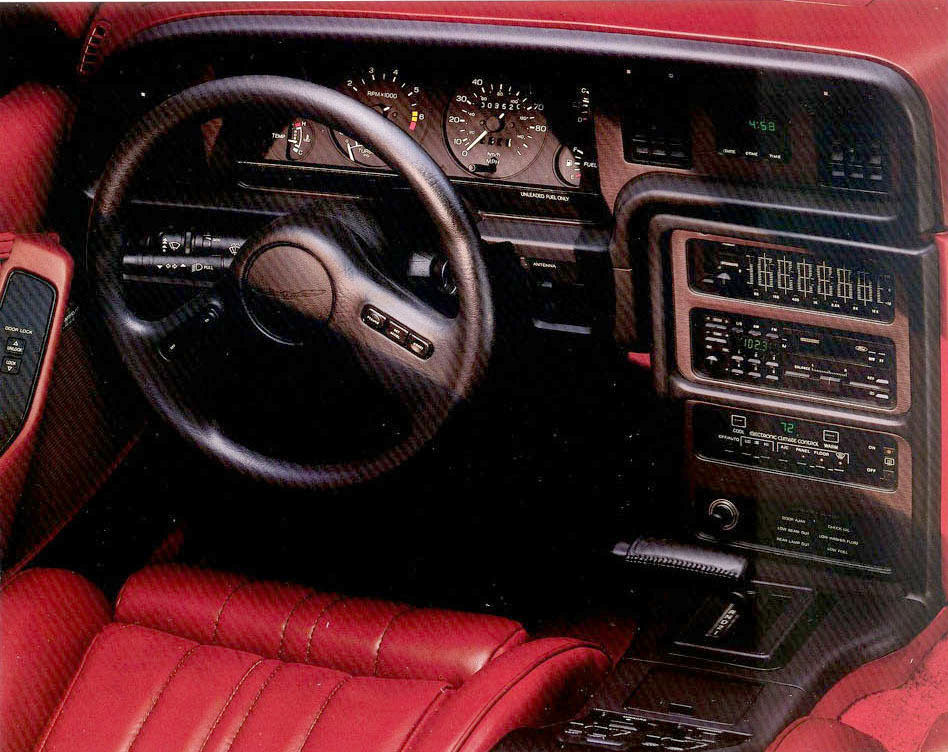
Ford wasted little time getting the interior of the T-Bird right, and the new dash that appeared for 1985 was much more befitting of something dubbed a “sport coupe.” Note that Ford still offered the warning light system in front of the gear shift, but no longer put it into the charming “car shape” as on early Fox Mustangs and Escorts. Also, a factory graphic equalizer adds a cool factor to any car. The Turbo Coupe also gained another 15 horsepower for 1985.
For 1987, the Thunderbird was supposed to get a rather simple refresh to fill the gap before the all-new 1989 model arrived. However, the team somehow turned the $100 million “refresh” into a $250 million refurbishment. Supposedly, the way the team sold it to management was the fact that the new-for-1989 Thunderbird was going to be so advanced that they needed an interim model robust enough to bridge the gap. The changes were surprisingly simple but made a huge difference in the overall presentation of the car, both aesthetically and functionally.
Looking at the ’83 to ’86 car side by side with the new ’87, you can see how the subtle modifications added up to a major change.

The greenhouse got more flush glass, and the elongated quarter windows with sharper edges worked well with a new backlight.

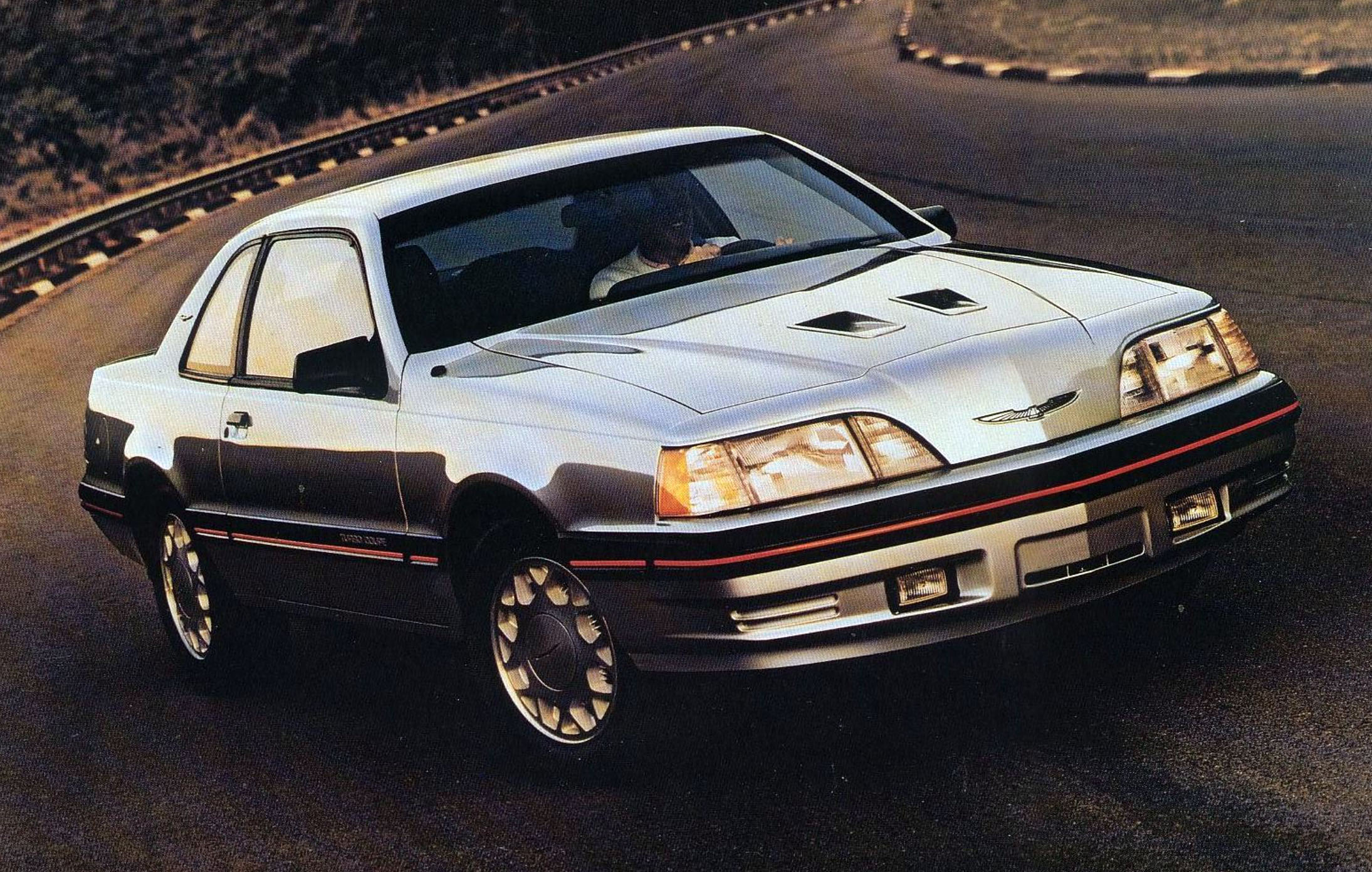
Up front, the T-Bird finally got the flush headlamps that I’m sure the designers had in mind for the first 1983 model. While the standard ‘Bird kept a chrome grille, the Turbo Coupe’s hood was styled with a bulging center that spilled over the front to form a “beak” that reached the front bumper. Turbo Coupes also got slick-looking new alloys shod in 225 Goodyear “Gatorback” tires, which hinted at some of the mechanical changes underneath.
Under the hood, the turbo four now pulled air through an intercooler on a powertrain almost directly taken from the Mustang SVO. The 190 horsepower output was around the highest of any American blown four bangers, though automatic-equipped versions made do with only 150. Zero to sixty for the five-speed Turbo Coupe dropped to around eight seconds.
The nearly ten-year-old Fox platform received an adjustable suspension that required a much more extensive refurbishing of the front end than anyone had imagined. Here’s how Ford described it:
Programmed Ride Control (PRC), the automatic adjustable shock absorber system designed and patented by Ford Motor Company. The system utilizes low shock absorber damping under normal driving conditions to provide soft boulevard ride, automatically switching to firm damping when required for improved handling. The system’s microprocessor control module “learns” where the straight ahead steering wheel position is, allowing the system to respond to absolute steering wheel angle. A closed loop control strategy is used to improve system reliability and to notify the driver in the event of a system malfunction. Fast acting rotary solenoids control the damping rate of the shock absorbers.
Ford didn’t stop there. Disc brakes found their way onto the rear axle, and an early anti-lock brake system was standard in the Turbo Coupe.
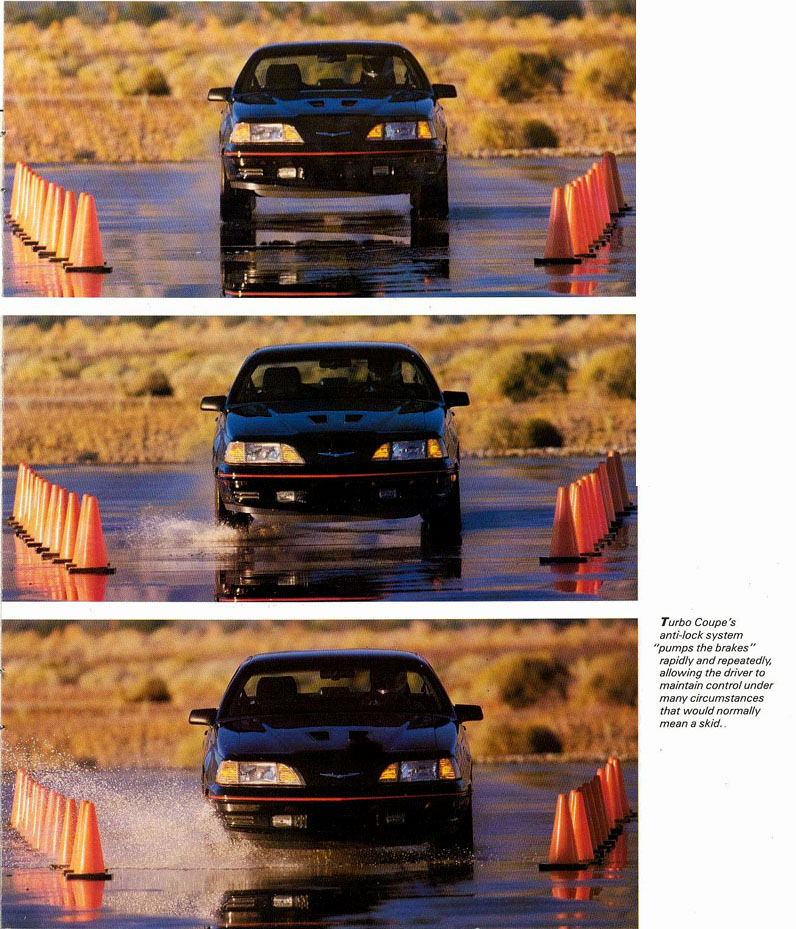
The press was impressed with the unexpected improvements to what was, in some ways, a lame duck product. Was it perfect? Well, no, and sadly, I think it probably could have been; I’ll get to that later.
Don’t Flip This Bird: It’s A Keeper
Forget even talking about “collector” status or Radwood cred: today, 1987 and ’88 Turbo Coupes sell for prices that are a bargain for good-looking, easy-to-maintain, nice-driving, comfortable transportation of any year, make, or model. Here’s what has to be one of the nicest and lowest mileage ones around (37,000 on the clock) that sold on Bring A Trailer a little while back:
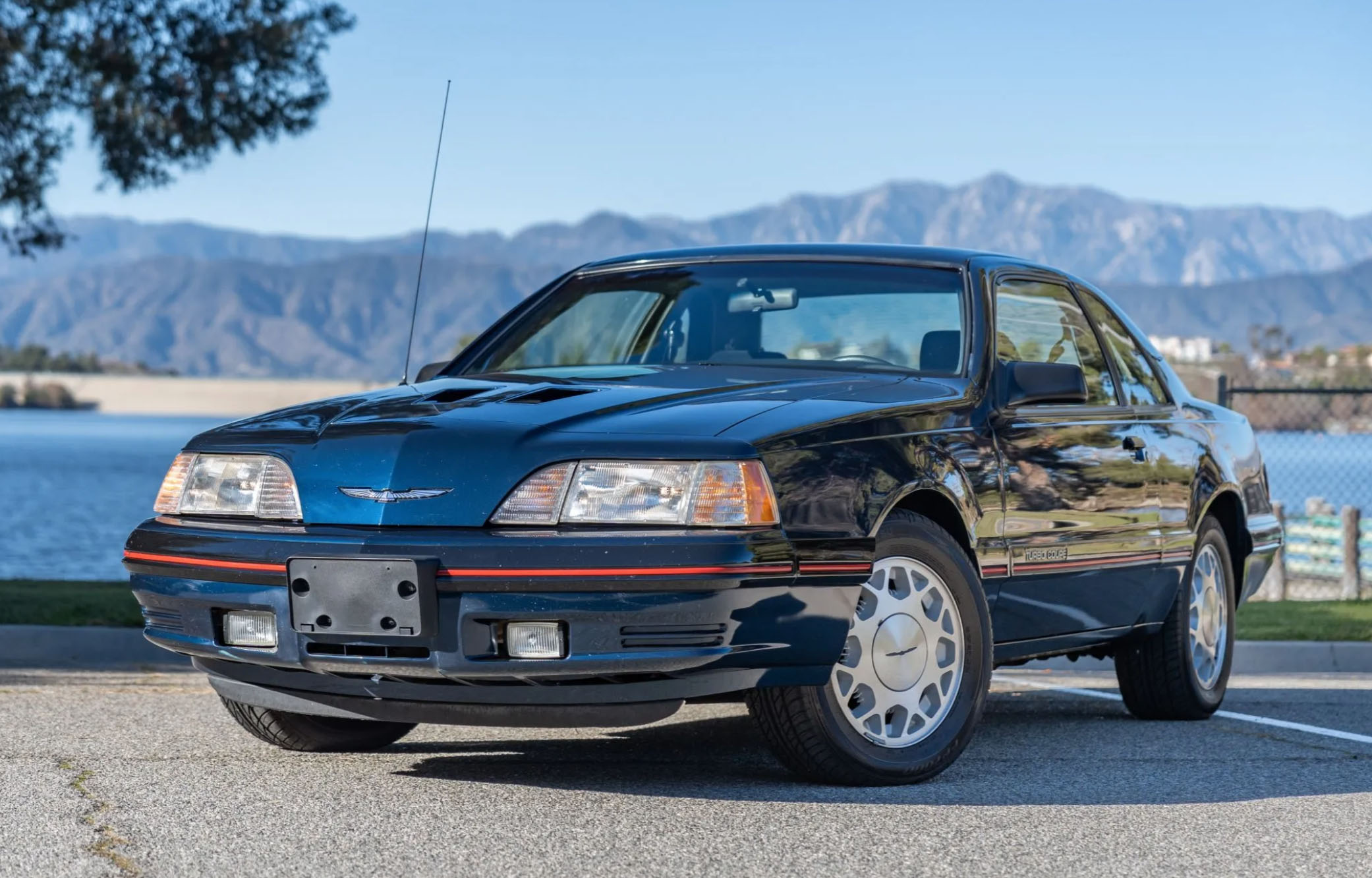
That Twillight Blue paint is absurdly good with the contrasting red striping in the bumpers and rub strips. Just a stunning car in anybody’s book.

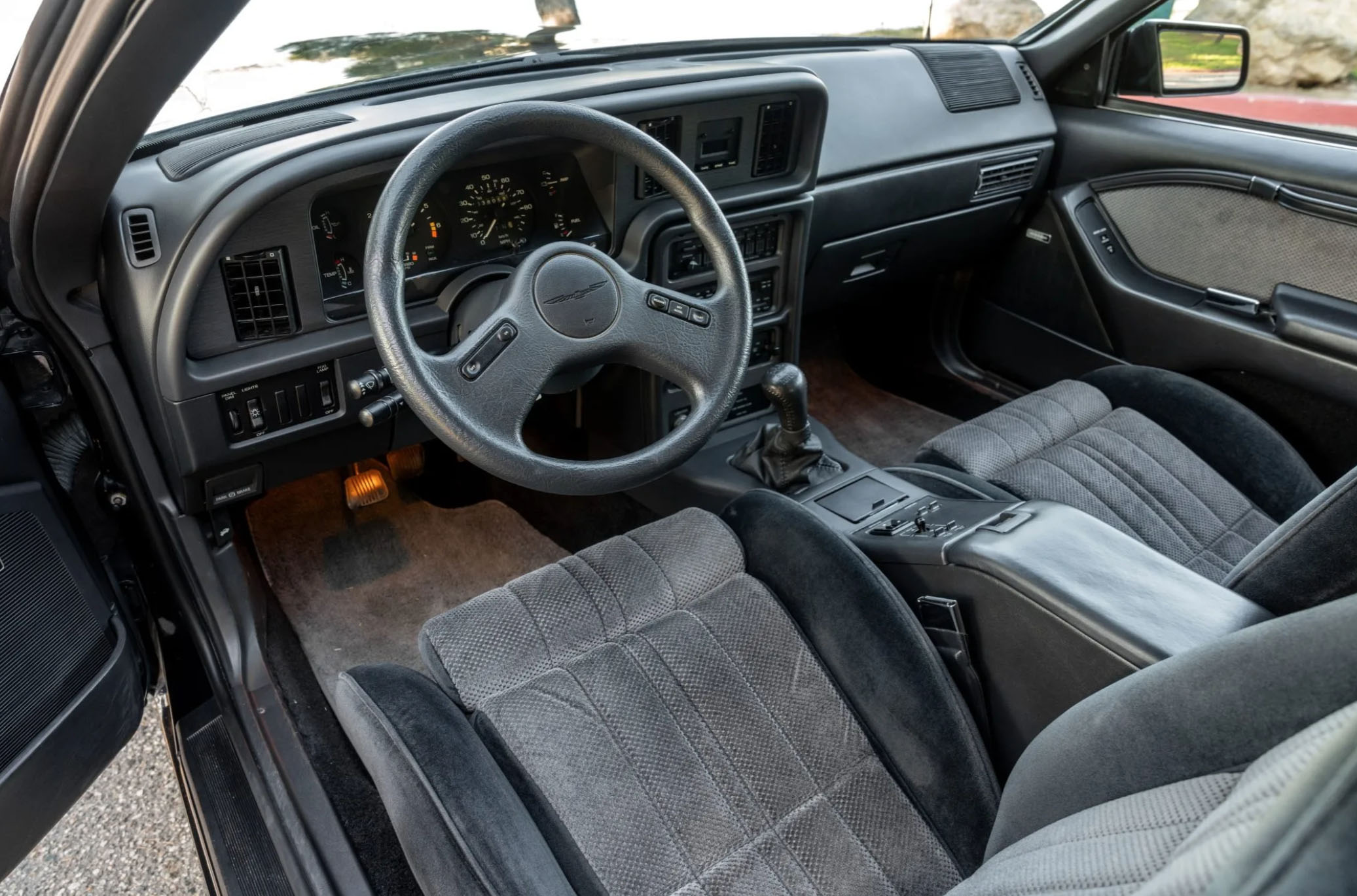
The only thing I can’t take is the lurid red cloth interior found in many Turbo Coupes, so this tasteful grey is much more to my liking. Also, I hated how the buttons on the doors looked like window switches but were actually the door locks. The window toggles were stuck on the console amidst the mirror and seat controls.
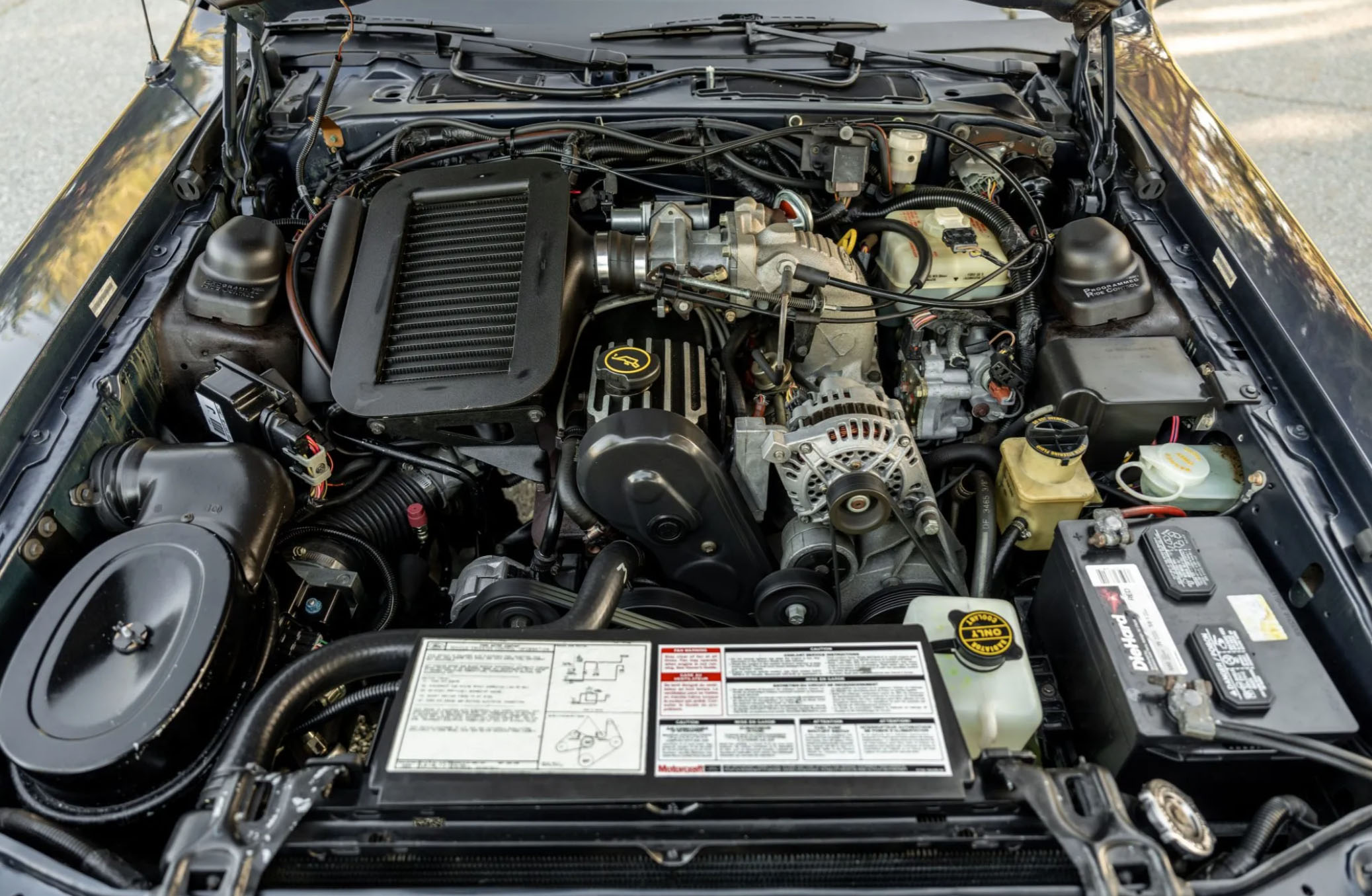
Note that the hood intakes are functional and feed air to the 190-horsepower four in this five-speed example.
The selling price? Only $16,200 for this low-mileage Turbo Coupe. Others with more miles or less desirable colors or an automatic trans will sell for low teens, or even close to ten. You’ll probably pay more for equivalent examples of the Turbo Coupe’s less classy Mustang GT or LX 5.0 brothers and get less car for your money. Hell, you’ll pay more for a late model crossover that you’ll lose in a parking lot.
Two Cylinders Short Of Greatness?
If there’s one regret with the last ninth-generation Thunderbird Turbo Coupe, it has to be the word in the middle of the name. While it’s certainly impressive that Ford got nearly 200 horsepower out of a four in 1987, more than one publication complained about the expected lag and, even worse, the noise, vibration, and harshness of the Pinto motor. Ford was never going to add balance shafts to this old mill, especially with the all-new supercharged V6 being developed for the upcoming model.
To me, the answer was right under their, well, beak. Yes, I know that an old Ford five-point-oh didn’t have the “high tech” image the Turbo Coupe was going for. I also know that Ford likely wanted to keep the 225-horsepower “high output” 302 exclusive to the Mustang or push buyers to the more expensive Lincoln Mark VII, which was the only other Fox-body with that engine. Yes, a V8-powered old-school-muscle-in-a-European-suit sports Thunderbird might have been an odd chocolate-and-peanut-butter combination, but Reece’s candies are pretty damn good, ain’t they?
Despite the deficiencies of the powertrain, you have to admire the ’87 Turbo Coupe, and it’s easy to understand how it received the Motor Trend Car of the Year award. It’s an example of how some cars start out far from perfect, but God is in the details; work to get them right, and good ones can become great ones.
Top graphic image: Mecum Auctions




These things were pretty cool. I liked them a lot more than the Mustangs, but yeah, the lack of the higher power V8 and in the nicer package was a mistake. Still, if I liked them enough, they seem to be fairly priced and an Ecoboost 2.3 might be a nice swap.
How on Earth did the ’87 and onward cars get enough air through their radiators? There is no front grille area at all.
Air intake at the bottom of the bumper and electric cooling fans.
I want to say this setup debuted on the Taurus, right? It was fairly radical for a domestic back then.
All Fox body engines breathed through the passenger side inner fender. Air intakes below the bumper were becoming widespread throughout the industry, even before the Taurus. “Bottom breathers” took advantage of the high pressure area to effectively route cooling air through the radiator.
The Ford emblem on the nose of the Taurus was also an air intake.
The Turbo Coupe had air intakes on the hood.
Under the front bumper was an air dam that pulled air up into the radiators.
Had one of these back in the day. My then-fiancee’s Cutlass got nearly totaled by a guy turning in front of her, and I really didn’t want to have another Cutlass.
Talked her into trying out (and liking!) a nearly new ’87 Turbo Coupe in white/blue cloth interior. While not the fastest version (automatic), it turned out to be a very good car. Sure, it was sketchy in the snow even with winter-ish tires, but otherwise was pretty well-built for its time and was a blast to drive. We had it ten years before selling it off around 120k miles, as it was beginning to rust at the bottoms of the rear quarters and an early-gen Grand Cherokee was calling her name.
25+ years on, I keep watching for TCs to pop up in the midwest, but most I see for sale are utterly thrashed and rusty Thunderturds. Wouldn’t want the ex-wife back, ever, but wouldn’t mind a clean Turbo Coupe, if given unlimited garage/driveway space.
Decades ago I had a friend who had an ’85 (I think) Turbo Coupe that he later sold to buy a new Super Coupe. I’m not sure he ever fell in love with the Super Coupe the way he did with the Turbo Coupe. Objectively, the SC was probably better in nearly every way, but we all sort of agreed it didn’t have the character of the TC.
it was certainly the best looking modern Thunderchicken. the Biggest issue with the pinto 4 was seemingly the number of cylinder head bolts, the Turbo Motors had a reputation for blowing headgaskets back in the day. I did not buy one as a result. i still kind of wish I had though. it would have been interesting to eventually swap in a 87 5.0 in one of them. though I always wondered why they did not and assumed that was a Cooling Capability issue with t he Turbo Coupe Aero nose.
You could get a Fox Thunderbird/Cougar with a 302 – not sure if that was an option during this timeframe, however. They *definitely* came in lesser trim with the 3.8L “Essex” V6, as well.
You could, the V8 was the same as the Mustange for the most part, but the grill was Chrome and looked more like it should have been on a lincoln. I always figured the better aero nose would physically fit, but I did wonder if the cooling would be affected.
The 89-97 V6 was never turbocharged. The new top model was called SUPER COUPE. 230HP IIRC. The base Thunderbird V6 was shared with 94-98 Mustang and had 145(ish) HP.
I own a 2004 Mustang V6. I am fully aware of the differences between 94-98 and 99-04 engines.
yeah they were supercharged not turbo!
I REALLY wanted a 1987 turbo coupe that was for sale as my first car. We drove past on for sale every day on the way to school.
However, I had a paper route that started as a single 100 paper route but then as each kid quit my family added more routes until my mother and I were delivering 500 papers a day. Parents agreed that I if I split the cost on a 4×4 with the paper route I could drive it as my first car. Bought an 87 S-15 Jimmy with a blown main seal and rust damage when I was 15 and my dad and I rebuilt the engine and then sent it to a body shop for rust repairs and new paint.
It was the practical choice but my brother rubbed it in a bit when he went from a Firebird, to a Camaro, to a Corvette.
I went to an autocross once where someone rolled up in a teal turbo Thunderbird. He obviously had done some tuning to it and the blow off valve did a wonderful job of punctuating every lift off right as the body was starting to roll heavily away from the approaching turn. It was a blast to watch (and hear). Slower than my stock tC, but certainly more fun!
“Road & Track managed a zero to sixty run of 9.7 seconds, which is pretty bad until you realize that’s the same number the got out of their Camaro Z28 test car the year before! Welcome to the malaise.”
This is what I think of when someone says that a midsize crossover that goes 0-60 in 7 seconds is slow. I grew up riding in the backseat of 80’s cars and those were the used cars we bought as our first cars in the early 90’s.
My brother’s first car was a 82 Firebird that made 90 hp. At least it was the 5 speed.
My first car was a 1987 GMC S-15 Jimmy 4×4 with the optional 110 hp V6. That thing took about 15 seconds to get to 60 mph.
You don’t get it, man. Over 9 seconds is DANGEROUS. You can’t merge on to a neighborhood street, much less a highway! You’ll get flattened by the hoards of semis!
“The 2024 Mitsubishi Mirage has a 0–60 mph time of approximately 10.6 to 12.8 seconds, making it one of the slowest new cars sold in America.”
Quick compared to my 2003 Jetta TDI – which was a great car.
The numbers don’t tell the whole story, so it kind of depends. Cars of this era were tuned for low end power and didn’t rev high, and since they didn’t have VVT, they had to pick between low or high end and most went with low. The response off the line and getting up to approximate merging speeds were usually much better than the numbers look compared to a modern car with the same or even relatively better numbers. For example, I had a couple of early ’80s Subarus that hit 60 in the 13-16 second range, but they had 90 lbs ft nearly off idle, so they’d chirp the tires off the line (FWD) and, combined with excellent throttle response, they were traffic street fighters. A large portion of that slow 60 time was spent past 50mph and they got out of their own way quick enough at low speeds that they never felt dangerous merging or pulling out. I had a ’16 Kia Rio rental that did 60 in about 10 seconds, but it felt terrifyingly slow because the throttle lagged terribly before the engine started to rev, then the transmission took its time to start delivering power to the wheels, then it did almost nothing until it finally hit 3500 rpm. Pulling into Boston area traffic, rotaries, etc. were nerve wracking in a way those old Subarus never had me even think about. Sure, once it got moving, the Kia made up time acceptably, but in most daily driving, if one has to choose one of either operating characteristic, that’s the opposite most would want.
Plus, if you stomp the throttle and chirp the tires on most Kias newer than 2011, the “traction assist” kicks in and cuts power, which seems unsafe if you’re trying to make a turn in front of moving traffic from a stop sign.
It’s so annoying, and my least favorite part of driving our ’12 Sorento.
Geez, you call that slow? How about 30 seconds in a Mercedes 200 diesel?
You could get the V8 in the otherwise twin Mercury Cougar of the same period, although never with a stick IIRC. Also had the formal roofline, but otherwise badge engineered. Also had an available 80s tacular digital dash.
But it wasn’t the ‘good’ V8. It was the crappy one that only made 150-160hp.
I loved this car, and then lusted for the replacement, was a knock off of a BMW coupe at peak BMW styling. Why does it seems that the right person or people can rise to the top only after the place has been run in to the ground by the same old herd of morons. And once the place has been saved and is thriving once again, the morons slime back out into the light and drive out the talent.
I really wish my memory on this was better because it would make for a great story to add here.
My dad worked as an editor for one of the local newspapers that covered much of the metro Atlanta area. This was around the mid 80s and went through the early 90s timeframe.
At the time Ford had an office here, I think they did a lot of development of option packages or features but I was never really clear on that. But, Ford would offer my dad a car to drive around for a time, usually 3-4 times a year. I remember he got the Aerostar van when it was new, he got a Mustang convertible when it was redesigned for 92 (I think?). Often it would not coincide with specific redesigns but if there were new options and features they were testing out.
But, for the 86/87 Thunderbird I remember this being a very big deal. He got one exactly as pictured for the BaT ad. He drove it for a week or so and at the end of it, he and a bunch of other journalists took them all to Road Atlanta for track time. They called it a “Race for Charity,” or something but I don’t think they really raced. Just timed runs around the circuit. I was supposed to be able to ride shotgun but they wouldn’t allow it when I got there. I was so bummed I don’t think I even watched it at the time. Just walked around the spectator area and looked at the displays of new cars.
However, when I turned 16 in 1989, dad actually asked for the New Thunderbird as a loan from the Ford guys he had gotten to know pretty well by that time. I got to take my driving test in it (dad was a bit worried his Escort would crap out on me on my test drive) and tote all my friends around in it all weekend. It wasn’t the SC just the base LX model but I didn’t care at the time. It was a blast.
Anyway, I would love to have one of these someday. I actually think the 87/88 refurb model is a better looking car than the redesign in 89. Thanks for the memories, Bishop!
I rode in one of these and it was a raucous, tail-happy beast with a young/foolish driver behind the wheel. Fun, and probably still fun to own, but I can think of other things I’d rather spend $16K on (plus auction fees, tax/title/reg).
I don’t think I ever noticed how extensive the facelift of the car was, but now that I see it laid out like that it’s pretty huge.
The 80-82 T-Bird is quite an embarrassment, there is a low mileage one locally on craigslist that they’re asking alot for but then again its been listed a long time. The 83 was quite an improvement and the 87 was quite a good looking car.
For a while the TC turbo engine was popular for restomodding Pintos and Bobcats that came with the NA 2.3 Lima.
I watch a guy on YouTube who has a T-bird Turbo parts car whose engine is destined for a Lima-powered Ford Courier U-Haul box truck, but he never seems to get around to the project 🙁
Awesome! Is it like this one?
https://www.theautopian.com/the-rarest-u-haul-truck-youve-never-heard-of-is-this-adorable-ford-with-a-cube-on-its-back/
I don’t think you can overstate how big of a deal this generation of T’Bird is. Before the introduction in 83, American cars were big boxy uninspiring penalty boxes. When these came out, it really made a big 3 car something that was desirable. We had a neighbor buy a FILA edition in 84 or 85 and it was the talk of the neighborhood. Really a transitional moment for Ford. And as a bonus, they continued to improve it until its death in 97.
Agree completely. These stuck out as crazy different back then nearly as much as did the Tauruses.
Freon-filled gas-bag axle dampers sounds like an insult from an Adrian Clarke article.
Is he on Cameo and how much would it cost to get him to say it on camera? Bravo.
Or captain Haddockisms
:
Addle-pated lumps of anthracite
Two-timing Tartar twisters
Licorice-livered lubberly scum in thousands of thundering typhoons
Miserable molecule of mildew
Yup, pretty much at home there,
While I deeply regret the choices Bill Elliot has made in the last ten years, I still am in awe of this Thunderbird and the races he won…quite a bit of the refurbishment of the ’87-88 was driven by NASCAR.
I believe the ’88 Thunderbird still holds the fastest lap (in qualifying) of 212 miles per hour at Talladega…a speed that I doubt will ever be equaled.
> To me, the answer was right under their, well, beak. Yes, I know that an old Ford five-point-oh didn’t have the “high tech” image the Turbo Coupe was going for. I also know that Ford likely wanted to keep the 225-horsepower “high output” 302 exclusive to the Mustang or push buyers to the more expensive Lincoln Mark VII, which was the only other Fox-body with that engine.
Yet another example of one of my biggest pet peeves when it comes to automakers: Reaching into the parts bin for some interesting combinations, but reaching right past the most obvious choices, especially engine choices. I was asking that question myself in the 80s as a car-freak kid.
See also: the competing contemporary Monte Carlo/Grand Prix/Cutlass never getting Tuned Port Injection, not even as limited production NASCAR homologations. So the Z28 and Trans Am (or Mustang) need to remain the faster cars in the lineup, with the Corvette remaining at the top of the heap? Fine – with the G-Body (or T-Bird) usually outweighing the F-Body (or Mustang) by a couple hundred pounds, the F-Body/Mustang would have been faster anyway, through the magic of power to weight ratio. So what gives?
And then cancelling the car because it didn’t sell enough of them after they intentionally pushed customers to a different car.
This. This is why we can’t have nice things.
I remember the announcement of the cancellation of the OG F-body platform in the 00s, and how it broke my heart. Then it plain pissed me off to hear “sales” as the reason, while Ford was still slinging Mustangs by the thousands. Then I thought: When was the last time I saw a Camaro or Firebird ad on TV, compared to the last time I saw a Mustang ad on TV? Or a print ad for either outside of Hot Rod or Car Craft, compared to the Mustang ads I’d see in Sports Illustrated? When was the last time y’all actually, you know, TRIED to sell them?
Why can’t we have nice things? When it comes to GM, it’s because no matter what, the General always gonna General. GM can’t have a good thing going, ever, without willfully GM’ing it up.
Yeah, GM was doing the same when this T-Bird rolled. I remember the Fiero. Just when it got good…
As a child I actually preferred the styling of the first gen Turbo Coupes, probably because they were such a divergence from most of what was on the road at that time. The restyle with the composite headlights is cool, but if it were me I’d backfit all the chassis improvements to the predecessor, and do a whole lot of engine tuning to break 220 HP. Would be a totally cromulent sleeper.
I owned a 5-speed 1987 Turbo Coupe in the early 1990s. Absolutely one of the best cars I’ve ever enjoyed. Quick (by standards of the time) if you stick your foot in the turbo, efficient (30+ mpg) if you didn’t, and a supremely comfortable long distance tourer.
https://itisgood.org/auto-biography/#87Ford
I remember being excited by the looks of the ’83 T-Bird and Cougar, but my parents didn’t go for one. Reading reviews of them, I can see why.
The ’87 Turbo Bird looks a lot bigger than it is, and it looks good.
When they weren’t afraid of high profile tires.
Yep! When sedans could handle rough roads without knocking your fillings out.
FYI: Looks like a photoshop layer darkening the windows is offset on the top image
FIXED, thank you.