

The first models of some beloved imported cars arrived on our shores almost perfect. When the first 240Zs and Mazda Miatas dropped, many were even terrified that “improvements” the makers would inevitably make for the model years to follow could only diminish the perfect recipes of the first-gen cars.
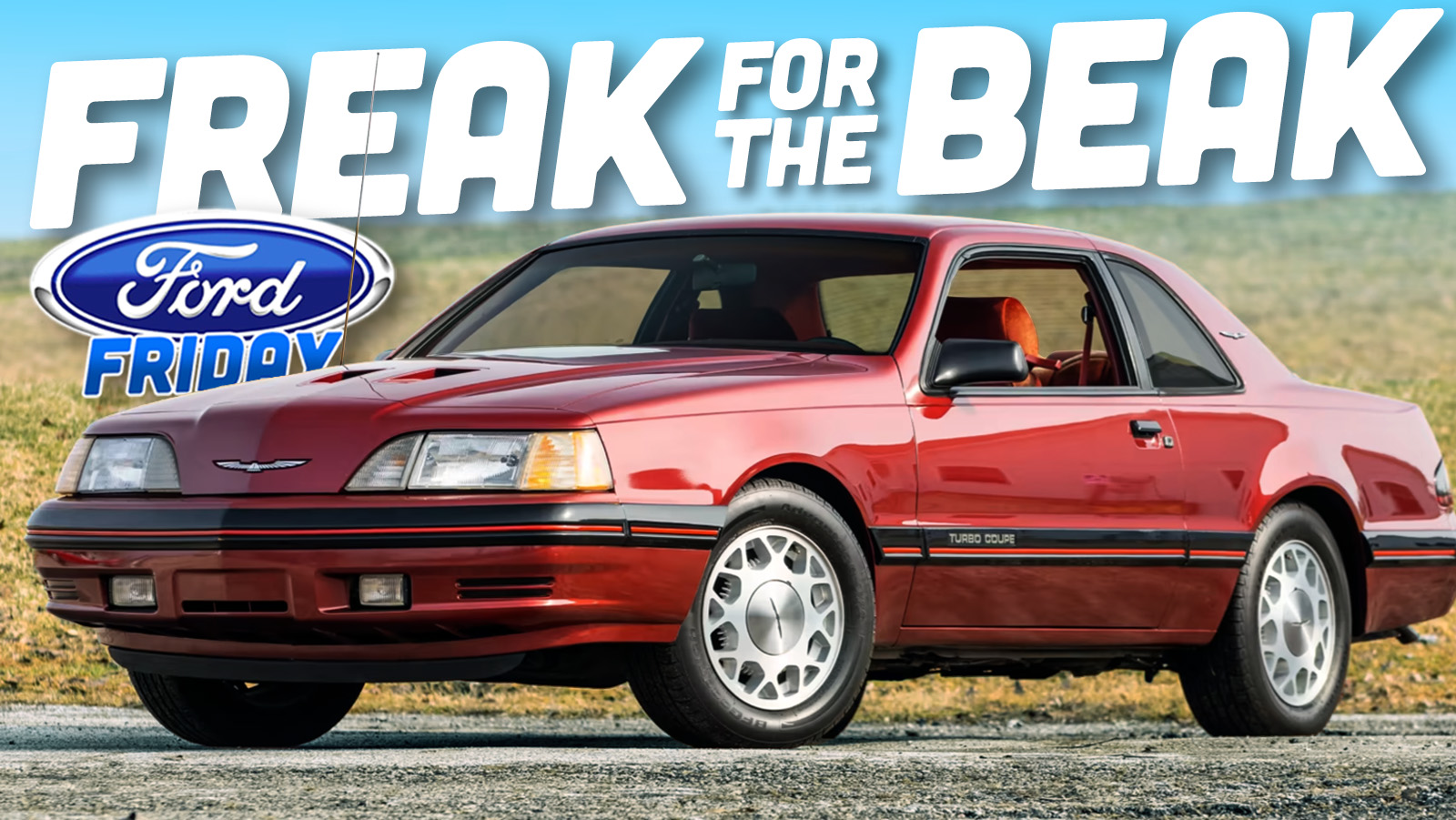
American manufacturers during the eighties often had the opposite problem. They’d launch promising new cars that seemed full of potential but were essentially unfinished when released. One such car was the 1983 Ford Thunderbird. Thankfully, the Blue Oval rather quickly corrected some of the half-baked elements of this return-to-form version of the Thunderbird to eventually give us the car we wanted all along: the 1987 “Beak Bird” Turbo coupe


Dark Days In Dearborn
Many car historians worship “salesman supreme” Lee Iacocca, who made sometimes-junky products that sold like crazy. Others buy into the hype of “car guy” Bob Lutz, who championed “enthusiast” stuff that often didn’t sell at all. However, there are a number of very successful auto executives over the years who have not gotten the spotlight they deserve. To me, Donald Peterson of Ford seems to fall into that category: a man who gave us products that both sold and that people who cared about cars actually enjoyed.
Much has been said about how Iacocca saved a dying Chrysler, but it’s overlooked that the Ford Iacocca left behind in 1978 was not in much better shape. Peterson was the one tasked with pulling off the brand’s comeback. One pivotal moment of his early tenure is chronicled in an article by Greg Easterbrook in Washington Monthly:
On a very dark day in 1980, Donald Petersen, newly chosen president of Ford Motors, visited the company design studios. Ford was in the process of losing $2.2 billion, the largest single-year corporate loss in U.S. history. The future seemed equally bleak. Most Fords could charitably be described as iron thunder lizards. There was no minimum to the number of them Petersen could sell.
Petersen had come to review proposals for a new Thunderbird–the model that had been Ford’s flagship but through the 1970s had grown about as exciting as a tuna trawler. He was shown the customary sketches of big, boring boxes. Ford designers, truth be told, hated their own designs. Often they had tried to propose interesting cars like the Europeans and Japanese were building. Top management always shot them down. There was only one kind of car headquarters wanted to hear about: A Car Just Like Last Year’s.
Indeed, the all-new 1980 Thunderbird being sold that year was based on the smaller, economical, and decent-driving Fox platform instead of the previous year’s Torino-based boat. However, the styling was, by almost anyone’s standards, just awful.

I can only imagine what kind of landau-roofed madness Ford’s execs had in mind for the replacement; Peterson took a look at what the creative staff had been tasked to develop.
After examining some sketches, Petersen looked up at the designers and asked, “Are you proud of these?’ There was a pause. In big corporations, people are handsomely paid not to say what they think.
“No. I’m embarrassed by them,’ Jack Telnack, Ford’s chief of design, answered. Then the designers wheeled out clay models of a different type of Thunderbird –aerodynamically smooth, European influenced. There was even a sporty version configured for the BMW crowd with a small high-tech engine, a five-speed transmission, and no chrome. When was the last time anyone saw a stick in a Thunderbird? Maybe 1956.
This Thunderbird design represented everything cars are supposed to be and Detroit products never are. Functionality. Taking the driver seriously. Appealing to the consumer’s better judgment, rather than the market research department’s lowest common denominator. Headquarters was bound to hate it.
Petersen said go ahead.
With that, the renaissance at Ford began. The Thunderbird would lead the way for the “aero revolution” with a style that looked more like a German car at the time than a product of Detroit.
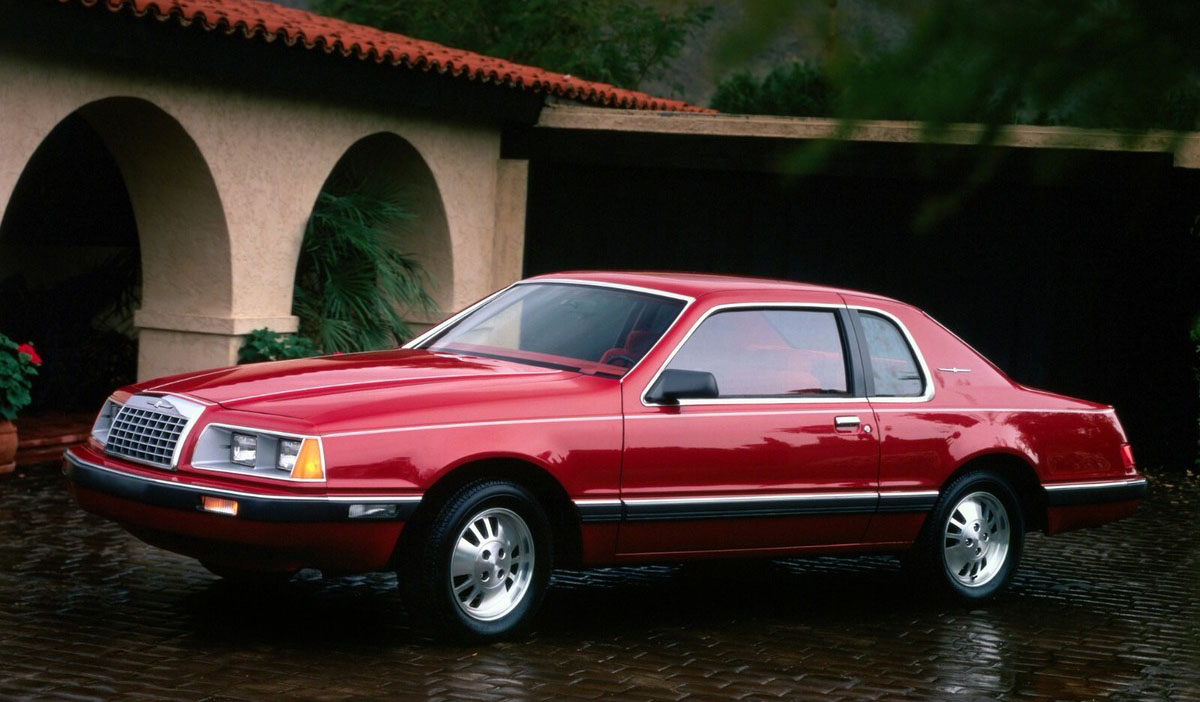
The big news, though, was that the top-of-the-line T-Bird was not going to be some “Heritage” edition or similar with fender skirts and a vinyl roof. No, the Turbo Coupe was marketed as a grand touring two-door to be a sort of cut-rate BMW 635csi.
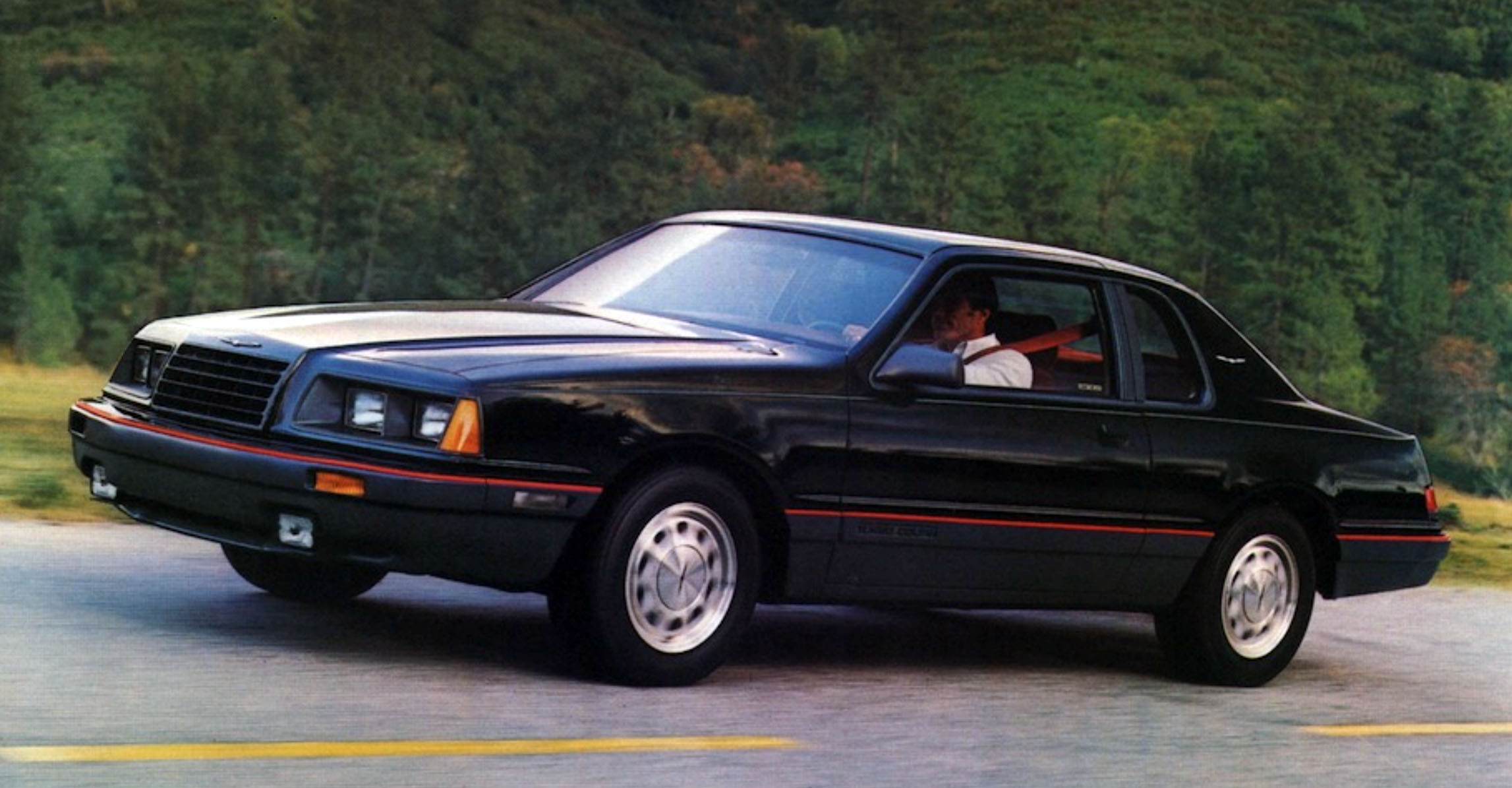
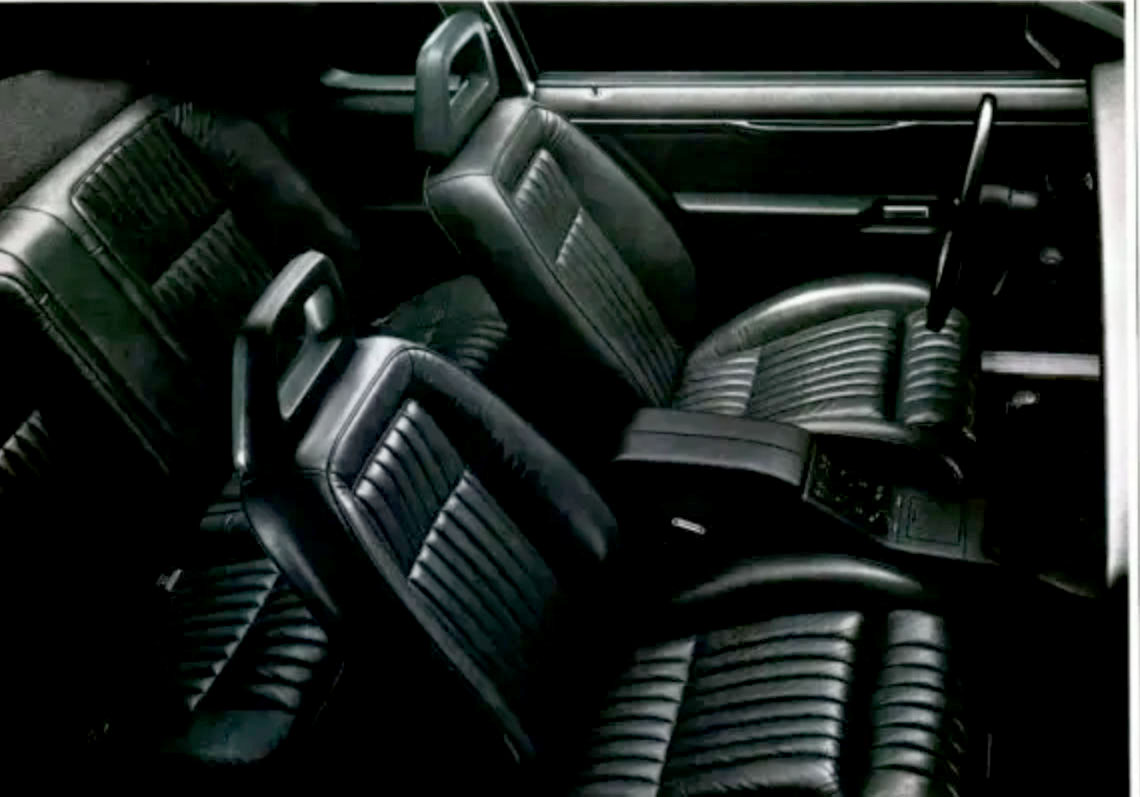
Bucket seats. Manual transmission with a shifter in a console on the floor. Alloy wheels and, under the hood, a turbocharged four-cylinder engine; essentially half the size of the standard mills in T-Birds from a few years before. This 2.3-liter “Pinto” four finally had fuel injection, which solved the problems of the carbureted “draw through” turbo motors offered from ’79 to ’82.
With 145 horsepower, it was still five short of the Windsor V8, but admittedly the lighter, more efficient, and “higher tech” engine was a far better fit for this sophisticated coupe’s image. Road & Track managed a zero to sixty run of 9.7 seconds, which is pretty bad until you realize that’s the same number the got out of their Camaro Z28 test car the year before! Welcome to the malaise.
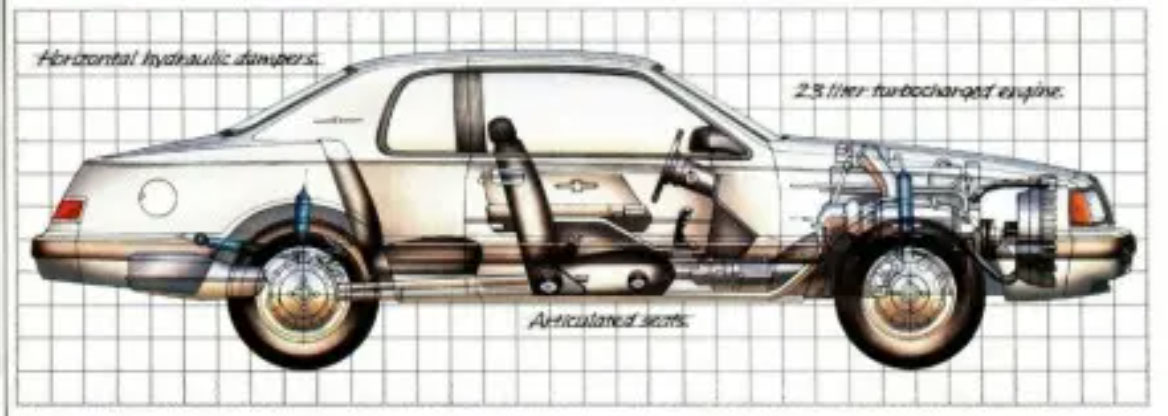
The Fox chassis received some tweaks from the Mustang, most notably the “quad shock” rear end. These extra set of shocks acted as dampers to help control some of the nasty habits of a live axle, particularly the hopping you might get under power.

As was the case in much of the American malaise, the first aero ‘Birds were not perfect; far from it, actually. That turbo four was a bit clunky with all the lag you’d expect. The suspension, brakes, and wheel/tire combos could use some work. Worst of all, cash-strapped Ford had obviously run out of funds when it came to the instrument panel, which was shared with lesser Fox body products.
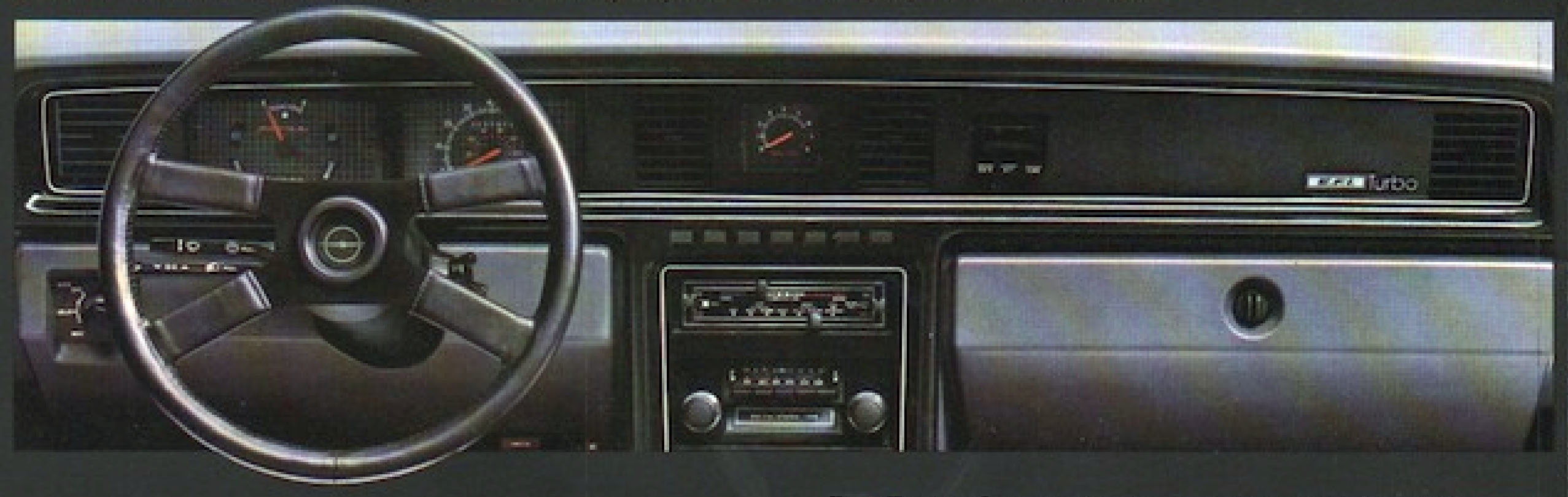
The tachometer in the center of the dash thankfully didn’t make production despite appearing in the ad, but that’s a good illustration of just how half-assed much of this early sports coupe was. The makers knew this, of course, and in this Golden Age of Ford products, they were continually making things better; for once, the potential of an American product would be fully realized. Well, almost.
The Bird Learns To Fly
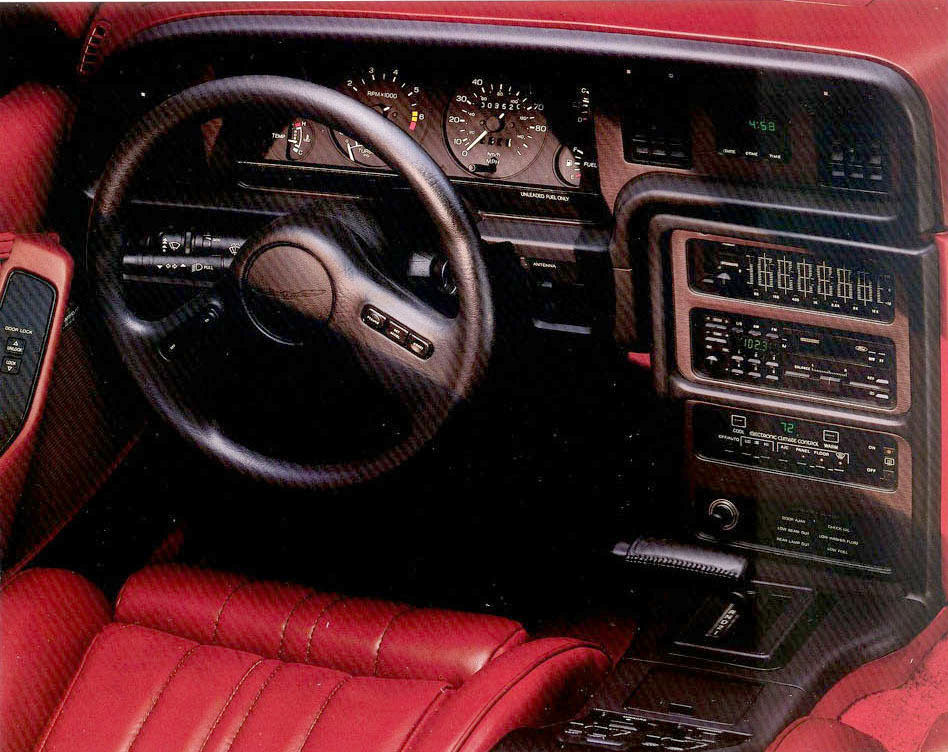
Ford wasted little time getting the interior of the T-Bird right, and the new dash that appeared for 1985 was much more befitting of something dubbed a “sport coupe.” Note that Ford still offered the warning light system in front of the gear shift, but no longer put it into the charming “car shape” as on early Fox Mustangs and Escorts. Also, a factory graphic equalizer adds a cool factor to any car. The Turbo Coupe also gained another 15 horsepower for 1985.
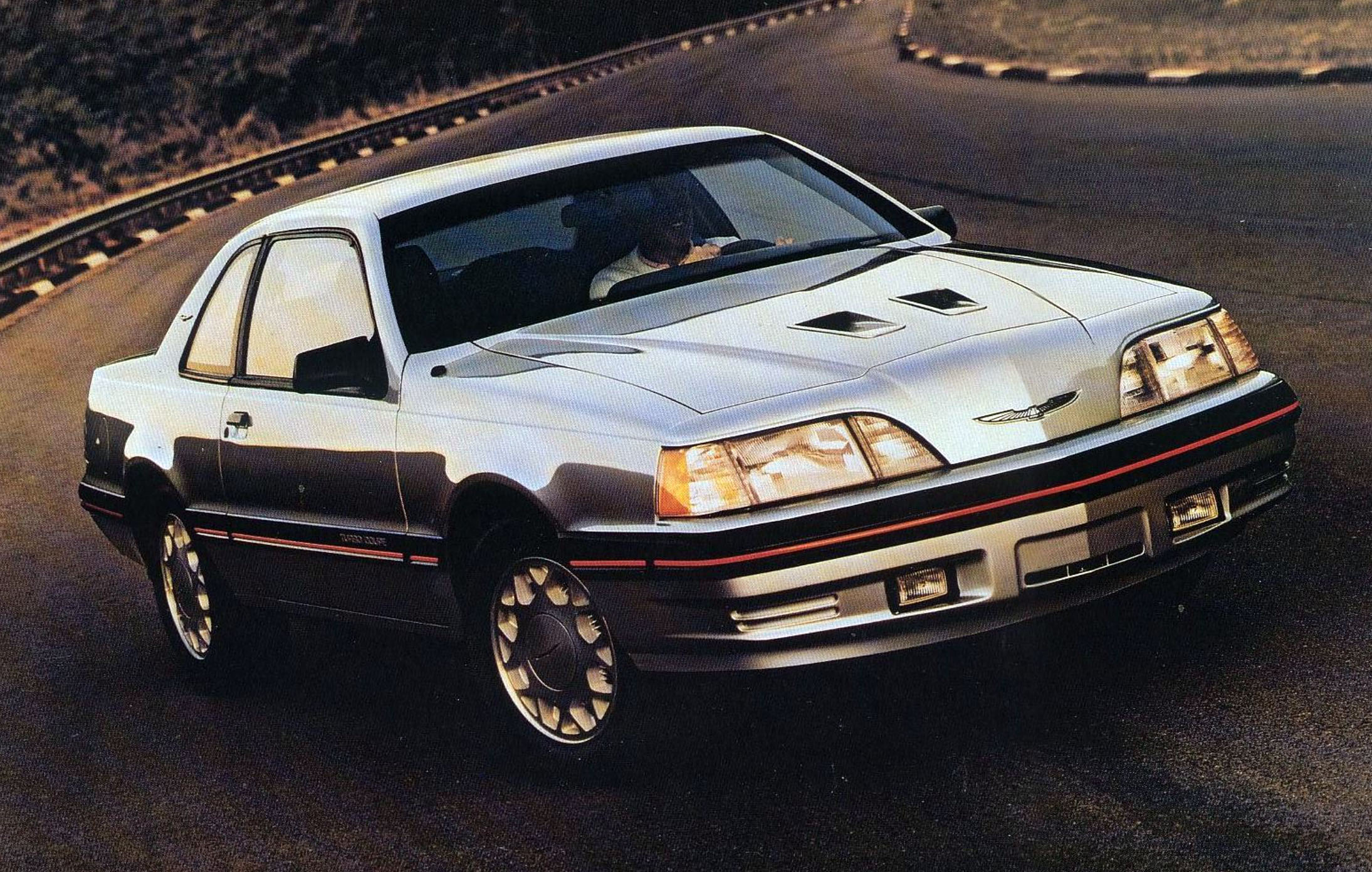
For 1987, the Thunderbird was supposed to get a rather simple refresh to fill the gap before the all-new 1989 model arrived. However, the team somehow turned the $100 million “refresh” into a $250 million refurbishment. Supposedly, the way the team sold it to management was the fact that the new-for-1989 Thunderbird was going to be so advanced that they needed an interim model robust enough to bridge the gap. The changes were surprisingly simple but made a huge difference in the overall presentation of the car, both aesthetically and functionally.
Looking at the ’83 to ’86 car side by side with the new ’87, you can see how the subtle modifications added up to a major change.

The greenhouse got more flush glass, and the elongated quarter windows with sharper edges worked well with a new backlight.

Up front, the T-Bird finally got the flush headlamps that I’m sure the designers had in mind for the first 1983 model. While the standard ‘Bird kept a chrome grille, the Turbo Coupe’s hood was styled with a bulging center that spilled over the front to form a “beak” that reached the front bumper. Turbo Coupes also got slick-looking new alloys shod in 225 Goodyear “Gatorback” tires, which hinted at some of the mechanical changes underneath.
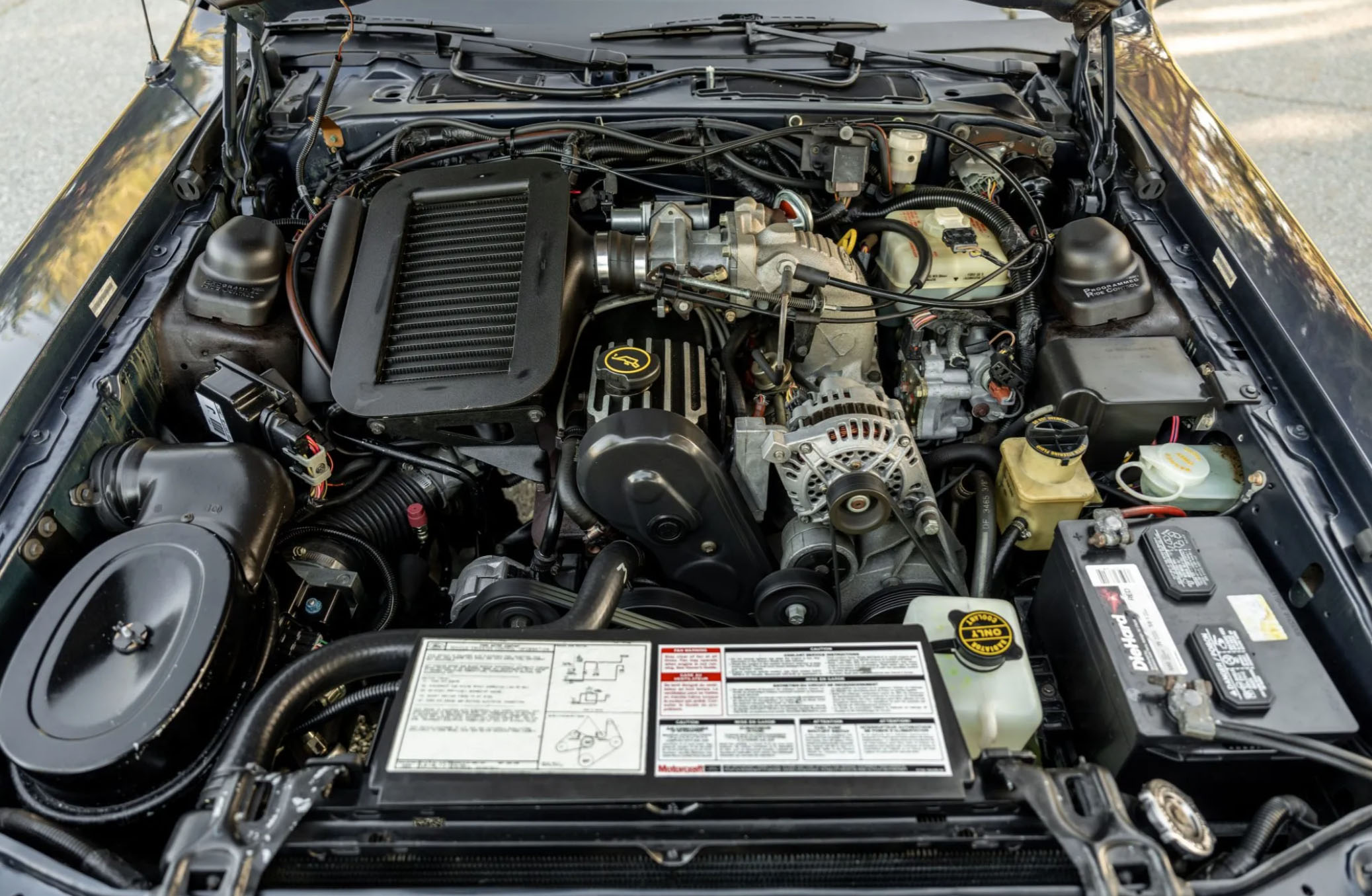
Under the hood, the turbo four now pulled air through an intercooler on a powertrain almost directly taken from the Mustang SVO. The 190 horsepower output was around the highest of any American blown four bangers, though automatic-equipped versions made do with only 150. Zero to sixty for the five-speed Turbo Coupe dropped to around eight seconds.
The nearly ten-year-old Fox platform received an adjustable suspension that required a much more extensive refurbishing of the front end than anyone had imagined. Here’s how Ford described it:
Programmed Ride Control (PRC), the automatic adjustable shock absorber system designed and patented by Ford Motor Company. The system utilizes low shock absorber damping under normal driving conditions to provide soft boulevard ride, automatically switching to firm damping when required for improved handling. The system’s microprocessor control module “learns” where the straight ahead steering wheel position is, allowing the system to respond to absolute steering wheel angle. A closed loop control strategy is used to improve system reliability and to notify the driver in the event of a system malfunction. Fast acting rotary solenoids control the damping rate of the shock absorbers.
Ford didn’t stop there. Disc brakes found their way onto the rear axle, and an early anti-lock brake system was standard in the Turbo Coupe.
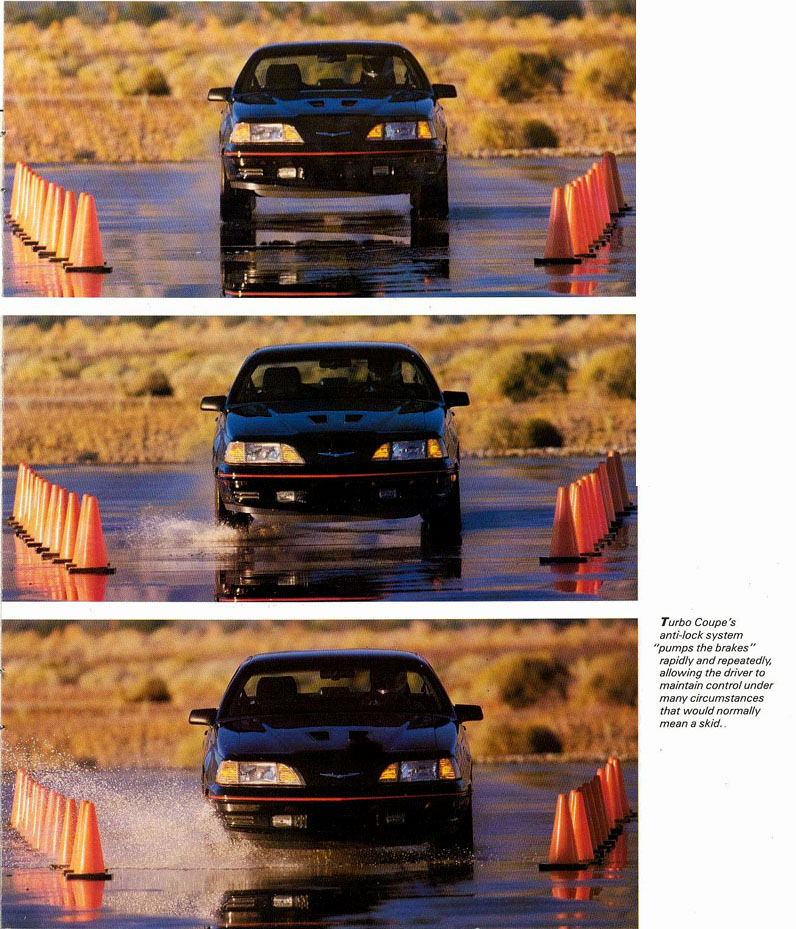
The press was impressed with the unexpected improvements to what was, in some ways, a lame duck product. Was it perfect? Well, no, and sadly, I think it probably could have been; I’ll get to that later.
Don’t Flip This Bird: It’s A Keeper
Forget even talking about “collector” status or Radwood cred: today, 1987 and ’88 Turbo Coupes sell for prices that are a bargain for good-looking, easy-to-maintain, nice-driving, comfortable transportation of any year, make, or model. Here’s what has to be one of the nicest and lowest mileage ones around (37,000 on the clock) that sold on Bring A Trailer a little while back:
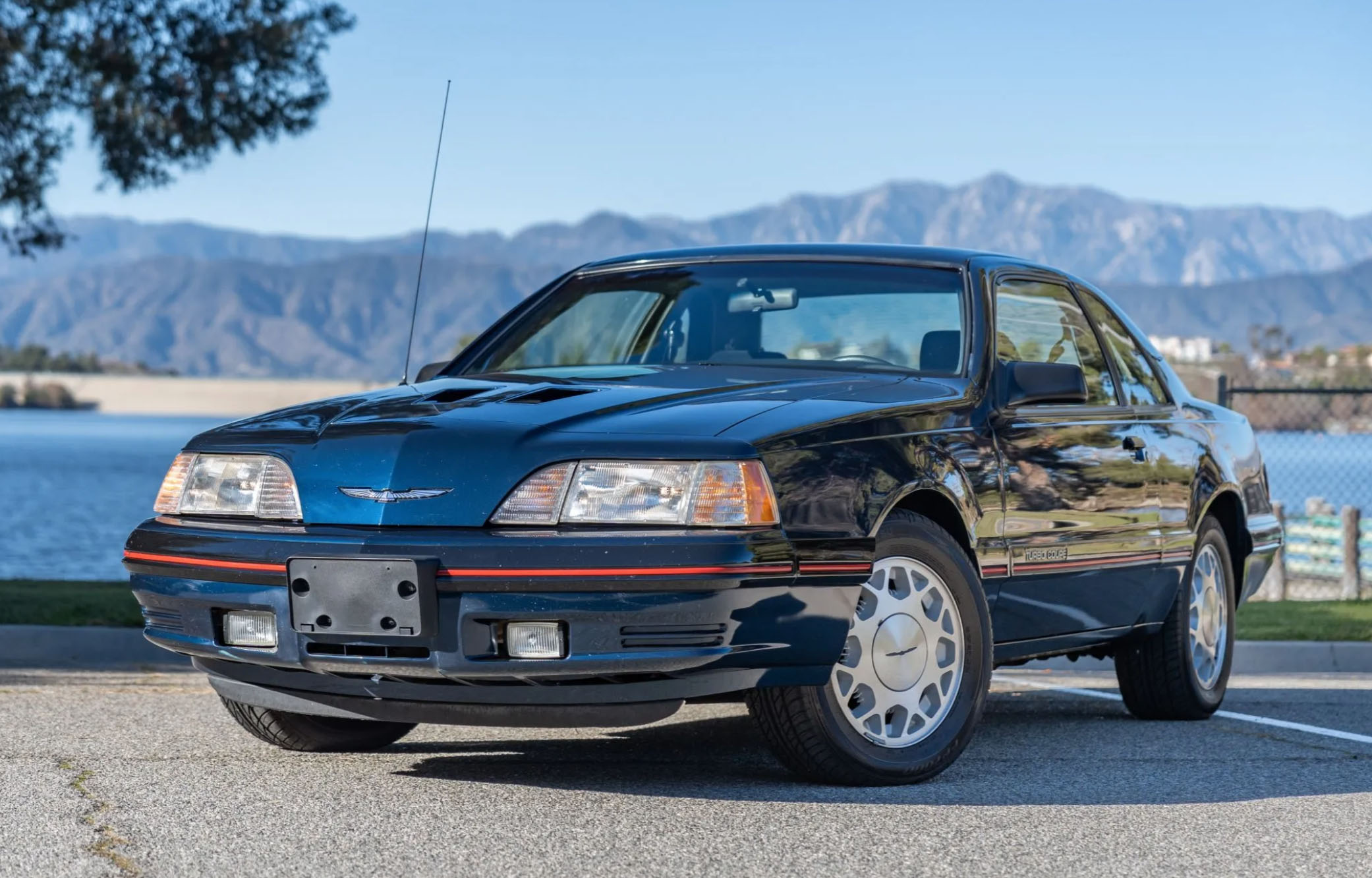
That Twillight Blue paint is absurdly good with the contrasting red striping in the bumpers and rub strips. Just a stunning car in anybody’s book.

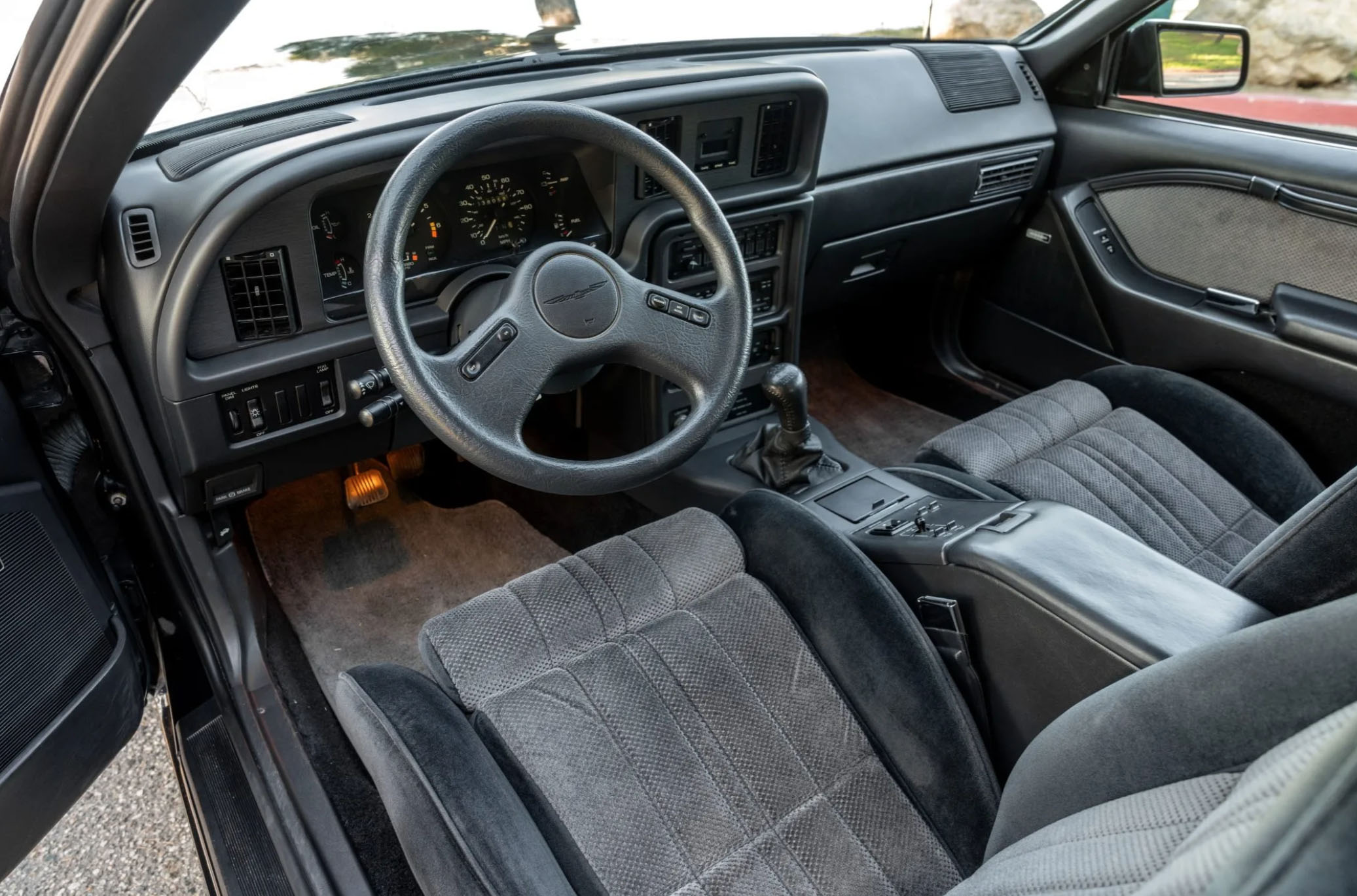
The only thing I can’t take is the lurid red cloth interior found in many Turbo Coupes, so this tasteful grey is much more to my liking. Also, I hated how the buttons on the doors looked like window switches but were actually the door locks. The window toggles were stuck on the console amidst the mirror and seat controls.
Note that the hood intakes are functional and feed air to the 190-horsepower four in this five-speed example.
The selling price? Only $16,200 for this low-mileage Turbo Coupe. Others with more miles or less desirable colors or an automatic trans will sell for low teens, or even close to ten. You’ll probably pay more for equivalent examples of the Turbo Coupe’s less classy Mustang GT or LX 5.0 brothers and get less car for your money. Hell, you’ll pay more for a late model crossover that you’ll lose in a parking lot.
Two Cylinders Short Of Greatness?
If there’s one regret with the last ninth-generation Thunderbird Turbo Coupe, it has to be the word in the middle of the name. While it’s certainly impressive that Ford got nearly 200 horsepower out of a four in 1987, more than one publication complained about the expected lag and, even worse, the noise, vibration, and harshness of the Pinto motor. Ford was never going to add balance shafts to this old mill, especially with the all-new supercharged V6 being developed for the upcoming model.
To me, the answer was right under their, well, beak. Yes, I know that an old Ford five-point-oh didn’t have the “high tech” image the Turbo Coupe was going for. I also know that Ford likely wanted to keep the 225-horsepower “high output” 302 exclusive to the Mustang or push buyers to the more expensive Lincoln Mark VII, which was the only other Fox-body with that engine. Yes, a V8-powered old-school-muscle-in-a-European-suit sports Thunderbird might have been an odd chocolate-and-peanut-butter combination, but Reece’s candies are pretty damn good, ain’t they?
Despite the deficiencies of the powertrain, you have to admire the ’87 Turbo Coupe, and it’s easy to understand how it received the Motor Trend Car of the Year award. It’s an example of how some cars start out far from perfect, but God is in the details; work to get them right, and good ones can become great ones.
Top graphic image: Mecum Auctions




I had a boss who had an ’89 SC. He drove it like it was meant to be driven. That generation of Thunderbirds were the best in the timeline. The 11th generation (2002-2005) was unbelievably hideous. I’d have taken the Lincoln LS platform-mate over the T-bird of that era.
I had an 88 manual. It was a great grand touring car, really ate up the interstate miles. On my “lottery winner list” would be to find a really nice one and swap in the 2.3 EcoBoost and six speed, make it a more modern version with more power.
My (hot for the record) grade school librarian had a turbo coupe. All the budding petrol heads loved that car! Her dumb dumb son several years ahead of me wrecked in the early years of me entering high school.
Ha, my (also hot) 3rd grade teacher had a white one. No one else in my class seemed to care, but I loved that thing.
How did we go from a cleaner ‘no/minimal grille’ look like this to the ridiculous ‘moar grille’ design mess of today? Used to be able to identify a car by its nose. Now they’re all the same angry beaver/Cylon/whatever.
The Donald Peterson era of Ford was Peak Ford, imo. A company run by car enthusiasts, not bean counters. It all started with the complete re-think of the 1979 Mustang and in particular, Jack Telnack and his out-of-the-box rethink of America’s first and favorite pony car. And it just expanded from there, the 83 Ranger, 84 Bronco II. The 82 Mustang GT with the return of the 5.0 302, the car that re-ignited the Camaro vs Mustang wars for the next 10 plus years. Michael Kranefuss and his SVO operation that gave us the fuel injected, intercooled Mustang SVO. The 86 Taurus. Heady times for Ford, a tremendous turnaround from the last years of Henry Ford II and Lee Ioccoca.
I drove my friend’s brand new 87 Turbo Coupe, 5 speed. If ever America had perfected the German idea of a performance car, it was the TC. An SVO for the more mature set. A car that in my eyes, remains as fresh and desirable today, as it was then.
@Bishop and Torch: I thought that would be a fun retro car and looked on autotempest. The very first Beak Bird I found was one that was a Galpin Custom car that partnered with Alpine car stereos. It’s languishing and in need of refurbishment. You guys should rescue it!
https://www.ebay.com/itm/287220969098?hash=item42dfb42e8a%3Ag%3Ad3sAAeSwSZBpvL9w&mkevt=1&mkcid=1&mkrid=711-53200-19255-0&campid=5337650957&customid=&toolid=10049
$5k for that POS? It belongs on ShitBox Showdown.
LOL
That’s… a period piece. Those wheels are some of the most horrid things I ahave ever seen.
I know! To think that McLaren thought they were special…
LOVE these Tbirds.
The T-Bird of my youth. Looks so futuristic and one of the reasons why I used to like Ford so much. To this day, this is my favorite body configuration – big, comfortable but stylish 2 door coupe grand tourer. Don’t need a low slung sports car. Don’t care about 4 doors.
Super soft spot for these since it’s what I rode home from the hospital after being born. My Mom’s was a pale blue with no AC and a 5 speed. I vividly remember several aspects in no particular order:
-The dome light got quite hot when left on for a period of time.
-The glove box would always fall open at one specific spot on one bridge in the neighboring town.
-The suspension squeaked over bumps.
I think she’s was closing in on 200k miles when they traded it in for a ‘93 Oldsmobile Bravada.
An ’87 Turbo Coupe was my first car back in 2002. Mine was the silver with the red pinstripe in the bumper moldings like the picture halfway through the article. A turbo with a stick was a blast to drive as a 17-18 year old and many fun memories were had. It also literally fell apart around me as I drove it. The ignition cylinder losing electrical connection as I drove was the “best” gremlin, the car would keep running but I would slowly lose systems, power steering and power brakes and the tach eventually. It also blew up its serpentine belt on the highway once after a day at the beach, but there was an acre of space under the hood, so I just parked it and got a ride to the local autozone, bought a new one and replaced it right on the shoulder in about 5 minutes because I could easily fit my whole arm in between the pulleys and radiator support. The driver’s side door eventually stopped latching properly and at that point I needed something more reliable to get to school, so I bought another car.
When I tried to sell it, I nearly got caught up in one of the earliest Nigerian prince scams (remember, this was late 2003, before they were widely known). The buyer wanted to buy it and also send along an extra $4000. The scam was that the certified check would clear (by law at the time it had to within 48 hours) but still take a week to hit the original bank. In that time frame, you wire the extra money back and they also come take the car to ship. The check then bounces and you’re left owing your own bank money and you’ve also lost the car. I smelled a rat, but when the certified check cleared I was shocked. Western Union were the ones who stopped the whole thing and saved me. The seller got really annoyed when I refused to give them my address for them to pick the car up to be shipped overseas, but at that point I was like “sure, come find me”. Anyway, in telling the story to people around me, no one had heard of anything similar happening. Now it’s a fun story to tell if I’m ever meeting some new people, etc.
Thanks for the hit of nostalgia…
My mom used to call me a gas-bag axle damper…
These were the nicest cars made by the Big 3 in the 80’s. I passed on a new ’84 due to TRX tires and rear drive in the snow country. A few years later we rented one for a week of touring in northern CA and it was an excellent all-around driver.
They arguablely should have ran this car till about ’90, then released a fully baked MN12 in ’91 with Supercharged 3.8 or 4.6 V8 power. I had a ’96 with 4.6 V8, 4R70W auto and a 3.27 traction-lok axle. It was an interstate highway predator, one never lacked for passing power.
When the T’bird was released as the MN12, the MK VII was still being sold. They should have reversed it – upgrade the Lincoln first, as with the ’90 Town Car.
In the early ’00’s I had a 94 Cougar XR7 with the 4.6, I don’t recall if I ever knew what rear end it had, but yeah, that thing was great on the highway. It was also do freaking comfy, I loved driving that car.
I wanted to put a 3.73 rear in it as a lot of the MN12 guys were doing (there was a MN12 performance message board), but I moved onto a LS1 F-Body rather than mod the MN12.
Back in 1987, my dad took a short-term job in California and rented one of these for about 2 months. I have no idea why the rental company had the Turbo Coupe instead of a standard Thunderbird, but 13-year-old me really loved that my dad had such a cool, modern car.
I haven’t thought about a Thunderbird Turbo Coupe in decades, but damn…it still looks good, and was one of the few 1980s American cars that didn’t make you hate yourself.
I bought one of these in the early 2000s off of a guy for like $1500. He was offered even less by a dealer on the trade in. He was the original owner and it had like 65kmi. I remember feeling like, at that time, it still felt reasonably peppy.
These were cool, but im going to submit that the Thunderbird SC with the supercharged V6 and manual transmission was the high point of the Thunderbird line. Im sure someone out there will vehemently disagree. I invite your commentary.
I will vehemently agree with your point on the Thunderbird SC (and the Cougar XR7 of ’89/’90 that shared the 5speed and supercharger). If I had vast sums of money, you can bet one of those cars would be in my dream garage.
Had a ’96 with the Mustang spec 4.6L SOHC modular motor. Paired with the wide ratio 4R70W automatic and a 3.27 Taction-loc rear. I had done some mods… primarily to the transmission shift points and firmness, as well as a hand fabbed cold air high flow intake. It could have given an SC a run for it’s money.
At a 55 mph cruise, flooring the throttle would immediately downshift from 4 to 2, the rear end would break and bark the tires, then another chirp at 72 on the 2/3 upshift.
My concurrent ’94 SHO 5speed was still (documented) faster.
I drove a 1990 Thunderbird SC 5-speed in high school. It was incredible car. It was so comfortable on the highway. Quiet, cushy power seats, huge passing power. It was quick off the line, but the independent rear was prone to wheel hop.
I had an 87 and, to this day, continues to be the “one’ from the past that I’d buy again but afraid my feelings would be disappointed grabbing another one. Back in the day, minimal effort was required to embarrass the 5.0 and Iroc Z boys.
I do love me some Turbo Coupe and Super Coupe. So did the very bored dude in my small town who bought an ’87 Turbo Coupe (with 5 speed!), added a “POISEN” vanity plate, and a bitchen’ airbrushed front plate with Unskinny Bop in bright pink letters. He spend every spare minute of the next 3 years driving around in circles with Look What the Cat Dragged In and Flesh and Blood on repeat blasting out of the windows.
Weird that he’d pick a song from Flesh N’ Blood to immortalize on the plate if Flesh and Blood was his desert island tape.
The gauge cluster in the photo with the red interior was made in Uncasville, CT at Thomas G Faria Corp. My mother was a supervisor there for 45 years and the supervisor of the production line for those Thunderbird clusters. They sent her out to Dearborn to preview the Thunderbird TC as well. I worked there eventually when I was old enough, like out of high school. I worked on a line that made tachometers for Harley-Davidson, that was about 1995-1998. That’s my family’s contribution to the automotive world.
Fantastic story, thanks for sharing! I have a Torch-like obsession/fetish for gauge clusters, and for me, the right ones can make or break a vehicle. To me, more than perhaps anything else in a design, they signify “motor vehicle operation” and are the second most common thing you’re looking at after the road. Or supposed to be, anyway.
Passed the Faria factory every day on my way to high school – they had a billboard with a gauge face on it promoting open roles, of course.
I remember that too!
And right nearby was the shop on 163 (right by the 395 exit) that would rebuild Escorts – you could spot their cars because they painted the bumpers.
this was by the Montville FD? My fav to drive by was Mimmo’s Garage, I think in Bozrah. It was like an abandoned VW shop. Had an old wooden sign and some old aircooleds with grass and weeds growing up around them. I always had the VW itch lol. I used to take my cars to Budzeck’s in Norwich which was a guy and his sister wrenching on VW’s and Audis. I just Googled them and I am shocked the place is still open, they’ve got to be senior citizens by now.
Always liked the way these looked. I thought the 5.0 was available in this gen T-Bird. Easy enough to swap one in though.
Yes, the 5.0 was available, but it was not the HO version found in the Mustang/MK VI.
Jack Telnack is one of my all time favorite Ford guys for the sheer amount of coolness attributed to him, and around the world no less.
From creating the original Mustang hubcap to New Edge design, he had an amazing career. I’d love a see a Bishop retrospective on him for a Ford Friday sometime!
In proper Ford SVO fashion (as done on the Mustang SVO), while the speedo ran out of numbers at 85 mph, there were markings well past that. Memory says that the end of the hash marks = 125 mph or so, and it’d keep going to the trip odo reset button stalk.
Dodge did the same on the Omni GLH-S. Its a very half assed, but awesome solution.
These aero birds with the composite headlights are fine looking cars. My favorite FOX.
That wasn’t just a Ford thing.
It was a regulatory loophole – back when the double-nickel was the national max speed limit, and American cars were mandated to speedometers which maxed out at 85mph.
What a worthless regulation, specially when foreign vehicles were not mandated to comply; My old Nissan 720 pickup with a carbureted 4cyl was totally unable to use all of its 105 MPH speedo, even with a freshly rebuilt engine.