

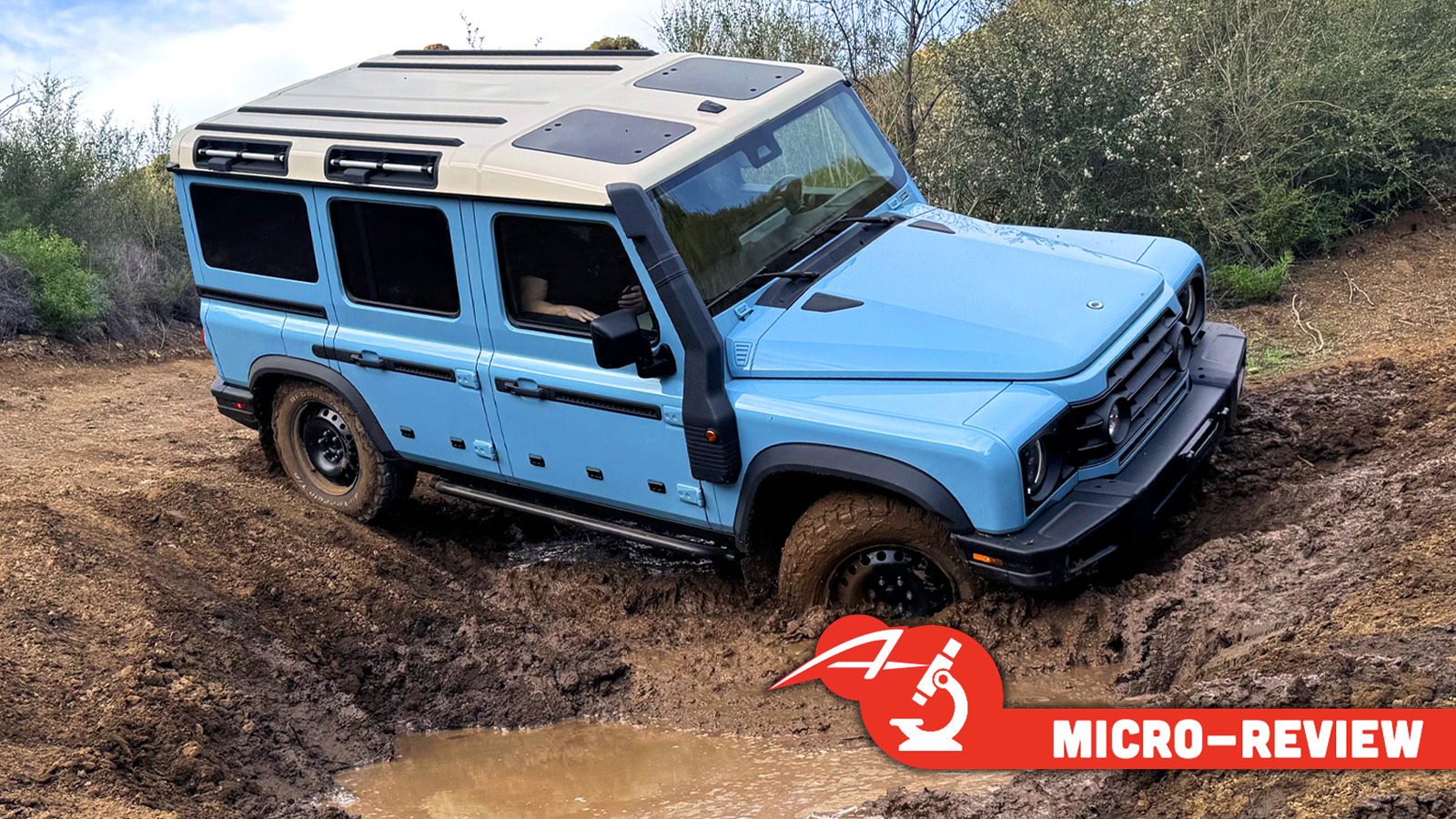
The 2026 Ineos Grenadier is the greatest new overlanding vehicle in the world. It’s not the greatest off-road vehicle (its size and limited stock articulation/ground clearance hurt it on the rocks, and its heft and solid front axle hurt it in the dunes), but as an overlanding platform, it is simply sensational, with a stout ladder frame, solid axles you’d expect to find on a tractor, kingpin steering, skid plates, locking differentials, and on and on. The thing is a beast, and I have lauded it as the unstoppable old-school off-roader that everyone has dreamed would make a comeback. My biggest criticism, though, has been its steering, which requires drivers to put lots of force into straightening the wheel after a turn. Well, Ineos just addressed that in the 2026 model, and now my biggest criticism is a tie between the steering and a new annoying electronic nanny.
I have to keep this review brief because I’m in the middle of rebuilding my WWII Jeep’s transfer case ahead of the Easter Jeep Safari, but the short of it is: Ineos invited me to Malibu to try out the 2026 Grenadier, whose major updates include “a new steering box [that] features a variable ratio for the first time…upgraded climate control components to improve the
performance and predictability of heating and cooling within the cabin,..[and] advanced safety systems (ADAS) [that] have been upgraded where required to meet the latest
regulations.” What I found, in the time I wasn’t shoving free lunch down my gullet but actually driving the vehicle, was that the 2026 Grenadier took a step forward and a step backwards.


The new steering is better, but still disappointing.
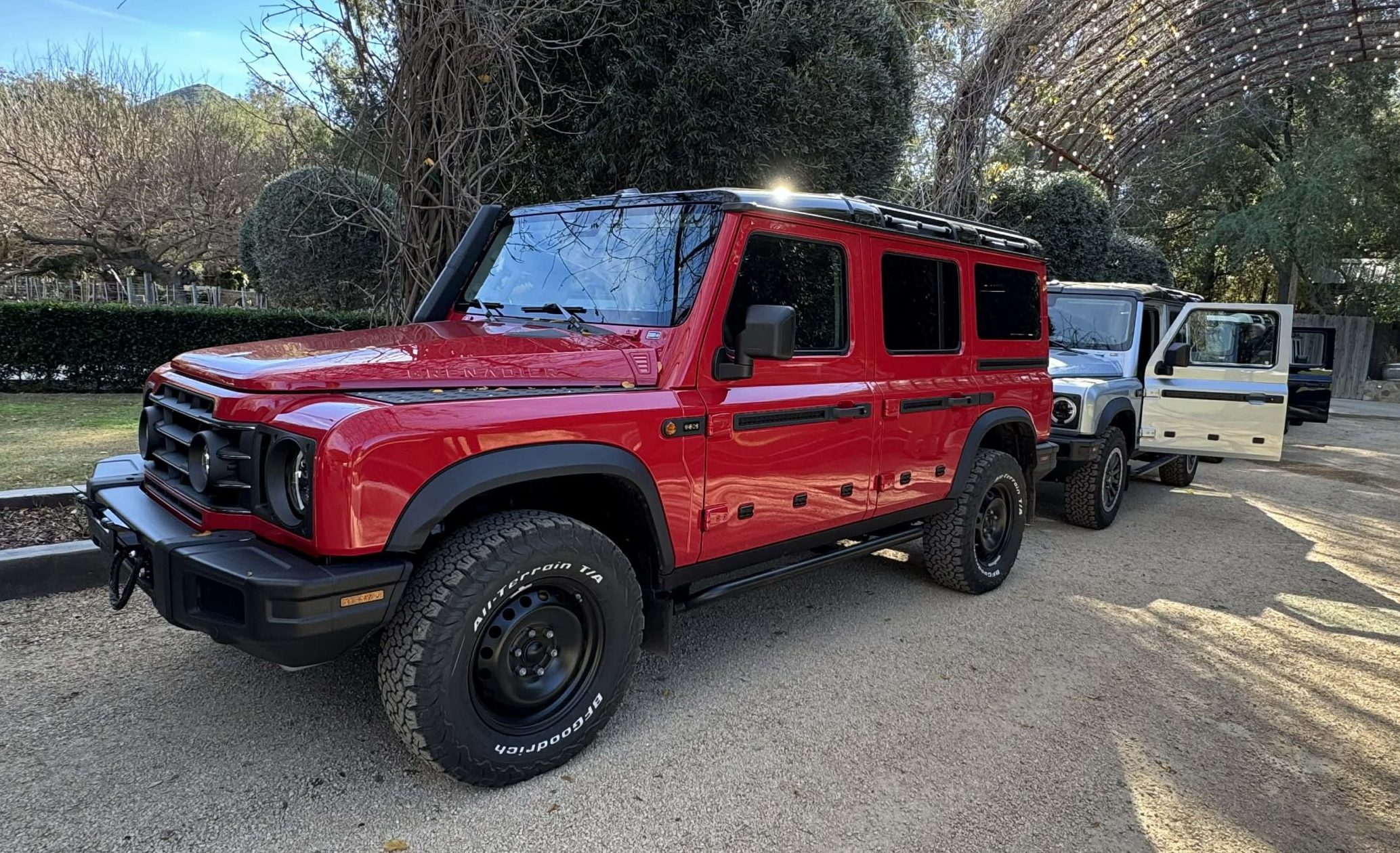
Ineos will talk to you about how bad steering is just a byproduct of an off-road vehicle with a solid axle design, but this just isn’t true. I daily-drive a 1991 Jeep Wrangler YJ and a 1992 Jeep Comanche; I have owned multiple Jeep Grand Wagoneer SJs, multiple ZJ Grand Cherokees, multiple XJ Cherokees, a Jeep J10, and on and on. All of these vehicles are equipped with solid front axles, and every single one of them has better steering than the Ineos Grenadier — both the 2025 model and maybe even this new 2026.
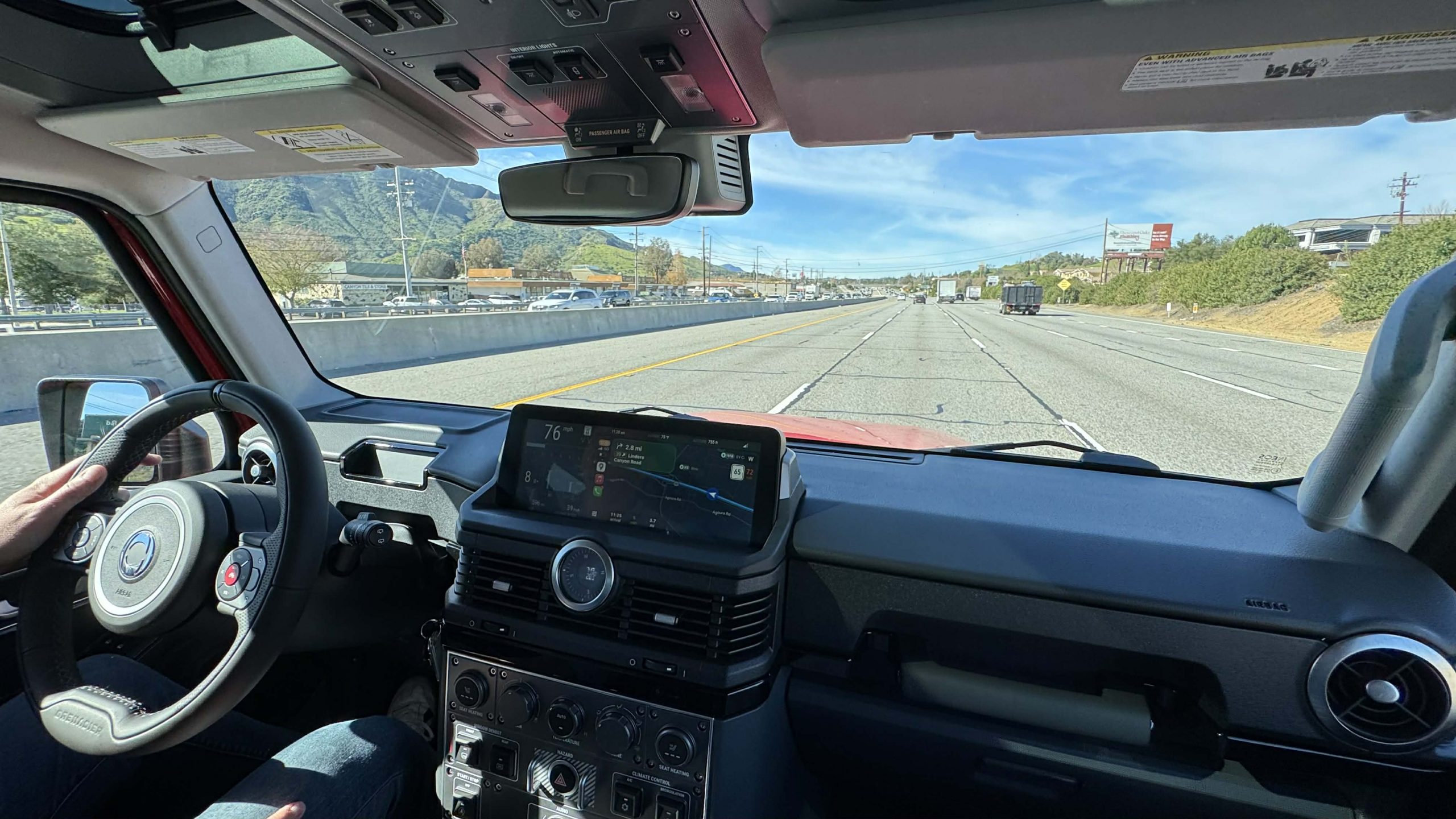
To be sure, the 2026 seems like an improvement. With the new variable-rate steering box with an updated worm gear, the middle 45 degrees in either direction (quarter turn) of steering is quicker. The result is that the highway drive seems to require less steering input to keep the car pointed straight, which leads to less wandering.
But the highway drive was never my biggest complaint with the Grenadier, it was the poor steering self-centering. When you take a sharp, 90-degree turn, you used to have to hack away at the steering wheel to undo your steering input in order to avoid ramming into the curb on the right side of the road (or left, if you’re in the UK, Australia, Hong Kong, Japan, Malta, etc.). That problem still exists on the 2026, though it doesn’t seem as pronounced as it did before, likely a result of of changes to the power steering assist (if I understand correctly, it now reduces assist during sharp turns) and to that steering ratio (which requires fewer steering wheel turns to straighten the tires back out).
If I had to guess, this persistent steering-centering issue is a byproduct of the steering’s fundamental design.
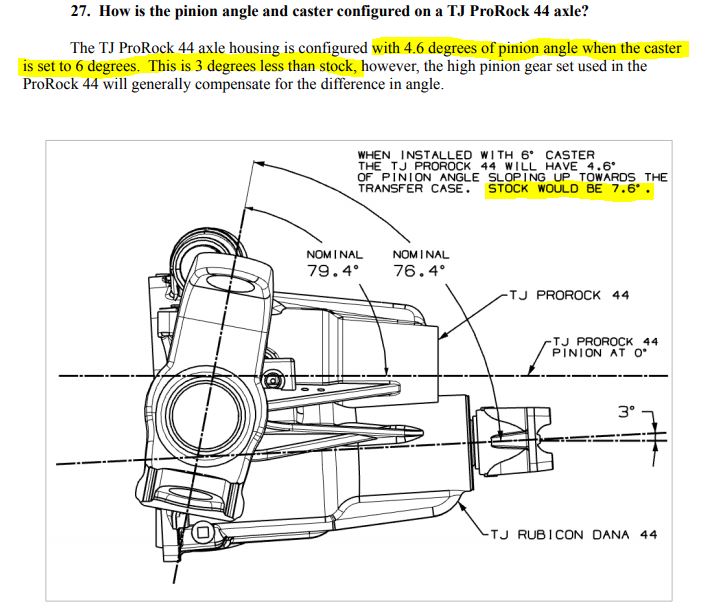
Typically, a vehicle’s tendency to naturally correct its steering is a function of caster. Caster is the reason why the “caster wheels” on your shopping cart will line up with the direction of travel, and why you don’t have to bend down and steer those wheels to go where you want to. On a solid axle, caster is actually set by the shape of the axle housing itself. Specifically, what matters is the location of the kingpins/ball joints, as the upper and lower create the steering axis about which the knuckle/tire turns when you move the steering wheel.
To provide caster needed for good aligning/centering torque, the upper kingpin/ball joint is usually located aft of the lower, as you can see in the TJ ProRock 44 solid axle above. This creates the “leaned back” steering axis which gives good caster.


The Ineos Grenadier was developed by some really smart engineers who know far more about steering caster and kingpin inclination than I do, so I’m just guessing here. But it does seem to me that the lack of self-aligning torque is likely something fundamental to the axle design, or else Ineos would have done something about it.
The Grenadier’s front suspension, shown in the graphics above, borrows the five-link design pioneered by AMC on the 1984 Jeep Cherokee XJ (two upper control arms, two lowers, and a track bar). But unlike that Jeep and every solid-axle Jeep that came after it, the Ineos utilizes kingpins instead of ball joints.
For reference, here’s a look at ball joints:

And here is the closed-knuckle kingpin design on my WWII Jeep — a similar design to the Ineos’:

In case you’re curious, a ball joint looks like this. It’s just a ball in a socket, with some grease in between:


Whereas a kingpin uses roller bearings:

Those roller bearings have their outer race in the axle housing itself:

The inner race sits around a cap that bolts to the steering knuckle:

Anyway, a Redditor named naks26 has a nice photo of the Grenadier’s kingpins, and while it doesn’t show a lot of caster to my naked eye, part of me also wonders if kingpin bearings are just higher-friction than ball joints — not just because of the bearings vs the ball joint, but because of the grease wipers used to contain the lubricant in the closed knuckle design. Extra drag could contribute to the wheel not centering itself as easily when you complete a turn. [Note: At least one longtime Land Cruiser owner used to kingpin steering say this centering issue isn’t a problem on their vehicle, leading me to think that perhaps this is just a caster issue. -DT]
Photo of the front axle from a production vehicle
byu/naks26 inineosgrenadier
I’ve gone back and forth on whether I think Ineos made a mistake going with the closed-knuckle kingpin design, which is causing drivability issues for a very, very limited advantage for only the most hardcore of off-roaders.
If we’re being honest, ball joints are extremely tough, plus they’re cheap and easy to service. But given what this vehicle is all about — being the hardest-core off-roader there is — and given that kingpins are stronger than ball joints… I get it. If you’re going to go all-out, go all-out.
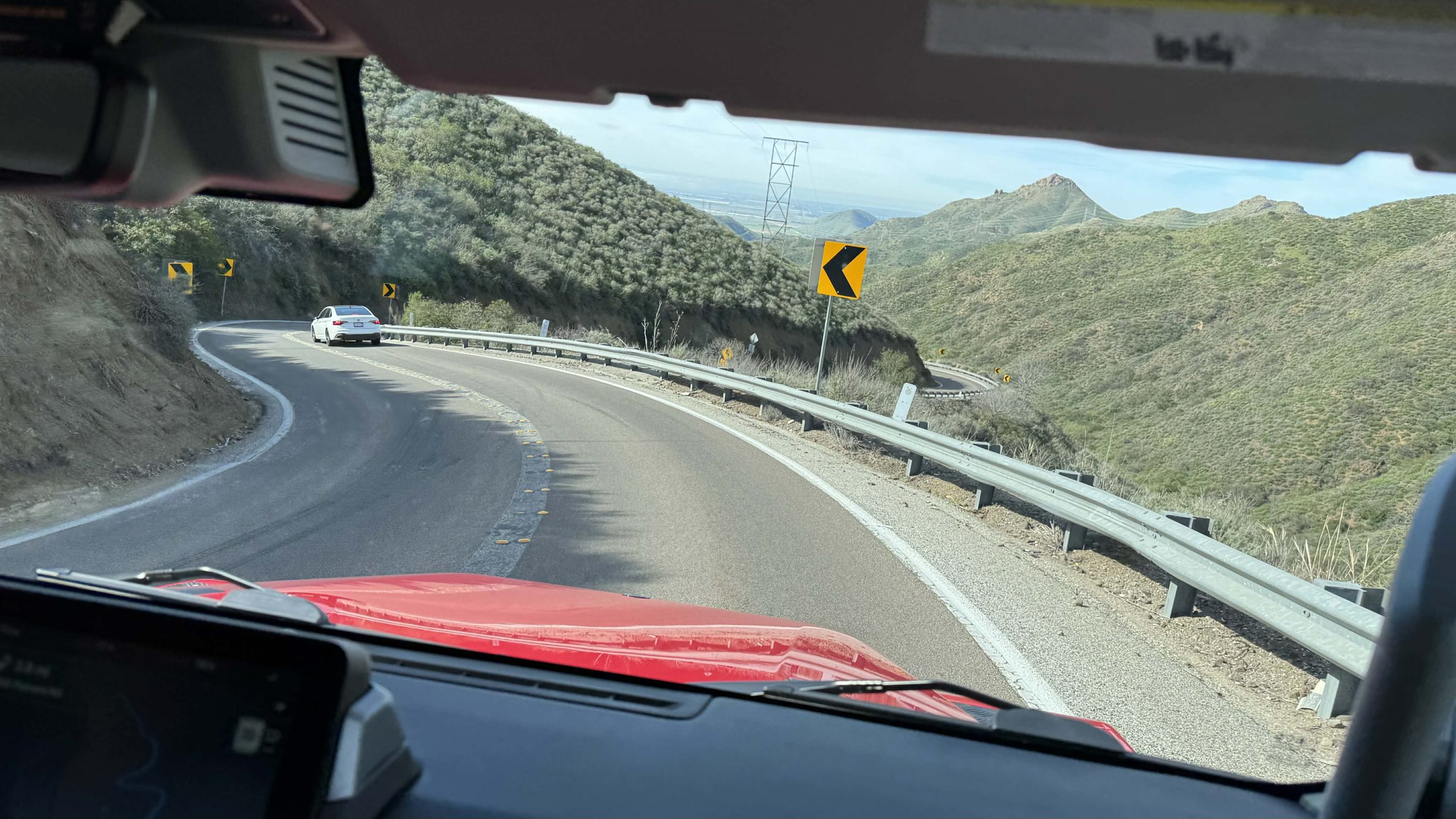
Anyway, the steering isn’t good, but it’s better, and it’s something you can get used to. One thing I’m not sure I can get used to is the new Emergency Lane Keeping system, or ELK.
Because the Grenadier does not feature electric power steering, it has no mechanism by which to nudge the steering wheel to keep the vehicle in its lane. So, for regulatory reasons, Ineos is using a lane-keeping system that clamps one of the rear brakes in order to create a moment/torque that tries to turn the vehicle. It’s terrible.
On a vehicle as tall and softly sprung as the Grenadier, having a rear brake activated when you’re not ready for it upsets the vehicle and its driver, resulting — at least in my case — in a slightly higher driving position now that I’m sitting on a steaming mound. Like I said, it’s terrible, though luckily you can turn it off.
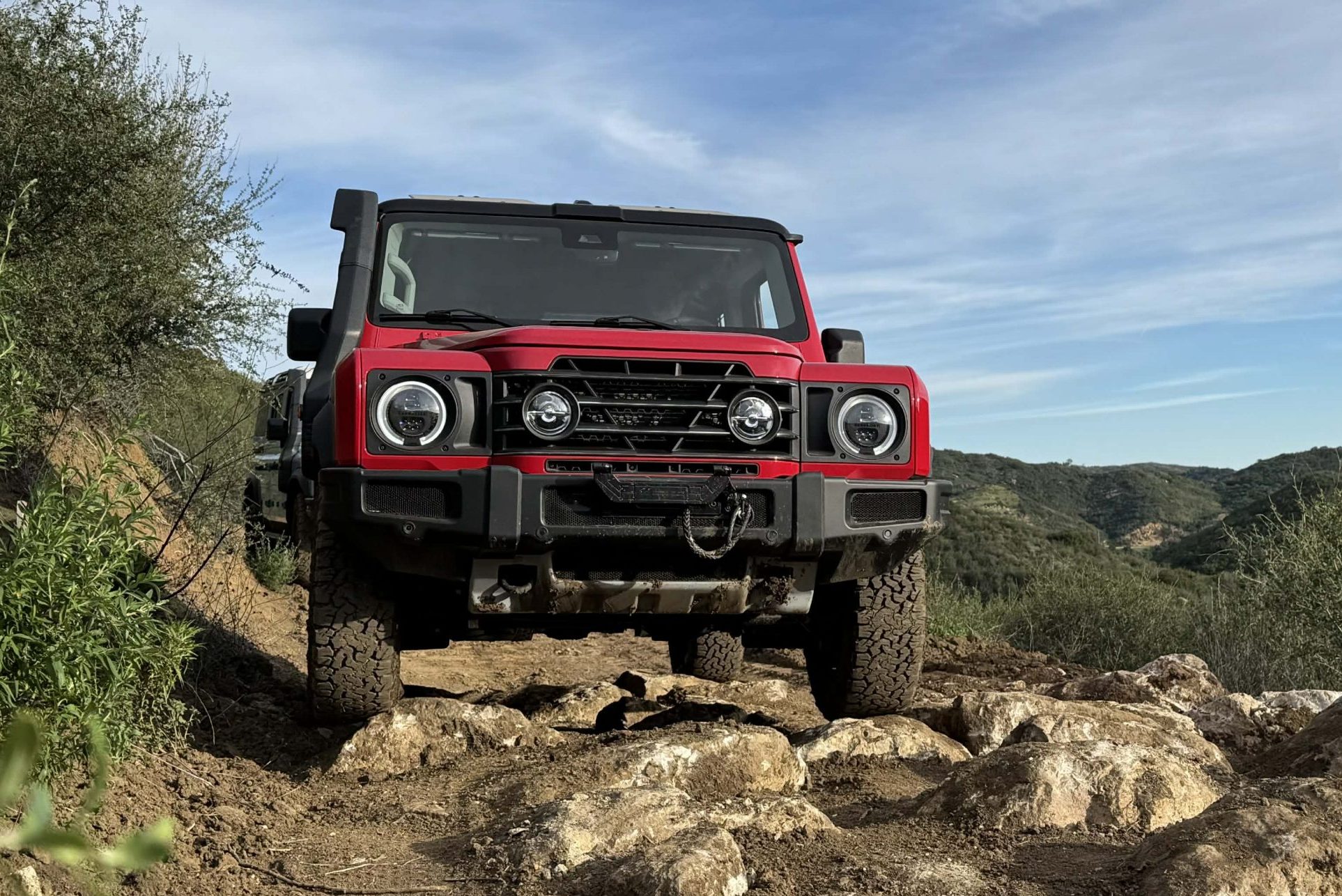
Do any of these criticisms — the bad steering and the bad lane-keeping system, as well as the unacceptable lack of a front-camera on a 2026 off-road vehicle and the strange lack of a disconnecting sway bar to get the most out of that axle that compromises the ride and handling — actually matter? The answer is, of course, no. No they do not. Because just look at the amazing off-road readouts and switchgear in this interior:
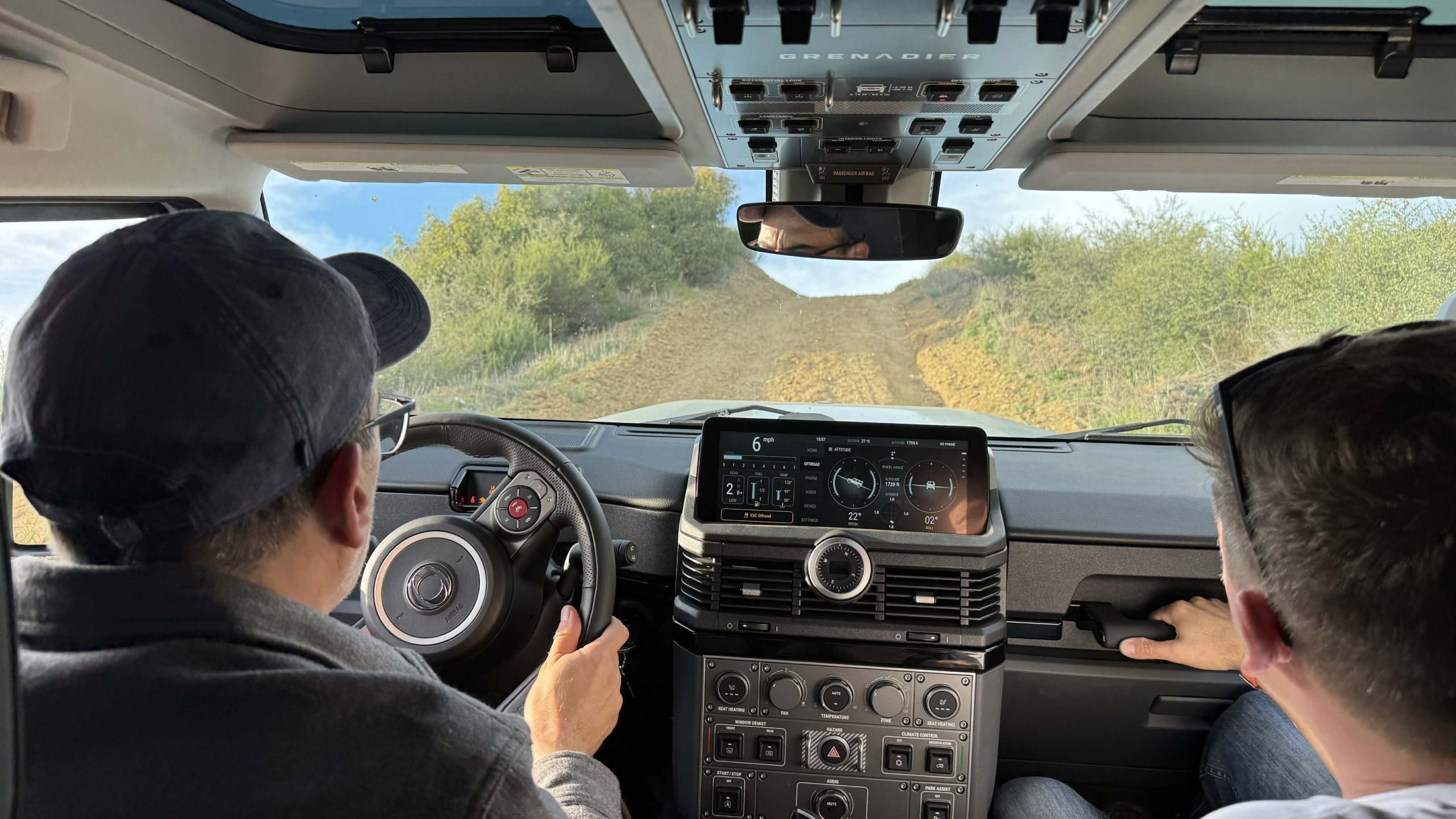
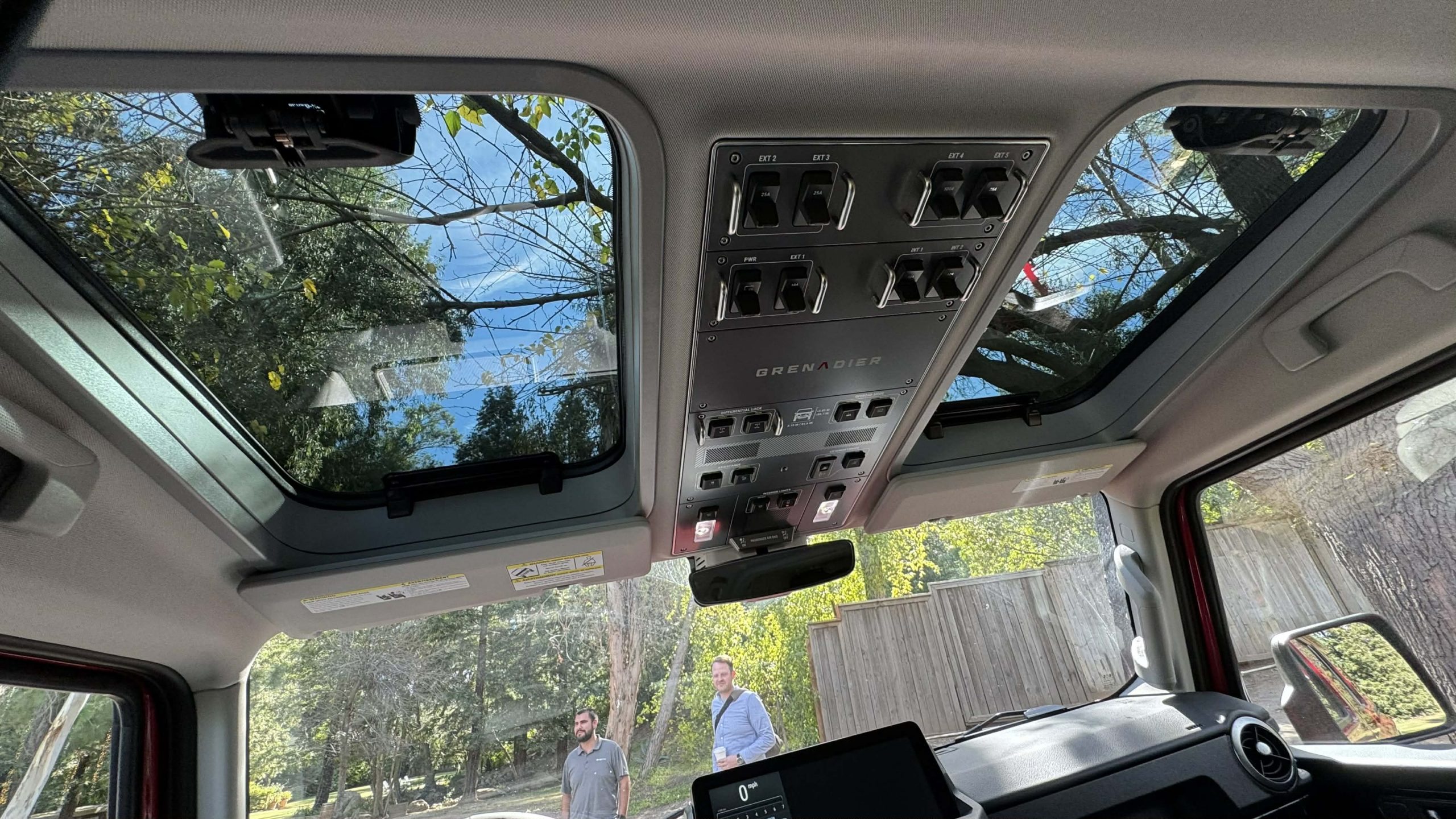
Look at all the room:
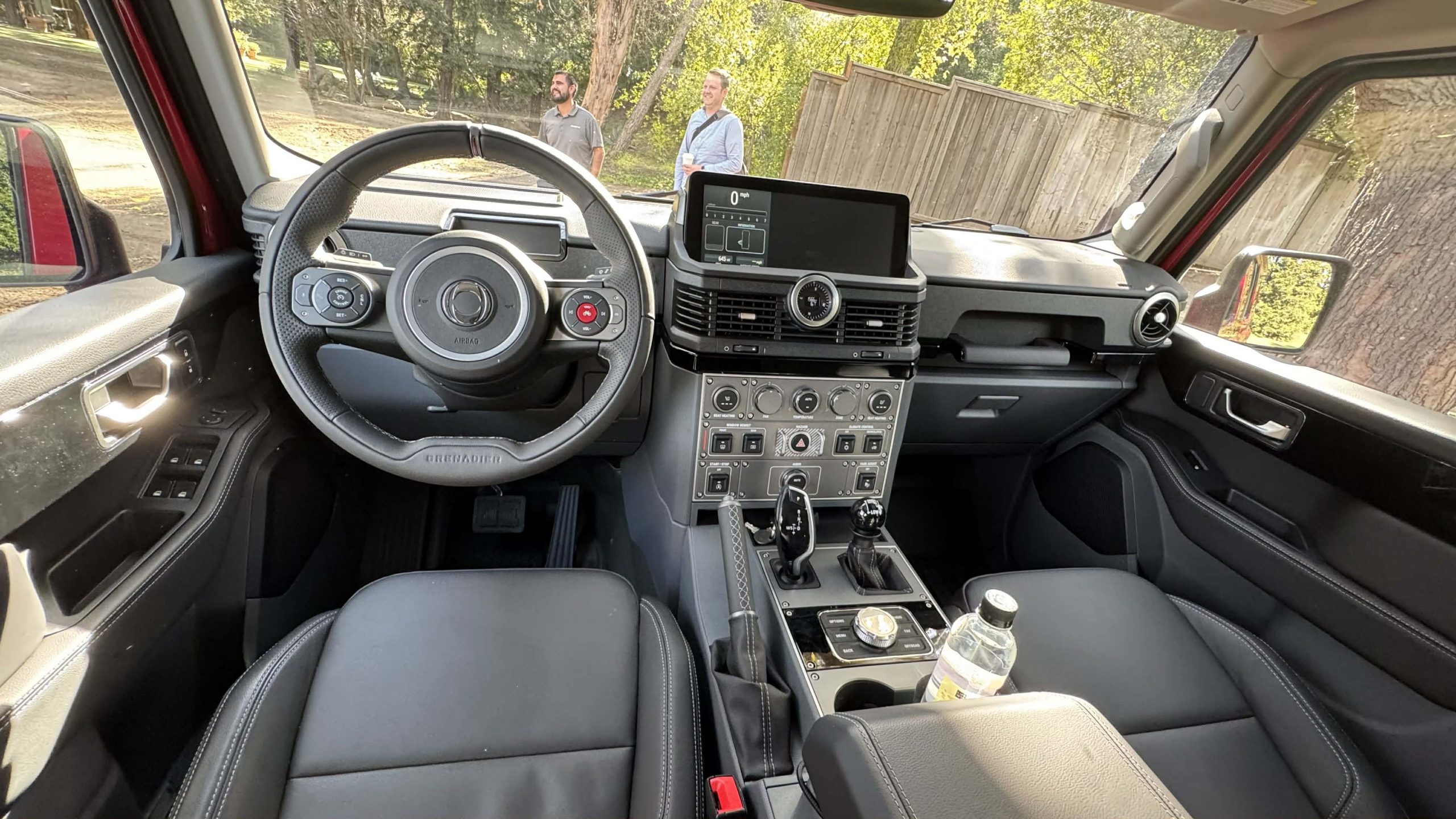
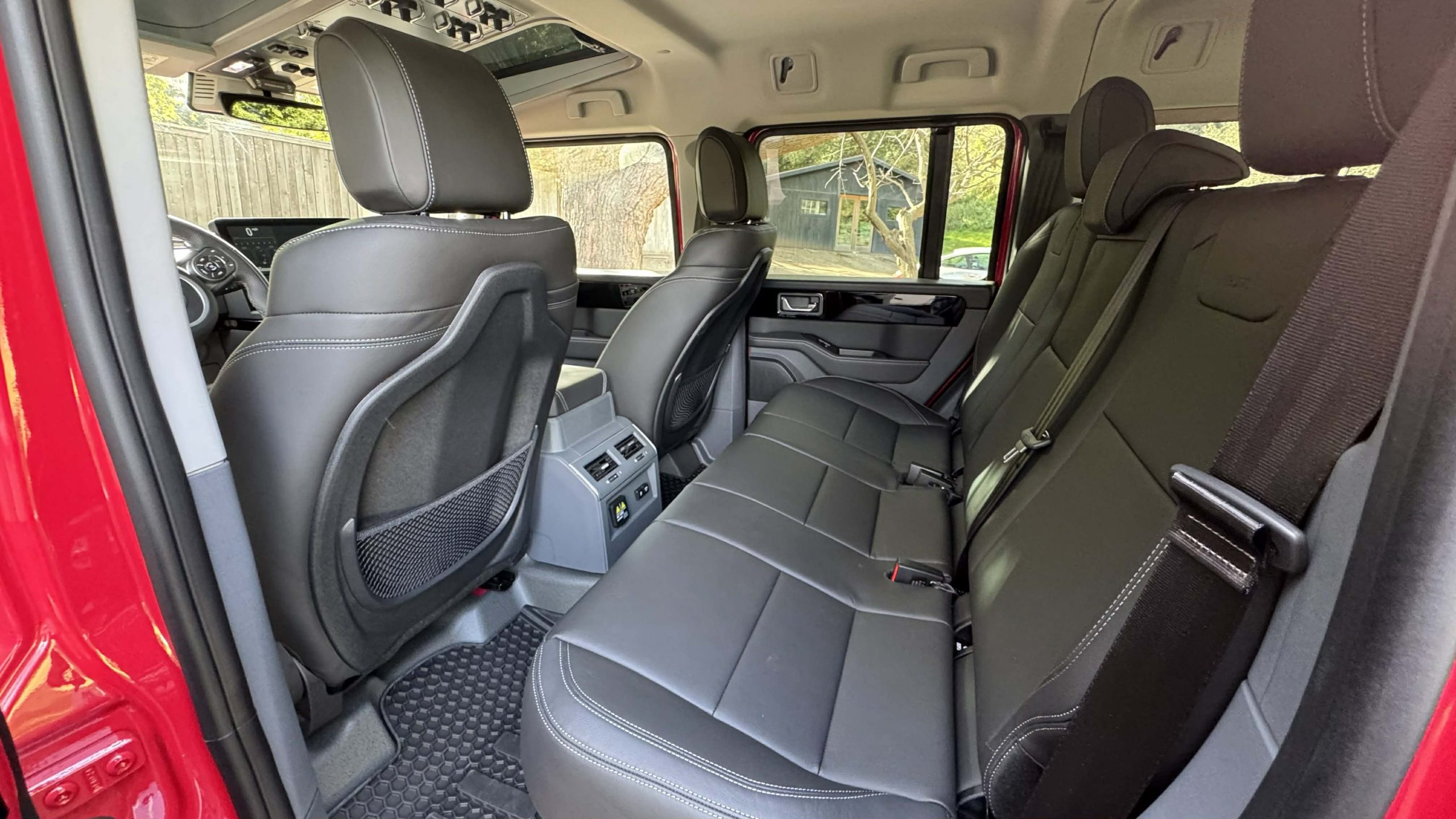
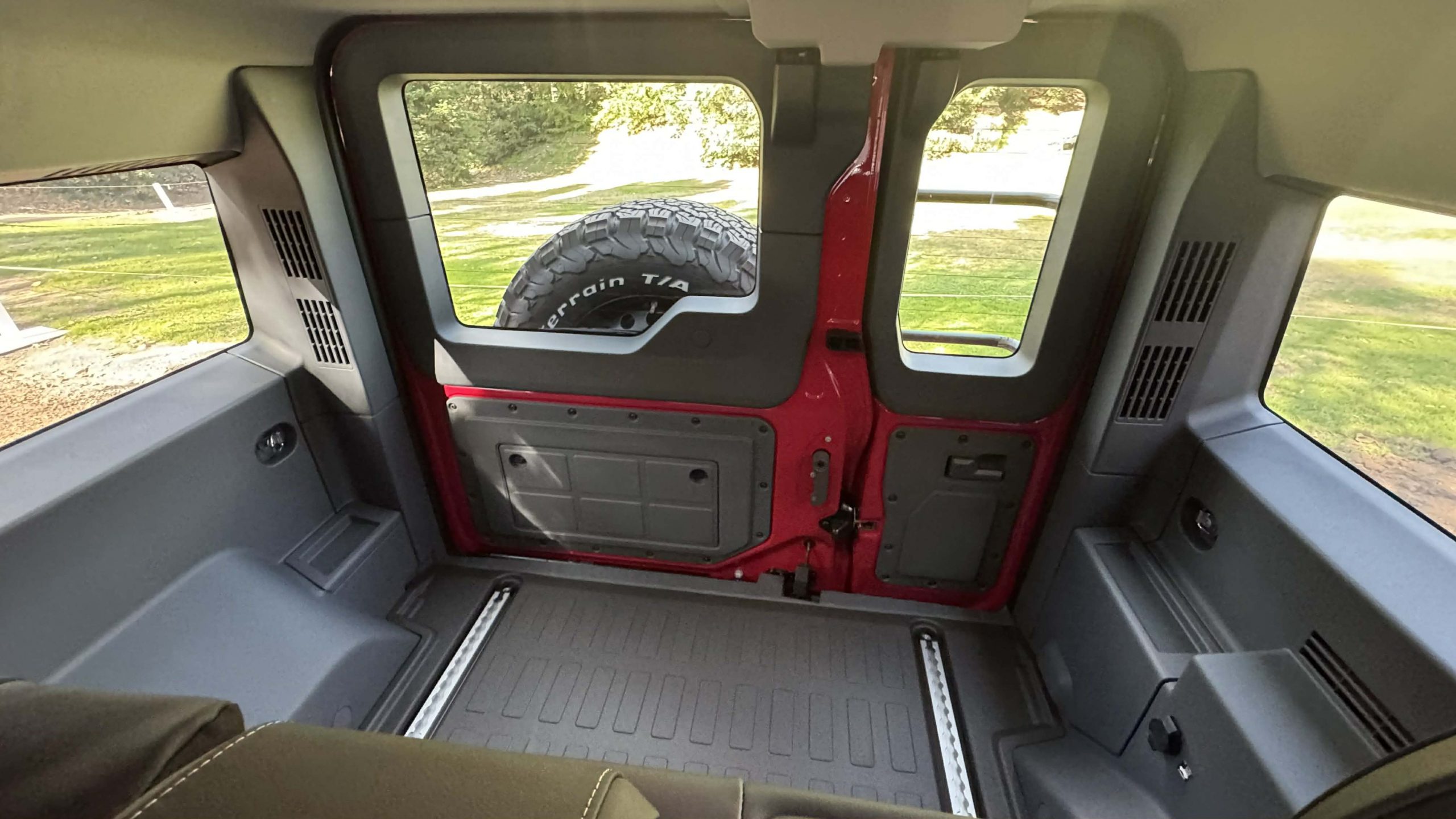
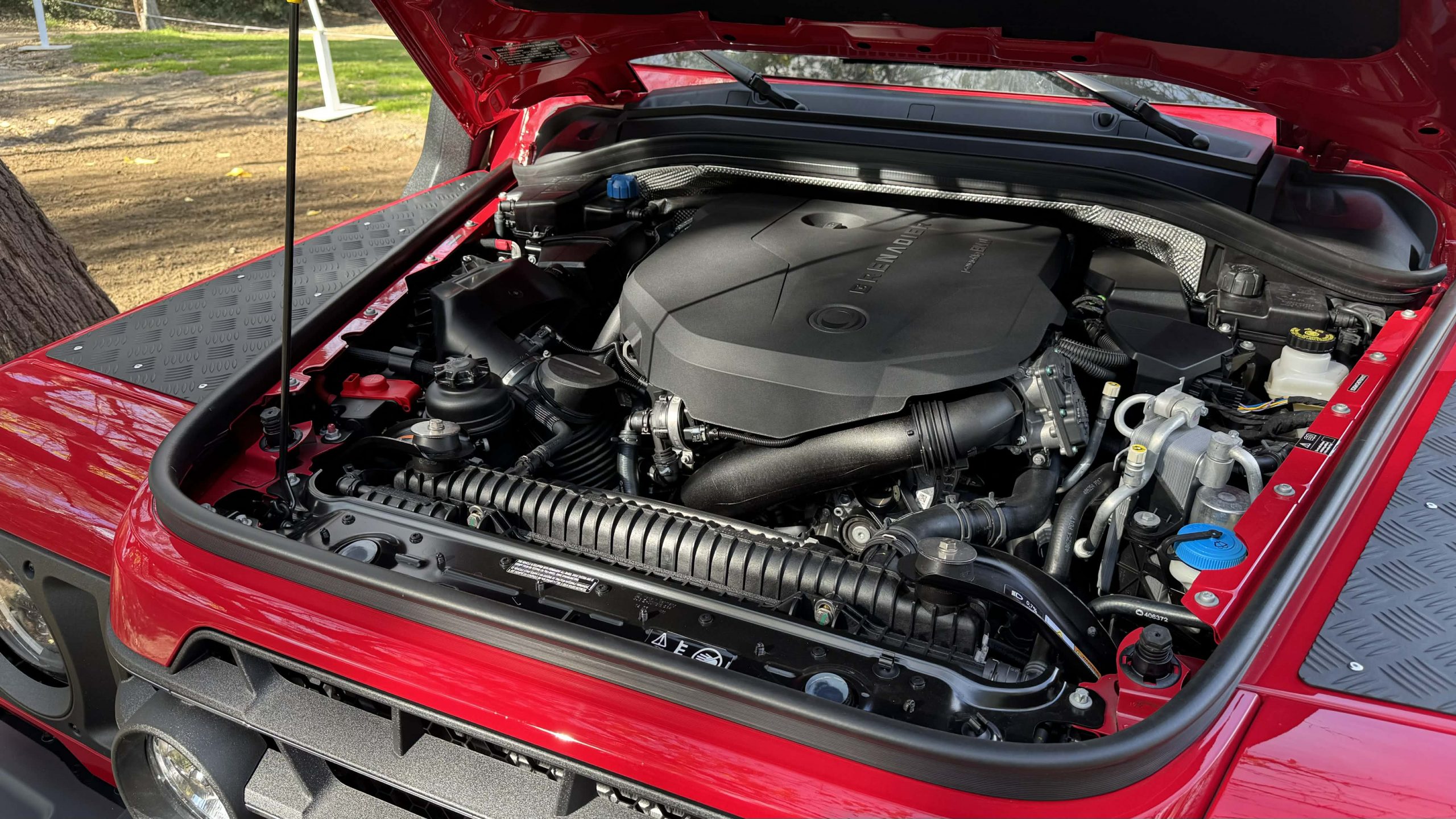
Look at this phenomenal BMW-sourced inline-six whose torque delivery feels like a perfect for this off-road machine:
And most importantly, look what this beast can do:
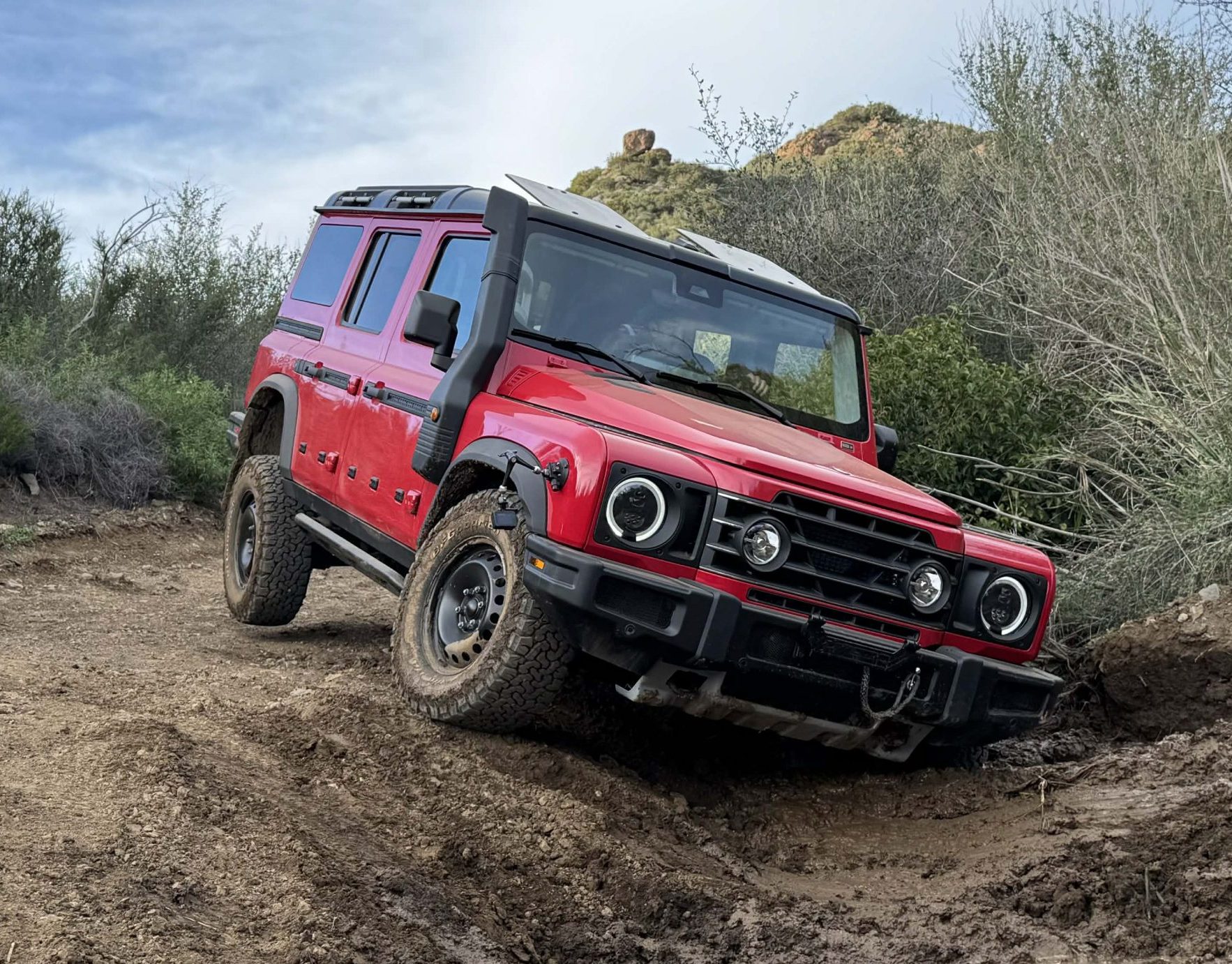
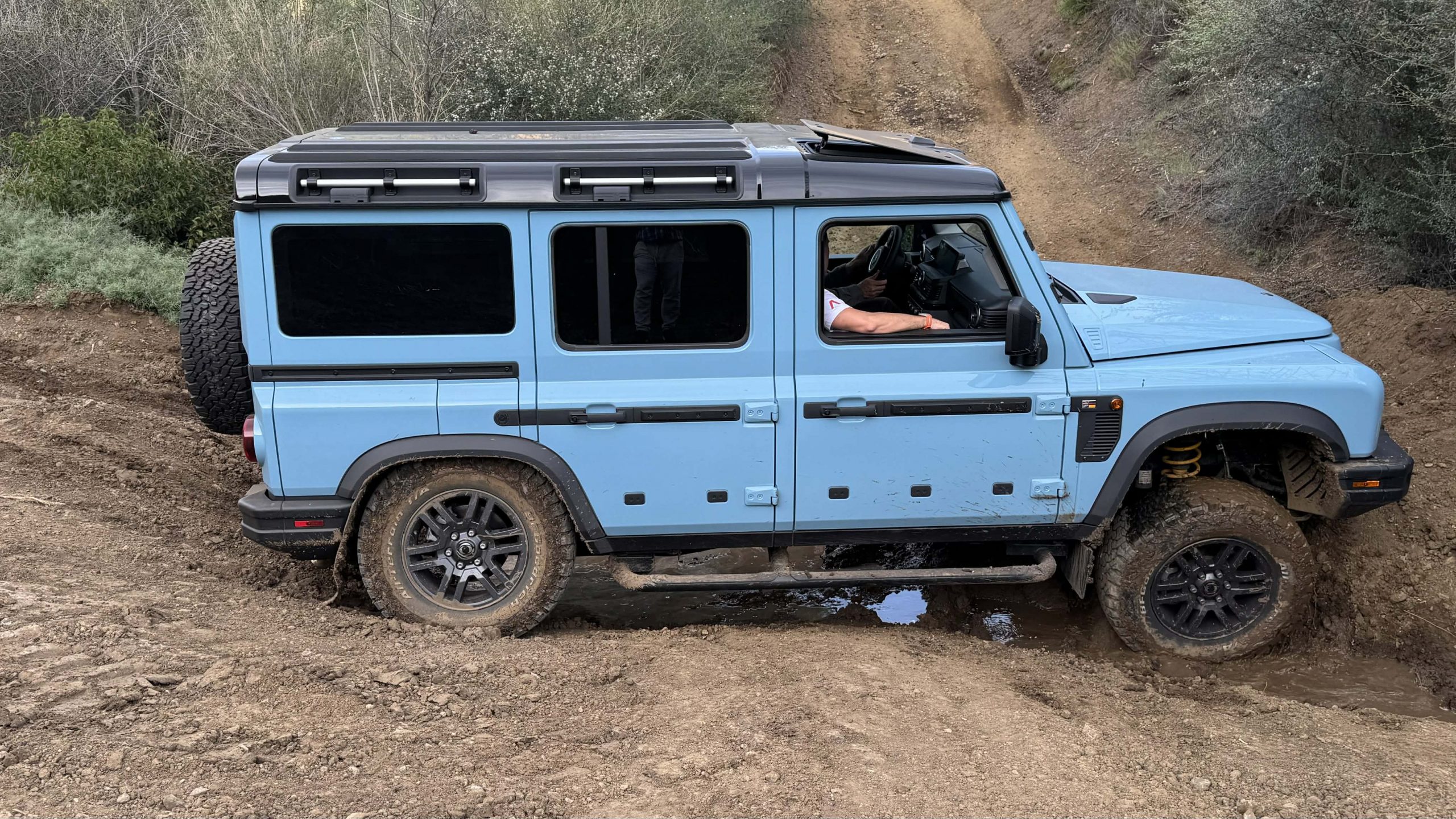
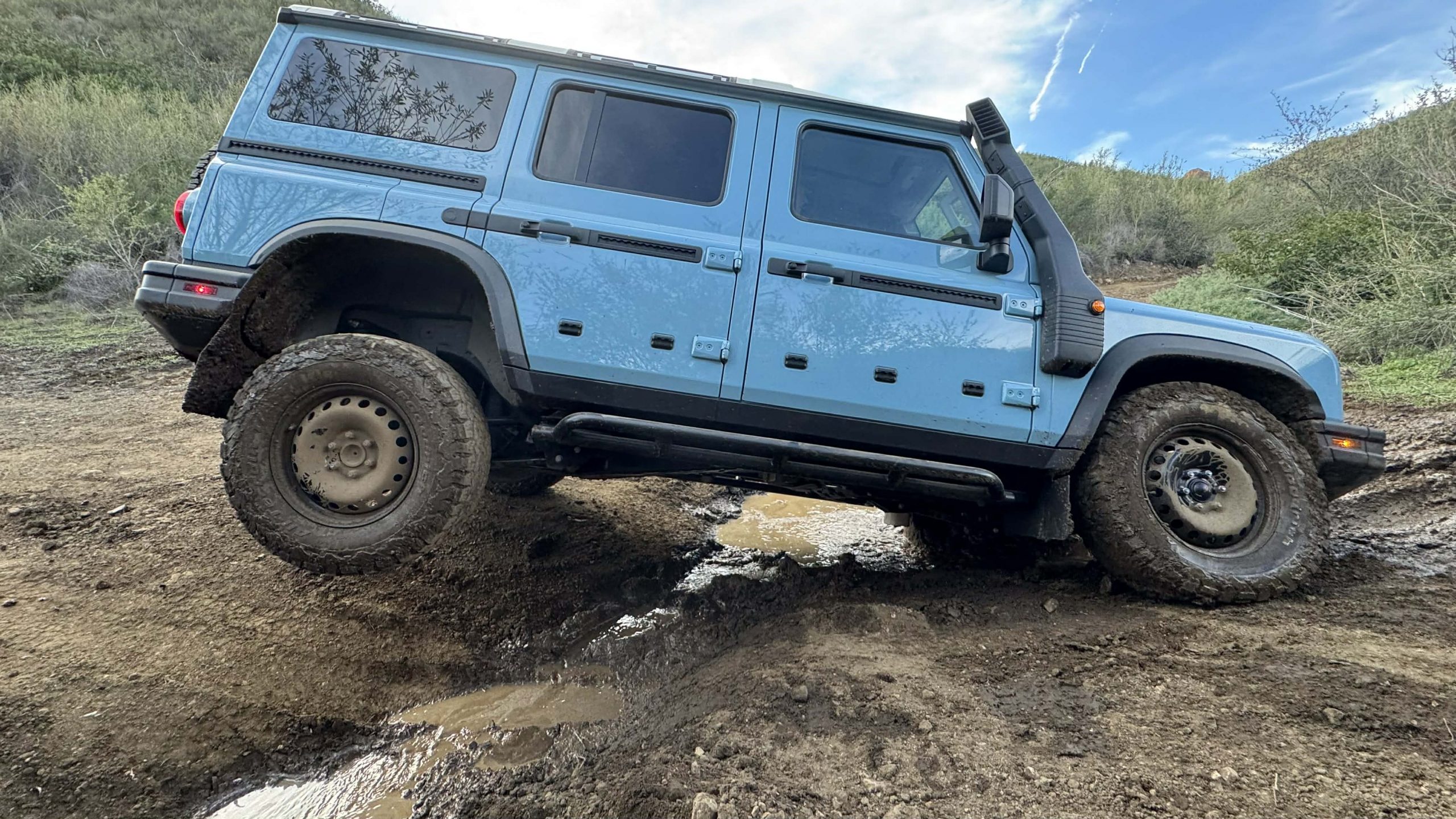
We rammed this thing into some hills, and that steel front bumper shrugged it off like a champ: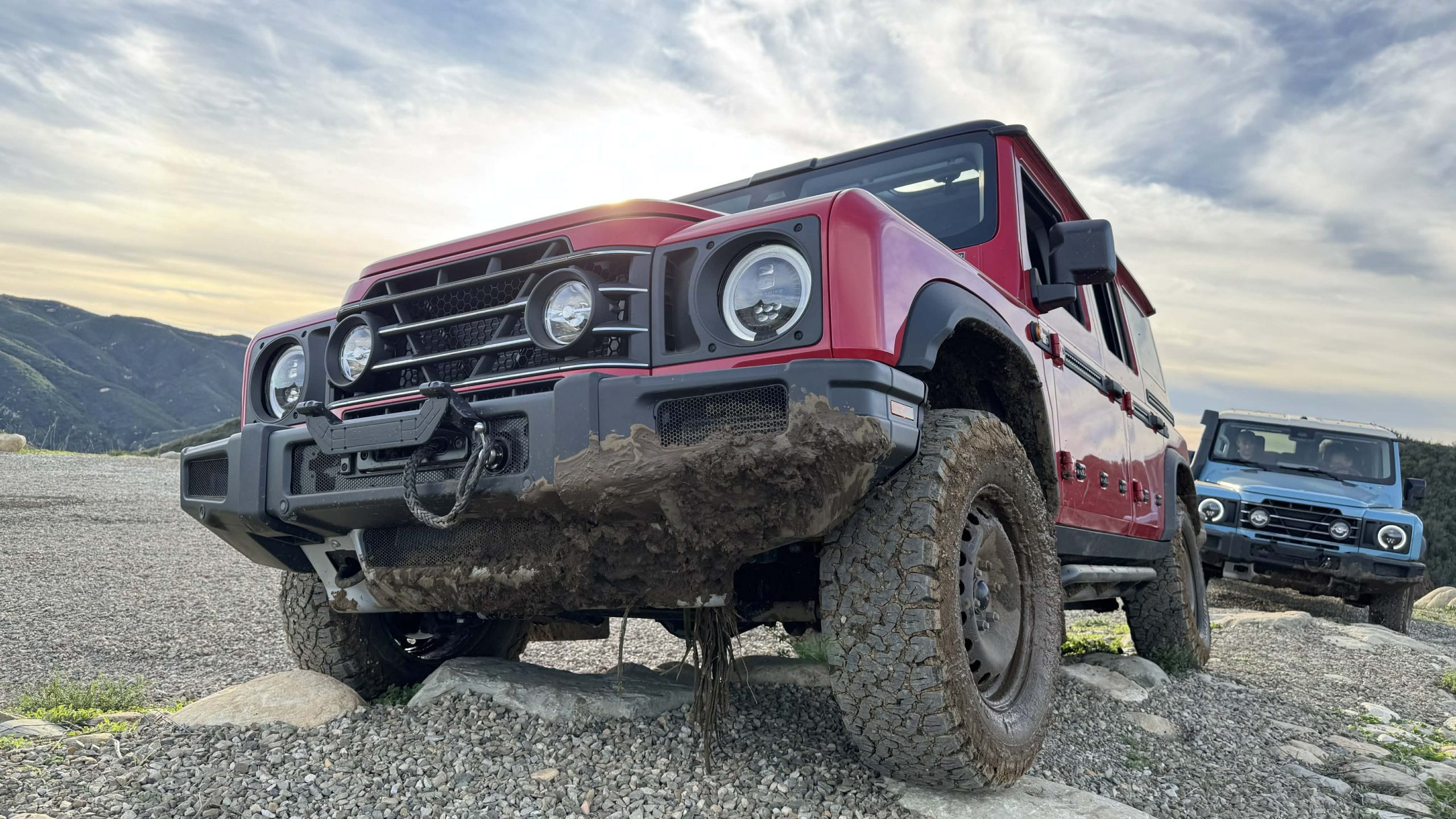
The truth is, Ineos’ biggest problem isn’t its product. The Grenadier is perfectly imperfect — a fantastic, purpose-built off-roader that gets an A+ for “performance of intended function.” It looks good, I think it’s priced right at about $71,000, and I myself would love to own one.
No, Ineos has a humongous marketing problem. Two years ago, when I took a Grenadier to Moab to propose to my now-wife, even off-road diehards were stopping me asking what the vehicle was. During the 2026 Grenadier press drive last week, while we took a break at a hotel, a couple walked up and asked us the same question.
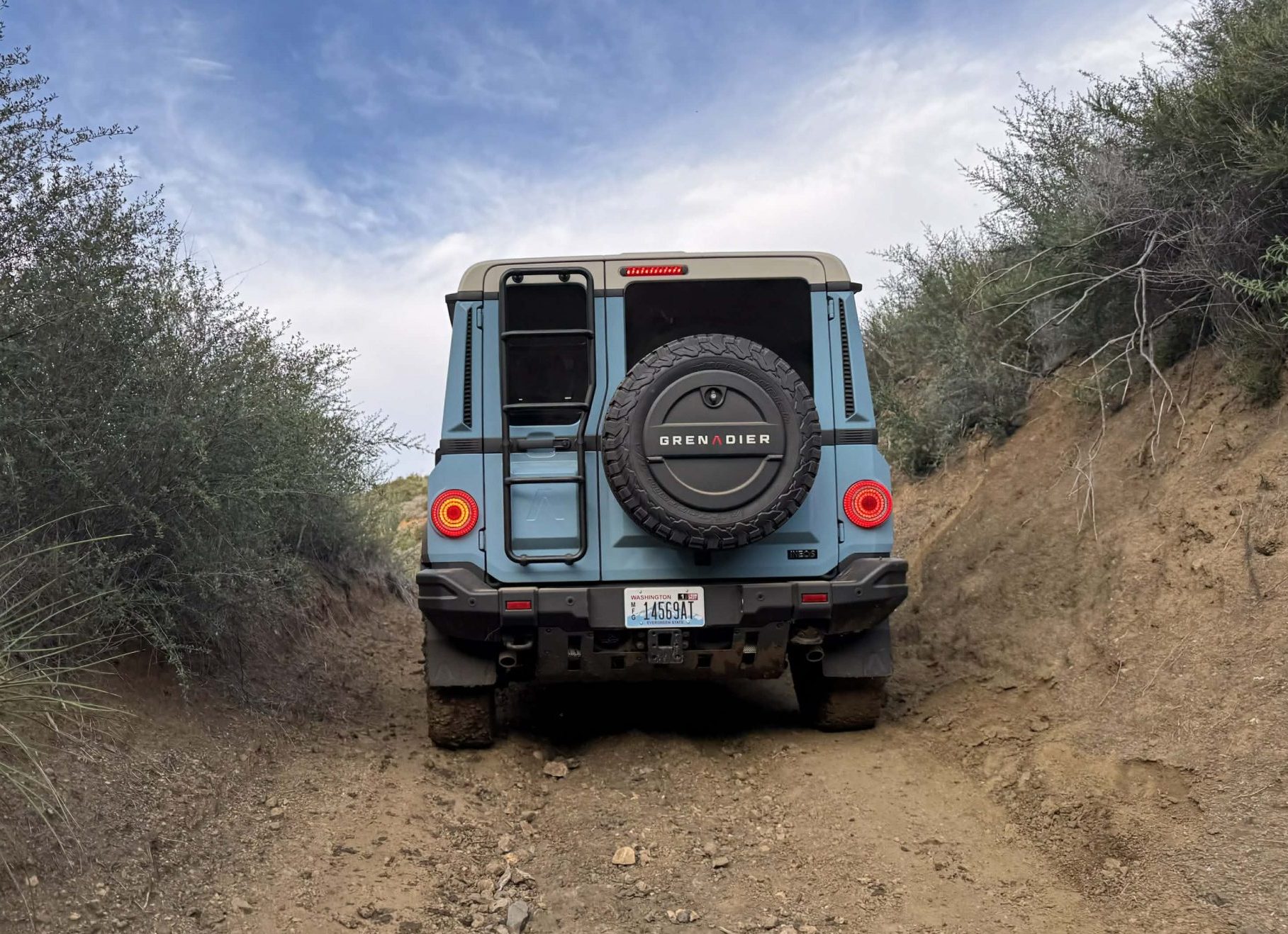
I get that Ineos is new, but come on. How does nobody know what the heck this thing is? Ineos, for 2026, decided to put the name “Grenadier” nice and big on all of its rear-mounted spare tires to help with marketing. The brand says it’s working on other partnerships/product placement, and it did recently work with Donut Media on a cool video.
But the brand has a long way to go. And I, as a diehard off-roader, hope it gets there so it can keep making soulful, capable machines that too many automakers have sadly given up on.
Top Photo: Author



I don’t know what Ineos is using, but my encounters with kingpins a long time ago did not involve roller bearings. My 58 Volvo had bronze bushings that needed to be reamed to size after being pressed into the knuckle. And old Fords w/ twin I-beams had plastic bushings that didn’t need reaming but probably had to be replaced more often.
I love my April 2023 Grenadier and after 20+ years of old Land Rover driving will not be going back to JLR. As I live in the UK, Jeeps are stupidly expensive, Land Cruisers are rare, expensive and eminantly nickable, so the Grenadier is an easy choice.
The new model is not a huge improvement over my 2023 and not having any ADAS systems is a massive plus, so I will not be buying the new version, (even though the “Devil Red” would be a popular choice in this household).
the brand is not long for this world, and some of that is due to terrible self-owns
There’s a dealership in my town, and as cool as they look, I’ve seen exactly two in the wild.
The first one was at a Cars & Coffee and ended up being the personal vehicle of someone at the dealership.
The second was sitting at fancy coffee shop.
The problem is these just scream “middle life crisis”.
My only experience with a solid front axle was a $500 jeep Cherokee that a friend bought, it was downright scary the first time I drove it on the freeway, but once I got onto a dirt road it made a lot more sense.
I don’t think I will ever be into hardcore offroading enough to require a solid front axle, that said, I like big SUVs and think these look cool. I was genuinely taken when I saw one in person out in Utah last year.
The image problem with the Grenadier IMO is when people see it they assume it’s a trim level on some brand they’ve heard of.
I have about 10K miles on mine. You get used to the steering.
It’s better on the highway than I expected. It’s more capable on dirt than I am. I saw one on aftermarket portal axles and thought “Wow” until I heard they were $50K installed. And realized lifting it 4″ would make it even harder to park on a road trip.
Someone should acquire Ineos. Maybe Geeley?
Tell me more – if my wife decides she wants something more truckish than the CX-90, it’s her first choice.
The Grenadier is a better daily than you think it will be. It’s better on the freeway than you think it will be. You get used to the steering in about an hour, even though it’s really annoying and borderline scary for the first 10 minutes. Power is fine. It’s not a sports car but cruises @ 80MPH just fine. More comfortable @65 but it all depends on your goals for the day. Rear seat is more comfortable than you expect but you’ll need a roof box to road trip with 4 people.
With the high seating position you are like a road god driving alongside big rigs. The asymmetric rear doors are a cute gimmick. I almost always open both doors to get stuff in and out.
With roof bars you have to be careful about clearance. Don’t assume you can park in a garage.
I have not towed with it, but they claim 7700 lbs. Make sure you get the electrical panel upgrade. I got locking center diff but I’m not sure I’ll ever use it in anger. The switchgear is impressive but it’s just a bunch of toggle switches talking on a CAN/LINbus.
The bad stuff? Turning circle is ridiculous so you park it like a boat. Gas mileage and wind noise are what you expect from a giant rectangular box. HVAC fan noise is annoying.
Expect to have a LOT of “What is that?” conversations and the occasional “My wife wants / won’t let me get” one of those.
Thanks! All sounds great to me except wind noise, but that’s to be expected anyway.
I love me a diagram-heavy DT article.
The only people I see buying these around here are rich people, eager to cosplay on weekends.
Rich, _far right_ people? Or did that part of the message not make it across the Atlantic?
The only person I know with one is an optometrist/gun collector. So maybe??
It hasn’t changed much from the clientele targeted by the OG defender when it got discontinued, at least in continental Europe. Most people with those around the Ardennes had them as sports hunting vehicles.
I… huh???
I don’t know what that meant either
Does it really matter?
This is 100% correct. I grew up in the country with a lot of people who didn’t have a lot of money. They all built their own stuff out of retired farm trucks or some old rusted jeep that was sitting out behind grampas barn. The only advantage of growing up in the middle of nowhere is that there are plenty of places to drive your junkheap offroader.
With a starting price of $70k+, these are rich people toys. Most rich people don’t live out in the country; maybe they have a hunting property or something that they use a few times a year.
The buyers of these things are rich people who will almost never take them offroad, so they’ll be busy clogging up the school pick up line or parking across two spots at costco.
I’m all for people having a good time with their stuff, but with an entry price like this, I am all but convinced that the people that can afford them and they type of person who wants one will largely just drive it to work and around town, but not off road.
I guess people can drive whatever they want, but I will never understand the appeal of buying an offroader and driving it to the office.
Anecdotal, but I know a guy who bought one specifically to use as an offroad vehicle. He’s definitely not a rich guy type, he bought it as a family-friendly off-roader to use rather than his heavily modded Tacoma when he wants to take the family along.
At 71K, it’s not really much more expensive than a Rubicon Wrangler, Sasquatch Bronco, or 4Runner TRD Pro or Trailhunter.
I get what you’re saying though, and you’re probably correct in most cases.
My perspective is skewed terribly because I’m a TERRIBLE cheapskate. The only car that is ever bought newish/nice is for my wife. I buy bottom-dollar deals, unpopular cars, project junk. Her car cost $30k and it breaks my brain to do that. My last car cost $23k and while that was a lot when I bought it, it was a 5th gen camaro right when the 6th gen came out, so it was a good deal. I still have it, it’s 15 years old now and I have no intention of getting rid of it. Runs great, no issues at all, I keep up on everything myself (not that it’s needed much honestly, it’s been shockingly reliable).
I bought my sons <$10k used Volvo wagons. The older is 20 years old and it may be pushing the limit on the cost of ownership, but after a rough year of repairs, I feel like it’s stable again. The other is a cross country wagon and it’s been really good so far (minor hiccup with alternator and a cracked wire in the door loom).
When I see people who buy themselves a $40k bland SUV every few years, I can’t understand it. I see friends who will go and get a new luxury SUV for $50k every three years, or they’ll lease one. These are people who I know are doing well, but are not what I would qualify as wealthy.
When I hear that “normal” people buy a $70k toy as their other car?! I just can’t wrap my brain around it. Between my wife and I we do pretty well. We could afford to buy our cars new, but I have never done it and don’t imagine that I ever will. I still fix everything myself (except for the wife’s car, that gets a fancy dealer warranty). I suppose the habits you pick up growing up poor aren’t easily left behind. I’m always waiting for something bad to happen and I’m NOT getting caught off guard. Buying an expensive toy like one of these would be too much anxiety to enjoy.
As cool as the interior is, and as capable as it might be, I can’t get over the fact that it still looks like a car from GTA designed to get as close to a Land Rover without raising intellectual property issues.
Echoing the comments from everyone else.
“Ohhh a Micro-Review on the Ineos, neat!”
I scroll and get lost in engineering detail.
“Welp, neat?!”
I’m not the customer for this vehicle, but I do enjoy seeing them on the road.
This is why I read The Autopian.
David: “ I have to keep this review brief…”
Also David: ///pulls down second whiteboard to draw an axonometric diagram of an axle kingpin bearing///
Howdy James! How’s Sweden?
Yeah…The length of my articles is basically dictated by the story I want to tell. I tell freelancers this all the time, and in fact, when someone asks me “How many words do you want this?” that’s usually a huge red flag to me. Tell the best story; the word-count should never drive the story, the story must drive the word-count!
Anyway, as a result of me choosing this story to tell, my transfer case has not been rebuilt. But tomorrow is another day!
Doing good! We now have hot water as well as lukewarm. Good thing you were in your sea-bathing phase when you visited us.
I got to drive the Ineos a couple of years ago at an experience event in Cape Town. Although I aspire to one day own an overland vehicle in South Africa, it was impossible to conceive of a use-case scenario for one in either Europe or Africa. I’d rather take the same money and build a Land Cruiser to the spec I want.
I’m all for the story drives the word count, but maybe in editing if you realize you’ve ended up with more than “brief”, take out the part where you say it will be brief?
He doesn’t have the time to make it brief.
I’m not asking him to make it brief? I like the long stuff. I was saying for the benefit of people who were actually expecting something brief, maybe just don’t say that part.
It was joke, riffing on a famous
quote often attributed to Cicero, Pascal, Twain etc.
I didn’t have time to write a short letter, so I wrote a long one instead
whooooooooosh
I feel dumb now. I do know the quote. I just missed the reference.
I say: Under promise, over-deliver.
Also, this was brief for a DT-deep dive!
Word count is a print thing. Writing a few paragraphs at the end that may or may not not get cut to make room for an ad that both make sense but aren’t necessary to the rest of the piece is a skill that I don’t even understand.
A steering wheel that doesn’t return to center – pretty much any hydraulic Citroen, no ? 🙂
I think the automotive world is a better place with the Ineos than without it.
It is needed, it fills a very limited and specific need but – it does fill it, and that’s that. Maybe less so in the US where much of what it does is covered by a wide array of pickup trucks, but elsewhere it does have its applications.
As for what it offers – it was shown in an excellent way on an Australian YT chanel, where it was compared to a Land Cruiser which started way lower in price but one both were put at equal equipment – they ended up the same pretty much to the penny.
Notable things were electical panels and so on which might not be needed by everyone, but if you need them – it doesn’t hurt when they come factory installed.
No one is forcing me to buy one, and I won’t do it, but I know for sure that would anyone force me at gunpoint to choose between one and a pickup at equivalent price – I’d go for the Ineos.
As for whose knockoff it is and whether it will be reliable or not – if a new LR is really the comparison target – it’s a win by default.
Yes I would buy one of theses every day vs. a full sized pick up truck for the same price.
I’m sure the name being so easily fumbled into ‘Anus Grenade’ isn’t helping sales.
Really though, why name an unproven car after an ordinance deliverer? It just pre-writes headlines for when they go wrong. I don’t want to grenade the outback, I want to trundle through it peacefully, and see the nice nature.
I mean, you probably don’t want a heavyweight solid-axle off-road truck, then. The militaristic styling is consistent with Jeep and Land Rover’s branding and history.
It makes me wonder what a “peaceful” or perhaps “considerate” off-road vehicle would look like.
Something especially lightweight and quiet, with relatively flexible clearances and geometry?
The obvious response might be “just don’t drive a car off-road”, but it’s interesting to imagine otherwise.
FPV drone?
Local CL ad I saw recently: https://knoxville.craigslist.org/ctd/d/knoxville-2024-ineos-grenadier-station/7910919925.html
First thought when I saw it was this seller needs to explain what is an Ineos for the local audience. Marketing is not one of Ineos’ strengths.
What the heck is an Ineos?
A British chemical conglomerate making knockoff Land Rovers? Weird.
Also, is lane-keeping assist a regulatory requirement now (presumably in Britain)?
Short version: a rich guy who owned a chemical company got annoyed that Land Rover were going to stop making the original Defender, so decided to make his own.
I wish some rich guy would get annoyed at how expensive housing is and decide to come up with a way to inexpensively mass produce housing.
Or something like that.
I hate how all rich guys can seem to do these days is come up with vanity projects.