

The value of a dollar seems to increase the closer you get to having none. At one point in college I was getting five different paychecks, and I still got tight. A dollar meant quite a lot to me then. Currently, I’m paying for a monthly subscription to a digital drum lesson service that neither my daughter nor I am actively using.
When writing about cars it’s easy to say that everyone should buy a specific model, even if it’s a little more money. That’s a harder argument to make when it comes to affordable cars, especially if someone is financing it. The difference between a Honda Civic Hybrid and a Toyota Corolla Hybrid is as much a measure of preference as it is any objective quality. That’s not true of the Nissan Sentra.


Either of the two class-leading hybrids is going to be better. It’s a little different when you compare the Sentra to the base non-hybrid Civic or Corolla, which don’t quite distinguish themselves as well as they once did. There, the Sentra is a little more competitive, and a little cheaper. For what you get, the Sentra looks more and more like a value and less and less like a compromise.
If you’re in the market for a new car and you can feel a single dollar leaving your pocket, the sensation of retaining a thousand or more of them by opting for a Sentra is probably overwhelming. The good news is that there’s nothing pound-foolish about choosing the Nissan.
The Basics
Engine: 2.0-liter inline-four
Transmission: CVT
Drive: front-wheel drive
Output: 149 horsepower, 146 lb-ft of torque
Fuel Economy: 37 mpg hwy, 30 mpg city, 33 mpg combined
Base Price: $23,845
Price As-Tested: $30,375 (including $1,245 destination charge)
Why Does This Car Exist?
Nissan spent years slowly drifting away from just about everything that made it a good brand, opting instead to be the company that made cheap things you could easily finance. The last couple of years it’s felt like brand has started to inch back toward a cohesive identity, and I’m cautiously hopeful about what comes next after driving a few of their newer products.
While Nissan has cut back a bit from the time when it sold four different sedans (RIP Maxima), it’s never stopped selling the Sentra. Some people prefer sedans or, at least, some people prefer to have a usable vehicle that doesn’t cost a lot of money.
This generation Sentra is an improvement in a lot of key areas over the previous car, which itself wasn’t that bad. It’s also basically the same car under the skin as the last one.
How Does It Look?
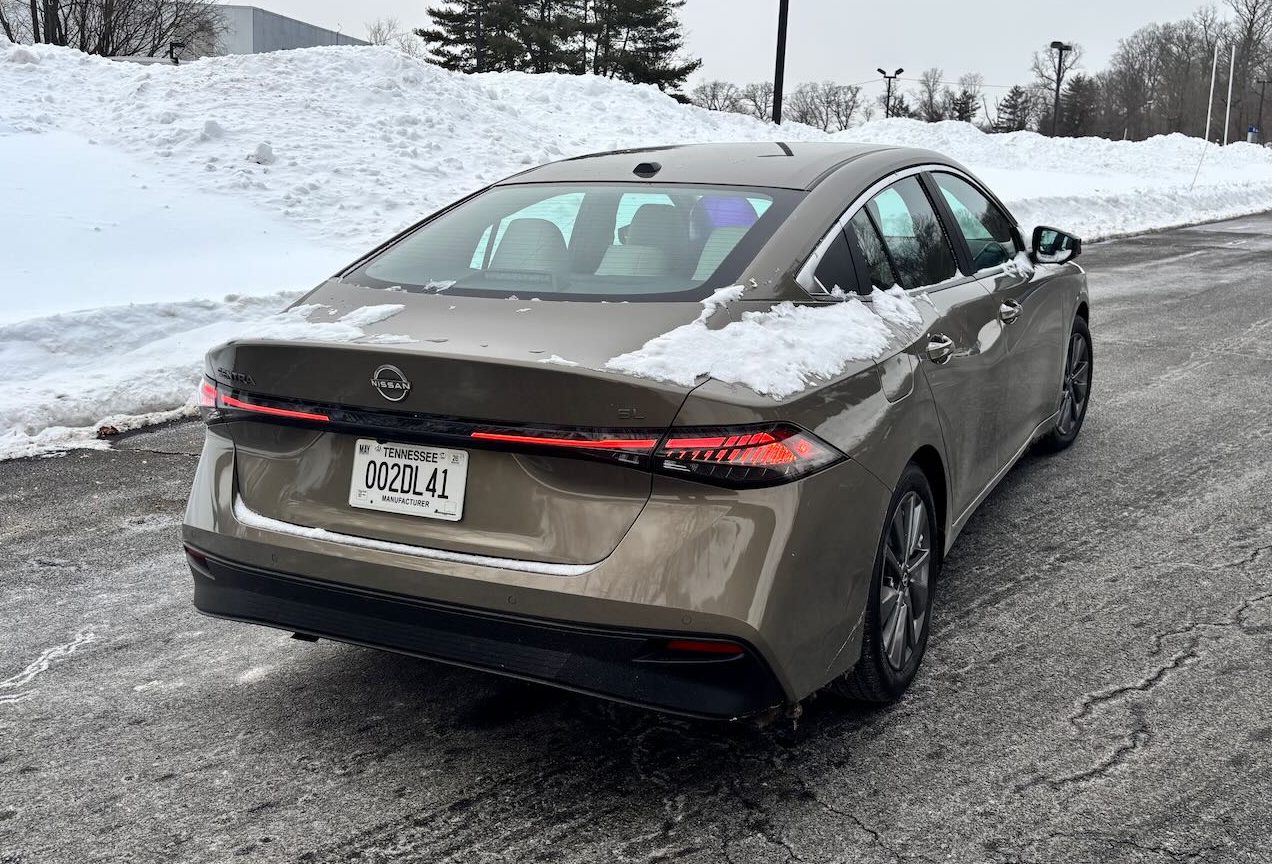
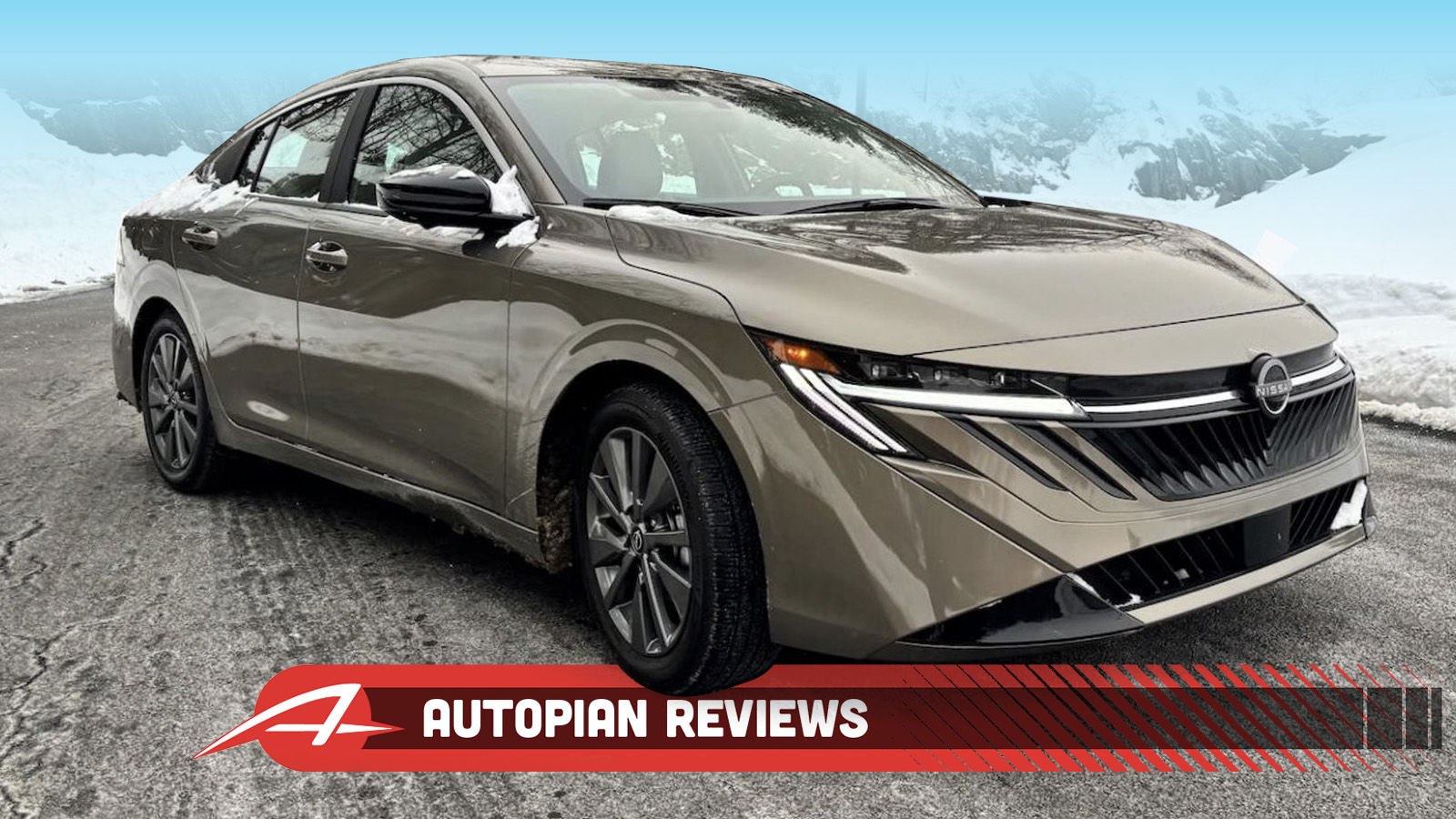
About a day after I parked the Sentra, New York got demolished by a winter storm that dropped a hefty coating of snow and kept temperatures below freezing for more than a week. This left the Sentra looking a bit like Jack Nicholson at the end of The Shining.
Chilled water molecules aside, the Sentra manages to appear both entirely new and completely familiar. There’s no wondering what it is when you see it, especially from the rear, where it carries over the same swoop of window that gently cascades into the trunk. This is both an aesthetic choice and a functional one, as the Sentra tries to squeeze as much passenger area into the car’s small footprint while retaining an aerodynamic profile that allows it to get 37 mpg on the highway.
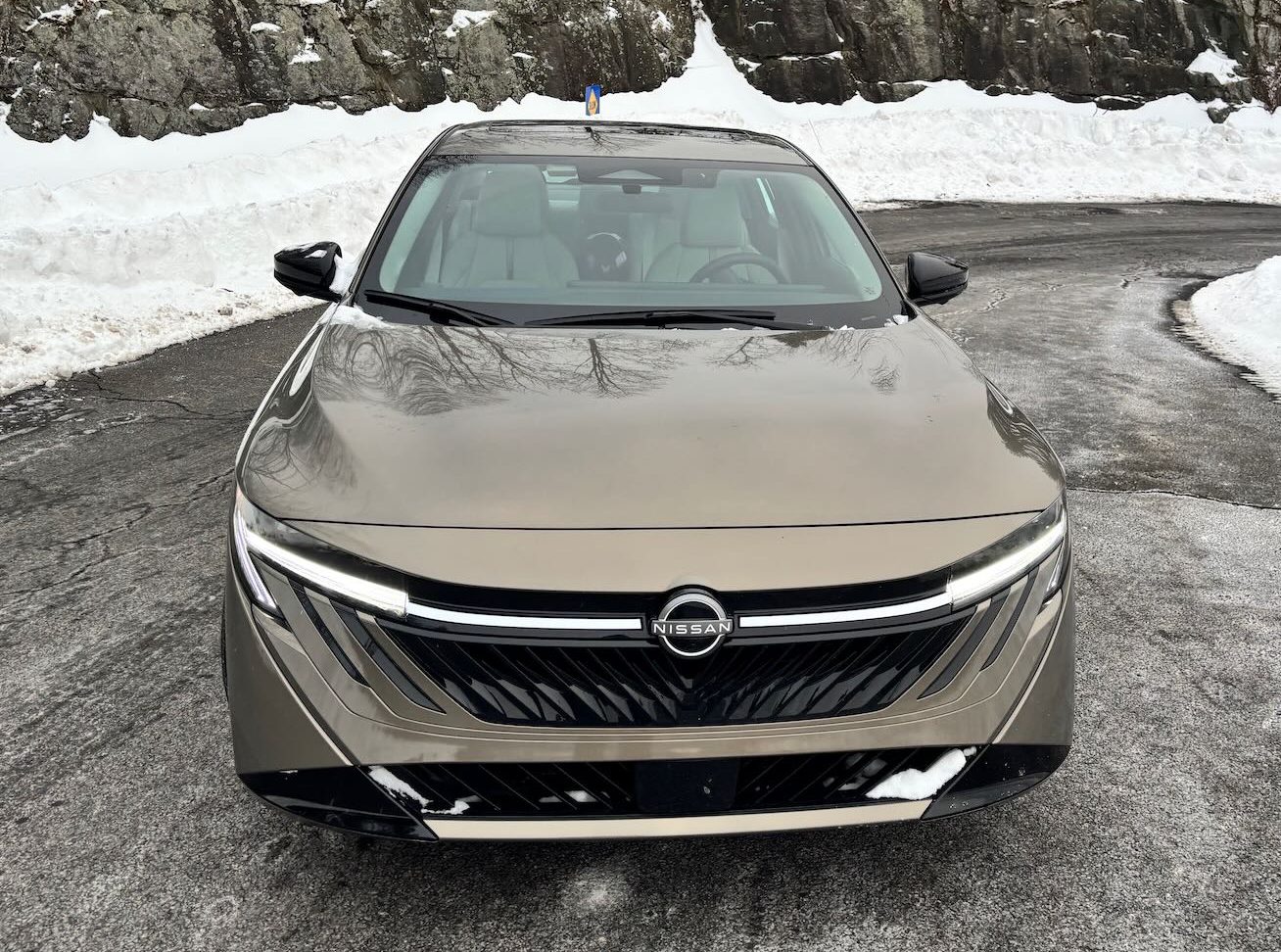
There’s a little more action up front, where the car’s “V-motion grille” blends into the car’s lighting signature, which is like a hatchet version of the Volvo “Thor’s Hammer” design. The car feels lower, longer, and sleeker than the somewhat dowdy previous Sentra.
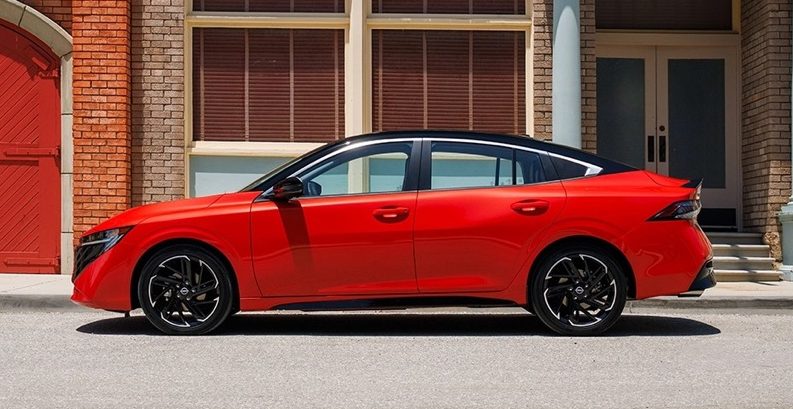
There’s a version in red with a two-tone black roof, and I think it looks great. Not to be the guy who always asks for fast versions of compact cars, but that with a little more horsepower and a manual transmission would make for a fun NISMO version. Why does a halo car have to be the most expensive model?
What’s The Interior Like?

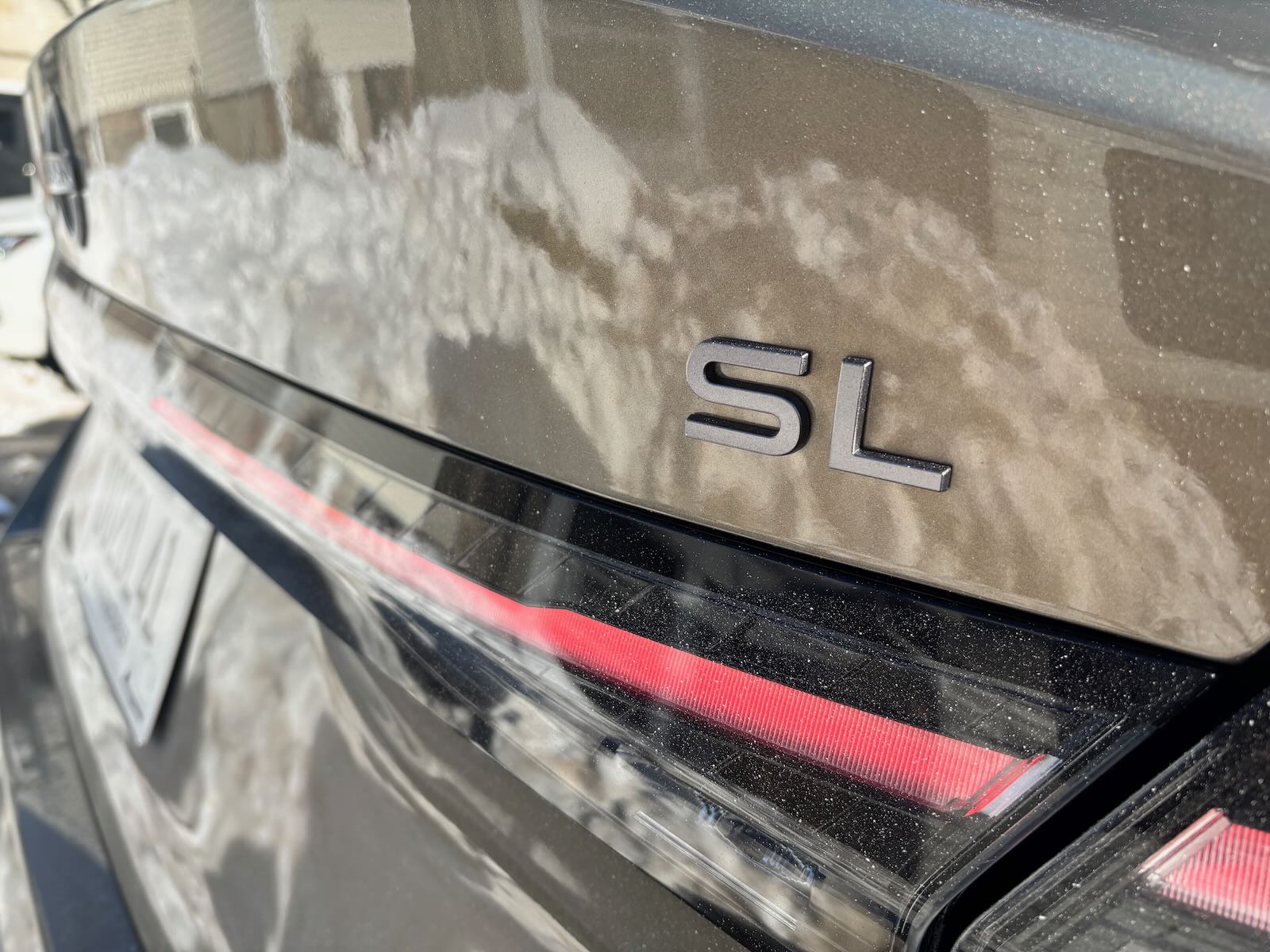
Everything feels nice inside the Sentra. Not expensive. Not luxurious. Just nice. The ersatz leather seats are wide enough to fit my American-sized butt, the heated steering wheel in the SL trim kept my fingers from turning into little frozen turkey breakfast sausages, and the contrasting colors on the dash give a sense of style.
Nissan’s version of a single wide screen is quite simple, and I appreciate that it pushes Apple CarPlay to the front, because that’s all I want.
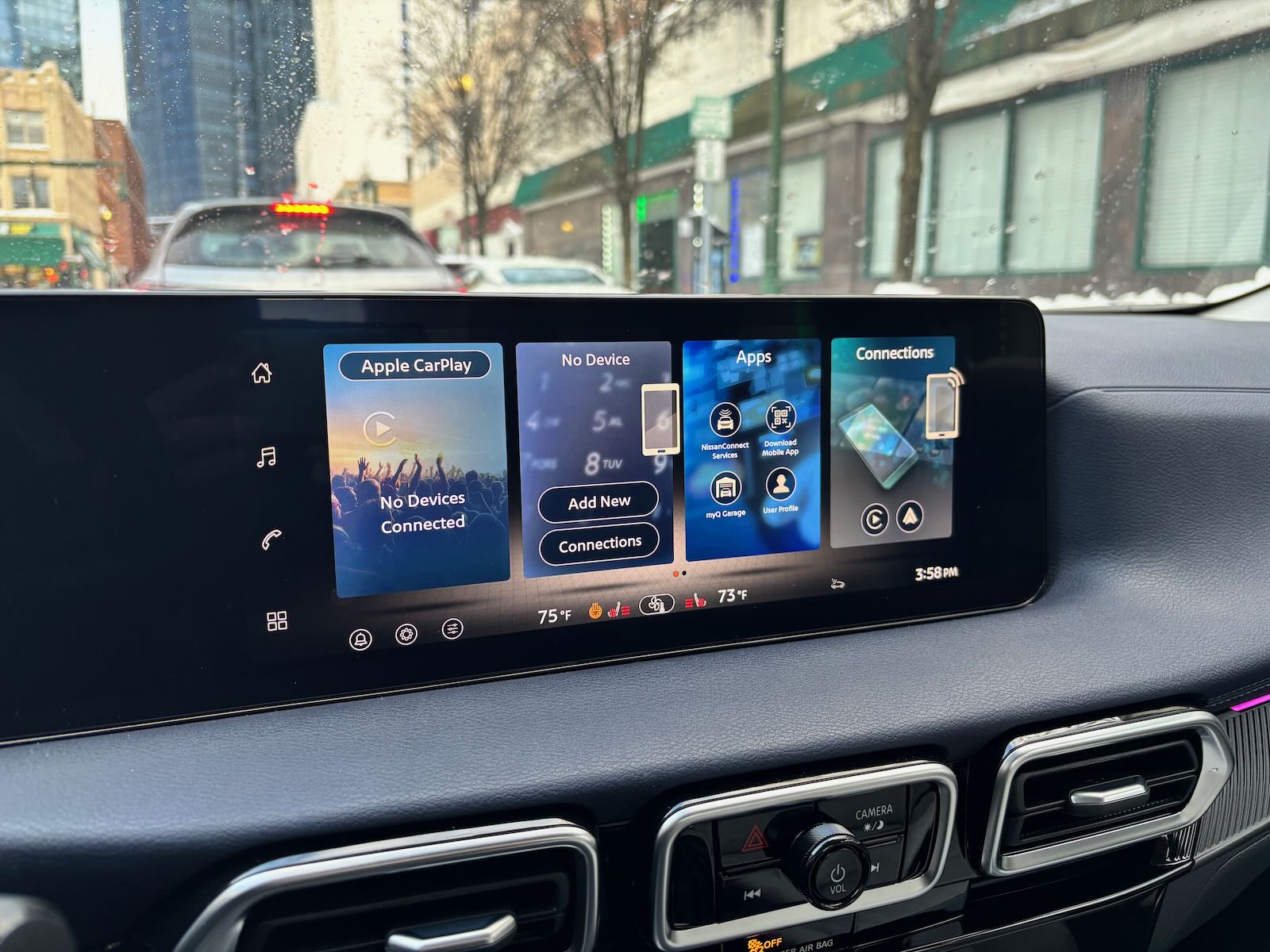
Did Nissan move some of the controls from the center console to a screen? Yes. Of course. There are none of the super annoying culprits here (vents, gloveblox), but the touch-capacitive buttons below the manually adjustable vents are a little slow to respond:
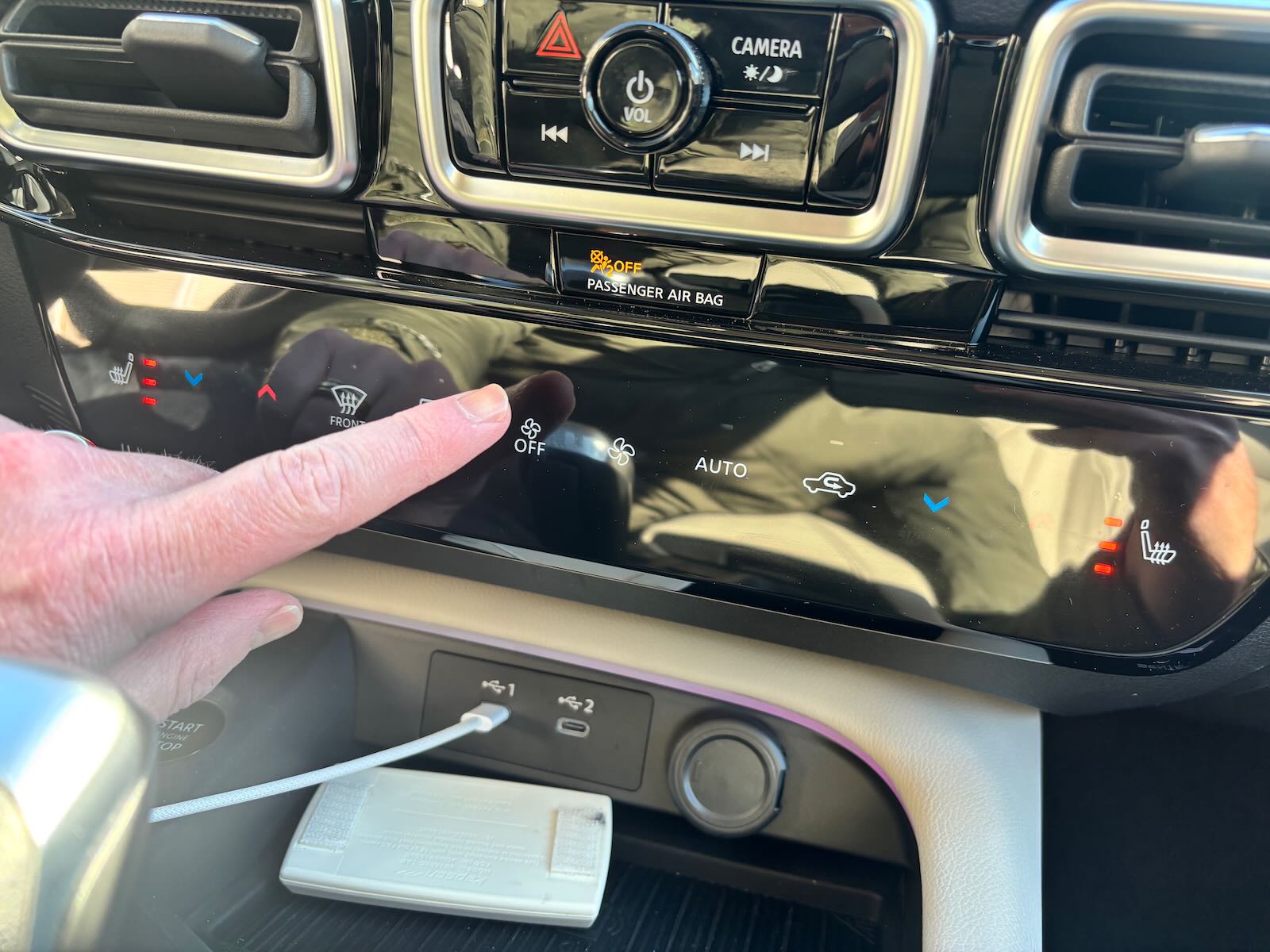
You can’t always get what you want, I suppose. The fact that this little is piano black also adds insult to injury, especially because the outgoing model had some sweet knobs to twist.
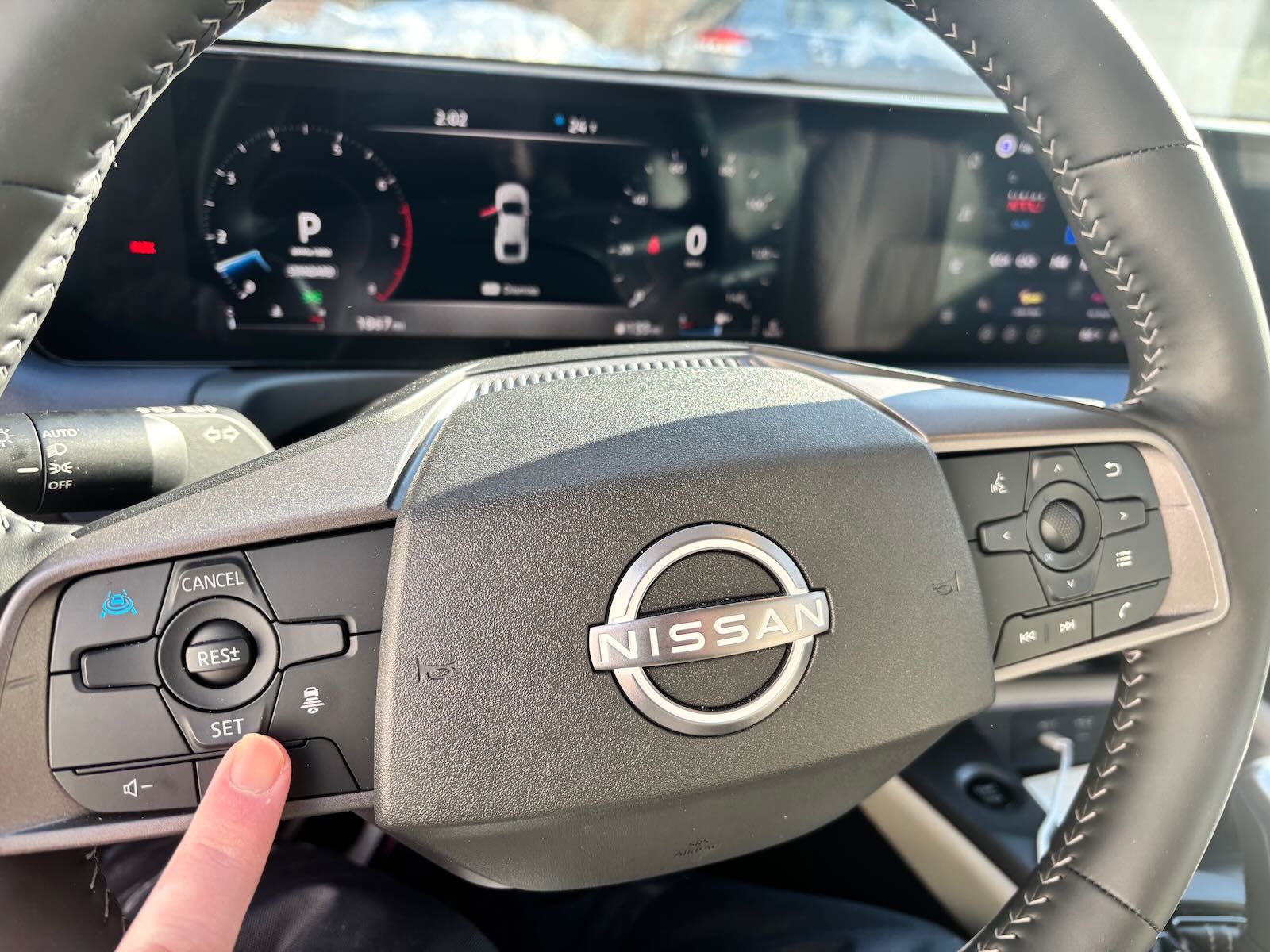
This is a really good steering wheel with redundant controls and actual buttons. I will forgive a little bit of screen if you give me a steering wheel I can use without thinking about it too much. It’s also basically the same size in here as the last Sentra, which is to say that it has as much room as any four normal humans need for most trips.
How Does It Drive?
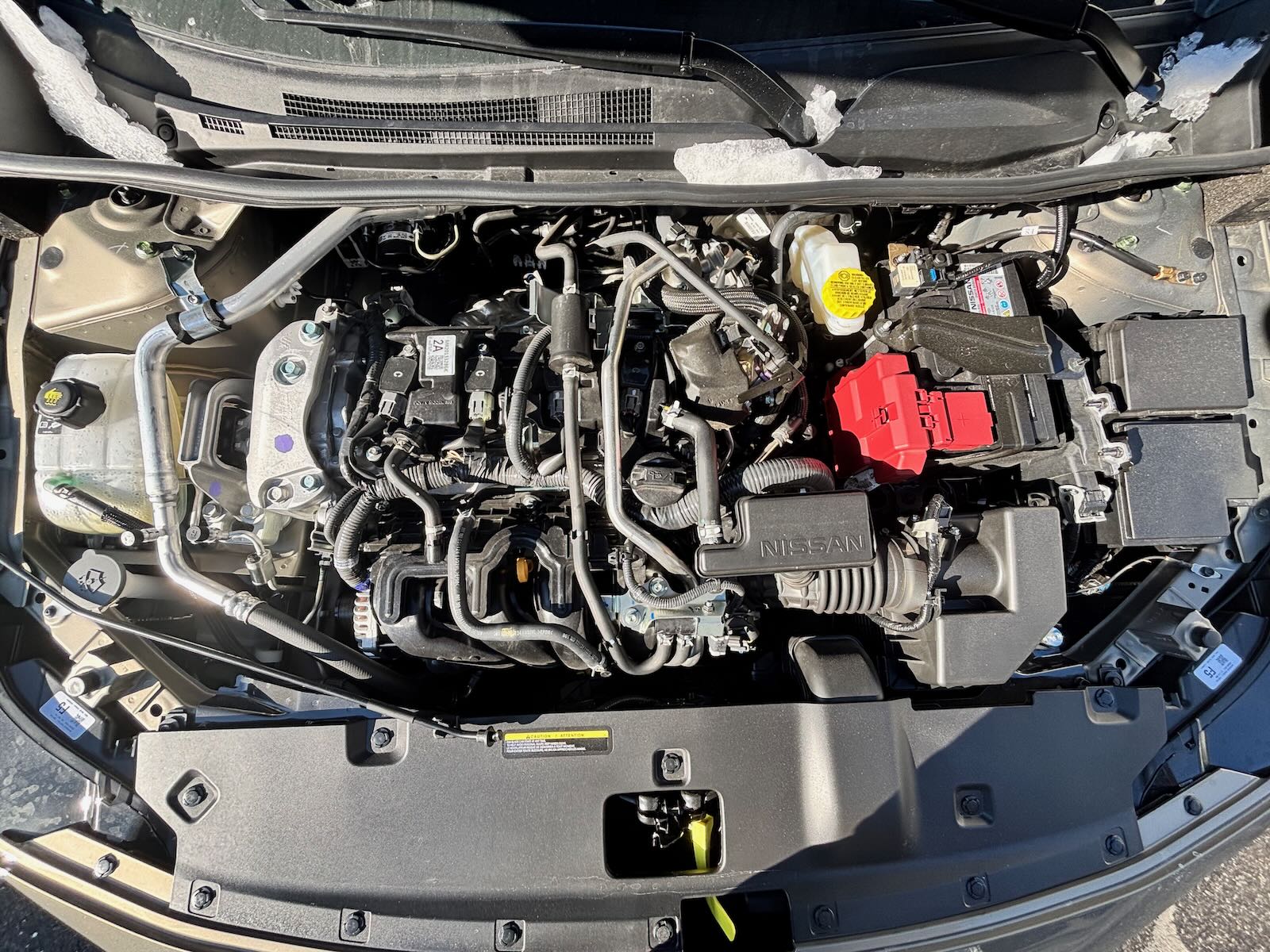
Nissan isn’t a company that has endless R&D funds to spend redeveloping a car, and it’s a bit comical how little difference there is mechanically compared to the previous Sentra given how much work has been done aesthetically. If you enjoyed the 2.0-liter naturally aspirated four-banger on the last generation, you’ll be pleased to find out it’s basically the same motor.
Also, you’re lying if you said you enjoyed it. The last enjoyable Sentra was the SE-R SPEC-V. This is a palatable motor. What’s changed here is the CVT. Sam drove this car during its launch last year and he promised me it’s a CVT that doesn’t feel as bad as the other ones. Having had a full week with the car I agree. It’s not jerky at low speeds, and it simulates a shifting feel as you accelerate. I don’t know if there are any Xtronic CVT fans here, but my guess is, if such a person did exist, they’d be quite pleased.
Because there was snow everywhere, I did get to test the limits of the car’s all-season tires, and it was less bad than I’d have expected. I never got stuck, at least. This is not a dynamically exciting car unless you’re sliding across ice, though that’s not a form of excitement I’d recommend to a person desiring to keep their insurance payments low.
How Is All The Tech?
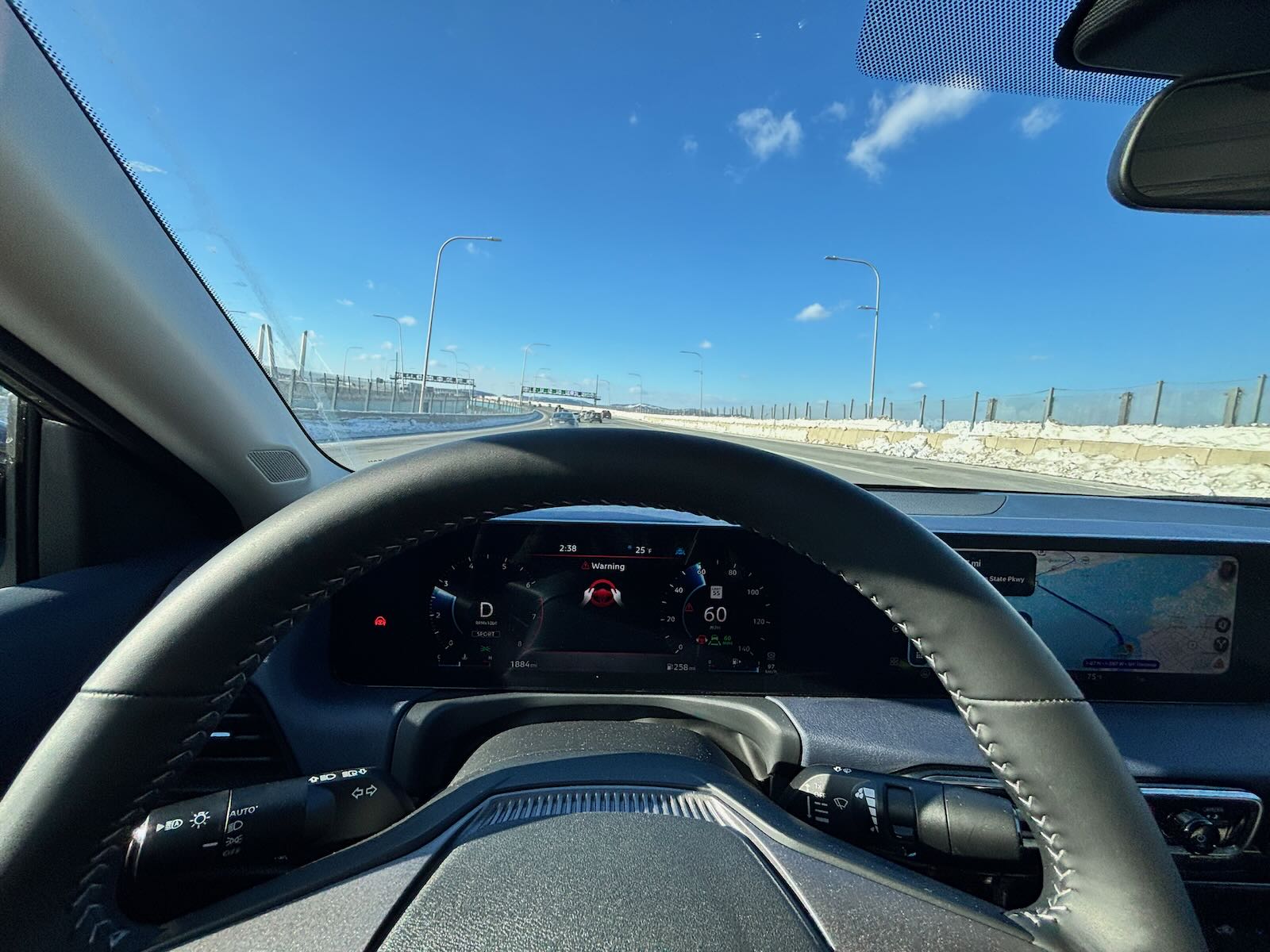
The Sentra is one of those cars that trades on its spec sheet. There’s a lot of stuff here, and it’s decent stuff. In some ways, the Sentra is the inverse of the Chevy Trax, an affordable vehicle that’s better than the sum of its parts. Here, the parts maybe outshine the car a little.
In SL or SR Premium trim, there’s an eight-speaker Bose system that sounds as good as something you’d find in a lot of entry-level luxury cars. I’ve always been a big fan of Nissan’s “around view” monitoring system, which gives you a bird’s-eye view of the car. Does something so small need that kind of help? Some people would probably benefit.
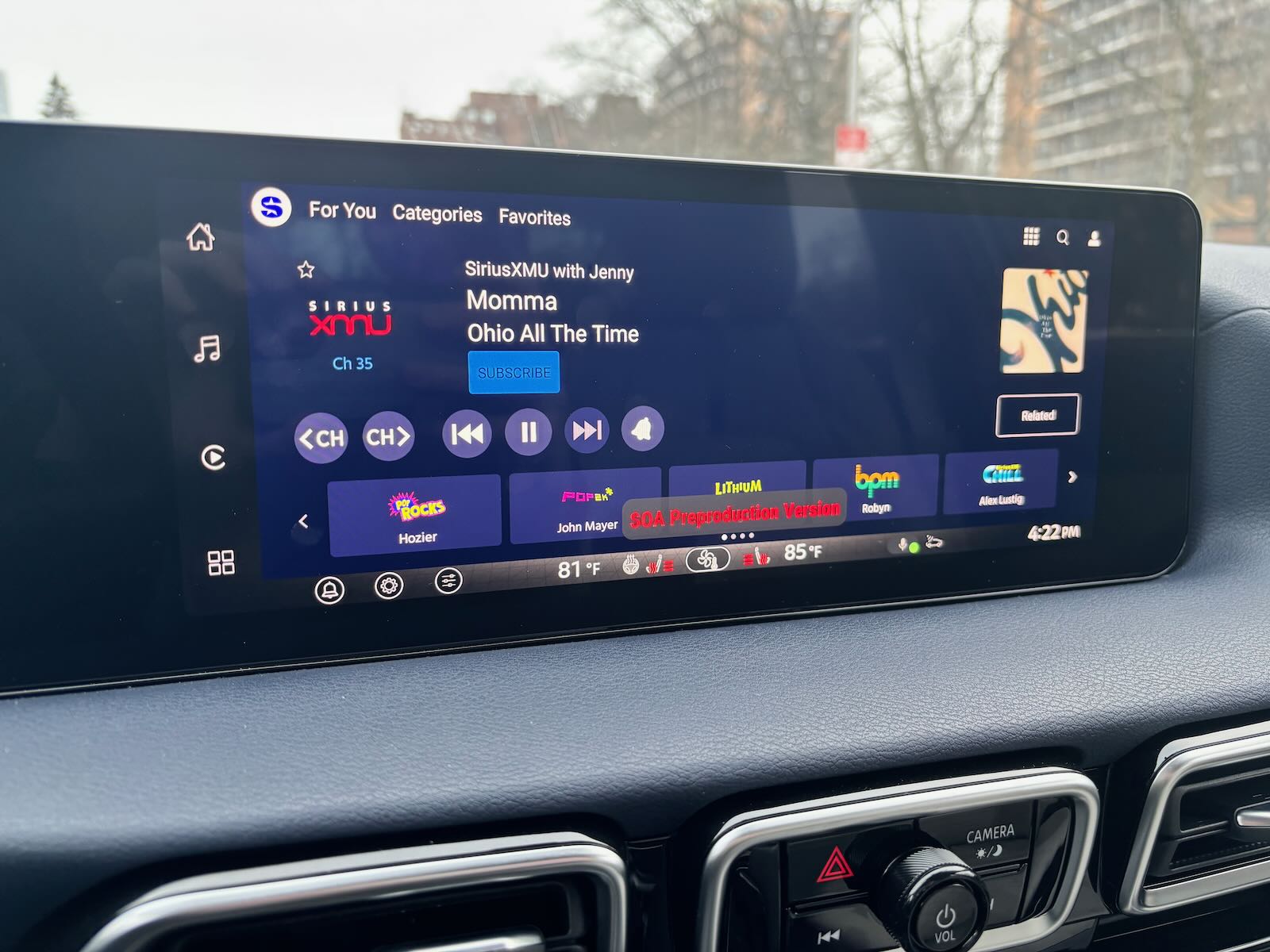
All Sentra trims get intelligent cruise control, and the higher grades get ProPILOT Assist, which adds lane-keeping assist to help point the car in the right direction. It’s quite insistent on having your hands on the wheel, even when they are, but it’s about as good as anything else you’ll get in this class.
Does It Fulfill Its Purpose?
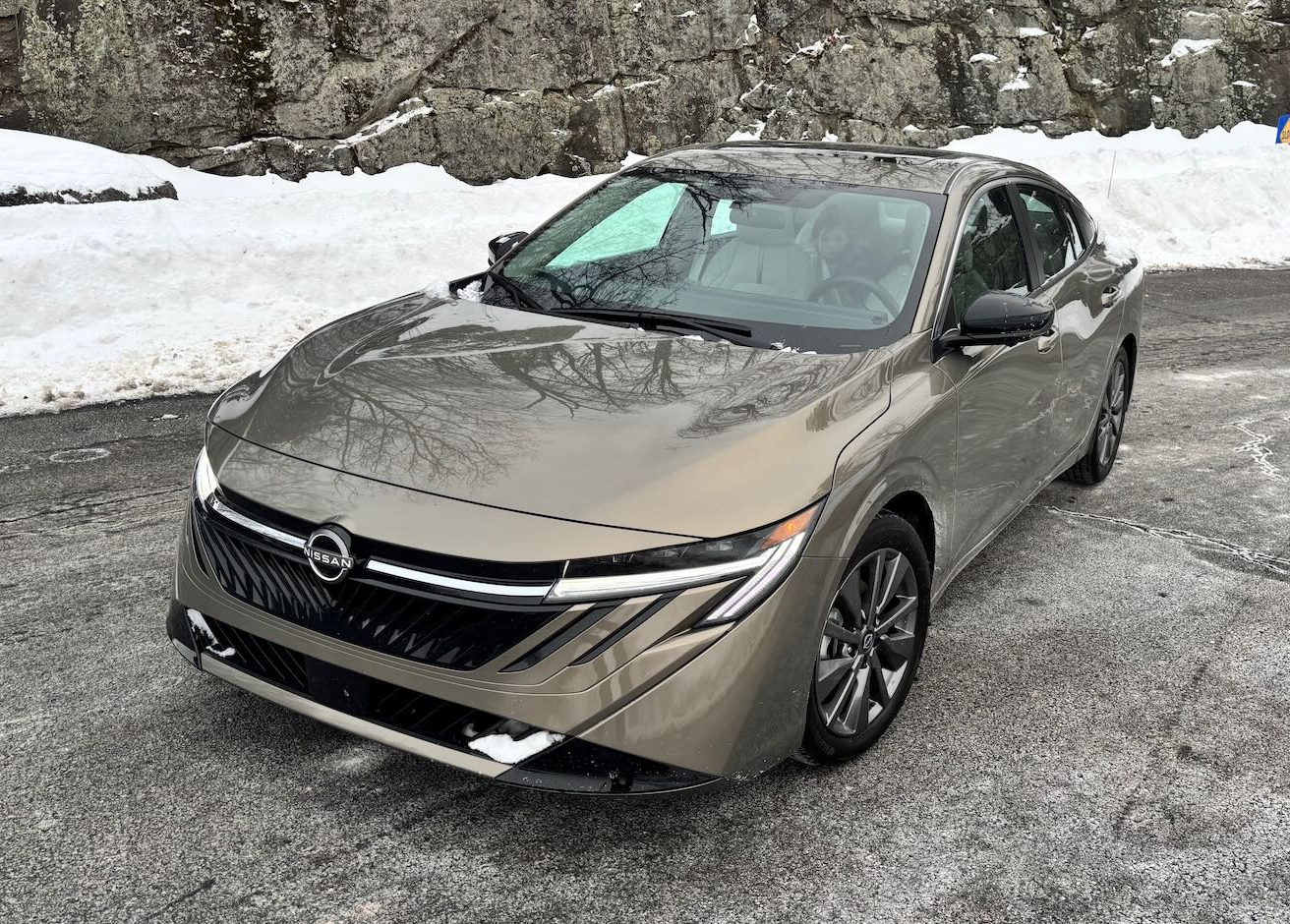
Most automakers have discovered that making your entry-level car feel cheap doesn’t work now that there are brands willing to invest a little bit of money into design. In SL trim, the Nissan Sentra didn’t look or feel like a bargain basement car. The driving experience is unmemorable, which is better than so bad you can never forget it.
As with a lot of cars, the sweet spot is probably in the middle, where you get a lot of desirable features and can shave a few dollars off the total cost. As configured here, you could maybe sneak into a hybrid XLT Maverick, which is a lot of vehicle for the price. I’m a weirdo, though, and not everyone wants a Maverick. A lower trim Civic Hybrid is also a possibility.
I’m guessing that the average Autopian reader would probably go for the Maverick or Civic, but your cousin might feel differently. Your cousin (or aunt or uncle) may ask you, their relative who cares about these sorts of things, if a Sentra is a bad idea. Have no fear responding that it is not. I cannot speak to the longevity of such a thing, but as a new car experience it’s totally good enough, and that’s the role the Sentra is supposed to fill.
Though, a NISMO version could be sweet. Just saying.
All photos Matt Hardigree unless otherwise noted.



“I don’t know if there are any Xtronic CVT fans here”
Why I believe there’s a least one. Perhaps this will summon them!
Does anyone have any data or experience that could indicate whether Nissan CVTs (or economy car CVTs in general) are improving their long term reliability, or are they still as bad as they always have been? If you’re willing and able to answer, please also differentiate between actual CVTs and ‘e-CVTs’ in hybrids – the latter aren’t CVTs at all and aren’t subject to the same problems as actual push belt CVTs.
My expectation is that they’re still bad – if CVTs could have been made reliable I expect the industry would have done so a decade ago and stopped shooting themselves in the peen from a warranty cost and reputation standpoint – but I’m willing to be proven wrong.
As it stands now a car having a traditional push-belt CVT is a deal killer. I’d happily take a chance on a Sentra if it had a manual, and I might even be willing to take a chance on a traditional hydraulic automatic. I was actively considering going to a Nissan dealer to test drive a Versa sedan with the manual until they killed that product.
I’m not in the market for an economy car but I am sure glad a handful of these cars still exist as new car options. I think the base model is a pretty nice looking car for the money. It’s slim pickings for cheap new cars these days.
Why can’t manufacturers provide more base-model versions for testing?
“Base Price: $23,845
Price As-Tested: $30,375 (including $1,245 destination charge)”
That makes the as-tested version 27.38% more expensive than the base-price.
In todays economy, more people are going to want to know about models that aren’t so much more expensive.
Yep. The base price seems like a good deal, but if you’re shopping with $30k you can do better than this upper trim Sentra. I’m sure I’ll experience the base model as a rental sooner or later.
Alternate title:
“The Nissan Sentra Remains”
The Sentra is a midsize car for the price of a compact Corolla. That is their selling point.
These days, interior volume isn’t really that big of a difference between the two. They’re almost identical in size.
For me, at this stage in life, when I am picking up a rental now, I am checking for things like car seat attachments, if there is room for a reverse facing car seat and other related things. I had a ’25 Sentra for my last trip, and it worked okay, but I would have enjoyed a larger space in the back for sure.
To a point. The Nissan has 8 cu ft (8%) more interior volume. More important than the number is how it is parcelled out.
The Nissan has 2 inches more legroom which is at a premium in smaller vehicles.
Ah Nissan, the Dodge of Japan. I haven’t been impressed with their newer vehicles and there really isn’t any reason to pick them over Toyota other than slightly lower initial cost.
I always went with calling them the Japanese Chevrolet, and not in a good way.
Like the joke:
Heaven is where the cooks are French, the police are English, the mechanics are German, the lovers are Italian, and organized by the Swiss
Hell is where the cooks are English, the police are German, mechanics are French, the lovers are Swiss, organized by the Italians – but the cars are Nissan.
*IF* you can find a Toyota dealer that will sell at MSRP, spend the extra $525 and get a Corolla. On a 60 month note, that’s $9/month more.
Seriously… Nissan could build a car that’s 10x better than a Corolla or Civic and I’d still avoid it like the plague simply because of the reputation of the JATCO CVT. Until/unless Nissan offers a 10 year/150k powertrain warranty, there’s no reason to pick this. Expect Nissan will sell most of them at fleet prices to rental-car agencies.
Good news all you seasoned and insatiable connoisseurs of 2-liter naturally-aspirated four cylinder engines paired to belt-and-pulley transmissions! There are now six absolutely bitchin’ options for you out there. All about 150hp. All about 8-9 seconds to 60. How will you ever decide?
This is likely why Nissan spent the money on exterior and interior styling rather than engineering. The main segment buyer is just fine with these mechanicals.
I’m not digging the exterior (I prefer the Elantra if we’re talking hyper-angular) but it will get noticed and the interior seems to be a strong point. And this compact is loaded for $30K and probably big enough to substitute for a midsize sedan for many of us.
The problem for me is the transmission. Not that it’s a CVT, but that it’s a Nissan CVT. Fool me once. I’d trust Toyota and Honda more, and for $30K you could bypass that entirely for the Civic’s hybrid powertrain. It wouldn’t be as loaded, but I’d be fine with that tradeoff.
“The problem for me is the transmission. Not that it’s a CVT, but that it’s a Nissan CVT. Fool me once. I’d trust Toyota and Honda more, and for $30K you could bypass that entirely for the Civic’s hybrid powertrain. It wouldn’t be as loaded, but I’d be fine with that tradeoff.”
I know it’s not a sedan, but for $24K, you could get a Trax with an actual 6-speed automatic in a little wagon that’s plenty roomy inside. Time will tell how reliable the wet-timing-belt turbo-3 will be, but they’ve been holding up pretty well since they debuted in the Trailblazer back in 2020. (that class-action lawsuit was brought by two people over one shared vehicle)
So it sucks as a CVT. Seriously, what is the point of faking a shift? To anyone who cares it feels fake and useless, and the majority of buyers simply don’t care at all.
I’m not trying to defend the reliability of CVTs here, but to me it’s beyond silly for it to pretend like it’s a 7/8 speed auto when the whole point is that it’s an ∞ speed auto. I really liked the early Subaru CVTs that let you peg the throttle and it would just stay there as you accelerated. The new CVTs that pogo between 4-6k rpm constantly are beyond annoying.
I know many normies who find the lack of transmission reaction, aka “shifting”, to be an uncanny valley experience. If they have driven automatics for any length of time, they wonder what is wrong with it. Those early CVTs that lacked fake shifts got significant complaints in the market because of it. Market research is the reason CVTs fake shifts.
Like Lockleaf said – many people hate the drone of a CVT that goes to peak torque and stays there.
Honda even put fake shifting into their new Civic Hybrid.
I had the SE-R Spec V. It was enjoyable. Other than the constant refilling with oil. And the wheel bearings. And the stuck rear calipers. And the cracking cheap eBay exhaust manifolds because the stock one was gone when I bought it. And the dying power steering by the end. And the rust. Oh God, the rust.
I had black 02 or 03 SE-R Spec V. back in like 2006. It only had 25k miles on it when I got it. That thing was a rocket, Never had a single problem with it. I remember thinking how cool I was shifting into 6th gear. Brakes were weak, but stereo great. I loved how analog it was compared to my type R today. It was first thing I thought about when I read this article as well, the new one looks bad by comparison!
Mine had 96k when I bought it. ’04. I kept it 9 years and put nearly 100k miles on it. So it did some things right.
In Nissan’s defense, GM would’ve changed the name of the car 4 times by now.
When you think about it, it’s actually quite an achievement to create something that is both bland and overstyled at the same time.
Hahahahaha.
Would it have killed Nissan to also make available a turbo’d version of the same engine for $4,000 extra? A 220hp Sentra would be fun as hell.
Can’t steal sales from the Z. It needs all the help it can get.
The donut spares can’t handle that kind of power!