

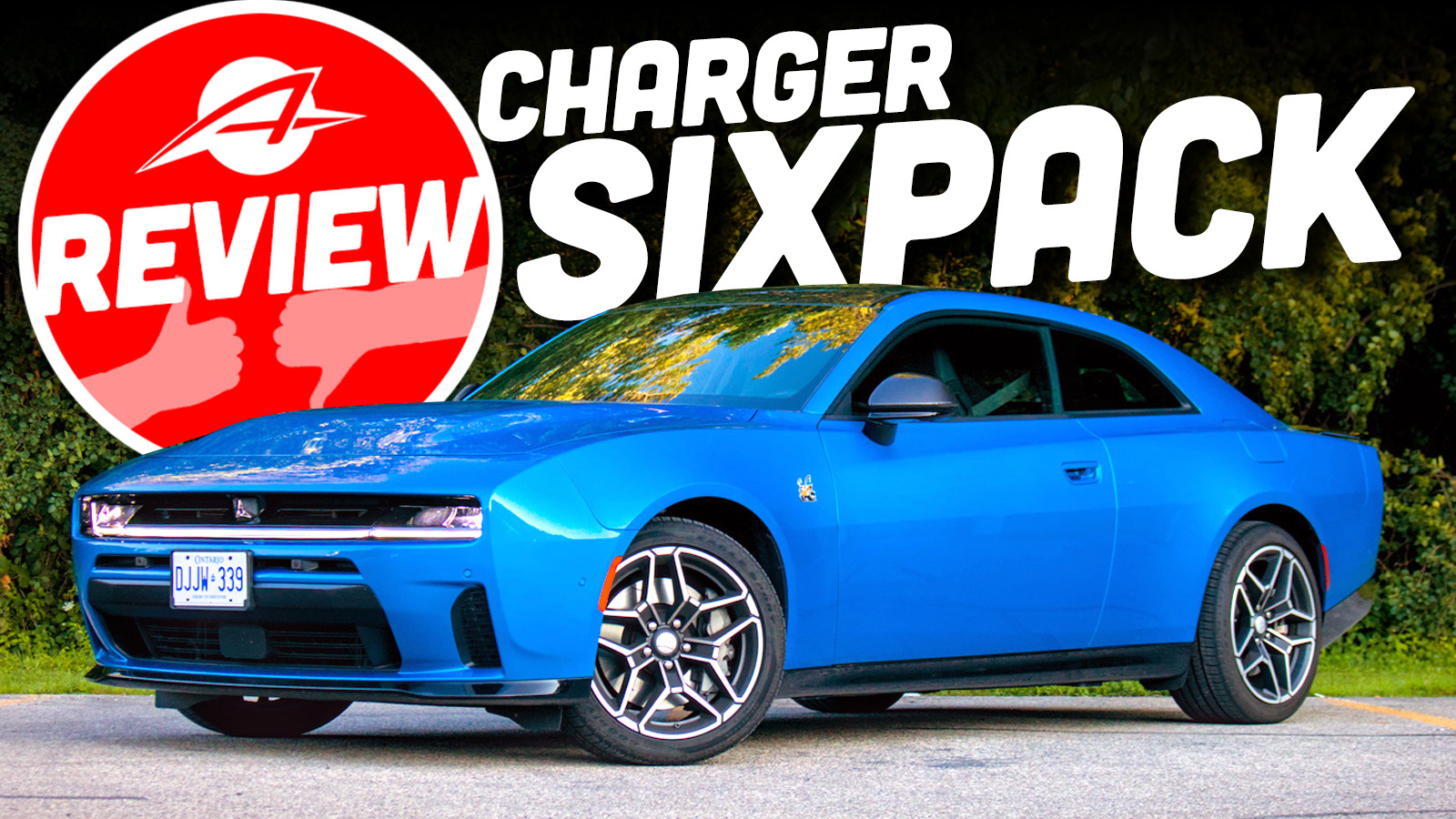
It’s safe to say that the new Dodge Charger wasn’t exactly born smoothly. An EV-first launch generated considerable backlash among a fray of V8-loving enthusiasts, and it didn’t help that the most potent electric model won’t do a burnout. So what happens when you yank out the batteries and drop in a 550-horsepower twin-turbocharged straight-six? You get the Charger Sixpack Scat Pack, a new-age Dodge aimed at people who have 93-octane coursing through their veins.
Our first outing in the new twin-turbocharged straight-six-powered Dodge Charger was a bit unusual. With snowy Vermont as the backdrop, my colleague Mercedes hooned it so hard that the powertrain went into heat protection mode. Promising muscle car stuff, but an infotainment glitch didn’t instill huge confidence, and winter driving isn’t always the best representation of other conditions. The initial impression was that of a fun but flawed machine, so what happens when Mother Nature thaws the landscape? I booked a summer week in the Charger Sixpack Scat Pack to find out.


[Full disclosure: Dodge Canada let me borrow this Charger Six Pack Scat Pack so long as I kept the shiny side up, returned it clean with a full tank of premium fuel, and reviewed it.]
The Basics
Engine: Three-liter twin-cam 24-valve twin-turbocharged water-to-air intercooled inline-six.
Transmission: Eight-speed conventional torque converter automatic.
Drive: Full-time all-wheel-drive with selectable rear-wheel-drive, limited-slip rear differential.
Output: 550 horsepower at 6,200 RPM, 531 lb.-ft. at 3,500 RPM.
Fuel Economy: 16 MPG city, 23 MPG highway, 19 MPG combined (14.5 L/100km city, 10 L/100km highway, 12.5 L/100km combined).
Curb Weight: 4,816 pounds (2,185 kg).
Base Price: $57,685 including freight ($72,390 in Canada).
Price As-Tested: $67,965 ($86,665 in Canada).
Why Does It Exist?
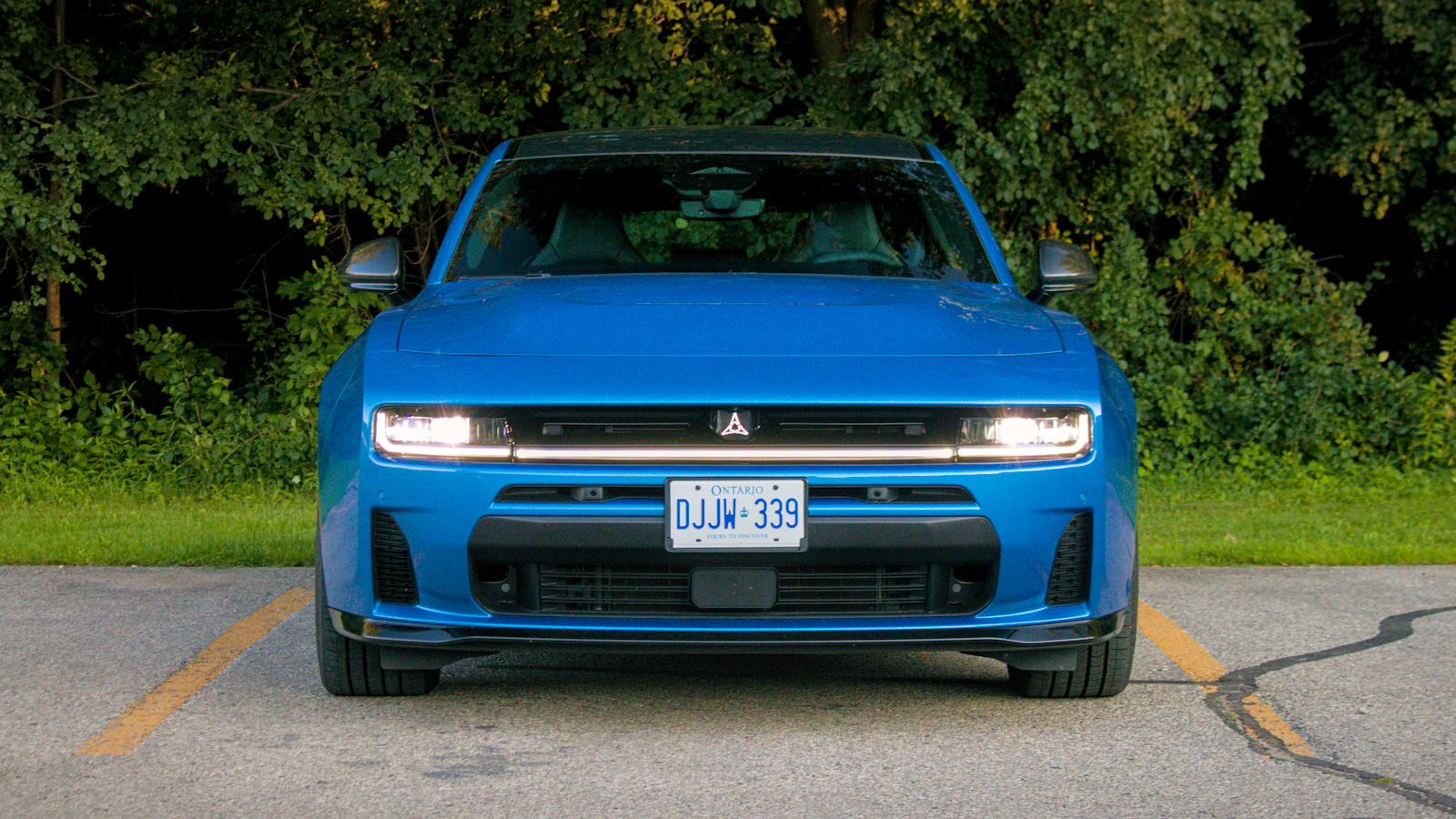
For the past 20 years, the Charger nameplate has been a cornerstone of the Dodge lineup. Initially revived for the 21st-century in four-door form, it spawned a range of brawny V8 variants, including the inimitable Hellcat, becoming an icon in its own right. However, that doesn’t quite explain why this new Charger exists. It’s a replacement for the old model, and it initially launched as an EV as a measure to meet emissions standards. Not only did that go poorly, but rollbacks of federal measures to support EVs mean that this version here is Dodge’s great hope: the Charger Sixpack, featuring the twin-turbocharged straight-six from a Ram 1500.
How Does It Look?
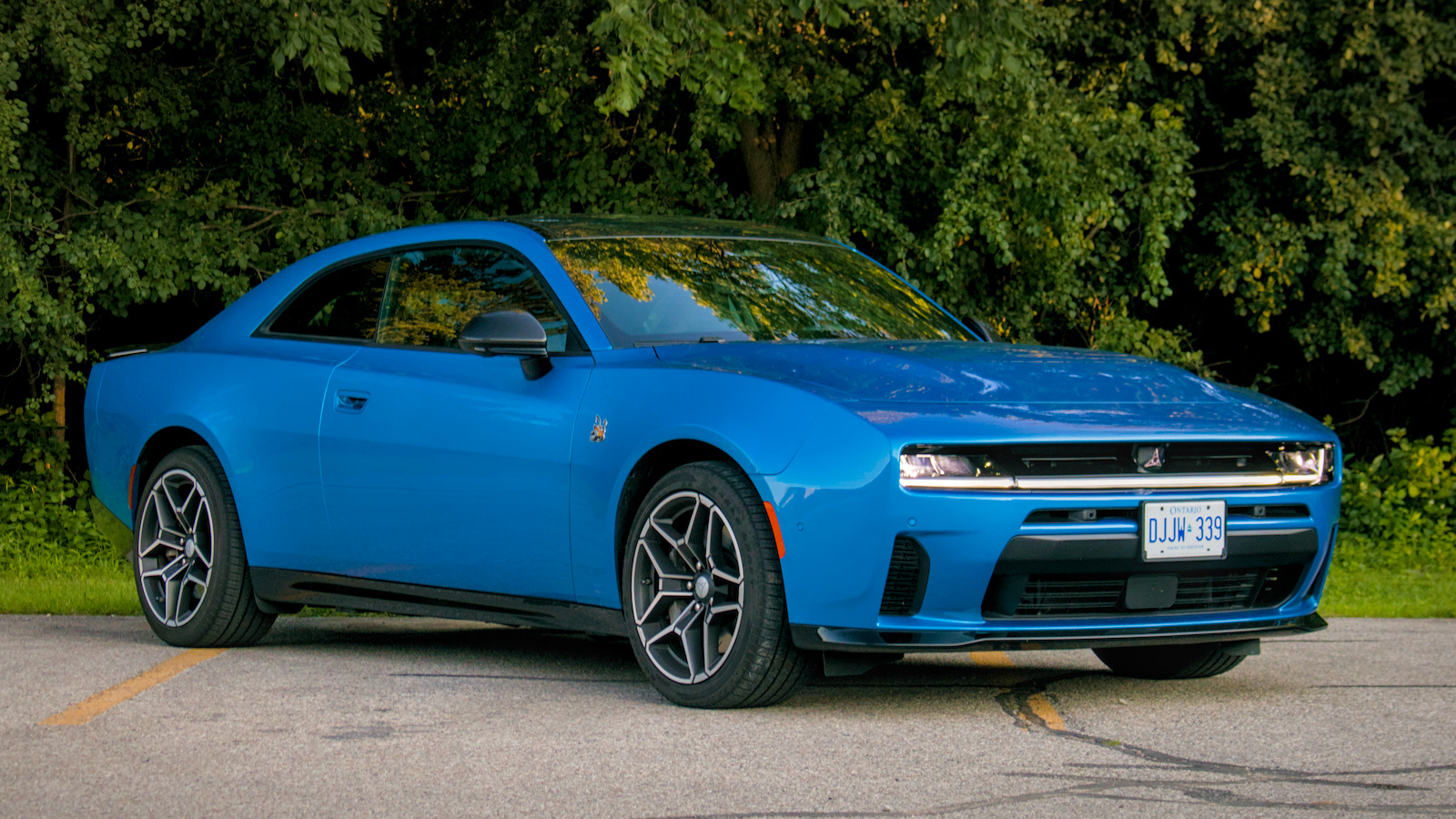
Revamping a beloved car is tricky because it’s always possible to get the styling wrong. However, if you have a wealth of heritage to pull from, there’s nothing wrong with dialling in a little old-school cool. When designing the new Charger, Dodge dipped its cup into its cauldron of history and pulled out surfacing from the ’60s. That plunging crease down the flank, those wide haunches, and that single-frame headlight surround are pure muscle car in the best way possible. However, while the surfacing is great, the proportions lead this full-sizer into the uncanny valley.
The base of the windscreen on the new Charger sits at the same height as in several subcompact crossovers, there’s an enormous amount of metal down each flank, there’s enough wheel gap to house families of opossums, and even the standard 20-inch wheels look a tad undersized. Add in the cheap-looking and thankfully optional light bar, and the new Charger just doesn’t look as handsome as it probably should. Strange, that.
What About The Interior?
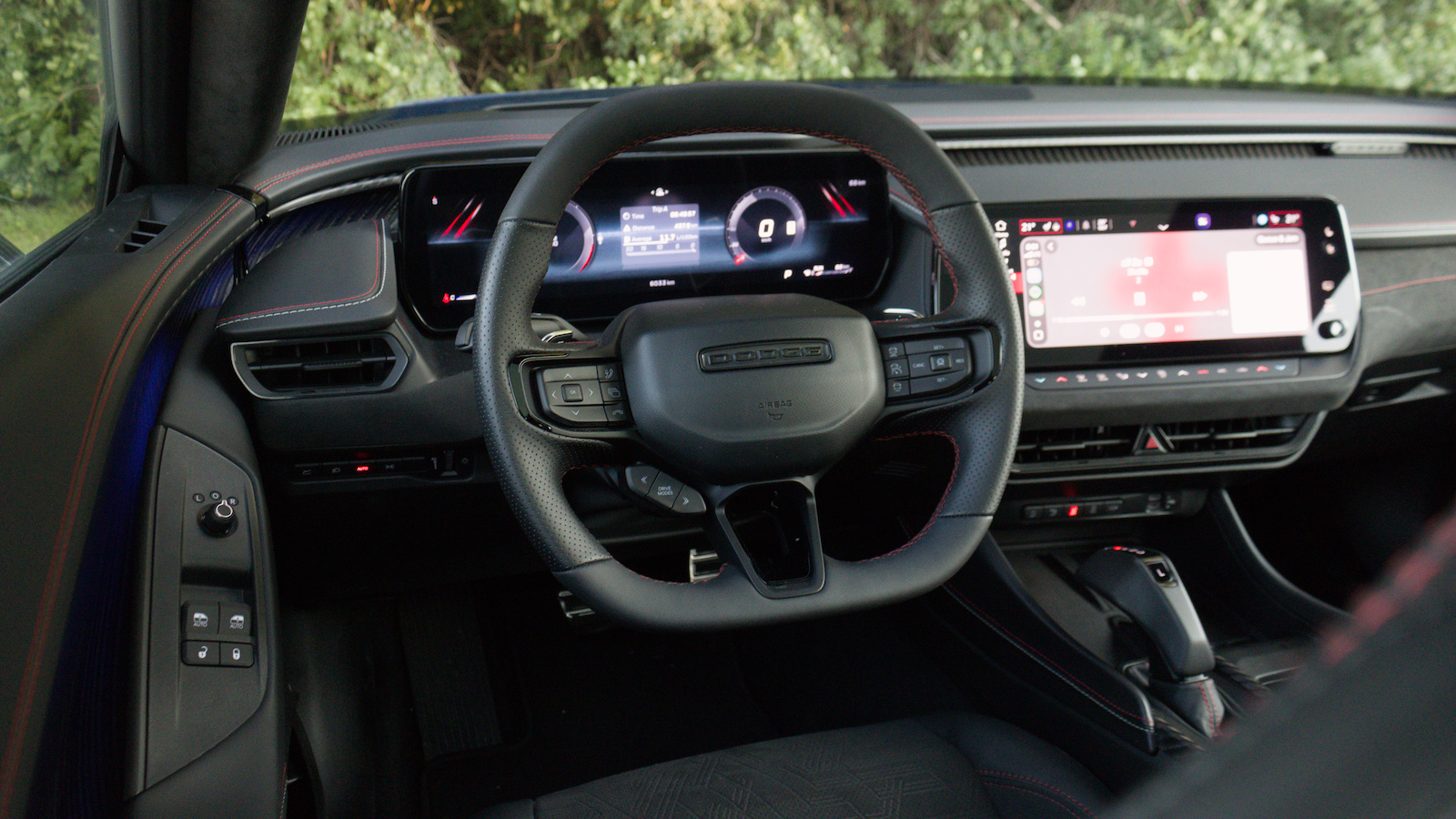
Slide inside the new Charger and you’ll be greeted by a surprisingly nice interior. Loads of stitched surfaces, lovely materials, solid build quality … it’s a world apart from the more price-conscious cockpit of the old Charger. As pleasing as some of the sculptural elements are, however, many of the things you interact with on a regular basis are rather strange. The steering wheel’s genuinely uncomfortable as the cross-section of the rim comes to a point where palms naturally rest, the shifter isn’t the most ergonomically astute design, and real buttons are rather scarce. Sure, the seats themselves are quite comfortable, but there’s a more fundamental issue with the Charger that mitigates those supportive cushions: something’s gone terribly wrong with laying out the seating position.
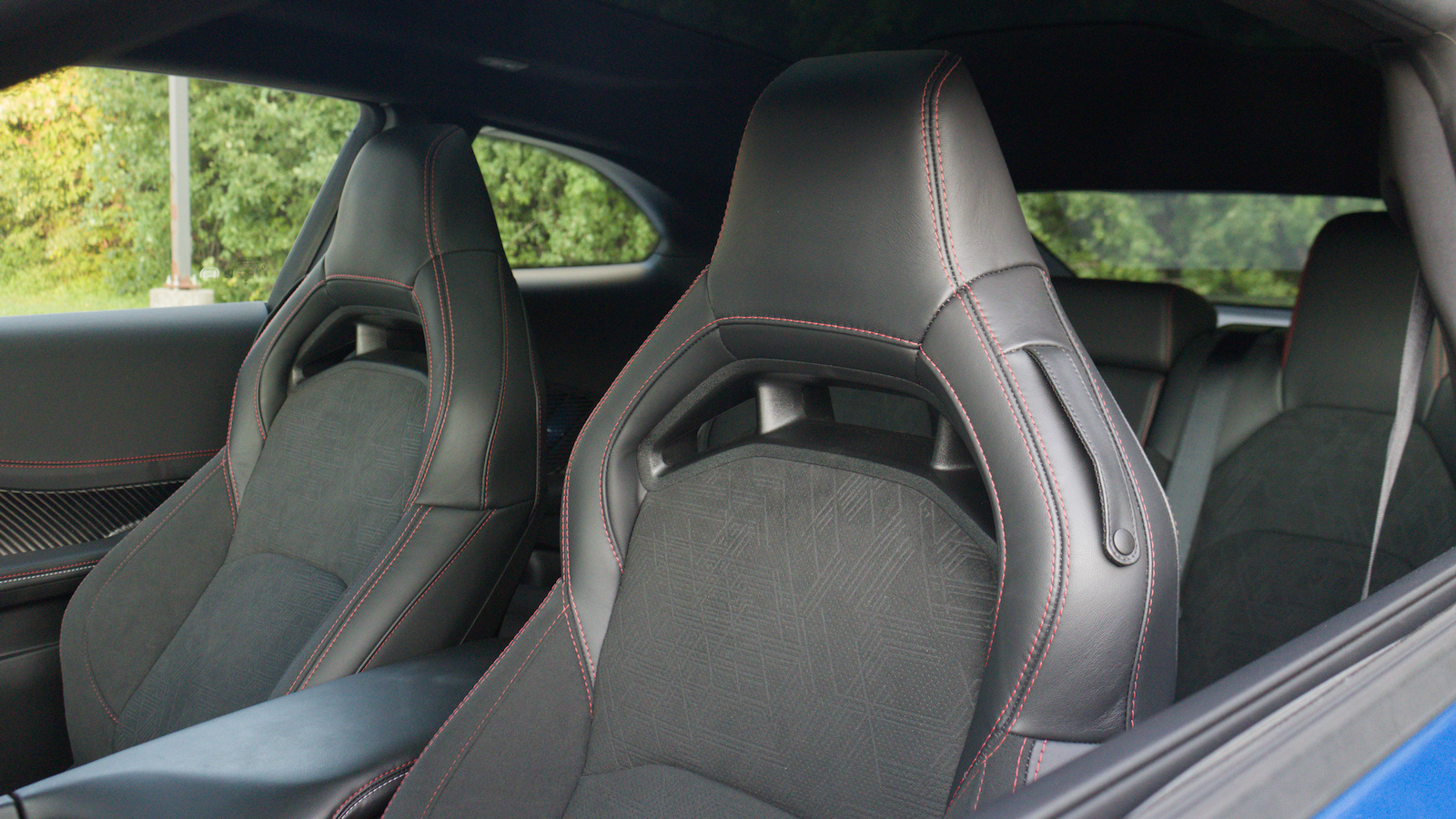
It starts with a floor that’s simply too high because the platform also has to accept a battery pack. Despite sitting tall compared to many traditional large sedans, even with the seat dropped to its lowest height, it feels like your knees are near your ears. It’s tolerable with the squab Carolina-squatted by tilting the leading edge up all the way, but I’m only 5’10” with a 30-ish-inch inseam. The longer-legged will find getting comfortable challenging, especially if they’re not long of arm. Despite the presence of a moderately long dash-to-axle ratio and a telescoping steering column, the wheel never comes as close as most would like. For something that’s supposed to be a blue-collar grand tourer, the basic ergonomics of the Charger feel like a huge miss. The floor’s also high in the rear seat, and once you factor in how the trunk’s shaped like a Toblerone laid on its side, it’s genuinely astonishing that Stellantis has eked such poor space efficiency out of a vehicle with a larger footprint than a Toyota Sienna.
How Does It Drive?
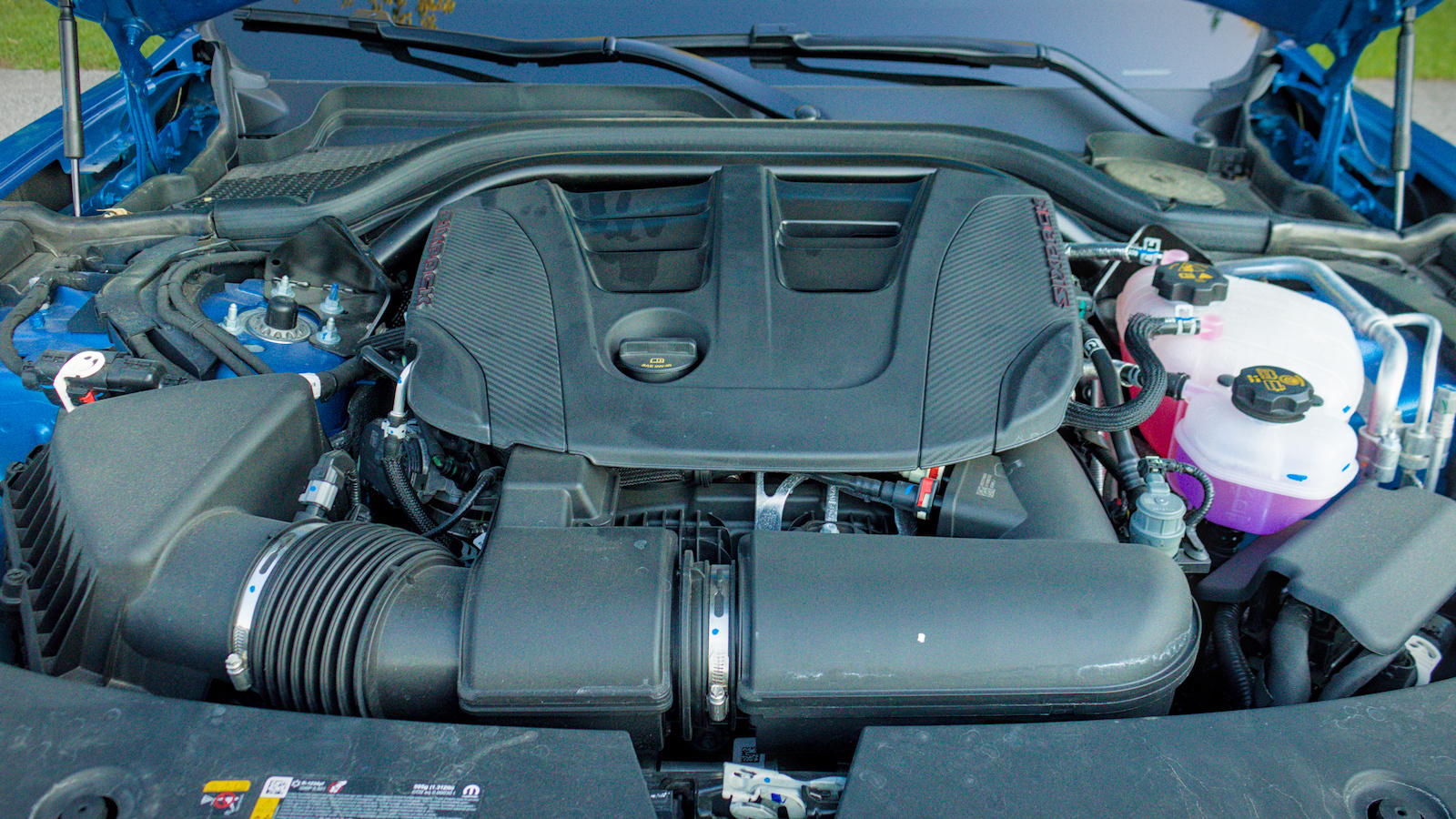
Thankfully, the firepower under the hood of the new Charger Sixpack Scat Pack is almost enough to make you forget about the platform’s packaging. It’s a twin-turbocharged three-liter straight-six making 550 horsepower. That’s more than a BMW M3 CS despite a lower redline, and it comes attached to a rather sensational drivetrain. The ZF 8HP is still considered the gold standard of automatic transmissions, and the Torqueflite 880RE is a licence-built version of that very family of transmissions. Downstream of that, you get full-time all-wheel-drive and a limited-slip rear differential, which work as a team to give the Charger Sixpack Scat Pack a trait no gas-burning high-output Charger’s enjoyed before: This thing can actually put its power down.
Dial up launch control, let the revs build to 3,000, release the brake, and this thing rips to 60 MPH in well under four seconds with nary a hint of wheelspin. However, that doesn’t paint the most accurate picture of the engine’s character. There’s solid mid-range torque for remarkably drama-free overtaking and shove up top when you push the skinny pedal to the carpet, all accompanied by a wonderfully real straight-six buzzsaw soundtrack that settles down nicely on the freeway. Sure, the 3,500 RPM torque peak means you get some turbo lag down low, but that just means the Charger doesn’t run out of breath up top, and you can easily drive it out of boost to get reasonably acceptable fuel economy.
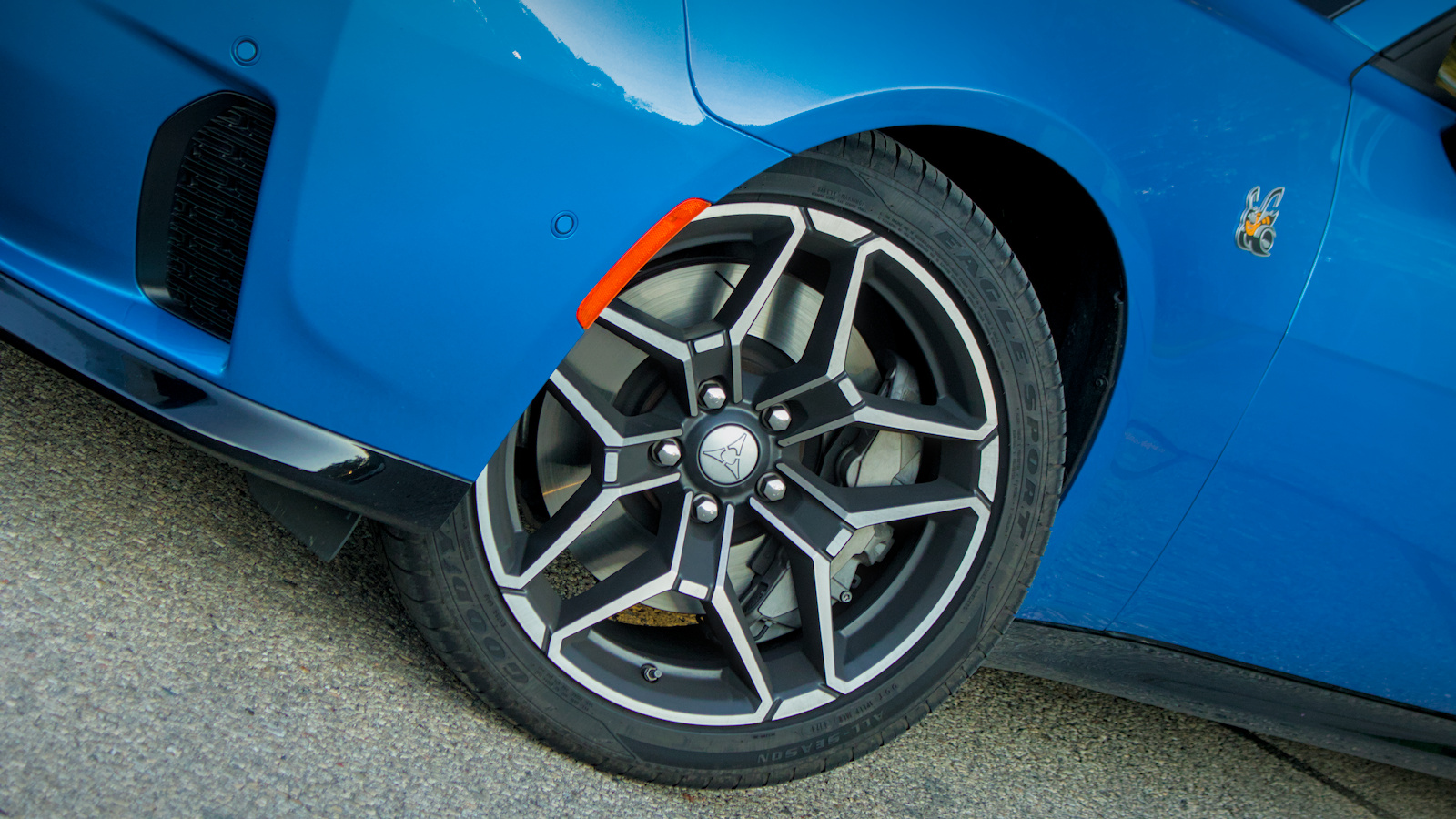
The long-legged overdrive ratios pair nicely with the Charger Sixpack Scat Pack’s suspension, which comes into its own at higher speeds. There’s a slight softness here that irons out expansion joints and freeway potholes fairly well, making Dodge’s only current passenger car a faithful continent-crusher. Well, faithful on big, divided highways. Present it with a corner, and you’ll find a limitation. It’s not so much the standard Goodyear Eagle Sport all-season tires that hold this coupe back when the mood for fun arises, but instead sheer weight. Even after ditching the Daytona’s battery pack, this thing weighs in at 4,816 pounds before options. As such, the hard-wearing tires only accentuate the platform’s drawbacks. Steady-state understeer arrives so severely that it’s tricky to dial back with a slight lift of the throttle, hard acceleration from a roll feels curiously inert, and the massive heft combines with a spongy brake pedal to make stopping feel a little bit sketchy.
However, there is a way to dial up the fun here: If you select sport mode while perfectly stopped, a virtual tile will appear for a proper rear-wheel-drive mode. Tap that, and the Charger Sixpack Scat Pack indulges in all your worst impulses, eagerly engaging in outrageous powersliding tomfoolery. The steering may be numb, but its accuracy makes winding on the right amount of opposite lock easy. The 121-inch wheelbase gives you loads of time to correct twinges of the rear axle, and those high-treadwear tires serve up progressive breakaway. Despite all the compromises made by people in suits, the calibration engineers have worked hard to make this a proper Charger.
Does It Have The Electronic Crap I Want?
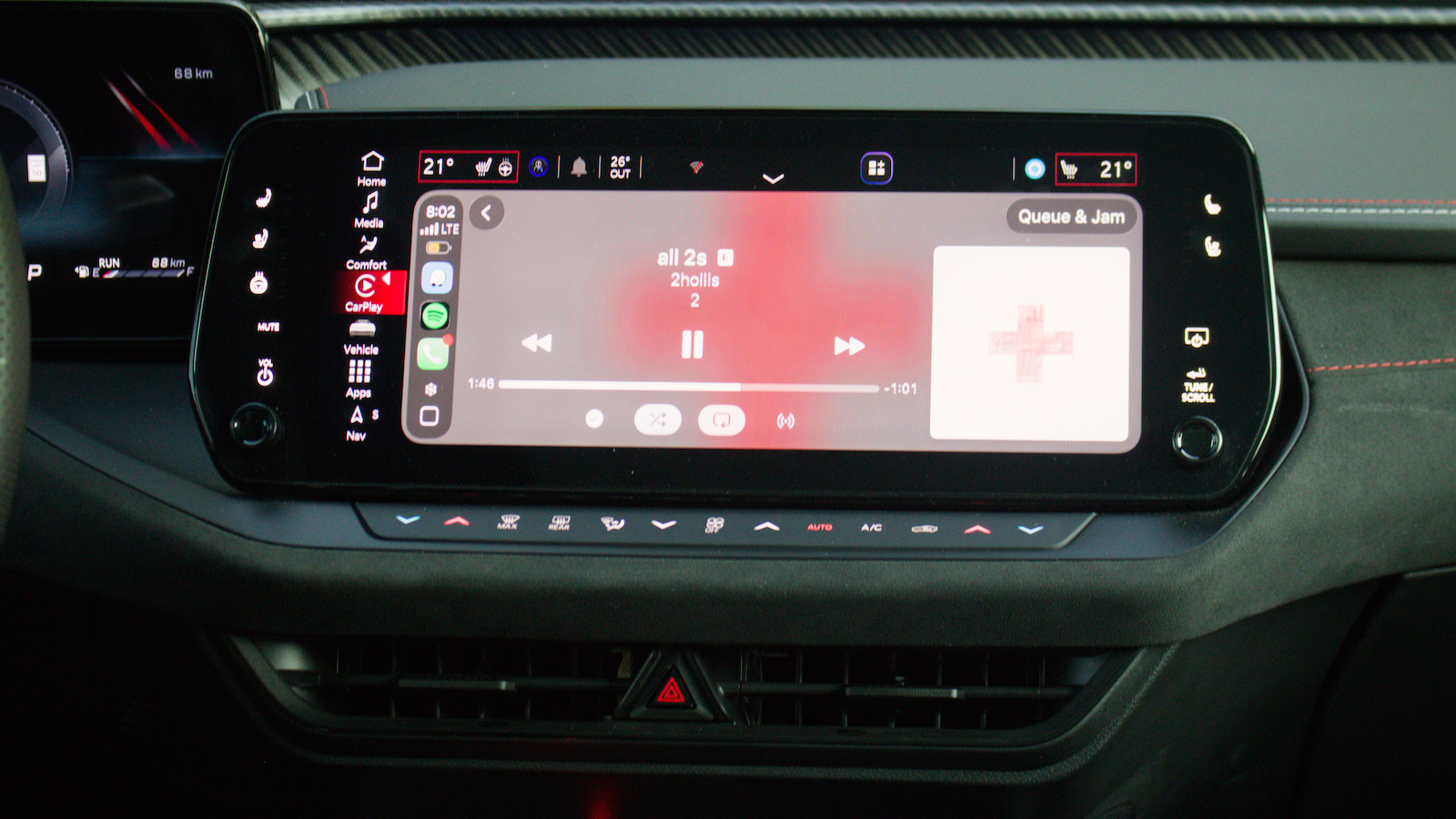
If you spec it up, absolutely. My test car came with two big screens, wireless Apple CarPlay and Android Auto, a surround-view camera system, adaptive cruise control, heated and ventilated front seats, heated rear seats, a heated steering wheel, wireless phone charging, a power hatch, and a HUD. However, just because the Charger Sixpack Scat Pack can be optioned with the stuff you want doesn’t make all of it excellent. The haptics on either side of the screen don’t respond with feedback; the 18-speaker Alpine sound system isn’t particularly crisp; the electronic door latches sometimes have latency; and then there’s the layout of the gauge cluster.
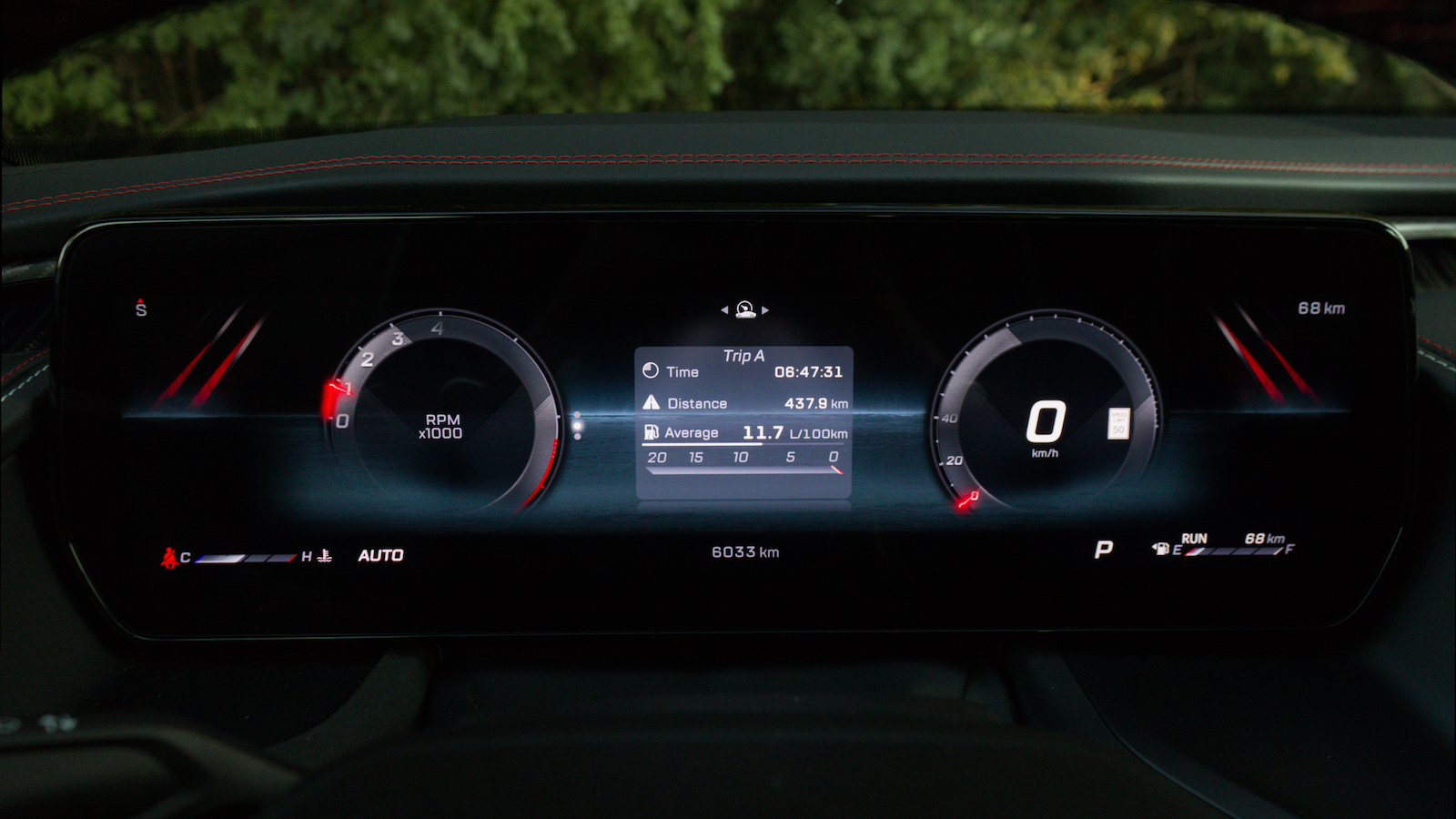
The presence of a digital gauge cluster on the new Charger sounds fairly standard for the industry on paper, but it feels like nobody on the UX team has ever driven a performance car before. Even in the Charger’s most performance-oriented drive mode, its digital cluster hides parts of the tachometer and speedometer until the virtual needles spin close to them. This isn’t a huge problem when it comes to the speedometer because there’s a nice big digital readout, but not having the entire tachometer visible in paddle-shift mode is annoying because you will miss a shift and hit the limiter.
[Mercedes Note: Since Thomas beat me to the punch in writing a full review, I’ll explain what happened to the infotainment system in my tester, which was a prototype. Dodge’s kind reps thought ahead, started up the Charger Sixpacks, and set their heaters on high before our press drive was set to depart on that wintry morning.
When I got into my car, the interior was about as hot as it would be on a blazing summer day under the sun. That meant everything felt like it would burn my hand. I ended up turning the heat off and opening the window to cool things down. As I waited, I noticed that the infotainment display had apparently overheated, and its function degraded to the point where any command, from turning the volume up one notch to opening the keyboard to punch in an address, took a full three minutes to actually go through.

The screen was like this for about 30 minutes, and at its worst, it locked up entirely. For a moment, any control that went through the screen was entirely unavailable, even if it had a physical button. I only regained control of the screen by sitting in the shade with cold air blowing in the cabin.
To be fair to Dodge, none of the other journalists complained of this issue. Also, this was a prototype car. Still, it was weird.]
Three Things To Know About The 2026 Dodge Charger Six Pack Scat Pack
- Rear-wheel-drive mode serves up all the dumb fun you could possibly want.
- It weighs 455 pounds more than the old V8-powered Charger Scat Pack, and you can feel it.
- It’s weirdly cramped inside for such an enormous car.
Does The Dodge Charger Sixpack Scat Pack Fulfil Its Purpose?
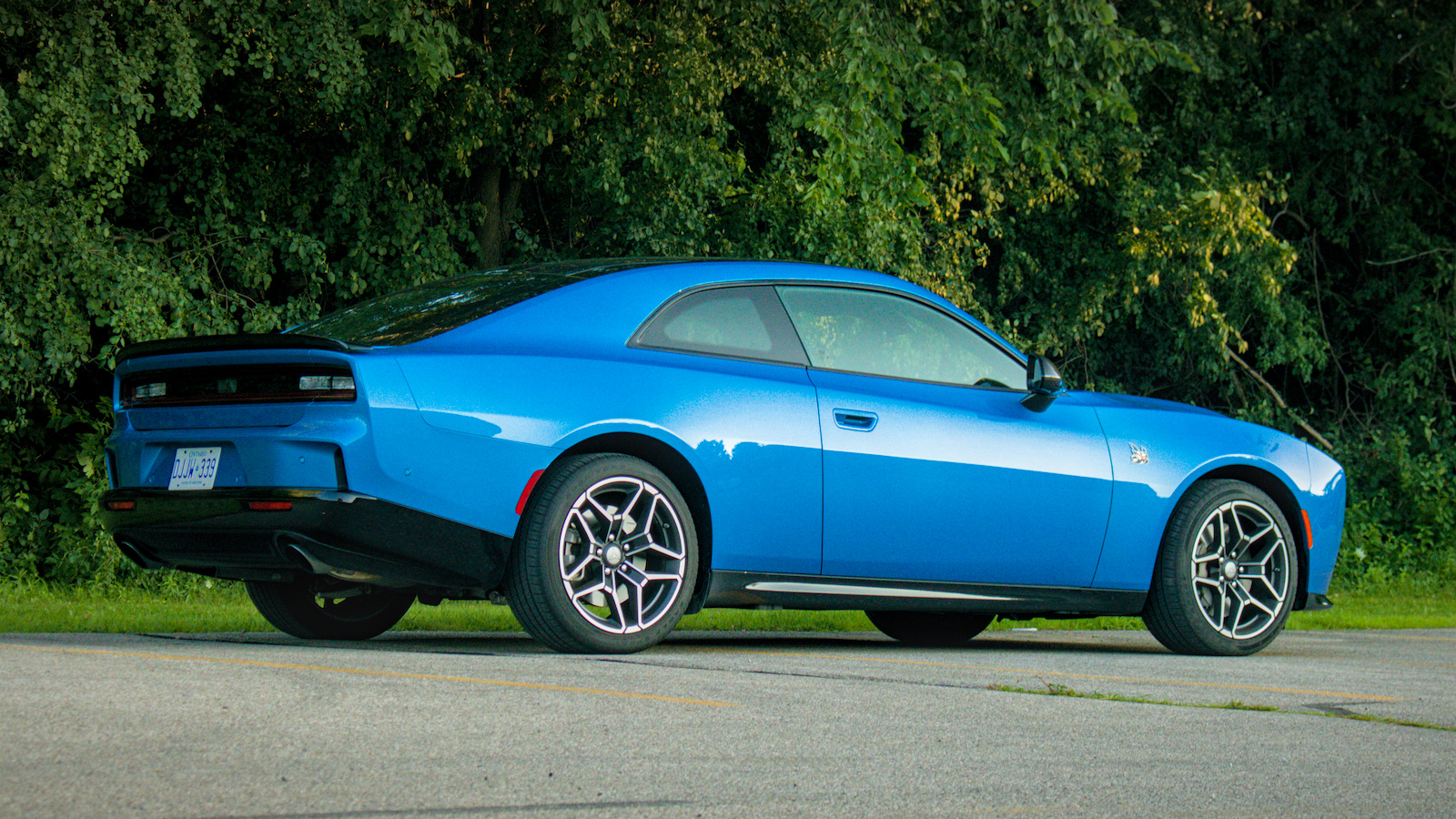
Sort of. If you can get comfortable in the driver’s seat, it’s a wonderful long-distance freeway cruiser with plenty of power, a reasonably compliant ride, and it’ll let you do all the antisocial stuff you’d buy a Dodge Charger for in the first place. However, the Charger Sixpack Scat Pack is also so incredibly compromised. From the high floor to the hefty curb weight to the mildly infuriating tech interface to the weirdly uncomfortable steering wheel, you’ll have to live with some serious downsides if you want a straight-six Charger in your driveway.
Then there’s the matter of price. In America, it starts at $57,985, but my test car came with roughly $10,000 in options. The Plus group is the big one, adding an enormous list of equipment including ventilated seats, wireless phone charging, a power hatch, a 360-degree camera system, and a whole bunch of nice interior plastics. The carbon trim and suede highback seats run an extra $2,095, the glass roof an additional $1,395, the Alpine sound system an extra $1,395, and the Bludicrous paint an extra $695. It’s hard to recommend this experience optioned up to nearly $68,000, but closer to the $57,985 base price, there’s an argument to be made here for a big family-friendly hatchback that isn’t a crossover.

In Canada, where the Charger is built, things are different. The Sixpack Scat Pack starts at $72,390, and simply ticking the Plus group box makes the Charger Sixpack Scat Pack more expensive than a BMW M340i, which is a better car in almost every regard. You lose the hatch and some rear seat legroom by going German in this instance, but you gain a vastly more comfortable driving position, better fuel economy, better handling, a more legible gauge cluster, normal door handles, and more confident braking, all while maintaining the same off-the-mark punch and gaining an inch of rear headroom.
Really, the biggest problem with the Charger Sixpack Scat Pack is design. If it had a meaningfully lower floor than the electric model and a lower false floor in the trunk, it would be markedly more practical and thus far easier to justify. Likewise, if the steering wheel’s rim were made out of round stock and the steering column extended closer to the driver, it would be more comfortable. I don’t envy the jobs of the engineers who made this thing fun to throw around because that must’ve been a herculean task. Unfortunately, a bit of slidey turbocharged fun can’t quite make up for the Charger’s daily limitations at this sort of asking price.
What’s The Punctum Of The Dodge Charger Sixpack Scat Pack?
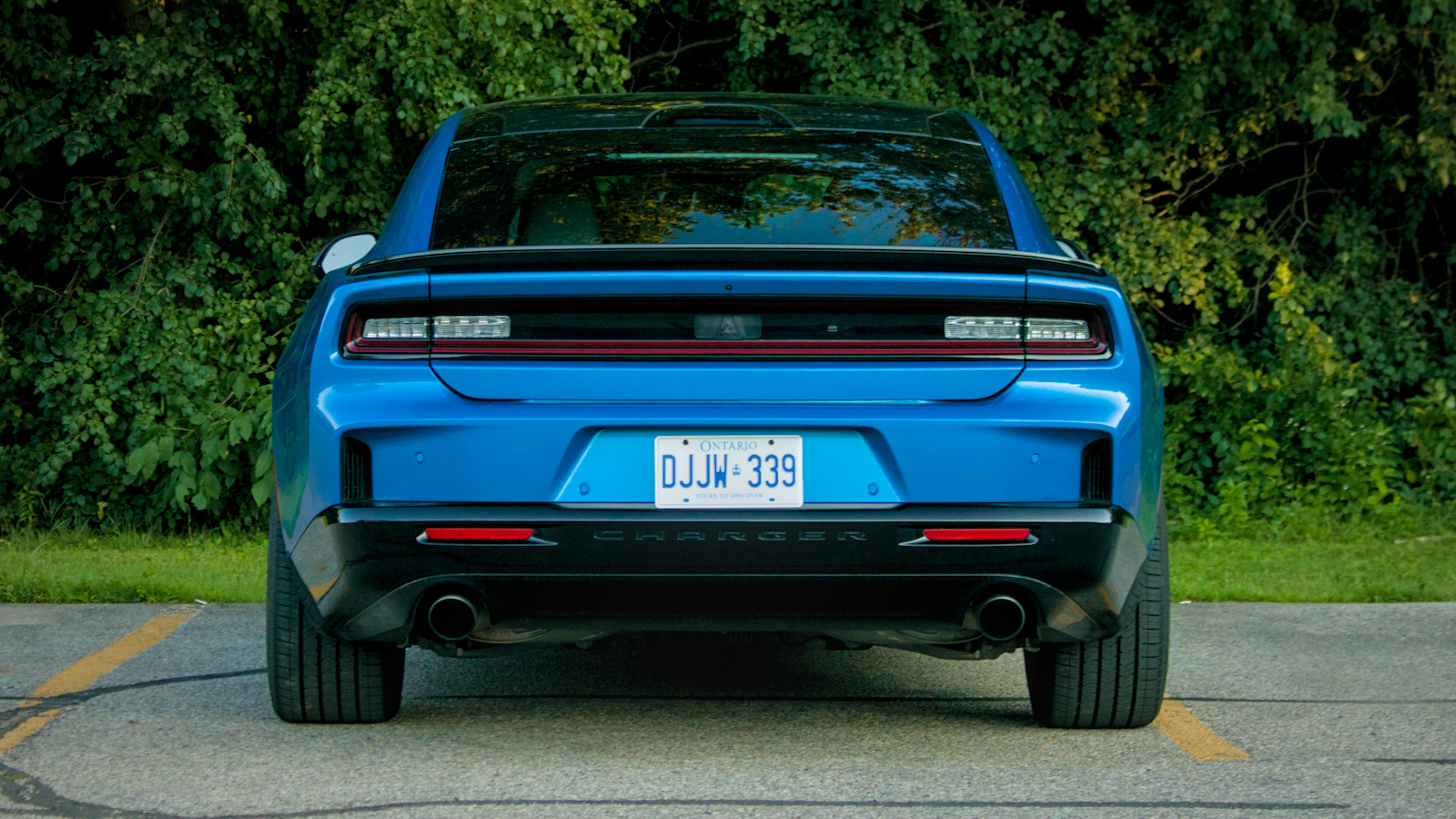
A reasonably strong powertrain only goes so far.
Top graphic image: Thomas Hundal




will the Cheeto In Chief’s new 50 % tarriff on all things Canuck mean this will be closer to 90K?
As a tall person can I say, WTF, especially in such a big car an uncomfortable seating position just feels inexcusable. And like if a big dude can’t drive a Charger, what are corn fed Americans (and Canadians) even supposed to drive anymore?
And in general (could also be my 42 year old knees) I swear modern cars for all their increased size are becoming less ergonomic while actually using functional interior room. I’ve owned, daily’ed and road tripped an e30 325i and an EK Civic as a 6’5″ person, both tiny cars by today’s standards and yet somehow they were as or more comfortable than the cramped awkwardness that any number of modern cars seem to embrace. I realize I’m an outlier and a lot of this may be driven by packaging vs aero requirements but still it’s damnably frustrating.
No, my early ’80s Subarus—practically mini cars by today’s standards—had more space for the driver, an amount of rear seat leg room that would shock something modern with a much larger footprint, superior ergonomics to anything with touchscreen controls, and felt fairly spacious. Consoles weren’t Hummer H1 width, doors weren’t made to withstand penetrating explosive ordnance, and they had actual window area. Hell, the seats weighed about as much as a shot put and still took longer to become uncomfortable than far too many cars today.
Agreed. In college I had a ’86 Subaru GL me and a buddy bought after it had been lightly rolled by the owner’s daughter thinking we’d turn it into a rallyX car, turned into my winter driver because my Trans Am was dangerously bad in the snow and the subaru (which was actually only marginally safer thanks to the cheapo trash tires it had) was cheaper than putting snow tires on the TA. Good times lol, but to your point I fit just fine in that car and we wound up selling it to another buddy to use as a winter beater who was as tall as me and pushing 400 lbs at that.
And even bigger cars have gotten cramped, a friend of more means than me recently treated himself to a new Tundra and for how stupidly big those things are on the outside it’s weirdly cramped feeling inside. As you point out the center console is weirdly massive, the windshield is annoyingly steeply raked, the side glass is narrower than there is any good reason to be and it just feels weirdly cave like inside.
Similarly I went to test drive a Corolla GR recently to see if it was worth considering as a goal vehicle and in spite of its exterior dimensions being similar to a 2005 Toyota Matrix/Pontiac Vibe (my wife used to own a vibe so it’s an easy comparator) and it has wayyyy less interior room. I fit better because the seat was lower to the floor, but I was left just barely fitting, not least because the dash and thus steering wheel is so buried under the windshield that even at max extension the telescoping wheel barely reached me. And cargo room wasn’t even close to the older Matrix, in fact it’s worse than any number of other older hatchbacks I’ve looked at, including some subarus which have similar AWD compromises-which reminds me you could get the Matrix and Vibe with AWD!
The Corolla is weirdly cramped. Cargo space is small, too. It’s like it’s compact outside with a sub compact interior. I don’t know what they did there, but it definitely didn’t impress me.
It’s odd that I find my GR86 to feel roomier seat-wise than even some SUVs—I have more knee room and don’t get the feeling of being forced into a confined space. I’m not saying these other vehicles are oubliettes, but they’re remarkably tight for such huge footprints.
I like the bumble bee badge.
I like inline 6’s, but 4800 freakin pounds???
Only one sixpack? I’d think it’d take at least three before I was dumb enough to buy one these.
I am admittedly not the person these are marketed to but don’t people generally want a V8 with a Charger/Challenger? That V6 makes plenty of power but I can’t help but think it muddles the muscle car image a bit.
“…it didn’t help that the most potent electric model won’t do a burnout.”
Why would anyone want to destroy their tires in a cloud of gritty smoke?
Oh – it’s a Dodge.
Nevermind.
I think they should have kept the old Charger/Challenger in production and made the new Charger/Daytona BEV-only and sold both along side each other… kind of like how the old Chrysler sold the new Grand Cherokee and old XJ Cherokee at the same time for over a decade.
The problem with ‘do it all’ platforms is that in making provisions that enable doing it all, it adds weight, cost and complication.
All of the 93 around me has ethanol in it. 91 for me, please.
Do you want to lose all your fillings driving around on 22″ wheels? Because this is how you lose all your fillings driving around on 22″ wheels.
Let’s stop pretending that huge wheels are anything but more expensive. They ride worse and giant wheels with rubber band tires look stupid.
This has been a problem with Dodge going back to the 90s. The current Ram bodystyle is the same. It’s by far the worst cab for tall people out of the big 3. I don’t know how you make a full-size pickup cab “small”, but they managed it.
Yeah, if they need the look of bigger wheels because these monstrosities are so damn large, they could bring back white letter tires or something to that effect and have actual sidewalls.
Weirdly, I keep thinking about Sport Pack E38 7-Series BMWs when it comes to a reasonably high-profile wheel-and-tire package that looks big. Those front M Parallels (the skinnier ones) ran 235/50R18s (4.6 inches of sidewall!) and looked big on those cars. For 20s to look small on a car like this…
Cars have just gotten so tall and bloated that designers really can’t disguise it. IMO, a key to why older BMWs looked so damn good (and I say this as a big critic of German cars) that I never see mentioned is the minimal distance between the top of the wheel arch and the height of the hood, which they then emphasized with crisp lines. It makes the car look lighter and adds dramatic sporting aggression and purpose without resorting to the overstyled caricature detailing you see today as an attempt to compensate for the visual heft that tends to make vehicles look ungainly and awkward. As these angry-faced land manatees get taller, that key measurement only gets worse, so the “fix” is bigger wheels to try to reduce it, but at some point, how large they need to be in order to do so gets obscene. Of course, BMW wasn’t the only one to make use of that design trick in the past, but they implemented it on more mainstream kind of vehicles whereas other manufacturers mostly used it only with sports cars.
So the gas one weighs 480 pounds more than the old one, which already handled like an aircraft carrier, and the EV version weighs 1,000 pounds more than a Tesla model S plaid. Insanity.
And that’s why you don’t make ‘do it all’ platforms. You end up with an overweight compromise.
Better to have a dedicated platform for BEVs and keep around the existing ICE platforms for as long as they sell.
They would have been better off keeping the old Charger/Challenger in production along side an all new BEV-only Charger/Daytona.
Man, I really don’t think that front fender line works on this car; it’s just not cohesive with the rest of the design and it looks awkward.
Too bad Dodge didn’t give the engineers, designers, and stamping the money to reproportion everything for the gas version. That’s where the failure starts.
Soooooo, Dodge took all the bad parts of a last gen Taurus SHO, all the bad parts of the Dodge charger, all the bad parts of the interior of a Tesla and combined them and priced it like a Mercedes and styled it like a 14 year old Chris Bangle drew his interpretation of a cyber punk 2077 vehicle if it were described by his grandmother after a few too many drinks?
Oh it’s going to be a sales success
That “Reverse Tardis” thing is something I’ve seen on Dodge products for years. I rented a Charger a generation or two ago. It was hard to get into and hard to get comfortable in. It was this weird combination of driving a big car, but feeling more cramped than in a mid-size. Except just when you start accepting “ok, the controls are laid out like it’s a small car”,. there would be something that you needed a yardstick to reach. I had it for a week and I never felt comfortable in it and I bonked my head getting in and out of it every single time.
Americans have been really good at doing this with their cars for decades.
Why change now?
My dad had a 71 Caddy Fleedwood Coupe DeVille for a while. It was horrible packaging and a miracle of packaging at the same time.
The trunk was stupid big. Half the trunk volume was unnecessary and a royal pain to load and unload. If one of the 6 steamer trunks in the back slide forward under braking, you needed a sherpa and a mule to go in and bring it back. It wasn’t rated in dead hookers, but in dead whorehouses.
The engine bay made even less sense. The engine looked tiny compared to the giant hood. Can you make a 472 cu. in engine tiny? You can if you are Caddy. Imagine someone putting a Lawnmower engine in the engine bay of a HD truck. That’s what an OG Caddy engine bay looks like, but it’s a Big block in there. It’s so insanely wasteful in packaging.
Given the stupid waste of space on either end of the car, you figure the inside has to be tighter than you would expect for a car that was so damn big. And although it should be, with an insanely oversized engine bay and trunk, it wasn’t. You got in and it was a BIG car. Like 5 NFL sized Linemen would have room in the car big. It wasn’t shocking where you go “this is a lot bigger than I expected!”, but just “yeah, this is a giant car, so of course, it has a living room sized interior.” It isn’t until you think of the stupid big trunk and even stupider sized engine bay that you start wondering how in the hell did Caddy have any room left for people.
So, I was horrible packaging, yet exceptional at the same time.
Great review as always Thomas.
That curb weight, that awful seating position, the inability to turn a corner, all for that insanely high MSRP! If someone wanted a fun car that handled poorly and had an awful seating position (with huge fender gaps) then buy a “New Edge” mustang from the late 90’s-early 2000s and save a ton of money.
Seriously, how can Dodge push this thing out with a straight face? You nailed it that an M level BMW costs the same and is better in every way. I avoid BMW in general but would gladly take that M240i over this monstrosity. I would also be looking at the CT5-V (not the blackwing at this price), or possibly a Merc or Audi or entry level Porsche, or heck, a new V8 Mustang (like a dark horse) over this thing.
Please tell me how this car makes sense to ANYONE? It does nothing better than any of its competitors, not even making the fun v8 noises that most Dodge customers are looking for.
I do think it looks slightly better in person though, I like the more restrained look compared to all the obnoxious previous gen Chargers/challengers out there.
Hey now, be nice to my dream car.
I really liked the New edge look when they came out, especially the 03-04 cobra. But then I kinda fell into a 2000 GT, 5spd. It was in good condition, but it was definitely a case of don’t meet your heroes. I felt no sadness when I sold it.
I had big plans for it when I first got it, the 4.6 mod is a solid engine, the chassis is still about 99% the same as an old fox body so it’s got a lot of support and can fit decently large tires under it. But then I drove it for more than a few minutes and it was shocking. I changed up the shifter to something nicer to try and help but it was of no use. The seats are awful, and the seating position is awful. Honestly it felt like I was driving a full size pickup.
The thing that made it all the worse was that I have since owned 80s fox mustangs and those had comfortable seats and seating positions, so ford had to really go out of their way to mess that up. It boggles the mind.
If someone gave me one today I would turn it into a dedicated drag car since it’s got that fox chassis, but I would have to rip out the entire dash, center console, etc and then custom mount some racing seats. Give me that sweet terminator engine (or LS swap it) with a built 4l80 and built 8.8 rear and we would have a respectable car.
Over a thousand pounds heavier than our 2025 Hyundai Tucson Hybrid. Cool. Cool.
I’m not someone who likes to kick people when they are down. I feel bad for the engineers and designers who had to make this and the other new Chargers happen. It just has so many compromises that it’s hard to make a good use case for purchasing one.
I’m glad you mentioned latency in the user interface. I feel that one is chronically underrated these days in all vehicles that have screens and lack buttons. I got out of a Volvo wagon when the salesperson had to press the screen button 3x to get it to respond. Skipped the test drive and left.
Yeh I don’t understand why all this car tech is so bad. Maybe it’s the longer product cycles of cars vs software but every digital interface I’ve used in a car feels so…last generation, maybe even 2-3 generations old. And even then a person could live with ugly visuals if it was at least fast and peppy, but hey what do you know they’re usually not. I don’t know if this is just an insight into their value engineering process for everything of spec’ing whatever barely meets minimum reqs and it’s just really obvious with touchscreens or if it is willfully ignorant cheapness that none these use as good of touchscreen and computational hardware is they appear to need. Like the bar is iphone or high end android or else you’re doing it wrong and it’s hardly like they’re building in a vacuum.
The Enshitification of products and services continues.
The latency in all this garbage tech is truly remarkably horrible. Even the “real” buttons they give us (electronic requests to the almighty BCM that takes longer to approve a request than a town zoning commission) lag and often register inputs inconsistently while offering no satisfying feedback whatsoever.
As someone who was used to using a button and having it work immediately, I am picky about tech latency. If it lags, my brain thinks something is wrong. I once drove a 7 mile trip in a vehicle and it never paired to my phone. All I wanted to do was play some music. I kept trying to pair it up. Other days it does it just fine after I get in the car. The inconsistency is maddening. Glad it was my wife’s car. I’d have smashed the screen by now and installed an aftermarket stereo or something.
I’m the same. I’ve listened to terrestrial radio just because I lacked patience to restart the phone and the car system, unpair, then re-pair and hope that made it work. It’s gotten to the point where I miss ignition keys—you got in, you turned the f’n key (maybe hit the throttle a couple times as you turned it if it was carbureted), buckled, and drove off. You didn’t have to hook anything up that may or may not cooperate, didn’t have any stupid messages to dismiss (warning of the dangers of distraction while operating the equipment they force you to use while operating!), or wait for things controlled by high-speed electrons to inexplicably take a relative forever to work. I’m actually more nervous about a modern car not starting due to some poorly written software (as if there’s any other kind nowadays) or canbus bullshit than I did about my old cars with big miles on them and, if those didn’t start, a hammer or a push start might get the job done, diagnosis was a snap, and the fix usually cheap and easy. And if it was a battery, you just swapped it, you didn’t have to go to a dealer to get it taught to the ECU (not that all cars do this now . . . or yet)!
“the standard 20-inch wheels”
I’m glad you included the wheel size in this article, as it emphasizes how big this heap is. The black cladding along the bottom is trying to mask how big this thing is, but when you see one in person it’s shockingly large.
These need to be shrunken in every direction, by like 28% then it might be competent and attractive.
I didn’t understand either until I noticed how small the front license plate looks in the first pic.
Can you show the luggage area in some of the photos?
I would like to see if this is a modern shrunkflation-Toblerone, or an old-school solid chunk of Swiss chocolate.
I definitely agree with the seating position assessment after spending some time in one. I am a pretty standard 6ft tall male, no odd proportions. The steering wheel needs to be able to come at least 2 inches further out or make the pedals movable towards the firewall.
I was surprised by that, as the EV version gives me enough room to fully extend my legs at 6’2″. Must have been forced to move the firewall back on the gas models.
This is really just so one can visualize the size, as these cars aren’t really competitors in any way.
The Charger is the same length, 1″ taller and 3″ wider than an A8L and Dodge still biffed it. They had all the footprint in the world and they couldn’t even make it comfortable for one person. Oh, it’s 200lbs heavier, too.
Someone posted a comment on a previous Charger article about a neat site that visualizes car sizes. You’re right, this thing is bigger than an A8L. I also compared it to an old Crown Vic. They’re essentially the same length if you don’t consider the huge bumpers on the Vic. And much wider.
This thing is a behemoth and I can’t understand why they thought this was an acceptable product to make, even in EV form. Were they going for the car version of a GMC Hummer EV?
https://www.carsized.com/en-us/cars/compare/audi-a8-2013-sedan-lwb-vs-dodge-charger-2024-3-door-liftback/
Hey… there’s an idea. Put a two or three-inch lift and long-travel suspension on it. Then the wheel well gap doesn’t look so bad, and you can take on Raptors out in the desert.
Or, basically, 5 inches longer than the 2008-2023 Challenger, and about 2 inches longer than the old Charger
I’m sorry, but this looks like a generic muscle coupe from GTA III.
Called “Contender” so Dodge can’t sue.
Wow, that’s a lot of failings. Bad packaging is very retro (except for the trunk), but bad control ergonomics is unacceptable and they had to go out of their way to make them so. It’s also missing a major bit of drama they could have added for the RWD setting (that almost nobody will use more than a couple times since the kind of people who like to buy several sets of tires per year won’t buy this because “no V8” alone) by having it as a second lever to pull (of course, it would only nominally be a lever, really just another wussy electronic switch, but it would still be cooler than going into a touchscreen menu to daintily tap a setting to do a burn out only for the minivan behind you to get frustrated and go around you because the light had turned green 10 seconds ago).
Shame they can’t drape this sheet metal on a less compromised platform cause it looks great. Personally, I’d be down for a sedan of this size, so long as I actually got the interior space and comfort that should go along with it. Honestly, it’s a longer wheelbase than a Durango and to even get a mention about lack of space is…. a joke. The packaging on this thing is atrocious.
I have not heard the best about the robustness of the Hurricane 6, so an even more over-boosted version is deeply concerning. Throw in the fact that Stellantis is too arrogant to let someone else build their transmission, is there a single component on this car that is going to last to 100k miles?
Add in the complexity of selectable AWD, a platform that is trying to accommodate a ton of tech, and horrific sales means there’s barely been enough production to even figure out the issues. I’m very curious to see how poorly these age and when Stellantis cuts their losses and kills this generation entirely.
The Hurricane 6 is fine. Splendid actually. It’s probably the most reliable part of one of these cars (or any car it comes in).
Yeah…. that ZF 8 speed!
But it’s manufactured by Stellantis themselves which was more my point. I can trust ZF building it and letting someone else tune it, but Stellantis quality on it? I’m skeptical.
It’s not a complete changeover or modification. There’s software and maybe a couple mechanical bits Stellantis changes, but they build them to ZF’s standards in their own factories, paying ZF royalty money (if memory serves) for the license.
If there’s one thing Stellantis doesn’t mess with too much, it’s those 8 speeds. If they change anything, ZF is right there with them to change it.
FWIW while I agree with the rest of your points, I don’t know that selectable AWD has to be inherently unreliable or complex? It doesn’t necessarily seem that complex to have a switch that tells the transfer case “disengage front clutches” I mean pickup truck 4wd systems have been doing something vaguely similar to this via buttons and electronic actuators since the ’90s. That being said it does make me wonder if they’ve built the rear driveline stout enough to be operated and abused as a rwd car for what may be extended periods give the cars other packaging compromises.