

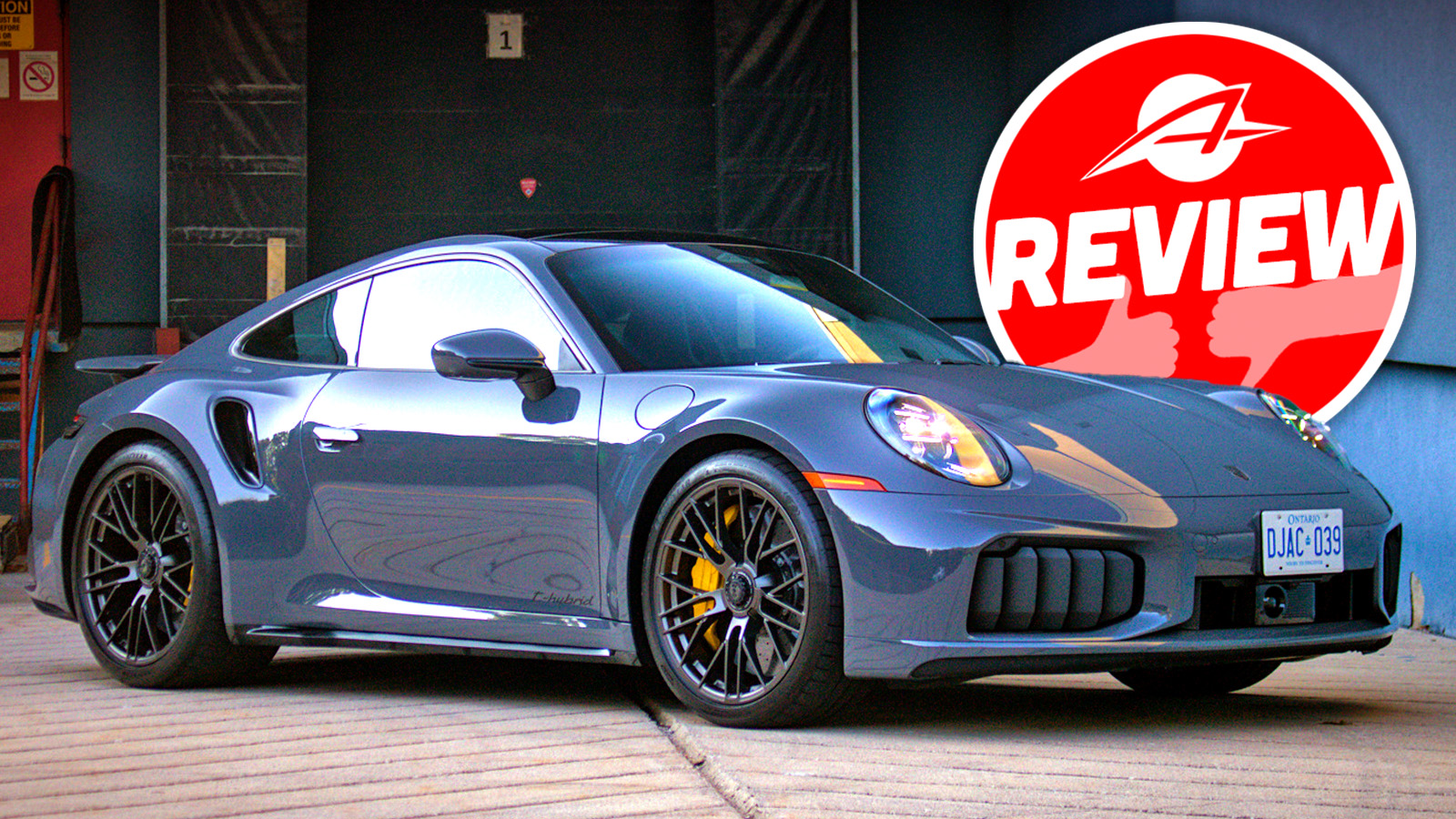
When did the Porsche 911 GT3 RS become the new Lamborghini? Seemingly overnight, Stuttgart’s extraordinarily hardcore rear-engined sports car went from being a road-legal ride for a lunatic subset of chronic adrenaline junkies to the sort of four-wheeled celebrity that normally requires wedge-shaped styling and Italian theatrics. It’s a wild piece of kit, the quickest production current-shape 911 around any circuit, yet it’s not the quickest-accelerating sports car Porsche currently sells. That would be the utterly ballistic 911 Turbo S.
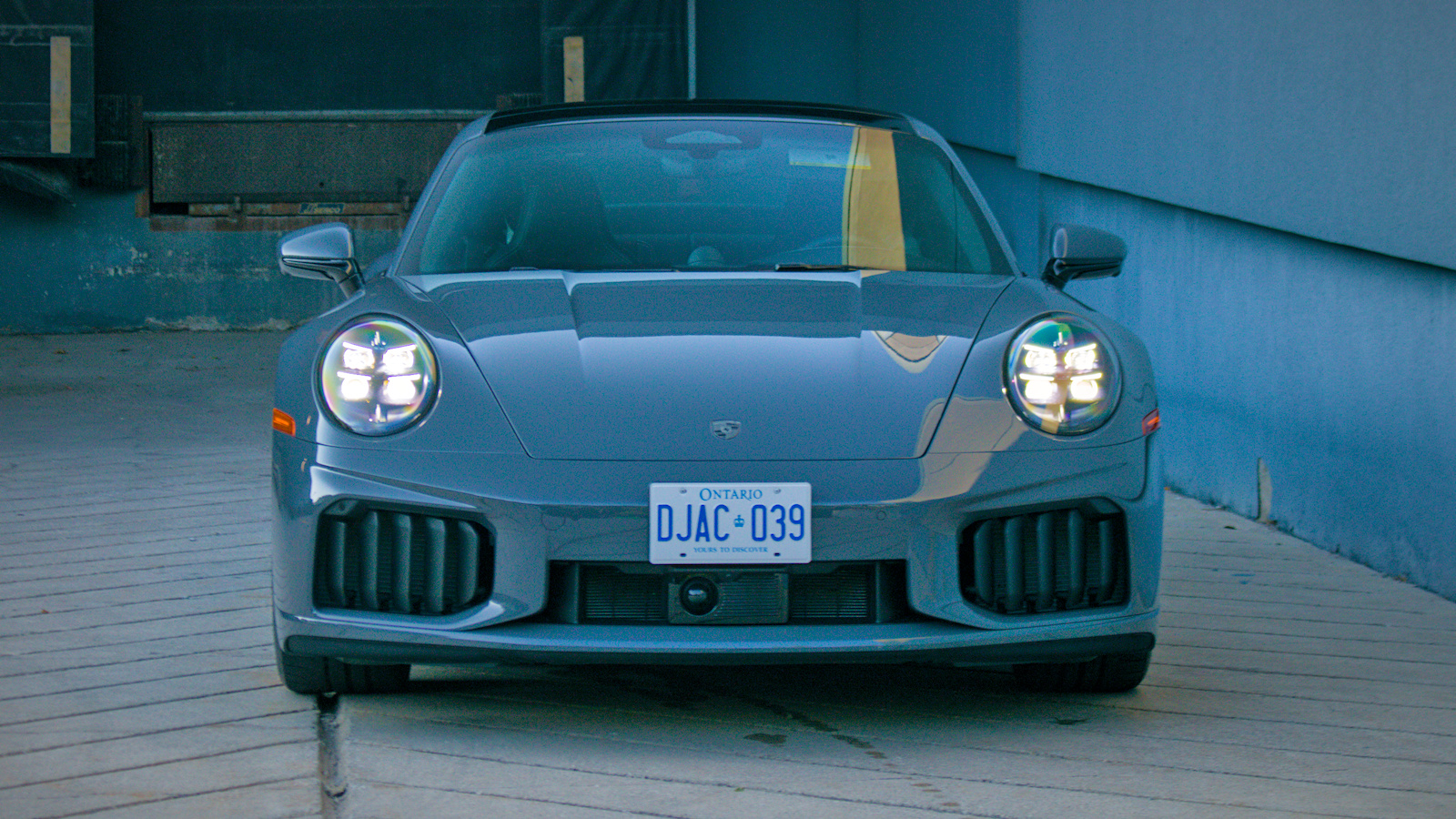
In the context of the finned, winged GT3 RS, the Turbo S is refreshingly subtle. Beyond an air intake in each flank, there isn’t much to tip passers-by off that it isn’t a normal 911. Spec’d in a neutral tone like Slate Grey Neo, it slides almost completely under the radar. In a way, that’s sort of a licence defence mechanism because this is the most powerful production 911 ever made. It’s also the first 911 Turbo since the dawn of the lineage more than half a century ago to feature hybridization. Big shoes to fill here.


[Full disclosure: Porsche Canada let me borrow this 911 Turbo S for a week so long as I kept the shiny side up, returned it clean with a full tank of premium fuel, and reviewed it.]
Hybrid Theory
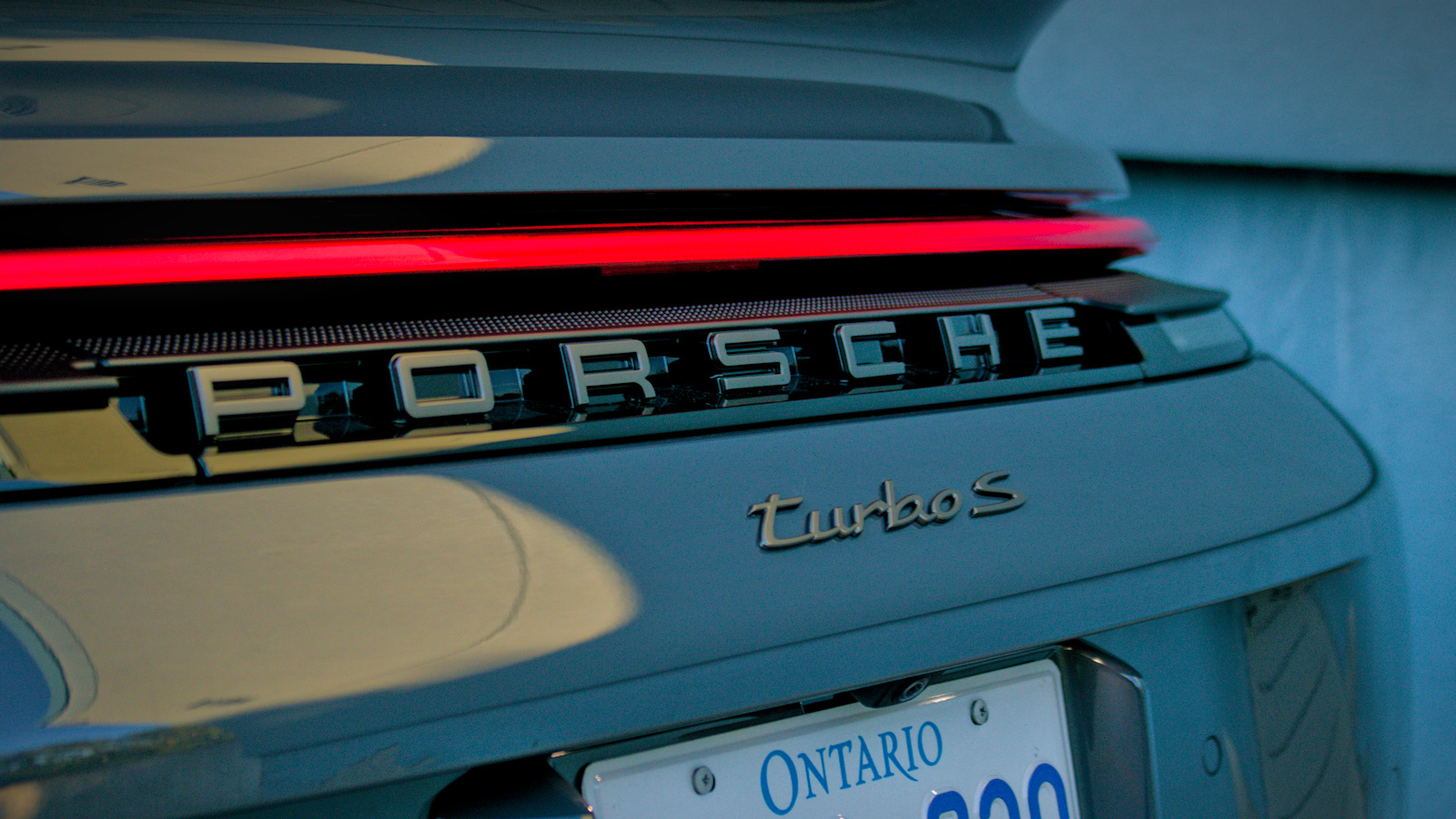
The 1970s was a dark time for the automobile. New crashworthiness and emissions standards did make cars safer and cleaner than ever, but often at the expense of performance. The muscle car era died, and many American-market cars grew bumpers like orthodontic headgear. Yet among the absolute chaos, one built-backwards German sled ruled supreme. For 1976, Porsche strapped an air compressor onto its iconic rear-engined sports car to create an icon of conspicuous consumption—the 930 Turbo. The result was zero to 60 mph in fewer than five seconds at a time when most family cars required more than double that. Granted, a four-speed manual gearbox with extra-long ratios helped achieve that time, but no matter. The original 930 Turbo was diabolically quick for its era, provided it was really switched on.
The 1970s were still early days for turbocharging, with old-school single-scroll units and limited knock-mitigation solutions serving up huge potency but also huge lag. The original 930 Turbo featured a compression ratio of just 6.5:1 to prevent meltdown, and that contributed to uneven power delivery. Think curious inertness at low RPMs followed by feeling like you got rear-ended by a 747 once boost kicked in. Oh, how much has changed in the past 51 years.
See, Porsche’s latest 911 Turbo S features the lineage’s biggest change since the 2001 model switched to water-cooling. Its motor still has turbos, but its turbos now have motors. Like the current 911 GTS, the new Turbo S uses Porsche’s T-Hybrid system, which is not like the hybrids you’re thinking of. Sure, there’s a tiny 1.9 kWh battery pack and a flywheel motor on hand, but their goal is to work with two more electric motors to boost output rather than drive the car on silent power. Those other motors, of course, are in the turbochargers.
Is this arrangement mind-bogglingly complex or wonderfully simple? That depends on how you approach it. On the one hand, putting an electric motor between a turbine and a compressor wheel subjects it to a ton of heat. On the other hand, electric power can spin the turbo up to virtually eliminate lag and prevent airflow stall, and regenerative braking of the turbocharger shaft eliminates the need for a wastegate. With two of these electric turbochargers bolted to a 3.6-liter flat-six, the new Porsche 911 Turbo S is good for 701 horsepower and 590 lb.-ft. of torque. That’s a torque match to the previous car but with an extra 60 horsepower. Sheesh.
Flying Private
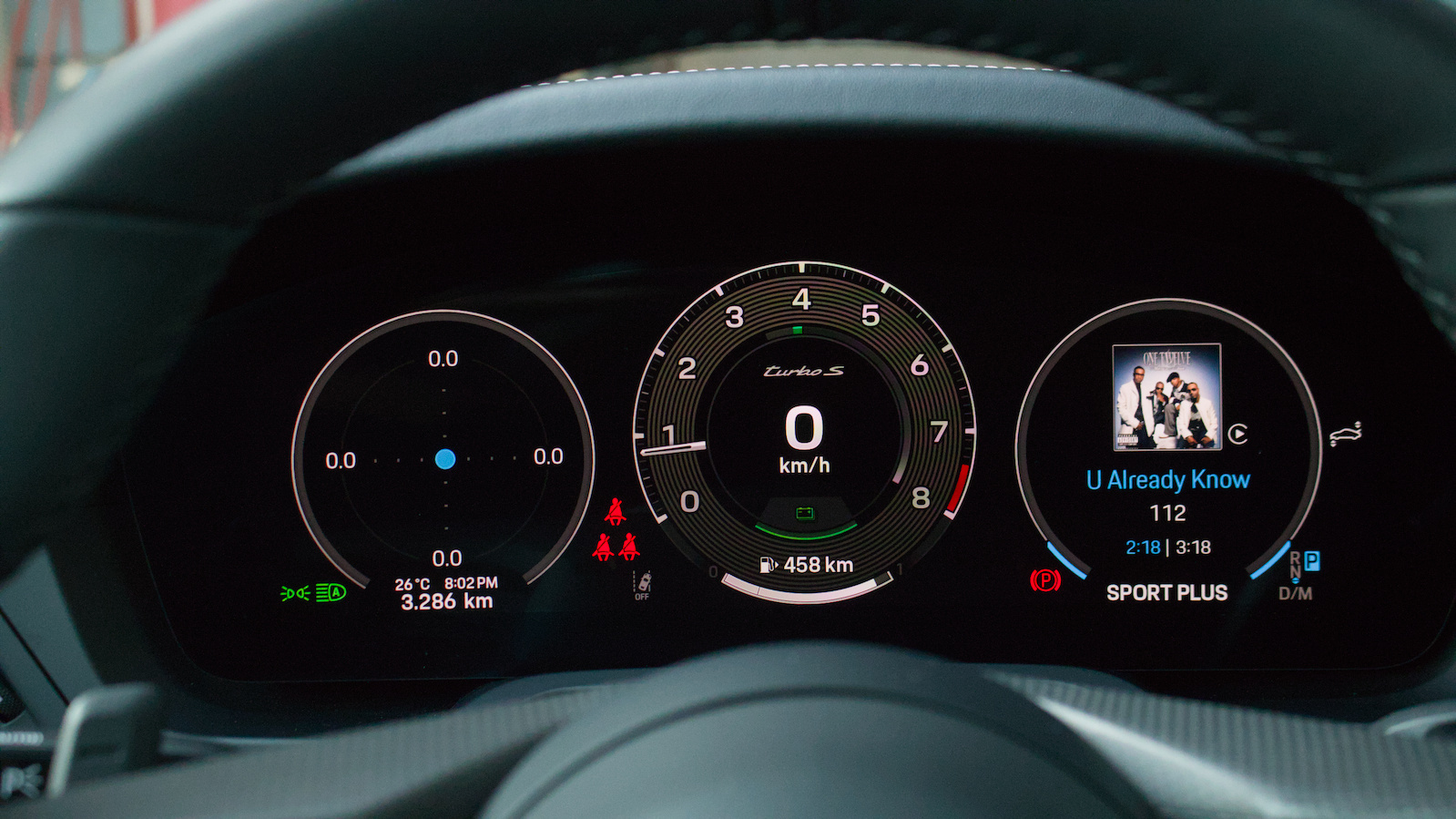
Should you find yourself behind the wheel of a 911 Turbo S and wish to depart a location posthaste, simply make sure both you and the tarmac you’re on are pointed dead straight, dial up Sport Plus mode, put your left foot on the brake, and mash the skinny pedal through the carpet to cue up launch control. Release the brake, and suddenly your atoms simply rematerialize someplace else. While Car And Driver’s reported two-second-flat zero-to-60 MPH time is but a pebble’s throw from the Taycan Turbo GT’s biblical 1.9-second time, the way the latest 911 Turbo S achieves such a sprint is entirely different. It’s a mother of violence, this one.
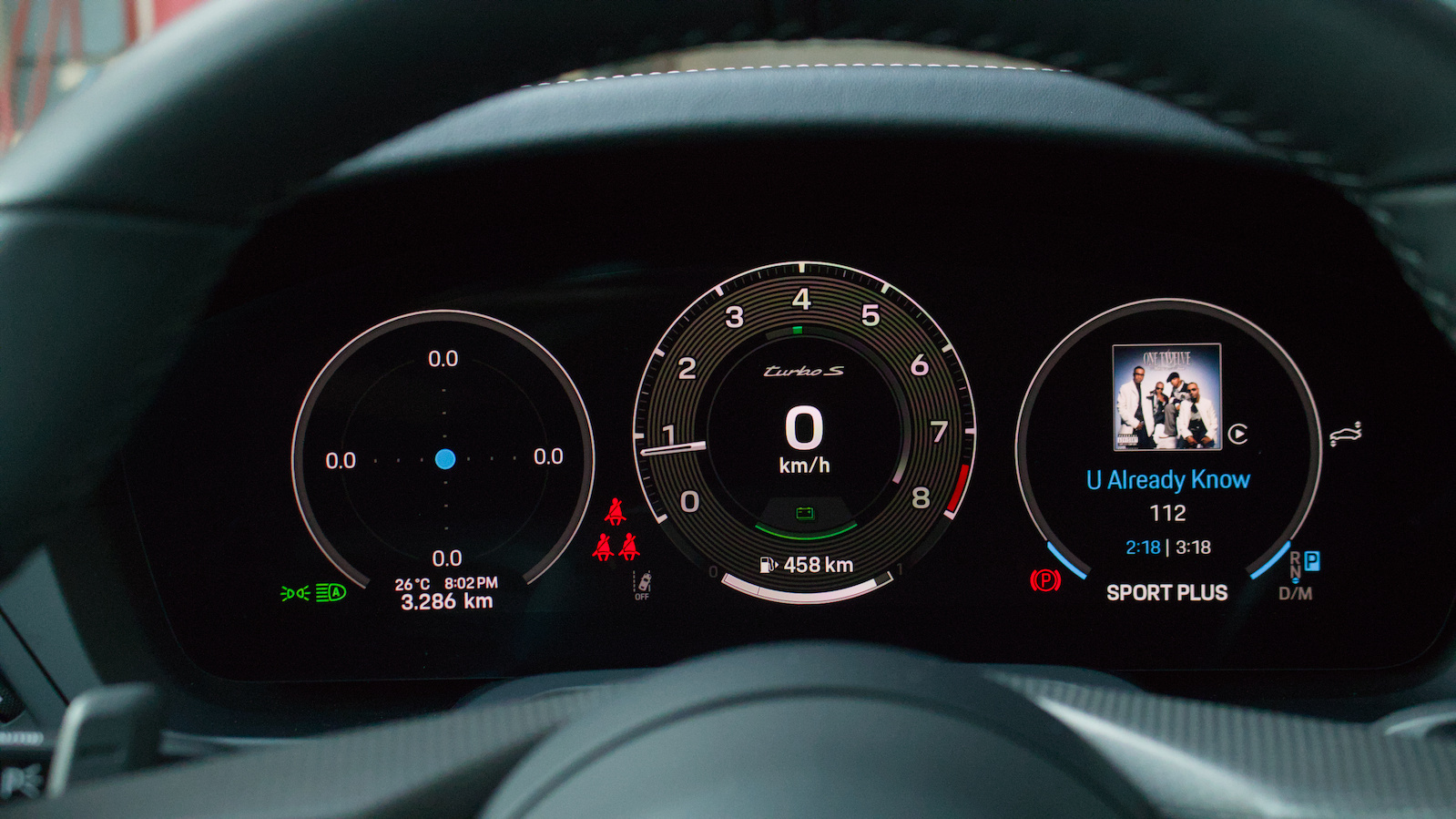
The dash starts with a 5,000 RPM clutch dump. The sort that would be grossly, monumentally abusive in a manual car. As the rear tires scrabble for traction, you get merely a few milliseconds to marvel at just how beautiful oil-bathed clutches are. Then the sticky rubber finally finds grip and the twin electrified turbos shove your frontal lobe through your cerebellum. In the beat it takes to realize your spleen’s no longer where it used to be, the Turbo S will already have completed a shift and be on its way to extralegal speeds. It’s amazing dealers aren’t selling it with aftermarket ADS-B. Forget Explorers in the median, if you’re a genuine lunatic in a Turbo S, you’re going to have to look out for airplanes.
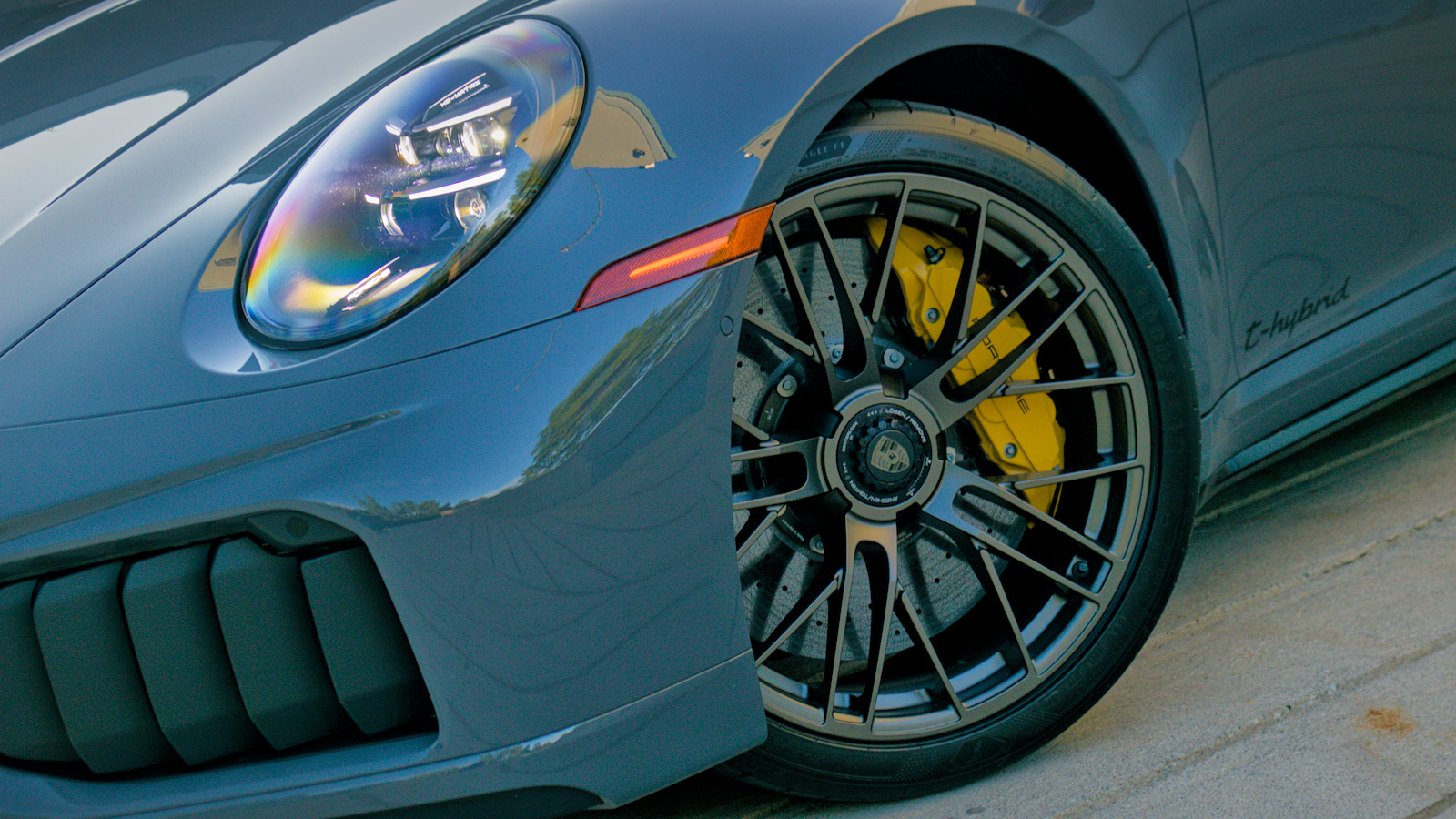
Part of the reason the 911 Turbo S is such a test of self-control is due to just how assured it is. Even at low engine speeds in a higher gear, the electrified turbos simply spool up and do their thing. The dual-clutch transaxle is utterly obedient, the four-wheel-drive system offers immense traction, the carbon-ceramic brakes have monstrous bite, and all the modern handling gadgets are on deck to help the quickest production 911 ever simply erase sweepers. Adaptive dampers, electrohydraulic roll stabilization, four-wheel-steering, stability control seemingly calibrated by Sir Isaac Newton himself.
The resulting car is as far from its widowmaker 930 Turbo ancestor as humans are from the primordial ooze. It’s practically asset-backed traction and driveability, but also a willingness to play should the mood and mental fortitude call for it. If you’re feeling especially brave, feedback-rich steering and a beautifully composed chassis mean you can still trail-brake it in and leave the apex in neutral-steer without the stability control light flashing once. Proper sports car stuff.
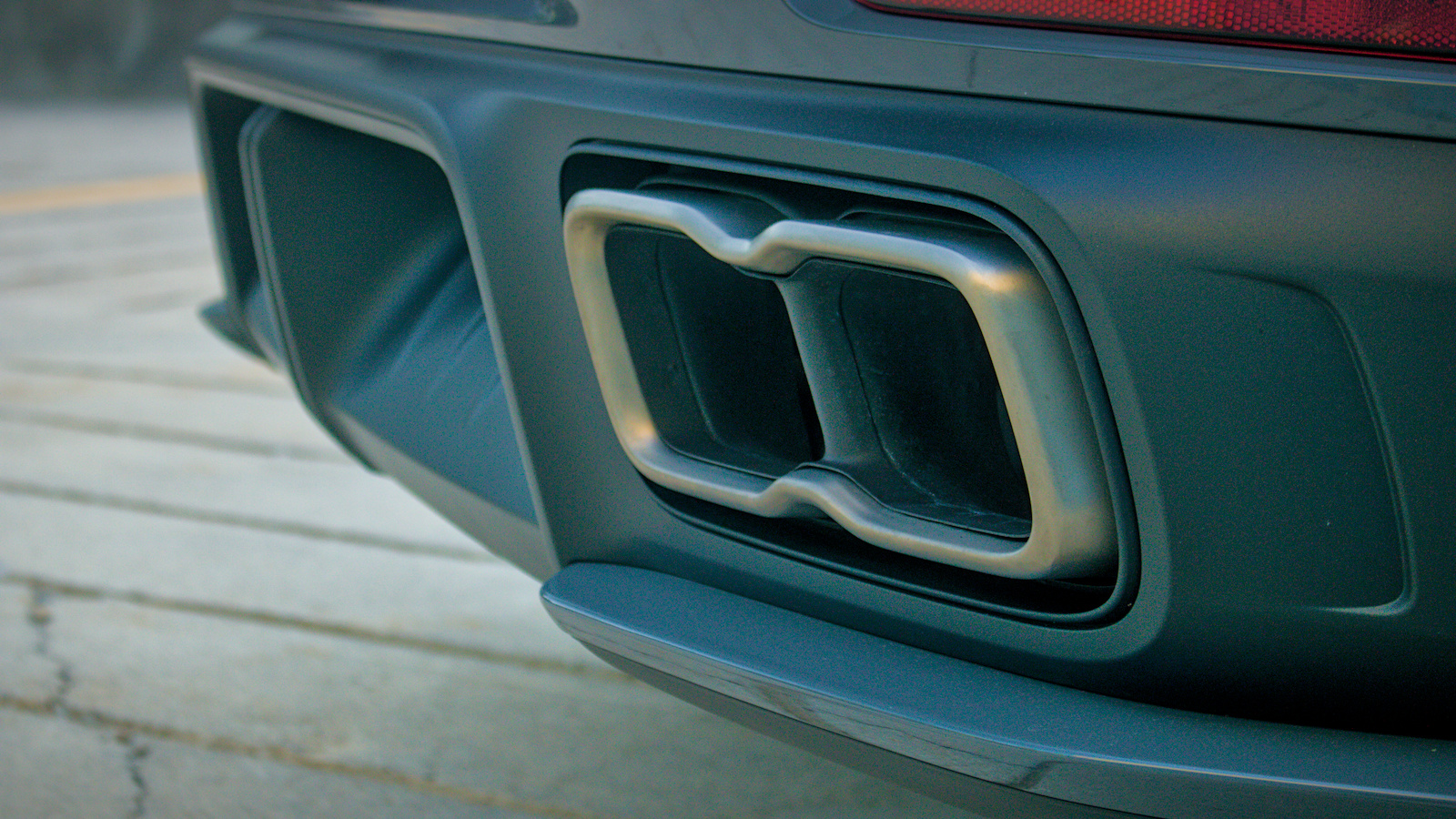
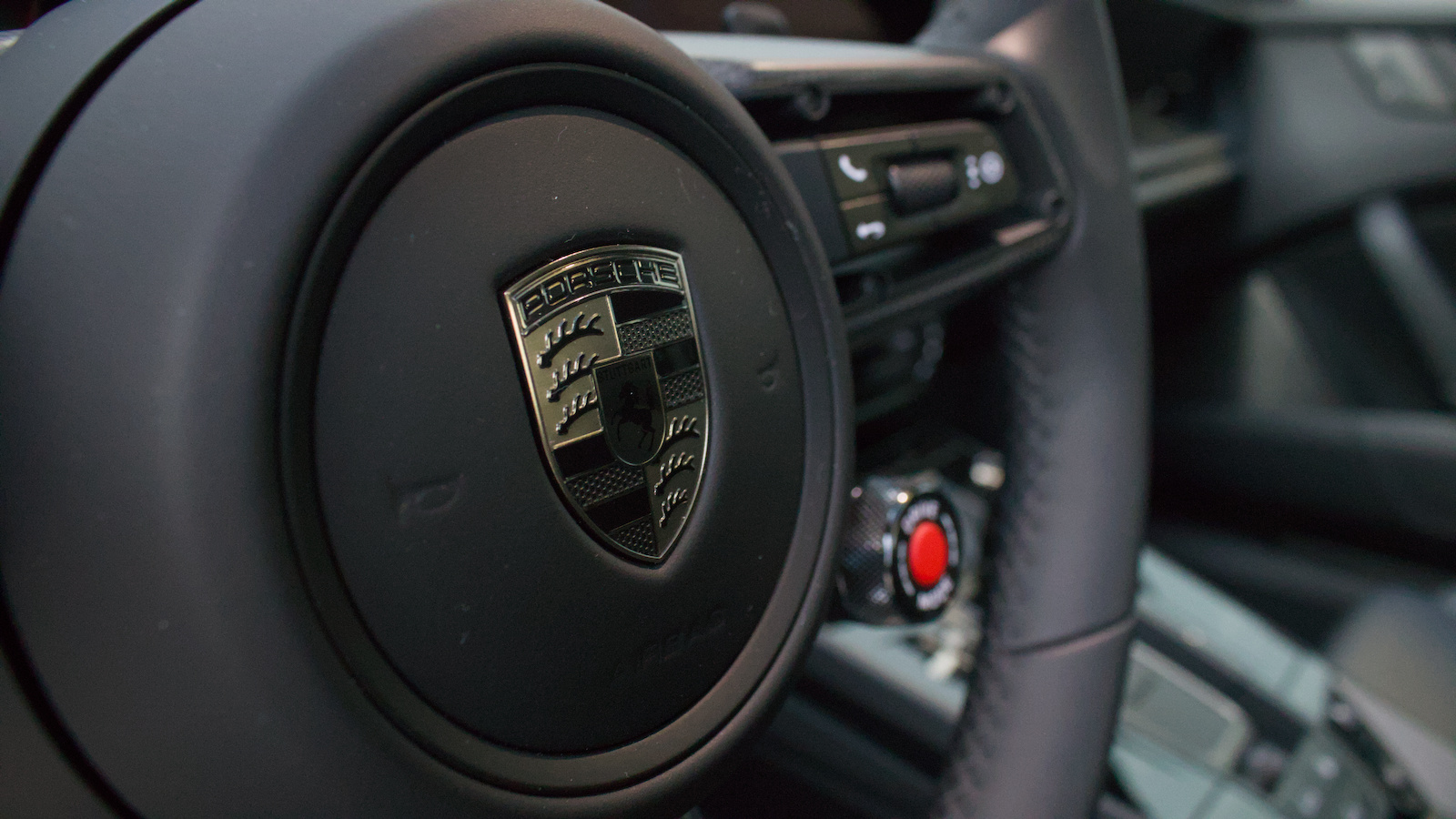
It makes a good noise too, a touch more classic flat-six rasp than its predecessor. Or you can shut the exhaust valves, slacken off the dampers, and enjoy remarkable comfort. Despite the steamroller-width 325-section rear tires, road and wind noise remains appreciably hushed. The fancy adaptive dampers do an absolutely wonderful job of ironing out sharper road imperfections, and should you come face-to-face with a particularly nasty driveway entrance, the 400-volt hybrid system makes the nose lift work faster than on the pre-facelift model. And if you only want a boost of power instead of a full attitude adjustment, there’s a red button on the steering wheel that works like a scramble mode. Press it, and everything sharpens for 20 seconds. The gearbox downshifts, the turbos spool, the throttle response wakes up ready to fire the Turbo S down the road.
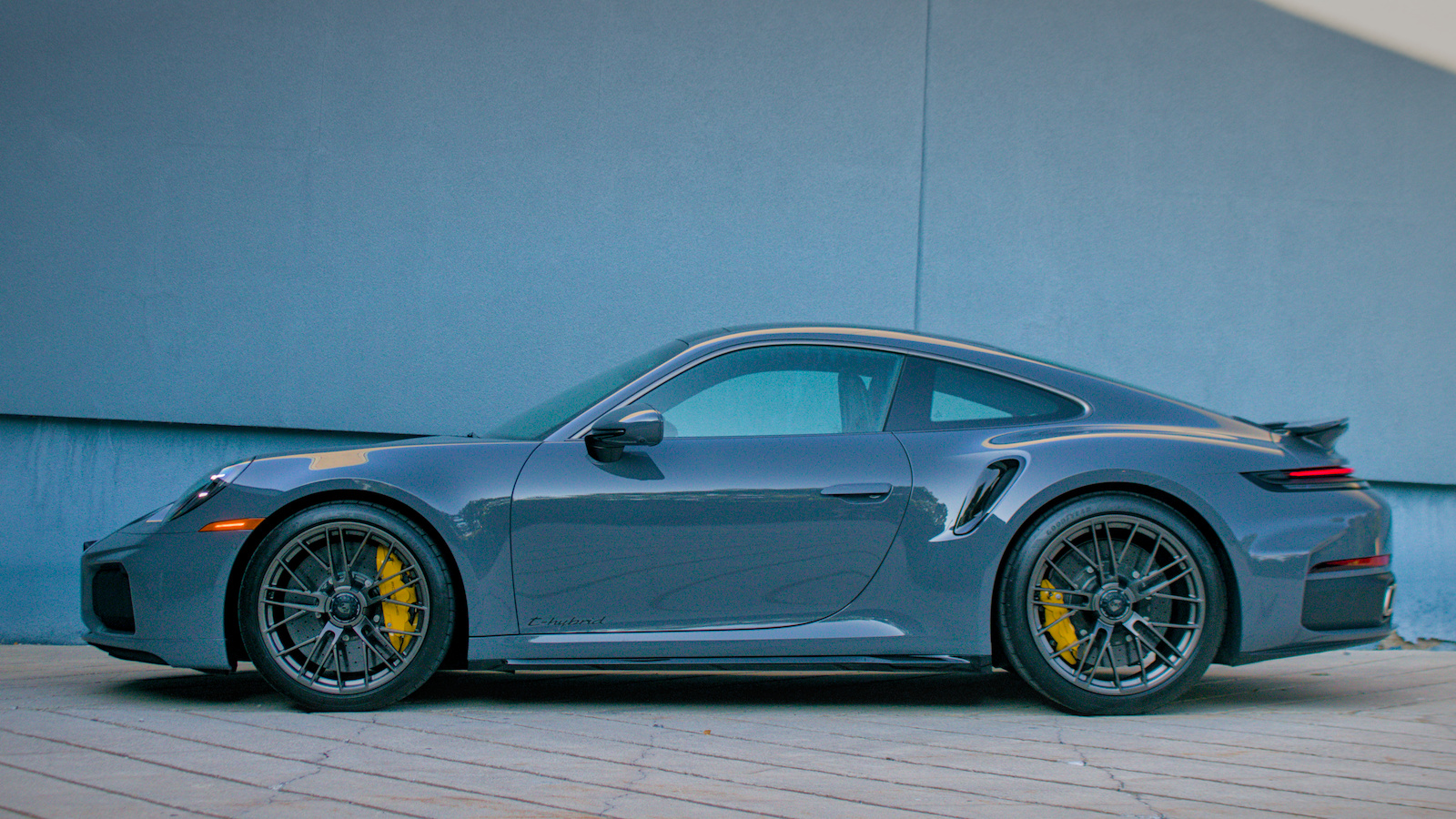
Downsides? Well, if your ego lives and dies by insufferable bragging, the new car’s top speed of 200 MPH is five MPH shy of the old car’s. Unless your daily commute involves a lightly travelled section of derestricted autobahn, you ought not to care. What difference does it make when terminal velocity’s already one football field every 1.2 seconds? Instead, the larger step backwards you might actually notice from behind the wheel is curb weight. The new Turbo S weighs around 193 pounds more than the old one and 513 pounds more than a Carrera T. You don’t feel it in a straight line, but the extra heft is noticeable in the corners like there’s an extra passenger aboard. The Turbo S isn’t quite as eager in the low-speed stuff as lighter 911s, understandable given its curb weight of 3,829 pounds.
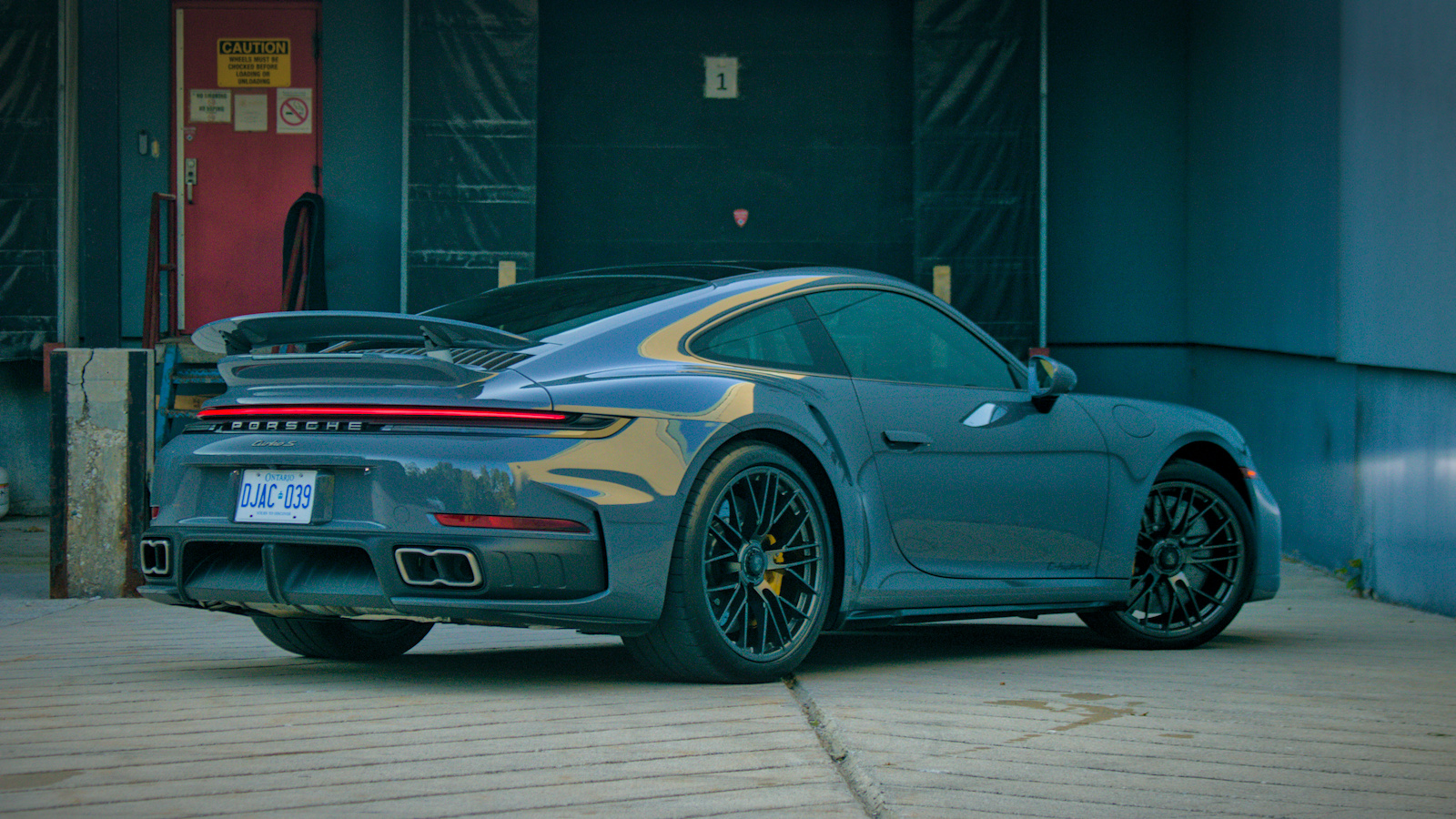
In theory, the weight should be a larger concern than it is, but that’s tempered by the 911 Turbo S being outrageously competent. All the acceleration you could ever imagine, all the braking you could possibly need, and absolute bucketfuls of lateral grip make it a difficult car to push on a favorite backroad because it’s so overwhelmingly composed. Within legal confines, you aren’t even going to come close to the Turbo S’ actual limit, and that presents a bit of a conundrum. Is it simply too good? Not if you’re looking for a high-speed thrill ride capable of grand touring from trackday to trackday, but if you spend your weekends on the twistiest roads, something like the 911 Carrera T will be more exploitable more of the time.
Creature Comfort
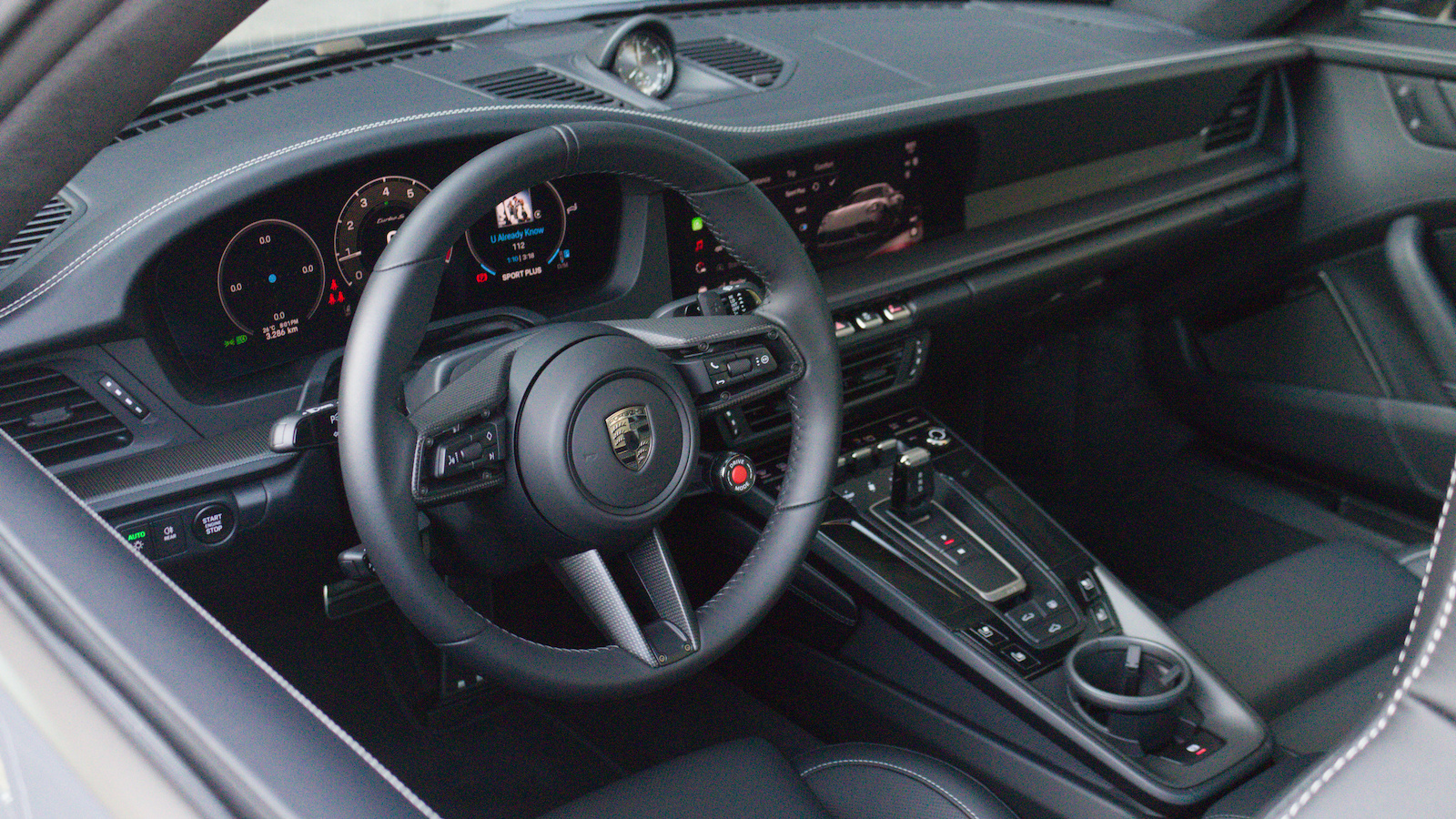
Inside the 911 Turbo S, it’s understandably like the cabin of a 911 Carrera, only nicer. As standard, you get silky leather on the dashboard and door cards, some diagonal stitching, and all-day comfortable 18-way power-adjustable seats, pricey upgrades on less-expensive 911 models. A few square feet of cow and some fancy thrones do make a difference, but mostly because the fundamentals inside every 911 are well-judged. The driving position’s spot-on, the infotainment with wireless Apple CarPlay and Android Auto functionality works as promised and is simple to use, and you get a nice blend of physical controls.
Of course, Porsche’s options list runs as deep as your wallet can handle, so very few 911s leave the factory perfectly standard. The no-cost rear seats are a no-brainer as they’re a huge aid to practicality. The optional adaptive cruise control works rather nicely, ventilated seats ought to be standard but run an extra $900 in America or $960 in Canada, and I’m more fond of the leather-wrapped sun visors than I likely ought to be. However, the optional Porsche Design clock is more controversial. It replaces the regular stopwatch-style Sport Chrono clock with one that has hour and minute hands, and it just doesn’t seem as appropriate in a car that can reach 60 MPH in just a few tenths longer than it takes to say its name.
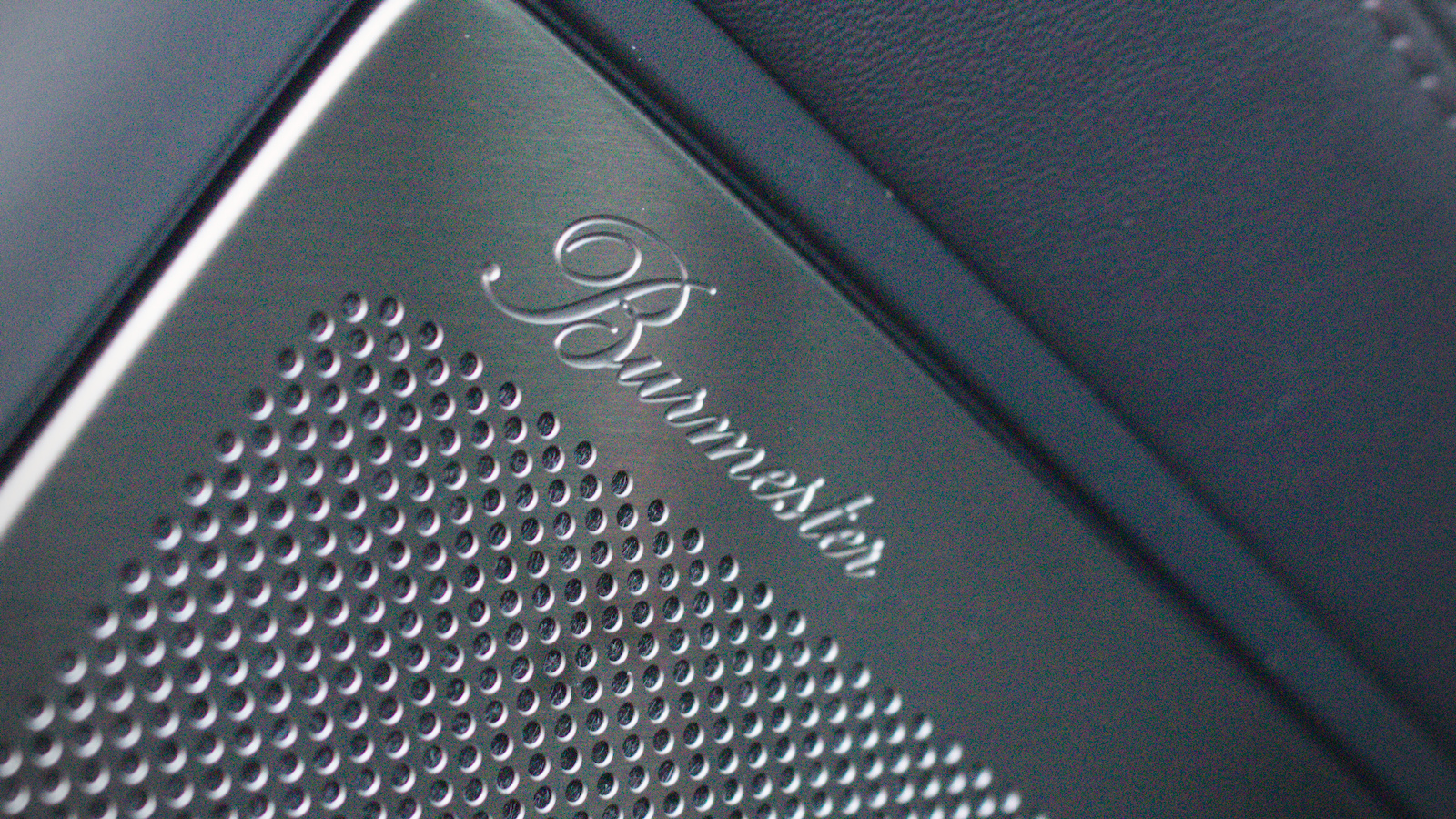
Speaking of options, this particular 911 Turbo S came equipped with the Burmester sound system, a must-spec upgrade on any 911 for music lovers. It’s so much cleaner than the Bose system, with far flatter sound reproduction, vastly tighter bass, a wider soundstage, the works. It’s worth every penny of its $4,210 ($4,530 in Canada) price tag.
The Ultimate Daily Driver?
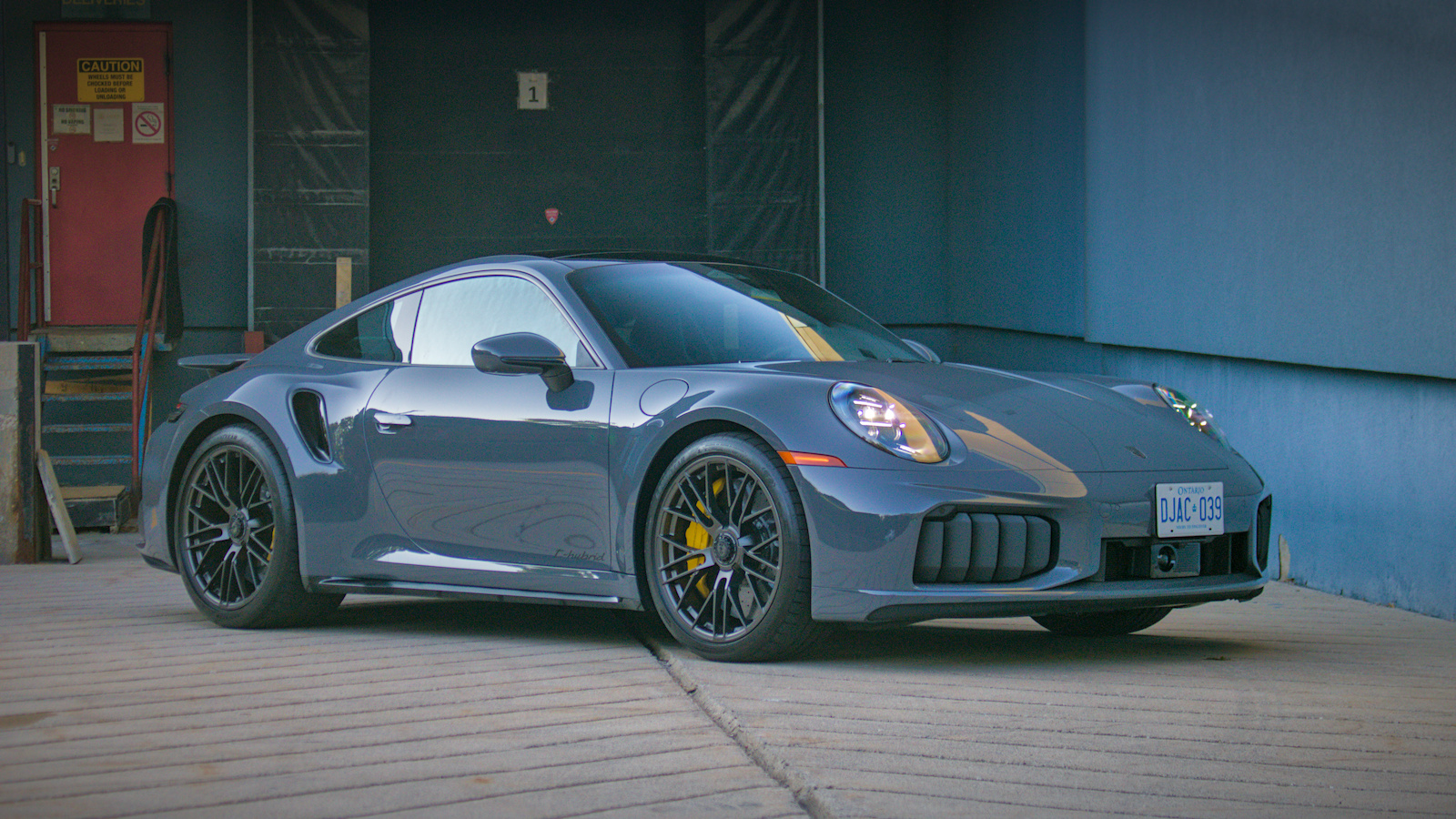
On the subject of pricing, let’s address the biggest figure in the room: $272,650. That’s what a new 911 Turbo S costs before any options. In Canada, that number’s $292,600 before luxury tax, which means the 911 Turbo S is now operating in a new echelon, the sort occupied by entry-level Ferraris and Lamborghinis just a few short years ago. The thing is, those Italian sports cars have since grown an order of magnitude more expensive. The Ferrari 296 GTB starts at $333,950 before options, and the Lamborghini Temerario starts at $387,649 before options. On pricing alone, the only real rivals for the new 911 Turbo S are the McLaren Artura and the Chevrolet Corvette ZR1X.
Sure, the McLaren has billionaire doors, but it also has a tiny servicing network and objectively can’t quite keep up with the Turbo S. The Corvette ZR1X is a different beast altogether. In the right conditions, it’s even quicker than the Porsche in a straight line and an absolute weapon around a racetrack. However, it does compromise on one thing: daily usability. The Porsche has a frunk and a no-cost option of rear seats, whereas the ZR1X has neither. The Porsche’s also much smaller and easier to park, visibility’s better, and a true mechanical all-wheel-drive system is a better choice should you wish to go skiing.
The new 911 Turbo S is more than the quickest 911 yet. It’s also the ultimate performance daily driver. One car to do it all for the well-heeled driver with a Snell-rated shower cap. It’s not nearly as singular as a GT3 RS, and that’s the point. No matter sun, rain, snow, or sleet, this thing’s able to do the supermarket run and the hot lap without fuss, complaint, or discomfort. For perfectionists, that’s just the ticket. The Turbo S might not be everyone’s favorite 911, but it’s difficult not to get on with. Does absolute power corrupt absolutely? Not if you have the right sort of self-control.
Top graphic image: Thomas Hundal


I think the title is a little misleading. For a car that’s likely over $300k with options, you don’t need self control, you need lots of money and a nagging hope that by buying this car, you will be considered cool.
This is a bit much. A 992 is four inches shorter than a C8 and an inch narrower. Both are shorter than a Civic. If that’s making a difference where you park, you need to spend some of that sports car money on a bigger garage.
I suspect that he means parking out in the world, not at home. The C8 is 5.2″ wider than a Civic and the Porsche is 3-4″ wider. Combine that with long doors, and I’m sure these can be annoying, especially in some of those parking garages out there.
Base-to-base, definitely, but the Turbo S is 4.9 inches narrower than a ZR1X. That sort of delta makes a significant difference in older parking garages, and the Turbo S’ vastly superior rearward visibility certainly helps too.
It’s a shame they didn’t buck the trend and keep the five nested analog instruments in front of the driver instead of switching it to a screen. Now it’s just like a Nissan Sentra.
Also, I know that extreme multi-six-figure versions have been part of the 911 family for many years, but though I can see the appeal (especially in that nice blue-grey paint, which reminds me of Ford’s ‘Area 51’ used on early Mavericks and Bronco Sports, etc…) I honestly think I’d rather daily a cheaper/slower 911 variant. After all, I don’t routinely drive 200 MPH and some of that lower bodywork looks awful vulnerable too.
This is always my answer when people ask me what my cannonball run car would be. It’s comfortable and ludicrously fast. I think there’s an argument to be made that a 911 Turbo S is the ultimate GT, especially if you’re being German and going off of pure numbers.
That being said, my friend bought one and traded in on a Cayman GT4RS within a couple of months and likes the Cayman more. It just depends on what you want. I’ve always said that this car exists because nouveau rich corporate types bust into dealerships and go I WANT THE FASTEST PORSCHE YOU HAVE AND I WANT IT NOW!
If that’s your bag then go for it, and I’d certainly never kick one out of my driveway. But I’m not sure what the argument for one of these over a GT3 is. I guess if you “need” all wheel drive and want to daily your ultra extreme 911…but does anyone actually do that?
I feel like the average person who buys one of these has a Cayenne or something they daily and they take their top tier 911 out when they want to flex at cars and coffee. A Turbo S is cool and had a sleeper quality, but as a Parsh fanboy I can’t help but feel like this isn’t the 911 The Real Ones get.
This car is old money, GTx are new money. At least in my experience.
I’ve never once seen a Turbo S owner flexing at a cars and coffee. GT3s and GT4s are everywhere though.
Um, except for one thing.
I’m just fascinated by the color. Is blue, gray, or maybe blue-gray? Whatever it is, I like it. I imagine it looks different depending on the weather or lighting.
To my eyes, it appears to be either Aetnablue or Nashyblue
https://media.porsche.com/paint-to-sample/en/911/aetnablue
https://media.porsche.com/paint-to-sample/en/911/nashyblue
This one’s Slate Grey Neo!