

Electric cars are now part of the wider new car marketplace. Regular new car customers are finding that for doing the mundane stuff like ferrying their filth goblins to school, commuting to their employment cube, or weekend trips to their local big box retailer, they are perfect. Quiet, quick, easy to drive, emissions-free, and if you can charge at home or work, cheap to run, it’s easy to understand why electric cars are finding their place in the automotive landscape.
The trouble is that those characteristics that make EVs the perfect day-to-day tool make them less appealing for those who want a bit more than just mere transportation from a car. A frequent criticism of EVs is that when there are no gears to row or an engine buzzing away under the hood, something essential is removed from a car’s personality. The car is becoming a mobile phone. Yeah, and you know what? Modern phones are fucking brilliant. Another trope is that electric cars are a white goods appliance. Great, so you’ll be ditching your soulless Whirlpool for an authentic washboard experience then? No, I didn’t think so, so shut up. What’s important is that although most new cars are good at most things, we should understand what their limits and capabilities are. You wouldn’t buy a full-size truck for commuting any more than you would buy a small hatch if you regularly drive long distances. Get the right car with the right powertrain for what you want to use it for.


In Europe, for a lot of customers, the right car for a long time was a small front-wheel-drive hatchback, a segment pioneered by the Fiat 127 in 1971. Bundling all the mechanical bits up front freed up space for warm bodies and led to better economy through lighter weight and lower drivetrain losses. The Honda Civic and Renault 5 followed in 1972, but other OEMs were initially reluctant to take the plunge into a smaller, more expensively engineered type of car until successive oil and economic crises forced their hand. By the mid-seventies, nearly every OEM had an offering in the Euro B (US sub-compact) segment. Chic, economical, and with three or five doors, incredibly practical, they were fun and easy to live with, but not particularly fast. Until one day in 1975, a bunch of drunk Volkswagen engineers dropped a bigger fuel-injected engine from the Audi 80 into their new baby to create the Golf GTI. Overnight, a whole new category of enthusiast car was created – the hot hatch.
How To Make A Hot Hatch
The recipe was simple: take your big-selling family hatch, bolt in a more powerful motor, stir in stiffer suspension with wider wheels and tires, garnish with plastic aero pieces and graphics, and serve to taste. Rising insurance rates, thanks to some decidedly knife-edged handling tendencies and popularity with the light-fingered, eventually killed the hot hatch by the mid-nineties, but such a good idea cannot be kept down entirely. The Golf GTI stuck around, although it’s now a more serious and expensive proposition. Ford killed the Fiesta ST and Suzuki the fabulous Swift Sport, but the ICE Mini Cooper and Polo GTI live on, along with newcomers like the Hyundai i20N.
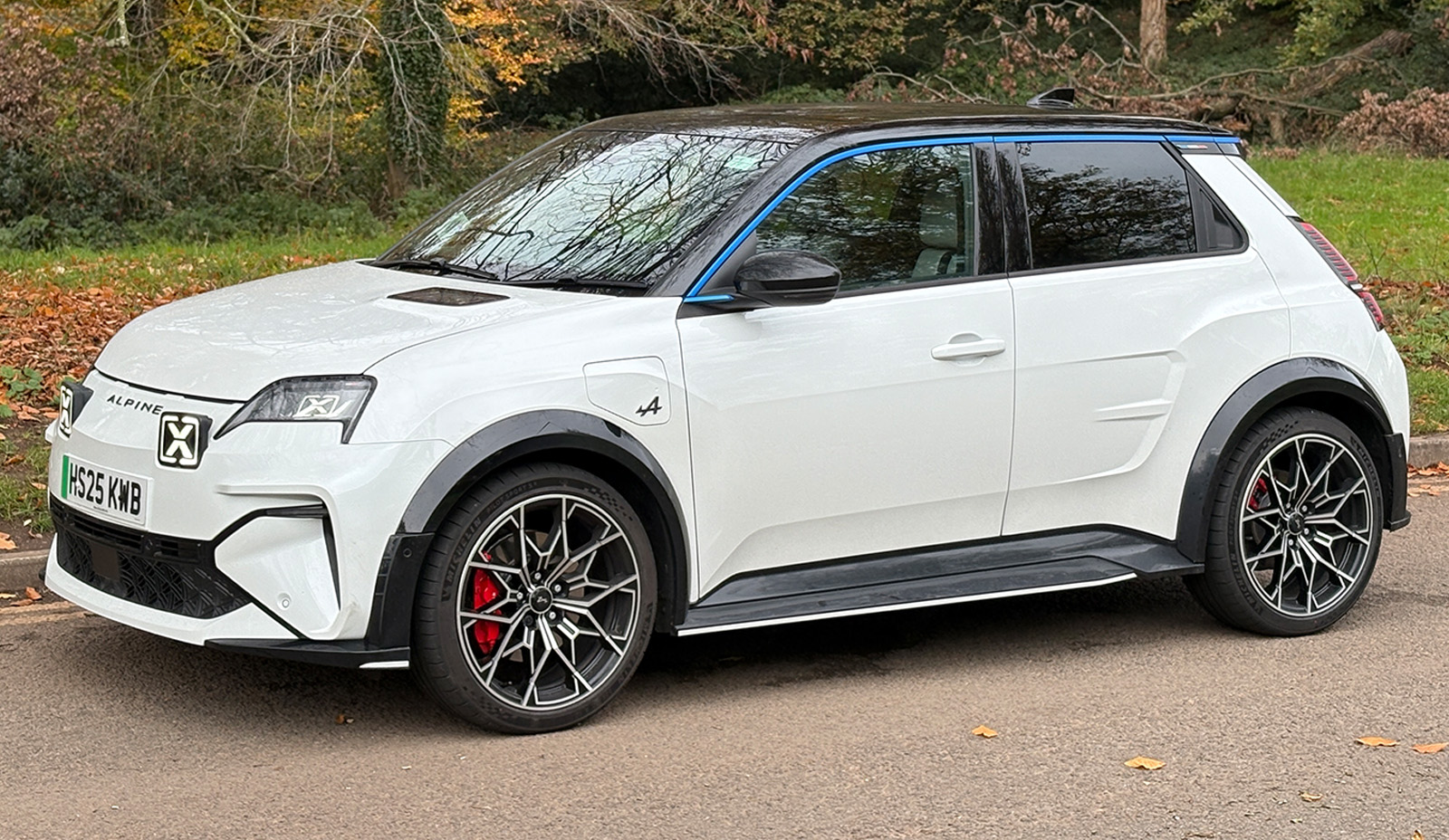
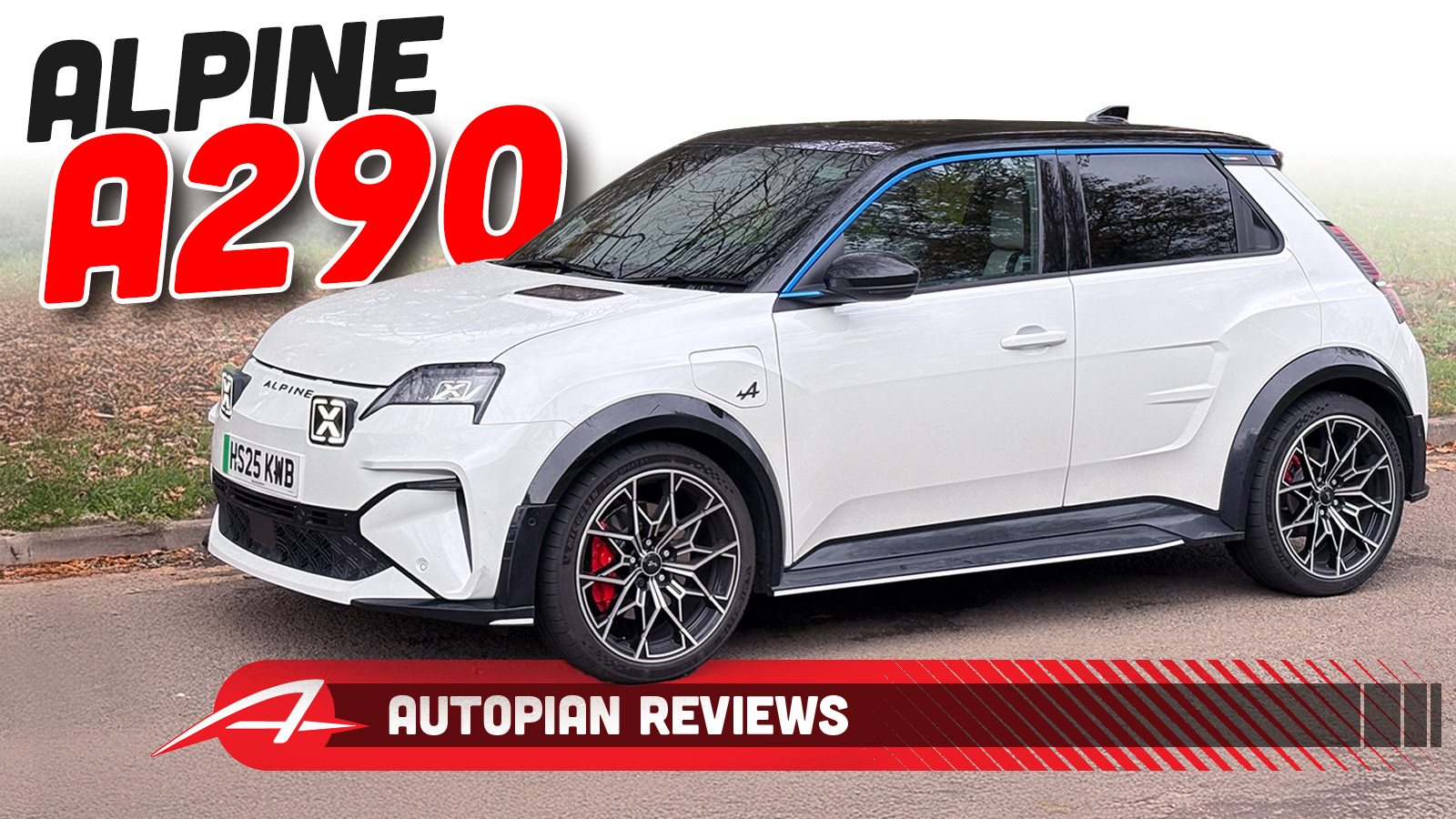
The Alpine A290 is the hot version of the Renault 5 I reviewed back in June, a car I liked a lot. Its modest purchase price and decent range rendered the fact that it was electric irrelevant – a more perfect way of stylishly flitting from book shop to boot shop I cannot imagine. Alpine takes that starting point and time-honored tradition gives the 5 a hotter motor, upgraded suspension and brakes, wilder bodywork, and a reworked interior. There’s a new subframe which repositions the motor lower in the chassis; power is now 180 bhp (30 up on the standard 5) and an optional 210 bhp unit is available on higher trim levels. Weight increases fractionally to 1479 kg (3260 lbs.), probably due to the nicer interior trim combined with bigger wheels and brakes. The 52 kWh battery remains the same: a good thing for weight and cost, but as I found out, not so good for range.
In July, the UK government introduced a grant that lowers the purchase price of some EVs, which both the 5 and the A290 qualify for. This knocks £1500 ($1970) off their respective list prices and means the higher power 210 bhp Alpine A290 starts at £32,745 ($44,172) on the road, including taxes. Press fleets being the way they are, the car our friends at Alpine UK lent me was a Rich Corinthian Leather spec GTS, which has the more powerful motor and every option as standard. This will see you racking up your preferred loyalty points to the tune of £37,500 ($49,355) plus £700 ($921) for the optional Blanc Nival and Noir paint – metallic white with a black roof.
There Are No Cupholders
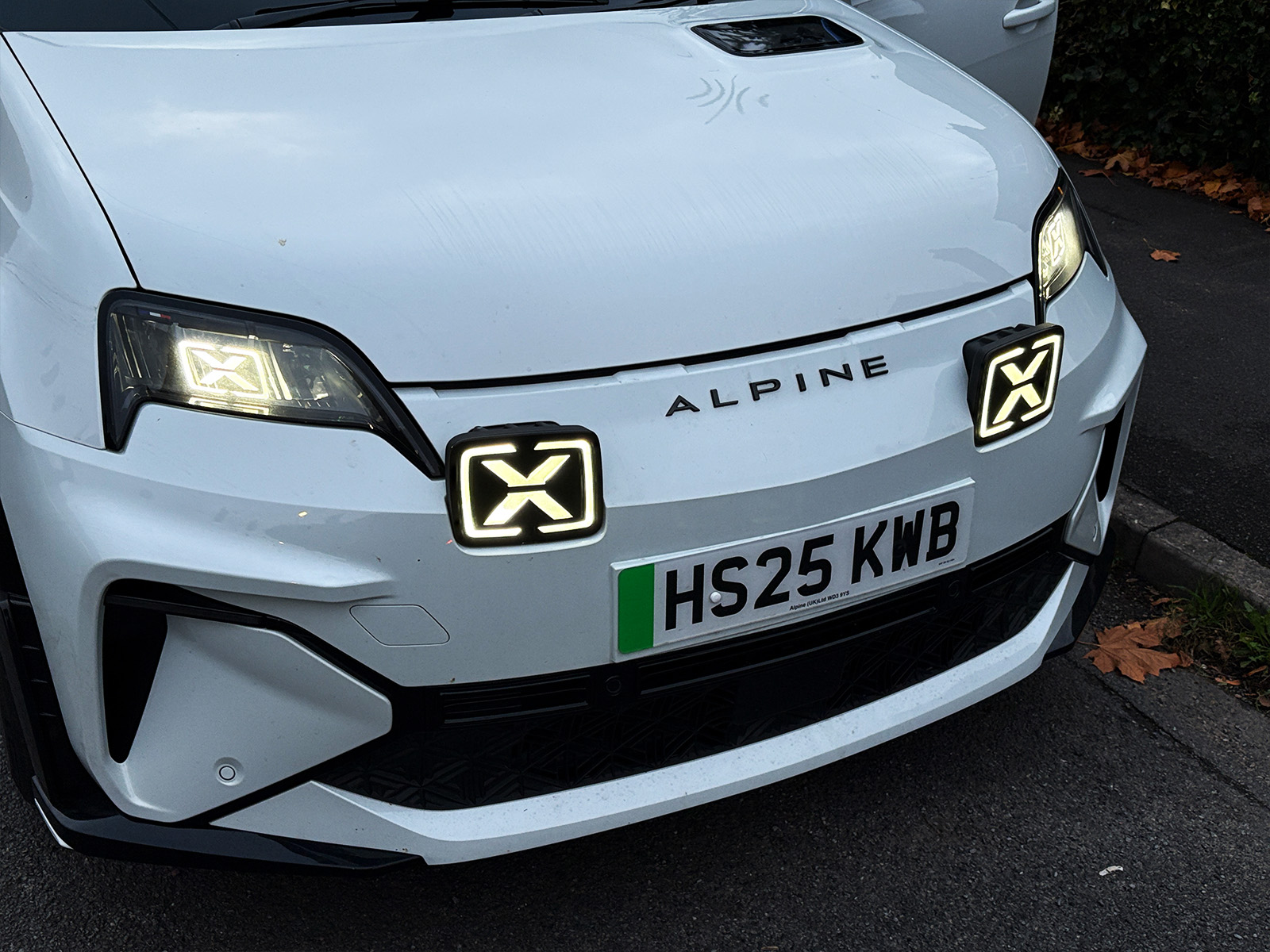
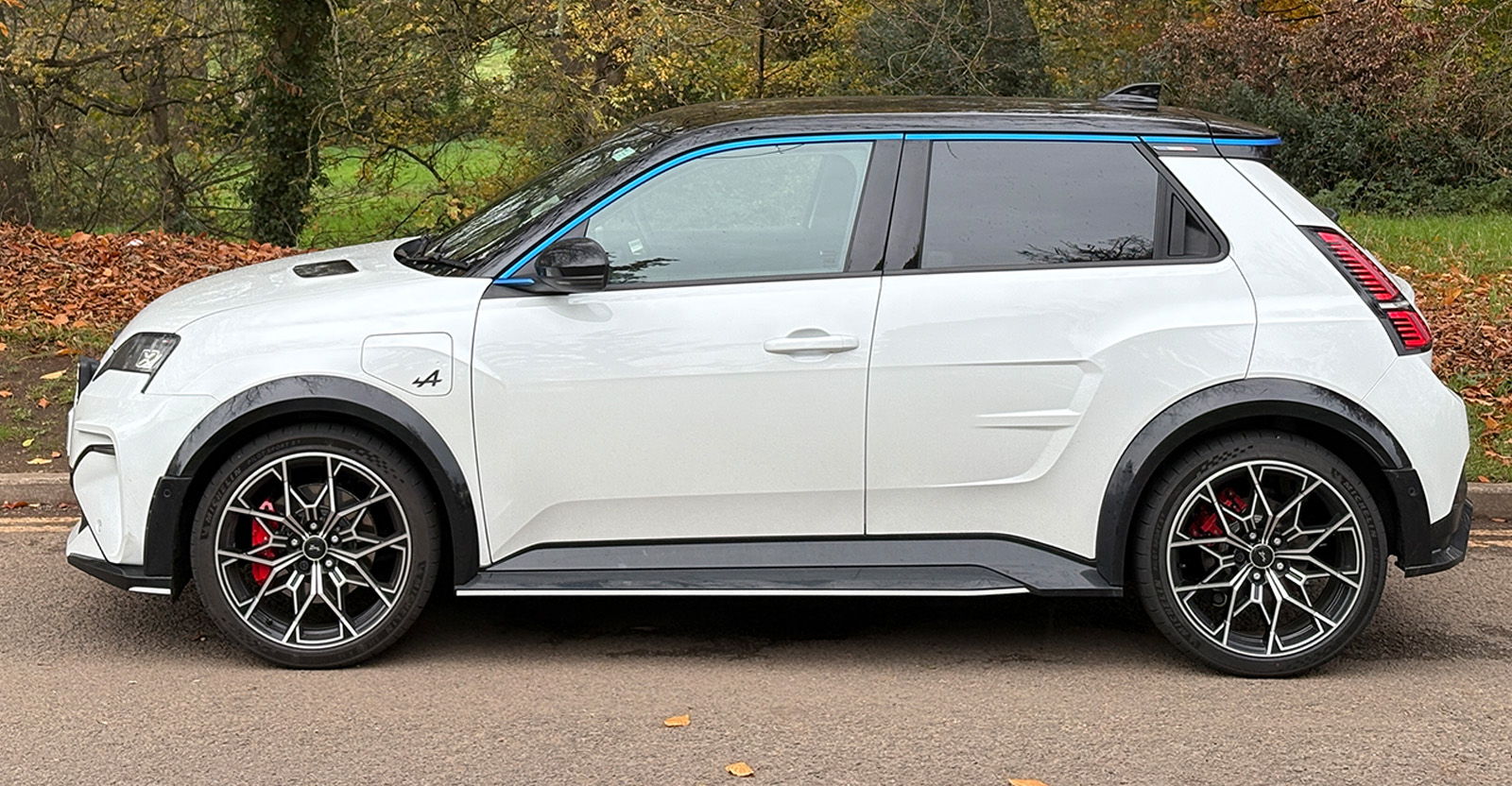
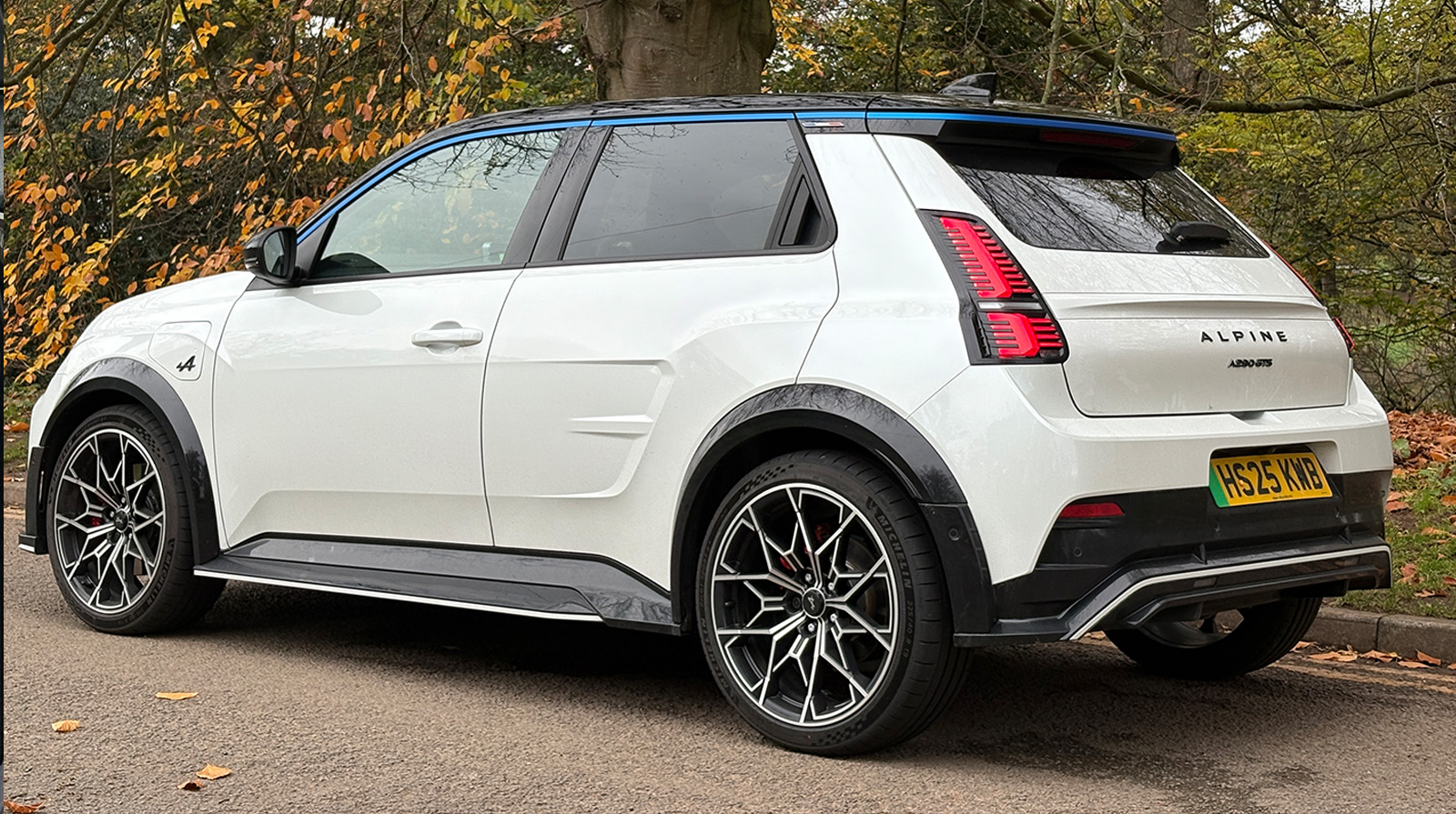
So underneath, you get a trick new subframe, hydraulic bump stops, bespoke uprights at the front, and Brembo 4-piston Monobloc brakes. That’s the stuff you can’t see, what about what you can? There’s no point in having a go-faster car if you’re not shouting about it. The A290 gets new door skins, which on the rear doors have unnecessary Ford Mustang/MkI Capri style fake vents. There are aggressive new bumpers on both ends, which at the front reposition the DRLs as mini spotlights to better mimic the brand-defining A110 sports car. At the back, the tailgate ditches the dark infill panel of the 5 for a small spoiler, and the black trim wrapping around the lower body is slightly deeper and sharper. Finally, the more overly sporty alloys go up in diameter to 19 inches and in width to 225. These are wrapped in either Pilot Sport EV or Pilot Sport 5S tires – my GTS loaner had the latter.
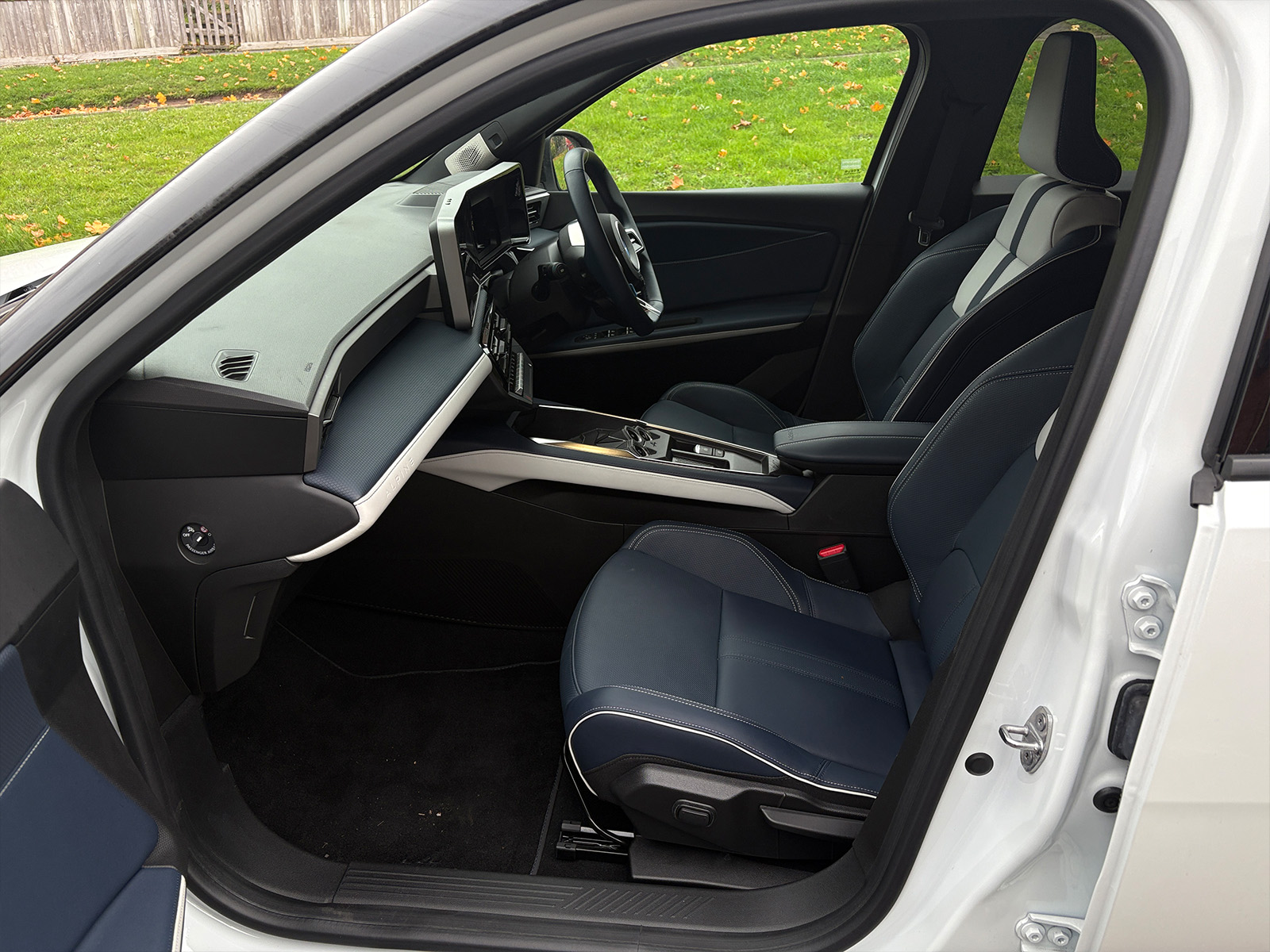
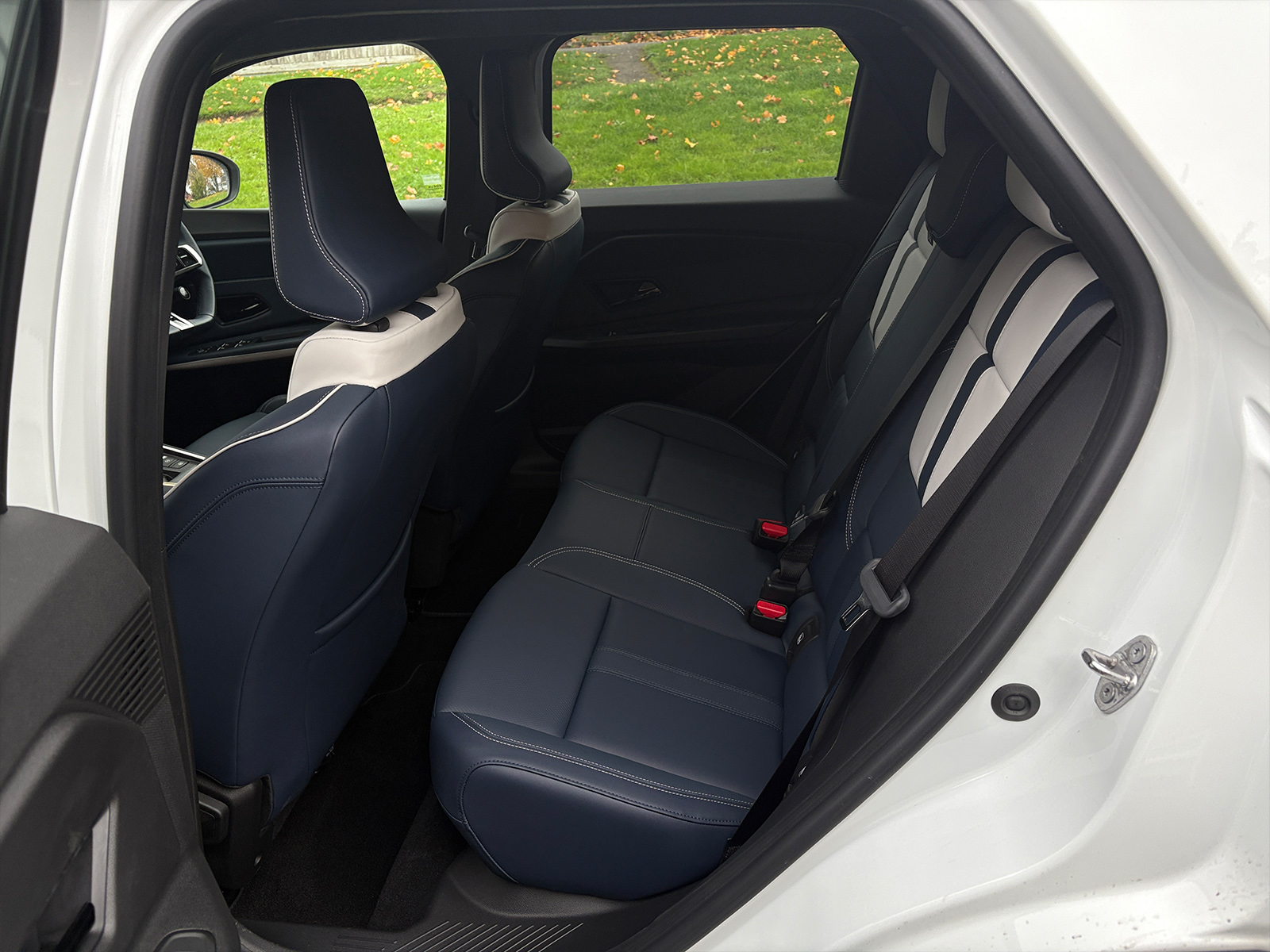
Inside, it’s mostly as you were with the 5, but with nicer materials. Blue Nappa leather faces the upgraded seats, front door card inserts, the passenger side of the dash, and the steering wheel, which is now hexagonal-shaped and festooned with additional “F1” style controls. I thought the seats had too much lumbar support – forcing me to sit upright like an old man with a cushion at the small of his back. A 250-mile day with my shoulders unsupported resulted in me waking up the next morning in need of painkillers. I found out after the car went back that lumbar support is adjustable, but during my time with the A290 I didn’t discover how. I would have emailed Alpine PR and asked them, but I had another more pressing concern with the interior I needed an answer for – namely why there are no bloody cup holders?
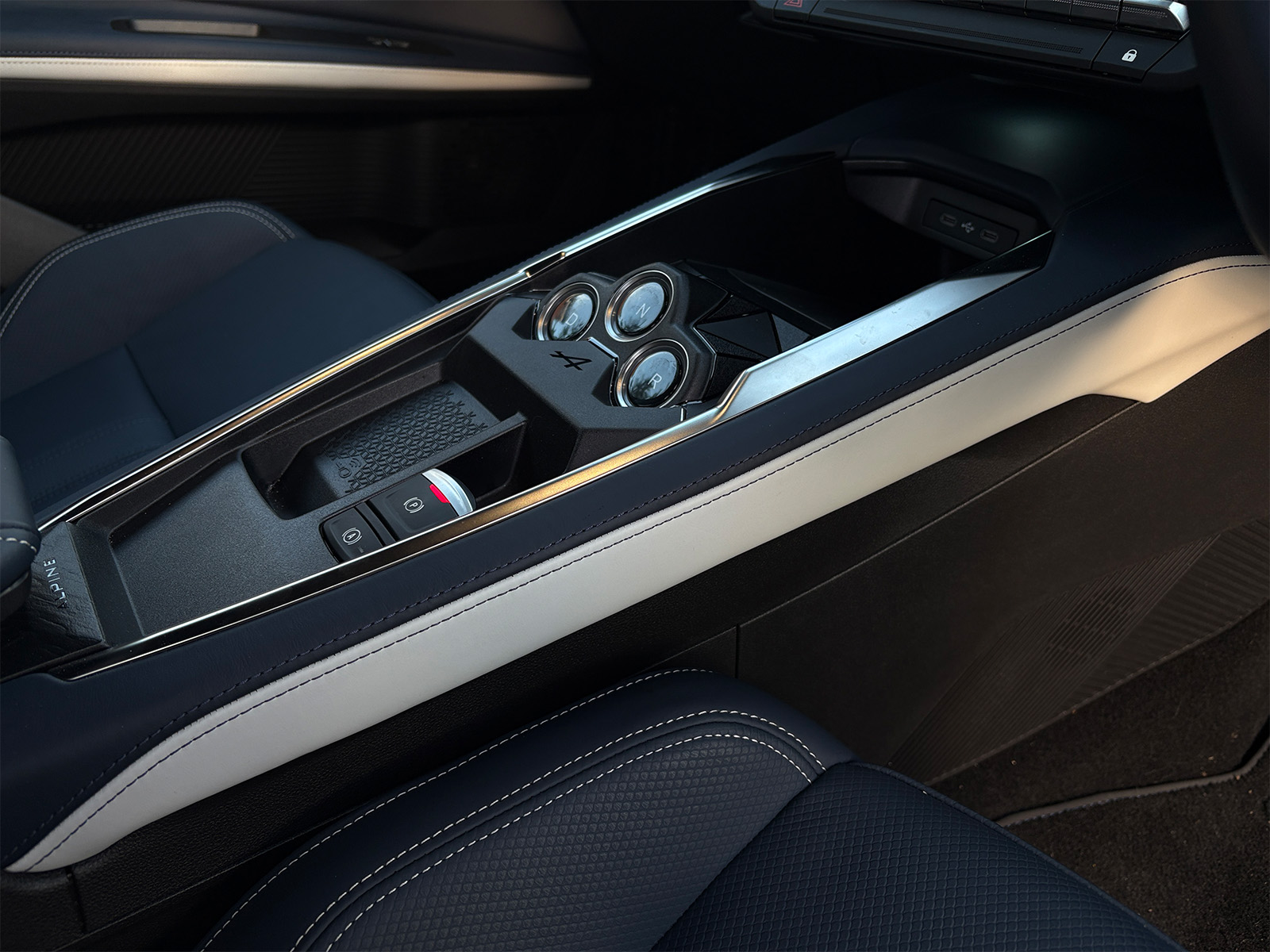
As long as I have breath in my body, I will maintain that America’s two greatest contributions to civilized motoring are right-on-red and the cupholder. Even the most committed helmsman or woman needs somewhere to plonk their vodka valium latte in the morning on their way to work, and given the standard 5 has an adjustable cupholder-cum-storage space between the seats, this seems like a ridiculous omission. The answer I received from Alpine PR was “They will be available as an optional 3D printed part, but in order to optimize the space to the preferred design layout, and given the car’s customer base, permanent spaces weren’t a priority.” Basically, to make the A290 feel more like the A110 (and the rest of the Alpine range), the gear selection buttons were moved to the center console. This makes some sense for brand continuity, but from an ergonomics standpoint, you are not constantly switching between drive, neutral, and reverse on the open road, so I think a less intrusive space could be found – like a lipstick styled stalk to the right of the steering column, as on the standard 5. The rest of the space is taken up with a small lidded cubby for your Johnny Halliday cassettes and a wireless charging pad for your phone.

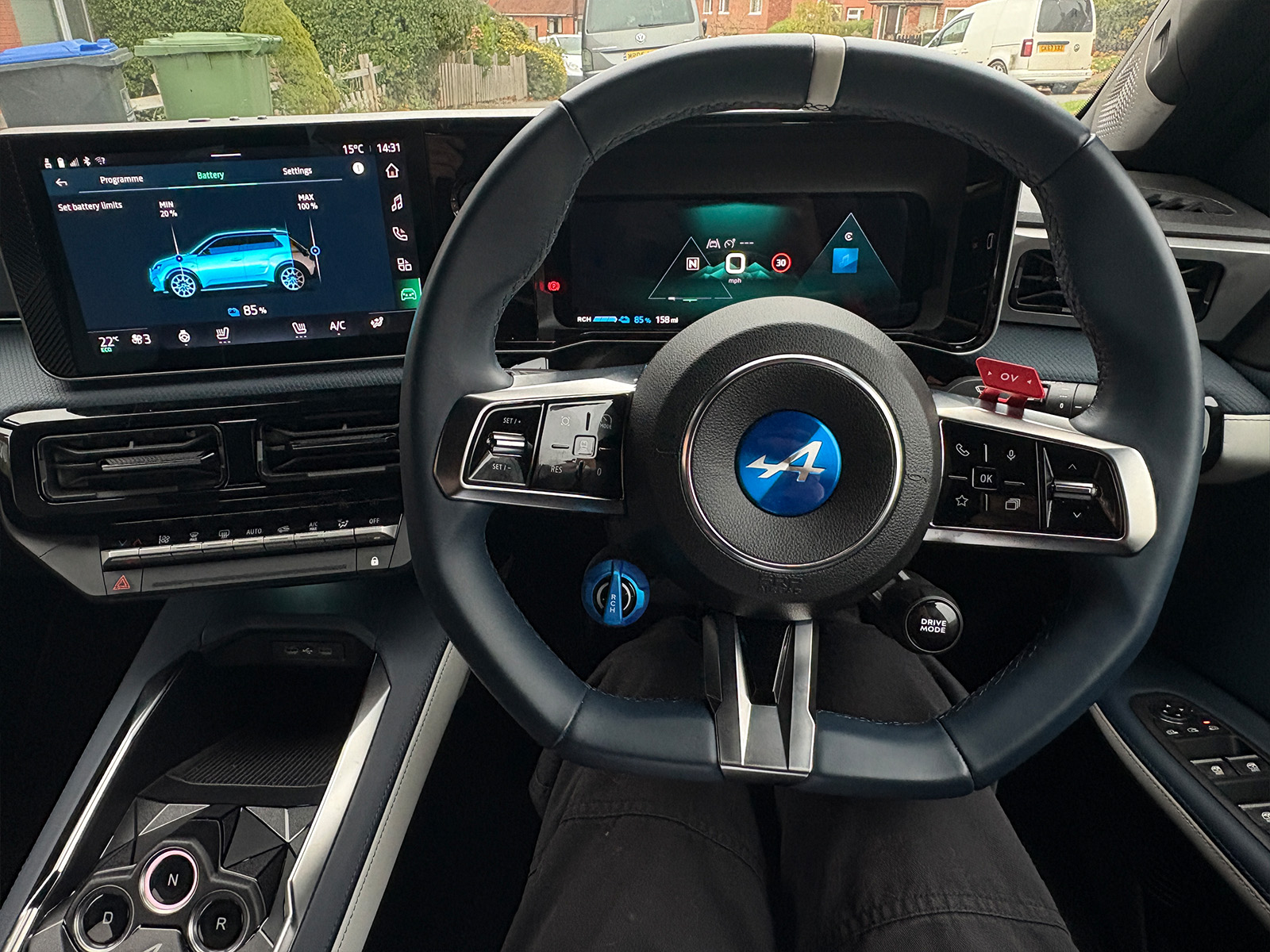
The dashboard displays and graphics have been given a ‘background mountains in Tron’ makeover, but the functionality is pretty much the same as the standard car. Digging into the menus, there’s a series of driver coaching tips that feel a bit Gran Turismo. I have always felt gamification features and performance driving instructions are out of place on a road car, so those I could happily live without, but otherwise it all works well – even if it does feel a bit Serious Performance Car as opposed to pint-sized funster.
There are various driving modes, and you can save a personal setup with all your preferred combinations of noise, dynamics, and safety settings, which you can access via a button to the right of the steering wheel on startup. Speaking of the steering wheel, the blue cold water faucet adjusts the amount of regen from ‘is it on?’ to ‘facebutt the wheel boss,’ and the red OVR lever is – I kid you not – an overtake button to release an additional ten seconds worth of power. However the same effect can be achieved by simply stabbing the pedal to the floor past a kick-down point. When you do this, the Alpine does a kind of ‘warp speed Mr. Sulu’ thing by subtly emitting more noise from the speakers and changing the speedo display to red with stars rushing past. The overall idea is meant to make you feel like Pierre Gasly on a Sunday afternoon when you’re just nipping out for a pack of Gauloises and today’s copy of Le Monde.
It Torque Steers Like A 1985 Renault 5 GT Turbo
When you do punch the throttle, you get the authentic eighties Renault 5 Turbo experience in the form of torque steer. Despite the new front subframe, stiffer suspension, and bespoke uprights, the Alpine pulls and tugs as the Pilot Sports struggle to put power to the tarmac cleanly, even with the traction control on. Switch the traction control out, and the torque steer goes from wriggling the steering wheel to requiring you really keep a hold of the thing lest you end up in the hedgerow. 210bhp is not exactly an inordinate amount of power through the front wheels these days, so maybe the geometry is still a bit compromised – a suspicion fueled by the fact that the steering itself is not much of an upgrade over the standard 5. It feels too light for a more performance-focused car despite the increase in tire width. Mucking about with the various driving modes didn’t make much difference that I could detect, either.
Likewise the ride, which is adjustable between three settings, all felt the same to me. When I drove the standard 5, one of my only criticisms was that I thought the ride was a touch firm – weirdly, the A290 felt more cushioned, probably because of better tires and more expensive dampers. Grip, as you would expect, was exemplary – even though throughout most of my week with the Alpine it was pissing with rain, a couple of afternoons spent punting it down bendy B roads revealed no obvious vices other than the aforementioned torque steer. The Alpine corners flat and fast, and thanks to its short wheelbase and sticky rubber, it turns in fast enough to fling the keycard out of its charging pad on the center console and across the cabin.
Some decidedly heavy-footed pedal applications failed to elicit much in the way of adjusting cornering attitude – this isn’t the tightrope between ploughing understeer and exiting stage left backwards that hot hatches of old used to exhibit. The Alpine is safe, secure, stable, and – slightly soft steering aside – a lot of fun, helped as usual by its handy size, excellent visibility, and instant throttle response. For the more powerful motor, performance figures are quoted as 6.4 seconds to 60 and a top speed of 106 mph. It certainly doesn’t lack poke at solid motorway speeds, although it’s worth noting that driving in eco mode limits the top speed to 80 or so. And I spent a lot (in fact nearly all) of my time on the motorways in eco mode – because when it comes to efficiency, the Alpine has a major problem.
That Big Problem
When I reviewed the 5, I managed 4.3 miles per kWh without even trying. That was back in June, so I had the AC running constantly. I’m not about to sacrifice comfort in the name of eking out a few more miles because that’s stupid and not representative of how people use their cars. During my week with the A290, it rained most days, but the temperature hovered around 58 – 60 °f (14-15 °c) – so not especially cold. At 100% charge the indicated range was 175 miles, but this was a case of the car telling porky pies because at one point it seemed like one mile on the road equated to two miles off the total range. This is a major bummer in terms of the A290 being a day-to-day proposition.

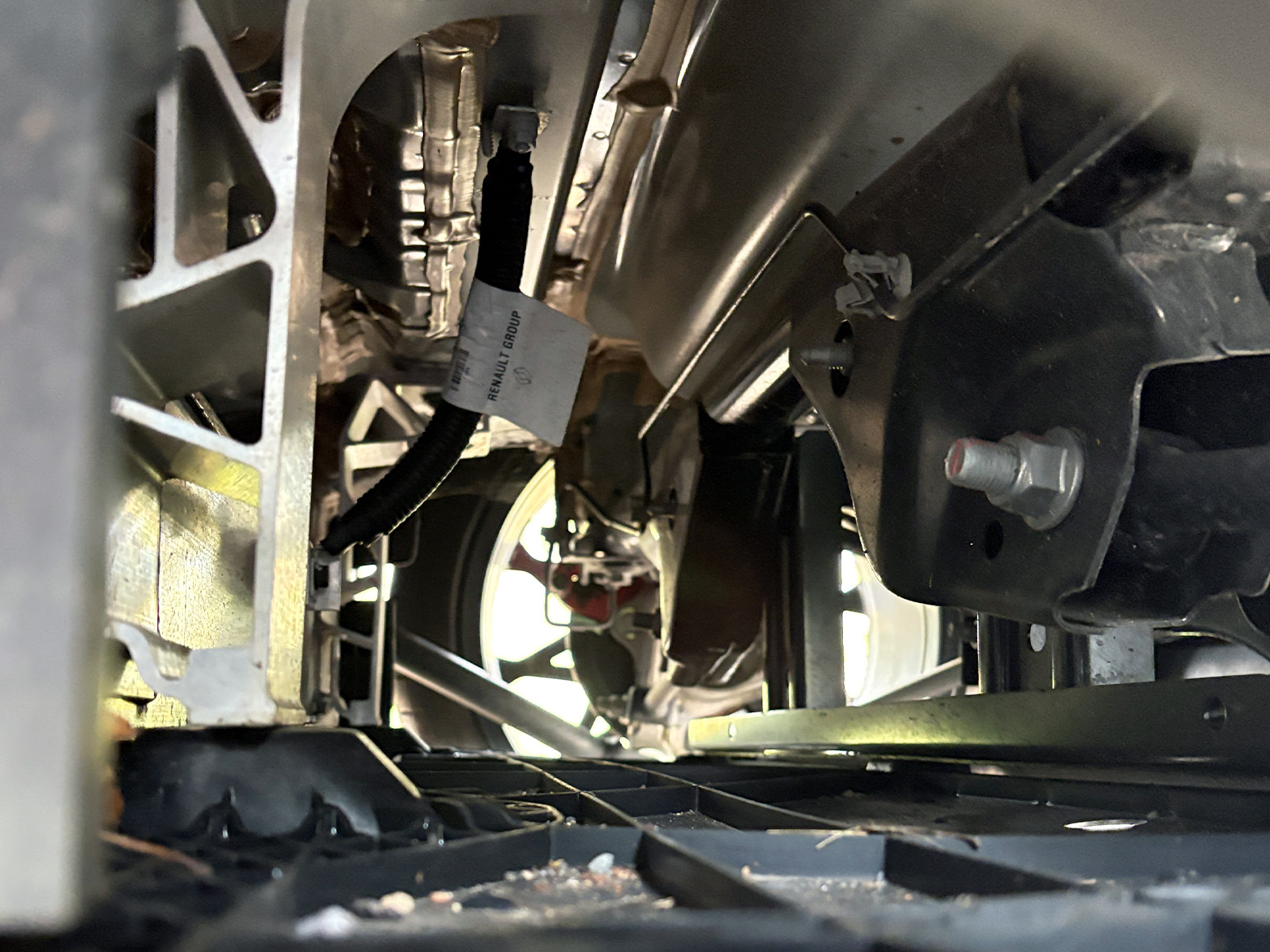
I asked Alpine PR about the aero figures, but they have not been released for either the A290 or the Renault 5. So is the difference purely down to stickier tires and a more powerful motor? That feels unlikely, but I’m not a powertrain engineer. What majorly queered the pitch for me was the fact that the rapid charger near my house that I usually used to charge EV press loans was out of commission. So I signed up for a BP Pulse account, which is normally $10.57 (£7.85) per month. New subscribers get the first month free, but it means you can access their 7kWh chargers at 44p per kW, as opposed to the pay-as-you-go price of 52p per kW. Such a slow charging speed meant leaving the Alpine overnight in a public car park a few minutes’ walk from my house, a not entirely satisfactory state of affairs. In this situation, you are also liable for parking charges as well – although the overnight price was only £2.30 ($3.11) it’s something to think about. In the interests of doing proper journalism, I debased myself in your service by crawling around to take pictures of the rear axle and discovered there is room for a bigger battery – something the A290 desperately needs.

When I took that long drive down to Essex for a meeting (saying that makes me feel so important), I had to rapid charge twice – once before setting off at a local health spa car park (at least I could get a coffee while I waited) and once before the return journey home. In addtion when I picked the Alpine up from the press office, just outside northwest London I also needed to charge it up for the ninety-mile journey back to my house. In my eight days with the car, I covered 498 miles and charged five times, putting a total of 160 kWh into the battery. That works out to 3.1 miles per kWh, a substantial delta from the 4.3 miles the standard 5 managed. The total cost of all this pissing about was £104.55. For some perspective, the gas station where I fill up my Mini currently charges £6.27 per imperial gallon of regular unleaded. My 2010 Mini Clubman consistently gets 40 mpg, so that £104 would allow me to drive it a rather appropriate 666 miles. And EV evangelists wonder why people who cannot charge at home or work at sensible rates are not making the switch. I’ve said it before, but it bears repeating – with any new technology, customers need to get the same or better than what they currently have for the same or less money.
The Emperor’s New Clothes
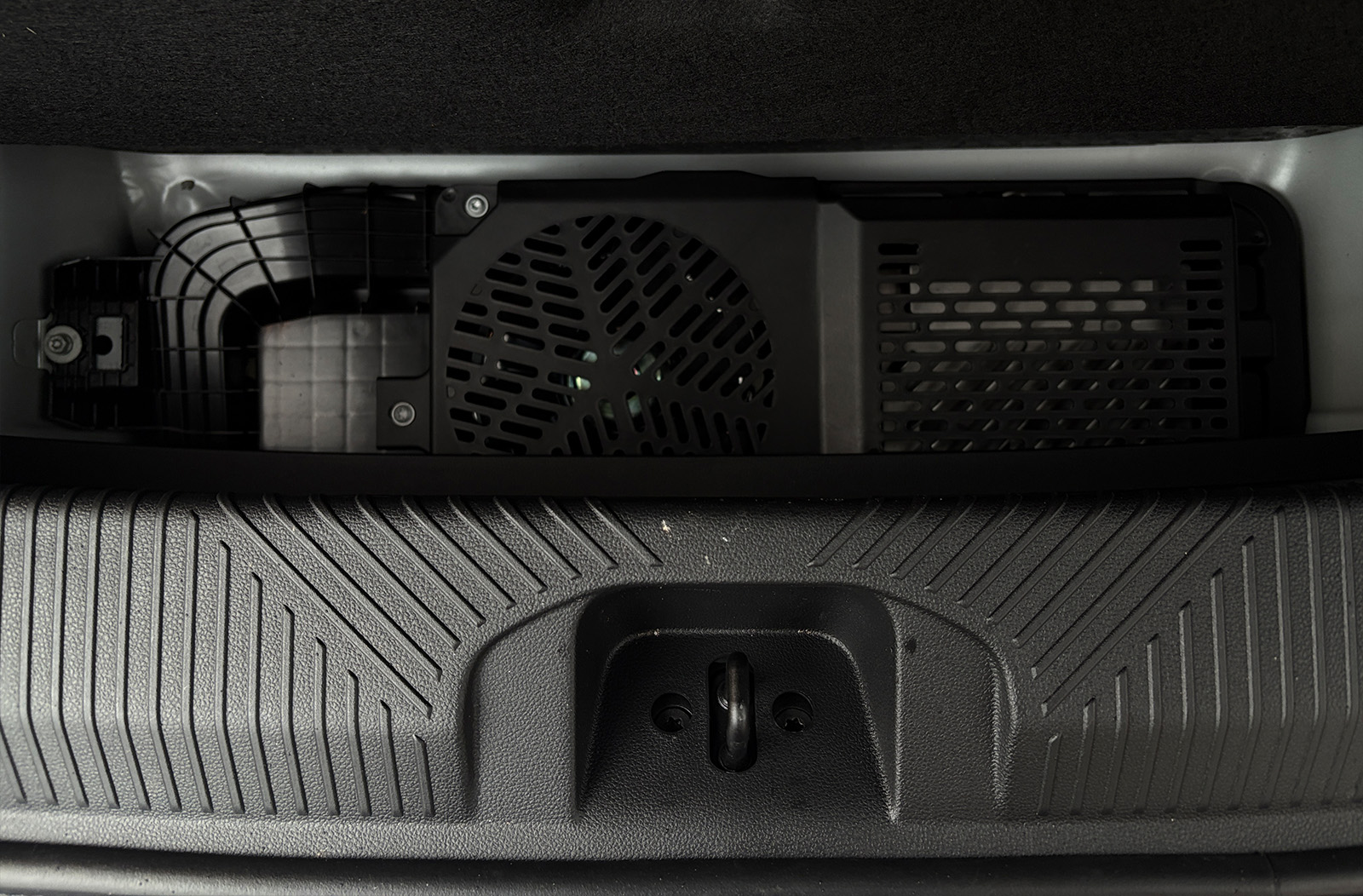
While I’m griping, the Devialet premium audio system, which also gives you a suite of Google connected service which came as standard on my top spec GTS loaner is a £780 option on lower models. The subwoofer kicks with enough force to make the rear view mirror jump, but the problem is it’s installed in the cubby under the boot floor, so you lose the ability to store the charging cable out of sight. All right, I know you’re going to be using the charging cable a lot more, but it’s another red cross in the practicality column alongside the lack of cup holders. The Alpine also doesn’t have the external state of charge lights on the hood that the 5 has either; this being swapped out for a simple Alpine graphic that does nothing.
My overall feeling with the A290 is that by making the hot model an Alpine, Renault has given the 5 a suit that doesn’t fit properly. It has all the requisite go-faster uplift parts in terms of powertrain, suspension, interior, and exterior but making it an Alpine it all feels a bit incongruous – something about writing checks it can’t cash. My suspicion is that the standard A290 with the lower power motor (and the better efficiency that would bring) and fabric seats (I’m not a big fan of leather, in cars at least …), without the optional sound system, would be a slightly more rounded choice. If you don’t spec any other options, that version retails for £30,245 ($40,977) on the road.
If you are the type of person who absolutely must have the fast version of a car, there’s a lot to like here. I don’t think the A290 is a bad car, just one that has a slightly confused and compromised mission. Alternatively, Renault could have bolted the upgraded suspension and motor into the standard 5, given it some racier trim inside and out, and slapped some lairy graphics down the side to create a new 5 GT Turbo.
That really would lean into the standard car’s heritage appeal and feel more in keeping with the original hot hatch ethos.
All photos by the author.


I briefly drove one of these in Romania and also a Dacia Spring. The seats in the Spring felt better on my back? But being in the US, I will never see any of this state side, well maybe in 25 years when the batteries are roached…
It seems like the petrol Mini is the way to go really. I can’t keep up, does Mini offer manuals again? Some hubbub in the US about no manuals, but I lost track.
I think they are all DCT now and the only way to get paddles is in the John Cooper Works.
Ouch, that is no fun. I suppose such is the way of the world now.
Personally, I enjoy rasslin’ with my cars, so sign me up for all that delicious torque steer! Not that I’ll ever have a chance to drive one of these
When you visited I should have been in posession of an R4 press loaner.
Well tell Renault I’ll be back in town the same time this fall, so they had best shape up and provide something entertaining!
This is such a good looking car. It is a shame the US does not appreciate the hot hatch. Why are we such clots.
Stigma of it being a poor person’s car, also ‘European’ which traiditonally doesn’t appeal to the American mass market. Worth noting the UK was initially pretty resistant to hatches as well – even as late as the mid-eighties. The MkIII Escort, VW Polo and Golf, and Vauxhall Nova and Astra all had versions with a trunk.
I have to giggle when I read reviews of our Euro rental cars, often from the UK, telling buyers to avoid the 0.9L for at least the 1.2L which is adequate and has usable power. Because cars have about five different engine choices, from 65hp to 250hp, gas and diesel, auto and manual (although that’s going away with electric cars).
Meanwhile, Motor Trend is telling everyone that any vehicle sold in the US under 300hp and/or with a 0-60 time >6 sec is dangerously underpowered.
I’d love to have a 90-100hp Mazda3-sized hatch to commute in, but noooooo.
Motor Trend has all the relevance of yesterday’s newspaper.
I agree, as someone who reads yesterday’s newspaper.
Others certainly aren’t immune, however – that’s true for nearly all modern US automotive “journalists” and journalists.
Good to see you back here again Adrian,you car reviews are the best. Hope you’ve been well.
I have not been well, hence my absence.
Sorry. Hope your current lack of absence means you’re doing better at least then.
Yes much better thank you.
I’m astonished at UK running costs, in Oregon where gas isn’t cheap regular (87 pump octane) is $3 for a slightly smaller US gallon and electricity from the rural coop is $0.07 KWh. This means I can afford to drive my old pickup that gets 13 mpg around town, although the Fiat 500 gets driven more.
The sub 200 mile range is a problem since I couldn’t comfortably drive to Portland without stopping to charge, and I couldn’t visit the very rural places I like to vacation
We don’t really have to drive such long distances in the UK because it’s tiny and very densely populated – about the size of Michigan.
Beyond the stickier, larger (?) tires, rain is surprisingly hard on the range of an EV. Living out in the PNW here in the Americas I find the rain is far more of a range reducer than even the resistive heater in my Bolt while I’m at highway speeds. The issue is that the drivetrain is so good at using the least amount of energy necessary to move the vehicle down the road that losses from the extra work pushing water out of the way is far more noticeable than in an ICE vehicle which has some power overhead at cruise speed (or that’s my understanding, anyway). That said, my VW new-new Beetle will get around 40mpg in the dry and about 32mpg in the very wet. Mileage does vary.
I’ve heard that larger motors do not appreciably reduce range, save for the difference that the extra mass can cause (and possibly associated packaging issues that may mess with aero). The types of motors they put in EVs (e-bikes and some e-scooters aside: looking at you, hub motors) are incredibly efficient and never really waste a watt when it isn’t needed.
Interesting.
I had the exact same experience with rain and loss af range.
We recently bought a 3year old Mini Cooper SE, E for EV.
They are dirt cheap because of lousy range 100 miles in the winter, but boy are they a hoot to drive, and it sounds as if this Alpine is also.
184hp to the front wheels is more than enough.
For us the lousy range is no problem as it is car number two and primarily used to drive around town. Furthermore we have a 11kw charger at home so topping up is no problem.
I reviewed the old Mini Cooper E and liked it but the range was a killer.
“You wouldn’t buy a full-size truck for commuting any more than you would buy a small hatch if you regularly drive long distances.”
Part 1, the truck part, you do apparently do that in the US.
Part 2, a small efficient hatch back is the perfect tool for long distances where fuel consumption can be halved.
Dacia Sandero 1.5 dci (that is the most efficient diesel on the market) has a 50 liter fuel capacity).
Now, back to reading the article.
if economy was your only consideration. My main consideration is comfort and most modern cars, including crossovers get more than acceptable day to day economy.