

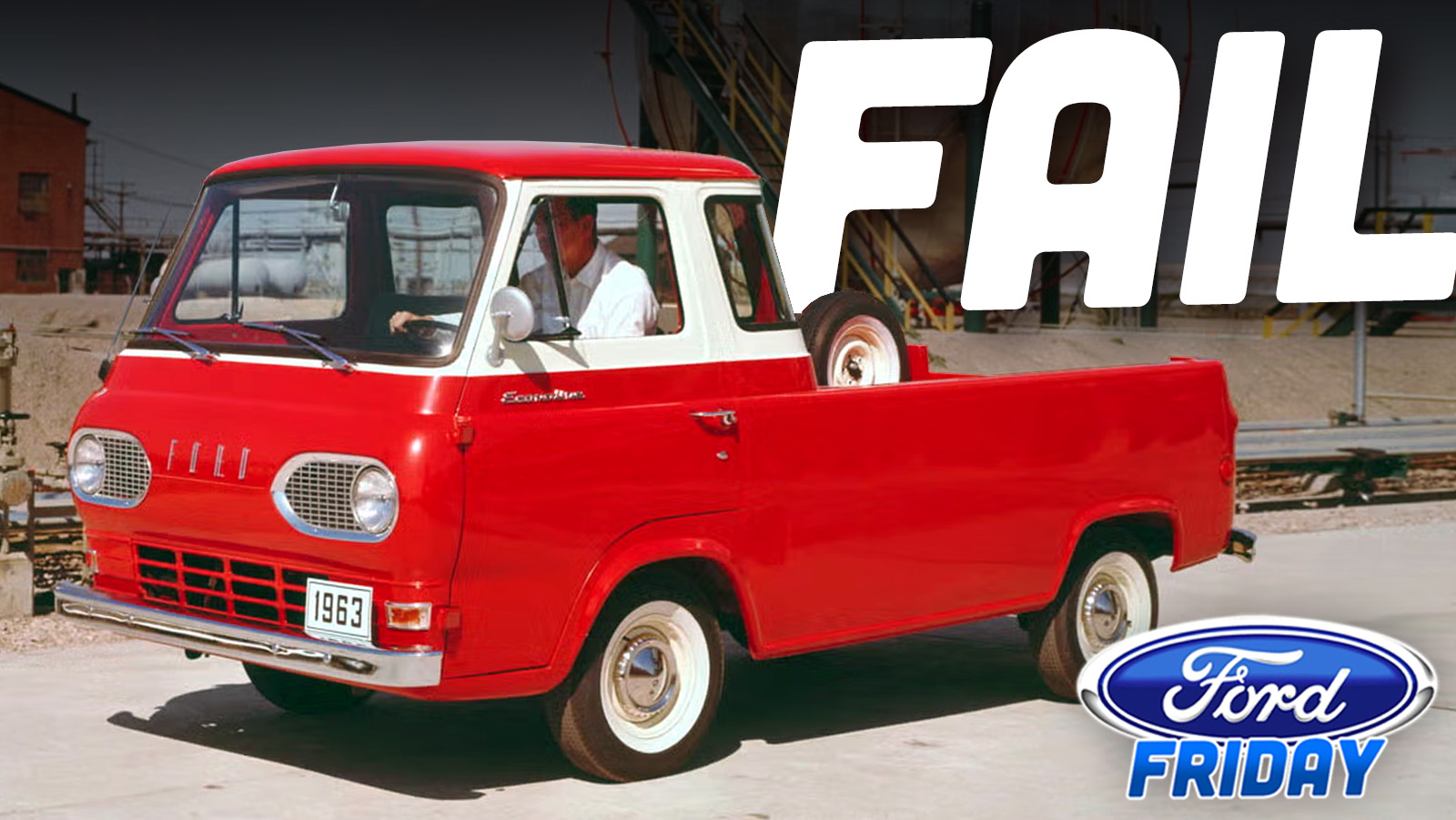
From inventing the pony car with the introduction of the Mustang, to launching the American aero revolution with the Taurus, and making the bold move of shelving every car that wasn’t a Mustang (a “real Mustang,” that is) in favor of an all-crossovers lineup, it must be said that Ford has a pretty good history of reading where the car market is going. Even their most lambasted products like the Pinto, Mustang II and Granada were all smash sales hits.
That’s not to say their crystal ball was perfect. In the early sixties, Ford saw a compact pickup truck as The Next Big Thing; even more so than the equivalent van version. The fact that they were wrong doesn’t make the first-generation Econoline pickup any less revolutionary or cool, and certainly worth a revisit.


Dead Head Doka
The Big Three might have spent the fifties making products that were bigger, faster, and flashier, but they could no longer ignore the rise of compact, utilitarian cars making inroads from overseas. Actually, it wasn’t just cars: while the Volkswagen Beetle was finding favor with people wanting a second car or something economical, small businesses were also seeing the benefits of little trucks like VW’s Type II Transporter, aka the VW bus.
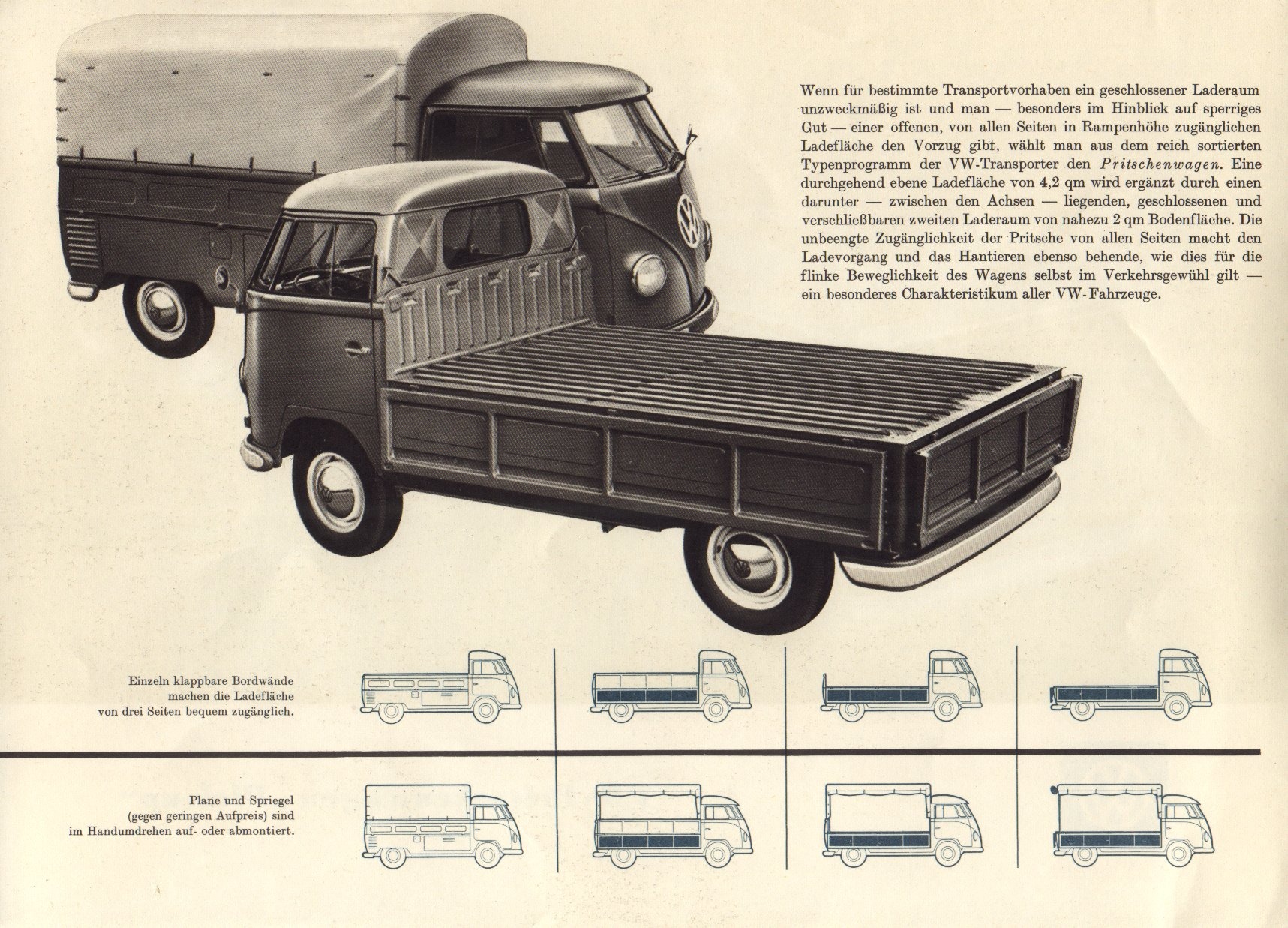
For 1961, General Motors launched van and pickup-truck versions of their new rear-engined Corvair compact. With an air-cooled flat six in back, it matched the basic layout of the Volkswagen. There was the “Greenbrier” window van …

… and a cargo van, as well as a pickup truck version available with a “rampside” door that flipped down on the side and let you simply roll your lawn mowers or what have you on or off of the Corvair pickup’s low load floor.
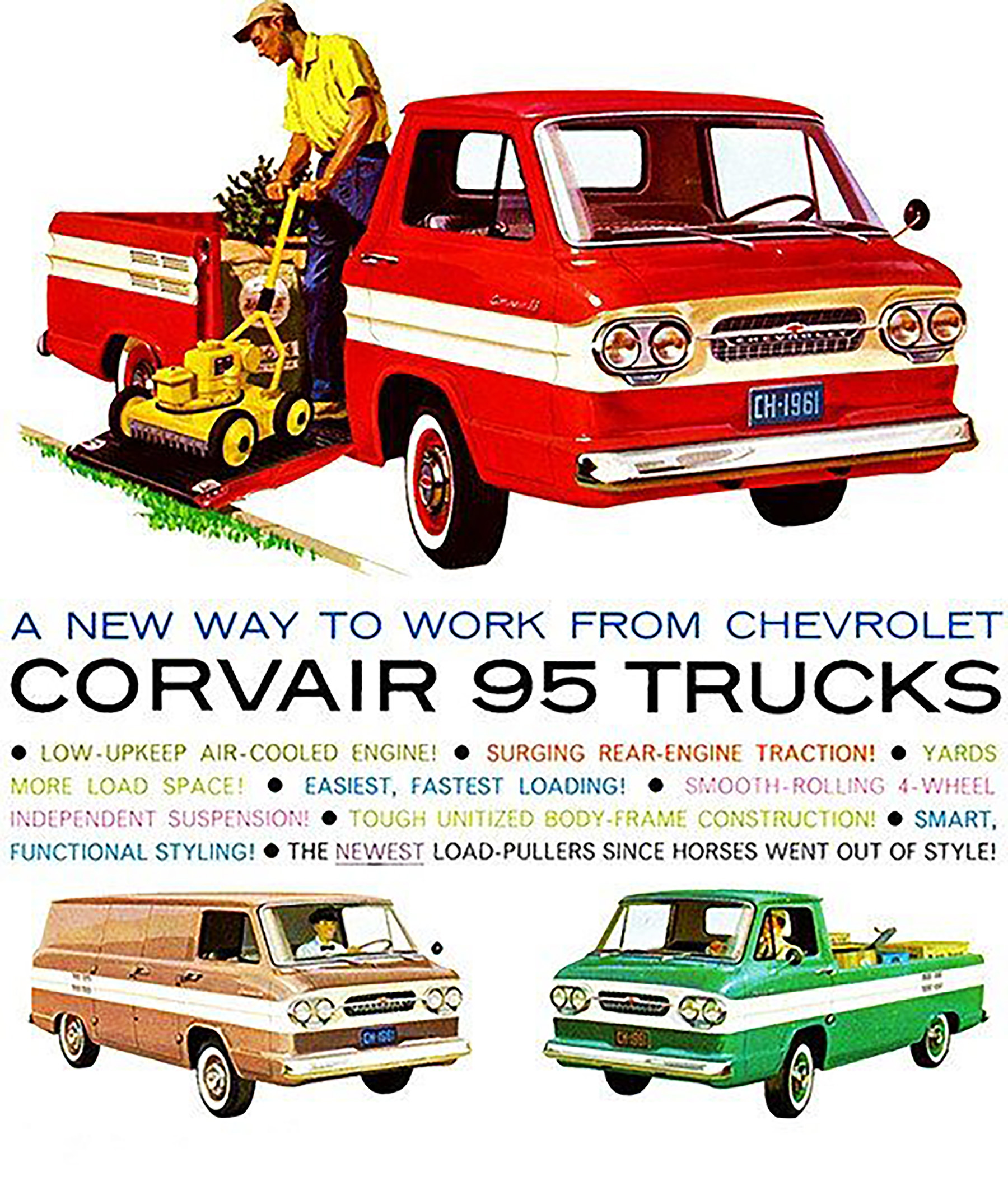
It was rather brilliant, but there was a problem; as with the VW, the engine’s placement required a large raised “box” at the back of the cargo area.

If you wanted a long, deep, and flat bed like a regular pickup truck, you couldn’t have it. Chevy provided the ability to install a deck to level off the surface, but the “bed” area was now highly elevated and not as deep as a “normal” truck.

I Bet It Didn’t Need Heated Seats
Like the Corvair vans, the ’61 Econoline was available in the same three flavors as the Corvair: cargo van, passenger van and pickup truck.
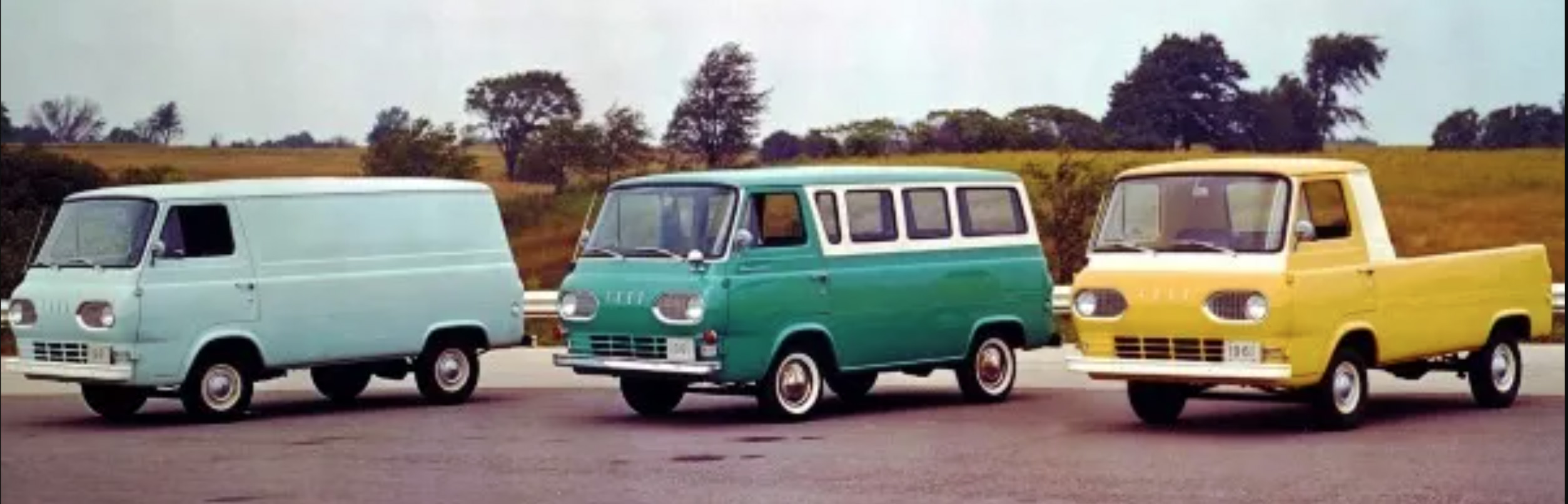
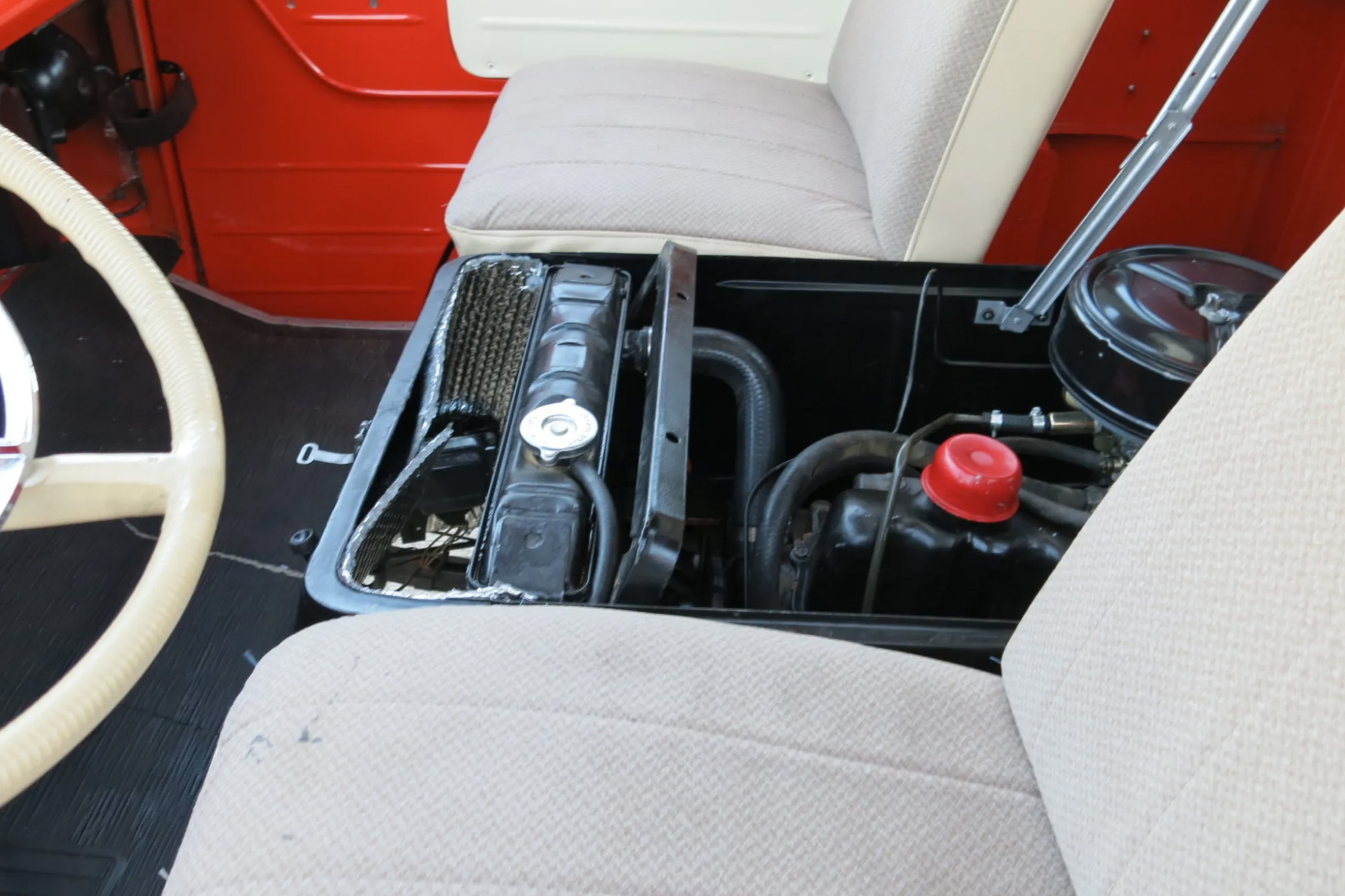
From the outside, Ford’s same-year entry into this anti-VW category looked very similar to the Corvair, but the Blue Oval took a different layout approach. Ford placed their existing inline six-cylinder motors right up front in a box between the driver and passenger seats, setting it slightly behind the front axle line, making it, in effect, a mid-engine vehicle. The radiator for the water-cooled mill sat in front of the motor in this box, fed air from below.

This placement certainly exposed passengers to more heat and noise than the rear-engine Corvair models. As CarLife magazine reported: “We didn’t like having the engine alongside us, for, despite a fiberglass hood that somewhat reduced heat and noise, we got a piston-in-the-ribs feeling.”
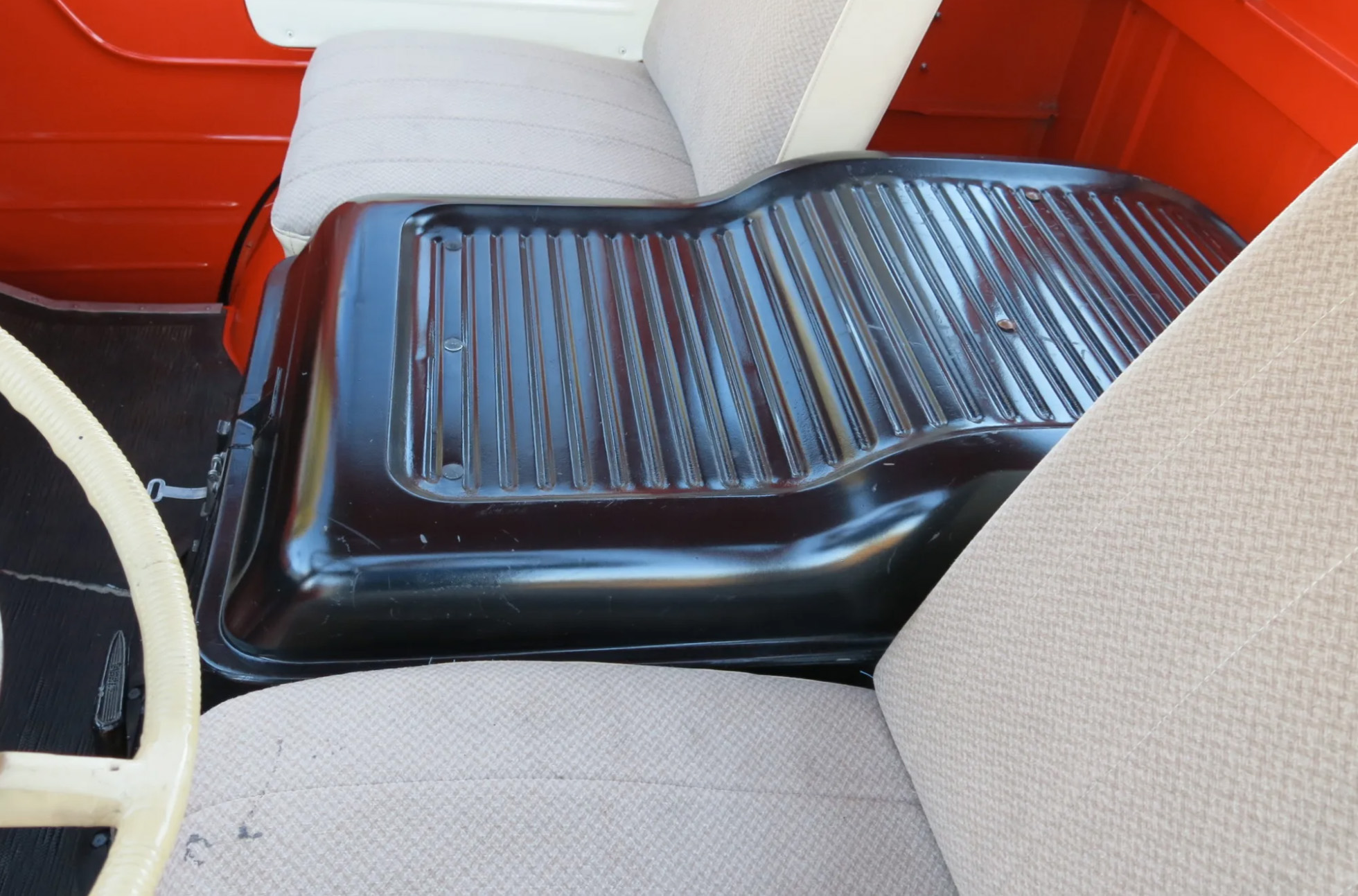
I believe it – the engine is absolutely right there:
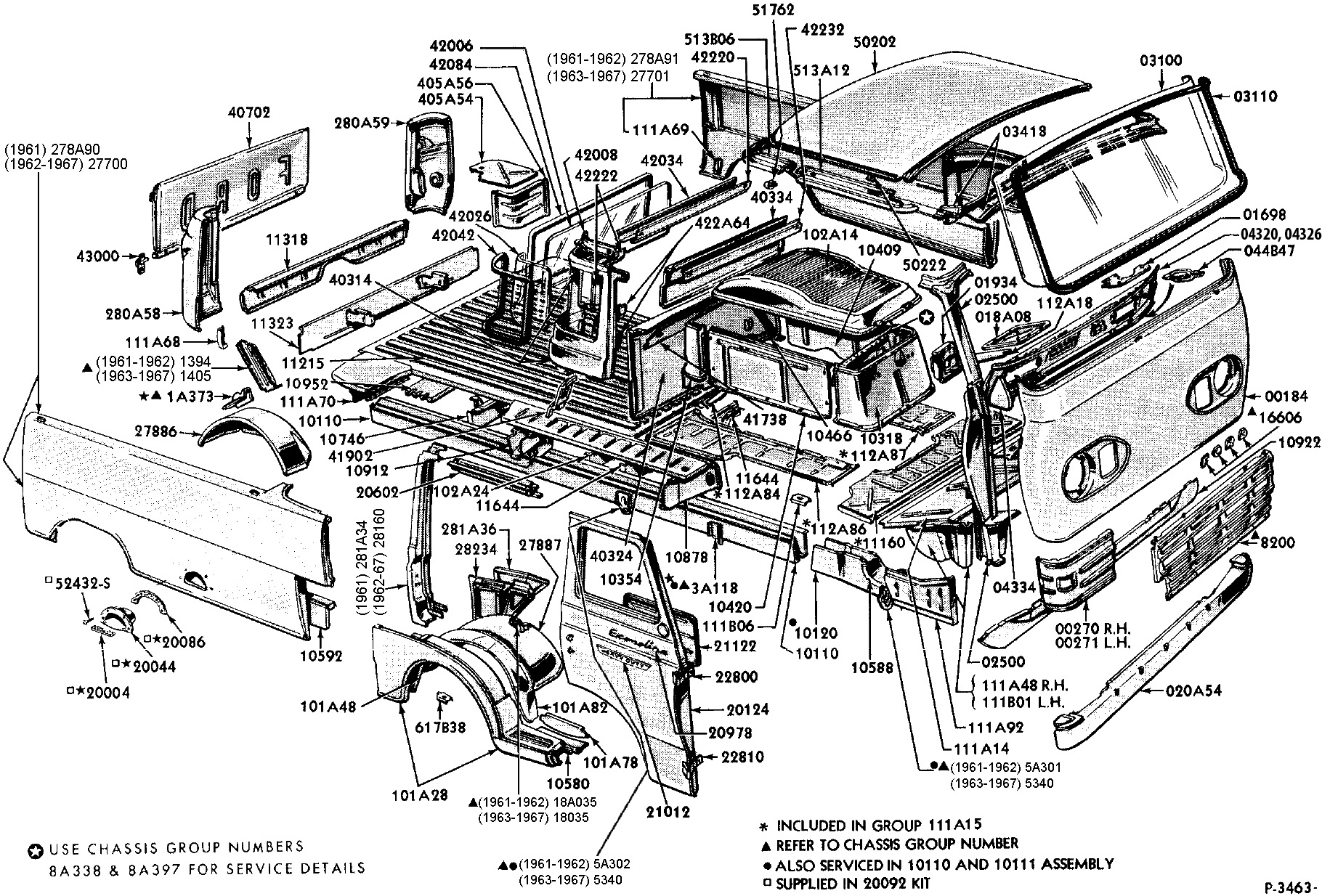
Still, if you (or the employees that you bought the Econoline van for) could tolerate this, here was a huge benefit: the rear load floor was flat from behind the seats all the way to the bumper. Better yet, it was level with that bumper and required minimal lift height. You can see the engine “doghouse” below in the exploded view and how there’s basically nothing to the rear of it.
A little Jason-style trivia: see those grilles next to the famous, very “human-looking” Econoline “eyes”?
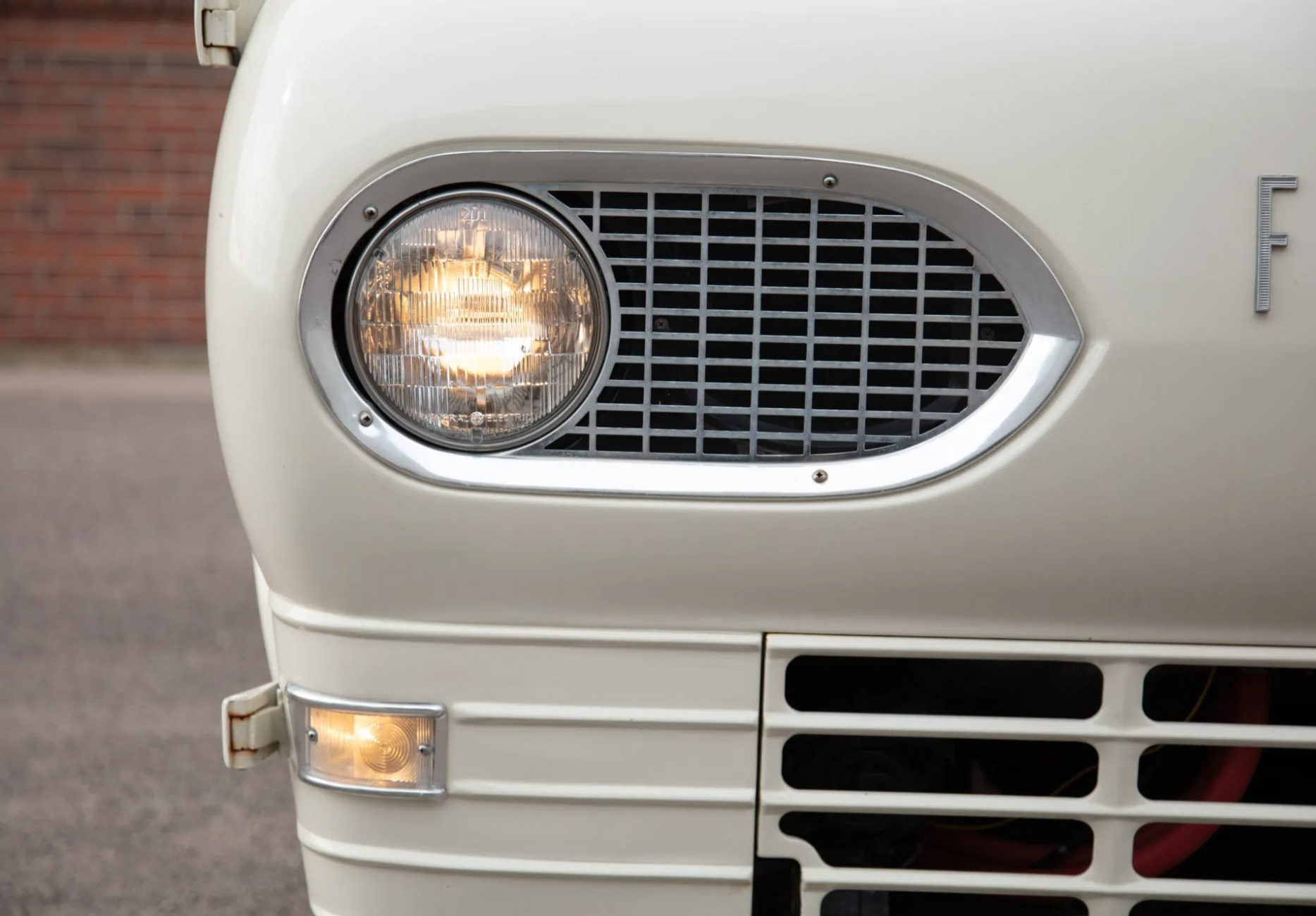
Those grilles were intakes for the HVAC system, namely the optional heater on the passenger’s side:
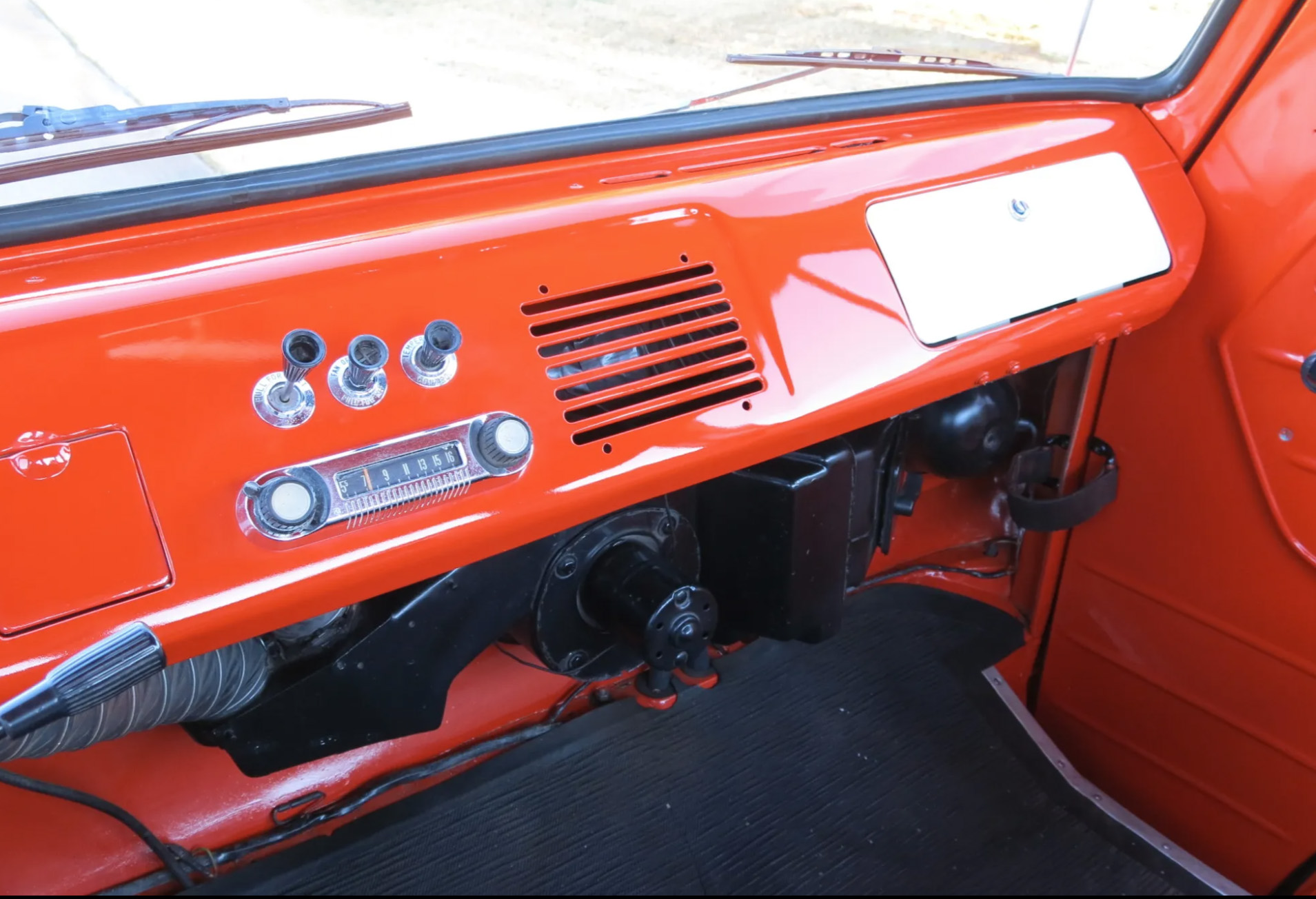
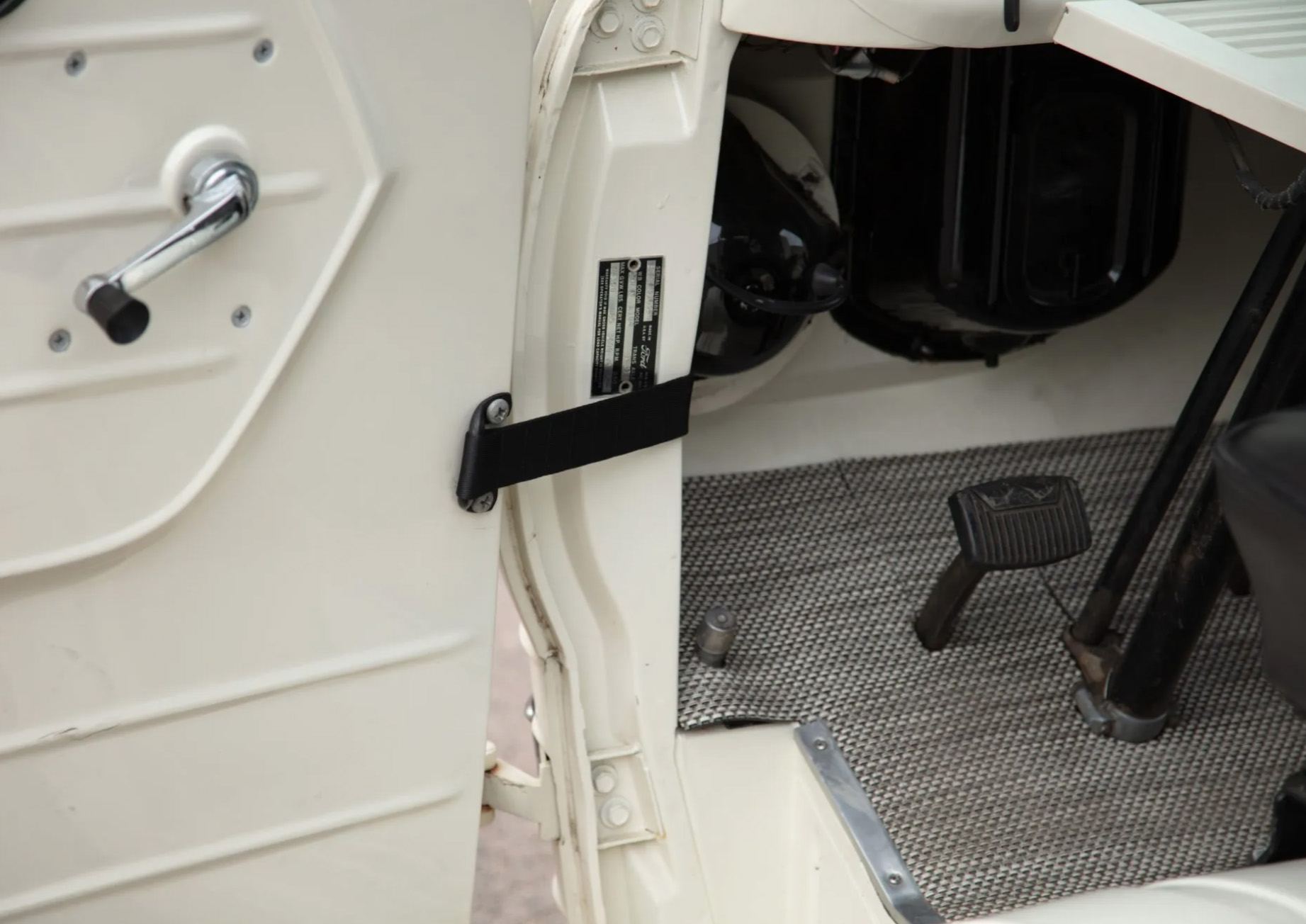
Or, on the driver’s side, you opened a little door on the back of that black box ahead of the pedals, and cool air would just blast in from the grille next to the driver’s side headlamp. You could certainly use that ventilation, as air conditioning was not initially offered.
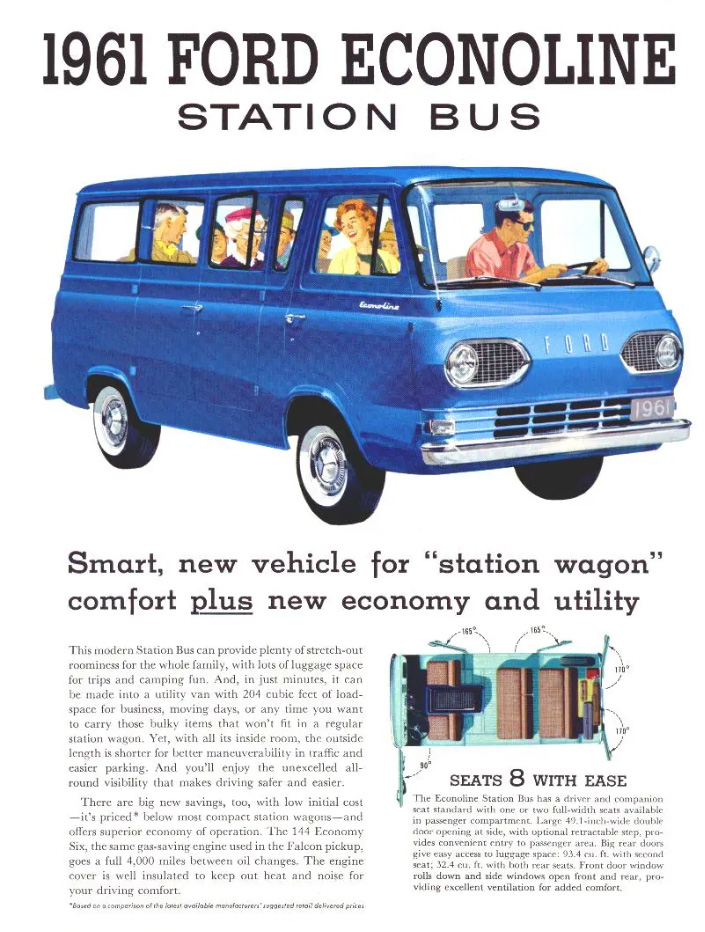
The cargo van had no windows in back, while the so-called “Station Van” was a minivan about a quarter century too early to resonate with buyers.
Still, it was the pickup truck that Ford had the highest hopes for. With nearly seven feet of bed behind the cab despite a bumper-to-bumper length some three feet shorter than pickups with beds that size, the Econoline was a practical alternative larger trucks.
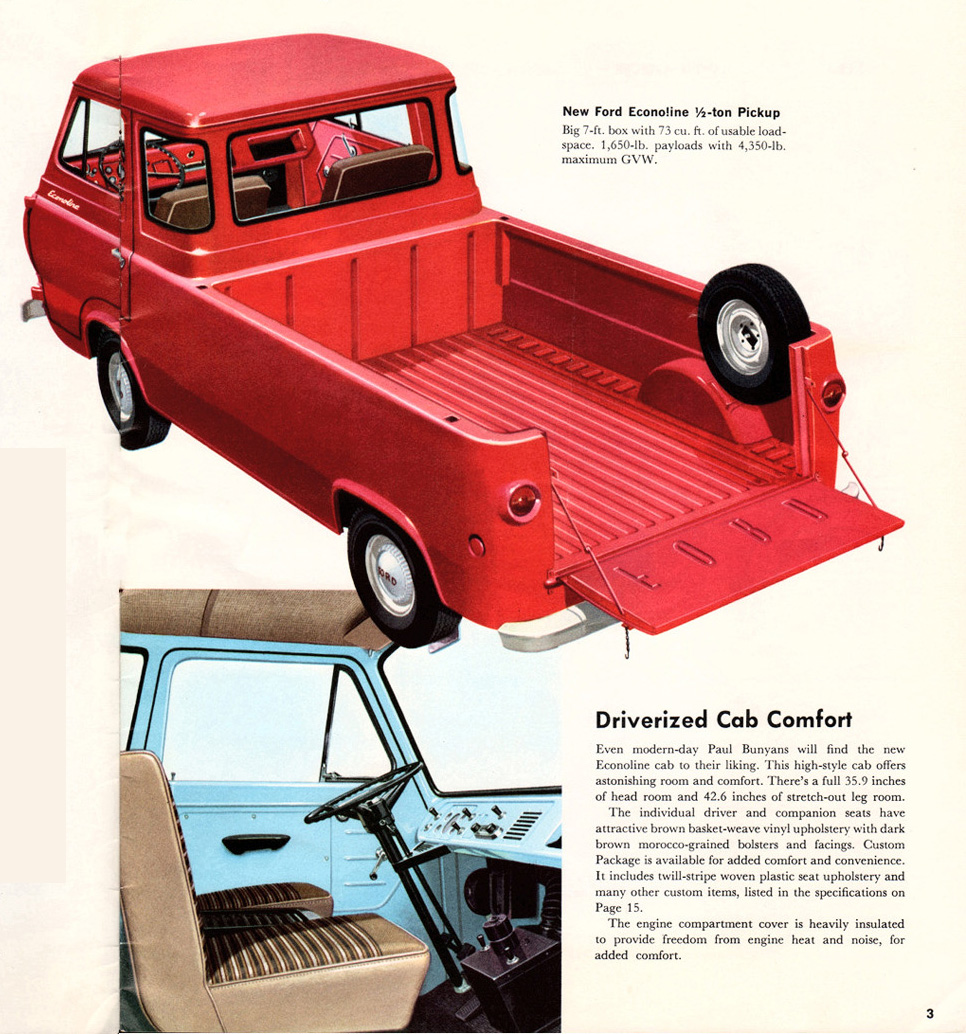
Reportedly, Dearborn thought the open-backed variant would easily be the best-selling version of all the Econolines. Remember what I said about Ford’s marketing not being right all the time?
Pickup Buyers Want A Bonnet
Ultimately, the van version of the Econoline proved to be far more popular than the pickup truck. In fact, it wasn’t even close; sales figures over the span of this first Econoline show that Ford sold almost nine times as many vans than pickups.
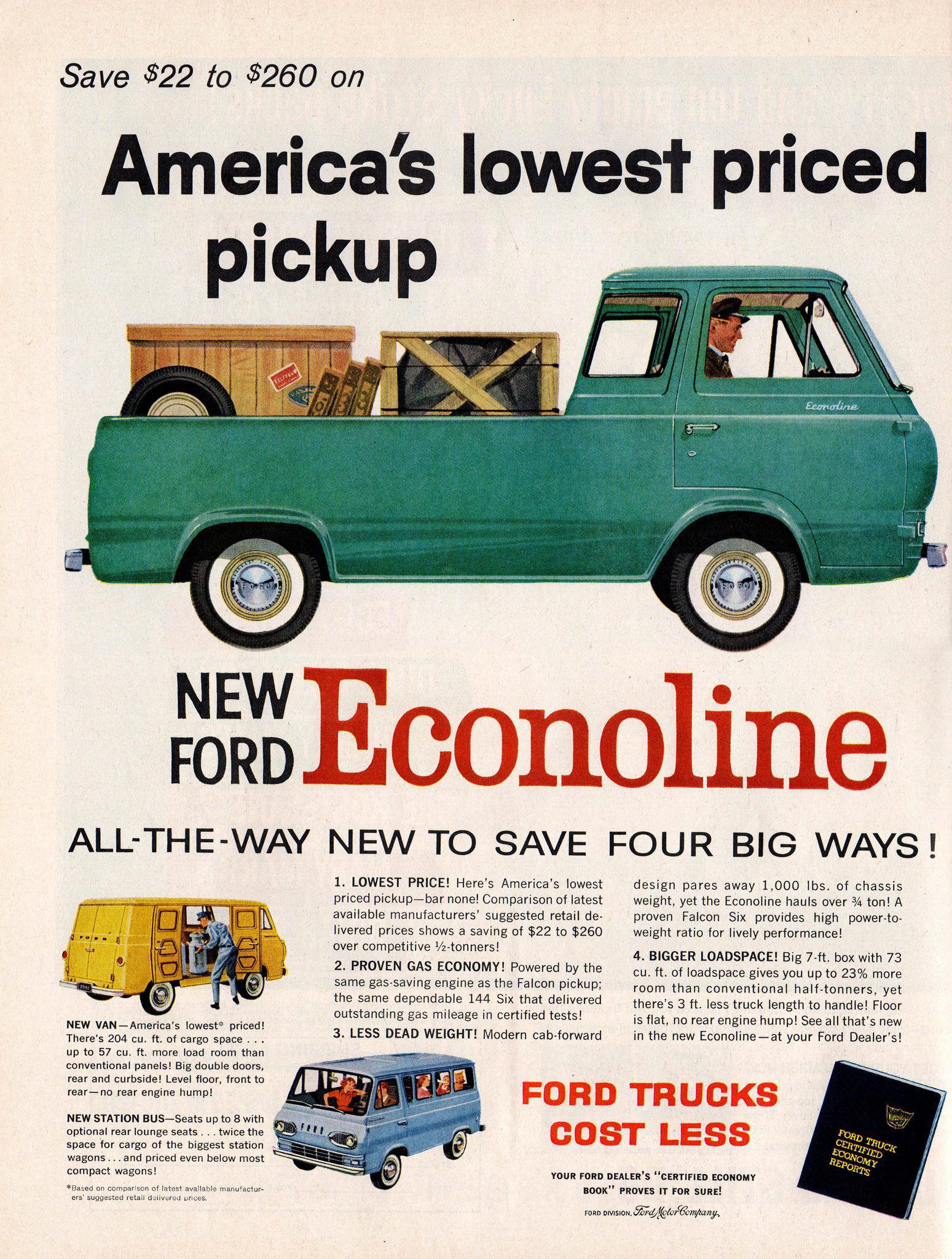
Why did it fail to find buyers? That’s difficult to understand; maybe it was that pickup buyers in general still wanted their traditional products and not some oddly-shaped and strangely proportioned open shoe box, regardless of the great turning circle and visibility described below:
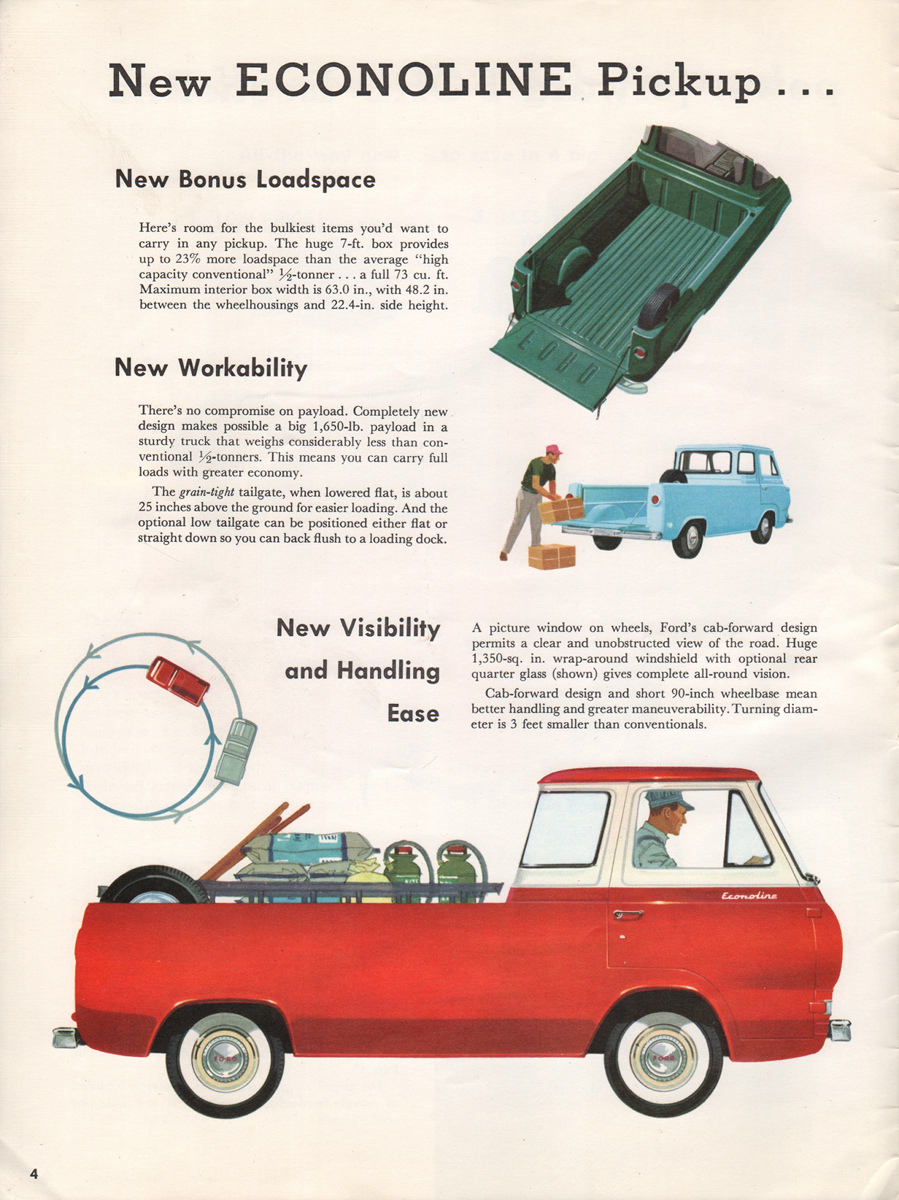
If it was any comfort to Ford, they at least did better than GM; the pickup variants of the Corvair van only 13,600 units in 1961, and then less than 4,500 a year. Volkswagen bus-based pickups ultimately basically disappeared from America after the 1964 “Chicken Tax,” a retaliatory 25 percent tariff on imported pickups after Germany tried to tariff our cheap American chicken. How dare they!
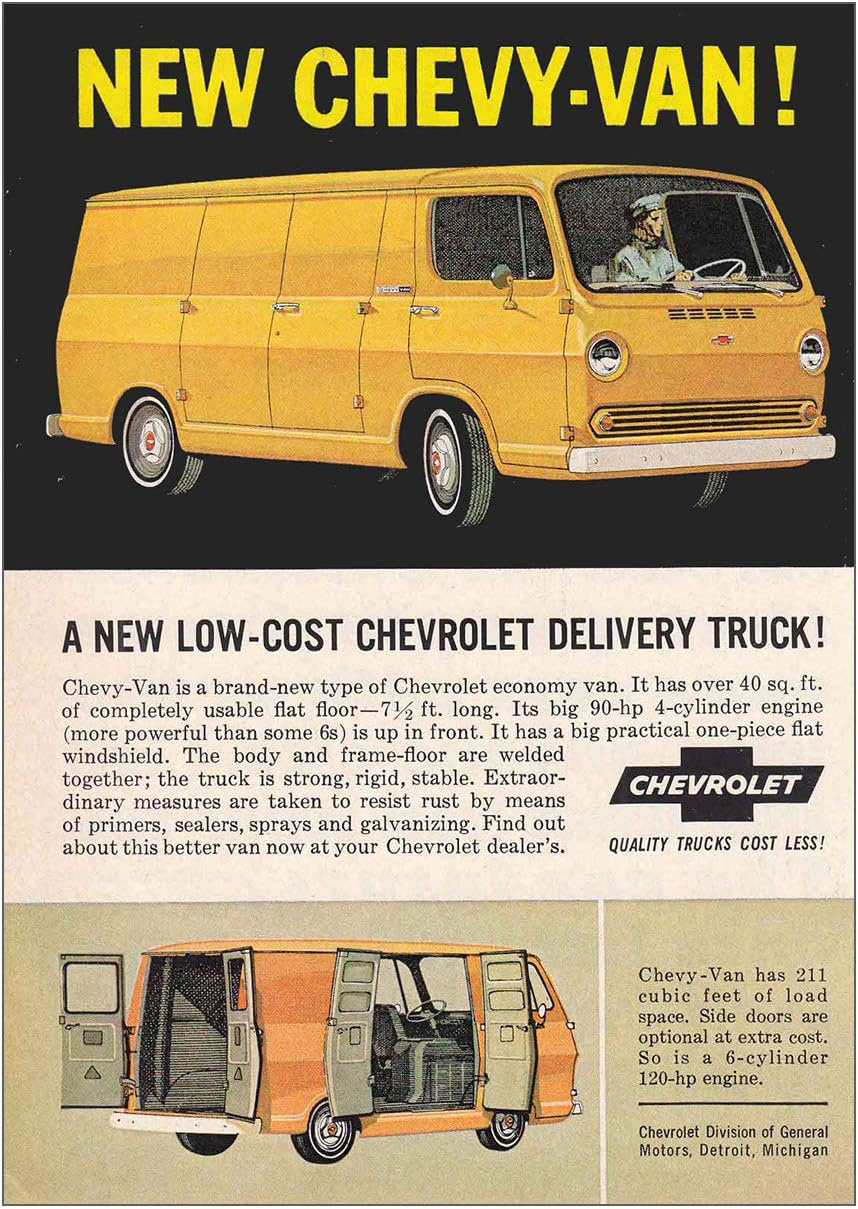
For 1964, Chevrolet admitted defeat, threw in the towel on the Corvair, and copied the Econoline’s engine layout for their new vans; this time around, they didn’t even bother with a pickup truck version at all.
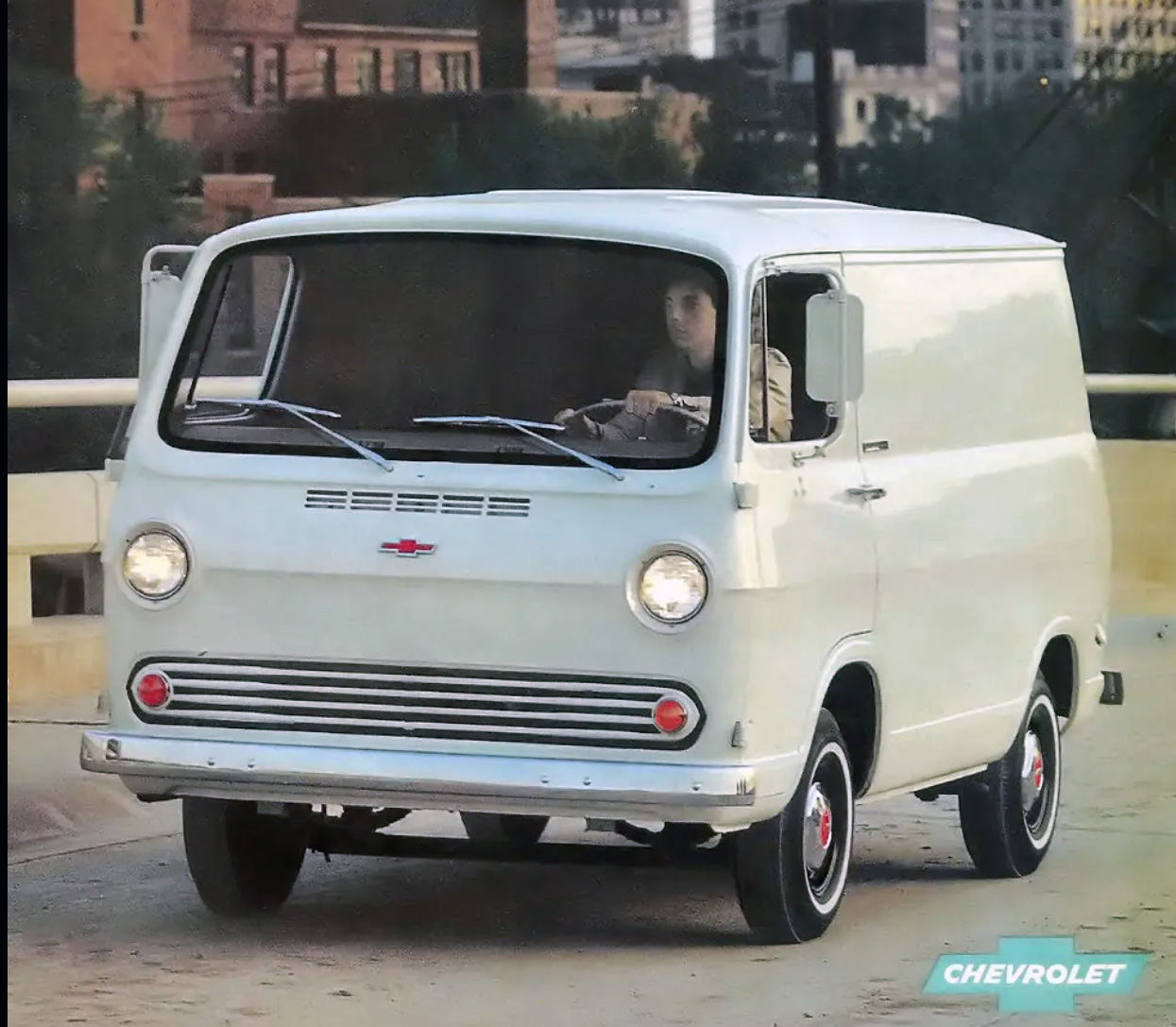
Is it just me or does that thing not look like Scooby Doo is about to hop out of it? And why did it take me so long to realize that Shaggy’s voice was the same as one that told me that Billy Squire was moving up three notches on the countdown this week?
That same year, Dodge launched a veritable clone of the Econoline as well, the “big eye” A-100 van with a Leaning Tower Of Power between the front seats. Surprisingly, despite the poor reception of the Ford Econoline pickup, Mopar offered a similar body style version of their new van as well (yes, I know: this is the one used for the infamous, absurd wheelstanding “Little Red Truck” and the Dodge Diora show vehicle).
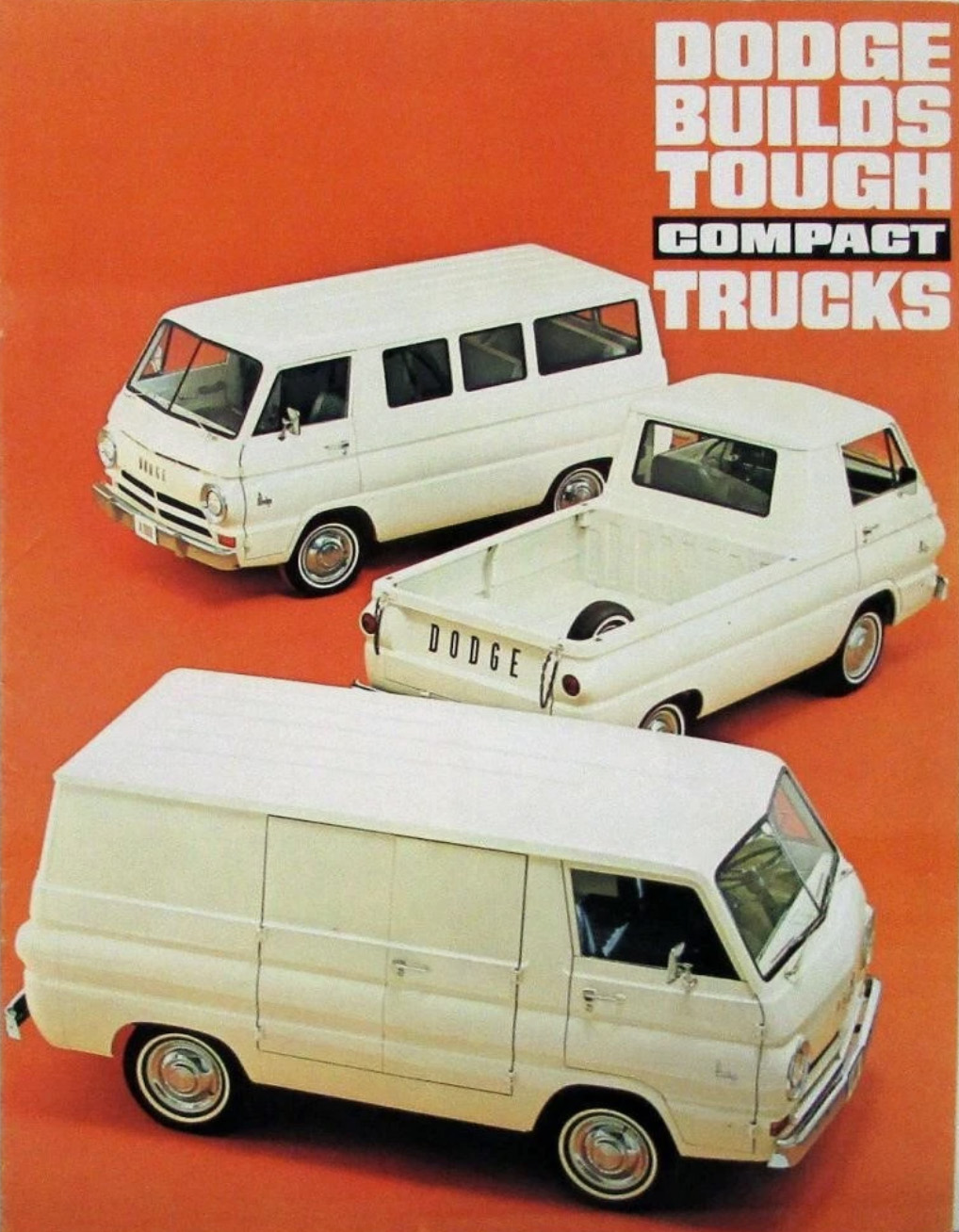
It seems odd that Dodge would do that, considering that Ford’s little pickup really didn’t do that much better than the poor-selling Corvair.
- 1961: 14,893 total (11,893 standard + 3,000 custom)
- 1962: 8,140 total
- 1963: 11,394 total (10,372 standard + 1,022 custom)
- 1964: 5,184 total (4,196 standard + 988 custom)
- 1966–1967: Less than 3,000 per year
Today, that rarity and hard use as work machines make Econoline pickups thin on the ground; that doesn’t mean there aren’t any examples out there.
Less Than A New Maverick At Least
This particular example of a ’62 was listed on Bring A Trailer not long ago. It’s remarkably stock (with the exception of the deleted bumpers):

If you look at a base model of any pickup today it’s shocking to see how utilitarian Ford was willing to make products sixty years ago.

I believe that those are (non “Pony” interior) Mustang seats the owner added, since they look a bit too fancy for this work machine.
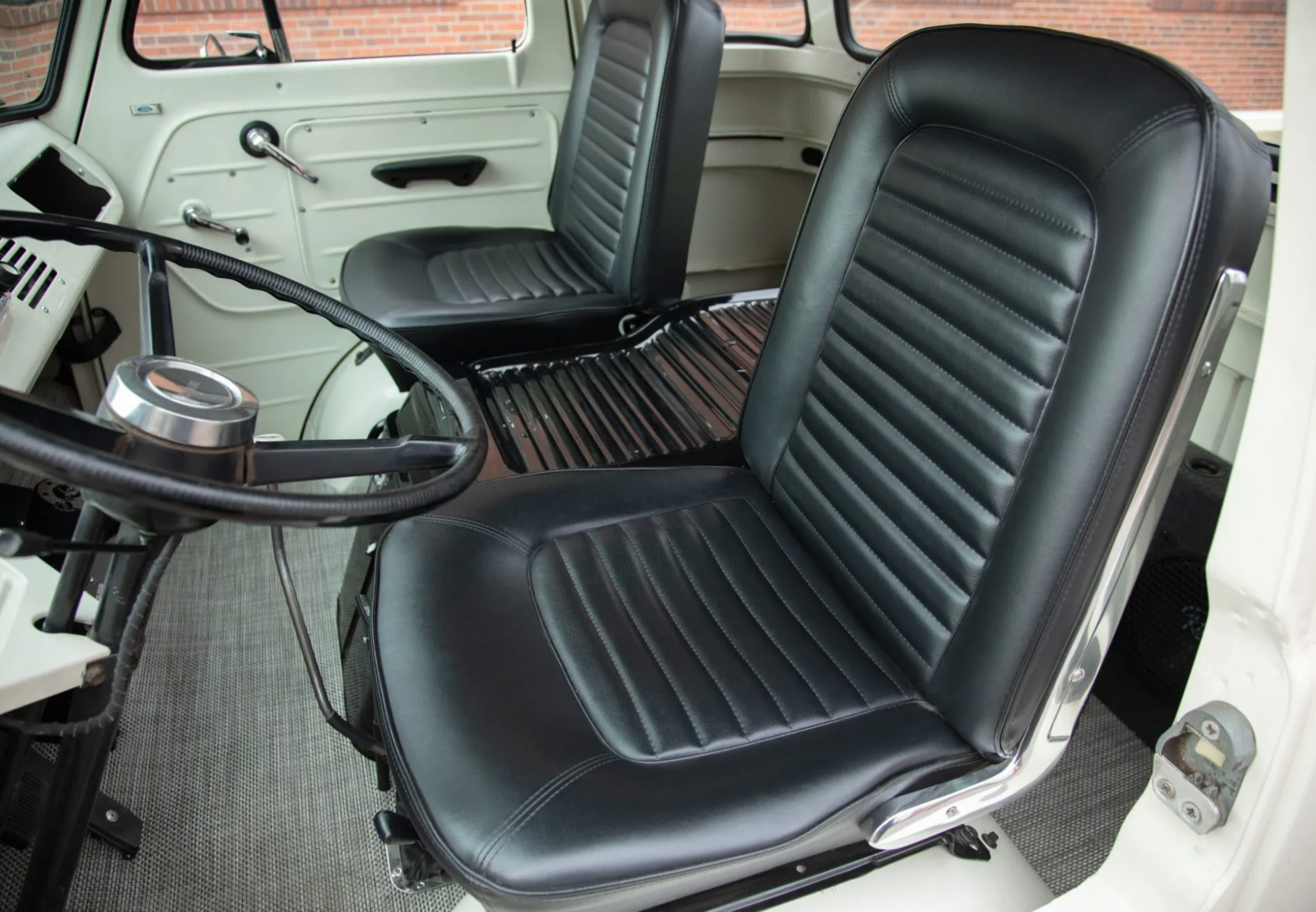
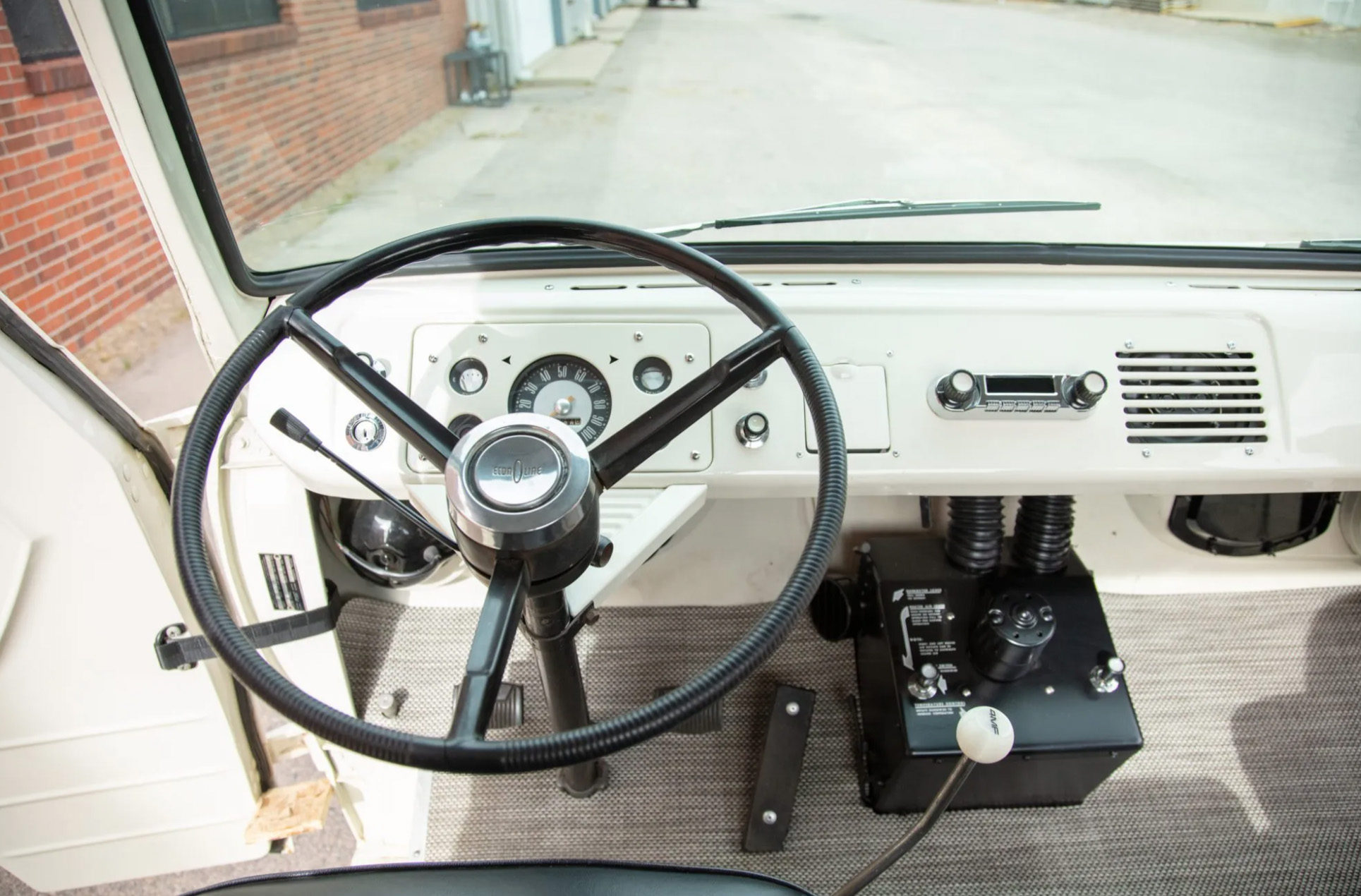
Early models like this had a very tacked-on heater:
Check out how much room there is behind the front seats; it’s almost a King Cab. Unlike Chevy’s Corvair, which put the spare tire here, Ford put the tire out at the back of the bed.
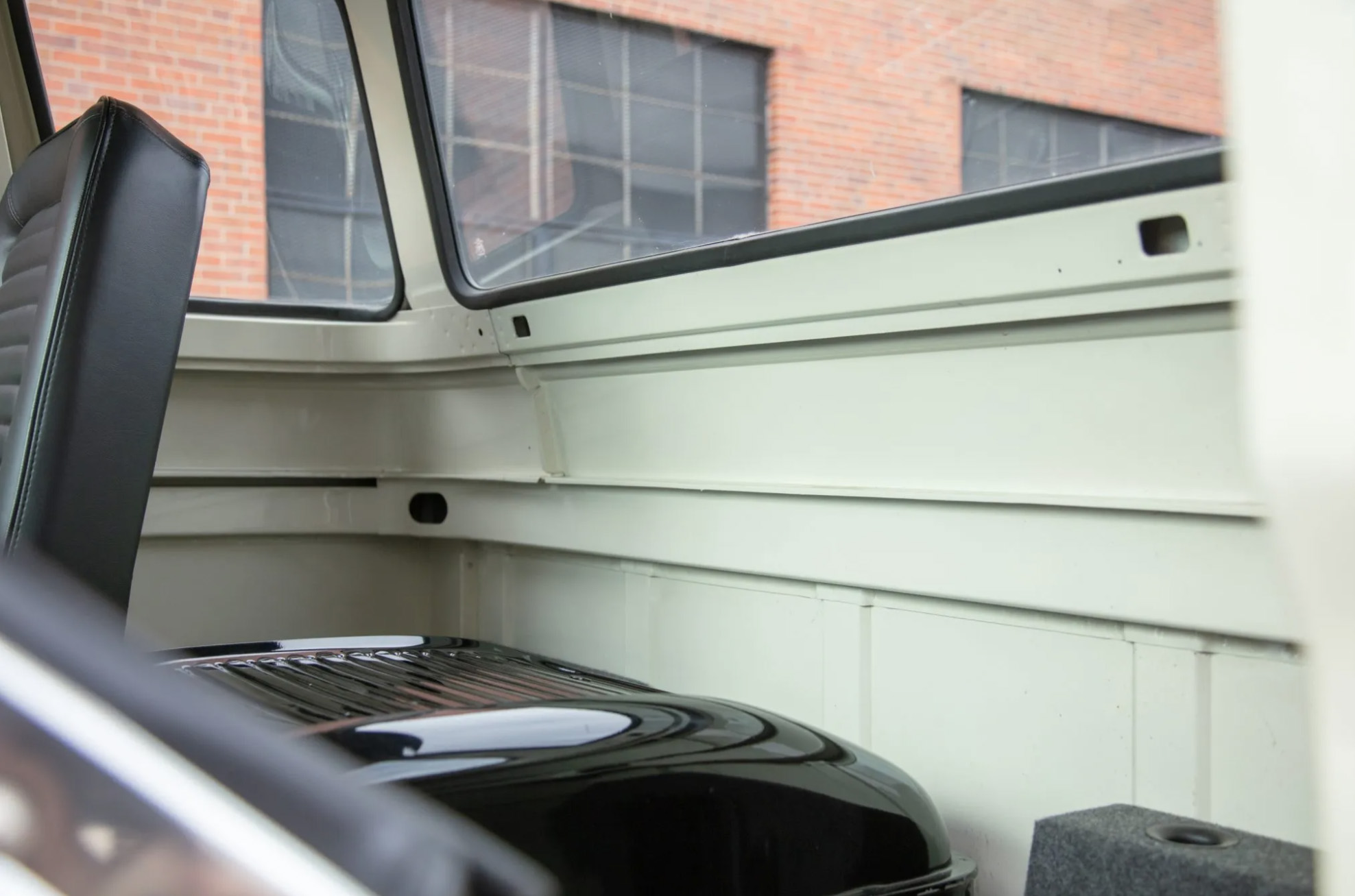
You still get seven feet of totally flat cargo bed in back (though some later models had a bell housing bulge near the cab back wall). The spare tire is missing, but the bracket is there:
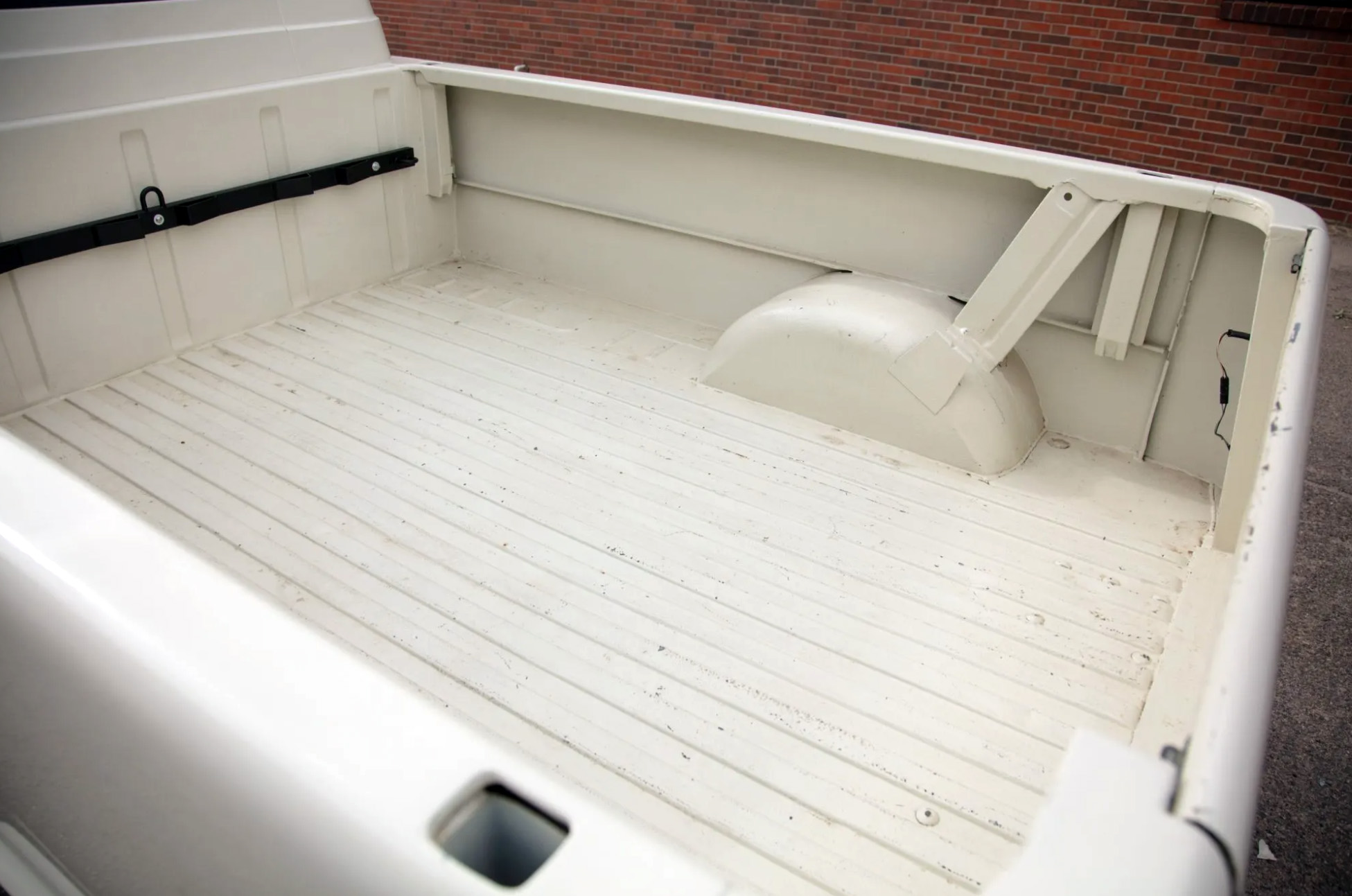
How much? This one went for $18,000, which is about the going rate for decent condition ones. Super-clean or professionally modified ones (particularly with V8s that will actually fit in the doghouse) can go for more, but you’d be hard pressed to restore a beat-up example for less than these asking prices. You’d also have to look hard for a more unique and usable classic to draw attention to your business, as long as 80 mile an hour highway runs in 95-degree weather aren’t on your agenda.
A Better Idea From Ford
For 1968, Ford changed the van game again with a new Econoline that moved the engine further forward and got the radiator under a short, conventional hood to give the passengers a little more comfort and to move the driver and front passenger further back from the front. “Cabover” style vans would disappear as safety concerns grew. The other Big Three would follow suit with their vans during the seventies; the current Chevy Express and GMC Savanna still follow this formula.
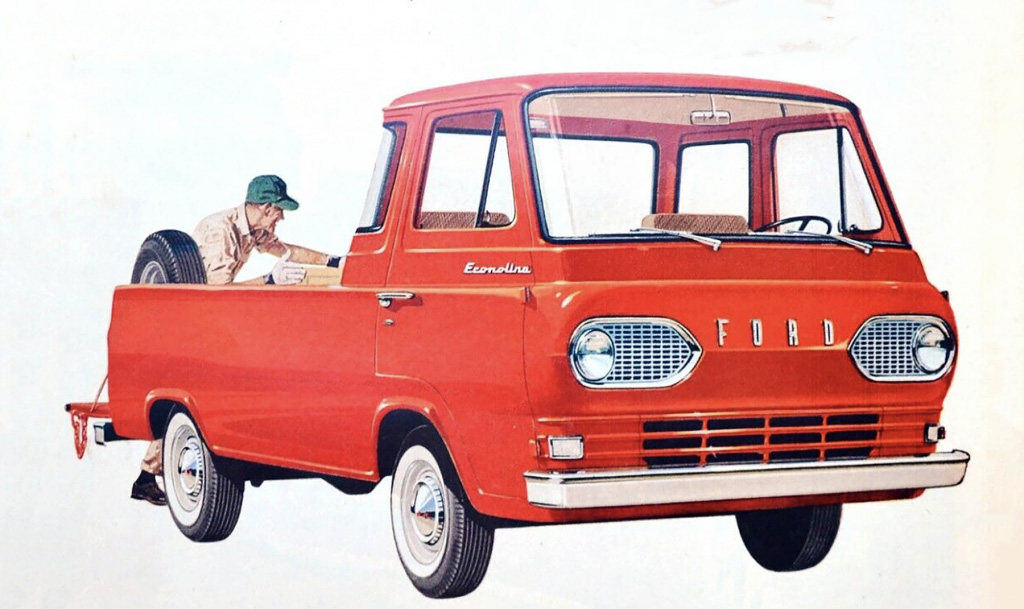
Still, the “van pickup” idea never came back, other than geniuses who sawed the back roofs off of their old Caravans. Maybe they’re onto something; Ford certainly thought buyers would like the idea of a pickup truck that wasn’t much longer than the usable bed, but it turned out to be a great idea whose time never came.
Top graphic image: Ford


Probably works better than a cabunder design. I doubt anyone could design one of those to look good.
“The grain-tight tailgate, when lowered flat, is about 25″ above the ground for easier loading.” What is the tailgate and load floor height for today’s Maverick or F150? For rear of the Corvair van?
It is possible to have decent NVH in a forward control van . A 90s HiAce has a big 4 cylinder diesel between the seats and no more noise than my F150. I’ve never been in this generation Econoline but as a kid I was fascinated by the engine in a Dodge A100 passenger van. The Dodge Little Red Wagon was ironic since it was a wheelie car based on a design notorious for stoppies. It also had the engine relocated to the middle of the bed
The bishop never drove one of these. As the story does state, it was noisy and there was a lot of vibration, You hear a lot of the engine noises that you don’t hear in a conventional truck, and the engine ‘doghouse’ gasket was ill-fitting after a while. The driving experience, with the front wheels under your seat, was odd. It served to remind you not to crash into anything. On the other hand, you could adjust the timing and carburetor as you drove!
The van version of this vehicle was even worse for NVH, the steel panels lacked any sound deadening and would boom the whole trip and resonate every engine noise.
The quality of the gaskets and castings in those days meant that you were often being gassed as you went down the road.
The weight over the rear wheels in a sudden stop that you might want to make in order to keep the use of your legs was very little, so Ford added a 165 pound weight back there! A lot of people took that weight out to increase the payload capacity. You could do a stoppie. Also, seriously dangerous in the snow.
The price of an F100 was not that much more than the econoline pickup and that had a lot to do with the poor sales of this model.
Now we just import old kei trucks
Surprised there is no mention of the Jeep FC.
Am I the only one that loves the supremely functional but almost jaunty spare tire placement? I hope the van has it in the same place, just covered by the roof.
Spare tire also serves as jounce stop for a 1/2 somersault stoppie.
Great article, I think that pickup version looks fantastic.
Unrelated, did you guys do something recently to your site infrastructure? Browsing here suddenly makes my iPad heat up like a car connected iPhone running Waze, Spotify and 17 other apps on a summer day.
I previously had you guys whitelisted on my adblocker because it seemed like the right thing to do, but I had to reinstate it so my iPad doesn’t melt through the earth’s crust… and it’s this site, not happening elsewhere.
It’s the new ad system, it’s not just you.
Ford also made an 8-door version of the van. I found one for sale with a 300 straight six that tempted me so…
Today’s equivalent would be the ridgeline…
My family had a 1964 Falcon Deluxe Club Wagon passenger van version of the Econoline (deluxe meaning high-end accoutrements like the choice of literally one exterior color – Viking blue! – plus exotic features including windows, door cards, sun visors, hubcaps, and chrome bumpers). Just so much deluxeness!
Ours had the centrally-located heater described as “tacked-on,” but I think this is the normal heater location. The right-side version shown may have been some kind of heavy duty option. We also had those headlight-adjacent vents on both sides: they aren’t significantly screened so any bugs you drive through will be yeeted right into your body or face. Fun times when it’s a bee.
We did take some memorable family vacations in its roomy boxiness and nobody died, despite a front crumple zone consisting entirely of passengers’ legs.
My 1964 Ford Falcon Club Wagon was Turquoise! It also came with a retracting step that opened with the side doors. I was a hit in college in Wisconsin, always up for a package store run or a RHPS road trip!
I remember that retracting step. Ours was white, but my dad painted it two tone in the early 80’s. It had a 170, and chronically ate water pumps. I remember the license plate. Black with yellow writing (California in the 60’s). ZTD 208.
Why did Dodge build an A100 pickup? My bet is that it had to do with the fact that Ford and Chevy were offering a subcompact pickup, in the Ranchero and El Camino. Dodge needed to have something on offer in the “sub half-ton” range. If they chose not to build a coupe utility, the A100 was the next best thing.
Was the pickup version ever sold as a Falcon like the vans were?
From 1960-1965 Ford sold a pickup (ute) version of the Falcon – the Falcon Ranchero.
https://en.wikipedia.org/wiki/Ford_Ranchero#Second_generation_(1960%E2%80%931965)_Falcon_Ranchero