

Back in 2021, Congress passed the Infrastructure Investment and Jobs Act, and with it, granted the Environmental Protection Agency (EPA) $5 billion over the course of five years to help school districts across the country switch from inefficient diesel buses to all-electric models.
Called the Clean School Bus (CSB) program, it’s unlocked significant progress in the world of electric school busing since funds were first made available in 2022. According to the World Resources Institute, the number of electric school buses on the road in the United States has gone from a measly 415 vehicles in 2020 to over 5,100 buses in 2025, a 12x increase. The research firm estimates that more than 265,000 kids ride electric buses to school each day, up from just 21,000 five years ago.


On the whole, electric school buses are a pivot that makes sense. As my colleague Mercedes Streeter pointed out back in 2022, electric buses provide more than enough range for the average 31.73 miles they have to drive each shift, while delivering a quieter ride and spewing harmful emissions that could impact the health of the children riding aboard.
Now, in the final year of the CSB program’s funding, the EPA has announced plans to “revamp” its approach to “ensure the best use of taxpayer dollars.” Specifically, the agency is looking for public feedback as to whether buses powered by other types of fuel, such as compressed natural gas, liquified natural gas, and hydrogen, might be better suited for some school districts’ needs.
Things Didn’t Go Well For One Brand
In its announcement, the EPA made a point to call out one specific manufacturer as the driving force behind this decision.
Since 2021, the Biden-era program has forced unsafe and unreliable electric buses onto American schools. There are multiple well-documented examples of one particular bus manufacturer failing to deliver buses altogether despite preemptively receiving tens of millions of tax dollars from the CSB program. To fix these issues, the Trump EPA will seek public input on the availability, cost, and performance of alternative school bus fuels and technologies. This feedback will help reform the program to bring consumer choice back to schools and deliver results for American families, while still fulfilling congressional intent.
“As was the case with so many of the Biden-era programs, the Clean School Bus program has been a disaster of poor management and wasteful spending of taxpayer dollars. At the Trump EPA, we have zero tolerance for reckless spending. Today, EPA takes the next step to set the program straight,” said EPA Administrator Zeldin. “Americans can rest assured that moving forward, the program will be safe, effective, and use reliable forms of American energy.”

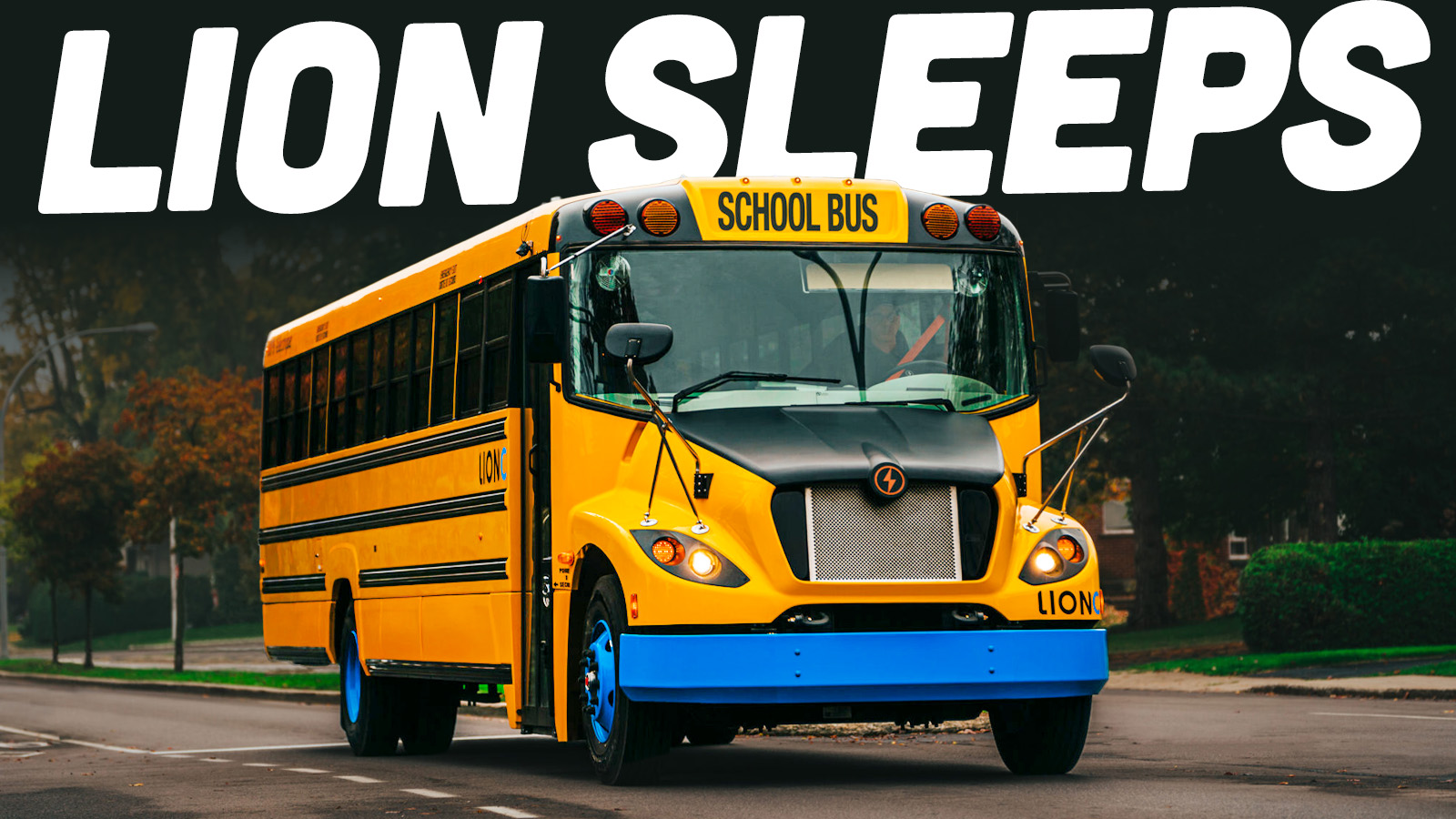
The “one particular bus manufacturer” the EPA is talking about here is Lion Electric, a Canada-based company that sold roughly 3,400 battery-powered buses in the United States, including an estimated 1,600 school buses, before going bankrupt last year, according to Politico. According to CleanTrucking.com, many of these school buses were purchased using the CSB’s funding. The EPA says Lion received a total of $160 million from the program.
A 2025 letter published by Deloitte, the accounting firm responsible for handling Lion’s bankruptcy proceedings, said that as a result of the bankruptcy, “all warranties and purchase orders that you could have with the Lion Group are therefore not being legally assumed by the company post transaction.” In layman’s terms, that means all warranties for the buses already sold were declared null and void, save for those operating in Lion’s home province of Quebec.
Each of these school buses costs around $325,000, according to CleanTrucking.com. The publication spoke with two school districts back in June to inquire about the status of the buses, and found them having to idle their Lion buses due to technical problems that couldn’t be solved due to a lack of adequate support from the brand:
“All four Lion buses that we own are currently parked and not being used,” explained Coleen Souza, assistant to the superintendent and interim transportation director of Winthrop Public Schools in Winthrop, Maine.
“Two of them are in need of repairs which would cost us money which we are not willing to invest in because the buses do not run for more than a month before needing more repairs.”
The district is reinstating some of its older diesel buses to take the place of the Lion EVs.
It wasn’t just technical problems that had administrators stressed. A superintendent of a Midwest school district who wanted to remain anonymous brought up numerous safety issues, too:
This district did not experience any charging issues but “There were random error codes that came up. The usual fix was to stop the bus, get out, and reset the bus from the outside by flipping a switch. It was basically like rebooting a computer. But the problem is actually having to exit the bus.”
That’s a clear safety concern when the bus is packed with students. Furthermore, the buses lost power while driving on the highway, leading to a loss of steering and braking ability.
“We had to manhandle them to the side of the road. There was little clue from Lion about what was going on. The only input we got was ‘it might be user error.’ We thought we were an isolated case. We’re not. Other districts have experienced the same problems.”
When a normal car loses power steering and braking, it’s an incredibly scary, dangerous situation. Trust me, I’ve experienced it myself. And if you have, too, you’ll know just how little control you actually have at highway speeds. If it happens to a school bus full of children, that’s definitely way worse.
To me, this feels like one of those situations where one faltering brand is spoiling the tech’s reputation. Electric buses may be expensive, but they address several real issues related to emissions, noise pollution, and maintenance costs. Nonetheless, the EPA believes incidents like those mentioned above are serious enough to warrant a revamp of its funding, giving school districts a choice in the type of power their buses use, rather than being forced into battery propulsion.
If Not Electric, Then What?
Should funding from the EPA open up school districts to spend funds elsewhere, buses powered by stuff like natural gas, biofuels, and hydrogen could start showing up to pick up your kid from the bus stop in the near future. Chances are, if you’ve ridden a bus after 2020, it was more likely powered by something that wasn’t diesel fuel.
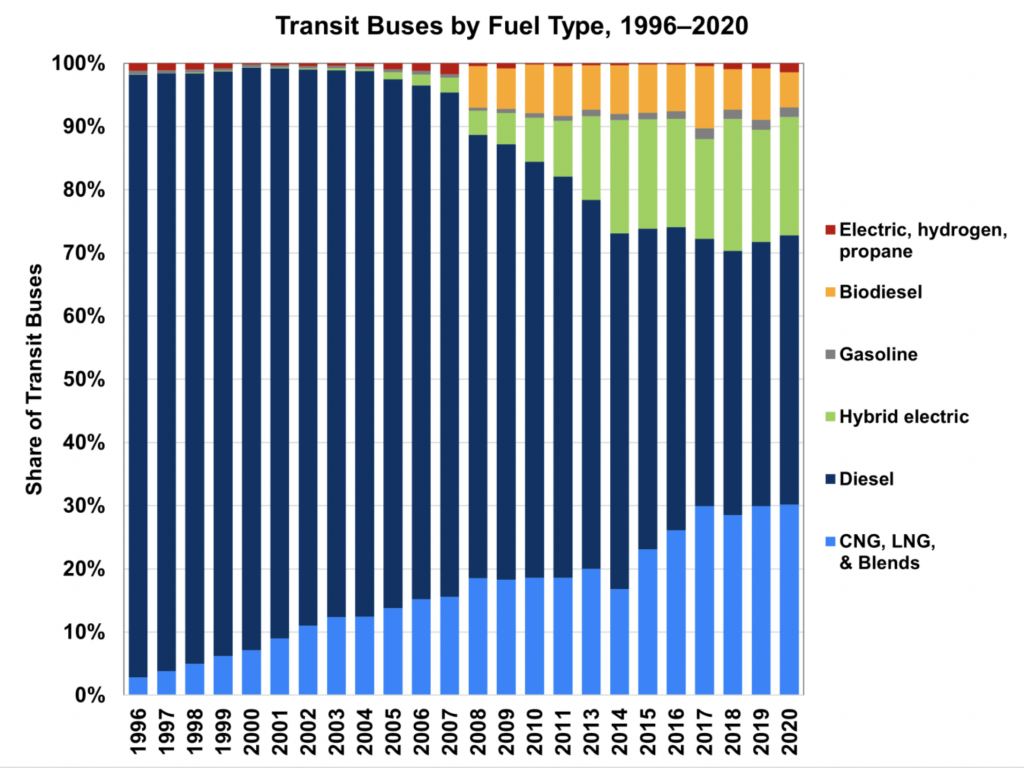
The chart published above comes from the Department of Energy and shows the share of transit buses powered by diesel, natural gas, biofuels, conventional gasoline, electric, hydrogen, propane, and hybrid electric. From 1996 to 2020, diesel steadily lost ground in the segment, going from 95.4% of the market share to just 42.7%. That space was taken by natural gas and hybrid buses instead, with those power sources making up 30.2% and 18.8% of the market as of 2020, respectively.
While the demand for buses with power sources like biofuels, hybrid setups, and conventional gasoline has remained steady over the last seven years of that chart, buses that use natural gas, whether in its compressed gaseous state or in its liquid state, have proven increasingly popular for fleets in the U.S. due to their lower cost and emissions compared to diesel.
Against electric buses, those powered by natural gas also deliver a far lower up-front cost, being priced $25,000 to $50,000 more than a diesel bus on average, according to the Department of Energy (versus electric buses, which are two or three times more expensive than diesel buses, and hybrid buses, which lie somewhere in the middle between diesels and EVs). 25 grand might still sound like a significant chunk of change, until you realize natural gas can net fuel savings of $200,000 over the 12-year life of a transit bus compared to diesel, according to the Greater Cleveland Regional Transit Authority.
And while natural gas produces emissions, it produces fewer emissions than an equivalent diesel bus. The net benefit of an engine powered by natural gas is 13% to 18% less CO2 compared to an engine running on diesel fuel, according to the North American Council for Freight Efficiency.
The likely result of all of this is that natural gas will continue its march to slowly take over the transit bus segment in America, albeit at a slightly quicker rate than if the EPA hadn’t stepped in to change its funding policies. As for electric buses, it feels like they’ll probably go on the same path as the passenger car EV segment right now, in that sales will mostly remain flat for the next few years, until a new administration takes office and changes things again.
Top graphic image: Lion Electric


And here I thought the sci-fi trope of “the manual override is in some insanely dangerous and nonsensical location” thing was just bad writing.
An Natural gas Electric hybrid would be the best of most worlds here. If you could have the EV drive and a CNG range extender, you could charge for the regular daily trips, and you could do field trips and away games. Our City has a mix for our transit busses, and the EV and Hybrid models are the best. I worked driving them years ago after college, and they are so smooth and easy to drive long hours.
Congress should have no say over the fuel source of the busses individual school districts choose.
It was giving funding to buy new busses, not telling them what they have to buy
“Back in 2021, Congress passed the Infrastructure Investment and Jobs Act, and with it, granted the Environmental Protection Agency (EPA) $5 billion over the course of five years to help school districts across the country switch from inefficient diesel buses to all-electric models.”
Notice you quote says “help”
If a school district wants to buy an electric bus the feds will kick in some to pay the extra cost.
Correct, the program only offers money to buy electric busses. It is 100% telling them what they have to buy.
No, it is saying if you want a slice of this pool of money set aside to help schools buy electric buses – you have to buy an electric bus. Schools are free to buy a gas, diesel, or CNG bus if they like. (There also used to be federal money to buy CNG and propane buses – don’t know if those still exist)
No different than thousands of other credits and deductions in the tax code that reward specific behaviors.
Have to buy with the money provided for EV busses, no shit. They could just not take the money, no one was forced.
Do you get a fucking gift card for and go “Ugh I can’t believe you’re forcing me to go here”
I work with a school district that has these, and it was the slimmest money grab I have ever seen. The transportation director was being honest about his concerns for safety. I applaud him for that.
The other issue is the technology is not there. The range is pretty low. 120-200 miles on paper but realistically cut a third out especially in cold weather.
Its not just the school districts, other companies took government money for electric tractors and they are just not viable as true replacements for diesel vehicles.
Personally, I loved the sound and smell of our ’90s & ’00s era International school buses growing up. Nothing quite like waiting at the bus line at the end of the day, especially in the winter. But we had open parking lots and country roads, not congested city streets and alleys that were already filthed up by all of the other traffic, so your mileage may vary.
My local school district had gotten the grant and had three electric busses ordered from a company that went out of business (I presume they were LION). They’ve since ordered LP busses instead as they’re going broke trying to keep the DEF systems up to snuff on their diesel fleet. As if school districts didn’t have enough crap to worry about….
Hopefully the ones y’all get have the same hilarious exhaust notes that Charlotte’s propane buses have.
Oooh, will have to watch for that. We don’t have ’em yet.