

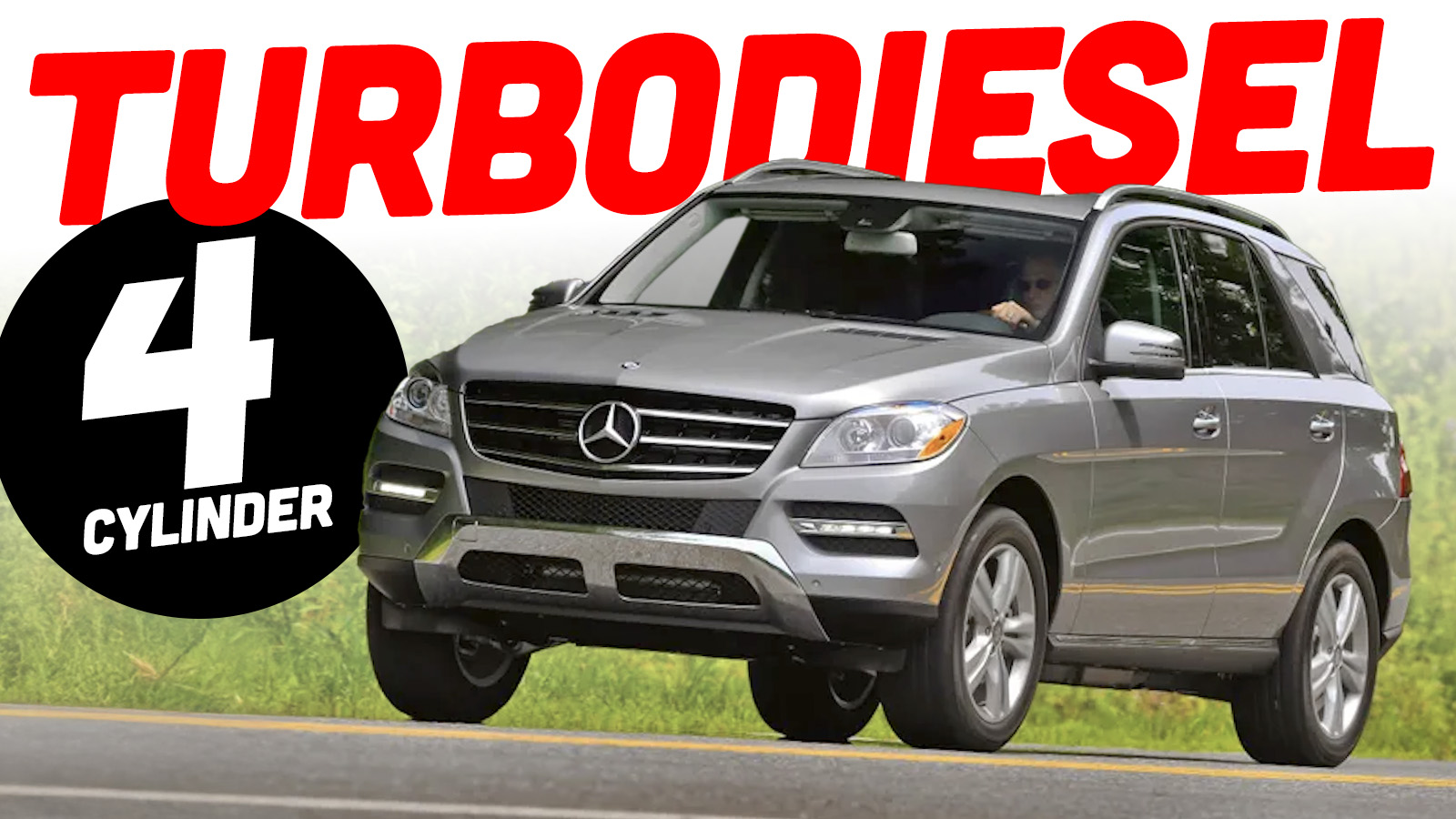
Save for a few full-size trucks and SUVs, diesel-powered passenger vehicles are dead in America. Despite diesel’s advantages, it never really, actually caught on in America as it did in Europe. Volkswagen had its thing going for a few years until Dieselgate happened, which pretty much killed diesel for good in the United States.
Volkswagen wasn’t the only brand that made attempts to convince buyers to switch pumps in the past two decades here in America. Brands like Mazda, Land Rover, Porsche, BMW, Jeep, and General Motors all tried their hands at diesel, but none were particularly successful. (GM actually first tried its hand back in the late ’70s into the early ’80s, and it went very poorly.)


Those attempts gave us some pretty quirky cars, though, like the diesel-powered, manual-transmission Chevrolet Cruze and the diesel-powered Mazda CX-5. The weirdest of those cars, in my mind, was the Mercedes-Benz ML 250 BlueTEC: A full-size SUV with a tiny four-cylinder diesel engine, made for just one year only.
From Weird To Weirder
Mercedes has been selling the M-Class SUV in the U.S. since its inception in 1997, but it only started selling a diesel version in 2007, joining other diesel-powered cars in the company’s lineup like the R-Class, the E-Class, the C-Class, and the GL-Class (Mercedes sold a wide array of diesel cars 20 years ago, as it turns out, despite it making up a tiny fraction of sales).
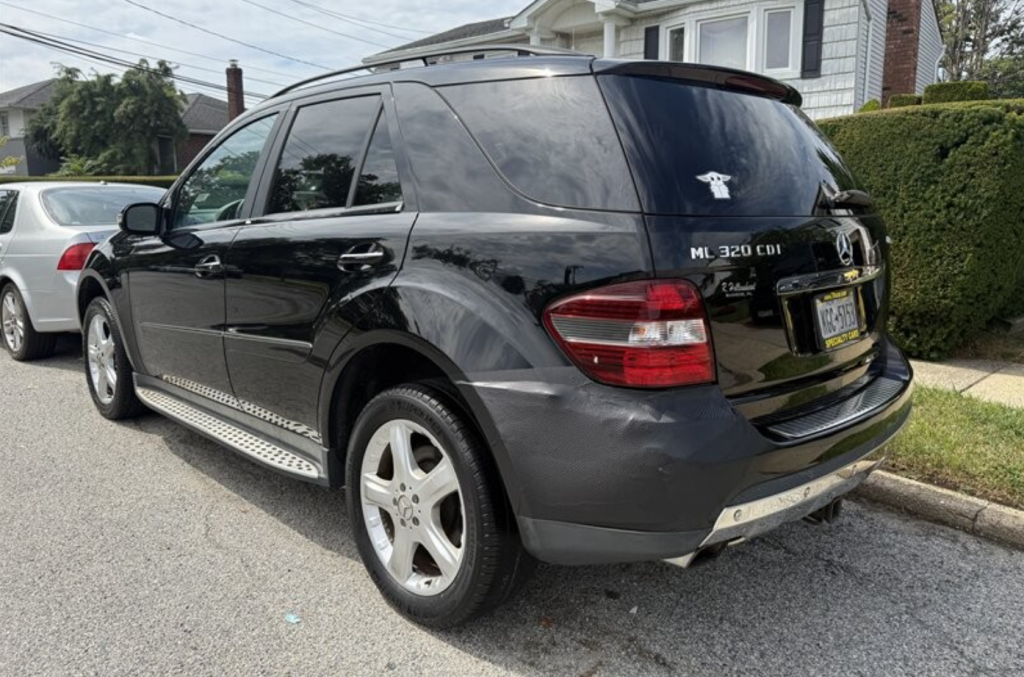
That M-Class, the 320 CDI, used a turbodiesel V6 making 215 horsepower and a healthy 398 pound-feet of torque. It was enough for 0 to 60 in 8.1 seconds according to Car and Driver testing, which was about a second slower than its gasoline equivalent. But it also got better fuel economy and unlocked a towing capability of 7,200 pounds.
By the 2014 model year, the diesel ML had been renamed the ML 350 BlueTEC (BlueTEC being the marketing term for Mercedes’s emissions control technologies equipped on its diesel engines, which included stuff like diesel exhaust fluid and particulate filters). This car made 240 horsepower and 355 pound-feet of torque, enough for a 7.0-second 0-60 and 24 mpg combined, per C/D testing.
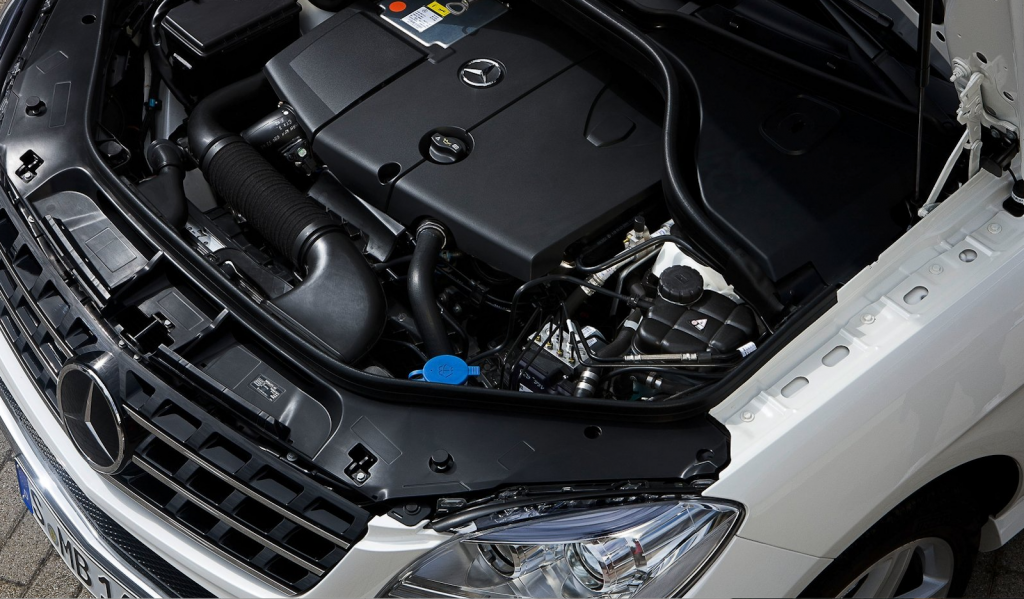
Instead of renewing the ML 350 BlueTEC for 2015, Mercedes instead decided to drop the diesel V6 altogether and replace it with the OM651 2.1-liter twin-turbo diesel inline-four used in the smaller GLK- and E-Class cars. In the ML, now called the ML 250 BlueTEC, it made just 200 horsepower and 369 pound-feet of torque—a big drop from the previous year’s diesel V6 car. It did, at least, have a bunch of snazzy tech. From Mercedes:
The ML250 BlueTEC begins with a four-valve-per-cylinder diesel featuring centrally located piezo- electric injectors, CDI direct injection, a variable-nozzle turbocharger and exhaust gas recirculation. Building on this foundation of advanced engine design, the ML250 BlueTEC incorporates several modular after-treatment units in the exhaust stream – an oxidizing catalytic converter, a maintenance-free particulate filter, an SCR converter and an NOx storage converter.
In the “denox” storage converter, nitrogen oxides are absorbed temporarily, and during brief regeneration pulses of a richer fuel-air mixture, the nitrogen oxides are released, reacting with other exhaust gas to form harmless nitrogen. These regeneration pulses also raise temperatures in the particulate filter, which automatically burns off the deposits.
The four-cylinder diesel ML weighed 162 pounds less than its V6-powered predecessor, but Car and Driver testing revealed that it was no more efficient than that car, putting up the same 24 mpg combined. So despite that loss of cylinders, fancy tech, and a big drop in power, it was no more efficient.
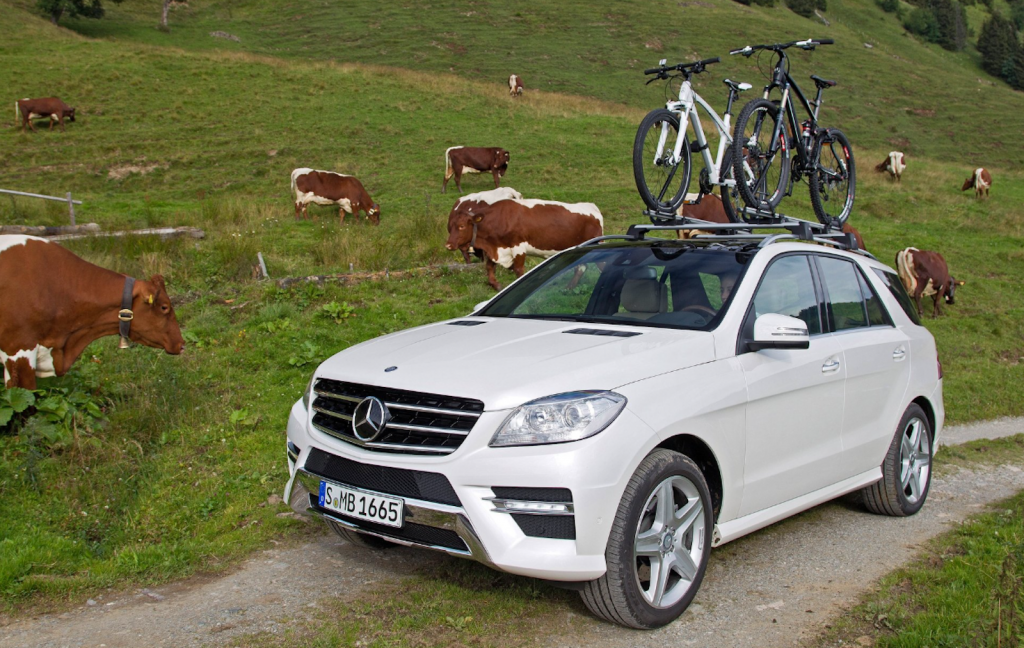
In a country where bigger is always better, switching from a turbocharged V6 to a twin-turbo inline-four with less power and less torque seems like it wouldn’t be a great idea. While it certainly was slower, the 250 BlueTEC still won favor from the press at the time of its release. Here’s what RideApart said in its review:
The ride to the mountain is smooth, easy and drama-free. At a steady-state cruise, the ML 250 BlueTEC’s information display is showing that we have about 600 miles of range, which sounds great, but that may be due more to it’s 24.6-gallon fuel tank than its estimated 29 mpg highway. The ride is quiet, too – with no road noise or diesel clatter finding its way into the cabin.
Car and Driver offered similar praise for the engine’s smoothness in its review:
What the numbers can’t communicate, however, is the 2.1-liter diesel’s willing and amicable nature. Smooth and quiet at idle (for a diesel), it has a polished quality that makes the four-cylinder compression-ignition unit in our long-term BMW 328d xDrive Sports Wagon sound a bit loutish in comparison.
It’s tough to know whether the ML 250 BlueTEC was actually successful, seeing as how Mercedes doesn’t publish sales breakdowns by trim. Considering it didn’t bring any measurable improvements, I can’t really imagine how it could have been. I found one owner on a forum recalling snagging theirs for “$10-$12k off of MSRP” from a dealership, which suggests the cars may not have been very popular among buyers, though it’s tough to come to a conclusion based on that one scenario.
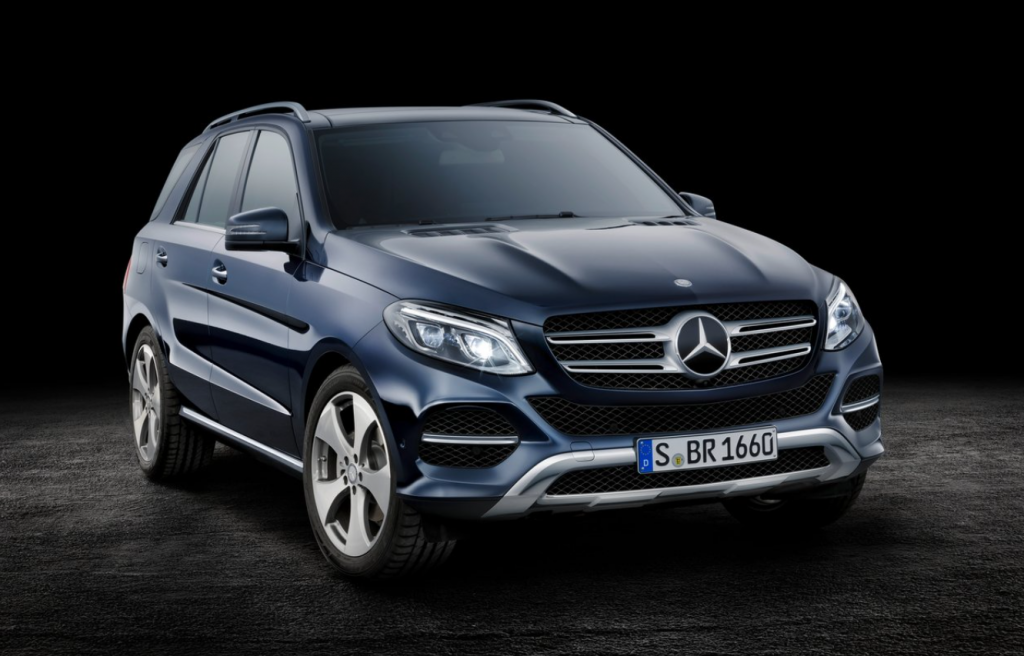
It’s worth noting that this car and its successor, the GLE 300d, which used the same engine, were on sale while Mercedes was dealing with a massive diesel emissions cheating scandal lawsuit that was going on with the EPA. The company agreed in 2020 to recall all of the affected models, which included the ML 250, and perform a modification to the “emission control system” to get them back into compliance. The company also had to pay the EPA $875 million.
No matter the reason why, the four-cylinder GLE lasted just one year before it was killed off and Mercedes pulled out of the diesel passenger car market altogether, save for the Sprinter van, which still offers diesel power to this day.
This Car Is My Current Obession
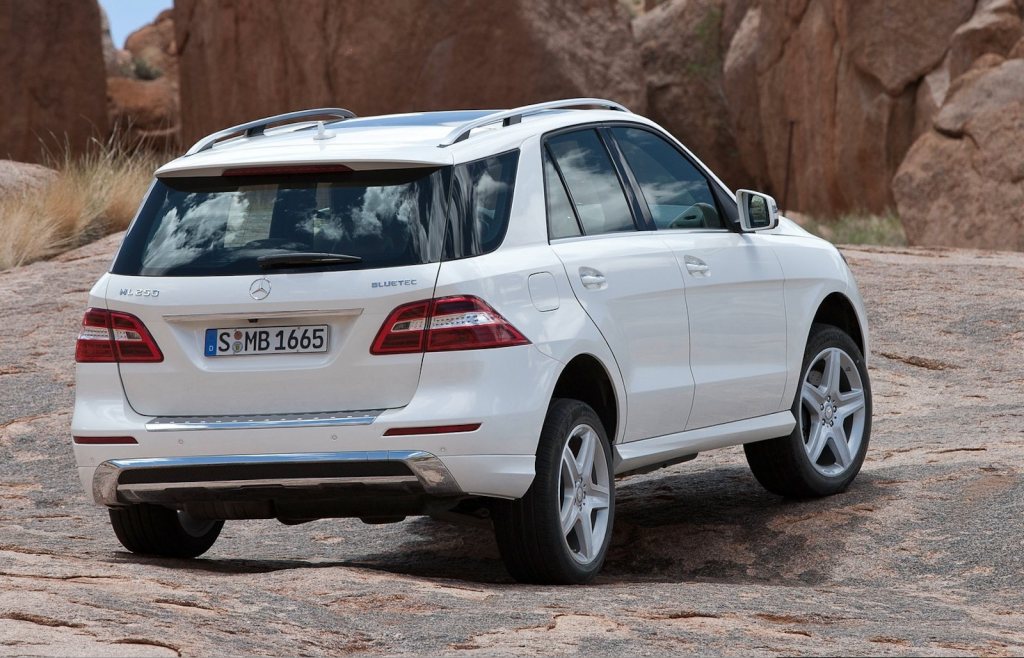
When I’m driving around in my Range Rover and achieving 16 mpg on a good day, I often fantasize about how much better it would be with a tiny four-cylinder turbodiesel under the hood. I’d have enough torque to accelerate just fine to highway speeds, but I’d be achieving far better MPG and saving money.
While such an L322-generation Range Rover doesn’t exist, the Mercedes version sure does, in the form of the ML 250 BlueTEC. It’s the full-sized, small-engine truck I’ve dreamed up in my mind, come to life. Except, instead of a Range Rover badge on the nose, it’s a Mercedes three-pointed star. As a result, I’ve been obsessing over buying one.
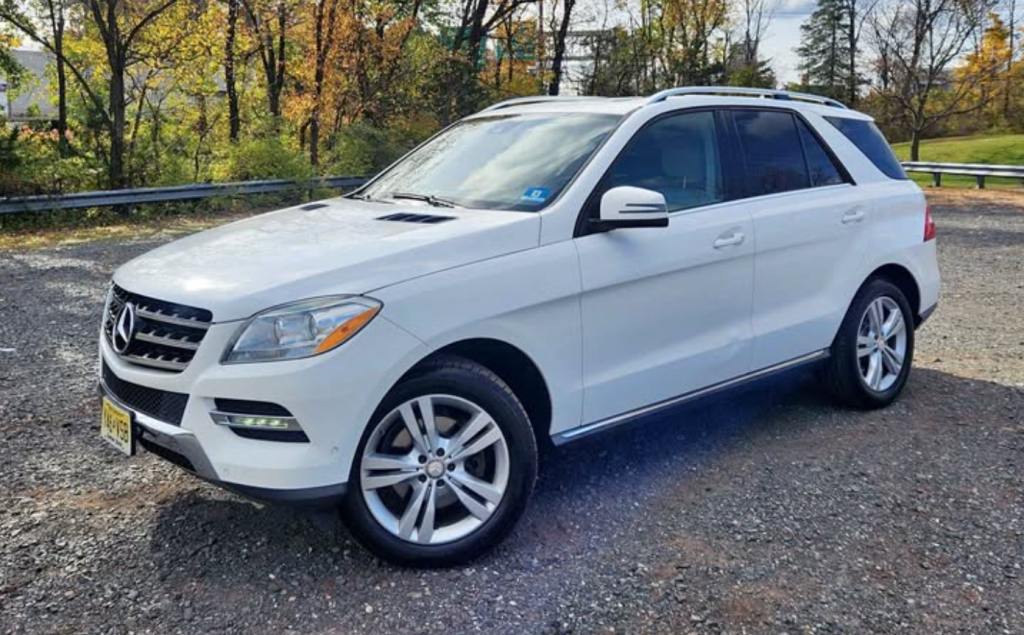
Because these MLs are quite a few years newer than my Range Rover, they’re a bit more expensive. But not that much more expensive. The cheapest I could find is this one for sale on Facebook Marketplace for $8,000, allegedly being sold by a Mercedes-Benz dealer technician. It’s got a ridiculous amount of miles (329,000), but it looks very clean. If I want something with fewer miles, I’ll have to spend a bunch more. Here’s one with 138,000 miles for $10,195, and another with just 68,000 miles for $15,900.
I’d probably be better off buying a V6-powered ML if I want to go the diesel route, seeing as how far more were likely built and sold here, which means parts availability is probably a bit better. Also, the V6 cars are more powerful and can tow more. But at the same time, I’m deeply attracted to the weirdness that comes along with pairing a big SUV with such a small engine—it never really happens in the U.S., and I’d like to experience it at some point. Don’t try to talk me out of it.
Top graphic image: Mercedes-Benz




” and replace it with the OM651 2.1-liter twin-turbo diesel inline-four used in the smaller GLK- and E-Class cars.”
It was also used in the Sprinter
No one has mentioned the diesel Sprinter. If you think the ML/GLE is a turd, try the Sprinter! Especially with some payload.
I always enjoy seeing these for the same reason – they’re so ‘Not American’. Especially the ultra-rare GLE300d, which had a badge on it that somewhat made sense.
I’d be hesitant to buy any ML/GLE diesel though. The OM642 tends to be a real nightmare, and, based on my limited understanding, the later ‘350’ ones are particularly bad. I don’t know a ton about the 2.1 liter, but, I wouldn’t be surprised to find they can have some really costly issues.
It’s really a shame MB last imported a handful of diesel wagons to the US in 1987. The E320 CDI is an extremely good car, even long term, but it would basically be perfect as a wagon.
It doesn’t surprise me at all. Even today, Mercedes will put a pitiful 4 banger into their GLE.
I rented a GLE350 on a ski trip and it felt like it had a hamster in the engine compartment. So lame, and the experience of hearing the puny engine at 5k rpm trying to build speed was anything other than luxury.
Meanwhile the lowest X5 in the US is the 40i which has some real juice
I wouldn’t lust for one of these. WHEN, not IF, any of the emissions-related stuff goes sideways, it will make your Range Rover look cheap to run by comparison.
Modern diesels in other than VERY heavy-duty applications make no sense at all. I loved the old ones through the early VW TDIs, but once they need DEF and cats and regen and all that nonsense, no thanks. And gasoline direct-injection has massively narrowed the gap in efficiency anyway. Get the same space in a lighter, better driving, more aerodynamic form factor by getting a ’14-16 302hp S212 E350 wagon and enjoy 30mpg highway and a better overall drive with far less complexity and more reliability. Mercedes’ 3.5l DI V6 is pretty darned bulletproof.
I loved driving my ’01 5M Jetta TDI but it was a little tight in the back seat when there were four of us. And then diesel became consistently more expensive than regular unleaded. The Jetta would get ~50 mpg on the highway. It went through two injection pumps in 165K miles and had to have the intake manifold de-carboned (blasted with walnut shells) at 135K miles. There were ways to avoid the problem that involved rerouting the EGR fumes. I didn’t do that.
The ’17 6AT Accord V6 that replaced it gets upper 30s-40 mpg depending on velocity and winds. So, fuel costs usually are usually about a wash. And it’s been noticeably cheaper to maintain. I miss the manual, but it wasn’t available on the V6 sedan. Bought in Texas, I figured I would appreciate extra power occasionally. I do wish it did better in town. 22 mpg is a good tank. The worst the Jetta got was 38 and that tank was almost all cold starts and a 1 mile drive each way 2x a day. In winter.
That’s the thing – gasoline engine tech has moved on considerably. To compare apples to apples, a modern MK7 Jetta TDI post-Dieselgate fixes gets about 40mpg combined in the real world. BUT, a Jetta with the 1.4T direct–injection gas motor, which drives virtually the same, gets 35mpg combined, on cheaper fuel (even under the lead foot of my Bestie, who had a succession of them), for less money up-front, and with waaay fewer expensive potential dilemmas. And the gas car is slightly faster. The diesel does a little better around town, but they get darned close to the same on a trip. It just makes no sense to go diesel anymore, at least in the US where the fuel is usually a good bit more expensive. Any savings in fuel will be gone the minute anything goes wrong with the injection or emissions systems, if there is any at all when the mileage figures are so close to start with. And of course, for the newer TDIs you also have to buy DEF fluid (and Dog help you WHEN that system goes sideways, and it will).
The Accord is a bigger, heavier car, but it has more than 2X the HP than the Jetta (even chipped), and nearly twice the torque. It has more than I ever need around WA, OR and CA and the hope is that because it seems to be unstressed, it will last a long time. And when I mash the right pedal, it certainly takes off and sounds nice.
I get that diesel has more energy per the volume unit of your choice, so the Honda is doing pretty well to net roughly the same number of miles per dollar (my units, my country), at least up in the PNW. Actually, maybe even better.
I just looked up the fuel prices both for where I used to live in SE TX and here (Tacoma); diesel is currently 35% more expensive in both areas. And yeah, I know it’s currently winter heating season when diesel did barely make it above the price of regular in January and February back in the early 2000’s.
But diesel is now sub-$3 there ($2.86) and regular is ~$3.40 here in W WA. It’s ~$2.06 in Beaumont. The carbon tax on gas here is about 46 cents/gallon. I’m pretty sure TX didn’t have a carbon tax. But I like living here better. I’m not sure why regular is more than 50 cents cheaper, carbon tax adjusted there. I lived within 60 miles of refineries, but there are refineries in WA as well.
I remember bro-dozer boys getting pretty cranky when diesel was around $5/gallon not long before I moved back out west. And I had zero sympathy for these guys who bought trucks they almost never loaded up, but blinded me at night on the Farm to Market roads.
My family’s old farm/ranch-house faces a busy county road in N CA and I see more trucks carrying or pulling loads than I ever saw in that part of TX.
Yup – the problem is that gas cars have gotten WAAAY better with direct-injection and ever more advanced engine control systems, while diesel economy is being hobbled by emissions requirements.
Here in God’s Waiting Room, FL, Diesel is currently about $.75/gal more than regular at most stations, so close to $4/gal last time I checked. That’s a tough thing to overcome even with the energy density advantage.
As I have mentioned here before – one of my cousins is the fleet manager for my home town in Maine. He has stopped buying diesel school busses and medium duty trucks (single rear axle plow trucks). The fuel economy advantage doesn’t even come close to offsetting the added purchase price and especially maintenance cost. He is actually able to have fewer “spare” busses now because the gasoline busses are so much more reliable than the DEF-equipped diesels were. That really brings home how bad current diesel tech really is until you are hauling things a LOT heavier than 80 kids around.
When I was a kid there in the ’80s only two ancient buses out of the whole fleet weren’t diesels. He is keeping a few pusher diesel school buses with coach seats to use for field trips, the sports teams and as shuttle busses at the town’s annual Clam Festival though. But the regular busses just don’t do enough miles in a small town to justify the cost.
The medium duty segment is moving back to gasoline for the reasons you stated. (The diesel costs $10K or more up front, the fuel costs more, and the maintenance costs more). Then there is the fact that you can run a gas engine with the check engine light on until it quits but a diesel will go into limp mode after about 500 miles.
Diesel makes no sense for anything urban. They still shine for hauling heavy loads at highway speeds.
Heavy hauling is where they shine. But I bet there will be some encroachment even there. Diesel emissions are just a horror show of expense, it’s probably completely possible to make a gasoline engine that is competitive with the lower horsepower heavy duty diesels that the fleets like to use. Cummins is going there – they have released their medium-duty gasoline motor, and you can bet they will scale that thing up. Turbo/DI on the gas side, and emissions on the diesel side has really closed the gap in the middle.
From personal experience with the Cummins Octane engine I don’t see it making an impact in the medium duty segment. That is all I’ll say.
The problem with DI / Turbo gas engines is that they have similar emission issues as DI / Turbo diesel engines. PM filters for gas engines are already required in Europe and China and are coming to the USA in 2027 for EPA Tier 4. Some manufacturers are already using them to build credits by exceeding requirements.
Personally I see the future as gas / electric hybrids. (I’ll be interested to see the hybrid Super Duty that Ford is talking about for 2027)
I don’t disagree with you about hybrids, plug-in or not. The tech just makes sense at this point. Pure EVs just don’t make much sense for too many people for too many reasons.
Ultimately diesel is screwed for less than heavy-duty applications.
My cousin is quite interested in the Cummins engine, but it’s not offered by his preferred bus vendor yet.
Electric Class 8s make a lot of sense for some applications. Right now the problem is cost in the USA.
Long haul they make no sense and won’t make sense without a technological breakthrough. (Again in the USA. Europe has different driver rules that make electrics work better there)
Who is his preferred bus vendor?
Bluebird for the gas busses, the remaining diesels are Thomas pushers. Big Ford V8s in the Bluebirds, IIRC.
He has no interest in electric – even with Fed subsidies the cost was much too high, and electricity cost in Maine is brutal. The regular buses don’t go far enough daily to matter, the “coach” busses go too far to bother. Ultimately fuel just isn’t an enormous part of his budget.
He will get a chance to buy a bus with the Cummins gas engine soon. I predict he will decided to stick with the Ford 7.3L Godzilla.
EVs cost / benefit is very dependent on energy prices. Here in the West Coast Portland retail electricity is 9 cents a kWh to charge off-peak and even cheaper for industrial users. Regular gasoline is $3.30 and diesel is $4.20
I’m not around school buses much but almost all of our Amazon drivers have electric vans as do an increasing number of UPS and Fed Ex step vans.
Electric delivery vans make a ton of sense. On the road all day, but they don’t actually go THAT far. I see lots of them here in God’s Waiting Room north and south of me where the warehouses are, but I’m in the middle evidently just far enough that nobody is using EVs here. Hurts when you have an hour drive to get to your delivery area. Still nice though, there are something like six Amazon warehouses within an hour of me, so almost everything is same or next day with Prime.
But the busses in my hometown basically make one loop in the morning and one in the afternoon – the longest route in town is less than 40 minutes. I’d be surprised if they even do 50 miles a day for most of them, but all the little dumplings need to get to and from school at once. It’s not a huge fleet, maybe a dozen busses and a 3/4s that of medium duty dump/plow trucks. All the rich little suburbs around East Coast Portland have their own little school systems, it would really make a lot of sense to consolidate them, but they NEVER will.
An interesting insight from your cousin.
I think my dad messed with my head a bit, buying an Autocar road tractor for a few weeks while I was in early grade school, a couple of salmon fishing boats with Detroit Diesels, later, when I was in junior high school, an IH crawler tractor, an IH road tractor (again with a DD 318) and then a Kenworth (with a 350 Cummins). Other than the Autocar, aka “The Jolly Green Giant,” I got to drive them all. More time on the crawler tractor than I wanted, plowing 15 acres and planting wheat. But I earned my keep.
Before we moved out onto the farm, we had a neighbor with a Mercedes 220D 4M that I got to drive once on my learner’s permit. That transmission was exquisite, in my memory. And I enjoyed the 5M in my TDI Jetta. I wish it had a 6M in Texas. Even in 5th, the TDI seemed pretty wound out at 85 mph.
Since then, I’ve broken both arms in the last couple of years and am currently thankful for a decent automatic and power steering.
Oh yeah – back in they day there was simply no comparison in trucks. Diesels in HD vehicles made more power on way less fuel with way less maintenance. Cars used less fuel and needed less maintenance at the cost of less performance, but especially once turbos became common the performance was “good enough”. I think peak was the
“TDI era” – you really got the best of both worlds with those Euro direct-injection turbos until they needed DEF and cats. My first new car was an ’02 Golf GLS TDI, and I loved it. Fast enough when driving like an adult, and like your Jetta, an easy 50mpg all day long.
But those days are long gone with modern emissions regs. Which to be clear, I am absolutely 100% in favor of keeping. As I said in another post, I prefer not to be able to SEE the air I am breathing…
Everything I may have saved on fuel with the TDI, I probably spent keeping it running.
Don’t get me wrong. It was a fun car to drive, but it wasn’t the frugal car I expected.
Oh, and I am right there with you on regs. And like I said, similar miles per dollar and ridiculous reserves of power, I am happier now than the car I was in. Even though I loved that car too.
I had a 2014 E250 blutec with the OM651. It is truly a gem of an engine, got close to 45mpg hwy regularly. Owned it for almost 8 years and 120k miles with no major issues. The trick with these is to use archoil diesel treatment (or some other type of diesel additive) every other fillup to prevent the dpf and egr from clogging. Feel free to reach out if you have any specific questions about the engine.
A similar feeling in my 2012 Passat SEL TDI, it felt like you were gliding. It was so smooth, it was glorious. I also played “how high can I get my MPG” games with diesel. Oddly enough, that MPG game is one I’ve never played in my baby M.
Regarding the mpg, so you found out that V6 and R4 are both operating at the same efficiency and since you are not taxed by engine displacement there is no benefit for you. The Predecessor without BlueTec is highly sought after, cause less stuff to go wrong.
Given gas is cheaper vs. diesel, the only points where it can shine; towing a loaded Uhaul car trailer at about 19mpg (I am sure there will be posts about gas powered besting it) and the fully fueled range of 1111km or 684 miles. It may even last a bit longer.
So why diesel? Caloric content is higher than gas, the combustion has higher efficiency and to help commercial transortation get back on its knees after WWII, european countries agreed to tax diesel at a lower rate than gas. Unheard of in NA, it makes little sense, but I do enjoy the OM642 for daily and the OM617A for fun.
I had a GLK250 with this engine. I could get 42mpg with full-time 4matic, if I really tried. Normally, I’d see 37-38mpg.
No to pee in your cheerieos, but the current GLE350 is 2.0L 4-cylinder, as is the X5 30i (or whatever its called). Sure, not diesel, but they are still even smaller motors in the “larger” SUV’s.
There is no X5 30i in the US at least. Here, your X5s always have proper power levels.
Jump in with both feet. I have been a fan of 2-door full-size SUVs and longroof cars since I was a kid. I scratched the first itch by stumbling upon a used 1999 Tahoe 2-door, 4wd LS, but decked out with all the fun bits, including heavy-duty tow package, skid plates, more aggressive rear gears (3.73 with posi), and none of the gross soccer-mom gewgaws like leather seats and whatnot. Sure, it had 175k on the clock, but I beat up the salesperson (actually, no. He took my first offer.), and walked away with a screaming deal. 100k miles and one teenage driver later, I found myself in need of wheels. This is 2017, and VW is emerging from the diesel scandal. I get my dream car, a VW Golf Sportwagen TDi SE with Harman Kardan stereo, again for a steal (less than 2/3 MSRP and 6 years 0% financing). Note that the Tahoe and the Golf have almost identical 0-60 times (around 8 seconds, which is also right around my mom’s Olds 88 time, but i digress), as well as nearly the same range (Tahoe has a 30 gallon tank; Golf a 13 gallon tank). I loved my diesel days. The Kiddo loved driving a big, black SUV to and ftom school. College happened, as it does, and momma said, “they need something more reliable and safer to drive in college.” (Note that momma’s hybrid Pacifica never entered the conversation.) After over 315k miles, the Tahoe got relegated to weekend duty, and my 90 year old mom’s 1998 Olds 88 became my ride (she gave her license up voluntarily, thank goodness). I am also a sucker for huge sedans, and the Olds got 19mpg in town while riding like a giant green living room. Then, a used i3 popped into my life. Gee-whiz technology and a 0-60 that bests my 1985 Mustang LX 5.0 hatch. I can feel my phantom mullet every time I drive it. What to do? Which car to sell? Luckily, all were paid off, so the choice was: keep all of them. I have a menagerie of motorized vehicles, but now I can scratch that itch at nearly any time. Jump in with both feet. You can always sell a car if it becomes a burden, but you can only enjoy it if you have it. I love my little oil burner, even if I don’t get much windshield time anymore
You can find more info about the typical faults in euro forums. There are… not sure if the 4-cyl version has the cam chain issues with the chain at the back of the engine. If yes, garages now have a method to change the chain without lifting the engine out. So not quite as expensive anymore, but initially it was… Twin turbo v6 diesel with def and nox traps and cats sounds… complicated. Although regarding the forum advice, uk users typically clog up their diesels because the island is tiny. So other countries might have different experiences. Although there are number of problems with the emission equipment in the colder countries. Such as the ammonia crystals clogging up the pipes and pumps, then freezing up and breaking shit when the temp gets below -11 C. What a perfect solution for the arctic. The plastic resevoir has built in everything, it will be four figures, thank you.
Ok, the diesel excels when you need to work the engine hard. But…
Regarding emissions in general, yes nox bad, but comparable age gas engines had no GPF yet (at least euro versions), so the particulate emissions were kept in check with the dpf, especially in cold.
Brian, a lot of people like to say that the economics don’t make sense anymore, but there’s more to it. It just feels great. My wife’s 2018 Grand Cherokee Diesel can give us close to 700 miles a tank, and has air suspension, an amazing 4wd system, all the bells and whistles. It tows like a champ too, just make sure to do oil changes more frequently than suggested, I’ve heard many people who follow the every 10,000 miles soon regret it, ours has been wonderful for 100,000 miles. That and GDE has some great, 49 state-legal tunes for diesels, just made that happen recently.
Mercedes has had pretty big success with diesel in the US in the past. In 1981–1982, diesel vehicles accounted for about 80% of Mercedes-Benz passenger car sales here.
Of course Mercedes-Benz pivoted away from cars built to take abuse forever to the luxury market shortly thereafter.
Mercedes has *always* been in the luxury market and you could argue it’s the company who invented the segment ~1903. A 1981 300D would cost you more than $30k, which more than triple the average cost of a new car. What it got you was a well-built, well-engineered vehicle, which at the time was definitely a luxury.
In 1903 all cars were luxury cars.
In 1903, cars were just cars!
Well, considering that there were hardly any paved roads, and hardly any gas stations, and hardly any expectation that you should be able to get someplace by automobile when there were trains and horses, I would say that any car at that time was a luxury.
I mean the first gas station opened in 1905. Before that you had to buy gasoline by mail order or at a pharmacy.
Right, but compared to a curved dash Olds the Mercedes 35hp/60hp was a true luxury car, and likely the first “modern” car. The first Mercedes was a plaything of the rich, while a wide variety of companies were making much more humble machinery for the masses.
Meh – I love the things, have owned them from a ’79 300TD to my current ’14 E350 wagon, but Mercedes “luxury” perception in the US was very much a product of very careful marketing back then – at least where the cars that were sold as taxicabs in the rest of the world were concerned (the S and SL/SLC certainly WERE legitimately luxury cars). The pricing was very much part and parcel of that, and they were *wildly* more expensive here than elsewhere. Yeah, in some ways they were better than other cars, but in many ways they were not. There really wasn’t enough “better” about a 240D to justify it’s price multiplier over a Volvo 240, for example, other than the whole prestige thing of showing that 3-pointed star off at the country club.
Mercedes has long built everything from garbage trucks to the S-class.
It was not by choice. Their smaller gas engines couldn’t meet US emissions (and later CAFE) standards without being hobbled, so they didn’t bother to sell them in the w123s here at all after the early days ( a FEW 280e’s were sold here, but not many) – and the w123 E-Class was 80% of their sales. That was the majority of their production. The V8 in the S-Class and SL/SLC had the displacement to be “adequate” after meeting emissions (if well off the power of the Euro version), though they actually offered a turbodiesel as an option in the S-Class ONLY in the US for a few years in the late 70s.
When the new w124 E-class debuted for ’86 they had gotten engine management tech to the point that they could offer it with a gasoline engine again, and that was the VAST majority of sales of them, even though they have sporadically offered diesels in the E-Class ever since.
We test drove an ML250 years ago and it was surprisingly good for a 4 cylinder, we had also driven a X3 20d and the MB engine was definitely the winner (also turns out longevity wise its better!) however we have an X5 40d and I can’t for the life of me think why on earth you’d opt for a 4 cylinder diesel when there’s an option of a 6. The 6s tend to be better on fuel as they just ride around on a torque curve so they can propel a rather large lump of a car around with minimal effort.
I worked with someone who bought a 2014 ML350d to use as family transport and race bike towing. Part of the reason he bought it was because of the class action lawsuit around emissions equipment, most of the engine (including intake/exhaust) was covered under an extended warranty for years. We read up on it for a while and it was quite expansive in its coverage of items, things like injectors were included too.
I’d be in if it were viable to remove all of the emissions stuff…goes for a handful of diesels including land rovers and the Nissan Titan. I know its possible to remove and tune, but you’ll never get it to pass emissions, at least not in my state. I assume all the brodozers with double stacks out the bed are popping their DPFs on and off for inspection time.
Given that your other options are the M272, m276 and m273 (which are some of Benz’s best modern engines), and are extremely plentiful, I’d have a hard time going with the diesel.
Anecdotal, but a coworker had one of these ML250 diesels, purchased new in 2016 and traded in sometime in 2017 for am ML350. From their complaints, the vehicle and performance was fine, but the emissions equipment was a nightmare. It was constantly at the dealership getting something related to the emissions system repaired. It spent so much time at the dealer that the dealer offered them a deal to get out of the ML250 and into the ML350 that they took it without a second thought.
We should consider ourselves lucky that diesel never “caught on” here. Europe is having to undo decades of damage due to short-sighted policies around diesel.
I’m not quite seeing why this is an obsession. It’s a slow and complicated appliance, but hey 3 pointed star on the hood, I guess.
because it’s weird!
Just know this, Brian:
https://www.theautopian.com/heres-why-you-probably-shouldnt-buy-a-mercedes-benz-with-the-om642-v6-diesel/
Also, I had a GL350 that at 6.5 years and under 70k or so miles needed over $3,000 of emissions work–fortunately while still under CPO extension. Complex emissions controls translate to the 4 as well as the 6. The transfer cases develop leaks, too. I wouldn’t own one of these in your shoes. Dream Asian reliability with less weirdness for your NYC life or stick with the devil you know; bonus, that’ll help ensure you have time enough to feed this beast. For one, I appreciate your contributions.
These are all built near me (US and ROW models) and I thought I had seen everything they offered, but I don’t recall ever seeing a single ML250cdi/Bluetech ever…at least not in the US. They’re pretty thick in Europe, along with most other 4-cyl diesel options (which are quickly being replaced with gas hybrids and EVs)
At one point there were THREE separate R63 models with MFR plates in some of the neighborhoods around me. I almost wanted to stalk them as a potential buyer, but I’m pretty sure those are all just company car leases.
This particular car seems like a nightmare to own. On top of all the stuff you mentioned, the gasser models (3.5 V6) are pretty quick and really efficient for their size. I could never make sense of the gap in MSRP, on top of the sudden spike in Diesel fuel prices about 15 years ago (ULSD rollout, plus a home heating oil shortage). That killed almost all of the economics of owning them.
Too bad we never got diesel versions of the first gen. In addition, export models were also available with a 2.3L I4 in the ML230, same as the C230 of the time (though not supercharged).
The first-gen M-classes are old enough to bring over here now, and I like that ML230 more than I should, though the diesels are cool too.
We’ve had an ML320 in the family since 1998 and it has been the worst overall ownership experience I can think of. I’d steer clear.
These make perfect sense to me given they role they’re meant to play: Idling in line at school pickup, mall crawling, and transporting cookies and fliers to Realtor open houses.
And while they may not have achieved higher mileage ratings in testing – they probably did a fair bit better than the 6 in real life given the low speeds and long idling times they endured.
Ideally we wouldn’t idle diesels near children, ever.
I’ve done bus duty at a high school for close to 20 years – we idle a whole lot of diesels near a whole lot of kids 180 or so days every year.
It’s a sad reality, but it can change. Electrifying school busses is low hanging fruit. Single depot for charging, no long distances, health outcome improvements for all.
With V2G you could even have schools profit off spare electricity when the buses are idle (which is a lot)
Yes. It’s insane what we happily expose kids to.
The pushback on EV buses is the perfect encapsulation of half the issues in the US right now. People don’t want to hear that they are better for the kids (which they allegedly care about, but actions speak louder than words) and save money long term. They just spout their EV=bad bullshit. Then over to complain about vaccine mandates. And electric stoves. And hybrid cars. And face masks. And minimum wage. And Obamacare. Just small minded people with no interest in learning anything about anything.
The list of cars I never want to own is full of 10+ year old, severely depreciated cars that sold in small numbers and lack parts/service support in this time. This vehicle has just been added to the list.
I’d sooner spend $20k on a really nice Mercedes S123 300TD-T. No pesky emissions equipment to fail, and will last until the next century.
I have an acquaintance who drove an immaculate W123 300TD.
He loved the build quality.
Hated the slow pace.
You’re better off in a grey market 280TE…
…or a 1992-1995 W124 E320 estate, after it was upgraded to the 217hp 24 valve motor.
Not trying to talk you out of it, but with either of these, the fuel savings are unfortunately lost when pretty much any of the emissions component breaks.
Some of the emissions stuff was covered for a long time, but I think after 10+ years all of that would’ve expired by now.
Savings are also lost when diesel costs 25% more than gas
Current national average:
$2.85 87 Octane Gasoline
$3.62 Diesel
The economics that justified diesel passenger cars disappear when ULSD arrived in the late 00’s. Prior to that diesel was consistently cheaper than regular gasoline. This is also when we got DPF and DEF and diesels that go into limp mode after 500 miles for any error in the emission systems.
I imagine the gasoline engine takes premium, so diesel might be cheaper or equal.
The gas Mercedes does require premium – which is another good reason not to buy one.
My wife’s Acura recommends premium / requires midgrade. I won’t make that mistake again. I see no reason to ever buy a car that won’t run on 87 octane.