

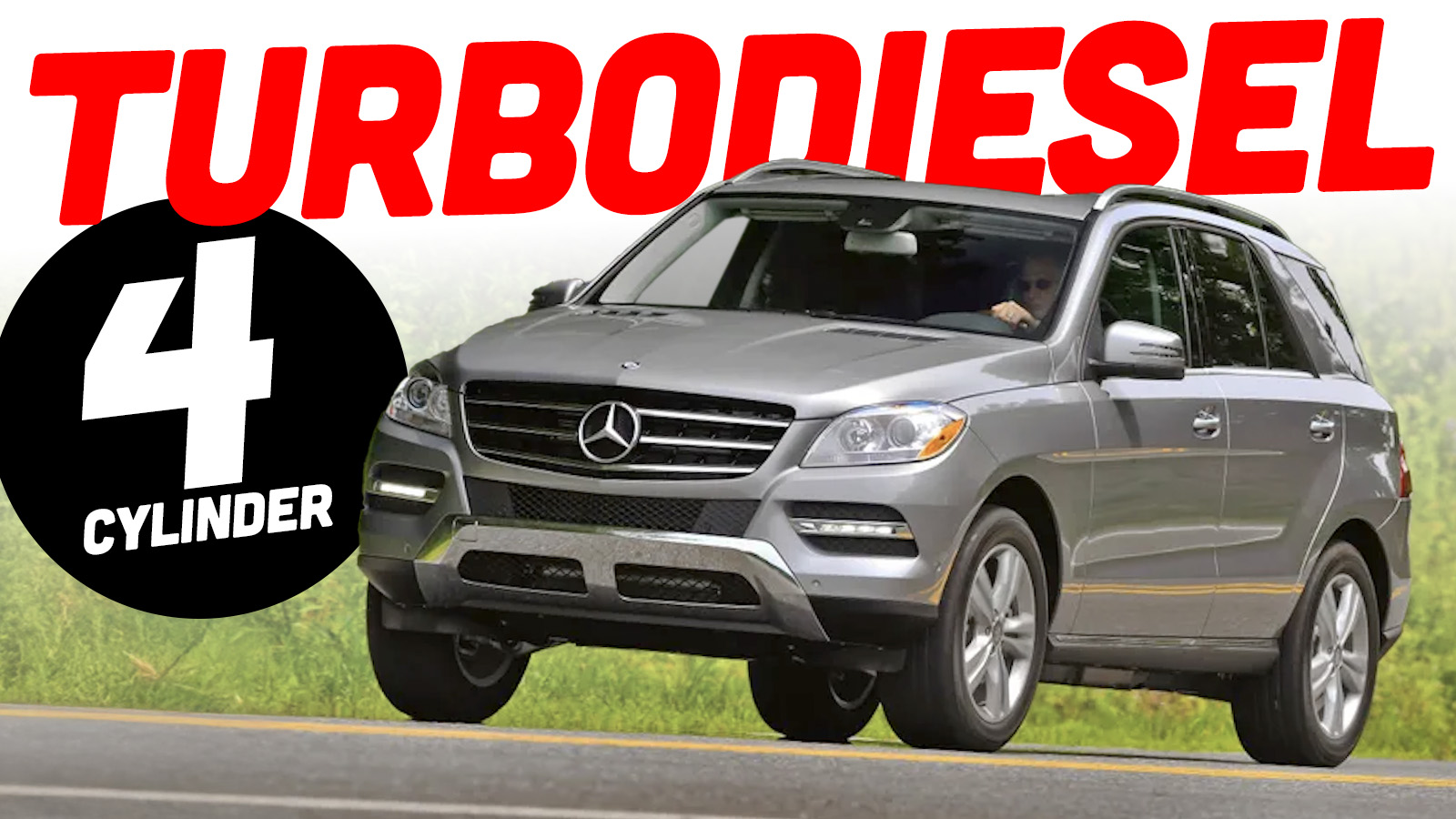
Save for a few full-size trucks and SUVs, diesel-powered passenger vehicles are dead in America. Despite diesel’s advantages, it never really, actually caught on in America as it did in Europe. Volkswagen had its thing going for a few years until Dieselgate happened, which pretty much killed diesel for good in the United States.
Volkswagen wasn’t the only brand that made attempts to convince buyers to switch pumps in the past two decades here in America. Brands like Mazda, Land Rover, Porsche, BMW, Jeep, and General Motors all tried their hands at diesel, but none were particularly successful. (GM actually first tried its hand back in the late ’70s into the early ’80s, and it went very poorly.)


Those attempts gave us some pretty quirky cars, though, like the diesel-powered, manual-transmission Chevrolet Cruze and the diesel-powered Mazda CX-5. The weirdest of those cars, in my mind, was the Mercedes-Benz ML 250 BlueTEC: A full-size SUV with a tiny four-cylinder diesel engine, made for just one year only.
From Weird To Weirder
Mercedes has been selling the M-Class SUV in the U.S. since its inception in 1997, but it only started selling a diesel version in 2007, joining other diesel-powered cars in the company’s lineup like the R-Class, the E-Class, the C-Class, and the GL-Class (Mercedes sold a wide array of diesel cars 20 years ago, as it turns out, despite it making up a tiny fraction of sales).
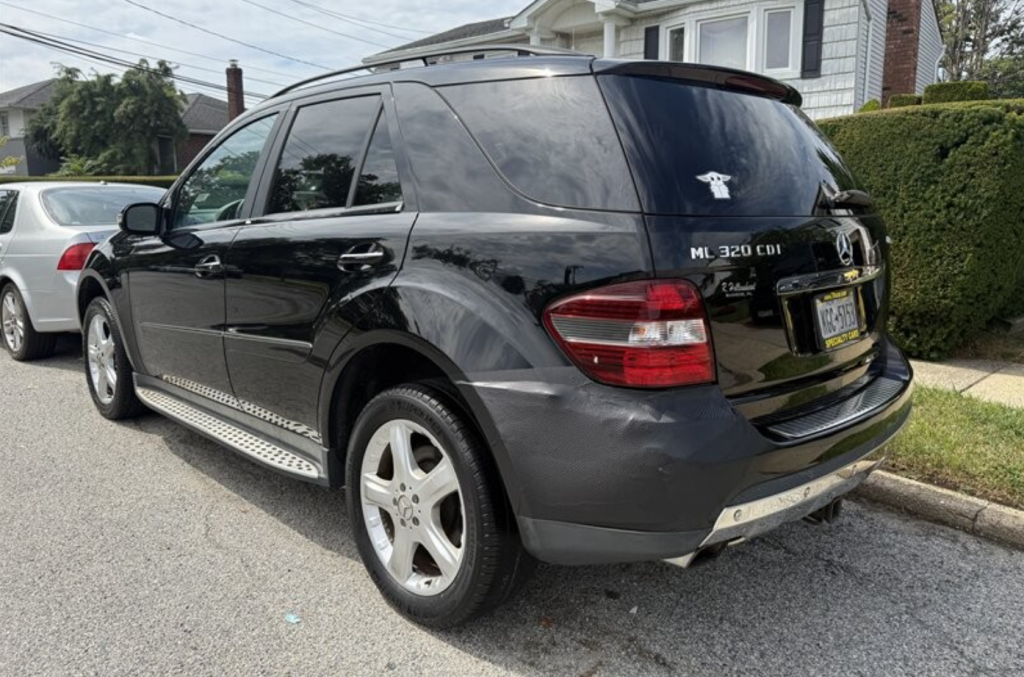
That M-Class, the 320 CDI, used a turbodiesel V6 making 215 horsepower and a healthy 398 pound-feet of torque. It was enough for 0 to 60 in 8.1 seconds according to Car and Driver testing, which was about a second slower than its gasoline equivalent. But it also got better fuel economy and unlocked a towing capability of 7,200 pounds.
By the 2014 model year, the diesel ML had been renamed the ML 350 BlueTEC (BlueTEC being the marketing term for Mercedes’s emissions control technologies equipped on its diesel engines, which included stuff like diesel exhaust fluid and particulate filters). This car made 240 horsepower and 355 pound-feet of torque, enough for a 7.0-second 0-60 and 24 mpg combined, per C/D testing.
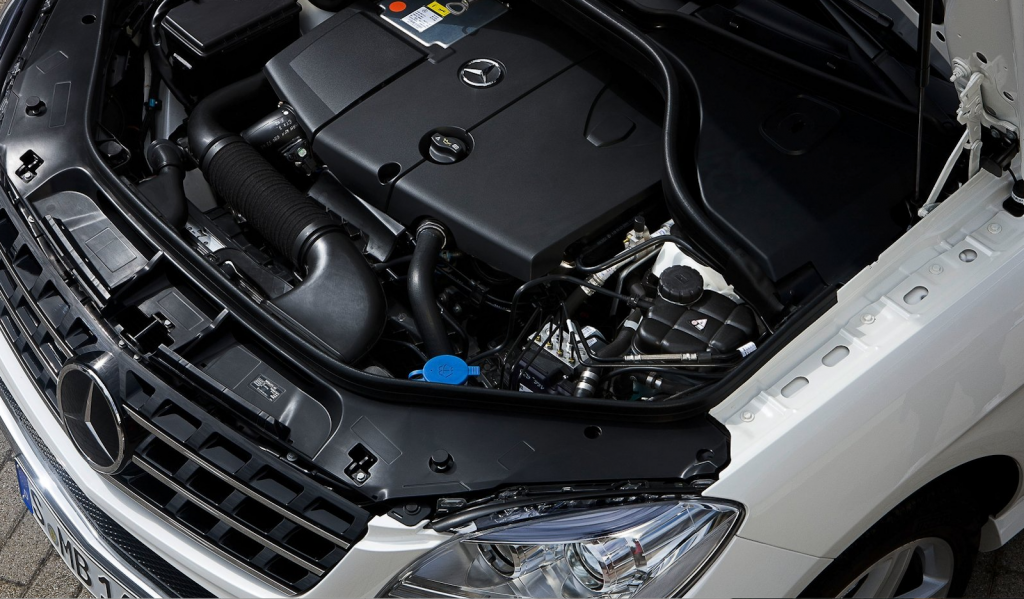
Instead of renewing the ML 350 BlueTEC for 2015, Mercedes instead decided to drop the diesel V6 altogether and replace it with the OM651 2.1-liter twin-turbo diesel inline-four used in the smaller GLK- and E-Class cars. In the ML, now called the ML 250 BlueTEC, it made just 200 horsepower and 369 pound-feet of torque—a big drop from the previous year’s diesel V6 car. It did, at least, have a bunch of snazzy tech. From Mercedes:
The ML250 BlueTEC begins with a four-valve-per-cylinder diesel featuring centrally located piezo- electric injectors, CDI direct injection, a variable-nozzle turbocharger and exhaust gas recirculation. Building on this foundation of advanced engine design, the ML250 BlueTEC incorporates several modular after-treatment units in the exhaust stream – an oxidizing catalytic converter, a maintenance-free particulate filter, an SCR converter and an NOx storage converter.
In the “denox” storage converter, nitrogen oxides are absorbed temporarily, and during brief regeneration pulses of a richer fuel-air mixture, the nitrogen oxides are released, reacting with other exhaust gas to form harmless nitrogen. These regeneration pulses also raise temperatures in the particulate filter, which automatically burns off the deposits.
The four-cylinder diesel ML weighed 162 pounds less than its V6-powered predecessor, but Car and Driver testing revealed that it was no more efficient than that car, putting up the same 24 mpg combined. So despite that loss of cylinders, fancy tech, and a big drop in power, it was no more efficient.
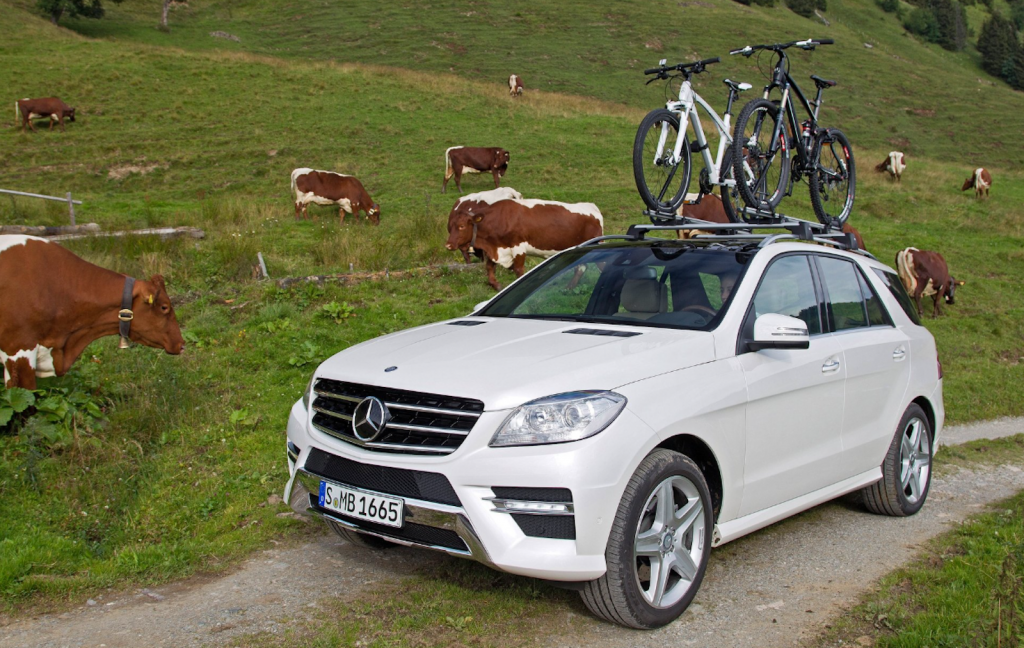
In a country where bigger is always better, switching from a turbocharged V6 to a twin-turbo inline-four with less power and less torque seems like it wouldn’t be a great idea. While it certainly was slower, the 250 BlueTEC still won favor from the press at the time of its release. Here’s what RideApart said in its review:
The ride to the mountain is smooth, easy and drama-free. At a steady-state cruise, the ML 250 BlueTEC’s information display is showing that we have about 600 miles of range, which sounds great, but that may be due more to it’s 24.6-gallon fuel tank than its estimated 29 mpg highway. The ride is quiet, too – with no road noise or diesel clatter finding its way into the cabin.
Car and Driver offered similar praise for the engine’s smoothness in its review:
What the numbers can’t communicate, however, is the 2.1-liter diesel’s willing and amicable nature. Smooth and quiet at idle (for a diesel), it has a polished quality that makes the four-cylinder compression-ignition unit in our long-term BMW 328d xDrive Sports Wagon sound a bit loutish in comparison.
It’s tough to know whether the ML 250 BlueTEC was actually successful, seeing as how Mercedes doesn’t publish sales breakdowns by trim. Considering it didn’t bring any measurable improvements, I can’t really imagine how it could have been. I found one owner on a forum recalling snagging theirs for “$10-$12k off of MSRP” from a dealership, which suggests the cars may not have been very popular among buyers, though it’s tough to come to a conclusion based on that one scenario.
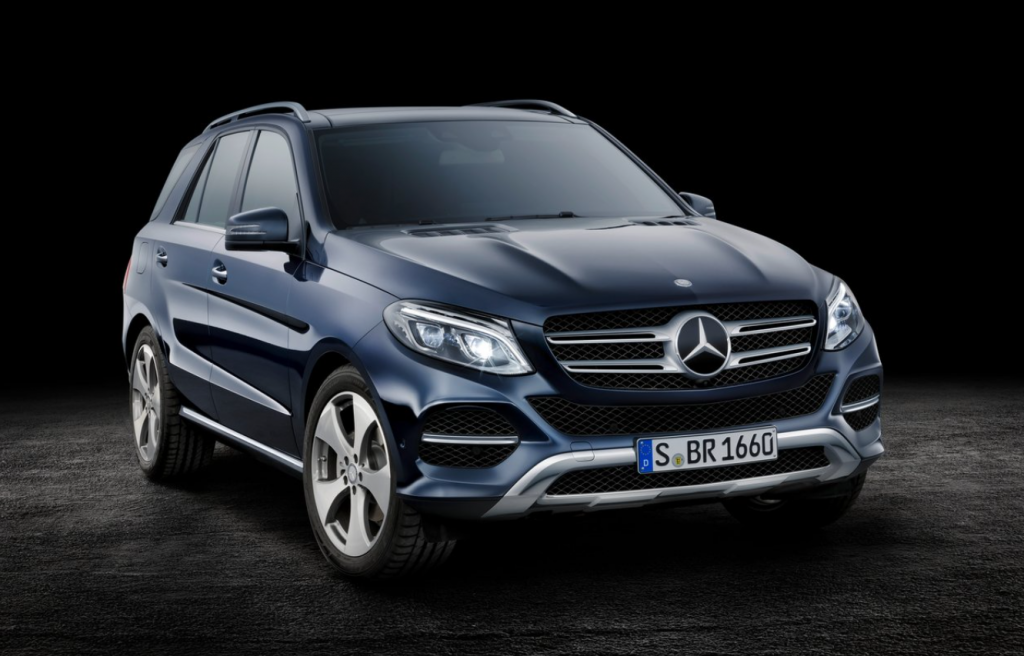
It’s worth noting that this car and its successor, the GLE 300d, which used the same engine, were on sale while Mercedes was dealing with a massive diesel emissions cheating scandal lawsuit that was going on with the EPA. The company agreed in 2020 to recall all of the affected models, which included the ML 250, and perform a modification to the “emission control system” to get them back into compliance. The company also had to pay the EPA $875 million.
No matter the reason why, the four-cylinder GLE lasted just one year before it was killed off and Mercedes pulled out of the diesel passenger car market altogether, save for the Sprinter van, which still offers diesel power to this day.
This Car Is My Current Obession
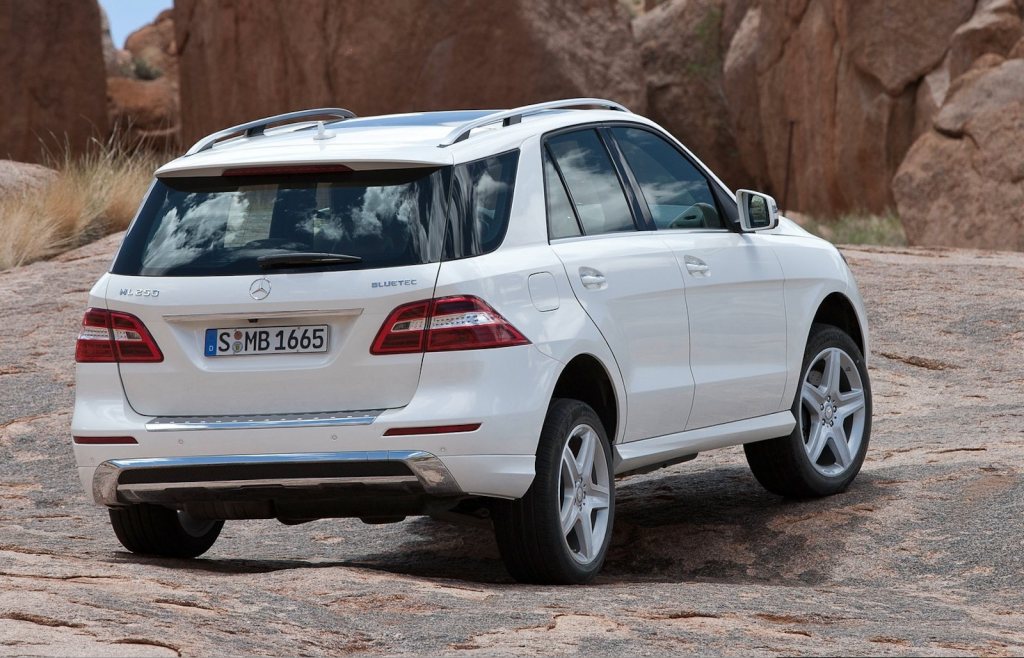
When I’m driving around in my Range Rover and achieving 16 mpg on a good day, I often fantasize about how much better it would be with a tiny four-cylinder turbodiesel under the hood. I’d have enough torque to accelerate just fine to highway speeds, but I’d be achieving far better MPG and saving money.
While such an L322-generation Range Rover doesn’t exist, the Mercedes version sure does, in the form of the ML 250 BlueTEC. It’s the full-sized, small-engine truck I’ve dreamed up in my mind, come to life. Except, instead of a Range Rover badge on the nose, it’s a Mercedes three-pointed star. As a result, I’ve been obsessing over buying one.

Because these MLs are quite a few years newer than my Range Rover, they’re a bit more expensive. But not that much more expensive. The cheapest I could find is this one for sale on Facebook Marketplace for $8,000, allegedly being sold by a Mercedes-Benz dealer technician. It’s got a ridiculous amount of miles (329,000), but it looks very clean. If I want something with fewer miles, I’ll have to spend a bunch more. Here’s one with 138,000 miles for $10,195, and another with just 68,000 miles for $15,900.
I’d probably be better off buying a V6-powered ML if I want to go the diesel route, seeing as how far more were likely built and sold here, which means parts availability is probably a bit better. Also, the V6 cars are more powerful and can tow more. But at the same time, I’m deeply attracted to the weirdness that comes along with pairing a big SUV with such a small engine—it never really happens in the U.S., and I’d like to experience it at some point. Don’t try to talk me out of it.
Top graphic image: Mercedes-Benz



I have a ’21 Sprinter with the om651, paired with the mercedes 7 speed it’s actually perfectly fine in most situations, and it’s actually only got 160hp in sprinter trim! I’ve had it up to the 90mph limiter without issue, towed an enclosed trailer from FL to NY, lots of full throttle and 14mpg but no real issue. I am very familiar with slow cars, I had a 300td and drove a 3cyl geo metro extensively and the sprinter is more fun than most cars with 2x the power. It does help that the cargo sprinter is mostly air and only weighs like 5500lb empty. The upside of the om651 aside from mpg (usually 18, but have seen as high as 25) is they’re generally considered more reliable than the v6 diesel, and lots more room in the engine bay if something does go wrong.