

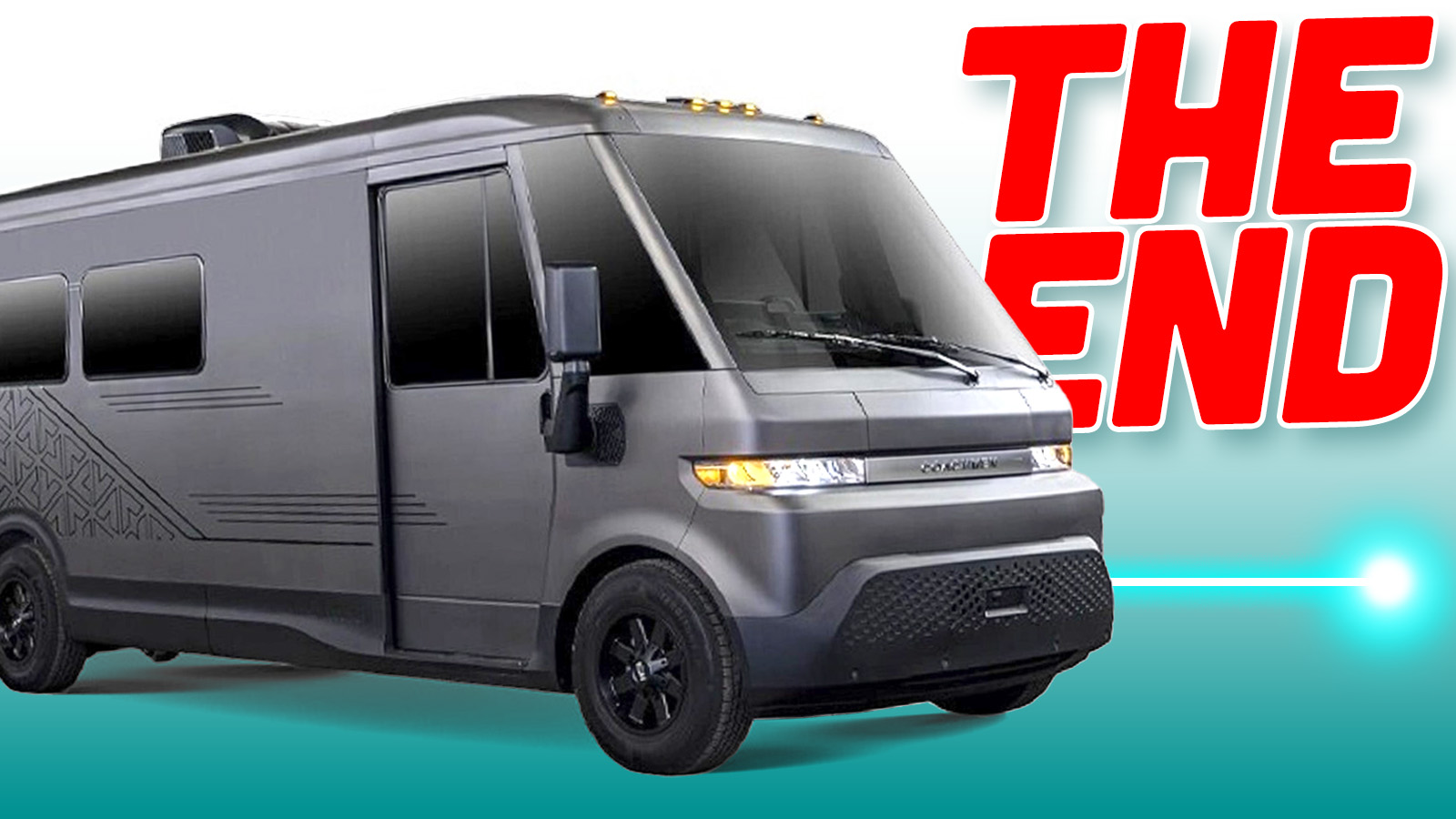
Back in October 2025, General Motors decided to end production of its Chevrolet BrightDrop work vans. The vans were great, but failed to perform as desired in the market. Though designed for commercial operators, the RV industry discovered the BrightDrop platform was also a perfect platform for an electric motorhome. One of the big players in the RV space, Coachmen, announced one of the most innovative motorhomes to come out of an Indiana company in years, based on the BrightDrop. The RVEX was the first all-electric motorhome from one of the big companies, and now it’s gone without a replacement.
My time at the 2026 Florida RV SuperShow has come to an end. I have tons of stories to write for you in the coming days, but I won’t get to write a particular story that I was extremely excited about. I wasn’t invited to see the RVEX when it made its debut at the Indiana RV Dealer Open House last year, so I was looking forward to seeing the RVEX in person here in Tampa. But after walking the entire Tampa site perhaps three times, the RVEX remained elusive. In fact, it wasn’t there at all.


The reason is sad. Coachmen has decided to pull the plug on the RVEX project, at least for now. But, more than that, Coachmen is taking the entire project, and even the RVEX prototype itself, out of the spotlight. The public won’t get to see Coachmen’s vision for the future. Hence, the unit didn’t make it here to Tampa. That’s how hard it failed. Perhaps even wilder is just how quickly it all happened.
The BrightDrop Was The RV Industry’s Best Bet

Coachmen announced the RVEX on September 22, 2025. At the time, I wrote a piece titled “A Big RV Company Just Announced An Awesome All-Electric Camper Van That’s Almost Affordable” accompanied by the topshot above. The RVEX was a huge deal. Before September, the only company that was slinging BrightDrop-based vans was startup Grounded RVs, which also built BrightDrop-based camper vans for RV rental company RollAway. Coachmen is not a startup company, but one of the household names of RV mega-conglomerate Forest River. The RVEX signaled the big RV industry’s official entry into the all-electric motorhome space.
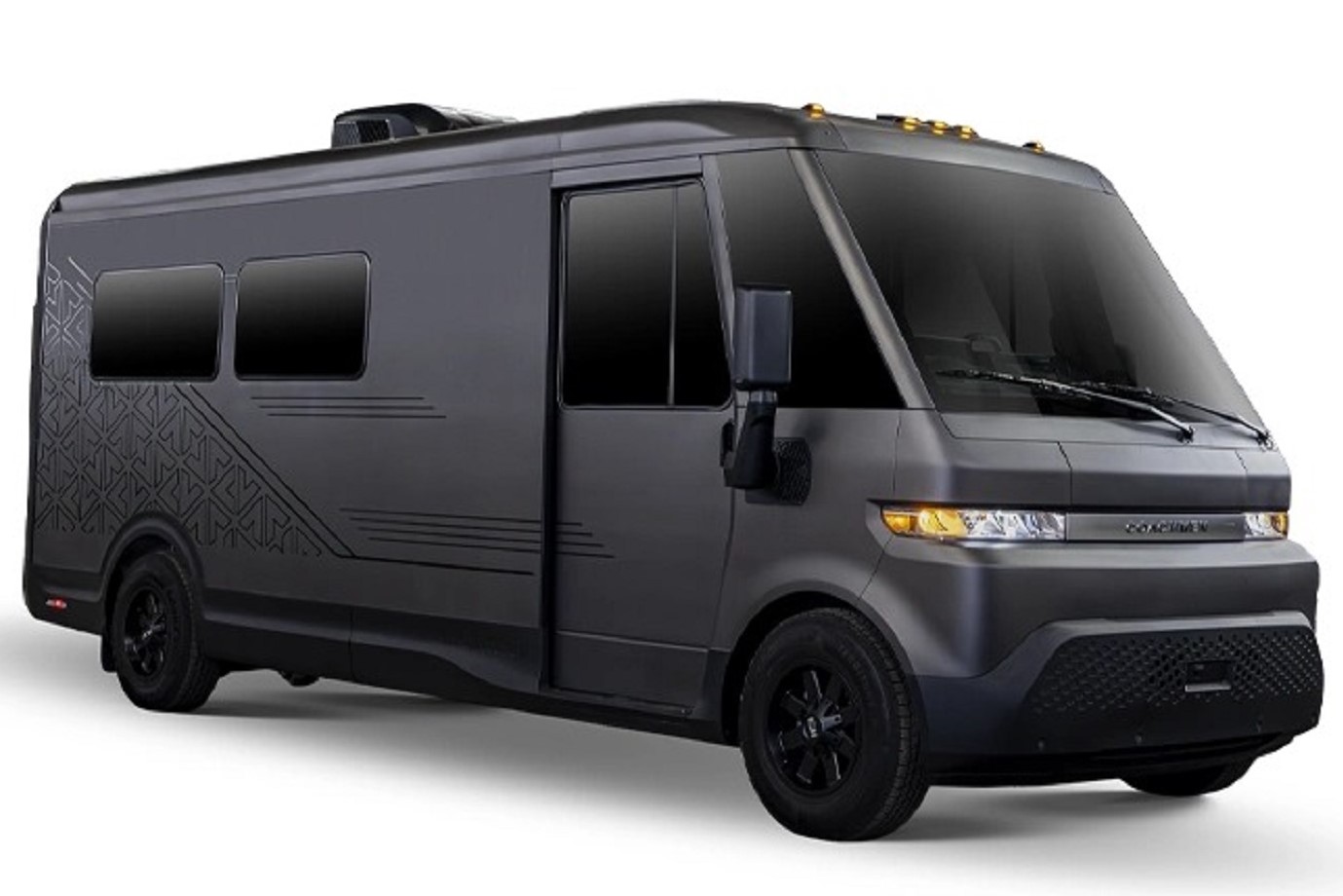
The motorhome was a pretty nice unit, too, with a fully featured interior that looked well-appointed and well-made for something from a big RV brand. It also had a few trick features, like a glass rear door that turned into a projector screen for campsite movies. Coachmen did an admirable job at hiding the RVEX’s work van origins!

Coachmen also planned to sell it for $150,000, which would have made it cheaper than a Grounded and lower priced than much of the gas-powered competition, which was amazing.
Why the BrightDrop mattered has to do with how the RV industry works. The RV manufacturers are usually secondary builders. They construct bodies on top of someone else’s chassis or van. Unfortunately, this means that the RV industry has been slow to electrify. If their chassis suppliers don’t have a compatible electrified platform, then the industry is stuck with what it has.

For years, this has meant that whenever someone wanted an all-electric camper van, they had to build an RV out of something like a Ford E-Transit or a Mercedes-Benz eSprinter, or convert a gas van to electric. Unfortunately, as the big firms like Winnebago found out through market research and talking to their customers, American RV buyers aren’t really interested in a camper van that goes only a touch over 100 miles before needing a charge, and they weren’t jazzed about a 200-mile van, either.
This is where the Chevrolet BrightDrop Zevo 600 came in. The 24-foot-long van sported Chevy’s Max Range 172 kWh 20-module battery, which enabled 270 miles of range. It also had AWD, 300 horsepower, and 390 lb-ft of torque. I won’t say that the BrightDrop was perfect. At the end of the day, the RVs that were built on it were awkward because the BrightDrop was designed to be a delivery van. However, the BrightDrop was the platform that came the closest to offering RV buyers the traditional motorhome experience, only fully electric. I genuinely thought that the BrightDrop was one of the coolest electrified things for the RV industry in years, and was waiting to see how companies would really go crazy with it.
Dead In Less Than A Month
Then, a day short of a month after Coachmen made its announcement, General Motors pulled the plug. The BrightDrop was dead. Grounded RVs, the company that was the first to the market with a BrightDrop motorhome, responded quickly. Here’s what Sam Shapiro, founder of Grounded RVs, said:
“No one in the world tried as hard as we did to build on all-electric vans. But at the end of the day what differentiates Grounded is everything above the chassis: our design, materials, technology, and integrated fleet management software. We’ve built on fully-electric and hybrid platforms like Ford, GM, and Harbinger, and now, with Grounded Gas, which we’ve long considered, we’re looking to a truly platform-agnostic future. Our stock of available Brightdrops is strong at the moment, but expansion to gas vehicles will move the business forward and allow Grounded to continue to lead toward an electrified and hybrid future.”
The sad thing is that Grounded RVs was started as an all-electric RV company, but I get this decision. The company first started building motorhomes using the Ford E-Transit before moving to the BrightDrop. Now, only a few years later, the company has to change platforms again.
At first, the expectation was that these companies would continue to build BrightDrop motorhomes until the stock of already-built BrightDrops dries up. That’s what Grounded plans to do. As RV News reported in October, that was an option that was actively being considered by Coachmen. While GM might have killed the BrightDrop, Coachmen figured that there were enough of them just sitting around that the company could build all-electric motorhomes for a year or two.

Then, Coachmen sort of went quiet, and the fate of the RVEX was unknown. That was until last week, when, in the run-up to the Florida show, Coachmen finally made a decision about the RVEX. As RV News reports, Coachmen will not be building the RVEX for a year or two. Instead, the whole project is shelved for 2026 and possibly beyond. How sad is it? Read this from RV News:
[Coachmen General Manager Zach] Eppers said dealers placed orders, and Coachmen was set to begin production in 2026 before GM discontinued manufacturing. Eppers said he is hopeful a similar chassis will be available in the future.
“The people who committed to us, both dealers and consumers, are still excited about RVEX,” Eppers said, “and we are still very interested in continuing this project. We just have not been able to find a chassis that offers those important features at a similar price point. If we cannot bring the range, cargo capacity and price together in a vehicle, then there is not as much excitement for it.”
Eppers said Coachmen has not given up on the concept. Some RVEX technologies and concepts will find their way into a new RV that Eppers said will be introduced in the fall. Coachmen team members who had worked on RVEX will move on to that and other Forest River projects.
At this time, Coachmen does not believe that there is a viable replacement for the BrightDrop, an opinion apparently also shared by Grounded. It’s not that other electric vans don’t exist; it’s just that none have quite the same space and capability as the BrightDrop does. So, the party is over just as it began. Apparently, Coachmen never got the chance to even make more than just the single RVEX prototype, and it has no idea what to do with the prototype. Maybe it’ll be sold to the public as a one-off or kept around Indiana for R&D use.
Some Good News

The good news is that the dream of an electrified RV from a big name isn’t dead, thanks to Thor Industries. The Entegra Embark motorhome (above) is not purely electric, and instead is a range-extended EV. I also got to tour it and think it’s the most innovative motorhome the big industry has built in decades. Don’t worry, I’ll write that story soon.
Still, if you’re someone who prefers all-electric over even EREVs, this sucks. It feels like the RV industry had a leap forward, just to get the rug pulled from under it. It’s even more depressing that the plan seems to be to wait and see if someone can build something like the BrightDrop again. All of this means that while millions of electric cars are multiplying all over the world, the American RV industry will still be behind. Well, hopefully it will work out next time.
Top graphic image: Coachmen



Why exactly do people (GM) think that a medium/large sized commercial van running on electricity for 270 miles (even 200, or 150 would be good) is a bad bet? They should look in some of those Chinese cities where nearly EVERY delivery van is electric. Sure not every city, but let’s say, one with 20 million people – would that be enough? Everything is electric there in the metropolitan area. Small delivery 3 wheelers, all electric bikes of course, delivery vans, delivery trucks, dirt hauling 20 tonne trucks and EVEN cement trucks. They’re electrifying the shit out of everything because … electric motors seem to work pretty well. Good torque. No noise. No vibration. No pollution (in the city). And it seems to be cheaper than paying top dollar for gas and diesel (China has to import oil ‘n gas).
The van is good looking. The tech looks good. Power. Batteries.
Imagine a quiet van, no smoke, plenty of traction, less parts to do maintenance on, lower costs.
Wait … could it be … that the oil ‘n gas industry is pressuring the auto makers to stop investing in EV because … without a lot of cars … people would buy less gas from the pump ? Probably a conspiracy theory.
GM does not need the oil and gas industry to pressure them. GM’s bean counters will always make sure that any new and cool concept will be canceled moments before it takes off.
Man, that interior is beautiful. Love the dark leather and wood paneling.
Outside looks good too. Not a weird, swoopy tribal sticker to be seen!
If you create a business model that’s entirely based on a single manufacturer building the foundation for your product, you put your future in another company’s hands.
This. There are reasons why (at least European) manufactures of RVs try to make all models on all available base vehicles. No matter if it’s a Stellantis, a Ford, Mercedes…
Grounded is an excellent choice for the brand, because it never took off.
Volumes just aren’t there.
People are sayin’ “GM gunna GM” but the truth is that’s correct, but disingenuous.
Fact of the matter is few companies try the type of things GM greenlights on a regular basis, (or regular enough for this to be a common phrase). Basically, you’re hating on the company that actually tries.
Now, apologist tendencies aside, we can argue if most of these “incidents” are self-inflicted, but I don’t think that’s the case here.
They put $2 billion into CAMI Ingersoll to build these. Would have made more sense to do some hybrid SUV/CUVs but that’s Monday morning quarterbacking.
As a business, why would they start work with the GM van without a purchase contract with GM in place?
Because the volume they could reasonably commit to purchase is very few, just a drop in the bucket to GM. Nobody knows if there will be much demand for these RVs or not.
It’s GM. Half the crap they do is for optics. The rest is moving forward with business as usual, half assed. Definition: We want no change, the bean counters said no. No follow through, the white flag thrown up on all occasions (EVs). Besides, Rivian had the market already, they believed in the product and the future.
GM continues its long tradition of killing innovative products just as all the kinks are worked out and the market is beginning to find the products. Is it something in the water or the culture? At least we still have 2 Cadillac sports sedans… for how long, who knows
The CT4 is already dead. Production ends in June. If you get an order in today, you MIGHT see your car built
Really? My neighbor bought a Brightdrop van and its awesome! And they canceled it? Like before anyone actually knew they existed? After climbing around it, it sure seems nicer than whatever crap Amazon uses
Which Amazon vans? They seem to only use Rivian electric trucks, RAM vans, random smaller vans, regular people cars and old UPS trucks (that is in the order of what I see in my area). I normally don’t care about RVs, I really think they are too much of a compromise and I don’t have enough time to use one to make it worth it. The version cancelled above, actually looks pretty good.
These are showing up on cars.com and other places; I’ve seen them a few times in my FB feed. It’s a damn shame.
GM gonna GM.
Synonym for GM is ‘future failure’.
I’m glad I had the chance to drive a Brightdrop. It really was a great package. It had all the latest technology and safety and was so easy to drive. It would have made a great RV.
I still feel like this was a marketing failure more than a vehicle failure. The product was good, but it’s so hard to convince fleet managers that electric is the way to go. And you have to offer them the path to put in the needed infrastructure.
I do want to drive one. A Hertz near me had 3 parked outside for a while and I really wanted to go rent one for a day. I didn’t see them there anymore this week though.
I heard the fleet managers didn’t really like it because the Ford e-Transit has parts commonality with the ICE transit making adoption easier, while those willing to go with a new platform went with the Rivian, which I believe has more range/specs and/or better price.
At this point, I might as well buy some surplus Rivians and convert them to RVs.
Leaving the Amazon livery on the side will just help excuse my horrible driving.
Supposedly Rivian sells the EDV to other companies. I’ve personally only ever seen them with Amazon branding.
GET TO THE RV RACING!!!
You know what we want, Mercedes!
In the Denver suburbs here, I see a ton of those Rivian-Amazon vans running around. So an EV cargo van as a concept seems quite viable, I’ve just read that the actual end users weren’t fans of the Brightdrops for various reasons. Makes me wonder how they missed the ball so hard on it.
Typical GM!
I am sure this is redundant but I would think that RVs would be great for EREVs or Plug in Hybrids as they get plugged in a lot at RV parks and are kinda locomotive sized and shaped already.
Mercedes’s note about most RV makers utilizing commercial platforms explains why we don’t have a lot of hybrid and EREV motorhomes running around.
Makes you wonder whether the big RV brands bothered to go ask Ford to make them a Transit cutaway with a hybrid or plug-in hybrid drivetrain before trying to built their own EVs. A hybridized Transit would fill the gap between the regular and E-transit models for longer deliveries, and a commitment of 75k units from Thor might help make it a reality.
Did GM even market these? I live in a large metropolitan area and I’ve seen exactly one Brightdrop van in the wild.
whens the last time you saw a Grumman Kabmaster commercial?
I think people just had too many issues with the shortfalls of these – namely the layout and doors/passthrough situation. There are certainly a lot of Brightdrops sitting on lots, and I can’t imagine GM would have said no to an order of a few thousand before shuttering the line- even at bulk pricing they could have covered some of their tooling costs. Unless they had some sort of “we’ll buy these for a loss the first year but it’ll get you press/more commercial orders” situation going on.
I drove a Brightdrop for a bit. I don’t remember too much about the experience besides a feeling of overwhelming blinding rage towards the Rivian Amazon delivery vans and the people who drive them. It’s the same feeling I imagine Camaro drivers feel about Mustangs, or what Mustang drivers feel about crowds.
They will pay!!!