

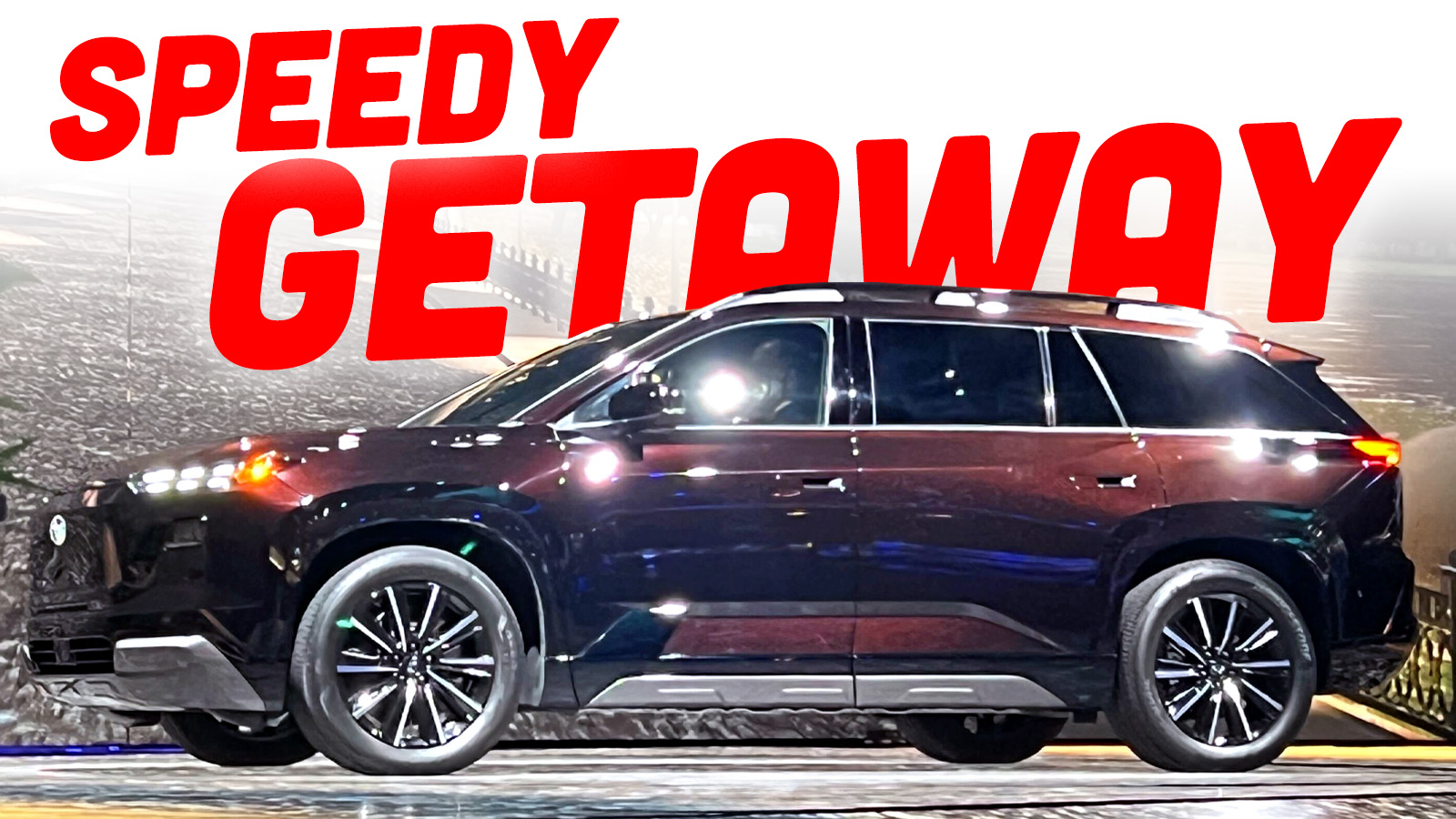
Can you believe it’s been nine years since we first saw the Subaru Ascent? That’s a long time for one generation of something as important as a three-row crossover, so it’s about time Subaru introduced a new one. Here it is, it’s called the Getaway, and it looks deeply familiar for a reason.
It’s no secret that Subaru and Toyota have been in a tryst of sorts. From the wonderful, affordable sports car that is the BRZ and GR86 to an electric wagon, the line between “Symmetrical All-Wheel-Drive” and “Oh, What A Feeling” has grown thinner and hazier over the past decade or so. A few months ago, Toyota revealed the new Highlander, which is electric. This is Subaru’s version of that.


The big aesthetic difference is, of course, the nose. Subaru’s gone with a bluff front end instead of Toyota’s sharky face. The centerpiece is, unfortunately, an illuminated Subaru emblem standard on all models. How gauche. Look past Rudolph’s nose, however, and you’ll find quite a lot of interchange with the Toyota Highlander, including the greenhouse, the quarter panels, the doors, and even the same recessed door handles with mechanical emergency releases. This should make backyard body repairs cheaper in 15 years’ time when your youngest child ends up scraping a door on the frame of your garage door, but the result in the meantime might be too much similarity. Still, there is one big way in which the Getaway is different from the Highlander.
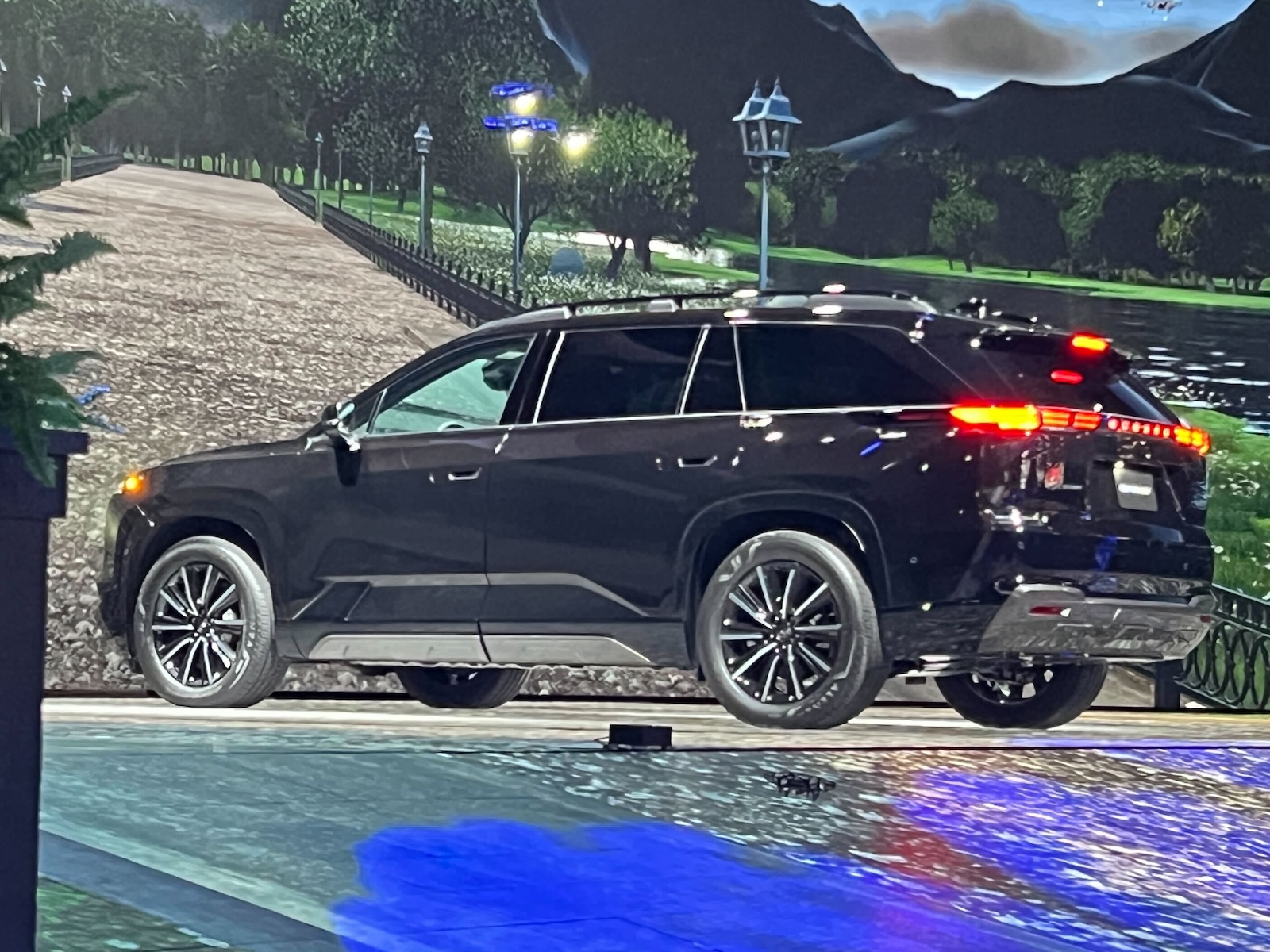
While the Highlander features a maximum output of 338 horsepower, the Getaway initially comes standard with a whole lot more. I’m talking 420 horsepower from dual electric motors, which Subaru claims is good enough to fling this three-row crossover from zero-to-60 mph in fewer than five seconds. Just make sure the family dog isn’t loose in the cargo hold when you bury the skinny pedal. Range doesn’t seem to take a big hit either, with Subaru still touting more than 300 miles from a charge from a 95.8 kWh battery pack. You know, the same size of battery pack as the one in top-spec Highlanders. Of course, a smaller 77 kWh battery pack is expected to come online in 2027 as a base offering, matching the base pack in the Highlander.
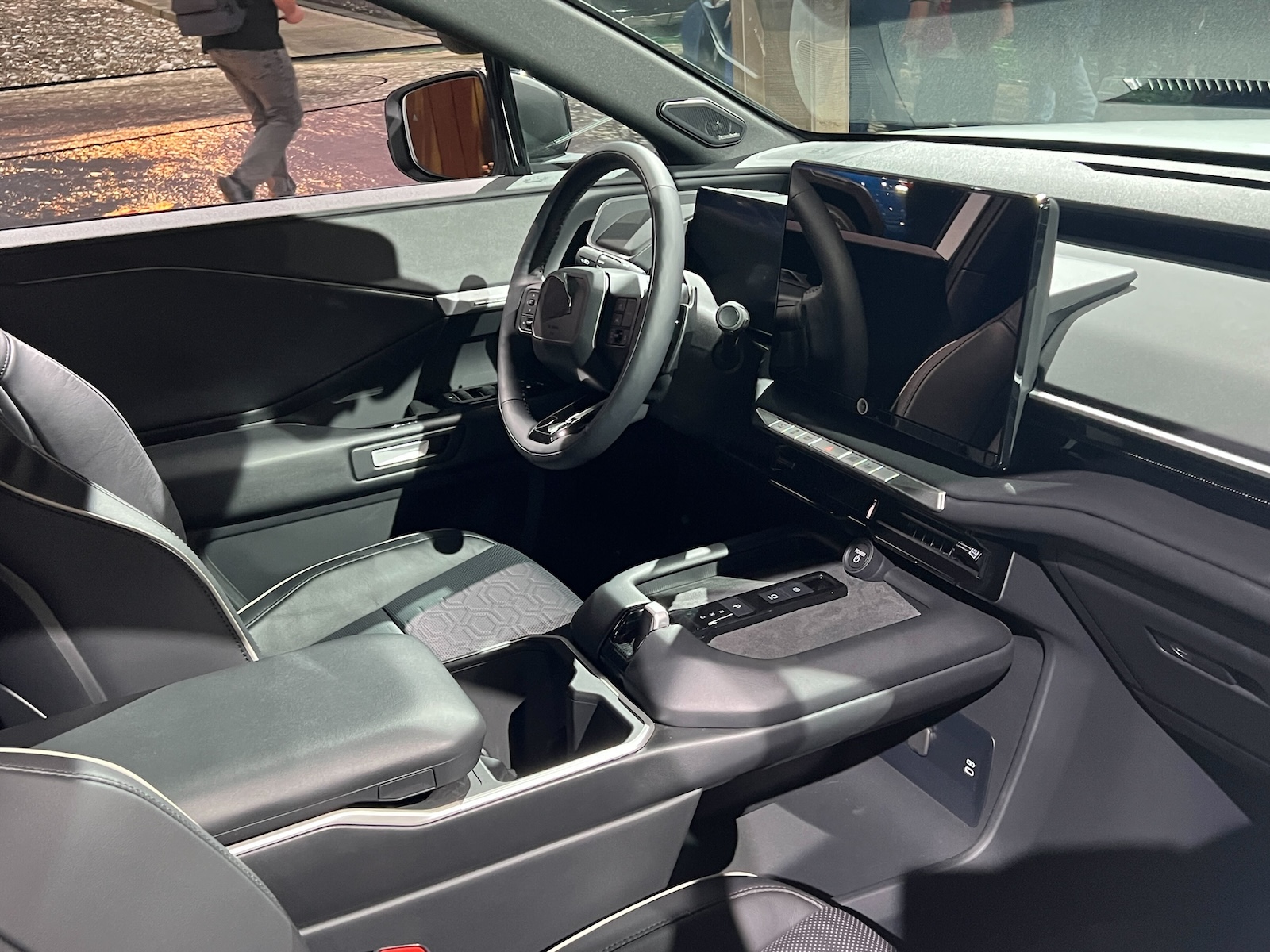
Inside the Getaway, it looks pretty much identical to the cabin of the new Highlander. We’re talking the same shifter, air vents, dashboard, 12.3-inch digital instrument cluster screen, and 14-inch infotainment touchscreen. It’s a bit sparse on physical buttons, but it looks to have plenty of interior storage and some nice amenities. Top-spec Getaways get a heated third row, ventilated second-row seats, a huge slab of glass for a moonroof, and the same sort of seat-mounted USB-C charging ports seen in various Kias. It’s a great idea, why not use it?
Regardless, I can’t help but wonder what the future will actually be like for Subaru. With the debut of the Getaway, approximately 45.45 percent of Subaru’s American lineup will have direct Toyota-badged equivalents. The BRZ’s twinned with the GR86, the Uncharted’s twinned with the C-HR, the Solterra’s twinned with the bZ, the Trailseeker’s twinned with the bZ Woodland, and the Getaway’s twinned with the Highlander. This isn’t necessarily a bad thing, as it allows development costs to be shared, but how much identity do some of these models, especially the electric ones, have beyond the badges on the front?

Maybe horsepower is the move. After all, if the Getaway ends up priced close to the Highlander, why buy the Toyota? They both charge at 150 kW, they both offer roughly the same sort of range, and they feature near-identical ergonomics. However, the Subaru’s a lot quicker, and horsepower gets the people going. I guess we’ll just have to wait for pricing to drop closer to the Getaway’s on-sale date late this year.
Top graphic image: Matt Hardigree


As soon as they announced the EV Highlander, this was inevitable. The name is forgettable but these will move. The EVs here at Subaru move faster than the WRX or BRZ