

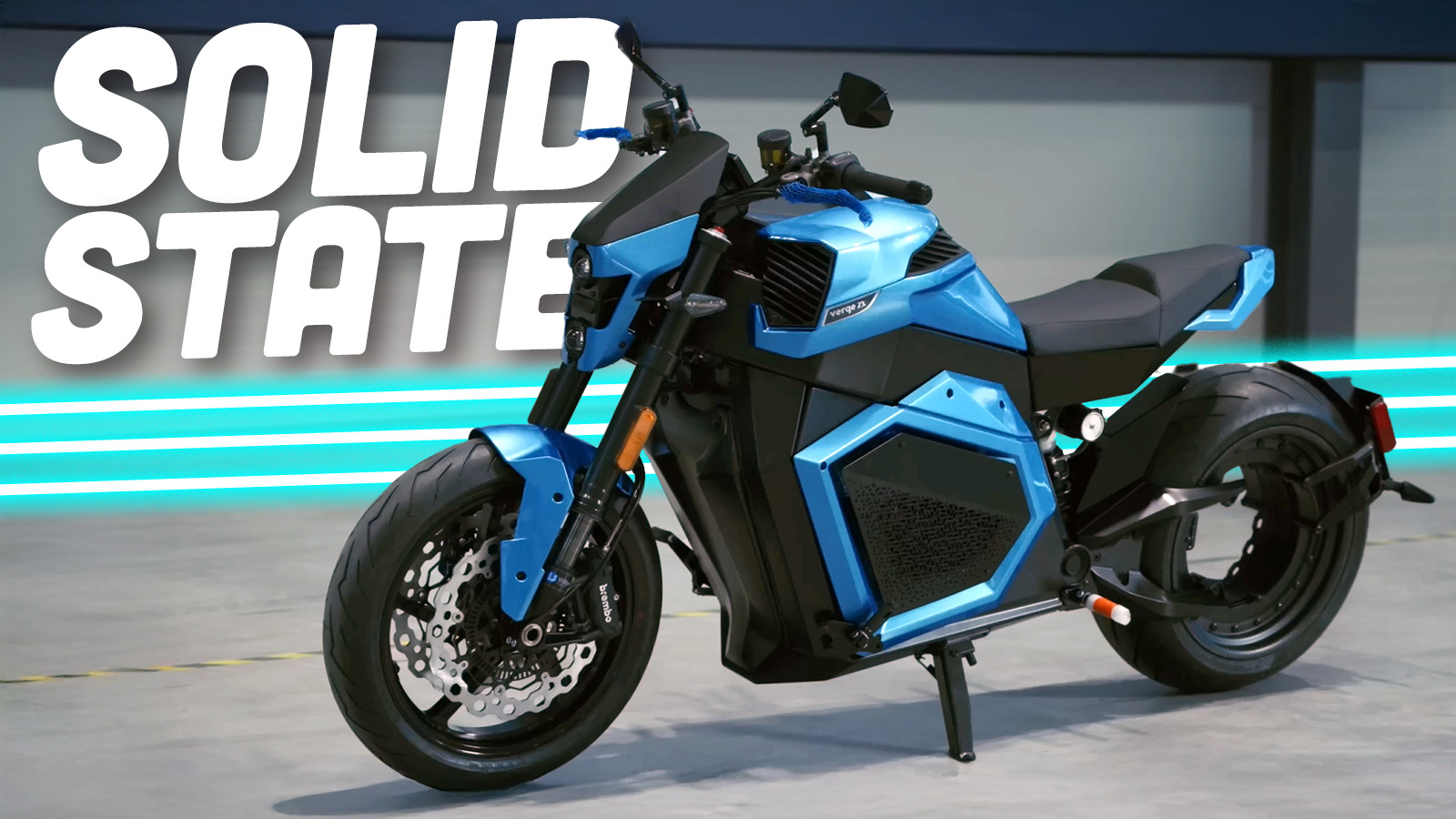
Back in January, Finnish startup Verge Motorcycles made a claim that, when fulfilled, would basically put it into the history books. The new Verge TS Pro is said to be the “World’s first production vehicle with an all-solid-state battery.” It’s a motorcycle with up to 370 miles of range, can charge in 10 minutes, and has a battery that supposedly has 400 Wh/kg of density and can survive more than 10,000 cycles with almost no degradation. There were doubts that this motorcycle would reach the market, but Verge just beat expectations. The first production solid-state Verge TS was completed and crated up to be shipped to the bike’s first customer.
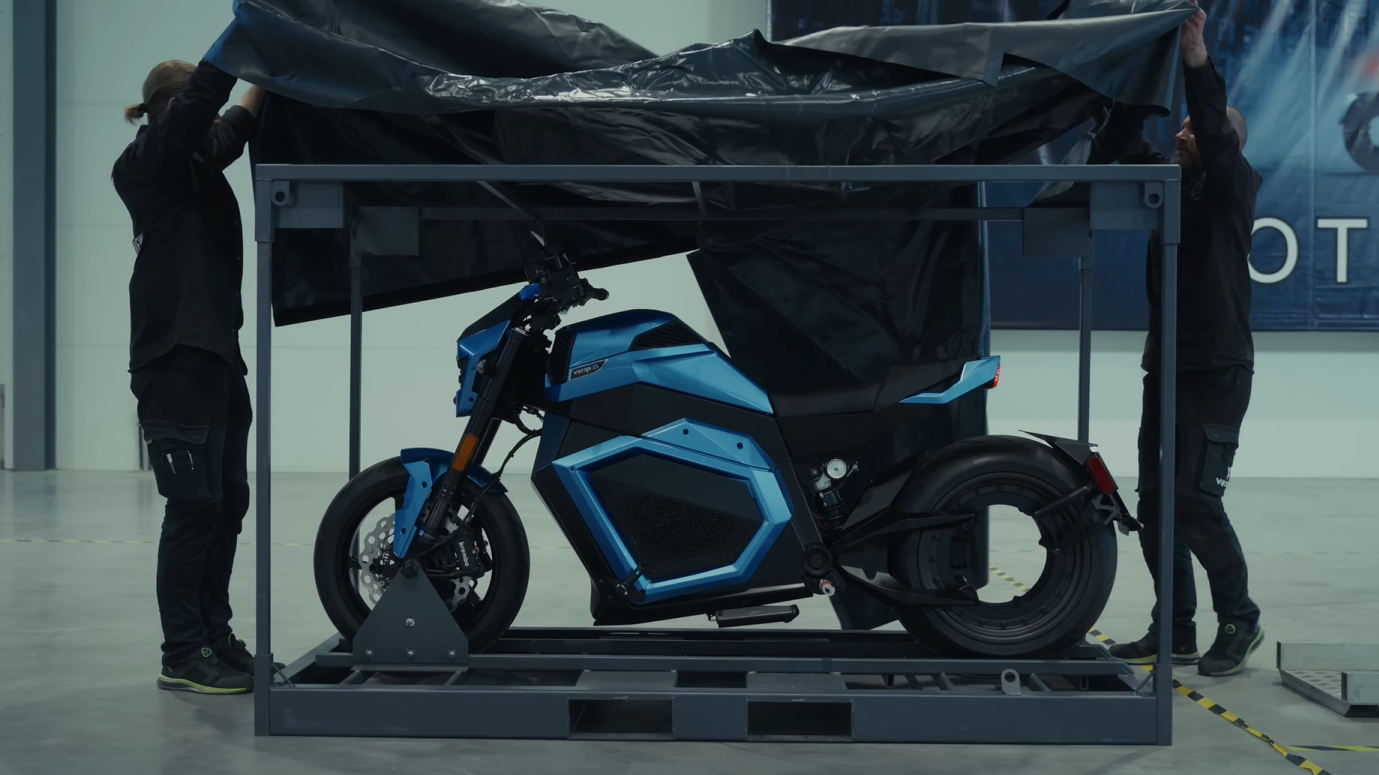
Back when this motorcycle was announced, Verge Motorcycles and the engineering firm behind its “hubless” rear wheel motor and its battery, Donut Lab, said the first examples would roll off the line before the end of the first quarter of 2026. Well, Verge did it, barely. On March 31, Verge published a video showing the very first production second-generation Verge TS going from the production line and into its crate, ready to be shipped off to an unknown owner.


While this is an awesome accomplishment, and one that should make electric vehicle history, it’s also a weird one.
Verge’s partner company, Donut Lab, launched the motorcycle’s battery, the Donut Battery, with zero proof, testing, demonstrations, or anything that suggests that the battery is real. Then, like a television show, Donut Lab decided to drip-feed proof of the battery’s specs once a week. Since Donut Lab has decided to prove the easiest claims first, we’ve now reached the bizarre point where the first production bike has been built before the biggest claims about its battery have been proven. Even weirder than that is that Donut Lab has adjusted its testing release schedule to once every two weeks. So, now we’ll have to wait even longer before we solve the mystery of Schrödinger’s solid-state battery.
But this is still a huge step forward, and we have some news from Donut Lab, too. So, let’s jump in.
From Donut Wheels To Donut Batteries
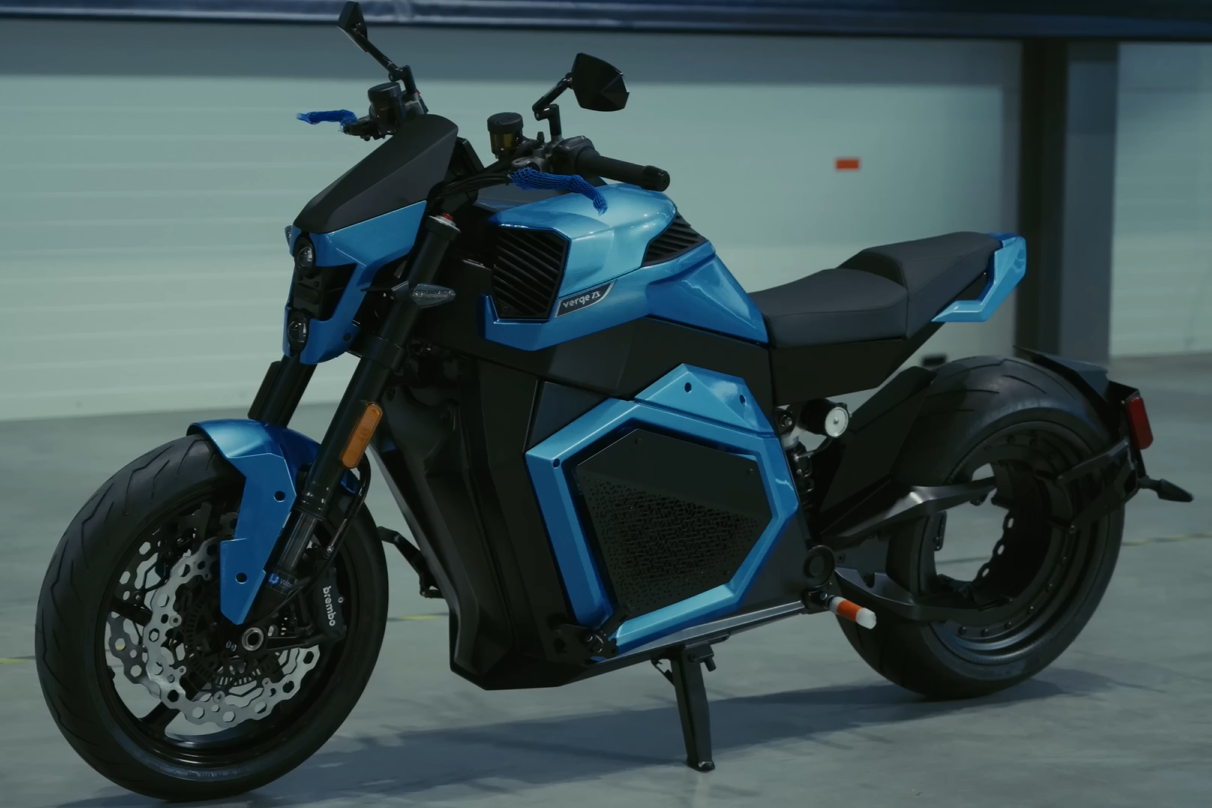
Most of my recent stories about this motorcycle have focused on Donut Lab, so here’s a reminder about what Verge Motorcycles is:
Back in 2018, Teemu Saukkio had an idea. He felt that the motorcycle market was ripe for more attitude with a dose of innovation. Finnish motorcycle manufacturer RMK Vehicle Corporation sprouted up to make Saukkio’s idea a reality. The RMK E2 was designed in Saukkio’s garage and by working at a breakneck pace, the motorcycle made it to EICMA 2019. The company, now called Verge Motorcycles, presented the TS, an electric motorcycle ripped right out of the dreams of many bikers.

What made Verge’s electric motorcycle stand out from the rest in the crowded market was its rear wheel. Hubless wheels have been a staple of science fiction, and in the 1980s, famed Swiss designer Franco Sbarro even slapped some hubless wheels on a few motorcycles and a car. However, nobody has been crazy enough to put hubless wheels on a production motorcycle.
In Verge’s hubless rear wheel motor, the inner part of the wheel system is attached to a swingarm. The outer part of the wheel is what turns. The motor works using the electromagnets on the wheel that repel each other, rotating the assembly.

This motor was put into a package with impressive specs. The top Verge, the TS Ultra, had 201 HP, 885 lb-ft of torque (at the wheel), 60 mph acceleration in 2.5 seconds, and up to 233 miles of range. However, given the motorcycle’s high $44,900 price tag, it should be crazy fast. Verge actually put these bikes into production and, amazingly, people have been plunking down the cash for them. They’re even for sale here in America.
Now, the TS is entering its second generation, and everything is just a bit sillier than before.
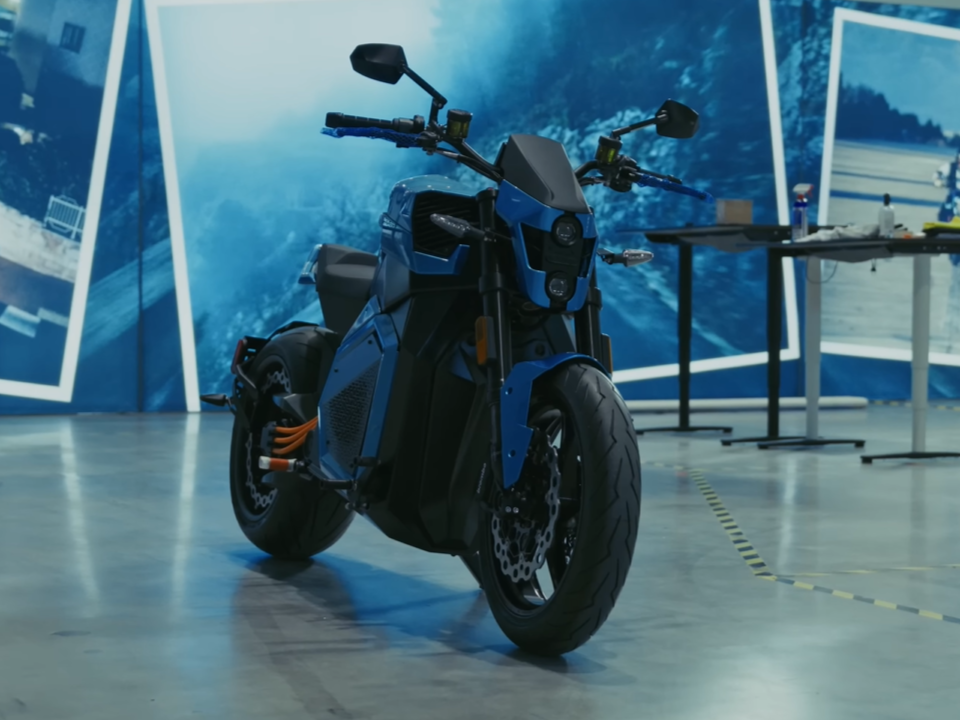
The Verge TS lineup is three flavors of the same bike. The base model is the Verge TS Pro, which has 137 HP and 737 lb-ft of torque (at the wheel) on deck from its Donut Motor 2.0. That’s good for a 3.5-second sprint to 60 mph. Then there’s the TS Ultra, which has 201 HP and 885 lb-ft of torque (at the wheel). Then there’s the California Edition, which is a cosmetics package on the TS Pro.
The headlining feature of all of these motorcycles is, of course, the fact that they have the world’s first solid-state battery in a production vehicle. The standard range version of a Verge gets a 20.2 kWh pack, and the long-range version gets a 33.3 kWh pack. These batteries are good for up to 217 miles of range or 370 miles of range, respectively.
The Battery Claims
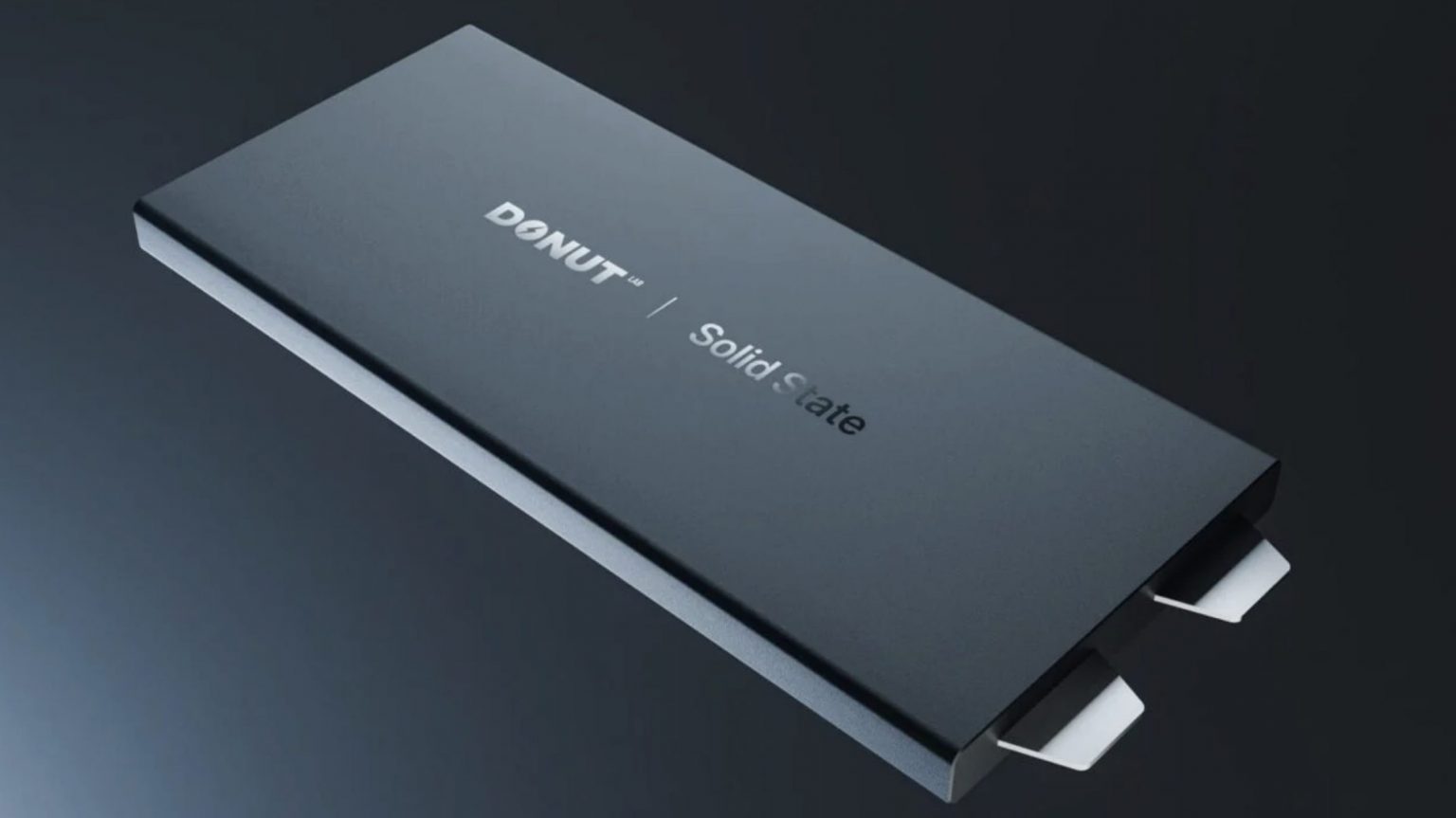
This battery is the work of Donut Lab, which was founded in 2024 by the same people who built Verge Motorcycles. It’s currently run by CEO and co-founder Marko Lehtimäki. Verge Motorcycles says this motor, now called the “Donut Motor,” is technically a Donut Lab creation. But the battery is what everyone has been talking about lately. If you missed my previous coverage, here is what Donut Lab is claiming with the battery:
Lehtimäki claims his team has made a battery that can charge in only five minutes, will last more than 100,000 cycles with almost no degradation, is cheaper to make than lithium-ion batteries, delivers 400 Wh/kg, and is made out of 100 percent green materials. Simply put, Verge and Donut Lab claimed to have built the holy grail of batteries.

Donut Lab claims that this battery is better than any other in that it retains 99 percent capacity in minus 30 Celsius and also when it’s above 100 Celsius, unlike lithium chemistry. Donut Lab also says you can run the battery to zero or charge it to 100 percent as many times as you want without hurting it. As for lifespan, Donut Lab says it’ll last the entire life of the vehicle, making the threat of having to replace a worn battery a thing of the past. The company then talks about these cells not having thermal runaway problems, weighing less than lithium batteries, and, somehow, even costing less to make than lithium batteries.
As if all that wasn’t unbelievable enough, Donut Lab then claims, “In fact, we found ourselves designing a slower charging speed so riders can plug in and actually have time to drink a latte and enjoy it instead of downing an espresso and rushing back to their bike.” Weirdly, Verge also says that its version of the Donut Battery will last for 10,000 cycles rather than 100,000.
When Donut Lab announced the battery in January, Donut Lab was accused of peddling a scam. Even executives at major battery firms cast doubt that this company that came out of nowhere two years ago had somehow leapfrogged massive corporations and research organizations in creating the holy grail of EV batteries.
The Donut Battery Saga Continues

So, to prove its claims, Donut Lab sent cell samples of the Donut Battery V1 to the state-run VTT Technical Research Centre of Finland for third-party verification. In its first test, VTT confirmed that the battery’s cells can charge in about five minutes. In the second test, VTT suggested that, so long as there’s adequate heat sinks, active cooling is not necessary. The third set of tests demonstrated that the Donut Lab battery has a self-discharge rate that’s similar to a real battery and not a super capacitor.
The fourth test, a charging speed test, was done by Donut Lab, not VTT, and it was the first test of a complete battery, not just cells. What’s interesting about this test is that the battery charged from 10 percent to 70 percent in nine minutes and seven seconds. It then hit 80 percent in 12 minutes and three seconds.
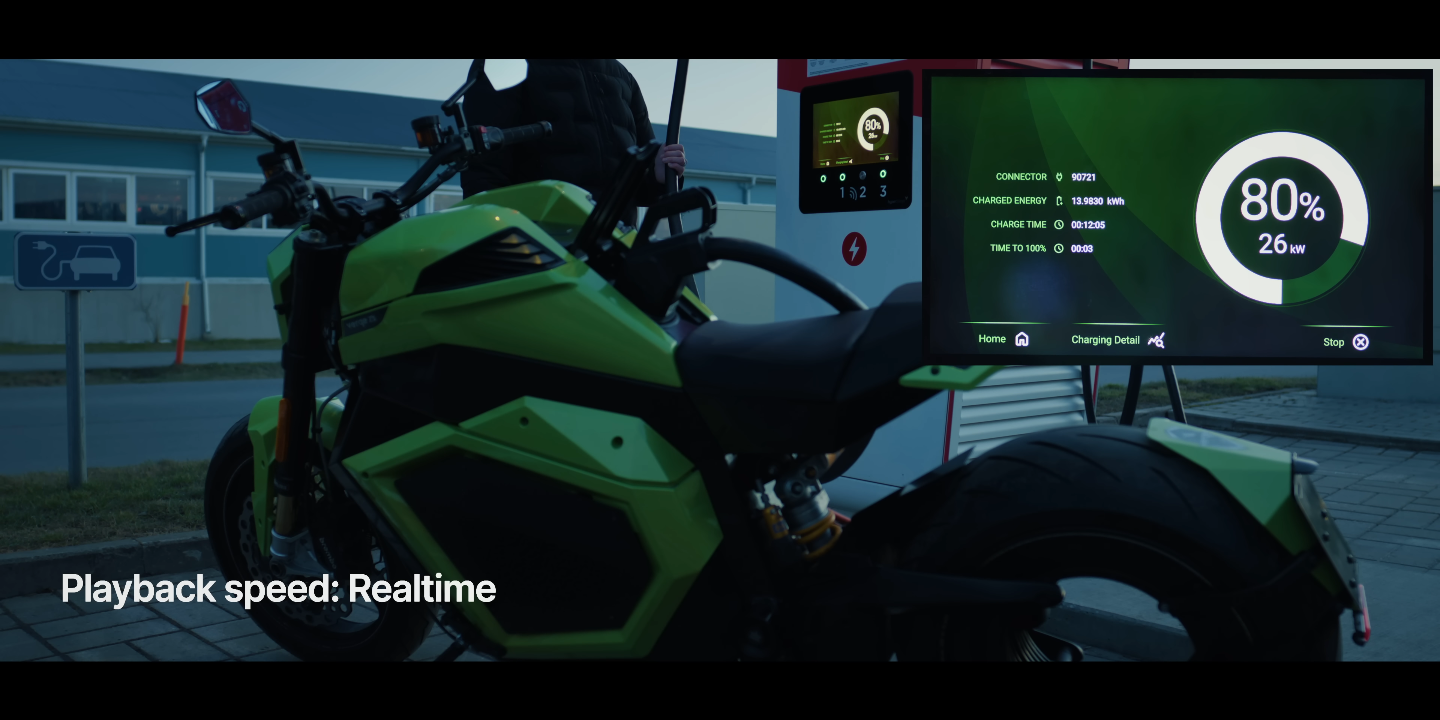
Donut Lab said that the battery could charge in just five minutes, but they intentionally throttled charging speed to take 10 minutes so you could drink a coffee while your bike charges. I always thought this claim was silly. When I ride a motorcycle, I often just want to get gas and get back on the road. If I want to use the bathroom or get a snack, I fill up the bike and then park it in a parking space.
Why not have a user switchable charging speed option if you care about coffee so much? Regardless, per Donut Lab’s own testing, the battery takes longer than 10 minutes to charge if you want to go higher than 70 percent. That asterisk was never advertised until now. So Donut Lab’s original advertising was proven wrong with its own testing.
If you want to read more of my coverage on these topics, click here, here, here, and here.
The Battery Didn’t Blow Up When Abused

I skipped last week’s test, which I didn’t think warranted a whole article. In test five (the fourth VTT test), the battery pouch that was damaged during the VTT temperature test was forced to undergo five 1C charge cycles and 50 fast-charge cycles at 5C rates at 77 degrees. The battery did not experience a thermal runaway. Instead, performance decreased until the battery failed. From VTT:
This project included independent cycling testing of an energy storage device supplied by the customer, which the customer identified as a solid-state battery cell. The test was conducted for cell DL2 that had lost its vacuum during a previous high-temperature test conducted at 100 °C. The cell was subjected to a 5C cycling test consisting of 50 cycles between 0–90 % state of charge (SOC), using the maximum voltage range specified for the cell (2.7–4.3 V). A reference performance test consisting of five cycles at 1C using the recommended voltage range (2.7– 4.15 V) was conducted before and after the 5C cycling test.

The initial reference performance test yielded an average 1C discharge capacity of 24.689 Ah, based on five consecutive 1C cycles. After six cycles at 5C, the discharge capacity began to decrease rapidly and continued to do so for approximately 15 cycles, after which the rate of capacity degradation slowed, and the capacity stabilized. The average 1C discharge capacity measured during the reference performance test after 50 cycles at 5C was 11.194 Ah, corresponding to a 54.66 % reduction compared to the initial capacity. The average energy efficiency during the 1C cycles, calculated from the reference performance test data, decreased from an initial value of 89.6 % to 83.0 %. After completion of the test, the cell thickness had increased by 17 %, and the cell pouch was firm.
While the sample size for this test was tiny, the lack of a thermal runaway is a good thing. I would love to see what happens when the entire battery pack is subjected to the same tests after being damaged.
Donut Lab Slows Down The Drip-Feed Of Proof
This week, there isn’t a test at all. Instead, Marko Lehtimäki filmed a 20-minute interview (embedded above, click here if you can’t see it) where he laced in some admittedly funny April Fools humor with what seems to be actual statements. He says that the bikes to be delivered later this year will have the Donut Battery V2 in them. Since VTT is testing the specs of the Donut Battery V1, Lehtimäki says, Donut Lab will have a second season of its “I Donut Believe” series to prove the specs of V2.
I think Lehtimäki’s getting a bit ahead of himself here since Donut Lab still hasn’t demonstrated Donut Battery V1’s claimed 400 Wh/kg battery density, 100,000 charge cycles (or even 10,000 cycles) with minimal degradation, that the battery is cheaper to make than a lithium battery, or what the battery is even made of.
Even weirder, Donut Lab has now adjusted the testing release schedule to once every two weeks. But hey, at least Donut Lab now has a merch store, where you can purchase a T-shirt for $70, a trucker hat for $70, or a hoodie for $142.
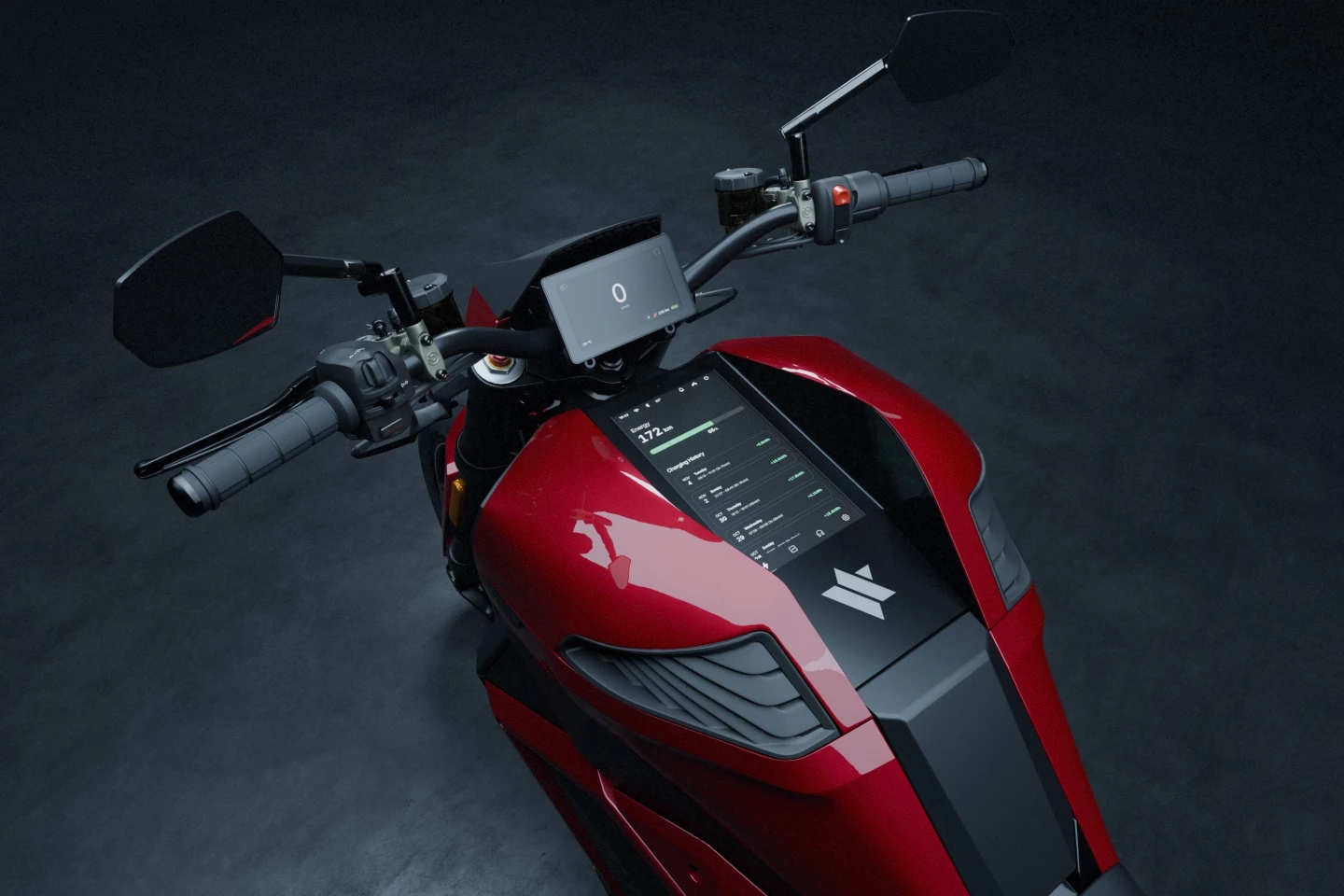
As I’ve said before, Donut Lab, Verge Motorcycles, and Marko Lehtimäki are staking their futures and reputations on this. The Donut Lab battery could go down in history as one of the greatest inventions and most clever pieces of marketing of all time. Or, maybe Theranos, the Fyre Festival, the Nikola Corporation, and Enron will have a new friend. I suppose a third option could be that the battery is real, but doesn’t really live up to the marketing. That’s what happened with the Sondors MetaCycle, after all.
If you’re sold and want to get the first production vehicle with a solid-state battery, the Verge TS Pro starts at $29,900. Add $5,000 to that price if you want the long-range version. The TS Ultra is $44,900. Only early pre-orders are getting built right now. If you buy a solid-state Verge now, Donut Lab and Verge say you’ll have to wait until the end of this year for those to begin shipping.
This whole saga has taken me on a rollercoaster. I love electric motorcycles, I really do. One of my favorite riding experiences remains the 2023 Zero DSR/X. So I desperately want the Donut Lab battery to be as much of a game-changer as it’s advertised to be. I love a good underdog story, too, and beating mega corporations to the punch would definitely qualify. But Donut Lab’s marketing strategy is making it really hard to get excited and not pissed off. Well, I guess I’m just going to have to wait two more weeks to see what Donut Lab wants to say next.
Top graphic image: Verge Motorcycles




Sorry, y’all, I looked in the battery. The cat is dead. Turns out battery chemicals are not particularly good for them.
Many experts are claiming the tests conducted by VTT are consistent with Li-NMC batteries.
I’ve posted how it is possible to achieve 30 kWh in this footprint with current battery technology. There’s a 28 kWh battery in the back of the current plug-in hybrid S-class and it’s not that much bigger than 13 kWh packs that used to reside in the older models.
The claims on range are almost always conducted on a dyno or cruising at a constant 45 km/h until the battery runs out.
The only limitation to charging speed on motorcycles is the cooling. Cars with 5x the battery energy density can charge much faster because they’re liquid cooled.
Big if true…
885 lb-ft of torque (at the wheel).
It seems silly to say (at the wheel), since the motor is the wheel. I guess hubless is shaft less, so it can’t have power and torque measured at the shaft.
Man, changing the rear tire looks fairly involved.
Let the benchmarking begin. Then if it’s not all above board the poorly made movie. If those batteries are that energy dense motorcycles pretty low down the use case. Aerospace primarily drones seem like the market. Hopefully they are just crazy geniuses but I sort of doubt it .
I’ll believe it when a reputable third party acquires one of these bikes and it performs as they say it does in the real world.
My 2024 Kia can charge from 10% to 80% in about 25 minutes (100 kWh battery), which is no slouch even among 2026 model year EVs, but still it’s not exactly cutting edge. They claim the Donut pack can do that in about 12 minutes, or twice as fast, which is very good while not being earth shattering. This whole thing is definitely heavy on the marketing, but for the moment I am inclined to believe they have a marketable battery pack that can charge that fast. I don’t believe the ‘throttling charging speed to enjoy your coffee’ for a second, but 12 minutes is good.
BYD debuted megawatt charging last year (and our very own Paddy G tried it in Beijing). They are now pushing 1.5MW.
Meanwhile, Donut’s “fast charge” test is 5C, something achievable by many EVs right now but limited by our infrastructure.
Wake me up when they prove their 400Wh/kg claim.
The big difference between you Kia and this bike is that your Kia (and every modern electric car) has a liquid cooled battery that uses the A/C system to cool the battery and allow fast charging. This bike (like other electric motorcycles) doesn’t have active cooling.
Maybe they should pony up for water cooling. Amazingly enough, HD has it in the Livewire One.
Why would they if it isn’t needed? Water cooling – and especially A/C cooled water cooling – adds complexity, weight, and bulk. Easy to accommodate in a car but not a motorcycle.
The Livewire has a water cooled motor and inverter but no active cooling on the battery. Just fins on the battery housing and a duct to direct air over it when moving.
Because apparently you get to charge way faster…
Not worth the tradeoff. The Verge is already weighs more than 500 lbs and there is no room for water-cooling and an A/C system. To add that they would have to reduce the battery size.
Trading shorter range for faster charging doesn’t make a lot of sense when the vast majority of EV charging doesn’t happen at a DC charger anyway.
33KWh in a bike is wild. I dont need what they’re offering, but if it could get half that capacity strapped to a 280 pound package (with the battery) and 60hp motor, I’d be pretty happy.
That rate of charge says that there’s an L3 on there somewhere, I hope there’s an L2, too
33KWh would power my house for two whole days.
Gonna do some investigative journalism and find out who that first bike is being shipped to? Although that might be pointless if it’s potentially in the hands of people being the drip.
The hell with the motorcycle, I want a 33kW-h battery pack whose volume justifies installing on a motorcycle, in the place of the bigass pack that powers my RAV4 Prime. I want EV range, more of it, now.
There are going to be containers full of these motorcycles headed to China. Chinese battery makers will buy up the first few batches of bikes so they can get them into their labs so they can tear them down and steal any trade secrets they can.
I still think this is why they have been slow rolling things. They know the second these are in market their IP is worthless because China will just steal it. If I were these people I would give it GPS and trigger a melt down the second it touched Chinese soil.
I hope they do something like that as well. A melt down might be extreme (but definitely warranted for how little China cares about IP theft), but it wouldn’t be the first time that things were geolocked to protect a company’s IP.
I recall a story about some trains in Poland (I believe) that were locked down based on GPS if they didn’t get regular service from the company that built them. Don’t recall the full story, but I think this all was found out only after a train was rolled into a service station that happened to have enough metal around it to prevent GPS tracking. Just outside the station, the train had all kinds of supposed problems reported by its computers, but inside the faraday cage-station, no problems were reported by the same computers. I know I’m not remembering the story completely but it was a sleazy way of locking your product down.
The workaround there would be for a Chinese company to just ship the bike to one of their other engineering centers outside of China, since so many of the larger ones are essentially global now
This could be an amazing breakthrough or an elaborate hoax perpetrated by the illustrious team at the Autopian. Considering todays date I suspect the latter.
Considering lots of automotive writers besides just our merry crew and lots of renewable energy commentators have all been chuntering back and forth about the Donut battery for months now, I’m pretty sure the date is merely coincidental.
This reminds me a bit of the Cold Fusion debacle of 1989, in an age long before social media and the hype cycle were a thing. University of Utah scientists announced they had managed to create an endless source of cheap energy, and in the end the experiments couldn’t be validated or reproduced, and the entire thing was found to be the result of faulty equipment, bad assumptions and poor scientific process. I surely hope that a cheap solid state battery has been produced here, but at a price of $29,900 for the bike, I hope this isn’t a Ponzi scheme where the battery really costs $29,899 and they are throwing in a bike for $1.
It’s simply a matter of time before these claims are reflected in the marketplace in a real product. Whether this is the time or not, is the question. Science, innovation and progress does not sleep.
These are my thoughts as well. For people outside of STEM, they believe nothing is being done or that any advancements are being made until something they can comprehend is displayed right in front of their eyes. Science absolutely does not sleep. This tech will pan out at some point. Whether or not these guys are the real deal who get the historical credit is the only question.
I can’t even contemplate that torque. That’s mind bending. The price puts it far out of anything I’d even consider but I look forward to reading about testing when it finally gets to journalists.
That’s torque at the wheel, not crank. It’s not much different from wheel torque of a regular bike in 1st gear. The mindblowing part is that you get to keep that 1st-gear-equivalent torque at whatever speed you’re going.
I was originally going to say that’s not quite how electric motors work, but my math shows that, for this application, it might as well be:
If the battery has an upper limit of 201 horsepower and the motor has a limit of 885 lb-ft, that means the bike delivers constant torque and linearly rising horsepower (hp=tq*rpm/5252) from 0 to 1192rpm, at which point it reaches the upper bound of power, which becomes the limiting constant as torque starts to taper off rationally (tq=5252*hp/rmp).
With the 240/45ZR17 tire in the photo above, this changeover will happen at roughly 90mph, which basically means max torque is always available on the street. Besides, you’ll still be making 201 horsepower all the way to this thing’s top speed, and torque will only reach half (442) around 180.
Thanks for doing the math. It’s pretty wild performance!
I read somewhere that the first two commercial purchasers are David Leisure and Jon Lovitz who will also be spokespersons.
Battery tech aside, does a hubless wheel offer any benefit?
I’m curious.
I see massive unsprung weight that you’ll immediately notice on a motorcycle, hitting a bump mid-corner would likely feel far worse that traditional motor placement.
But I really like the aesthetic with no chain.
They are much, much less efficient than traditional wheels for rolling resistance. Regular motorcycle wheels have two small bearings in the hub, that interface with the axle tube and the hub. It’s a small amount of friction since they are going around an axle shaft only 1-2 inches in diameter.
Hubless designs have a large inner portion that is stationary, and of course the outer shell attached to the tire. So allllll of that circumference needs bearing support. That adds up to a lot more friction in everything.
And yeah as Spikedlemon said, all the magnets and the motor in hub add a lot of mass, and it’s all towards the outer circumference, so it might be more resistant to changes in lean angle.
Those points are what I expected. A simple hub with needle or roller bearings has got to beat whatever is there hands down. I remember some very friction-y behaviour in a YT vid of an early model or prototype. And like you say, swingarm mass is (at a minimum) replaced inner ring mass and lots more bearing mass,
Massive amounts of zero rpm torque. The magnets are pretty far from the axis, so great torque, and the area is pretty huge so there are lots of them.
885 lb-ft of torque is not quite steam locomotive ( 60,000 foot pounds and way up) but for a bike it’s crazy.
Wait, are the wheels the motor, then? There are magnets in the moving wheel and a fixed electromagnet stator assembly, and the whole thing is essentially a linear motor, except a curved one?
Yup. It’s actually pretty cool except for the unsprung weight.
Active suspension might fix that, I mean at this point why not?
Also, it seems like a synchronous reluctance motor might be a good idea and you wouldn’t need those magnets. Sort of like a circular rail gun.
I wouldn’t even assume that. These aren’t actually hubless, they’re spokeless. The hub is just really large, potentially even larger from a side aerodynamics perspective than a traditional hub. The only thing they’ve removed from the assembly is the narrow spokes, and I’m dubious those are a big contributor to crosswind performance (but I am not a wind tunnel engineer 😉 ).
what independent testing firm is buying and getting their bike first is what I’d like to know.
None of them. The initial customer list will be carefully curated and will all have signed NDAs, is my guess.
I like to follow the money for insights. I’m sure there are links to this info? (shortcuts welcome) but besides all the tech angle, and I like the marketing drama and promise, vaporware or not tickles and general vibe, etc – I am very entertained and I don’t dislike it. But who owns this, who has put money into it, and whats the VC angle? This, I would also be interested in.
5 articles on this “its real, we promise. No we won’t let you inspect it independently” hype train is an amazing result for their PR team.
I agree, after the first one, we shouldn’t have gotten another article until they done releasing info. IMO anyway
I do have to hand it to them that they have at least created a definite buzz in the motorcycle world. Love or hate, they are talked about.
Unfortunately I forget the name of the YouTube channel, but there is a guy out there who works in the battery industry and did his PhD thesis on solid state battery tech, and he has absolutely torn every single Donut Labs “proof” video to shreds. Everything I have heard from experts on these batteries point to them being slightly advanced versions of bog-standard liquid electrolyte lithium ion cells. One of the biggest flags he mentioned is that the charge curve is identical in shape to commercially available liquid electrolyte lithium cells, and that curve shape is entirely determined by battery chemistry.
The thermal degradation shown in the 5C tests really does point to this, a 50%+ reduction in cell capacity under a barely double-digit high rate discharge is not something that indicates solid-state construction, and actually points to a liquid electrolyte with dendrite formation. Not to mention this company was not even founded two years ago, and is now claiming to be the industry technology leader. That’s just plain unbelievable to go from foundation to R&D to prototyping to validation to mass production of batteries in under 24 months of an industry revolutionizing cell just makes absolutely no sense.
It’s a shame too since the bike seems compelling on it’s own merits, but the scandal and distrust this battery will sow as more people debunk it will only call into question everything else Verge puts out.
Two things:
1) Verge could have been working on battery tech for years before spinning it out into a separate company
2) Would any kind of liquid-electrolyte battery chemistry be able to undergo dendrite formation and failure without a thermal runaway event?
1 – Absolutely, and I was not fully aware that Donut Labs was a spinoff, so that does certainly give a lot of context to their quick scaling up. I will give them the benefit of the doubt there that they had more time than I thought to get here.
2 – I am not a battery expert by any stretch, so I don’t know for certain. That said, as I understand it, dendrite formation is not an on/off switch for failure that would cause a runaway like puncturing the separator. Dendrite formation certainly can and eventually will in a liquid electrolyte, but the formation of dendrites can explain the capacity loss as the dendrites remove available surface area and volume for energy storage. Also, even within a same chemistry family, there are numerous small tweaks that can make impacts on how quickly dendrites can form, and I imagine different separator materials that are more hardy.
All that to say, I believe that there are certainly liquid electrolyte lithium batteries out there that can undergo some amount of dendrite formation without a runaway event. I’m also more than happy to be proven wrong on any point, but I am skeptical since the independently verified evidence presented leaves much to be desired. I suspect we won’t get closure until someone buys a bike and cracks open the pack and dissects some cells.
But isn’t the density and charging time dramatically better than other bikes on the market? Ethically speaking, lying about the nature of the battery would be unacceptable and unforgivable (this wasn’t Elon saying something dumb at a launch, but rather a crazy amount of deception that they continue to double down on).
Even if this blows other bikes out of the water, I wouldn’t give my money to a company that would do that. Both because I don’t want to encourage such behavior and because it calls into question every other claim about the bike. Still, I want to see the specs once these are in the real world and will still be impressed if they match the claims, regardless of the chemistry.
I still don’t see the point of the lie. They’ve intentionally put as much of a spotlight on themselves as any company could hope to. And, if it is a lie, it’s so obvious they will be caught and their reputation ruined. What’s the logic there? If they do turn out to be full of BS, I really want to understand why they’d go down this path.
I don’t know anywhere near enough about other bikes to give you a yes or no to that question, but everything I see about commercially available EV batteries tells me that these are not a significant step above the density found in cars on the market today, and certainly in the ballpark with commercially available lithium ion battery cells in general. I suspect motorcycle batteries are less advanced generally due to the cost, scale, and lesser need for range in motorcycles compared to bikes.
I am also just generally suspicious of these specs and claims because, much like Chinese market EVs and to a lesser (but very real) extent Tesla, specs put out by the company are not all that thoroughly vetted and enforced legally. There is little to no legal recourse that I am aware of that would get in the way of Verge and Donut Labs selling and lying about a solid vs liquid battery, should they be able to deliver the majority of their other promises.
Yeah no legal recourse, but their reputation will be trash. If it turns out to not be real, it’ll be maybe the biggest self-own of any company I can think of.
Let me introduce you to this company called Nikola
Theranos also comes to mind.
This bike charges 4x faster than a Livewire.
The big difference between an typical electric car charging and electric motorcycles is that a car has a liquid cooled battery that uses the A/C system to cool it while charging. This motorcycle has no active cooling.
I continue to reserve judgement until all claims get sorted one way or another. But I watch with cautious optimism.
Lithium hydro-fluoro-carbon batteries show the possibility for a battery that has nearly double the specific capacity of this solid state battery. If only we could solve the low boiling point of the electrolyte. ~700 Wh/kg.
Even the Donut solid state battery, IF it delivers on its claims, is a massive advancement from current tech. ~400 Wh/kg.
LiIon today is commonly ~250 Wh/kg.
Solve the boiling point by putting it under pressure. What could go wrong?
Especially when said battery is directly under you, specifically your crotch.
I see no problems here.