

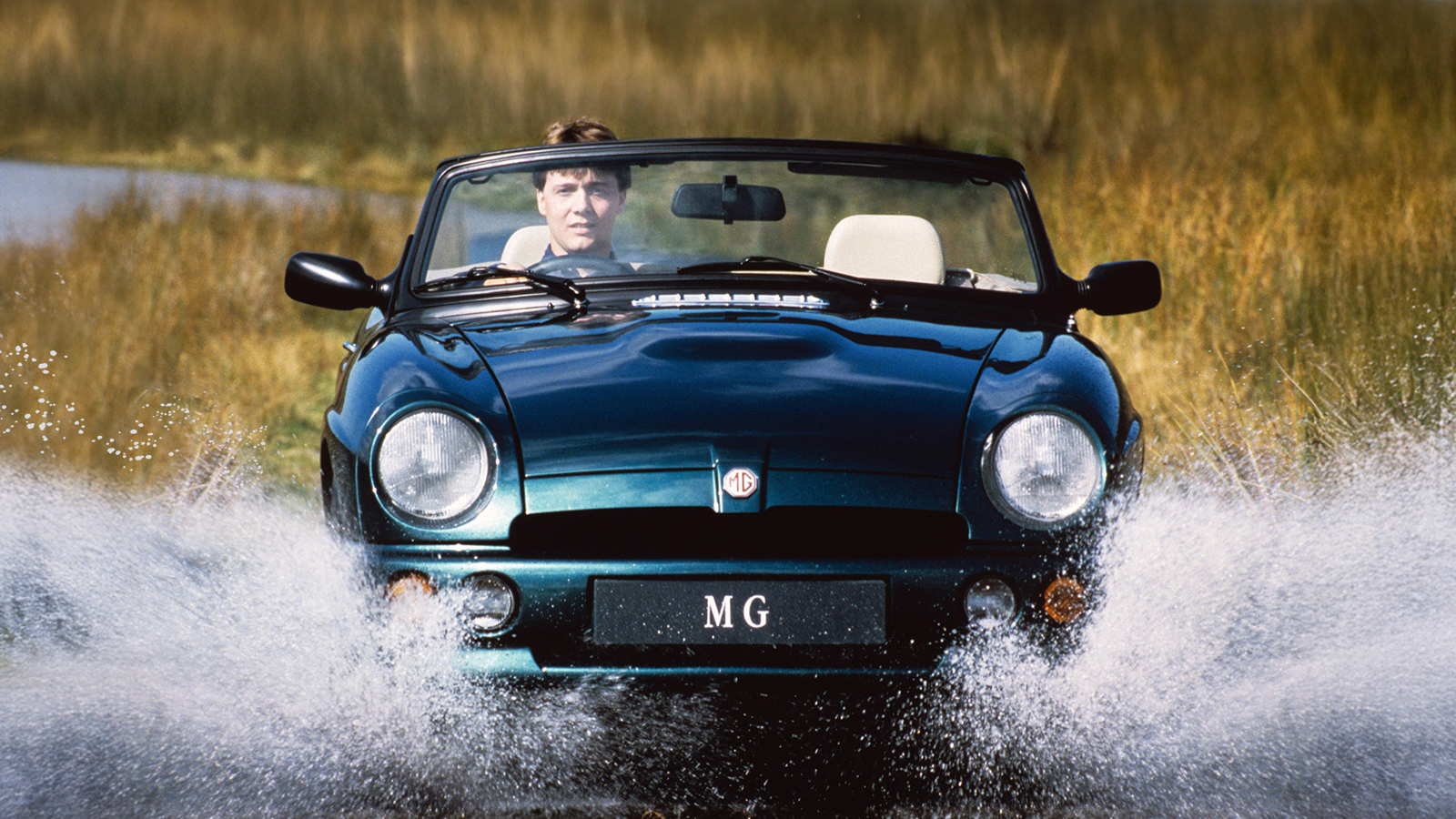
I love discussing the idea that automotive manufacturers should bring back classic models improved with new tech. While relaunching old cars is extremely unlikely due to norms and regulations and demands of mainstream car buyers, it has been done. A good example of this is the MG RV8, which was a British 1990s roadster like no other.
The RV8 was based on the MGB, a British two-seater droptop originally introduced in 1962. The MGB followed the more classical and streamlined MGA, which was sold from 1955 onwards, itself a continuation of the MG (Morris Garages) roadster bloodline from the 1930s. The MGB’s original production period was far longer than the MGA’s, as it was built for 18 years.


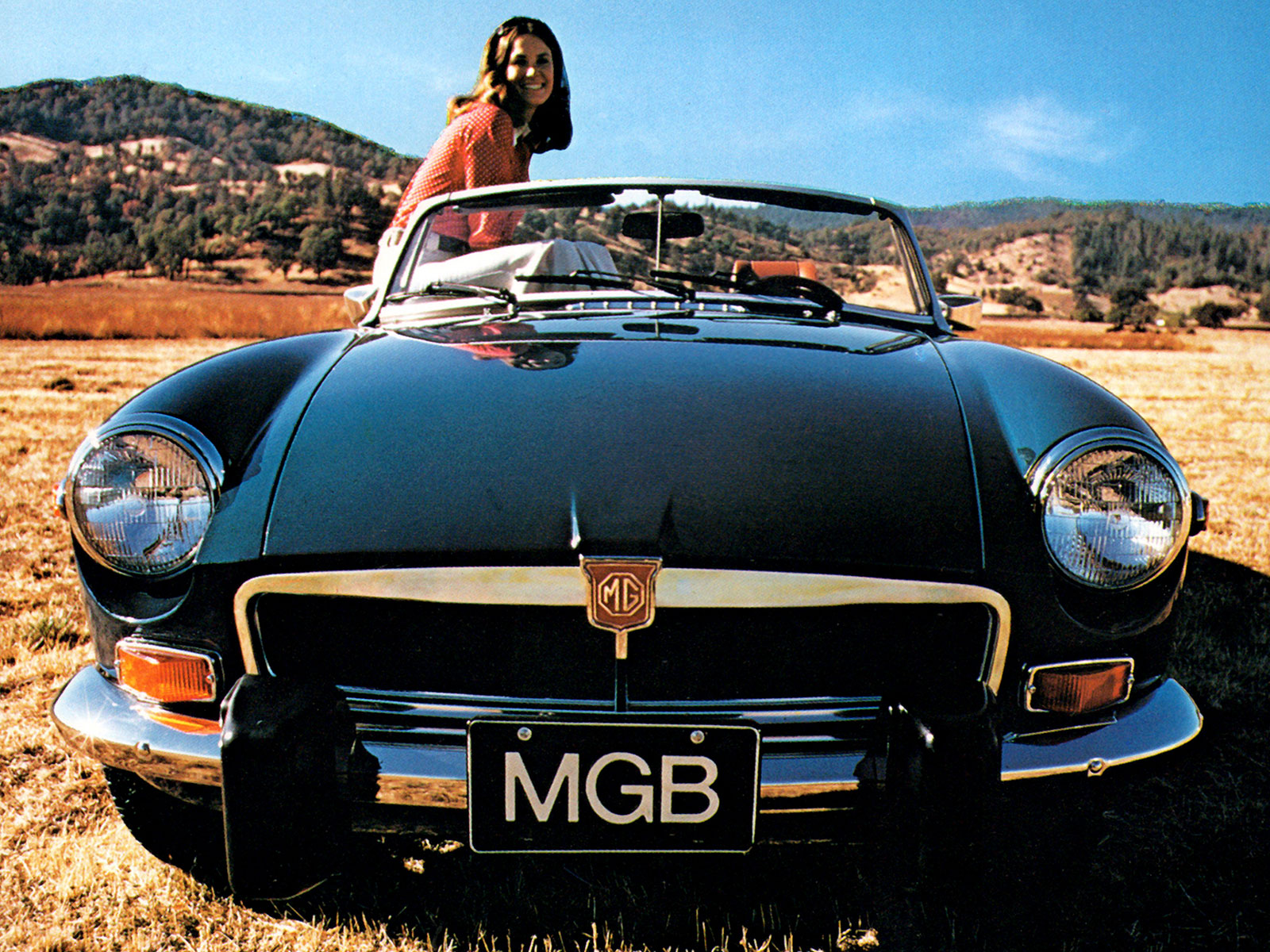
Apart from also being offered in coupe form, the MGB GT, there are roughly two sorts of MGBs: the early chrome-bumpered cars that were manufactured up to 1974, and the rubber-bumper cars built between 1974 and 1980, which also had a taller ride height to get around the US-market headlight height regulations.
All factory MGB roadsters are four-cylinder cars with the 1.8-liter B-series engine developed from the engine in the MGA. The GT coupe was available for a few years with the 3.5-liter, 140-hp, Buick-derived Rover V8, though not in the United States. A separate model was the late 1960s MGC, which had a heavy straight-six engine, which was discontinued by 1970 due to disappointing sales.
The Death And Rebirth Of The British Roadster
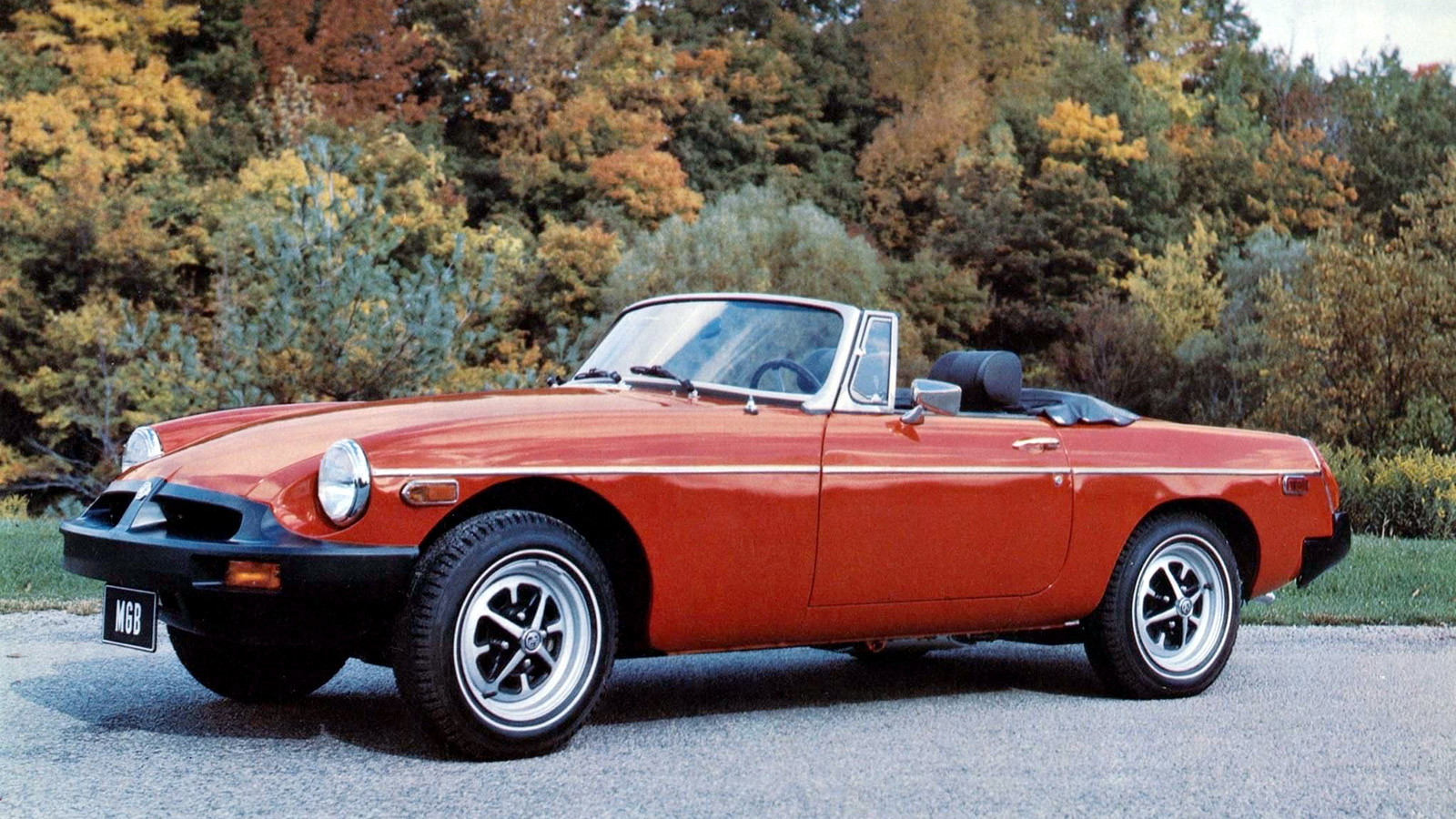
By the early 1980s, a great big bunch of British roadsters had ceased to be built. The MGB: gone. The smaller MG Midget and the Triumph Spitfire: dead. The wedge-shaped Triumph TR7 survived until 1981, as did the V8-engined variant, the TR8. British carmakers feared that rollover safety legislation in the US would end up prohibiting roadsters for good, and while that didn’t happen, the early 1980s were a black hole when it came to convertible car sales.
Even the new-for-1979 Foxbody Mustang would only get a convertible version in 1983, and the Cadillac Eldorado convertible ceased production in 1976. Many carmakers simply offered T-top versions or targas instead, as those were thought to be legislation-proof in case a convertible ban was implemented. The long-produced Alfa Romeo Spider remained on sale, and Mercedes-Benz kept making the ageing R107 until 1989, when it was replaced by the R129 after 18 years in production. Designed with rollover situations in mind, the R129 had a power-operated rollover bar that would automatically pop up for safety.
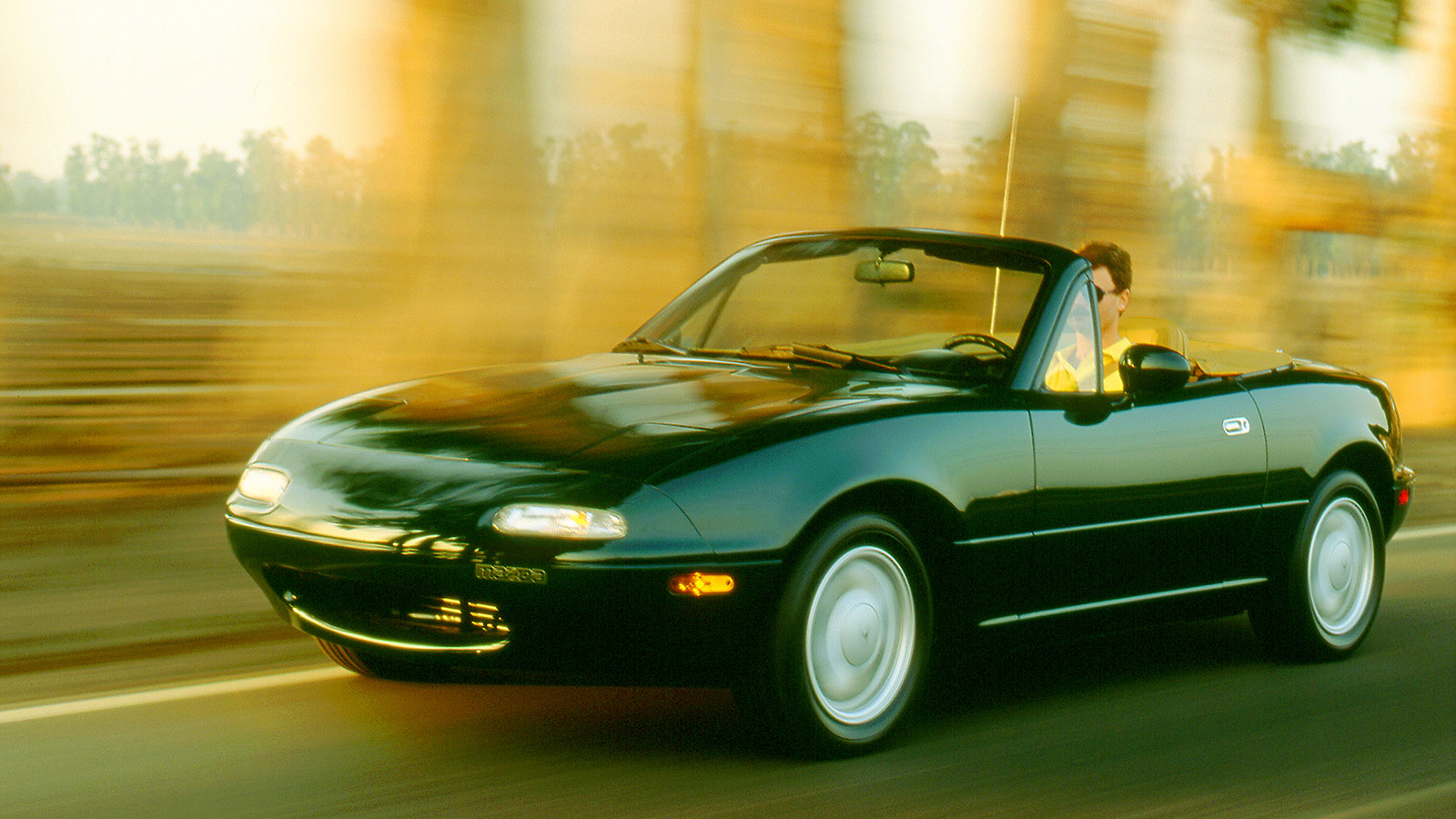
Cabrios and roadsters returned during the 1980s, and perhaps the most successful example of the roadster revival would be the Mazda Miata, introduced in 1989. The rear-wheel-drive MX-5 was a direct pastiche of these British roadsters down to the rorty exhaust note of its four-cylinder engine, and its design followed the lines of the classic Lotus Elan. With a major Japanese carmaker coming out with the perfect British roadster, available in British Racing Green (and securing excellent sales in the UK), MG soon figured out it should get back into building sports cars.
Lotus had also been developing its own M100 generation Elan since 1986 and launched it in 1989, and the small volume manufacturer, Reliant, also built a plastic-bodied Scimitar SS1 roadster between 1984 and 1990. Triumph was at this point completely out of the game, as it had transitioned into building a badge-engineered Honda Ballade (Civic) sedan and nothing else, with the brand ceasing to make cars in 1984.
During the 1980s, MGs were little more than sporty versions of Austin-Rover cars, but somewhere deep inside the company, the desire to build sports cars remained, as demonstrated by the slightly NSX-looking MG EX-E concept shown in 1985. Yet within the British Leyland-controlled MG, there wasn’t much money to invest in designing a new sports car, other than bolting go-faster bits onto British FWD hatchbacks and sedans.
The MGB Is Reborn As The MG RV8
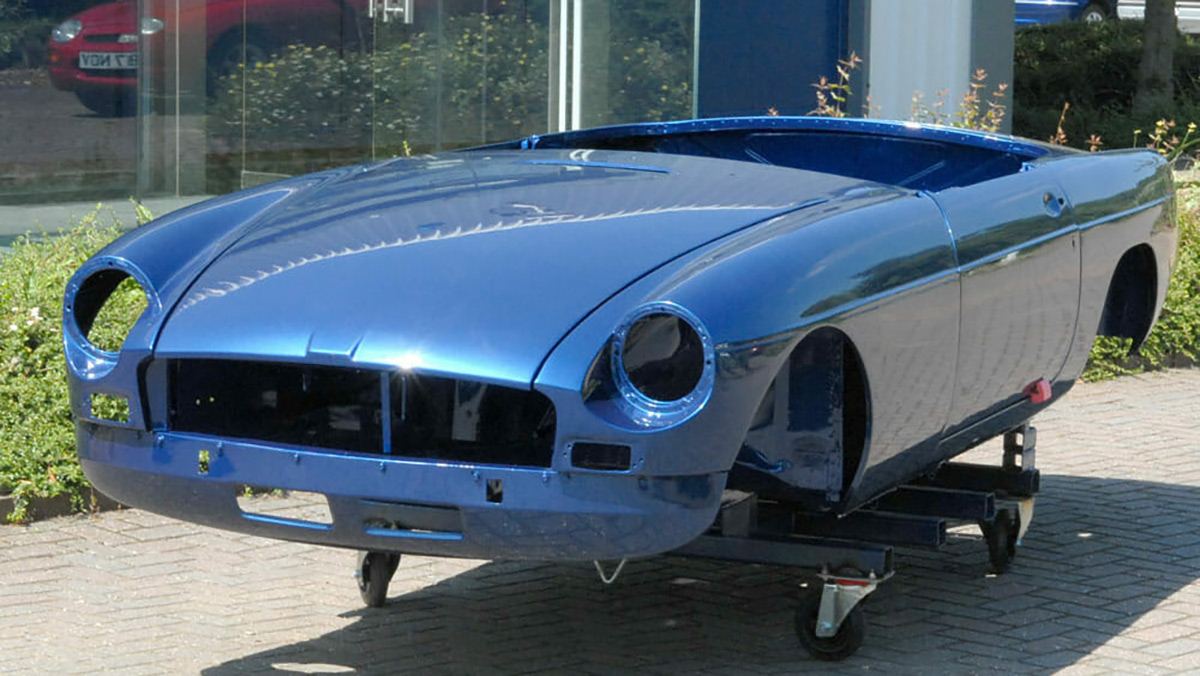
The solution came in the form of British Motor Heritage, or BMH. A company that’s still going, it started producing replacement bodyshells for the MGB in 1988, using the same jigs that had been utilized in building the original cars in the first place. As the story goes, BMH associates were looking for old MGB replacement panels and discovered the original tooling instead. With over half a million MGBs built and a large number of them used in the damp British climate for decades, body repair panels and new shells were in demand.
That same year, Rover Group, the mid-1980s iteration of the earlier British Leyland that also included MG, was sold to British Aerospace. This meant a new lease of life for Rover, which also lost the Austin part in its name, and which could focus on engineering a new Rover 200/400 family car range together with Honda.
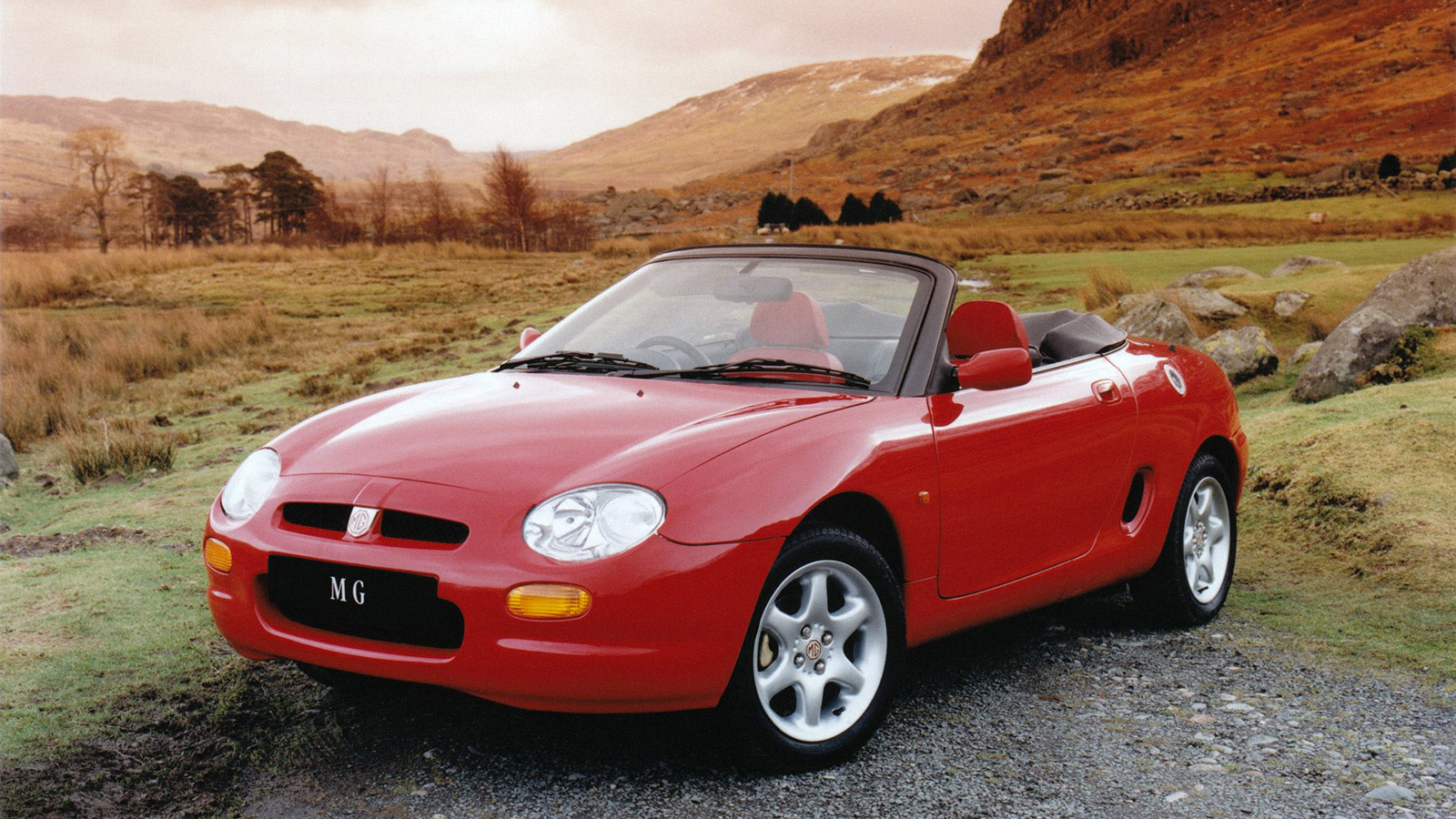
With the MX-5 proving a hot seller, the decision was made to grant MG the funds to develop a completely new sports car, which would be launched in the mid-1990s as the MGF. They couldn’t cook it up soon enough, and buyers would have to be awakened to MG returning to sports car manufacturing before the mid-engined, four-cylinder MGF had been readied for production.
Thanks to BMH already churning out legit MGB bodies and other required parts, MG was able to reach back into its own heritage and restart production of the old 1960s roadster. Why not offer customers a reliable, brand-new version of the classic car they had loved and admired for years? With the 1.8-liter B-Series engine at that point dead and buried, why not use the Rover V8 as the MGB GT had done? Why not try to make the ultimate MGB V8, with proper power?
Project Adder, as the RV8’s five-million-pound development project was called, was soon in business and gunning for a 1992 launch at the British Motor Show. MG would not build the reborn, retro car at the original MGB plant, Abingdon, but instead in Cowley, where the Honda-related 600 and 800 were manufactured, and still produces Minis. The project was handled by the newly formed Rover Special Products, a separate think tank from other Rover project management.
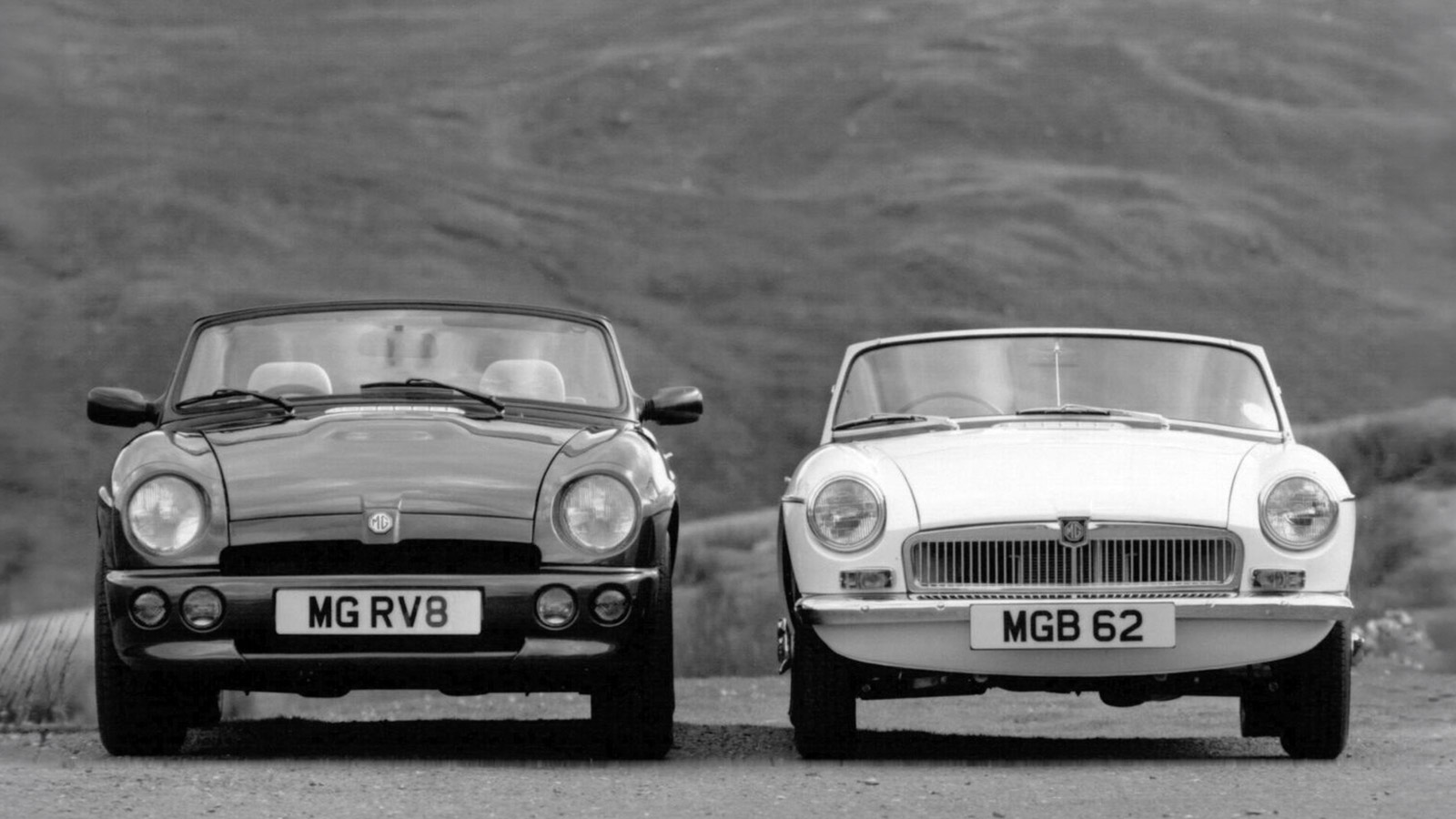
While the car retained much of the original chassis, the front suspension was redesigned with new A-arms, with telescopic dampers in place of old lever-arm items front and rear.
The rear suspension kept the solid axle and leaf springs, which would make it a rare Western European car with such a setup in the early 1990s (Bristol Cars was still in business, too), but tire size was changed enough to necessitate new fenders front and rear. This meant the RV8 ended up with all exterior body panels redesigned, even if it still looked like the old car, and was unchanged structurally. The cross-spoke alloy wheels came from Compomotive.
As a concession to modern times, the car received a plastic body kit as a part of the redesign. The headlights grew in size, and they are actually Porsche 911/964 units.
Enthusiast Built
With a 3.9-liter, fuel-injected Range Rover iteration of the company’s V8 fitted, the MG became the fastest production MG so far, thanks to 190 horsepower. It reached 60 mph in less than six seconds. Crucially, the car was also officially considered an extension of the old MGB production, meaning it would not require airbags or a new European type approval, but it also received a host of improvements, including electrics and heater controls from the then-new R8 generation Rover 200/400.
The RV8 was developed and built by people who often were MGB enthusiasts themselves. This meant that they could introduce solutions they wished the original 1960s car would have had – including better rust protection – as far as the shoestring budget and 15-month development time allowed them. Only 5% of the RV8’s parts were direct off-the-shelf MGB parts, but 20% of them were modified from older component designs. The rest were new.
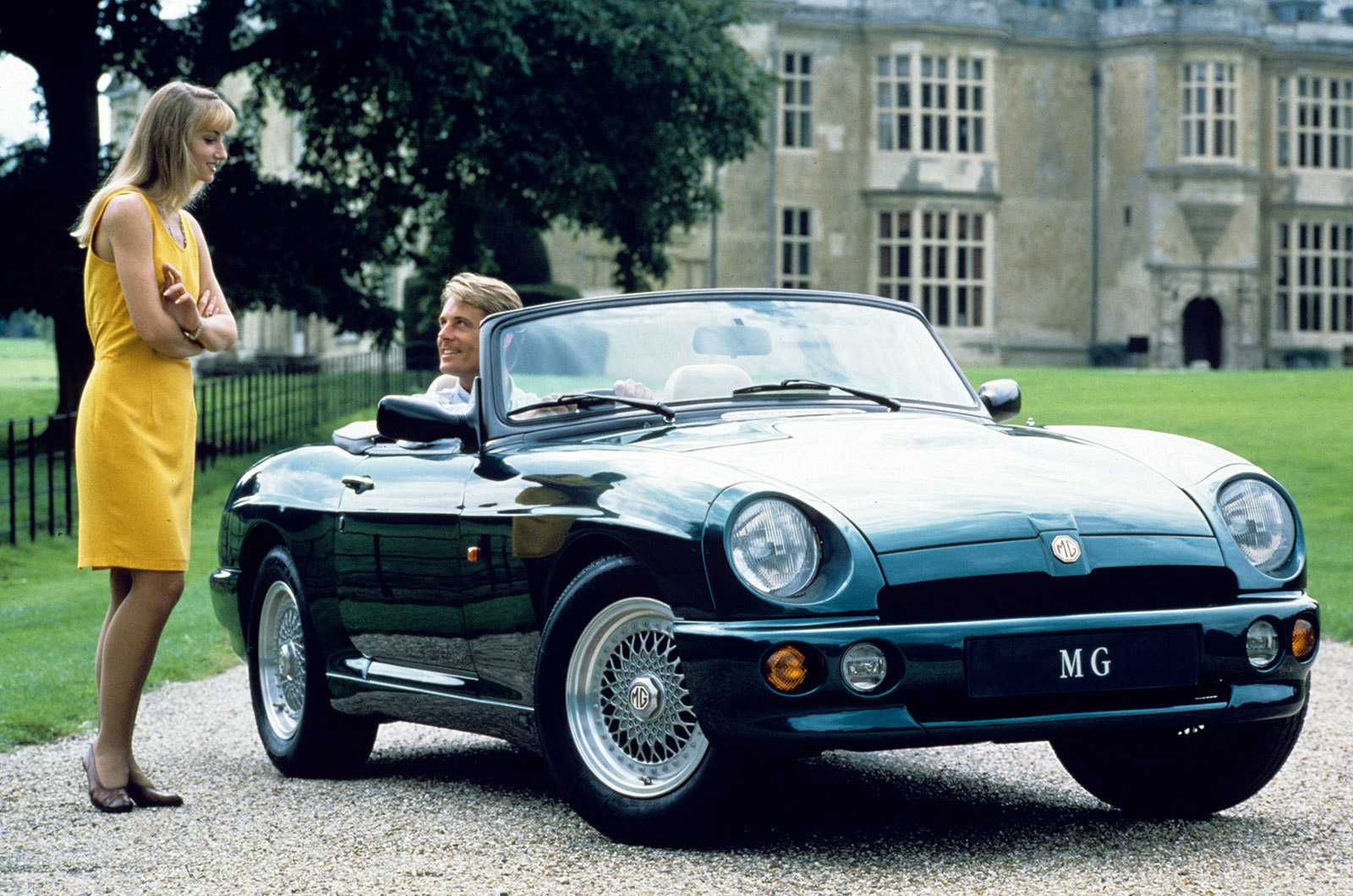
MG had the capacity to build 15 cars per week in Cowley, with a workforce of 18 people. Despite the relatively easy development process, the RV8 wasn’t cheap, as the price tag came up to £25,400 – over $90k today. The TVR Griffith cost the same, but offered more power out of the same engine, and, crucially, in a more modern chassis and body with better handling. The leaf-sprung, still-essentially-1960s-based RV8 would not offer the same level of ride and handling as a more focused 1990s V8 roadster would, but suited a more leisurely GT approach to open-top motoring.
The economic downturn of the early 1990s hit sales of specialty cars such as the RV8. Most of the production ended up in retro-crazy Japan, which had fallen in love with the RV8 once it was displayed at the 1993 Tokyo Motor Show. Over 1500 cars from nearly 2000 made were shipped there, and plenty have been re-imported to the UK. All RV8s were manual, and power steering was only offered as an option late in production. Japanese market cars all have A/C.
MG never sold a left-hand drive or North American market variant of the RV8 despite engineering one, and according to Hemmings Sports & Exotic Car, the first rough prototype was based on a left-hand-drive US-market MGB from Florida.
In 1995, the new MGF was launched at a clean ten grand cheaper, and it sold vastly better. Those were never exported to America, either, as Rover had pulled from the US market after the failure of the Honda Legend-based Sterling executive sedan, and orchestrating a return based on just one sports car would have been a task too far.
Was It A Failure?
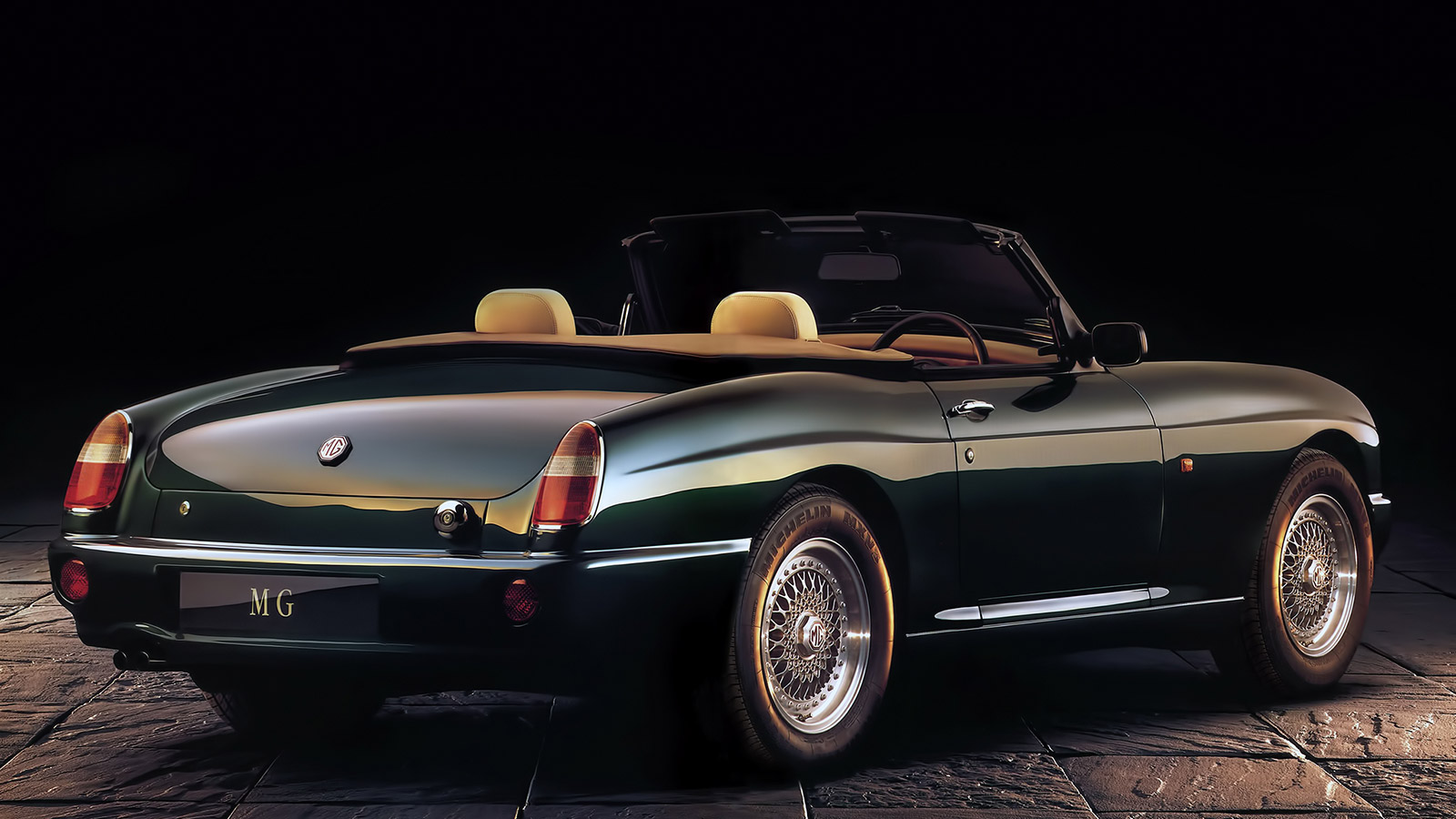
Subsequent rebirths and continuation builds of such old cars would be far more difficult to pull off, but the RV8, with its price tag, showed how the outcome would be in reality. It did appeal to niche buyers, but in limited numbers, and didn’t successfully compete with anything other than restoring an older V8 MGB with some of the same BMH heritage parts that were used to build the RV8.
Enthusiast forums note MG would rather trim the RV8 as a leather-lined luxury car than spend more money on chassis dynamics, which resulted in disappointing handling.
As a poster on The MG Experience puts it:
“I own A factory BV8 and a roadster conversion and have driven, and worked on, several RV8’s. Give me a properly set up B every time and there are many ways to bring the B more up to date, especially in the suspension and handling department.
When the RV8 was designed and built it was yet another example of the supreme art of compromise and budget restraint. It could/should have been so much more.
Heritage spent a small fortune on the front and rear lights, walnut and leather at the expense of having a decent suspension. They penny pinched on the dampers, Koni had a much better item ready to go but it was ditched for a cheaper unit. The front suspension design was flawed, with not enough travel, hence the bump stops became part of the suspension making it harsh on rough surfaces, getting harsher as they deteriorate which they inevitably quickly do. The heating and ventilation system is little different from stock MGB.
On the plus side, it’s quieter mainly down to the increased rake on the windscreen (which rots from the inside, by the way), it’s more comfortable on decent road surfaces, mostly down to the rear parabolics which are a vast improvement on multi-leaf cart springs. (My roadster conversion has RV8 Parablocs so I can vouch for that). Fuel injection is always going to give more accurate mixtures than the best set up SU or Weber carbs.
But it is more of a GT, in the proper sense of that label, a sports car it isn’t.
Personally I don’t like the looks either but that’s an eye of the beholder judgement.”
As well as the aforementioned Bristols, there were a few other other 1990s European cars that dated back to the 1960s in their original form: for example, the Volvo 240 and the “OG” Saab 900 would both cease production in 1993, and were developed from the 1966 Volvo 144 and 1968 Saab 99, respectively – but these weren’t sports cars, despite being available as quick turbo versions.
The RV8 wasn’t even the only attempt to keep the MGB alive. In 1980, when MGB production was set to end at Abingdon, Aston Martin made a 30 million pound offer to buy everything MGB-related, from the name and tooling to the factory. British Leyland would only have sold Aston the factory, meaning the plan fizzled, but not before Aston Martin had commissioned a one-off “Aston Martin MGB,” refreshed by William Towns, who also penned the angular Aston Martin Lagonda.
There’s One In America – Sort Of
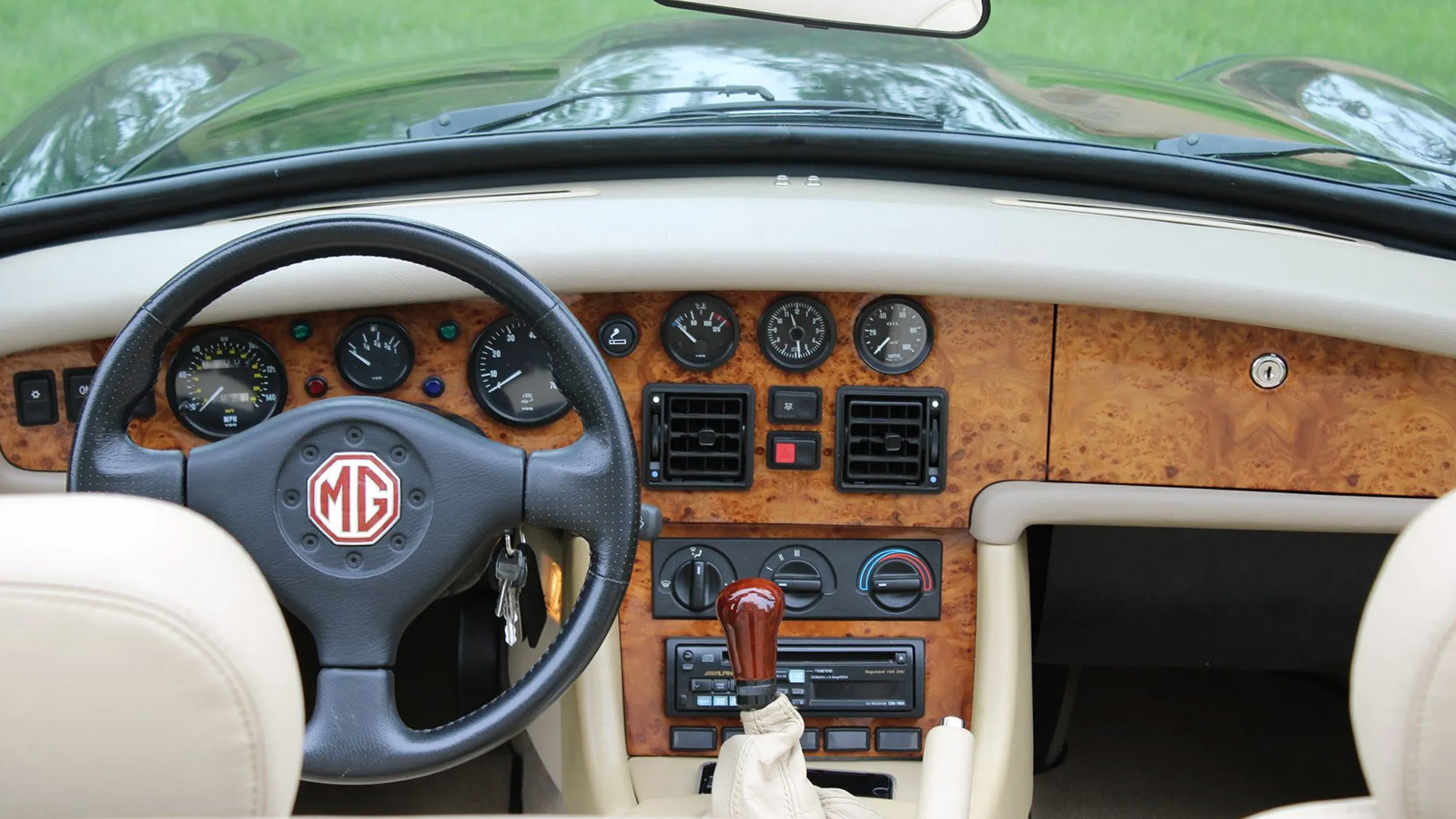
A look at classic car classifieds shows you can currently get a decent-looking RV8 for a little under $20,000 from the UK, with more expensive, low-mile examples available for double that.
The British Car and Classic website has 28 RV8:s for sale compared to hundreds of MGBs available for cheaper, but there’s also a 2000s custom-built “replica” or “special” RV8 for sale on Bring A Trailer.
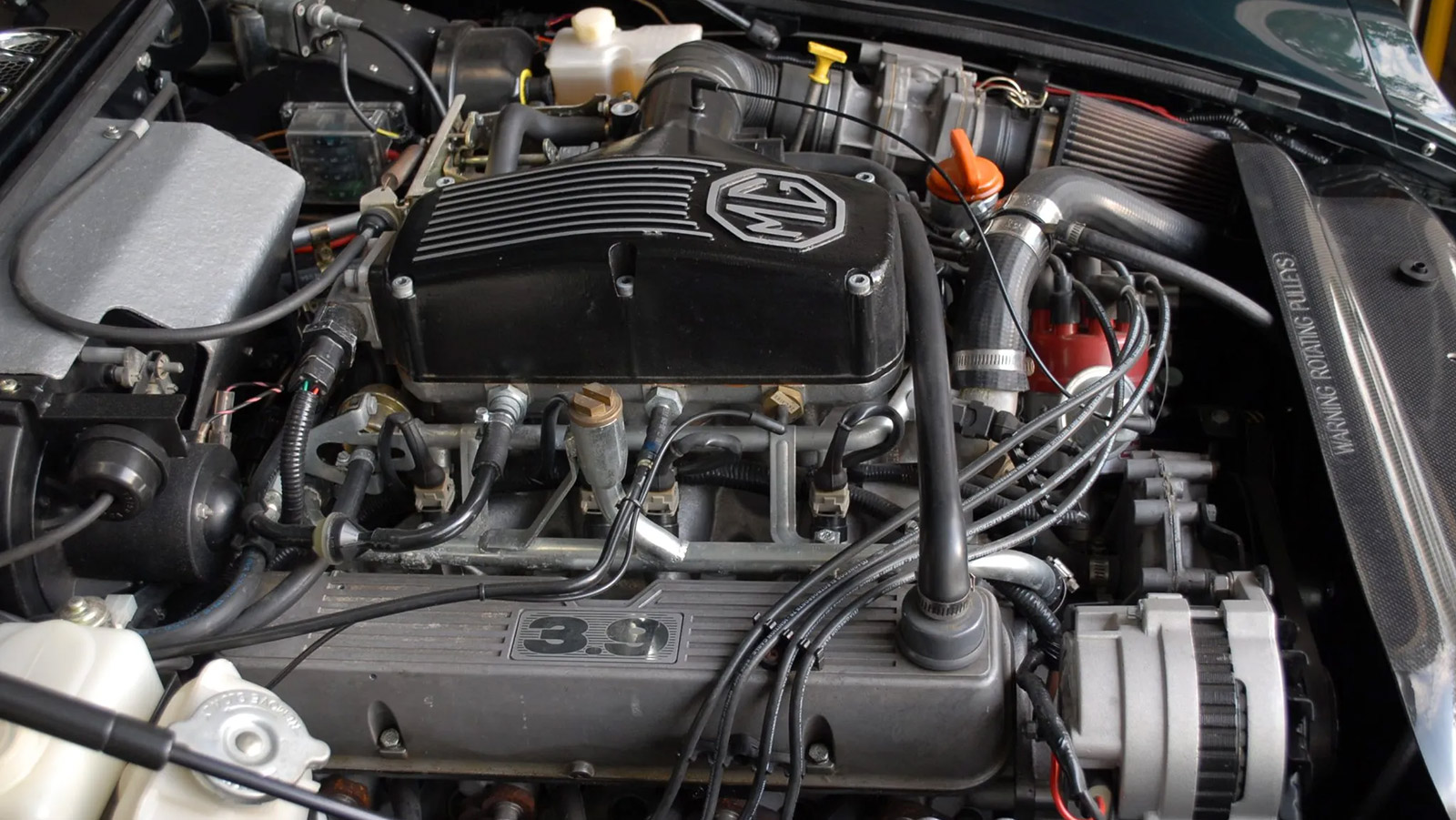
This car was built in the early 2000s out of an MGB bodyshell and available RV8 parts sourced in the UK. Titled in Ohio in 2005, it’s being offered by its creator, who has had it for 25 years.
Painted in BMW Oxford Green, it’s one of the few left-hand-drive RV8s anywhere in the world, with a factory-new Land Rover short block sourced around the time the engine was about to cease production in 2003. As well as a bunch of custom work to create a left-hand-drive variant, it’s had the suspension upgraded with Spax and Koni parts. For anyone looking for a 2005-built version of a 1992 version of a 1962 car, you could do a lot worse.
Photos and top image: MG Cars unless otherwise noted





This is not a criticism of you in particular, Antii: this is a comment about auto journalism in large, and not this site in particular.
I know it’s fun and cool or maybe “in the knowledgeable guys’ club” to refer to chassis designations. But to me and I suspect a lot of readers, this way of addressing things is useless since it conveys nothing.
Is this a first gen SL? A second gen SLK? Something else? I have no idea, and I’m never going to learn all these chassis numbers to join the club. It just won’t stick, especially when you combine it with the refs to BMW numbers and the rest of the manufacturers. I can understand using BWM numbers in talking with BMW fans on a BMW page or group. But can auto journos please at least use combined references with that chassis number plus an example model and gen or year? Thanks to all who do. I think it improves the reading experience for a significant number of readers.
This is an oversight from me! It’s easy to keep talking in chassis codes when you talk chassis codes in group chats all the time. The R107 is the old 1971-1989 SL, the Bobby Ewing model from Dallas. The R129 is its successor that was made until the early 2000s.
control t. “r107 wiki”, click. control t “r129 wiki” click. read and learn.
I know the information is out there. But I have no desire to memorize the chassis codes for 4 generations of MB SLs, 3 gens of SLKs, 7 gens of Ss, 7 gens of BMW 3s, 8 gens of BMW 5s, etc, &c, and limited ability remember things I’m not interested in. If I took the three minutes to look up those two it would be forgotten tomorrow, and hence not worth the time. I can memorize the chord charts of hundreds of songs, but chassis codes aren’t going to land. And “first gen SLs” is easy, and clearly understood by all far wider readership.
As someone with much too many of these codes memorized, I would also automatically use them without second thought, forgetting that not everyone has a personal, visceral reaction to letter combinations like W123, ADO16, X70, or B13.
Personally, I like being in this club, but I agree that an article should at least include enough info that one could figure out the meaning from context – which I think Antti did in this case. Mercedes + convertible + “aging, until 1989” tells us everything.
Oh man, putting that up against the TVR Griffith just makes the RV8 seem seriously out-gunned.
I also now want a Griffith. Dammit.
Griffith 200, 400, or a Tuscan?
The 90s Griffith, sometimes called the 500.
I mean, I REALLY want a Tuscan Speed 6, but that’s two to three times t he price of a Griffith.
I was shocked they sold any for how overpriced they were, particularly when halfway decent MGBs were ubiquitous and could be had all day every day for the mid 4 figures at the time, and just their homegrown competition alone blew them out of the water on every mark, never mind what was available from bigger manufacturers with good reputations. They were mediocre when they were current and pretty much outdated in 1970, never mind the ’90s. While I could see the appeal, the price was absolutely insane. At least it was dropped before the Elise came out.
I dunno, I was in love with it at the time. I saw one at a Cars & Coffee last year and I still love it. Had I been a punter at the time, I would have probably gone for the Griffith, but I also think a TVR would be pretty hard to live with in real life.
For someone looking to replace a TVR in 1994, the RV8 might have seen like the perfect thing. Comfier, easier, probably more reliable, built by a sort of real car maker.
I doubt it was terribly comfortable with a live axle, a noodle chassis that could only be so improved (and apparently still cheaped-out on), and I don’t see that they changed out the worm and peg steering. Maybe for a bargain price, but I don’t understand the appeal for what they wanted for them. MGBs were the fussier Paseo convertible for the older guy back then (before everyone was too afraid to leave the house) and they were everywhere, so there wasn’t even novelty to ownership—they were the predictable choice and as common as tri-Chevies or gen 1 Mustangs at any show that included foreign cars, but somehow more boring. Really good used ones were under $10k any day you cared to look (I know, I was always looking for an interesting car and was constantly annoyed to see the want ads packed with these particular shitboxes—I wanted my Euro shitbox to be uncommon, dammit, but I ended up with S30 Zs). Someone could have picked one up, thrown an easy-to-find V8 of even more power in one, add a slab of wood to the dash, and be at 85% of an RV8 for a year’s beer money (I guess—I’m not a drinker). Marcos and Ginetta were also around, not just TVR, and production even overlapped with the Caterham 21 that nobody bought, but was far more interesting.
What about the low motor vehicle production act of 2015?
Wasn’t this supposed to open up new production of classics? I feel like we need an article series explaining what happened. Other than Covid. I guess icon and the roadster shop and ruf started taking advantage of the law early on. I don’t hear much about them though anymore. But where are the 2000 per year c10 pickups and 2000 per year 1964.5 mustangs 2000 per year ae86s. Or whatever? I know each of those have companies making complete body in whites and frames for the c10.
It’s too bad about the suspension but some of that is probably fixable, and the styling refresh was pretty well done. It’s a handsome little car, much better looking than the pudgy MG F (which admittedly I’ve never seen in person).
But it’s really surprising MG even bothered with it. It wasn’t just TVR fielding a Rover-V8-powered competitor. In the early 1990s, UK buyers had their choice of the Morgan Plus 8, the Marcos Mantara, the Ginetta G33, and a wide variety of kit cars. Given the price, the best thing the MG had going for it was looks.
So Autopians in other words.
Autopians with today’s equivalent.of $90k to splurge on a toy. Pretty sure what THAT Venn diagram is going to look like.
That’s an added bonus! ;D
Niche in the sense that reviving an old chassis is always a questionable idea. The appeal was very mainstream.
About a gazillion Brits of a certain age in the 1990s would have had fond memories of an MGA they owned in their youth. It shouldn’t be a surprise that some of these gents had money, and some of them bought cars like the RV8.
Of course the timing, economy mix and typical British car manufacturing shenanigans made the whole thing a mess, but nostalgia is a hell of a drug.
The Ineos Grenadier is kind of a modern equivalent, selling for a similar price in today’s money.
Well said. I completely understand.
Japan had a real thing for vintage British cars, aside from Mitsuoka modifying new Nissans to look like old Rileys and Jaguars, a pretty big portion of Mini production was being shipped there in the ’90s, usually really loaded versions with automatics, leather seats, and walnut burl dashes
“Mum, I want a Cobra!”
“Son, we have a Cobra at home!”
The Cobra We Have At Home: this.
As an owner of a 1967 MGB and now a 1980 MGB, I can saw they’re fun to drive.
Driving a slow car fast is always fun.
Agree. the most fun I get is from my least powered and oldest car I own. It is my 1988 BMW 528e… driving that thing on a twisty road doing mere 80km/h still puts a stupid smile on my face every time
We have a ’77 MGB and a ’79 El Camino sharing space in the garage. Total opposites to drive considering they’re both 2-seaters.
Meanwhile another group of crazy Brits is planning to restart Spitfire production.
No, not the Triumph Spitfire. The other Spitfire.
https://www.the-independent.com/news/uk/home-news/aerolite-spitfire-type-433-first-flight-b2978378.html
“The new two-seater model was built for approximately £750,000, a stark contrast to the more than £3m price tag of a vintage Spitfire.”
I’m partial to the Soviet Yak fighters myself.
There was a guy near where I grew up who owned a Spitfire, so we’d quite often hear the unmistakable rumble of a Merlin flying over. Bloody marvellous 🙂
I seem to recall a Top Gear episode that revealed several old cars being rebuilt with new tech. Although the new built Eagle Jaguar cost more than a beautiful restored Jaguar. But isn’t there a rule under so many vehicles no laws apply? The trick is making a better new one for the price of a restored old one
In the US there is, but it has to be at least close enough to pass as a replica of an old car. Obviously, Eagle is well covered there. So, someone like FFR can make some complete versions of their replica kit cars, but they couldn’t sell complete versions of their 818 or GTM (though they’re both dead at this point).
If you make fewer than a particular number (1000/year I think) you can get your new car made road legal in the UK via a Single Vehicle Approval inspection rather than go through full type approval like a volume production car.
It checks loads of things from emissions to sharp edges.
It’s how Lotus could sell the 3-Eleven as a road car in the UK.
A cleverer company would have kept churning out low volumes of mad cars like this forever (like Caterham do) instead of leaving the whole small sportscar market completely.
None of the big auto manufacturers want to deal with low volume it seems.
This is why Lotus never makes money: too big for the low volume loopholes, too small for economies of scale to work, not enough brand recognition to get away with charging Ferrari prices.
It looks better than the 4 door Avanti.
Low bar, but agree