

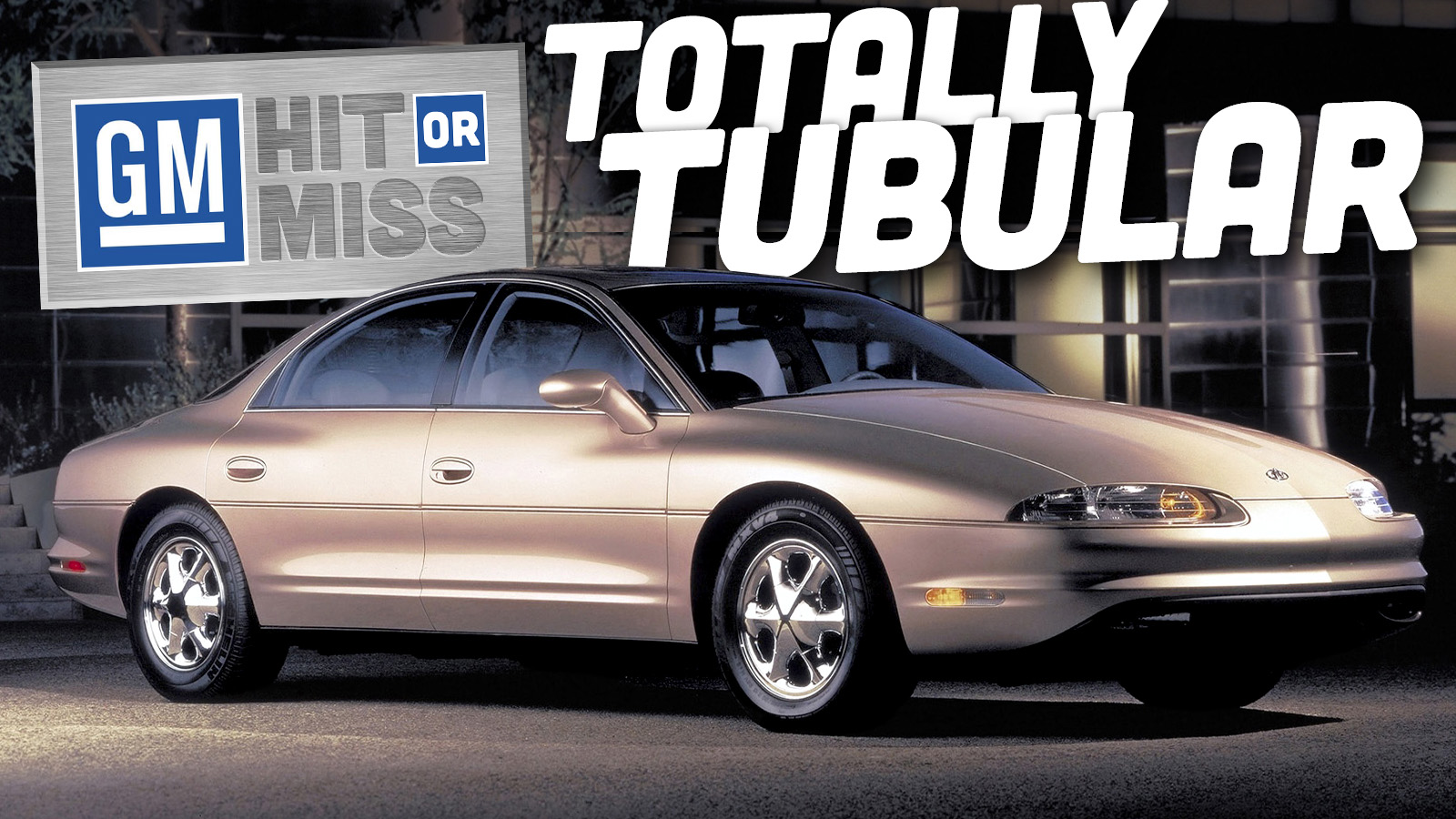
Think of the dowdiest car brand that’s still selling cars. Got a name in your head? Now imagine it just came out with an immensely aerodynamic sedan powered by a unique quad-cam V8 and featuring climate controls in the doors, an incredibly robust structure, and styling that looked like the future. It’d be shocking, right? Well, about 30 years ago, that would’ve described the Oldsmobile Aurora to a T.
Flash back to the early 1990s, and Oldsmobile looked to be in a death spiral. In 1985, the brand became America’s best-selling car and moved more than a million units off of lots from coast to coast. By 1993, it couldn’t even crack half a million annual sales. Between the death of the old rear-wheel-drive Cutlass Supreme, the failure of the “Not your father’s Oldsmobile” ads, and increased competition in the near-premium space, the brand needed a Hail Mary.


As project design lead Dennis Burke said, “‘At first sight, the Aurora may unsettle people just a bit. That means we’ve done our job.” Indeed, the Aurora looked nothing like any mass-produced Oldsmobile before. The fuselage styling of the stunning Aerotech streamliners translated to a 1989 concept called—I’m not joking—the Tube Car. Marketing might’ve taken a day off there, but the design team didn’t when shaping this extreme jellybean. From its incredibly low nose to its Coke bottle fenders to its full-width taillight, Oldsmobile had something radical and decided to change it as little as possible. Actually, in some ways, the Aurora looked even better than the concept, especially when it came to the shape of the rear window. Oh, and it also boasted a drag coefficient of 0.32. Not bad.

Mind you, that curvaceous bodyshell devoid of Oldsmobile branding wasn’t just for looks. According to GM, the Aurora’s roof maxed out the scale of GM’s passenger car roof crush test rig at 8,000 pounds. The required minimum strength at the time was 1.5 times the vehicle’s weight, and with the Aurora tipping the scales at just under 4,000 pounds, this would mean that the Aurora met today’s two-times-the-curb-weight roof crush standards a whopping 30 years ago.
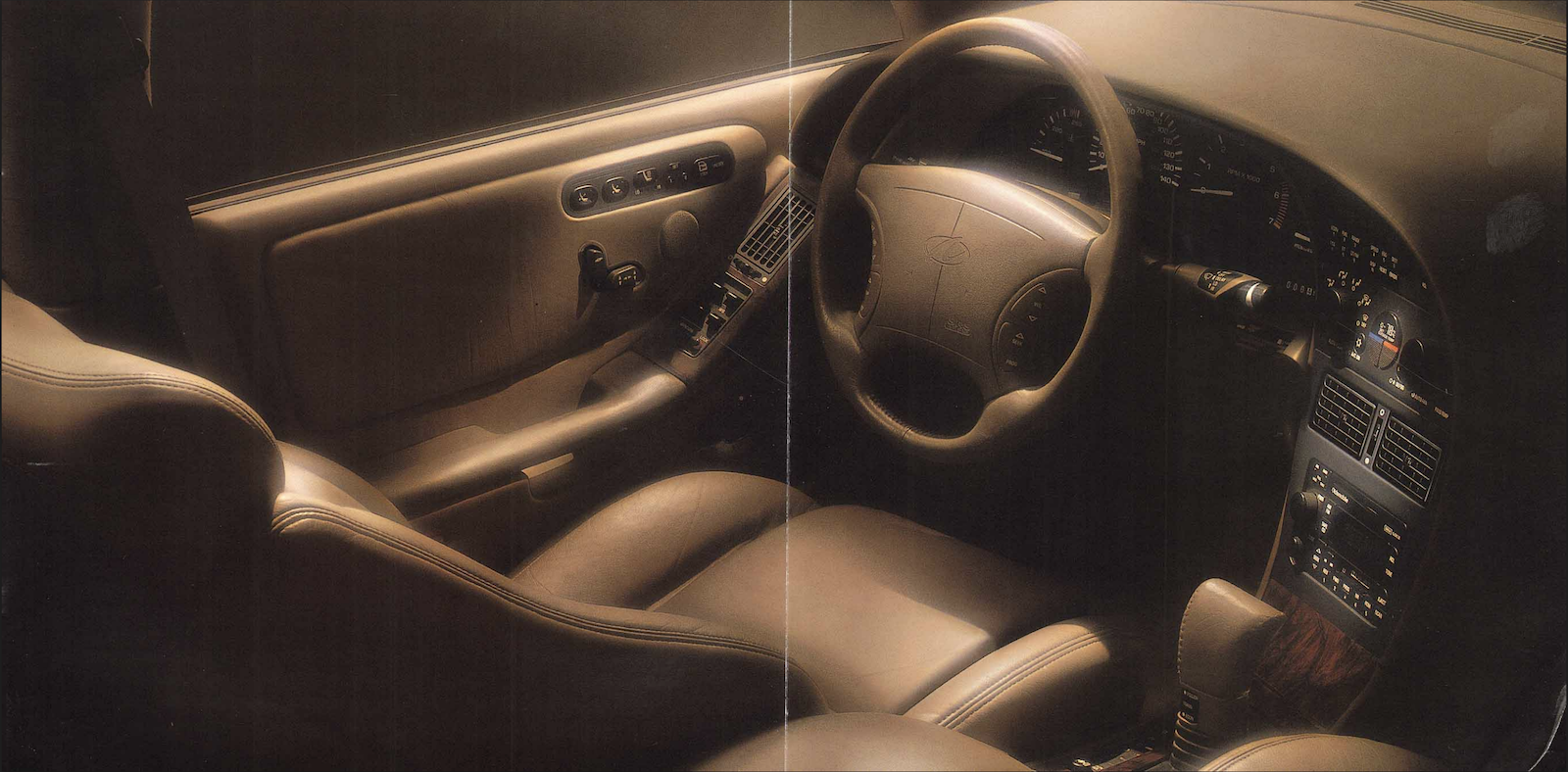
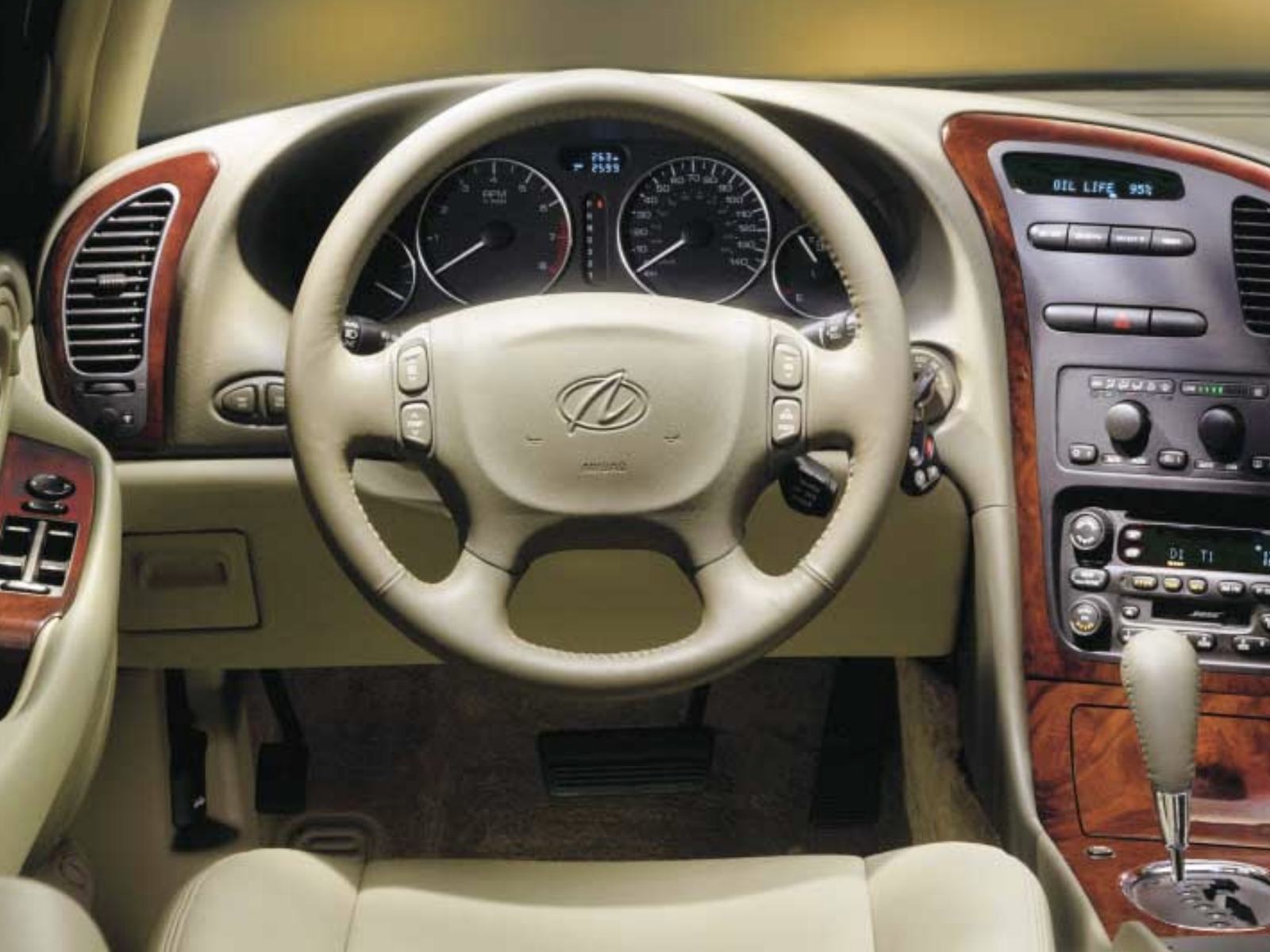
On the inside, the Aurora went full cockpit, canting the center stack so heavily towards the driver that a passenger air vent sprouted up out of the side of it. The goal was to have everything from the climate control to the radio to the trip computer within easy reach, but what about passenger access? Well, that’s where Oldsmobile got clever. It put the passenger climate controls on the passenger door panel, along with the seat controls and even some air vents. Obviously, equipment levels were high. More than just leather and wood, we’re talking memory seats and mirrors, automatic headlamps, six-way front seats, and an auto-dimming rearview mirror all as standard. Tick a few boxes, and you’d also get heated seats, a Bose Acoustimass audio system, and V-rated Michelin tires paired with a shorter final drive.
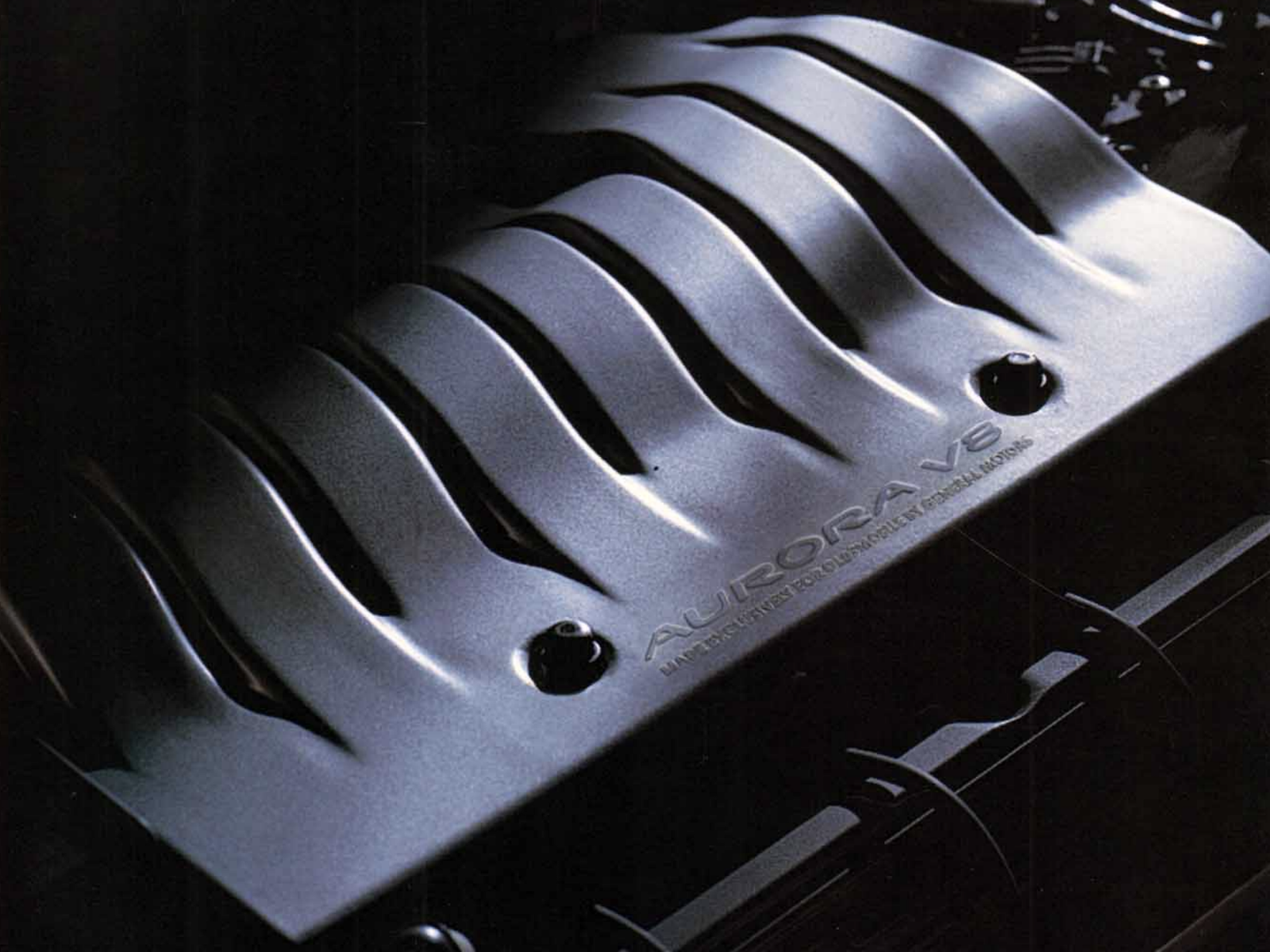
Speaking of oily bits, under the hood of the Aurora sat a debored four-liter variant of Cadillac’s Northstar quad-cam V8 pumping out a respectable 250 horsepower and 260 lb.-ft. of torque, the first ever non-Cadillac application of that engine architecture. Hitched to a 4T80-E four-speed automatic transmission driving the front wheels, the Aurora was smooth but not massively quick. Figure a zero-to-60 mph time in a shade over eight seconds, quicker than the BMW 530i of the time. Still, it didn’t really matter how quick the original Aurora was. What mattered was how it felt like Oldsmobile had leapt a decade ahead.
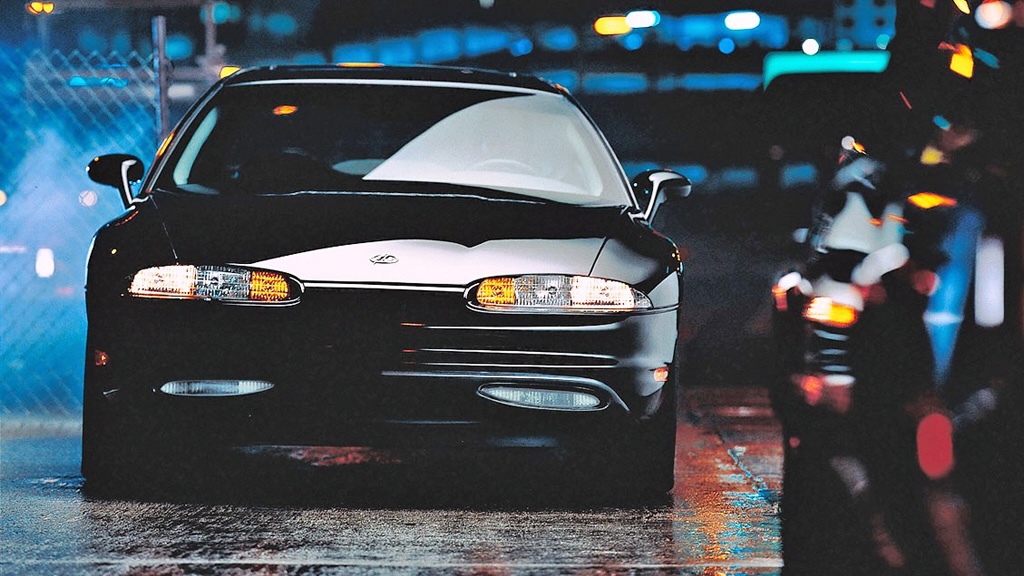
In 1994, Motor Trend pitted the Aurora against the Mercedes-Benz C280 and the Lexus GS 300, and it beat both. In another comparison test just a few months later, it beat the BMW 530i and came a close second to the Mazda Millenia. As the magazine summed the Olds up: “The Aurora leaves us consistently impressed with its performance, styling, room, and quality.” Unsurprisingly, many consumers came to a similar verdict on the Aurora, with enough demand for Oldsmobile to build 145,247 examples over a five-model-year production run, ending in 1999.

So what happened next? Well, we never really got a true second-generation Aurora. No, I’m not trying to gaslight you. While the 2001 model year saw the launch of an all-new car called the Aurora, it wasn’t initially meant to be an Aurora. As the Chicago Tribune put it:
Maybe it will be called the Antares. Maybe it will be called the Aurora 6.
Oldsmobile General Manager John Rock finds himself in a quandary about what to do with the replacement for the Olds 88 sedan coming out in the 1999 model year.
See, the second-generation Aurora was rumored to be this big, opulent thing sharing an architecture with the next-generation Buick Riviera, but then the Riviera project just didn’t happen. Somewhere along the line, the projects got rationalized into one car, and it just wasn’t spectacular like the original Aurora. It was also a bit late, a clear sign that something didn’t go according to plan.
Because this new car had to be more attainable, you could tell where costs were cut. From the standard V6 to the slightly truncated look to the lack of door-pass-through air vents, the second-generation Aurora just didn’t commit as hard as the original, and that especially showed in reports of early build quality. As Patrick Bedard wrote in Car And Driver:
A few weeks before the Oldsmobilectomy, I drove two Auroras, each for a week: a V-8 followed by a V-6. I got into the first one after dark. In the middle of the dash was a display, like a microwave oven’s, the same cold blue digits. It read “173.”
What could that be? I turned on the dome light and fiddled. It was “temperature.” Using the blue and red buttons, I downed the digits to “168,” and upped them to “181,” but the reading was always 100 too high.
Bedard goes on to describe other issues. A poor headlight beam pattern, torque-steer on the V6 model, “sticky steering” on the V8 model, and one hood where “the curve on one side didn’t match the curve of the fender edge. Not even close.” Considering the sort of money the second-generation Aurora commanded would’ve bought another D-segment luxury sedan like an Audi A6 or a Saab 9-5, customers’ money would’ve been spent better elsewhere. Mercifully, GM pulled the plug on the second-generation Aurora, and indeed the entire Oldsmobile brand, in 2003.

The original Oldsmobile Aurora was a hit because it tried extremely hard. Oldsmobile put its entire back into that car, and it showed. Sure, it might not have been reliable in the long run, but it’s iconic. The perfect flagship has to be both an image-maker and a sales success, and the original Aurora pulled that off brilliantly. The second-generation Aurora wasn’t a hit because it was a victim of GM’s own bureaucracy. Too many brands, too many projects, too many rash decisions, too much cost-cutting. I guess we’ll just have to remember the original fondly, won’t we?
Top graphic image: Oldsmobile


The Northstar engine was developed by Oldsmobile, not Cadillac, as was the “Shortstar” V6 based on the same block. I don’t know which of the V8 displacements came first, however.
I’d say that’s a distinction without a difference. Previously, yes, Oldsmobile had been GM’s experimental/technology corporation. And yes, Oldsmobile R&D began developing the Northstar in or around 1984. But that same year, GM began formally organizing its car divisions into two supergroups that would share common engineering, platforms and sales strategies:
All this is to say that probably around that time, Oldsmobile and Cadillac engineering was a lot more consolidated than it had been previously.
Wow, a 4.0L V8!
Has any American manufacturer made a smaller V8 since? How far back would you have to go to find a smaller American one before?
I vaguely thought the 4.6(?) in Chevy Express’s was the smallest American V8 in the modern era
1961 Buick 3.5L V8
1975 Chevy Monza 262 V8
1996 Ford Taurus SHO Yamaha 3.4L V8
2000’s Ford/Jaguar 3.9L V8
Thanks! I’m not sure if it’s been done here before, but I’d find an article about the largest and smallest displacement engines for each cylinder count to be quite interesting!
The first gens were so sleek and head turning. The 2nd gen model was a snooze fest though and not worthy of using the Aurora name.
That’s funny, I’m of the opposite opinion. I didn’t care for the first, but I really liked the second gen.
I get that the first was was intentionally trying to be futuristic, but to me it always just looked droopy and boring.
Incidentally, the 2nd gen model was supposed to slot under the Aurora as the Antares, but something something sharing platforms with big coupes bad idea and the bigger car was canceled.
Hah. It helps if I read all the way through the article before responding!
I had a first-generation Oldsmobile Aurora back in the early 2000s, and it was a fantastic car. At that point in my car enthusiasm, I was still rooting for the domestics, and I loved that I could get the same G-body platform as the Riviera and Seville (complete with a Northstar V8) at Oldsmobile prices.
That Aurora treated me well, too. It had about 160k miles when I sold it, and in the 80k miles I owned it, the only major issues were a cracked radiator and a failed fuel pump. Not bad for a car that that ambitious.
It’s a shame things didn’t work out for Oldsmobile. The original Aurora was a bold, forward-thinking car that really hit the mark, but GM fumbled the follow-up. To this day, I still have a soft spot for the first-gen Aurora, as well as the Riviera from that era.
These days I get my grand touring fix with an early R129 SL powered by the M119, but honestly, the Aurora’s powertrain wasn’t far behind in refinement. The Northstar V8 has a well-earned reputation for trouble now, but back in the day, it was shockingly competitive.
I spent my early 20s motoring around in that Aurora, listening to that smooth quad-cam V8, surrounded by spaceship styling and a surprisingly comfortable, futuristic interior covered in buttons and bathed in cool blue backlighting. No regrets at all.
It wasn’t the best car ever made, but it was interesting, distinctive, and a genuinely great place to spend 80k miles and most of my 20s. It makes me smile seeing them get a little recognition now.
I’d also argue that trying to turn Oldsmobile into an import fighter brand significantly undercut Cadillac trying to do the same thing on the other side of the building. I’d say shot for shot that the final generation Seville from a few years later was still a better car than the Aurora, but that it was so close and that the Aurora came many years sooner (and that the Aurora was a better car than the Cadillacs that were contemporary to it when it debuted even though it was cheaper) speaks of how dysfunctional GM brand management was at the time.
I’ll be the first to admit that I don’t dig the Aurora’s styling, but somehow I wound up with a pair of NOS Aurora taillights and a Hot Wheels version of it. I tried selling the taillights several years ago but nobody was interested even at $10 apiece so they’re still sitting in the barn. Might be able to find an Aurora beater nowadays for not much more than $10.
Given a long enough timeline these will be worth a fortune to someone looking to restore an Aurora. You know what you’ve got.
There’s a guy in North Carolina named Jason something who’d love those tail lights. You could ship them to him.
Damn I wanted one of these. The interiors were stunning, the best ever in an American car. It really was a swing for the fences at a time when Olds- just like Mercury- became redundant.
Question: do smaller bores make the head bolt issue in Northstars less of an issue?
Back in the 90s at the dawn of my travelling career, I scored a few of these as rental upgrades. They were legit cool cars, and really on a different level from other American cars of that time. Shame it took them so long to get the motors to not explode. Though I feel like the detuned version was not as problematic as the Cadillac, but maybe that was just because so few were sold.
I actually liked the second gen too – but I agree it was less unique and special than the first gen. But Oldsmobile really had something going on back then. The Alero, Intrigue, and these were really the best of GM at the time, IMHO. And being this was when GM owned Avis, and my company had an Avis account, I drove about 95% GM products for almost a decade in my work travels.
The Alero was a surprisingly good car. Too bad it had really uncomfortable front seats – especially on rides longer than a half hour.
Oddly enough, I am SUPER fussy about seats and they worked well for me. And in those days, I put some mile son – typical was fly into Denver and drive to Northeast Wyoming, or fly into Billings, MT and drive 250 miles to the ass end of nowhere to a random hardware store in a half-horse town. I had a really epic drive through the Oregon forests and coast in an Alero from Portland to Coos Bay. Spectacular, and a good car on a twisty road. But I preferred the Intrigue.
Maybe my family is sized differently :-). I was usually ok, by my Elise had all kinds of back issues that went away when she moved to an Acura TL -although maybe it was coincidence. She had such a bad experience with the Acura dealer always wanting to do $700 worth of un-needed maintenance any time she brought it in for an oil change that she moved to Saab for her next three leases – because in addition to being fun cars to drive, they included free maintenance. And then GM killed Saab…
The Intrigue was a good car too, but somewhat more expensive and bigger than the Alero. A buddy still has one rotting away in his driveway because he is saving up for a fancy truck, and he doesn’t want to lose his sentimental license plate. The Mass RMV says that if the plate isn’t on a car it goes back into the pool – and even though it is a highly specific vanity plate, there is no guarantee that someone else might take it from him.
Seats are just highly individual. I have never sat in a single Japanese car seat that I thought was any good, and the Saab seats that people rave about I think are just OK at best.
I really liked the Alero coupes. They were pretty nice looking in red.
On a side note, I miss when you’d be able to get a coupe or sedan version of so many cars, especially from GM. Most were really great looking.
Aurora: no grill= YAAAAAY!!
Infiniti Q45: no grill= BOOOOOO!!!
To be fair, the Aurora was designed to be grille-less. (It also, notwithstanding, was one of the rare examples of GM’s design excellence in the 90s). All of the curves and edges made sense, and added up to a design that was both pleasant and cohesive
Meanwhile, the Q45 took what was a fairly upright front fascia (that of the Nissan President) and tried to lower it and smooth it out by deleting the grille. The end result was uncanny, and people voted with their wallets.
I have a 2001 4.0. bought new in 2000. More like about 350 HP running on 93 octane, AND NO HEADGASKET TROUBLE!!!! Worst problem in almost 25 years: starter motor replacement.
I was lucky that mine never needed a starter motor. IIRC they lived under the intake manifold and were quite the project to remove.
Ayyy my parents got one of these after I left for college, I think to replace the beloved family minivan. I remembering coming home to it and being surprised at how good it looked.
It also was super comfy, quiet, and *really* wanted to go 100 down the interstate. I don’t think they had any problems with it, shockingly, except the “A” on the rear badge always fell off (they replaced it like 3 times before giving up) so it’s always the Urora to me…
BIG. CHUNKY. BUTTONS.
We have strayed too far from the path. THIS is how you do an interior. They even labeled everything like the inside of Ned Flanders’ beach house.
Exterior is also very cool. The Northstar, however, proved to be a stone cold shame.
Flanders!
And thin pillars too!
I drove one of these as a 19 yr old valet. It was amazing compared to the endless Cutlass and Intrepid crap that I spent most of my days slogging.
The only other car that shares the same chassis with the 8th gen Buick Riviera. 🙂
Uh, Cadillac Eldorado would like a word? I think?
The Seville of the era shared the chassis too. GM did a weird thing where they pulled all of their big cars onto the same platform, but gave it different designations depending on brand.
The last generation of Eldorado predated the Riviera and Aurora by several years. It used a reworked version of the same platform that Cadillac brought out in 1985 (as did the Seville and DeVille) and wasn’t really updated anymore after the Seville moved to the Aurora platform a few years later.
Nope. Different.
The Seville was moved to this chassis when it got its last generation in 1998; and in 2000 all of the redesigned full size FWD GM cars (DeVille/Park Avenue/Bonneville) followed.
The Northstar never fails to bum me out. It’s found in quite a few vehicles I like, but would never pull the trigger on. The headgasket failure isn’t a question of if, but when. I don’t know how the L47 or the “Shortstar” did compared to the regular one though
A warning on that Shortstar- not many were built before Olds bought the farm. 2025 parts availability might be dicey.
GM sorted the Northstar head issues by the time the engine started being installed in longitude-RWD applications, so 2003/4 or so. For the ultimate iteration of that engine, there were the Cadillac XLR-V and STS-V, both with supercharged 4.4-liter Northstars mounted north-south. A relative of mine has had a 2006 STS-V since she bought it CPO in 2010, and she’s not had any engine related issues, though the car does like to eat fuel pumps.
But even a Cadillac DTS or Buick Lucerne with the Northstar ought to be reasonably fine, not to mention easier to find parts for than either the Oldsmobile-specific 4.0-liter Northstar or the 3.5-liter Shortstar.
Of course I was interested in the Aurora when I first read about its debut, probably in the pages of Automobile magazine. I test drove one at a dealership in LA (first gen Aurora) and it was quite decent, but only when comparing it to other domestic products at the time. I recall liking the driver-centric design of the interior, but not being wild about the actual materials used or the build quality. I also found the streamlined exterior pleasing to the eye, and very unique at the time. Unfortunately, there were significant distortions in the windshield glass that would have annoyed me long-term had I bought one.
I saw one in a police bodycam video on Youtube recently, and considering GM didn’t move that many Auroras, I felt quite jazzed with myself for having recognized it (it was gold, and pretty beat up …no surprise, given the context (the driver resisted arrest). When I watch a video or read about Auroras now, my impression is that it’s very hard to find lots of bits and pieces necessary to refresh one of these cars, and the effort/expense would be going towards a project that isn’t likely to bring any financial payoff.
With that said, it was an unusual car, and not awful, and considering the source, that strikes me as pretty good. The second gen Aurora is even more thoroughly forgotten by now, and I can’t comment on it specifically.
Owned one of the first gen cars in the late 90’s. It was a car that did everything just OK. Wasn’t fast, or comfortable, or economical, or quiet, or fun. It was just OK. I will say that the seats were way ahead of their time, in that they looked good but were way to hard to drive on a long trip. Eventually mine lost the oil pump and I just junked it.
First aurora i saw it laughed at it. In a topaz. It lacked the “presence” gm claimed.
You laughed at an Aurora from a Topaz? That’s … Interesting.
Yes, the aurora was…. lesser. It lacked presence. Something gm promised.
These are still extremely cool looking, but the proportions are just off enough as to be bothersome. A tiny bit more dash to axle and it could hide the FWD.
I had a co-worker who somehow managed to include the fact that he owned an Aurora, which was the very best car GM ever sold, in every other non-business conversion.
He also belonged to one of those strange religious groups, which was the topic he managed to get into every non-business conversation which did not include the Aurora.
They really had a very strange following of cheapskates that might have a few screws loose and also worked or contracted in the public sector. Alero wasn’t far behind.
Hey, I gotta head out early, gotta drive my Aurora to the cult meeting this afternoon.
One of my dad’s friends had a few auroras. He was under the impression they were like a sporty lighter weight Cadillac. But he is also a cheapskate that takes great care of everything he owns. I drove them a few times when he was convinced they had issues. They always seemed ok. Maybe a little rattlly and dull steering like any gm product especially of that time. Simular Buicks of that era seem more comfortable but a heavier. I think he had a 95 a 97 and maybe an 02. He might have had an v6 Alero too. I can remember him running around yelling he had to have the new one but only wanted to spend half of sticker. I think he got a lease return from dealer going out of business because they didn’t move enough GMC or Buicks to make their location worth keeping. Killing Oldsmobile was merciful but there were a lot of older cheapskate that were very unhappy. To this day that 95 year old man still yells about how they killed Oldsmobile and the aurora. He thinks they are best cars he ever had. I think many went to Saturn then decided they better buy Japanese or Korean.
In my world of Oldsmobile loving family, we all left the domestic brands. First to an Acura Legend, then some Infinitis, and finally a bunch of BMWs. GM didn’t get the Oldsmobile fans were not going to buy a Chevy, Buick, or Cadillac.
I was never an olds fan my dad had a few alot of his friends had them. Very few bought gm other than maybe 1 Saturn or buick then straight to Honda or Subaru sometimes Toyota or maybe Kia or Hyundai. That old man bought a Malibu after all his olds were mechanically totaled. At one point he wanted my dad who then wanted me to find him another. Looking back Olds really had a lot of loyal buyers that wanted little to do with gm otherwise. Just another gm miscalculation. But was probably ripping the bandaid off too. I doubt very many of them are still alive let alone in the market for a vehicle.
An uncle of mine had the first gen Aurora, it replaced a dowdy mid 90’s Lumina sedan which was just about the least inspiring automobile you could imagine. The Aurora by comparison, was luxurious spaceship. I was enamored with it as a kid.
Unfortunately, it was hideously unreliable and like many of my relatives during the 90s, abandoned American cars for good.
I find GMs arc here very interesting. You can’t oscillate between cutting-edge and boring like this, and expect to keep customers. For the Aurora, which had been unreliable but at least interesting, how on Earth did GM think that they were going to sell that second generation example? “Hey I knew we drew you in with an interesting but unreliable car, but how about taking a chance on us again, except with a car that’s measurably less ambitious in every conceivable way?”
But that’s GM I guess.
My friend’s dad bought one of these when they were introduced, and as a car-obsessed 10-12 year old kid, I thought it was just about the coolest damn thing I’d ever seen. It was such a departure from the other stuff GM was shitting out at the time, and it really felt like the future. I think it still holds up too. I like the proportions, the clean design, even the interior is cool, especially considering the fact that it was a 90s GM product.
I always thought that the 1st gen Aurora looked amazing then, and the styling really does hold up. I remember a friends mom and dad both had Auroras in two different colors (odd for sure), but they were super comfortable.
The “Autobahn” package is what gives you the v rated tires, shorter final drive ratio, but also gives them a top speed of 140 mph vs the standard limiter at 110mph.
I always preferred the Intrigue for its smaller, more mainstream but still handsome take on things. But what I really liked was the Achieva, which along with the Alero, was one of the last Olds you could get in coupe form.
Many years ago I went on a few dates with a woman who owned a manual alero sedan. While it was the base transmission I can’t imagine how many stick shift alero sedans were actually made but it can’t have been many. I assume she got a great deal because the target market for that combo could probably fit in an elementary school gym.
The early Intrigues had 3800s!
My Dad had an Intrigue with the 3800. Nice car to drive, and it was pretty reliable for a long time. Finally gave it to my sister, and she trashed it within a year or two.
You hardly see any of the V8s tooling around any longer… Because with an engine as complicated as the northstar was, it had a few too many failure modes.
A lot of the V8 Auroras were casualties of Cash for Clunkers too.