

One of my favorite eras of American pickup truck design was in the early 1960s, when the Big Three (actually, four, since AMC/Jeep was in on this, too) were all reacting to Volkswagen’s Type 2 vans and pickups and people carriers. I like this era for a couple of reasons: first, it’s kind of amazing to see just how quickly the American companies adapted to one-box van and truck designs, and all the different approaches they took to get there. Also, I just like the results themselves: the Dodge A100s, the Chevy Corvair-based Greenbriars, and the Ford Econolines are all, I think, very appealing vehicles.
We’ve written about this era of vans and trucks before, but I want to revisit it for one happily stupid reason: I just learned that the early Ford Econoline pickup trucks had a special part installed in them to help improve traction and keep them from doing “stoppies” (as in, the back lifts up, like a reverse wheelie) under hard braking.


That part? A big chunk of cast iron that weighs more than me and looks kind of like the cookie inside a Twix bar.
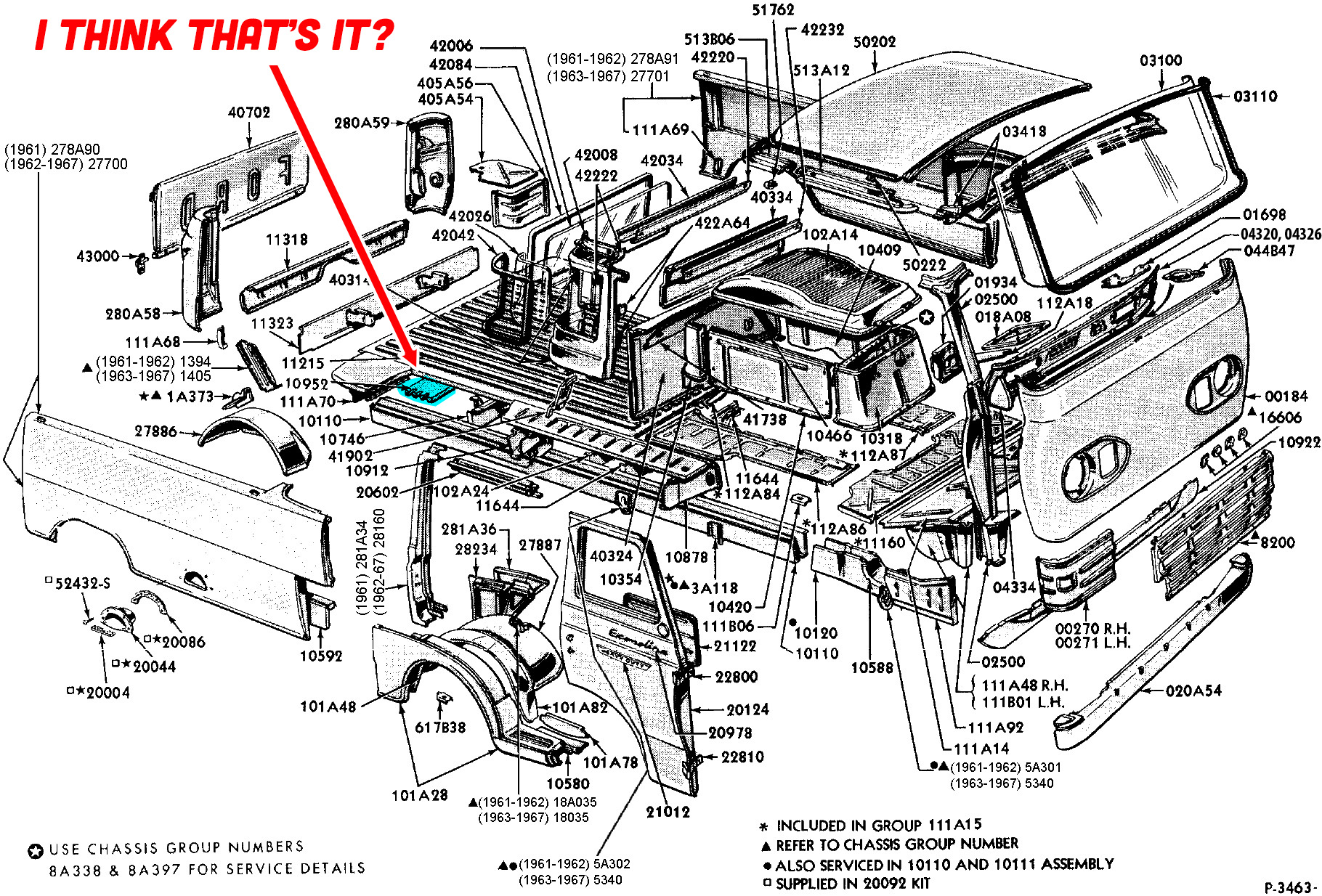
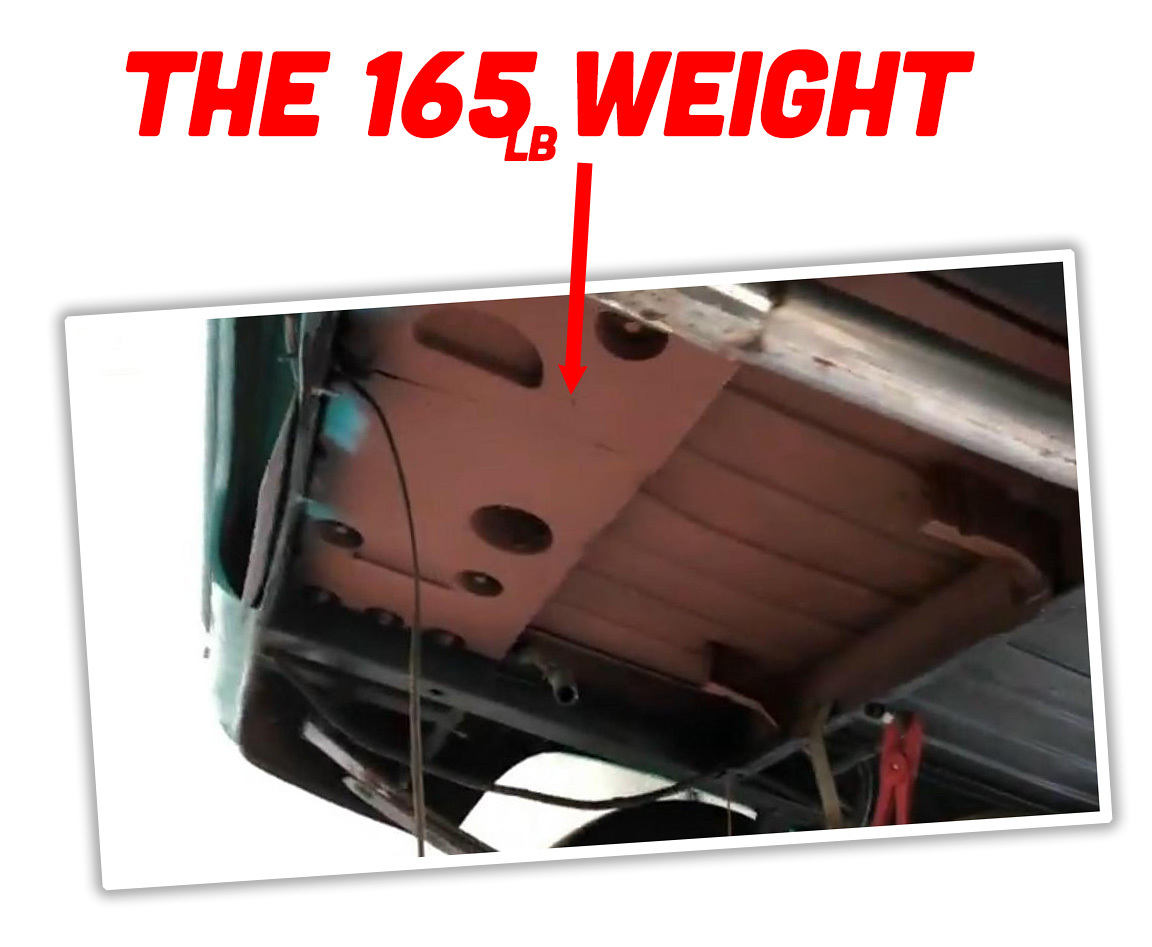
I’ll show you some slightly better images of the part later, but I think that’s the part there, bolted up on the underside of the rear part of the bed. It’s 165 pounds of iron just stuck there as a hedge against you having your truck do a nose-stand.
There’s just something strangely comical about car parts that are just big chunks of inert steel. This isn’t the only car that has used something like this, of course – Porsche used small-ish 12-pound weights to damp vibrations on the 912E, and our very own David Tracy wrote about the massive 265 pound chunk of metal Jeep bolted to the back of their cabover FC pickups to keep them from flopping onto their faces, just like the Ford.
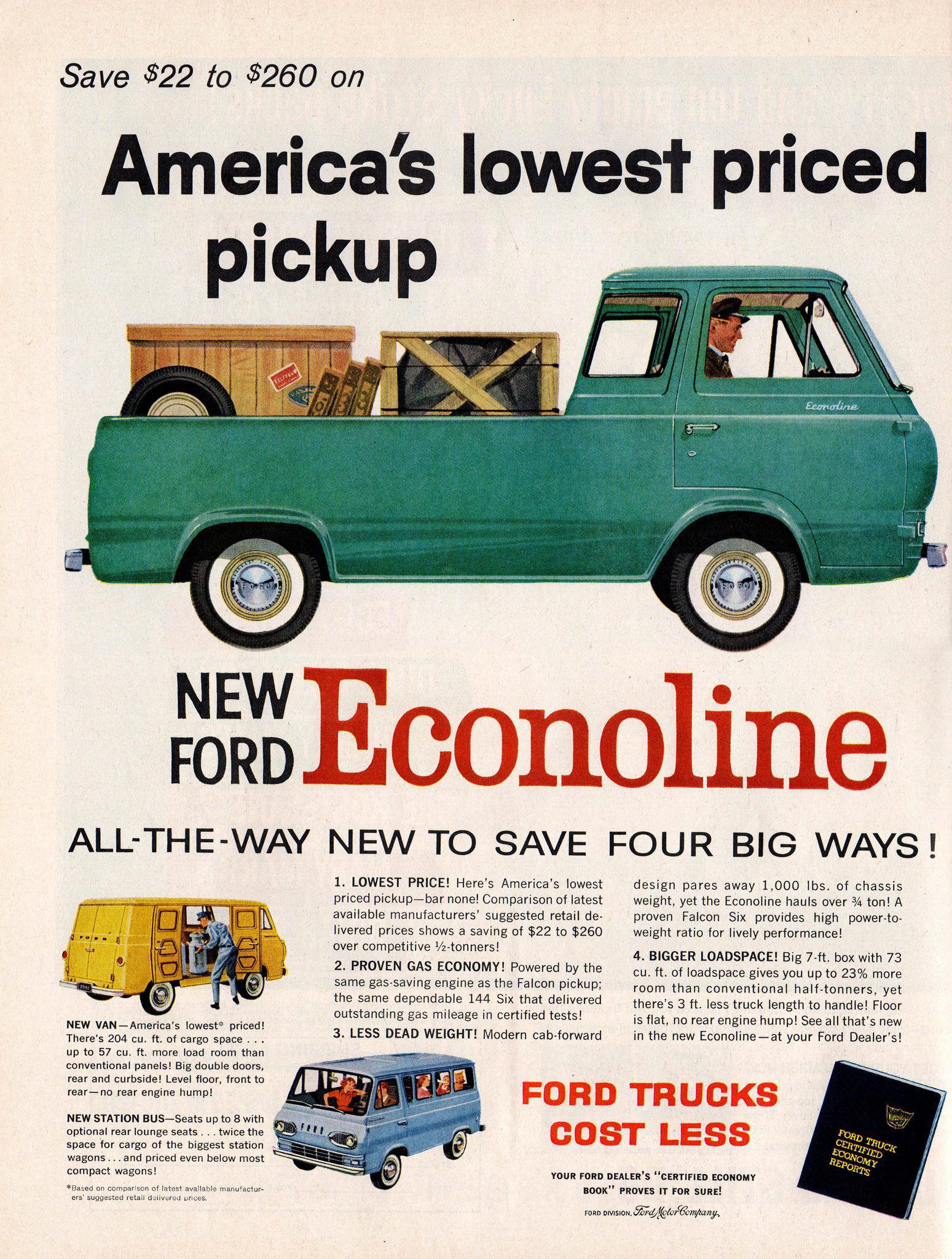
Really, all you have to do is look at an early Econoline pickup and you can see why they had to shove that chunk of metal back there. Sure, when it’s all nice and loaded, like in that ad up there, with those crates that contain (according to the memoirs of the artist that painted this that I discovered behind the urinal of a tire shop/sushi bar in Tuscaloosa) a tranquilized Sasquatch and a cast-bronze reproduction of that ballerina clown sculpture in Venice Beach.
Fully laden, sure, the Econoline pickup was well-balanced. But when it was empty? That’s a very different story.
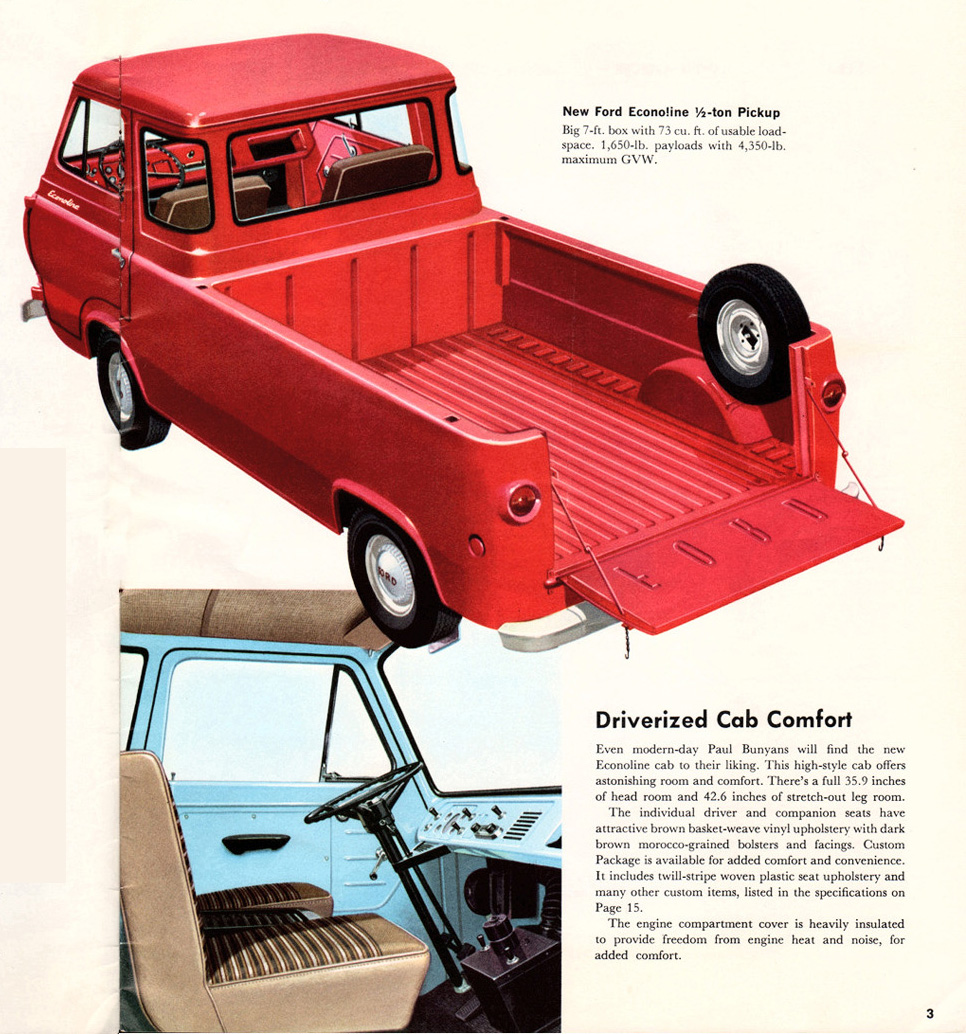
Part of the appeal of these trucks is the incredible space utilization; without some big dumb hood taking up space, you can have a much longer bed for a given length of truck. It’s fantastic packaging, and that’s why a cabover (or bedover engine) design will always have my admiration.
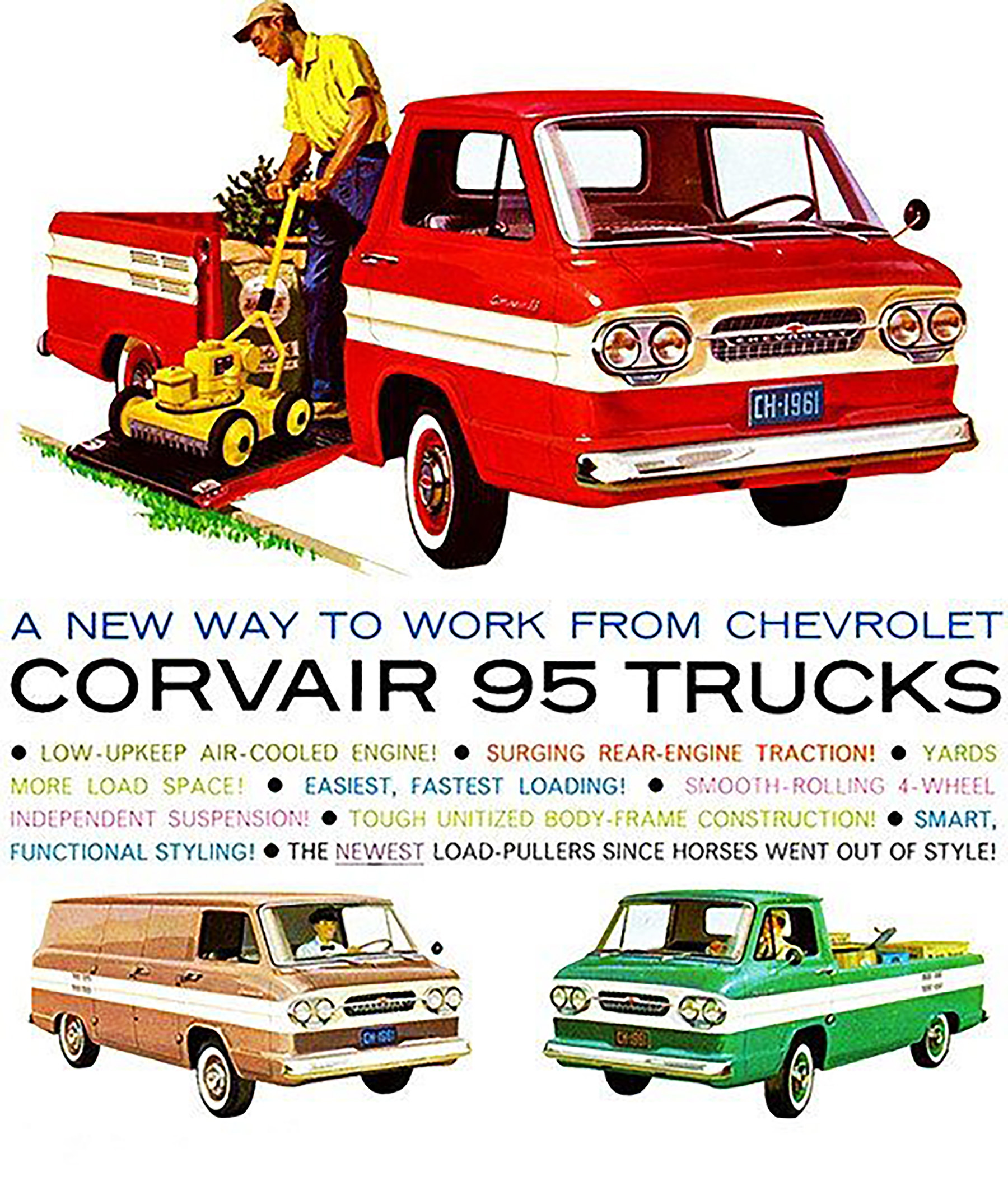
Now, the Volkswagen pickup trucks and the Chevy Corvair-based trucks didn’t have the balance problem because they tucked their engines way out back, which negated any problems of the trucks pitching forward under braking.
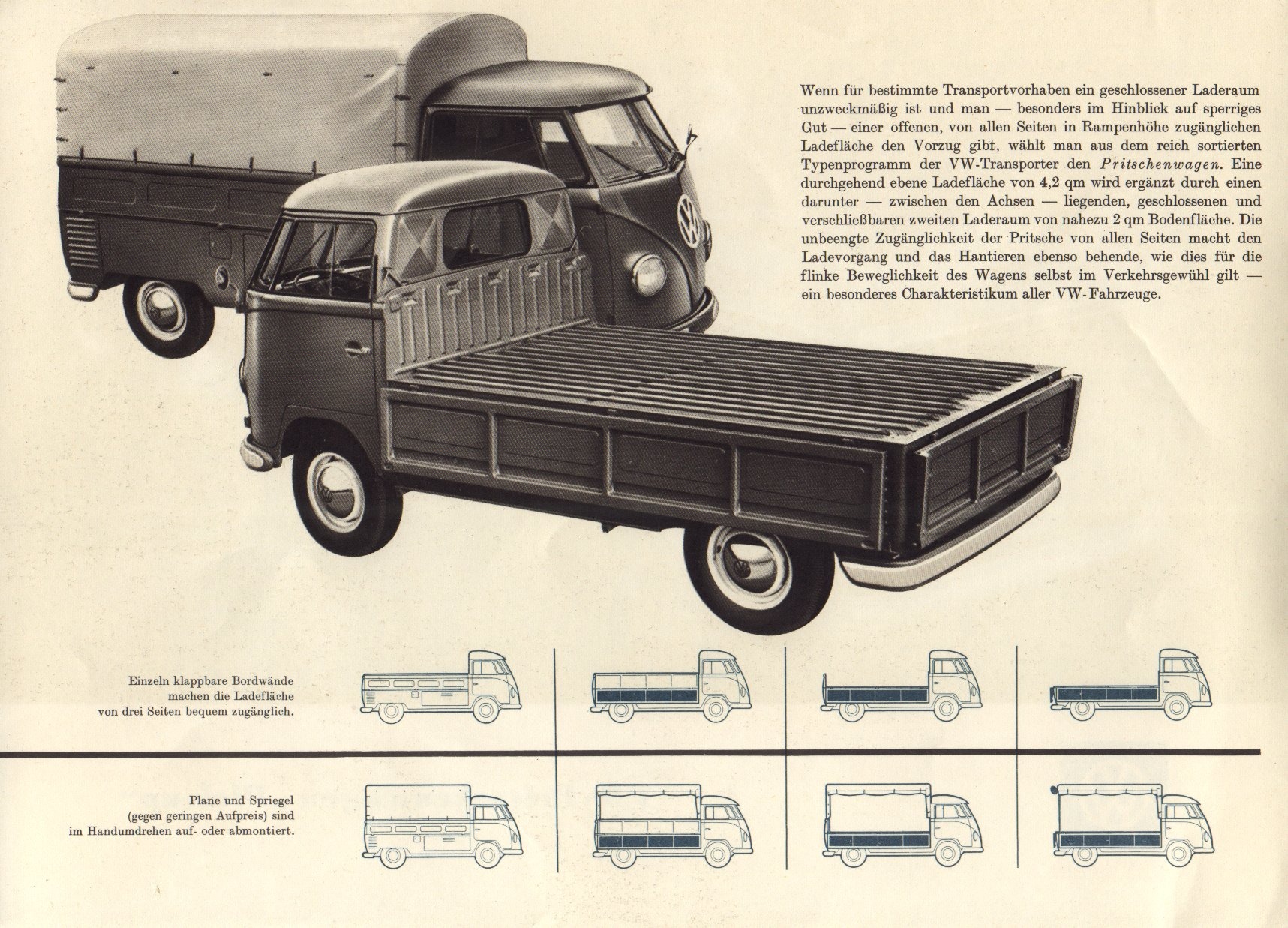
The tradeoff for the rear-engined pickups was a higher bed height, of course, though VW did compensate for this by providing a large under-bed storage locker, and Chevy had those clever “rampside” pickups:
The Econoline did have a long bed with a low loading height and a nice flat bed. But it could also do this:
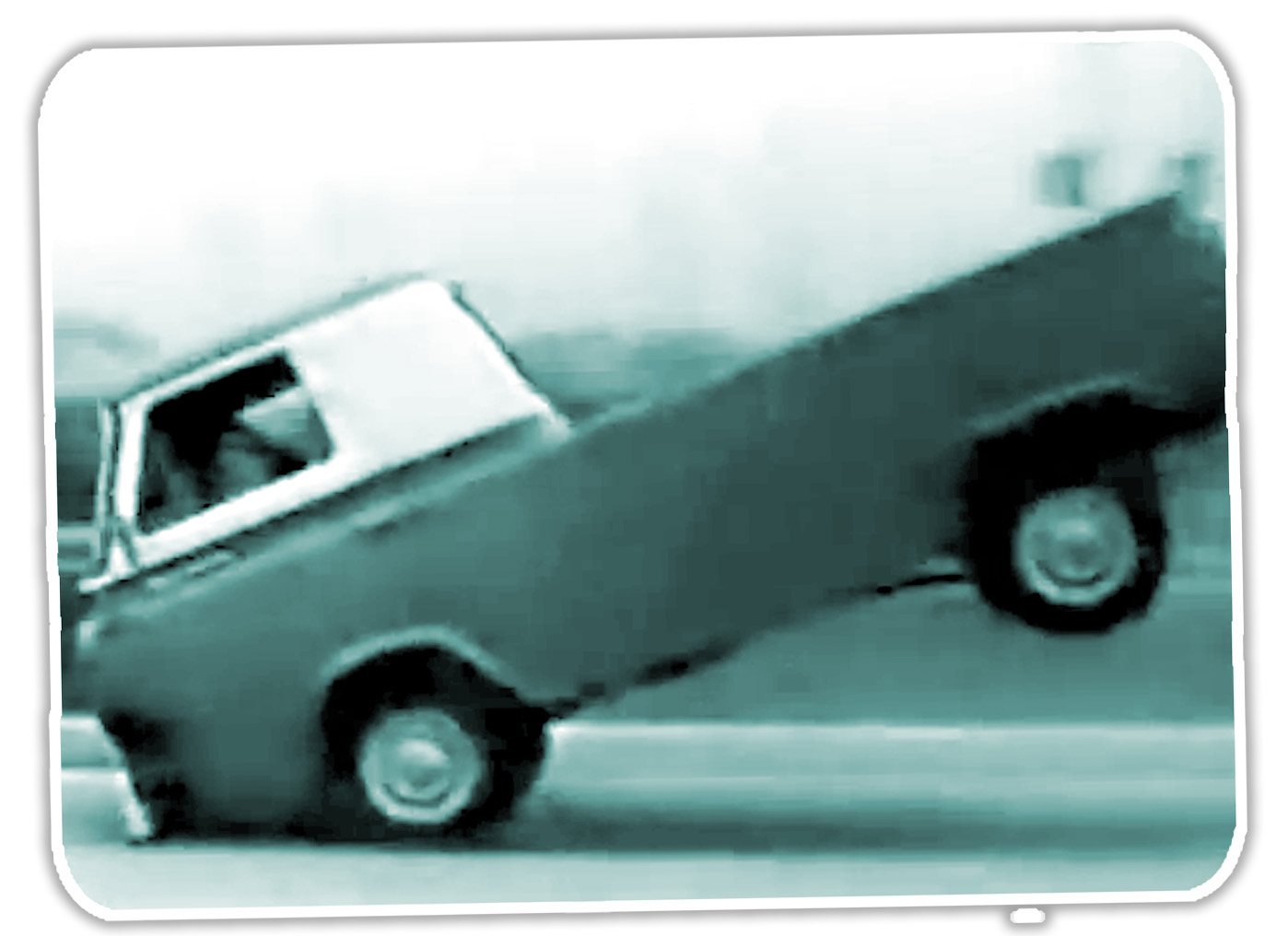
I mean, that is pretty exciting. But not what customers wanted. Hence, the 165-pound weight. But enough talk! Let’s take a look at this chunk of iron!
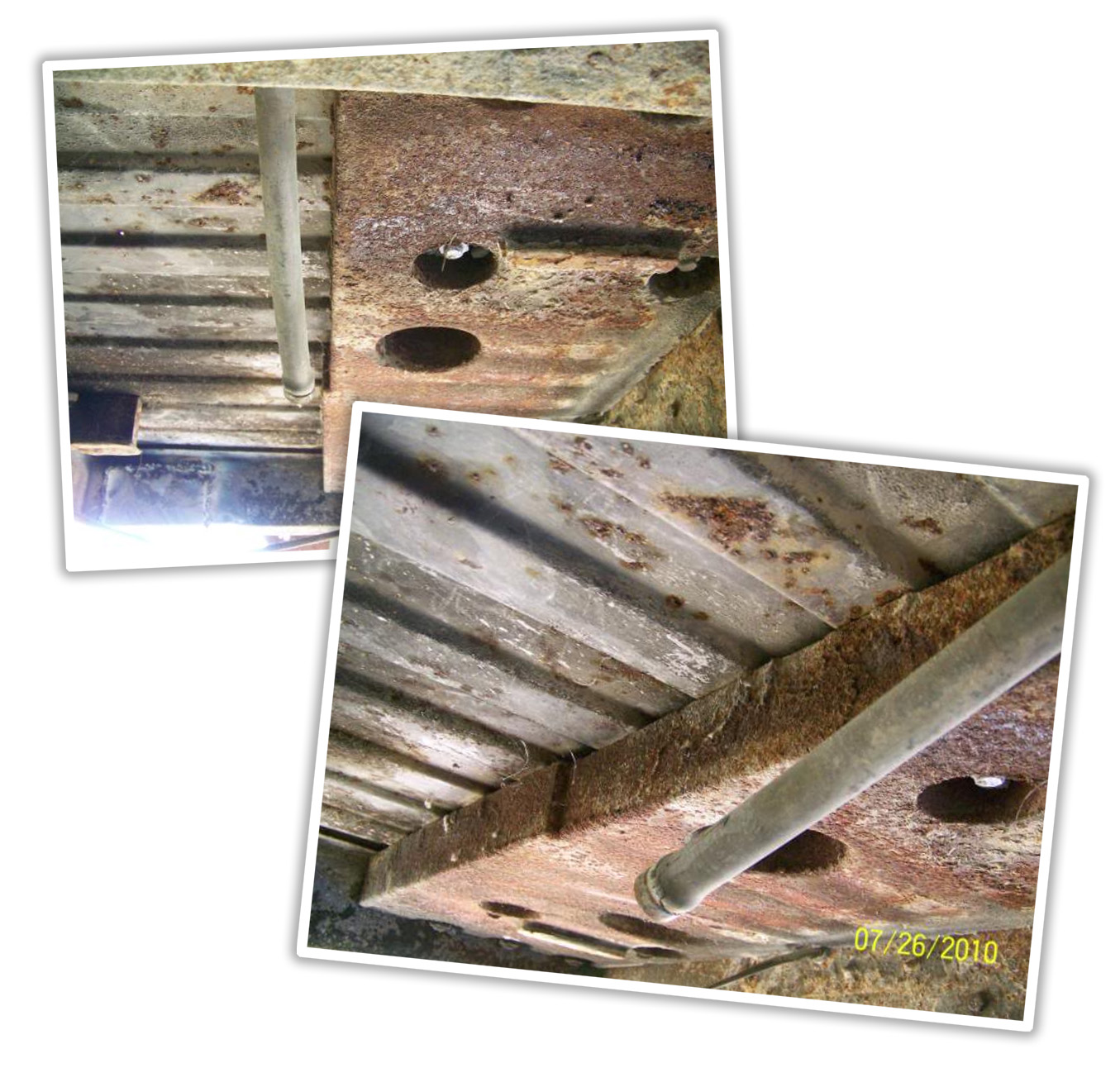
That’s a nice meaty chunk of metal! With holes in it! Here’s a clean one from a restored Econoline:
Visually, these metal anti-stoppie lumps remind me of this:
It’s not exact, but something about these things just reminds me of the forbidden inside of a Twix bar. You’ve either tooth-scraped or slurped off the chocolate and caramel from a Twix bar, right? And seen that structural cookie element with its strategically-placed holes? Sure you have.
Well now the next time you do that, you can impress the hell out of the people around you, staring at you as you sensually suck away the coating from your Twix, by telling them all about how the revealed cookie looks just like the 165 pound chunk of metal in the back of an early Econoline.
They’ll be dazzled, I promise.




I’ve never felt more seen.
I always froze them so the chocolate would come off in one piece same as a peanut butter cup
In addition to preventing stoppies, that counterweight probably helped give traction to an empty Econoline on snowy days. When I lived in snow country, drivers of RWD pickups (4×4 wasn’t very prevalent back in the day) would throw a few hundred pounds of sandbags in the bed for the same reason.
I thought the bigass counterweight was old news, but whatevs.
Knowing it’s there, you could supplant its weight by converting an otherwise-toast example to EV – I say otherwise-toast because you’re not ruining a good working survivor – and bolt in a bunch of batteries back there. Bolt in a stout plate to protect the batteries from people who are watching Instagram vids while they drive. On either side of the driveshaft, a few more battery modules, nice and low to keep the handling good.
Sorry, I’m still stuck on
SURGING REAR-ENGINE TRACTION!
and
SMOOTH-ROLLING 4-WHEEL INDEPENDENT SUSPENSION!
Yeah, as much as I usually hate on FoMoCo, lol, I gotta admit that in the 50s & 60s they did have some clever engineers. Like, for instance, they managed to come up with a mechanism that was surprisingly reliable for its complexity for lowering/raising the hardtops on 1957-’59 Fairlane/Galaxie Skyliners: per Wikipedia “Instead of the typical hydraulic mechanisms, the Skyliner top used seven reversible electric motors (six for 1959 models[4]), four lift jacks, a series of relays, ten limit switches, ten solenoids, four locking mechanisms for the roof and two locking mechanisms for the trunk lid,[5] and 610 ft (185.9 m) of wiring.”
One wonders if the engineers that came up with the anti-stoppie weight for the cabover Econoline pickup were the same engineers that resolved a persistently confounding and even at times debilitating problem that early 1960s Lincoln Continentals had with harmonic vibrations (largely due to the four-door construction with the rear-hinged rear doors and lack of B-pillars.) They hit on a solution which involved adding some 100 lbs of weight to the Continental in the form of four heavy lumps of metal placed at strategic points in the chassis.
So, yeah, some pretty clever engineers at FoMoCo back in the day…
T-birds from that era had them too.
Ford did the same with the SN-95 Mustang convertibles to tune out NHV.
Volvo wagons had a weight in the center console, apparently to remove some sort of vibration at a certain point. It would have been smarter to relocate a component, such as the car computer, to that area, and keep the weight down by a few pounds.
In the Ford, a stouter rear bumper and thicker gauge bed floor, or perhaps just the tailgate, would have had the same effect while increasing the quality of the truck. But the bottom line is the bottom line…
Exactly – load floor, bumper, etc… all shared with the volume selling van. Can’t add cost to the van – a counterweight is cheaper.
seems to me good engineering would be producing a chassis that did not require ‘band aid’ solutions like adding weight.. yust sayin’
Agreed, but back then automotive engineering, especially in the USA and especially in NVH, was still relatively in its infancy and those engineers had to deal with the demands of the executives, the bean-counters, & the marketing department, hence having to resort to such bandaid solutions.
The 1960s Lincoln Continental was very much an exercise in hubris and optimism as evident in such a massive and ludicrously long unibody (!!) chassis that didn’t have a B pillar thanks to its rear-hinged rear doors (not to mention the convertible not even having a roof to provide additional structural support) and when problems inevitably arose those beleaguered engineers had to come up with solutions on the fly, so to speak.
So still props to those engineers…
Ya brought me around; unibody! Holy buckets
<sarcasm>
at least today, the engineers do not have to adhere to the whims of bean counters, lawyers, marketing etc
</sarcasm>
> I gotta admit that in the 50s & 60s they did have some clever engineers
If attaching a dumb counterweight to the skinny end of a truck counts as “clever engineer[ing]” then I’m a regular Albert Einstein.
FWIW, my 96 Impala SS had a 7(?)-# weight bolted to the exhaust pipe as a drone/buzz eliminator.
They are appealing with an airy interior and gotta love that you are the driver and the airbag. C’est la vie. C’est la morte
Completely adjacent topic, but my great aunt had a red
TonkaStructo* “Corvair” Rampside truck at her cottage on Keuka Lake that I used to play with when I was a kid. Anytime I see anything about a Rampside it takes me back.*TIL that Structo is/was a thing.
Wow, the potential to save $22! (Yes, I understand inflation. It’s still funny.)
That grabbed my eye as well!
RoadKill’s He Hate Me build exhibited terrible stoppies. I’m guessing they cut that weight out when the shortened the bed.
https://www.motorbiscuit.com/craziest-truck-ever-the-backup-pickup/
And yet, Ford still advertised “LESS DEAD WEIGHT!” as one of the key marketing points in one of the ads in the article.
Ford couldn’t even make it through an entire ad copy without lying. Mad Men!
Maybe the other manufacturers used 166lb weights
Woe to any dogs or kids riding in the bed during a stoppie.
The Econoline Trebuchet package.
Dammit! Now I really want to see a Ford Econoline P/U trebuchet in the next Mad Max movie! Using practical effects, of course, no CGI bullshit.
I dunno, the possibility of an abrupt flyer sounds pretty fun to me.
That ad is the first and only time I’ve ever seen the word “driverized.” In this context, the proper usage would be, “Yep, he stopped too short and the blacktop in front got driverized.”
Now use ”Drivematized” in a sentence…
Those Fords must have been *highly* entertaining in the snow unladen even with the weight.
( queue the ‘unladen sparrow’ jokes )
“Driverized Cab Comfort“. Those ad guys sure had a way with words back in the day. Also, just like the VW versions, it appears the driver’s knees are the first line of defense in any collision, which I assume is the reason that design is no longer around.
I know Canoo was basically vaporware but the concept was good.
Someone should retrofit these old trucks onto cheap EV chassis like old Nissan Leafs.
Maybe paint them dark brown and bronze since the Twix plate wouldn’t be necessary with a low CG EV chassis.
Call it the Econobriar FC.
Econobriar FC are going all the way this year.
I think I’d add a wheelie bar setup on the front end of that Econoline. And then add seat belts with shoulder harnesses.
Yeah, I was just thinking that it probably has just lap belts, if any seatbelts at all. And if it did, nobody wore seatbelts back then anyways.
Better yet, embrace the lack of balance and install flip-bars.
“wheelie bar setup”
Candy bar setup? Ha ha
GEORGE: And you! How many Twix does that make for you, today?! Like, 8 Twix?!
MECHANIC: No.
MAN: Hey, this Clark bar is good.
GEORGE: It’s a Twix! They’re all Twix! It was a setup! A setup, I tell ya! And you’ve robbed it! You’ve all screwed me again! Now, gimme one! Gimme a Twix!
MECHANIC: They’re all gone.
GEORGE: (Yelling out, frustrated. The camera spins from a top angle) Ttttttwwwwiiiiiixxxxx!
I suspect the kei trucks that have engines in the front would do a stoppie under hard braking, so I only considered a Subaru Sambar when I was shopping. The Honda Acty is mid-engine, so it would likely be better in this regard, as well. (I prefer having a button to activate 4wd on the Subaru vs. the Honda slip,then grip system.)
I also have to add that the “big 4” in pickups in this era were GM, Ford, IH and Dodge in that order.
I’m looking around where I am right now, and seeing tons of steel, some of which looks just like that ballast plate.
…and I’m also hungry.
This article didn’t help.
Reference Jason’s earlier treatise on chewsmaxxing if you need guidance.
Gummipuffers were just made for chewmaxxing.
‘Sokay, I made it to Lunch break without attempting to munch a piece of 1-1/2″ A36 mild steel, covered in years of dust, machine shop cutting lubricants, tetanus, and maybe a hint of hantavirus.
I see your Twix bar and raise you a White Castle burger.
You post a picture from GM’s propaganda film but not a link to it? https://www.youtube.com/watch?v=HrhCAiV7diY
If you look at the video closely you’ll see that an early Econoline won’t do a stoppy at least as it left the factory. In the video you’ll see that the standard equipment spare tire and rear bumper have been removed. A shorter single wall tailgate from a conventional Ford pickup as been subsituted for the taller double wall unit. When they do the stoppy that is pictured you can see the person in the passenger seat throw himself at the dash/windshield.
Of course you can’t see if that block of ballast has been removed, but I’ll bet that was the first thing removed in their quest to show that an Econoline is dangerous and has poor traction.
I’m going to use that for a CS on its own!
Sorry didn’t meant to let the cat out of the bag early.
oh it’s okay, I’m happy it’s mentioned
So, Chevy Guy was around back in the ’60s, too, huh?
I think some planes have a pad in the back for when they take off so the plane is protected. I would do the same, but instead move that twix bar to the front and proceed to make sparks everywhere I went.
Piper PA-46 series planes have an interesting variation – look at the wingtip fairings, and on the bottom there is a little bump. The idea is if you do a wheels-up landing, then when the plane tips onto one wingtip that bump wears away (it is just thin fiberglass), revealing the little WHEEL inside to keep the wing surface off the ground! I think the thought was that it will help prevent catching the wingtip on one side and being spun around at high speed.
The KC-135 has that, I think. It’s the air refueler’s window. Riding there during rotation on takeoff was very popular back in the day.
Your brain must be studied for science when you pass.
or before! I don’t always need it.
Need it? Or use it? Some things a brain does are mandatory, after all.
This week I reread your 2023 post “What It Feels Like To Have Your Aorta Explode And Almost Die.”
Thanks a bunch, it’s just gone 3pm here and now I want a Twix at my tea break.
There’s like a 10kg steel NVH damper in the trunk lid of Nissan 360Zs. Like those weren’t heavy enough already.
350Z. Fat-thumbed twat.
Speaking of which: I recall that when the aluminum-structured Jaguar F-type was introduced, it was 500 pounds heavier than the same-year Porsche 911, which had a mostly steel structure with some aluminum and composite pieces. I sometimes wondered where Jaguar hid all of the extra weight.
You have to admire Jaguar for making their cars heavy, but also fragile. It’s a neat trick.
They didn’t hide anything–they just removed lightness.