

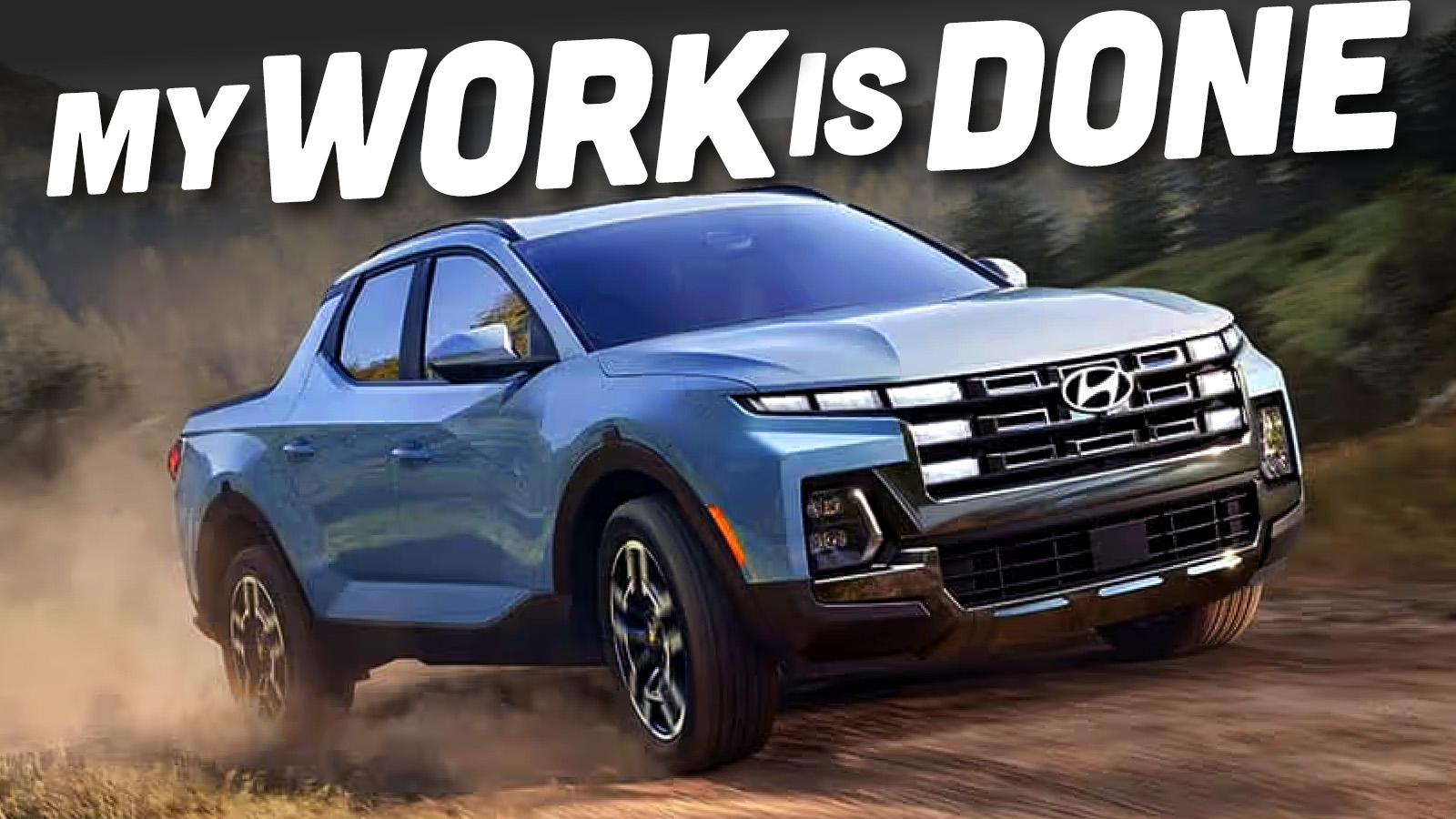
The Hyundai Santa Cruz is a charming little compact pickup truck that blasted onto the scene in 2021 with much fanfare. It was the first such-sized pickup to appear in the American market for some time, and Hyundai’s first attempt at breaking into a utilitarian segment.
Though it’s only been around for a few years, Automotive News, citing unnamed sources, reports that Hyundai is planning to cut and eventually end production of the Santa Cruz, with no direct replacement planned.


While Hyundai declined to comment on whether the Santa Cruz is actually on its way out, a spokesperson told The Autopian the pickup “has helped Hyundai gain valuable experience and visibility in the open-bed market.” Here’s what we know.
Allegedly Cut Short Due To Slow Sales
Automotive News spoke with several sources on Hyundai’s move to reportedly kill off its compact pickup ahead of schedule, citing low demand. From the article:
Originally slated to continue through the second quarter of 2027, Santa Cruz production now is expected to end sooner, a person briefed on the plan said.

Another source confirmed the phaseout, driven by weak sales and elevated inventory. The truck’s only like-sized competitor, the Ford Maverick, outsold it 6-to-1 in 2025, leaving Hyundai dealerships with nearly five months’ worth in stock at year end.
Hyundai has told suppliers it is cutting Santa Cruz production by roughly half this quarter, one source said.
As Autonews points out, discontinuing the lagging Santa Cruz would free up space at the company’s Montgomery, Alabama assembly plant, where it also builds the Tucson. The Tucson, coincidentally, is Hyundai’s most popular car—the Korean automaker sold over 200,000 of them last year, an increase of 14% over the year prior. Going by a pure demand perspective, shifting resources to the car that people want more of isn’t a bad move.
If It’s True, I’m Not Terribly Surprised
Since the Ford Maverick’s debut, the Santa Cruz has been playing second fiddle in the small (but very competitive) compact pickup segment. The Ford is both more efficient (38 mpg combined versus 25 mpg for the Hyundai) and has a more spacious bed (4.5 feet long versus 4 feet for the Hyundai). The Maverick is also cheaper, starting at $29,840 including destination, compared to $31,350 for the Santa Cruz.
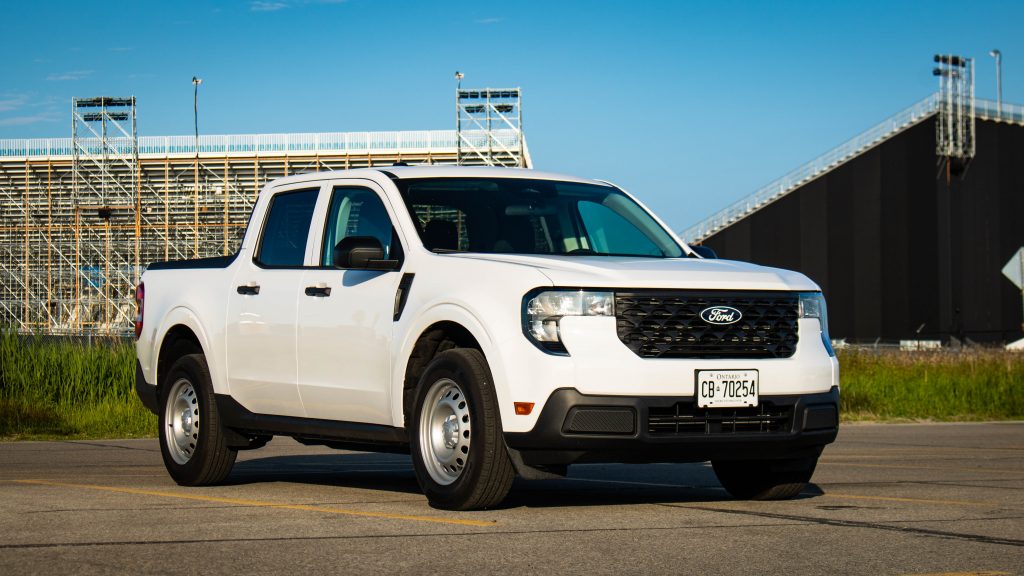
Buyers overwhelmingly prefer the Maverick. Ford sold 155,051 of the little pickup in 2025, while Hyundai sold just 25,499 Santa Cruzes.
Even if the Santa Cruz could match the Maverick’s specs and price, I suspect the sales numbers would remain similar. Ford is as well-established in the pickup truck game as a brand could be, while Hyundai has never sold any sort of pickup truck in America before this one. Which brings me to why Hyundai says it’s happy with how the Santa Cruz has shaken out in the American market so far.
Hyundai Is Looking At More Than Just Sales Numbers
A Hyundai spokesperson I reached out to wouldn’t comment when asked to confirm whether Automotive News’s reporting was accurate, but they did provide some interesting insight into how the company is measuring the Santa Cruz’s impact on the U.S. market. Here’s the full statement:
“The Santa Cruz Sport Adventure Vehicle continues to be a valued ongoing member of the Hyundai product portfolio. As with all Hyundai vehicles, long range product portfolio planning is guided by many factors including consumer demand and overall market trends. We don’t comment on future product speculation.

Since its launch in 2021, our Santa Cruz sport adventure vehicle has successfully introduced Hyundai to a new type of U.S. consumer who values the capability, versatility, and rugged image of open-bed vehicles.
Not only does Santa Cruz continue to be a valued ongoing member of our product portfolio from a sales perspective, the model has helped Hyundai gain valuable experience and visibility in the open-bed market. These developments contributed directly to the announcement of a new midsize body-on-frame truck that we confirmed during our 2025 CEO Investor Day last September. That vehicle is due in the U.S. market before 2030.”
That last paragraph is the important part. In essence, it suggests that Hyundai is using the learnings it’s gained from developing and selling the Santa Cruz to U.S. buyers as a stepping stone for the bigger, body-on-frame truck it plans to launch in the near future (2029, per Automotive News).
All things considered, that makes a lot of sense—while the Santa Cruz isn’t (wasn’t?) a gigantic, runaway success, Hyundai surely learned a whole bunch about how to market a pickup truck in America, and now knows far more about their buyers and their preferences. That intel alone is extremely valuable.
This new truck will likely look and drive far differently than the Santa Cruz, a unibody truck that shared much of its design with the Tucson crossover. This one should also be bigger, and compete with the likes of the Ford Ranger, the Chevrolet Colorado, the Toyota Tacoma, and the Honda Ridgeline, rather than the Maverick. Whether it’s any more successful, well, we’ll just have to wait a few years and see.
Top graphic image: Hyundai


I test drove a few of these when they first came out, and I truly loved it, especially the top trim with the bigger engine. But every dealer I visited attached a $5k markup or more, and I walked away every time. It was a nice truck but I kind of feel like I dodged a bullet with the transmission / oil consumption issues.
What I really wanted was a Maverick, and at the start of Covid I found one in the exact trim and color I wanted, but I didn’t want to pay the $2k mark up. Soon it was $10k. What a fool I was!
The other year I was looked at it but all the reports of transmission issues and general Hyundai warranty avoidance BS scared me away.
The trouble is that the Maverick looked like a little truck and the Santa Cruz looked like a Tuscon sedan.
Yeah, sheet metal can do wonders
As someone who recently cross-shopped this and the Maverick and settled on the Maverick I’m not too surprised. I probably would have been happy with the Santa Cruz, but as mentioned in the article the Maverick beat it out on specs, price and (imho) looks. The Maverick looks like a pickup, just not gigantic, while the Santa Cruz looks like the crossover with a bed instead of a hatch that it is. I feel like Hyundai would have done themselves some favours if they had gone more clean-sheet in the design.
I think we will see a Kia small pickup soon. Size wise not sure if it will be small or mid-sized but it will be stout and these lessons will be the reason why.
Google Kia Tasman. Its a body on frame truck to compete with the Ranger, Hilux etc. It has looks only a mother could love.
I see people complaining often that the Maverick is too expensive. I say balderdash.
Yes, the base price has risen $10k since it debuted, but everything has gotten more expensive. The average price of a new vehicle in January 2021 was $40,857 versus over $50k now! So the Maverick base price has pretty much tracked with the market. Ford struggles to keep up with sales even at the higher price.
The Maverick is still a value. Looking at 2025 numbers… At $29,840, there are only four cheaper hybrids in the US – three cars and a CUV. The cheapest is the Corolla at around $4k less. No trucks. I had the CUV (Niro) and it didn’t do well when called on for mildly truck-y duties.
(https://www.motor1.com/features/776750/cheapest-hybrid-cars-2025/)
In the truck market, the $29,840 hybrid Maverick is the cheapest. The Santa Cruz is #2 at $30,700, and the next tier up is midsize trucks at $33k+. As the article and several commenters point out, the Hyundai isn’t competitive with features or price where it sits now.
(https://www.motortrend.com/features/cheapest-new-pickup-trucks)
Are many of these other vehicles nicer than the XL Maverick? Sure. But the XL is still a good little truck. For now, there is nothing that combines the fuel economy and truck bed that the Maverick has. It’s the only option if those are the features you want, and at the base price it’s still a good deal.
We bought one because at the time the Maverick was made of unobtainium. Got the turbo one, wasn’t a bad car. Plenty fast, and we moved cross country with it pulling a u-haul trailer. Even brought home multiple large items from Costco. In the end, it was just a little too small and once Mavericks became more available I can see why it starting to lose sales.
It was DOA… just took a while to take its last breaths
They screwed themselves by making it incompatible with a hybrid drivetrain from the beginning.
I always liked the look (particularly the backlit grill) of the Santa Cruz, but the bad MPG and meh performance otherwise killed 99% of my desire for one.
I have a ’23 Santa Cruz with the 2.5 liter turbo engine and can get over 30MPG if I don’t drive too fast and stay out of the loud pedal. It’s a good amount better than the 26MPG highway it’s rated for. And very impressive for a 4,200 pound vehicle. I average around 24.5MPG in my mixed driving.
For reference my 2002 Crown Victoria weighed about as much as my Santa Cruz, and had less power (despite a 4.6 liter V8). And I had to struggle to get more than 20MPG with it. 21 years of technology difference is a big part of that, obviously, but I’m really happy with my Hyundai and it’s lack of thirst.
It would have sold very well in Australia.
I think it’s better looking than the Maverick, but there’s no hybrid option. I mean, Ford gives you a small useful truck and amazing gas mileage. I can put up with an uglier mug. I’m going to spend most of my time inside the vehicle anyway.
I think it’s just too expensive and the fleets buyers Hyundai has aren’t really looking for something like that. Where Ford’s fleet buyers were begging for something like the maverick. Santa cruz is really more like a sport trac they took a vehicle modified the back for a bed. Where the maverick is it’s own thing on a shared platform. Tuscan was trying to be upmarket along with the rest of Hyundais offerings and to the determent of the Santa Cruz. They need a fleet spec.