


BMW has a vast history of cool station wagons. In the world of M cars, it’s offered three generations of M5 in wagon form—including the current version, as well as the current M3 (albeit in Europe only). It’s sold a diesel-powered wagon in America, in the form of the 328d. If you want something even weirder, BMW once offered a wagon in Europe that was powered by a diesel straight-six that used four turbochargers, the M550d Touring.
Amazingly, none of those cars was the coolest wagon to wear the BMW Roundel. That honor goes to a car that wasn’t even designed by the brand. Instead, it goes to AC Schnitzer and the X-ROAD. Built atop the bones of an E46-generation 3-Series wagon, the X-ROAD was a lifted factory wagon from Germany that not only looked awesome, but was well ahead of the curve compared to every other manufacturer in Germany, including BMW itself.


I feel like it’s a good time to talk about the X-ROAD, seeing as AC Schnitzer announced today that it’s closing its doors after 39 years, citing rising development costs, tariffs, and stringent regulatory processes in Germany. So let’s take a trip down memory lane.
The Lifted Wagon Craze Begins
Back in 2001, the idea behind lifted wagons meant for light off-roading in addition to normal wagon duty was just starting to catch on. The Subaru Outback, having been launched seven years earlier as a lifted version of its Legacy wagon, was already becoming a bit of a juggernaut in the segment. Its only sort-of rival was the Volvo XC70, which launched later in the ’90s and was originally known as the V70 XC.

Seeing the potential for growth in this new segment, AC Schnitzer, a German tuner firm that had been specializing in custom BMWs and aftermarket parts for 14 years, launched a version of its own in 2001, based on the all-wheel drive E46-generation 325xi, which was released a year prior. Back then, if a BMW shopper wanted something with any off-road chops, they’d have to jump all the way to the X5, since the X3 didn’t exist yet. But no longer.

Going by AC Schnitzer’s website, the X-ROAD didn’t sport any changes to the E46’s naturally aspirated inline-six engine or clutch-based all-wheel drive system. But did have several small improvements to make it friendlier to drivers off-road. There are AC Schintzer-specific springs on all four corners, raising the ride height by 1.18 inches. The Type III 17-inch wheels, sporting the company’s iconic twin-spoke design, wore all-terrain tires.
That wheel/tire package afforded a bit of extra track width, which was shrouded by an AC Schnitzer body kit in grey. Rounding out the mods is an aftermarket exhaust with an oval tailpipe exit—another AC Schnitzer signature. And who could forget those epic “X-ROAD” decals on the doors? It really ties the whole car together.

Being a niche tuner product, the X-ROAD is an incredibly rare car. While there isn’t an official production number published anywhere, most of the internet seems to think that around 25 examples of the X-ROAD were built in the early 2000s for the European market. Despite their rarity and specialness, there are a couple of folks who aren’t shy about driving them. An X-ROAD owner on Reddit claims to have put 300,000 kilometers (186,000 miles) on the clock of their X-ROAD, and there’s a guy on Instagram by the name colibamotorsport who regularly posts videos off-roading his X-ROAD, without any care for whether something might go wrong. This video, published in December, shows the car splashing through shallow mud pits and getting sideways on dirt:
View this post on Instagram
Looks like a fun time to me. I’m sure most of these cars are sitting in collections untouched, so I’m glad there are at least a couple being used as intended.
Rest In Peace, AC Schintzer
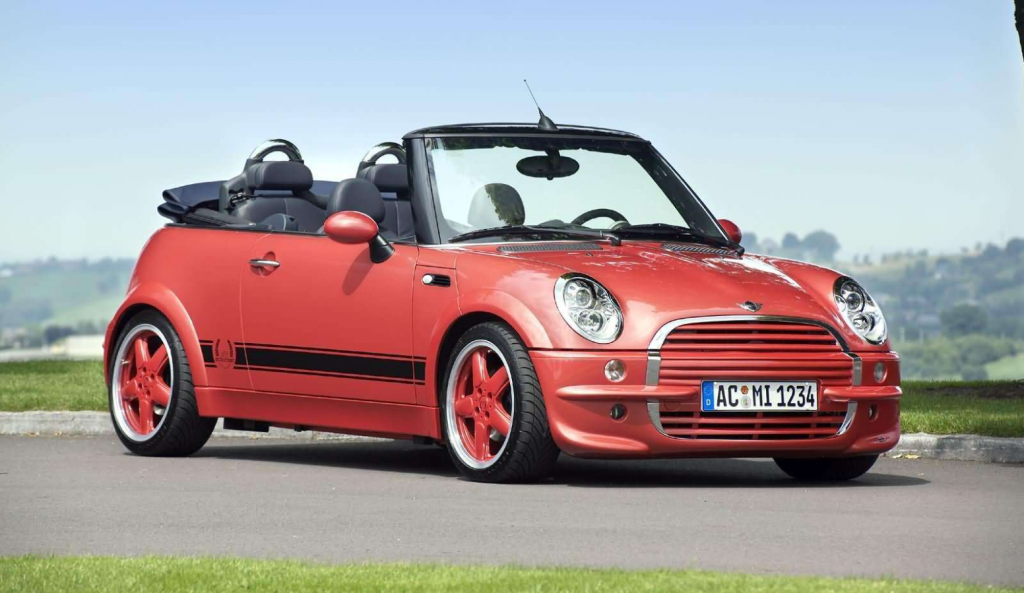
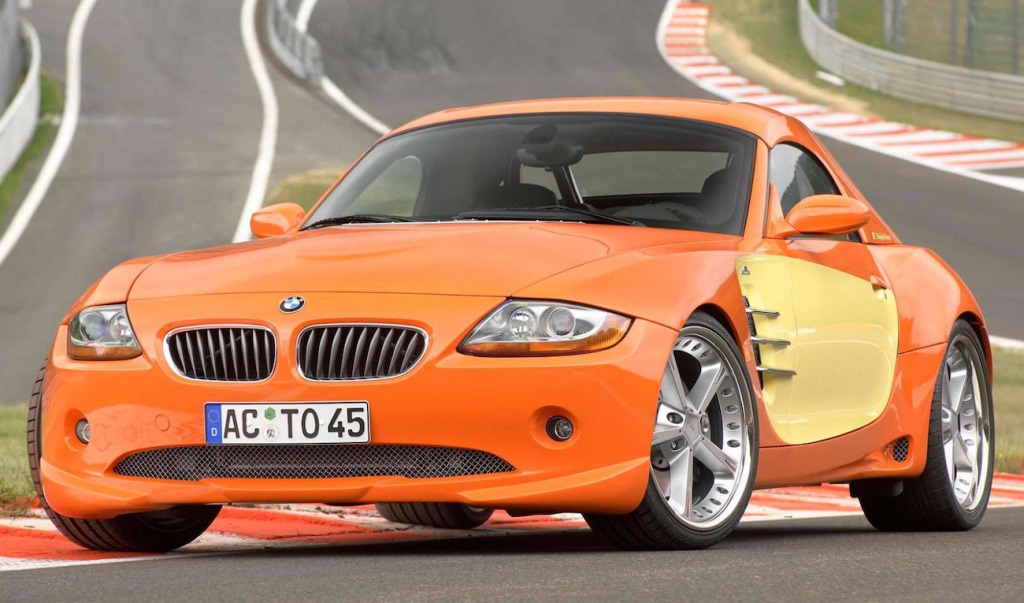
In the years before and after AC Schnitzer revealed the X-ROAD, it has stood the test of time to become one of the most-well known aftermarket parts companies in the BMW-verse. In addition to the X-ROAD, it has built dozens of full-fledged projects based on all sorts of BMW coupes, sedans, and SUVs, and even a few Mini-based offerings.
Now, though, that’s all coming to an end. KOHL Group, the company that owns AC Schnitzer, announced today it plans to wind down the firm’s operations at the end of this year as it pivots to selling down inventory, citing “various factors” that make it “no longer economically viable” to continue business in Germany. From the press release:
Steadily rising costs in the development and manufacture of parts are creating competitive disadvantages. In particular, however, the extremely long approval process for parts in the German system has caused AC Schnitzer to fall further and further behind its non-German competitors.
“If we can only bring aftermarket parts to market eight or nine months after the competition, that speaks for itself,” explains Rainer Vogel, Managing Director of AC Schnitzer, outlining the background. On the demand side, changing consumer behavior, deteriorating international market conditions, and the gradual phase-out of the internal combustion engine further exacerbate the situation.
Famously, any aftermarket parts marketed for road cars in Germany have to go through the same stringent quality inspections as OEM parts, meaning the turnaround time to get products to the market is far more costly and time-consuming than virtually anywhere else. But that’s not the only reason, according to the brand:
Whether it’s tariffs in the key U.S. market, rising global raw material prices, highly volatile exchange rates in international currencies, or the demise of suppliers on the supplier side: every development has left its mark on the balance sheet. The same goes for the general reluctance to spend, which, amid a global economic downturn that has now lasted four years, has also caused the domestic market in Germany to collapse.
While it’s incredibly sad to see a long-standing, well-established name like AC Schnitzer close its doors, I’m not terribly surprised, given all of the reasons mentioned above. The looming affordability crisis means people don’t have as much to spend on aftermarket parts, leaving companies like this with little recourse.
If it’s any consolation, KOHL says it’s in talks to sell off the AC Schnitzer brand to interested parties, which means the name could survive to see another day. What form it would take, I’m not sure. But at least there’s a tiny ray of hope, right?
Top graphic image: AC Schnitzer


My understanding is that the E30-E46 AWD systems were all an open planetary center differential with a slight rear torque bias. No clutches except for the one between the engine and transmission.
Having owned (and even taken on some rough roads) an e46 I don’t think 1.18 inches is going to be a transformative increase in ground clearance. Also thanks for posting the other photos to leaven the nostalgia and remind me why I’ve never been fond of AC Schnitzer, imo this e46 might be their best work.
The rough road capable wagon was cool when there was some actual substance to these models, but as it transformed into nothing more than offroad cosplay (with the exception of Subaru) to sell wagons in the US market it got very lame very fast. Notably the first Audi Allroad was pretty cool and genuinely capable, subsequent versions were basically just regular Audi wagons with some vestigial cladding and an uglier grille because theoretically that was the only way americans would buy wagons, iirc Mercedes was doing this for awhile too without even having had a capable forebearer to allude to (that I know of…) good on BMW for ignoring this trend.
The Allroad was so wrung out by the 2010’s that as far as I remember, when Audi introduced Quattro Ultra, a part-time version of the longitudinal system that sacrifices everything that made Quattro good for a bit of fuel economy, it was first rolled out in the A4 Allroad, before infecting the non-clad models.
I don’t think they could have declared the Allroad’s death any more clearly than that.
I’ve wondered how their newer haldex clutch systems are when the going gets tough, I had a ’98 Audi A4 for a minute and it had incredible traction even in deep snow with the traditional mechanical quattro system.
I had an ’01 with the 1.8T, it was a beauty under low-grip conditions and had a great ride quality/handling combination.
Still miss that car sometimes, but rust did its thing and now I’ll only consider buying a daily driver if it’s fully galvanized.
At least the 986 uses the same 5-speed transmission as the FWD version, so my shifter and clutch felt familiar right away.
Nice! I had a 2.8 v6 + 5 MT, you could kinda just chuck it into a corner and stand on the gas and it would just sort itself out. Such a fantastic little car. But I bought it as a 21 year old in like 2004 on a pizza delivery salary (which with tips was more than you might think) and within a year of buying it was overwhelmed with expensive deferred maintenance that the dealer had low key lied to to me about (though I neglected to do my own due diligence) and I sold it at a loss after having to borrow some money from my dad to get it actually sellable. Fortunately where I lived rust was not an issue.
Crazy the 1.8T shared a transmission with the 986, I had no idea!
Mine was also a 5MT, and it had the aluminum interior trim and no sunroof, which made it a bit of a unicorn. I wish I could’ve afforded to save it from its crusty fate. Still, 20 years and 260k miles was a pretty good run for that car, of which the last 4 years and 100k miles were under me in college before I sold it to a friend who I believe managed to keep it on the road for almost another year before the rear subframe rotted off.
As for the 986, Porsche was strapped for cash back then and poaching the B5 A4/Passat transmission was the cheapest way to offer a 5-speed for the base model. I really like it, it’s actually got the shortest 1st/2nd gears of any water-cooled Porsche ever (some have the same ratios, but none are shorter once final drive is accounted). The even nicer thing is, if I grab a transmission from a 1.6L Passat, I can get even shorter gears for autocross. Plus, my transmission service is relatively simple and well-documented on the VW side if I ever need to change out synchros.
Yeh I’d say given how few I still see on the road that 260K before retirement is quite good for one of those!
I keep being tempted by 986s but frankly I’m scared I can’t keep up with the maintenance $$$ I imagine even a clean one will need at this point…I owned a used 957 Cayenne for a few years and it was well built but still had an appetite for weird little repairs that were surprisingly expensive.
The 986 is definitely hungry for weird little plastic bits, it’s probably got a similar amount of VW bits to the Cayenne except the engine is all Porsche. Overall, it’s been fairly friendly to my wrenching, with only a couple deeper diagnoses requiring professional interjection. I daily it year-round, so the regular running probably keeps the engine a bit happier than most, albeit my suspension takes a bit of a beating on the commute. I would have been lost trying to work on this without prior experience, but with only one engine ever fitted to it, the engine bay is designed with strategic little windows to give you exact access to the important bits, provided you have lots of socket extensions.
I wouldn’t buy this car if I didn’t have wrenching experience, a garage and more budget than its purchase price suggests.
Won’t be missed too much.
They mostly did tuned cars though not this
Sad days. That is a legendary tuner.
Won’t be missed too much.
I am so annoyed by this boring reasons, many companies give you. Schnitzer didn’t play a relevant role during the last 20 years. Never sold much. Never built really appealing cars.
Other similar brands like Alpina managed it so long and were simply better. Better build quality and so on. No wonder they had such a close connection to BMW in the past 20 years and effectively were taken over by BMW.
Schnitzer always had a few interesting builds, but usually just a single car or maybe a handful of cars were built. The rest were mostly just body parts…so just visual nonsense.
I used to see a ridiculous 740il AC Schnitzer on a used car lot. The owner had painted it army green and had yellow AC Schnitzer decals. The thing must have sat for a year before it disappeared.
Well there goes my source for car-based schnitzel.
A tuner that ruined about 30 BMW 325xi wagons 25 years ago by turning them into really expensive Outbacks is going out of business? Okay.
“no longer economically viable”
That’s a fancy way of saying they were up Schnit Creek without a paddle.
Also, Falling Down.
https://www.youtube.com/watch?v=SRX7vv4heos
Not much of a ‘tuned’ vehicle, color me unimpressed. All terrains, fender flares, and 1.5″ spring lift – yawn. Looks like it would scrape on a parking block. My moms Saturn could do the same ‘offroading’ they showed in that video. Heck, the Nissan Crosscab would eat this alive.
Now a tuned E39 540i 6 speed is more deserving of coolest wagon.
Two decades ago I had a coworker with an imported AC Schnitzer E46 he brought back from Germany after a work contract there. I think it started life as a 330i but was hardly that anymore after the engine and suspension mods (luckily the body mods were minimal). It was a neat car, but not as cool as his Dinan E36 M3.
Affordability crises, what a nice cop-out for these OEMS. They don’t make cars to be modded anymore, or worked on, or touched by the owners. They make gross shit that is so advanced their own techs can’t even do it.
Germany, is a dead country. BMW, and MERC are about to be dead Companies unless they leave that horrid place. Its laughable how they’ve killed themselves with regulation. When the EU started, for the first like 10 years, Germany was so strong it carried the entire union.
Then they destroyed all their industry, energy and worker pool. Now we are seeing the results and we want to blame random, faceless things, because it shines a light on the whole greenwash industry that a lot of people here support.
Hate it or love it, that’s the truth.
And so many people here cannot wait to bring all that good progress to America
The AC in AC Schnitzer stands for Aachen, a city in northwestern Germany that borders Belgium and The Netherlands. I did my masters in mechanical engineering there, at RWTH Aachen University, from 2005-2009 while working part-time. Fond memories!
I love that region, so many lovely draft horses and draft beers.
Probably BMW should buy the brand to build thing that does not fit under Albina or BMW itself.
Not that BMW builds things that fits BMW nowadays.
“Lifted wagon” = coolest thing ever
CUV = uncool, the worst, loathed
Help me understand!
It’s the thicker middle, I think.
I think there’s some leftover thinking here that hasn’t adjusted. I’m pretty sure when the X5 came out, the 5 touring was faster, more efficient, and had more cargo space, making the X5 kind of dumb. I don’t think this is the case anymore, as everything gets just more bloated. What even is the outback, the one time platonic lifted wagon, anymore?
The Outback has been legally classified as an SUV since 2005 but people refused to see that a “car” with more than 8″ of ground clearance and as tall as a CRV was a crossover. It took them making the front blocky in the latest generation for that switch to flip for some.
I mean.. one is definitely cooler than the other. (says someone who begrudgingly got a BMW CUV b/c they won’t sell a cool mid-range hot wagon in the US anymore)
Lifted wagons offer practical extensions to the wagon life use case, CUVs just turn a sedan into a bloated version of itself? What advantages does a CUV offer? I’m pretty sure a Scion tC can swallow more load than an Ecosport for example.
The point being that both an aftermarket lifted wagon like this and a CUV offer a higher ride height and more capability than a sedan or regular wagon, at the cost of some handling prowess and fuel economy. But one is “cool” and one isn’t.
The real-world difference between this thing and an X3 or X5 is a lot smaller than enthusiasts wish it to be.
“Cool” Is a matter of taste, not specifics or capabilities.
If we remove vehicles from the discussion
Nike=cool
StrideRite=not cool
Both are shoes, offer the same material capabilities, the same shoe types, color options, and sizes.
This will change over time, and in fact sometimes flip based on current generations changing their opinion on how cool it is to like or dislike what their parents think is cool.
It’s because lifted wagons maintain the drawbacks of wagonhood while also incorporating all the drawbacks of CUVs, and as we all know the more flawed a vehicle is = cooler.
Take my XC70 as an example. Sure it has more cargo room than an XC60, but it’s longer and lower so good luck getting a couch to fit through the hatch opening. Also the raised ride height might mean a better seating position, but the roof is still low so ingress and egress is a careful balancing act of slotting your body into a narrow doorway 8 inches off the ground. I’ve had multiple passengers bash their heads on the doorframe expecting the roof to be higher. Also it has an incredibly long front overhang (FWD-based after all) meaning parking is best done backwards otherwise the swing-out of the nose means you’re often slightly crooked on first attempt.
So those are the wagon drawbacks, but it has CUV drawbacks too. Tippy, too-tall handling on dry roads, ugly unpainted cladding along the bumpers and bodysides, and a prodigious thirst for gas (more due to the engine option, but not helped by AWD).
But anyway, to actually answer your question the answer is proportions. I mean, look at a V90 XC vs an XC90. Which looks sleeker, faster, and cooler? Yeah, it’s not the gigantic three-row crossover.
https://images.autoweek.nl/261035323/width/800/261035323
CUV is not long enough to be a wagon IMO.
Schnitzer ran a lot of BMW’s factory touring car efforts as well. Sad to see them go.