

Today’s diesel trucks are marvels of engineering. You can waltz down to your local Ford dealer and drive away with a truck that produces 500 horsepower, 1,200 lb-ft of torque, and can pull up to 40,000 pounds. This modern power comes with some modern responsibilities. Today’s trucks use a bevy of emissions systems to clean up their exhaust, and one of them is Diesel Exhaust Fluid. When you run out of DEF or the sensor fails, your truck may derate or go into a full limp mode. In a reversal from past regulations, the United States Environmental Agency is considering getting rid of the derating requirement entirely.
The current administration has been reversing the federal government’s stances on many issues, including how the U.S. Environmental Protection Agency (EPA) and the Department of Justice (DOJ) enforce the Clean Air Act. In the past, the federal government pursued shops that performed emissions equipment deletes on diesel trucks. Last month, we reported how the Justice Department has decided that it will no longer pursue criminal charges under the Clean Air Act for allegedly tampering with emissions devices.


EPA Administrator Lee Zeldin has spent part of his tenure making deregulation a focus of the department. One area of EPA deregulation has been easing rules for what should happen when a truck either runs out of Diesel Exhaust Fluid or the DEF equipment otherwise fails. EPA Administrator Lee Zeldin had previously ordered truck makers to stop forcing trucks into immediate limp modes due to low DEF. Now, the EPA is considering eliminating the requirement for limp mode entirely. It also wants manufacturers to report on their experiences with equipment failures. It’s a move that could make a large impact.
What Is DEF?
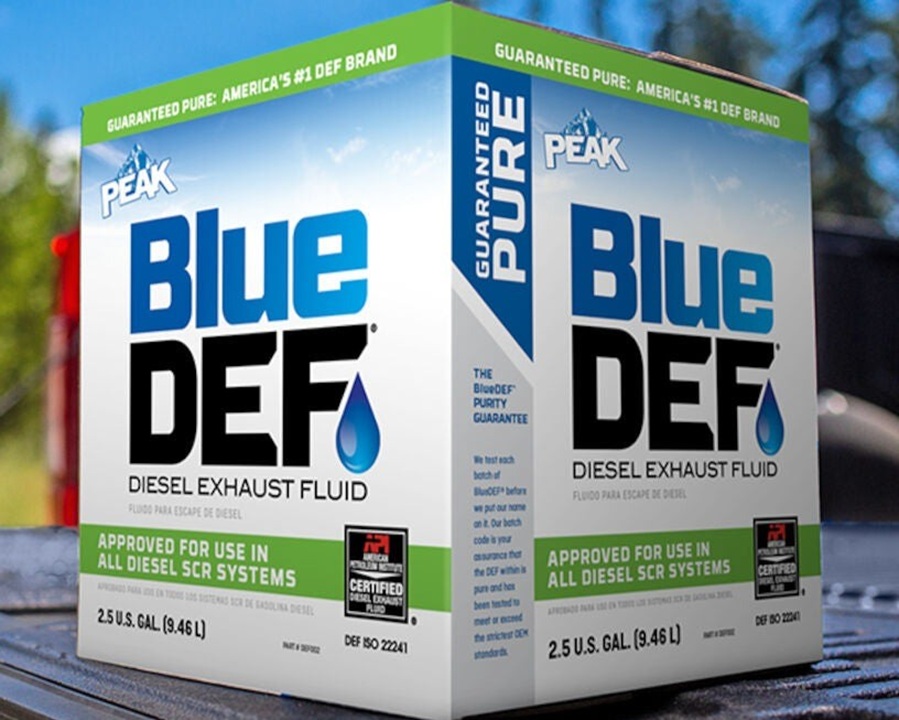
If you own a modern diesel car, SUV, or truck, you’re already well acquainted with DEF, and I wouldn’t be surprised if you have a jug of the stuff in your trunk or bed right now. But why do modern diesels use DEF, and why is derating these diesels when they run out a big deal?
According to Diesel Power magazine, the implementation of diesel emissions equipment was gradual. Back in the 2000s, buyers of trucks found an Exhaust Gas Recirculation (EGR) system in their engine bays. EGR systems reduce emissions by recirculating a portion of an engine’s exhaust back into the intake. Even your modern gasoline-fueled car has an EGR system. Next came the Diesel Particulate Filter (DPF), which is an exhaust aftertreatment system designed to trap particulate matter before it leaves the vehicle.
As emissions requirements demanded diesels to run even cleaner, emissions equipment evolved. The Selective Catalytic Reduction (SCR) was an important advancement in diesel emissions reduction technology. 2010 model year heavy diesels have SCR to meet the EPA’s strict regulations. Any light-duty diesel that didn’t already use SCR phased in its use during the early 2010s.

Selective Catalytic Reduction utilizes a catalyst in conjunction with Diesel Exhaust Fluid to clean the exhaust stream of a diesel vehicle. From Diesel Power magazine:
Selective catalytic reduction technology uses ammonia to break down NOx emissions produced during diesel combustion into nitrogen and water. SCR has become the technology of choice for a majority of truck and engine manufacturers to meet the stringent 2010 emissions standards set by the EPA for heavy-duty trucks. The biggest benefit of SCR for the vehicle owner is in the fuel savings the technology provides. Because SCR deals with NOx outside the engine, manufacturers are once again able to tune their engines to run more efficiently and produce more power. The increase in engine efficiency also leads to a reduction in particulate matter, resulting in less frequent regeneration of the DPF and adding to the increased fuel economy.
SCR works by first routing exhaust gases through an oxidation catalyst, which removes hydrocarbons and converts a small amount of NOx to NO2. The next step requires an injection of an aqueous urea solution, DEF, into the exhaust stream at a precise dosing rate. Exhaust fluid is converted into ammonia, which reacts with the remaining NOx in the SCR catalyst to produce harmless nitrogen and water. A final catalyst is sometimes installed downstream of the SCR catalyst, which is designed to remove any remaining ammonia from the vehicle’s exhaust.
Diesel exhaust fluid is a mixture of synthetic, high-purity, automotive-grade urea and deionized water. This liquid is clear, nontoxic, nonflammable, non-explosive, and generally nonhazardous. Additionally, DEF is classified as a minimum risk for transportation. The fluid is mixed at a ratio of 32.5 percent formaldehyde-free low biuret urea and 67.5 percent deionized water. Heavier than diesel, exhaust fluid weighs 9.1 pounds per gallon, and while it will freeze at 12 degrees, its composition and quality are not affected by freeze or thaw.
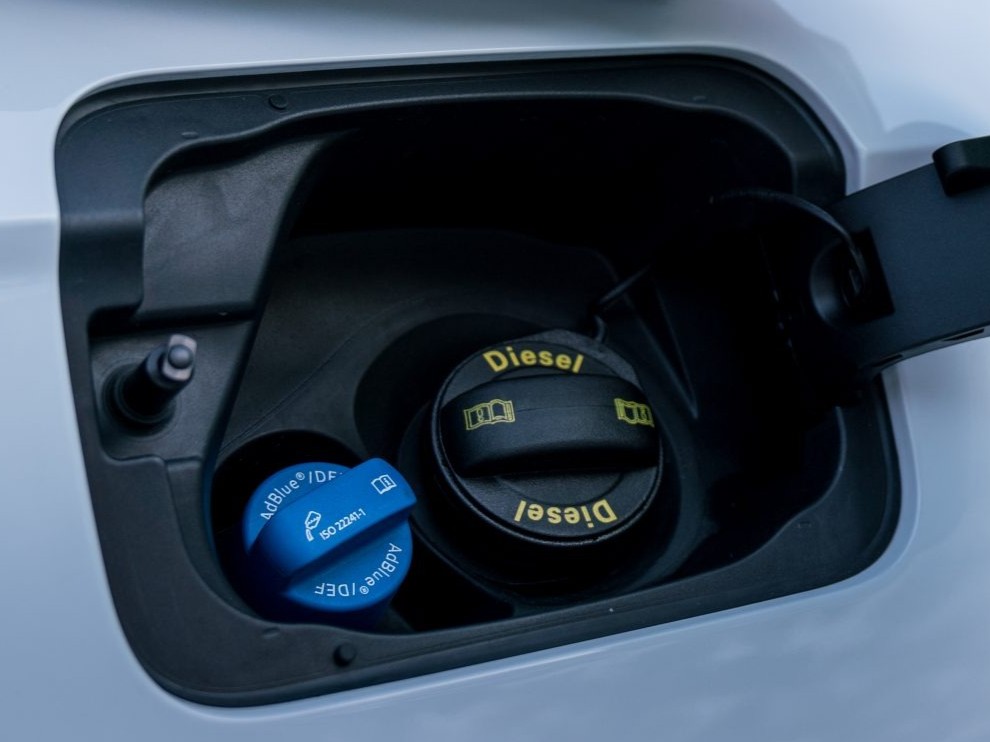
SCR is highly effective and can reduce nitrogen oxide (NOx) emissions by as much as 90 percent or so. These systems also allow manufacturers to pump out diesel engines with huge power numbers while remaining legal.
Semi-tractors often have DEF tanks capable of holding more than 20 gallons of the fluid. Depending on the model and driving situations, that fluid may last 3,000 miles to 5,000 miles or so before needing to be refilled. Mileage varies, of course.
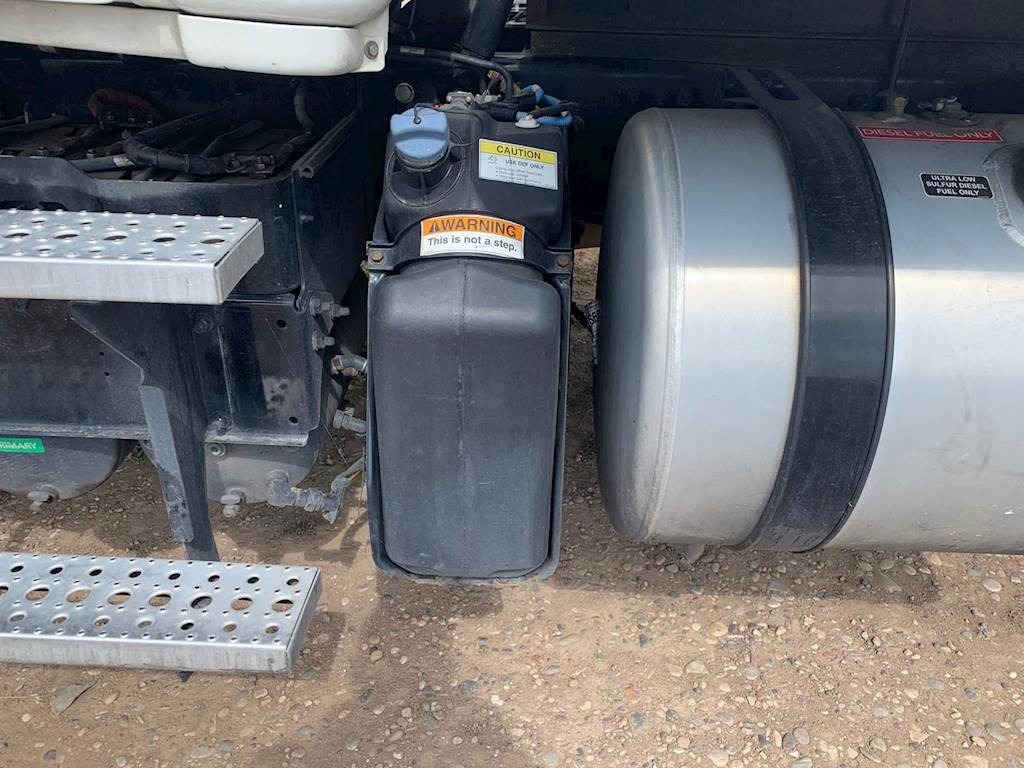
The math changes a little for diesel pickup trucks, but the concept is the same. For example, a current-generation Ford Super Duty has a 7.5-gallon DEF tank and, depending on use case, may go roughly 3,500 miles or so between DEF refills. Older Super Duty trucks were known for going longer between DEF fills. Towing heavy, blocky trailers reduces DEF range.
It’s also common for passenger cars with diesel engines to travel several thousand miles before needing their DEF tanks refilled.
What Happens When You Run Out Of DEF

These vehicles will warn their drivers about depleting reserves, with these warnings ranging from visual reminders to audible alarms. If you fail to replenish the DEF, or the DEF system isn’t working as designed, the truck may immediately derate or enter limp mode until the issue is resolved. To use Ford as an example here, the truck may warn that it will enter limp mode in a certain number of miles, and then slow the truck down to 50 mph once the mileage threshold is crossed. If the truck believes the issue is severe, it may eventually limit the engine to idle. Other trucks have a similar system.
Many diesel owners carry spare jugs of DEF so that they can refill anywhere when needed. I always buy extra DEF whenever I test diesel trucks because I don’t know if I will run into a fuel station that doesn’t have DEF, or run into a station that does have DEF, but the price of it is absurd.
DEF systems do have an aggravating quirk, and it’s that the derates and limp modes still occur even when a part of the system fails. Unfortunately, some manufacturers and models struggle with emissions equipment reliability more than others. One infamously unreliable diesel truck is the Nissan Titan XD Cummins, which you can read my story about by clicking here. The cruel twist is that you could have a full DEF tank, but get stuck during a road trip because of a sensor or other system failure.
The EPA Rolls Back Requirements

Back in August 2025, the EPA decided to address the issue of diesel vehicles derating after either running out of DEF or a system failure. This is what the EPA announced:
Starting with model year 2027, EPA requirements state that all new diesel on-road trucks must be engineered to avoid sudden and severe power loss after running out of DEF. To fix the problem for vehicles already in use, EPA’s new guidance, developed in collaboration with manufacturers, will work to ensure that the necessary software changes can be made on the existing fleet. In addition to providing certainty to manufacturers about how EPA wants this issue resolved, the agency is not requiring separate approvals beyond that provided in EPA’s guidance. This ensures that bureaucratic steps do not delay manufacturers’ ability to put solutions into the field.
[…]
When DEF runs out or a system sensor fails, current systems can force a vehicle to drastically reduce speed or become inoperable. In many cases, vehicles are limited to as little as five miles per hour within hours of a DEF-related fault, causing significant disruptions in logistics, agriculture, and construction. Although this derate strategy was intended to ensure compliance with EPA’s Tier 4 Emissions Standards, it has caused needless frustration, operational delays, and real economic hardship for countless farmers, truckers, and equipment operators.

The EPA did not completely eliminate derates and limp modes. Instead, the new rules called for a grace period. A semi-tractor operating under the new rules would be able to drive 650 miles or 10 hours before a 15 percent reduction in torque. If the DEF issue is not resolved, a 30 percent torque reduction occurs at 4,200 miles or 80 hours past the beginning of the issue. Top speed doesn’t get limited until 8,400 miles or 160 hours, and only then will the truck slow to 25 mph. If you continue to ignore the issue with the truck in 25 mph limp mode, it’ll finally derate to 5 mph.
The timing is different for other diesel vehicles. If you have a heavy-duty diesel pickup or a diesel car, the vehicle will enter limp mode 4,200 miles or 80 hours after the detection of an issue. Limp mode top speed will be 45 mph. If that’s ignored, top speed drops to 5 mph.
Many diesel owners considered this a win. Basically, the new rules mean that if a DEF system takes a dump during a road trip, there’s enough buffer to get the vehicle back to home base to get it fixed. A grace period seems like a good idea, if only so you don’t get stuck in the middle of nowhere with a broken truck and whatever you’re towing.
Conversely, the EPA’s grace period doesn’t make a distinction between a system failure and simply running out of fluid. That implies that you might be able to intentionally drive around with an empty tank for a while.
EPA Takes It Further

Yesterday, the EPA announced further changes designed to complement the August rules. Specifically, the agency suggests that it wants to hold manufacturers accountable for DEF system failures. From the EPA:
The issue facing farmers, truck drivers, and equipment operators remains clear to the agency. Sudden speed losses and shutdowns caused by DEF system failures compromise safety and productivity. The Trump EPA’s guidance, which significantly reversed deratements, called on manufacturers to revise DEF system software in existing fleets to prevent these sudden shutdowns and give operators more time to repair faults. EPA recognizes that to improve systems, the product designs and materials for these systems must also be the highest quality possible. With today’s action, EPA is taking another step to address any potential insufficiencies with system parts to better advance future rulemaking and reduce system failures.
Under Section 208(a) of the Clean Air Act, EPA is authorized to require manufacturers to provide information needed to assess whether emission control systems are functioning properly and whether manufacturers are meeting their obligations to identify and fix defects. EPA is demanding information from the top 14 on-road and nonroad manufacturers that account for over 80 percent of all products used in DEF systems. Specifically, EPA is requiring data on warranty claims, failure rates, and repair information for Model Years (MY) 2016, 2019 and 2023 emission control products to determine whether ongoing DEF system failures are related to a specific generation of products. Manufacturers will have 30 days to provide the requested information; failure may result in additional inquiries or penalties.
What’s most interesting about the press release is a short statement that was tacked on the end, which says, emphasis mine:
EPA is actively working on its proposal for the reconsideration of the 2022 Heavy-Duty Engine and Vehicle NOx rule. It is being thoroughly assessed whether derates may no longer be necessary for compliance.
If the EPA were to decide that derates are no longer relevant, it would be a major change in how diesels are run in America. There’s no shortage of diesel owners who complain about the complexity and reliability of emissions systems. Many of these people simply delete their emissions systems, and many of those who leave their systems intact do so only begrudgingly.

If the EPA said that derates and limp modes were no longer needed to be in compliance, I suspect there would be quite a few trucks rolling around on empty DEF tanks. For some diesel owners, the only reason to fill the DEF tank is to prevent limp mode. Unfortunately, the EPA has not provided any further clarity for what that future could look like.
Regardless of what happens, I will be keeping my diesels stock. I have accepted that the emissions equipment is part of the diesel ownership experience. Besides, I like the fact that I can still enjoy diesel power, but that diesel exhaust doesn’t stink and has gone through some heavy cleaning.
We await hearing more about how the EPA plans to change diesel regulations, as we may be entering a new era for diesel emissions. We will continue to watch the EPA’s developments and write updates as they come.
Topshot graphic images: Ram/BlueDEF


the part not mentioned is how the regen process affect overal fuel economy. the system makes the vehicles less efficient, even if it also reduces NOX. The Urea to water percentages are also not mention, though it is critical to keep the urea in the 31-33 percent range to avoid damaging the expensive components. and the 67 percent de-ionized water results in freezing of the def at 12 degrees Farenheit, so on top of sludging the frozen Def will result in derating because of the system sensors. If you get the def from a fuel tank that has been sitting around a while without getting used, the percentages tend to change due to condensation.
Basically it can be very expensive to fix since anything out of warranty is a big Greed Smile for the Stealership. They don’t even attempt to clean and repair, just replace for thousands of dollars.
A better system needs to be figured out, that is for sure.
A better system HAS been figured out.
Hybrids.
There has to be a better way reduce the emissions that does not total a truck after the emissions warranty runs out. If you drive a diesel with def you smell the urea quite a bit even if you are in a bev and there is a modern diesel anywhere around you can smell the urea. When you look at the failed systems many are hopelessly clogged with urea crystals. I’m convinced they are using more then they need and it’s a big part of the problem basically spray and pray. It’s also one of those things we have over complicated. We replaced one issue with another issue. Similar to how you still see the asbestos class action stuff but fiberglass can do the same thing now there are all these people with severe lung issues from working with solid surface counters. Alot of the euro stuff had dpf that could be cleaned at a specialty shop. As from the trucks that are out there they probably need to be allowed to be deleted unless someone wants to step up to keep fixing their systems. Some could be converted in to hybrid with something like the Edison kits but still lots of money and probably not worth it in many situations.
It will be interesting to see how the Gas Version works out on the Ford F150 with the 3.5 motors.
“The U.S. Considers
No Longer Requiring Limp Mode For Running A Diesel Truck Low On DEFSaying Fuck It with Regard To Pollution”Pretty sure they are past considering.
2 weeks ago brother and I are coming home to WI from Vegas towing his 5th wheel. Truck is a 2025 Silverado Duramax. After boondocking over night in Iowa, the DEF tank froze which put the truck into limp mode. The tank heater could not keep up with those temps.
DEF tank was almost full so a top off of warm DEF we had inside the truck did not thaw the tank. There was no where to pull the truck into to warm it up. This slowed us down and with snow & wind, dangerous as semis would pass as we’re lugging along speed limited.
We were not the only ones, other folks at truck stops – same situation, and all pissed.
This change in the rules (and yes, a better designed DEF system) would mitigate this type of event from happening. I’m all for it.
Amazing how many comments jump right into TDS nonsense.
All modern vehicles have an ambient temp sensor. It would be really easy to program things so it doesn’t go into limp mode when the temp drops too low. There’s probably some reasonable middle ground that can be reached with all of this.
That’s a shitty technological issue that should be addressed. However, the new reg would give you 4200 miles of grace, which is enough to get you from Florida to Alaska, and the agency is considering eliminating the reg altogether. I think it’s reasonable for people to view that as a careless attitude for the EPA.
Amazing, yes. Surprising, no.
EPA solving things with small strip of electrical tape over the warning light.
Lee Zeldin must be a VW owner.
I’m open to the idea that the implementation of DEF limp mode is inconvenient and annoying, but we don’t need to Make Smog Great Again. Asthma attacks are also inconvenient and annoying.
Preach! I had asthma as a kid, or at least that’s what the diagnosis was. I will never forget those times when I had to reach for my emergency inhaler.
I have one in my pocket right now and the last attack was in 1995. I will not break the habit.
How about requiring companies to design a more robust system instead? The DEF system is proven to have a significant reduction in emissions from a diesel engine, but reliability is the problem.
Require manufacturers to have a 10 year/500,000-mile warranty on them or similar. I bet they will fix the reliability, or the ginger beers will have a better system to achieve the same goals that was “too expensive” prior.
I think by law all catalytic converters are required to be covered for 8 years/80k miles, regardless of any bumper-to-bumper or powertrain coverages. Seems the bare minimum for DEF system warranty should at least match that.
Even longer for PZEV vehicles! Catalyst on my wife’s Subaru was warrantied for 15/150k when new.
A grace period makes sense, at least a short one, if for no other reason than safety. Not sure that you could reliably tell a fault from negligence though, a bad sender looks the same as an empty tank from the computers perspective.
Instead of (maybe dangerously) disabling the vehicle, just kill the infotainment and climate control. Sure you could keep going as long as you want but you’re not going to enjoy it…
I like the mindset, but that’d also be lethal in some climates.
Forcing a truck to run on limp mode is overkill. Just make the CEL light up and pulsate annoyingly.
You don’t think owners will *fix* that with a bit of tape?
> The fluid is mixed at a ratio of 32.5 percent formaldehyde-free low biuret urea and 67.5 percent deionized water.
One of my useless industry facts is that this ratio was chosen because it’s as high a water content you can go while keeping the urea-water ratio constant when it freezes & thaws.
condensation would be the tricky part to control after it decides to thaw.
My diesel truck gave you 500 miles after a fault or running out of DEF before it stranded you. I always felt like that was too few – I semi-regularly do 1000+ mile road trips in my truck and I would hate to be stuck 600 miles from home with a DEF fault. This almost happened to me once, but fortunately it was only about 350 miles home, so I was able to make it.
However, eliminating limp mode completely is inconceivably stupid. There’s a reasonable middle ground here, which we will never find because we live in the evil mirror universe now.
If this is actually implemented in a manner even close to what’s described, it will be abused to the point that diesel NOx reduction may as well not exist.
All users will only refill just enough to achieve reset, and wait to do so until they are within a stone’s throw of limp mode.
It will be a joke.
I’m not sure why they are bothering to pussyfoot around with this. Just go full mask off and fire everyone at the EPA already. Clearly, they don’t give a shit.
Idk how many of you remember this but during COVID Australian newer diesel owners were in a panic trying to secure DEF because shipments of DEF from China stopped, and because of the software limiting of Diesels, when they run out of DEF makes the Trucks borderline useless, it was pretty concerning.
Imagine if one day a magical fluid your gas car needs to go above 15 miles an hour just wasn’t available anymore when you needed it? All because of laws. People would riot in the streets.
People don’t because it only affects newer diesel owners and there usually is a good supply of DEF.
Don’t get me Wrong, I love BEVs, and if I had the option I wouldn’t own another ICE vehicle for the rest of my life. However I found myself with a need no current BEV could meet, so I begrudgingly placed an order for an ICE Truck.
I’m hoping the Ram 1500 REV or the Range Extended F-150 Lightning will be good so 95%+ of the time I can run in BEV mode, but they’re not out yet and I have a need for a Truck in the very near future.
Laws exist for a reason, and the regulations the EPA promulgates exist to protect the environment and human health. “All because of laws” is pretty dismissive and disingenuous.
Yes they do, and not all reasons are good, some are bad because they are impractical others are bad because they are unethical, and some are both impractical and unethical.
Marriage licenses are a great example.
There are no solutions only tradeoffs, and frankly I think modern diesels are not worth the tradeoff due to their emissions systems compromising the longevity and reliability of the engines.
Imagine if one day a magical fluid your gas car needs to go above 15 miles an hour just wasn’t available anymore when you needed it?
You mean like, oh I dunno, gasoline or diesel?
If that were to happen I’d get an EV. Problem solved.
Except in this theoretical who would buy your car you can’t drive over 15 MPH for anything other than scrap value?
Maybe you got the dough to buy a brand new car out of nowhere, most people don’t, and everyone and their mother would be scrambling for a BEV at the same time as you. Wait times would be measured in years.
I’m a leftist but even I think that a fair amount of emissions stuff needs to be reevaluated and that the lifetime environmental impact should be weighed more heavily. Yeah, we can get lower emissions from turbo engines, but if they only last 100k miles and force people to buy new cars more frequently, how much is that really helping in the long run? Are the small gains really worth the high costs?
It’s my understanding that these super complex emissions systems in diesel trucks (which I actually think are really cool) can create as many problems as they solve. They’re complex as all hell, very expensive to fix when things go wrong, and make diesel powertrains less reliable, which eliminates one of the main advantages of going with diesel.
Diesel is also a bit less harmful to the environment than burning regular gasoline and diesel vehicles tend to use less fuel on top of that. I’m not saying we should just throw all of this out and freely roll coal, but the folks that own these trucks and use them as tools have been advocating to rethink the particulate filters and DEF for years now.
If they’re cutting the lifespan of some of these trucks in half (which they seem to be) and making them exponentially more expensive to operate, do the gains outweigh the problems? If you’re forced to buy an entire new truck in half the time as a result I’m not so sure, especially if it makes you reconsider diesel and get a regular gas super duty that gets worse mileage and burns a fuel that’s worse for the planet.
I’m not saying I support the administration and am on the record as doing the exact opposite many times over. I don’t think we need to “hand it to them” on anything, and I do think aspects of the modern exhaust systems will need to remain. But in a lot of ways they do seem to add a lot of unnecessary complication for gains that might be kind of insignificant in the grand scheme of things.
Citation needed. The whole reason diesels have draconian emissions systems is that diesel engines spew enormous amounts of very harmful junk into the atmosphere when left to their own devices. For example, nox (the thing DEF is used to reduce) is a highly potent greenhouse gas that will overwhelm any benefits of lower CO2 from the fuel efficiency of diesels.
That said, I’m with you to some extent. I think trying to squeeze every last tenth of a percent of fuel economy out of ICEs has dramatically decreased their lifespan, to the point where it may actually be more harmful over the long run than just giving people well-tuned, simple NA engines.
“Citation needed”
Indeed. Europe learned this the hard way by shifting hard towards little turbodiesels to maximize mpg and therefore minimize CO2, but somehow neglected to account for diesel’s higher NOx and particulate emissions. Unhealthy urban air quality resulted. They were too fixated on the carbon target and forgot about a direct human health impact.
Agreed. With e-CVTs we can get pretty ridiculous MPG out of fairly simple NA engines.
You’re right-they’re lower c02 but they emit lots of other bad shit, I’d misread what I was originally referencing
Look at the data in the last article talking about rolling coal: “ These tampered trucks constitute approximately 15 percent of the national population of diesel trucks that were originally certified with emissions controls. But, due to their severe excess NOx emissions, these trucks have an air quality impact equivalent to adding more than 9 million additional (compliant, non- tampered) diesel pickup trucks to our roads”
If the US government was trying to make something good about life cycles of vehicles they would enforce right to repair, availability of parts for vehicle users to fix their stuff with… They would have moves that push manufacturers not to cut costs and maximize profits to the brink of what’s possible in order to benefit the end user of the vehicle and the population around. Because this much pollution benefits really no one other than the manufacturers that will sell you a truck for the same price with less investments on emissions tech, and wingnuts that gain sadistic pleasure from knowing people choke on the exhaust of their vehicle.
You cannot ignore particulate emissions. I live in SLC UT and our air is bad enough without this shit.
I atoned for that above-I should’ve specified that diesel is usually lower carbon emissions but at the price of other shit being worse and harmful in a different way
I once read that 7 of the 10 deadliest chemical compounds can be found in untreated diesel exhaust.
Diesel exhaust fluid is something that sounds like a made up that you’d use to do a gotcha on somebody. You know, like muffler bearings, or blinker fluid, or a board stretcher.
How these pieces of excrement have children and still make these decisions is beyond me. This is pathetic
I’m not really sure what the EPA protects at this point but it’s sure as hell not the environment.
They don’t. We’ve been put back at least 20 years. The return of lead in gasoline will be announced next week.
They’ve already declared that human life has no value anymore. Look it up.
https://removepaywalls.com/https://www.nytimes.com/2026/01/21/climate/epa-human-life-value.html
Wow, I thought you were exaggerating.
At this rate, by 2028, the EPA recommendation for diesel trucks will be to run the exhaust directly into the cab.
That might improve the IQ of some Trump voters…..
The Polaris Slingshot mod.
I love how this inside joke has never died. lol
Kudos for reading all the comments.
It’s the Emissions Production Authority, isn’t it?
Epstein Protection Agency perhaps
HA! Very good
A lot of hate in these comments. Does it really seem right to immediately go into limp mode when you run out? 4k miles is a bit much, but how about enough to get to a gas station? As it is now, you could find yourself limping along the shoulder of a highway at 5mph for a couple of hours.
A friend of mine has a Ford truck with all this stuff. I was riding with him when the DPF burn-off triggered, and I watched the fuel gauge drop 1/8 over just a couple minutes. Yikes!
Liked for the honesty. Let’s see how many respond.
Yeah, I’m okay with the grace period idea. I’m not sure about 4k miles for a car or pickup truck, but more than enough to get back to civilization or whatever. I would hate to get stranded in the middle of nowhere because a sensor took a smoke break.
Ford’s system gives you plenty of warning (dings every 5 miles when you have less than 100 miles left) then when you run that down to zero it says limp mode will engage upon restart.
you do get warnings that you need to refill before it goes empty and into limp mode? same as running low on gas.
I work in R&D for a semi truck manufacturer and sometimes you will have software glitches that say you are out of def (hopefully these glitches don’t make it to production) but still a software glitch saying you are out of DEF puts the truck into limp mode that can be very dangerous in certain areas (ie mountains). Not saying they should just allow them to run for thousands of miles normally but as others said there should be a decent grace period.
I’m guessing nearly everyone would be fine with a more reasonable compromise, particularly one proposed in good faith. This admin, however, does nothing in good faith. This admin is not about finding solutions, it’s about owning libs. As a result there’s an enormous and justified lack of trust with any policy they propose.
Every belching modified diesel pickup figuratively screaming “Fuck you!” to everyone on the road just reinforces this lack of trust. Those aren’t Harris voters.
A number of vehicles already have it where there is up to 500 miles of range after running out of DEF for this reason exactly.
The hate is justified because when DEF works, it really works, 90-95% reduction in emissions is nothing short of amazing. All of the verbiage from the current EPA statement shows that they really want it gone entirely, because fuck the environment and everything that lives in it.
Perhaps if the Cars went into limp mode when the CEL came on for Evap leaks from stupid things like Gas Caps being installed too loosely.
It would happen once and normal people would make sure they tightened their gas caps when refueling. It’s not that hard to notice the warnings saying you’re low on DEF. Do diesel drivers run out of diesel fuel commonly as well?
I wish I were surprised to hear this, but I’m not. I have been taking the opportunity to comment in the federal register about these rule changes, though. It’s not much, but it doesn’t hurt, either.
I am very sure that this will result in many, many vehicles being run with no SCR at least half the time.
These ‘deregulation’ people are pieces of shit, full stop. They’ll burn down the entire planet for a few extra dollars in their pockets. Republicans have been hellbent on destroying the environment for decades.
Deregulation people are just bootlicking “rules for thee but not for me.” Sure some regulations are not well done but the idea that they are all bad is just as bad as saying that we should get rid of all laws. It is a statement said by morons.
The EPA needs to be an independent organization free from interference.
Lol, yeah, so’s the Fed.
Do those limits apply equally for a fault vs running out of DEF? I really hope you don’t get 4,200 miles of “grace” to refill the tank. If so, in practice that means a lot of ppl will decide they only need DEF 4,100 miles after the first warning.
I am fairly sure that this is *exactly* what this means.
so then ppl will be running without DEF for approx 1/3 of the time. Cool. I guess we’ll be able to see if nationwide DEF consumption takes a nosedive to confirm.
The EPA press release doesn’t make a distinction between simply running out vs a system failure. I’ll add that to the story.
I also realized, even if you do get less grace for running out of DEF, all you need to do is fill the tank with water (or whatever) and you’ll get a system fault. This will only work if you can only see 4,199 miles into the future or if the EPA follows through and allows engines to run indefinitely in a fault condition.
Why not a low DEF light?
And a reminder, don’t piss in the DEF tank. It’s too diluted to work LOL
Even if you do a 10-1 DEF-to-Piss ratio?
depends how much orange juice drank before 😛
When I test diesel trucks over a long enough distance, I sometimes run low on DEF. I know current gen Fords will bug you about fluid for a while, provided they’re working correctly. You sort of have to intentionally ignore it and/or not carry any extra fluid to run out. Of course, a system failure is a different story.
Yeah, I don’t see what’s wrong with having a level indicator. My Canyon diesel has one, and while it’s purposely obfuscated (it says “OK” until below 30%), that’s plenty of warning and it’s low enough that you can dump an entire 2.5gal box of DEF into the tank.
I’ve got complete records on this truck back to when I bought it with ~13k on the clock and that 2.5gal box of DEF covers anywhere from 3000-5000 miles before the display comes off of “OK” again. This is only somewhat more often than it needs an oil change. I’ve never felt any anxiety about needing to get my hands on more DEF and I don’t even bother keeping any of it on hand.
Another example of the Crooked Trump administration going out of their way to make wrong choices that will hurt Americans in the long run.
this simply sends the message that “rolling coal” is cool again, so go right ahead