


As with any big change, the transition towards electric cars comes with joys as well as challenges. The cars themselves are marvellously smooth and low-maintenance, but public charging still isn’t as ubiquitous as fuel stations, the cars themselves are expensive, and then there’s the governance of the whole thing. With electric cars not using fuel, what will replace the fuel tax? The United Kingdom has a potential answer, and some people aren’t happy about it.
Like in many jurisdictions, the United Kingdom uses a fuel tax as one method of raising government funding. Currently, this tax stands at 52.95 pence per liter of petrol, or about $2.65 per U.S. gallon of gasoline at the time of writing. While not all of this duty collected goes directly towards road building and maintenance, some of it does, so drivers of combustion-powered vehicles pay into the system as they consume fuel, in addition to paying road tax.


Of course, while owners of electric vehicles also now have to pay road tax of £195 per vehicle, fuel tax doesn’t apply to electricity. With a mandate that all new cars sold in the United Kingdom be electric by 2035, as the passenger car fleet switches over from fossil fuels to electricity, revenue accrued through fuel tax will plummet dramatically. So, how does the government plan to make up for this shortfall? Well, here’s what BBC News says:
According to the Telegraph, EV drivers could be charged 3p per mile, on top of other road taxes, amounting to an extra £12 on a journey from London to Edinburgh. Drivers of hybrid cars would also be charged, but at a lower rate.
The paper says the idea is that owners would have to estimate, and pay for, their road usage for the year ahead. If, at the end of the year, they had driven fewer miles they would have a credit to carry over, but if they had driven more they would face a top-up charge.
Yep, the plan is reportedly to explore a per-mile levy on electric vehicles, and while it’s a bit of a shock, some sort of mileage tax on EVs to pay for infrastructure is inevitable. At first glance, it doesn’t take a lot of math to realize that this proposal might not be as drastic as it seems.

Firstly, it would take a wildly efficient combustion-powered vehicle to level the playing field between the 52.95 pence-per-liter fuel tax and the proposed three pence-per-mile EV tax. We’re talking overall consumption of 28.24 kilometers-per-liter, or about 66.4 miles per-U.S.-gallon. Short of the tiniest little hybrid hatchbacks, there isn’t much out there capable of that in the real world.
Secondly, the idea of self-reporting seems inefficient, but there is theoretically a way to verify if some vehicle owners have gone over or under their initial estimation. Every year, vehicles between three and 40 years old must pass an annual MOT inspection, during which the vehicle’s mileage readout is logged and kept in a database. For electric vehicles that fall within the MOT window, the existing test could be used as a reference for the proposed per-mile charge.
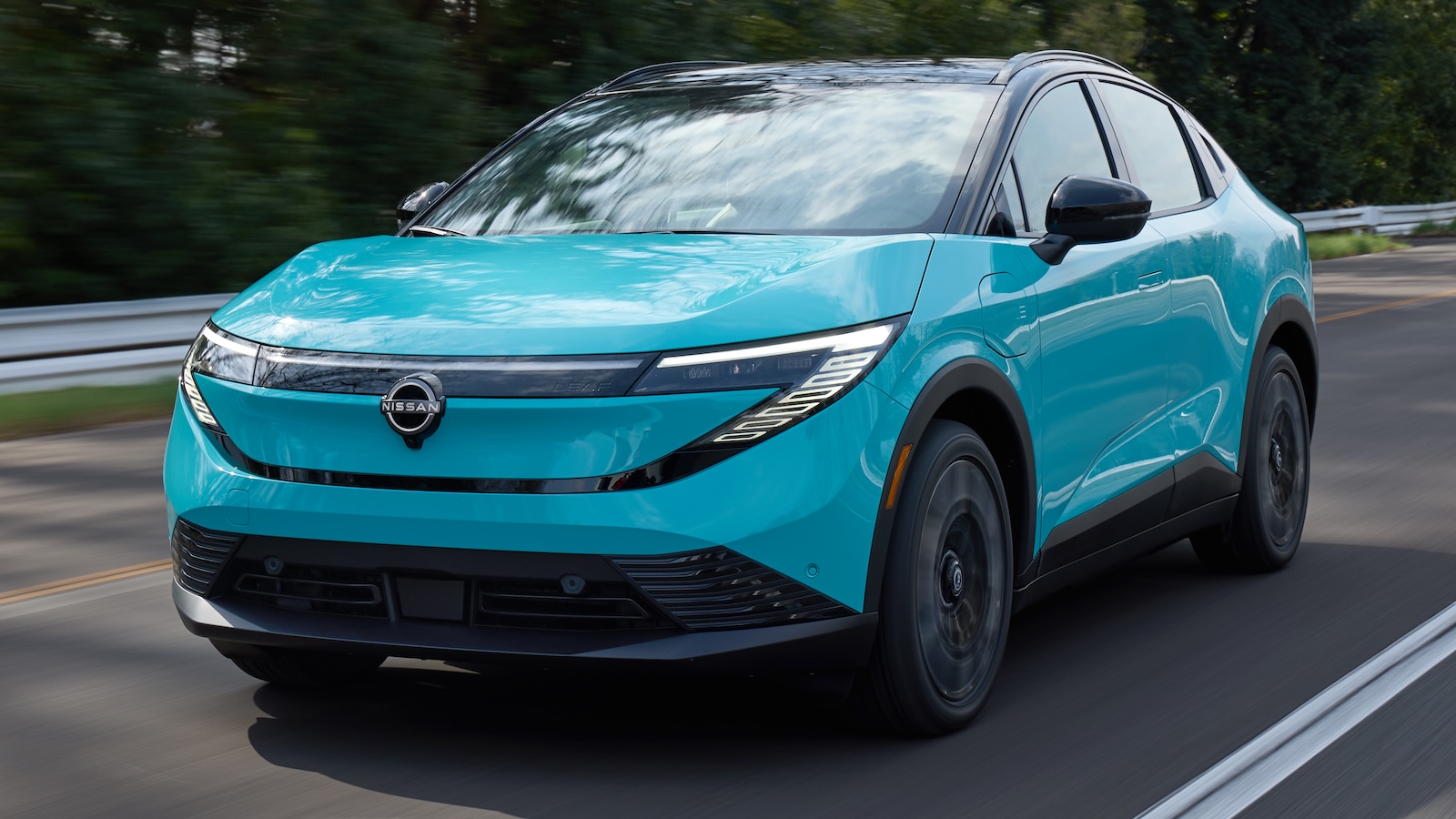
While the proposed charge doesn’t sound wildly onerous, the industry has responded exactly the way you’d expect. Unsurprisingly, the Society of Motor Manufacturers and Traders isn’t particularly pleased by news of a new potential tax, issuing the following statement:
We recognise the need for a new approach to motoring taxes but at such a pivotal moment in the UK’s EV transition, this would be entirely the wrong measure at the wrong time. Introducing such a complex, costly regime that targets the very vehicles manufacturers are challenged to sell would be a strategic mistake – deterring consumers and further undermining industry’s ability to meet ZEV mandate targets, with significant ramifications for perceptions of the UK as a place to invest. A smarter, fair and future-ready taxation system requires a fundamental rethink – one that must be done in full partnership with the industry and other stakeholders.
Although talk of investment is a big thing to throw around, the consumer deterrence brought up in the statement is a fair point. Electric cars are still expensive, frequently commanding a premium over their fossil-fuelled counterparts that’s possible to make up on running costs but has to be paid upfront. Add in higher-than-average depreciation, and many drivers would have a hard time stomaching affordability. Still, we are talking such a small sum overall that, when combined with an ultra-low overnight electricity tariff, it would theoretically remain far less expensive to run an electric vehicle than a combustion-powered car. However, fear isn’t rational. As AA president Edmund King told BBC News, the government should “tread carefully unless their actions slow down the transition to EVs.”

A rethink of fuel tax will absolutely be needed at some point, not just in Britain but all over the world. How that comes to be will not be an easy road, but it’s a conversation countries need to be having now. It’s also a conversation that requires fact, context, and nuance. No one ever said this would be easy, and perhaps the most contentious part of the EV shift is yet to come.
Top graphic image: MG





No wonder the 13 colonies GTFO. UK taxes are insane
On the other hand, we don’t need to worry about health insurance.
Hot Take: This can’t come soon enough, in all countries. At least where I live, all the roads suck. So many Teslas around, and so many crappy poorly maintained roads, it can’t hurt to make the EVs pay for the upkeep of the infrastructure we share with them.
So here I am, getting my mileage checked on January 1st, then driving across the Channel and living in France till end of December, using the car there and raking 20k miles. Then back to the UK for Christmas, and for my mileage checkup. How do we count those miles ?
And I’m not a notable exception – people travel a lot there. Curious how they’d account for those cases.
Other than those who do a lot of burnouts, taxing tires seems to me to the most straight forward way to equalize paying for roads. More miles = more tire wear = more road wear.
Yeaaaaahhhh I don’t think incentivizing people to not replace their tires is a good idea, and a tire tax would absolutely influence people to drive on bald or extremely old tires longer. People don’t replace their tires often enough already.
Tyres are part of the annual MoT, and occasionally the police will check them. One unsafe tyre is three points on your license and a fine.
But taxing tyres still sounds like a silly idea
Work for a company that is taxed on their profits and you’re taxed on your income. Then buy a car and pay tax for it. Then pay a tax so you can register/plate that car. Then pay a tax on the fuel you put in that car. And maybe pay a tax if you dare drive into or park in some cities. I’m not really a dissident but when is it enough?
I get that taxes everywhere is exhausting, but wouldn’t you rather not be taxed on things you don’t use? Wouldn’t you rather be taxed less for things you rarely use? That’s what most of those taxes seem like to me… If you don’t own a car, you don’t need to pay car-related taxes. If you mostly walk or bike and don’t use the road, you don’t pay for its upkeep. I feel like it makes sense to tax people for using things that have a direct impact on infrastructure and our surroundings, while not taxing people who aren’t using those things, because if you aren’t using it you aren’t putting wear and tear on it. The result is there are a lot of taxes to keep track of, but you’re taxed appropriately for your lifestyle. I guess it’s enough once the taxes pay to keep public services and infrastructure in reasonably good shape, and in this case, EVs weren’t doing that so a new tax was necessary to keep the roads carworthy.
Why not just levy a tax per KWh used to charge EV’s? It would be very easy to charge on Superchargers, and slightly tricky on home chargers (separating power usage from charging EV from everything else.)
Per mile tax sounds like an unnecessary extra complication, aka. Yet another waste of time and money for the government to enforce.
I think that instead of only applying it to EVs, simply apply that per-mile tax to ALL vehicles… but at a lower rate like 1p per mile.
That way it will still be advantageous to get an EV.
Plus charging on a per-mile basis could theoretically help discourage unnecessary driving, which in turn, would reduce traffic congestion.
Also to make this more fair, charge a higher rate or heavier vehicles and overly large vehicles.
Heavier vehicles cause more wear on roads and large vehicles obviously take up more space.
Why should a bigger/heavier vehicle have the same rate as a much smaller/lighter vehicle?
That all seems eminently sensible Mr. Sandwich.
You have no future in government. 😉
Oh I KNOW I have no future in government. I wouldn’t last past one term if I even got elected/hired at all. Being sensible combined with calling someone an idiot for asking for or doing something idiotic would ensure that.
LOL
This is absolutely correct, have the road use/maintenance tax apply to every vehicle based on mileage and weight. It looks like studies show that road wear increases with approximately the 3rd power of weight per axle, so doubling vehicle weight, without adding axles, should give an ~8x increase in the fee.
I’d even say take it a step farther and have anonymized trackers in the vehicles to see what roads they are using, to have the funds distributed based on where people drive. Any private road use wouldn’t be included/taxed, only public road use. That way, areas that are relatively low population with low resources, but get a lot of tourist traffic can receive the extra funds they deserve for maintaining their roads. I’m sure that would really cause a privacy fit though.
Perhaps instead of tracking devices, program traffic cameras to count the number of cars on the road every day? Still keeps a tally of how much wear and tear happens to the road, but it’s only as invasive as traffic cameras already were.
And the vehicles are already being inspected for MOT so the apparatus for mileage data collection is already there but being the UK government I’m sure they’ll find a more intrusive way.
EVs of the same size/class are substantially heavier than their ICE versions. Heavier vehicles do cause more wear and tear, but this method would discourage EV adoption? Maybe a different per mile rate for ICE vs EV in the same weight class?
The original Tesla Model 3 weighed in at only around 3500lbs… something like just 400lbs more than a RWD BMW 3 series.
And since that time, battery tech has only gotten better.
Some EVs being sold are by car makers that are massively heavy either because the car maker in question isn’t that good at making EVs and/or the EV is on a compromised platform originally designed for ICE vehicle… which means they have lots of provisions for a lot of shit BEVs don’t need… which adds weight.
Fuel tax is pay as you go, granted its too low; in my state it hasn’t been adjusted in 19 years. I’d rather not be given a huge tax bill once a year if I own an EV. I have no problem EVs paying their share, so long as it’s equal to ICE vehicles which, as I said earlier, has not kept up with the times. Increase the fuel tax too.
Plus, I don’t want the government tracking how many miles I drive. That’s none of their business.
“I don’t want the government tracking how many miles I drive.”
Your mileage getting tracked happens anyway when you get your vehicle serviced and also when ownership is transferred.
Charging on a per mile basis is probably the most fair way to charge people for using public roads. The only way it could be more fair is if a higher rate is charged for heavier vehicles and overly large vehicles. Heavier vehicles cause more wear on roads and large vehicles obviously take up more space.
Why should a bigger/heavier vehicle have the same rate as a much smaller/lighter vehicle?
I dunno for sure, but in CA w/its 40 million plus people and Lord knows how many cars, you’ve got to go in for a smog check every couple of years. I’m pretty sure the odometer reading is taken there too, either by hand/on paper, or maybe via the OBD-2 computer connection for cars newere than 1996?
Plus, if you carry a phone around, Big Brother basically knows every place you go (approximately) all the time anyway.
A lot of places don’t have those type of inspections.
The government doesn’t own my location, google/apple does, so there’s at least one barrier.
In case you didn’t know it, you can turn off location data completely or only grant that data while the app is in use. I have mine set for allowed all of the time for zero apps and only while in use for nine (make that seven, two of them had no reason to ever know my location).
This is on an android phone, I don’t know about apple.
Same here.
I’ve owned the same cars for 12 years and 6 years and can count on one hand how many times I’ve taken them to a service center; they are reliable and I do preventative and basic maintenance myself. Further, service data is not owned by the government, but they may buy it, but if they need it for legal reasons, they will just ask for it when needed. They don’t need it in their own database.
If we must pay to use the roads, I’d rather pay to use the roads, not pay to drive my car; there is a difference. Plenty of people put on mileage in places that aren’t roads, but also drive the same car on the roads, I am not one of them, but it happens. The whole notion of taxation is by definition to spread the load and is intrinsically not equal all for the greater good of society.
Toll roads got a bad rep when you had to chuck quarters into a bucket, but they are pretty seamless now. That’s paying for using the roads, not paying to use your car. Could they deduce my mileage and locations? Yes. But they’ve already got cameras everywhere.
I’m not advocating for heavier vehicles to have a lesser fee. Mileage based fee doesn’t account for that anyways.
It’s a complicated thing, and I don’t have a great, consistent, answer, but I surely don’t want a variable bill coming at the end of the year.
What about multi-state road trips? What if I put on 3000 miles driving to Florida? I have to pay that to who? Illinois, Kentucky, Tennessee, Georgia, and Florida? Mileage based fees in the USA is an asinine solution.
My answer: Toll roads on major highways. Local registration fees.
Yes, but this is a story about the UK, where every car has a mandatory annual inspection, where the mileage is recorded.
(It’s even public data, you can look up the MoT status of any vehicle by it’s number plate, so we can see that the Odius Rodius has done 125k)
This is true, but this is also an American based site where the location context of the conversation more often than not is the US.
I’ve heard arguments all over for this, and unfortunately mileage is about the best way to manage the tax. Especially if you’re already inspecting cars annually for MOT or some other mandated inspection. Here in the US where we don’t have such things in most states, no clue how it would work
My state charges an additional $175 per year for EV registration plus $0.03/kwh tax on public EV chargers. I rarely use the public chargers but the yearly registration works out to about 12k miles of driving at the mpg of the car I replaced which is about 2x the mileage I drove with it. So I get to pay about double to state road tax compared to my ICE car. Hooray.
Right. This is a big problem. They need to be in alignment. We’re taxing EVs more while subsidizing their sales? Fuck me.
An excellent point. F us (taxpayers) indeed!
Use tax does seem fair. Do it at the annual inspection. Tack that tax onto the inspection fee.
How to avoid road tax: create a hover car that causes zero road damage that runs on h20.
Firstly,… who uses Firstly?
The discerning writer, that’s who. A person of culture and taste.
You do!
Hooray for more taxes!!!