


Roughly three months ago, electric motorcycle startup Verge Motorcycles announced something huge, claiming its updated Verge TS motorcycle will ship as the “world’s first production vehicle with an all-solid-state battery.” This announcement shook the world of EVs because seemingly overnight, this little company that few have heard about achieved the holy grail that others have been working on for decades. The battery, which comes from Donut Lab, claims to give the motorcycle 370 miles of range, can be charged in only five minutes, delivers 400 Wh/kg of energy density, is cheaper to manufacture than lithium-ion batteries, and is made out of 100 percent green materials. All of these claims were made without any proof. Now, Donut Lab is providing that proof through independent tests. The third test was just published, and somehow, three weeks in, the biggest questions of this battery still aren’t answered.
I can’t believe I’m at the edge of my seat about battery news, and yet here we are. I first wrote about the new Verge TS Pro and its solid-state battery back in January. I, like so much of the media and even the executives of major battery manufacturers, was skeptical. The chairman of China’s Svolt Energy straight up said that the battery doesn’t exist and that any person with a basic grasp of technology would call it a scam. Certainly, countless Internet commenters pulled no punches in calling the Donut Lab battery a scam.


Why? Solid-state battery technology is not some new science fiction thing that was just invented. Some of the largest automotive and tech companies in the world and research institutions have been working on solid-state batteries for decades. These companies have produced working solid-state batteries and even made working prototype vehicles with the batteries. LG Chem, BASF, MIT, Oxford, Toyota, QuantumScape, Solid Power, ProLogium, Factorial Energy, CATL, BYD, Nissan, Blue Solutions, Honda, and so many others have been trying to crack the holy grail for so long. Their solid-state batteries are still a long way from production.
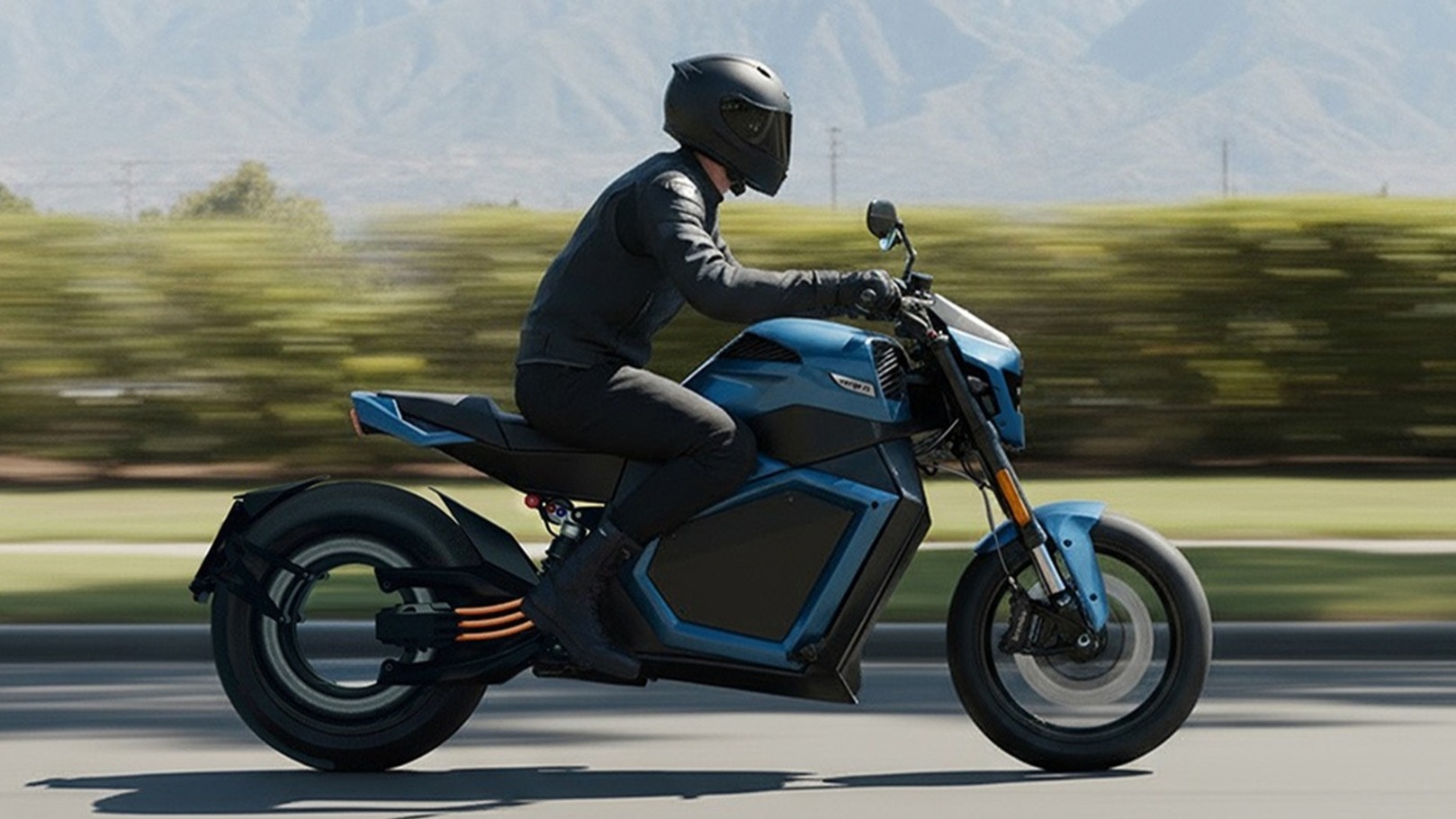
All of the aforementioned entities were apparently leapfrogged by Donut Lab, a laboratory in Finland that was founded only two years ago by the same guys who made the Verge hubless wheel motor electric motorcycle. Understandably, there’s no shortage of skeptics. Solid-state batteries have the potential to change the world. These batteries could enable the existence of longer-range electric aircraft, solve the largest complaints with electric cars, and be the ultimate form of electrical energy storage. Imagine owning an electric vehicle that charges as fast as a gasoline car fills its tank. It could put gasoline on notice.
So, it’s a huge deal when anyone says they’re going to make the world’s first solid-state battery vehicle. Donut Lab says everything it’s saying is true, and to prove it, Donut Lab’s battery has been subjected to tests by the VTT Technical Research Centre of Finland for third-party verification. Donut Lab has made the frustrating decision to drip-feed these tests out one at a time, once a week, in a series called “I Donut Believe,” like this is a season of Star Trek. I get that this is a great way to get media attention and clicks to Donut Lab’s social media, but people want proof, not to be a part of a social media experiment.
The Claims
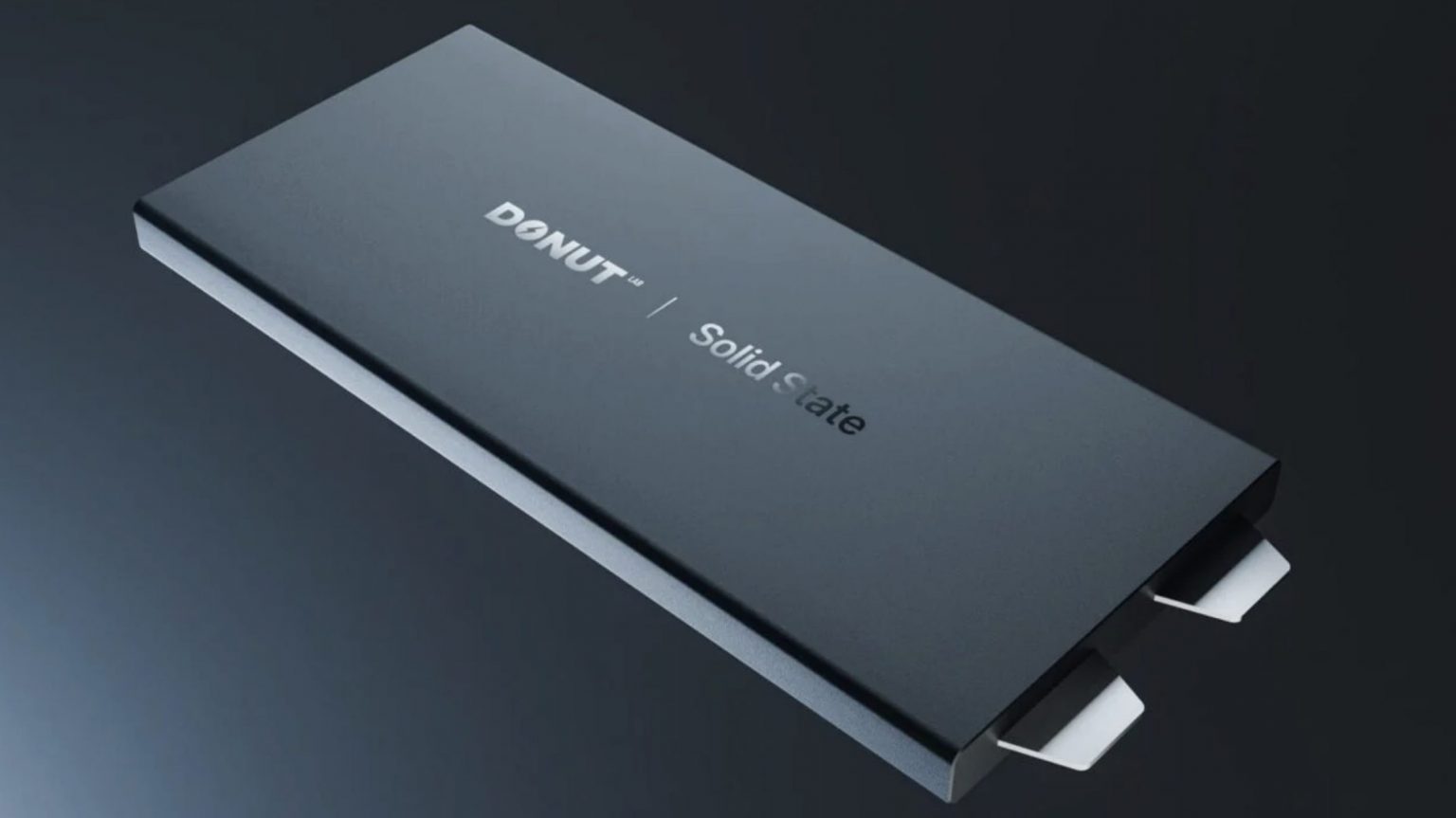
I will bring you up to speed on what has happened already. Here’s what I wrote when the battery was announced in January:
Lehtimäki claims his team has made a battery that can charge in only five minutes, will last more than 100,000 cycles with almost no degradation, is cheaper to make than lithium-ion batteries, delivers 400 Wh/kg, and is made out of 100 percent green materials. Simply put, Verge and Donut Lab claimed to have built the holy grail of batteries.
[…]
Donut Lab claims that this battery is better than any other in that it retains 99 percent capacity in minus 30 Celsius and also when it’s above 100 Celsius, unlike lithium chemistry. Donut Lab also says you can run the battery to zero or charge it to 100 percent as many times as you want without hurting it. As for lifespan, Donut Lab says it’ll last the entire life of the vehicle, making the threat of having to replace a worn battery a thing of the past. The company then talks about these cells not having thermal runaway problems, weighing less than lithium batteries, and, somehow, even costing less to make than lithium batteries.
As if all that wasn’t unbelievable enough, Donut Lab then claims, “In fact, we found ourselves designing a slower charging speed so riders can plug in and actually have time to drink a latte and enjoy it instead of downing an espresso and rushing back to their bike.” Weirdly, Verge also says that its version of the Donut Battery will last for 10,000 cycles rather than 100,000.
The Tests

The first test performed by VTT proved that Donut’s battery can charge seriously fast. That test involved the battery getting charged seven times, of which five of those cycles were fast charges, and three of the fast-charge cycles were at 11C current. One of the 11C tests had to be canceled as a safety measure because the battery reached 90 degrees Celsius when it was attached to a single heat sink.
These tests proved none of Donut Lab’s claims aside from the idea that the battery can charge quickly. Thus, the test left us with more questions than answers. Click here to read my story about the test.
I decided to skip reporting on the second test, the temperature test, because it had the same problem as the first test of proving only a single data point while offering no valuable information about the rest of the claims. Now, we have the third test, the one that Donut Lab says disproves the claim that Donut Lab is playing loose with its terminology and is actually just rebranding a supercapacitor. Let’s look into what’s happened since we last looked at the Donut Lab battery.
The Second Test

Let’s start with the test I skipped, the temperature test. Here’s the summary from VTT (report VTT-CR-00124-26):
The aim of the project was to conduct independent high-temperature discharge performance tests on the energy storage device supplied by the customer, which the customer identified as a solid-state battery cell. Based on the results of the initial capacity test within the recommended voltage range, the capacity of the tested cell was determined to be 24.9 Ah. Following the capacity measurement, the cell’s discharge performance under high temperature conditions was evaluated. The first discharge test was performed at +80 °C using a discharge current of 24 A. The second discharge test was conducted at +100 °C using a discharge current of 12 A. Charging was consistently performed at +20 °C.
This test involved three scenarios: a capacity test at +20 °C (68 °F), a discharge test at +80 °C (176 °F), and a discharge test at +100 °C (212 °F). The cell, called “Donut Solid State Battery V1” was tested to have a nominal capacity of 26 Ah and 94 Wh of energy at 3.6 V.

At room temperature, the cell delivered 24.9 Ah of capacity at a 1C (24 A) discharge rate. At 176 degrees and the same 24 A discharge, the battery delivered 27.5 Ah of juice. At 212 degrees and at a 12 A, the battery returned 27.6 Ah capacity. In each case, the battery charged normally at room temperature after the high heat test. VTT’s conclusions made for a dry read, but note what happened to the pouch’s seal, from VTT:
This project included an independent high-temperature discharge performance test on an energy storage device supplied by the customer, which the customer identified as a solid-state battery cell. Based on the initial capacity test, the capacity of the cell was determined to be 24.9 Ah. The cell was discharged at +80 °C and +100 °C in accordance with the customer’s test plan, and capacity, energy and cell temperature were recorded.
Under the specified conditions, the cell was successfully discharged at +80 °C using a current of 24 A, achieving a discharge capacity corresponding to 110.5 % of the initial discharge capacity at +20 °C with the same current. After the discharge, the cell was able to be charged normally, and no observable changes were detected.
The cell was also discharged at +100 °C using a current of 12 A, achieving 107.1 % of the reference discharge capacity measured at +20 °C using the same current. After the discharge, the cell was able to be charged normally; however, the cell pouch was observed to have lost its vacuum.
The temperature tests were great in showing that the Donut Lab battery does appear to keep its composure when it’s really hot. It also didn’t experience a thermal runaway. It is unclear how serious the issue with the cell breaking its seal is. The fast-charging test and the temperature test both also have the limitation that they’re tests of a single cell rather than a completed pack. How will an entire pack of cells charge and deal with heat? We don’t know. Even Donut Lab admits that the two VTT tests don’t simulate the cell balancing or the thermal management of a whole battery pack.
The Third Test

The third test is where things get interesting. Ever since January, there has been a persistent rumor that Donut Lab didn’t make a solid-state battery, but a supercapacitor, and is simply rebranding a supercapacitor from Nordic Nano with the nanoprinting technology and nanomass from Germany’s Holyvolt. I can see why this rumor continues to float around, as supercapacitors can charge really fast, are cheap enough to be mass-produced, and can last tens of thousands of cycles.
To disprove the rumor, Donut Lab had VTT perform a self-discharge test. From VTT report VTT-CR-00125-26:
The aim of the project was to conduct an independent self-discharge performance test on the energy storage device supplied by the customer, which the customer identified as a solid-state battery cell. Based on the results of the initial capacity test conducted within the recommended voltage range, the capacity of the tested cell was determined to be 26.5 Ah.
The cell was first fully charged, and its capacity was measured using a charging current of 24 A with a 0.48 A constant-voltage cut-off current. After charging, the cell was discharged at a constant current of 24 A until the lower voltage limit of 2.7 V was reached.
Following the capacity measurement, the self-discharge behaviour of the cell was evaluated at ambient temperature (22–28 °C). The cell was charged in two stages to approximately 50 % state of charge and then left to idle for 240 hours, during which the cell voltage was recorded at 10-second intervals. After the idle period, the cell was discharged at a 24 A current to measure the remaining discharge capacity. A total of 97.7 % of the charged capacity was able to be discharged from the cell.

The test starts out simply enough, with VTT running an initial capacity test, revealing a 26.5 Ah capacity at 1C current. For the self-discharge test, the battery was charged back up to 50 percent and then left to sit for 10 days at ambient temperature. The lab measured capacity every 10 seconds during the 10 days. At the end, the battery measured at 13.029 Ah, or 97.7 percent of the capacity when the test started.
As for voltage, the cell dropped by 60 mV in the first 10 seconds and then 103 mV in the first hour. From 10 hours to the end of the test, 10 days later, the voltage dropped only 12 mV further. This shows that the cell stabilized.
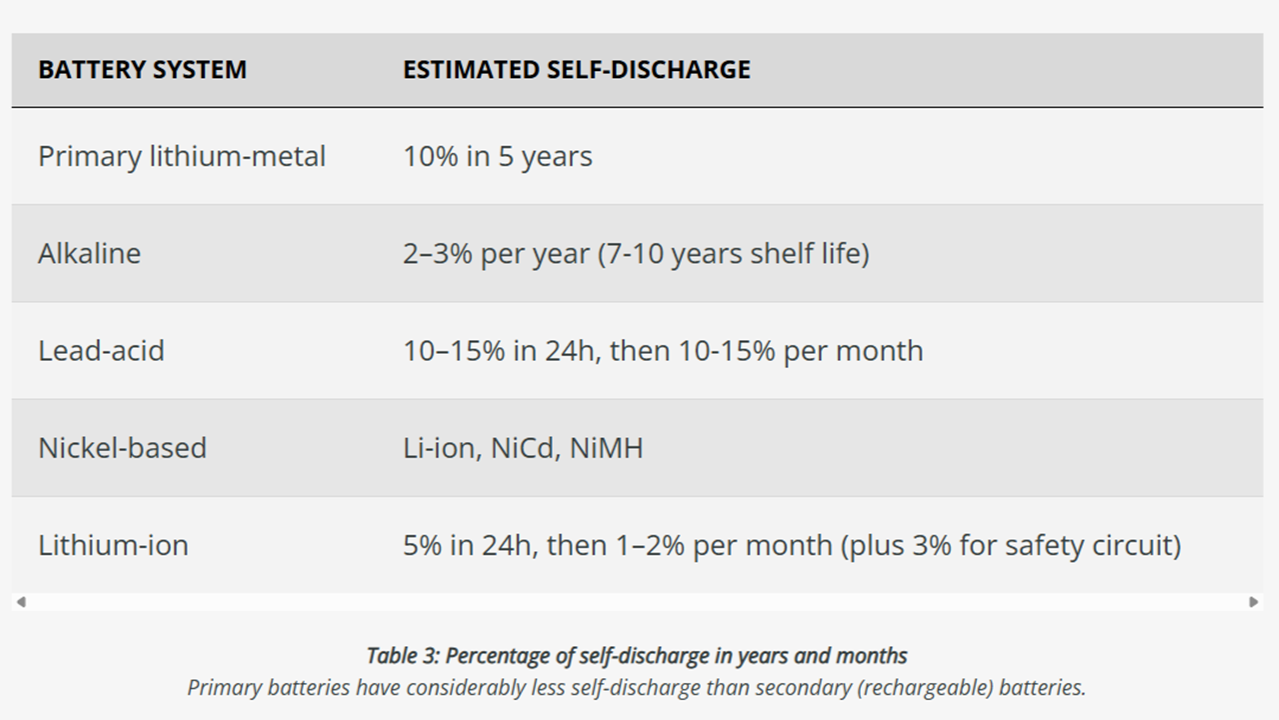
How does this test compare to lithium batteries? According to the book “Batteries in a Portable World – A Handbook on Rechargeable Batteries for Non-Engineers”, a lithium battery can lose as much as five percent in the first hour after charging, then one percent to three percent per month after. That assumes the battery is at room temperature and isn’t being subjected to a parasitic drain.
The Donut Lab battery lost 2.3 percent over 10 days. Unfortunately, since the test was only 10 days long and not a month or longer, it’s not known how much of that 2.3 percent can be attributed to the relaxing that happens after charging. The 12 mV loss over 230 hours is a good sign that the battery can sit for a long time at a low self-discharge rate. Either way, the test isn’t exactly breaking any new ground.
Donut Insists The Battery Is Not A Supercapacitor

What’s interesting about that last test is how Donut Lab is interpreting it. The company seems to care less about the self-discharge rate than about busting the rumor of the company using a supercapacitor. The image above shows Nordic Nano’s advertising for its supercapacitor. Here’s the summary from Donut Lab:
The 3rd independent test of the Donut Battery, conducted by VTT, evaluates its charge retention over an extended idle period. The cell was connected to a battery tester for ten days, with voltage measured every 10 seconds. Cell voltage stabilised within the first 10 hours and remained level for the remaining nine and a half days, confirming normal battery-type charge retention – not the rapid linear discharge characteristic of supercapacitors. The results demonstrate stable, predictable energy storage suitable for real-world vehicle applications.
The company also sent me an email with the headline, in all caps: “DONUT BATTERY’S THIRD TEST RESULTS PUBLISHED – SUPERCAPACITOR THEORIES DISPELLED.”
So Many Questions
After three tests, we now know that Donut Lab has made a battery that charges fast, can survive two discharge cycles under high heat, and has the self-discharge rate expected from a battery. Somehow, none of the most significant questions have been answered. Donut Lab says its battery has the energy density of 400 Wh/kg, is cheaper to make than a lithium battery, will last more than 100,000 cycles with almost no degradation, and is made with 100 percent green materials.
None of these tests has brought us any closer to those big questions. Donut Lab knows what its battery is made of, yet it won’t tell anyone what the battery is aside from the fact that it’s not a supercapacitor. As time goes on, there are more questions. Where are the companies falling over themselves to get this battery? I mean, the governments of the world are going to want to put these things in drones, forget a $30,000 motorcycle that few can afford.
This is why this strategy of drip-feeding the tests once a week is so disappointing. If these tests have been performed, Donut Lab should just release the data. Also, Verge Motorcycles says it will ship the first customer motorcycles with these batteries in the first quarter. Well, that deadline is the end of this month.
Donut Lab CEO Marko Lehtimäki is betting the farm on this battery. The reputations of himself, Donut Lab, and Verge Motorcycles are on the line here. So I don’t think it’s a scam. It wouldn’t make sense to do all of this for a scam.
That’s what makes this battery so fascinating. Either the Donut Lab battery will be proven to be the miracle it’s claimed to be, or we’ll find out that this whole thing will go down in flames like the Fyre Festival of batteries. I’m inclined to believe that Donut Lab really does think it invented the holy grail of batteries; otherwise, we probably wouldn’t be being fed this weekly series.
I really want this battery to be the game-changer it’s being advertised to be. I love the thought of hopping into a small plane and not burning leaded fuel, but taking off into the sky on batteries. Imagine a world where most of today’s complaints about electric cars are a thing of the past. If Donut Lab invented that, I desperately want to see it. But I guess we’ll have to check back in for next week’s episode.
Top graphic images: Donut Lab; Verge Motorcycles




If it would be me and a few buddies that thought we invented a world changing battery, I would play a similar game.
I would have the basic principles set, but I would not be ready for mass production. To solve that, I would need serious investment. To get that, I would need to create a long during buzz around our battery by cherry picking test results and drip feeding information.
Then, with enough investment, I would try to set and then sell the patent to the large companies.
So basically the same thing. Just without the stupidly expensive motorcycle.
Toyota has a production solid state battery in a production vehicle, albeit used in the optional JBL boombox on the Tacoma.
It’s a a grand mistake to say companies with millions in R&D can’t solve it, therefore some independent is almost certainly a sham. Just look up Shuji Nakamura the inventor of the blue diode; One man by himself, but because he wasn’t classically diploma’d or schooled, he dogmatically followed what his own observations told him … and in doing so showed them all and changed the world. Truth is, this happens all the time. Limitless money and degrees don’t guarantee breakthroughs. Most often they build Zunes.
I will watch this battery inventor with great hope … and a pinch of salt.
I think there’s a 3rd option between full scam and paradigm-shattering new technology, which is moderate and practical improvement in applied battery technology that can (eventually) be shown to meet each claim INDIVIDUALLY, but not all the claims at the same time.
e.g. You can charge it at the crazy fast 11C rate OR you charge it at very high/low temperatures OR you can get the long service life, but not all 3 at once.
And I’m not sure how they could have even proven the 100,000 cycle claim yet, unless it’s on a much much smaller test unit (or they buried the lede and also discovered time travel).
So perhaps the blend of scepticism and optimism most commentators have adopted remains sensible until these make it out into the world.
If I had to guess (Do I? Okay) they probably haven’t scaled production yet (hence delivery delays) and want to round up more investment whilst ironing out real world issues. And making outrageous claims worked well in all those areas for Elon and for the AI bros.
I would be curious to know whether those results could a replicated by some combination of a LiFePO4 battery and a supercapacitor.
I still hold they are lying in some major way, and not to trust this viral drip-feed BS. That view has served me well so far, and will continue to do so in the future I will bet.
I doubt any battery claims until proven, these days.
That being said, this setup is probably to intentionally keep them in the news cycle until the bikes release.
If they end with a big successful finish, people will be clamoring for both the bikes and the batteries.
But me? I don’t play the stock market, call me when we have proof.
I don’t believe battery news, it’s all baloney and over-blown. Once they are out for 6 months or a year, people haven’t died, and they seem to be what they say, then I will believe.
This technical stuff with electricity is over my head, its one of the things I just can’t get my head around despite some people saying its easy.
> it’s all baloney and over-blown
Would you say it’s over-baloney?
Donut Labs strategy may be frustrating to journalists covering it, but makes perfect sense business wise. They are getting multiple hits of free publicity, they are keeping stuff proprietary as long as possible, their competitors are deprived the information they need to market against. Delaying revealing what they are making it out of and exposing their supply chain until the last moment is a competitive advantage and keeps investors from bidding up their supplies. Showing investors non public information can raise capital if that information raises the value on the company when it’s revealed.
Assuming that they can actually deliver and it doesn’t turn out to be the next Edsel or Segway but is more like Tesla or Apple, to name four previous examples of this strategy, it will be great.
The possibility that there is some Achilles heel in the tech despite the good results, like it’s made from unicorn poop mixed with saffron and can only be assembled by 50 year old virgins, and it’s part of a elaborate scam is possible, but what they have shown so far would be commercially valuable without the other claims.
And Finland has been punching above its weight forever, so there’s that.
The proprietary bit is less of a thing in this type of tech. I would expect there would be reams of patent applications at this point (protecting whatever revolutionary tech they’ve invented). I don’t know anything about the Finnish patent office systems, so I’ll leave the investigations of patent applications to the journalists and lawyers (USPTO has nothing for Donut Battery, but that would make sense as they’re a Finnish co.). At this point whether they’ve filed for patents on this revolutionary tech to be a pretty good indicator of the reality of their claims.
Here’s the thing, though: patents are publicly available documents. Once you file a patent, anyone can look at it.
And the trade-off of making your discovery public is a monopoly on exploitation of that invention for (depending on a bunch of variables) some number of years. If they are selling these batteries to Verge to ship a bike with this tech this quarter, there is no company on the planet that would not have already filed all the patents.
They may have filed patents, again, I’ve got too much else to do and not enough care to go down that rabbit hole right now…
Yes but you can patent a 5 step process with 5 ways of doing each step, but only one of the 3125 combinations work, and only with certain times and temperatures that have been left out.
You are protected by the patent but still nobody can use it as a recipe.
Also you can patent a lot of dead ends.
All the more reasons you would expect beaucoup patent applications to have been made for every bit of this tech. Not to mention even if all 3125 combinations were actually dead-ends you’d still do it to further your ability to lure in media and investors.
Again, for all I know they have tons of patent applications on file in Finland (or if they want to keep things under wraps they could have filed in the US because up to 18 months of cover depending on variables). But even then, once they unveiled the tech, I would have expected them to do what most do which was unveil the patent apps.
I have a tiny bit of experience in this bit of the deep-end from designing video compression codecs and on-demand video delivery systems back in the early 00’s. But my patent knowledge is from a client–side and the US, so not necessarily germane.
EDIT: Appreciate the back-and-forth and absolutely not trying to argue with you. Hope my tone doesn’t imply otherwise.
No argument inferred, not that I would notice.
I have my name on a patent application as an inventor that goes on for dozens of of pages describing “something happens , and a list of people get a text.
I can’t even read it but apparently it establishes prior art for a just about any shit happens and fans are ready for it to hit scenerio.
The other thing is it’s pretty easy to obfuscate who actually controls the patent if you want to.
Or you could do like Jerome Lemelson and see a problem that needs a solution, apply for a patent, then keep amending it until someone solves the problem, keep it as a submarine patent, the surprise everyone by owning their technology.
But that only extends the clock on the other people figuring it out
Well, that’s where additional patents come in, also there can be submarines parents that extent the process by decades without the patent being public.
And some countries are not particularly adherent to western patent law.
I’m just waiting for the whole story at this point. All their tests leave more questions then answers. None of it makes sense unless it was a scam or some kind of op to sell someone batteries for their drones.
Life lesson: never trust anyone who makes a vehicle with hubless wheels. They have no* reason to exist; in technical terms they are in all ways worse than a regular hubbed wheel, and are the definition of flash and style over substance. They exist only to awe and impress people who don’t know any better, which is usually just the first step towards fleecing them of their investment/preorder money.
* Unless the vehicle is a monowheel, those things are badass.
Also in terms of “this goes too deep to be a scam”, let us not forget the lesson of Theranos.
They have a hub it’s just really big. All wheels have a hub by definition.
Exactly. And the whole point of a wheel is to take advantage of the linear speed reduction between the large outer circumference of the wheel and the tiny circumference of the hub, and the associated reciprocal leverage increase. Those factors combined mean that the wheel rides on a slow moving (in linear terms) bearing that’s easy to turn.
Well the same factors mean that a big stator and rotor makes more torque and has more area for flux. I’m not sure what the trade offs would be. I agree that most “hubless wheels” are just for gee whiz value.
You could put one hell of a chain through it to lock the bike up
https://marinesalvageantiques.com/product/ship-anchor-chain/
So that’s an advantage!
Most hubless vehicles just have a regular drivetrain, and power the wheels through a small cog running inside a big ring gear, which is exactly as needlessly difficult to engineer and manufacture as you might imagine.
Yes, if for some reason those were the standard, hubs would be a big improvement.
Hubless electric motors might have an advantage with a big stator, but now axial flux motors are the next big thing and I think that design is incompatible or at least difficult with hubless.
Thank you. They should be called “spokeless” because that’s the part they actually omitted from a traditional wheel.
I agree it’s unlikely to be a full on scam given all they’re doing, but it does read a little house-of-cards-ish and smoke-and-mirrors-ey. Is the drip to buy time? If no one else is anywhere near ready, what’s the point of a premature announce? Or did they announce because they really thought they had it, then realize some major oopsie and the drip is to cover without a full on backtrack? I’m just theorizing but the whole thing is still weird.
No, as I posted below, I think that they are posting results as they are coming out because they don’t want to wait for the complete report.
Maybe they are slowly feeding these tests out is because they still haven’t managed to make a complete battery that can be manufactured easily and packaged well for it’s intended use. They are testing one cell only. Let’s hope this isn’t ike the table top fusion claims from the past.
Separately, BYD & Geely both recently announced 1500kW charging with BYD’s Blade 2.0 charging to near-full in 5 minutes.
So is Donut Labs’ claim really out of this world?
It does, however, still look like a lab experiment.
“These batteries could enable the existence of long-range electric aircraft,
I very much doubt that. They do not solve the even bigger problems of where all that electrical energy is going to come from nor how all that electrical energy will get from the power plant to the airport. Nor do they solve anything emissions wise unless all the energy flowing into those batteries is renewably sourced. Aviation jet engines are about as efficient as power plant turbines so might as well burn fossil fuels at 30,000 feet as on the ground.
The real deal breaker though is the 400 Wh/kg claims made for these batteries still pales in comparison to the 12,000 Wh energy density of jet fuel. Even taking in the ~50% losses of combustion jet fuel is about 15x as energy dense by weight as these batteries. Furthermore a battery powered airplane sheds no weight along the way whereas one powered by jet fuel does, extending the range even further. Trying to run a long range aircraft on these batteries is going to cut deeply into cargo capacity.
“be the ultimate form of electrical energy storage.”
I wouldn’t say they will surpass pumped hydro…unless you want to put in the caveat “mobile form of energy storage”.
“solve the largest complaints with electric cars”
That EVs are boring? I think your confusing “solid state” with “soulid state”. It’s common mistake.
I wish people would pay more attention to this. None of that this battery is claiming to have accomplished is really that earth-shattering (LTO chemistry has done this for the past decade, and cells are commercially available via Toshiba), except for the energy density, and even that is nowhere near what fossil fuels can provide. 400wh/kg is roughly 5.5 pounds for a kwh (and probably another half pound for thermal management and casing and the like). This is still way under what you need to be comparable to gasoline (to play fast and loose with conversions, most EV’s get about 2.5-3.5 miles per kwh; gasoline yields about 20MPG). So the same weight of this battery gets you 3 miles (again, averages) vs. 20 for gas.
It’s not displacing avgas or regular gas anytime soon. Especially avgas, where regeneration is not a thing you can do in flight and where the thermal management problems become much more strict. 400wh/kg would be a breakthrough, to be sure, but is still almost an order of magnitude off of what we need to make something like commercial aircraft feasible.
Traditionally, the way electrical power gets to the airport is they smelt bauxite, make it into aluminum, make the aluminum into ann airplane, and fly it the airport.
Simple.
Aside from that, getting electricity to the airport isn’t much more of a problem than getting it anywhere else.
Getting jet fuel to the airport isn’t any simpler with all the pipelines and tanks.
I believe most airports have electricity, passengers, crews, and staff generally find it inconvenient to cook Cinnabons over a camp stove and eat them by candlelight
“Getting jet fuel to the airport isn’t any simpler with all the pipelines and tanks”
Except that infrastructure is already in place.
The US consumes about 17B gallons of commercial jet fuel per year. By my maths* that works out to 53B kg or 318 TWh of electricity needed to replace that jet fuel (assuming 50% jet engine efficiency and 100% efficiency from power plant to pushed air).
US nuclear reactors, the only non intermittent source of renewable power (hydro is susceptible to droughts), produced 816 TWh in 2024 so we’d need about 40% more reactors to meet that demand, more like 50% when factoring in losses, with all that power being consumed exclusively to airports. On paper it’s doable but it will not be trivial or cheap. Look at how data centers alone are wrecking havoc on the electricity market.
* back of the envelope guesstimates, could be off by a lot, go ahead and crunch your own if interested.
I agree that with the state of the art at present, air transport is not the low hanging fruit. Not impossible but not certainly not practical assuming current costs and benefits.
It will probably happen eventually, maybe surprisingly fast. I don’t think anyone is seriously working on the overall problem of commercial electric air transport at scale, but all the parts of the problem are being worked on intensely.
In 1960nobody thought they were working on solving the problem of a pocket size mass communication device / computer / camera / device for making and watching videos /pocket wave form analyzer / navigational device, yet I’m holding one now.
Any the problem is solved, it’s a scaling problem, and humans have gotten scary good at scaling problems. Sometimes solving them, sometimes creating them.
Time will tell. I think though its much more likely large aircraft of the future will be burning renewable natural gas and/or biodiesel in more advanced jet engines.
There was a paper describing a fungus found in Patagonia back in IIRC 2008 that was able to turn wood directly into a liquid hydrocarbon product very much like dino diesel. Exciting but soon all references to progress vanished. It took some digging but I finally found years later a back page reference that claimed the process too slow to be viable so it’s been shelved. Seems like the end of the story but that’s exactly where penicillin was in the 1930s. It took WW2 to supercharge the research and $$$ needed to develop the commercially viable mutants needed for mass production (and a LOT of X-rays). A similar story with phage therapy, very promising but abandoned because capitalism. The Soviets OTOH continued with it and thank Christ they did since it’s now our best defense against stubbornly antibiotic resistant bacteria.
I expect someone will eventually develop an algae, a fungus, a bacteria, a yeast, a plant, a bug, SOMETHING that turns some combination of sunlight, water, electricity, and/or garbage into combustible liquid fuel on a scale and a timeframe that makes sense. Maybe it’ll be a tasty snack food too, who knows. We’re already kind of there with ethanol.
The biggest problem for electric aircraft is not the batteries. That’ll be solved eventually. It’s the propellers. Nobody likes them.
Ducted fans.
So don’t. Use ducted fans instead.
I’m really hopeful this is the real deal, but it seems unlikely.
I just freed my now 10 (!) year old electric motorcycle from Winter slumber this morning. The battery was never a long range weapon, but now it’s feeling its age. I’d love there to be new technology on the market before I replace this.
My 2019 Zero DSR had it’s original battery replaced on warranty in 2024 at about 20k miles, it had already degraded to just under 80%. I bought it used in 2022 (for like 70% less than the original owner paid).
Now just two years/10k more miles later it’s noticeably sagging again. It was good for about 100 miles with a fresh battery, that’s now down to 85-90. It’s also starting to throw intermittent errors for isolation faults and if it sits for more than a few days, it throws a battery balance error and goes into limp mode. Plugging in the charger for only a few minutes always fixes it, but it’s not really inspiring for longevity.
I enjoy it for errands and running around town but I’m considering getting rid of it before the problems get worse. Thing is, there’s nothing I’d really consider replacing it with. The third-gen Zero’s seem to be littered with problems, they’re pulling this pay-to-play BS, and somehow dealers still want full blown MSRP for a bike that’s been sitting around for 2-3 years. Energica’s dead, CanAm and Livewire are too range limited (50ish miles is just not enough for my use case). Supposedly Stark is working on a midsize ADV “with more range than you need without having a piss” and charges “in the time it takes to enjoy a latte”, but who knows how far out that is. Though I do have more faith in Stark than a lot of other companies to follow through with claims- they seem quite self aware of all the vaporware and BS in the EV world and make a pointed effort to be transparent and realistic.
Yeah, an electric MC is a difficult proposal. I’m on a 2016 Zero FX-S, and even though I’m frustrated with the range, there is just nothing else out there. I’ve looked and looked, too.
I think Zero is nickel and diming customers because it’s real tough to hold on right now. They’ve moved their HQ out of the US, and I fear the rest will follow.
If they actually are shipping motorcycles by the end of March, we’ll probably know by mid-April. You’ve gotta figure that every big company working on solid state batteries has their order in for one.
Is that little pink bunny still going? Maybe they just grabbed it.
1) I bet the reason for this drip feed is because the battery testing is on-going. They’re probably publishing results as soon as they are getting them
2) “Donut Lab says its battery has the energy density of 400 Wh/kg” I feel like the testing reports have enough data to calculate a ballpark Wh/kg
2) I haven’t looked at the testing reports where they are published on the site. Is there any mention of the mass or volume of the cells? Mercedes hasn’t referenced any.
I haven’t either. But I figure someone could estimate size based on the pictures, and get a weight from that.
No mass that I can see recorded in the reports.
True, but I figure it’s likely to be relatively close in density to normal Lithium-ion cells.
Solid-state batteries are supposed to be lighter than normal lithium batteries because they don’t contain any liquid, but since Donut Labs said that their battery doesn’t use lithium, the rest of the elements are higher atomic mass.
Weirdly, Donut Lab hasn’t been clear on whether the tests were already done or if the tests are currently being done. The self-discharge test took at least 10 days to complete, while Donut Lab is publishing a video once every 7 days.
Either way, I feel it would have been much less frustrating for Donut Lab to just wait until it had all of the information and then release it all at once. This drip-feeding thing seems to be built around drumming up interest. Which, mission accomplished, because I’ve already written three articles about it. The marketing guys at Donut Lab need a promotion! 🙂
Donut Solid State EV Battery… is people!
100% green materials!
The weird thing of this reference is how a company didn’t seem to get it.
Soylent USA: Complete Nutrition Meal Replacement Shakes & Powders
I’ve seen this product at a local grocery store. First ones I saw were the Green bottles.
Oh I know. I have a friend that drinks this stuff. He’s a nerd though and actually finds it being marketed as Soylent, funny.
I would imagine for most people that sort of product connotation is… unappetizing at best.
See also Liquid Death brand seltzer.
Hey, we’ve got this relatively healthy bland generic product they can made in any beverage plant and has no marketable difference . How do we sell it?
Why don’t we call it Liquid Death?
Oh. That works.
Different than the power of opposites approach, but my personal favorite is “Just Water” which is basically water in a carton. The implication being the differentiator of the product is that it’s… just water. Those other waters? Who knows.
Also “Just Water” is literally my tap water. Do we have unusually good tap water here, and is it technically spring water? Yes. But again, it comes from the same place my tap water comes from.
The power of marketing.
I was under the impression they absolutely get the reference and it’s intentional/meant to be attention grabbing.
You down with HDP?
Yeah you know me!
(know in the Pluribus sense)
I’ve seen a few videos which discussed the first 2 tests and I don’t believe Donut is a scam anymore.
These were videos by people in the industry or had technical knowledge about battery tech. Some of the things being discovered mean they can’t be some of the existing technologies on the market right now because they fall outside of the temperature range or voltage levels of other chemistries.
I want to read up more on these 3rd tests, but I do believe this company has got something going, and the reason they are being so secretive is they know Chinese companies will be stealing their ideas the second this technology is revealed.
They know the Chinese respect no patents or intellectual property, so they are trying to get as much VC money as possible now.
Your second point makes sense as far as them being coy about their breakthroughs. It seems to be working, the Chinese are clearly in disbelief based on their comments
To be clear, I don’t think Donut is a scam, either. I just want to get to the proof already. Credit where credit is due, the marketing people are absolute geniuses.
If I were in their position, I would be doing exactly what they are doing.
I mean why not, right? They got the industry’s attention. You have veterans in the Chinese battery field claiming it’s impossible. And no matter what, they are still (supposedly) months away from a shipping product. So milk that PR and make the doubters look really bad.
Of course this is only if they have a legit product.
But from what I heard about the first 2 videos, it does indeed seem legit.
Whatever we think of their batteries (which may or may do what the company says), their marketing is spot on with weekly releases to stay in the news cycle. Here’s hoping their scientists are as clever as their marketers.
This doesn’t feel like the behaviour of a company announcing a major technological breakthrough to me. More like a youtuber video series of their latest project, and the final “challenge” video fails spectacularly, but is all just done for laughs and clicks. This really feels like that. I wonder how high they can get the company valuation?
Hopefully high enough to prevent someone from absorbing them right away and filing this beside the Ark of the Covenants in Indiana Jones.
Big publicly traded companies have to make predictable announcements ahead of time. It’s actually the law if they have been doing it in the past. Or at least not releasing information has legal ramifications.
Startups are the opposite.
It’s still really suspicious that Donut doesn’t want to Discharge these Negative rumors right away and instead is subjecting us to this Battery of little updates. This Trickle-charge of information isn’t doing them any favors and isn’t getting anyone Amped up by this supposed breakthrough
All they want to do is stay in the Current news cycle without causing a reVolt.
take my smiley face, both of you.
Hey, you making puns in the comments! Float any more charges and you will all be grounded.
I, for one, connect with Donut’s low-impedance marketing flow, although I find myself alternating between believing Donut as viable or the next Peter Brock Energy Polarizer. The uncertainty hertz.
Ohm y god, just stop already
People have told me I should not really worry that much about what’s in a Boston cream, but I’m still not willing to try them out for myself.
I’ve always called it “pus.”