

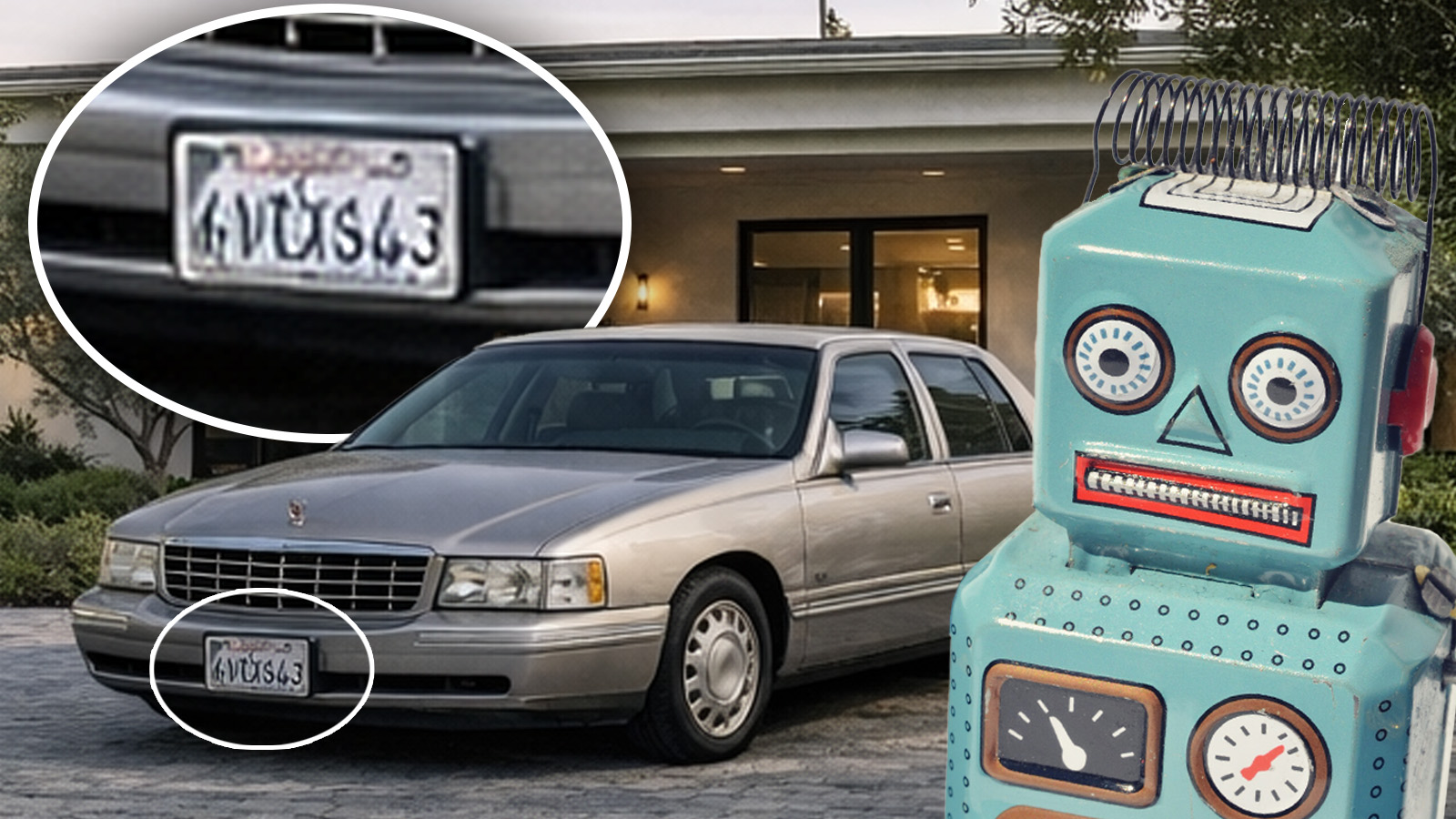
When you buy a car online, you’d expect what you see to be more or less what you get. Sure, some minor cosmetic defects might be too small for the camera to pick up, but you’re still looking at undoctored photos of a real car, right? Well, not always. Over the weekend, a Bring A Trailer listing went live with a beige 1999 Cadillac DeVille. Florida-spec vinyl toupee, 81,000 miles, your average retired-well church-on-Sunday car. Normally, this wouldn’t be noteworthy, but something strange is going on in the photos.
Now, let’s preface this by saying that there are some acceptable uses of generative AI in car photography. Using generative fill to remove unwanted lamp posts in the background isn’t dissimilar to clone-stamping them out, and can produce far neater results. Digitally extending the existing sky and pavement to turn a 3:2 photo into a 9:16 photo for social media is similar to just using copy-paste to extend a solid-color static background, and doesn’t fundamentally alter the subject of the photo.


However, this photo set doesn’t appear to be altered in those ways. Instead, it’s turned into an aggravating game of spot-the-difference, to the point where you would second-guess whether this Cadillac exists in anything close to its presented state.
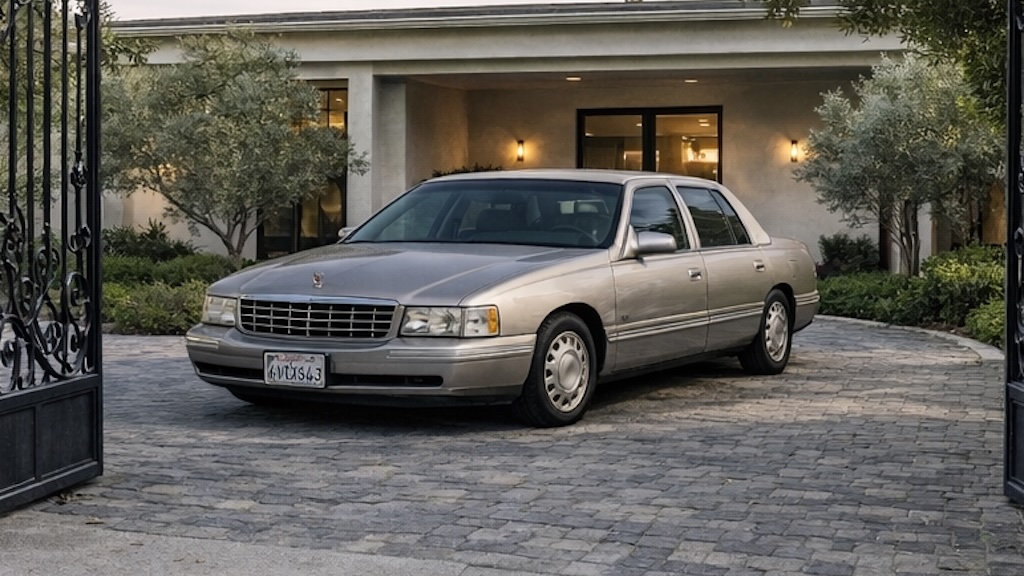
Right out of the gate, we’re off to a rough start with a garbled licence plate. The photo above has been cropped in, but otherwise is identical to the one in the listing. While messed-up text is a hallmark of AI-generated imagery, modern phones have also been known to turn legible text into gibberish characters through photo processing. However, other stuff also seems fishy.
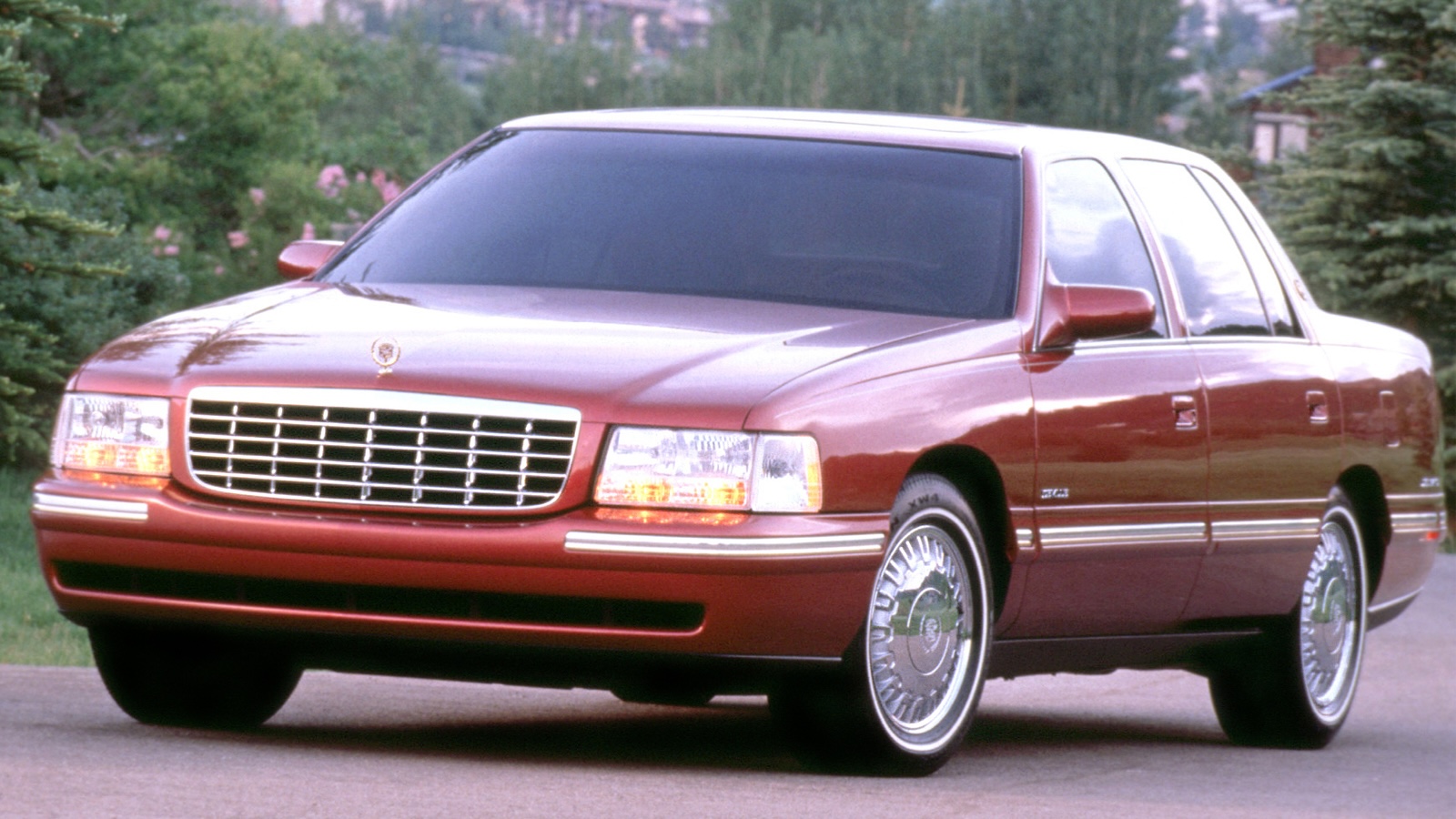
Here’s a photo of an actual late-’90s DeVille, and right out of the gate, there are differences. Mirrors that aren’t droopy, a very different layout of elements in the headlights, four horizontal slats in the grille rather than three, that sort of stuff. A phone camera’s image processing alone doesn’t explain these differences, and another photo of the auction DeVille makes things clearer.
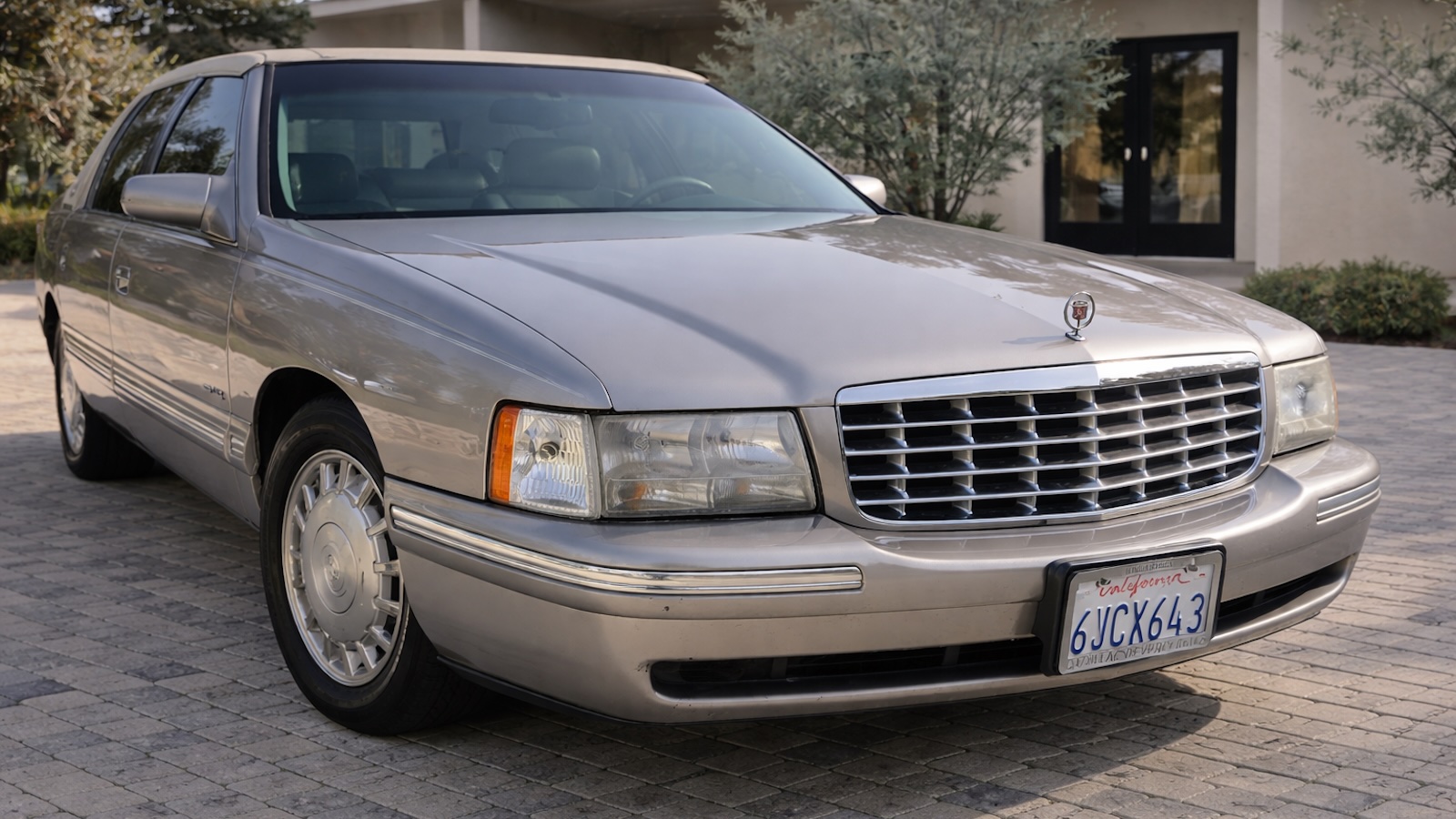
That’s the correct number of horizontal grille slats and the correct headlight layout, but two main things stick out here. The first is a different style of wheel, the second is whatever’s going on with that hood ornament. It’s a little hard to tell without zooming in, but that’s not a Cadillac crest.
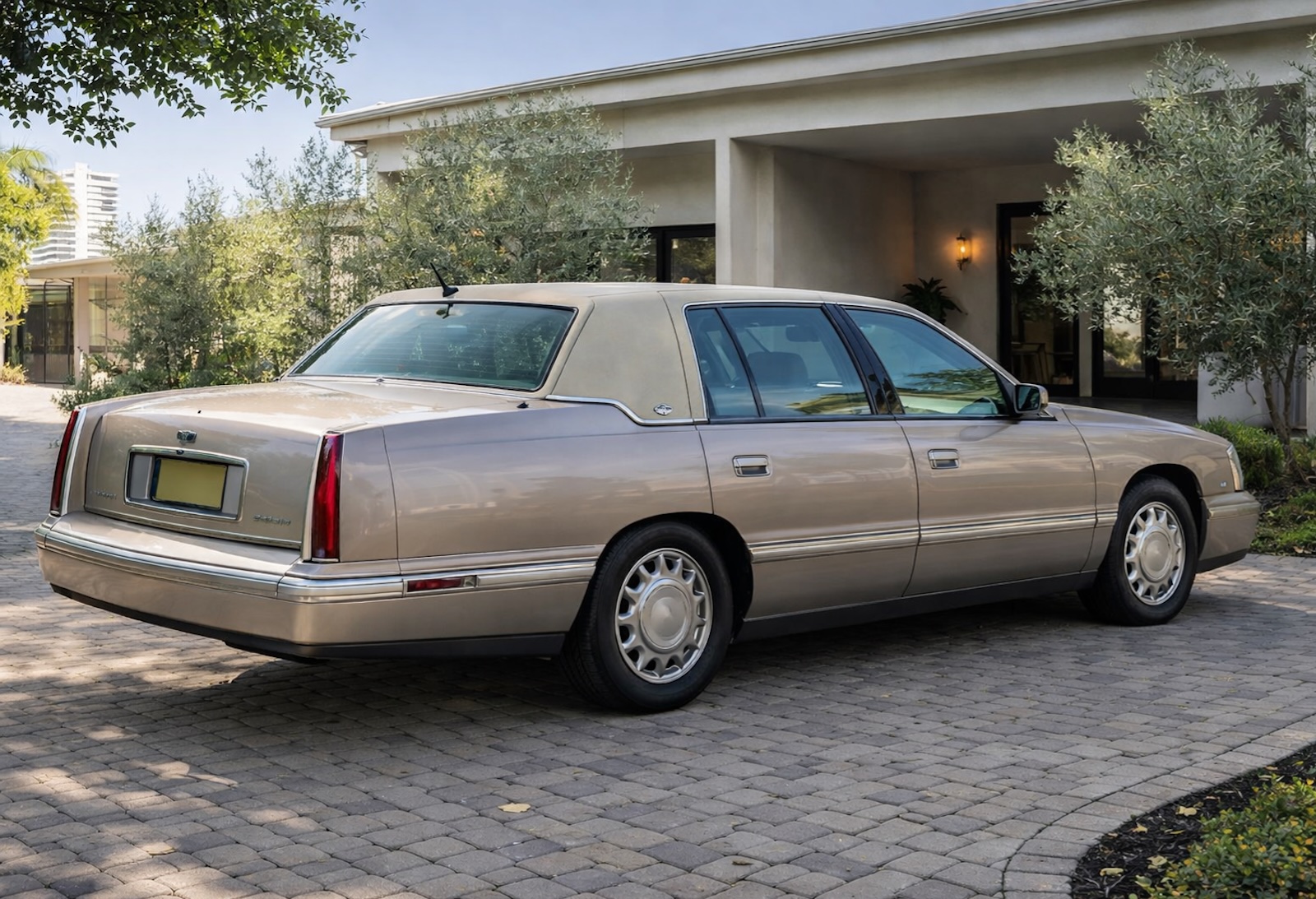
Around back, those aren’t DeVille tail lights, the wheels are different from the ones in both front three-quarter shots, that trunk emblem is clearly incorrect, and what’s going on with that licence plate?
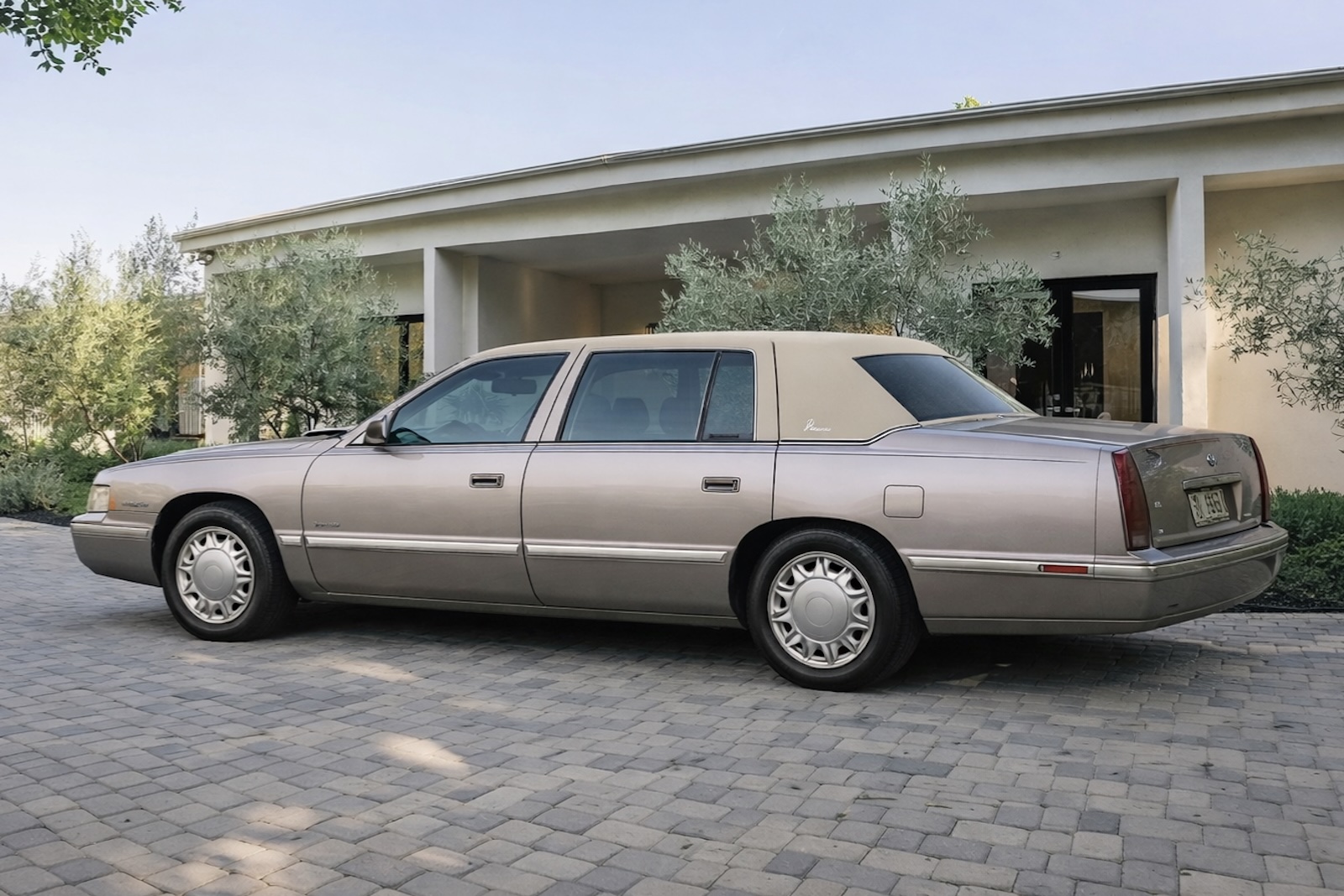
Moving to the left rear three-quarter view, we get another completely different set of taillights, a different rear emblem, a new and unusual licence plate, different bumper trim, and painted lower trims. Never mind the unpainted-looking door handles, the random fender emblem, or yet another different style of alloy wheel.

There definitely appears to be some generative stuff going on here, and that’s before we get to the interior.
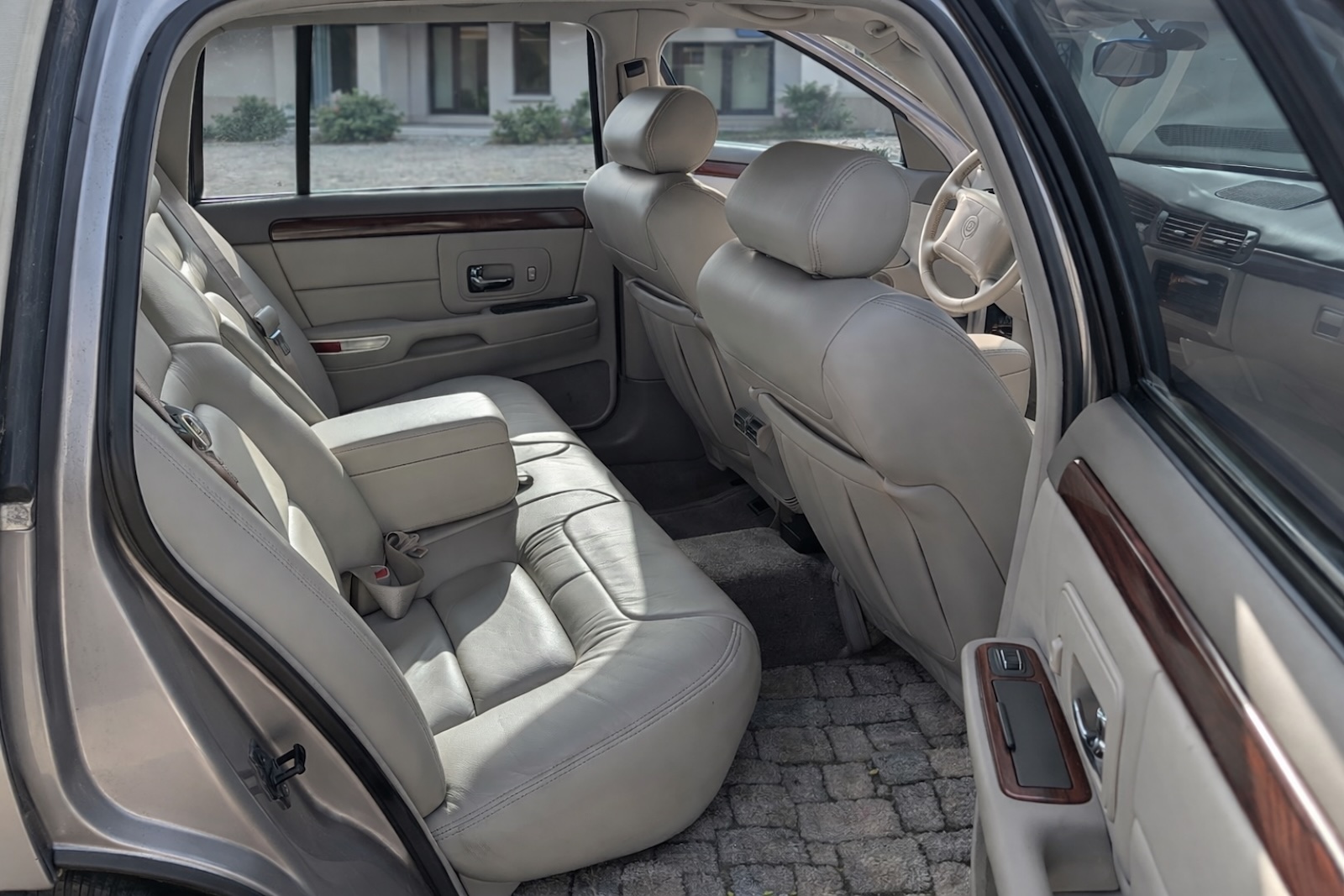
Hang on, is that a cobblestone floor? I know the “Top Gear” cottage-themed S-Class struck a chord, but what we’re looking at here just doesn’t seem real. The shadowing from the rear seat squab doesn’t look right, and shouldn’t there be a door threshold at the bottom edge of the picture?
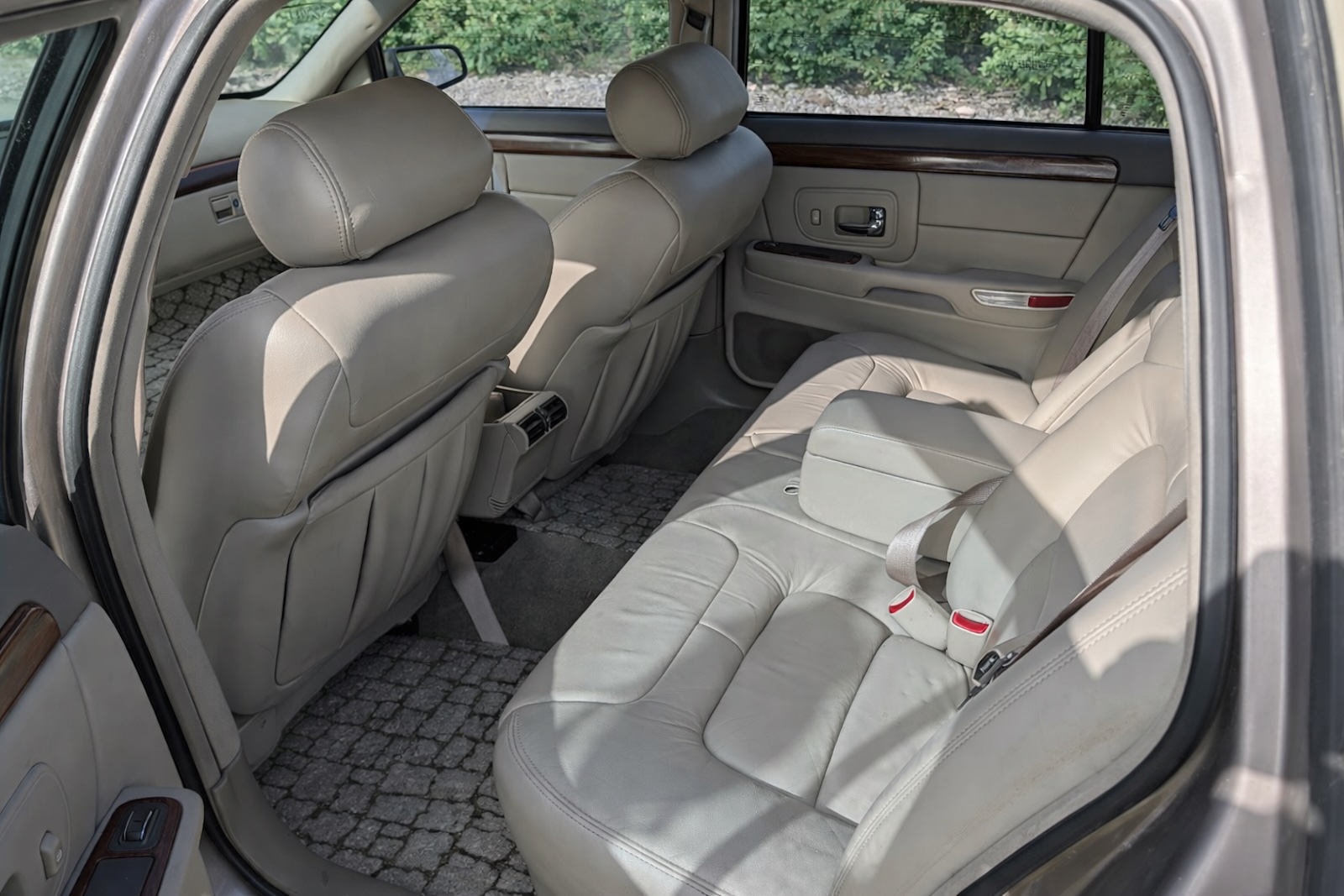
Ah, yep. In this alternate angle, the carpet in the left rear footwell and, well, everything low and up-front disappears, replaced by stonework imagery. Someone’s been blatantly manipulating these photos with results that just aren’t real or representative of the actual vehicle.
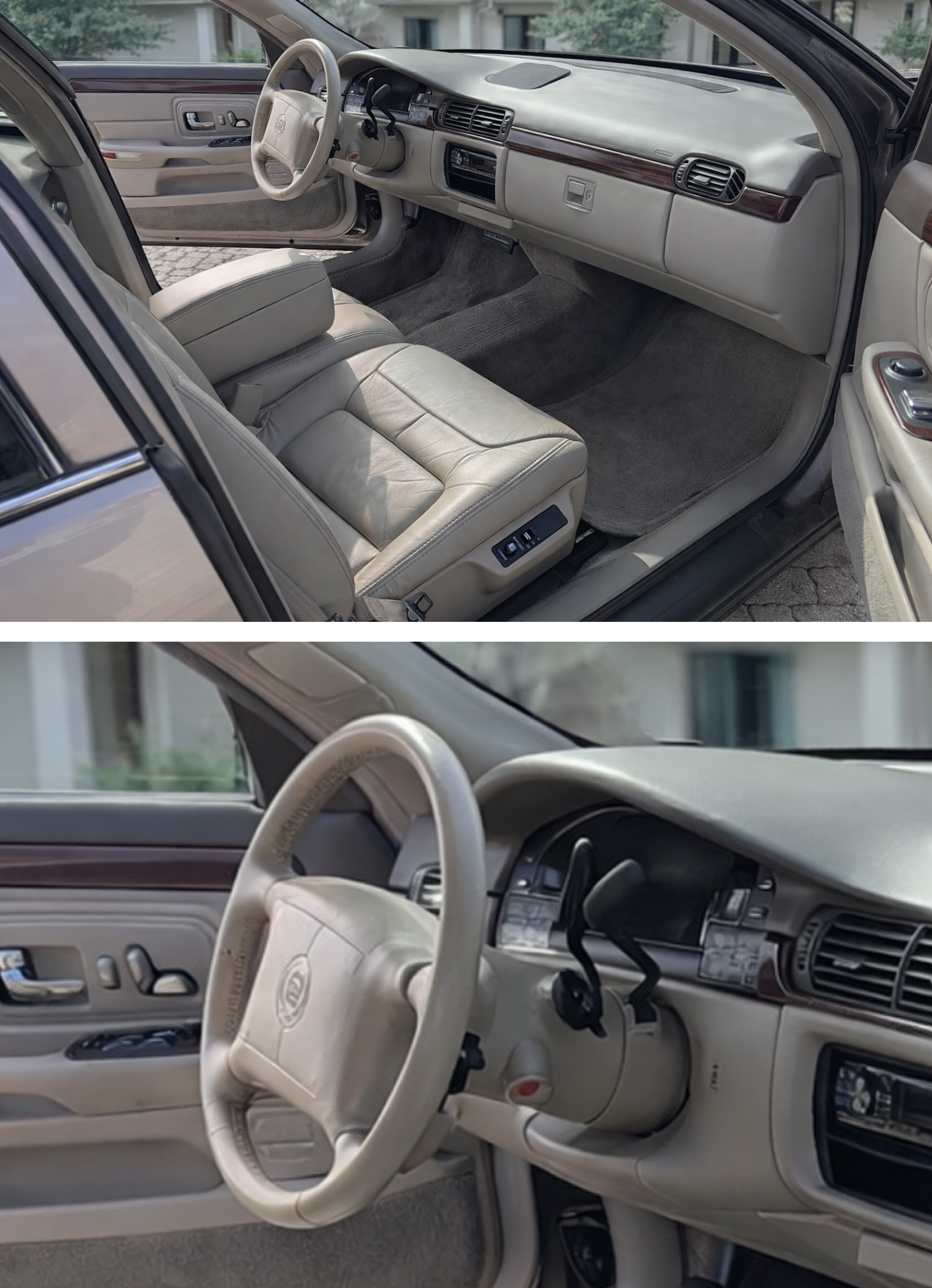
In case that wasn’t enough for you, how about two column-mounted shifters and no ignition barrel – or is the stalk sprouting from it? That’s definitely carpet up front, but like, what are we doing here?
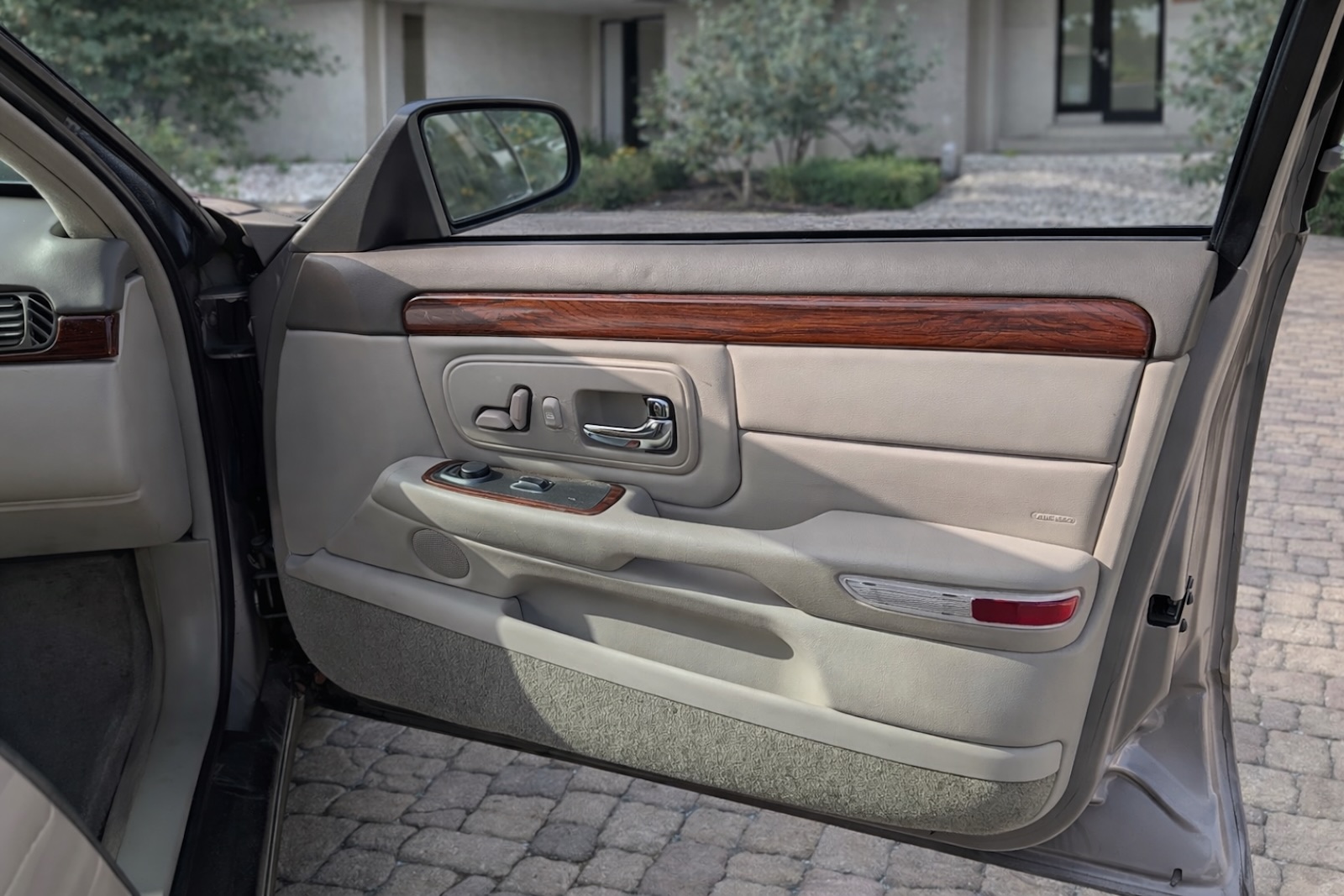
Oh, and the door frame above the mirror is just gone. Where’d it go? I don’t know, into the digital ether or something.
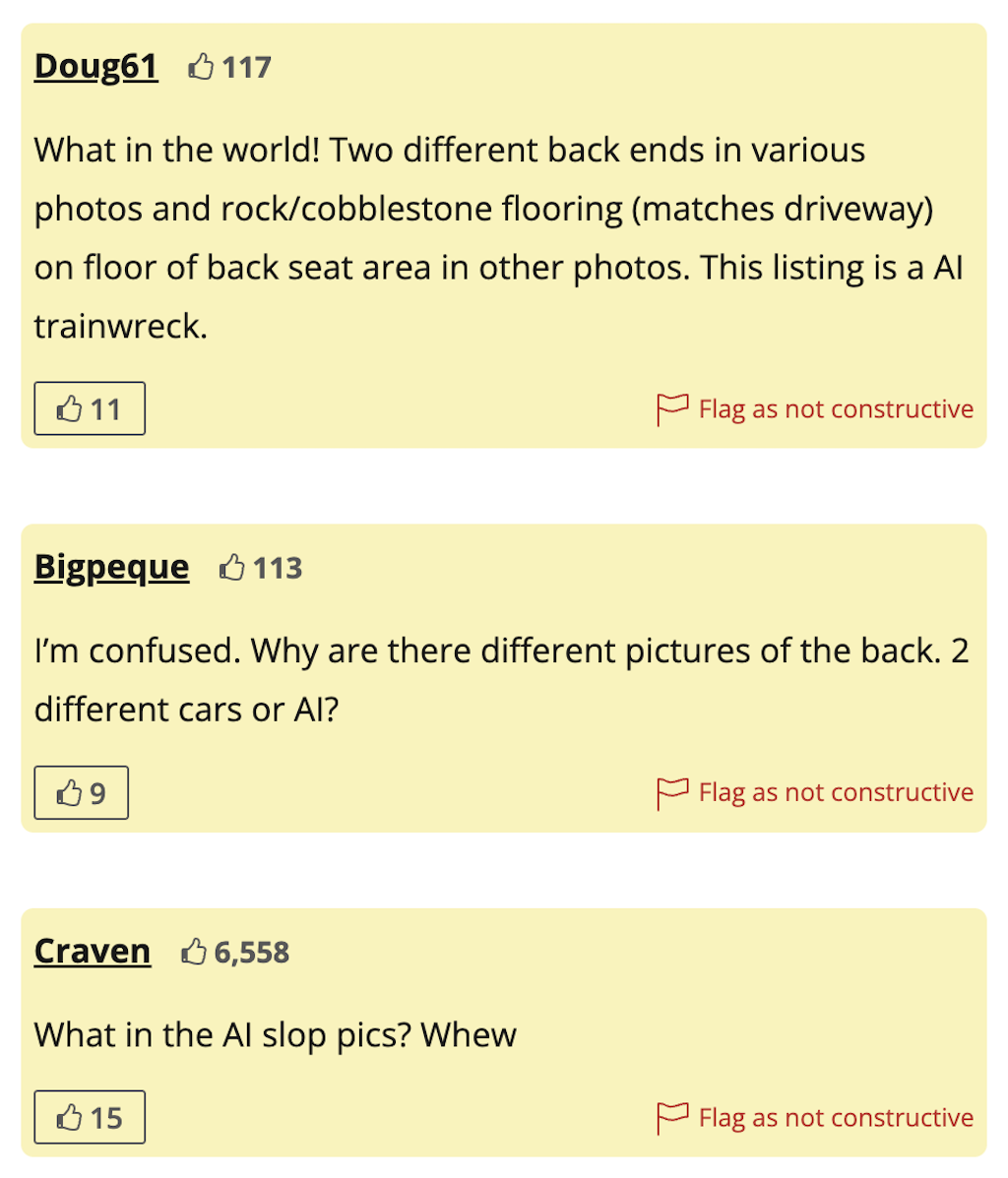
It didn’t take long for commenters to start piling on this listing. From “This listing is an AI trainwreck” to “What in the AI slop pics?
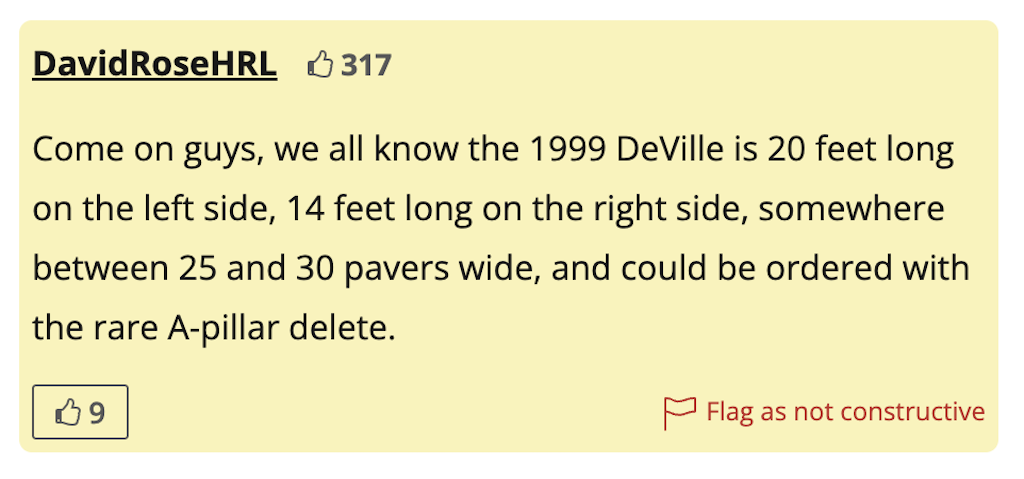
Some struck a more humorous tone, such as “Come on guys, we all know the 1999 DeVille is 20 feet long on the left side, 14 feet long on the right side, somewhere between 25 and 30 pavers wide, and could be ordered with the rare A-pillar delete.” Nicely done.

It took a few hours after the listing went live for Bring A Trailer to respond to initial comments, and the first communication could’ve gone over better.
Hello all,
Thank you for sharing your thoughts on the gallery photos. We share your concern about the authenticity of the images and are working with @seller to obtain additional images of the car. We will update the listing as soon as they’re available.
While the firm had eyes on the situation, the big question is why this was allowed to go live in the first place. Bring A Trailer director of customer experience David Duke commented on the listing after it had been withdrawn, writing:
We definitely understand the concerns raised by this situation. We want to make it clear that every listing on BaT is created by BaT staff and we are reviewing internally how these photos were missed by our team.
The legitimacy and accuracy of photos in an online auction is obviously of utmost importance and something we cannot allow to be manipulated by AI.
We very much appreciate the oversight and input of the community on this auction, which enabled us to react as quickly as possible to the photo manipulations that we missed when arranging the photo gallery. We do not think the seller was intending to purposely mislead anyone but was simply mistaken in their efforts to make the car look as appealing as possible. We certainly should have caught this before the auction went live, and for that we sincerely apologize.
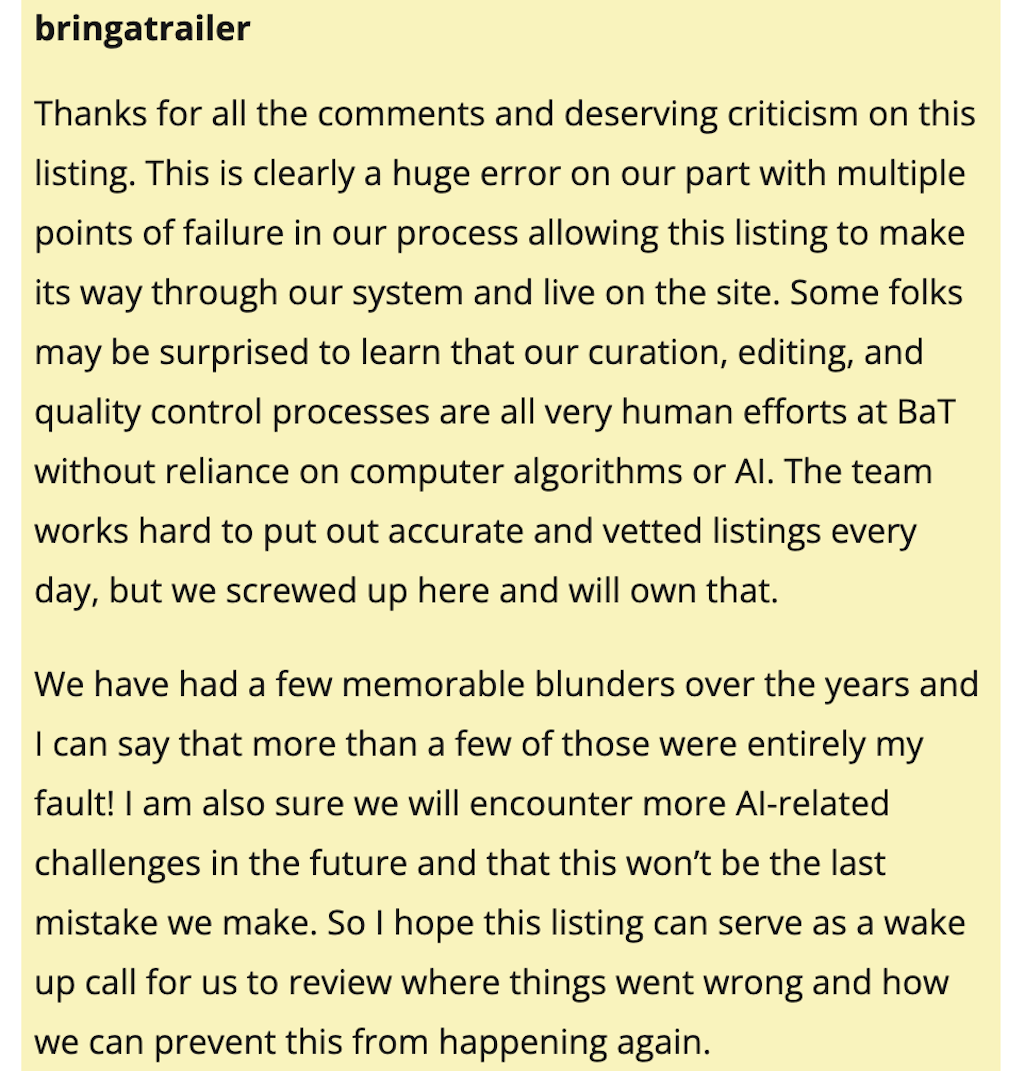
A few hours later, Head of Auctions Howard Swig commented the following:
Thanks for all the comments and deserving criticism on this listing. This is clearly a huge error on our part with multiple points of failure in our process allowing this listing to make its way through our system and live on the site. Some folks may be surprised to learn that our curation, editing, and quality control processes are all very human efforts at BaT without reliance on computer algorithms or AI. The team works hard to put out accurate and vetted listings every day, but we screwed up here and will own that.
We have had a few memorable blunders over the years and I can say that more than a few of those were entirely my fault! I am also sure we will encounter more AI-related challenges in the future and that this won’t be the last mistake we make. So I hope this listing can serve as a wake up call for us to review where things went wrong and how we can prevent this from happening again.
When you’re paying a five-percent buyer’s fee, you’d expect better lot representation than you’d find on Facebook Marketplace. For a premium service, not catching these photos erodes trust and can harm an entity’s reputation. The big questions now are: What were these multiple points of failure, and what systems will Bring A Trailer implement in order to prevent this from happening again? “Multiple points of failure” suggests that multiple eyes saw these photos and rubber-stamped them. What prevented employees from taking a closer look and flagging them? I’ve reached out to Bring A Trailer and will update you should I hear back.
In a strange way, it’s a good thing that the listing photos for this DeVille were awful, because the manipulation of them was obvious. Considering how awful many AI-generated cars were just three years ago, the scarier hypothetical is: what happens if generative AI image software gets really good? If software like MidJourney, Nano Banana, and the like is eventually able to vomit up a full image gallery of a vehicle without any errors, the potential for misuse would be huge.
If the technology exists to convincingly and without any skill required remove rust, reconstruct peeling lacquer, or edit out a tear in a seat with only a few prompts, what’s to stop an unscrupulous seller from doing just that? One potential solution to that hypothetical would be for auction sites’ representatives or partners to physically inspect each vehicle, but the labor involved in that drastically changes the business model. Those people’s time is money, and so a seller fee may be required. For the rest of us buying from the normal used car classifieds, what we see in a few years’ time might not actually be a car as it exists in real life (and while a description that doesn’t represent true condition is an issue with or without AI, AI can definitely hide a lot more). I’d certainly be cross if I drove an hour to see a car with a huge scrape that wasn’t disclosed.
Top graphic images: Bring A Trailer seller; DepositPhotos.com



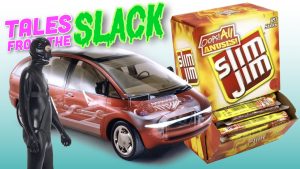
That last picture of under the hood with the cobble stone is what really got me. Is that going to help the high speed lift?
I’m worried that a lot of the visuals in 2-3 years time will be totally impossible to recognize as AI generated. Stills but also videos. Yes I know we have deepfakes already but often if you look you can spot the difference. In 2-3 years, it will be ‘you’ in that video and no way to prove it is not you.
Gives new meaning to the term, the carpet matches the driveway.
The 3rd photo shows a license plate number that has a Cyrillic looking character that looks like a combined “V” and “J”.
They should ban whoever submitted this.
Are those cobblestone rear mats, or is this the ultra-rare DeVille “Flintstone” edition?
That second lever on the column is for the transfer case, don’tcha know?
I’m also wondering if “Howard Swig” is an actual person, or what the AI calls itself.
What was their end game? When they had no product to sell, what did they expect? I fail to see why this was done.
I suspect they have the car, but it doesn’t look great. So they figured the best way to sell it was to generate better photos. Probably glanced at their photos and figured they would be good enough to slip by unnoticed (and they were right, at least as far as BaT’s screening process went). They figure it’ll be close enough that they can argue they provided the vehicle in question and good enough to increase the selling price.
But maybe I am wrong and they thought they’d end up with the money without a car at all. In which case, they’re definitely just not thinking it through.
I think they own the car and have a right to sell it but don’t have the time/access/aren’t nearby to take the photos so they tried a shortcut based off a couple photos they have plus AI
Since Hearst acquired BAT I think they have interns working on their listings. Every E Type Jaguar listing will tell you the car has inboard rear disc brakes and a clamshell hood with louvers, as if these were optional equipment that may or may not be present. Contrast that with their listings of AC Cobra replicas, where it’s often a game of hide and seek in each listing to try and determine if the rear suspension is independent or a solid live axle, with no clear description or adequate underside pictures to figure it out!
Did anyone call out the missing front bumper and radiator in the engine shot?
Ai ai ai! <rages at clouds> The worst part of this whole situation is the corporate gobbledygook responses from multiple levels of management at BaT, all using suspiciously similar wording to insist that BaT doesn’t use AI (The Manchurian Candidate, anyone?). Those “mistakes were made…” style apologies are infuriating because they actually say nothing and commit to nothing and will result in no actions on the part of BaT. I predict that nobody there will be fired or censured or will even receive a stern finger-wagging, and business will go on as usual, betting on the fact that the proles will just forget about the incident when the next shiny thing comes along.
With things like this, I don’t necessarily want to see someone fired or even reprimanded. Chances are, some poor schmuck was pressured to get a certain number of listings live per week or something and was rushing through them to do it. They need to ensure that they have policies that put accuracy ahead of speed.
That said, if it’s not the result of their own crappy policies, then someone should be punished, because this is pretty blatant. I strongly suspect their policies are to blame, though, considering their history and these non-apologies. It really reads “we’re all trying to find the guy who did this” to me.
IMHO, even if it is a result of crappy policies, then whoever instituted those policies should be reprimanded or fired. I completely agree that the low-level schmuck shouldn’t shoulder the blame for this sort of thing, although that’s usually who pays the price, if anyone does. I’m just saying that there needs to be some accountability or else nothing will change.
This is the same basic principle that is at play whenever there is a massive breach of a database. Nobody is held responsible so it will definitely happen again in the future. The fact is that SOMEONE is to blame and needs to pay the price, and if it’s a systemic issue (as the BaT problem certainly is), then high-level managers/decision makers should be the ones held accountable.
Yeah, I know, I’m still yelling at clouds…
You’re right, but I am jaded enough to assume that anyone fired would not have actually created these policies and that enough of the top dogs were involved in (and still support) the policies that there’s no chance of cleaning house.
The big problem (in their minds) is that stricter screening means fewer cars sold and less money coming in. We live in a “line must go up” society, so they won’t fix this until enough people get fed up enough for it to noticeably affect the bottom line. And, even then, the execs will just say they are “realigning” the policy and not admit it was a mistake.
I’m guessing the policy to blame is that ownership wanted to spend less money on labor, so they fired a bunch of people and implemented a hiring freeze for reviewers, and then suggested that technology (and this new-fangled AI stuff!) could help reviewers “be more efficient” without actually budgeting for any new tools or anything. The reason nobody will get punished is because costs went down which meant line went up which is the only thing that matters to anyone in a position to actually make any decisions here.
At what point would there be a case for fraud? If there is no car, and BAT hosted the auction, would they be liable for a criminal fraud investigation?
In California couldn’t this listing be considered grand larceny by false pretenses?
I’m not an attorney, but I think that it would only be grand larceny if the money exchanged hands and the car didn’t exist or was substantially different from what was offered. Which, despite the obviously false listing, might be hard to prove. Assuming there is a car of the year and model indicated, it might be hard to convince a jury of people who aren’t car people that the fraud was indeed substantial enough.
At what point is it on the company that lists the item to verify? That’s where I think there is a grey area that, for a long time online, has been exploited by people. Maybe if there was an amendment to law that would hold the site or company liable there would be a shift that would make the experience for real sellers and real buyers better. I know it’s a novel idea in this environment to expect that business be held to standards, but I can hope right?
I’m not suggesting there was wrong doing by BAT in this case, but if you take online listings in general, the amount of money and time and other cost that is taken out of the system to some kind of intentional misrepresentation of an item or service, there would be a case for holding the middle man to some account as part of the process.
BaT most likely shares more of the liability than, say, eBay, by nature of their vetting and curation. Like a traditional auction house, they are taking an active role, rather than just acting as a board for the sellers.
But, again, the standard for fraud is high. Your car has a few scratches that they didn’t show? Probably frustrating to you, but almost certainly not a fraud case. They just didn’t even have a car? Certainly a case.
This one would be hard to prove a case. The seller likely provided proof of title to the car described, but offered these AI images. If the car is substantially as described, AI images wouldn’t be enough to show anyone had been defrauded.
I would love to see stronger consumer protection laws that would ensure that companies and sellers are held accountable for things like this, but it would pretty much have to be a whole consumer protection improvement. Trying to utilize existing fraud laws probably won’t do much good, given their limitations (and limitations are generally good–you don’t want to make it so hard to sell a car privately that the dealerships take over all vehicle sales, for example). Laws should be written with the intent to improve the consumer experience, and those laws should be precisely worded and targeted.
All true. I’m no lawyer or business person so I only really see the consumer side. I have never not worked in the non for profit and education sector.
It depends on the condition. If it really is a matter of a few scratches that a jury would roll their eyes at, well it sucks that you ended up buying a car with a few scratches. It’s not ok, but not exactly the fraud of the century. On the other hand, if the real car has body panels attached with zip ties, I don’t think the average juror is going to have much sympathy for the seller.
Yes like Drew says, if the crime was actually committed – intent to deceive, deception, and injury, roughly speaking.
It could be an attempt crime too if you can prove the intent and concrete steps elements (again roughly speaking).
Don’t rule out that this was also just a lazy person with a brown caddy to sell and they don’t have a suite of photos b/c they are in Montana or wherever, and granny passed away and they are just trying to take care of business. This is what I think happened but I’m speculating.
You mean auction site will actually have to do some WORK now to verify that cars even exist?! No way!
BaT apologized for screwing up? They screwed up my listing, cost me a lot of money and banned me for pointing out their error.
Just tell boomers it’s the AI edition, and it’s rare. 1 out of 1 rare. Made on a Tuesday with bad AI prompt engineering, rare. Bad algo generating it, rare. Kicked off BaT , rare. Worthy of news article on car website, rare. Because rare!
We call that Heritage. Your chance to drive the news.
Also, they can only drive it online. More exclusive that way.
Like an NFT!
NFC: Non-Fungible Car (more accurate: Non-Factual Car)
It’s a whole new thing. We’ll get the tech bros as excited about these as they were about monkey pictures.