


As I hope I have conveyed by my reporting here, the Global Taillight Scene is a bold and dynamic subculture, with so much going on at all times that it can be hard to read patterns and trends through all of the glowing red visual noise. But there definitely are trends and movements that happen. Some have a sudden rise to prominence and then a dramatic crash back to earth, like the Altezza taillight trend of the late ’90s to the 2000s, while other trends tend to stay slowly simmering in the background, slowly percolating into a sort of stable constant current of taillight activity. I think the use of late ’80s to early ‘2000s Cadillac taillights, specifically the DeVille thin vertical ones, definitely qualifies here, and perhaps may be one of the most significant taillight trends among the car customizer community. It’s time to talk about this, openly.
Are you familiar with these taillights? I bet you are, even if you’ve never actively thought about them or been involved in a spirited, drunk taillight bar debate about them. These are the type of taillights used on DeVille and Fleetwood Cadillacs, and are of a very narrow, vertical design, almost like slits of red light that fit into the still somewhat fin-like terminus of the car’s angled sides at the rear of the car. The basic concept first arrived with the third-generation Cadillac DeVille line in 1965, and remained, in basic concept, a design motif up until, well, today, as the current 2026 Cadillac Escalade, for example, uses vertical taillights that can trace their design lineage back to these legendary lights.


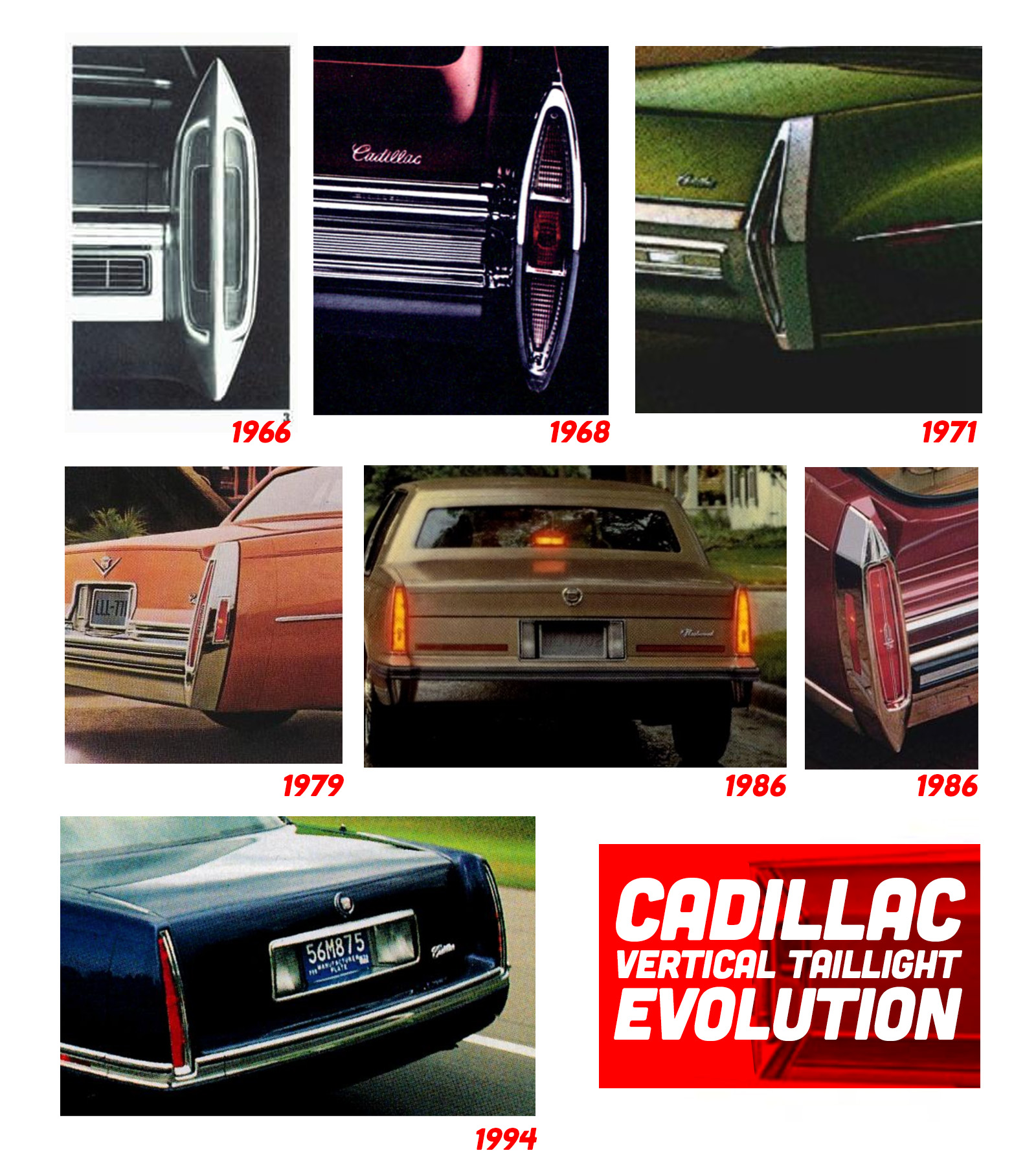
Here’s a little timeline of the evolution of these sharp, vertical lights from their earliest forms up until the early 90s variant that seems to be the one favored by customizers:
By 1989, the basic essence of the taillamp had been distilled down into the most essential parts of its form: a glowing red slash, a controlled wound of light, minimalistic and elegant, with perhaps a hint of menace.
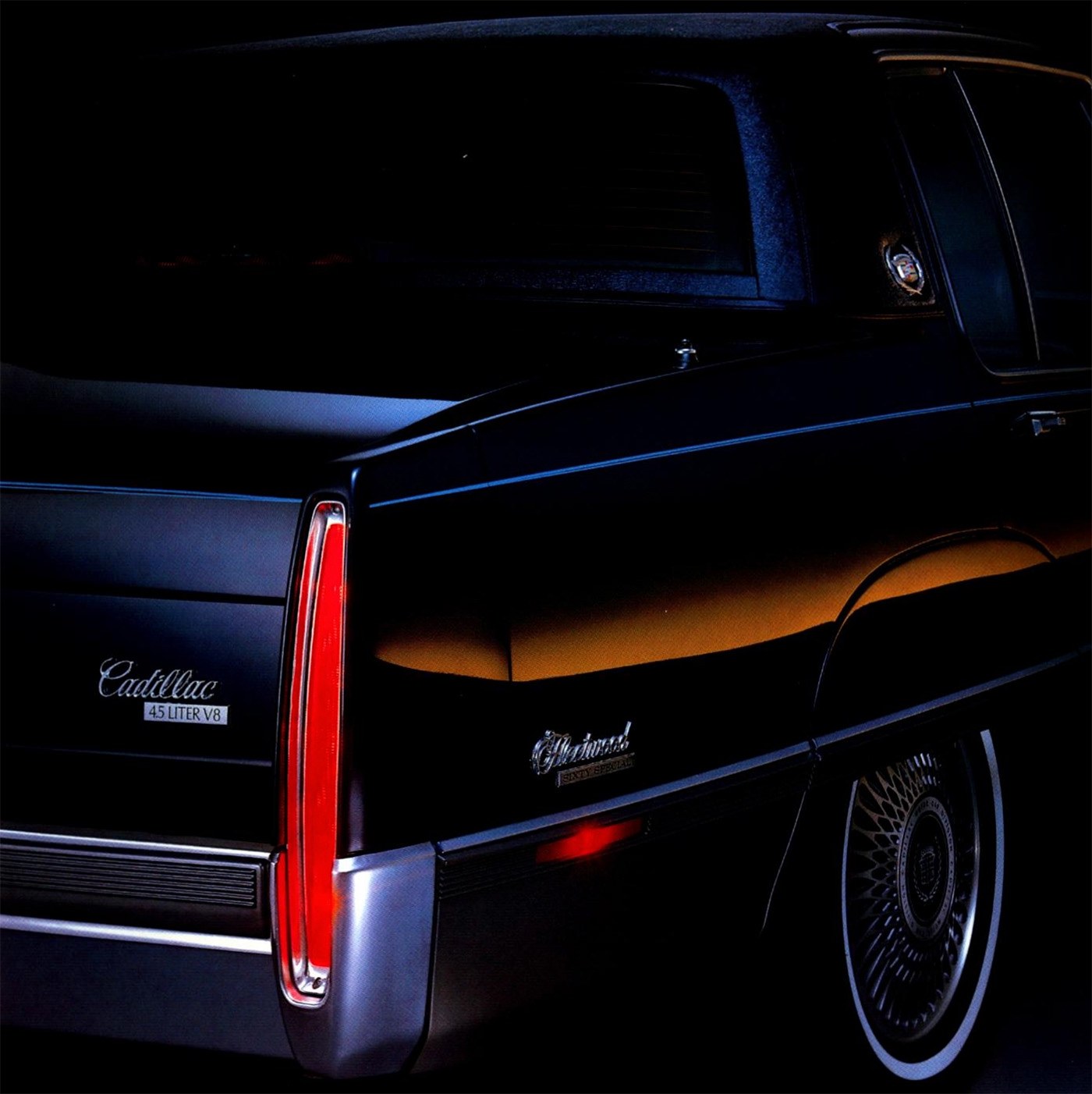
This taillight was unashamedly monochrome, all red (well, European and other export market cars did have amber indicator sections) and with the reverse lamp left to do its thing somewhere else. I think it’s this extreme simplicity of form and shape that has made these taillights so appealing to customizers, as well as their minimal width, which makes them ideal for pickup truck customization use.
A simple Google search for “Caddy tails” reveals a trove of examples, including many videos showing people adapting these lights to pickup truck projects based on Chevy S-10s, Tahoes, Blazers, Volkswagen Rabbit pickups, and so many more. Here’s a couple of sample videos of garage customizers working these into their projects:
The variety of cars these lights seem to show up on is impressive; this is a collage of some examples, many from Facebook posts like this. I especially like the ones that rotate the lights horizontally or at an angle:
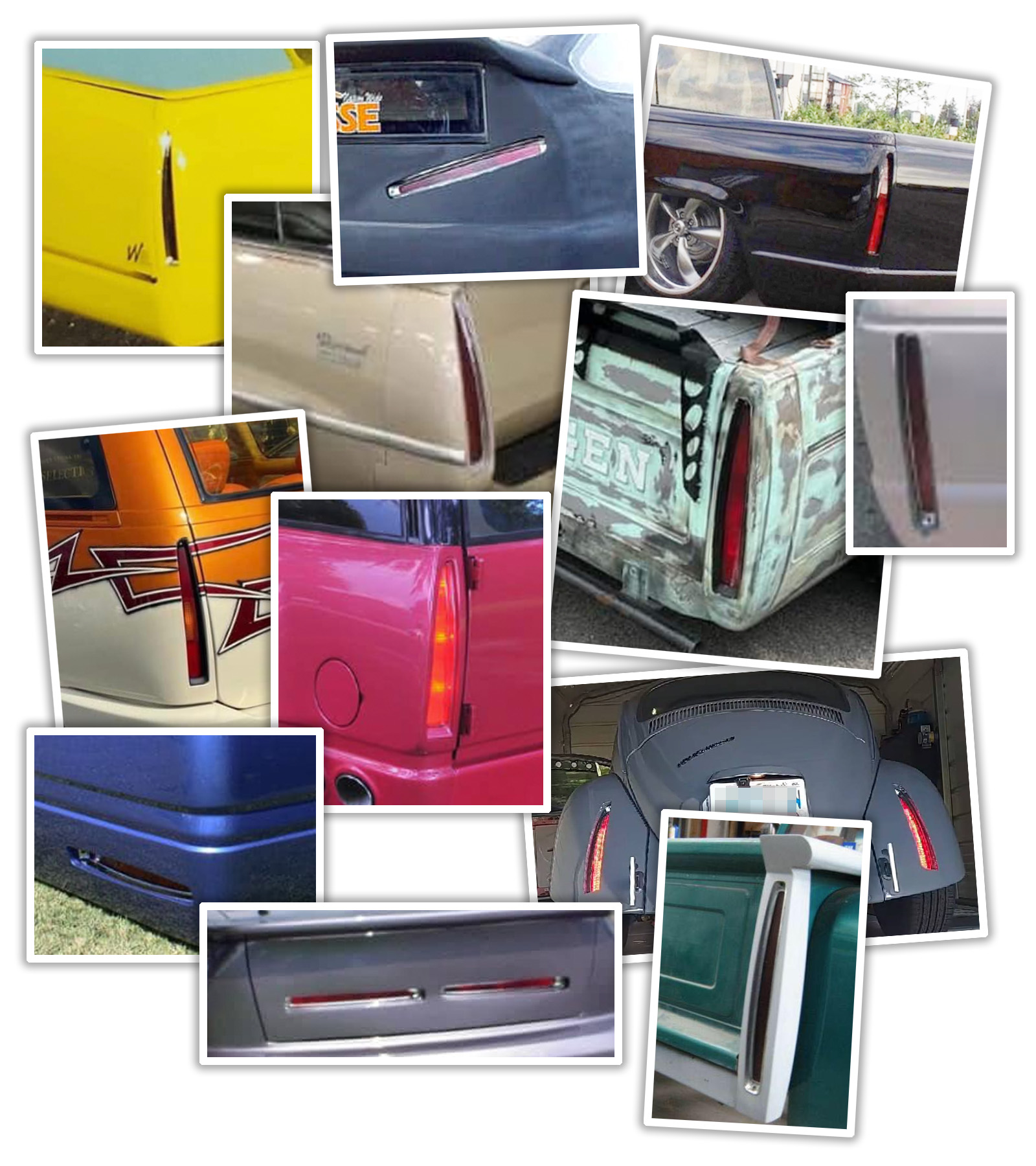
I’m also impressed someone managed to work these into a Beetle, as well. I think the majority of these swaps are for pickup trucks – you can even find these lights being sold on eBay specifically prepared for integration into custom pickup projects – but they’re a popular choice for many other types of custom projects.
The reasons why these taillights have found such thriving second lives on custom cars are interesting, I think, and speak to a certain common set of unspoken aesthetic rules for custom cars. Even though there’s never been any sort of official mandate, there’s a set of design parameters and a shared design vocabulary that a significant number of custom car projects fall into, and while it may be tricky to define verbally, I think most of us know it when we see it.
It’s a fairly distinct sort of look, and owes a lot of its origin and influence to the Lowrider community, specifically the dramatically simplified Lead Sled aesthetic. There’s some overlap with graffiti art as well, a kind of slick, minimalistic sort of design that, paradoxically, can still manage to be ornate. These lights, with their minimal profile and ability to nestle into narrow slits, are ideally suited to this sort of look.
I do believe at this moment in time and taillight culture, these Caddy taillights have to be among the most influential taillights currently in use right now. Others may have wider and more varied use, like the legendary Box Taillight, but that taillight’s broad use is due to utilitarian reasons; the Cadillac lights are a choice, a choice made based on aesthetic properties.
This is an impressive taillight achievement, and I hope the next time you find yourself driving behind a pair of these minimalistic ruby slits, you’ll take a moment to pause and really reflect on their bold minimalism and appreciate the way they’re being adapted to so many new and unexpected contexts.
Sometimes, my fellow taillight appreciators, a taillight quietly becomes a movement.
Top graphic image:




I’ve experienced the dark side of the aftermarket altezza trend, I’ve pulled quite a few OEM taillights for people who bought cheap beaters that have absolutely ruined and fogged up cheap altezza styles on the back. One was for an Accord coupe and the plastic was so dry-rotted and sun damaged it was literally crumbling off in little bits.
Out of curiosity, is that a (taillight) (bar debate), or a (taillight bar) (debate)?
(I really want there to be taillight bars!)
Jason is our taillight truther.
I was behind some ruby slits so I took a momentary pause to admire their bold minimalism. Ironically, I was rear ended and now my taillights are busted.
They gave their lives for the cause. RIP, heroes!