

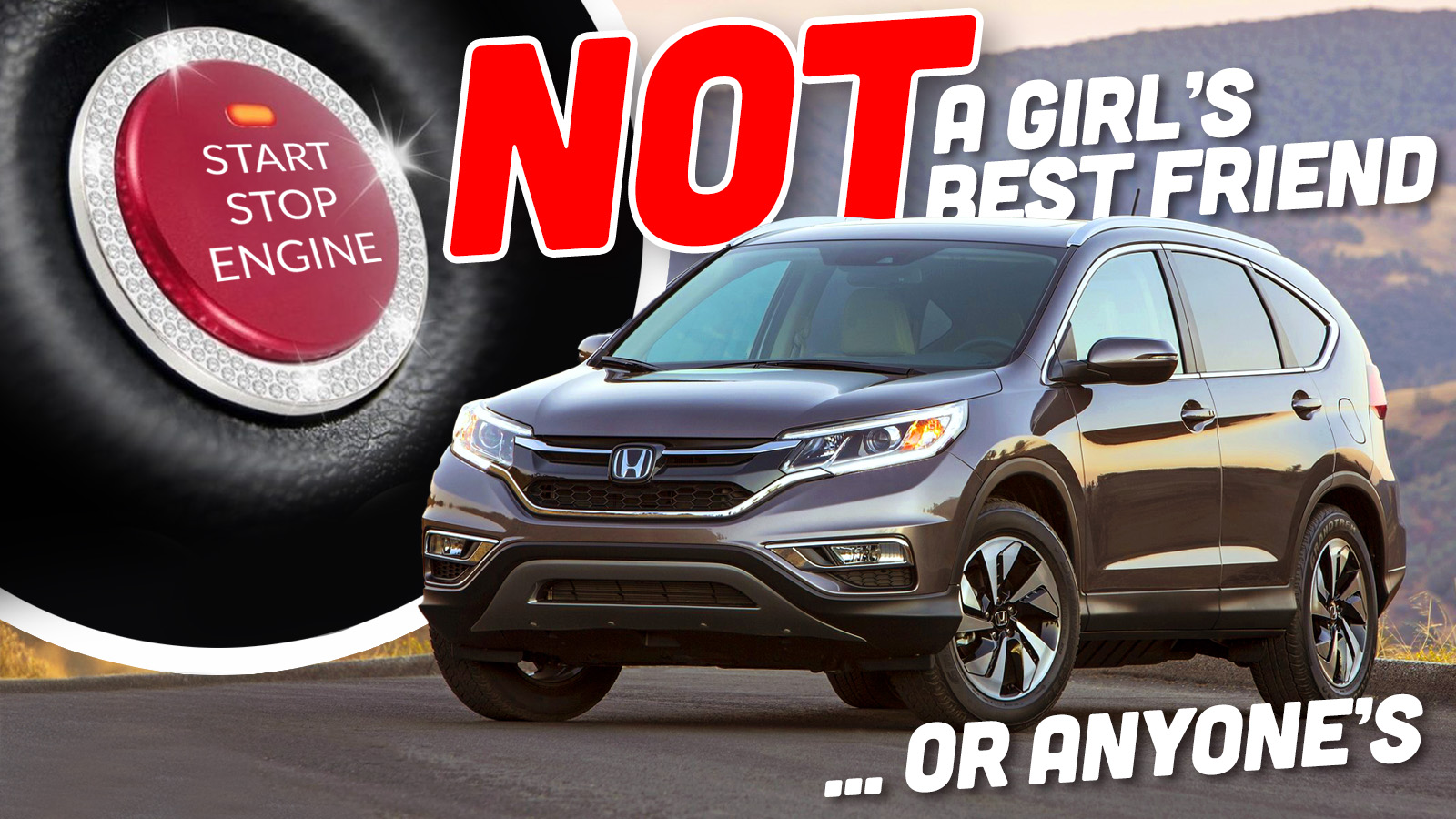
One of the greatest feelings as a car enthusiast is making your car your own. You don’t even have to spend a lot of money to make your daily driver feel a little more special. If you’re like your cat and you like shiny things, you might have been drawn to adding bling to your car. You can get bling rings that go around your ignition switch and HVAC dials for $5! But you shouldn’t, because if you do, you might just turn your car into a paperweight.
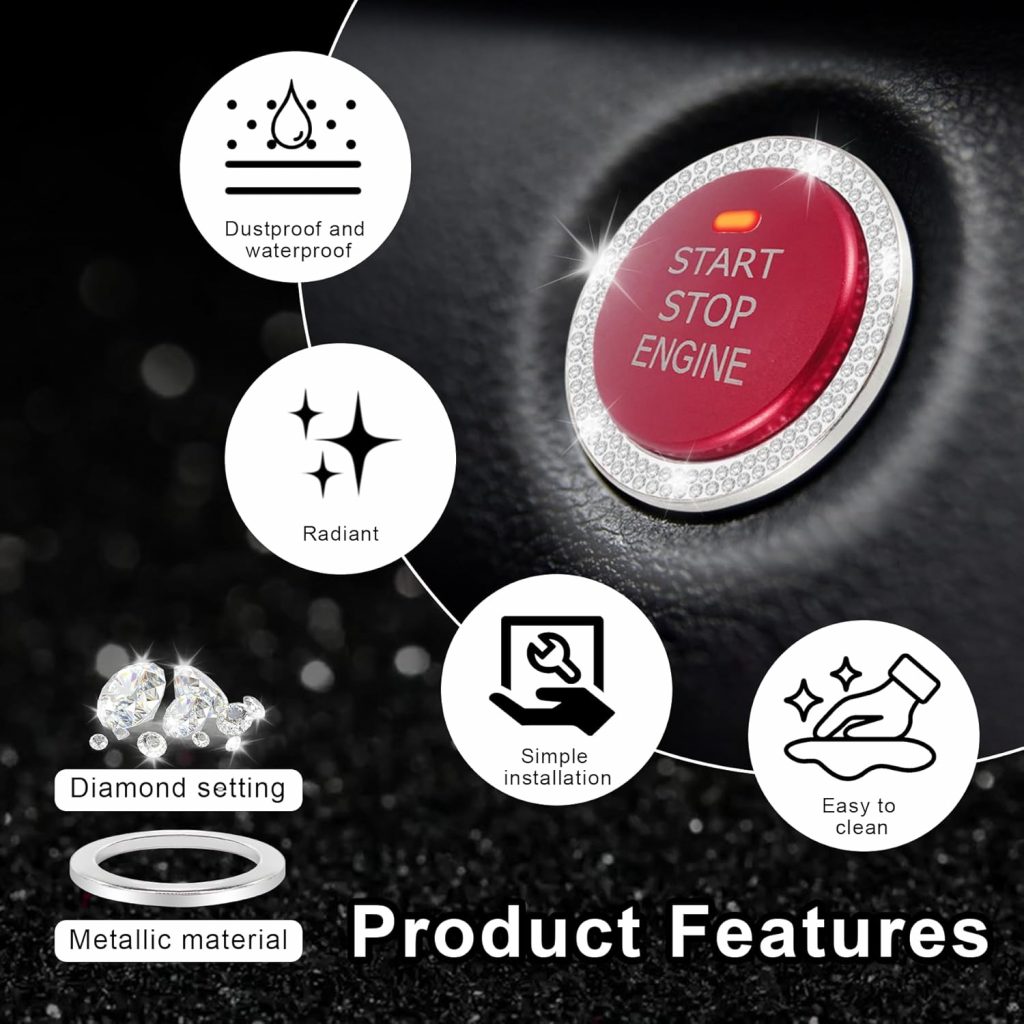
Yesterday, Matt Hardigree wrote about the gifts that non-car people might suggest as presents to a car enthusiast. Most of it is cheap stuff from Amazon, like blind spot mirrors or a hoodie to hide how ugly your shift boot currently looks. But one thing stood out to me. One of the items on the list was a start button/ignition switch decoration ring. These things usually cost something like five bucks and are covered in fake stones. On the surface, this sort of gift seems harmless. There are lots of people who will happily slap these things on their ignitions.


But I beg you, unless you drive some ancient car as most Autopian writers do, steer far away from these things. This cheap bling might look cool and could spruce up a drab all-gray interior, but it comes with a sad trade-off. If you are not careful, the simple act of sticking this in your car may prevent your engine from starting or cause your engine to stall after starting.
Normally, I wouldn’t even cover a subject like this. You know that I love to write about the quirky moments in car history. However, I found myself fascinated by this. Apparently, Matt did not know that these bling rings can prevent your car from starting. If the car enthusiast Publisher of a major automotive news website didn’t know this, how many others don’t?
So, today, I want to do a bit of a public service announcement and talk about these darned bling rings.
Turning Cars Into Paperweights
Alright, let’s picture this. You’ve hopped into your car, and you’re ready to drive to work. You’ve turned your key or hit the start button, and the engine doesn’t start. You might even do some basic troubleshooting, but can’t figure it out. What gives? It’s unlikely that you’re even thinking about that $5 bling ring that you got from Amazon.
As silly as this sounds, this is actually something that happens to people. If you follow just about any mechanic on social media, chances are you’ve seen this come up. I’m told the subject of bling rings is also all over automotive TikTok, but I don’t use TikTok. Anyway, some people have their cars towed to shops because their engines aren’t starting. Just watch this video:
Depending on whether these people have AAA, towing on their insurance, or something else, this means that some people are spending real money to diagnose this issue. In 2023, ABC11 reported about the time when one vehicle owner had her car towed to two different mechanics and even had to hire a locksmith. Nobody figured it out until she mentioned the bling ring in passing. Reportedly, this poor person spent hundreds of dollars and wasted days of time diagnosing an issue that wasn’t there.
It’s sad, because the owners can solve their car’s starting issues in a couple of seconds and entirely for free. All they have to do is yank that bling ring off their ignition, or never put it there in the first place. But why? How does some cheap trinket from Amazon or eBay cause so many headaches?
Vehicle Security

The answer to this question comes down to vehicle security. Let’s talk about how a modern car with a keyless ignition works. The smart fobs that are an industry standard today are often credited to an invention by Siemens in the 1990s. From Automotive News:
The technology worked by emitting a low-frequency signal as the driver approached the vehicle. The signal also could configure seats, steering wheel and mirror positions, along with audio presets and temperature settings according to the user’s preferences. As the driver pulled the door handle, the identification card and the car’s security system communicated on a two-way basis, granting permission to unlock the door. With the card still in the driver’s pocket or purse, the vehicle could then be started with the touch of a button.
Depending on the model, the vehicle could be locked by pressing a point on a door handle or simply walking away. Overrides built into the system could identify the driver even if two people with Keyless Go cards approached the vehicle. To ensure security, the keyless device had 4 billion possible security codes that changed randomly each time the vehicle was entered.
Siemens also included an safety attribute that proved attractive to vehicle owners. The Keyless Go device had to be inside the vehicle to start it. At the same time, it also prevented the door from locking if the card was inside but the driver was not.

When it comes time to start your car, the transmitter in the fob will communicate with the vehicle’s security system. Depending on the exact make, model, and year of the vehicle, the communication path may lead to the start switch.
If you have a car that’s a little more old-school, and it has a transponder key and not a push-button start, the bling rings can still stop your car from starting, too. These keys have chips in them that allow the vehicle’s security system to recognize that you’ve inserted the correct key.

Of course, if your car is old enough, you don’t have to worry about these sorts of electronics. Your keys are just keys, without any chips or techno-wizardry in them.
Now, for the purposes of this piece, I will single out Honda here. When I started research on this story, I noticed that quite a few complaints are in regards to Honda and Acura vehicles. To be clear, it’s not like Hondas are special. If you slap one of these rings into any car, you run a non-zero chance of ensuring your engine doesn’t start the next time you try.
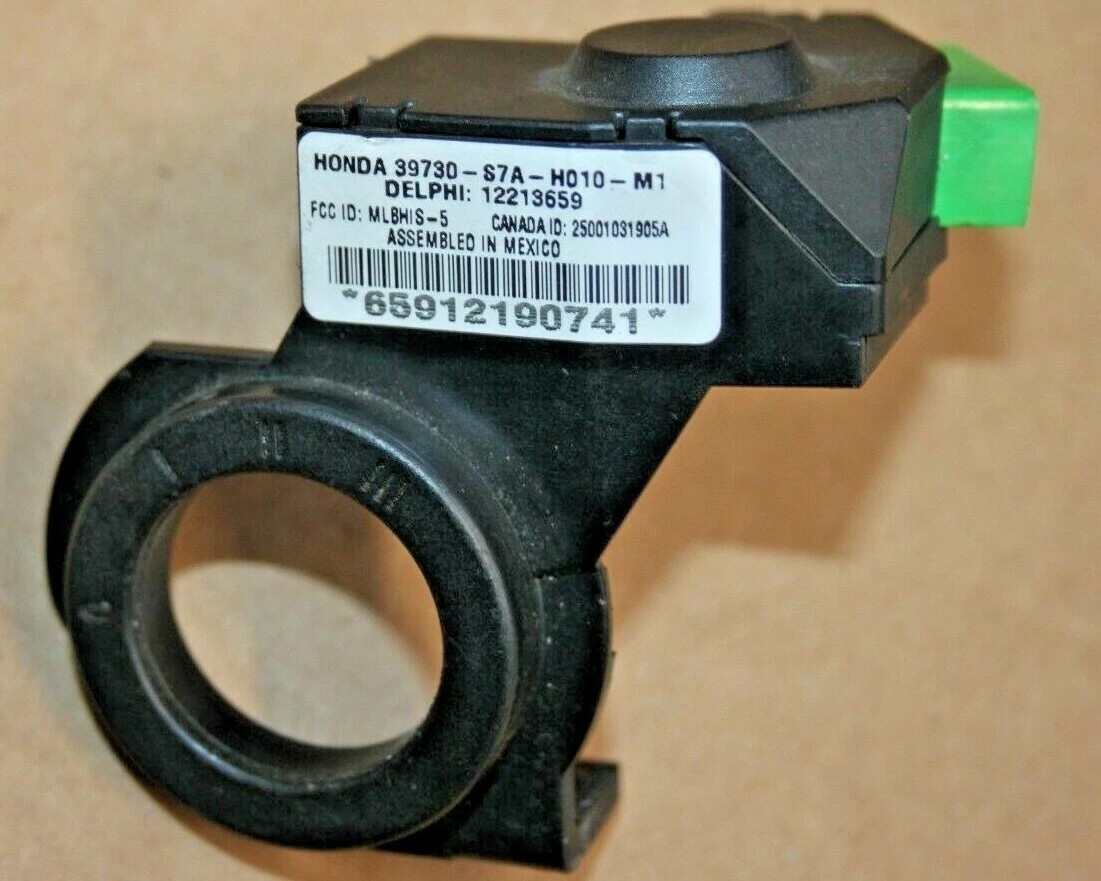
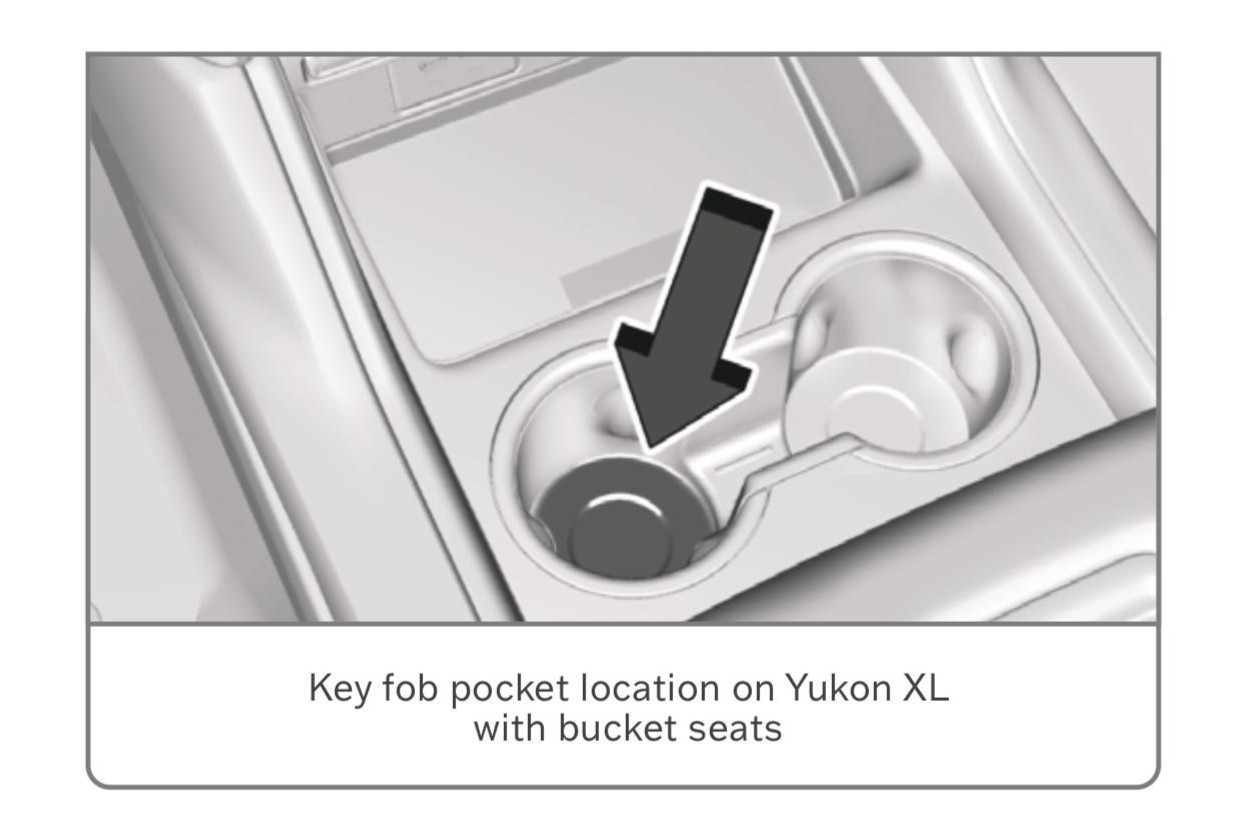
The piece above is what Honda calls an “Immobilizer & Keyless Unit.” This is the unit that your fob or physical key initially communicates with. The immobilizer gets its signal from the immobilizer ring, which will often be found wound around the ignition switch or start button. The vehicle may also pick up a signal in an area called the fob programming pocket. This pocket is a place where you can place your fob to have it communicate with the vehicle for use or for programming.
For one example, the fob programming pocket in a GMC Yukon XL is in the left front cupholder. Neat, right?
Now, some folks buy those bling rings and slap them right into the big donut. Then, the next time the owner tries to start the car, they get nothing.
The most common explanation for what’s going on here is that, when you put a bling ring on your ignition, you can cause interference between the key and the immobilizer antenna. This is because these bling rings are made of metal and are placed on top of the immobilizer ring. If the immobilizer isn’t satisfied, it locks down ignition, and you don’t go anywhere. The result is similar regardless of whether it’s a keyed ignition or if it’s a push-button start with a fob. But why? What, exactly, does the bling ring do that cripples the car?
What A Metal Ring Can Do

Getting an answer to that question was harder than you’d think. I asked our resident engineer, David Tracy, and he was stumped. He didn’t even know anyone who could answer the question. I also reached out to Honda, since Hondas and Acuras are not fond of bling rings. Honda told me this:
[W]e can’t speak to this. We don’t recommend or validate aftermarket accessories. So, in the absence of testing this specific item we can’t opine.
Getting desperate, I reached out to our Discord community. Autopian readers come from all walks of life and all sorts of disciplines. We have a lot of engineers in our fray, and one of them is reader ‘snodrat,’ who is an electrical engineer. They offered this explanation:
[A]dding a big chunk of metal right on top of the existing antenna coil is effectively adding an untuned resonant element to the antenna, which more often than not is going to cause destructive interference. A good example of adding resonant elements to improve antenna reception is the Yagi antenna, where you have one actively driven element and then a whole stack of “passive” radiators that shape the signal.
Of course, if you’re an engineer at an OEM and want to talk about this, I’d love to learn more!
The really sinister part is that the car doesn’t give you any indication that your bling ring is the cause. Your car will just act like you’re using the wrong key. This is why I suspect that people will keep making this mistake even though there have to be a million videos and articles about it already. ABC7 gives a good demonstration of what happens here:
There’s also little recourse if you buy a bling ring and spend hundreds of dollars figuring out why your car cannot start. The seller on Amazon isn’t going to pay you, and neither will Amazon. Some sellers of the bling rings add a single line of fine print saying that the ring is not compatible with a vehicle that has an immobilizer.
The good news is that bling rings don’t kill cars 100 percent of the time. Back in 2020, I bought a 2012 Volkswagen Jetta SportWagen TDI. I didn’t notice the bling ring until I was at a gas station. I ripped it off, threw it away, and never thought about it ever again. But, crucially, the car drove just fine.

Not every car is going to have a problem with a bling ring. So some people can get away with the bling rings. Honestly, it’s a sort of case-by-case basis. I just wouldn’t bother at all. If you really adore bedazzling everything, put the bling rings on the HVAC knobs or something else that won’t be bothered.
What gets me about this is that a bling ring seems like such a harmless mod. Nobody would expect that such a tiny and cheap thing could render an entire motor vehicle immobile, but here we are.
If you take anything away from this, aside from the fact that you should avoid bling rings, it’s that you should consider what a mod can do to your car before you install it. Read the fine print, and consider if there might be any electronics or anything else in the way of your mod. Of course, some instances might be unforeseen, but always stop and think for a moment before hitting that buy button.


First rule of troubleshooting: Undo the last change first. Second rule: Make only one change at a time and test.
Oh man, thanks for making an article specifically calling this out. I made a comment about it on the original article, and it really needs more exposure and attention.
Had a customer recently who had a hand-made chain mail-style pouch for their jeep. Looks cool as heck, but makes the proximity and remote functions useless until the key is removed from its unusual Faraday cage.
You know what FM stands for, right? That’s what happens.
The other major downside of these are: they look like garbage.
Takeaway: If you must, buy the really cheap ones that are made of plastic.
No, even those can block the signal.
Makes sense. The first car I had with a push button start was a 2013 BMW 320i. I was having issues with it not recognizing the key- didn’t have a bling ring on. After 2-3 service department visits with no issue found, we figured out the cheap phone charger I bought from Target (this was back in the plug into the cigarette lighter days) was putting out just enough interference to block the key signal. As I didn’t leave it in the car/plugged in when I took it in for service, it never showed up for them as a problem.
Many years ago, the ignition lock cylinder failed in our old Escapebute. Rather than reprogramming the new key at a dealer, I ziptied the old key and the antenna under the dash. took quite a few zipties to ensure the old key was properly located within the antenna ring.
If you stick bling
Upon your dash,
Your car won’t start,
Which saves you gas.
–Burma Shave, probably
I’m not one for bling, but I did add an orange ring around the ALL BLACK start/stop button of our 25 maverick hybrid lariat. The button is down low on the console, just below the tow assist button.
It’s just a bit of shiny metal that helps it stand out against the black on black color scheme and sets it apart from the other 2 similar buttons nearby (audio on/off and tow assist on/off). It also almost matches the little bits of orange trim on the vents. No issues with security/locking/unlocking. I guess the RF stuff is somewhere else in the truck.
It may be the only piece of “bling” I’ve ever purchased, but in my case, it’s a discrete yet functional addition.
https://www.amazon.com/dp/B0DMPCM8ZW?ref_=ppx_hzsearch_conn_dt_b_fed_asin_title_2
I was hoping for a bling in the middle attack.
Some radio fun and a little less passive.
I guess it still qualifies as a DOS attack. ;–)
But he told me the diamonds were real!
There have also been cases of the bling ring physically keeping a key from being fully inserted so it no longer turns.