

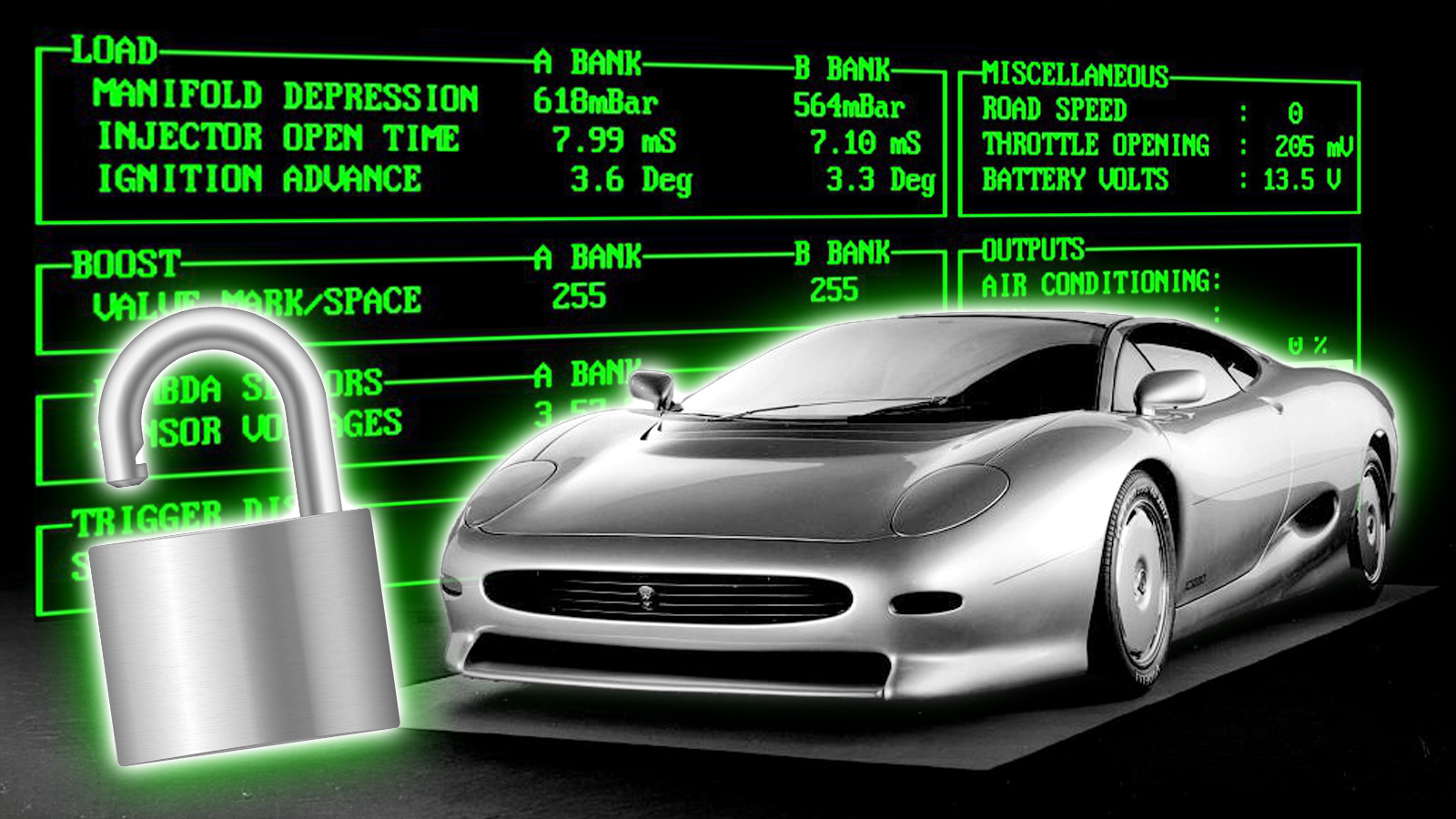
Before the Bugatti Veyron and McLaren F1, there was the Jaguar XJ220. The “220” in its name signified the car’s top speed, and the official 217 mph top speed measured at the Nardo test track in Italy was deemed close enough, making it the fastest production car in the world. For a car that went on to mean so much for Jaguar’s image and capabilities, it began as an unofficial, unfunded nights-and-weekends project.
The XJ220 was assembled with the goal of creating a new competitor for the FIA Group B racing series, which would put the vehicle in the company of the Porsche 959 and Ferrari F40. Originally imagined with a V12 and all-wheel drive, Jaguar leaned on its partners including Tom Walkinshaw Racing (TWR) and FF Developments to engineer the vehicle quickly and inexpensively, with the promise of sharing the future glory. Mind you, all of this was happening at the same time as Jaguar was being acquired by Ford Motor Company, making it all the more amazing it was added to the balance sheet instead of wiped from it to make the financials more tidy.


The concept debuted at the 1988 British International Motor Show, stealing attention from the Ferrari F40. Enthusiastic public reaction convinced the company to offer a production version. Priced at £290,000 in 1990 (over $450,000 at the time), the planned run of up to 350 cars became even more expensive as clauses in the purchase contracts adjusted the price significantly. “An impressive car,” wrote The Independent,” but in the harsh economic reality that was 1992 £415,554 plus VAT looked a little steep.” The bottom dropping out of the supercar market in the early 1990s and disappointment over the production car’s lack of a V12 led some people to back away. “The lawyers got involved once the speculators could smell their burnt fingers and finally were relieved to walk away and leave behind a £50,000 deposit,” The Indepenent explained.
Adding to the mess was the fact that JaguarSport and TWR started offering the XJR15 at the same time, packing a V12 below sleek bodywork drawn by Peter Stevens, whose portfolio includes the McLaren F1. But what Jaguar learned from the XJ220 proved important for its street cars.

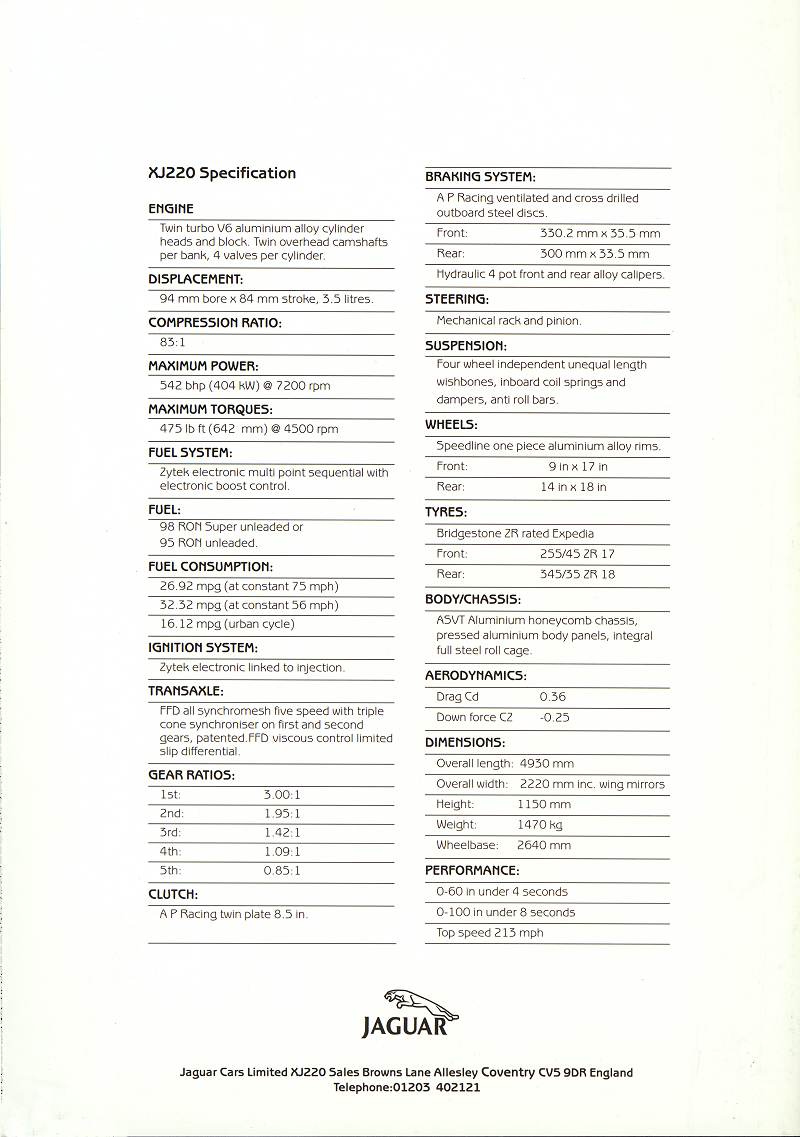
The bonded aluminum honeycomb chassis was a stepping stone in the development of the XK roadster/coupe and subsequent models heading into the millennium. Jaguar licensed the Rover V64V engine as the basis for its own twin-turbocharged JRV-6 that was lighter than the V12 and economically delivered more than 400 hp from 3.5 liters. “The car had to shrink,” recounted Richard Aucock for Pistonheads. “It had racing pedigree (in the Group C cars), it was powerful, it didn’t weigh loads. But for the V12 promise, it was ideal. The Porsche 959 could get away with a six-pot turbo, so why not Jaguar?” Jaguar’s info sheet for the production XJ220 shows an impressive 26.2 mpg (assuming Imperial) at steady 75 mph – that’s still 21.82 U.S. mpg. The 16.12 (13.42) urban cycle economy is kind of bad, though. All-wheel drive was dropped for a five-speed rear-wheel drive transaxle.
Jaguar’s supercar debuted among stiff competition, including the Bugatti EB110 and McLaren F1. Contemporary reviewers were impressed with the comprehensive development. “This car is catalysed, fully-homologated and has passed the same tests that a Volvo needs before going on sale,” wrote John Barker in Performance Car. But a luxurious interior and “real car” vibe lost out to some blistering critiques.
Car somewhat hated the XJ220, saying “If there’s a more evil device on our roads, I wouldn’t like to find it, for the XJ220 suffers from immense initial understeer followed by violent and snappy pendulous oversteer.” Top Gear’s Tiff Needell was kinder, saying “the car turns in well and then accelerates with just that hint of oversteer coming at the end of a corner,” while also noting that it drove “heavy” without any power assists. “It really is a most beautiful car to drive,” he said, but his review also hit one of the bigger controversies of the production version. “I’m disappointed that the original V12 engine has been dropped, but Jaguar found they couldn’t get over 500 hp from it and meet the ever tighter emission controls.” Autocar was meaner about it, likening the engine note to “a pail of nuts and bolts being poured through a Magimix.”
A global recession didn’t help, and Jaguar ended production in 1994 with 281 cars sold.
Keeping The Jaguar XJ220 Running Has Been A Nightmare, And It’s Because of “Zytek’
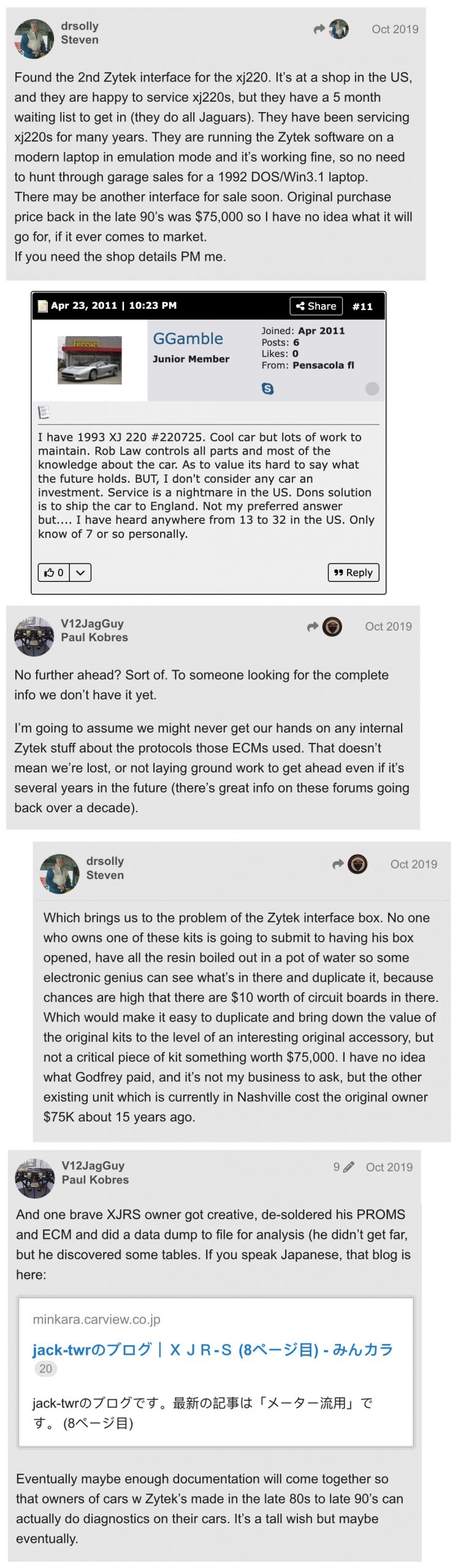
The XJ220 is surprisingly approachable, even as a DIY enthusiast. Don Law Racing are the big dogs in keeping the 300 or so examples on the road, with knowledge and experience that goes all the way back to original production. But they’re just one shop, they’re not in the U.S., and things can get expensive. Other specialists are happy to keep the reputation of difficult serviceability alive. In truth, many consider the XJ220 easy enough to service, except for one part: the ECU interface, which was meant to connect an early 1990s computer to the car’s Zytek engine management system. This interface has always been virtually impossible to find.
“There are less than 25 accounted for, and the ones that are well-known have been held hostage by repair shops for use at a high ransom, creating an atmosphere of gatekeeping and greed instead of collaboration and progress,” XJ220 owner Tom Radom told me.
Without this unit, it’s impossible to run diagnostics, clear fault codes and check engine lights, potentially sidelining the car. Naturally, people are frustrated:
Tom Radom, The Zytek-Whisperer

The casual enthusiast’s knock on the Jaguar XJ220 is that it’s beautifully useless. Parts — notoriously tires — are challenging to find, rare and expensive, or nonexistent, goes the old saw. None of that is true according to Tom Radom, whose tenacity and generosity is helping re-animate these magnificent race-derived sports cars. After all, what good is any of it just sitting around?
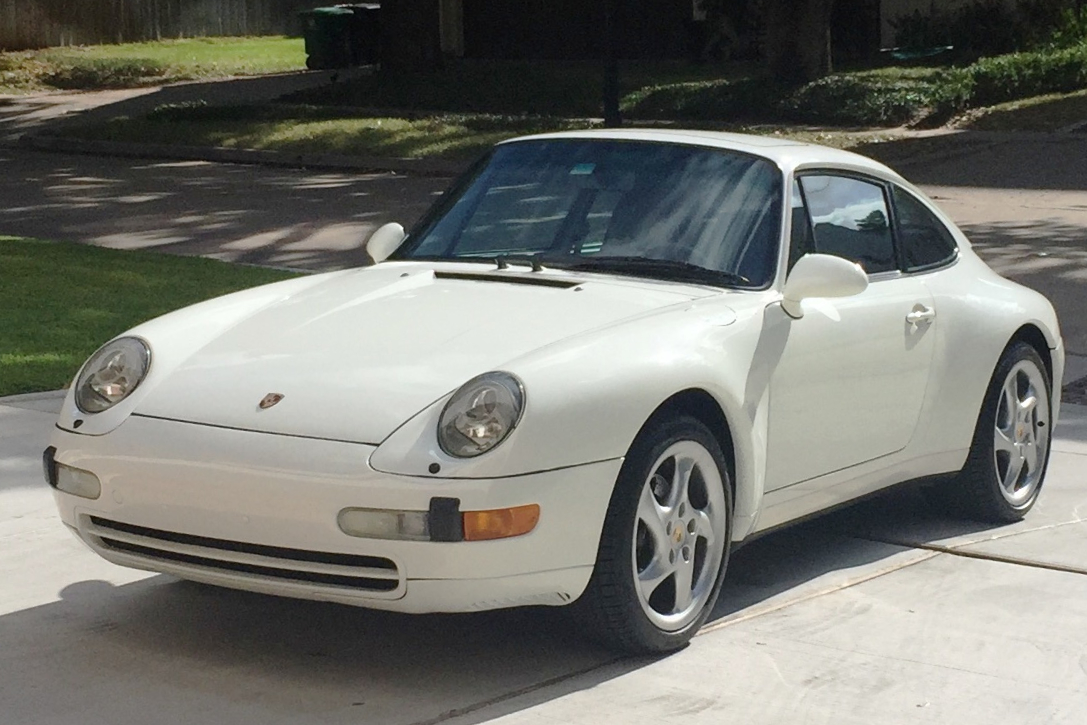
To keep XJ220s on the road, Tom Radom goes to lengths many would consider extreme. A diecast collection started it all. A McLaren F1, Porsche GT1, Bugatti EB110, Mercedes CLK-GTR were among his “crown jewels,” he said. “And, of course, the Maisto 1:18 scale Silverstone green Jaguar XJ220 model my father bought for me at Sam’s Club in 1995.” Eventually, he went for it, purchasing a Porsche 993 he didn’t even know how to drive. “It was a pristine example with a loving owner,” he said. “That same kind gentleman picked me up from the airport and taught me how to drive a manual transmission in the 993 I had just purchased from him in the open area of the long-term parking lot.”

Then, while the Euro was low against the dollar coming out of lockdown, and the XJ220 was the only one of the “crown jewels” under seven figures, Tom pounced. “I found my Silverstone Green 1994 XJ220 with 3300km and fresh service in the Netherlands and imported it,” he said.
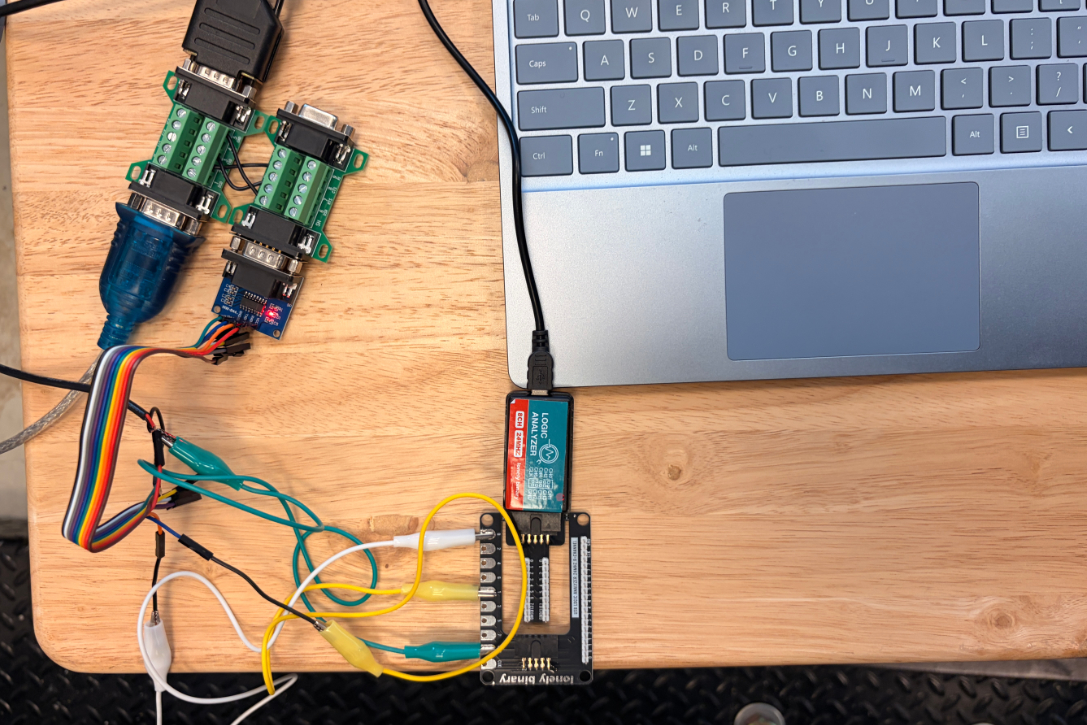
But Radom recently got his hands on one of the original Zytek SPD-1039 modules to jailbreak everyone’s XJ220s and XJR15s. “I’m not an engineer or technician by trade,” he said, but a career in in commercial property asset management has provided experience with ancient automation controls. “This, coupled with my childhood adventures as a bulletin board system (BBS) system operator (SysOp) inadvertently provided systems and programming knowledge that aligned with the old technology utilized by the Zytek software and module.”
Electronics are often “potted,” by encasing the circuitboards in plastic or silicone to seal out the elements. It’s bad for seeing what’s inside, so cloning involved a logic analyzer, Pulseview for signal analysis and KiCad to build reverse-engineered schematics. He learned these tools via online tutorials, and forum threads connected lots of dots with ECU wiring diagrams and first-hand knowledge.
Proving that AI is actually useful, Claude created Windows, Mac, and Android launchers to run the original Zytek software on modern devices.
The result is called Port220 (www.Port220.com, @port.220 on Insta) and every XJ220 owner is getting one. For free. “I am paying for everything and absorbing all costs. Eliminating any spend for the owner is the fastest and most effective way to get a module attached to each vehicle and make a meaningful impact,” said Radom.
Every XJ220 Owner Is Getting This For Free
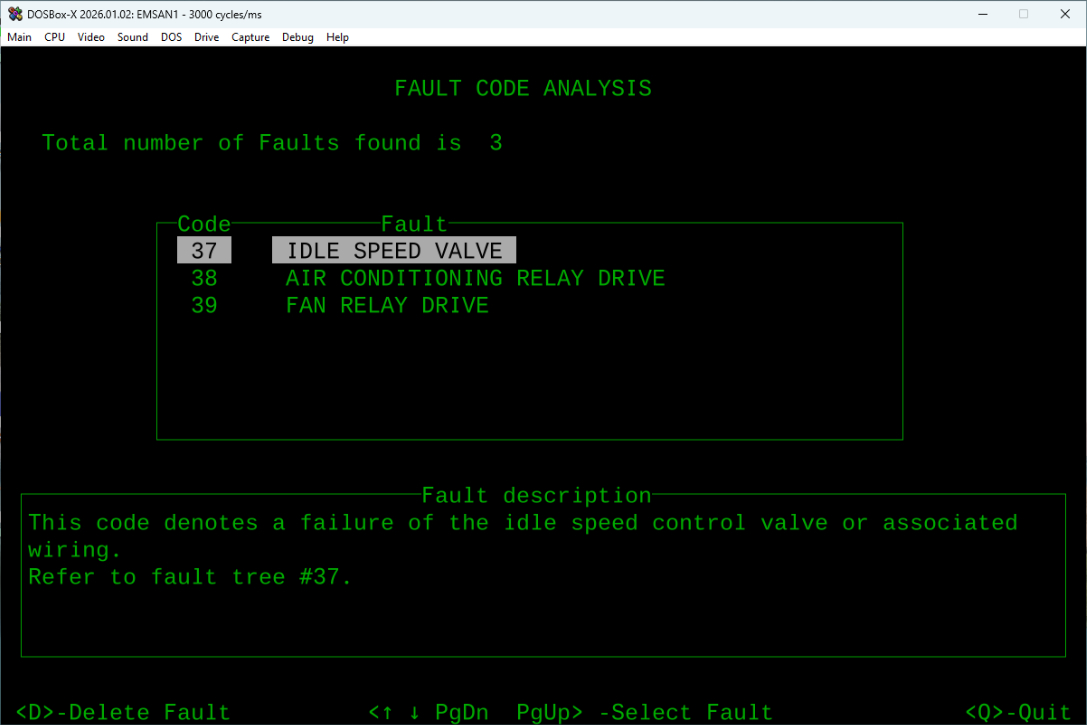
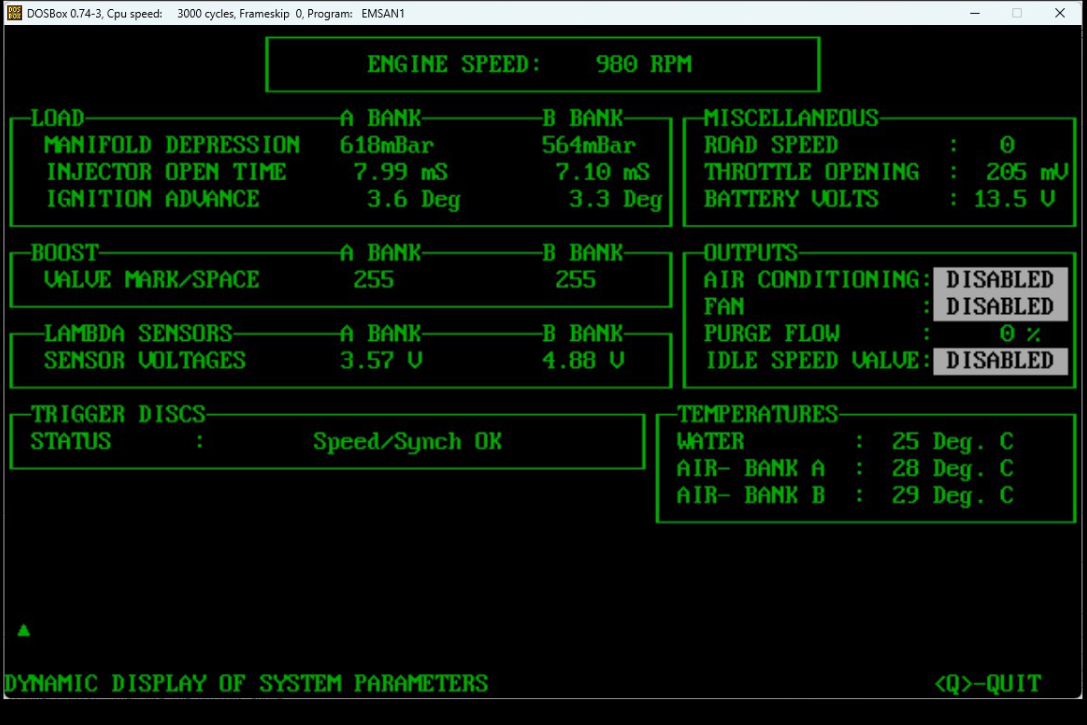
A Port220 unit runs the full version of the original Zytek Engine Management Service Aid software. Its abilities include a live display of sensor data, diagnostics with explanations of the issue and its resolution. Service manual information is integrated into the software, and Radom includes a user manual as a PDF.
It’s all a little bit magic. An owner in the Netherlands was finally able to solve their car’s problem and get the engine reinstalled. Radom’s had his own success; “In the case of my car, a fan relay on the AC system activated the Check Engine Light and the software immediately displayed it along with the path to resolution via the service manual.”
So far, twenty owners have received a Port220 unit. Radom has also published the bill of materials and schematic online as open source resources.
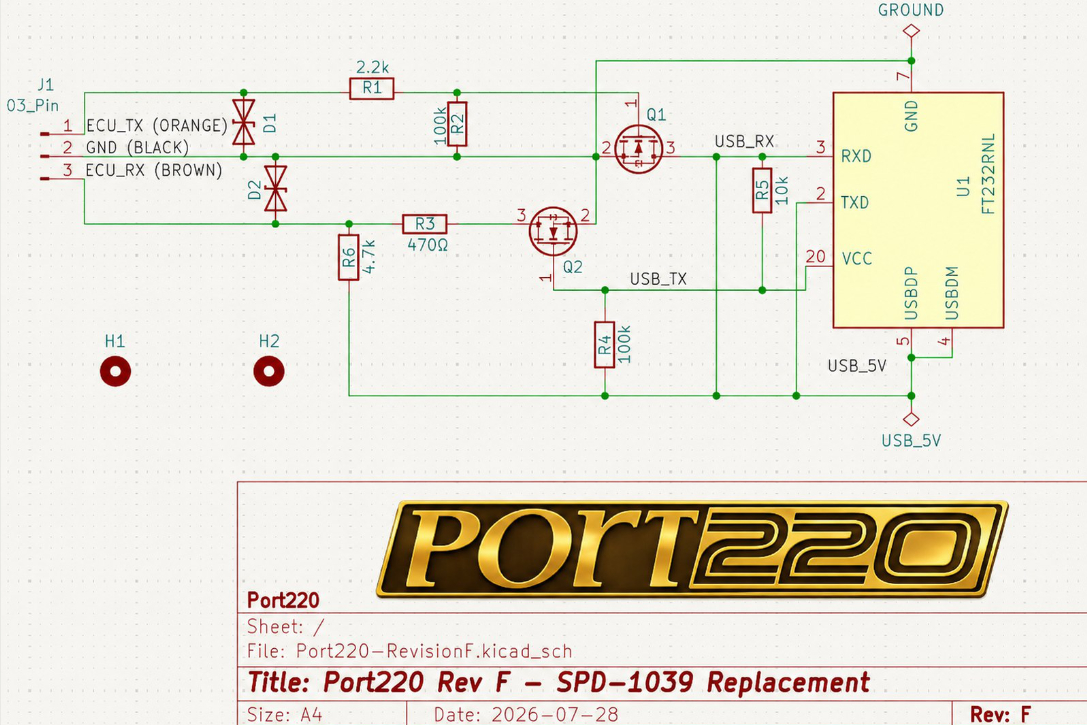
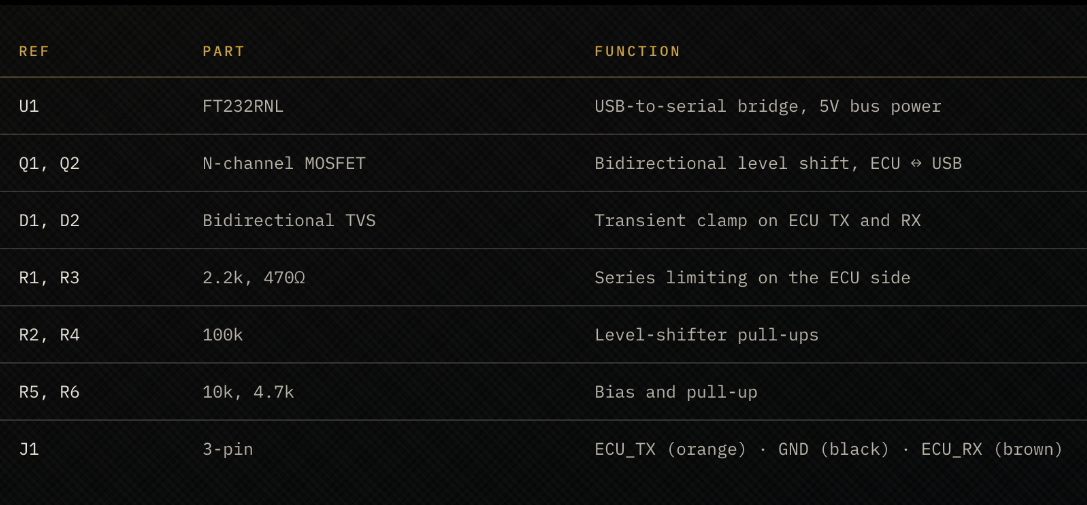
After all that work, and the expense of getting an original Zytek interface, giving it away for free seems almost as socialist as Britain’s NHS. But the potential market is limited to fewer than 400 owners. “You don’t have to be a mathematician to understand the very limited upside of trying to sell something like this,” Radom explained. “The better approach is to increase the value of the car itself by giving away the technology.”
With a Port220 module, any technician can use Windows, Mac, or Android (iOS approval is pending) hardware to work interface with the engine management. Modules cost about $35 to make, with shipping as the only additional cost. Radom covers it all.
“I am doing this to keep these amazing cars on the road and repair the reputational damage that has adversely affected the perception and values of all XJ220s / XJR-15s,” Radom told me. Now that the XJ220 is a vintage classic, it’s easier to appreciate what it represents. A bunch of car people put their passion together and made something awesome and scrappy. That same brand of passion fires up the problem-solving fan base. The XJ220 is a fully-realized supercar you can fix with your own hands and buy with a modest pile of dollars, relative to its contemporaries. Sometimes it’s good to be a late bloomer. (Prices are rising, so if you’re going to be financially reckless, act now or wait for the crash).
Top graphic images: Jaguar


If the manifold depression parameter is out of spec, will it show ‘Danger to Manifold’ warning?
It’s hilarious to me as an electrical engineer that the hardware to emulate a rare, unobtanium programming cable for an exotic car is a common USB to rs232 chip with some protection circuitry and maybe a level shifter.
I feel like AI (if it doesn’t kill us all first) should be smart enough in the future to solve these kinds of outdated hardware and software problems with old cars.
Maybe automakers should all be required to keep all software documentation and design/production specifications for every car they make, and release it as open source after some period of time (30 years?). Then AI could use that to figure out how to rig up an interface to the car and solve whatever problem ails it. Then we can keep our ancient 2026 cars on the road long after all their complex software becomes completely outdated.
And we can keep them in our Uncles’ barn.
…to remember a better, vanished time.
I wonder if the $35 is factoring in international shipping. The main module is about $1. Plus he has some economies of scale. He can order 400 or 500 of everything. At that scale pcbway assembled PCB is about $1 as well. Dust cap I’ve seen for $0.30. Length of wire is maybe $0.25. Connectors are maybe $0.15. Maybe $5 total including the filament for printing the case. $30 in international shipping for a single shipment here or there seems about right.
All these hardware and software patents and copyrights should only be for the warranty period. Nintendo, Sony, and some other abandonware experts seems to be writing the laws via litigation. Someone needs to fix it. His whole licensing scheme is likey because of fear of some crazy company involved that has had nothing to do with it but might see a reason. Between that and loosing money no reason. Still the mental gymnastics trolls could probably figure out some insane made-up damages.
There’s been a significant shortage of gas and resin for PCB manufacturing because of the orange attack on Iran, so the materials probably cost a fair bit more these days.
I checked it’s still the same. Inputs are up but also Asia is a mess and everyone just wants to keep going. Margins are taking a beating unless they are sure they can afford to raise prices. Plastic molders are taking an absolute beating right now.
Bleh.
400 to 500? There weren’t even that many XJ220s produced in the first place, much less left runnable. I think most of those costs are lowballing at the more likely quantities. Chip alone’s more like $4-$8 judging by the similar ones at Digikey. Still probably <$15 in parts, but in small quantities anything under $50 shipped has to be losing money per-unit. Maybe even $100. $35 is just a token amount so only people who actually want one for their XJ220 will order them.
You can get the main chip on a PCB shipped for $1 in single qty. Even the waveshare branded uart FT232RL he was using in his test setup is $3.5 for a single one. Once ordering in qty you are going to find better deals then that. There are other vehicles with that system that are mentioned.
This dude is some sort of angel! If only more people took his approach, instead of the usual rent-seeking, gatekeeping, A-hole behavior.
I suspect stories like this will become increasingly common as tech goes out of support. A YT channel I follow has been on an ebike hacking kick lately because there are so many ebike manufacturers that have gone out of business and left behind unusable bikes. Which should probably be illegal – if your company goes out of business and has proprietary software needed to use your product, it should be open sourced or somehow released to a third party so it continues to be available.
I’ve enjoyed watching some of them that have taken on the random rental ebikes and scooters. That have gone out of business and left their devices everywhere. It seems like half the time it’s just a modified fardriver.
It’s a shame everyone was so obsessed with V12s back then. In a modern hypercar a twin-turbo V6 would raise no eyebrows at all.
I think the problem was there were already V12s in production Jags at the time, and the show car had a V12. Replacing it with a V6 from an Austin Metro (albeit the group B rally version of an Austin Metro) was only ever going to disappoint.
Even a straight six would have been more Jaguar than the V.
It’s the fact that the show car had a V12 (and 4 wheel drive) and the actual car had neither
Gonna need a big dose of Manifold Prozac.
What a fantastic story. Owners like Tom do exist for a lot of enthusiast makes out there. Like Tom, they know the market is limited, so the value isn’t in making a business selling something, but getting the knowledge out there so that joyous ownership of these cars can continue.
Cars from the 1980s and 1990s exist in the gray area of having a fair bit of electronics but also having increasingly limited ways to interface with them. Not everyone wants to ditch the factory stuff and go with an aftermarket ECU or PDM and the rewiring that requires. When I rebuilt the engine in my RX-7, I also made a brand new engine wiring harness from scratch. Virtually everything is still available as parts with the exception of a couple of hard to find connectors that had to be de-pinned and reused. I put the entire list of connectors on the RX-7 forum to live on and as a resource for others.
What year of RX7 JerryLH3? URL to forum thread? I have an 82 RX7, and am stumped on being able to add LED blinkers and not have hyperflash. Not a fan of running a resistor.
I see pulse width modulation in your future. Other way is a DC to DC converter to deliver the LEDs the lower 5ish volts they like. Which now that I think about it may just be PWM in a box…
I have an FC, 1991 to be exact. Forum thread I made with the harness is here: https://www.rx7club.com/2nd-generation-specific-1986-1992-17/s5-turbo-emission-harness-1153410/
On FCs, there is a resistor you can desolder on the flasher board and it will solve the hyperflash created by switching to LEDs. There may be something similar for an FB?
This is dope!
I have a copy of TuneECU for my bike’s ( <–pictured) diagnostics.
I’m grateful for the developer who created it and then offered it up for free for the rest of us to use!
That’s incredible. Computers are going to be a big problem keeping cars from the last 35 years or so on the road. I have a 1995 F-150 that’s running weird/inconsistently. I suspect it may be the computer, but you can’t buy new ones and every used/refurbished one I tried didn’t work.
Good on him, and better to spread it to the community for free. I have a pirated copy of Toyota Techstream on a laptop, it gives WAY more detailed data than a simple OBDII scanner.
I have a freeware version of the Nissan Consult II that’s needed for my OBD-equipped Nissan Maxima (before OBDII was mandated). It’s not anywhere as full-featured as the original unobtanium, but between that and the factory service manual, it gives me everything I need, when I need it. I thank the peeps who do this reverse engineering work every time I scan my car.
My Mazda uses a Ford ECU, and ForScan has a handy graph mode where you can watch any parameters in realtime, which really came in handy diagnosing why my hard-top was choosing not to retract.
Thanks ECU-software makers!
THIS is goddamn Hotrodding. This is right to repair. This is Punk as hell.
Many thanks to the ones out there doing it for the love of the game.
Lots of 90s and 00s cars have similar things. Even on my mass-market car from the period I had to buy a special cable and run software developed by a Slovakian aficionado who no longer has an internet presence.
Nice. I hope he isn’t blacklisted by the guy who “controls” part sales in the US.
XJ220 is one of the best looking cars of all times, and I remember reading about it before it was in production, I was sold and 100% on team XJ220. My buddy was on team McLaren F1. Then the Jag’s V12 got turned into a boosted V6, AWD turned into RWD, and well…. yeah Team McLaren won with that 240+mph top end, crushing the Jag’s 217mph run. Oh well. XJ220 is still cooler and looks better, Aaron is wrong
This is one of the nicer instances of enlightened self-interest that I’ve seen in a while–doing the entire community a solid, and likely will help juice interest in and values of the cars. Well done!
The price of XJ220s will probably go up enough to have made it worth his efforts, and giving it away is probably a better idea than selling it which would probably make him lawsuit bait.
I don’t think that’s really why he did it though. I think he’s just a good person.
Oh, I totally agree–he strikes me as a real enthusiast and good guy, who is super stoked to share his discoveries and knowledge with the community, first and foremost.
Love this – “I could make a bunch of money but I’d rather improve the experience of every XJ220 owner”.
The world needs more people with that mentality.
Read it again, he thinks everyone having one will increase the value of the cars themselves, he owns one, so it’s not entirely altruistic.
Sure it’ll increase the value of the cars, but he only owns one, and it seems like it’s not something he’d really want to sell. He still benefits from what he did, but the overall benefit is significantly to everyone else that owns one.
It’s like saying developing some new large-scale air-cleaning system and deploying it for free isn’t entirely altruistic because the creator also breathes air. It’s true, but not really relevant.
I disagree. There is a specific quote that he did the math. Max number of units he could sell, at any price, is 400. and you wouldn’t get 100% penetration. Even at $500 a unit, he’s only bringing in $20K. He says you can see the limited upside of selling the units, then specifically says he sees the better approach is increasing the value of the vehicles. I’m not saying he isn’t a good dude, but he definitely did the math and talked about doing the math.
He’s likely the one person on this planet with the personal work history skills of the era, the interest in the car as an owner for motivation, and the willingness to dedicate so much time and effort (surely more than we imagine, given the total package he created for distribution) to such a specialized endeavor. Any analytical person would do the math, but the fact of simply having done it doesn’t reduce the value and generosity of his contribution to about 400 other similarly situated enthusiasts. He could have stopped after fixing his own issues and then you wouldn’t have even learned about him as a target for your cynicism. Y’all need to offer a bit more grace.
$500? The competition is $75K. He could sell it for $5K and get something like 50-150 takers. For someone who has an XJ220, is a caretaker of an XJ220 for someone who owns one, or runs an exotic mechanic shop and knows people who own XJ220s, that’s “eh, could come in handy” money. Even the people who already own the official $75K one might go for it, just to have a spare.
Also, he’ll never have to buy his own drinks any time there’s another XJ220 owner in the building.
This guy did something that takes time, effort, and has an upfront cost to benefit a group of people without asking anything of them when he could easily have made himself at least a few grand.
I’m pretty sure he’ll benefit from this long term through the improved value of his car, but to me that doesn’t take away from the non-monetary benefits he’s providing to the other owners and the enhancements to the long term serviceability of these cars.
So unusual to hear a good news story. Haven’t felt this way since I found out about the new type of cat yesterday, also via the Autopian.
Hardware hacking is frustratingly fun! Used to disassemble roms, hack into os’s and ‘protected’ applications with glee.
Go Tom! What a guy!
They had one of these at Radwood Tacoma last year and I didn’t know what I was seeing. Wow!
Just what I’ve been waiting for, now I’m going to run out and pick up two of them!
Drag coefficient of 0.36, which isn’t impressive until you consider how much downforce the car is designed to generate. It produces its own weight in downforce at 200 mph. It was one of the first production cars to deliberately take advantage of the Venturi effect on its underside. If its shape were cleaned up a bit, I bet a Cd value approaching 0.2 could be achieved without giving up the downforce if the shape were cleaned up a bit and styling was thrown to the wayside. Consider that the Koenigsegg Jesko Absolut gets a 0.28.
Cd isn’t everything, of course
I’d argue it is a lot more overlooked in the market’s offerings than it should be. We should have available sub-$25k practical sedans approaching a Cd of 0.10 and getting close to 100 mpg highway on conventional 4-cylinder ICE engines with today’s technology, designed with the reliability and durability of 1990s Honda and Toyota products, or even 80s Mercedes products. And EV versions of the same getting 200+ miles range with batteries no larger than 30 kWh. But then people will spend less money, maybe even avoid having to go into debt, and a chain of various predatory industries just can’t have that…
We’re going to get a world of resource shortages, pain, and a regimented existence for the bottom 99%, instead. The Epstein class demands it.
Cd is very carefully considered by all automakers. The lead engineer for Slate gave me a detailed explanation of how important it is, even for a blocky little pickup (which has a lower Cd than you’d think just looking at it).
But it’s not everything in the sense that efficiency targets are the result of balancing multiple parameter goals versus over-optimization of a single measure at the expense of others.
It’s all a grand compromise, is what I’m saying.
Hell yeah. This is the stuff I love to see. I hate it when stuff like this is gatekept. Shipping a car across the pond for service is ludicrous.
Blessed be the hackers.
For they shall inherit the Earth after AI wipes out the rest of us?
Only the deep underground part of the Earth. Looking for “the one”.
https://www.youtube.com/watch?v=ZtXYzKt5Umk