


The vast majority of the aircraft most people will interact with every day have self-starting systems for their engines. This allows for autonomy, even when the aircraft is parked somewhere without ground service equipment. But one of the most famous aircraft in history couldn’t start itself, and the solution was creative. The SR-71 “Blackbird,” famous for its speed record of 2,193.167 mph, requires 600 horsepower from a pair of 401 cubic-inch Buick V8 engines just to get its own engines going, and the reason why makes a lot of sense.
America is still feeling SR-71 fever following reports that the government may or may not be trying to restore one back to operational condition. Developed as a long-range, high-altitude supersonic strategic reconnaissance aircraft during the Cold War, the SR-71 is one of those planes that have captivated people all around the world. Even people who don’t care about aircraft know what the SR-71 is. It’s just a mind-boggling piece of engineering, and something seemingly out of science fiction.


Taking its first flight in 1964 and entering service in 1966, the SR-71 broke records everywhere it went. There was one time it flew from London to New York City in only 1 hour, 54 minutes, and 56 seconds. One Blackbird set a record for sustained altitude in horizontal flight at 85,069 feet, while another tore across the sky at Mach 3.3, or a calculated 2,193.2 mph. The Blackbird was capable of surveying 100,000 square miles of the planet per hour at three times the speed of sound. To this day, five decades after it set these records, the Blackbird remains the highest-flying and absolute fastest air-breathing manned jet ever built.
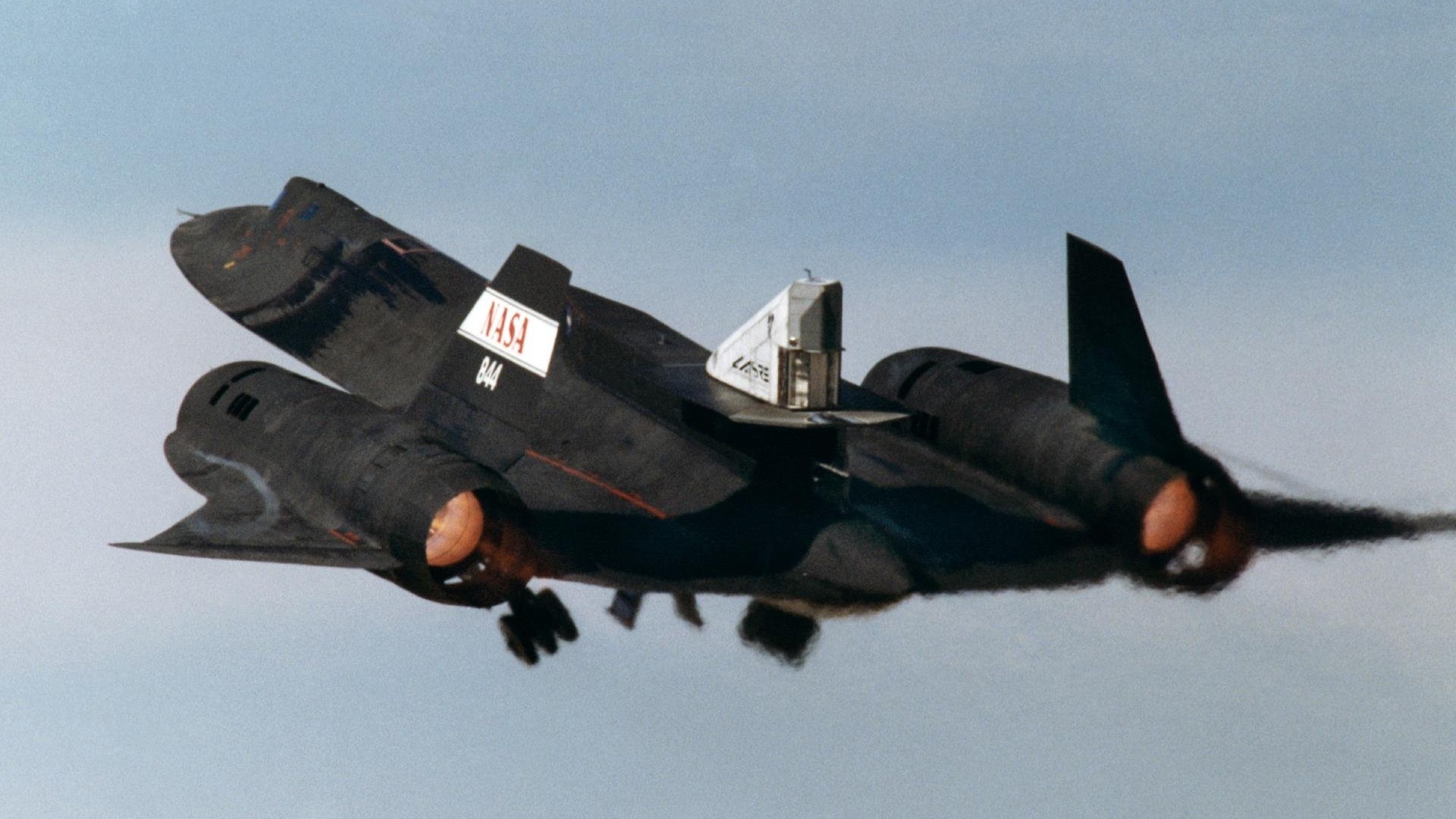
Yet, for all of the things the Blackbird could do, something that it couldn’t handle on its own was the starting of its Pratt & Whitney J58/JT11D-20K turbojets. For that, engineers leaned on some hot-rodding to deliver a whole lot of starting horsepower.
If you’re interested in reading the full history of the Blackbird, click here to read my retrospective. Otherwise, before we get to how Blackbirds were fired up, let’s take a quick detour to talk about how other aircraft are started.
How Planes Normally Start
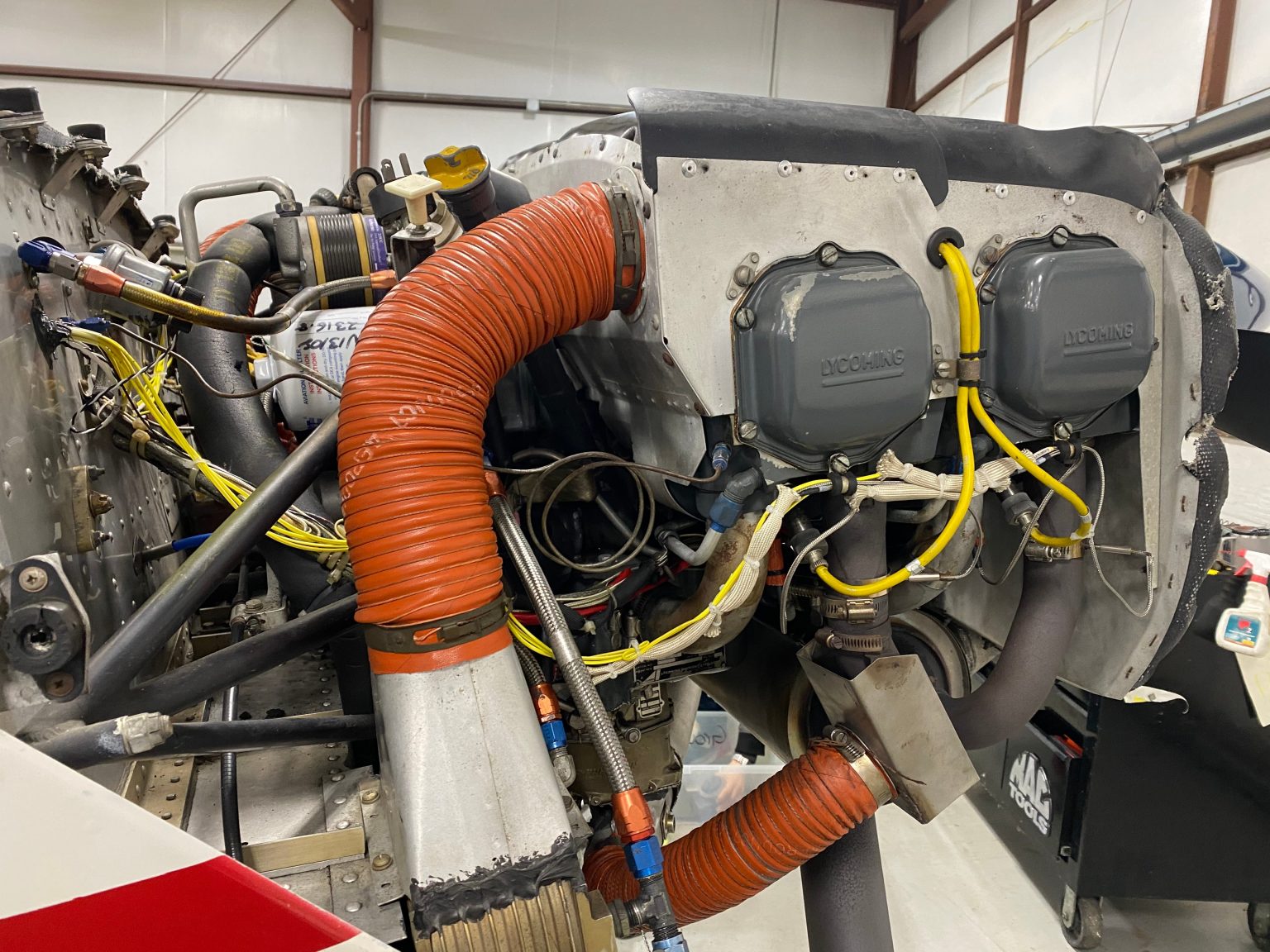
Piston-engine aircraft have arguably the simplest method to get going, and it’s by using your hands to physically spin the propeller. That turns the engine over, drawing fuel into the carburetor. Then, when the magnetos are switched on, hand-propping gets the engine going. In other general aviation aircraft, an electric starter motor performs the function of spinning the engine over.
Your average commercial airliner starts its turbofan engines using high-pressure air diverted from the auxiliary power unit (a small gas turbine engine) in the rear of the aircraft.

They can also use an air-start unit cart or bleed air from an already-running engine. This high-velocity air spins the engine’s high-pressure compressor turbine over until the engine is turning fast enough for fuel to be introduced and for the engine to become capable of running on its own.
There are several other ways to start a turbine, including using hydraulic pressure to turn a gearbox to spin the engine; using an electric generator to spin the engine over; or burning something like isopropyl nitrate to turn a starter gearset. There’s also the Coffman engine starter, which uses cartridges that look like shotgun shells, but fire cordite propellant at a piston, which engages with the engine and turns it over. This glorious video below shows Coffman starting an airplane:
If external starting is necessary, such as in the event of a malfunctioning auxiliary power unit or no onboard way to start the engines, an air start cart (below) essentially serves the function of the bleed air from the auxiliary power unit. These carts often have diesel engines, gas turbine engines, or tanks with high-pressure air to do the job.

The SR-71 used perhaps the wildest version of one of these air-start carts, which featured two car engines working together.
Starting The Fastest Jet
Starting an SR-71 was no easy task. The Blackbird SR-71A, for example, had a pair of Pratt & Whitney J58/JT11D-20K turbojets that produced 34,000 pounds of thrust each when in afterburner. These engines weighed 6,000 pounds each and needed to be spun up to 3,200-4,500 RPM before they could catch and run on their own.
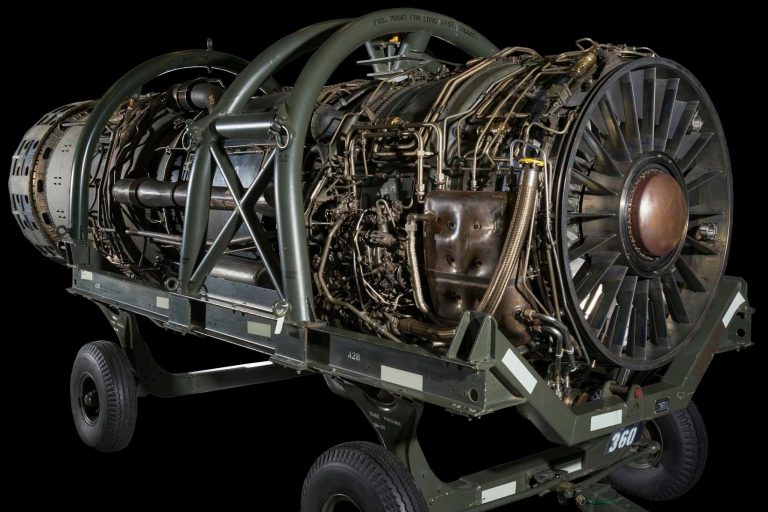
Clarence “Kelly” L. Johnson, the architect of the SR-71, determined that he didn’t want the aircraft to carry its own starting system. Adding a self-starter would add weight to the aircraft, and thus require the SR-71 to carry more fuel to compensate for the weight. Needing to carry more fuel would make the aircraft even heavier.
The SR-71’s engines required more than what a standard air-start cart could provide. The solution came from the engineers’ hot-rodding past.

According to the NHRA, the SR-71 engineers landed on the Buick 401-cubic-inch “Nailhead” V8 because they used single-speed Dynaflow transmissions. A soft coupling was necessary to spin the SR-71’s engines up without breaking their coupler shafts.
The Nailhead, which was used in cars like the Skylark Gran Sport, the Buick Sport Wagon, and the Buick Wildcat in the 1960s, was good for 325 HP and 445 lb-ft of torque. One engine wasn’t enough, so the team doubled them up to provide the necessary power to wake an SR-71 up in the morning. Together, the two V8s were good for up to 650 HP.

The engines were mounted into a mammoth cart called the AG330, and the Aircraft Engine Historical Society (AEHS) explains how they were made:
Each of the two Buick V-8s had eight straight exhaust pipes that exited out of the bottom of the AG330. Each engine had a Hydromatic transmission with electric shift, and the two transmissions were coupled together by a 12 inch wide, toothed Gilmer belt. The coupled engines drove a gearbox that turned the output 90° to the vertical for the probe head. This gearbox was hydraulically controlled and had a chip detector that would trigger a warning light on the AG330 control panel if metal debris was detected in the gearbox. The control panel was located at the end of the AG330. Each engine had ampere, water temperature, oil pressure, and oil temperature gauges, a tachometer, a start switch, large chrome choke control handle, and engine oil overpressure override button. Water temperature, oil pressure, and oil temperature gauges had red limit warning lights.

The probe instruments included green indicator lights for Probe Engaged, Starter Ready, Transmission Shifted, Probe Disengaged, and Probe Brake On. Toggle switches for the probe included Engage Probe, Disengage Probe, Probe Brake release, Jet Start, and a guarded Cart Shutdown switch. A single Morse throttle controlled both start cart engines; idle was at the top of the throttle travel, moving through Run and Advance as the throttle was moved downward. Probe gauges included Jet Speed and Torque Pressure. On the far right side of the Instrument Panel were a Cart Positioning lever, which could be used to move the whole cart left or right on the chassis frame to align the probe, a master Power On indicator light, Elapsed Time Hobbs meter, Main Power toggle switch, Main Power circuit breakers, and a Number of Jet Starts gauge (missing in the photographs). The Hobbs meter indicates this cart had 408.5 hours on the Buicks.
The probe head had two handles. The right side handle had two switches; the top switch raised the probe while the lower switch lowered the probe. Retraction was passive by venting the hydraulic pressure. The left handle had a single switch, which may have released the probe brake. The drive gear was approximately three inches across and had a surrounding fitting with holes that received the three alignment pegs on the engine drive pad to align the probe. The probe could gimbal approx. 1/4 to 1/2 inch to account for slight misalignment from true vertical between the cart and the engine pad. There were three microswitches on the probe head that all had to close to confirm proper probe placement, and this was indicated by two green “Probe Engaged” and “Starter Ready” lights on the start cart panel. This would arm the probe. The Buick engines were started ahead of time and warmed up in neutral. The curved starter drive access panel, approximately 15 x 30 inches and attached by CalFax fasteners, was opened, the cart positioned, and the probe raised to mate with the drive pad. Maximum vertical probe travel was about 24 inches, but a loaded airplane typically required a vertical travel of 8 to 10 inches. The starter pad is only an inch or two inside the outer surface of the aircraft.

According to the NHRA, the first AG330 carts, which were used on the A-12, were built by Hamilton Standard, but they weren’t built with serviceability in mind. In 1963, Lockheed reached out to hot rodder Frank Kurtis of the Frank Kurtis Company of Glendale, California. Lockheed provided Kurtis with the engines and transmissions. He then used them to build 30 AG330 carts.
Reportedly, the Kurtis-built carts were fabricated in the shop next to quarter-midget racecars. AEHS continues with the starting procedure for the SR-71:
The pilot told the Crew Chief via intercom “Engage Buicks”. The Buick operator pressed “Jet Start”, and movement of the Buick throttle (one throttle lever controls both engines) downward engaged the transmissions. The “Transmissions Shifted” illuminated green, and the Buicks started to load up.
It was important for the Buick operator to accelerate but maintain 700 to 725 lb ft of torque during starting procedure. Too high a torque pressure would cause the probe to drop out, which prevented overstressing the gear box, but resulted in a “cut off throttle” command from the Crew Chief to the pilot. With the Buick disengaged and the jet engine unable to sustain itself, the risk of an over temperature condition was high. Since the probe could not be re-engaged to a spinning J58, it was imperative to quickly re-engage the probe once the J58 wound down to motor the jet engine and blow out any fire. Too low a torque pressure during Buick start would cause a lag in acceleration to idle speed and an over temperature condition.
[The video below explains more about how starting works. Click here if you don’t see it.]
The pilot would watch his onboard gauges to confirm minimum oil pressure, fuel pressure, and rising RPM, and then set the jet throttle to idle. At that point 30cc of triethylborane was injected into the burner cans, a characteristic green flame was emitted, the J58 lit off, accelerated and started to run on its own. The accelerating jet started to unload the Buicks, and when 3,200 rpm was reached, the pilot called “Buicks out”, the Crew Chief signaled “cut”, the Buick operator hit “Cart Shutdown”, the probe fell free passively, and the cart throttle automatically returned to idle.
Neither the J58, the probe, nor the start cart transmission contained an overrunning clutch, so it was important that the probe fall free. If it hung up, the crew had to quickly get in and shake the handles as fast and as hard as they could. The Buicks would reach 4,800 to 4,900 rpm, the redline on the start cart, just to get the J58 to 3,200 rpm. Overspeeding of the Buicks caused by a probe hang-up contributed to the occasional thrown connecting rod and oily parts dropping out from under the cart. Idle speed for the J58 is 3,950 rpm, which could drive the Buicks to over 6,000 rpm. The potential for engine failure, as well as the Buick exhaust stream, required the crew to stand only at the ends, not aside, the start cart.
Triethylborane was needed to light the low-volatility, flash-resistant JP-7 fuel that burned in the SR-71.

Starting SR-71s Killed So Many Nailheads
Overspeeding conditions caused the failures of countless AG330 Nailheads. This became a problem after Buick stopped producing Nailhead engines in 1966. The SR-71 program scooped up every spare engine in the country, including those at junkyards. Engineers eventually swapped out the Buick V8s for Chevrolet LS7 454 big block V8s with 425 horsepower each.

The ultimate solution for starting SR-71s would come from Garrett AirResearch, which devised the 3AG1100, a 700 HP turbine-powered air-start cart that was powerful enough to wake the SR-72. If an SR-71 had to be started at a location other than Beale AFB in California, a special manifold was used to combine the output of four regular air-start carts to equal the power of one Garrett cart.
Some have described the starting of an SR-71 as sounding a bit like an Indianapolis 500. I’d believe that. You have two massive, straight-piped V8s running at 4,900 RPM or sometimes even more. Then, V8 noise would end up being replaced by the thunder of turbojets.
This whole story really drives home just how crazy the SR-71 really was. The fastest plane couldn’t even start itself, and required a convoluted cart to get it going. But it worked, and thanks to these sometimes sacrificial V8 engines, the SR-71’s feats were made possible. I wonder what engine would be the best to start an SR-71 today?
Top graphic images: RCR Metal Fab; NASA


There was a story about a guy who managed to pick up a retired startcart motor and was putting it back into a Buick Wildcat. But, he was going to paint it bronze which is just such a travesty. I wonder if the car was ever finished.
I saw one of these up close and in flight at an EAA convention back in the 90’s. What a glorious plane.
All the better to be the first one at the early bird special.