

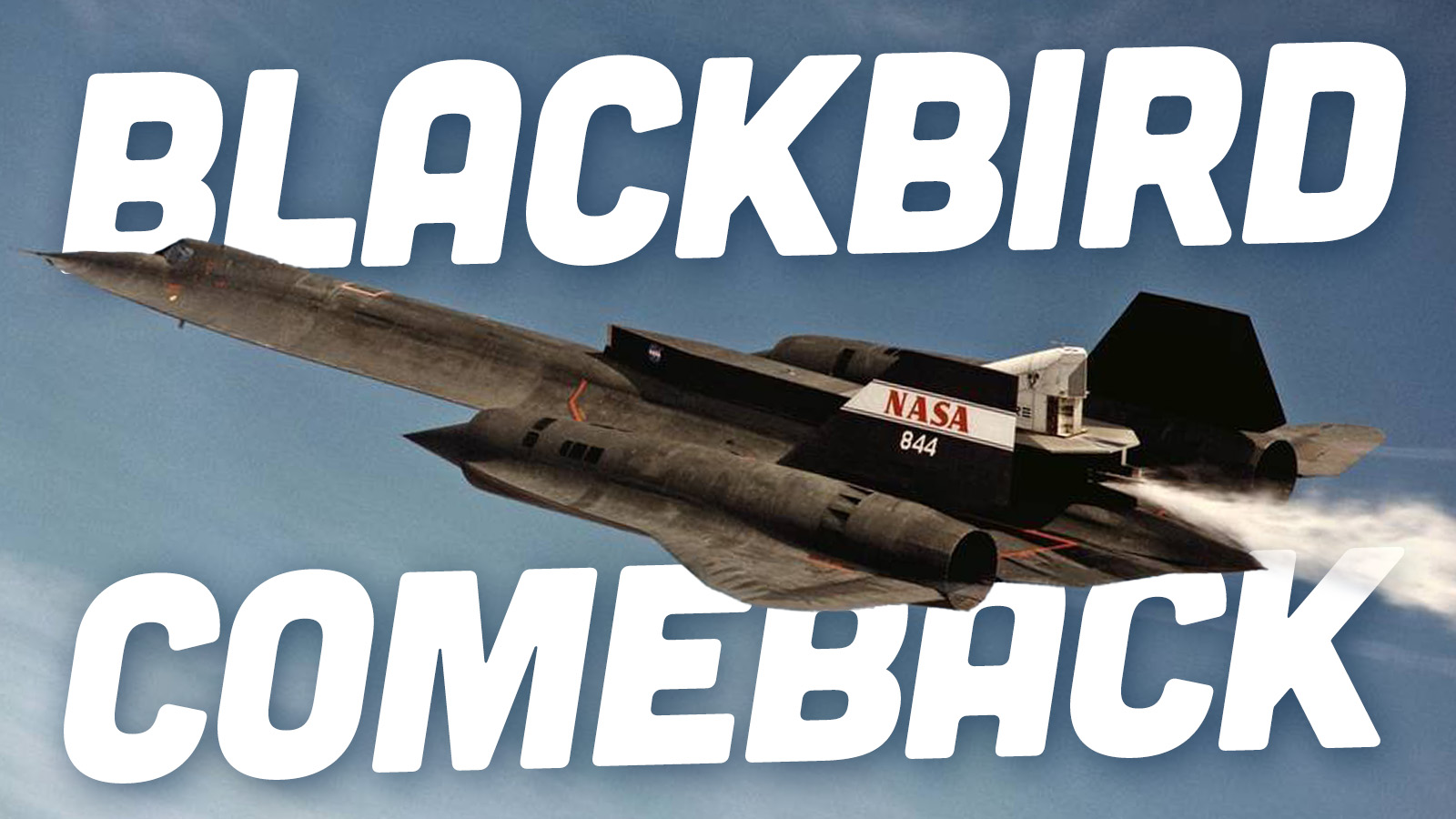
Aviation is one of the great wonders of the world. Humans figured out how to roughly replicate what birds do naturally, and then it wasn’t long before we started making powered flight ridiculously fast. One of history’s most famous hot rods is the SR-71 “Blackbird,” which set an absolute speed record for jet-powered aircraft of 2,193.167 mph in 1976. The last Blackbird flew in 1999, but now, after 27 years on static display outdoors, the whole aircraft has disappeared, sparking rumors about a potential NASA secret project to bring it back. Supporting this rumor is a report that NASA has been trying to get a gang of SR-71 engineers back together, and oh my, I’m not sure I’ve rooted for a government project harder than I am right now.
Aviation fans have been captivated by some truly bizarre news circulating in the media right now. On September 24, Aviation Week reported that after 27 years of static display, a Lockheed SR-71A was removed from public display at the Neil Armstrong Flight Research Center on Edwards Air Force Base in California. NASA has been quiet about the whole thing, which has led to aviation fans letting their imaginations run wild.


The Lockheed SR-71 “Blackbird” is one of history’s most iconic aircraft. Developed as a long-range and high-altitude supersonic strategic reconnaissance aircraft during the Cold War, the Blackbird is famed for its ridiculous speed. This is an aircraft that tears across the sky at 85,000 feet and three times the speed of sound. To put that into perspective, the aircraft could survey 100,000 square miles of the planet per hour. Just a little over 50 years ago, the Blackbird also set a speed record that no jet-powered aircraft has been able to beat since.

The Blackbird is one of those planes that captures the imagination of all aviation fans, regardless of whether they care about mil-spec hardware or not. Understandably, people want to know just what NASA wants to do with a plane that has no airworthy examples, essentially no replacement parts, and so many of the people who worked on it have been retired for a while. But as Aviation Week reported today, it appears that NASA is fishing for folks who used to work on the SR-71. There’s a potentially good reason why NASA wants to get the gang back together.
Why The SR-71 Was Built

The SR-71’s story has been told perhaps a million times throughout history, and Lockheed Martin is a great resource to help bring you up to speed. From Lockheed:
Gary Powers’ U-2 aircraft was disabled. Hit by Soviet surface-to-air missiles, the plane fell from 70,000 feet to 30,000 feet before Powers could release himself and bail out of the damaged cockpit. It was May 1, 1960, and the Cold War was heating up. At Lockheed’s advanced development group, the Skunk Works in Burbank, work had already begun on an innovative aircraft to improve intelligence-gathering, one that would fly faster than any aircraft before or since, at greater altitude, and with a minimal radar cross section. President Eisenhower deeply valued the strategic benefits of the U-2’s airborne reconnaissance during these tense Cold War times. And now the call came from Lockheed’s customer in Washington to build the impossible – an aircraft that can’t be shot down – and do it fast.
Kelly Johnson, one of the preeminent aircraft designers of the twentieth century, and his Skunk Works team had a track record of delivering “impossible” technologies on incredibly short, strategically critical deadlines. The U-2 was but one example. The group was known for its unfailing sense of duty, its creativity in the face of a technological challenge and its undaunted perseverance. This new aircraft was in a different category from anything that had come before. “Everything had to be invented. Everything,” Johnson recalled. He committed Skunk Works to succeed in its toughest assignment to date: to have the innovative, challenging, envelope-bursting aircraft flying in a mere twenty months.
The speed of the new aircraft was to exceed 2,000 mph. Other planes of the era could, in theory, approximate that speed but only in short, after-burner-driven bursts. This new plane needed to maintain a record-setting speed for hours at a time. At such velocity, friction with the atmosphere generates temperatures that would melt the conventional airframe.
According to Lockheed, in summer 1943, the U.S. Army Air Tactical Service Command met with the Lockheed Aircraft Corporation with a demand for a jet-powered fighter. In the United Kingdom, the Gloster Meteor took its first flight in March of that year, becoming the very first successful British jet fighter. It would go on to be the only jet-powered fighter in the Allies to engage in combat in World War II.

Germany was ahead of the Allies in this regard. Back in 1942, a Messerschmitt Me 262 took to the sky under jet power, becoming the world’s first operational jet fighter aircraft. The Me 262 would become known as being the most advanced fighter in the war.

America would put forth its own valiant effort into jet power. Lockheed engineer Clarence “Kelly” L. Johnson gathered a team and, together, they would design and build the XP-80 Shooting Star in 143 days, or seven less than was required by the Army. The Skunk Works would have its hands in so many projects, including the F-117 Nighthawk, the F-22 Raptor, the U-2 “Dragon Lady,” and more. Lockheed continues about the team’s work on the SR-71:
With anticipated temperatures on the aircraft’s leading edges exceeding 1,000 degrees Fahrenheit, dealing with the heat raised a host of seemingly insurmountable design and material challenges. Titanium alloy was the only option for the airframe —providing the strength of stainless steel, a relatively light weight, and durability at the excessive temperatures. Titanium, however, proved to be a particularly sensitive material from which to build an airplane. The brittle alloy shattered if mishandled, which meant great frustration on the Skunk Works assembly line, and new training classes for Lockheed’s machinists. Conventional cadmium-plated steel tools, it was soon learned, embrittled the titanium on contact; so new tools were designed and fabricated—out of titanium.
While friction would generate incredible heat at the leading edges of the aircraft, the ambient temperature outside the cockpit window would be -60 degrees Fahrenheit. Skunk Works’ Ben Rich spent untold hours tackling the problem of how heat could be dissipated across the entire airframe. Then he recalled a simple lesson from one of his university courses: Black paint both emits and absorbs heat. The aircraft was painted black, and soon earned its name: “Blackbird.” The original Blackbird was designated the A-12 and made its first flight on April 30, 1962. The single-seat A-12 soon evolved into the larger SR-71, which added a second seat for a Reconnaissance Systems Officer and carried more fuel than the A-12. The SR-71’s first flight was on December 22, 1964.
Reducing the size of the Blackbird’s radar image meant an even further reduction in the likelihood that the plane would be perceived and shot down. Though the initial test results were good, rumors of Soviet radar advances led the U.S. government to ask for an even smaller radar profile. Surfaces had to be redesigned to avoid reflecting radar signals, the engines moved to a subtler mid-wing position, and a radar-absorbing element was added to the paint. Then a full-scale model of the Blackbird was hoisted on a pylon for radar testing at a Skunk Works’ secret location in the Nevada desert. With tests carefully scheduled to avoid Soviet satellite observations, the results were impressive: The Blackbird model, more than 100 feet in length, would appear on Soviet radar as bigger than a bird but smaller than a man. The team had succeeded in reducing radar cross section by 90 percent.
A Real Muscle Plane

Lockheed notes that the SR-71 wasn’t just good at being a secret spy aircraft, as it was a total hot rod. At its peak, the SR-71A variant of the Blackbird had a pair of Pratt & Whitney J58/JT11D-20K turbojets that produced 34,000 pounds of thrust each when in afterburner. On July 20, 1963, the Blackbird achieved sustained flight at Mach 3 at an altitude of 78,000 feet.
Lockheed says that, at such speed, the aircraft covers 3,000 feet of ground per second. Pilots learn how to navigate through visual references when conditions permit. I know how to identify where I am by looking for Illinois’ Fox River, water towers, or the hospital near my local airport. I can also follow the roads I know. That’s essentially impossible when you’re covering more than a mile every two seconds. So, Blackbird pilots had to navigate by looking for much larger references, like the coasts, mountains, or very large bodies of water; places that’ll remain in view for longer than a handful of seconds.

That speed was mind-boggling, too. In 1974, a Blackbird set a record for the fastest flight between London and New York, which took only 1 hour, 54 minutes, and 56 seconds. In 1976, a Blackbird broke the record for sustained altitude in horizontal flight at 85,069 feet. That same day, a different Blackbird tore across the sky at Mach 3.3, or a calculated 2,193.2 mph. The Blackbird became the highest-flying and absolute fastest air-breathing manned jet, a record that remains unbroken today. The only planes that are faster are powered by rockets, don’t have a crew, or are Space Shuttles.
A total of 32 Blackbirds were built until 1968. That last aircraft was a pairing of a YF-12A tail and the front fuselage of an SR-71A, creating the one-off SR-71C. But the last SR-71 built on the line was USAF serial number 61-7980, which was flown by NASA as tail number 844. This Blackbird, which was completed in 1967, was fitted with a pair of Pratt & Whitney J58 turbojets, producing 32,500 pounds of thrust each.
Why NASA Wants Serious Speed

Tail 844 arrived at NASA’s Dryden Flight Research Center in California (today the Armstrong Flight Research Center) to do the kind of research that only an aircraft with some serious altitude and speed can do. NASA notes a few of the aircraft’s projects:
One of the first major experiments flown on the NASA SR-71 involved a laser air-data sensor. The sensor used laser light instead of air pressure to generate airspeed and attitude data such as angle-of-attack and sideslip, data normally obtained with small tubes and vanes extending into the airstream or from tubes with flush openings on an aircraft’s outer skin. These flights also provided information on the presence of atmospheric particles at altitudes above 80,000 feet, where future hypersonic aircraft will operate. The system used six sheets of laser light projected from the bottom of the airplane. As microscopic-size atmospheric particles passed between the two beams, direction and speed were measured and processed into standard speed and attitude references. An earlier laser air-data measurement system was successfully tested at Dryden on a modified F-104 testbed aircraft.
The first of a series of flights using the SR-71 as a science camera platform for NASA’s Jet Propulsion Laboratory, Pasadena, CA, was flown in March 1993. From the nose bay of the aircraft, an upward-facing ultraviolet video camera recorded data on celestial objects in wavelengths blocked to ground-based astronomers by Earth’s atmosphere. In another project, researchers at the University of California, Los Angeles used the SR-71 to investigate the use of charged chlorine atoms to protect and rebuild the ozone layer.
[…]
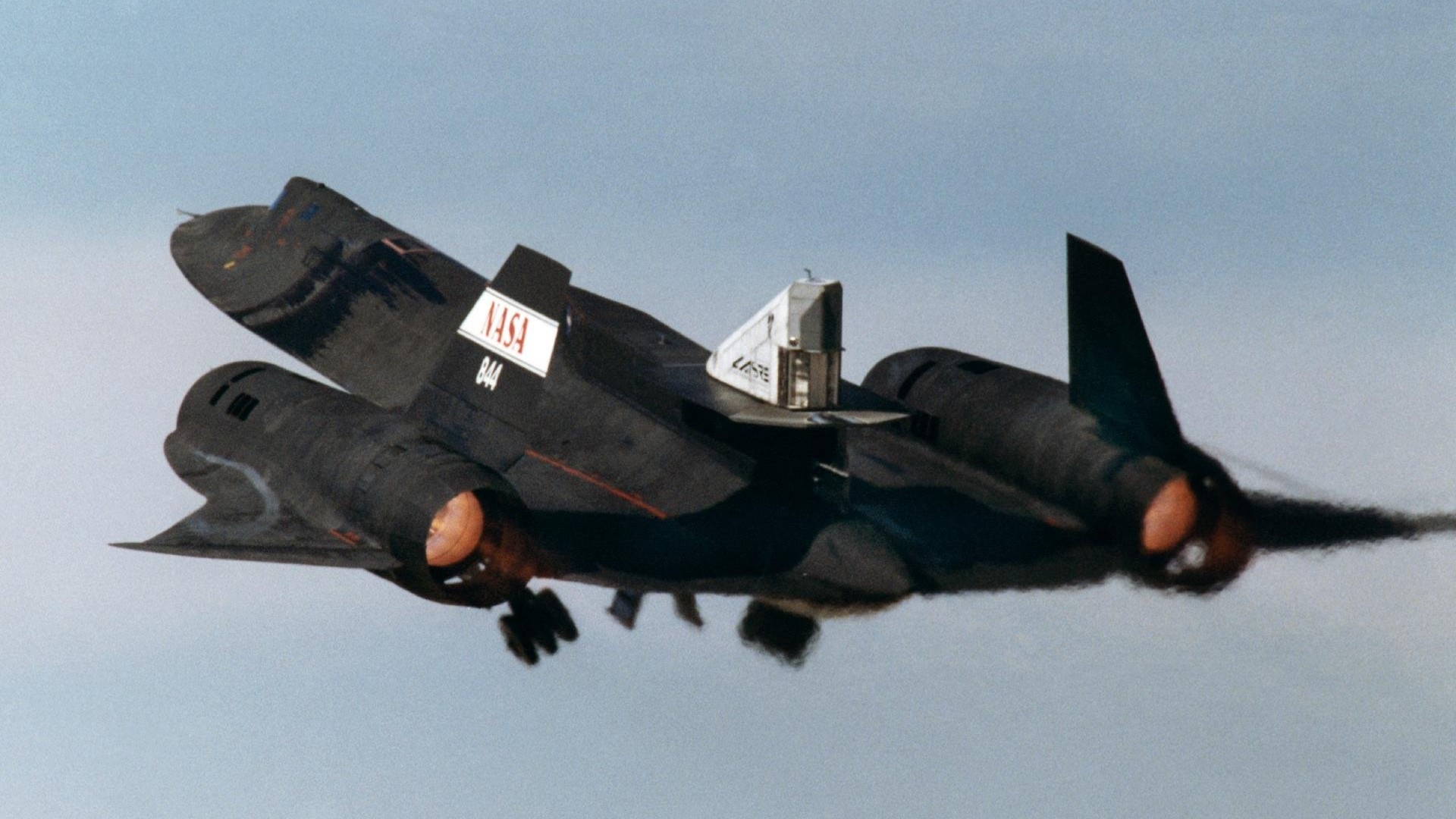
In 1997 and 1998 the SR-71 carried the NASA/Lockheed Martin Linear Aerospike SR-71 Experiment (LASRE). The LASRE test apparatus was a half-span scale model of a lifting body with eight thrust cells of a linear aerospike engine, mounted on the back of an SR-71 aircraft during flight at high speeds and altitudes. Outfitted with the test fixture, the aircraft operated like a kind of flying wind tunnel that allowed engineers to gather aerodynamic data under realistic flight conditions.
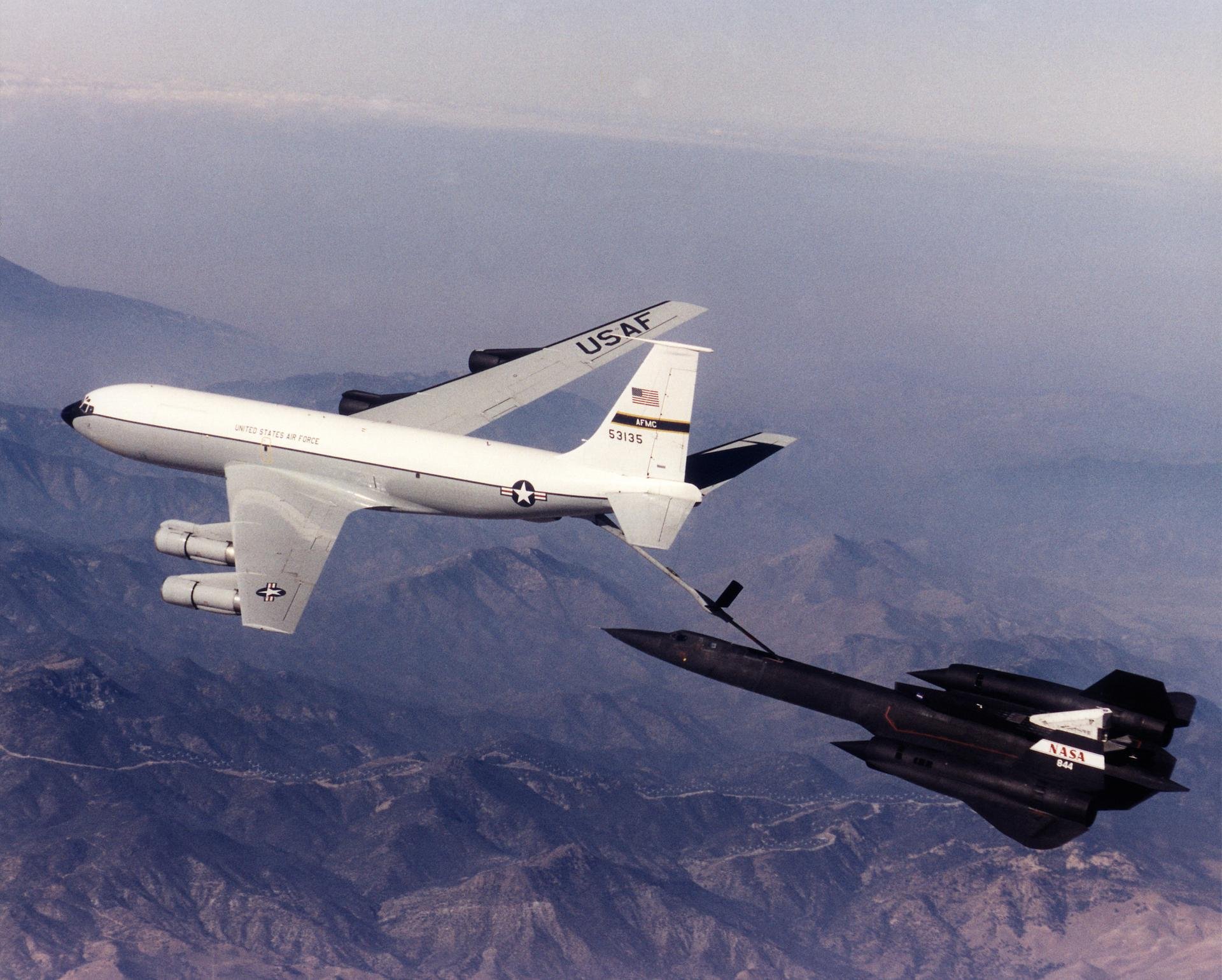
NASA also used Tail 844 to research ways to reduce the sonic booms heard on the ground during supersonic flight. The Air Force would briefly reactivate 844 as part of its inventory in 1995. Then, on October 9, 1999, the SR-71 program came to an end when 844 made its final flight. Since then, the aircraft has been on public display outside at the Armstrong Flight Research Center. That was until it seemingly randomly disappeared sometime during the spring of this year.
The rumor mill has been running at full speed ever since Aviation Week broke the news of the plane’s disappearance on September 24. One of the most exciting theories has been that NASA is bringing the aircraft back to life. As The War Zone reports, NASA Administrator Jared Isaacman has been talking about rebuilding NASA’s X-plane experimental aircraft fleet to have more go-fast planes than just the X-59.

NASA’s old X-planes were the fastest aircraft in the world, and they date back to 1947 with the Bell X-1 (above), which was the first plane to break the sound barrier. Also in NASA’s setlist of super-fast planes is the North American X-15, the rocket plane that holds the record of being the absolute fastest crewed plane that isn’t a Space Shuttle. The X-15 most famously screeched across the sky to 4,519 mph in 1967.
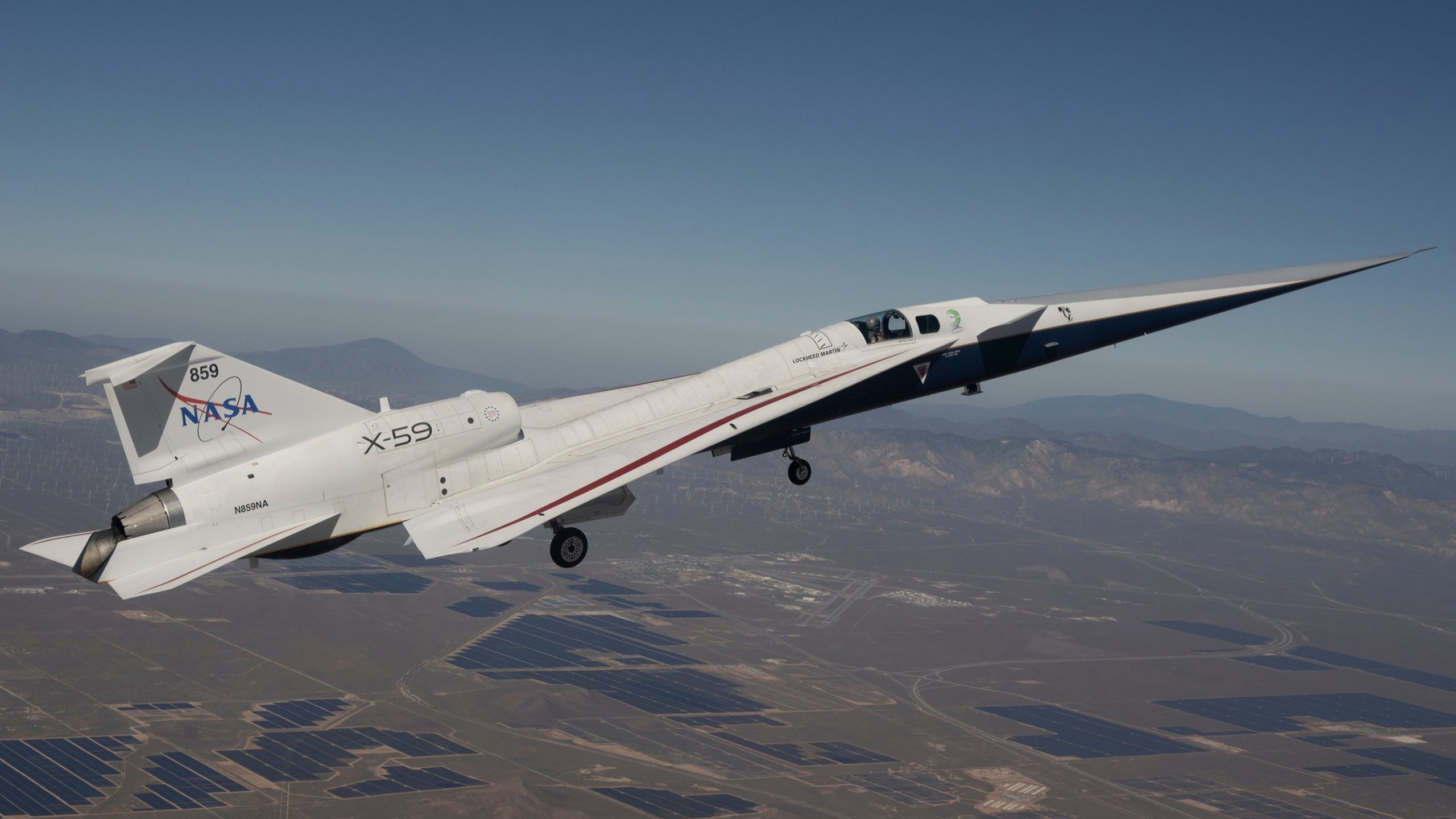
The aviation world has seen renewed interest in supersonic flight, and some of NASA’s current research surrounds the Lockheed Martin X-59 Quesst (below), which made its first flight in 2025. This aircraft’s mission is to evaluate the possibility of supersonic flight without sonic booms heard on the ground. It makes sense that NASA wants more X-planes in the sky.
Now, these cryptic statements don’t actually prove anything. The SR-71 could have been removed from display for maintenance, or maybe it will be moved to indoor storage. Likewise, there’s a possibility that the aircraft could be used for research into a new plane, rather than restored to operational condition. Aircraft that sit on display are sometimes temporarily removed for a cosmetic restoration, to be replaced with another aircraft for display, or some other totally boring reason.
NASA Might Be Bringing The Blackbird Back
Then, today, Aviation Week wrote a wild story that suggests that, hold on, the people who had the crazy theories about NASA trying to revive SR-71A 844 might be true. From Aviation Week:
Mike Relja, a retiree in his late 70s, received an unexpected job offer from NASA about a month ago. The assignment: Help put a former NASA-operated Lockheed SR-71A Blackbird back in the air after a nearly 27-year hiatus. Relja, an ex-U.S. Air Force and NASA test engineer for the SR-71A, could not believe his ears. David Ash, a former U.S. Navy and Joby test pilot who was hired in June as a special projects director for NASA, asked Relja to provide his expertise for a secret effort to return a long-retired and neglected Blackbird to flight. “I told the guy, ‘You know, I’m too old to be doing this,’” Relja recalls to Aviation Week. “‘I wish you well. I’d like to see you make it. It would be interesting. But I just don’t think you can get there from here.’”
It appears NASA is going to try.
[…]
Aviation Week confirmed that the agency approached Relja, Tim Conners, another former NASA SR-71A test engineer and others over the summer with job offers to work on the return-to-flight project for Tail No. 844. In meetings with the prospective rehires, Ash brushed aside all questions about why NASA wanted to go to the effort and expense of putting the Mach 3-capable SR-71A back in flight.
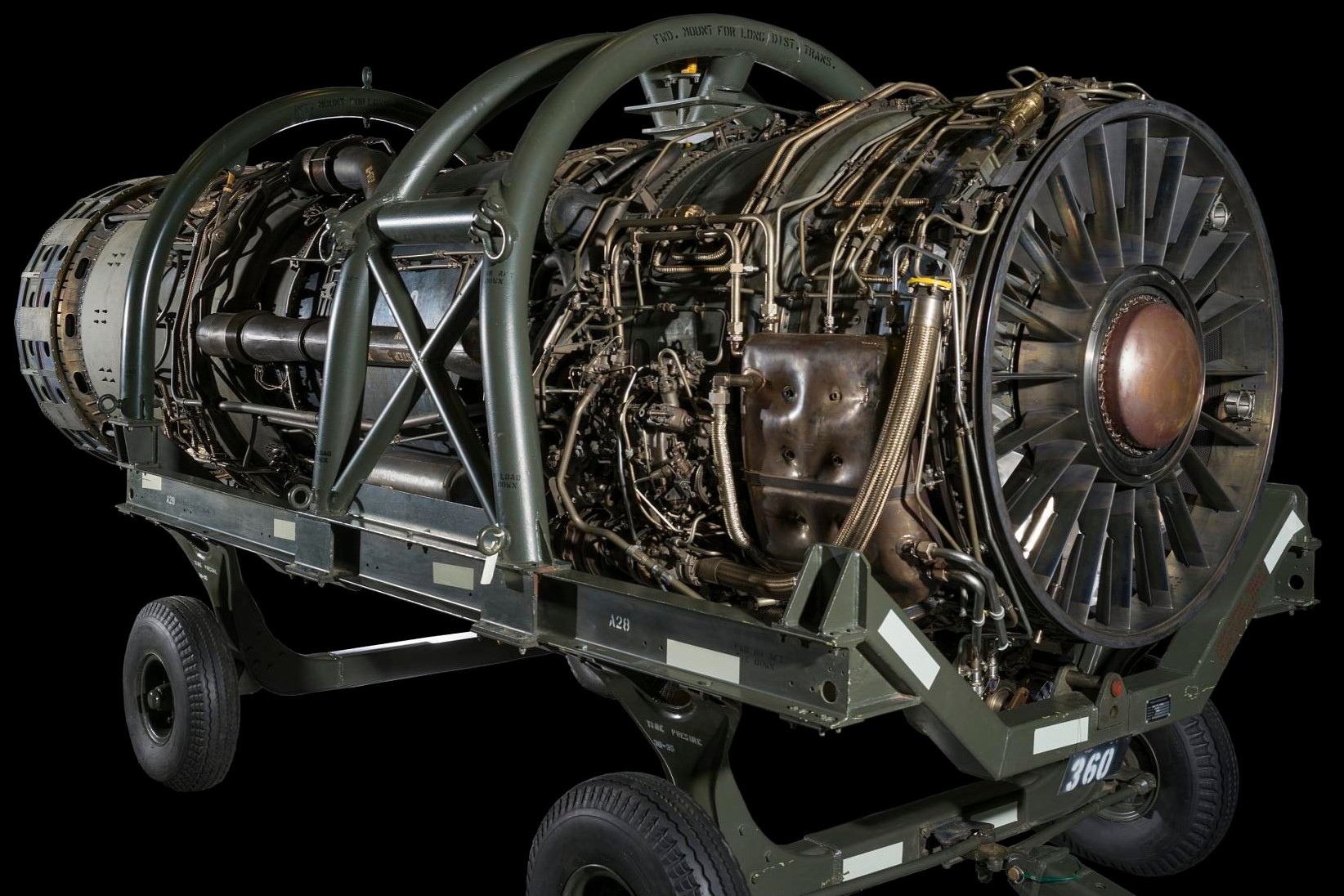
This just boggles the mind. It’s hard enough to wake a piston aircraft from a decades-long slumber. This SR-71A is 59 years old, hasn’t flown for 27 years, and has sat outside the entire time. Aviation Week notes that, when in service, spare SR-71A engines had to be run at least once every 180 days. These have sat for 27 years without being touched, and it’s unlikely they’ve even been lubricated. Making matters worse is that, in 2007, the Air Force and NASA destroyed $600 million in spare SR-71A parts after it probably seemed unlikely that the SR-71 program would ever be relaunched.
The SR-71A even used a special JP-7 jet fuel, had unique ground service equipment, and had distinctive fluids. The carts that NASA and the Air Force used to service the wings and the engines just don’t exist anymore.
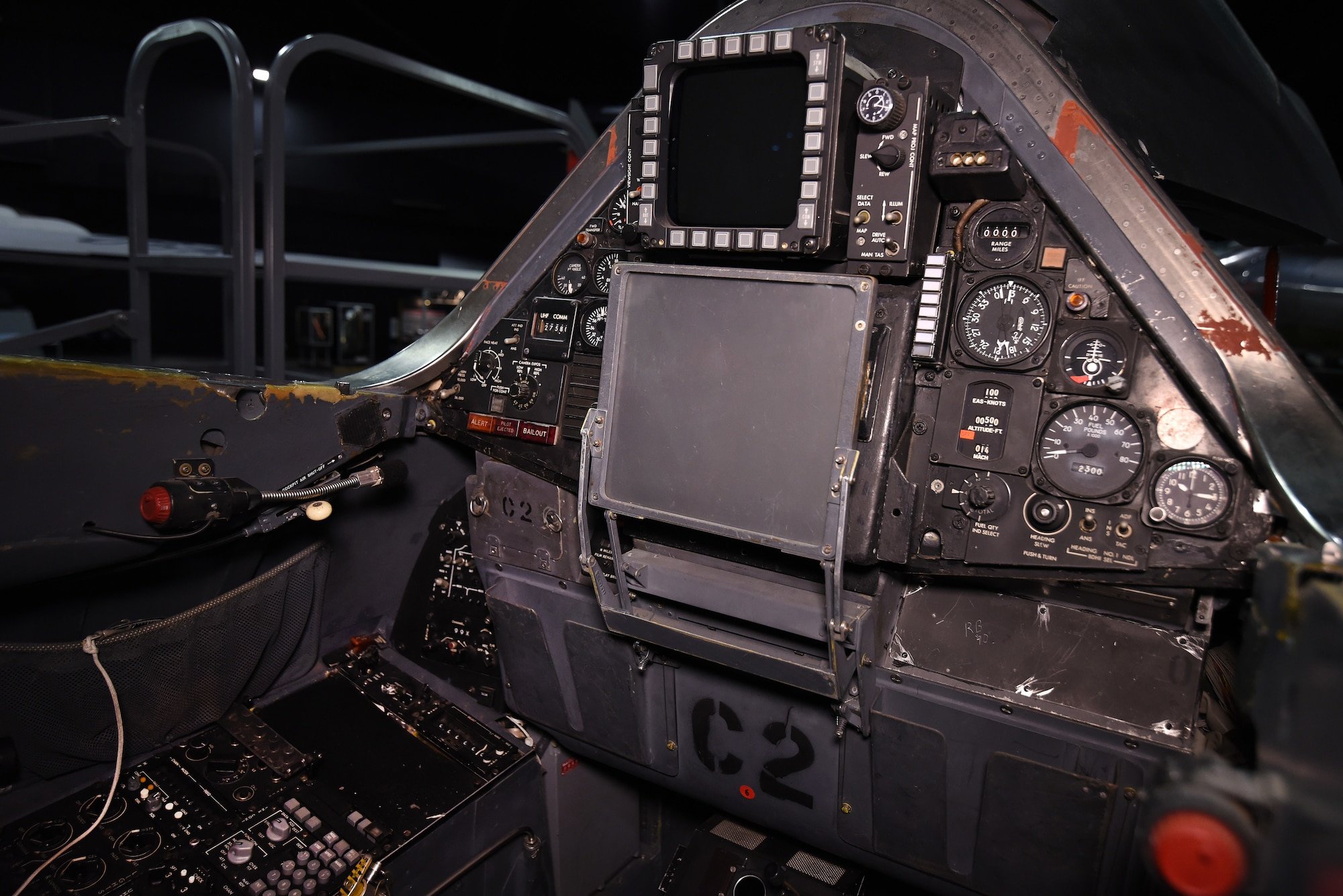
All of these, from the parts and carts to the fuel and oils, would need to be recreated or substituted. That doesn’t mention what work the airframe itself would need after sitting in the open air for 27 years. Yet, as Aviation Week reports, NASA apparently thinks it can overcome all of this with engineering. There’s also another way, as spare parts could come from SR-71As living in museums. From Aviation Week:
Conners, a former colleague of Relja, tells Aviation Week that he turned down an offer to return to the SR-71A program, despite his hopes that it will succeed. Conners shares many of Relja’s concerns about feasibility.
“My first thought was, ‘My god, I would drop everything’” to help NASA achieve its goal, Conners says. “My second thought was, ‘How in the world are they going to do it?’” But he thought of a few possible solutions to the spare parts problem. Dozens of retired Blackbirds adorn flight museums across the U.S. and in the UK. Nine flew to their final destinations, so their engines are parked with those aircraft on museum display. “Those subsystems could be cannibalized,” Conners says.
Despite its pioneering design and still-unmatched performance even 60 years later, Lockheed’s famed Skunk Works, led by Kelly Johnson, produced an aircraft with an elegantly simple approach to electronics and key subsystems. “The architecture was as simple as they could make it,” Conners says.

Weirdly, NASA has been rather quiet and secretive about all this, even after Aviation Week‘s report. NASA has not yet returned my own request for comment.
Still, it does seem like NASA really wants to get the SR-71A flying again. That’s just ridiculous, silly, and impractical, and I’m here for it. The more logical reason to have pulled the SR-71A off display would have been to clean it up, or maybe study it for a future project. But I won’t complain about NASA taking the craziest possible route. Hey, NASA put humans on the Moon a handful of times, what’s getting a plane back into the air? If NASA needs a test pilot, I happen to know someone who has enough of a need for speed to gloss over the fact that this thing would probably be the NASA equivalent of every YouTuber’s car revival project.
Top Graphic Image: NASA


These things will always be astounding to me. And gorgeous. It’s amazing what we could accomplish when we taxed the rich.
Uhh… I guess it wasn’t that secret.
Also, DO IT! I’m sure it’ll start right up.
If they need a dwell meter, I’ve still got one in the garage.
And this:
Mike Relja, a retiree in his late 70s, received an unexpected job offer from NASA about a month ago. The assignment: Help put a former NASA-operated Lockheed SR-71A Blackbird back in the air after a nearly 27-year hiatus. Relja, an ex-U.S. Air Force and NASA test engineer for the SR-71A, could not believe his ears. David Ash, a former U.S. Navy and Joby test pilot who was hired in June as a special projects director for NASA, asked Relja to provide his expertise for a secret effort to return a long-retired and neglected Blackbird to flight. “I told the guy, ‘You know, I’m too old to be doing this,’” Relja recalls to Aviation Week. “‘I wish you well. I’d like to see you make it. It would be interesting. But I just don’t think you can get there from here.’”
It appears NASA is going to try.
How did real life manage to write the next Jerry Bruckheimer script word for word?
I’ll watch that movie.
Same here, whatever Maverick sequel is cooking up needs to take a back seat to this.
I would have thought Clint Eastwood
I think he’s busy with the upcoming Texas-based production “Red-Dyed Redemption 3”
Edited to add we are way overdue for a Space Cowboys sequel.
Space Cowboys meets Firefox, a whole new movie that also has lots of stuff we’ve seen before, so studio execs will like it
Science rules, and so does aviation!