


Few are immune to the charms of the Citroen 2CV. The underpowered little French car was in production from 1948 to 1990, with over five million of them being made. Even Jason has one. But with the final cars rolling off the Portuguese production line almost 36 years ago (French production having finished in 1988), finding pristine examples is getting ever-more difficult. And this begs the question–at what point does dirt become patina?
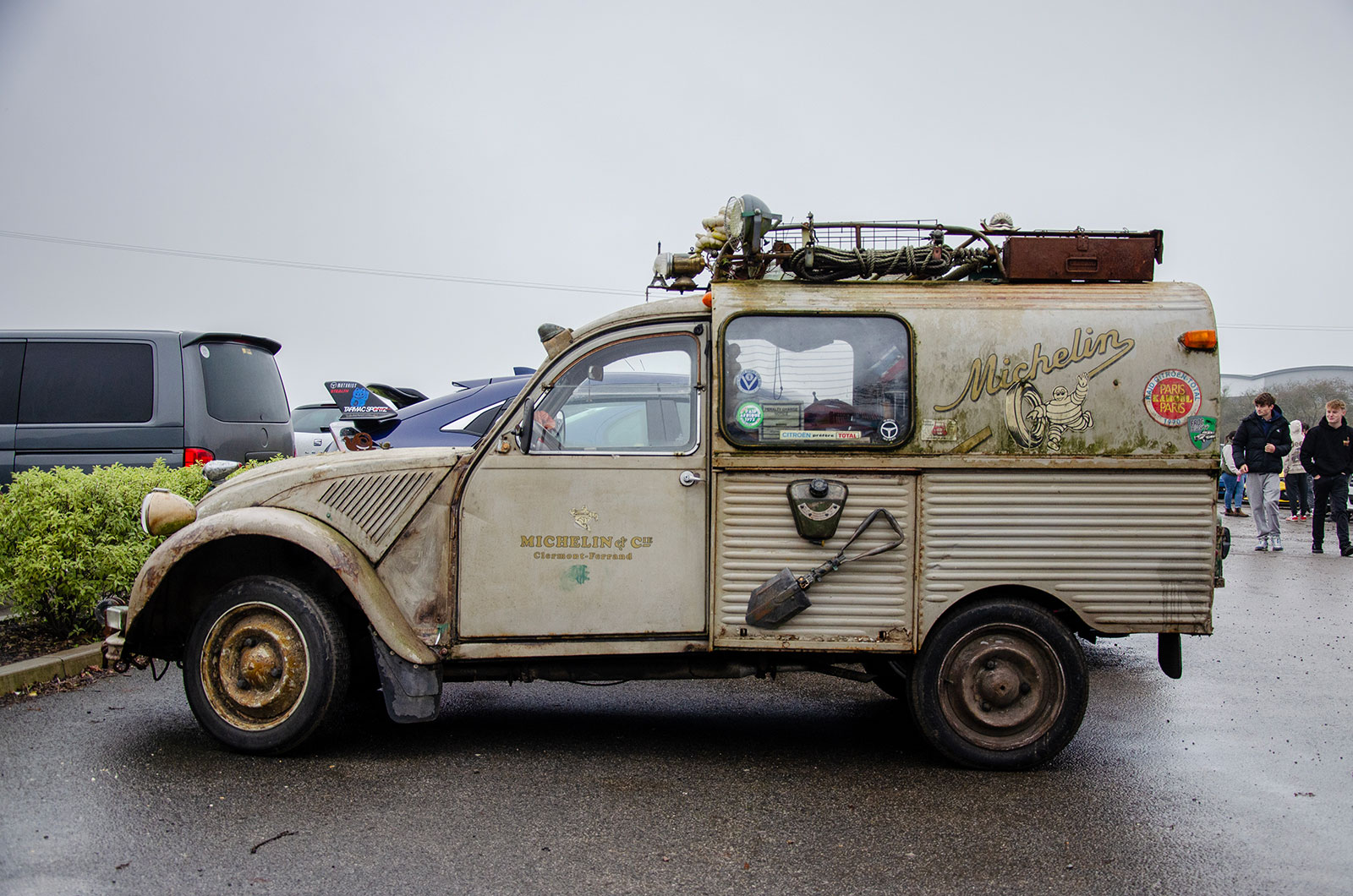
Is patina simply wear and tear, or is there a historic element to it–a vehicle having to “earn” its patina and the right to wear it? Does rust become charming if it has a story behind it? If so, this Citroen AK350 Fourgon can claim that its condition is historic, having traversed the sands of the Sahara, survived an abandonment in Marseille, and now transitioned to a life in the forest.


“It spent all its life in the Sahara desert as a support vehicle for Michelin tires,” owner Kevin Fitzharris told me at a Cars and Coffee at The Motorist, UK. “There was a race across the Sahara in 1973 called a Raid, and Michelin tires used these as support vehicles.”
The Raid Kevin’s referring to, and for which the car proudly bears stickers of, is the third and final iteration of Citroen’s famous 1970s Rally Raids: the 1973 Citroen Raid Afrique.
Tiny Cars Racing Across A Big Desert
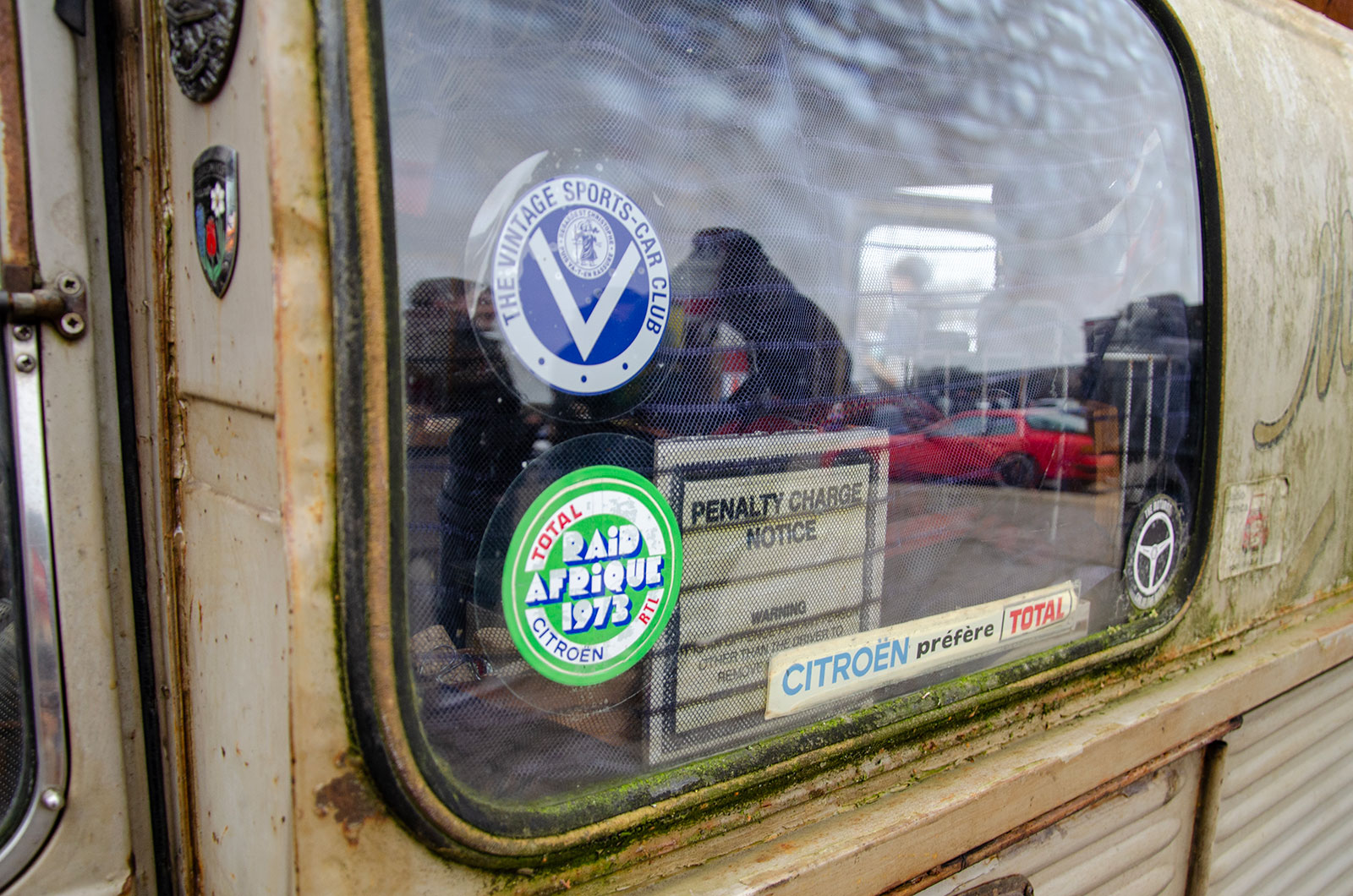
Coming after the 1970 Paris to Kaboul and 1971 Paris to Persepolis Raids, the ‘73 edition was an 8,000km expedition from Abidjan, Ivory Coast, up into Burkina Faso, then through into Niger. From there it crossed the Ténéré desert, the Hoggar Mountains in Algeria, and eventually through Tunisia to the capital Tunis in the north of the country. Quite the challenge–especially for the two-wheel drive 2CVs. But what better way to show that the car can handle a farm field than by running 50 of them through the desert, right?
At least, that’s what Citroen thought. Their Head of External Relations, Jacques Wolgensinger, was the expedition leader for the party, and they wanted to show that the car stood for adventure, seeing it as a PR opportunity as much as a motorsport one. The first two iterations saw much larger teams taking on much longer routes–the first seeing almost 500 teams taking on a 16,500km (10,200 miles) route, with almost all finishing.
The 1973 edition saw 50 teams of two, picked from nearly 5,000 applicants, with drivers chosen for their skills. Some were mechanics, some doctors, and while maybe not helpful in most ways, reporters were at least useful for recording the adventure. Also in tow were AK350s, Berliet L64 trucks, a Citroen Break, and a plane, all supporting the teams.
While AK350s like Kevin’s carried tires, the L64s had larger spares and tools, which came in handy when the cars inevitably broke. A report from the time recalls mechanics working through the night in teams of three to straighten a bent chassis and fit a new engine before dawn broke, using the welding equipment carried by one of the trucks.
Still, 67 days and 8,000km later, all 50 of the cars in the expedition arrived in Tunis.
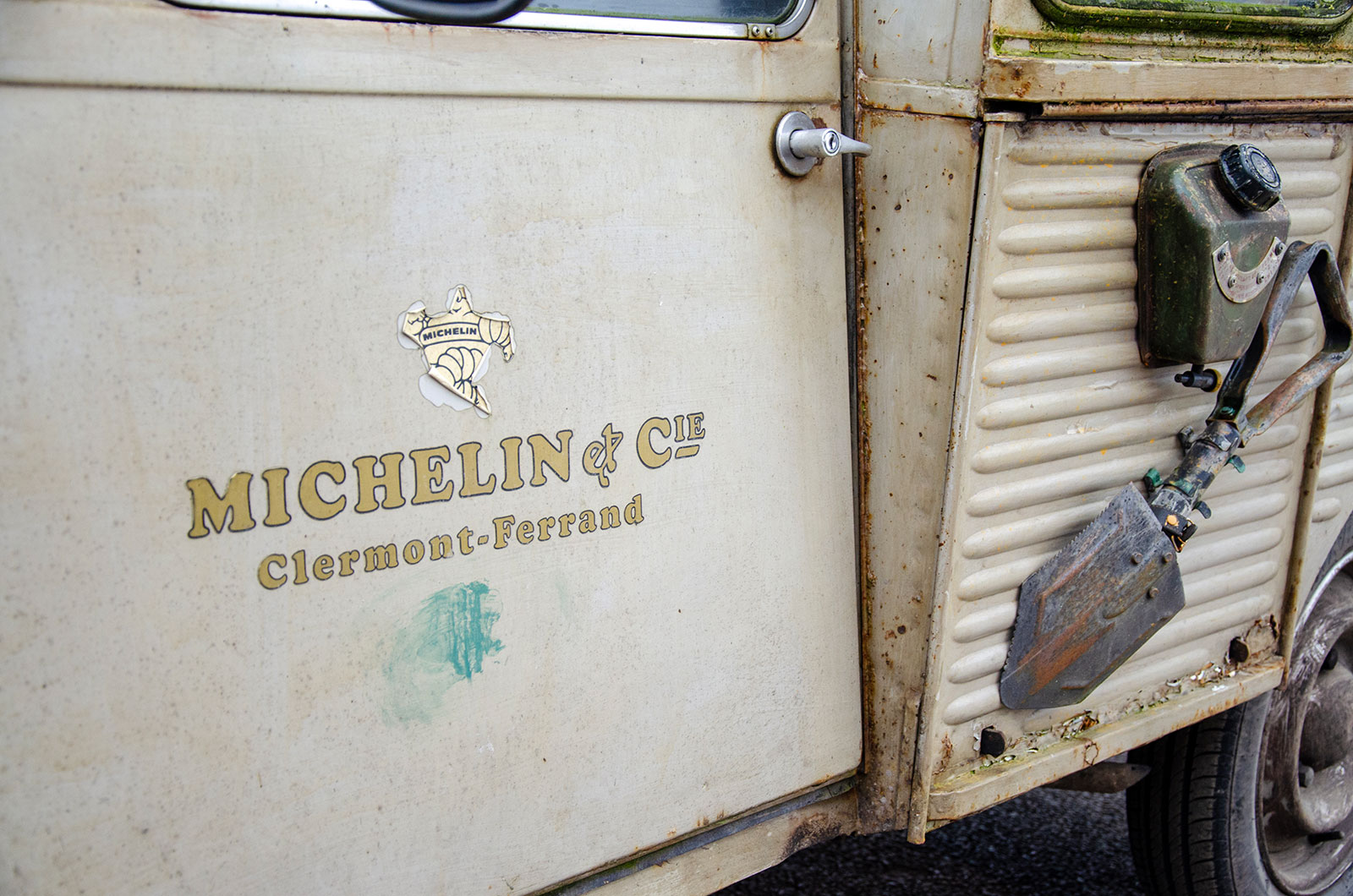
Part of this success, Kevin believes, is due to Michelin. The tire manufacturer owned Citroen at the time, and developed the tires specifically for the cars, with his car being the one to ferry spares around for the party.
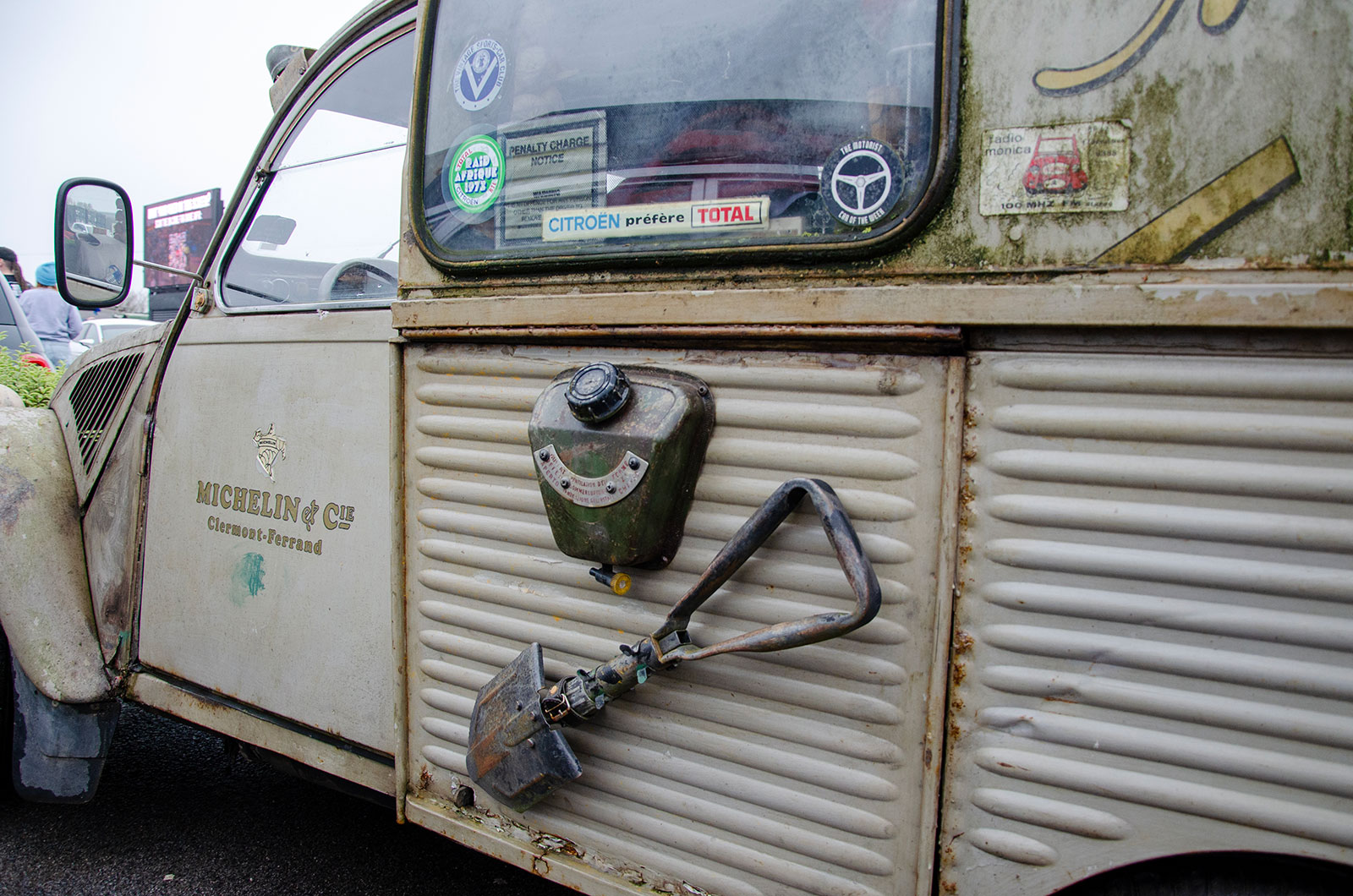
They designed the radial tire to run on these vehicles. So the Michelin is the tire to have, as they handle very differently to other makes of tires.”
Another aspect of the Raid’s success is undoubtedly due to the 2CV’s suspension. “It’s got four shock absorbers,” Kevin said, “and it’s also got springs in oil called Batteurs. So it’s very bouncy but very stable on the road.”
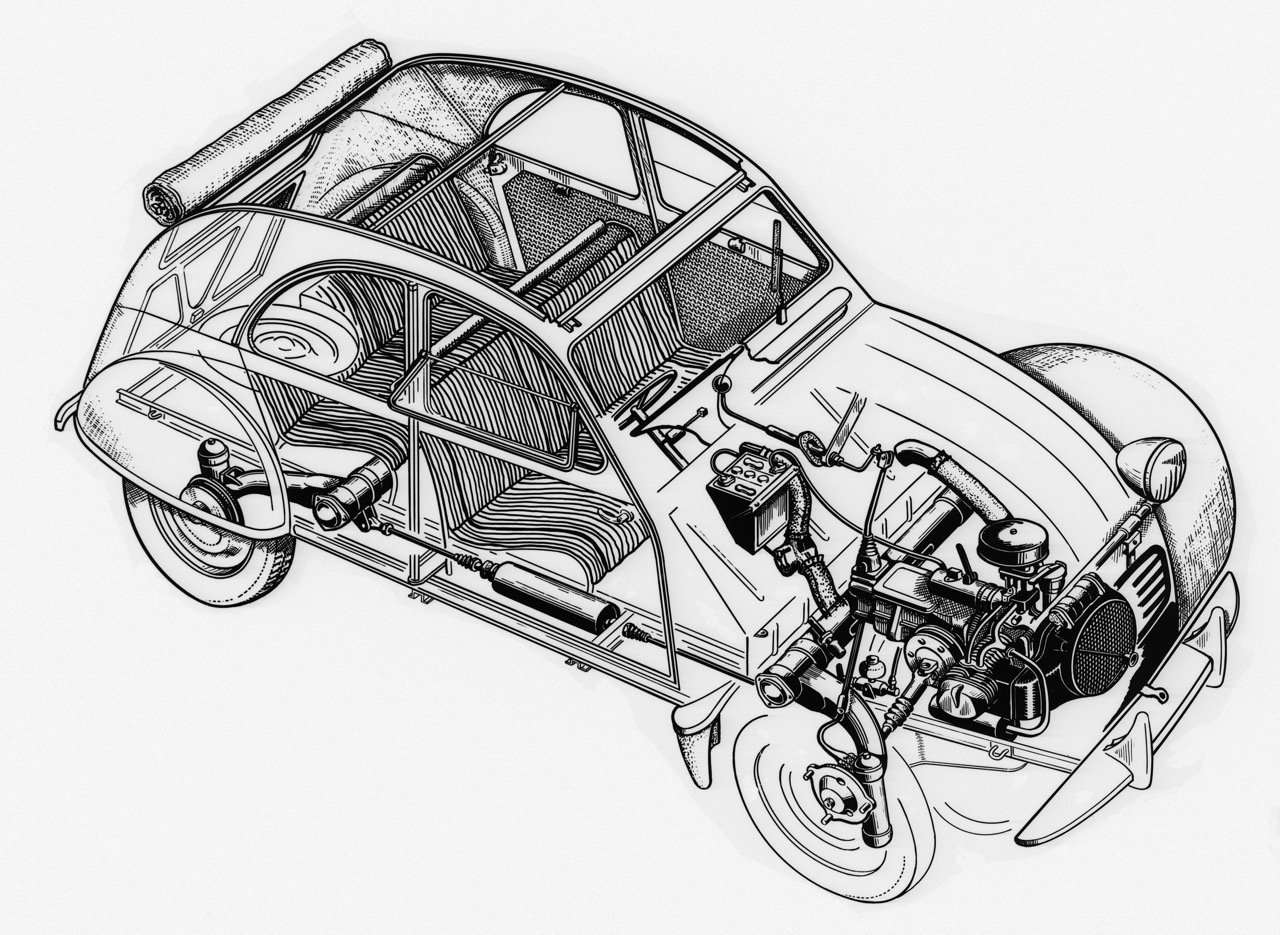
“If you’re following behind, it looks like it’s going to fall over on fast bends, but it never will. It’s more unnerving for someone looking at it than the actual driver.”
A Second Lease On Life
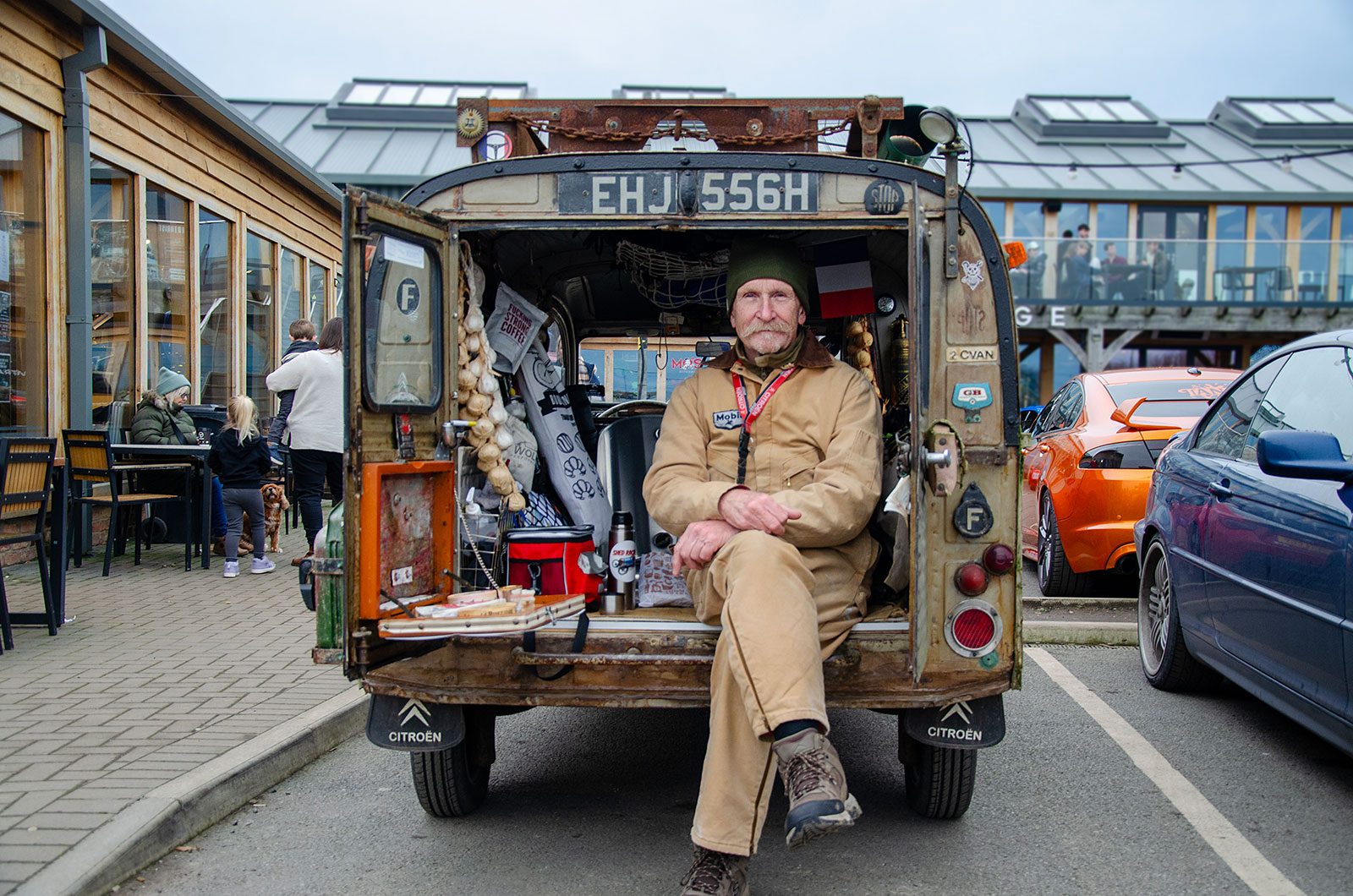
Somehow, though, after the car’s early life of adventure and conquering both desert and dune, it fell into disrepair and ended up abandoned in a field in Marseille. And this is where Kevin comes in.
“We found this in a field in Marseille, abandoned, and we just took it.”
That was seven years ago, and, unsurprisingly, the car needed some tinkering to get back to a running state.
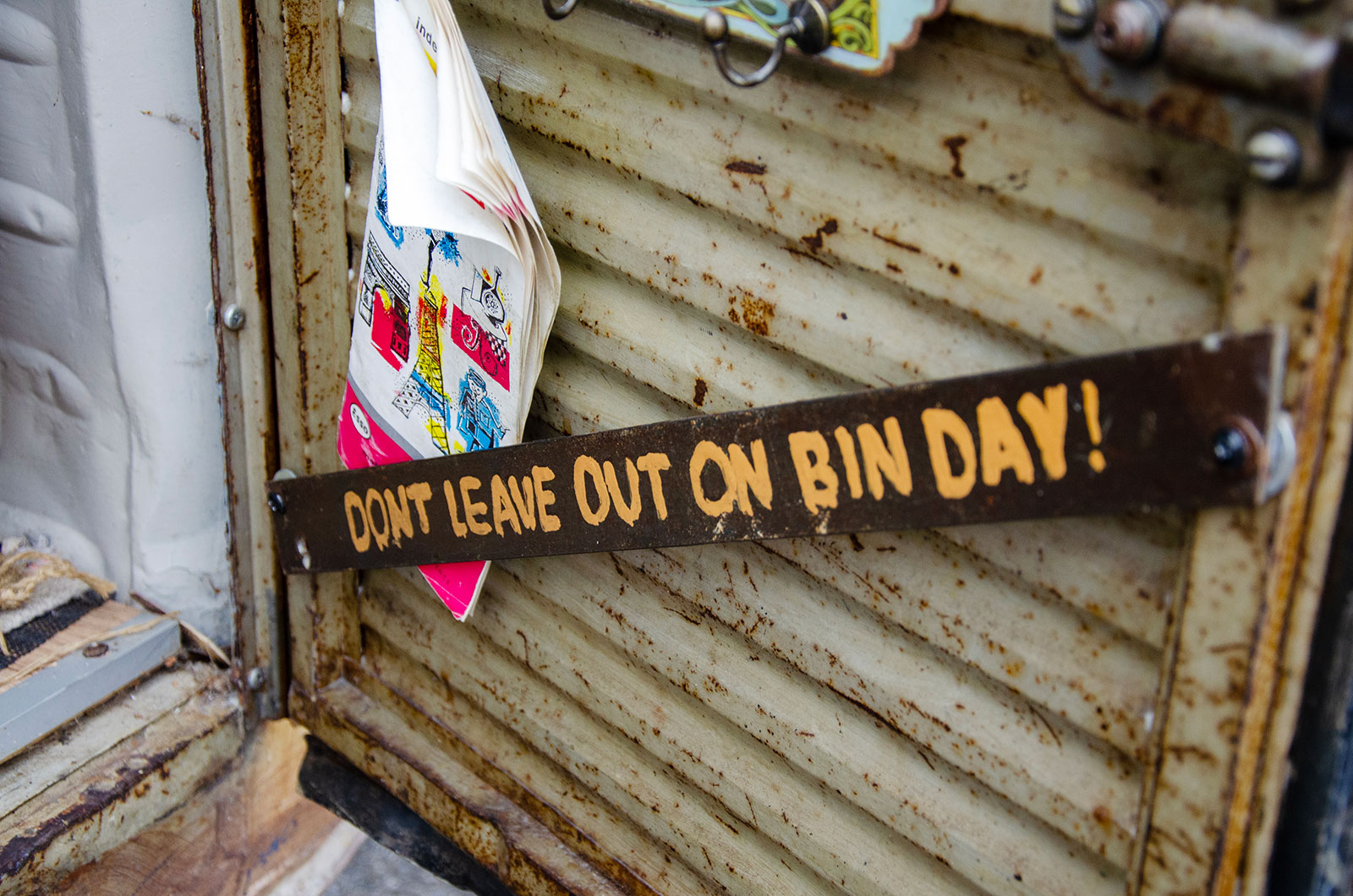
“It’s kitted out largely as we found it – the body is original, and the chassis is original, but all the mechanics have been renewed and replaced with new stuff, like tires and wheels.
“It’s got a very quirky umbrella-style gearstick in the dashboard, which people don’t understand, but once you’ve driven it for an hour you want one–you never want to change. So user-friendly.”
Kevin put a 602cc race engine (which makes a whopping 40hp) into it, upgrading from the 30hp a standard engine would have gotten and turning it into “an 80mph fire-breathing monster that scares young children and horses.”
No wonder the model was nicknamed the “tin snail” for its (lack of) performance.

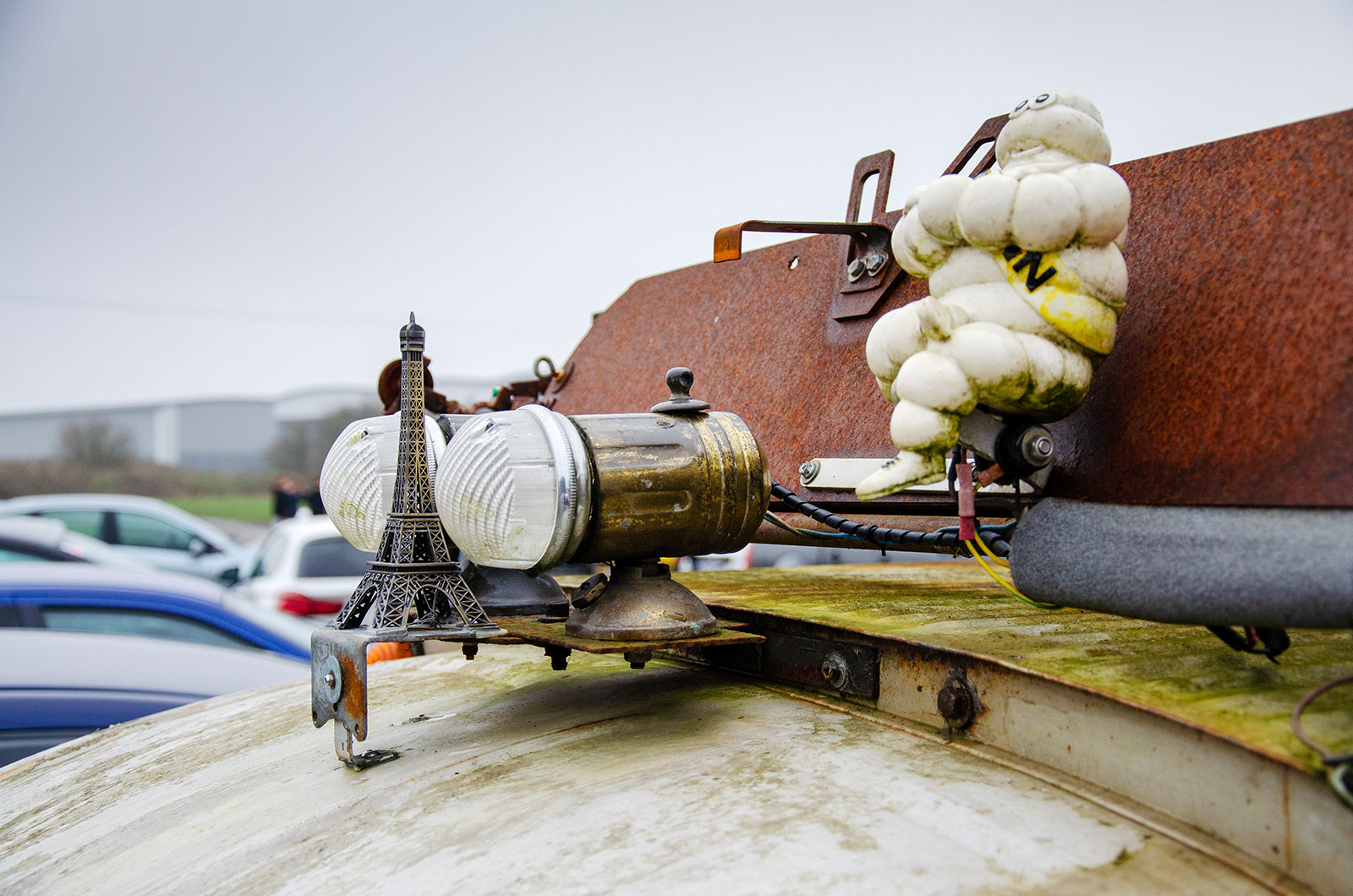
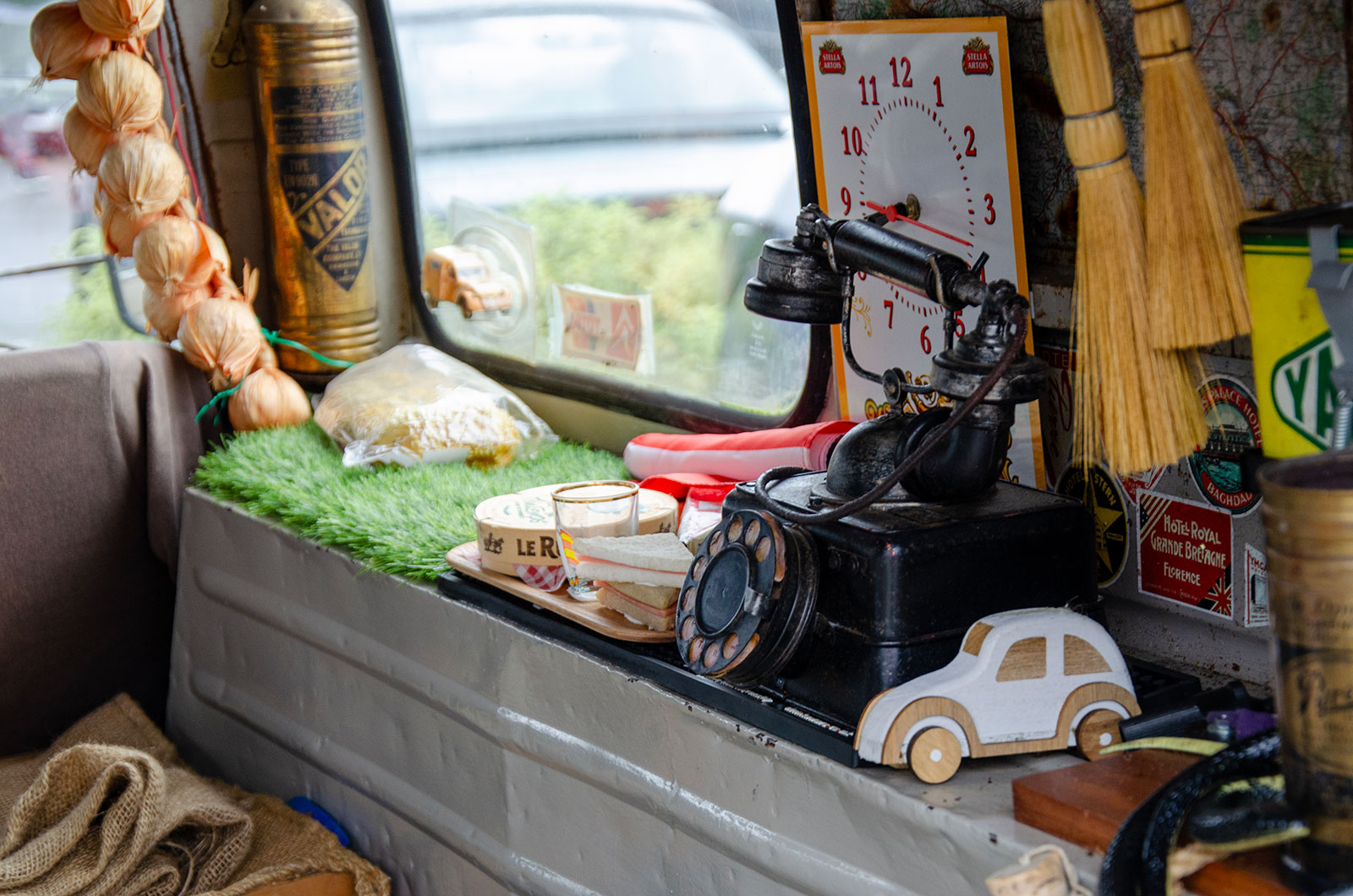
And while Kevin’s car sports multiple mollusks in reference to the moniker, those aren’t the only things he’s added, turning the cabin into an ode to everything French.
Michelin. Citroen. Tricolors. Onions. Garlic. Cigarettes. Cheese. Everywhere you look, more jumps out–it’s like those scavenger hunt games, or an automotive Where’s Waldo. Où est Waldo?
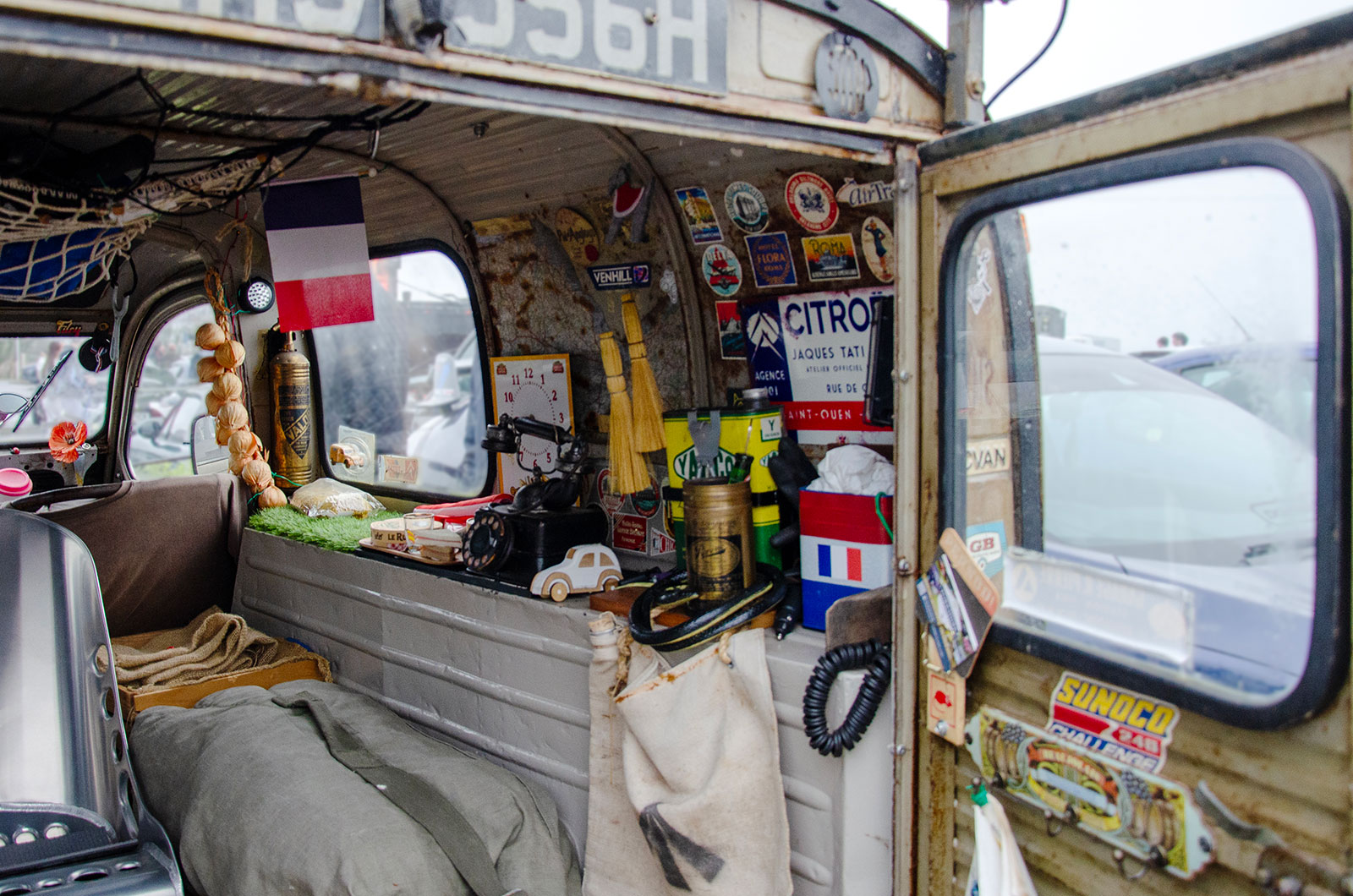
The aim was to make the car look “lived in,” Kevin said, with the trinkets being picked up from France, Holland, and anywhere else something takes his fancy.
“I used to go to France a lot in it, and I used to live in Holland, so you pick stuff up from autojumbles really,” Kevin told me. It’s a truly global creation though, with other pieces from Italy, Africa, the US, and even a small statue that was given to him by a taxi driver in Madagascar.
It all points to a car with an incredibly rich and truly unique history. It’s also one that doesn’t deserve to have been left to rot in a field, having fulfilled its initial purpose of providing tyres and support to over four-dozen 2CVs trekking through the desert in search of adventure and press coverage.
Which brings us back to my original question: When does dirt become patina, and is there a historical element to it? If so, you’d be hard-pressed to find a car with more right to wear its rust, dirt, dust, and discolor than this; a car that spent its early life supporting a fleet of plucky French adventurers, was left to the elements, and has spent the last seven years aging in a forest. And far from wanting to hide any of that, it’s all part of the car’s aesthetic for Kevin.
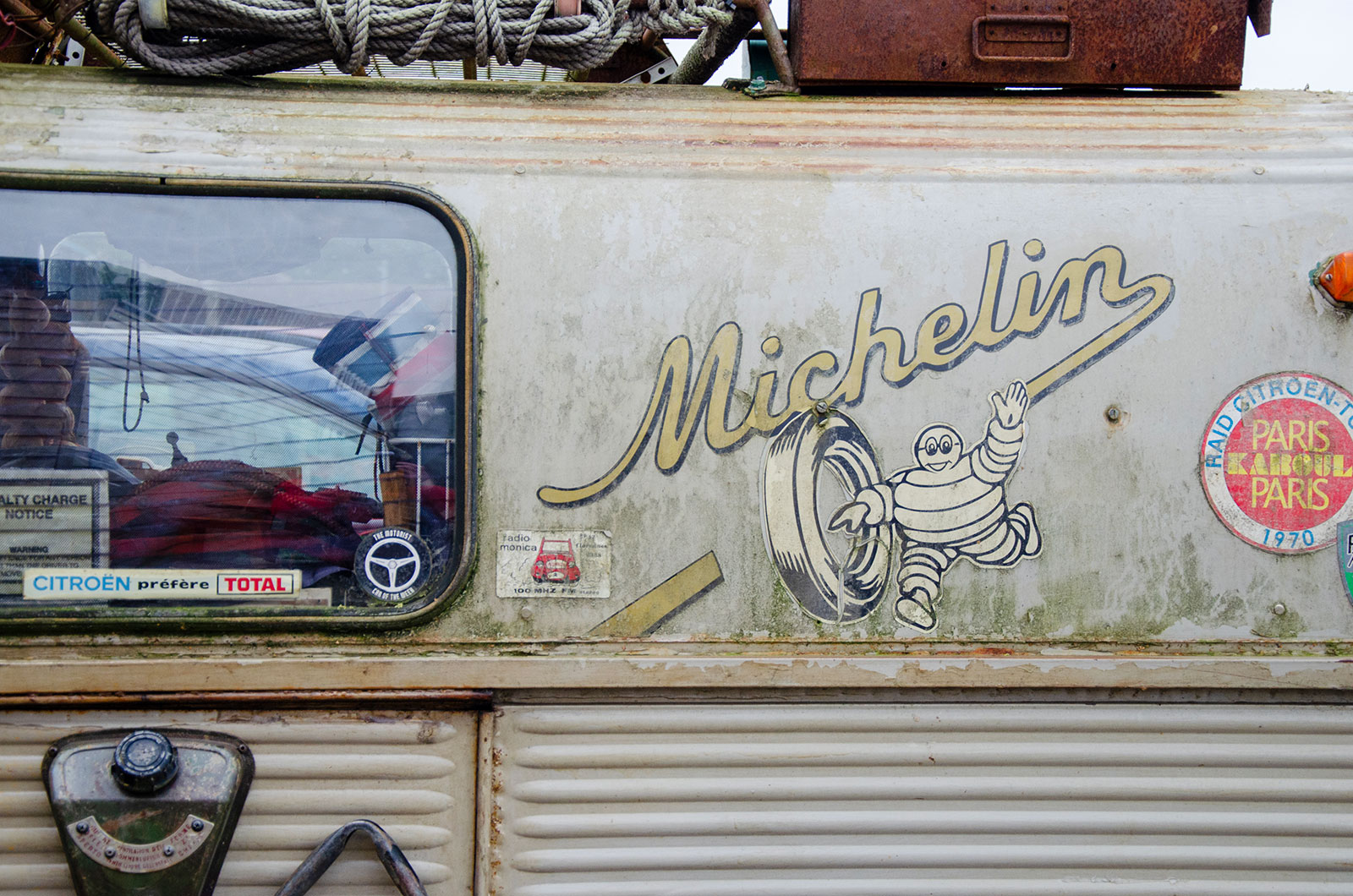
“[I want to make it] look like it’s been stood under a tree for 50 years. Which is broadly [true], because I live in a lodge in the middle of a forest. I don’t have a garage… it lives outside without a cover, so it changes with the seasons.”
“For those that say ‘are you ever going to paint it’? I say never. It’s taken 55 years to get it like this.”
So while some people look at this car and see something that needs painting, the true car fans will see patina. Every scratch, every patch tells a story.
All photos by Tom Jeffries
Top graphic images: Tom Jeffries; DepositPhotos.com


Mental note: In France, you can just take abandoned cars from fields if you want them. Nice.
Great article. I imagine it was a fun time had by all. Or nearly all. I don’t think I could stand 67 days of it, though. I’ve spent two weeks at my mom’s ranch house (she’s in a convalescent hospital after we moved her significant belongings to an assisted living facility) paying her bills and already missing the familiarity of my belongings, surroundings and friends. I can’t imagine two + months out there.
Lovely. I briefy tried to buy a faded red (gone matte pinkish) Fourgonette from a place in Santa Monica a couple years ago, but they never replied to multiple emails and voicemails. Probably for the best I guess, since the independent Citroën mechanic on Melrose vanished years ago. The tchotchke-filled interior reminds me of a Mexican place in Brewster, New York (off of I-84) that I used to visit in the late 1980s: Texas Taco.
I have to ask, even though there’s probably no concise answer: how does one go about ‘owning’ a car that’s been ‘found?’ I see this claimed a lot in Youtube videos: some handy fellow will drag a moss-covered something-or-other out of a forest without any mention of original owners, bills of sale, or titles… then they’ll power wash the thing, get it running (usually in less than 15 minutes, thanks to editing) and ‘flip’/resell it toot sweet. Ignoring all the actual back-breaking labor, etc… I can’t picture how you obtain a title for a car like that.
It can’t just be a matter of providing some scribbled ‘receipt’ on the back of a napkin, presumably from whomever claimed to ‘own’ the car and was willing to let it be hauled off for $50. and a carton of cigarettes, right? I mean, cars have VINs… if you were hoping the DMV would issue a new title, what if the VIN doesn’t match the ‘sellers’ surname in their records?
I’m probably overthinking this. Some percentage of these ‘I found it and dragged it home’ claims are likely semi-fictional, eh? Like, there is an actual previous owner, and at least some paperwork to go with the car?
I’ll shut up now. I was just wondering.
I guess the answer is “bonded title” but I do wonder if the reality is movie magic (i.e. an actual title somewhere, with money changing hands).
I don’t know the route and don’t want to downplay the accomplishment or French engineering but I wasn’t ready for this:
That’s less than 75 miles a day – which I assume means there was a lot of repair and maintenance time or more attention was paid to the 2CVs with all the wine than the one hauling the tires.
This makes it sound like he just stole it. Which, honestly, might have been the only way that 2CV was going to be saved from rotting into the ground.
I’ve seen plenty of farmers who park vehicles in a corner and never touch them again, while they slowly rot into the ground and become a source of pollution.
What Kevin Fitzharris described is called “theft.” I would like to think this gentleman found the owner during the registration and titling process and completed a proper transaction.
I adore the subgenre of “cheap people’s car offroad racing.” This car breathes the rarefied air of Class 11 Beetles and the occasional madwoman-owned Smart car.
When does dirt become patina: that’s up to you.
This is a terrific story, and the vehicle is a fascinating part of history. They have a ton of personality.
The accumulation of tchotchkes is a bit distracting, though. It’s getting to be a bit much, however, it’s his (purloined) truck, to do with as he likes.
This is one of the best things I’ve ever seen. Kevin and his Citroen are iconic. Thank you for sharing. Tom, your photos are gorgeous and I could stare at hand-inked technical drawings just all day. What a great article.
I think I’d be fairly annoyed to return to my stored car in a field and find it had been stolen by someone!
You can’t talk about a 602cc 40hp “race engine” and then not show it! That’s not how it works..
And why not a 652 while you are at it? You have Burton in the UK
What is an “umbrella-style gearstick in the dashboard”?
Very trippy but easy to figure out. I drove a 2 CV for a few minutes and figured it out. The Renault 4 has the same design.
Easy dashboard mounted in-out (and a bit to the sides) vertical gear stick.
That you have reverse and first gear opposite each other (to the left) makes it very easy to park.
And 2nd-3rd opposite each other, in the middle, nice for city driving.
And then 4th “all the way over there” (in and to the right) for out of town cruising.
Loved it in my 3 small Citroëns!
I can’t justify having a 2CV, but I’d at least like to replace the emergency winter shovel in my car with that trenching tool.
This goes beyond patina. It’s funky cold patina.
I will make words, but wow.
Patina doesn’t really describe this car. Its really wearing its history.
I love this story so much that I saved it in my glovebox!
Since this appears to be your first byline here, congratulations and welcome!
What a wonderful story and a wonderful car. Thanks, Tom!
Do you happen to have a brother that does stand up comedy?
Really cool car but as I’m not into racing I wonder does a support vehicle count as racing? And if so at 40 up this is surely the special Olympics of motor sports
When does dirt become patina, and is there a historical element to it?
I’ve heard that garbage officially becomes “artifacts” after 50 years, so perhaps after 50 years is the answer to this question.
The answer depends on the land’s owner. On BLM land, objects older than 100 years cannot be removed. The BLM is especially sensitive to the removal of cultural artifacts such as arrowheads and pottery.
It would be wise to understand local rules before collecting old objects on public land.
“even Jason has one” I feel the first word there is superfluous
‘Of course, Jason has one” would be more appropriate.
I love cars that come with stories
“If you’re following behind, it looks like it’s going to fall over on fast bends, but it never will. It’s more unnerving for someone looking at it than the actual driver.”
I can, however, state on good authority (my wife) that it is also more unnerving for the PASSENGER.
But yes, it is rather funny to take a tight turn off of a main road onto a side road and watch the joyful and then terrified expressions of people in cars waiting at the stop sign on the side road. At first, there’s this cute little car approaching. However, as my turn begins, they suddenly have this cute little car lurching over towards them in a manner whereby they are certain it will roll over into them.
Nice photos Tom!
Another aspect of the Raid’s success is undoubtedly due to the 2CV’s suspension. “It’s got four shock absorbers,”
OOHHH!!! Fancy!