


In his book The Arsenal of Democracy, A.J. Baime makes the interesting historical observation that an Allied B-24 built by Ford in Detroit likely dropped bombs in Northern Italy on a repurposed Ferrari factory building tools and equipment for the Axis, just a few years before the two companies would lay down their arms and battle on the track at Le Mans.
A new report says that the Pentagon approached Ford and General Motors to help with shoring up the country’s defense stocks (an Arsenal of, uh, Kleptocracy I guess). The timing is interesting given that the White House has also asked automakers to use all their factories to build more cars. For Ford, that’s a big deal as the company transitions into an advanced manufacturing arm… without its chief of advanced stuff.


This White House has been trying to get carmakers to build more affordable cars at almost any cost and, by one measure at least, cars are a little bit more affordable. You know what might be truly affordable? Chery’s new EV van for Europe. It also has a hilarious name.
What Could GM And Ford Build For The Department of War?
Iran doesn’t make a lot of cars, and I haven’t heard anything about the factory still building Peugeot 405s getting bombed, so I’m not sure that we’ve yet reached the modern equivalent of Ford vs. Ferrari. This new type of war seems to be more about missiles, drones, and the interception of missiles and drones. Given that automakers represent a large percentage of your typical industrialized country’s complex manufacturing, there’s been a surge in carmakers talking about becoming makers of weapons.
French automaker Renault is planning to produce drones at an underutilized factory, and Volkswagen has reportedly talked to the maker of the Iron Dome to build components for the air defense system. This makes this Wall Street Journal report on the Pentagon approaching GM and Ford about helping with the war effort perhaps not that surprising:
During the talks with U.S. manufacturing executives, defense officials framed bolstering weapons production as a matter of national security.
The officials asked whether companies could help as the Pentagon seeks to shore up domestic manufacturing capacity, the people said. The officials also asked executives to identify barriers to taking on additional defense work, from contracting requirements to hurdles in the bidding process.
Oshkosh, based in Wisconsin, entered a dialogue with the Pentagon in November following Hegseth’s call for companies to boost production, said Logan Jones, chief growth officer for the company’s transport segment.
Its discussions have centered on “where could we bring that capacity in a way that matches our core capability,” he said.
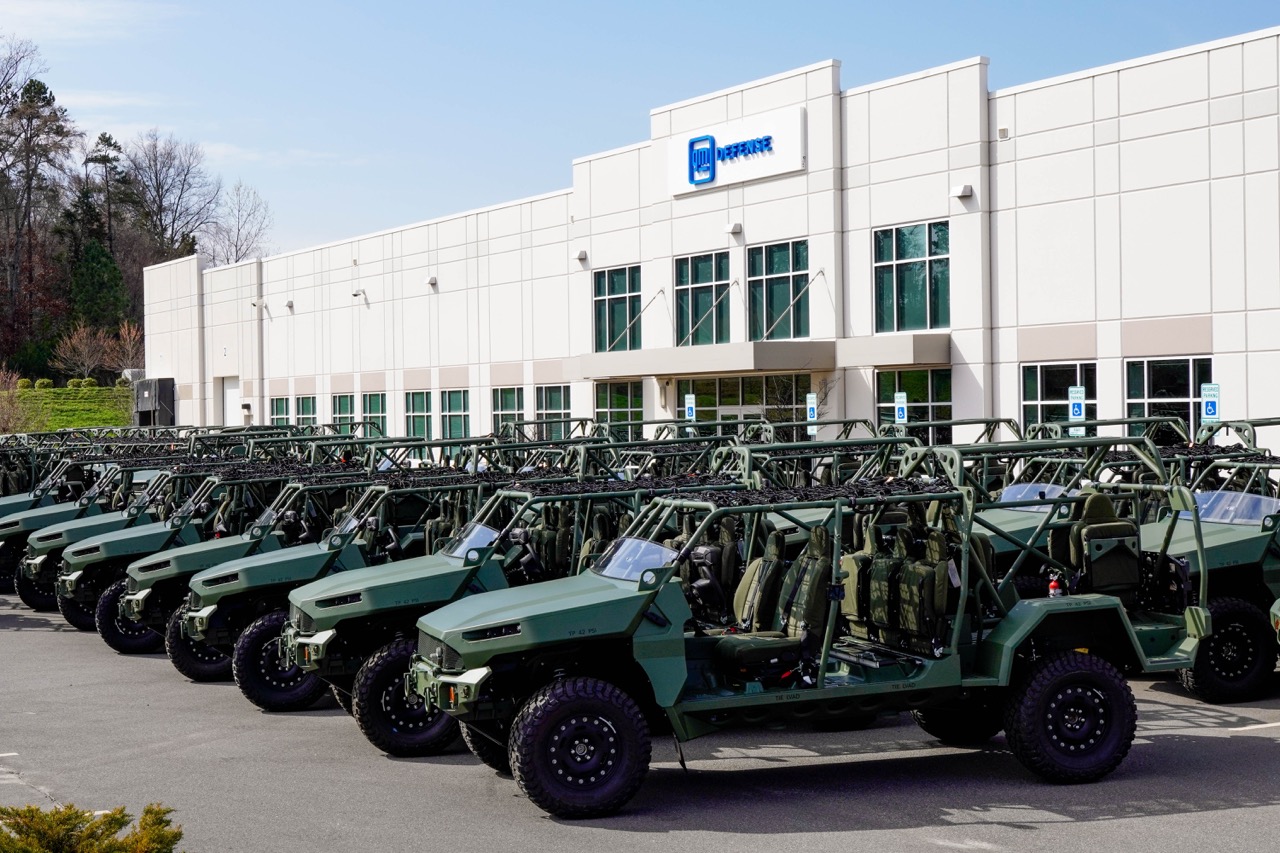
GM makes a lot of sense, as the company’s GM Defense arm already makes an infantry carrier for the Army, as well as up-armored Suburbans. Oshkosh is, historically, a big supplier of large vehicles for the military. Ford is a little more interesting, as the company sold its defense subsidiary (Ford Aerospace) back in the 1990s after making a bunch of missiles, including the legendary Sidewinder.
If you only have a hammer, everything like looks like a nail. If you have a Department of War, does everything look like a war? Maybe, but the War in Ukraine and this latest conflict has dramatically reduced the country’s missile stockpiles, and now the Department of War is looking to replenish stocks and asking for a historically large missile budget. The biggest issue might just be that we can’t build missiles fast enough, as Breaking Defense points out:
Ultimately, Congress is going to have to take a serious look at what industry can actually deliver before it signs off on such a historic spending plan, said Carlton Haelig, a defense budget expert at the Center for a New American Security.
“I would suspect that right now there is an extreme delta between what the department expects on an annual basis and what industry is able to produce with the supply chains and the manufacturing pipelines that they have in place right now,” he said. “I fully support the amount of munitions being requested. I think it’s the right call. But we need to start talking about the defense industrial base support for that request.”
What’s curious here is that the Trump Administration’s approach to manufacturing has been to try to get companies to utilize as much of the country’s factory output to build cars. Perhaps all those scuttled EV projects can be used to build missiles.
Ford’s Chief Tech Guy Out, Replaced By A Committee

It was a big deal when Doug Field came to Ford, given his background at Tesla, Segway, and Apple. According to this Ford release, he’s out and is being replaced by what sort of sounds like a committee?
Ford Chief Operating Officer Kumar Galhotra will lead the unified Product Creation and Industrialization organization. The team will be responsible for scaling Ford’s digital, design, and electric vehicle breakthroughs across its global industrial system, ensuring that innovative technologies are integrated with world-class engineering, purchasing, and manufacturing.
“The progress our teams have made in the past few years – from quality and cost to software delivery – has fundamentally reshaped the way we work and positioned Ford for a new era,” Galhotra said. “By uniting advanced technology with industrial execution, we can make decisions faster, eliminate complexity, and deliver great vehicles and digital experiences with the quality and efficiency our customers and shareholders expect.”
Doug Field, who joined Ford nearly five years ago to lead the company’s shift to electrified, connected and software-defined vehicles, has elected to leave the company after a transition over the next month. During his tenure, Field embedded high-tech capabilities into the company while building a world-class team and culture. Crucially, Field also helped foster collaboration between the Electric Vehicle, Digital & Design and Industrial System teams that made this full integration possible.
The press release is very friendly! However, as CNBC points out, not everything worked out as planned under Field’s tenure:
[M[any of Ford’s initiatives involving software and EVs did not perform as expected. Most notably, the automaker reported significant shortfalls in generation of software revenue and in December announced it would write down $19.5 billion related to a pullback in EVs and realignment of business priorities.
While several automakers have announced such impacts due to EVs, Ford’s write-down was much larger than its closest rival, General Motors, which has announced roughly $7.6 billion in such charges.
Given that basically every major automaker took a bath on EVs, it’s hard to pin the failure on just one person, and Ford CEO Jim Farley made a point of stating the importance of Field.
Car Affordability Improved In One Metric
My most controversial take is probably that the economy under Joe Biden was pretty good, all things considered (pandemic, PPP, et cetera), and that the current economy under President Trump ain’t that bad either. Yes, it’s K-shaped. Yes, private credit or some other financial iceberg lurking under the surface could collapse it all, but unemployment is relatively low and inflation isn’t catastrophic yet.
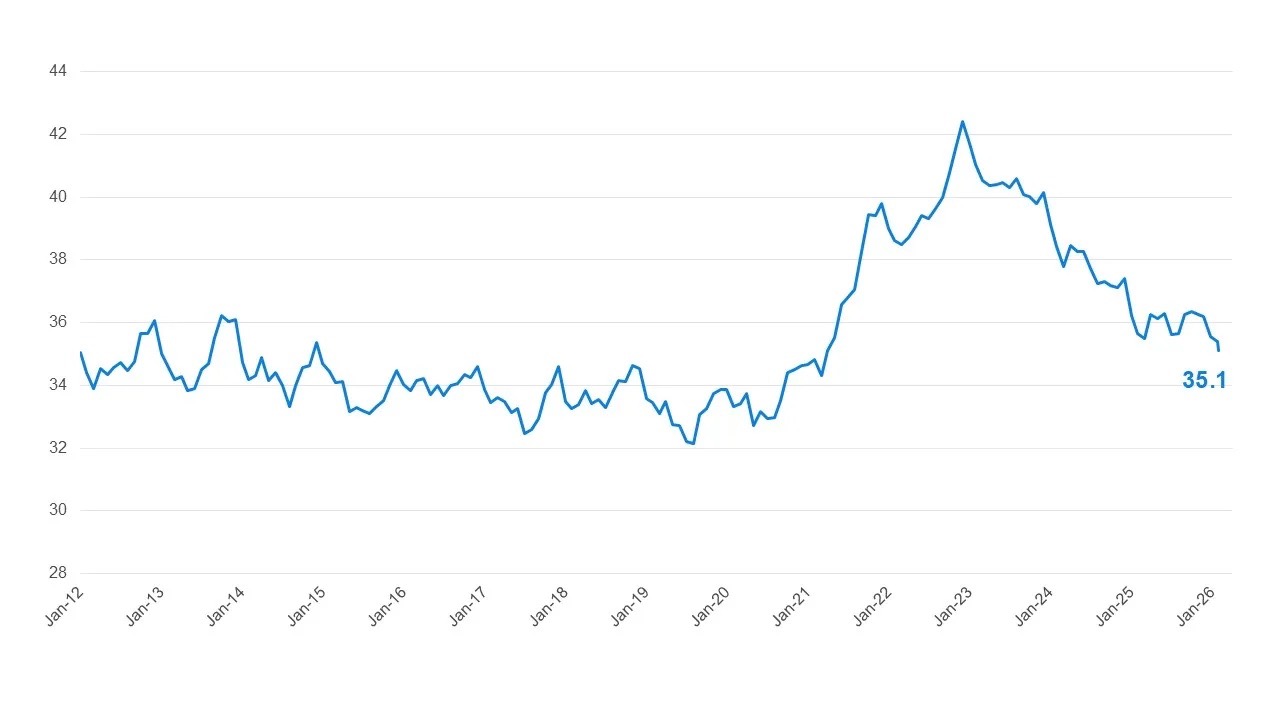
There are many ways to look at the affordability of cars, and price isn’t always the best one, if only because it can be skewed by buyers grabbing giant crossovers. Another way to look at it is the way Cox Automotive/Moody’s does, which is to look at how many weeks it takes the average household to afford the average new car, and numbers continue to improve:
The typical monthly payment for a new vehicle fell by 0.5% in March to $752, but was higher year over year by 2.9%, up from $731 a year ago. Still, with household income higher by 3.9%, the number of median weeks of income required to buy the average new vehicle dropped to 35.1 in March, down from 35.4 weeks in February and at the lowest point in nearly four years.
While new-vehicle affordability in March was better than it was a year earlier and continues to generally improve as household income grows, other challenges continue to place pressure on vehicle affordability in the U.S.
Yeah, here’s the catch:
In addition to the immediate financial pressure of $4-a-gallon gas prices, major vehicle ownership costs such as maintenance, repairs and insurance have all seen sustained, outsized increases since the pandemic. For example, while new-vehicle prices are higher by roughly 15% versus 2021, some estimates suggest vehicle insurance costs have increased by nearly 60%, while routine service and maintenance costs are higher by 40%. The compounding effect of these higher prices is at the heart of today’s affordability conundrum.
The best way to lower car ownership costs is probably to lower fuel and insurance costs, which doesn’t seem to be happening anytime soon.
Behold, The Delivan

Chinese car company Chery is planning to sell a commercial van in Europe, eventually, and it’s got the perfect concept. Delivan!
Positioned as a forward-looking commercial vehicle proposition, DELIVAN will be introduced as well as a series of DELIVAN concept vehicles, offering an early preview of the company’s product, technology and design direction ahead of a planned European product launch in 2027.
Commenting on the upcoming moment, Jolly Yang – VP of Chery Commercial Vehicle and CEO of DELIVAN said: “This is a defining moment for Chery Commercial Vehicle as we take our first step into the European market at the Commercial Vehicle Show. Europe represents one of the most advanced and demanding commercial vehicle environments in the world, and it is exactly where we want to demonstrate the strength of our vision, our technology and our long-term commitment.
I get that this is a portmanteau of Delivery and Van, but I immediately scanned it as Deli and Van. Maybe I’m just hungry.
What I’m Listening To While Writing TMD
I enjoy They Might Be Giants, even if I’m probably a few years too young to have become obsessed with them. Still, a new song is worth celebrating. Please enjoy “Get Down” from the ideally-named Particle Man YouTube account.
The Big Question
What’s the strangest non-car object ever produced by an automaker?
Top photo: GM Defense


The answers to TBQ are amazing, and this isn’t by any means the “strangest” one, but please give it up for the Frigidaire “Jet-Cone” Agitator! (start at 0:42): https://www.youtube.com/watch?v=neUK0U6lB2g
I assume that GM held the patent when the company sold Frigidaire to White-Westinghouse, which explains why these disappeared after about 1980.
Automotive journalism bonus: They Might Be Giants (also Violent Femmes and OK Go!) were at some point managed by Jamie Kitman. He was one of my favorite writers for Automobile and his work has graced the pages of many other publications.
Thatat headline is a little misleading.
identify barriers to taking on additional defense work, from contracting requirements to hurdles in the bidding process.” Is not the same as asking them if they could help build weapons.
Its more like, if we were to give contracts how could we do it more efficiently.
“Delivan”? As in most things automotive, Toyota already has things covered.
Meet Deliboy, not only a hilarious name, but it looked daft, too. Great packaging, though.
https://catalogphoto.goo-net.com/carphoto/10105009_199205.jpg
I love it. The proportions make it look like it would do a wheelie if you accelerated too quickly.
I wouldn’t call an economy that’s only good for the highest earners “good” or even “not that bad” by any means. It’s bad. The K-shape is bad. The level of inequality is all smelling a bit pre-French-Revolutiony in here. My heating oil bill alone shot up from $700 to refill most of the tank to $1100 in just a couple months (pre-Iran-war month vs. post-Iran-war), and I can’t imagine facing that on a tighter budget. Food is noticeably more expensive in recent years. Medical bills get stupidly expensive stupidly quickly—like, my kidney infection last year was still multiple thousands of dollars even with decent insurance. And housing? Buying a house doesn’t even seem like an attainable goal for a lot of folks who just feel lucky to find a rental that doesn’t suck with a landlord who isn’t a scumbag or a private-equity slumlord. These kinds of increasing costs are untenable unless you’re on the upper part of that K.
The fact that AI is a big factor driving the stock market up feels shaky at best. Companies claiming to do AI to make the number go up aren’t gonna get away with it for much longer, IMHO. Companies that ARE doing AI are even starting to pare back—take Sora, for example. It’s expensive and resource-intensive to run, no one wants to live near a data center (and public pushback has forced a lot of data center projects to back off), and a lot of us hate the half-assed and intrusive way theftbot tools are shoved into a lot of regular services. Hell, this garbage bubble even took PittRace from us when the owners took a data center project’s money and sold out. The backlash is real, and when that bubble pops, it ain’t gonna be pretty for anyone’s investments or the economy at large.
Unemployment being low doesn’t seem to be telling the full story, either. Folks out of work are having a ROUGH time at it because places just aren’t hiring. “Where are people working and how much are they making?” is always my main concern that gives needed context to those numbers, as a software engineer picking up work at Starbucks to float between regular jobs is technically employed, BUT. Also, how many employed folks are able to keep up with increasing costs right now? Wages haven’t been rising at the same rate as the costs of living for a while. Again, the number of people who can’t make ends meet due to the prices of basics like food, healthcare, housing, and fuel makes this a bad economy.
I don’t care as much about stonks going up—I care about being able to make a decent living for myself, and I know I’m not the only person who feels like their quality of life is less than ideal right now. It’s hard to think about investments in a retirement account when you’re still paying off student loans, I guess, or if you’re struggling to pay your regular bills. The number of people prematurely taking money out of those retirement accounts to make ends meet has shot up recently as well! Again, I have it better than a lot of people, and I’ve still been paring back on things because of various costs shooting up or being higher than initially budgeted. It sucks!
People deserve not only the ability to eke out basic costs, but the ability to live at least a little better than that. That’s what I’d consider a good economy: one where regular working people can actually have some money leftover at the end of a paycheck. Money to toss in savings. Splurge sometimes. Buy a house if you want to. Actually build wealth, occasionally do fun things that make you happy, and get ahead in life. This economy isn’t allowing as many folks to do that, and thus, sucks big, floppy, hairy balls for regular people.
Anyway, my favorite weird-non-car things made by an automaker are definitely VW’s curry ketchup and sausages. Delicious.
THAT’S ANOTHER COST I’VE BEEN PUTTING OFF, GOSHDARNIT: MY VOLKSWAGEN IS STILL IN TEXAS. Moving the rest of my stuff was expensive enough, so I held off on even thinking about the race-hoopties until after winter. But transporting a hooptie cross-country with today’s fuel costs?! The ones that shot up a gallon per dollar in no time?! How in the hell am I supposed to live, laugh, or love in this cursed economy?!
“Wages haven’t been rising at the same rate as the costs of living for a while.”
What is a while? Months, years, decades?
Looking at the 2020’s:
Real median wages did fall in 2020, 2021, and 2022. Then in 2023 and 2024 they grew rapidly so that by the end of 2024 the average household was doing better than in 2019. We should have 2025 numbers in a month or two.
Going back decades things are much rosier today for the average US household than in the 80’s, 90’s, 00’s, or most of the 10’s.
https://fred.stlouisfed.org/series/MEHOINUSA672N
Now that is the median and not everyone’s fortunes are the same. The middle class is shrinking but more household’s moved up than down. The largest growth segment has been the upper middle class.
It’s the not-everyone’s-fortunes part that’s the kicker, and median income isn’t telling the full story there. The issue is how much of those wages are left after paying for everything else, specifically the basics. Wages may have outpaced inflation, but more of the share of what’s left over is going towards recurring bills and necessities and less towards things like long-term savings. Data for all of that stuff can be pretty bleak, especially when it comes to the over-thousand-percent increase in housing costs since 1970: https://www.consumeraffairs.com/finance/comparing-the-costs-of-generations.html [Interesting surprise there: fuel, but I am going to be very curious how the adjusted-for-inflation fuel trends look after this year if they stick around the current amounts, though.]
Folks are even more screwed if they took out student loans hoping to make that jump in income, too, because college costs have jumped way up, too. Teens who’ve never even seen a bill in their life (self included, admittedly) signed up for boatloads of debt thinking it’s their ticket into a decent-paying job. Again, it’s not the wages number that’s as worrisome to me as the money leftover after you’re done paying for the basics.
Analyses broken out by income level are a lot less rosy than the overall mean. Higher incomes have seen a much steeper rise in wages than everyone else (admittedly a pro-union institute’s chart, but based on federal wage data and oof at how little that 50th percentile’s line has gone up: https://data.epi.org/wages/hourly_wage_percentiles/line/year/national/real_wage_2025/wage_percentile?timeStart=1973-01-01&timeEnd=2025-01-01&dateString=2025-01-01&highlightedLines=wage_p10&highlightedLines=wage_p50&highlightedLines=wage_p90&focuses=), and lower incomes have been hit harder by inflation in recent years given which specific items saw the biggest jumps in price (https://www.statista.com/chart/35845/inflation-by-income-group/).
An economy that leaves that bottom leg of the K behind is not a good one, IMHO. Everything could be doing worse, sure, but that doesn’t mean that a fair chunk of society isn’t in a pretty rancid spot right now.
That link of real wages by income percentile is a really good data source – thanks.
In the last 25 years real wages have increased:
38% – 90th Percentile
28% – 80th Percentile
24% – 70th Percentile
22% – 50th Percentile
27% – 30th Percentile
32% – 20th Percentile
35% – 10th Percentile
Everyone’s wages have increase in real terms. The biggest gains are at the top and bottom and the smallest in the middle. It is an inverted bell curve
Which is why the K shape economy descriptor does not fit. We do not have half the economy doing better and half doing worse. Not only is everyone doing better but the 2nd and 3rd largest gains are in the two poorest categories. It relationship to the bottom and top the middle is falling behind but in real terms they are still improving.
Per your link the real cost of a new home has not gone up 1,000%. In 1973 the cost of the median home sale was $232,455. In 2023 it was $426,100. That is an 83% increase in real terms. The median new home also increased in size. In 1973 it was 1,525 sq ft and in 2023 it was 2,250. 47% larger. We know how to lower home costs – build more homes and make them smaller. We just have to do it instead of talk about it.
I know about college cost and student loans. I made the dumb decision at 17 to attend a private college. I wised up and transferred to a state university my junior year but still spent double what a public school education would have cost – much of that financed with student loans. My wife was lucky and her parents paid for her school. Unfortunately she picked a major that was interesting but basically useless at making money. So at 24 she got tired of making a buck over minimum wage and went back to school as an adults. That was 5 years out of the work force and paying for school. We had student loan payments for 12 years.
Money was REAL tight but we got by and the sacrifice paid off but that didn’t mean things didn’t look bleak in the thick of it. We made a plan and worked the plan.
Also one of the smartest things we did financially is get married at 22. Housing, insurance, utilities, entertainment, food – almost everything is cheaper per person as a married couple. I look at some of my younger single friends and coworkers and wonder how they manage. I also find it crazy that most of them aren’t even trying to date. Instead they have a long checklist of life milestones to pass before they start looking for a partner – which in my mind is backwards because having a partner to pool resources and support each other makes it easier to hit those milestones. Life in the USA is not designed for single people.
D’oh, this is what I get for trying to find the specifics in between working on……..work—that thousand percent figure wasn’t adjusted for inflation. Still, 83% higher is nothing to brush off, and the amount of earnings going to housing and other necessities has been getting bigger and bigger every year. It’s not just McMansions feeding the squeeze, either—places that came up in my recent search for a smaller rental were pretty eye-popping, too. Even efficiencies have gotten way pricier than they should be compared to a few years ago. Some of my friends seem to play musical apartments every few years when their landlords raise the rent, and that would drive me nuts.
Anyway, my point is, that’s where a lot of folks out there are feeling squeezed. Take-home pay is more, yes, but it’s the other major costs rising that are eating into whatever extra cash folks might make. That’s the bad part. That’s why I can’t call this a good economy.
Sounds like you’ve got it mostly together, which is good, and yeah, being able to split costs (and worries, if either of you lose a job or run into any other major life issues) with a partner is a huge leg up. The single tax is painfully real, and it sucks for those of us who don’t want to date or who just have other priorities. That’s a thing! And it should be fine. Like, getting married should not be a requirement for pulling yourself out of financial precarity. (Or whatever else you decide to do or not do with your family/living situation, for that matter.)
An 83% increase in home prices over 50 years isn’t something to brush off but it is also something that is included in inflation calculations. So are healthcare and education costs. That is all baked into the real wage increases from your link.
What isn’t baked in is interest rates. The CPI does not include the cost of borrowing because it was created in a time where consumer credit basically wasn’t a thing. US consumers have been conditioned to expect extremely low borrowing costs. Mortgages less than 5%, cars at 0.9%, etc. Half of credit card holders carry a balance. Many US households have based their budget around cheap debt and a perpetual cycle of debt so when a car or mortgage rate jumps from 4% to 8% it hurts.
Housing costs aren’t increasing everywhere. The value of my parent’s home in Michigan has dropped 30% in 5 years. My home value has dropped 7%. Which leads me to another change of the decades.
Far fewer people move today. Back in the 70’s 20% of households moved in a given year. People hopped around and followed jobs and opportunity. People flowed from expensive locations to cheaper ones and that was across the economic range. Now only 10% of people move and it is overwhelmingly college educated people that are moving to a different state. There are cheap houses out there but people have to be willing to move to flyover country and the rust belt.
As to the single tax – yes it is real – but human society is based on partnering That is the way it works today and how it has worked for centuries. Romance or roomate – things are cheaper with a partner.
That’s my point, though: an economy where folks have loaded up on debt they’re carrying around (either through cheap credit or other reasons, like not understanding how thousands in student debt will look like to pay back) isn’t a good one, and neither is an economy where young or single people can’t seem to get ahead on their own, or where one big expense like a medical snafu can end in financial ruin. We need better financial education in this country, full stop, and it needs to start earlier, but I don’t think mistakes like “oops, I went to a pricey university” or “well, that’s an inconvenient time to find out I’ve got a heart defect” should result in financial precarity for decades.
People still move where the jobs are, but a lot of the better jobs aren’t where housing is cheap. Housing costs are high in cities for a reason: there are more people who need to live there for work. There are some things that don’t make sense here as well, like return-to-office mandates for jobs that don’t need to be in an office, or the fact that we treat a lot of primarily rural careers like agriculture like total horsecrap. (A buuuuuunch of the farming and ranching community is struggling hard to get by at all, and it’s a major problem for both our food supply and the people who make it happen, for example.)
Pay in cheaper areas also tends to be lower to reflect the lower cost of living, so it’s not a magic bullet for getting ahead. I’ve come across numerous job listings in recent years that have two separate pay tiers: one for in-office—almost always in a more expensive area!—and one for remotes. I finally gave up on being a remote because I couldn’t get ahead. The jobs still offering remote work in my field weren’t at stable companies, didn’t pay well, and weren’t a match for my level of experience. Remote-work groups I’m in have seen opportunities shrink hard lately as well. Most of the in-office work is, well, where a lot of the offices are, which tends to drive up real estate costs around said offices due to the demand of people needing to live nearby. Vicious cycle, that.
A lot of folks I know who live in cheaper areas have longer commutes, too, so you’re gonna feel one of the highest-rising costs—fuel—much harder than someone who lives closer to their employer. The highest monthly jump in gasoline prices since the CPI started tracking it (https://www.bls.gov/news.release/cpi.nr0.htm) IS hurting a lot of folks right now. (Those were the “how do recent prices look?” numbers I was wondering about, I guess.) Again, that’s a key indicator for me that This Economy Actually Sucks Pretty Hard, especially with the car-dependent way we get around in the U.S. Making and keeping a budget is tough to do when key costs shoot up like that.
Moving is also expensive as heck—I just moved for a better, hopefully more stable job, and it’s gonna sting for years, both financially and mentally. It entails uprooting yourself from whatever support network you’ve built up, from doctors you trust all the way to that one person you call when your laptop is FUBAR or even folks you regularly hang out with to decompress. Friends are just harder to make later in life. I’ve been finding that out firsthand even though I’ve got interests with obvious groups to participate in and chapters of clubs here that I belonged to in my former city! I moved a lot as a kid, too, and that was rough as hell on me. A lot of the parents I know aren’t gonna do that to their kids if they can avoid it. Point being, financial concerns aren’t the only ones that matter, and a better economy would allow normal working people more financial room to take care of those other needs.
Back to the finances: I also didn’t move for a job for years because no one in my industry was offering a moving stipend, and I couldn’t make it make financial sense without that. My new job didn’t, but the other numbers finally worked. Benefits like that keep shrinking or taking a higher chunk out of folks’ paychecks, though. Health insurance costs also shot up across the board this year. All of those extra costs, big and small, pile up on top of everything else that’s gotten more expensive.
I think we’ve got a fundamental disagreement on what a good economy should look like. I’d prefer far fewer people to get left behind, and far more to be able to cope with big expenses like moving or paying off past debts, even if they haven’t followed an ideal route to get there. The path to having more stable finances should not be that narrow.
Yes places were houses are cheaper have lower wages but it is not even close to being linear. Look at the median home price divided by the median income in all 50 states. West Virginia has the most affordable homes and the median home is 2.7X the median income. Hawaii is the most expensive at 10X.
I’m not talking about moving from NYC to a tiny farm town. I’m talking about moving to Birmingham, AL / Columbus, OH, Detroit, MI….
This topic comes up at work a lot as I live in an expensive west coast city. People say they will never be able to afford a house. I pointed out that in most of our other US locations pretty much everyone at their level owns a house. The response is “But I don’t want to live there”. OK – then don’t complain that you will never be able to buy a house if you are not willing to do what it takes to own a house.
I’m realistic about the economy. If the average family is seeing real gains then to me that is good. Today is not perfect but it is better today than at other times in my adult life. In the 00’s we had declining real median wages and 2 recessions.
Again: you still have to find a job in one of those smaller cities, and moving is *rough* (financially, mentally, and hell, even physically given how much crap the movers broke). I get that some people just don’t want to live in other places, but the decision to stay put in a place (or not) is a lot more complicated than just “I like it here” for most people who have to make it.
You must have better-off friends than I do. I’m also being realistic, and things aren’t looking so hot to me or a lot of other people my age. I can’t think of anyone (who isn’t already loaded and can therefore ride out whatever regardless) who’s really seeing much gain right now. Things just keep getting more expensive and between things like interest rates and supply chains getting FUBAR, it’s all primed to shoot up even further.
Moving is rough – I know – I’ve done it 6 times in 25 years since I was married with 4 of those to a different state. Did more than 10 moves when I was single but those were within a few hundred miles.
Movers? What are those? I kid – 2 of my moves involved professional movers paid for by the company. The first one went well with almost no issue. The second they damaged 80% of the items and I spent 6 months fighting for them to pay their own damage estimate.
The other 4 moves. Those were done myself. The last one was Alabama to Oregon. Company didn’t pay anything towards moving – it was all out of pocket.
My wife drove out ahead of time and I stayed back to pack up the house and sell. (Along with selling, donating, or tossing a lot of stuff – moving is a great time to streamline one’s possessions and get rid of the stuff that never gets used and is just taking up space).
Packed everything right myself then drove a rental Penske truck 2,500 miles towing a car dolly. I did hire some guys from UHaul on each end to physically load and unload the truck. That cost a couple hundred bucks and was worth it to me considering the stairs.
I’ll echo what Kevin has said here several times. If you don’t like how your life is going what are YOU going to do about it. Nobody cares about your situation more than you. Make a plan, work the plan.
I’ve seen it happen for myself and others.
Hang in there. You make a lot of good points and anyone can quote statistics to support what they want to see. The economy is personal. The only people who can argue that the state of health care in this country makes sense are the drug companies and the insurance companies. I know you’ve had an expensive year with the move and it sounds like some health issues too. Energy costs have exploded. I have heat pumps and my bill for a very cold February was $685 compared to about $400 a year ago, which was up from the year before. Anyway, all I mean to say is that I empathize with your situation and I agree with you.
You’re such a downer. Why can’t you be more like Fancy Kristen and write positive things? /S
LOL, that sounds like the automotive-writer equivalent of “smile more,’ which…you don’t tell me. You should never tell me that.
Anyway, even the Puffalumps aren’t happy about this garbage. It’s so frustrating when there are a lot of statistics that sound pretty rosy, or are at least doing better than the at-the-grocery-store/at-the-realtor’s-office/at-the-gas-pump day-to-day reality reflects. I have to pay for all of this garbage that eats into my Bad Volkswagen Group Decisions budget, so dammit, I am going to be as mad and sad about it as is warranted here.
Currywurst.
Barf
“What’s the strangest non-car object”
Not disagreeing, idk.
Out of deference to your disgust I’ll change my answer though it’s a stretch;
Nissan and Hitachi are both offshoot companies of Kuhara Mining sooo… “The Magic Wand” is the strangest non-car object produced by a company that was ever an automakers sibling.
TBQ: Youabian qualifies as an automaker, right?
I don’t know if a B24 ever made “contact” with a Ferrari war factory. But Ferrari’s war exploits were…interesting. Mr. Ferrari either licensed or stole the plans to something called a (German) Jung machine to manufacture ball bearings for the Axis. It has been alleged, or maybe it’s a fact that some of these machines never made it to their end users, having been “highjacked” and returned to the Ferrari factory for a “serial number update” and delivery to a second customer. It’s not clear whether he was helping the Allies or himself but it allowed Ferrari to buy apartment buildings which funded his car building efforts after the war. The recent Ferrari movie touches on this source of wealth that funded il Commendatore’s car company.
War profiteering is apparently very…..profitable!
Interestingly (I watch a lot of YouTube) the Germans built the best ball bearing machines and used a lot of the ball bearings turned out by their machines too. We bombed their factories for that reason.
However we Americans, led by the (well known auto supplier) Timken company, relied on tapered roller bearings to keep the wheels in our arsenal turning smoothly.