


In his book The Arsenal of Democracy, A.J. Baime makes the interesting historical observation that an Allied B-24 built by Ford in Detroit likely dropped bombs in Northern Italy on a repurposed Ferrari factory building tools and equipment for the Axis, just a few years before the two companies would lay down their arms and battle on the track at Le Mans.
A new report says that the Pentagon approached Ford and General Motors to help with shoring up the country’s defense stocks (an Arsenal of, uh, Kleptocracy I guess). The timing is interesting given that the White House has also asked automakers to use all their factories to build more cars. For Ford, that’s a big deal as the company transitions into an advanced manufacturing arm… without its chief of advanced stuff.


This White House has been trying to get carmakers to build more affordable cars at almost any cost and, by one measure at least, cars are a little bit more affordable. You know what might be truly affordable? Chery’s new EV van for Europe. It also has a hilarious name.
What Could GM And Ford Build For The Department of War?
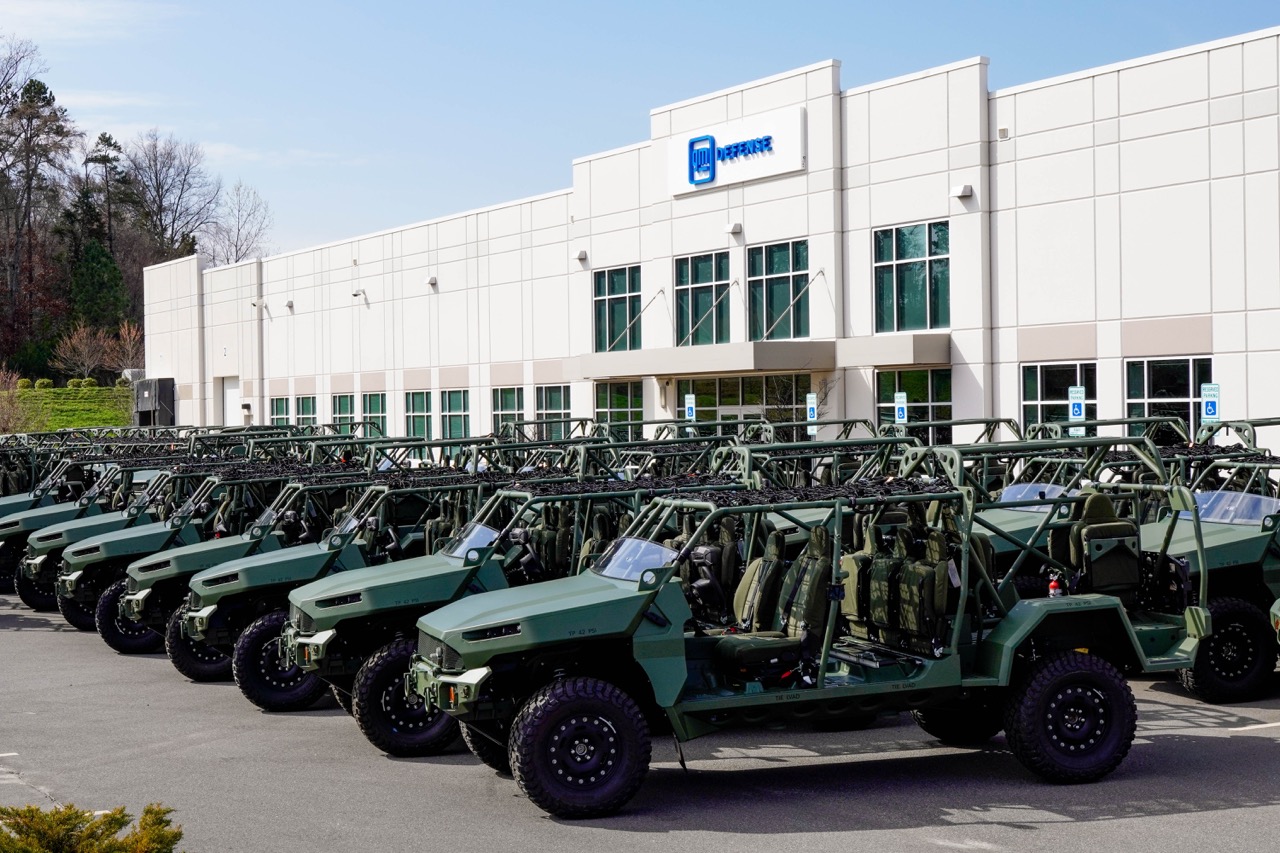
Iran doesn’t make a lot of cars, and I haven’t heard anything about the factory still building Peugeot 405s getting bombed, so I’m not sure that we’ve yet reached the modern equivalent of Ford vs. Ferrari. This new type of war seems to be more about missiles, drones, and the interception of missiles and drones. Given that automakers represent a large percentage of your typical industrialized country’s complex manufacturing, there’s been a surge in carmakers talking about becoming makers of weapons.
French automaker Renault is planning to produce drones at an underutilized factory, and Volkswagen has reportedly talked to the maker of the Iron Dome to build components for the air defense system. This makes this Wall Street Journal report on the Pentagon approaching GM and Ford about helping with the war effort perhaps not that surprising:
During the talks with U.S. manufacturing executives, defense officials framed bolstering weapons production as a matter of national security.
The officials asked whether companies could help as the Pentagon seeks to shore up domestic manufacturing capacity, the people said. The officials also asked executives to identify barriers to taking on additional defense work, from contracting requirements to hurdles in the bidding process.
Oshkosh, based in Wisconsin, entered a dialogue with the Pentagon in November following Hegseth’s call for companies to boost production, said Logan Jones, chief growth officer for the company’s transport segment.
Its discussions have centered on “where could we bring that capacity in a way that matches our core capability,” he said.
GM makes a lot of sense, as the company’s GM Defense arm already makes an infantry carrier for the Army, as well as up-armored Suburbans. Oshkosh is, historically, a big supplier of large vehicles for the military. Ford is a little more interesting, as the company sold its defense subsidiary (Ford Aerospace) back in the 1990s after making a bunch of missiles, including the legendary Sidewinder.
If you only have a hammer, everything like looks like a nail. If you have a Department of War, does everything look like a war? Maybe, but the War in Ukraine and this latest conflict has dramatically reduced the country’s missile stockpiles, and now the Department of War is looking to replenish stocks and asking for a historically large missile budget. The biggest issue might just be that we can’t build missiles fast enough, as Breaking Defense points out:
Ultimately, Congress is going to have to take a serious look at what industry can actually deliver before it signs off on such a historic spending plan, said Carlton Haelig, a defense budget expert at the Center for a New American Security.
“I would suspect that right now there is an extreme delta between what the department expects on an annual basis and what industry is able to produce with the supply chains and the manufacturing pipelines that they have in place right now,” he said. “I fully support the amount of munitions being requested. I think it’s the right call. But we need to start talking about the defense industrial base support for that request.”
What’s curious here is that the Trump Administration’s approach to manufacturing has been to try to get companies to utilize as much of the country’s factory output to build cars. Perhaps all those scuttled EV projects can be used to build missiles.
Ford’s Chief Tech Guy Out, Replaced By A Committee

It was a big deal when Doug Field came to Ford, given his background at Tesla, Segway, and Apple. According to this Ford release, he’s out and is being replaced by what sort of sounds like a committee?
Ford Chief Operating Officer Kumar Galhotra will lead the unified Product Creation and Industrialization organization. The team will be responsible for scaling Ford’s digital, design, and electric vehicle breakthroughs across its global industrial system, ensuring that innovative technologies are integrated with world-class engineering, purchasing, and manufacturing.
“The progress our teams have made in the past few years – from quality and cost to software delivery – has fundamentally reshaped the way we work and positioned Ford for a new era,” Galhotra said. “By uniting advanced technology with industrial execution, we can make decisions faster, eliminate complexity, and deliver great vehicles and digital experiences with the quality and efficiency our customers and shareholders expect.”
Doug Field, who joined Ford nearly five years ago to lead the company’s shift to electrified, connected and software-defined vehicles, has elected to leave the company after a transition over the next month. During his tenure, Field embedded high-tech capabilities into the company while building a world-class team and culture. Crucially, Field also helped foster collaboration between the Electric Vehicle, Digital & Design and Industrial System teams that made this full integration possible.
The press release is very friendly! However, as CNBC points out, not everything worked out as planned under Field’s tenure:
[M[any of Ford’s initiatives involving software and EVs did not perform as expected. Most notably, the automaker reported significant shortfalls in generation of software revenue and in December announced it would write down $19.5 billion related to a pullback in EVs and realignment of business priorities.
While several automakers have announced such impacts due to EVs, Ford’s write-down was much larger than its closest rival, General Motors, which has announced roughly $7.6 billion in such charges.
Given that basically every major automaker took a bath on EVs, it’s hard to pin the failure on just one person, and Ford CEO Jim Farley made a point of stating the importance of Field.
Car Affordability Improved In One Metric
My most controversial take is probably that the economy under Joe Biden was pretty good, all things considered (pandemic, PPP, et cetera), and that the current economy under President Trump ain’t that bad either. Yes, it’s K-shaped. Yes, private credit or some other financial iceberg lurking under the surface could collapse it all, but unemployment is relatively low and inflation isn’t catastrophic yet.
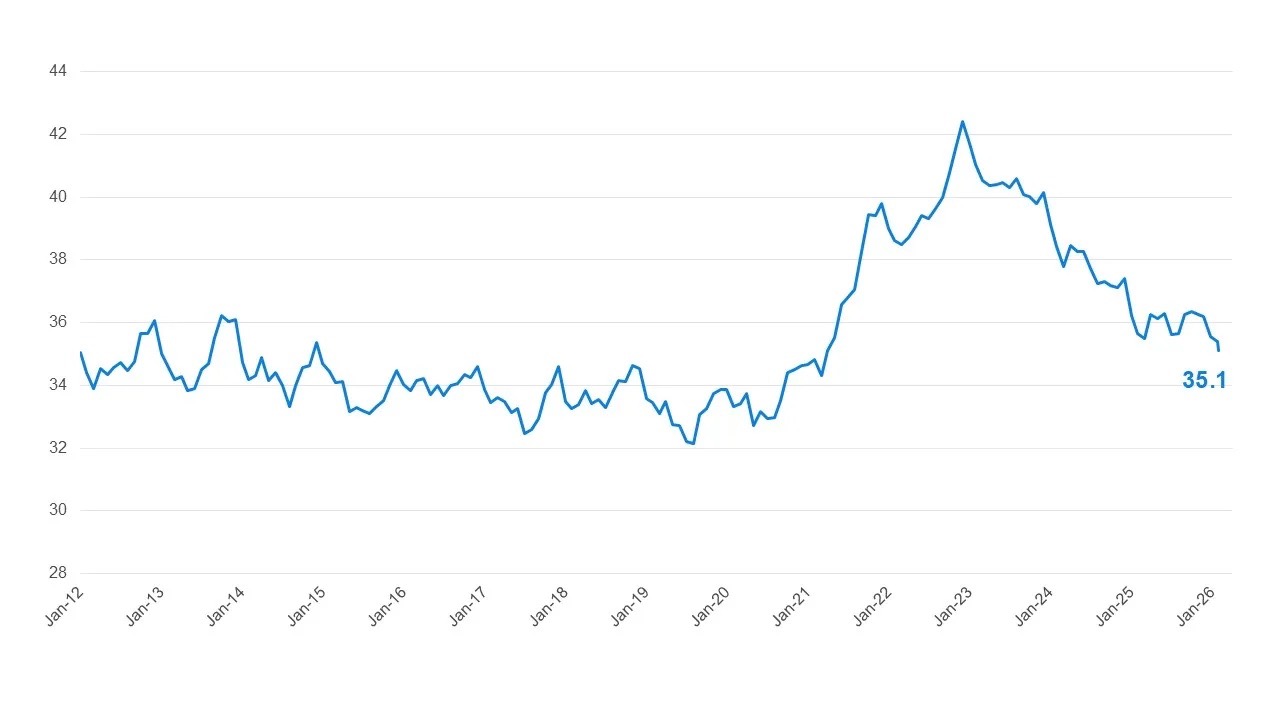
There are many ways to look at the affordability of cars, and price isn’t always the best one, if only because it can be skewed by buyers grabbing giant crossovers. Another way to look at it is the way Cox Automotive/Moody’s does, which is to look at how many weeks it takes the average household to afford the average new car, and numbers continue to improve:
The typical monthly payment for a new vehicle fell by 0.5% in March to $752, but was higher year over year by 2.9%, up from $731 a year ago. Still, with household income higher by 3.9%, the number of median weeks of income required to buy the average new vehicle dropped to 35.1 in March, down from 35.4 weeks in February and at the lowest point in nearly four years.
While new-vehicle affordability in March was better than it was a year earlier and continues to generally improve as household income grows, other challenges continue to place pressure on vehicle affordability in the U.S.
Yeah, here’s the catch:
In addition to the immediate financial pressure of $4-a-gallon gas prices, major vehicle ownership costs such as maintenance, repairs and insurance have all seen sustained, outsized increases since the pandemic. For example, while new-vehicle prices are higher by roughly 15% versus 2021, some estimates suggest vehicle insurance costs have increased by nearly 60%, while routine service and maintenance costs are higher by 40%. The compounding effect of these higher prices is at the heart of today’s affordability conundrum.
The best way to lower car ownership costs is probably to lower fuel and insurance costs, which doesn’t seem to be happening anytime soon.
Behold, The Delivan

Chinese car company Chery is planning to sell a commercial van in Europe, eventually, and it’s got the perfect concept. Delivan!
Positioned as a forward-looking commercial vehicle proposition, DELIVAN will be introduced as well as a series of DELIVAN concept vehicles, offering an early preview of the company’s product, technology and design direction ahead of a planned European product launch in 2027.
Commenting on the upcoming moment, Jolly Yang – VP of Chery Commercial Vehicle and CEO of DELIVAN said: “This is a defining moment for Chery Commercial Vehicle as we take our first step into the European market at the Commercial Vehicle Show. Europe represents one of the most advanced and demanding commercial vehicle environments in the world, and it is exactly where we want to demonstrate the strength of our vision, our technology and our long-term commitment.
I get that this is a portmanteau of Delivery and Van, but I immediately scanned it as Deli and Van. Maybe I’m just hungry.
What I’m Listening To While Writing TMD
I enjoy They Might Be Giants, even if I’m probably a few years too young to have become obsessed with them. Still, a new song is worth celebrating. Please enjoy “Get Down” from the ideally-named Particle Man YouTube account.
The Big Question
What’s the strangest non-car object ever produced by an automaker?
Top photo: GM Defense



Some of my cars may very well qualify.
Missiles, but also low-cost drones of all types with an emphasis on drones for interception and missiles as offensive weaponry as we’re currently using 7-figure missiles to intercept a RAV4-priced drone. Ukraine is already exporting knowledge in this area and we need to learn from them.
Whiskey Pete has a bad case of “Not Invented Here” syndrome. Anyone who’s not a cis white ‘Murican alpha male who speaks flawless, Midwest neutral accented English need not bother supplying ideas.
The absolute wimpiest guy in Ukraine would kick what’s left of that degenerate’s liver out of his ass. Unfortunately, cheap is not something the US military has been serious about in as long as I am aware no matter how effective. What, 90% of the efficacy for 2% of the cost? No, we have corporate donors to support and more expensive=more padding. The bigger the number, the bigger the skim.
Everything old is new again.
During WWII, pretty much every industry in the US was churning out war gear. IBM (makers of typewriters, also a wartime necessity)? They were turning out M1 Carbines. Singer, maker of sewing machines? Also churning out M1 carbines. Ford? Making bombers. Union Switch and Signals, makers of railroad switching equipment? Yeah, they were turning out 1911 pistols.
Drones should be cheap and manufactured on an industrial scale. Who better to make 10k drones than an auto manufacturer, who presumably knows how to manufacture at scale? Design can and should be handled elsewhere, but we live in a world where almost every element of a weapons system is commoditized.
Yeah, and that was a simpler time. However, while I’m sure Ukraine has some dedicated factories somewhere, they’ve done a lot of small scale production in any number of unexpected places, so simpler stuff could easily be built by under-experienced companies and we could use a lot of it. It’s things like microchips that are a bigger issue, though, and just about everything needs them.
The chips needed are older tech. Hopefully that means it’s cheaper to set up a fab. Getting production set up and validated won’t be quick.
Yeah, I’m hoping that will be a faster resolution. Certainly, the high end stuff is a long way out. We never should have let chip production go. It was a matter of national security way back then and exponentially more so now. Unfortunately, we’ve been run by idiots and self-serving dirtbags for quite a while. Somehow, it seems to get worse and, even though I no longer expect we’ve hit bottom, I really don’t know how it gets lower from here, but that’s a surprise I can do without.
The old factory where Rivian is headquartered today was originally built by a cash register company that made bomb sights in WWII.
Which location is that?
Plymouth, MI. Rivian is in the old Burroughs Adding Machine factory at 13250 Haggerty Road
Looking at their site it is engineering, R&D, and Service not the formal HQ
Currently it’s probably has to go to xiaomi for proxiemity alone you can go to a their branded store where a their cars are on display buy a robot vacuum, smart home things, ip cameras, phones, tablets, air purifiers, random other things.
Most of the other Chinese companies make all sorts of other things as well they just aren’t on sale next their cars. Dongfeng is involved in weapons, construction, and some aerospace among other things.
The Japan mega corps have quite the diverse portfolio of products too. Mitsubishi used to make just about everything not has scaled back on the consumer side. I don’t think their cars were ever sold next to their other stuff but maybe stranger things have happened. You could get a Mitsubishi tv, rice cooker, microwave, fridge, excavator, tractor, motorcycle, plane, air conditioner, you might have lived in a Mitsubishi built building.
Hyundai is in just about everything too. They build container ships, heavy equipment , get involved in weapons programs. They had some consumer electronics at one point.
The American car companies all had a wide range of products. Frigidaire was owned by gm so you could have had a whole kitchen even at one point a modular kitchen and air conditioner I believe there were radios and TVs too. Possibly vacuums and other home appliances like mixers. At the same time they were building all sorts of weapons and weapons systems. They were in to computers at one point as well as satalites rockets and trains.
Ford was vertical integrated and made some strange things from bi products like charcoal from his glass factory. Of course airplanes, and a whole litney of weapons.
Chrysler defense was doing all sorts of rockets and satalite work. They also made boats for a while. They were doing some nuke stuff at one point.
My Dad used to work at the Chrysler Missile plant on Van Dyke & 16 Mile Road in the 1950s. They used to fire up rocket engines in test cells there. That plant was purchased by Volkswagen in 1980 and sold back to Chrysler in 1983. A couple years later, Chrysler began production of the H-Body LeBaron and Lancer, followed by the P-Body Shadow and Sundance, the JA-Body vehicles, and some FCA platform vehicles. Today, Sterling Heights Assembly Plant produces Ram trucks.
Redstone, then ultimately Saturn 1B booster rockets for Apollo and Skylab.
Yep, it’s a serious issue. My ‘solution’ for this issue is that we mass produce ‘dumb’ weapons, sell them to every nation not run by a dictator, and produce smart kits for our weapons and stockpile them. I’m talking JDAMs, the new Hydra 70 guidance kits, etc.
Weapons should be able to be made smart with tech, not reliant on tech to function
Without war there isn’t the domestic demand for heavy armaments (not small arms), and since most US citizens don’t want us to be in war all the time that doesn’t work. So we need to supply basically everyone to keep our production lines going so that if there was a war we have the production capacity to meet domestic demand.
To be frank unless we have an extremely good reason I doubt the nation will support a total war. People don’t feel much native patriotism (as in not prompted by another nation’s citizen saying ‘USA sucks’) when they can hardly afford rent, have little hope for buying a home, etc. in good times, let alone a total war economy, the draft will go over like a bag of shit, so they’d probably have to do it for non-combat roles (IK a guy who was told if he signed up he wouldn’t get sent to Vietnam but if he was drafted he would be, as a plumber in the Navy his ass got sent to Vietnam).
VW’s currywurst
I think the Japanese and Korean mega-corporations take the cake on this one. Mitsubishi is the classic example, and while all their entities aren’t actually tied together other than the name anymore, “Mitsubishi” makes everything from pharmaceuticals to beer to banking to air conditioners to spacecraft.
Yamaha makes world-class pianos. Toyota makes pre-fabricated homes and has a global trading arm. Honda makes solar panels.
Hyundai is now a conglomerate of independent companies like Mitsubishi, so the ties are a bit less direct than they used to be, but they make nuke reactors, cargo ships, and bulldozers.
Mitsubishi also has a canned food division and they built the battleship Yamato
Is the data storage in the DeliVan meat based? Torch better be filing an IP infringment suit.
Xiaomi makes fishtanks.
I would think, though, wildest mix would be Hyundai (or, if you count it, Mitsubishi’s collection of companies)
Asking them to make stuff is a canary in a coalmine, IMHO. I do not like where that is going. It’s just one big grift to extract as much money from the collective “us”, then someone else cleans up the mess and takes the fall for it. In a normal world, it’s just not necessary. So, why is it suddenly now?
Because these incompetents in charge haven’t a clue about doing war (or anything else it appears). Throwing shittons of weapons at a country and not planning for nor expecting that it will take more than one throw to win. Wars are won on logistics, and they don’t even know the word exists, let alone what it means.
logriftics
Cosplaying department head’s assertions to the contrary aside, the department is still called the Department of Defense.
Yeah, don’t call it the Department of War, guys. You’re just feeding their ego. It’s not like they are going to revoke the Autopian’s White House press credentials.
Can we settle on the Department of National Insecurity?
VW’s sausage factory, of course.
Or the VW ketchup for the Currywurst
I think any automobile manufacturer making foodstuffs is just plain wierd. Though by all accounts, the stuff is delicious.
Kind of surprised BMW doesn’t make thier own beer given where they are from.
They got close: http://www.alpinaautomobiles.com.au/alpina/alpina-wine/
LOL – awesome!
THAT might even be wierder than VW’s sausage and ketchup, since cars and wine are really not things that should be consumed together.
I have an M1* Made by Inland, a GM subsidiary
*M1 rifle, not BMW car
We need a better plan that doesn’t involve shooting down $5,000 drones with $3 million dollar missiles but that would take real change because our defense industry is all about low volume, high price, with a fat maintenance budget.
Similar to how we should have been using the Super Tucano prop planes we bought for Iraq and Afghanistan ourselves instead using up our 4th gen fighters and providing inferior close air support.
The manufacturers of those missiles (and their shareholders) vehemently disagree with your comments.
I can only image the defense industry parties lately as the USA wasted more than a years supply of Patriot and THAAD interceptors every week.
There’s still plenty of business to be had in the offensive arena and there will still need to be defensive missiles for the foreseeable future for more appropriate targets and to supply the systems we already have in place.
The U.S. defense industry is a remarkable wonderland where practical ideas never outshine sexy vaporware that’s too complicated to become operational before it’s obsolete.
https://www.twz.com/air/u-s-needs-to-be-building-tens-of-thousands-of-shahed-136-clones-right-now
Good article and funny comments like that a 250 guided bomb is only $40K while leaving out that it is delivered by $100M F-35 that takes years to build and is flown by a pilot that takes years to train.
I worked on the F35 in the early 00’s and it is a cool plane but even then was an example of entrenched thinking. I also worked on the X-45 which was a promising idea that went nowhere because it didn’t involve an pilot.
Do the lasers count as a better plan? Also, the cost comparison could be made to the price of not intercepting the $5000 drone. That might pencil out better. I still recommend destroying the industrial base building the drones. Left of launch as a s cond option. If you insist on not stopping munitions until they’re headed at you it’s expensive.
How does one destroy the industrial base building drones without starting a war?
The worry for the USA is that someday we might have fight a peer or near peer conflict and we simply are not equipped for that type of war.
Especially at the moment as we have expended a very large percentage of our limited stockpile of interceptors and cruise missiles in the Iran fiasco. We are talking 3-5 years to replace the missiles we expended in the first couple of weeks.
Lasers may sometime have a role but they don’t at the moment unless we are shooting down party balloons at the border.
https://www.nbcnews.com/news/military/us-military-used-laser-take-border-protection-drone-lawmakers-say-rcna260887
not an example of a desirable outcome, but not a balloon this time.
in combat against an actual adversary:
https://www.businessinsider.com/see-israels-laser-weapon-the-first-shoot-down-drones-war-2025-5
The evolution is constant.
Yes, evolution is constant – both offensive and defensive.
Recent battlefields have shown that cheap and massively produced drones are a key way to overwhelm defenders.
Russian and Iran have fire salvos of hundreds at once. Image an opening move where China sends 10,000 cheap drones at Taiwan in a single wave – tomorrow.
But in my world, democracies can develop too, not just those I fear
We’re shooting down $5000 drones with $3,000,000 missiles. I don’t think the Department of War thought this out very well.
Follow the money, Bob.
You mean the crypto payoffs to certain people in very high positions?
It’s all about the donors
You need to ask “in a particular pronounced way”
Contained within the epitaph of many an empire: we were well prepared for yesterday’s war. When these systems were conceived, it was intended for (up to) supersonic aircraft, then adapted for missiles. Nobody anticipated cheap drones back then and this is what we have, but they should be building cheap drone interceptors now. The missiles still have a use against their old foes, but are a dumb (hopefully temporary) solution against cheap, slow drones.
Russia has been attacking Ukraine with Iranian drones for years. It should have been obvious.
Should have been as it was to millions of people whose jobs aren’t military planning, but the government doesn’t seem to run on intelligence (or at least it hasn’t for a while), it runs on bribes and BS. Bigger contracts for largely unnecessarily overly expensive equipment means more money can get siphoned off from R&D and reinvested into political campaigns. Politicians who inexplicably lose despite all the campaign money can still pick up “consulting” jobs with those companies, kind of like no-show jobs back when the mob was big. One could argue that it made some sense when the Soviet Union was our great adversary, but I believe people knew the threat of their conventional warfare capability was overblown (and used the fear of nuclear war to push for their programs), if not exactly by how much. For the disparity in GDP alone, it didn’t make sense that they could be a true peer adversary and, if it did, then an intelligent system would have asked why they’re so inefficient and streamlined itself. In the end, the spending helped collapse the Soviet Union, but I wonder if the West is really better off without it.
Please, stop with the facts and critical thinking, they are hurting me.
We apologize. Please enjoy this AI cat video on youtube….
Algorithm 2 videos later: “dI4Ney Is fInalLY deAd! WoKe m0Vies kILL tH3 moUsE!!!!”
Way back in the 1950s, Ike warned us about the Military Industrial Complex.
Still have an “I like Ike” campaign pin stashed somewhere.
I for one welcome our new DeliVan overlords!
I welcome them, but if they aren’t still running the same platform and same headlights for 20+ years, I’ll be disappointed.
As long as their smoked turkey is fresh and their slicer blades are sharp, I’ll be happy.
Kramer: I think we are looking half a millimeter.
Elaine: Can it cut that thin?
Kramer: Oh, I’ve cut slices so thin, I couldn’t even see them.
Elaine: How did you know you cut it?
Kramer: Well, I guess I just assumed.
Didn’t the ’23 Maverick have 40+ recalls? I don’t know how comfortable I’d be with Ford building, you know, missiles.
Why build a missile when you can just give the children that we’re blowing up a Pinto?
What if they just keep making Mavericks, but install some guns behind the headlights?
As long as they mount them the right way, I see nothing wrong with this plan.
Maybe have them build stuff for the other side, with the expectation that things won’t work correctly?
Ah, but missiles are supposed to blow up and start things on fire. It’s right in Ford’s wheelhouse!
Chrysler made a sort of snow mini bike, with the front wheel replaced by a ski and the back by a ski and a motorized track. Googling…The Sno- Runner.
Chrysler also built the first stages for the last two Saturn 1B rockets. And of course tanks, air conditioners. etc
And boats.
and outboard motors too. My parents had an old General Motors fridge in their camp in the 80’s , the ex dairy farm down the street had a very old International Harvester fridge in the 2000’s. Too bad today’s appliances are only good for 5 years before the troubles begin.
Yep, my parents used to have a ’72 Chrysler trihull boat with Chrysler 75HP outboard motor.
Ooh, I saw a Porsche one of these on Fartketplace a while ago. I kinda wanted it.
If your weinermobile breaks down, you can take the delivan instead.
Ford used to make missiles as Philco-Ford Aerospace, but divested ages ago. For that matter GM made rifles, more accurately 2 divisions made M1 carbines and briefly made M16 receivers in the 60s.
A Delivan sounds ideal for delivering Jason’s salami data storage systems
In the 90s my brother was in the Army. His M16 had been made by Mattel.
What a coincidence. Pete Hegseth’s hair was made by Mattel.
That’s an urban legend, although Mattel may have made some plastic hand guards. The actual roll marks for an M16A1 are mostly Colt with some GM Hydramatic and H&R. Newer rifles and carbines are mostly Colt and FNH. Outside the US you can see Elisco (Philippines) and Diemaco or Colt Canada
My brother isn’t above pulling your leg, so we can’t rule that out he was just messing with his stupid little brother either.
Bunch of damned chest thumping cavemen. Ukraine deserves support, and has innovated economical,successful, tech and tactics for modern challenges that take out multi million assets for $5k. Time to recruit thinkers, and dump the stinkers.
This is the correct free-ish-market answer, perhaps with adding a wrinkle for domestic manufacturing of Ukrainian solutions for resiliency. More proof we’re living in cronyism rather than capitalism.
I am told a number of European countries are bringing Ukrainian military personnel in to train them on drone warfare because they’ve used it so effectively. It’s almost like this was a completely predictable outcome of our actions.
TBQ: How about Tata? They make not only cars, but medical devices, tea, hotels, and yes, defense systems.
I once converted an International Harvester freezer into a cabinet smoker.
That’s a good one. They also are a pretty big player in telecom operatering a large global fiber network and some data centers.
The Delivan will be a walk-in height step van. There will be a smaller Dillivan to go with it and a pickup called the Platter. In all an pretty Kosher lineup.
Weapons generally require copper and aluminum, so I guess the Pentagon is going to see it’s costs rise as it pays tariffs.
The Hot Mustard package includes and AMR 500 supercharger.
I continue to be impressed by how free of political opinions the Morning Dump as become. /sarcasm
There’s always Jalopinik…
Please don’t call the Department of Defense the Department of War. Thank-you.
Truth in advertising…perhaps the Dept of Offense. Health insurance should be re-named medical billing insurance.
How about Health Unsurance? You never know what the services are going to cost, whether they’ll be covered, etc…
I like that unsurance. You pay it then when you need it it doesn’t be over it. So unsurance
Ugh, true dat.
It honestly sounds more fitting; the DoD hasn’t done “defense” since 1945.
I refer to it as the Dept. of War (crimes).
You do sort of have a point. But we can pretend it’s there for defense, right?
up until 1949 it was officially titled “The Department of War”
Can we count AMF? For a while they owned Harley Davidson and produced nuclear reactors. Not to mention their bowling equipment.
Sure, why not.
AMF also made bomb casings in the factory that is now Harley-Davidson in York PA.
Missing my old AMF Sunfish now.
Thanks.