

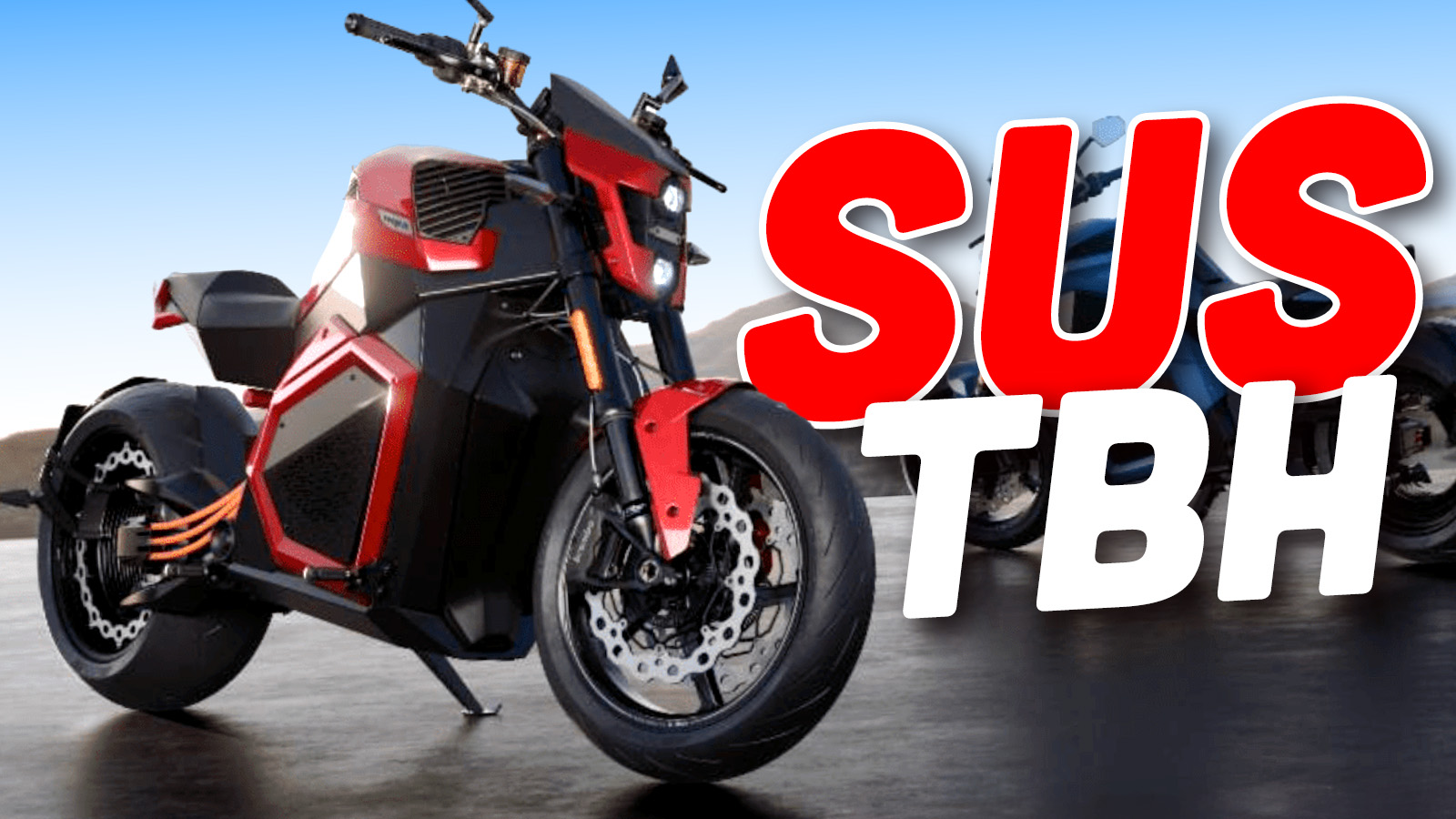
Solid-state batteries are supposed to be the next big breakthrough in EVs. In theory, solid-state batteries offer an electric future that’s lighter, faster-charging, safer, and more energy-dense, delivering greater range than the batteries we have now. So, it’s going to be a huge deal when one manufacturer, any manufacturer, offers a production vehicle with a solid-state battery. Verge Motorcycles claims to have achieved that with its new generation TS Pro. The headlining feature? 370 miles of range. But is this a legitimate solid-state battery bike? Let’s take a look!
If you’ve been following EV news for long enough, it feels like we’ve been hearing about solid-state batteries being around the corner as much as we’ve heard about flying cars. Yet, there is not a single vehicle on the market right now with one of those batteries. There has been plenty of progress and projects, from Toyota’s unfortunate-looking battery to Volkswagen’s developments. But nothing that you can buy yet.


Amazingly, some great progress in solid-state batteries has come in the form of electric motorcycles. Back in September, Volkswagen, QuantumScape, PowerCo, and Ducati unveiled a functional prototype electric motorcycle that had a solid-state battery. The headline feature of the Ducati V21L prototype? The fact that it could charge in only 12 minutes, all but eliminating the specter of range anxiety.

But again, no manufacturer has come forward to say they have solid-state tech that’s production-ready – until now. Verge Motorcycles announced it’s launching the “World’s first production vehicle with an all-solid-state battery.” Whoa, that’s big! What’s going on here?
Big Ideas From Finland
I’ll start with a quick reminder about what Verge Motorcycles is, from when I wrote about this company three years ago:
Back in 2018, Teemu Saukkio had an idea. He felt that the motorcycle market was ripe for more attitude with a dose of innovation. Finnish motorcycle manufacturer RMK Vehicle Corporation sprouted up to make Saukkio’s idea a reality. The RMK E2 was designed in Saukkio’s garage and by working at a breakneck pace, the motorcycle made it to EICMA 2019. The company, now called Verge Motorcycles, presented the TS, an electric motorcycle ripped right out of the dreams of many bikers.

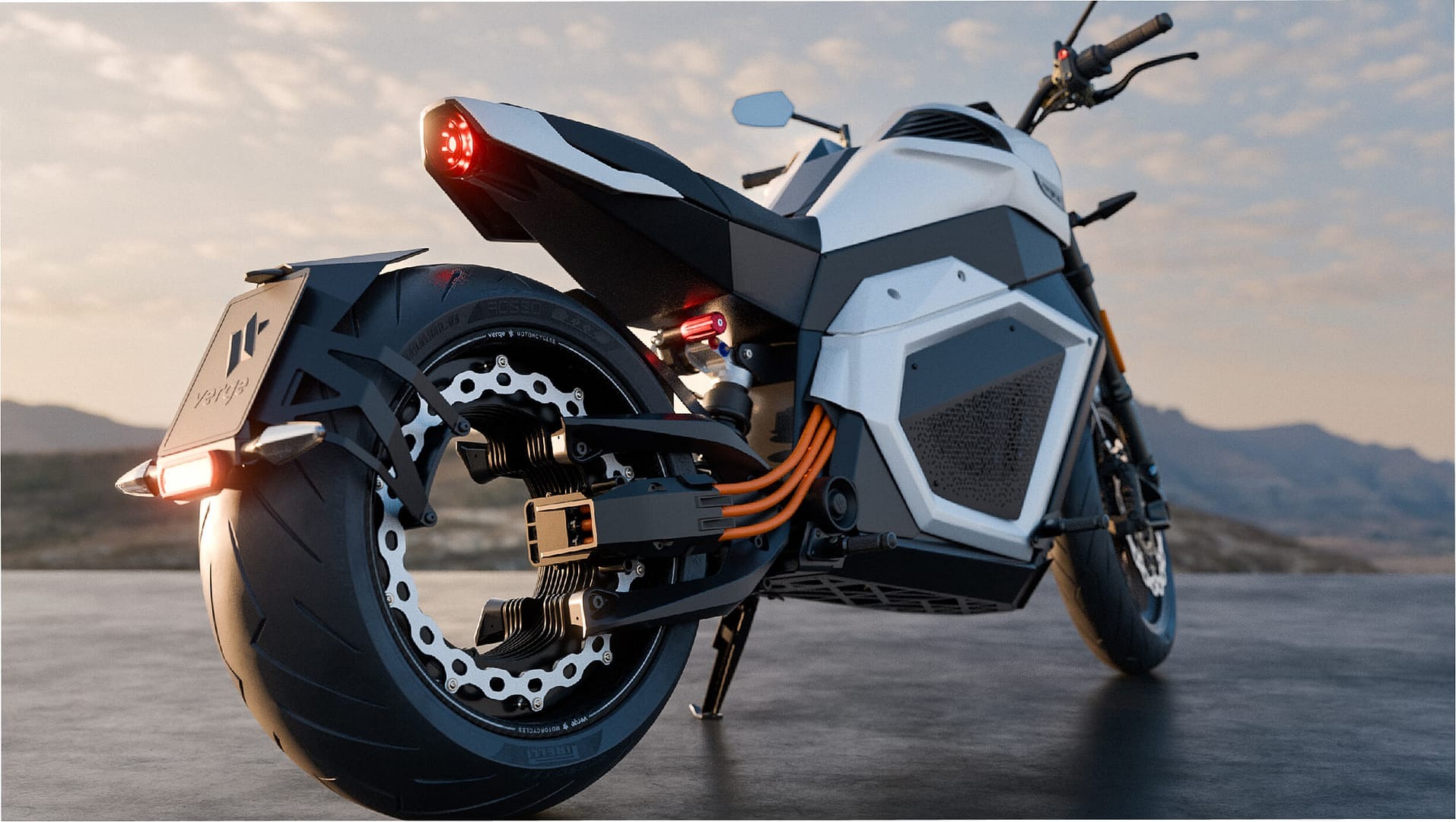
The initial draw of the TS was its distinctive hubless rear wheel. Hubless wheels show up all over science fiction, on some quirky bicycles, and often appear on concept vehicles, too. But this wasn’t a concept; Verge went through the effort to engineer an entire hubless rear wheel with an integrated motor. Then, the little company somehow managed to actually build the things and sell them all over the world, including America. Sadly, I haven’t been able to ride one yet, and it’s because Verge hasn’t yet spread its wings outside of California.
Verge has continued to update its motorcycles. Its flagship bike, the Verge TS Ultra, claims 201 horsepower, 885 lb-ft of torque, and a 60 mph sprint in only 2.5 seconds.

Now, some shenanigans are going on with that torque figure. Electric motorcycles don’t get the same torque ratings as gas bikes do. An ICE motorcycle’s torque is measured at the engine’s crank, while electric motorcycles measure torque at the wheel. The huge difference comes from gear reduction, which multiplies the torque from the source engine or electric motor. If you measured a gas bike’s torque at the rear wheel, you’d come up with a similarly ridiculous-sounding number.
For example, a middleweight like the Yamaha MT-07 makes 48 lb-ft of torque at the crank, or 682 lb-ft of torque at the rear wheel. So a Verge does have a lot of torque, but not nearly as much as the funny numbers make you think.
Either way, Verge builds some insane machines. Last year, a Verge TS Pro, a lower model that makes a mere 137 horsepower, managed to ride 193 miles at largely slower speeds on a single charge. Yet, none of what Verge has done over the past few years, including the crazy hubless wheel, holds a candle to the company’s latest wild claim. Saying you built the world’s first production vehicle with a solid-state battery is no joke.
Verge’s Solid-State Battery
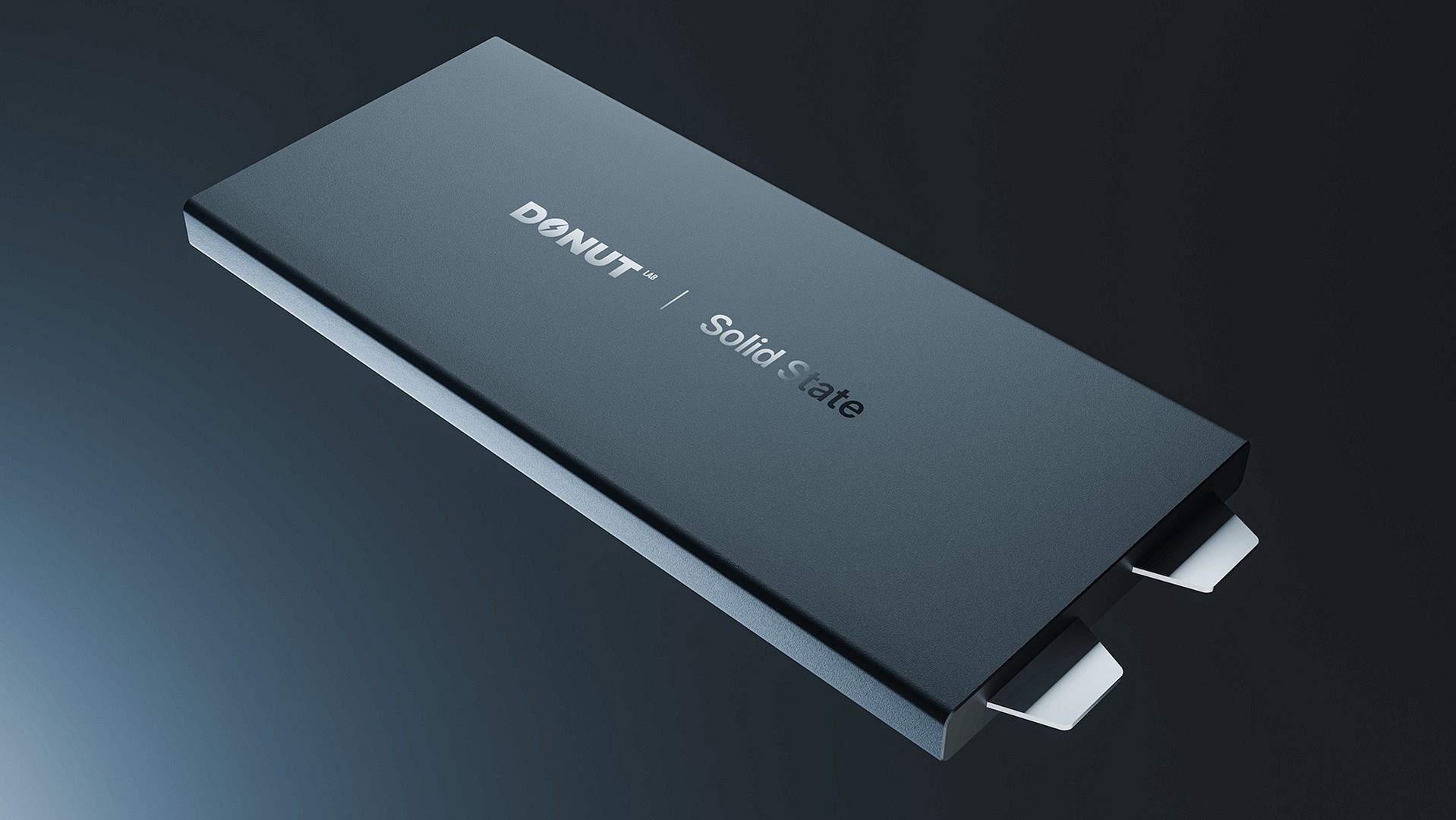
Verge says this new development comes thanks to a collaboration between it and Donut Lab. Donut Lab was announced last year by the folks who built Verge, and it exists as a sort of skunkworks. The hubless wheel motor that powers the Verge motorcycles now falls under the Donut Lab umbrella as the Donut Motor. The company is also working on a rigging robot and a skateboard platform for electric cars. But Donut’s greatest achievement, outside of the hubless motor, anyway, is claimed to be what it calls the Donut Battery. Donut Lab takes a big swing right on its website by saying “World’s First All-Solid-State Battery. Production Ready Today.”
Here’s the company’s press copy:
Known for the groundbreaking hubless in-wheel motor, technology company and electric motorcycle manufacturer Verge Motorcycles is once again pushing the boundaries of what motorcycling can be. The company has become the first in the world to introduce solid-state battery technology into production motorcycles—marking a significant milestone not only for two-wheeled transport, but for electric vehicles more broadly. The unprecedented battery technology, developed and tested together with technology company Donut Lab, enables a significantly fast charging time and nearly doubles the range on a single charge.
Solid-state batteries have been a prominent topic in discussions related to the automotive industry in recent years. They are made from a solid electrolyte, which makes them significantly safer and more efficient than lithium-ion batteries made from liquid or gel electrolytes. Many major vehicle manufacturers have been testing solid-state technology in their own vehicles, and wider adoption in production vehicles is expected going into the next decade. Verge is one step ahead, as the company is set to deliver the first motorcycles equipped with solid-state batteries to its customers in the coming months.
[…]
The new battery pack further revolutionizes the riding experience by enabling ultra-fast charging: an additional 186 miles of range in just ten minutes. Current battery technologies typically support only thousands of charging cycles, whereas Verge’s solid-state battery lasts for the entire lifetime of the motorcycle. The upgraded battery pack does not affect the motorcycle’s price, making it a highly cost-effective option for customers as well. In addition, Verge’s customers can choose an extended-range battery pack at the time of purchase, which increases the range from 217 miles up to 370 miles on a single charge — which is almost double the additional range.
Okay, sure, but none of the press copy explains how Verge beat everyone else to the punch at making a solid-state battery. How did this little startup company beat titans like Honda and Toyota? For that, Donut Lab published a video:
In it, Donut Lab co-founder and CEO Marko Lehtimäki doesn’t hold back. He claims that other companies have failed to launch a solid-state battery either because they couldn’t get their batteries to charge fast enough, they couldn’t stop the battery from degrading too quickly, they couldn’t build enough solid-state batteries, or they haven’t figured out how to make affordable solid-state batteries.
Lehtimäki claims his team has made a battery that can charge in only five minutes, will last more than 100,000 cycles with almost no degradation, is cheaper to make than lithium-ion batteries, delivers 400 Wh/kg, and is made out of 100 percent green materials. Simply put, Verge and Donut Lab claimed to have built the holy grail of batteries.
The Bike
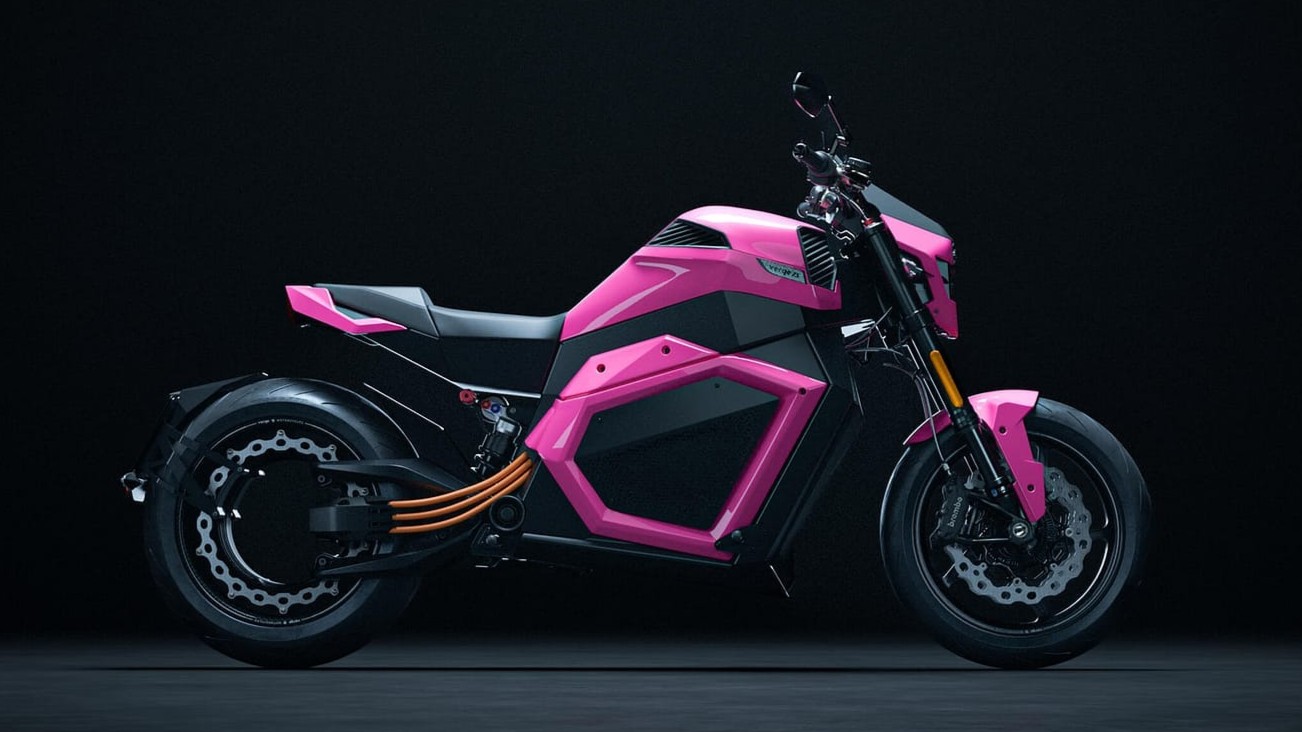
This holy grail is going into the next-generation Verge TS Pro, the base model of the Verge TS lineup, and the aforementioned TS Ultra. The claims here are frankly silly. The solid-state Verge TS Pro is said to have a Donut Motor making 737 lb-ft of torque, a 3.5-second acceleration time to 60 mph, and insane range.
The standard solid-state battery is said to be 20.2 kWh and good for 217 miles of range. Upgrade to the 33.3 kWh pack, and range jumps to an astonishing 370 miles of “real-world” range. These batteries can charge in “under 10 minutes” when hooked up to a 200 kW charger through a NACS connector.

It’s noted that these range figures are mostly for urban riding. But even if you slice the range figure in half to account for riding on a highway, that’s not bad at all! Well, assuming the range claim is anywhere close to accurate, anyway.
Donut Lab claims that this battery is better than any other in that it retains 99 percent capacity in minus 30 Celsius and also when it’s above 100 Celsius, unlike lithium chemistry. Donut Lab also says you can run the battery to zero or charge it to 100 percent as many times as you want without hurting it. As for lifespan, Donut Lab says it’ll last the entire life of the vehicle, making the threat of having to replace a worn battery a thing of the past. The company then talks about these cells not having thermal runaway problems, weighing less than lithium batteries, and, somehow, even costing less to make than lithium batteries.
As if all that wasn’t unbelievable enough, Donut Lab then claims, “In fact, we found ourselves designing a slower charging speed so riders can plug in and actually have time to drink a latte and enjoy it instead of downing an espresso and rushing back to their bike.” Weirdly, Verge also says that its version of the Donut Battery will last for 10,000 cycles rather than 100,000.
Verge says that you get all of this for the starting price of $29,900. That gets you a Verge TS Pro with the standard battery. If you want the one that supposedly has 370 miles of range, that’s $5,000 more. For further context, the lithium version of the Verge TS Pro also had a starting price of $29,900.
Someone Has Some Explaining To Do

Now, I’m just going to ignore the fact that super expensive electric motorcycles usually struggle to sell. Just ask LiveWire how that has worked out. I just want to focus on the battery. I watched all of Donut Lab’s video, and at no point does anyone explain how they achieved the incredible performance the technology is claimed to provide. Donut Lab has provided exactly zero engineering or technical details about this battery. The video doesn’t show any real-world testing with the new battery, either.
How did this tiny startup company with only a handful of employees beat industry giants with decades of battery research and hundreds of engineers? It sounds impossible, and last time I checked, it’s not April first yet.
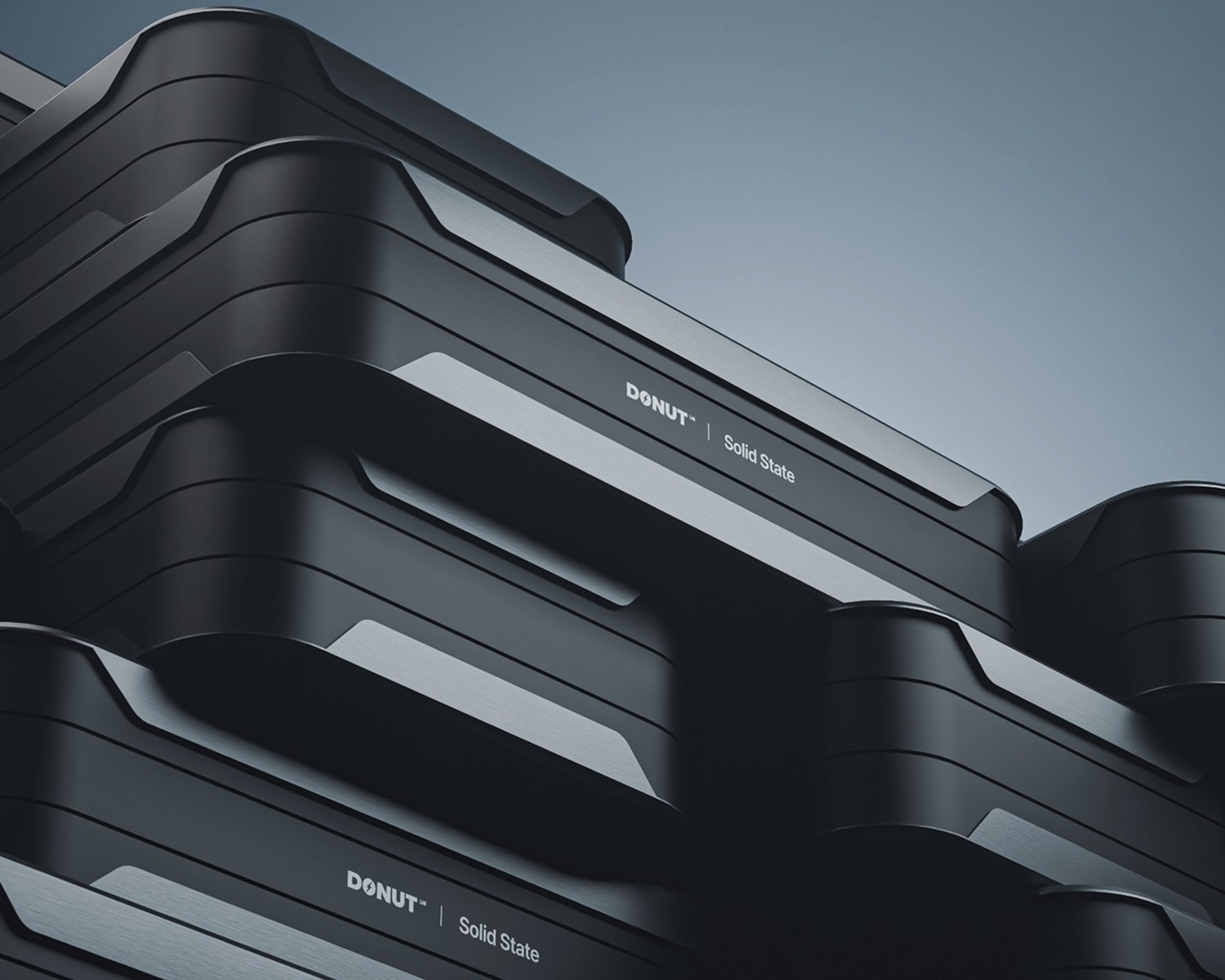
I’m not the only one who is skeptical. The Verge also wanted to know what’s going on and chatted with Lehtimäki. Apparently, Lehtimäki is not willing to comment on anything technical until the company’s new patent filings clear. But he does say that the rumor that Donut Lab is just rebranding a supercapacitor from another Finnish startup, Nordic Nano, is false.
Until the patents go live, Lehtimäki just says, from the Verge: “The party that has the capability and then iterates faster is the one that obviously makes the innovation,” Lehtimäki says. “I’ve always said that 20 engineers beat 2,000 engineers.”

Lehtimäki claims that his company will explain the technical details in the coming months. For now, you’ll just have to take Donut Lab’s word that its team somehow invented the holy grail of batteries. Apparently, the company is hoping to use this battery for darn near everything that would normally be powered by an internal combustion engine, and the company also hopes to get the attention of the American auto industry. Donut Lab also claims that the battery is in production right now for deliveries beginning this quarter.
As always, I don’t recommend spending oodles of cash on something until you know that it works. At the very least, I can confirm that Verge does make real motorcycles. I’ve seen them with my own eyes. So if you want a Verge, those do exist.
As for the solid-state battery thing, I’ll be watching to see what comes of this. Did Donut Lab just create the holy grail of electric power? I suppose we’re going to find out. I think I’m refraining from getting excited until one of these bikes is on the road and reviewers are riding them.
Top graphic image: Verge Motorcycles


How do those 20 engineers stack up against the 2,000,000 engineers in China working on Solid State batteries 996?
https://en.wikipedia.org/wiki/996_working_hour_system
The claim of no performance degradation at cold temperatures is the thing that sticks out to me. Ultracapacitors have that property.
The history of battery technology is strewn with costly mistakes made by multiple well-funded companies over safety and reliability, testing that a small company does not usually have the resources to do.
I will be shocked it everything claimed turns out to be actually true, and it can be sustainably/economically produced in scale for vehicles that will sell in numbers larger than these pricey hubless bikes.
I gotta say I love that this publication is actively skeptical about bold claims. Reporting breathlessly about every new shiny thing – vaporware or marketing hype or whatever – is annoying and it desperately needs to stop.
However. Solid state batteries exist. They aren’t vaporware. The Ducati from a few months ago is real. A few other commenters have said “maybe they can do it cuz they wont be selling many.” I think this hits the nail on the head.
The article asks how Toyota and Honda (or QuantumScape/VW) cant do this and a little tiny boutique motorcycle’s even tinier engineering spinoff can. Toyota launching a solid state battery means bonkers amount of manufacturing, logistics and supply chain concerns figured out. Verge motorcycles launching a few thousand of these things, tops? well everything can be hand built, supply chain concerns are many orders of magnitude less, etc.
The tech itself is probably right on the razor’s edge of production-readiness. But a boutique shop can turn production ready into production a lot quicker.
Doesnt mean they can make it happen. But they legit might make it happen.
true. I don’t think the skepticism is about scaling production but more about the limitations of chemistry/physics. It’s akin to them announcing they’re building flux capacitors. Even being able to make one would be world-changing.
Yep, Toyota starting to use battery tech that’s not 100% ironed out is out of question. Boutique motorcycle manufacturer it’s way to get spotlight even if they might have to do lot of varranty work.
There was some discussion that it’s actually an supercapacitor of sorts, not actual solid state battery in vain that Toyota is aiming at.
Let me guess: They’re planning an IPO in the next few months and this is your opportunity to get in on the ground floor?
That’s the only thing that makes sense, except usually that happens before you build a portfolio of unique and functional products. They’d have had to really committed to playing the long game on this one. And yeah, that may be more likely than these claims being possible. Like I said, we’ll find out soon enough.
Have they built a portfolio though? So far I see one prototype that no one has ridden and a bunch of renderings.
I mean Verge in general. Granted I’ve never heard of them, but Mercedes says they’ve sold/delivered thousands of other models around the world over the last few years. On their website it says I can order this thing and expect delivery in Q1 of this year. Given all the attention on them, they’ll kill their entire brand if they can’t deliver. It’s one thing to say the thing you said will be here in 18 months is gonna take a bit longer. There’s absolutely no excuse for saying the thing you say will be in my driveway within the next 2.5 months isn’t going to happen. For this to be possible means there are a bunch of finished units being boxed up on their way to distributors today.
Surely the old Nic-cad batteries qualified as solid state?
Bit heavier than Lithium but much lighter than lead, and with no liquid inside.
They of course had recharge memory problems — had to drain completely and recharge to full to give them a decent life — but found their way into all sorts of military equipment. In fact still made because the military have not got round to changing batteries in some GPS units and the like…
Great post.Keep up the solid work,
Let’s hope it works better than the Revo did. https://youtu.be/AB7pBrudFbg?si=7bpWpYM2ln38b9o5