

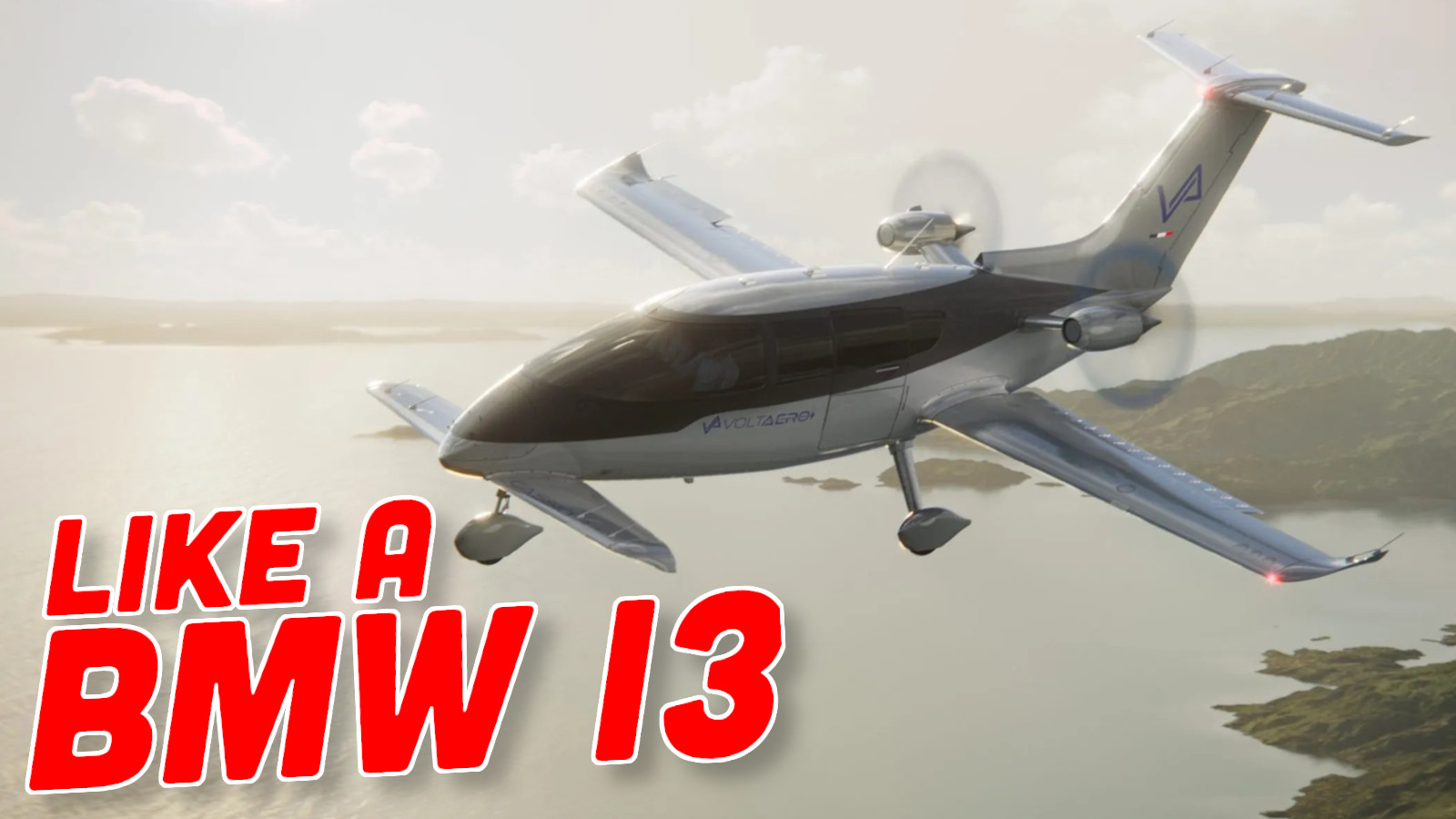
As personal transportation is slowly transitioning to electricity, one industry that electric power has struggled in is aviation. Electric aircraft do exist, and they’re awesome, but struggle to efficiently handle long-distance flying. One company sees itself as creating the best of both worlds. This is the VoltAero Cassio 330, and this proposed airplane is a series-hybrid with electric motors handling propulsion. Generating the juice is a jet fuel-powered generator. Yep, it’s extended-range electric vehicle (EREV) technology, but in the sky!
One of the themes of each year’s Experimental Aircraft Association AirVenture Oshkosh fly-in is where aviation technology is headed. For the past two events, all-electric aircraft and personal electric vertical take-off and landing aircraft have dazzled crowds at the world’s greatest airplane celebration. I still have to write about one of the electric planes that I saw this year, but one aircraft has recently caught my attention.


That airplane is the VoltAero Cassio 330, and it’s trying to be the best of both worlds by having less emissions than a typical turbine aircraft, but more range than any of the full electric aircraft on the market. It’s the formula that made the BMW i3 such a great car.

Batteries And Flying
Aviation has long been a target for alternative energy. According to the Environmental And Energy Study Institute, aviation is responsible for around 2.4 percent of the world’s CO2 emissions, and makes up a chunk of other air pollutants. The institute claims that if the world of aviation were a country, it would rank sixth for emissions behind Japan and ahead of Germany.
The great news is that advances in turbine engine technology are bringing the pollution from aviation down. Likewise, keep in mind that while planes burn lots of fuel, they also carry billions of people per year. Likewise, even general aviation is getting cleaner with the rise of lead-free gasoline.
Still, there are a lot of startups and large players in the aviation industry that are experimenting with even cleaner aircraft, including wild ideas with hydrogen and a handful of electric aircraft that have even entered service.
One of the hurdles of electric aviation is maximizing what you can get out of batteries. Electric planes have a unique issue. A Chevrolet Silverado EV can have close to 500 miles of range because it has so many batteries. But it also weighs a couple of occupants short of 9,000 pounds.
The enormous batteries that make electric cars work well can be a challenge for aircraft. More weight in batteries means less weight for aircraft payload. More batteries also mean a higher cost. Likewise, the heavier a plane gets, the more power it needs to operate. Electric aircraft also don’t get lighter as they fly, like a plane burning fuel does. This leaves electric airplane manufacturers pulling different levers, trying to find the best formula for range without sacrificing capacity and performance.
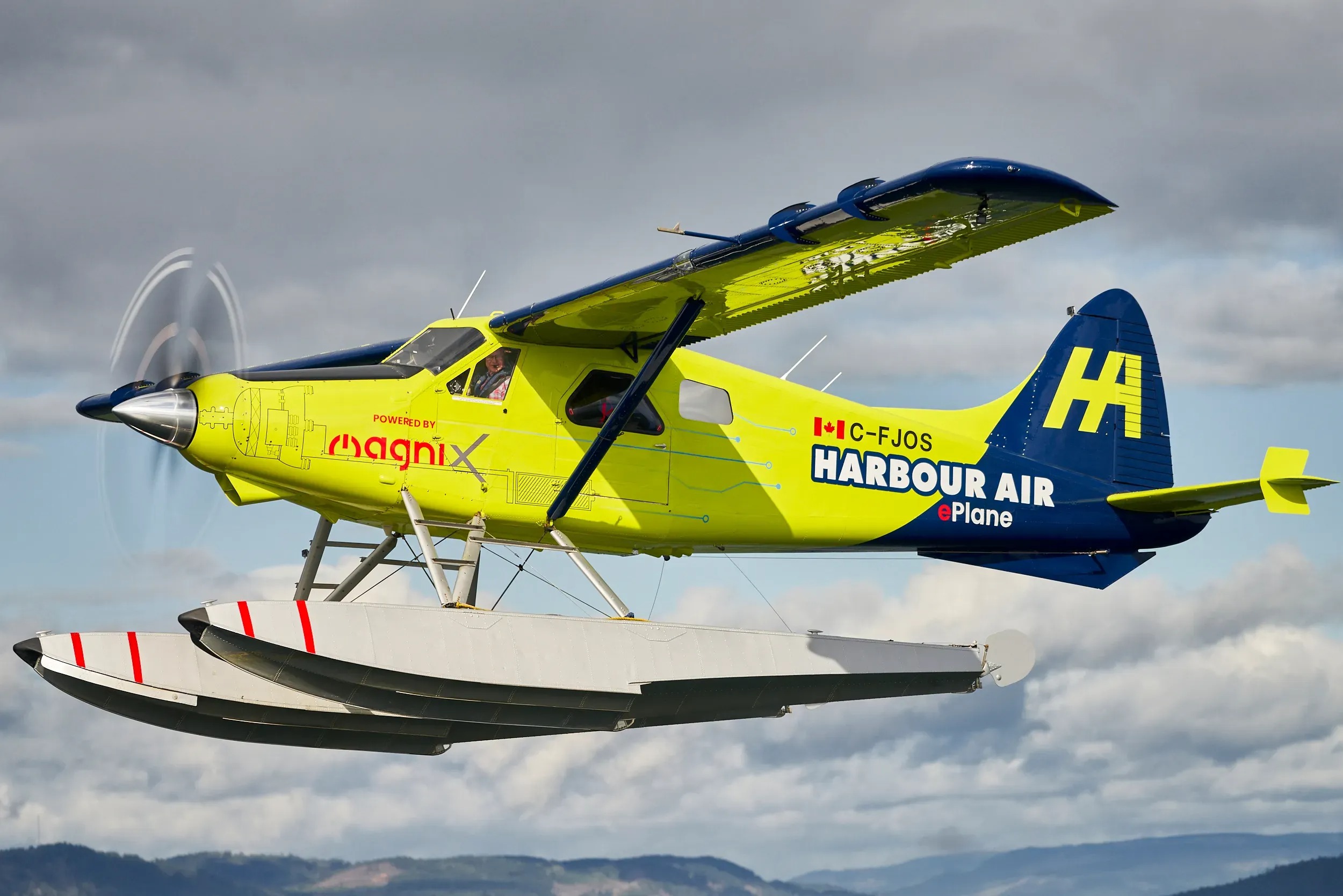
Unfortunately, due to the limitations of current battery technology, a true long-haul electric plane does not exist yet. Instead, most companies in the electric aviation space are focusing on personal eVTOLs, air taxis, and short-haul city-hopper airliners. Harbour Air made history by debuting the eBeaver (above). Harbour Air claimed that this plane made it the world’s first airline to fly an electric plane. It’s a technological feat, but with a range of 80 miles, it’s purely a puddle jumper. Even the Eviation Alice, once touted as the longest-range electric plane before development paused, had a range under 500 miles.
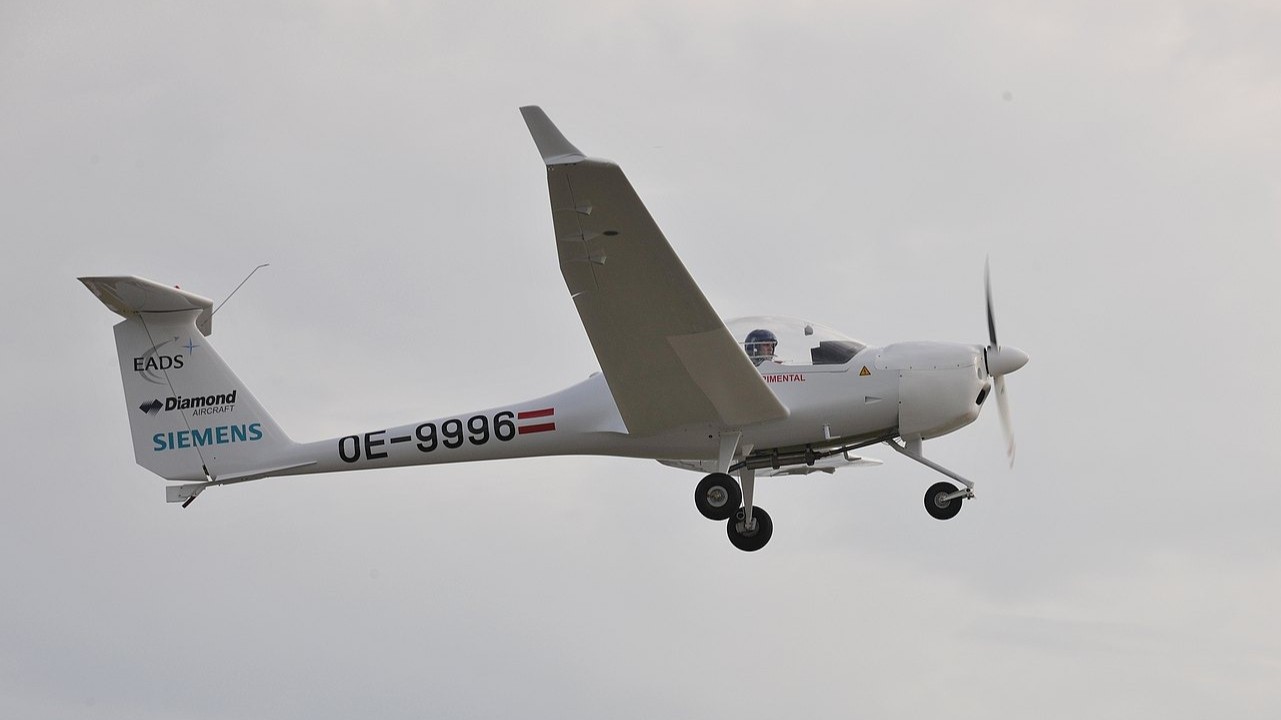
An alternative is the hybrid-electric aircraft. This isn’t a new concept. The world’s first serial hybrid electric airplane was the 2011 Diamond DA36 E-Star (above), and since then, there have been more than three dozen parallel and series hybrid electric aircraft projects. As of right now, there are no hybrid-electric aircraft in series production. There have been countless test flights of prototypes and more press releases than you can count, but no aircraft for an airline or individual pilot to fly right now. But the technology seems promising.
One player in this space is VoltAero, and its aircraft is trying to be the best of both worlds.
Going Hybrid

VoltAero was founded in Royan, France, in 2017 by Jean Botti. In the few years leading up to the launch of his own company, Botti served as CTO of Airbus and led the airplane manufacturer’s E-Fan project. Botti is also more than an engineer, as he also test pilots the aircraft he helps develop. VoltAero says its team adds up to a combined 80 years of aviation experience, and electric aircraft experience which dates back to 2011. The company continues:
Its first aircraft was the Electric Cri-Cri, an ultra-lightweight airplane powered by four electric motors. With a propulsive power of 20 kilowatts, this single-seat aircraft provided highly valuable knowledge in areas of battery charging and electric system integration. The next step was E-FAN, which made history in 2015 by becoming the first all-electric commercial aircraft to cross the English Channel. E-FAN increased the propulsive power to 60 kilowatts, and broadened the team’s know-how in power management and battery operation.
This led to VoltAero’s own Cassio S flying testbed, which is validating the powertrain for VoltAero’s production Cassio aircraft – in particular, the company’s proprietary hybrid propulsion module, which combines electric motors and a thermal engine. The 600-kilowatt propulsive power of Cassio S represents the rating for VoltAero’s top-of-the range, 10-seat Cassio 600 version.
Cassio S also is validating the use of alternative fuel for VoltAero’s hybrid propulsion module, including an aviation industry first: its demonstration flights with TotalEnergies’ Excellium Racing 100, a 100% sustainable fuel made from bioethanol produced from waste that originates in French vineyards.

Something I’ve found neat about VoltAero is that the company seems to like unique testbeds. The Cassio S mentioned above was a highly modified Cessna Skymaster, a weird plane all by itself. A standard Skymaster, which I should probably write about one day, has two props, one of which is in a pusher configuration while the other is in a pull format. VoltAero’s modified hybrid-electric Skymaster featured the pusher prop, but two new wing-mounted engines take the place of the original puller prop, giving it a total of three props!
That testbed, which made its first flight in 2020, was the proof of concept. From there, VoltAero unveiled a new prototype featuring a fuselage of VoltAero’s design. This fuselage was thoroughly futuristic, featuring twin booms and canards. But what was really interesting was what was inside. VoltAero partnered up with Kawasaki to advance its hybrid-electric platform, which was described as:
VoltAero’s parallel electric-hybrid propulsion concept for the Cassio family is unique, with the aircraft using the electric motor in its aft fuselage-mounted propulsion unit for all-electric power during taxi, takeoff, primary flight (if the distance traveled is less than 150 km.), and landing. The hybrid feature – with the piston engine integrated in the powertrain – comes into play as a range extender, recharging the batteries while in flight. Additionally, this piston engine serves as a backup in the event of a problem with the electric propulsion, ensuring true fail-safe functionality.

That piston engine is a variant of the Kawasaki H2 engine family that powers the famous Kawasaki Ninja H2 motorcycle. As I’ve reported in the past, Kawasaki is going pretty nuts with this platform and wants to see derivatives of the H2 engine powering aircraft. Kawasaki has also been working on a hydrogen version of this platform, which Kawasaki also sees being used in motorcycles and aircraft.
In the aircraft, the 998cc four-cylinder supercharged motorcycle engine pumped out 201 HP, just as it does in the motorcycle. However, this engine’s function was mostly to generate electricity, but with some integration with the powertrain. VoltAero claimed that this hybrid-electric setup would be 50 percent more efficient than a typical aircraft of similar size.
A Flying EREV

As VoltAero has inched closer to production, however, the Kawasaki motorcycle engine is no longer a part of the plan.
Instead, the motorcycle-derived hybrid-electric powertrain that VoltAero developed with Kawasaki now forms the HPU 210 power unit, which will target the homebuilt and light aircraft markets as a standalone power source.

The switch is because the VoltAero Cassio project has expanded. The hybrid-electric concept remains, but the targeted specifications are now higher. VoltAero says that the ICE engine onboard the aircraft will now produce up to 348 HP and burn Jet A-1 fuel. In June 2025, VoltAero announced its production fuselage design, which ditches the twin booms for a more conventional T-tail. There are also now two electric motors on the rear driving props in a pusher configuration, both making up to 241 HP each.
VoltAero says that the new specifications for the Cassio 330, the base model of the Cassio lineup, now feature 745 miles of range before cutting into reserve. Other features include single-pilot operations, seating for five passengers, a fixed landing gear, and a 98-inch-long cabin with a height of 55 inches. Max speed is 180 knots, with a cruise speed of 156 kts. Empty and with batteries installed, the Cassio 330 is supposed to weigh 4,300 pounds.
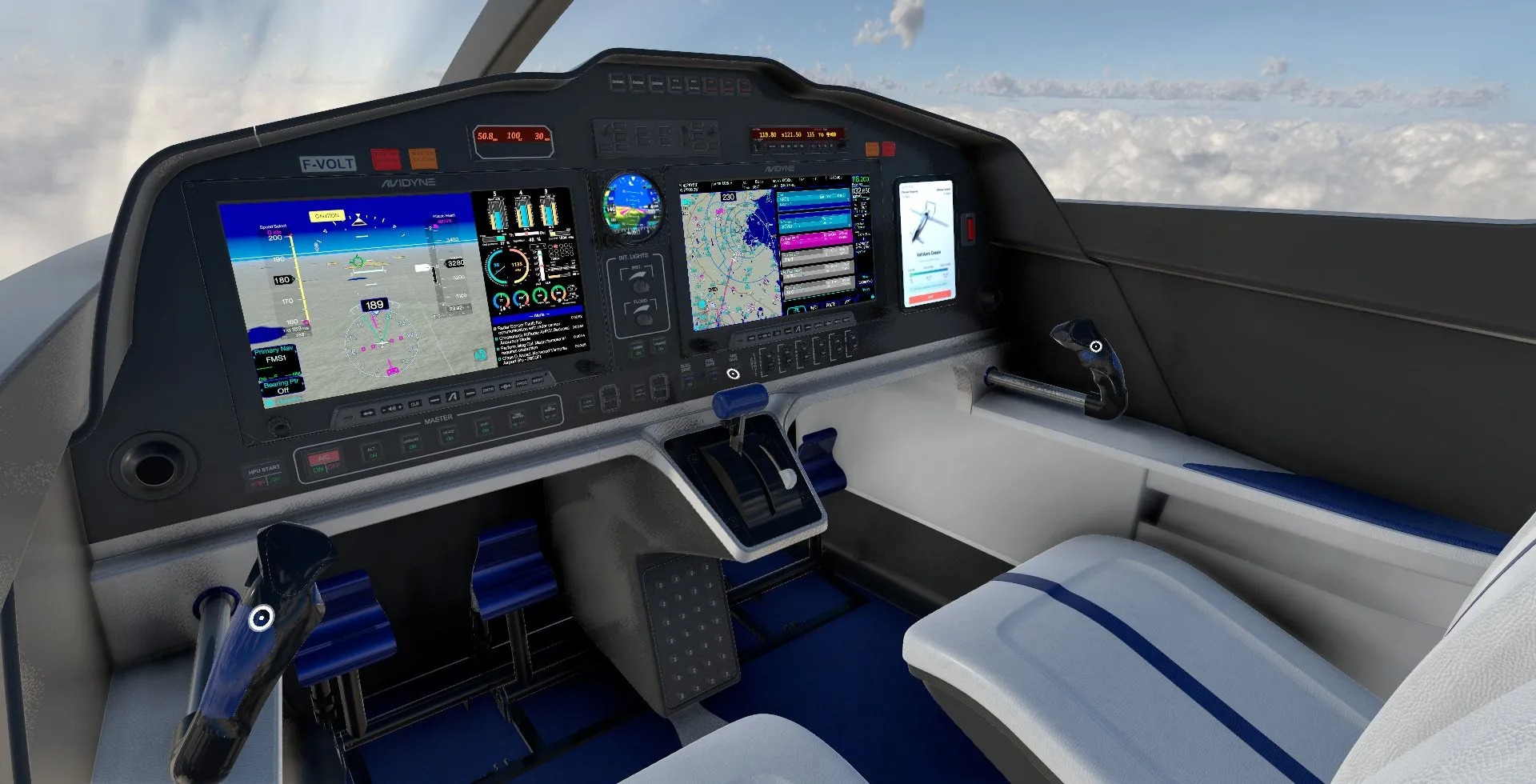

All of this is backed by VoltAero’s EREV system. The aircraft has a 40 kWh battery onboard, and now the system operates differently. From VoltAero:
The production configuration defined by VoltAero for the Cassio 330 – the first member in the Cassio family of electric-hybrid aircraft – utilizes a series-hybrid architecture. “Pusher” electric motors are installed on each side of the aft fuselage, and a thermal engine inside the aircraft serves as a range extender by recharging the onboard batteries.
During taxi, takeoff and initial flight phases, the Cassio 330 operates on all-electric propulsion for eco-efficient and quiet operations. The thermal engine recharges the batteries during cruise to extend the flight range.
This series-hybrid architecture reflects a changeover from the Cassio 330’s original parallel-hybrid configuration, which incorporated an in-line combination of an electrical motor and thermal engine to drive a single propeller. The evolution reflects VoltAero’s close working relationship with Europe’s EASA airworthiness certification agency throughout the aircraft’s development, applying the company’s Design Organisation Approval (DOA).

To put this another way, VoltAero seems to be making the aircraft equivalent of our favorite EREVs, the BMW i3 and the Chevy Volt. The engine inside the aircraft is not driving the props. Instead, it’s generating electricity for the battery, which is feeding the electric motors.
VoltAero’s plans call for the Cassio to grow to up to 12 seats and include a cargo model and a medevac model. The company also claims that, since the aircraft is using electric power only during critical phases of flight, it can also be flown into areas where there are noise-related curfews since electric motors aren’t nearly as loud as piston engines or turbines.
No Production Date Set

Of course, all of this sounds cool and all, but VoltAero actually has to get to the finish line. VoltAero says that it has more than 280 orders, agreements, and commitments from customers for the Cassio 330. However, a firm production date has not been set. The images of the new fuselage that I’ve shown you are either renders or of a full-scale mockup that was displayed at the Paris Air Show.
Back in 2024, VoltAero said it was seeking European Union Aviation Safety Agency (EASA) certification by the end of 2025 and flight testing in 2026. However, company press releases no longer mention this. The only production date VoltAero is currently mentioning is the release date for the HPU 210 power unit for homebuilt aircraft, which is due to launch sometime next year.
So, at least for now, the idea of hybrid-electric planes still hasn’t been fully realized as something that you, a flight school, or an airline could buy just yet. But the idea is interesting. A hybrid-electric plane can fly further than a fully electric plane while still burning far less fuel than one powered by pure piston or turbine engines. So, we’ll be watching where this one goes. Who knows, maybe one year I’ll go to EAA AirVenture Oshkosh and be able to tell you what riding in an EREV plane is like.
Topshot: VoltAero





It is so incredibly expensive to bring a new airplane to market, and the actual addressable market is usually quite small. And I fail to see what advantages a hybrid system brings, on top of having to offset its additions weight, cost, complexity, testing, certification, on going maintenance. Unlike cars, airplane engines operate at constant speed and output.
Cost, cost, cost, cost, cost….. Remember the Beechcraft Starship? Awesome plane. Dead.
An airplane is nothing like a car. Cars are laughable garbage, airplanes require maintenance schedules and procedures and documentation that will fill a warehouse and a detailed paper trail that follows it around forever.
When a transmission blows up for the 500th time Ford MIGHT issue a recall about a problem that they already knew existed. When something breaks on a plane, people die, they’re all grounded and there is a full scale investigation.
This is why it’s somewhat surprising GA is only now slowly phasing out leaded gas. I was under the impression that the non-hardened valve seats that justified a decade-long phaseout on the road were the sort of cost cutting that wouldn’t be allowed in the sky in the first place.
I’ve long thought / been surprised there is no comercially availabe hybrid airplanes. Certainly lower fuel costa would be welcomed by all.
Past this I would think safety due to better reliability would be the primarily selling feature. Pairing electric motors to power the props with ICE or small turbine to act as an electric generator in a limited sweet spot rpm range (if ICE). Hypotheticically allowing for all ev takeoff and landing like Mercedes mentioned being another nice side benefit.
Of course the “added” ev motor(s) and batteries and inverter needs to be balanced out somehow in the full powertrain…
It is difficult to see development like this succeeding from a no name startup unless they either start out with or can attract huge investment as Any new airplane coming to market can count on at least a decade of development and certification minimum.
I do wish them luck, though history shows creating a successful airplane mfg. co. is even more difficult than creating a successful auto mfg company.
Question for the people smarter than me or have experience: if you were to design either an Otto or diesel cycle engine that can only be operated above 10,000 ft how much more efficient can you make it than one that also has to operate at sea level? Due to the air being less dense and significantly colder could you dramatically increase compression and ignition advance?
Obviously a turbo or supercharger would probably be out of the question here.
Er, none? Any reciprocating engine is going to get less efficient at altitude because as air density decreases you have to do more and more work to get the same oxygen into the cylinder for each combustion cycle. That’s why piston engined planes that had to have high performance at altitude (like WWII warbirds) all use forced induction.
Planes are more efficient at higher altitudes because the reduction in aerodynamic drag outweighs the loss of engine efficiency. If you are just looking at the powerplant sea level is your best case.
Before that I believe that Hispano Suiza and BMW made engines that were “overcompressed” and couldn’t be run a full throttle at ground level, but that was 100 years ago and fuel was very very different.
Either way I wasn’t asking about performance, but can you maximize efficiency if you remove the need to operate at lower altitudes.
It’s the classic “technically yes, but it’s such a terrible idea that no one who was spending their own money, or had their career on the line would ever do it.” I suppose you could design a reciprocating engine so ridiculously optimized for high-altitude flight that it’s unusable at low altitudes, but you’d be shaving some very tiny increases in efficiency over one that runs at all altitudes, and then you’d also have to deal with the giant cluster of regulatory issues that comes with it (regulator: “so you have no backup power below 10k feet? You’re gonna have to add a lot more battery capacity in a redundant location then.”) You are essentially never allowed to make changes in a vacuum on aircraft, there are always cascading effects that prevent single-variable optimization.
Would love it if you had a chance to visit Vancouver and fly in one of those Harbour Air e-planes. It’s a lovely city and I think the SkyTrain and grey-import scene could get some Autopian attention too. 🙂
I’m curious to know how thermally efficient that new Jet A burning REX is. Turbine efficiency tends to scale very poorly as it shrinks. The main turbine engines on a modern jetliner might be over 50% thermally efficient at cruse but IIRC its much smaller turbine APU is only about 15% thermally efficient which is about the same as an old Ford flathead. Maybe this APU is better, I dunno.
If not I’d think a Nissan E-power system with its claimed 50% thermal efficiency would be the way to go, especially since it’s already a REX.
The article said it was ICE, wonder if it’s a diesel piston engine? A 348HP unit would usually be pretty heavy, but a heavily turbo’d one designed for intermittent use might be a lot lighter.
It did say ICE didn’t it? Mea culpa.
The e-Beaver being called a puddle jumper is quite the complement.
I think this makes a lot of sense! Even in cases where the single engine charging the batteries fails, there would be enough electric power to enable a safe emergency landing.
Lets you use a higher-power, lower-reliability engine like, say, from a supercharged motorcycle.