

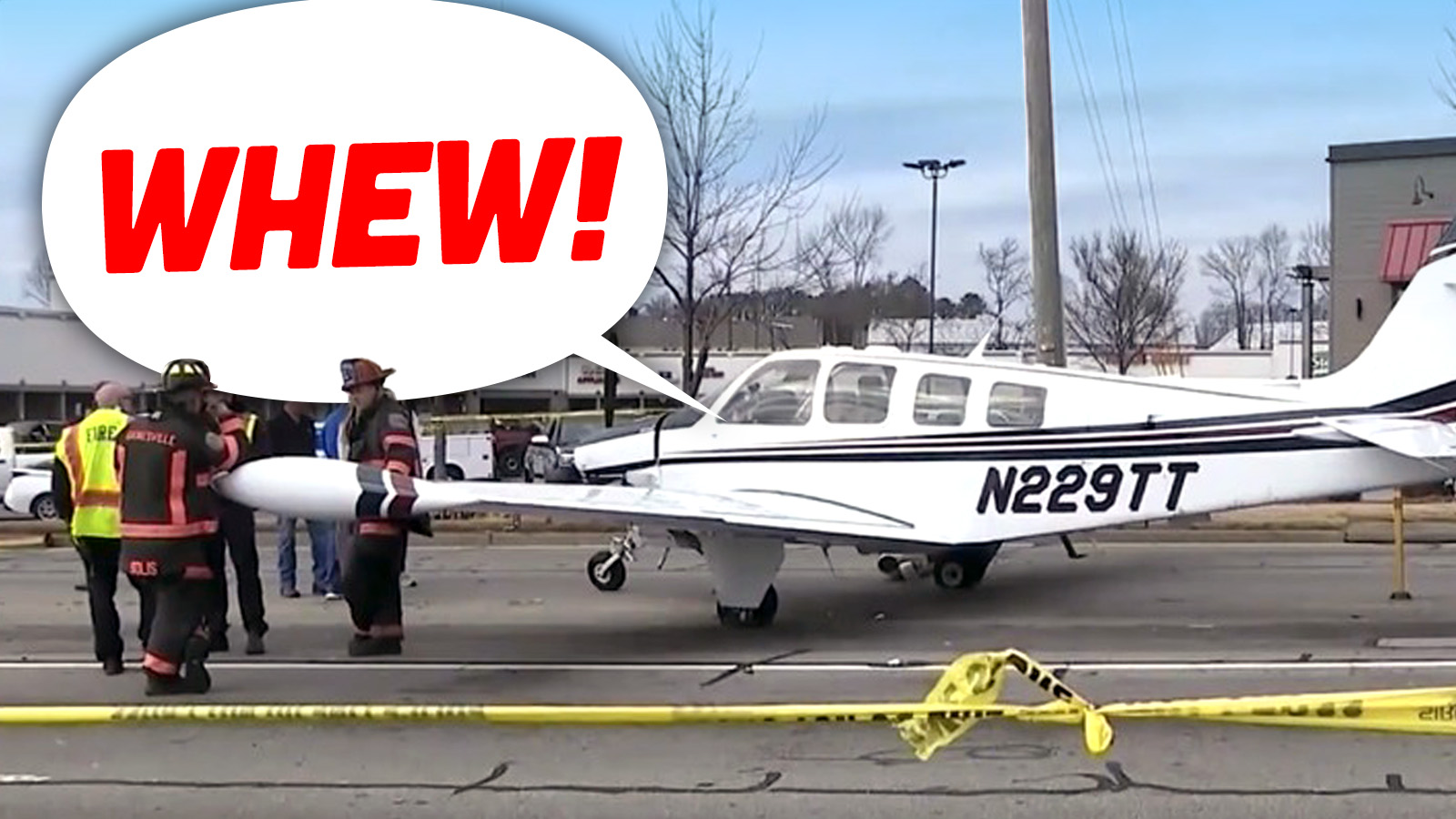
One of the worst nightmares for any pilot is losing all engine power immediately after takeoff. Losing power when you’re near the ground and without a ton of speed to spare leaves you with limited options. Such a scenario happened to one pilot recently in Georgia. Faced with few choices, this pilot somehow navigated his stricken aircraft between power lines, poles, and road traffic to set the plane down without serious injuries to himself or anyone else (or worse), and walked away from the forced landing with his plane damaged but intact. Let’s look into what happened with this viral landing.
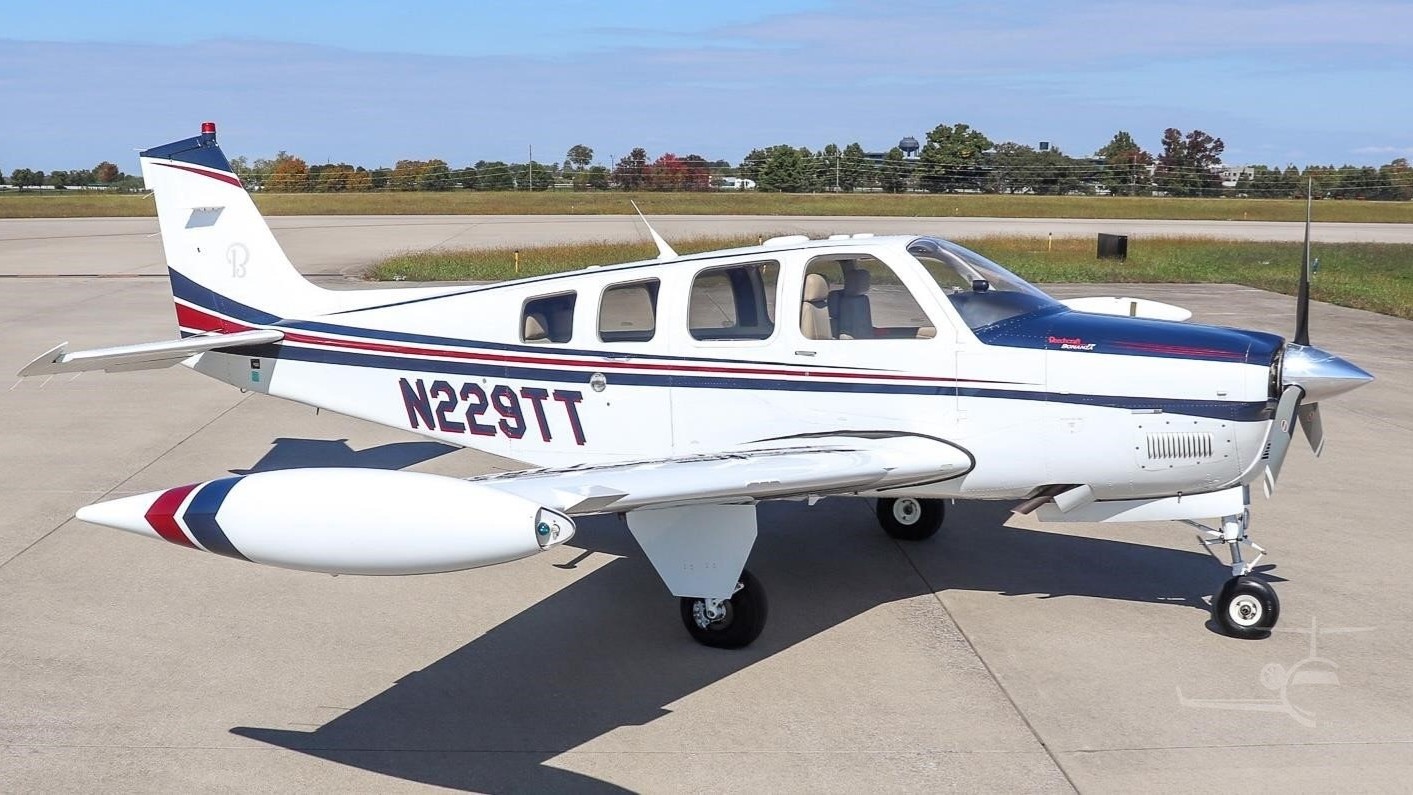
Just after noon Eastern time on Monday, February 9, Thomas Rogers throttled a 2010 Beechcraft Bonanza G36, registration N229TT, down runway 5 of Lee Gilmer Memorial Airport in Gainesville, Georgia. The aircraft lifted into the sky and Rogers turned to the northwest, bound for Cherokee County Regional Airport in Canton. According to sources gathered by the Aviation Safety Network, only a couple of minutes into the flight, the aircraft suffered from some kind of engine failure.


It’s not often that a crash of a small general aviation aircraft makes national news, especially one the pilot walks away from. But the story of how Thomas Rogers managed to walk away from an emergency has popped up everywhere from morning drivetime shows to car news outlets. Why are so many people talking about this?
It’s because this forced landing is sort of amazing. With no speed, altitude, or time to spare, Rogers got the plane down, dodging all sorts of obstacles. The plane did crash into a few cars, but even then, everyone walked away. Imagine exchanging insurance info after a fender bender, and the other guy is in a plane.

The Flight
The beauty of modern technology is that we can follow the flight along until disaster struck. Rogers’ flight starts off simple enough. Lee Gilmer Memorial Airport is an uncontrolled airport, so he announces his intentions on the traffic advisory radio channel and then proceeds to depart. Takeoff appears to proceed as normal, as Rogers rolls down the runway, lifts off, and makes a left turn during climbout. Onboard the aircraft is a student pilot joining Rogers for the flight.
The 2010 Beechcraft Bonanza G36 involved in the incident comes from a legendary line of aircraft that first entered production in 1947. The G36 variant of the Bonanza features a Garmin G1000 glass cockpit (flight display screens), seating for six, and a single Continental IO-550-B 9-liter fuel-injected flat six good for 300 HP.
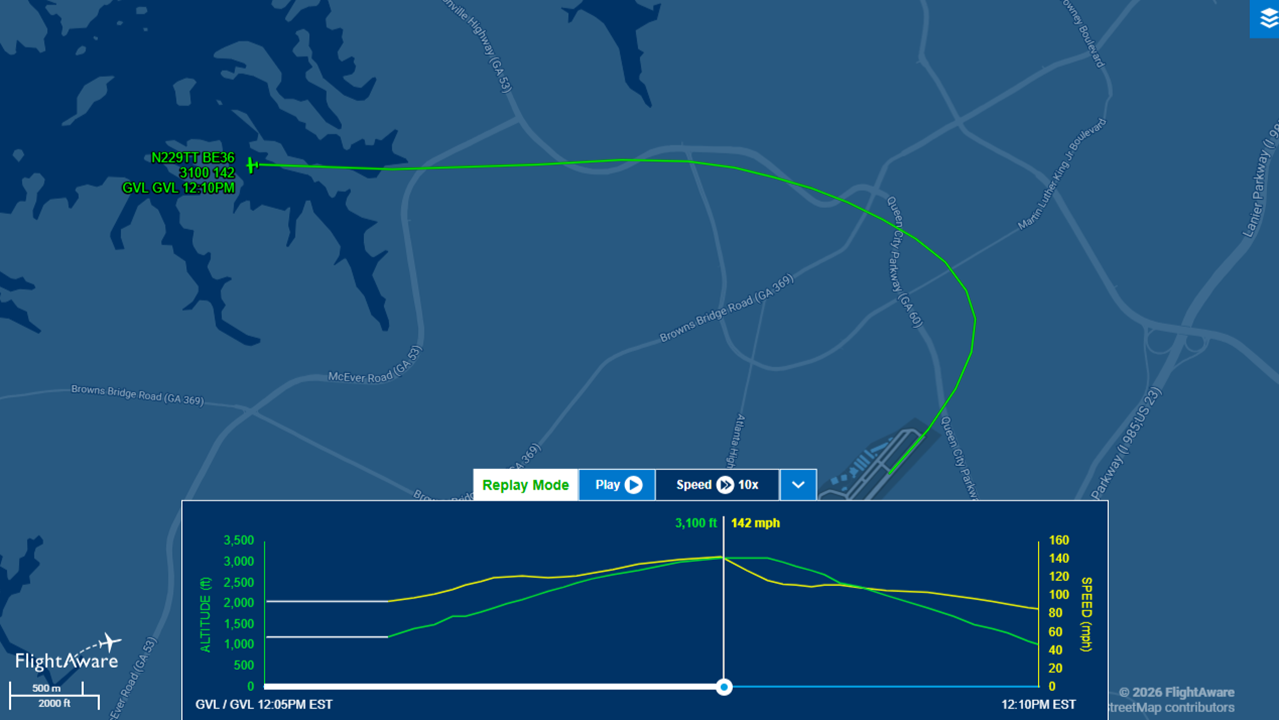
The aircraft reaches a maximum altitude of about 3,100 mean sea level with a recorded speed of about 143 mph. Then, something catastrophic occurs with the engine. Rogers radios in a mayday call and then states his intention to return to runway 11 at Lee Gilmer Memorial Airport.
There was only one problem. In only seconds, his speed rapidly decayed to around 112 mph, and he made it no higher than roughly 3,100 feet. The airport sits at an elevation of around 1,276 feet, so he had only 1,824 feet between him and terra firma. Stall speed for this aircraft is 61 knots indicated in landing configuration, or roughly 70 mph. However, you can stall an aircraft at any speed.
Every proficient pilot learns energy management early in their career. When you’re in a situation like this, you have two levers that you can pull: speed and altitude. If you’re getting too slow, you can push the nose down and restore airspeed, but that comes at the expense of altitude. If you need just a little more altitude, you can pitch up at the expense of speed. Since you don’t have an engine anymore, you will run out of both, so it’s important to pitch the aircraft for its best glide to maximize your chances of a successful forced landing.
Limited Options
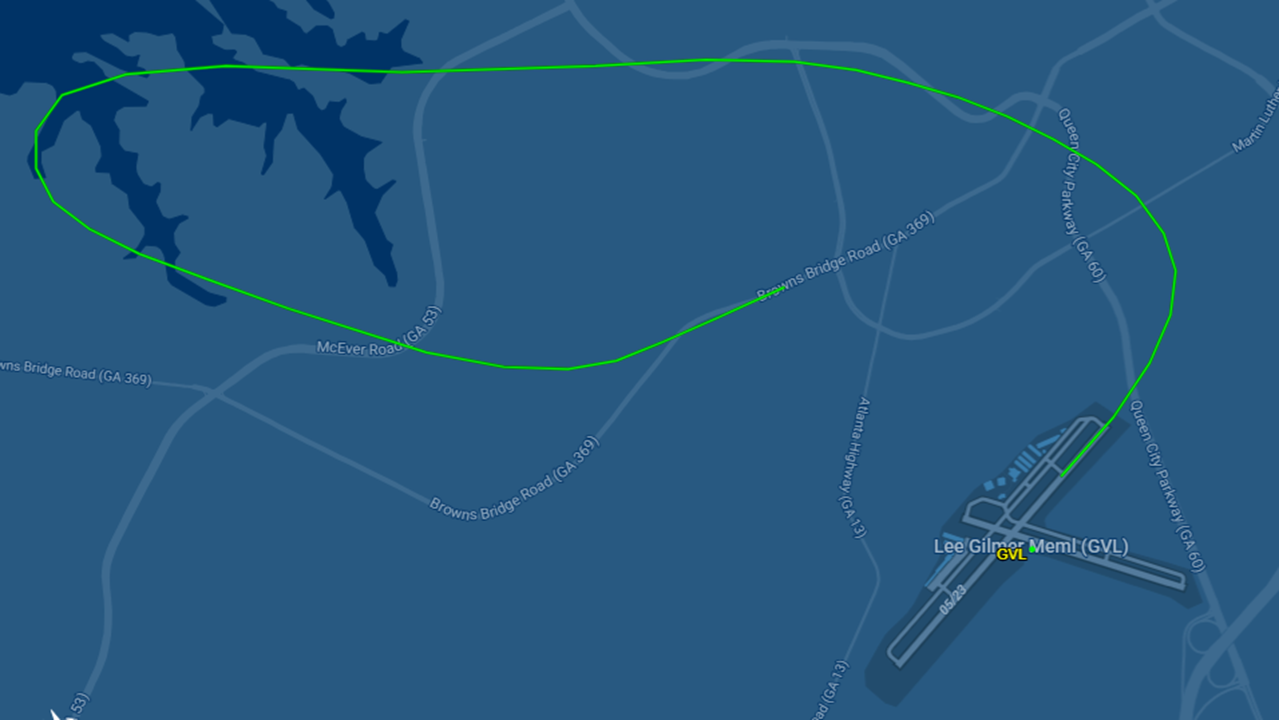
Rogers completed the turn and was roughly lined up for runway 11. But he now realized that he was too far away and there was no chance that the Beechcraft was going to make it back to the airport. Realizing the gravity of the situation, he calls out on the radio: “I think we’re not gonna make it. Please tell my wife, Molly, I love her, and my parents. I love them so much.” The sad thing about this call is that, unless someone scraped this call from Live ATC or was otherwise listening in, there was a chance that nobody would have heard it.
Some outlets have reported that Rogers attempted to do what’s known as the “Impossible Turn” here. In aviation, an “Impossible Turn” is what happens when a pilot loses their engine almost immediately after takeoff and makes the decision to try to make a 180-degree turn to return to the runway they just lifted off from. These turns usually result in potentially deadly crashes after the aircraft stalls, spins, or simply runs out of altitude. An Impossible Turn tends to happen below pattern altitude (typically 1,000 feet above airport elevation) and really close to the runway. The data shows that Rogers got above pattern altitude and some distance away from the airport, so I’m not sure it qualifies as an Impossible Turn – but it definitely qualifies as a dangerous situation.
Rogers’ aircraft now has limited speed and altitude remaining. In training, you’re taught how to scan for different places to perform an emergency landing. These potential landing spots technically have a ranking. An airport would be ideal, but failing that, a grassy field is great. Farmland also works so long as you land “with the grain,” which is to say, parallel with the plow rows. Lakes are also a decent choice, and, believe it or not, water landings have a roughly 90 percent survival rate.
Landing on a road in a busy area with active traffic would be the last resort. Roads have so many variables that are beyond your control. There are power lines, traffic, bridges, infrastructure, poles, and more. You might not even see a power line until it’s too late to dodge it. Even interstates can be sketchy places to land for these reasons.
As you can see in the video above, Rogers had few options. The immediate area was densely packed with trees, homes, and businesses. So, given such a slow speed and low altitude, his choices were either the road right in front of him or turning again and trying to reach the water. He continued forward, turned left, and lined up for a landing on Browns Bridge Road.
This road was perhaps the least ideal runway I’ve seen in a while. The area he pointed the plane toward was filled to the brim with restaurants, residential properties, and all sorts of businesses. The infrastructure was equally unkind, with imagery on the ground showing tons of power lines, stoplights strung up between poles, and, of course, tons of traffic.
A Happy Ending

Yet, Rogers managed to thread the needle. He dodged the poles, the power lines, and most traffic to get the aircraft to the ground. Once on the ground, the Beechcraft rear-ended three cars on the roadway, and the right wing tip fuel tank dislodged into one of those vehicles. Amazingly, everyone, from the two pilots in the plane to the people in the cars, walked away. Two people in the cars were taken to the hospital with minor injuries. Reportedly, one of those people had bruises.
This is about as much as we know for now. At this time, it is not known why the Beechcraft lost its engine. But there are images of the aircraft being removed from the scene using tracked vehicles.

Perhaps equally amazing is just how much of a tank the Beechcraft is. Rogers absolutely slammed the aircraft on the ground, and then it crashed into some cars. Yet, the aircraft looks remarkably intact. I mean, yes, it’s received substantial damage, but I would have expected worse.
Overall, I think it’s fair to say this pilot did a good job. Everyone got to go home, and there were no serious injuries. At the end of the day, the worst of the damage is to the cars and the plane, but those can be replaced.
I think this story can teach some lessons for car drivers and motorcycle riders, too. When faced with seemingly impossible odds, remember to use your training and experience. It’s always smart to have an escape plan, and when you’re in an emergency, just keep flying, driving, or riding until you reach the conclusion. You just might beat what to anyone else would look like impossible odds.
Top graphic image: Screenshot, CBS Mornings/YouTube



Man this happened right in my backyard. I live about half an hour from where it happened but used to drive Browns Bridge everyday. Definitely about as far from an ideal landing spot as there could be
Even country roads have signs, posts, and obscure power lines that are normally inconsequential to us, but will mess up an airplane in often fatal ways.
It is good that no one was seriously hurt, but that guy was very lucky. Skilled? Only to a point.
I live near a small airport and one time I saw a fleet of police cars slowly moving toward the entrance with one of them towing a small airplane with a tow strap. Whatever happened didn’t make the news, but I’ve always wondered what the story was.
Captain Steeeve videos are awesome. Super neat guy.
Steeeve is great. Recently retired AA 777 (?) Captain. Curious if he made more money flying or from the videos?
When things go pear-shaped, remember to look where you want to go rather than at what you think you may hit. Maybe idly repeat that to yourself while driving. I did, and when the day came that I was going to either flip or spin into my 300TD at speed, the phrase came to my head, I looked ahead and somehow caught it. This was in an old open-wheel Formula Ford, so either out come was catastrophic
Target fixation is a thing.
Humanity continues to have a perfect flight record. We’ve never left one of them up there!
You aren’t thinking high enough. We’ve sent plenty of things up that haven’t come down.
Those are spacecraft. They all either went to space or kerploded. I’m about the aircraft.
Framing it that way, you are entirely correct. (No, you didn’t need me to agree, but it seemed polite.)
Major props.
Grrr. Take my upvote! 🙂
Major props damage.
Daughter lost the brakes in her old Prius over the weekend – a brake line burst. She came to a stop UPHILL using regen. Good thinking on her young part.
I have been noticing that hybrids slow down pretty quickly when one lets off the accelerator. I had someone drastically slow down in front of me when I followed them through a right-hand turn, and their brake lights never even flickered. I didn’t come closer than a car length to them, but it was pretty scary.
It did make me realize how helpful that would be in an emergency brake loss situation.
When I got an EV a few months ago, I pretty quickly adopted one-pedal mode, but the brake light thing troubles me. My car shows brake lights when I lift entirely off the throttle; it’s part-throttle deceleration that leaves me never knowing whether I’m showing lights or not.
The friction brakes really only bring you to a final stop. I daily a Camry hybrid. It will coast like a normal car more or less. What I notice from the first inch or so of brake pedal travel is the electric whine of regen. I’m also pretty sure the brake lights don’t come on until I brake past a certain point.
Interesting. My Crown hybrid system should be very similar to yours, but it seems to aggressively slow down when one is not actively accelerating. I wonder if it depends upon which driving mode you have selected.
Mine is a generation or two older. I’m certain they have made updates.
I believe the quest for better mileage has changed their programing. Perhaps people are more accepting of the phenomenon, so Toyota is more aggressively applying it.
Btw, curious – WHO blanked the Golden Corral logo from the facade depicted in the YouTube video’s thumbnail?
Did the guy blank it, or does YouTube do it automatically?
It is clearly visible in the other pic.
Mercedes: the gravity of the situation? Gotta love the English language. Tell me the pun was on purpose.
Way back in college my friend’s step dad was a retired commercial pilot and small airplane owner. One weekend he decided to fly mom up to see her son. If I remember right he ran out of fuel, so he ended up landing on a two lane road out in the county that didn’t have a lot of traffic or other obstacles and he was able to make a safe landing.
After looking at google maps and overlaying his route with the map, it appears that the pilot attempted a return to the airport rather than immediately look for a place to put the plane down. That road he landed on was a result of attempting to get back and running out of ideas and altitude. He was plain lucky that he didn’t kill anyone along with himself and his passenger.
Rt 53 was a divided road just off his right side and that would have been a far better road to put it down on. But most likely he was focused on the airport until he realized too late that he was not going to make it. That’s what usually happens when pilots attempt the “impossible turn”. They are so focused on that bit of asphalt that they can’t make and ignore the open field (or whatever) that is just ahead of them.
The proceeding paragraph may have sounded harsh, but the pilot had much better options than the one he took. Nose high and just above stall speed into the trees would have been a better option than a city street. Plus while 61 knots was his stall speed, best glide is 70 knots, so he came down at probably double the traffic speed.
This is a good opportunity for you Mercedes, to sit with your instructor and review this with him and discuss what the better options would have been. My instructor constantly would fail the engine during my training, usually while in the middle of some distracting task. Sometimes the place you are going to pick may not end well for you, but its not going to put those on the ground at risk.
Airplanes glide far less in reality than when a pilot is in training. Instructors do not shut off the engine, so it is spinning the prop and adding thrust rather than the drag from a stopped prop.
Climbout is the most dangerous time during flight with the aircraft nose high and slow. Preflight should always include an escape plan with possible landing spots.
I had an engine quit in my biplane and I was amazed on how steep my descent had to be to maintain airspeed. Luckily I was on the downwind at the time and had just pulled back the power when it got all quiet and the prop stopped spinning.
Ah, so I have a few instructors in my circle, so I asked them before writing this. All of them agreed that trying to return to the airport was the wrong decision to make. They also agreed that he probably didn’t correctly pitch for the glide.
My main instructor said he would have probably taken his chances with the river that was nearby, the other two said it would be hard for them to say without being there for themselves.
Also, yeah, my instructor likes to yank the power at random times. The biggest lesson I’ve learned in that regard is that the plane does not glide as far as I imagine it does, so if there’s a suitable landing spot closer rather than further, choose that. So, I choose one of the many farms nearby and just circle until its time to drop the flaps.
Indeed it is “always smart to have an escape plan.” That’s especially true if you are driving a heavy vehicle. I shudder a bit at the size and weight of some things people fly down the highway with. Both HD pickup drivers and tractor-trailer drivers are getting insufficient training. Modern tractor-trailer schools are largely scams.
When I first drove heavy trucks, experienced drivers would drill into me that if it’s close enough to suddenly become an emergency you don’t have time to stop. You must always be looking ahead for possible soft and inexpensive not human things to hit (like shrubbery) because when there’s a sudden emergency in front of you and you’re driving 20-40 tons at highway speed your only way out is to use the steering wheel. Such constant watchfulness is not a bad habit to cultivate in everyday driving.
Long time ago I contracted a bad infection on the road that required heavy duty antibiotics that knocked me out for over 24 hours. I woke up disoriented in a hospital and all I wanted to know was if I had killed anyone. I was in a bad health situation and probably would have felt sorry for myself if I hadn’t been so happy I hadn’t wrecked.
There’s a part of me that would secretly enjoy calling my insurance company. “You’ll never guess what just hit my car.”
Google Street View east of the Golden Corral does a good job depicting all the stuff he had to dodge getting down to terra firma. I’d take lessons from that guy.
The timing of this article is perfect in relation to Brian Silvesteo’s, What “Future Car” Ideas Do You Hope Will Never Happen article. Flying requires a pilot to always think ahead and in this case his experience as an instructor greatly helped but he and everyone one else was very lucky that everything played out so well. Now I wonder if the car insurance companies will call the claimants and ask if they were parked or driving to assign them partial liability. Like, why didn’t you check your side mirror to see if a plane was trying to land type BS.
“Just after noon Eastern time on Monday, February 9”
Good thing this wasn’t near El Paso on February 10 or the pilot would have been zapped by Pete Hegseth’s lasers like a bunch of dollar store party balloons.
Is there aircraft insurance?
Yes
T’is but an excuse.
It’s plainly obvious guy got a Golden Corral urge. I have photos to prove it.