


In the 1960s through the 1980s, a trend swept across the RV industry. Numerous companies offered a different way to build a camper. These new campers were built out of fiberglass, offering lightweight trailers that didn’t leak and lasted decades. Most of these campers were extremely tiny, but some were large enough actually to live in. This is a 1990 Boler 1700, a vintage camper with all of the benefits of fiberglass, but with enough room to spread out in. It’s built better than many campers today and is cheaper, too.
Fiberglass is a deeply underrated way to build a camper. Too many campers are still built with wood framing that can rot, rubberized roofs that can leak, and fiberglass siding that can bubble. Composites and metals are snaking their way through the industry, but quality can still be much better. Are you tired of water damage, constant maintenance, and blowing your wallet open on RV repairs? A fiberglass camper might be the solution.


By molding a camper out of fiberglass hulls rather than wooden boxes, RV manufacturers can eliminate many potential points of water ingress. Fiberglass doesn’t rot, doesn’t bubble, and won’t splinter. You can also repair fiberglass yourself, and when done right, a fiberglass camper can be lightweight and aerodynamic.
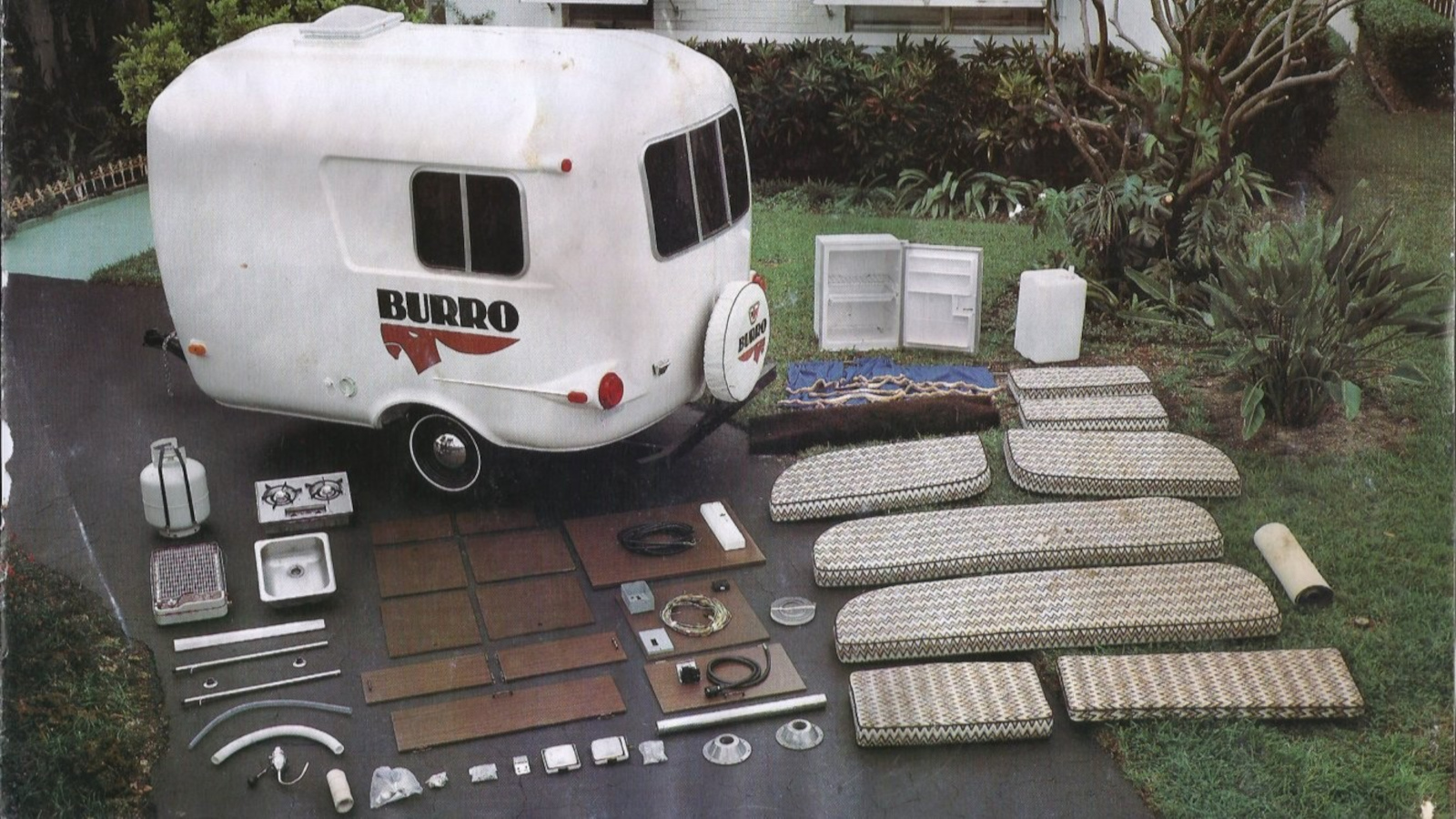
I’m not at all surprised that these campers, which took off several decades ago, are seeing a resurgence today with several companies building new ones. They look cute, and the fact that so many of them have survived decades is a testament to how good fiberglass can be for a travel trailer.
The new fiberglass campers look awesome, but unless you’re buying from a company like Scamp, you’re probably going to pony up a ton of cash. If you’re not sitting on a fat wallet, the past is full of delightful fiberglass campers that still work today. This rare Burro 1700 is only one of them, and it’s built so well that it was one of the inspirations for one of the most famous vintage fiberglass campers.
The Burro Company
Despite the Burro Company’s importance to fiberglass RV history, its origins are not entirely known. Here’s what I wrote in the past when I found a Burro 1300:
According to information gathered by the Tin Can Tourists vintage camper club and the RV enthusiasts of Fiberglass RV, Burro got its start in the late 1970s. I did some digging of my own and found that Burro Inc. was incorporated in Plymouth, Minnesota in 1977. The company then began producing a fiberglass travel trailer. This camper–the Burro–was similar in design to the Cloud, a fiberglass camper that was built in nearby St. Cloud, Minnesota in the years prior. The two campers have a similar design and interior layout, but the Burro is noted to use a double-wall fiberglass construction while the Cloud had a single fiberglass wall.

Over Burro’s short existence, the company managed to produce campers in a variety of lengths. There was the original 13-footer, but there was also a 14, a 17 (above), and even a proposed 21-foot version. If you opted for a larger Burro, you not only got more space, but more features. The company advertised options like a gray water tank and a wet bath that includes a shower. Other goodies included a power range hood and insulation. It seems that the 21-footer never saw reality, but the campers did get wide in their later years. While an older Burro is about as wide as my U-Haul, the company began selling wide body versions of the 17 and the 14, which gave them a 7 foot, 6 inch-wide girth. Yet, they were still light, as a 14-footer weighed in at 1,400 pounds with the 17 coming in at 1,800 pounds.
In 1999 dollars, Burro wanted you to pay $7,900 for an assembled 14-foot trailer and $9,900 for an assembled 17-footer. Building it as a kit dropped the price down to $4,995 and $5,495, respectively. The new California-based Burro did produce some new campers using the old Burro molds, but it lasted for just a few years before it went under. Online records show a dissolution date in 2003. As a bizarre twist, while the company was gone, the website was still up and running until 2013. It’s accessible today through the Wayback Machine.
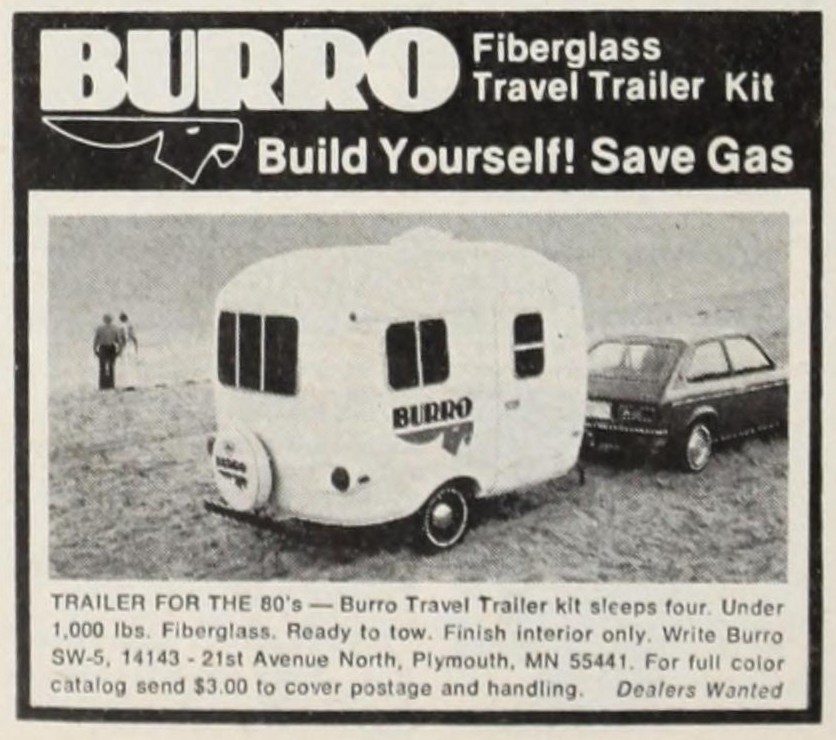
In the 1980s, the small Burro kit was $2,596 before adding in electrical, appliances, and decor. Allegedly, the kit was so easy that it took only a day or two to build with common tools. If you didn’t feel like building it, $4,650 got you a complete model.
Burro didn’t just make fiberglass trailers, but also experimental ideas like pop-up trailers, too.
Since writing that piece, I was able to figure out a few more pieces of the puzzle. It would appear that an early Burro camper company was Burro, Inc. of Plymouth, Minnesota. At some point, the company changed its name to the Burro Company, but still operated out of Plymouth, Minnesota. Later, Burro would move to Sac City, Iowa. It’s unclear if this was a second factory or a whole company move. Around 1990, Fiberglass International of Schaller, Iowa, purchased Burro. Production ran a handful of years before faltering like previous efforts.
In 1998, Burro was born again as Burro Travel Trailers, LLC. of Escondido, California. The Burro molds were made in Mexico and then shipped to California. The new Burro started a website and production around 1998. It’s believed that Burro ran out of money in 2001 and was then dissolved in 2003.
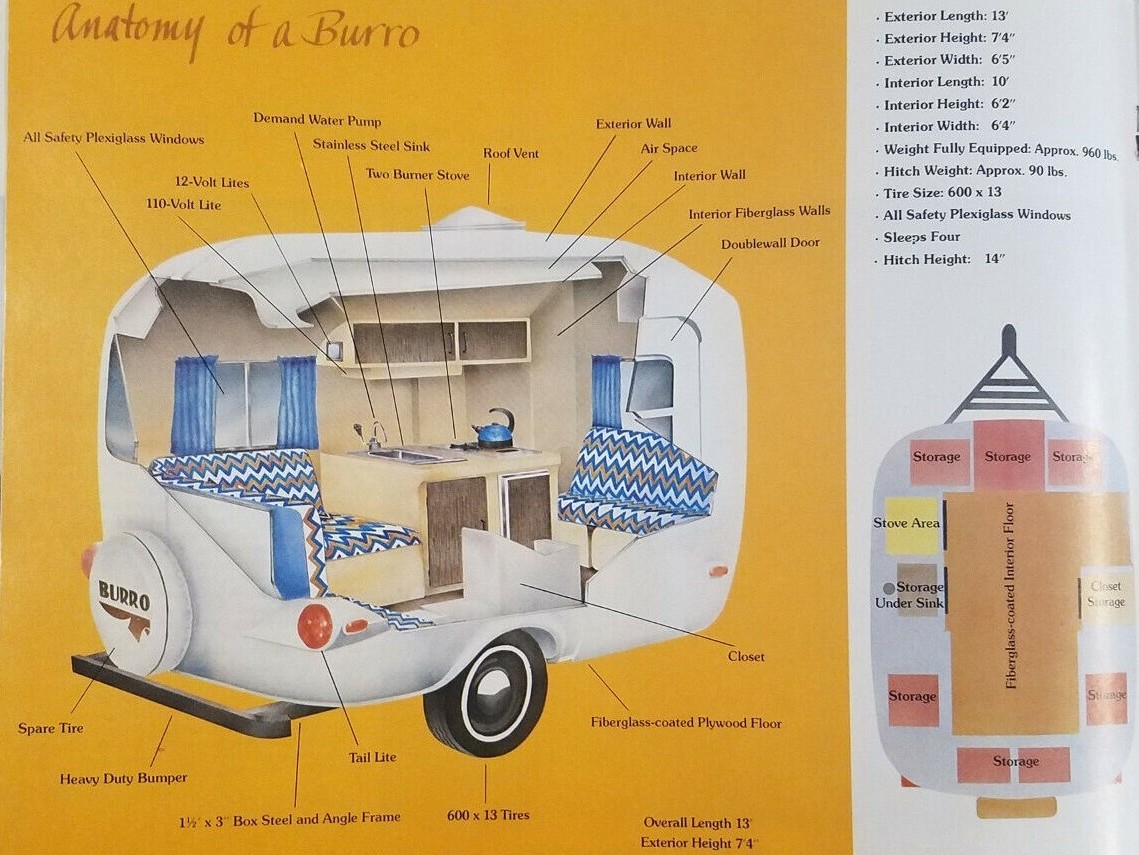
Here’s an explanation from Burro Travel Trailers in 1999 for why Burro’s double-hull fiberglass design was so great:
Double-shell construction is a feature unique to the Burro. Cupboards, counter tops, seats, and storage areas are molded right into the shell.The smooth gel coat finish inside and outside may be wiped clean with a damp cloth. All fiberglass parts are specially formulated or a fire retardant resin. Commercial grade, foil-backed fiberglass insulation between the inner and outer shells adds comfort and protection from moisture condensation when the inside and outside temperatures vary. The unified interior features eliminate the need to rivet individual components to the outside shell. Burro’s rivetless construction eliminates leaks caused by rivet shanks wearing on the fiberglass which leads to unsightly streaking and expensive repairs.
Features of older Burros include 12-gallon water tanks and 110V shore power connections. A Burro 13-foot trailer weighed around 1,100 pounds before options. There was also a Burro Ultra-Lite, which would have brought the 13-foot camper down to 740 pounds using an aluminum frame, aluminum propane tank, and magnesium wheels.
Sadly, I still haven’t been able to find the human part of the story. Who created the Burro? Why did they make the Burro? What I can tell you is that Burros were built so well that U-Haul purchased one and copied some of its ideas while engineering what would become the iconic U-Haul CT13 fiberglass trailer.
This Burro 1700
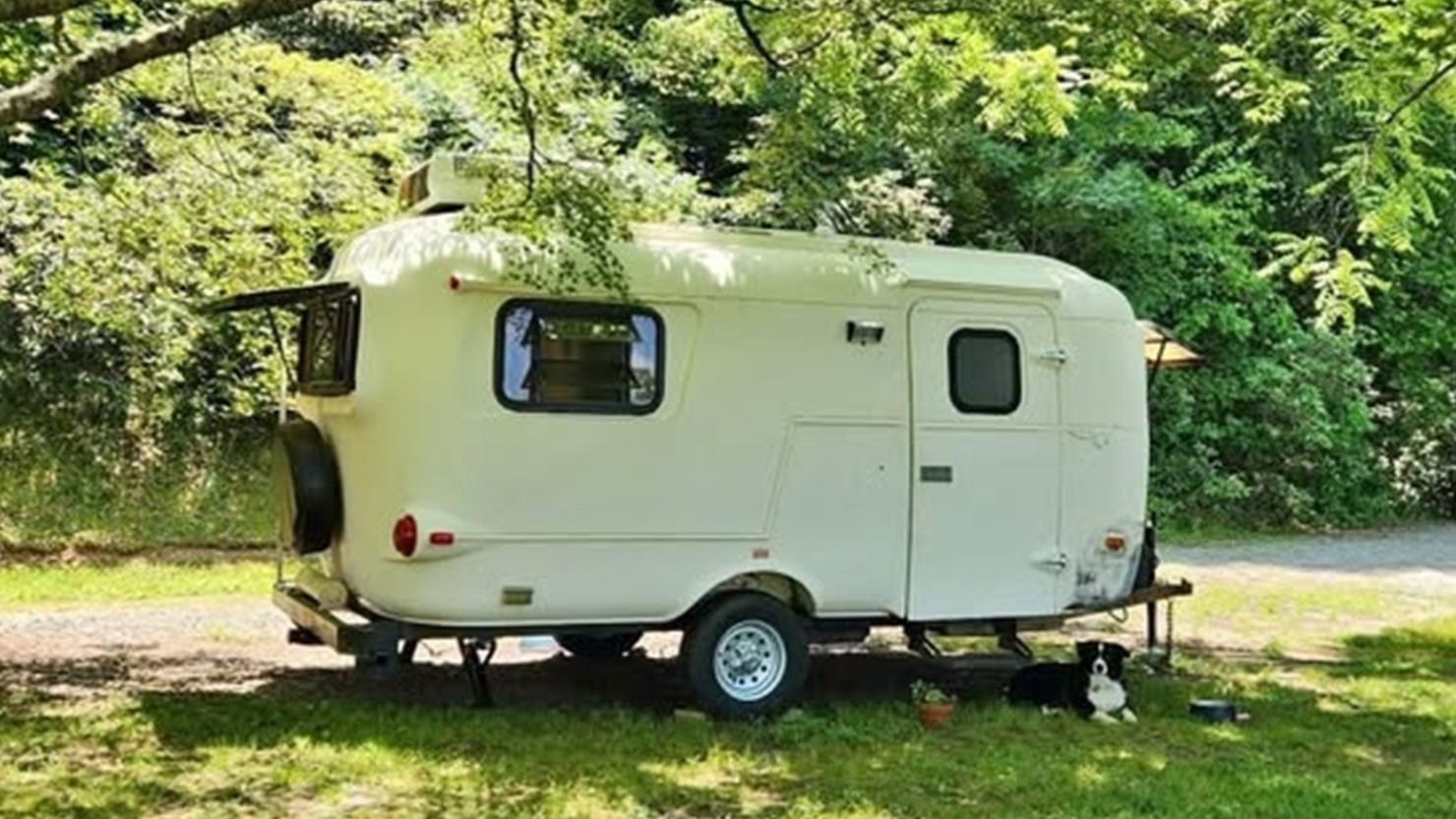
Most of the so-called “egg campers” of the late 20th century were tiny affairs. They were barely 13 feet long and were advertised as economical ways to go camping during fuel crises. These campers were also great for the owners of the many downsized cars of the era. However, these companies did build larger campers. Even U-Haul made a big version of its fiberglass camper.
By going bigger, buyers usually got a bit more room to spread out, a bathroom, and maybe more space to sleep. Of course, going bigger also came with a cost and weight penalty. The bigger option ended up being the rarer option for some brands, and that includes Burro. Production numbers are not known, but at least in the present day, the smaller Burro is much easier to find.
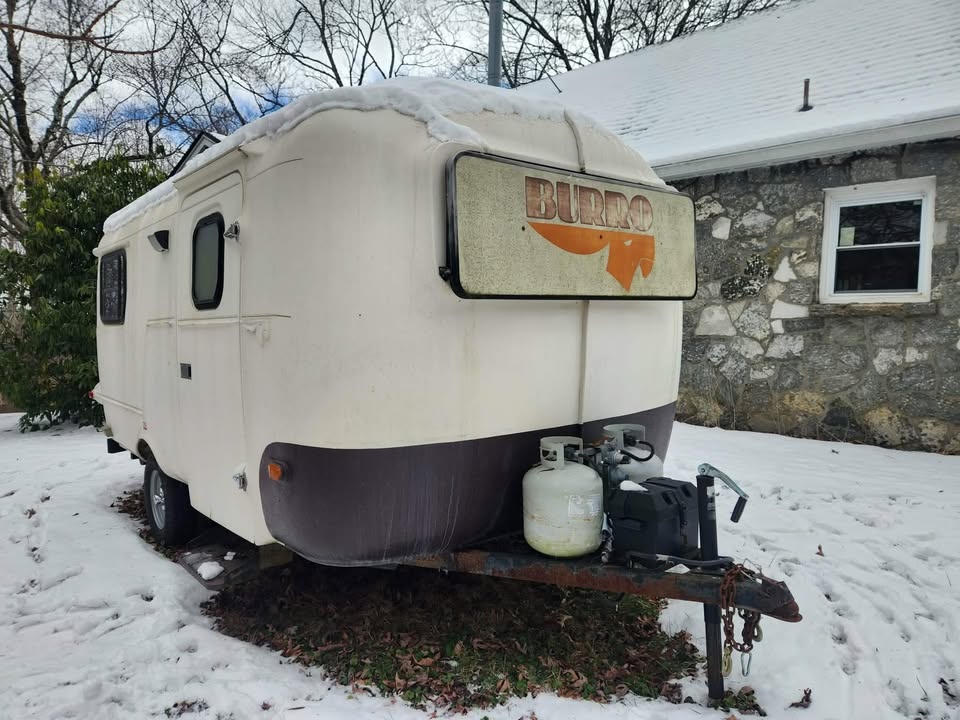
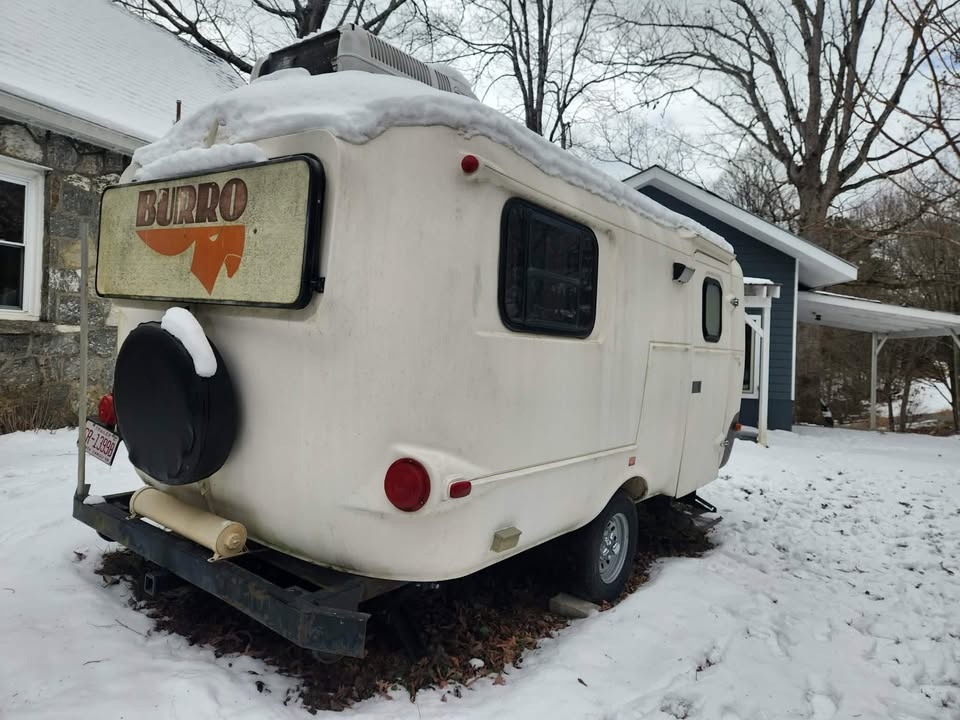
That’s why I was so excited to find this 1990 Burro 1700. I have seen a couple of other Burro 1700s in the recent past, but all of them were projects that needed a ton of work. This one looks like a relatively decent example. This Burro was likely built by the Fiberglass International iteration of Burro in Iowa, and it’s a great piece of RV history.
The exterior seems to be in relatively decent condition. The fiberglass appears to be solid all around. The frame is on the rusty side, and the graphics have definitely seen better days, but I don’t see anything that can’t be fixed or freshened up. The design is pretty neat because the Burro 1700 has the same design as its smaller sibling, but with the center section expanded by a few feet.
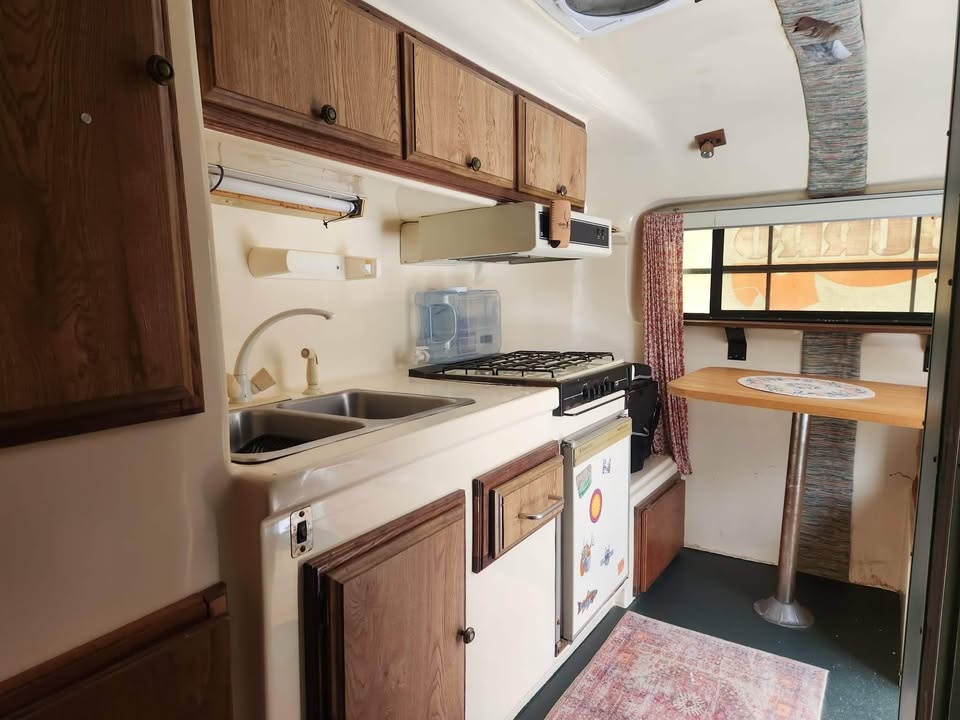
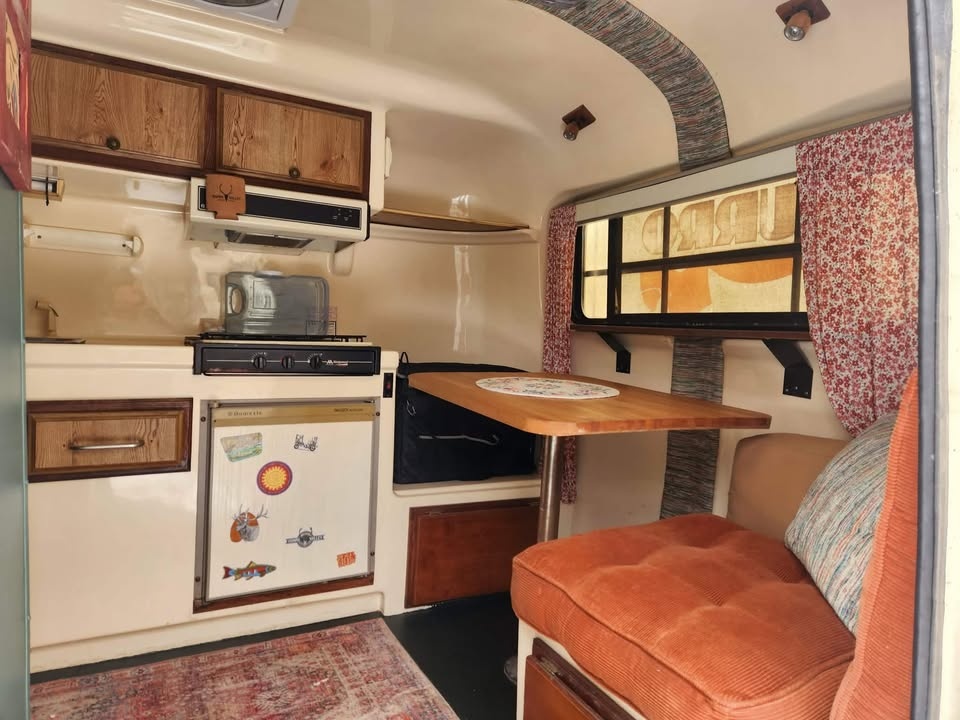
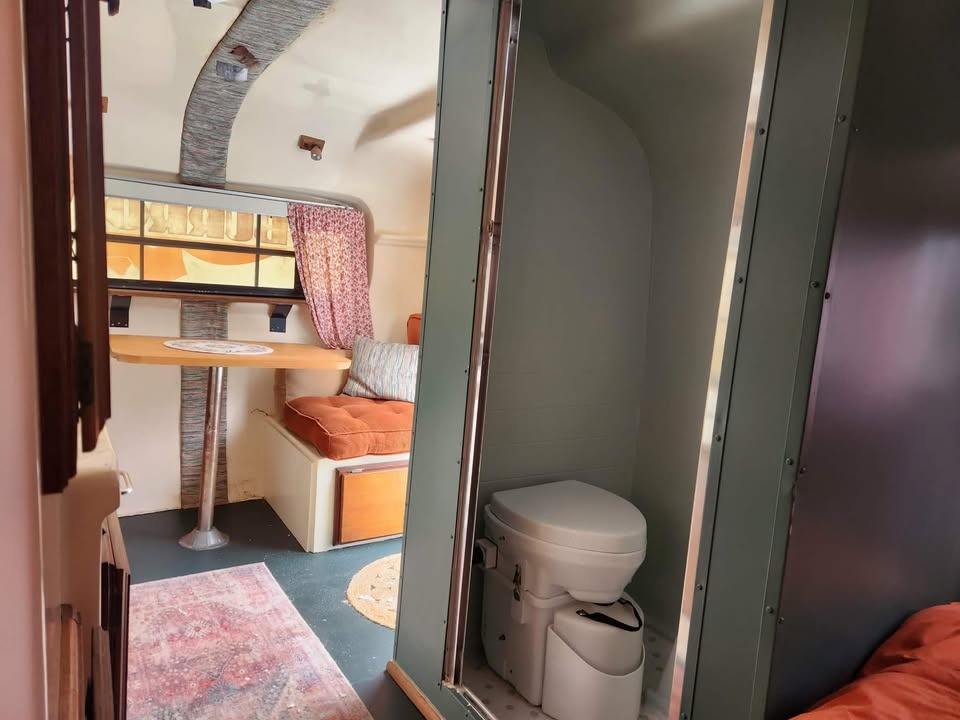
The interior looks pretty period-correct, with fiberglass counters, fiberglass cabinets, and a dash of wood for doors and trim. The trailer looks fairly well equipped with a dinette that turns into a bed up front, a dual-basin sink, a three-burner stove, an icebox, and an air-conditioner
The most important plus of getting the bigger trailer, I think, is the toilet and the shower in the middle of everything.
The seller adds more details:
I converted this camper into a cozy tiny home and lived in it full-time. It’s been lightly updated and would be perfect for someone looking for a fun, vintage camper or minimalist living setup.
Updates & Features:
Fiberglass body.
Axle was bent when originally purchased and professionally repaired in 2023.
New subfloor installed.
Nature’s Head composting toilet (black tank access currently blocked; tank can be removed and replaced with a fresh water tank if desired).
Working shower.
Replaced water pump.
New overhead vent.
Original air conditioner (works great).
Original hot water heater (working).
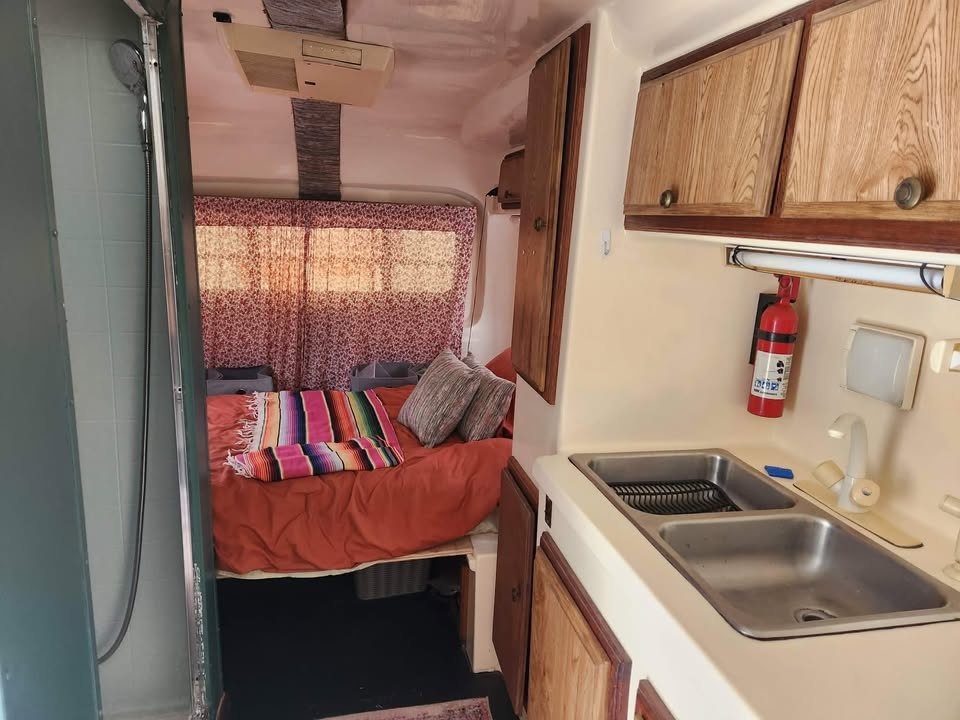
Interior Notes:
Rear area converted from table to permanent bed (original table post and wooden table included).
Almost new, comfortable memory foam mattress included.
Front dinette cushions were removed due to age, replaced with separate cushions (happy to include).
No built-in refrigerator; previously used an electric cooler that runs on DC power or a Jackery battery.
I like the fact that original parts do come with the trailer if you want to really bring it back to what it used to be. Otherwise, this Burro 1700 looks like a cozy little place to chill that’s pretty roomy for its size.
Egg-Shaped Fun
The seller, who is based out of Brevard, North Carolina, wants $16,000 for the trailer. Admittedly, I’m not a huge fan of the rust on that frame. But it’s entirely possible that it doesn’t go deeper than the surface. If that’s the case, spruce it up and enjoy budget fun. While this caper might be old, it’s bigger and nearly $10,000 cheaper than a new Scamp 13.
I also love that is a situation where I don’t have to say that I wish that something like this could be made again. It seems like there’s a new fiberglass camper design every year. So, grab this one or buy a new one; either way, you should have some fun.
I also just love this Burro because it’s a testament to how well fiberglass works. This trailer is 36 years old, and it’s holding up better than some campers that aren’t even 10 years old. Of course, it does come from a long-discontinued brand and has been modified. But if you can get past all of that and score it for a good price, I think there’s a lot left in this piece of history.
Top graphic image: Facebook Listing


Great weight specs.