

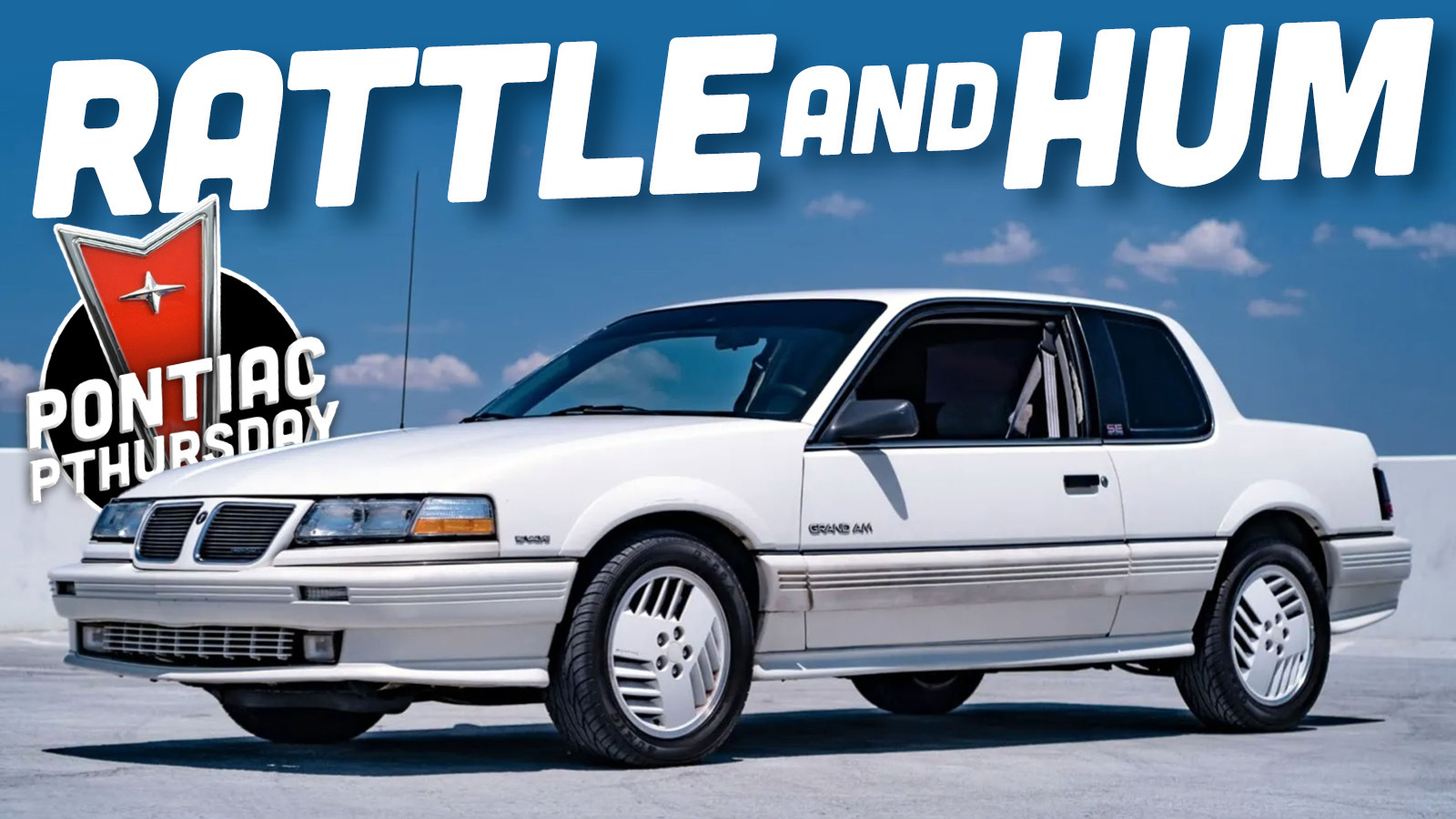
“We attempt what others achieve.”
Unkind critics would say that this was General Motors’ mantra in the malaise era. I think that’s a bit of an overstatement, but it’s true that in those dark days the world’s largest car manufacturer seemingly went from being a technological tour de force in the sixties to an also-ran struggling to keep pace with imports invading our shores.


GM certainly made some valiant efforts to rise above the ennui of the era, and since it’s Pontiac Pthursday, you know we’ll be looking at one such effort from The Excitement Division. In the late eighties, Pontiac took their popular front-drive compact/mid-sized sedan entry and put a motor under the hood with a power-to-displacement ratio to rival the best of the European and Japanese competitors. You want quick? The five-speed-equipped Grand Am SE was indeed that. You want balance-glasses-on-the-hood refinement and a mechanical symphony soundtrack? Well, uh, did I say it was quick?
The Phoenix That Fell Into The Ashes
We forget how drastically things changed at General Motors at the end of the seventies. They took their meat-and-potatoes X-cars like the venerable Chevy Nova with a chassis that essentially dated back to the early sixties “Chevy II” and finally discontinued it. The new-for-1980 replacement was a product that had more in common with a Saab 900 or Lancia Beta (an example of which GM apparently studied) than anything else in their lineup. Give credit where credit is due: it took a lot of guts for GM to drop a front-wheel-drive transverse engine three- or five-door hatchback onto an unsuspecting buying public. This could easily have been a recipe for a massive flop.
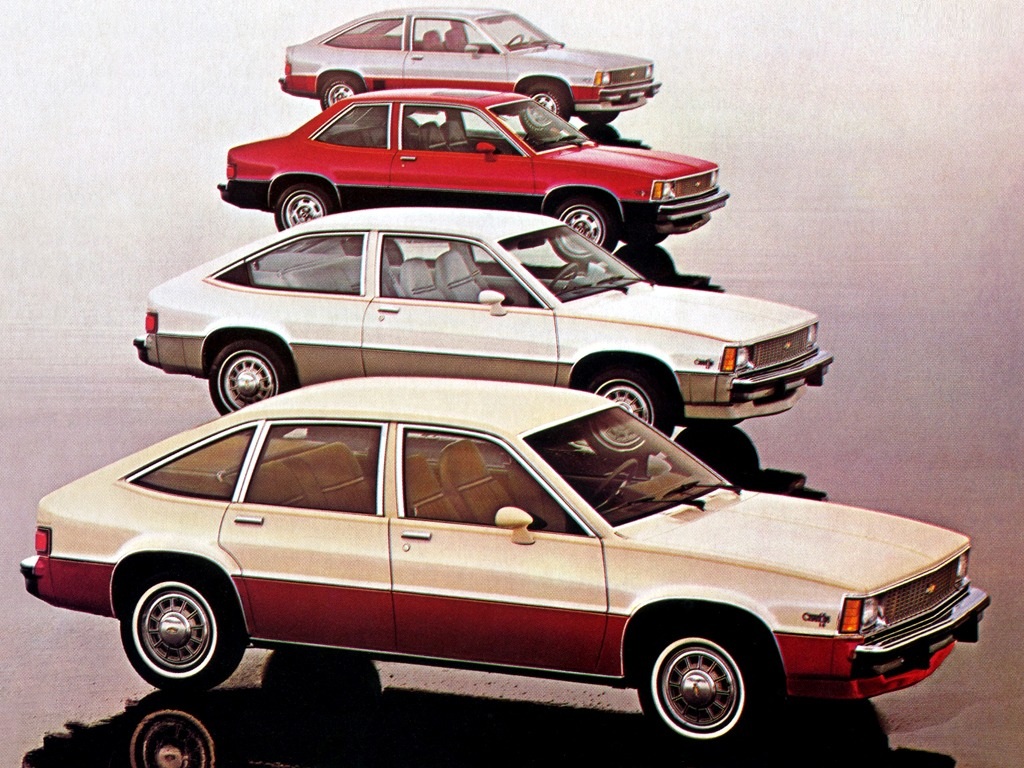
The new X-bodies were not a flop. In fact, General Motors struggled to keep up with demand, selling over a million examples in the extended 1980 model year. This was a problem for several reasons. First, the pace at which production was going didn’t really allow for the best quality products to be put into buyers’ hands. Second, the car these stressed-out laborers were building was not really ready for customers at launch time. The X-bodies were subject to a number of recalls, the worst of which revolved around the car literally revolving around when the rear brakes prematurely locked up. Fixes to the proportioning valve didn’t fully solve the issue, which some reports said that GM knew about all along.

While Chevy’s Citation version of the new X-Body sold over 800,000 examples in the first year, Pontiac sold only 266,000 of the Phoenix. Still, that isn’t a bad number, and another 263,000 units moved in the much-shorter 1981 model year (the X-car was launched in mid-1979).
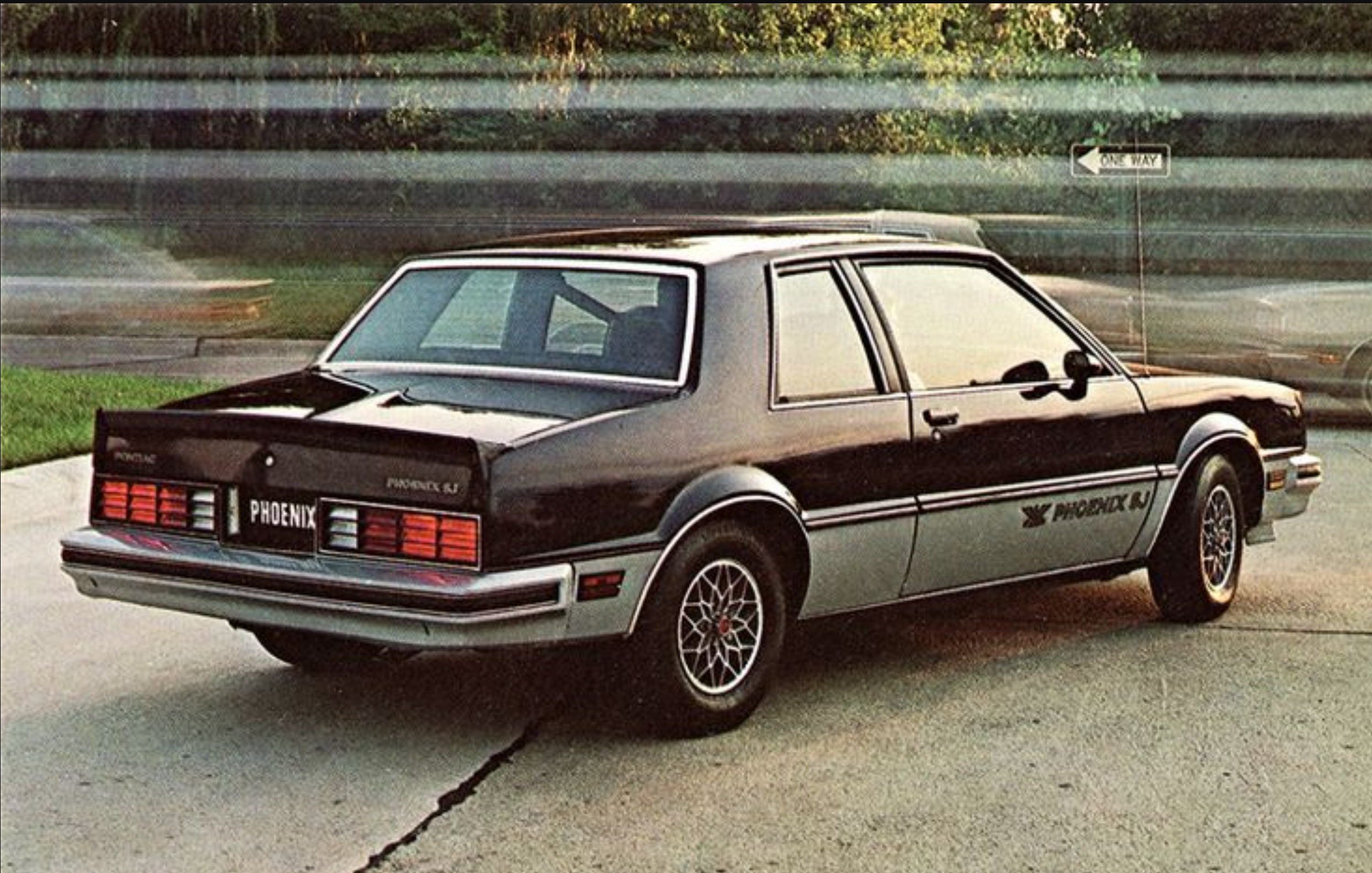
However, the reputation of this new front driver caught up with it fast, and the Pontiac version suffered for it. Worse than that, GM did not make any significant changes over the following years and seemed to just let the mid-sized Pontiac die on the vine, as if knowing it was a lost cause. By the time the last Phoenix was sold in 1984, sales had dropped to a mere 23,000 cars a year. Clearly, it was time for a change.
Pontiac Motor Werks
Let’s give the Phoenix and the X-cars in general their due; these were products that revolutionized what a “normal” American car was. There was no turning back from the template that they set for front-drive, small-engined compact machines, and General Motors’ replacement for these groundbreakers would be extremely similar to the cursed X-bodies.
In fact, many of the mechanical components were simply refined design concepts introduced on the X-cars and their later, improved J- and A-body siblings. Dubbed the N-body, this new-for-1985 platform included the Buick Somerset, Olds Calais, and Pontiac Grand Am.

Assuming Pontiac was trying to distance itself from the stank of the Phoenix, might it be bad luck to name an all-new car after one that Pontiac had already produced in two previous generations (1973-1975 and 1978-1980 Grand Ams), which both failed in the marketplace? Maybe, but after these two earlier attempts to sell a “fake Euro” car, Pontiac had figured by 1985 that the public was finally ready for such a product.
Indeed, they were. Launched initially as just a two-door coupe, the first FWD Grand Am had a sort of Americanized BMW E30 look to it that buyers ate up. Sales for 1985 more than tripled from the Phoenix’s pathetic numbers from the year before, at over 80,000 units.

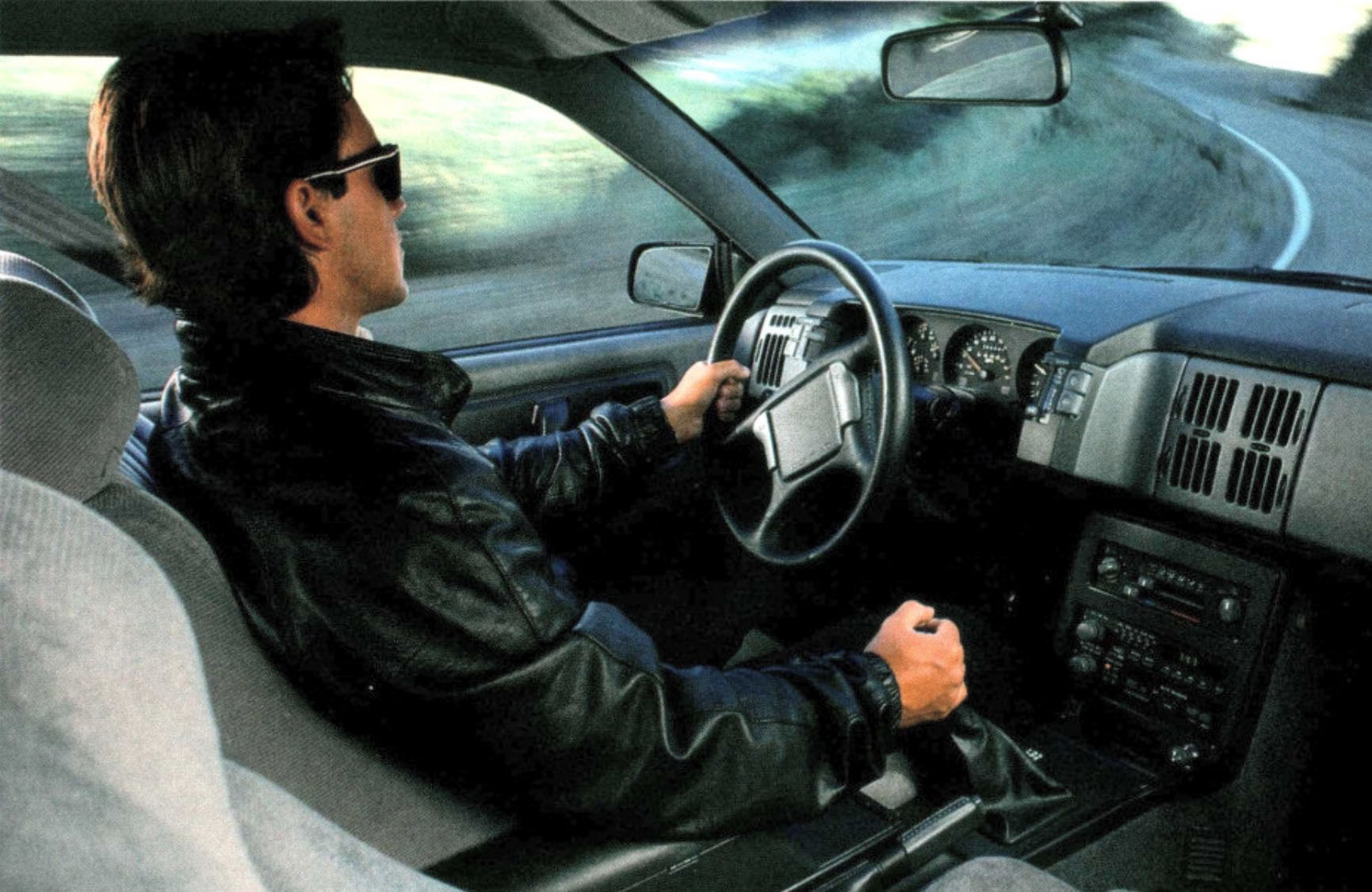
Inside, all remnants of mini-Catalina interior design were gone, replaced but a dashboard of many weird switches in rather cheap-looking grey plastic that would come to define Pontiac in the later eighties. The optional “rally” gauge package had a digital tachometer with a strange hockey-stick-shaped window that allowed you to see the revs rise as illuminated segments climbing a hill. The standard gauge package put the end of the speedometer needle in that little window.

Powertrains were nothing special, including the venerable Iron Duke 2.5-liter four carried over from the Phoenix and an optional Buick 3.0-liter V6. The four came standard with an actual 5-speed manual transmission, but unlike the Phoenix, you had to get a three-speed slushbox if you popped for the six. Also, it might not have been an X-car, but if you liked how your Citation or Phoenix headed for the weeds or into oncoming traffic, depending on how you mashed or let up on the gas, you were in luck. The Grand Am kept the torque steer alive! Yes, even with the 90 horsepower from the Duke or the mere 120 from the V6, the Grand Am wrenched the wheel in concert with the gas pedal.
Obviously, the new Grand Am was not going to wow any real BMW fans or even enthusiasts in general with such powertrains, but Pontiac quickly stepped up their game. For its second year, the Grand Am added a four-door model to the lineup. Unfortunately, this was also the beginning of Pontiac’s “monochromatic” faux AMG-style treatment of the snazziest versions of their cars, complete with rather overwrought rocker panel treatments. Today, it’s sort of cheesy/charming to see, but at the time, many of us baulked at the love-it-or-hate-it “Ride Pontiac Ride” aesthetic.

Thankfully, GM at least started to add some power to match the extroverted looks. For 1987, instead of pumping up the V6’s output, Pontiac stole the powerful 165-horsepower turbocharged LT3 two-liter four from the Sunbird as the performance engine. Being a bigger car than the Sunbird, it couldn’t match that little hot rod’s acceleration, but it still offered reasonable grunt. With the stick, this was good for a 15.7 second quarter mile if you could hold the wheel strongly enough in a straight line when the turbo boost abruptly kicked in and really got that textbook torque steer rocking.
Still, they weren’t done with making the Grand Am faster. However, it’s more accurate to say that Pontiac’s sibling over in Lansing wasn’t done yet.
Double The Valves, Double The Cams, Double The Noise
By the mid-eighties, GM was all-in with the front drive layout of foreign cars, but they had yet to make the plunge into higher-tech powerplants. That would change for the 1988 model year when they launched the “Quad 4” engine, the last powerplant ever to be developed by the Oldsmobile division. Finally, General Motors had a motor that could match the specifications of import-style mills. Well, sort of import-style. The 2.3-liter four was equipped with four valves per cylinder actuated by dual overhead cams, but GM drove the shafts with a timing chain instead of the nearly-ubiquitous belt on most European and Japanese competitors. Maybe they were still spooked by the Vega disaster, since the Quad 4 had an aluminum cylinder head but a cast iron block.
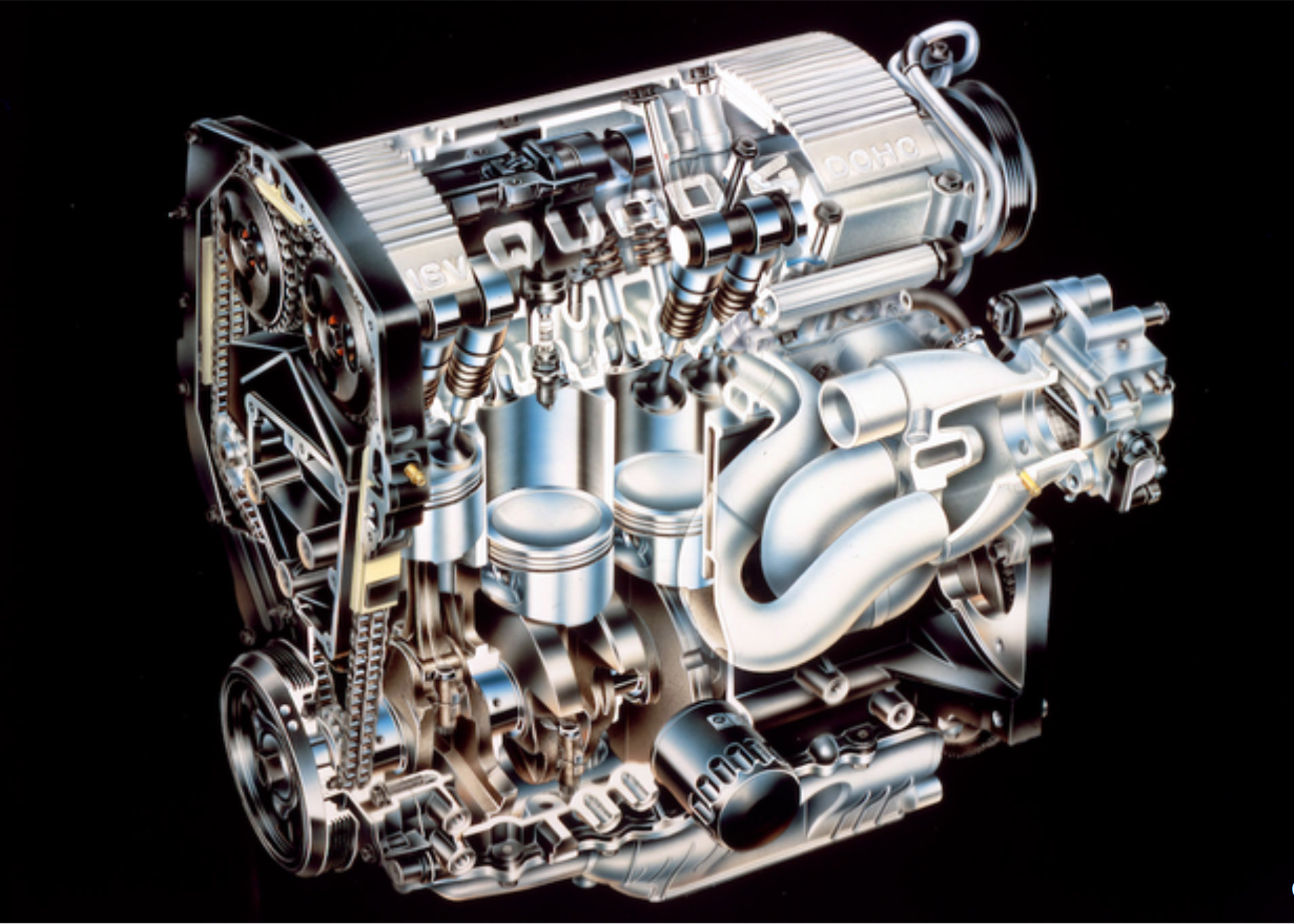
The new Quad 4 was installed in Oldsmobile’s Calais coupe, but truth be told, the sporting Grand Am was the N-body GM car that was ideal for this new high-revving powerplant. Replacing the V6 as the upgrade option for the Grand Am in 1988, the first Quad 4 pushed out 150 horsepower; not spectacular for a modern engine, but right up there with the most-power-per-liter contenders of the time. How about the quality of the power delivery? I was afraid you’d ask that.

Testers reported idling and revving left a lot to be desired, with sufficient vibration to rattle the steering wheel. But at least it sounded good? No, it did not. Reviewers were quick to report that an engine of similar specification and displacement built overseas would likely be much more refined, and the lack of balance shafts was something that I’m sure the bean counters mistakenly thought they could get away with. That timing chain wasn’t doing it any favors in terms of racket, either.

A dual-cam Italian engine is typically operatic at full song, while a similar spec Honda engine rises to a smooth, turbine-style crescendo. Tach up a Quad 4, and it sounds like some kind of mechanical violence is imminent. There are reports that violent things did happen in some cases, with the dreaded head bolt issue that plagued Oldsmobile’s much-maligned diesel and caused head gasket issues.

General Motors was not unaware of these problems, nor the fact that other manufacturers could get even more power out of four cylinders of the Quad 4’s size. Cue the “H.O.” edition of the Quad 4, which pushed out a whopping 180 horsepower. The engine offered more than just a power boost though, though, as David explained some years ago:
… when Oldsmobile introduced the High Output Quad 4 in September of 1988, it put much focus on refinement, saying all Quad 4s have received or will receive “a number of minor refinements aimed at improving customer satisfaction.” Those mentioned include a new gear tooth profile for the oil pump for “quieter cold-start operation,” new engine mounts to transmission of “engine-generated noise and vibration into the body structure,” a cam chain sproket redesign to reduce whine, and more ribs on the transaxle of manual models to “further reduce final-drive whine.” That’s a lot of noise-reduction stuff to mention in a press release, so it’s clear GM knew the engine had issues.
After a quick initial run of 200 Grand Ams with the High Output motor in 1989, Pontiac made it standard in the SE for 1990 and only available with the beefed-up five-speed manual gearbox. With a zero-to-sixty time in the low seven-second range, the SE H.O. at least removed the turbo lag element from the turbo-lag-and-torque-steer equation. Oh, and they quieted it down a bit, too, but that wouldn’t really be fully addressed until GM relented and added balance shafts in 1995.

Inside, Mr. Leather Jacket Dude no longer had to decipher that stupid hockey stick tach and got a proper set of round gauges. No boost gauge needed either; GM apparently considered a turbo Quad 4 at one point with 250 plus horsepower but thought better of the idea.
The SE came with anti-lock brakes standard for 1991, the last year for this body style before the much more rounded 1992 debuted. It was arguably a better-looking car, but it did add a few hundred pounds of weight that the boxy 85-91 cars didn’t have.
It might have been spawned by a disastrous predecessor, but throughout the late eighties, the third-generation Grand Am consistently sold around a quarter million examples a year; unquestionably a smash hit. As a manual-only proposition, the Quad 4 SEs were never a large chunk of that production number, and they’re hard to find since most owners got on them to ride, Pontiac ride into the ground. The question is: if it really is something that we would want in the first place, and the answer is why not?
Get A Hypercolor Shirt And Wraparound Shades
For all of the criticism we heaped on the Grand Am and the poor Quad 4, it might be an amusing thing to daily drive or have as a “classic” car. Lord, it pains me to see cars from my youth as nearly-forty-year-old things that can wear “antique” car plates. Occasionally, examples like this one pop up. It’s in perfect-for-the-era Cocaine White with three spoke “Cuisinart” rims that have me immediately rapping things like “turn off the lights, and I GLOW.”

It’s actually a rather tidy-looking car, and I’d forgotten how it wasn’t until a few years later that the Grand Am and Pontiacs in general went all-out with the crazy ground effect stuff.

This one unfortunately is an automatic, which means the powerplant is the 160-horsepower Quad-4 and not the more desirable 180-horsepower H.O. that’s only available mated to the most desirable stick.

Whatever you say about the quality of GM interior plastics, this one has held up quite well.

The final sell price? Would you believe $3700? That price includes the UNION 76 ball on the antenna! You couldn’t fly a family of four to a Florida vacation for that money. Even just as pure transportation, that’s a deal; to get vintage excitement for that figure is quite surprising. In some ways, for us GenXers it’s like what a Tri-Five Chevy or early GTO is to a boomer. Yes, the eighties styling cliches are a bit laughable now, but just looking at it takes you back to what was likely a simpler time and puts a smile on your face. Don’t like the noise? Do what owners of these Grand Ams likely did back in 1990 and simply pump up the jam.
Honda-like precision is not on the table, but you can still have big fun for small money with the Quad 4 Grand Am. Word to your mother.
Pontiac Points: 76 / 100
Verdict: Rather unrefined, a bit tacky, and rather quick. It’s like a sixties GTO for the late eighties. Come on, feel the noize!
Top graphic image: Bring a Trailer


Imagine that H.O. Quad 4 in a 5-speed 1988 Fiero Coupe.
That would have been a kick A$$ car.
Man, now I’m genuinely curious to see how shitty the refinement is. It can’t be that bad, can it?
I was going to say that if you ever found one that still ran and took it for a spin, lack of refinement would be the least of your troubles. That it would be a clapped-out rolling ash tray. But realistically the only ones left in existence by now would have to be in good shape one way or another. Very rare elderly person church-mobiles or examples from strange collections.
Meanwhile all of the lack of refinement stuff he mentions reminds me of many of the reasons I love my GR86 haha
You didn’t need to be an engineer, car enthusiast or anyone else ‘in the know’ to feel the difference in build quality of most of the Big 3’s offerings in the 80’s to that of the Japanese competition.
I remember the first of my friends whose parents bought a brand new 1983 Accord. It was a decade ahead of the domestic cars in virtually every way.
Blame the engineering. Blame the bean counters. Blame whomever you want, but the Big 3 deserved to lose with the stuff they tried to sell us.
Exceeds the minimum daily adult requirement for driving excitement… Don’t overdo it, Pontiac. I suppose if it weren’t enough it wouldn’t be called the “minimum”.
My buddy had the facelifted one in high school. Automatic, white, and full of gray on the inside. I thought it was totally un-noteworthy at the time…except when we made his third brake shine inside the car on brake application. That was a real chuckle.
Reading these Autopian history lessons on the few kinda-enthusiast American cars from the 80’s through the early aughts, I struggle to reconcile what I’m reading with the memory of how, in my young eyes at the time, even these coolest versions of these cars were straight dogshit. Pause, reflect. Was I not giving them a fair shake? Was there something that I hated about myself that I saw in these mediocre-at-best cars?
Nah they were just jank
The title of this article alone surmises the entirety of GM during the 90’s (dare i say since the mid 1980’s?). As an owner of 2 of GM’s rattle cans during this area i can attest to what shittiness can be placed on 4 wheels and sold to an unsuspecting public
I am not going to lie. I loved the exterior looks of the 1987 Grand Am. I liked it even better than the BMW 3 series. (Except the M3 natch) Yes this car was the darling of Yuppies on a budget. I hated the Tokyo by night red dash lights though. Enough to make me prefer the Olds 442.
All of a sudden I feel nostalgic for a “Member’s Only” jacket.
I have to admit that in this era of giant gobs of shiny black plastic grills and wheel arches, etc., I pine for the monochromatic look of that era. I guess if I were to settle for a shiny black car, I’d have that, but that just makes me sad.
Give me a ’90s ride any day, twice on Sunday.
The silver one in the pic right above Mr. Leather Jacket Dude looks pretty sharp!
I managed a quick oil change shop when these came out. My 1983 Rabbit diesel was equally as refined, and maybe a bit quieter, at idle as these buckets of shite.
I drive by one of these on the way to work, and the owner keeps it under a car cover most of the time and also takes it out from time to time. One of the stranger cars to be kept and babied in a town with plenty of offbeat cars kicking around.
i probably knew 10 people that had a grand am like the title image. these cars made great high school beaters.
I’m a GenX-er and I would also frankly prefer an early GTO to most of the cars of my youth.
Same… a lot of us aspired to the muscle cars we heard of as legends. I knew one guy in high school who had a ’71 Chevelle SS. Most of us (early ’90s) had K cars, G body sedans, Cavaliers, old maliase land barges, or Fox body sedans.
When I got my first car in ’92, dad said – no Mustangs, no Camaro/Firebird. Anything else we can discuss.
“We attempt what others achieve.” could still be GM’s slogan today
Or “We don’t try until it’s too late”.
It’s honestly sad. I’m working on a Corvair for a friend. The engineer in me sees how advanced what they built actually is. And finally understands why the cars I grew up with were so loathed.
Is it odd that I always thought the 4-door looked better than the 2-door? The proportions of the 2-door just look too stubby in the back, while the 4-door had a better balance.
Nah, you just value good proportions. The 2 door DOES look stubby.
I generally prefer the 4 door Acura Integras compared to the coupes, similar reason, the proptions just look better and the cars look lighter with more glass.
The coupe’s doors were heavy too! And prone to GM sag.
I had an ’87 Grand Am coupe in high school (class of ’94!), with the 2.5/5sp combo. Loved that car, and it outlasted me, my younger brother, and another high schooler after that. Another one of those cars that used to be absolutely everywhere.
Class of ’94. You went to a different school than me. We all had clapped out maliase era land barges, early G or J bodies, Fox body sedans. A few K cars and old Darts.
Oh, there were PLENTY of those too. And pickups. Lots of pickups. This was a mid-size town in OK, so certainly nothing too fancy. As I recall, the Grand Am had 87k on it, had been repainted once, and we paid something like $5500. The condition was that I had to relinquish it to my younger brother when he turned 16, and mom and dad would co-sign a loan for me to buy something else.
In High School I swear every other car was a Pontiac Grand Am of this generation.
My first car was a cool version: the 1989 Pontiac Gran Prix, the sporty one, with a 2.8L V6 making a whopping 130 hp.
They were all fine cars.
And somehow, my now aged self would see a certain appeal to buying one of those again, and fixing it up to be “nice”.
I learned how to drive in an 87 somerset regal 5 speed and it was honestly a blast. Had a stick ebrake so you could practice your Ace Ventura parking skills and the torque steer only got away from me once and put me into someones front yard on a rainy day.
My buddy had a cadillac cimmaron which was also fun but I distinctly recall having to run the windows down full blast heat in the summer to keep it from overheating.
The real bummer on the Buick was that stupid pedestal radio center console the buick had. I bet they snapped off in nearly a hundred percent of the vehicles.
Am I remembering right that the white one was once owned by the YouTuber Hello Road? That looks like his photography style.
I had a 86 V6 LE coupe as my second car when I was 18. I loved it. Granted I wasn’t a “conosur” of cars but it was fast for the time and I liked the “Rallye” gauges as it was very 80’s. Unfortunately, I couldn’t keep the bastard in brakes. I mean really it was always having trouble with the brakes. It also had one other pecularality, the lighter socket was on the center console flat. It was the exact size of a dime. Keep in mind this was still in the era of pay phones and so we always carried change. You would be taking your change out of the ashtray to make a phone call and accidentally drop a dime in the socket and it would short out the entire dashboard and more. I can’t tell you how many times I was driving with a buddy on the LA freeways and he or she would drop a dammed dime in the socket and boom, all the sudden we were blank. Used to drive me nuts. (The car never had a actual lighter and we used to use the socket for a portable CD player or radar detector etc.
But I did love the car, for what it was it was a fun little run about.
Too bad the Grand Am never got the W41 190 hp version
The Pontiac “We Build Excitement” era will always be my favorite.
Hence my Sunbird sitting in the garage. Which coincidentally is coming out of winter storage for its annual spring freshen up tomorrow.
Having owned a Lancia Beta I can see why somebody would study them for reliability, durability and corrosion protection and do exactly the opposite.
Rattle and hum accurately describes this powertrain. It was reasonably potent, but not remotely refined. Still, this was GM giving people what they wanted, within the constraints of its bloated infrastructure and sky-high production/engineering costs. It just plain cost GM more money to build a worse car than everyone else.
This…was a reasonable attempt. It more illustrates the stark philosophical differences from the three major continents that sold cars here, especially when it came to compact cars. Because it’s not like Chrysler and Ford were doing better on any of their homegrown efforts.
Now that cars are more globally engineered and the Detroit automakers have come to lean heavily–or even wholly–upon their foreign subsidiaries for small-car development. There’s not a whole lot of difference in character between a Taos, a Corolla Cross and an Encore GX.
Encore is made in korea. Engineered by Daewoo
That’s why I said “and the Detroit automakers have come to lean heavily–or even wholly–upon their foreign subsidiaries for small-car development,” Most of GM’s small cars in about the last fifteen years or so were a mixture of German and S. Korean engineering and sometimes production as well.
Mr. Leather Jacket should have been sporting a squeaky pleather outfit instead to match that not so fantastic plastic interior.
That gray sedan with the matching wheels looks even better than the all-white. (This is coming from a guy who had a white with white wheel 1998 Grand Am.)
Weren’t they all white with white wheels?
Made it hard to find the cocaine on the hood.