


The best legal advice I can give you, as neither a trained lawyer nor a seasoned lawbreaker, is to not commit crimes. If you do think you want to commit a crime, my second bit of advice would be to not search the web for information related to the crime you’re about to commit.
No one told two Volkswagen employees, who have been accused of using inside information on the Volkswagen investment in Rivian to make a bunch of money. They also made some very foolish searches. Was it worth it? Probably not. German labor and German industry are both facing the same risks, though will that bring them together or drive them apart? I find the Slate truck interesting, though how it’ll stack up to other vehicles offering similar range for similar money is anyone’s guess.


Who won the Baja 1000 this year? You’d think that would be an easy question to answer, but answers don’t come easy in this pre-Thanksgiving Morning Dump.
Did They Also Google How Is Babby Formed?

Back in 2024, Rivian and Volkswagen caught everyone off guard when they announced that they’d team up on software. Well… maybe not everyone. Federal prosecutors have accused two VW employees of engaging in a “scheme to trade in securities of Rivian Automotive, Inc.” using nonpublic information about the VW joint venture they gleaned as employees for VW.
According to the indictment, the two generated more than $300,000 in profits, including some for family members. One employee, who is 31, pleaded guilty and told a federal judge, “I knew that what I was doing was wrong and a breach of my duty to my employer,” Bloomberg reports.
That same report explains why it might have been a straightforward case:
Prosecutors said internet searches made around the time the venture was unveiled show the two men knew their conduct was illegal. Eight days before the announcement, [one employee] searched for “statute of limitations insider trading,” the government said. Afterward, [their] close family member [was found to have been] searching in German “how is insider trading prosecuted?” according to the indictment.
Have these guys not heard of a VPN and incognito mode?
What’s interesting here is that these are two engineers, and not corporate lawyers, execs, or anyone else who might have been smart enough to avoid this. As The Auto Wire points out, this means they may literally have not realized how dumb a decision this was:
None of this is new territory for federal prosecutors. What’s newer is the shape of the deals producing these cases. A decade ago, an auto industry insider-trading case would have involved two legacy automakers, negotiated by a small circle of corporate development executives and bankers who had sat through insider-trading training more times than they could count. The deals reshaping the industry today look different. They involve legacy manufacturers investing in smaller, publicly traded EV and software companies, which means the circle of people who see material nonpublic information now extends deep into engineering teams hired to write code and design wiring harnesses, not to manage federal disclosure obligations. Volkswagen just became the case study in what happens when that engineering team never gets the same insider-trading briefing the finance department gets.
While there are likely many other employees who learned of this and didn’t make any sort of trade, it’s a hard reminder that it’s incumbent upon the companies involved to make sure everyone who might know what’s going on gets the memo that the SEC doesn’t play.
German Automakers Vs. Labor Isn’t Going To Create A Lot Of Winners

Times are bleak in Germany, where automakers grapple with declining market share in the face of competition from China, Japan, South Korea, and the United States. The unions have a lot of power, and it’ll be a test this winter of each side’s resolve as the entire German industrial machine begins to break down.
IG Metall said around 340,000 workers have taken part in walkouts across Germany so far, with union chief Christiane Benner pointing to workers’ “collective strike power” in getting firms back to the negotiating table.
Andrew Bergbaum, a partner and managing director at consultancy AlixPartners, said declining investment returns and profitability point to a “difficult winter” in labour negotiations.“They (unions) are in a very difficult place because companies aren’t making any money, they’re not investing any money, and management are increasingly bullish on trying to push through change,” Bergbaum said.
What’s The Sweet Spot For Under $30k EVs?

I’m super into the Slate Auto truck, which promises a bare-bones EV truck in a form factor that feels like it was birthed from Jason’s dream journal. It’s also just $25k, and offers a better-than-expected 210 miles of range. The Ford Fathom will likely start somewhere around 250 miles of range, though 300 miles at $29,945 is also in the cards. The Kia EV3 is more expensive at $36,485, but offers 321 miles of range.
Where’s the sweet spot? That’s the question Automotive News is asking:
“Manufacturers are trying to get back to that sub-$30,000 price point and it’s tough,” said Andrew Garberson, head of growth and research at EV data firm Recurrent.
“What they’ve also found is that after enough exposure to an EV, consumers are more open to lower range,” Garberson said. He also said EV batteries don’t degrade as much as once feared, so buyers don’t need to pay for extra battery as a buffer.
But Garberson also noted that Recurrent’s surveys show “300 is a magic number” to ease range anxiety. “I’d be surprised if we ever see cars dip below 200 miles again,” he said. For a second car, 250 miles could be the “sweet spot” to balance range and price.
The Slate seems like the ultimate second car.
Who Won The Baja 1000? It’s Not As Straightforward As You’d Think
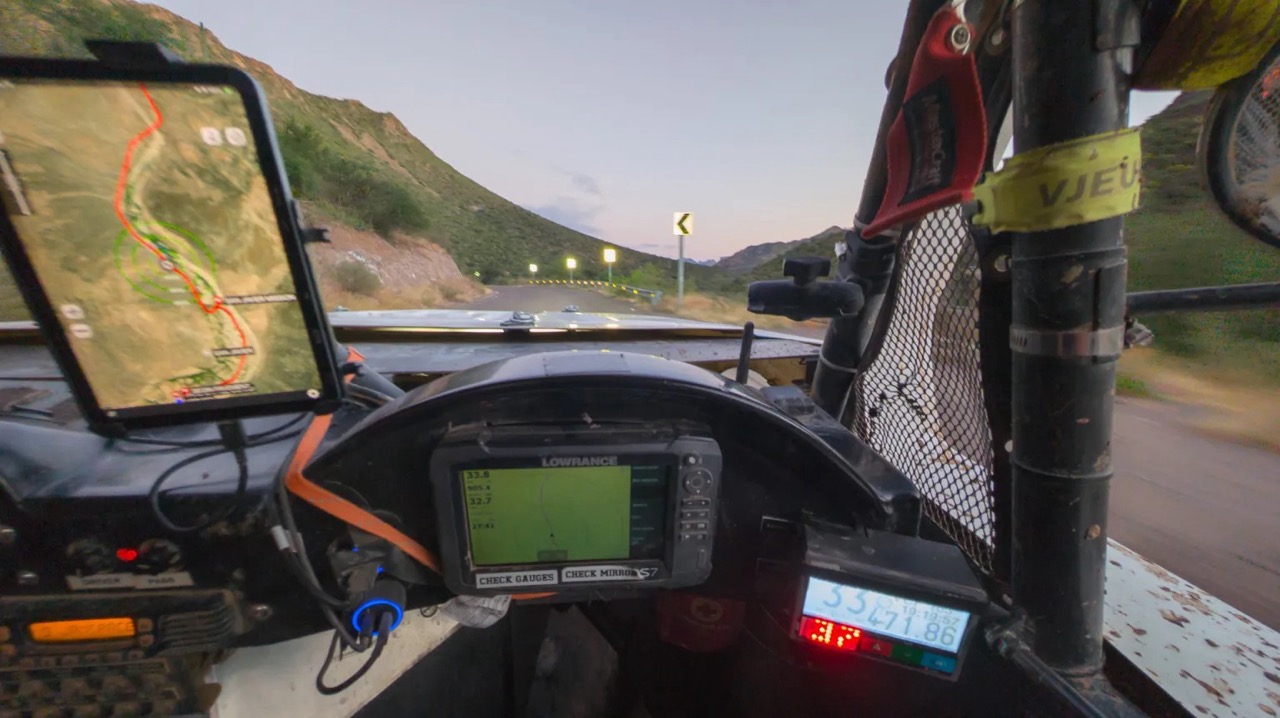
Alan Ampudia thought he won the Baja 100, which is a huge deal for the local boy. Ampudia and co-driver Paul Weel got to celebrate on the podium. Then, one day later, Bryce Menzies and Andy McMillin were named the winners. Why?
A dispute over whether a transit zone was supposed to be 37 mph or 60 mph. It’s hard to know what to believe in a situation like this, but our good friend Andrew Collins was co-driving and is able to provide an explanation for what happened in great detail for The Drive:
Before the race, SCORE issued a course update, patch 02-E, adding a 37-mph section at a military checkpoint north of Loreto, inside a longer 60-mph speed zone on the highway. According to La Paz outlet Diario Humano, Ampudia identified the checkpoint stretch as zone 34B. Off-road news site 131 Off-Road reports that SCORE had also designated that stretch, about 14 miles long, as a neutralized section ahead of the race, though many racers say they weren’t told so at the drivers’ meeting.
On race day, Stella and the GPS file disagreed. I can confirm that firsthand: I was co-driving for Ron Stobaugh in car No. 2085 through that exact section. The GPS file showed 60, 37, 60. Stella, which looks like an old digital watch mounted on the co-driver’s dash, showed 60, then 37, and stayed at 37. 131 Off-Road describes the same problem, reporting that Stella was programmed incorrectly and never told racers to go back to 60.
I remember stressing over which one to trust. I went with the slower limit, assuming the live satellite device had more current information than the file we’d loaded before the start.
By the rules, that was the wrong call.
This is excellent reporting and a good read, even if it’s a bit of a bummer for both the original winners and the new ones.
What I’m Listening To While Writing TMD
It’s Denton’s own Sly Stone, of Sly and the Family Stone, saying “Thank You (Falettinme Be Mice Elf Agin).” BTW, weird fact about this band, is that bassist Larry Graham (a legend) is actually Drake’s uncle.
The Big Question
No TMD tomorrow as we’ve got some fun stuff we’re working on, so let me know what you’re automotively thankful for this year.
Top graphic images: DepositPhotos.com; Google


Yeah! Larry Graham!
I’m so relieved that “VAG Assembly Line Guy” isn’t one of those caught up in the insider trading thing. He looks unhappy enough already.
Helmut is quite satisfied with his life. As long as he gets to work until retirement, be proud of his fine work and then collect his pension, he does not have any reason to get involved in such financial shenanigans. He is however worried that Marta, his wife of 25 years, might be getting some action on the side. She has been taking inordinately long walks with the dog lately and the dog doesn’t seem all that tired.
Anyone else who remembers Britain in the 1970s getting goosebumps?