

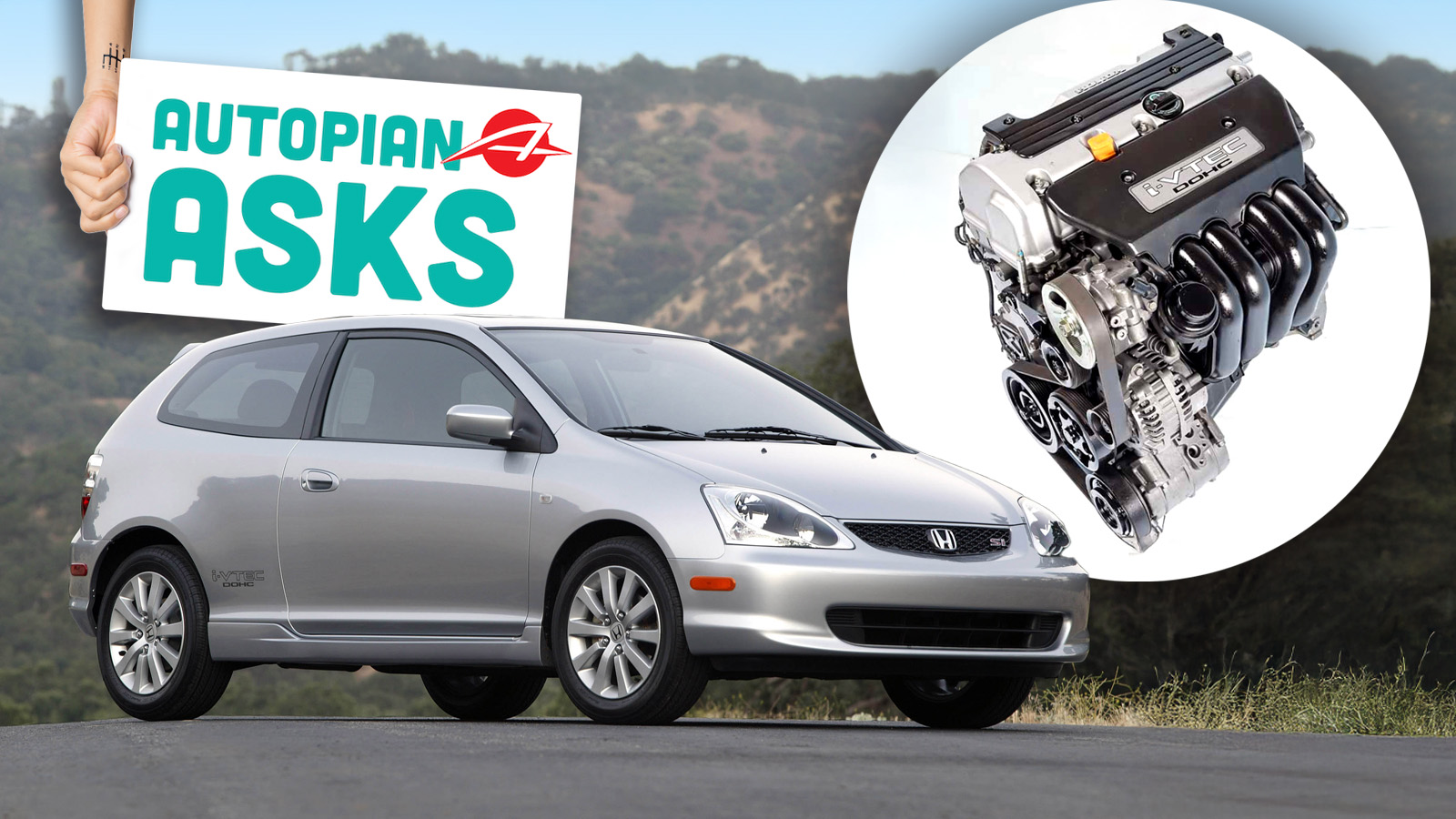
Most automakers today are known for some fabled engine in their past. The General Motors small block V8 has moved so much of the world, while Toyota has built several different fours, sixes, and V8s that sometimes outlast the bodies they’re bolted into. Ford, Honda, Nissan, Mazda, all of them, and so many more have decorated histories building reliable mills. However, times have changed, and some automakers struggle today. What automakers are still making overbuilt engines? What’s the most overbuilt engine of the modern era?
This question was inspired by a similar question that was recently pitched to the Opposite-Lock car enthusiast community. If you’re looking for a group of folks who are like your fellow Autopians, I highly recommend Oppo! The site is independent and is run and funded by enthusiasts.


Anyway, General Motors and Toyota have generated headlines in recent years for unexpected goof-ups with their engines. We’ve written pretty extensively about the GM L87 V8, a small-block V8 that has thus far failed in the tens of thousands. If you’ve missed it, the short version is that more than 28,000 of these engines failed before GM issued a recall, and, allegedly, some of the fixed engines are failing, too. GM has also been fiddling around with the engine’s oil specifications in this still ongoing saga.

Toyota had its own truck engine troubles when its twin-turbo V6 V35A-FTS engines began failing due to reported manufacturing debris left inside engines, triggering a massive recall. This continues to be a headache for Toyota, and people are still reporting engine failures nearly two years after the recall was announced. Toyota recently expanded the recall, bringing the number of potentially affected trucks to well above 200,000.
To be fair to Toyota and General Motors, picking on engine failures and recalls can be low-hanging fruit. These engines could go on to live fine service lives after they’ve been fixed. But what about other engines?
When this question was posted in Opposite-Lock, I mentioned the Ford Coyote 5.0 V8 as a solid engine. The 5.0 has proven itself to be a pretty sturdy powerplant and is even receptive to modification. People actively seek out Coyotes to build tons of power out of. It is noted that the truck version of the Coyote has one of those infamous wet belts. The good thing is that it does appear that wet belt failures are uncommon with this engine. Update: To be clear, this is not a timing belt, but a belt to drive the oil pump.

Other contenders, I think, could be something like a Honda K-series. Some of these engines have popped after people dumped tons of power mods into K20C1s, but lots of other folks report getting lots of miles out of stock engines or mildly tuned ones.
Heavy-duty pickup truck diesels also seem fairly sturdy, though some of their emissions equipment might not be.
This subject has been stuck in my head for days now. Is there an engine that’s currently made in 2026 that can pile on the miles with usually just regular maintenance? Are there engines out there that are receptive to mods without heavy changes? What’s the most overbuilt engine of the modern era?
Top graphic images: Honda; EngineWorld




I’ve got a bonkers one for you, VW CPRA 7 1.8L Turbo I4.
I’m just here to comment on the simple yet simply gorgeous lines of the Si in the cover photo. IMO the newest generation is… okay. The one before it was just horrendous. The current Corolla might be aging, but at least Toyota can still make a cool looking hatchback.
Yeah, the EP3 Civics look great, IMO. I even went and test-drove one despite being firmly in the pony-car fan club at the time.
The early ones look even better because the new bubbly headlights and altezza taillights look terrible compared to the pre-refresh ones.
I briefly didn’t recognize it and thought it was some weird JDM tall-body people-mover until I realized what it was.
The new ones are grossly over-styled (but gradually getting better, ish). At least they took a cue from Mazda on the interiors, which are still not great but better at least.
Duramax Diesel gets my vote.
I got a few diesel techs at the gm shop next door who would heartily disagree.
The Coyote was a stout engine, but the Direct-Injected version of it is an oil-burning nightmare. I know of entire fleets of 5.0 F-150s moving to Eco Boost engines for the next purchase round because of the amount of oil burning they do.
Supposedly the ones to get are the ones that have both direct injection and port fuel injection. The port function does a better job preventing and cleaning carbon build-up and overall the system is less likely to consume oil until the piston rings start to wear out or get foreign matter in them.
Pretty much all of them if the 99.999% of actual use suffers a bit because they’re built to handle the 0.001% of use cases.
BMW B58.