

Rust is an absolute menace. It never sleeps and, if left uncured for long enough, will absolutely ruin an otherwise great vehicle. Readers who don’t live in the Rust Belt should consider themselves lucky. Whenever I go to California, I see vehicles that I have not seen in Illinois for at least a decade. Frankly, it never ceases to amaze me. What is the newest vehicle that you’ve seen already rusting away?
It’s very easy to find rust here in Illinois, sadly. Every winter, the state aggressively salts its roads. During some periods, you will drive your car down the road, and despite having your windows closed, you will hear the clear sounds of your tires crushing salt beneath them. Come to Illinois, Michigan, or any salt-laying state that doesn’t have safety inspections, and you’ll see cars so bad that they do not have a single good panel left.


However, at the very least, many of these cars are old enough that their first and maybe second owners have already moved on. Seeing piles of rust isn’t at all surprising to anyone who has lived out here for long enough. What is surprising is seeing relatively new vehicles that are rusty.

The absolute newest vehicle I’ve ever seen with rust is my family’s travel trailer. I’ve written about this camper a lot, but if you’ve somehow missed those stories, this is a 2022 Heartland Mallard M33. My parents bought this trailer new, only three months after it had been built. The day my parents brought it home, I looked at the frame and saw widespread surface rust. Now, three years later, the rust is progressing, as rust tends to do.
The official solution to this problem, at least as recommended by the dealership, is to spray Rust-Oleum Rust Reformer on the frame.

But finding rust on a camper built during the COVID-19 camper boom feels like cheating, so I have another one for you. Something I have always been fascinated by, and I may write a post about it one day, is how quickly and totally a Mercedes-Benz Sprinter van can rust. At least in my experience, first-generation and second-generation Sprinters, which span from 2002 to 2018 in America, rust sooner than Chevy Express vans and Ford E-Series vans and rust out in weirder places.
Drive around the Chicago area for long enough and you’ll spot Sprinter vans absolutely peppered in rust from their rockers all the way up to their roofs, which is impressive. I’ve even seen 2013 and newer Sprinters, which are second-generation models with a facelift, already peppered in rust. It’s not just me, either. There are forum threads of people with Sprinters that were only a few years old at the time, and owners were reporting rust issues.
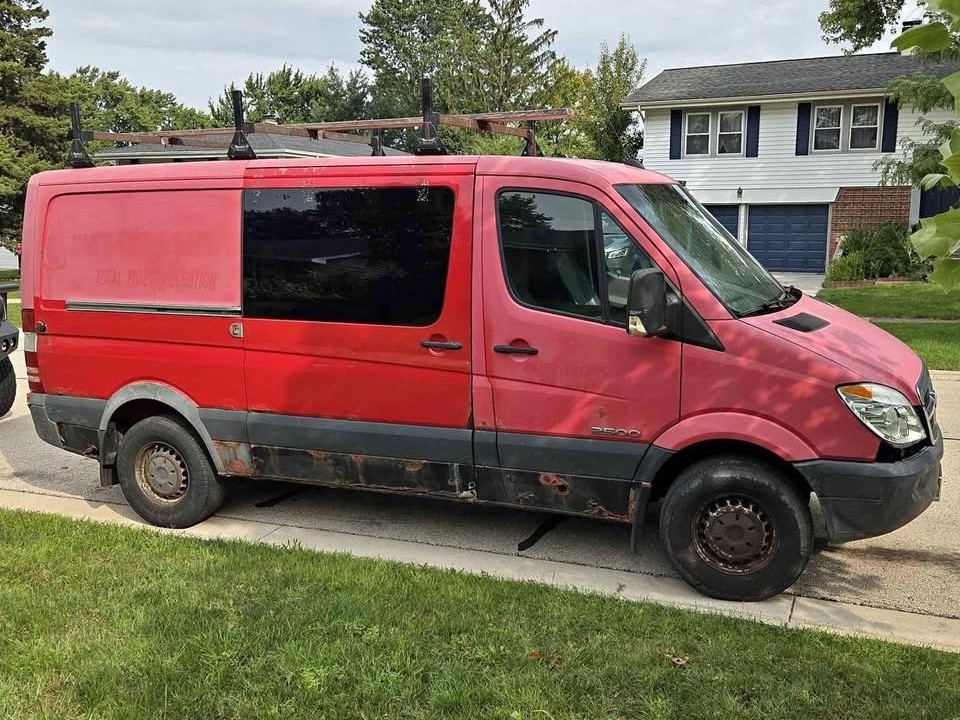
Thankfully, it seems like Mercedes-Benz might have figured out whatever was causing it, because third-generation Sprinters, which have been around since 2019, seem to be holding up better than their predecessors. Still, I get a bit shocked whenever I see a Sprinter that isn’t even that old that has more rust than paint left.
How about you? What’s the newest vehicle you’ve seen already rusting away?
Top graphic images: Mercedes-Benz; depositphotos.com






When I lived in Illinois, I had a Honda Civic, I had to basically get a new exhaust every other year
In Central NY, where my in-laws reside, I saw a 2022 Jeep Compass with rust holes on the fenders. I was frankly shocked.
I live in New Mexico in the desert SW, which is an automotive time capsule/time machine. The mile-high arid climate is a double-edged sword; of you see rust on a vehicle, it came from somewhere else. Any rust that accumulates is usually surface rust, which takes decades to form. The 300 sunny days a year will roast the clear coats off of vehicles immediately after the warranty period ends, interior fabrics and plastic panels fade, crack, split and turn to dust, and vacuum hoses, door/deck lid seals shrivel, and polycarbonate lenses develop a glaucoma like fog within a few years.
Due to NM’s absolute lack of vehicle inspection requirements and the bone dry climate, it is common to see 1980s era vehicles as daily drivers, even Japanese cars, which quickly turned to Swiss cheese in other parts of the US. Unfortunately, classic car collectors from the rust belt have figured this out, so most of the functioning autos from the ’60s and ’70s have been loaded onto car carriers for (likely) their first trip across the Mississippi. The vast majority of our older pickups (NM is a rural state; we actually use pickups for work, not just to carry 48 rolls of Charmin home from Costco) that were daily drivers have become so desirable that even Dodge Forest Service trucks are being snatched up to feed the nostalgia craze.
There is one car that did rust here in NM. My dad bought a 1973 Vega Kammback wagon for the family business. The front fenders rusted out before the motor crapped the bed while climbing La Bajada hill between Albuquerque and Santa Fe. We must have been a sight to see, front fenders flapping while blue smoke was pouring out the back like a James Bond smoke screen. I learned a lot of new cuss words on that trip. Good times.
Mostly pickups from the late ’00s through the 2010s. Usually it’s the rear arches and bed that’s dying, and usually with wheels worth more than the rest of the truck fitted beneath.
This topic always fascinates me. I lived in Michigan for my first 30 years and drove rust-free vehicles, despite their being daily drivers.
How? Frequent and thorough visits to the coin-operated wand car wash. Plus a nice coat of turtle wax twice per year. The wand car wash is what I had at the time. Additionally, I had no garage so any accumulated salty ice wouldn’t melt, as if in a heated garage.
These days my wife’s car capitalizes upon the “unlimited” program at our local car wash (with undercarriage spray) and I have an undercarriage spray for my pressure washer in my heated garage in central Indiana, which also sees salt, but not as much as Chicago, Michigan or New York. I wash my car often and by hand.
It’s one thing if you inherit a vehicle on which rust is already forming but maintaining a rust-free vehicle in the rust belt is possible with care and attention.
Vehicles are too damned expensive these days to not take care of them properly.
Just thinking that in Chicago those holes peppered in the Sprinter Vans might be Shotgun pellet holes that swiftly went to rust because the pellets pierce the paint and rustproofing.
A street parked, 2021 (but first registered 2022), LDV V80 Van that I walk past each night on my way home. A lot of surface rust in parts, but quite crusty where the guards meet the front filler panel. We don’t salt anything here (New Zealand), so a bit surprising/not at all surprising. Big worry is my elderly parent just bought a brand new LDV G10 (despite my protests) and they live in a resort town, 200 metres from the beach…
This is why Arizona and Nevada are better for old rust free vehicles than California Coast vehicles
You have to be literally on the coast for rust to be a problem. Three blocks from the beach is sufficient to protect your car from rust.
AFAIK Caltrans does use salt in the mountains. I’ve seen some pretty rusty permanent resident vehicles up there in the past.
Salt applied as a slurry on some Nevada mountain roads, too, but they seem to try to avoid it.
Most Porsche 914/6s had a rusted battery holder by the time they were sold. The battery lives directly below the black mesh behind the rear window. The four cylinder cars have a rain tray that catches rainwater, but there is not enough room for it with the 911 engine. Consequently rainwater would fall directly on the top of the lead acid battery and onto the steel support, causing it to rust.
If you see a 914/6 with a completely intact battery support, and it wasn’t one of the very first registered, it is almost certainly not original, most of them rusted on the dealer’s lots.
Brand new 2007 chevy 2500hd, rust bubbles in rear fenders and on chassis 3 months after we bought it. That was just one of the several contributing factors why we dumped the thing shortly thereafter for a new ’07 dodger 3500 dually diesel with a 6 speed manual.
I just today saw a 2023 Jeep Wrangler Rubicon 4-door with rust bubbles on all of the door hinges, a little on the wheel wells, some along the fender flares, a bubble along the bottom of the hard top, and at the base of the hood pins! The only reason I am sure of the year is because it was for sale, had a dealer plate and a large 2023 sticker on the windshield. I’m in SW Michigan, but seriously! It’s 2-3 years old depending on mfg date, and had more rust than any of my much older beaters! Where did they park this thing?
Somewhere on this website is an article explaining why they do that. Maybe a year ago or so?
Yep, I think they were thinking it is some kind of galvanic reaction between the hinge hardware and body. https://www.theautopian.com/owners-are-furious-about-the-jeep-jl-wranglers-corrosion-issues/
I live in an area where we almost never see rust and I’ve seen several 2 and 3 year old Wranglers with bubbling paint around the hinges.
In Australia we don’t really have to worry about rust – though a few years ago Chinese manufacturer LDV copped a lot of heat for rust in many of their vans and utes that were less than five years old. This was apparently mostly in coastal regions where the salt air was causing corrosion. In Australia about 80% of the population live on the coast so this is problematic. Now anytime anyone asks about buying an LDV on Reddit there’s a ton of comments saying to watch for rust. Here’s the article:
https://www.abc.net.au/news/2025-04-23/ldv-automotive-australia-taken-to-court-by-accc/105206722
I walk past a crusty LDV V80 each night. Worst though, my parents live by the sea and just bought a brand new G10.
Where I live, they salt and brine the roads at the slightest hint of inclement weather.
At the GM truck plant right next door to my work, new trucks are rolled off the assembly line, then driven very aggressively on the public roads to the storage lot. They get exposed to salt and brine on a dirty road when the paint has barely dried.
Ft wayne?
Maybe I shouldn’t say…
We need to sell those trucks after all!
Cause that almost sounds like something us hoosiers would do.
Not Hoosiers up here, just hosers.
Ahh, the other fun factory location.
I don’t think anything can really top the Sprinter. I remember seeing rusty ones by the end of W’s second term here in New England.
My ex-MIL gave me her 2009 Toyota Yaris for my daughter for when she turned 16 back in 2018. I used it as a work/winter car in the interim. Brake lines always seemed to be rusting through. I wasn’t about to let her drive it, I gave her my 2014 Elantra daily driver.
I was trying to sell the Yaris right before Covid so I could help my son get his car. The guy who ended up buying it told me the front subframe completely rotted away two months after he bought it. Northeast Ohio (especially Ashtabula County) is quite liberal with the road salt/brine during the eleven months of lake-effect snow.
As of now, my comment about my rust-condemned Matrix is right below your comment. I’ll add that I lived in Cuyahoga county at that time. Ohio gives the giant middle finger when it comes to salt. We’ve got one of the best Steelhead fisheries in the world and we dump colossal amounts of salt on the road, which goes right in the rivers. I wish there were some other way.
I couldn’t agree more. I live next door in Erie county Pennsylvania. So.much salt is used and it’s all washing into our beautiful freshwater lake. That and it rusts everything in site.
Lake County here and they will throw down salt just to get rid of it. Not even kidding.