

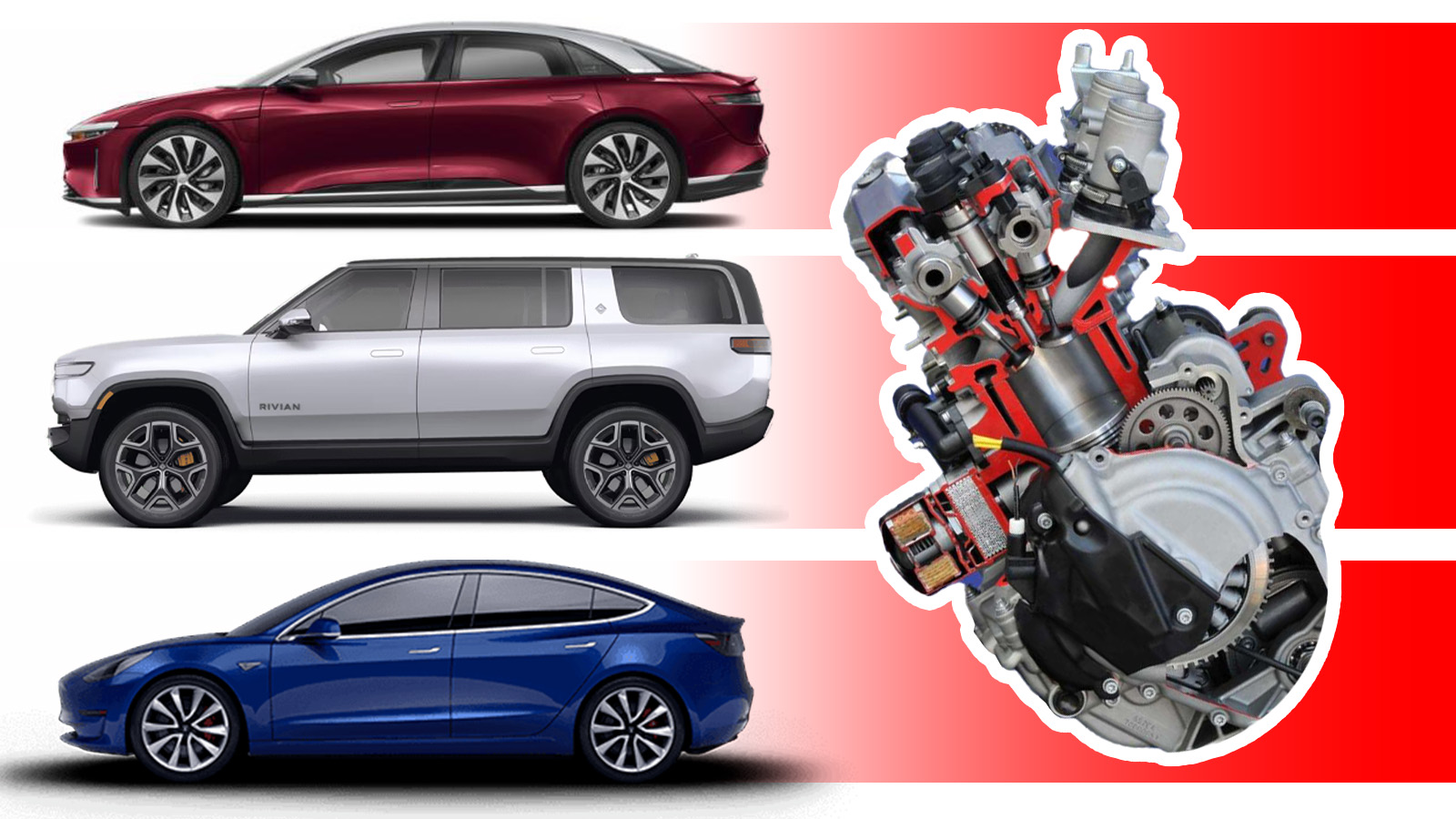
You could argue that an “electric car company” is not something that needs to exist, and that car companies should simply be Car Companies, not tied to any particular powertrain. But electric car companies do exist in the U.S. in the form of Tesla, Rivian, Lucid, Polestar, and Slate, and the reason why is pretty obvious: “Electric” was the hottest new term of the last two decades, and a necessary one to raise enough capital to get a new company off the ground. Pitching a hybrid car company to a group of investors would have been as fruitful as the messages I used to send on dating apps. But now it’s 2025, and that hot “electric” term is now lukewarm at best.
A few months ago, I was at a Rivian event in which I asked a representative if the company would ever offer a gasoline range extender. The answer was an emphatic “no.” I asked the same question at a Lucid event and received the same answer. “The future is electric,” is the refrain I typically get from folks when I ask this question. To which I respond: “What’s your point?”


Telling me what the future is doesn’t seem particularly relevant. We could all be driving flying cars in the future, but if you started selling only flying cars today, you’d be a fool. This reminds me of 2022, when GM announced it would skip hybrids because the future is electric. More specifically, per the Detroit Free Press, Mary Barra said:
“GM has more than 25 years of electrification experience including with the plug-in vehicles like the Chevy Volt …From that experience, our vision is for an all-electric future. Our strategy is focused on battery electric vehicles as they represent the best solution and advance our vision for an all-electric future.”
I remember thinking upon reading that: “Sure, the future may be electric, but you’re selling cars now, in the future’s past. Right now, people want hybrids.” As expected, GM backtracked on its plan to offer only EVs and to skip hybrids, and is now going heavy into the hybrid game (while still offering a solid array of EVs).
Too Many Companies Are Splitting Too Small A Slice
The future is electric, but today is not electric. Toyota understood this because they understand consumers, though they got dragged by journalists for not going all-in on the new hotness. But sales numbers bear out that hybrids are the answer, and what’s more, automakers like Rivian and Lucid losing absolute metric crap-tons of money on electric vehicles — and other car companies like Ford deciding it’s worth losing $20 billion to cut many of its electric vehicle programs altogether — goes to show that the market just isn’t there for fully electric cars.
Of course, there’s Tesla, a company that managed something amazing. Lightning in a bottle, you might call it. It was an American company that came out of nowhere, developed its own charging infrastructure, created electric cars that were generations better than anything up to that point, and offered the cars at a rather competitive price. They also had a larger-than-life CEO who was admired by most of the world at the time, and also, they made loads of money by selling ZEV credits to automakers running afoul of CO2 compliance. That credit system is likely gone in the United States, thanks to the new presidential administration.
I get the impression that many companies saw Tesla’s success as proof that a sustainable EV company can exist. But in my eyes, to try to replicate Tesla’s model is silly. Tesla is one-of-one. An outlier. I tweeted this thought over a year ago, suggesting that EV companies should hybridize ASAP:
My suggestions to EV-only automakers: 1. Be careful looking at Tesla and thinking “I want those sales numbers.” You are not Tesla. Don’t try to be Tesla. Tesla is an anomaly. And 2. Get on the range extender bandwagon as soon as possible. Transition back to BEV-only later. https://t.co/1b7H2jmfN0
— David Tracy (@davidntracy) October 25, 2024
You know who replied to that tweet? None other than Ford’s own Jim Farley, CEO:

Now it’s nearly 14 months later, and Ford announced that its departing fully-electric F-150 Lighting is being replaced by a range-extended F-150 Lightning.
Ford Will Add A Gas Engine To The F-150 Lightning To Create A 700-Mile EREV
Naturally, EV-diehards are not thrilled:
This is what happens when you make sh*t products. This has nothing to do with making EV’s; this has everything to do with making bad EV’s. https://t.co/f3kxBlR6Ul
— phil beisel (@pbeisel) December 16, 2025
Hybrids are not the answer Jim
The future is all-electric and autonomous
You should’ve taken Elon’s offer to license Tesla FSD years ago…
Not looking good for Ford https://t.co/vPdl8fBtc5
— Dalton Brewer (@daltonbrewer) December 16, 2025
This going EREV will almost certainly be better for the environment than the BEV.
100K people trading their 15 MPG F-150 for an EREV truck has more value than 25K people trading their Tesla for a BEV truck.
— David Tracy (@davidntracy) December 16, 2025
You can see my opinion on the matter in the reply above.
This seems like a smart move on Ford’s part. The truth is that fully-electric pickup trucks make little sense for the mass market, and if you don’t believe me, just listen to what the former CEO of Lucid (an electric car company that refuses to offer gasoline engines) told me when I interviewed him last year:
“But let me tell you the reality is, and it’s me saying this, that it is not possible today with today’s technology to make an affordable pickup truck with anything [other] than internal combustion.”
This is just reality, which is where major corporations have to live.
With Fully Electric Vehicles, America’s Love For Big Cars Gets Expensive
America loves large cars, and large cars typically have what’s called in the industry “a high Vehicle Demand Energy” (VDE). This is the energy needed to move the vehicles down the road, and though it can be affected by powertrain (because, for example, a gas engine requires more cooling, which can lead to more drag; an electric vehicle is heavier, which can lead to more rolling resistance, etc.), this is more about the vehicle in which the powertrain is placed than the powertrain itself.
America’s taste for large vehicles means we tend to drive cars that require lots of energy just to go down the road, and if that vehicle is, for example, a pickup truck (like a Chevy Silverado EV) or SUV (like a Rivian R1S), you’re going to need a massive battery to achieve the range that the average American wants. Both the Silverado EV and the Rivian R1S offer batteries over 140 kWh, with the former offering one over 200 kWh.
Add a big trailer to those vehicles, and even those giant batteries won’t be enough to overcome not only range issues, but recharging issues, as infrastructure still isn’t good enough, and pull-through chargers for trailer-pulling pickups just aren’t very common even in 2025. When it comes to towing, EVs are simply the wrong tool for the job, as I wrote last year.

With Lucid and Rivian losing billions of dollars annually as EV demand remains softer than expected (though we do have some early signs that Rivian is turning things around, with a few quarters of positive gross profits, though net profits remain elusive), there’s an obvious question worth asking: Should these companies build cars that appeal to more than just a small electric sliver of the American car market-pie?
Rivian thinks the upcoming R2 and R3x will be enough. I have no doubt that they’ll sell relatively well, but I do have doubt about whether they’ll bring Rivian to sustainable net profitability. After all, the world already has cool, small electric SUVs like the Hyundai Ioniq 5 and the Chevy Equinox EV. And sure, you could say the world has lots of great hybrids, but the sales figures are on a different level. With hybrids, there’s more than just a sliver of the American market “pie” to share.
EREVS Are A Compromise That Can Minimize The Most Important Compromise
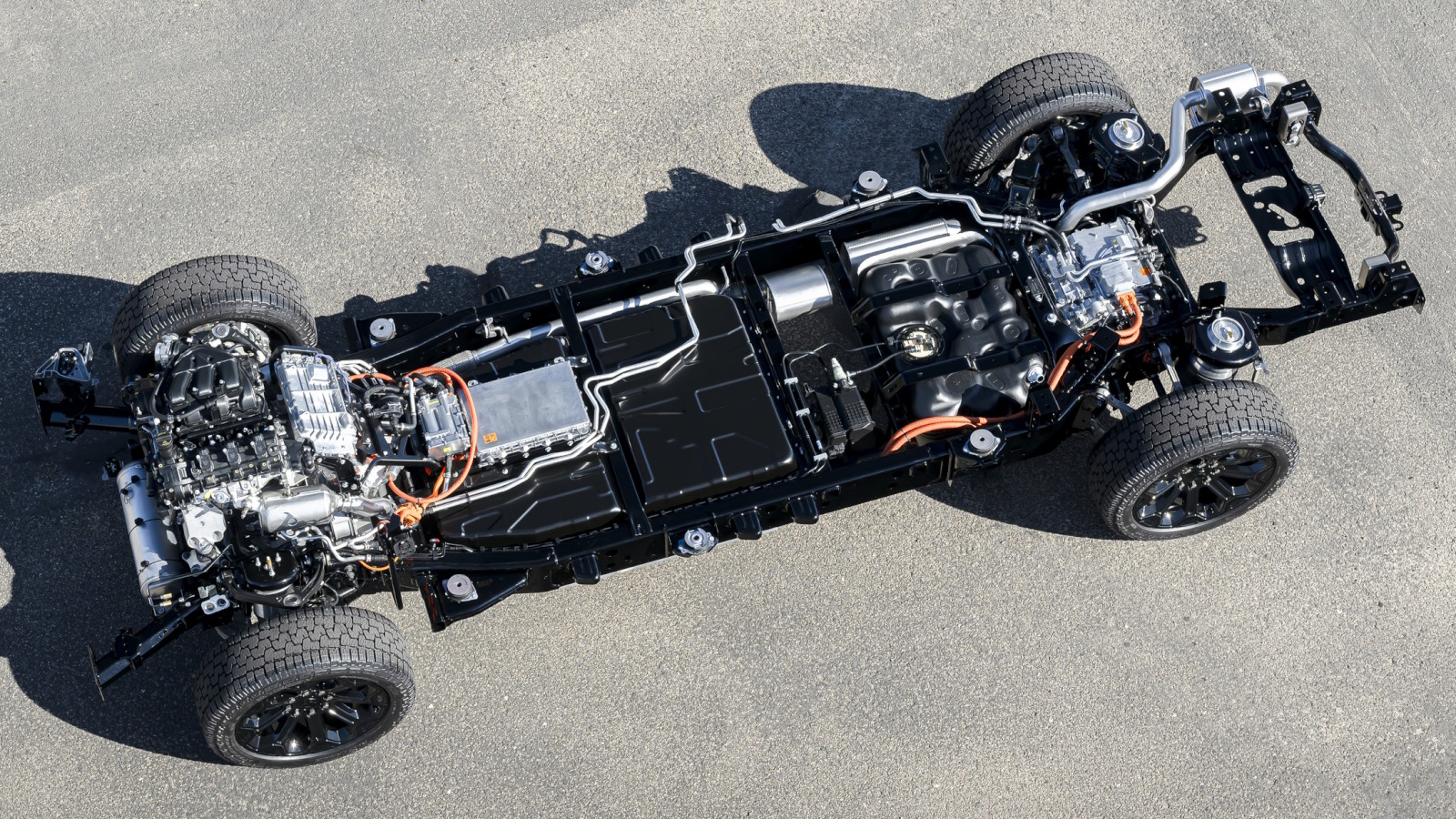
America wants hybrids; when Scout offered its vehicles as fully-electric or range-extended hybrid models, the majority of pre-orders were for the hybrids. And for good reasons. Though some EV purists call hybrids “compromises,” in truth, every car is a compromise, and a hybrid’s main advantage is that it’s actually a compromise-minimizer. If you think about the compromises that actually matter in the car world, it’s not compromises to packaging or complexity or even vehicle performance — what matters, big picture, is minimizing compromises to the way a driver actually uses their vehicle, while keeping the biggest compromise — cost — down. And in this way, hybrids are less of a compromise than BEVs.
I live in California, where the infrastructure is better than pretty much anywhere stateside. Still, charging a BEV can be an inconvenience compared to filling up a gas car, and what’s more, it can actually cost as much or more. I’m not saying charging a car here is bad — if you leverage the right apps, and are smart about planning, you can really get a lot out of driving a BEV (and you can save money on driving) — but the compromise is nonzero. It’s not about charging infrastructure or charging times or poor towing range — more than anything, it’s about cost.
Americans want to drive big cars, and they want to be able to not have to worry about range anxiety. This RA term is one that lots of EV journalists have historically dismissed. “Nobody needs 300 miles of range. 100 is just fine!” many say. In fact, here’s a Facebook reply to our story on Ford ditching the BEV Lightning for an EREV:
The Lightning is an excellent vehicle that won’t sell because truck buyers think they’re going to tow a trailer 500 miles every weekend. They won’t, and the range of an Lightning would actually meet their needs 99% of the time, but people stupidly make buying decisions based on that remote possibility that they might need extra capability someday.
The Gas Generator Doesn’t Have To Be Great Or Expensive

Are EV Car Companies EV-First or Environment-First?
OK, So There Are Some Huge Branding Problems

One topic I cannot ignore is the branding of it all. If a company has built its identity on a powertrain, things get tricky if they want to offer a different one. Rivian is all-electric, anti-gas. Lucid is the same. Tesla is the same. Since their inception, they’ve been no-gas, all-electric companies, largely because none of these companies would exist otherwise. How, then, can you maintain brand integrity if you offer a gasoline range extender?
I Love EREVs, But Even They May Have A Hard Time Selling Over Gas Or Conventional Hybrid Cars
EV Car Companies Are In A Tricky Spot
For a more complete breakdown of Range Extended EVs’ benefits and drawbacks, see my three articles on the topic. Note: I am not an oracle, and many of you, dear readers, are geniuses, so I welcome your thoughts in the comments. Also, for the EV-purists who will inevitably be upset that I like something other than a pure BEV: I also love BEVs. In fact, I love them so much that I wrote positive reviews about the Cybertruck and Fisker Ocean. BEVs are an excellent option for folks who can charge at home/work, requiring less maintenance than an EREV. Neither BEVs nor EREVs are not the answer for everyone, but variety is key.
Top graphic images: Lucid; Rivian; Tesla; BMW





I think you’re kind of missing the point of these, specifically Rivian for a surprisingly large number of buyers. It’s supposed to be contrarian yet acceptable status symbol of wealth in parts of America with high percentages of college educated professionals. Like a Fjallraven jacket. It’s to show up at the trailhead dangling the S-Works Stumpjumper off the back. Sure, never ride it. But you’re the coolest Cardiologist in suburban Rhode Island. You could get a Porsche, but your MTB group is going to talk made smack. The Rivian though, you’re a man who has money, can go fast and somewhat cares about the environment or something. I say this as a woke person, with woke friends, in my woke town, and my woke state. It’s a Corvette for people who go outside. Range-extenders are all fine and dandy for average people, who are probably just going to buy an F150. No-one is out towing with a Rivian; that’s stuff you pay people to do. Need to go far, we’re taking the Audi. Now, if Rivian wanted to make more money, and I can’t believe I’m saying this. They should just charge more. Make it even more exclusive. Because I’ve heard more than once, actually. a person surprised at how cheap their new Rivian was. The market could probably bear a significant price increase. Rivian should lean into that exclusiveness. Leave the whole trying to move volume thing to Ford.
Nope. EV’s a great for anyone who can charge at home and don’t have some crazy 3 hour commute. I have zero desire for my Ioniq 5 to have a range extender. I only charge it once a week. People (and especially auto journalists) seem to think everyone does a 1000 mile road trip once a month or more, when it’s once a year at best for most people. Hell, the furthest I’ve driven this year is 200 miles. I took the Odyssey because of space and the built in dvd to keep the kids happy.
I charge my Polestar 2 once a month. The cost is far less than my previous compact 4 cyl sedan, which I had to fuel up about once a month. Total cost savings for me. Plus the inside of my car doesn’t smell like an exhaust pipe.
And it can warm itself up in the garage every morning without toxic fumes
I don’t have a garage. I rely on public chargers. Even doing that it is far less expensive. Lack of toxic fumes is still a bonus
Cold start fumes are the worst.
Even better the Ioniq 5 can warm itself up off the app including the steering wheel. I don’t even have to go outside until I’m ready to go.
The point you’re making is part of the article. David points out that people by vehicles based on what they think they might do one time, not on how they will actually use it.
Some do. And others grow up, get older, learn how to budget and live within their means, do the math, and realize that the one time in the year that they need something big from Home Depot they can either rent their truck for $20 or just have that item delivered and then spend the tens of thousands they saved not paying for Jim Farley’s annual bonus on their kids’ college tuition or the next vacation or for their healthcare. In the meantime they drive a Prius or RAV4 hybrid or Tesla or a Bolt because it makes sense and works.
I doubt very many people (especially contractors) will spend even more to buy big truck EREVs over the gassers currently available when gas is currently priced as low as it’s been in years and the administration is getting ready to invade a sovereign country and claim Venezuela’s oil reserves as the U.S.’s own.
And between “normal” cars that already get 35-40mpg, hybrids that get 50, and PHEVs that do some of their driving in EV mode, there’s no reason for a pure EV maker to go backwards to add anything to do with fuel and emissions, thereby opening themselves up to the EPA and their regulations. The EV makers are global (or want to be at least) and the U.S. is a declining automotive market relative to the rest of the world.
I mean, if this were true, they would have sold 5x as many Lightnings as they did because they’re objectively better than the gas trucks for tons of current truck owners’ use cases.
I’ve driven a few EVs/PHEVs, and just bought a new Tacoma (non-hybrid – not because I’m anti-hybrid, but I wanted a stick shift).
I wish there was a PHEV/EREV truck available today, I might have bought it. But not if it was going to cost me $20k more than the gas version.
I don’t do much towing, so even an EV would have potentially worked. But I couldn’t find a F150 lightning ER at a good enough price, and even then the range / charging time would have been a tough pill to swallow on road trips. If I can have a battery that covers anywhere between 10-40miles of range a day, charges on L2 at a decent rate 6kw+, and doesn’t require lengthy charging sessions in Walmart parking lots…that’s everything I need. People have different needs, it’s not one size fits all.
Smaller vehicles as EVs are already there, IMO (or can be – not all OEMs have gotten there yet). My Ioniq 6 proved that to me over the 24k miles I put on it. And that’s in DCFC charging environment that’s still not where it needs to be. But I took multiple 1000 mile trips on it and didn’t have a single charging issue.
Like, I’m very pro-EV…but the way they’ve rolled out over the last few years have definitely soured me on them. $70k to get a truck w/ 300 miles of range (probably 240 on the highway) and a 30+ min charge time are just compromises I’m not willing to make. This market, love it or hate it, demands certain things and is unique compared to China/Europe. Personally, the price for 200kwh of battery to make doing all the truck stuff people expect, barely, just didn’t add up. And yeah, I know most of these monstrosities never do more than an occasional trip to Lowes…but I’ve given up concerning myself with that.
EREVs seem like a good solution for trucks / bigger vehicles…it’ll be interested to see how they’re priced, and how they work.
Sigh. More EV bashing on this site. This is getting tiring. To the point where I may just stop visiting this site.
Please stop constantly proselytizing that EREV’s are the one, the only solution. I can confidently say it is not the one and only solution for all cars and trucks. It’s all about segmentation. A car/truck that does not appeal to you does not mean it does not have a market. If the EV car/truck is appealing to a demographic that ACTUALLY BUYS NEWS CARS (more on that later) then that is what you need to build. Next you need to determine if that demographic is large enough for you sell enough cars.
Tesla has clearly demonstrated that there is enough demand by selling 650,000 around cars in in US in 2024. They have about 45% market share, so that makes the annual US markets for EV’s nearly 1,500,000 units annually. With the drop in US incentives, even a 30% drop in sales is around 1,000,000 units annually. You are essentially saying they should just ignore that market.
Time to loop back the building cars for people that actually buy new cars. You, David, are seemingly wired to only buy used cars. (With amusing stories to tell as a result, so that’s a great win.) However, having you preach that these car companies should start making EREV’s is truly amusing. The odds of you actually buying a BRAND NEW EREV you preach about here seems incredibly low. I also suspect, that a solid majority of this sites demographic also never buys new cars. (Which is not a slight by the way, it is just a fact that lots of people like cars with, no touch screens, actual mechanical door handles, V8, cool 80’s car, enjoying working on their car, etc, etc.)
** If people only like ICE cars, great.
** If people only like Hybrid cars, great.
** EREV’s only is also great.
** EV’s only is also great.
But I’m sick of the bashing going on here specifically at EV’s. You seem hellbent on driving away a segment of car enthusiasts that happen to only like EV’s.
Anyhoo, time to sign off. I’ll check back here for today to look at any replies and then probably take a break (possibly permanent) from bothering visiting and commenting at this site. As as stated at the start, this is getting tiring.
Zero EV bashing is happening on this site. We’ve been extremely positive on BEVs, and if you think suggesting another option that could get more people driving electric is somehow EV-bashing, that may just be a sensitivity on your end. (Which I understand; for some reason, EV/gas has become a competition in the car world. It shouldn’t be!).
I’m going to have to disagree with you here. Your whole article rather strongly arguesthat Rivian/Tesla/Lucid are fools to not develop EREVs. So yeah, I see that as EV bashing. I’m fine with you thinking EREVs are great. But knocking another power source is not cool in my world.
Rivian and Lucid are definitely not well capitalized enough to spend limited resources on such an endeavour. This is especially true as I can’t see them being able to match the legacy manufacturers here anyway.. I cannot see any way that an EREV Rivian pickup will be able to compete with a Ford EREV pickup and its huge, passionate user base.
You’re making things up. Nobody is calling these companies fools for selling EVs.
This whole “EVs are the only option and if someone says otherwise they’re a hater ” nonsense needs to stop.
Ok. .
(1) I did not say Lucid/Rivian/Tesla are fools for selling EVs. I said your articles structure sure took that tack that those three should develop EREVs. Ergo, they are fools if they don’t.
(2) Where is the world did I say or imply “EVs are the only option and if someone says otherwise they’re a hater ”???? Read the rest of my comments on this article. I never have said EVs are the only option.
I’m not sure how anything I have said can be twisted into me saying EVs are the only option?
Shoot look at my first comment, I clearly stated
“** If people only like ICE cars, great.
** If people only like Hybrid cars, great.
** EREV’s only is also great.
** EV’s only is also great.”
I’ll add this to be clear.
** People that like ICE, EREV, EV, Hybrids, hydrogen, steam… shoot anything with a power source that makes a car drive are awesome.
If I offended you I’m sorry, I expressed my opinion on how this article presented to me. You do great work here building a car enthusiast site. Have an awesome day.
Good! We’re on the same page, then. They’re all great! That’s what this site is all about!:
One other point. When writing about an EV how about stopping/limiting the incessant need to say the range is not enough? With most EVs getting 250-300 miles it is growing stale to complain about that.
Actual buyers can make that judgement themselves. Readers can decide for themselves whether the range makes sense to them. I’m more interested if an EV actually can get close to its promoted range in real world driving.
Shoot, Commenters can attack the range if they want too as well. That’s fine.
If your take is that consumers should decide on your own, it sounds like we’re on the same page.
Nobody is “bashing” EV’s.
And you wrote a manifesto to whine about a car site covering car stuff.
You used Tesla as your example of the EV market, because OF COURSE you did… even after they were mentioned in the article (which you didn’t read, apparently).
Nobody is trying to make you sell your Tesla.
Then you announced your departure.
Maybe just go?
Wow. Nice reply. Top notch classy. I don’t own a Tesla – never have. But I have owned two electric cars over and one PHEV over that last 14 years.
Also read my comment again. I said I’ll take a break from the site after today. I said it POSSIBLY will be permanent. Reading skills are important.
Have an awesome day! (Honestly.)
You can start that break anytime now. You clearly need it. You had a long day yesterday.
Not exactly relevant here, but the way none of this site’s authors have any courage of convictions is sad. Every time I visit I am reminded of the Nazi bar story (https://en.wiktionary.org/wiki/Nazi_bar). The world will burn down while Torch and David close their eyes and proclaim “no politics here, we can ignore it all!”
I have never heard of the Nazi bar story… interesting and thought provoking in a good way. So today i learned something interesting and useful. Thank you!
If you want us to bash politicians, this is not the site for that. This is a site for thoughtful discussion about cars by people who know cars like the backs of their hands (and I’m not just talking about us staffers, I’m also talking about our talented contributors). We mention politics as it relates to this industry, but we’re not childish about it because telling people how to think is a lot less effective then providing information and allowing you intelligent readers to reach conclusions on your own, in a diverse community of other car enthusiasts.
Rather than being an echo chamber, The Autopian is a place for everyone. That will never change.
The easy route is insulting politicians and being snarky. It’s way, way harder to build a site for everyone. We’re far from perfect on that front, but we have a very, very clear north star.
Thank you for taking the time to respond to me. I never said that this site should have snarky political takes. This site is notable for how much context and history is included in nearly every post. However, when the context involves a particular political party, it seems to be left out. Related to this article, for example, why is our charging infrastructure is underbuilt and underfunded? Why is a large part of the population ideologically opposed to even considering EVs? How do places with high EV adoption deal with the problems that are often cited (lack of chargers, charging for apartment dwellers, etc)? I think those could be interesting to read about.
I admire your goal to make this site a “safe space” for everyone, but it seems to sometimes leads to a reluctance to do anything that might be perceived as speaking negatively about a certain political party, even when it is warranted and necessary for providing proper context. I think the technical term is “self-censorship” (https://en.wikipedia.org/wiki/Self-censorship#In_media) . A certain group of people have lately become so effective at lashing out whenever they are referred to negatively, that now journalists and others are careful to not speak poorly of them, even when they should.
That’s not us. We’ve built this site to be apolitical since day 1, even before the current political party was in power.
As for your claim that we provide context in an unbalanced way that favors one political party, the truth is: We hear that from both sides, and that tells me we’re probably doing it about as well as one could hope for. We’re not perfect, but we’ve built a welcoming place for thoughtful, fun discussions about cars, and that’s always been the goal.
The Autopian during WW2: “We’re hearing complaints from both the Nazis and the Allies, and that tells me we’re doing it right!” The Autopian on the shape of the Earth: “Our stance that the Earth is slightly curved is getting complaints from flat-earthers and others, we’re doing it right!”. Etc… 🙂 https://i0.wp.com/thenib.com/wp-content/uploads/2019/08/centrist-history-2-0be.jpg
I wouldn’t take it personal, this is the EIC and his first modern car in…well…ever was an EREV, so he’s high on EREVs being the best answer for everyone. If he had got a Tesla, and had access to the supercharger network maybe he’d be singing the praises of full EV instead, or if he’d got a RAV4-Prime maybe PHEVs with less range.
Sadly I don’t think anyone on staff actually has a full EV, maybe Mercedes with a Smart ED? Not sure, but those had really low range. So there’s some perception bias for sure.
On the opposite end of the spectrum is InsideEVs, which I feel is really bad and kind of hurts the EV image a little with their fanaticism.
Thanks.
Yeah. It sure feels like the EIC has the opinion that erevs are the best (only?) answer for everyone. Shoot I own an EV and the kid got our PHEV when we went down to one car. The PHEV is perfect for the kid to drive back and forth from university without issue. Would I want them to have an ev right now? Nope, a PHEV is a better choice right now.
The challenge with site is there is a repeated need to keep say EREVs are the best choice. It’s kinda ridiculous when you consider the only EREV that has been made is the i3 and it kinda flopped. It also has serious deficiencies when the battery is depleted as the cars performance drops significantly then.
All these upcoming EREVs are theoretically amazing until they get into the hands of lots of folks. Only then will we see if they can make an amazing first gen erev. The fact that most legacy manufacturers first gen EVs were mediocre (being kind here, some were terrible) makes me think first gen EREVs are going to have issues and be mostly mediocre or have severe growing pains for early adopters.
I also get frustrated by fanaticism spouting ev proponents as well. You can replace EV with EREV, PHEV, ICE or HYBRID in that previous sentence and it still encapsulates how I feel. This site is supposed to celebrate all cars. The power source should be irrelevant.
The response from EV purists is not surprising, but I admire your passion. EVs really are great.
The big thing is that we here aren’t married to powertrains. As much as we love BEVs (and we’re very positive on BEVs, for good reason), if we see alternatives that we dig, we’ll mention them even though we know we’ll get criticism from the purists. (As you saw from my Cybertruck review, criticism doesn’t bother me).
This site will never be an “EVs or nothing” place, to the disappointment of some, but that’s OK. Again, I admire the passion.
I have a BEV–Polestar 3.
I personally do not see much need for EREV as I want my cars as simple as possible. I don’t want to pay for two power trains that I almost never get to use on the same trip.
That said, overseas markets seem very receptive to EREV. The markets already stated their preference, BEV enthusiasts’ ramblings notwithstanding. Let the automakers chase the market share.
The internet is going to internet. You don’t like that I find EREVs to be compelling, so you try to discredit me and this site of talented, informed writers. In the future, please skip that part and just state your counterargument — it is totally welcome here. Discourse is always encouraged!
I’m trying to stop commenting, but I have to ask. Outside of the cybertruck review, which I thought was great, have I missed other BEV reviews by you? I of course would love to see more EV reviews by you, but given your limited time I suspect you need to focus on your jeep project! I think you are amazing (and slightly crazy in a good way) to take on such an insane project. It is fun to read about that project and seeing how it is progressing.
I’ll shut up now. Thank you for taking the time to respond to me. I hope you have a wonderful Christmas and New years with your friends and family.
You don’t have to shut up; I’m glad you’re here, and I bet I could have written this article in a way that made it even more abundantly clear how big of an EV fan I am. And more importantly, that I really don’t think EREVs are for everyone. Thanks for the feedback; I see now that it was made in good faith.
And yes, I have written a bunch of EV reviews. I even liked the Lotus Eletre that lots of people think is too fat, and I was a fan of the Fisker Ocean (lol, though I stand by it!). I also drove a bunch of awesome Chinese EVs.
I wish I could write more…Alas.
Oh, and as for the Jeep project, the engine is nearly assembled, the suspension subassemblies are done, and I’ve got a nice Bill of Materials (BOM) put together thanks to an old engineering friend. So it feels like I’ve made progress, but I remain concerned…
Dang man chill out, just saying, have you or any of the regular staff lived with a full ev for more than a week? I respect your knowledge of the industry and love this site but there is inherent bias in everyone, they know what they know, walk a mile in a full EVs shoes before discounting them.
Relax, nobody here is discounting BEVs. The market is, though, which is why I’d like more electrified alternatives. That’s all.
Definitely agree on the market, also I forgot you had a Leaf for a brief stint, apologies on that, but not sure it totally counts. 🙂
It counts!
(it does not count).
The market is not discounting BEV’s. The market is discounting the current offerings in the market.
If I didn’t think it would severely hurt the American middle class, I’d love to open the US up to Chinese EV’s at the pricing we’re seeing elsewhere in the world and see if people are really discounting BEV’s.
I think you’d have a much harder time making an argument against EV’s if the current administration wasn’t so hostile to them and giving every incentive to those who want to keep us burning things for heat and motion.
Changli. Changfuckingli, my friend.
Lol, ok you got me there, I forgot you were the poster boy for the company at one point.
AMEN! I have a 2 car household: an EV SUV, and a manual flat 6 roadster. Both are awesome at their jobs, no compromises.
Before this pair, our only car was a PHEV, and it’s compromises convinced us to go full EV. EREVs certainly have a place, especially in full size pickups where towing can significantly benefit from the gas range. But to suggest that they should totally supplant pure EVs, which lots of people love, is frankly ridiculous.
It feels like David’s EREV crusade is borne out of love for his BMW i3, an over complicated, expensive pile of marvelously engineered junk that only an engineer could love. The i3 failed because it was somehow less efficient, less capable, and more expensive than the competition. It’s okay to love weird cars most people hate, but it’s not okay to overgeneralize and bash EVs, which I agree is getting tiring here.
EREVs are becoming more and more prevalent in automakers’ product plans, and I’m going to cover them even if it upsets EV purists.
But it shouldn’t upset you. Saying EREVs make sense is not EV Bashing. To suggest that we, a site that regularly extolls the virtues of EVs, are EV-bashing is honestly total bullshit.
But again, I get the hypersensitivity. There’s a strong anti-EV crowd out there and there’s an EV-only crowd, and it’s made the car enthusiast space rather tense.
I get where you’re coming from, and I’m willing to agree to a point! Where I draw the line is the suggestion that owners of current BEVs would be better served by en EREV, which is just obviously not the case once you’ve made the jump.
I do not make that suggestion at all. For many, a BEV is an excellent choice!
“More EV bashing on this site. This is getting tiring. To the point where I may just stop visiting this site.”
That’s about where I’m at too. I can’t believe I considered becoming a member in the last membership drive.
If sites such as this think Americans really don’t want EV’s, then they should have a few open letter articles encouraging the Big Three and the US Government to not be so terrified of Chinese EV’s. I wonder how quickly Americans would change their tune if they were offered here at pricing we’re seeing in the rest of the world? We might have to have legislation to prohibit dumping, but it would finally settle this argument once and for all.
My guess? You’d start seeing them everywhere.
This is what you can expect from this site. We will write informed opinions even if they are going to upset purists who will call us EV-bashers solely for saying we (a site that has been very positive towards EVs) think there should be other options besides “everyone should drive a BEV right now.”
I’m unapologetic about that, but I do understand why you might be sensitive about folks saying they like hybrids, as there has been a ton of ICE vs BEV fighting over the last few year when, really, we should all be on the same team, and should recognize that various solutions exist for different people/circumstances.
I’m not a “purist.” I don’t even own an EV. I have a Wrangler, a Subaru, and an air-cooled Beetle.
Of course different solutions exist for different people/circumstances. Hybrids are an effective bridge technology for people who tow, folks in apartments, etc. I guess I’m a little pissed that JUST as America starts seeing EV models that we actually WANT and might just be able to afford, every policy being implemented isn’t meant to encourage that ideology; it’s meant to put a thumb on the scale for ICE vehicles – as if we haven’t had enough incentives for big oil for my entire 56 year lifetime.
I remember the techs at Jeep talking in a podcast about range extenders and claiming it’s an inefficient way to run a vehicle with a battery, and that’s why they weren’t doing it. So I love how they change their tune once the politics change.
If you want to be on the “team” that uses hybrids as a bridge technology, fine. But you and I both know that there are loads of people on the other side of the issue that are in the “never EV” club, and likely will be even when that technology evolves to meet their needs far better than any ICE or hybrid ever could.
And I’d love to know what you think about the thought that if people in the US really don’t want EV’s, let’s let the Chinese manufacturers into the market and see how they do?
The problem will likely be that the manufacturers won’t build ”true” EREV’s i3 rex style or even Toyota style e-cvt drivetrains. Instead, they will take a traditional drivetrain and add ALL the parts that are needed for an EV, and then add some extra hybrid bits for good measure. Then they screw in all the extra components wherever they can find space. Because you don’t have space for them in the traditional combustion engine platform. Ze german brands (or at least their customers) are finding out the hard way, that putting electric components in the underside of the car does not work that well in winter climate.
Then the battery fails after 5 years, as it is too small and there are just too many/frequent load-charge cycles. And as the battery is too small and you have to run the engine often (for short periods of time), the engine wears out, because the oil is a mixture of gas and water and it never gets hot.
I get that from the bof pick-up/suv point of view the range extender could make sense. And a car with 3 m wheelbase (Ioniq 5) is small… but the whole vehicle must be built as an EREV, ground up. Or with a Toyota-style engineering approach with emphasis on durability in general and special focus on battery longevity. Will the stock-market focused US manufacturers have the patience, or will they take the easy/cheap/fast-approach…
“Then the battery fails after 5 years….” and gets replaced under warranty. The minimum warranty for hybrid batteries is 8 years / 100K miles. CARB states are 10 years / 150K miles.
It is nice that you have strongish consumer laws, it definitely helps. In Europe, for example Merc had a 5 yrs/100k km warranty for the phev battery. Guess what was the original electric range? 30 km, with 6.6 kwh capacity. With the rule of thumb of 3000 full cycles, that is approx. 100k km. So now you have 5-10 year old cars, out of warranty, that have half of the original range, or, in many cases failing batteries. Which you only can get from the manufacturer, as most of the used ones are also worn out. Unlike used EV batteries, which are available in usable state due to accidents in low miles etc. Maybe there will be aftermarket solution at some point. Also a big question is: what is the definition of failure? Total failure, SOH 70%? The decrease of range increases the load on the battery, the cycles and the wear and so on. If the battery is designed to last just the warranty period, there will be problems and the resale value will be bad. Yes, EV’s have battery issues as well, but usually the failing ones are taxis that have high mileage with rapid charging every day. So quick cycles, which kill the batteries, exactly what happens, if you run the hybrid battery empty 1-2 times a day, every day. Toyota hybrid batteries last, because there is lots of buffer built in and it is never run totally empty. Despite what it says in the dash.
So it is not all rainbows and sunshine with hybrids. Unless you build them to last. But so far most of them are built to reduce fleet emissions at lowest possible cost, unfortunately. A hybrid W124/S124 would be awesome, a W205 – not so much.
I really would like to buy a low milage V60 long range, but the battery warranty is something like 120k km – a couple of years in practice (for myself). And the rear drive units grenade a little too often for my liking. Google ERAD. So the TCO is likely about the same as the combustion cars, even with high gas prices. Newish not-phev Volvos are all mild hybrids (suspicious) or diesels with adblue (good luck with that). And still cost the same or more than the phev’s (used)… Where is my long roof EV?
My first question is where would they get the engines from? They certainly cannot build their own so it would need to come from another manufacturer and it would have to be efficient as a generator. Specifically in the case of Lucid, the cars were designed around not have an engine. Where would they put it? I understand batteries are a big driver of cost (prices are coming down), but I don’t see how making vehicles more complicated will make them more affordable.
People online love talking about how ideal PHEVs/EREVs are, but is anyone actually buying them? (Thank you David for at least putting your money where your mouth is) PHEVs have been available for a long time, they aren’t new. How many PHEV owners actually have home charging set up? I have a hunch people treat them just like normal gas cars and they will do the same with EREVs.
For people who have not owned a BEV, the whole thing can seem very different and scary. Any BEV owner will tell you that range anxiety goes away with experience. Road trips are entirely doable and not stressful. For those who say BEVs are too expensive, do what I did get one 2 years old for half off with a CPO warranty.
Why would one buy a plug-in car if one is not planning to plug it in? I mean, sure, people are stupid, but when there is a non-plug-in hybrid for sale that is less expensive, the math… well, that “stupid” thing is there again. That adds up to a lot of stupid.
And, I think these companies would have to create new designs to include a small gas engine, not try to fit one in with the existing designs.
PHEVs get worse gas mileage than non hybrids when not plugged in. Your average person will think because it’s a hybrid they will save money on gas no matter what and plugging in is too much hassle. I am also extremely doubtful that salespeople are capable of explaining the difference between hybrid/PHEV/EREV.
We don’t have enough good PHEVs to really know about plug-in rate, but I strongly doubt people won’t be plugging in their big 150mi EREV trucks/SUVs. If they won’t do that, then a BEV likely isn’t for them, either.
We have a 25 PHEV Escape and a 25 AWD Hybrid Maverick with nearly the same powertrain though they are different vehicles so cant to an exact comparo, but I can tell you that the PHEV when the battery is depleted (and it switches to Hybrid Mode) is probably a little better as a Hybrid than the MavericK which is always in Hybrid mode.
When in Hybrid mode the Escape, like the Maverick, the EV battery regens every coast and brake, and then the car uses the electric motor on acceleration and low loads until it’s low. They both do a lot of regen/drive and ICE / ICE + EV / EV switching. It’s all seamless
From what I can see, the Escape seems to hold the EV mode just a little longer before it switches on the ICE again based on either charge or load. It’s not a big difference, but you really need to baby the maverick to keep the ICE from starting, where the Escape tends to hang on a little longer..
The PHEV, when the battery is a 0% is still a Hybid, but on steroids
The subsidies used to make the PHEV cheaper for a lot of models.
(This is why the EU company car market is dominated by PHEVs that employees don’t plug in)
We have no good data on EREV sales in the U.S., so we really don’t know. But as I mentioned, I have concerns, as gas is cheap these days.
As for the engine thing, I have a paragraph on that. I make it clear that, like you said, it’s not as trivial as folks think. That said, the engine doesn’t have to be that efficient. For many, it’s mostly going to sit there.
FWIW when we got our first EV, the first thing the wife mentioned that she LOVED was that she didn’t have to fill up a car up with gas.
It wasn’t the cost of the gas, it was just the effort of her going to a gas station and tanking up. There was nothing pleasent in that experience for her so having the EV topped off every night and starting the day with a full charge was a big deal. Later she also fell in love with the instant power delivery and how quiet it was.. you know, all the other good stuff about driving electrified.
The key to our success with our EV is we had an ICE vehicle for road trips PLUS we also had a dedicated 220v level 2 outlet installed in our garage for the EV’s included level-2 charger (thanks GM!). The EREV and a 120 outlet is probably a better choice for anyone who only has one vehicle and/or can’t access a home level-2 outlet.
I HATE filling up my i3. I try to use it on electric 99.9% of the miles I drive. And I succeed with ease.
I drove a Volt for years, and my wife has a PHEV Rav4 now…so I get it. But I also kinda think this mentality of never wanting to fill up is sort of a negative with these types of vehicles.
Like, I’ve done the hunting for a public charger, or the gamification of it to never have to fill up – but part of the beauty of these things is that they don’t have to use public charging.
If a charger is there to use, great. Otherwise, use the car, charge it when it’s home/overnight, rinse and repeat.
Not to sound like a misogynist, but I think it may be slighty more of a woman’s thing. Smelly gasoline, poorly lit gas pumps, maybe not the best neighborhoods. I get it. I don’t like filling up at sketchy gas stations either and I wouldn’t want my daughters having to tank up and some of the city gas stations late at night, or really any time.
The EV’s (or PHEV’s or EREV’s) ‘full tank’ every morning after a charge eliminates that hassle.
That’s not a misogynistic take based on research we used to do in the OEM world. ICE vehicle highway fuel economy range target used to be 350-400 miles for exactly the reasons you mentioned based on years of focus groups around the US. A good balance between fuel economy and fuel tank capacity also translates into less frequent city or combined driving fuel stops.
I’m a guy and I hate filling up my gas car and hate filling the diesel even more as one is basically guaranteed to be standing in a greasy patch of spilled diesel.
Also hate wrenching on ICE vehicles and getting fuel on my hands – the stench hangs on for hours.
I’d never owned a diesel till I got my Sportwagen back in 2020. I didn’t realize ownership involved smelling of diesel after each fill up, for the same reason you mentioned.
But 45mpg highway is pretty sweet.
My 2003 Jetta Wagon TDI averaged 46.5 mpg over 245,000 miles. Best tank was 50.9 mpg.
My 2014 Sportwagen TDI averaged 36.5 mpg. Best ever tank driving 65 mpg on a flat highway was 42.2 mpg. Something wasn’t right with the dieselgate tune and it had fueling problems that VW refused to fix.
My Express 4500 with the Duramax averages 15.4 mpg.
I never had the chance to drive mine before the Dieselgate fix. My average is probably around 37, mostly because I do a lot of, I guess you’d call it city driving. But I can get 45 mpg doing 75 if I’m careful.
I’m invested in this car for the long haul, so when the DPF inevitably goes out I’m going to go with an aftermarket exhaust. I’ve got a Stage 2 tune (helped fuel economy a little bit). No emissions testing where I live.
This makes it very odd that you decided to buy the PHEV version. You are basically the poster child for a dedicated EV as you have a huge fleet of vehicles to choose from.
PHEVs make the most sense for single car households.
(Was this the one you bought for the battery replacement shenanigans that was only available for the PHEV version with an extended CARB warranty)
If it’s just going to sit there, then what’s the point? Why have an engine that’s only going to be used once per year? It’s only purpose is to ease an irrational anxiety of the battery going dead? I understand the emotional reassurance of gasoline but I think we can get over that hump with more familiarity with BEVs and better education.
This would be a “read the article” moment. The same is true for BEVs that have over 300 miles of range. That extra battery capacity is just sitting there most of the time. It’s very heavy and relatively expensive. This is especially true for larger vehicles. EREVs make a ton of sense for these large vehicles.
If you only have an EV and you’re lucky enough to be able to plug it in all the time (level-2 charger at home? work?) and you do 95% of your driving around town, you’re not going to be very comfortable making a once a year extended road trip in it. First time DC level 3 charging, dealing with multiple apps and payment schemes, first time finding chargers on a route you’ve never taken, and depending on what part of the country, a real chance that the charger you’re looking for won’t be available though your apps may say otherwise. It’s going to be high stress for the occasional road tripper AND you also have to deal with charging once you get to your destination.
Not saying it’s not possible. I’m saying for someone who rarely goes out of town with an EV, those rare long EV trips are going to be high-stress.
All things being equal, if your EV had a range extender, you could eliminate all the anxiety of taking the car more than 200+ miles. This is of course assuming you had a level-2 charger to begin with. With only level-1 the EREV also becomes a viable EV choice for those daily commutes.
Love EVs as a city car, wouldn’t want one as my ONLY car.
I have taken my EV on a 900 mile trip and it is not nearly as stressful as you are making it out to be
Guess it depends on experience and the infrastructure. A 900 mile trip though California is different than a trip through Alabama, Mississippi and Arkansas.
I tire of the continuous drumbeat that homeowners are lucky or privileged. We aren’t some sort of new aristocracy.
67% of US households live in single family homes. It is by far the most common kind of housing.
I wonder what percentage of those have an available 220v outlet they can use, preferably under a covered carport or garage? Renters/leasers, all those older homes with 100 amp services, , .. just the cost to add a level-2 outlet might be prohibitive and will reduce that 67% quite a bit. The % of homes that are “EV” friendly is probably a bit lower.
Younger folks have a hard enough time making ends meet and if they’re apartment dwellers are probably not going to be able to find a level-2 (or even a level-1) outlet at home.
I’m all for home ownership, and I consider myself lucky to have been able to get our first home with help from family oh so many years ago. It’s a lot tougher now for the newly employed to afford a home, insurance and taxes, and it won’t be getting any easier anytime soon.
55% of single family homes have dedicated off-street parking with access to electricity. I managed with 110V charging for my first EV for 3 years. Added a 220 charger for my 2nd. It shares a circuit with my clothes dryer with a smart splitter. (That is without townhomes (another 9%) – many of which have garages).
In the USA we have upgraded electrical service in the typical home twice so far. First in the 50’s – 60’s when electric appliances became popular and again in the 70’s – 90’s when A/C became popular. No reason we can’t do it again as houses need more power. Yes, it costs money.
Yes, starting out is rough – it was rough for my wife and I 30 years ago. We had to move to someplace with affordable houses and cost of living to afford a home. We wanted to follow those west coast dreams but the math didn’t work so we spend 17 years getting our finances in order and building equity before we could afford a move west.
A lot of my exasperation with this drumbeat is that I work with a bunch of young engineers that complain they can’t afford a home – but who refuse to take available jobs in our company in regions were they could afford a home and have a much higher standard of living. If someone refuses to move to opportunity and better their life then I have little patience for their complaining.
Same for those that stay single until their 30’s and complain that single life is expensive. Yes, our world is built around the idea that there will be two people earning money. I’m surprised on how many young people are waiting to marry or partner until they have this long list of goals met. Sorry but staying single makes those goals harder not easier. If you aren’t going to romantically partner then roommates are a thing. I know people that have gone in 2-3 ways on a house.
Our home has 2.daily drivers +1 let’s call it a multi-week driver, the 3rd ‘daily’ is used probably 2-3x per week by my oldest kid
1st.daily is a 2026 Chevy Equinox EV which we bought just before the tax incentives expired this fall. Once I got it home (7 hr..drive due to best purchase price I could find near(ish) to me), we were able to use a regular 120v outlet for recharging for regular commuting duties. That said we decided to install a 220v car charging nema-1750 rated outlet in the garage after about 6 weeks, which was $1650 to install. So far it has been on 2 road trips. 1st one was about 4.5 hrs away (one way). And the 2nd was 10 hrs away (one way) in middle America where we ended up relying mostly on Tesla Superchargers because of both their availability and reliability.
The 2nd daily is a 17′ Prius Prime PHEV. It is always* charged at home off of 120v outlet and over the past 5k miles of local driving has been averaging 114 mpg
*1 time I did charge it via the 220v outlet which worked fine as expected as it is designed. When the hv ev battery pack is depleted around town I can avg. 63 mpg
The 3rd ‘daily’, is a 12′ Prius PHEV and at least for now is parked in the driveway and is not charged up as regularly as the other two. It averages between 44-46 mpg living mostly at the moment as a regular hybrid. In local driving, when it is charged up nightly (via 120v outlet) which it had been for the past 8 years, it averages about 64-66 mpg.
Interestingly the 17 Prius Prime and the 26 Equinox end up extremely close in ‘mpg’ equilivancy which seems pretty incredible
Adding EREVs to F150s is just kicking the can down the road. Real changes need to be made in transportation to reduce impacts. We are going to have to rip the band-aid off at some point. The longer we procrastinate, the worse it’s going to hurt.
Counterpoint. If nobody buys them, then it doesn’t make a difference. If instead, we produce vehicles that will be driven on electric for most use cases, and a lot of people buy them, then that is much better for the environment. I have an EV as a commuter car and I love it. But I wouldn’t buy one right now as a truck. I have a neighbor who had a Ford Lightning, but he got rid of it because it couldn’t do the truck things he needed it to do. EREVs for large vehicles is a win for the environment that has a chance of actually being implemented now, despite what EV purists want to believe.
Yeah, but that’s the rub. “Truck stuff” and “needed”. Easy to regulate out of existence except for those that truly need it and will pay a hefty fee to do it. We restrict all kinds of behavior because we think it doesn’t give with society, like owning military armormants or shooting heroine. It’s a long and winding line between allowed and disallowed. And it moves all the time.
Easy for you to say who has already decided that you don’t need a truck. Put the limitations on other’s freedoms and livelihoods, but not your own. This is a dangerous path to go down.
Free Harbor Freight “Range Extending” Generator with every R1T purchase!
Let’s see how the F150 EREV does before we get all zealous about what a great idea these are. EREVs are a nice solution for the roadtrip issue, but otherwise they’re either a hybrid with wayyy too much battery or a PHEV with too much battery. EREVs aren’t a meaningful solution for people with no home charging.
Neither are BEVs, clearly.
I have my concerns about EREV sales as well, though I have no doubt that they’re more palatable than BEVs.
I just don’t see that there are a large number of people for whom the tradeoff makes sense.
Ditto with BEVs.
Honestly, right now in the U.S., the only sure thing is gas and traditional gas hybrids.
I think that’s a wild overstatement.
A ice generator is a lot more parts and more parts inventory and warranty concerns. BUT I so want an EREV. electric for around town and then gas when camping and overlanding.
I have a RAV4 Prime and use it mostly like an EV – especially during the week. In warm weather the battery capacity is just enough to get me to work and home with about 50 feet of range remaining.
302 horsepower is fun. 0-60 in under six seconds is exhilarating – most of my car history has been econoboxes with power best described as “adequate,” and not the way Rolls-Royce meant it. But I don’t need it. The power of the EV motor punching the car up to full chat is a striking experience, so the full 300 ponies is superfluous on any day.
So if I could have, instead of the full 2.5 liters, just 1.25 and an extra 50-100 miles of battery, that’d be the best of all possible worlds.
Full EV’s are just fine for daily commuting vehicles. I have one.
PHEV’s are great if your daily commute is short, but you also go on long trips occasionally. I have one of those too.
Full EV’s are horrible for trucks if you actually do truck things with them, but I would buy a EREV truck to tow our camper. I would never buy an EV to do that though, so I have a V8 gas truck. I also won’t buy a newer diesel because the reliability has been ruined by the emissions equipment. But I’m excited to have some EREV options when I replace my truck in several years.
Miatae are great for just having fun and should always be offered with a manual transmission. We have one of those too. And I just felt like putting that in there because it’s important to say.
Choice… that’s what is important!
X2 though our truck is a Hybrid AWD Maverick that can tow (only) 4,000 lbs. + a PHEV (25 Escape) + an EV (23 Bolt) + a Miata (91 Antique auto 5 speed) all at the house. The PHEV goes off with my daughter when she graduates in the summer where I hope she’ll wind up someplace where she can plug it in at night, the rest stay here as my city/truck/fun vehicles.
That’s such a similar mix to me. The Bolt EUV is new to us. I have an 06 Miata and a full size truck because my camper is 6000 pounds. My Ram is technically a hybrid, but it’s a very mild hybrid (48v Belt Alternator system). Our PHEV is a 330e.
If you were forced, tomorrow, to have one car (and access to no others), what would you choose?
Out of my stable? Probably the Maverick if I’m being practical since I sometimes use the truck/towing feature. If not that, the Escape PHEV; then again they’re going to bury me in my 91 Miata if the hole is big enough.
Love EVs. The BOLT is a blast but EVs are not great for road trips down here. A plug in PHEV/EREV is I think the best choice for anyone who only has one vehicle option.
That said, I’d sell a kidney (and my soul) for a Mazda VISION 4 door sedan in silver, instant torque AWD electric motors, and a rotary range extender. To me it’s still the most stunning car built in the 21st century. They even made a running concept!
https://share.google/images/QpIxMtmqMRB61Dav7
GIVE IT TO ME
Tough question… I’d have to keep the truck because it’s the only one that can pull our camper and my vacations are important to me. But it’s the one I hate to drive the most. The Miata is the one I would miss the most. I miss it right now (it’s going to be a long winter).
Yeah, it is tough! I could daily my SS sedan all year, and take family vacations with it, but I’d wreck it in the process (dogs as well). I’m hoping that Mrs. addiction is eventually on board with me having 3 myself: a light & low sports car for track & back roads, keep the SS, and then a truck or SUV for work/hauling/camping/etc. And she has the family trip-mobile.
I figured the Paragraph # over/under on mentioning this was about 1.5. Nice restraint, there.
I just have to disagree here. I don’t believe your argument about the impact on the environment when you take lifecycle emissions into account. And you want to build a vehicle that is more complex than ICE or a BEV independently.
I own a Tesla Model Y, a Silverado EV 4WT, and I don’t see the problems you are describing. ICE and BEVs have the SAME range problems with towing. There is virtually nowhere in the lower 48 where you are not within 50 miles of decent charging. There are an increasing number of pull through chargers and still going to be more.
But there will be less demand for more if you settle for EREVs. I’m not saying they shouldn’t exist, but they are not the best solution. The whole world is moving to BEVs but the US is drunk on planet killing fossil fuels, stubbornly refuses to do the buildouts that most other countries are doing, and is panicked about what-ifs that are at the extreme end of driving practices.
I drove my truck from SLC to Rexburg, to Yellowstone (spending two days there), to Laurel (near Billings), then down through the center of Wyoming and not once did I drop below 100 miles of range when connecting to a charger. If I had been towing I would not have had a problem either. And year over year this will get improved.
I find concerns about weight to be a farce when you have ICE trucks in many common configurations that tip the scales at between 6000-7500lbs. The Silverado EV is technically a 1/2 ton but it’s as roomy as the biggest trucks I’ve ever seen and tows the majority of trailers unless it’s a huge 5th wheel, the longest Airstream, or an 8 horse trailer. With a midgate on some trims you get your long bed while still being able to (ok, barely) fit in a parking space. Yeah, it’s not going to haul 2 tons of dirt, but I’m waiting for the person who shelled out $100K for the F350 long bed that is then going to dump 2 tons of anything besides a (dangerous) truck camper into that bed.
When the Lightning cancellation post went up, I read comment after comment after comment of people explaining their driving scenarios and how only an EREV or ICE would work and I kept saying to myself, “My Silverado EV can do that just fine.”
No one on this site, and I have to call you out David, is really seriously talking about the environmental impacts of the entire fossil fuel industry, which at this point, could largely be retired except for cars and aviation and shipping of which it’s cars…it’s really cars at this point. We have solutions for almost all other scenarios if we’re willing to divert some oil subsidies to them. And once we do, we’ll do what we’ve done elsewhere: improve battery and charging tech (1Mw chargers) and availability until every one of those problems is solved. But going backwards is just going to slow that down.
The only reason why people aren’t buying EVs is not because of the lack of EREVs, but rather because oil and gas are subsidized but the subsidies for EVs were dropped.
You hit the nail on the head. I hear all the time that BEVs don’t work but 2 years in I couldn’t be happier. After I got mine, people in my life saw that it wasn’t that big of a deal and also got one.
That is how these things work. The vast majority of people will only be convinced something works when someone they know and trust demonstrates that it works.
It happened with me with Hybrids and now later with EVs.
I’m glad your truck works well for you. As I mention in the piece, if everyone were rational, BEV sales would be through the roof. But if you’re an automaker, understanding the irrational nature of the consumer is critical to survival.
And yes, I concur that there is an inherent value in simply relying on less oil/gas. That’s exactly why I think EREVs make sense; getting people to turn in their 15 MPG F-150 and drive electric daily is a great thing.
My biggest concern with EREV is that they’re still going to cost more than an equivalent ICE truck, and that this powertrain is still going to struggle convincing F150 drivers getting 15MPG to make the switch.
But vs the current model (BEV trucks that nobody buys), I think it’s a better idea.
Do we know how these vehicles will perform once the battery is depleted (to its 20% floor or whatever) and operating on the range extender? I understand the basics of how this will work, but I’m just curious if there will be a performance drop off at that point – in terms of power, towing, etc.
Great points, Detroit Lightning!
That’s fair, but again, I think the irrationality is driven more by current policy than anything else.
I am 100% in agreement regarding the move to EREVs. PHEVs come in a close 2nd but compared to an EREV they’re more complicated, typically have much smaller batteries, and only deliver a fraction of the available power when in EV only mode. EREVs give you all the power, all the time, and with a larger battery provide that sweet 80+ miles range for just about everyone’s daily commute. (Full disclosure, 80 miles is almost enough to get us from where we live to the other side of town and back). An EREV with 100+ mile range sounds even better.
What owners of ICE vehicles don’t get, and won’t get until they purchase their own plug-in electrified car, is the personal epiphany that occurs when you drive past your favorite gas station the first time. It’s real, and that’s when you ‘get it’.
Another point that many miss is that a PHEV or EREV with the smallish battery can usually be topped off overnight using just a common 120vac outlet (level-1) charge cable. There’s no need for an expensive level-2 220v dedicated outlet in a garage to charge up for the day (though all EVs can use level 1 or level 2. (Most commuters would come home with 50% or better left in the EREV battery).
I am still waiting for a EV manufacturer to break the mold and go with something like a lightweight OMEGA-1 rotatory thing, or hell Mazda, just give us a purpose-built flying Dorito motor and generator for a EREV Mazda Vision, Mazda RX Vision, or the Mazda Iconic. We’re waiting!
Until the infrastructure in the US and the battery tech combines so charging up competes with gas in both time and cost, the EREV/PHEV solution is a better fit for those that can only have one vehicle. EV’s make great commuter/city cars but would not be my first choice for a road trip.
I somewhat disagree. There’s no reason all those companies “should” offer EREV or PHEV or whatever hybrid tech is out there. It’s perfectly OK for Tesla, Rivian, and Lucid to go all-in on BEV as their preferred platform. They are all luxury brands (of various levels) and if they can maintain their niche then more power to them.
That said, I agree with the rest of the thought that EREV or PHEV are still great technologies with potential to improve things like trucks, commuters, and the more mainstream use cases.
Not all companies need to be everything to everyone. Ford and GM are mostly truck and SUV companies now where full BEVs are less useful with current tech but EREV/PHEV would augment their line up wonderfully.
Throwing a lifeline of sorts to the oil industry, ensuring use of their products in transportation (for starters) is the last thing we should be doing, after all the BS and lies they’ve pulled.
I’m all for getting more folks away from oil and gas, which is why I’m a proponent of EREVs.
It should be noted that even if 100% of all new vehicles sold are BEVs starting tomorrow, there would still be plenty of business for the oil industry in the form of:
providing fuel and other fluids for the millions of ICE vehicles that are still out there.. not to mention fuel and other fluids for aviation, locomotive and marine use.LubricantsCoolantPlasticsSealantsSolventsWaxesHydraulic fluids like brake fluid, power steering fluid and the fluid used by other hydraulic systems.https://en.wikipedia.org/wiki/Petroleum_product
The oil industry isn’t going away… ever.
But that doesn’t mean the oil industry couldn’t be run in a more sustainable way.
Simply doing a better job of capturing methane emissions could do a lot to slow global warming. Letting methane escape into the atmosphere is far worse than capturing it and using it in machinery or using it to generate electricity.
Also, finding more efficient ways to extract, refine and transport oil can also reduce overall emissions.
I’m gonna have to sort of disagree with you there, they’re just making the wrong cars EVs. Compliance EVs had it right 10 years ago, take your compact cars, add a motor and 30-40kWh of batteries, and you get over 100 miles of range for regular daily commuters. Then Ford/GM said oh we should make our biggest vehicles EVs, which is horrible.
EREVs are great for bigger vehicles, and I feel the cutoff should be if it needs more than 100kWh battery to do 300 miles in it, it’s too big, go EREV. If it’s small enough that 100kWh will get you 300 miles, or more then there’s no need to add that complexity.
As a fer instance, the Bolt EV gets over 200 miles on 62kWh battery, Tesla Model S started with 60kWh and then incrementally added to get up to 100kWh. The Slate is slated(hehe) to have either a 52.7 or 85kWh batteries, and get over 200 miles on the larger one.
The Hummer/F150/ID.Buzz/Scout/Rivian all should probably have EREVs, but not all EVs need an extender option. And in 10 years when the EV infrastructure is built out even more and chargers are as common as gas pumps it’ll be even less of an issue.
Tesla (and maybe Rivian) might struggle with this, but what does Lucid have to lose, let alone any smaller manufacturer still trying to make it?
Presumably this would be an option, and anyone who wants the “untainted” pure EV could still buy one.
I fail to see how opening up further options is a bad thing, especially when it’s addressing the major concern people have with EVs.
Especially when they still can shift their marketing from EV to Environmental. Show that math that 100 people in EREVs is WAY better for the environment than 15 people in BEVs, in all sorts of ways from mining the minerals to how much gas is getting burned.
Its a shift I would be discussing as an executive in those EV companies for sure.
I would love to see a breakdown of the environmental impact of the Toyota Prime line versus the full EV line at any other automaker. I would bet the PHEVs come out ahead, simply because so many more people buy them.
Totally agree.
Yep – I’ve said it before I’m all about choice in cars. If people want a BEV and it works for them, great! Buy it and enjoy! If BEV doesn’t fit their life, give them a choice of something else. Eventually, if BEVs really are better you won’t have to convince people (or force them).
EV companies need to stay EV because some states only allow EV companies to sell directly to consumers. If they do EREV then they need dealerships.
This is an interesting perspective I think I need to know more about. I’m not clear on where the actual legal lines are being drawn in those states. But I am also confident that lobby money is a powerful actor in the US, so those lines could be moved.
I’m actually generally pro-dealership because I’m not convinced direct sales lead to cheaper cars, but rather just more money in very rich peoples’ pockets instead of that money spread out to employees at dealerships. In the town I grew up (Leavenworth, KS), one of the biggest employers was Danny Zeck Ford. This was not uncommon in rural America.
Having now worked with Galpin, I see all the good a dealership brings to a local economy. Of course, it’s not a take I can formally write due to the fact that our site’s partner is a dealer (massive conflict of interest), but I truly mean this: I feel that GOOD dealerships are good for America. The issue is too many dealerships don’t meet that standard.
But that’s all a different topic for a different day.
A Tesla or Rivian store has basically the same number of people doing sales, demos managing, and service as a Ford or whatever dealership moving a similar volume of vehicles. The fact that the manufacturer (Tesla or Rivian) owns the place is fairly analagous to many of the nowadays common huge multi-store dealers such as Sonic or Penske as opposed to a single one person owned outlet. The only difference is that you don’t feel like you are constantly getting ripped off or lied to which unfortunately is what happens at way too many normal dealerships, perhaps less so in a place like Leavenworth where the market is limited and if the dealer is truly unfair word gets around enough to make a difference in their sales.
Given how common it is for people to LOVE dealerships (or predatory middlemen in any industry) I’m sure people would love to read this steaming hot take!
I don’t think direct sales are even about saving money. I think the average car buyer would pay a little MORE to buy directly in an easy, transparent transaction, rather than deal with the traditional dealership experience.
I don’t think automakers need to reinvent the wheel with marketing these things. They’re hybrids you can plug in – just leave it at that. We all know they’re more complex than that, but to the average person it’ll function the same way as a hybrid in their daily life.
I think they can save face, but the longer they wait, the harder it will be.
The Range Extender is just a lifestyle option. “We are still an EV-focused company” can remain intact.
I was thinking about this just this morning and now I don’t want to repeat David’s thoughts, but if we start with Rivian and Slate, they could potentially package a range extender in the space where a truck toolbox might go. Self-contained fuel cell, motor, and electrical bits all in one modular package.
Test the market using a retrofit kit — if possible — and then extended it to a full OE implementation (including the non-pickups, where packaging becomes more of an issue).
What kills me with Lucid is they went in on the full-size luxury sedan when even before they started, it was obvious that segment was in serious decline. At this point, what even remains of it? Mercedes-Benz, BMW and maybe Porsche? Maserati doesn’t have enough volume to count, neither do Bentley and Rolls-Royce.
The Lexus LS is dead. Isn’t the Audi A8 on its run-out?
It feels Lucid in particular really wanted to try to repeat the Model S when the Model S at the time could offer something no competitor had, while there was still some space to carve out in that segment. However, 8+ years later when the Lucid Air was technically out the door, everything had changed. 5+ years later, it’s now obvious.
Rivian at least was smart with the R1T and R1S. Yep, pricey stuff so you’re not taking an absolute bath, and have limited volume to learn how to scale and fix bugbears… but the packaging people actually wanted.
As for hybrids, keep ‘em coming. Most buyers have a budget, and that stuff being built in higher volume with components produced in much larger quantities allows manufacturers to hit customer expectations while keeping the price reasonable.
Lucid has more than sufficient range in even their Air Pure model.
Adding a range extender would just make their car unnecessarily complex, heavier, and more expensive.
Meanwhile, people are buying Rivians and Lucid and other EVs specifically because they don’t want to use petroleum or go to gas stations.
I think they know what they’re doing.
That’s just like your opinion, man.
Dude – 420 miles is Downtown San Francisco to West LA via the 5.
I’ve made that drive numerous times in as little as six hours.
Can’t do it without getting out of the car to pee, get a drink or something to eat. Might as well plug in for a few minutes while doing all that for a bit of extra range.
Not all of us have the good fortune to take our road trips in California’s climate.
It’s going to be below zero F tomorrow night when I make my drive for Christmas. No EV on earth can make the 500 mile trip without significant time devoted to recharging.
This is definitely a thing road tripping with an EV and if that’s a major use case for the car they simply aren’t great at it.
I’ve done a few 600mi trips with my Model S and I’ve gone from usually one 15min pit stop to 3-4 20-30min stops (heavily weather dependent). Public charging is a little cheaper than my previous inefficient gas car but not by much. Granted, my S is a gen or so old in the battery and charging arena so newer stuff would be a bit better.
I’d imagine there is a larger number of people in the US that has only had the good fortune of taking their road trips in sunny California-like weather than the number of people wanting to make 500 mile road trips in a continuous single shot in below zero temps.
That’s what I hear. And I mean, that’s fine if you feel that way. But I don’t think that’s a logical way to justify car purchases.
You’re welcome to feel that way, but the way I see it is an EV is asking me to make additional impositions on my life that a gas car doesn’t.
Why would or should I accept any compromises of that magnitude in a $100,000 purchase?
Everyone values their tradeoffs differently.
You trade some extra stops on that once in a while road trip for no stops ever in your day to day life. With my old GTI, I was getting gas once a week. All in, about 10 minutes a week. That’s over 8 hours a year spent on putting gas in a car. An extra few hours a year on charging on a road trip still puts me ahead for the year, time-wise. I’d argue the gas car is the imposition on my life, if anything.
10 minutes every week or so that I can easily plan around or combine with other errands isn’t the same as 30-60 minutes extra plus finding a charger in freezing weather with my entire family when I’m trying to beat holiday traffic.
No one has to agree with my opinions or my priorities, but I’m explaining why the tradeoffs of EVs aren’t worth it personally and why a range extender makes sense to me.
You’re $100,000 Viper is free of any and all compromises?
For the purposes that I bought it for, it’s free enough.
A family car not being able to road trip easily is a miss for me.
Again, people who feel differently are welcome to buy differently. Every comment in this thread is my personal opinion and preferences. I’m not trying to sell anyone else on what works for me, only make my case for why I think more EREVs should be offered and why I’d be interested in buying one if they were.
I’m sure Lucid is having massive success selling to those folks then! Making lots of profits I’m sure.
Lucid’s big problems aren’t that they only make EVs. It’s their lack of reliability, their expensive, they don’t really have a competitive brand image vs similarly priced luxury cars, they aren’t well known, they don’t have a good footprint for selling or service, their software is buggy, etc. Switching to EREV isn’t going to help them. If you could magically swap in ICE powerplants from some other company, it wouldn’t solve their problems.
In the deep south chargers are still scarce, and even though they’re maybe on your app, no guarantee they’ll be working or open. Yes it is possible to take an EV on a road trip though the deep south, but it’s going to be a gamble every time you plan a stop.
As long as you don’t mind finding a Bucc-ee’s or whatever local Hampton Inn has charging in the back parking lot, you’ll be fine 🙂
Source: Lived in AL 30 years. But EV charging is far from the mainstream across the majority of the US landmass. The focus thus far has been on population density because that’s where the customers are. Roadtrippers are NOT a key market segment. And why would they be? “Total range” is starting to feel like the EV version of “Towing capacity” for pickups, even though it doesn’t apply to 95%+ of owners.
It’s a very accurate one nonetheless.
OK?
I won’t buy a Lucid right now.
I would buy one with a range extender.
If the company is so successful that it can ignore people like me, then so be it. I don’t think they are lighting up the sales charts or profitability metrics though. So what is there to lose?
Do you really believe Lucid would be more successful if it were chasing customers like you?
I believe offering more options generally leads to more sales, yes.
It’s almost like there’s more to success than sales.
For a company struggling to survive, I’d sure be curious to know what else you think rises to that level.
If you were making this argument for Tesla, I’d get it, but IMO Lucid can’t afford such purity.
Lucid can’t afford much of anything. What do you think it would cost the company–resource wise, and I’m not just talking money–to implement such a thing.
The Air and Gravity aren’t designed to accept a range extender anywhere on their platform. The amount of engineering likely necessary would likely be similar to them engineering a whole new car. For a company that has only ever had two models of cars, one of which is literally brand new.
They aren’t flush with the necessary capabilities to do something like this.
Unless they plan on selling the Air unchanged forever like Tesla does, they’ll eventually need to design and engineer a replacement (or go out of business). Sacrificing max efficiency for greater flexibility in accepting multiple powertrain options would seem to me like a good tradeoff to make with that vehicle.
V10omous, you are one of the more prolific commenters on here, and I just wanted to say thank you because this comment is a classic of your genre.
You always bring logic and a clear thought process to the table, and I reckon a solid 75% of the time I agree with your conclusions.
As for the other 25%: Almost always I understand the logic of how you’ve reached your conclusion even if I don’t agree with it.
Long may your comments continue.
Appreciate the kind words, sir.
I mean that completely ignores market specialization, brand image, operations infrastructure/logistics, etc etc. There is a reason McDonalds isn’t selling caviar, Rolls isn’t selling econo hatch backs, and Nvidia doesn’t make CPUs.
TIL luxury EVs and luxury EREVs are completely separate markets without any crossover appeal.
Still waiting for someone to answer the question of what Lucid has to lose from trying this.
My comment isn’t that there isn’t appeal in both, it’s that Lucid doesn’t know shit about ICE, doesn’t have any infrastructure to support ICE (their infrastructure is already a bit of a joke) and based all their designs about never having to include ICEs. To change this late in the game, you might as well just start a new company because everything is going to have to be replaced. Lucid would need new staff, new supply chain, new facilities, new designs, new equipment….
Lucid optimized their design so much around EV, you’d have to throw out the whole thing and start over.
But by adding a range extender, they can reduce battery size which carries a very high fixed cost with it. Its entirely possible they could create an EREV with a smaller battery that actually weighs less and costs less due to those battery reductions. Even if that didn’t prove possible, I am confident that approximate price parity between EREV and BEV is reasonably achievable.
Complexity, yes, you are absolutely correct that this would increase.
It’s not just solely about range, it’s about cost and allowing a pathway for EV skeptics.
I love the Gravity and Air, but expensive sedans/minivans don’t represent a lucrative part of the U.S. Market.
Respectfully, David, how does an EREV help an EV skeptic?
Also, the cost is higher because you still have an EV battery.
/I think David is playing fair here. People will drive around on battery, see how often they are on battery, see the things they love about driving on a battery, and it will bring down barriers for them. Not all barriers, but I am confident EREV’s can act as gateway drugs.
No question! But it doesn’t have to be a gateway to BEVs. Sticking with EREVs for larger vehicles, long term, seems totally fine.
I agree with you. They don’t have to be gateway drugs, and many vehicles will make long term sense as EREVs regardless.
And that is us with our PHEV Rav4. When we forget (rarely) to plug it in and have to use gas around town, we grumble. We can usually go several days on one 45 mile EV-only range.
On the other side, I have an 8 hour drive coming up Friday, and with a BEV, it would extend that to about a 10 hour drive to include charging.
This is why I think every argument for EREVs is a better argument for PHEVs.
This all depends on the exact implementation, but generally you are incorrect. Generally, you can save more than enough money by going with a drastically smaller battery, that it more than pays for the range extender bits.
That being said, I can’t imagine retrofitting range extender bits into purpose built EVs would be cheap. This would have to be something these brands do on following generations.
Most automakers who have EREVs in their plans have stated reduced cost as a major reason for their move.
Agreed. But none have said they are going to retrofit an existing EV with a range extender, to save money. All of them are waiting for the new generation or model to be released to implement it.
Plus, look at a company like Lucid. For them to direct the necessary bandwidth to implement an EREV into the Air, Gravity, or some future model, would stop the company from being able to do much else. And it’s not like Lucid couldn’t use some continuous improvement when it comes to reliability.
Oh yeah, if you don’t package-protect for it, retrofitting is a tough job. But EREV is really the only option for a company that sells BEVs and wants to sell a hybrid without developing an entirely unique platform.
That’s a PHEV.
Technically, any true series hybrid is a range extender.
Besides, battery costs are at like $100/kW. It doesn’t take much battery downsizing to save enough to pay for a small range extender.
It’s about bringing down pricing and reducing infrastructure concerns.
EREVs improve an electric car’s palatability to the masses. The Scout’s preorder numbers proved that.
You can only say that if you agree the Cybertruck’s preorders proved how palatable the electric pickup is.
Preorders are for the birds.
Sure, but there’s plenty out there that proves BEVs ain’t it right now.
How does adding a range extender to a competent EV bring down pricing?
It significantly reduces the cost of the most expensive component.
By adding an entire secondary power train of complex and expensive systems.
And you’re recommending this for companies which have zero engineering background or hardware for such systems.
Meanwhile, Chinese companies have no problem making EVs desirable and affordable.
Makes zero sense.
Jesus this whole thread is depressing. Am I paying member at elektrek now?
It’s honestly just the climate we’re in. There’s too much EV Purist vs. EV Hater stuff going on; why can’t we all just get along?!
Completely agree… Unfortunately everything is politicized these days. And for the record I love this site, it’s the only website I gladly pay to support. I just wish people would stop thinking vehicle choices are going to save (or ruin) the planet.
Slate, you should be listening here.