

One of the biggest advancements in modern cars is not a specific propulsion technology, but a materials and packaging story. Cars are getting heavier, but not as heavy as you’d imagine, given all the added safety equipment. You can thank the use of aluminum and other materials for this.
This is another Morning Dump where I talk about tariffs, because this is a tariff story. And an environmental one. There’s a decent chance that it might just be cheaper, in the long run, to let cars get a little heavier.


Here’s a heavy bit of news if you’re in charge of sales for Tesla: the company had another bad month, losing out to BYD in Europe, again. It’s also losing out to Renault, which is kinda killing it with its affordable EVs.
Stellantis had a better month, but it was not enough to prevent the company from slowing down its European production.
The Industry Has To Do Something About The $188 Billion Tariff Hit Coming

Automakers will surely continue to absorb some of the expected tariff costs. How much is another question. According to the Center for Automotive Research, the total cost to the automotive industry from all the various materials, parts, and vehicle tariffs will be about $188 billion (and that’s the conservative estimate).
In addition to eventually passing that cost onto the consumer, one of the ways automakers could save money is just by not trying so hard to make cars lighter. That’s at least one proposal coming, according to Automotive News:
Lightweighting has been crucial for automakers looking to reach global fuel economy targets and emissions regulations. A 10 percent reduction in vehicle mass can lead to a 6-8 percent improvement in fuel economy and greenhouse gas emissions, according to a 2024 study conducted by researchers at the National Renewable Energy Laboratory and the U.S. Department of Energy.
While global standards aren’t going away, the Trump administration has signaled it is scaling back U.S. environmental regulations and reversing much of the Biden administration’s pro-EV policies.
The federal government’s $7,500 EV tax credit expires after Sept. 30. In July, the EPA proposed rescinding its 2009 legal opinion that greenhouse gas emissions harm human health, which would end limits on vehicle tailpipe emissions.
“One big thing going on is there are no more carbon credits to buy,” AutoForecast Solutions CEO Joe McCabe said at the Center for Automotive Research’s Management Briefing Seminars held Sept. 15-17 in Detroit. “Now you just found yourself a couple hundred million dollars of revenue to throw back in the mix.”
It’s generally understood that it’s more expensive to make a lighter part (perhaps using aluminum and some sort of composite as opposed to just steel). Now that companies need to make cars cheaper and there’s less pressure to make them efficient, it’s a potentially viable trade-off.
Of course, this isn’t a change you can make overnight. Trying to go back to certain materials and older designs is going to take time. There’s also the risk that you’re making a vehicle for one country, and other places still maintain their regulatory environment.
Making cars lighter is better for safety, better for the environment, and better performance. It may not be better for the bottom line anymore.
One interesting solution is to use recycled materials, which, if produced in a tariff-friendly way, could reduce cost and be better for the environment. In a fun coincidence, I got an email from Brembo this morning saying that’s exactly what they’re doing, with the first-ever caliper made with 100% recycled aluminum.
After extensive scouting and testing, Brembo found the perfect match: an alloy made entirely from recycled aluminum. Using this alloy, CO₂ emissions across the entire lifecycle of the caliper can be reduced by 70% compared to a conventional alloy.
The shift to the new material demanded a re-evaluation of the product and an update to the manufacturing process. A comprehensive redesign and reindustrialization effort was launched to ensure the new solution could be scaled globally across all Brembo plants, delivering the highest quality and performance.
Brembo produces equipment all over the world, so I did ask a spokesperson specifically where the aluminum was being recycled.
The recycled alloy is sourced regionally, which aligns with Brembo’s strategy of sourcing near factories and producing parts near our customers’ factories. The alloy will be rolled out to global markets.
Makes sense.
Europe Continues To Be Tough For Tesla, Better For BYD
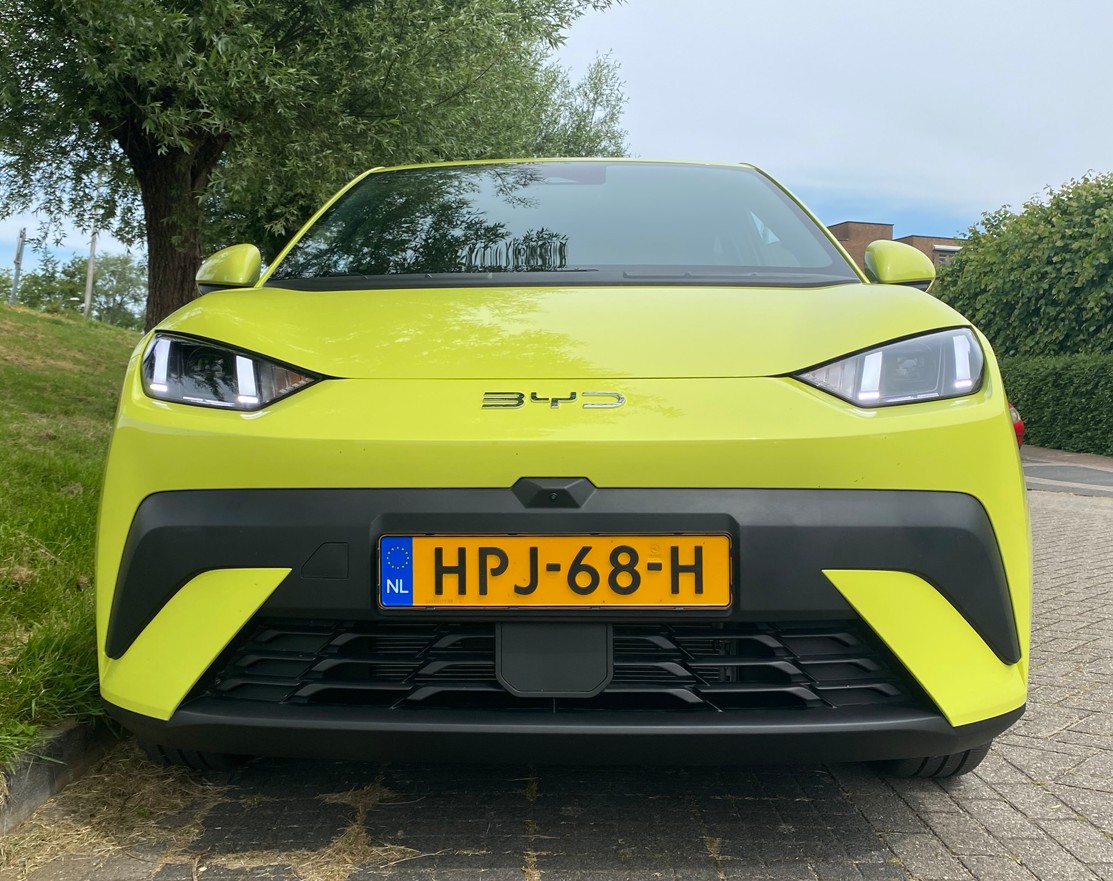
Sales of BYD EVs in Europe were up 201% year-over-year in August of this year. Tesla? Sales were down 36.6% over the same period, which means that BYD is selling more cars in EU countries than Tesla.
You can see the full sales release from the ACEA, but it shows that it’s not impossible for BYD to pass Tesla in sales in Europe this year. At the very least, it’ll be close.
And it’s not like people in Europe aren’t buying electric cars. The overall market was relatively flat in August, but BEVs were up 30.2%, hybrids were up 14.1%, and PHEVs were up 54.5%.
Now that the revised Model Y is entirely out, I think it’s safe to say that Musk’s antics, combined with growing competition, have clearly had an impact.
Check Out The Renault 5

Renault Group was up 8.1% year-over-year in August sales, with the Renault brand edging up 5.7%.
As Autocar points out, a lot of Renault’s success has come from the “brilliant” Renault R5 E-Tech. Will the company abandon the model? Of course not!
It would be a “massive mistake” for Renault not to replace the 5 in around five years time, and the next-generation supermini must be “very carefully” evolved to preserve its wide appeal.
That’s according to chief marketing officer Arnaud Belloni, who told Autocar that the reborn Renault 5 has made a huge impact on the French brand’s market footprint and public perception.
The 5 has only been on sale for around a year but is already one of the most popular EVs in Europe and is playing a pivotal role in attracting new customers to the Renault brand, with an 84% conquest rate in the UK.
It’s almost as if people will buy EVs if you make them fun and affordable…
Stellantis Is Pausing Production In Europe To Adjust To A ‘Challenging Market’

Stellantis had a decent August, growing 3.4%, but it’s still down about 8.9% for the year and saddled with a lot of inventory.
According to Automotive News Europe, there’s an obvious solution to that:
The automaker will temporarily halt production of the Fiat Panda and Alfa Romeo Tonale at its factory in Pomigliano, near Naples, from Sept. 29 to Oct. 6, Stellantis said on Sept. 23. The plant’s 3,800 workers will be put on furlough, it added in a statement.
Production will be suspended in Poissy, west of Paris, from Oct. 13 to 31, Stellantis said. Poissy builds the DS3 and Opel Mokka small SUVs.
Stellantis is “adapting the rhythm of production in some of its plants in Europe,” the company said in a statement on Sept. 23.
The company “aims to adjust the production pace to a challenging market in Europe while managing inventories as efficiently as possible before the end of the year,” Stellantis said.
Also, do you know what’s a great way to sell Tonales in the United States? Make them more expensive, which is exactly what tariffs did.
What I’m Listening To While Writing TMD
It’s getting grey outside, and “Action/Adventure” from Andrew Bird seems to hit the spot.
The Big Question
What’s the heaviest vehicle you’ve ever driven?
Top photo: ABB/Newspress



“What’s the heaviest vehicle you’ve ever driven?”
A 26 foot diesel moving truck from Uhaul I rented in the late 1990s or early 2000s. It was an old one with a manual transmission and a creeper first gear. It was probably one of the last manual trucks UHaul had.
What did it weigh? When empty, more than any other vehicle I’ve driven. And when loaded, waaaay more than any other vehicle I’ve driven.
Sadly I am not sure our roads could handle Electric cars gaining any more weight than they already have. also sadly I think a great deal of the weight is proportionate to vehicle power output. The 700 HP GT500’s were over 4,000 lbs getting very close to Challenger Hellcat weights.
I guess fully loaded U-haul box trucks would be the heaviest, done that a bunch of times unfortunately. Otherwise it’s one of my old Suburbans, not sure which was heavier, the ’91 or the ’02.
An open pit coal mine’s Caterpillar 793D haul truck for a summer. That thing was an experience!
I drove a school bus for a summer.
Can we say that Renault “cinq” the competition?
(Un blague père.)
Hmm. I was a Ford tech in the late ’90s and I drove a few medium duty trucks and shuttle buses. Nothing particularly notable.
However the heaviest vehicle I’ve ever raced was pretty remarkable.
Is that a Titowncar?
I have driven a full, like people packed in every space, city bus. Probably over 40,000 lbs that loop, and it rode and drove better than empty. Full hybrid bus with basically one pedal driving. Stank like beer and sweat and ax body spray. (college night bus) but the ride was nice, and I got to tap the sign like a real bus driver.
I countries and companies really wanted to address the bloat in car weight, they would tax cars by weight for road tax. It would make sense. My truck is a literal ton less in weight than the average truck from the same year, but we pay the same road tax.
I always thought speeding fines should be based on total inertia. The gravel trucks in our area are a menace.
They do tax you by weight in my state so the GVW portion of the licensing fees are higher for my F-250 than my F-150.
A loaded single axle dump truck, during spud harvest. Knowing what I know now, that’s probably a Class 6 (up to 26,000 lbs) or may be a Class 7 rig (up to 33,000), and requires a CDL.
I don’t know if the farmer’s just got an exemption for the hired help during the harvest season, or if the guy I worked for just didn’t care – either way, it’s amazing what they let teenagers do back in the day.
Biggest/heaviest vehicle would be the multiple 20 foot Uhaul trucks I’ve driven when moving. Which makes them the only V10 vehicles I’ve ever driven as well. What’s remarkable about that configuration is the fuel economy. As far as I could tell, they got the same mileage empty as they did fully loaded. They’re not as hard to drive and maneuver as I thought they would be. Pretty damn easy, actually.
Heaviest vehicle I’ve driven was probably a fully-laden U-Haul towing my Corvair. Drove that puppy from DC to CA, through winter storms pretty much the entire way. Yuck. Heaviest I’ve regularly driven? I’m guessing the ’87 El Camino, though my old 540iT was a porker, too.
My husband’s i3 is down quite a bit on range at 9 years old, but he has yet to see anything he’d like to replace it with. He was initially intrigued by the Volvo EX30, until we saw the “minimalist” (to put it kindly) interior. He loves the new Renault R5, so if we were to move to Europe, he’d have a much easier time letting go of his i3 than he would if we stay here. It sucks that we can’t get fun little things like that here.
Well there’s no tariffs on (non ferrous or non aluminum) composite materials yet. Yet.
We don’t need tariffs, it already costs about 2-3X as much in the US as it does in the UK and Europe just to get the raw materials. Compare total boat with easy composites to see just how much more it costs, especially when you look at the weave rolls.
88 tons of BAC 111, second heaviest, 10,000 gallon fuel truck, next highest, one of those international dump truck/snow plow.
As a truck & Coach tech, probably a cement truck. Or a firetruck. Or an ADL double-decker. Maybe the 60ft NFI LFR articulated buses? I’ve driven some heavy wreckers, too.
I dunno, I didn’t bother to scale any of em.
Oh, I forgot snow plows with full blade and wing, loaded with salt. I’ve driven some heavy shit.
The heaviest vehicle I ever drive was a 28 foot Penske rental truck filled with everything from my house.
Same honestly, if we’re talking absolute weight probably a liftgate box truck filled with our company machine shop (milling machine, lathe, welders, tool chests, all the goods) when we were moving facilities.
Heaviest vehicle I’ve driven is easily the 30ft campervan based on a Ford V10 chassis that we drove up and down the west coast of the US back in 2016. That thing was an absolute monster – I swear you could see the fuel gauge dropping in real time when getting up to speed on the freeway. I still can’t quite believe I could drive it on a regular licence; I’m pretty sure in most other countries you’d require a heavy-vehicle qualification of some sort.
Heaviest car? Probably a Chevy Suburban I rented for another trip during my time as an exchange student in the US. The back would stick out a solid metre when parked in normal parking spots. I was quite impressed by the features of that car, including a lane departure warning that would vibrate the side of your seat corresponding to the direction of lane-wandering.
A friend has an ’00 longbed extended cab F250. I borrow it on occasion and parking is like docking the Queen Mary.
Counter point to the weight argument. With fewer regulations, fewer components and systems will need to be included in the vehicle to meet those regulations. One example, beefed up starter motors for auto stop/start, which is a feature driven solely by CAFE credits. Another is active grille shutters, they help aero of course, but without the firm necessity (and credits awarded for their application) to hit a FE target, they can be deleted. That’s cost and weight down.
Aside from systems that can be stripped out due to regulatory cuts, I’m not sure I buy the “lighter car costs more money” argument. Material costs money, and there are many other factors limiting a car’s weight besides FE targets. Things like tire, brake, and transmission strength limitations are a few examples. Another biggie is acceleration, braking, and cornering performance. All will suffer greatly if the car is heavier and the OEM has to spend more money to cover the deficiencies.
Finally, one of the biggest contributors to the weight bloat of modern cars is safety. Crash and pedestrian impact reg updates are not slowing down or going away and those large body structures needed to meet them are not light regardless of the material used. So yes, cars will still get heavier, blame crash regs, not Trump.
It’s kind of the Morning Dump’s thing to pretend tariffs are the source of, or at least a major factor in all automotive evils. As you correctly identify, weight in a car has very little to do with the (tariff adjusted) price of structural components and virtually everything to do with safety regulations and desired customer features (sun roofs are heavy, premium stereos are heavy, climate control systems are heavy, sound damping is heavy, etc).
Looking at the current market, the lightest cars are all also the cheapest, by virtue of having so many less features/gizmos. I guess maybe Lambos are affected by tariff pricing of structural components?
I don’t think they did that at all here. Their point was that tariffs, combined with lowered efficiency standards, might lead to heavier materials in cars. Tariffs may, potentially, be a factor in using heavier materials in cars that are sold in the US in the future.
Well no, the materials are not actually getting heavier. The “lightweighting” discussed costs money because of engineering hours, not because super unobtanium euro steel is magically 50% less dense than it’s domestic equivalent (actually the other way around, there’s a bit in Japan but most of the low-density high strength steel I know of is US sourced, but also waaaayyy to expensive for automotive use). What would be a better claim is that tarrif expenses are forcing automakers to rethink their supply chain and change their accounting, which may result in less engineering hours spent on weight reduction.
Which is a fair and valid claim, but much less sexy. Also, encouraging supply chain changes is kind of the point of tariffs?
“Sales of BYD EVs in Europe were up 201% year-over-year in August of this year. Tesla? Sales were down 36.6% over the same period, which means that BYD is selling more cars in EU countries than Tesla.” – MH
That’s not what that means. It just means that BYD is experiencing growth while Tesla is contracting. Based on that statement alone we can not know whether or not “BYD is selling more cars in EU countries than Tesla.” If we compared Vinfast’s sales growth percentage in the US with GM’s, my guess is that Vinfast would have a bigger number, but that certainly wouldn’t mean Vinfast outsold GM.
TBQ: probably a 23 ft (iirc) U-haul. Edit: today is trash day and I’m not doing anything so maybe I’ll hijack the truck and have a new answer…
I’m pretty sure Matt knows math and looked at the actual sales numbers, not the growth rates, before writing that.
He quoted the growth rates and said it means that BYD was outselling Tesla in EU countries. BYD may be and that’s fine, but it can’t be inferred from the growth rates. Usually Matt’s pretty good about these things, but in this case, his statement is incorrect. I don’t mean to impugn his intelligence or his mathematical aptitude; we all make mistakes.
Probably my 58 Ford 841 tractor. I don’t know what it weighs but I bent the Class 3 tow hitch on my F-250 trying to tow it on my flatbed trailer. Didn’t even make it out of the driveway. The rear tires are filled and it has a big power angle snow plow with subframe that must weight 500 lbs.
A huge Case wheeled loader built for a rock mine. I drove it in its “golden years” of retirement at Logan airport as a snow pusher. 30 foot wide plow blade chained on to the bucket. It would move anything in its way. No idea what it weighed, but it was twice as heavy as the standard sized Cat and Kumatsu loaders that were also there. I think the tires were 7 feet tall.
I’m a nuisance for this (seems like I need clarification every time I comment about one), but for TBQ, can we include vehicles we’ve driven to scrap yards? I remember when I was a glorified lube tech, that I was told to empty our scrap truck by myself, and 5 tons with a 3rd gen 2500 was pretty normal for those trips. I may’ve seen 6 tons once or twice too.
If I can’t include that, it’s either that same 2500 unloaded (but with a snow-plow), or a 2019/2020 Ram 2500 Crew Cab.
This tire shop I used to work at had a basic farm tractor with a bucket on the front and a blade on the back, we used it for moving snow or dead cars. That might be the heaviest thing I’ve “driven”. That, or the rental cube van helping someone move.
Full sized old Bluebird school bus. I was recruited by my manager to be the DD and pilot that thing for his brother’s bachelor party. Fun night :-).
I haven’t driven much heavy yet, so I guess the contenders are:
Car manufacturers have to do something about the tariffs?
I’d argue that “we” need to do something about them. Tariffs making it cheaper to produce older, less efficient cars is not a good reason to do so. The “pressure” to produce lighter, more efficient cars has not changed (sustainability). The economics have.
Bigger picture… perhaps we need to adjust our expectations and sense of entitlement about what we “need” from a car. And consumer goods in general. We are extremely wasteful.
The auto industry has spent over $800 billion on the shift to BEVs which will also be paid for by the consumers. Don’t hear you complaining about that.
Where do you people pull your numbers out of? In the short EV revolution, which is barely a decade old, and wasn’t seriously joined by most auto manufacturers until just four or five years ago, there is no possible way the R&D budgets or production budgets surpassed $800 billion. That’s more than the total yearly revenue of the top car companies in the world over a couple of years. If you’re going to make up BS, make it sound plausible.
Here, let me google that for you:
https://www.google.com/search?q=how+much+money+the+automotive+industry+has+invested+into+the+shift+to+electric+vehicles&rlz=1C1GCEA_enUS1039US1039&oq=how+much+money+the+automotive+industry+has+invested+into+the+shift+to+electric+vehicles&gs_lcrp=EgZjaHJvbWUyBggAEEUYOdIBCjExOTA0ajBqMTWoAgiwAgE&sourceid=chrome&ie=UTF-8
Over $300 Billion in the US alone. Projected to hit between $860 Billion and $1.2 Trillion by 2030.
So I suppose I should rephrase my original post to “will spend” rather than “has spent”. That’s what skimming the content will do to you.
Same place they got the numbers that 300 million people died of heroin (out of a total population of 340 million).
Cute!