

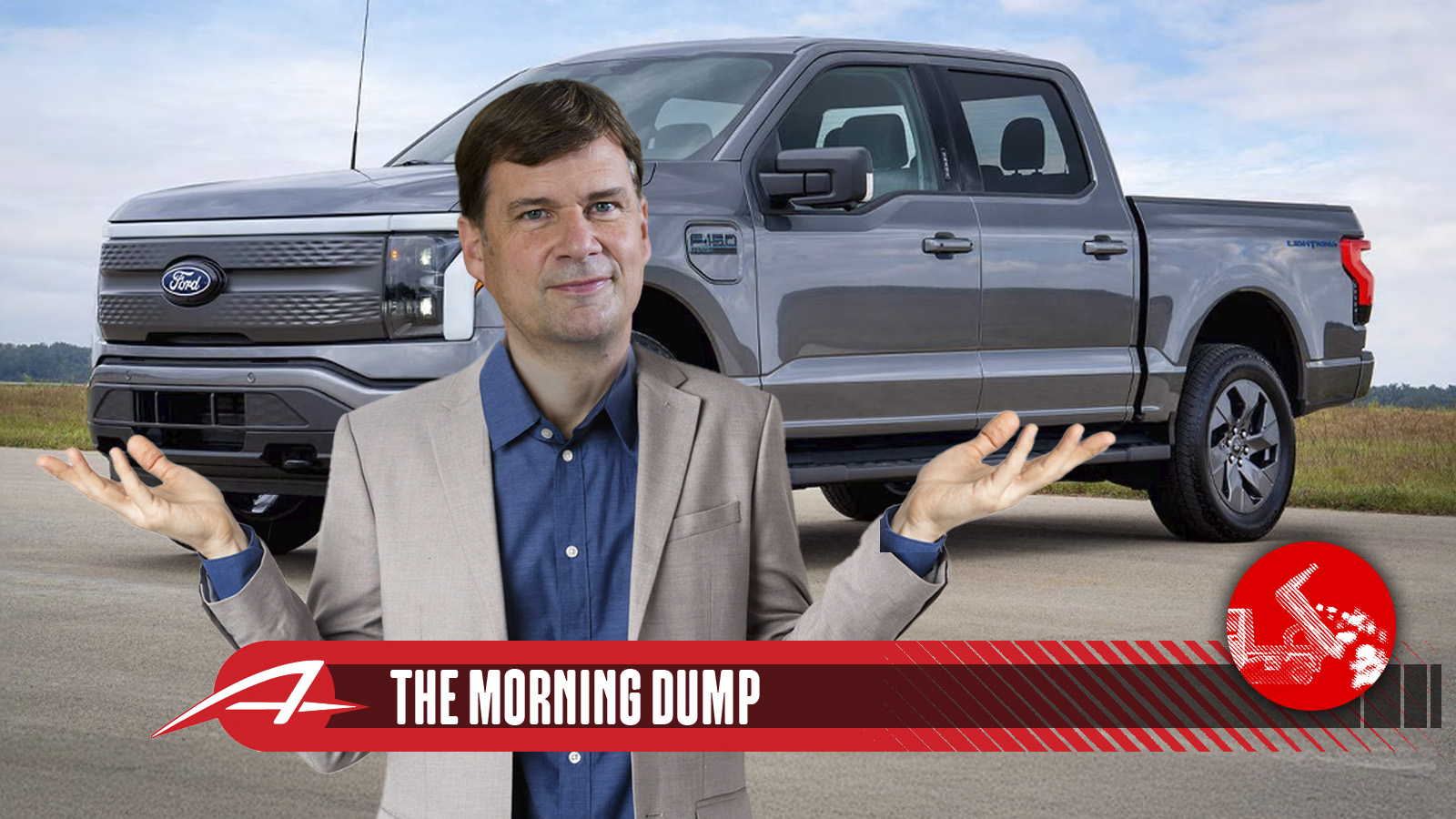
I should have known something was up when Ford scheduled an embargo at 4:05 PM yesterday. It was a one-two punch of news, with the exciting part for us being the introduction of an EREV F-150. The other fist of news, while somewhat predictable, was maybe even more important and timed to be released after the market closed. Ford is changing its big EV plans and paying the price for it this year.
The big picture of it all is interesting to me, so it’ll lead The Morning Dump today. I think Ford is getting off easy, especially when you look at other trends. The earliest report of November EV sales shows a huge 40% drop. In Europe, Volkswagen is closing a plant for the first time in 88 years. Can you guess what it makes?


And, finally, GM has done ok in the EV space, but there’s one big drawback to buying most GM EVs. Will the company’s latest move fix this problem?
Ford Didn’t Get Off Easy, But It Could Have Been Worse

When Ford announced last year that it was creating a Skunkworks team to develop a sub-$30k EV separate from all the other electric vehicles it was developing, it was clear that the company was having serious second thoughts about whether or not it could make big electric cars work.
It’s long been my view, and David’s view, and Lucid founder Peter Rawlinson’s view that the battery technology is just not there to make big EVs work as well as EREVs can. With the exception of the Mustang GTD, Ford is a mainstream brand that makes the biggest chunk of its money from selling trucks to people who do work or, at least, people who like to imagine doing work. It does this at a massive scale, moving somewhere around three-quarters of a million F-Series trucks a year.
It’s no surprise then that Ford’s view was that it could build a lot of big electric vehicles for that kind of customer. A big three-row SUV, a couple of trucks, and an electric van. All extremely Ford products.
With the announcement that it was discontinuing the all-EV F-150 Lightning and making it an EREV instead, Ford also mentioned it was giving up its big EV dream and focusing on other things.
“This is a customer-driven shift to create a stronger, more resilient and more profitable Ford,” said Ford president and CEO Jim Farley. “The operating reality has changed, and we are redeploying capital into higher-return growth opportunities: Ford Pro, our market-leading trucks and vans, hybrids and high-margin opportunities like our new battery energy storage business.”
These actions provide a path to profitability in Model e by 2029, targeting annual improvements beginning in 2026. The actions will also improve profits in Ford Blue and Ford Pro over time with early signs of benefits in 2026. As a result, Ford expects to record about $19.5 billion in special items, the majority in the fourth quarter of 2025, with the remainder in 2026 and 2027.
As part of these special items, the company expects approximately $5.5 billion in cash effects, with the majority paid in 2026 and the remainder in 2027. To support these actions, Ford and its subsidiaries plan to hire thousands of people across America, reinforcing the company’s leadership as the top employer of U.S. hourly autoworkers.
That $19.5 billion is Ford cancelling most of its big EV plans, including the three-row (widely expected) and the electric van (also, not a surprise). Ford says it’ll keep the affordable, probably Maverick-sized EV truck it teased earlier this year, built on the company’s Universal EV Platform.
The key words in all of this are “choice” and “affordability.” Looking at the relative success of an automaker like Hyundai, Ford thinks it’ll bring a bunch of different pieces together for different consumers, and expects that by the end of the decade, about half of its cars globally will be electrified in some manner.
While nearly $20 billion is a huge amount, I think the muted market reaction so far today is a sign that this was sort of priced in, and that the potential for profits from hybrids and trucks means Ford is better off not wasting the money.
EV Sales Down 41% In November, But Rivian Does Better

The latest EV Market Monitor from Cox Automotive shows that EV sales dropped 41.2% year-over-year and 5.2% compared to October. This was no surprise and reflects two different, but connected political realities. Last November, more people bought EVs because the election of President Trump made them fear they’d lose out on an EV tax credit. Then, in September of this year, that tax credit went away.
While most brands struggled, it wasn’t universal as Cox points out:
Despite November’s weakness, year-to-date EV sales remain 2.1% above last year’s pace. EV share of total sales fell to 5.4% in November, the lowest since April 2022 and down from October’s 5.8%. By volume, the market leaders were Tesla (39,800), Rivian (4,500), Ford (4,188), Chevrolet (3,112), and Hyundai (2,853). Tesla dropped 2.1% month over month but gained 2.2 percentage points of market share to reach 56.7%, as competitors faced even steeper declines. Several brands posted year-over-year sales volume gains, with Rivian leading at 7.6% and showing the strongest momentum. Rivian’s sales volume was up 14.1% from October.
Wow, good on Rivian.
VW Closes First Plant In Germany In 88 Years

If you want to have a bookend for modern Volkswagen, I don’t think you can do better than the Dresden Glass Factory. It was built to produce the VW Phaeton, which, while a car I love, was a good example of the insanity of peak-Piech era thinking. It’ll be the first plant to close in VW’s post-WWII history, and the last vehicle to roll off the assembly in is an ID.3 EV created in the company’s whiplash response to Dieselgate.
The plant will be taken over by a VW-led partnership:
From DFP via MSN:
From January 2026, Volkswagen, Saxony and the Technical University (TU) of Dresden are entering into a strategic partnership and will put the Transparent Factory to new uses.
The plan is to create an innovation centre for key technology fields, including artificial intelligence (AI), robotics, microelectronics and chip design.
The TU intends to use almost half of the space in the factory in future. The 230 employees are to keep their jobs in Dresden for the time being.
“For the time being” is how long, exactly? Asking for a friend.
GM Will Get Apple Music
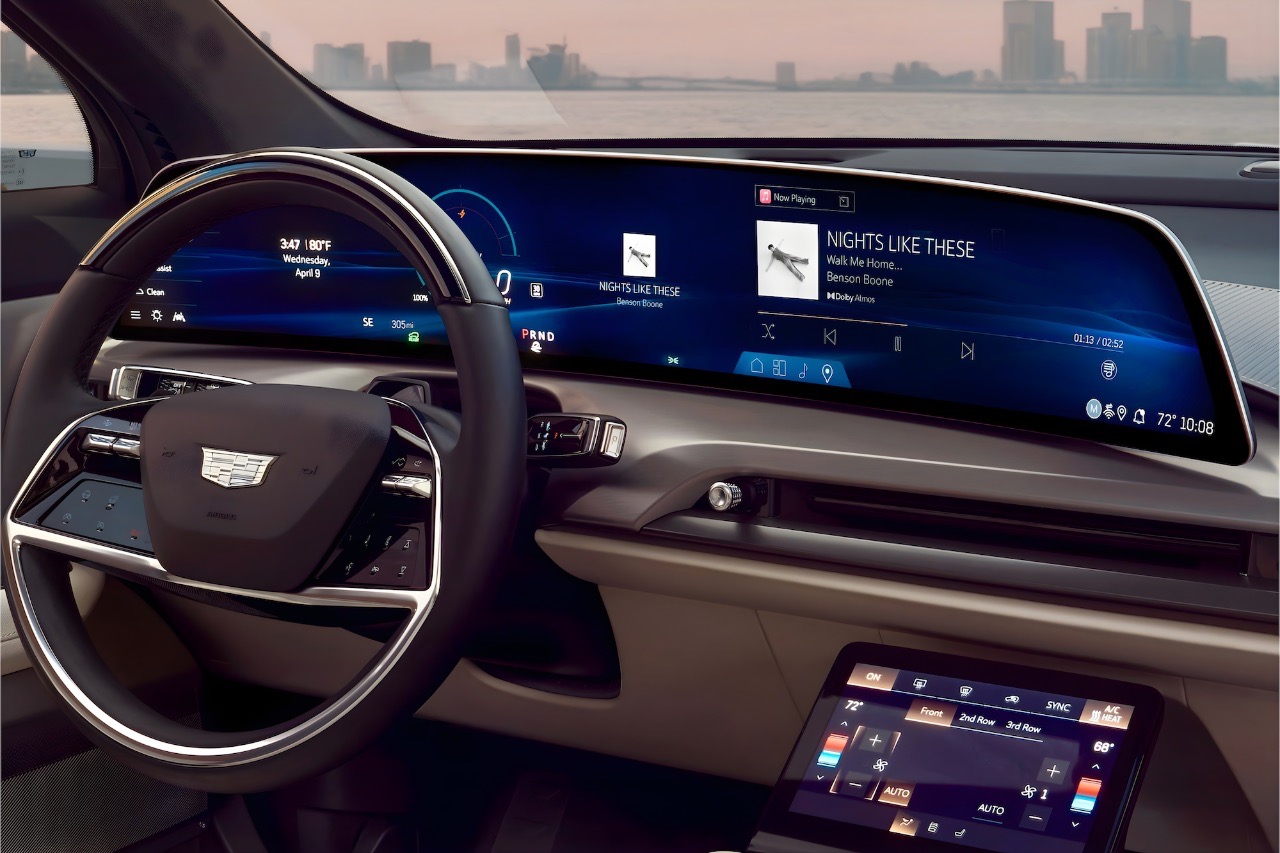
General Motors makes a nice EV, and is one of the few companies that is well-positioned to keep making a wide range of EVs into the future. The company also doesn’t put Apple CarPlay or Android Auto in most of these cars, and plans to remove the software from future vehicles. This sucks!
The company is starting to make some improvements, though, by at least offering Apple Music and podcast apps (hopefully, Apple Podcasts) to its vehicles. Here’s what the company said in a press release:
To make listening effortless, GM is making audio streaming standard through OnStar Basics for all 2025 and newer vehicles in the U.S. and Canada. That means customers can access their favorite music, audiobook, podcast, and news apps — including Apple Music — at no additional connectivity cost for eight years with their vehicle purchase.
“We are bringing the Apple Music app to GM vehicles in a way that takes full advantage of our industry-leading audio capabilities,” said Tim Twerdahl, GM’s vice president of global product management. “It’s the latest example of how we’re expanding entertainment choices built directly into our vehicles.”
This does sound like, after eight years, you’ll have to pay to use basic apps.
What I’m Listening To While Writing TMD
This is Phil Cordell’s “Red Lady,” a song that gives a Decemberists vibe approximately 40 years earlier. I’m also shocked this hasn’t been in a Wes Anderson movie yet.
The Big Question
What’s your favorite car-that-never-got-built?
Credit: Ford; DepositPhotos.com





So… is a future of all-electric vehicles just not going to happen? Are we just stuck with hybrids?
It seems like current battery tech is the limiting factor. Makes the cars too heavy and too expensive. So… unless there is some huge battery advance, it seems like all-electric is not going to happen.
Plus, I wonder what the functionality of the current (heh) electric grid would look like if EVERYONE plugged in their EV at 5:30pm each night.
It’s not that an all-electric future won’t happen, it’s just that massive oversized vehicles are the incorrect application for pure-EV tech when you need 250 lbs/$5,000 worth of batteries to store the energy equivalent of 1 gallon of gasoline. Electric motors are already very efficient across their operating range, while ICE’s tend to get more efficient with increased load(such as will be experienced when hauling a trailer up a hill).
Long-ranged, aerodynamically-efficient, sub-$30k sedans, hatchbacks, and sports cars are really the correct application for EV tech. But greedy manufacturers chasing margins aren’t allowing us to have that as an option.
A good starting point for Ford? Take the Ford Prodigy 70+ mpg hybrid sedan from 25+ years ago, and use it as the basis for an affordable EV that gets 200+ miles highway range with the MSRP of an ICE Corolla. The Prodigy had a 0.199 drag coefficient and a reasonably-sized frontal area, so as long as that aero carries over into a production car is the enabler for a sub-180 Wh/mile EV on the highway, keeping battery mass and vehicle cost down. Tesla has decided they want to avoid the “affordable” market, the Chinese are deliberately being excluded, and Ford could fill this blind spot if they really wanted to compete, before anyone else does.
It won’t happen as long as the cost of the energy is anywhere close to parity. Why would I buy an EV when I can drive 600+ miles nonstop on a single tank of gasoline for less?
The issue with battery tech is less the weight, which in an EV makes very very little impact in range, and rather energy density. A gallon of standard Gasoline has 33.7 kWh of energy in it, so even a long range Model S has under 3 gallons worth of usable energy. The other issue is energy costs, both in cheap gas and expensive electricity. Gas in the US is artificially cheap compared to Europe, which makes it much much harder to justify spending extra on an EV over a Gas or Hybrid. gas in Germany is somewhere north of $7/gal, and similar for a lot of Europe. Couple that with shorter travel distances, and the math starts to make a lot more sense.
For contemporary stuff, how about the Ford Interceptor?
Could have been a real Charger/300 competitor. Instead we got some its design cues spread around various vehicles, but never the whole package.
2005 Ford SVT F-150 Lightning. Independent rear suspension, 6-speed manual, and the “Super Cooler.” It all sounded great, but alas, the sport pickup market was dead.
I’d love to have an EV, but no charging at home, no charging at work, and spotty infrastructure in between makes it a no-go.
There were so many cool concept cars in the 90’s and early 2000’s it’s hard to pick, but I always thought the Cadillac 16 was really cool. And if I searched, I’m sure I could find a Jeep from the EJS collection that I’d have loved. IIRC, they made a full steel roof version a few years back, that would be amazing.
2015 Jeep Africa concept would have been perfect for me and my hobbies.
Bentley EXP 10 Speed 6.
I got to sit in the concept on the stand at NAIAS. Those rear wings were super-formed! Strict 2-seat GT coupe with a large, liftback hatch. My ultimate GT car once they presumably stuffed the turbo W12 in it. I would’ve found a way to order one. I’d never get rid of it. That big W12 ‘whooomph’, that shape, that packaging. The car I genuinely always wanted to exist, but now no one will ever build. 🙁
As a Lightning owner, I’m bummed my truck won’t be continued for the next generation, but sincerely excited for the Ford Universal EV platform. EREV might also help address some of the reliability issues associated with super complex engine fuel management and transmission durability issues (even Toyota fans are having issues with TNGA drivetrains)
Favorite Car Never Produced: Citroen’s / Chrysler’s modern riff on the 2CV (Chrysler CCV). More for the concept than the execution, which looked like a dud
Perhaps the idiots should have concentrated on smaller and cheaper EVs that the rest of us could afford in this crappy economy.
Careful or you may awaken the pedantic “nobody wants small cars” krakens.
It’s a luxury economy now, 50% of spending is done by the top 10%. They don’t care about us poors anymore. Well, not that they ever did, but now they don’t even care if they get our money.
Chrysler Chronos concept from 1998 and, come to think of it, the ME412 from 2004.
I’ll continue to drive my 2017 ICE car (at 139,000 miles) and delay replacing it with a BEV for another 2-4 years. Hopefully, that’ll allow more appealing BEV options and easier public charging to entice me back into the new car market. I’ve only bought one car brand new, a 1997 VW Golf.
If new BEV options fail to impress me before I need a different car, maybe getting a used BEV to drive for a few years will allow new BEVs to catch up to my expectations.
TBQ: (either)
Ford 021C
Ford Airstream
Every single Mazda Rotary coupe concept of the last 10 years. C’mon you cowards, give us the RX-Vision.
I don’t know about favorite, but the Elio was the car I was most excited about that never got made. It was so funky, and just an awesome idea and I loved everything about it.
Aside from that, the Cadillac Cien, the Chrysler ME4-12, lots of American supercar concepts that would have been fun to see competing against the likes of Lamborghini.
Oh man, I forgot about the Elio. I was pretty excited about that too. I had such high hopes. Not high enough to put down a deposit, but still.
I was too young and broke to put down a deposit when it was initially unveiled, and then by the time I could have done so, they were so obviously not going anywhere that there was no way I was doing that.
Now, because I have clearly learned nothing, I have a deposit in with the modern equivalent, the Aptera. Not because I think I’m getting a car, but because I was drunk one night and figured what the hell. I really should cancel it and get my money back, but I do want the car if it ever happens so…
I’m right there with you. Too poor to put a deposit for an Elio at the time. And thinking about canceling my Aptera reservation everytime I see another lame excuse email for why they are still x away from production.
Yeah. I love the idea of the Aptera, but we’re at like 20 years bake time on this one too and I think it might be past the expiration date by now. Oh well, not the first time I’ve thrown $100 down the drain. Likely won’t be the last. I have a reservation for a Slate too, but will likely end up cancelling that one when official pricing shows that to get it with a backseat and cap will be $40k.
I go on the aptera site to cancel and every time I see it sitting there with that stupid orange hatchback camping tent overlooking the Pacific Ocean and I’m like naw I can wait.
I’ll sink some money into slate also just to live the daydream of a screen less new car for a while.
A de-tech’d F150 with a flip-up bed, easily accessed 50-60 kWh pack under it of a different make/model of battery power-dense enough to keep the EV drive system from losing power vs the current oversized pack, using a Toyota Prius engine as a generator in a series-hybrid configuration, could be an economical towing vehicle. Imagine 60-80 miles plug-in range driven as a commuter vehicle, and maybe 10 mpg hauling a trailer long distances. And with that electric drive system’s power and all of that weight reduction, it would accelerate like a hypercar when unloaded.
Great! As I am sure you realize that auto manufacturers rely on profit, not common sense.
If they don’t do it, the Chinese are going to do something like it.
Right. Technology is an overseas product. (Just add tariffs)
Chrysler Atlantic. 1995. en.wikipedia.org/wiki/Chrysler_Atlantic
I’m going with EV2.
1999 Dodge Power Wagon concept.
https://www.hemmings.com/stories/ram-reimagined/
Dodge Demon. Not the Challenger kind, but the 2007 concept that was going to be a Miata fighter until the shit hit the fan in 2008.
I came here to say the exact same thing, but I thought it was around 04 or 05
Good choice. I forgot about that thing, and would love to see some direct Miata competition!
Good call. See also the Plymouth Pronto Spyder.
Surely a lot of the R&D for the “big” EVs is carrying over into the universal EV platform. This comes across as half true and half book cooking. Leave it to Ford, however, to say, “The people don’t want a mid size PHEV truck. What they really want is a full sized EREV with ridiculous torque numbers”
Holy crap Matt. As a huge Decemberists fan (even “The Hazards of Love”) that Phil Cordell track SLAPS. Anthology added to my Amazon Music queue.
Favorite car that never was? Chrysler ME-412.
Great choice. I loved that car!
The Hazards of Love is good
It took me until last year to get it, and then, all of a sudden, I really got it.
That album requires you to be in a very specific head space, sort of like Wilco’s “Yankee Hotel Foxtrot”. I think “Hazards” might be their best album, but you really have to be in the right mood to listen to it.
Even the taillights that looked like an acne breakout couldn’t stop that car from being amazing
TBQ – 2011 VW Bulli concept: https://www.vwpress.co.uk/press-kits/260
I think it’s a tie between the Yugo GV and the Chevy Vega. I mean, you could argue they got built, sold, recalled, repaired… but did anyone ever finish building them?
Hard not to say the IDx here.
loved that boxy little guy’s look. And wouldve been a good competitor to the BRZ/Gt-86/miata space
If there are inflection points where timelines branch off from each other into “good and bad”, then Nissan deciding not to build the IDx has to be one of those.
When Trump sacrifices American blood and treasure the flood the world with Venezuelan oil, we’ll have to see how Americans respond. But in general, I think we’re on the precipice of most Americans accepting EVs. We are only one oil price spike away from it, IMO. Coupling that improvements in cars, lower prices, better range, better charging options that happen on a yearly basis, EVs will be fine. They will outlast DJT.
I ran a few numbers for my household — once I figured in the much higher insurance and depreciation, I would have to drive twice as much and charge 100% at home to make an EV work for us. Obviously that’s a huge YMMV, but those are very real hurdles that aren’t totally obvious to a casual shopper who is focused on the simple economics of fuel savings.
Obviously I’m ignoring the intangibles like environment and driveability, but that’s how the mass market thinks.
I view environmental impact as not an intangible, but I do view depreciation as one, unless I actually intend to sell the thing.
My Silverado EV insurance is not much different than I’d pay for a diesel F250, which it is very close to in size and some (but not all) capabilities.
The depreciation issue is a net benefit for buyers as lightly used EVs are very affordable. I mean, I paid almost $20k under list for my new truck.
It is true that if you cannot charge at home, you’re not saving money vs gas. I also have the perk of some free charging at work.
I just stared at my father as he ranted about depreciation in front of his 230k mile, 15 year old Corolla. As if the difference between $6k and $2.5k matters after 15 years of inflation. Ownership cost wrt maintenance? Absolutely. That does matter
The mass market and how they think are why we find ourselves with many of our current problems. Gain for the few at the expense of the rest won’t end well.
Truth, but I’m just pointing out the two big “surprises” that noob EV owners have to contend with — things that could sour them on continuing down that path. So my message is more about overcoming that, not sh*tting on the idea.
Insurance companies still need better actuarial data, my understanding is the sample sizes are still fairly small, so they err on the side of caution. And on the depreciation side, I think some stability in battery tech will help, along with more price stability in the new EV market (eg, Musk not wiping out value by slashing prices overnight)
The safe money for a lot of US buyers is just a hybrid for more reasons than I can count. I’m very bullish in PHEVs, it’s just a shame that Stellantis was the poster child for several marginal efforts there.
Not saying that the numbers would be entirely different (as you said, YMMV), but I found that the insurance was only much higher on Tesla and Mercedes. Other EVs had insurance rates within expected ranges (factoring in things like BMW being more expensive to insure as a gasser, too). When I wasn’t yet done with the local Kia service dept, I actually found the EV6 GT-Line was going to cost slightly less to insure than the Niro PHEV I was getting out of, and the Hyundai and Chevy offerings were pretty close to the same.
It is definitely a ymmv situation. For me a Mach E RWD, was almost double my Civic Type R.
Wow, I didn’t realize the Mach E was that high. I just plugged one into my insurance and it would increase my rate by like 40%. I also threw in an Equinox EV, since it felt like a fair cross-shop, and it would decrease my rates by like 4.5%
I really wonder what on their actuarial tables might cause the discrepancy. I almost think it’s that they see “Mustang” and price that in.
I’m sure that has something to do with it. I did genuinely like the MachE as an appliance to drive.
I thought it rode well, I like the frunk, and I don’t mind the look. I did not like pretty much everything being on the screen, even though a lot of people say it ends up being fine. And now I don’t like the insurance, so it’s dropped even further down the list for me.
There’s such a huge variation in electricity prices, and IMO the ball has been seriously dropped on addressing it as part of the electrification/decarbonization push that needs to affect carbon from the entire global economy, not just the <10% that comes from passenger cars and trucks. Where I am, electricity costs $0.21/kWhr at home and gasoline is $2.70, so driving a BEV costs you both time and money.
If all the money that's been wasted on developing $60-200k electric vehicles that almost no one wants had instead been spent on ensuring there was abundant electricity available everywhere for <$0.10/kWhr, there would be a lot more interest in electrifying EVERYTHING by now.
We are only one oil price spike away from it, IMO
Nope. We’re not.
You only need look at the history of small economy cars in times of higher gas prices to see what will occur.
There will be much complaining and gnashing of teeth about “how expensive gas is” and how “no one can afford it”. But the reality is that gas prices just do not effect most new car buyers in a substantial manner. With average new car prices above $40,000, if you can afford to buy a new car, you can afford higher gas prices. And since new car buyers are the demand that car companies respond to…
Consumers, on the whole, would much rather spend a bit more in gas to have something that they will enjoy driving for the 10 plus years they are likely to own it, and find other areas to save, if they need to.
Plus, at this point, EVs are not substantially cheaper to operate for most people. The less a car is driven, the greater the percentage of the total operating cost is taken up by purchase price and insurance. As electricity rates have gone up, EVs have become relatively more expensive for those who do less driving, and cheaper only for those who do more driving (because they still use enough energy to derive substantial benefit between the cost of electricity and gas)…and it is just that situation that EVs are not the best solution for…long range driving.
“The U.S. Big Three were first weakened by the substantially more expensive automobile fuels[6] linked to the 2003–2008 oil crisis which, in particular, caused customers to turn away from large sport utility vehicles (SUVs) and pickup trucks,[7] the main market of the American “Big Three” (General Motors, Ford, and Chrysler).”
https://en.wikipedia.org/wiki/Effects_of_the_2008%E2%80%932010_automotive_industry_crisis_on_the_United_States
This happened during the 1970s (hello K-cars) and the early 2000s (first gen Prius among other things).
And as recently as Oct 2025, it still remains cheaper for most of the country to charge an EV at home than to fill an ICE car with gas.
https://www.energysage.com/ev-charging/electric-vehicle-charging-cost/
It’s substantially cheaper where I live.
And as a Silverado EV owner, I would rather take it long range driving than any ICE vehicle I’ve owned.
Tbq: I could point at any Chrysler concept from the ’90s that never became anything and have a good answer, but the ’99 Charger concept comes to mind. That and the GT90 from Ford.
What’s your favorite car-that-never-got-built?
The Citroen Activa. 12 year old me thought it was the sleekest most space age thing ever.
https://www.citroenet.org.uk/prototypes/activa/activa.html
Import a 1st generation Ford Probe from the US (or any other market where it was sold, I don’t know if it was sold elsewhere in the world) and you can scratch that 90’s spaceship-shaped itch. Either that or a Subaru SVX.