

I should have known something was up when Ford scheduled an embargo at 4:05 PM yesterday. It was a one-two punch of news, with the exciting part for us being the introduction of an EREV F-150. The other fist of news, while somewhat predictable, was maybe even more important and timed to be released after the market closed. Ford is changing its big EV plans and paying the price for it this year.
The big picture of it all is interesting to me, so it’ll lead The Morning Dump today. I think Ford is getting off easy, especially when you look at other trends. The earliest report of November EV sales shows a huge 40% drop. In Europe, Volkswagen is closing a plant for the first time in 88 years. Can you guess what it makes?


And, finally, GM has done ok in the EV space, but there’s one big drawback to buying most GM EVs. Will the company’s latest move fix this problem?
Ford Didn’t Get Off Easy, But It Could Have Been Worse

When Ford announced last year that it was creating a Skunkworks team to develop a sub-$30k EV separate from all the other electric vehicles it was developing, it was clear that the company was having serious second thoughts about whether or not it could make big electric cars work.
It’s long been my view, and David’s view, and Lucid founder Peter Rawlinson’s view that the battery technology is just not there to make big EVs work as well as EREVs can. With the exception of the Mustang GTD, Ford is a mainstream brand that makes the biggest chunk of its money from selling trucks to people who do work or, at least, people who like to imagine doing work. It does this at a massive scale, moving somewhere around three-quarters of a million F-Series trucks a year.
It’s no surprise then that Ford’s view was that it could build a lot of big electric vehicles for that kind of customer. A big three-row SUV, a couple of trucks, and an electric van. All extremely Ford products.
With the announcement that it was discontinuing the all-EV F-150 Lightning and making it an EREV instead, Ford also mentioned it was giving up its big EV dream and focusing on other things.
“This is a customer-driven shift to create a stronger, more resilient and more profitable Ford,” said Ford president and CEO Jim Farley. “The operating reality has changed, and we are redeploying capital into higher-return growth opportunities: Ford Pro, our market-leading trucks and vans, hybrids and high-margin opportunities like our new battery energy storage business.”
These actions provide a path to profitability in Model e by 2029, targeting annual improvements beginning in 2026. The actions will also improve profits in Ford Blue and Ford Pro over time with early signs of benefits in 2026. As a result, Ford expects to record about $19.5 billion in special items, the majority in the fourth quarter of 2025, with the remainder in 2026 and 2027.
As part of these special items, the company expects approximately $5.5 billion in cash effects, with the majority paid in 2026 and the remainder in 2027. To support these actions, Ford and its subsidiaries plan to hire thousands of people across America, reinforcing the company’s leadership as the top employer of U.S. hourly autoworkers.
That $19.5 billion is Ford cancelling most of its big EV plans, including the three-row (widely expected) and the electric van (also, not a surprise). Ford says it’ll keep the affordable, probably Maverick-sized EV truck it teased earlier this year, built on the company’s Universal EV Platform.
The key words in all of this are “choice” and “affordability.” Looking at the relative success of an automaker like Hyundai, Ford thinks it’ll bring a bunch of different pieces together for different consumers, and expects that by the end of the decade, about half of its cars globally will be electrified in some manner.
While nearly $20 billion is a huge amount, I think the muted market reaction so far today is a sign that this was sort of priced in, and that the potential for profits from hybrids and trucks means Ford is better off not wasting the money.
EV Sales Down 41% In November, But Rivian Does Better

The latest EV Market Monitor from Cox Automotive shows that EV sales dropped 41.2% year-over-year and 5.2% compared to October. This was no surprise and reflects two different, but connected political realities. Last November, more people bought EVs because the election of President Trump made them fear they’d lose out on an EV tax credit. Then, in September of this year, that tax credit went away.
While most brands struggled, it wasn’t universal as Cox points out:
Despite November’s weakness, year-to-date EV sales remain 2.1% above last year’s pace. EV share of total sales fell to 5.4% in November, the lowest since April 2022 and down from October’s 5.8%. By volume, the market leaders were Tesla (39,800), Rivian (4,500), Ford (4,188), Chevrolet (3,112), and Hyundai (2,853). Tesla dropped 2.1% month over month but gained 2.2 percentage points of market share to reach 56.7%, as competitors faced even steeper declines. Several brands posted year-over-year sales volume gains, with Rivian leading at 7.6% and showing the strongest momentum. Rivian’s sales volume was up 14.1% from October.
Wow, good on Rivian.
VW Closes First Plant In Germany In 88 Years

If you want to have a bookend for modern Volkswagen, I don’t think you can do better than the Dresden Glass Factory. It was built to produce the VW Phaeton, which, while a car I love, was a good example of the insanity of peak-Piech era thinking. It’ll be the first plant to close in VW’s post-WWII history, and the last vehicle to roll off the assembly in is an ID.3 EV created in the company’s whiplash response to Dieselgate.
The plant will be taken over by a VW-led partnership:
From DFP via MSN:
From January 2026, Volkswagen, Saxony and the Technical University (TU) of Dresden are entering into a strategic partnership and will put the Transparent Factory to new uses.
The plan is to create an innovation centre for key technology fields, including artificial intelligence (AI), robotics, microelectronics and chip design.
The TU intends to use almost half of the space in the factory in future. The 230 employees are to keep their jobs in Dresden for the time being.
“For the time being” is how long, exactly? Asking for a friend.
GM Will Get Apple Music
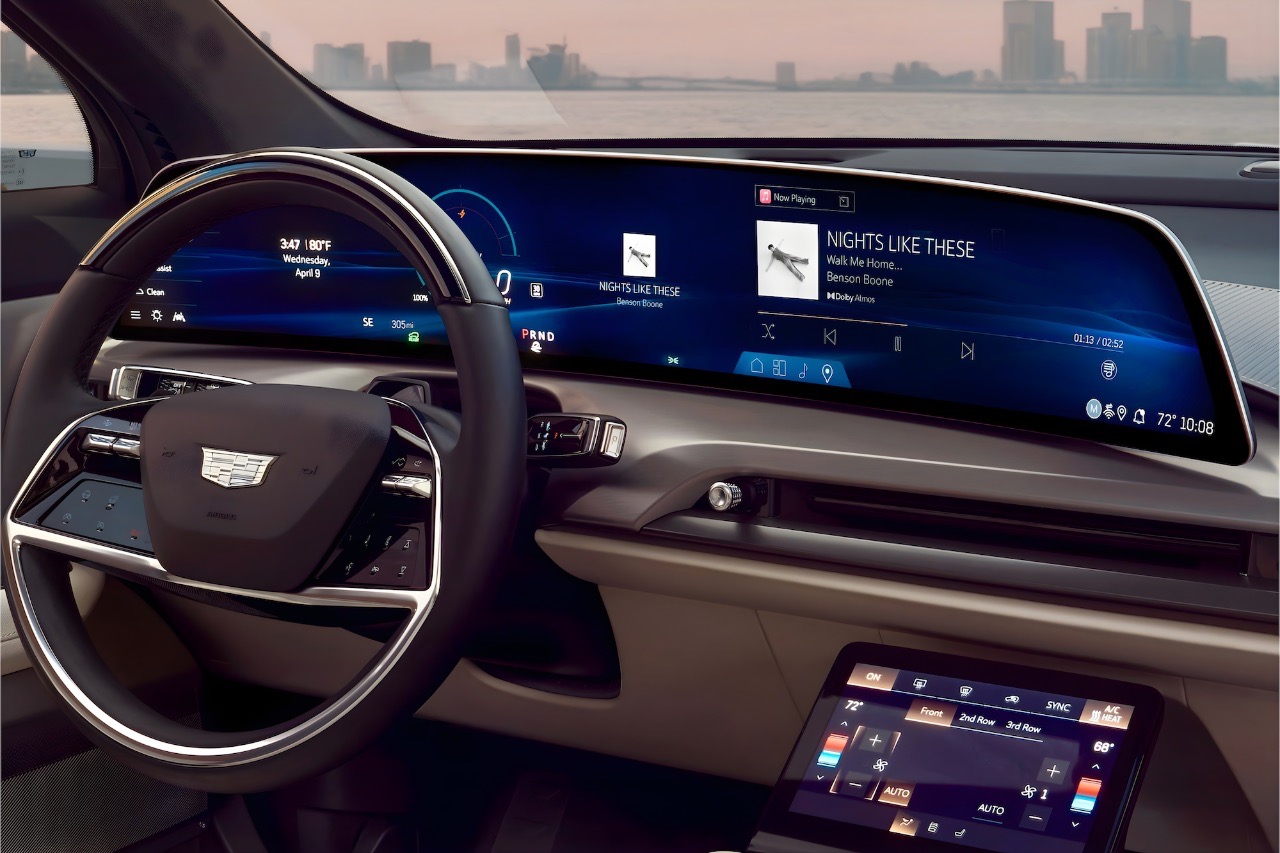
General Motors makes a nice EV, and is one of the few companies that is well-positioned to keep making a wide range of EVs into the future. The company also doesn’t put Apple CarPlay or Android Auto in most of these cars, and plans to remove the software from future vehicles. This sucks!
The company is starting to make some improvements, though, by at least offering Apple Music and podcast apps (hopefully, Apple Podcasts) to its vehicles. Here’s what the company said in a press release:
To make listening effortless, GM is making audio streaming standard through OnStar Basics for all 2025 and newer vehicles in the U.S. and Canada. That means customers can access their favorite music, audiobook, podcast, and news apps — including Apple Music — at no additional connectivity cost for eight years with their vehicle purchase.
“We are bringing the Apple Music app to GM vehicles in a way that takes full advantage of our industry-leading audio capabilities,” said Tim Twerdahl, GM’s vice president of global product management. “It’s the latest example of how we’re expanding entertainment choices built directly into our vehicles.”
This does sound like, after eight years, you’ll have to pay to use basic apps.
What I’m Listening To While Writing TMD
This is Phil Cordell’s “Red Lady,” a song that gives a Decemberists vibe approximately 40 years earlier. I’m also shocked this hasn’t been in a Wes Anderson movie yet.
The Big Question
What’s your favorite car-that-never-got-built?
Credit: Ford; DepositPhotos.com




Ford’s pivot to the F-150 E-REV is a case study in data-driven decision making. The numbers tell the story clearly. Tesla’s Cybertruck was launched with an annual production capacity of around 250,000 units, but in reality it has sold fewer than 20,000 in 2025. That’s a utilization rate of only six to eight percent, far below the economies of scale required for profitability. Ford’s Lightning EV outsold the Cybertruck, with nearly 6,000 units in a single quarter, but even as the segment leader Ford’s EV division has lost over $13 billion since 2023. The conclusion is unavoidable: large EV trucks cannot reach scale or profitability in their current form.
That’s why Ford’s move into the E-REV architecture is not retreat, but optimization. The E-REV preserves the EV driving experience – instant torque, quiet operation, fewer moving parts—while solving the range and infrastructure problem with a generator that charges the battery. Unlike a traditional ICE drivetrain with thousands of interconnected components from engine to transmission to differential, the E-REV keeps the simplicity of an EV. The generator feeds electricity directly through a wire, with no mechanical linkage and no added complexity. This allows Ford to use smaller, lighter battery packs, reducing raw material costs and weight while maintaining extended range. It also means faster assembly, fewer warranty risks, and higher margins. EV platforms already cut assembly time by about thirty percent compared to ICE, and the E-REV builds on that advantage.
From the consumer standpoint, the choice becomes obvious. Would you rather buy a full combustion engine truck with thousands of parts, about 400 miles of range, and a price around sixty thousand dollars? Or a full EV truck with about 300 miles of range, charging limitations, and a seventy-thousand-dollar price tag? Or an E-REV truck that delivers the same EV simplicity, adds a generator for backup, achieves over 700 miles of range, refuels in minutes, and comes in at around fifty thousand dollars? When framed this way, the E-REV is the no-brainer. It combines the efficiencies of EV manufacturing with the practicality of extended range, delivering lighter trucks, lower costs, faster assembly, higher margins, and stronger consumer appeal.
Numbers don’t lie. The E-REV is the first large-scale truck architecture that aligns consumer demand with manufacturing profitability. Ford’s pivot shows that the future of large vehicles isn’t pure EV or traditional ICE – it’s the hybridized E-REV model that makes both financial and consumer sense.
I will tell you this, I think Ford is going to absolutely dominate the market with this change! Why? They have the ability to scale, a massive install base, and 10,000 dealers. It’s mathematically perfect for success!
Maybe if Ford would discontinue using a 14’’ laptop rotated vertically as a dashboard center stack they would sell more vehicles. I knew it existed and yet when I peeked through the window of the Lightning, I recoiled in horror so viscerally that passers-by must have thought I was getting stung by bees.
Ford’s shift toward smaller cars is such a late and reluctant choice that reading their statements about it doesn’t make me say “hey, finally!” I’m just more furious that they had to be truly afraid for their future to even consider moving away from making continuously bigger and more-expensive vehicles.
Congratulations Ford, you sort-of made the obvious choice once all other options were exhausted. You passed the multiple-choice test on your 15th retake. Etc.
This is a good point. I thought these companies were run by the best and the brightest? Somehow, they didn’t think that jumping in late to a heavily saturated product segment with an offering that doesn’t really fit consumer sentiment would be a successful approach?
I never understood why they went heavy on the Lightning and did little else toward BEVs. It seems like Lincoln would have been an ideal place to start. Hit some of the smaller crossovers, create something that competes with the Model 3–you know, something that people are buying lots of. Clearly, there is a lot of demand and by using Lincoln, you can mask some of the inflated prices with some luxury appointments and better dealer experience.
As a normal human being who has been working a normal job for many years, I get most irrigated when I see dumb decisions like this happening but yet, when grunts like myself try and point out what’s coming down the line, we are largely ignored and struggle to ascend to higher positions within our career standing.
Nothing new here, but just a reminder that you don’t have to be smart or talented to succeed in this world. That the so-called leaders we so frequently see are not at all special, they’re just well-connected.
The amount of dumb people in the world is staggering.
I have no shortage of criticisms toward business leadership. The only thing that I struggle with, sometimes, is whether they are stupid, lying, or both.
You assume they actually care about the business in the short and/or the long term. From my viewpoint they ONLY care about maximizing their own wealth and that of the fellow board members and large shareholders, as well as protecting their own job.
If a change in plan gets Ford a bump in the stock market and/or gets the CEO more votes from the board, then from that perspective, it’s a right move. I think that’s what’s driving most decisions.
Sometimes the change is also the right thing to do, but that’s just a coincidence.
At a certain level, mistakes can be explained as corruption or incompetence.
Sometimes both.
I guess it doesn’t only apply to law enforcement.
Much as law enforcement doesn’t apply to executives, fittingly enough!
The dealers didn’t help either. I assume most are EV averse as there’s fewer chances to get the customer back into the service bay for maximum dealer profit.
We recently purchased a Ford Escape PHEV. The salesperson had NO Freakin’ clue what the difference was between the turbo, hybrid and PHEV variants. Zero. Zip. Nada. No clue you could plug in an Escape and get 30-40 miles all EV range. Totally useless other than agreeing to sell the car to us at my price point (42K sticker for 25.5!!!!).
Hyundai/Kia) are going to own the affordable NA EV market in the near future. Maybe GM will get some traction, and Ford and Slate may battle it out for the small EV pickup, but I don’t see the dealers being anything but a detriment for Ford.
I think with large vehicles the REX sort of system is the way to go. Smaller (golf sized and down) are perfect application of EV. Smaller battery gets good range, which means less weight so easier on roads and consumables like tyres and bushes.
I drive an EV, and next one I’ll get is smaller EV (perhaps ID) and another car for roadtrips. We’ve discussed about PHEV, but expecially here in cold climate (northern Finland*) the PHEV:s have issues.
The greasy bits like to be driven, the batteries do not like always be drained. Current battery tech lasts 3000 cycles, and with average of 50km/charge that equates to 150000km of pure EV range, after which the battery is toast. And quite few cars get
less than that EV only range.
The number of cycles seem to be constant for phevs and EV:s. And as the gasoline is expensive here in nordics, people drive mostly on electricity only. And the PHEV battery is almost as expensive to buy new as EV battery, as they are produced in more limited numbers as often model specific. EV batteries are also mostly cerviceable, so you can change battery modules inside the pack. VW ID series are apparently especially good for that. Teslas OK and Mercedes/porsche not so great as not all modules are the same in them.
And then the greasy bits. Lots of on-the-run colds starts mean lots of super rich starts and lots of gas in the oil. Fe VW specifies in it’s service manual lower oil levels as ICE, as within oil change interval there can be 1l overfill of gas in the oil. And the engines get very rusty inside due ethanol and condencation.
Which brings me to REX. I don’t quite get why car manufacturers insist on using normal engines for the rex duty. Engine built specifically for generator duty, can be built much more fuel efficient with lighter components. And used to operate in such manner, that condensation or fuel in oil isn’t and issue. Also would make packaging easier. And I would assume that there’s tons of bike engines to use as starting point. Would also make the systems lot less complex that reguar phev. Also I’ve found that most PHEVs with ICE running front and EV on the rear, have really weird and non-natural handling characterics. Which is kinda underlined in my environment with 6 months of ice on the road.
*Don’t get started with EV:s popular in Norway, I go there to ski/ice climb several times a winter, due ocean the Norway is very balmy compared to finland. When I drive to lyngen (most northern most part of continental Norway) it’s easlily over -30C in finnish side in Kilpisjärvi and then 50 km over the mountains to norway and it’s -5C. So it’s not just the latitude that matters.
Don’t you preheat engines to reduce wear and shorten the warmup cycle?
With regular ICE yes. But with PHEVs no, I don’t think they have block heaters or Webastos as even with currentl ICE systems they are a bit problematic. I personally just have an mid size EV, but been considering PHEV* next, and knowledge brings pain :/.
Such a shame that Toyota doesn’t make PHEV camry wagon (or Lexus ES/GS phev wagon). Especially in AWD form they would eat germans wagon cake right away. They are very very very popular here. Currently we are kinda narrowed the next choise to either Rav4/Suzuki Across PHEV (it’s got battery big enough to last past 200tkm) or Volvo V90. Volvo is really horrible to drive due shitty hybrid system, but it has decent size battery and sans lack of clutch system in the rear axle, they seem relatively solid. Rest from Volkswagen, BMW, Audi and Merc seem to be from bad to horrible past first 100tkm. Which is a shame as 5 series phev wagon is really nice to drive.
*We either drive short distances or very long distances. And longer winter trips that we used to couple of times per month are not really doable with so many charging stops and shortage of chargers above arctic circle, expecially with two small kids in the mix.
I’m familiar with the all short or long trips where I am too.
When I was trying to get some Volvo parts out of Sweden, the shop I reached only worked on American V8s!
I expect your experience with different cars on snow and ice would be very helpful to anyone dealing with that weather on a regular basis.
If interested there’s this finnish EV repair shop (OK, they repair all types, but very popular with EV stuff). They’ve made 3D printed stuff, cnc:d stuff and all sorts of solutions to EV issues + fix batteries. They’re a bit of celebrities here.
https://www.youtube.com/@KokkolanAutohuolto443
Sorry it’s in finnish, but subtitles should work.
Thank you
Dear ad agencies, afFORDability. It’s right there and it is a real word.
Toyota SFR Even lighter weight and smaller than miata with slightly less horsepower. Basically built from the ground up to do “slow car fast” things. Probably as close to a street legal go kart this side of a arial atom. and you know you could count on the aftermarket to do aftermarket things to add power or increase chassis stiffness. I would absolutely love to just put a set of R compound street tires and scare the daylights out of whoever dares be my passenger.