

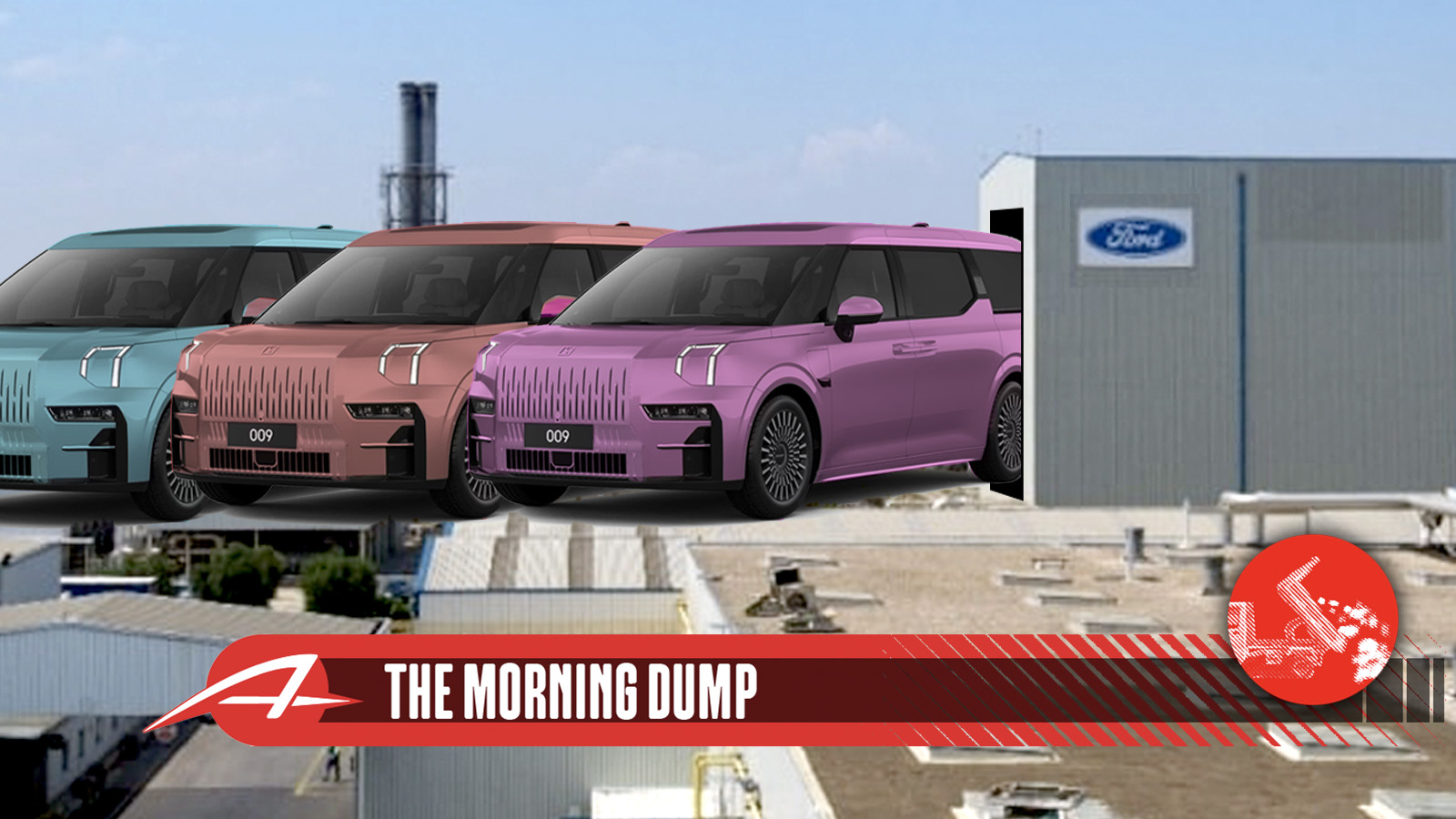
Rumors and reports have recently connected Ford to various Chinese automakers and suppliers. While nothing has been absolutely confirmed, there’s been enough heat around this idea that if you put a pot on top of it, you could boil enough crawfish to serve the entire World Famed Grambling State University Tiger Marching Band.
Yesterday, I mentioned that BYD was stumbling in China but doing better than Tesla in Europe. New data shows that Tesla is now performing a little better in China, whereas BYD is cleaning up in Europe.


Toyota has a plan, and that plan is to make way more hybrids. This is a good plan. I like this plan. Uber is going to launch its robotaxi business in various cities, and one of them is Houston. Good luck!
Ford Has Needs And China Has Expertise

Ford does not have a great track record of making deals work with Chinese suppliers and companies outside of China itself. The automaker has been trying to build an EV battery plant with China’s CATL for what feels like 900 years. The spectre of a Chinese company in the United States has created all sorts of political problems, with the Ford-CATL plant initially planned for Virginia before the governor nixed the idea. The companies then tried to move production to Michigan, but that turned into a political quagmire of its own.
For now, it seems like the Michigan plant will exist, but it’s taken so long that the facility is pivoting to energy storage systems.
This hasn’t stopped Ford from having lots of conversations with Chinese automakers for… something. There was a rumor about Ford and Xiaomi, although Xiaomi smacked that down. Then the Wall Street Journal talked up Ford and BYD working out a battery deal for Ford hybrids.
The big one came this morning, with Reuters reporting that Ford is in talks with Geely over a deal that could potentially see Geely utilizing Ford production capacity in Europe to build cars there. Where? The sense seems to be Ford’s Valencia plant, which currently builds the Kuga but, so far as I can tell, has no plan for what’s next other than a vague notion that it could be electric.
That Geely could want production capacity in Europe and would utilize existing infrastructure makes perfect sense. While Europe has lowered tariffs slightly on Chinese-built cars to placate the Chinese government, it’s still cheaper for Chinese automakers to localize production in Europe.
But what does Ford get out of all of this? Here’s what Reuters is reporting:
A deal could help Ford in its race to catch up with global competitors in areas like connected-vehicle technology and autonomy, a priority for Tesla, and a major focus for Chinese automakers. Ford CEO Jim Farley has been vocal about the need for his company to close a competitive gap with China.
In an interview at the Aspen Ideas Festival last year, Farley called China’s global lead in electric vehicles and connected-vehicle technology “the most humbling thing I have ever seen.”
He also responded to questions about whether U.S. President Donald Trump would nix a potential joint venture between Ford and a Chinese automaker.
“I don’t think so,” Farley said. “I think as long as it has the right guardrails and we think about it the right way, no, I’ve found openness throughout the government to do this, because I think they know it’s required.”
Jim Farley was vocal about loving his Xiaomi and Geely, which bought Volvo from Ford, has had a great year in China. Clearly, in that hyper-competitive market, Geely has some things figured out. After blowing nearly $20 billion developing EVs that it decided to shelve (and billions on Argo AI for self-driving cars), Ford would probably benefit from a shortcut to competitiveness that didn’t involve a huge capital outlay.
There will probably be a lot more of this coming as the traditional mix of automakers in Europe fundamentally doesn’t need the production capacity they have, while European governments still need those jobs.
Leapmotor is doing this by taking over existing Stellantis plants (although Stellantis now owns Leapmotor, so it’s a little different), and it wouldn’t surprise me to see VW transfer a few factories to a Chinese automaker. Chery is in talks with Jaguar to build cars in England using an existing JLR facility.
Solve two problems at once! Also, maybe create some new ones.
Tesla And BYD Continue Their Freaky Friday Market Swap
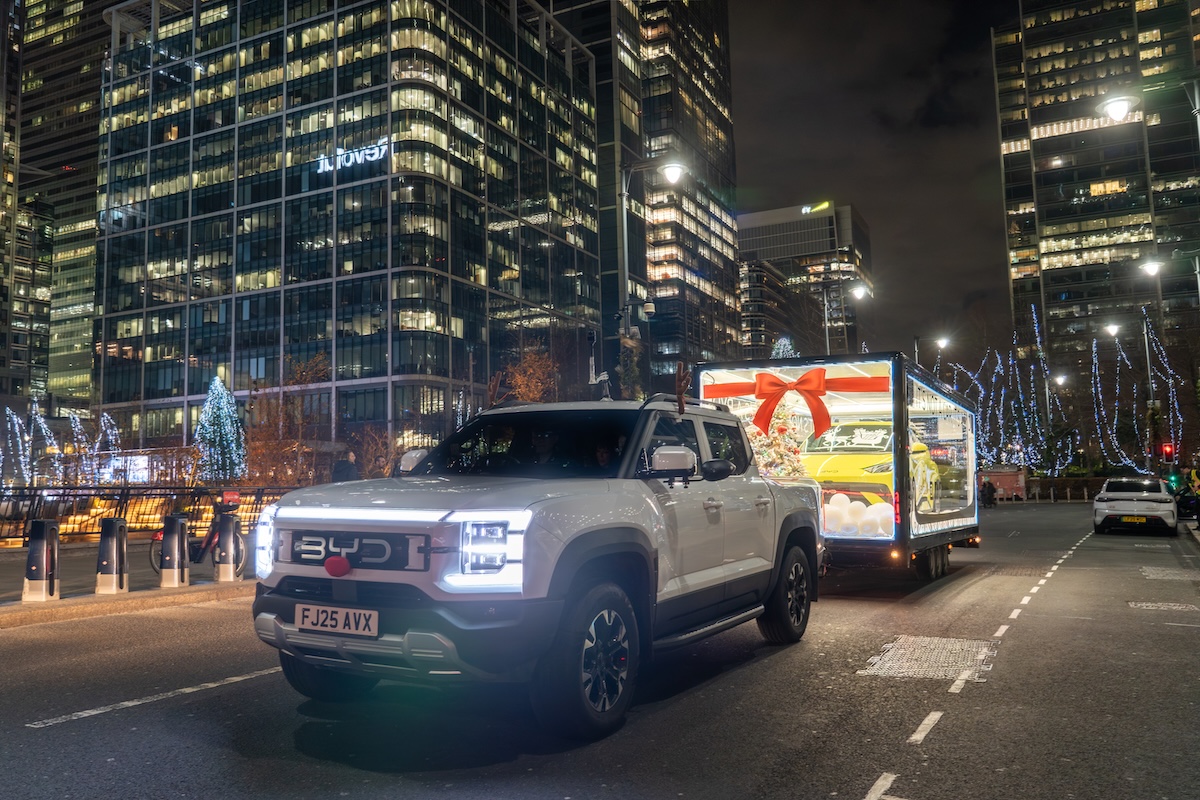
Literally yesterday, I was writing about how Tesla was struggling in Europe while BYD was having a tough January in China. Turnabout is fair play, as Tesla saw its deliveries rise in China by about 9% year-over-year. That’s not bad, and the growth was in the face of an otherwise weak market.
How did it pull this off? As CNEvPost points out, there was a cost to this:
To counter January’s weakness, Tesla launched an unprecedented low-interest financing plan in China on January 6, offering up to 7-year terms for all locally produced vehicles — becoming the first automaker to provide such extended financing in the market.
A 7-year low-interest loan is quite something.
In Germany, at least, Tesla continues to stumble, and BYD continues to grow. According to the German government, Tesla moved 1,301 cars, a slight increase from a miserable January the year before. BYD, however, was up 1,018%, selling more than twice the number of vehicles that Tesla did.
Same as it ever was.
Toyota To Up Hybrid Production By 30%
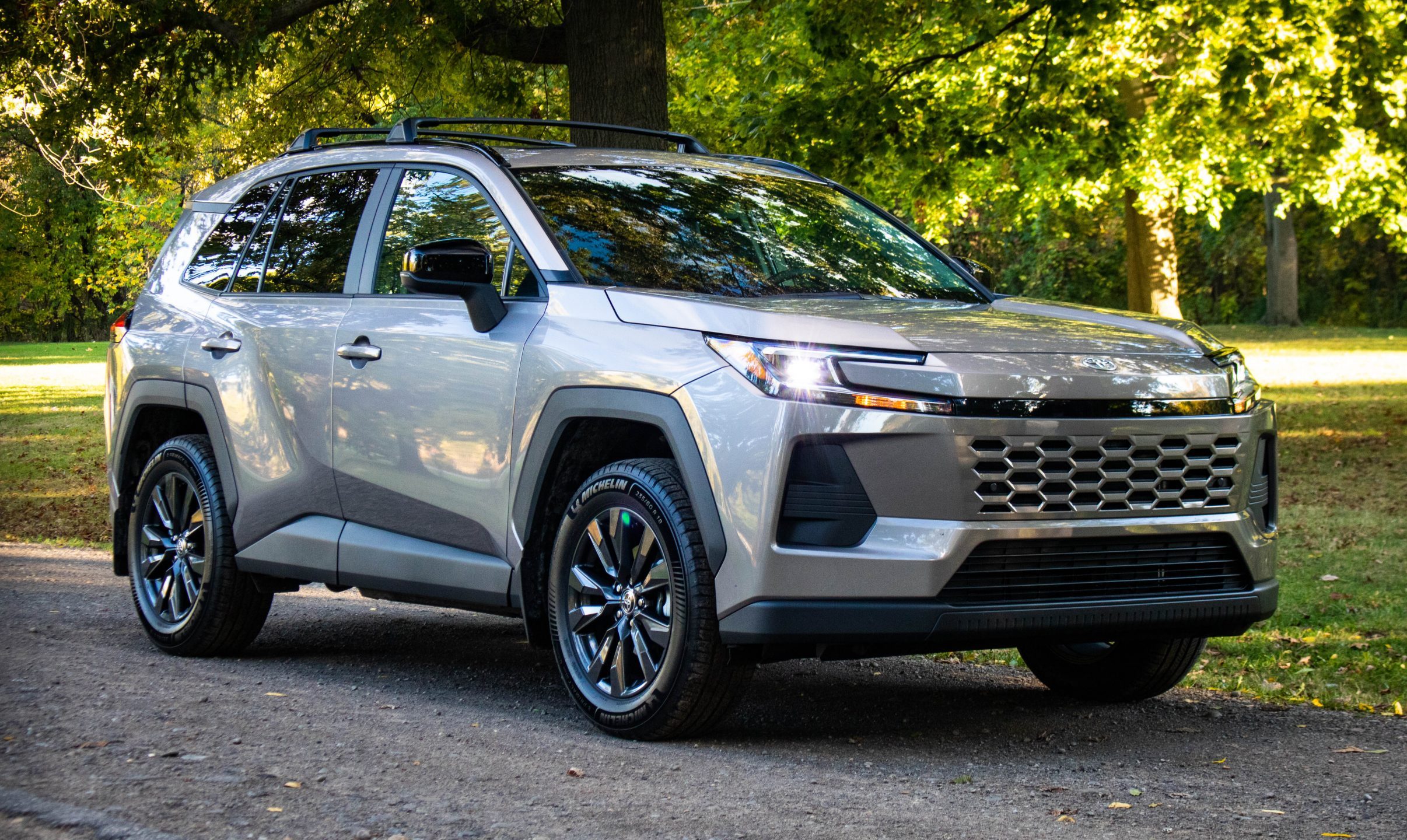
It’s no secret that the secret to Toyota’s success is hybrids. While the automaker was slow to develop electric cars, it never let up on building hybrids. Now it’s expanding its hybrid-building plans.
The world’s biggest carmaker by sales expects to produce 6.7 million hybrid vehicles globally in two years’ time, up from the planned 5 million hybrid and plug-in hybrids in 2026, according to suppliers familiar with Toyota’s plans.
The roughly 30% increase compares with a forecast 10% rise in its overall output and would mean hybrids rising from 50% to around 60% of the 11.3 million cars Toyota expects to make globally in 2028.
Expect that a lot of these will be made and sold in the United States.
Uber’s Robotaxi Is Coming To Houston
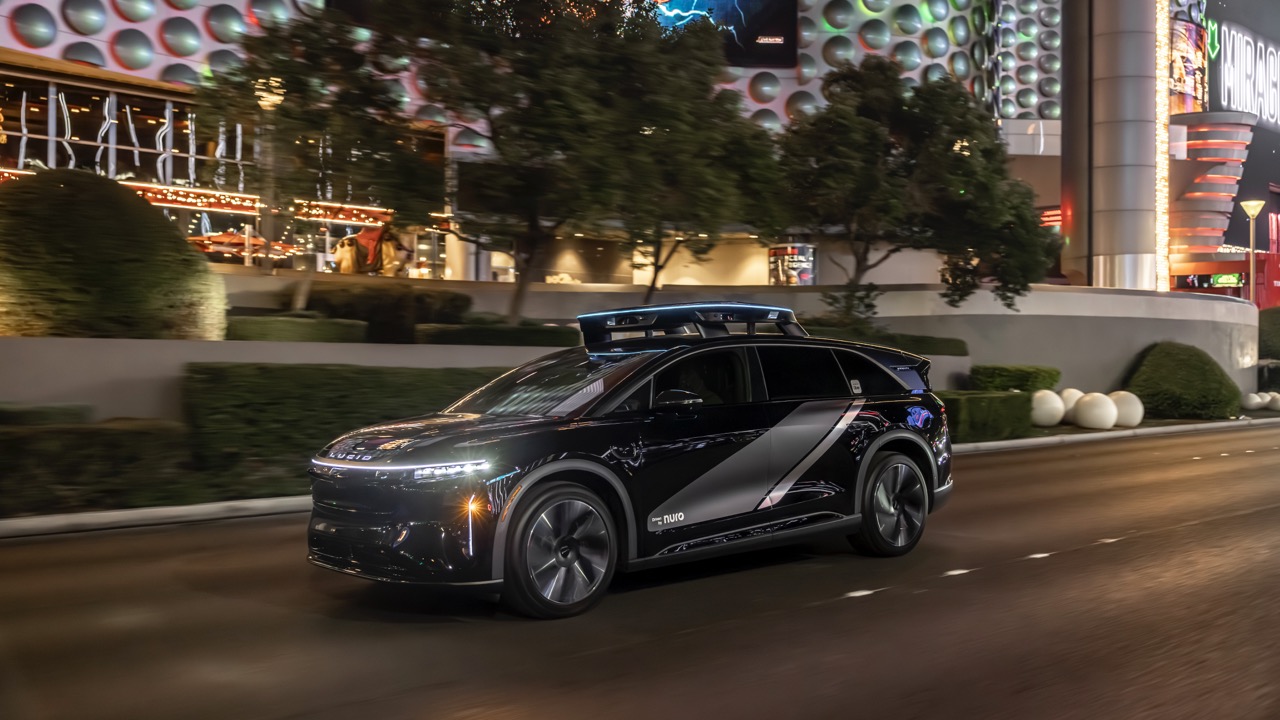
Uber is expanding its robotaxi business and, in addition to Hong Kong and Zurich, the company is coming to Houston. More so than San Francisco or Austin, just the wild weather swings alone are going to be quite the challenge.
Which car, though? That’s my question. As Bloomberg reports, it’s not yet clear:
Uber plans to make driverless cars one of its key growth areas and aims to offer driverless vehicles in more than 10 markets globally by the end of 2026.
The company didn’t disclose specific details on exactly when the services would launch or which technology providers it will partner with, but a spokesperson said it will be with previously publicized partners.
The options are probably the ID.Buzz or Lucid Gravity, with my money on the Lucid.
What I’m Listening To While Writing TMD
Fun fact about me: if I hear”Neon Moon” by Brooks & Dunn, I have to listen to the whole song. Man’s gotta have a code.
The Big Question
It doesn’t sound like Ford is going to get a rebadged Geely, but it’s not out of the question. What’s the best captive import ever?
Top photo: Ford/Zeekr




About time Toyota increased hybrid production. Wanted to buy the redesigned Prius but at the time none were to found without a deposit on the more expensive model which was less efficient due to the up-sized wheels. And of course the dealer mark up.
The first two sections of this TMD just reinforce why it’s pointless to trust any media outlets
Ford/Mercury Capri, 1970-1978.
As a resident of Houston for 25 years, my best guess is Uber wanted to stress test their robotaxis Thunderdome style.
No kidding! I HATED driving into Houston from Beaumont, when I lived there.
Houston has it all. Rough pavement, peculiar intersections and some absolutely bonkers drivers.
I don’t miss it.
In the end, it’s really sad that the company that invented the auto industry has to get “expertise” from ones that have only existed in this century.
In an interview at the Aspen Ideas Festival last year, Farley called China’s global lead in electric vehicles and connected-vehicle technology “the most humbling thing I have ever seen.”
Might be biased as I own one. Holden Monaro rebadged GTO of 2004-06.
I like your car a lot and I love the interior.
What do you like about the interior? A coworker had one, and I distinctly remember the interior seeming about 1-2 generations behind its competitors, and the radio being indecipherable at a glance and located where the climate controls should have been.
I know taste is relative, but I thought it was nicely styled and the seats were very comfortable. At the time it was well above most Pontiac interiors. I’ll admit that the volume knob on the wrong side of the radio was silly.
I’m not sure Ford needs any other Chinese company but catl. They a huge supplier to alot of the Chinese companies sans byd and a few others. Xpeng could be an interesting one though especially as their vans are being used by some ride-sharing in the US already. He has invested but Ford and VW are buds so probably a non issue.
All the 70s mini trucks I think of fondly the tie up with the big 3 and Japanese brand they owned or invested in. Courier, luv, d50. Of course then the 80s and 90s small vehicles like the geo line and the fiesta.
You still need software to best utilize the battery though.
You need power electronics and motors and controllers some kind of bus or network. Sure software is part of it. Alot of the smaller Chinese OEMs go to large suppliers much like all other oems us suppliers. There sre some great rtos out there from different Chinese suppliers. Ford has a software development teams and labs. Catl has software development and apis as well as ai battery monitoring. It’s really a nonissue. Ford already has the mach e and lighting development. They could go more to software defined controller like Rivian and some of the Chinese are doing but don’t have to.
Best captive import? Geo Tracker, obviously!
Conquest TSI is still my favorite from a visual standpoint, though I had the Eagle Talon and a TSi AWD version of that was pretty decent all around. The Stealth RT Turbo was also pretty desirable back in the day. I would probably say the AWD , Manual only 300HP Stealth is the best all arounder here.
What’s the best captive import ever?
I don’t know that I would say it was the best, but I was very fond of the Saab 9-2X Aero. I miss my old WRX wagon, and would love to have one of these more subdued and mature versions now.
As long as it was the manual version of course. I was surprised how much turbo lag there was in the then new Saabaru I test drove.
Manual all the way! The EJ205 had a pretty lousy stock map, but they could really be woken up with a reflash and a few bolt ons! Even that little td04 could become pretty spunky.
I don’t know whether I’d call it “the best” but I’d really like a Saab-Lancia 600.
Best captive import, Merkur XR4Ti followed by Dodge Stealth R/T and the Chevy/Pontiac Holdens
Yes, obviously. Merkur XR4Ti is the correct answer.
I was reading through to make sure the correct answer was here. I’m old enough to want the Capri on there from before the XR4Ti. Solid list.
Best captive import ever? No contest, the Chrysler Conquest TSi (Mitsubishi Starion ESI-R). Of course, I’m biased since I learned to drive in one and have owned 3.
Has there been any deeply researched pieces about why China is so far ahead on EVs and affordability?
I’ve heard the answers from the peanut gallery such as:
The Chinese govt has heavily subsidized the industry.
The company stole our ways of doing things and did them better.
Worker payroll is too expensive here where people work for slave wages in China.
Regulations
US Manufacturers are bloated pigs that are too high on truck margins.
I’m sure I’m missing some scapegoat but Id like to read something that definitively shows what the reason is.
You forgot “dumping” That’s what they told us was why Toyota, Honda and Nissan curb stomped the Big 3 in the 80s and 90s.
Or, “The Chinese are intentionally losing money to build up a monopolistic market share.”
AH yes, I did forget those two.
Why can’t all the things in your list actually be the real reasons?
It’s nice to think that issues have one simple answer (“I’ll fix it on day one!”) but often it is a collection of small things throughout a complex system (“Nobody knew healthcare was so complicated!”).
I am not really saying those aren’t the reason. It’s just that people have carved those out as their definite answers and I haven’t actually read any reporting on if any of it is true.
Agreed (multiple answers listed)
+ I would add, 1st, 2nd and 3rd tier auto suppliers are all located geographically close to each other at the direction of the CCP, i.e. it is by intentional design.
This is a pretty well known fact in China. In fact the Chinese federal govt. has decreed different city regions for different types of industries.
1 large city to lead for textiles, another for consumer electronics, another for auto manufacturing and auto suppliers, etc…
It’s obvious we’re not getting the full picture of how very far ahead China is of the rest of the world technologically. Could the “West” be engaging in soft censorship? (Yes.)