

For all the sturm und drang of reporting on electric car development this year, the market hit a quarterly record in the United States, and overall sales were basically flat year-over-year. Will 2026 be a disaster? I tend to think it won’t be.
At the very least, 2026 will eventually test a theory I espouse often in The Morning Dump, which is that there are EV buyers who are not being well-served by the market and will appear once there are more affordable vehicles. Some of those vehicles are coming, and in an environment with far fewer incentives, which will give us clearer data.


There’s a way to look at Stellantis as its own mad science experiment, and the data isn’t great. The new chief scientist is saying a lot of the right things, although it doesn’t sound like he’s going to change many of the variables just yet. The opposite of Stellantis might be Honda, which is a company with few brands that carefully works its way into new areas, like sport. Honda’s job is sport.
And, to wrap it all up, GM CEO Mary Barra doesn’t think people will plug in their plug-in hybrids.
Better EVs Are Coming

With the cancellation of the IRA tax credit for EVs, the market somewhat artificially expanded in Q3 and then predictably crashed in Q4. Overall? EV sales were down about 2% from 2024, which isn’t that terrible.
A lot of this decline was led by Tesla, which saw a 7% drop year-over-year, although it still makes up almost half of the EV market. GM was probably the biggest winner, growing 48%. The brand also has a range of vehicles, from the affordable Equinox all the way up to the mega expensive Cellestiq.
What will the market look like once the push-and-pull of the tax credit goes away? EV buyers are extremely loyal, so most EV buyers going back into the market are probably going to buy another one.
My contention has been that more affordable EVs will bring more buyers, but the caveat there is that they have to be from the right brands. The Equinox EV is great if people give it a chance. It’s a Chevy, so that’s a non-starter for some people. It’s also still slightly pricey without the tax credit for what you get.
“2025 unfolded largely as anticipated, with changes to federal EV incentives reshaping the demand patterns that drove record Q3 sales,” said Stephanie Valdez Streaty, director of Industry Insights at Cox Automotive. “Rather than signaling a retreat from electrification, this shift marks a structural transition toward a market increasingly driven by consumer choice. While 2026 will bring challenges, momentum remains grounded in market maturation: expanding model availability across price points, improving charging reliability, and continued advances in battery performance and cost.”
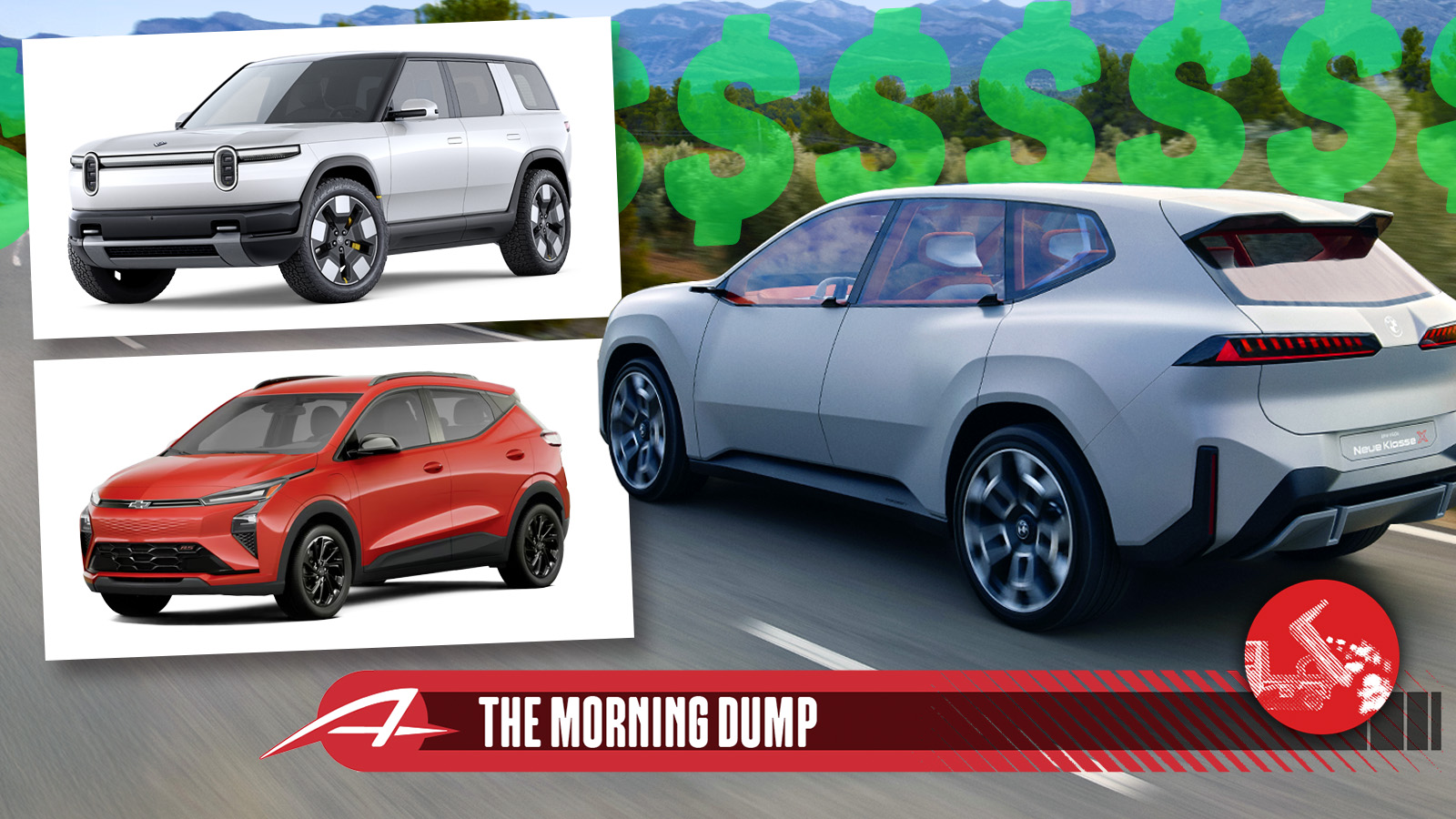
This year, the market is going to get fewer expensive two-row crossovers and more interesting cars. There’s the return of the Chevy Bolt, which starts below $30,000 without the credit. The new Leaf is a little more expensive, but it’s good. The BMW iX3 is going to slot in lower than BMW’s other popular EV offerings, and do so with 400 miles of range.
While I’m desperate to try the Rivian R3 when it launches, I do think the Rivian R2 might be a nice place for people considering a gas-powered or hybrid two-row crossover. At $45,000ish it seems like a good deal.
While I’m optimistic, that optimism is qualified a bit. I don’t think EVs will increase share or even beat 2025. I see a relatively flat year, which is consistent with the market overall. I do see hybrids taking a greater share, but mostly from ICE vehicles and not EVs.
The market is maturing and getting rid of vehicles that exist merely to have an EV option, like the Acura ZDX, and are being replaced by 2nd or 3rd generation EVs that are probably better for more people.
Stellantis Will Probably Stick Together

I should probably start using a different photo of Stellantis CEO Antonio Filosa, mostly because MSN always flags it as being “violent.” It amuses me, so I won’t replace it until I find a new one.
Filosa has a tough job, and one of the challenges is that Stellantis has so many brands. All the brands. Should Stellantis kill some brands? It’s a discussion we’ve had, but it sounds like Filosa isn’t there yet, at least according to this interview in Bloomberg from the Detroit Auto Show, which may or may not have happened yesterday.
“We want to stay together,” he said Wednesday. “It’s a good combination.”
The comments are the latest indication that Stellantis’ leaders plan to largely continue the company’s current construction, formed through the 2021 merger of Fiat Chrysler and France’s PSA Group that created a portfolio of 14 brands.
Stellantis Chairman John Elkann similarly downplayed a potential breakup last February, saying the carmaker’s global reach and sale in major markets is a “big strength.”
Filosa is focused on turning sales around in the United States and fixing the mess the last guy made, so perhaps chucking out brands isn’t the best first step. Viva Lancia!
Honda Will Have A Sporty Version Of Most Of Its Cars
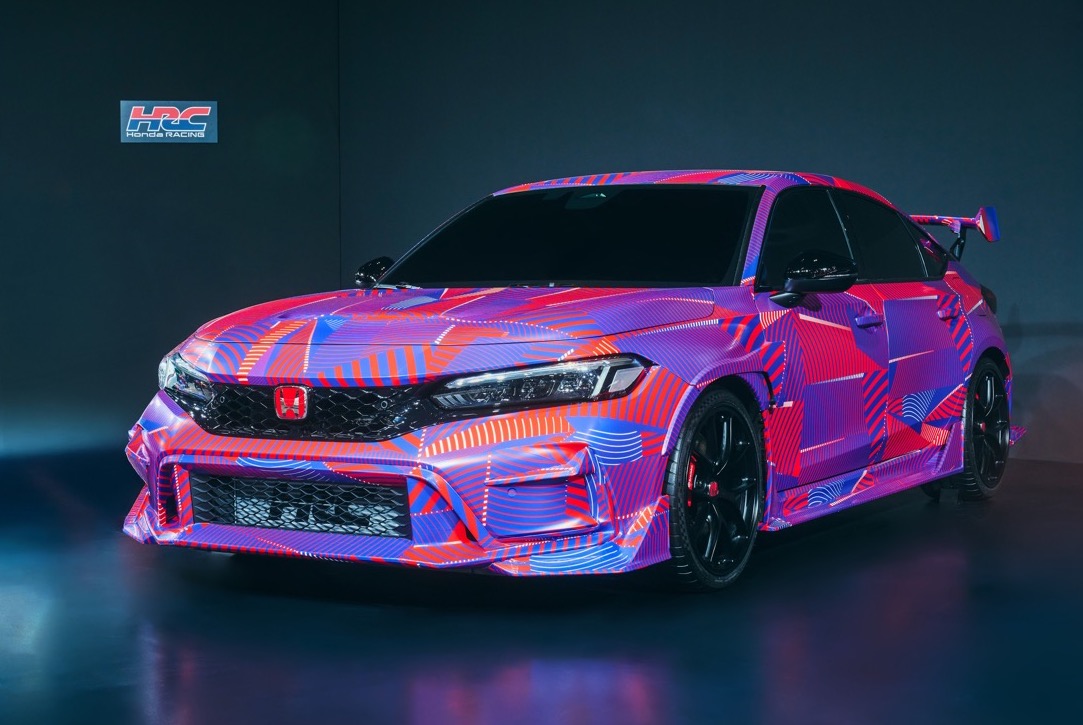
The Tokyo Auto Salon last week, and Honda announced that it was introducing a “SportLine” trim and “TrailLine” trim for basically everything. To clarify, “Sport Line” for the cars and “Trail Line” for the crossovers, although it would be great if Honda swapped those (Trail Line Accord?). This is the middle option in terms of performance, seemingly similar to Audi’s S-Line.
Based on Honda Sports DNA, Honda will expand its lineup of more exciting sport-type models, for both on-road and off-road driving. In addition, as the key pillar of its initiative to further enhance its sport-type model lineup, Honda will introduce HRC-spec models for a wider range of production models by leveraging technologies HRC has amassed through racing activities and feedback from its race drivers.
Honda has always been a company that loves motorsports, which is endearing. What’s more interesting to me is the HRC versions, as mentioned in this Automotive News article:
Honda’s upcoming TrailSport HRC offerings are expected to be priced higher than their standard-trim counterparts, spokesman Yuzo Mori said.
The HRC trim builds upon the TrailSport grades already offered in the U.S. on such nameplates as the Passport and CR-V crossovers, as well as the Ridgeline pickup.
TrailSport HRC offerings will incorporate sporty design cues and technologies amassed through Honda’s racing activities to differentiate them from existing TrailSport trims, Honda said.
What would a TrailSport HRC HR-V even do?

I don’t know, but I’m curious.
Mary Barra Doesn’t Think People Plug In Plug-Ins

I feel like David and I are always getting into arguments with our peers over the concept of vehicles with a gas engine and battery pack. Basically, one side thinks that no one plugs them in, and the other side thinks they do, but a lack of data means none of us know for sure.
The reality is probably somewhere in between and is likely highly dependent on the vehicle. Do I think Wrangler 4Xe owners are plugging in regularly? I doubt it. Are people who buy a Mercedes or BMW plug-in charging at home? Probably, yes.
There is some portion of the pro-EV crowd that’s still angry that their rosy projections for EV adoption turned out to be wrong, and this makes them lash out at hybrids, EREVs, and PHEVs. In fairness to them, the data on PHEV usage is hard to come by, and the fact that automakers are not anxious to share isn’t a good sign.
As reported by InsideEVs, GM CEO Mary Barra isn’t that keen on them either:
“What we also know today with plug-in hybrids is that most people don’t plug them in,” she said. “So that’s why we’re trying to be very thoughtful about what we do from a hybrid and a plug-in hybrid perspective.”
That’s kind of a bummer because vehicles like the Equinox Plus that GM sells in China are interesting. [Ed Note: I wouldn’t be surprised if people didn’t plug in their PHEVs (though I’m not convinced they don’t), as America’s PHEVs aren’t good enough. -DT].
What I’m Listening To While Writing TMD
If you are not a younger Millennial or a GenZer or whatever, you may have missed all of the Geese discourse. What you need to know is that it’s a rock band fronted by a guy named Cameron Winter, who is both handsome and talented, which means the Internet loves him. He’s got a sort of Rufus Wainwright thing to him as well that sounds a little different than what’s out there now. “Au Pays du Cocaine” is a good entry into the world of Geese.
The Big Question
Will people plug-in EREVs, which offer much more electric range than current PHEVs? [Ed Note: And to add to that question: If they don’t like plugging in their EREVs for whatever reason, would these customers have been happy with a BEV that has to be plugged in? -DT]
Top photo: BMW, Rivian, GM, depositphotos.com





My neighborhood is being slowly colonized by PHEV RAV4s (and the occasional PHEV Lexus 350), and all of my neighbors plug theirs in at night. Can’t imagine the sense of having a plug-in hybrid and not making use of the battery capability; it’d be leaving money on the table.
I have owned 4 PHEVs, and every single one of them has been plugged in nightly. Maybe I am an outlier, but I doubt it.
I would guess that roughly 99+% of the time my 2017 Volt has spent at home over the course of the last 9 years, it has spent plugged in.
Assuming EREVs manage to retail at the same price as pure gas cars, I think they’ll be viewed (or marketed) as normal hybrids, just even more efficient. The latest crop of EREVs don’t really impose much of a performance penalty at low battery levels, so I’d say a significant number of EREV driver’s wont bother at all with charging. Maybe once in a while, when there just so happens to be a DCFC station at their destination.
Battery tech has finally reached the point where even low capacity packs (10-20kWh) at low state-of-charges can provide enough power to satisfy EV powertrains (with motor power in the hundred-plus kW range). My EREV comes with a 28kWh LFP pack feeding a 160kW motor; it does 0-60 in 7ish seconds at 100% SoC. At the lowest allowed SoC of 15%, the 1.5L N/A engine is providing roughly 35-50kW during acceleration, and 0-60 can still be done in 9ish seconds. I think that’s an acceptable performance hit for the average commuter, and it’s completely technically feasible to keep the acceleration discrepancy at a minimum (turbocharging, higher SoC limits, higher power density LFP packs, better thermal management at low temps and SoCs). I’m certainly at peace with the performance hit; not having an AT gearbox means one less complex part to go wrong down the road. To me if it’s not a manual, it better be electrified!
If people have a place to plug in their phev then they probably will especially if it’s cost effective. EVSE have gotten so cheap and there are effective and cheap switches for power sharing with a split phase circuit. I suppose many people have access to a 120 already that would work ok for many phev. Could be a lot of retrofits where it’s cheap and easy.
I think what studies are out there, prove that people don’t.
Weren’t most those studies from the UK and Europe where a significant portion is company cars where the company gives you a gas card, but not your home electricity?
Yes, and I belive most didn’t have much charging access other then maybe a parking garage at work. or other public or semi public access. Just mainly phev fleet data with gas cards. But the big bev people always hype it.
Here’s a US one; only 65% (which is more than I thought, but still less than I would expect) charge at home.
https://csiflabs.cs.ucdavis.edu/~cjnitta/pubs/2020_03.pdf
For the record, I plug in my PHEV on a regular basis (like when it’s down to its last few km). I rented a Wrangler PHEV a couple years back with about 7k on the clock and I was the first person to plug it in. Ever. (I knew because I had to pull the cord out of the sealed plastic bag). So there’s that.
Rental is a ridiculous usecase for PHEV. I don’t know why the rental company would spend the extra.
I had a Wrangler 4xE for a rental a few months ago and I charged it at a public charging station without using the car’s charging cord. I looked, and the charging cord wasn’t in the Jeep at all. When I picked it up, the battery was completely empty, and I wanted to check out how it drove on electricity, so found a charging station with the correct cord at a nearby restaurant.
A PHEV would be perfect for me. I have a garage with wall outlets. When I’m not driving 700+ miles down to California, and then back, I probably wouldn’t burn any gas to speak of running errands around town. And the hydro, wind and even solar power in the PNW is relatively inexpensive. And green of course. So, yes. I would be plugging it in.
Just about any time our Pacifica is in our driveway it’s plugged in. This time of year it’s less important since its cold enough that the engine still turns on to provide heat, but a lot of the tractive energy still comes from the wall.
I’m also bullish on EVs and think the current headwinds are overestimated – and automakers will regret the costly pullback (just as they’re regretting coming out of the gates too hot).
What we often miss is the concept of a tipping point. Once a technology reaches a tipping point where it’s both better and cheaper than the existing tech, adoption tends to happen very quickly.
In certain segments, I think we’re past the tipping point – others may take more time but automakers better be ready.
I think the new Bolt and Leaf are getting there for making cheap EVs better than cheap ICE vehicles, kinda like VW was saying about not making any new ICE compacts.
They’ve got decent range and are gonna blow any gas car away for reliability and cost of ownership unless you’re somewhere with really expensive electricity.
“Trail Line“
That’s the path that intersects whatever you would hit if you lift off the throttle in a 60s-70s Porsche, right?
As in, “I got a little over enthusiastic this afternoon and the trail line intersected that sign on the on-ramp that says no pedestrians, bicyclists, or horseback riders on the interstate.”
Is it just me or would cars look better if they would sell them to the public with those camouflage wraps?
Not plugging in a PHEV is a bit of a waste, but the owner will still get basically all the advantages of a regular hybrid and will probably be happy despite paying for and lugging around a bigger battery than they needed. Folks who don’t plug in their EREV are going to be very disappointed when they realize their fuel economy is no better (and likely worse) than if they had just bought a regular ICE vehicle. Any manufacturer serious about selling EREVs should be equally serious about educating customers that if they can’t charge them on the regular they will probably not be happy.
Back when we bought our PHEV the tax credit was still in play and there was a sales tax break from the state. With that factored in the net cost was lower than the base ICE powertrain. That said it is plugged in every time it gets home because we wanted a PHEV.
I think they like plugging in at HEB.
Does HEB offer free or discounted charging? They are a great chain and unlike DQ, “one of the things I liked about Texas.” Back in 2018, after Harvey, they ran out of regular gas and sold mid-grade and premium for the same price regular had been. I would rank them right up there with Wegman’s in the NE. Excellent produce and they have almost anything you might need, even for an exotic entree.
Not sure. I live in the NE. I was making light of DT’s hijacking the question with all the alphabets. I wanted to add more! I lived through Hurricane Harvey and also bought premium for regular price.
I was living in Beaumont during Harvey and we got 26″ in one day. I had to go out and drain a few inches out of our salt-water pool periodically to keep it from overflowing and poisoning the landscaping.
Having had 3 full BEVs and 2 EREVs(Outlander phev and Volt), the difference in charging behavior is you have to plug in an EREV just about, if not everyday. A full BEV depending on commute you can charge only every few days or even once a week like filling up a regular car.
Which means if you don’t have a place to charge every day, then no, you probably won’t be charging your EREV. GM also had tons of data from when they had the Volts reporting in, may be part of the reason they went full BEV when they had some of the best PHEVs available for not terrible prices.
The Outlander PHEV and Volt are both PHEVs, not EREVs. They can both drive the wheels directly from their ICE motors. EREVs cannot do that and therefore suffer a much bigger efficiency hit if you treat them like a regular hybrid. If you treat a PHEV like a regular hybrid, you will get near hybrid gas mileage. If you treat an EREV like a regular hybrid, you will be lucky to get ICE gas mileage. For an EREV to make any sense, the battery only range needs to approach that of a BEV and you need to be able to charge it regularly.
I agree that GM probably knows what they are talking about when it comes to how many people charge their PHEVs.
They can both operate as an EREV, both can be driven up to highway speeds on pure electric, and have a range of nearly 40 miles all electric, I would go for months with my Volt not using gas, and have only had the Outlander a couple months now, we’ve done some longer trips so have filled up a little more often but still the daily commute is all EV.
But again, I have to plug in every night to be ready for the next day, my wife drives our full BEV and she’s plugging in once a week. Obviously with a BEV you HAVE to plug in or else, but a PHEV and to that extent EREVs with shorter range require more discipline, and more accessible charging to get the most benefit. Otherwise it’s just a heavier hybrid not a lighter EV.
Being able to drive some distance EV only and being able to wall charge the battery does not make something an EREV. If you define it that way, it’s just another name for PHEV. An EREV does not have a mechanical connection between the ICE and the wheels. A PHEV does. Both generations of Volt can mechanically connect their ICE to the planetary transmission that drives the wheels. I know GM marketed them as EREVs, but really they were early PHEVs in terms of the current nomenclature for ICE/hybrid/EV vehicles. And the distinction makes a big difference in terms of their fuel economy when operating in hybrid mode.
I understand and agree with your points about plugging in every night. If I have a PHEV and it’s convenient to plug it in every night, I will. But if not, it’s still an efficient hybrid. If I have an EREV and I can’t keep it charged conveniently, I have a more expensive, heavier, much lower range version of an ICE (and ICE or worse efficiency), and I can’t imagine anyone being happy with that. It’s muuuuch worse than a ‘heavier hybrid’.
First gen Volt was EREV, the second was not.
1st Gen Volt can clutch it’s ICE to the planetary gearset that drives the wheels, so I disagree, it’s not an EREV either by current definitions. Both generations are PHEVs, and darn good ones at that.
But the engine is never the sole propulsion source. Even in when it is a propulsion source, the electric motor is the primary propulsion source and the engine is just supplementary/assistive.
We aren’t gonna need EVs once Trump starts WW3.
I don’t know, you think all the drilling and refining capability for gas is more resilient than solar panels in an off grid installation? Either way, I’m keeping my bike fixed up …
Will people plug-in EREVs, which offer much more electric range than current PHEVs?
I will say yes since that’s the whole point of them. It’s one thing to expect owners to plug in in for 5-10 miles of range (lookin at you 2012 Prius) EVERY SINGLE TIME. It’s another entirely to plug in for 120+ miles of range once every week or two.
This of course assumes:
1) They have somewhere to plug into
and
2) Electricity is cheaper than gas.
But if neither of these things is true they’d have bought a regular gas only hybrid, right?
Slam dunk on the today’s listen for TMD. As an early 80s millennial, I also appreciate all the Geese hype this year. Cameron Winter’s debut solo album also has a great track in “Love Takes Miles”.
I suspect this is a dumb question, but I’ll ask it anyway. Why is a PHEV better than a regular hybrid for people who don’t have access to free chargers? In other words, what difference does it make if the battery is charged by the plug in your house or by the gas engine in the car? You’re paying for both sources of energy and both sources of energy are likely (not always) dirty. I understand a PHEV has a more powerful and robust electric drivetrain and can go further on electric power, but it’s also a lot heavier (more brake dust) and takes more resources to produce.
Electricity can be cheaper than gas but of course YMMV. One has to factor in everything including charging losses, amortized costs, etc.
Cost per mile for most residential electricity customers is way cheaper than the same metric for gas/diesel. Especially with some of the longer range PHEVs offered, you can save substantial money by doing most of your driving off of grid power. It’s also significantly cleaner – even the dirtiest grid production is cleaner than a very clean fossil fuel vehicle.
If you aren’t plugging it in anywhere, PHEV makes no sense, and is almost always worse than just driving a standard hybrid. Also, brakes are a bit of a moot point – PHEVs typically have stronger motors, so they can regenerate more electricity from a typical stop than a hybrid can.
Your comment about whether it matters how you charge the hybrid battery reminds me of this post on a Mitsubishi phev forum about how this Uber driver maximizes his battery usage without ever plugging the car in.
Would you believe that I have a whole bunch of solar panels on the roof of my house? Not so dirty, eh? Also very cheap to use.
A PHEV is often a way better driving experience due to the big punchy electric motor which regular / non-plug-in hybrids lack.
This point gets lost in the discussion.
I’m not sure it matters whether people plug in their PHEVs or not. That would be up to the consumer who has already purchased the thing, so who cares?
Well the people who pay for the infrastructure to either charge or make gasoline available care, that’s anyone who drive, uses electricity, or consumes products they don’t grow on their own land.
Air breathers to a certain extent, so if you are a live of the land type you’re not getting a free ride either.
With the battery cell materials in a PHEV, you could make the battery cells for 5-10 conventional hybrids (non-plug-in). If somebody is not plugging in their PHEV, that’s not an intelligent use of those battery resources. Still, it’s their car and they can be kinda dumb about it if they want to.
I finally had to put gas in my 2023 Hyundai Tucson PHEV yesterday after 5894 miles in anticipation of a longer trip after nearly 21.5 months.
The advertised AER is only 31-33 miles so yeah let’s pretend that no one ever plugs in a PHEV.
The indicated gas only range was 26 miles remaining however it only took 9.2 something gallons out of the published capacity of 11.1 gallons so theoretically it should have gone further at rated, but when cold the turbo hybrid is far less efficient than the Atkinson Cycle powered 2.5L Ford Escape PHEV or even the regular AWD HEV.
I think the whole excessive increase in registration fees for PHEVs is ridiculous and far more punitive than the gas tax even though a similar sized vehicle driven by ICE only would pay less in registration and road taxes for the same amount of road usage.
If they wanted to actually be fair, the tax on a Suburban would be about 16x the tax on a Volt.
The EV tax isn’t about being fair though, it’s just a bunch of self righteous pricks wanting to get the perceived “others”
What’s bad too is my city charges a tax on electricity too, you get taxed twice. It’s been that way for over 20 years too.
I’m annoyed when my Volt engine comes on. I was annoyed when it forced me to use half a tank of fuel because it had been greater than 1 year since I filled the tank. The only reason I wouldn’t plug it is so I can use a little gas once in a while. One could argue that I would be better served with a cheap short range EV like a Leaf, however I have infrequent needs to drive further than the EV range. Yeah, I could get an EV with a big battery and fast charging capabilities…but the Volt was like $1800.
I should also clarify that the original owner of this car never plugged in and only had a PHEV to get the carpool lane sticker. I can tell this by looking at the lifetime fuel economy and the health of the battery. Lifetime fuel economy is <50 MPG and battery is still better than 30 miles EV range after 150,000 miles.
It’s wild the difference between gen1 and gen2 – in my 2012 I’d have the engine come on pretty frequently but in the 2017 the battery is so much bigger it almost never does, unless I’m driving way out of town.
but the Volt was like $1800
Gen1?
Gee, I’d run out and buy one this afternoon for $1800
Yeah Gen1. One of those things that popped up on facebook marketplace late afternoon, was local to me and I had $2K cash in the desk already from recently selling something. Has no rust but typical LA road rash on every panel. Well used but mechanically solid. I didn’t really need it, but always wanted one. I’ve been really happy with it.
I wanted to get the Gen 2 when they were coming out, but with the delay I ended up with an Impreza instead which is still my daily. Going to replace it with an EV soonish though. Don’t see getting another gas car, but I think a Gen 3 Volt would probably be a good fit for a lot of folks.
Good chance that more PHEV buyers will plug in over the next few years, since now anyone buying one is buying one because they WANT one, not because it was eligible for subsidies.
I for one am optimistic about the EV market because the glut of off-lease EVs coming down the pipeline is going to tank their values even farther than they’ve already fallen. It’s the only thing I can see on the horizon that will steer the crazy bizarro world used values back in the right direction, which in turn will help to bring new prices back in line. I don’t see all those buyers of heavily subsidized EVs replacing them with new $60-80k cars at turn-in time.