

For all the sturm und drang of reporting on electric car development this year, the market hit a quarterly record in the United States, and overall sales were basically flat year-over-year. Will 2026 be a disaster? I tend to think it won’t be.
At the very least, 2026 will eventually test a theory I espouse often in The Morning Dump, which is that there are EV buyers who are not being well-served by the market and will appear once there are more affordable vehicles. Some of those vehicles are coming, and in an environment with far fewer incentives, which will give us clearer data.


There’s a way to look at Stellantis as its own mad science experiment, and the data isn’t great. The new chief scientist is saying a lot of the right things, although it doesn’t sound like he’s going to change many of the variables just yet. The opposite of Stellantis might be Honda, which is a company with few brands that carefully works its way into new areas, like sport. Honda’s job is sport.
And, to wrap it all up, GM CEO Mary Barra doesn’t think people will plug in their plug-in hybrids.
Better EVs Are Coming

With the cancellation of the IRA tax credit for EVs, the market somewhat artificially expanded in Q3 and then predictably crashed in Q4. Overall? EV sales were down about 2% from 2024, which isn’t that terrible.
A lot of this decline was led by Tesla, which saw a 7% drop year-over-year, although it still makes up almost half of the EV market. GM was probably the biggest winner, growing 48%. The brand also has a range of vehicles, from the affordable Equinox all the way up to the mega expensive Cellestiq.
What will the market look like once the push-and-pull of the tax credit goes away? EV buyers are extremely loyal, so most EV buyers going back into the market are probably going to buy another one.
My contention has been that more affordable EVs will bring more buyers, but the caveat there is that they have to be from the right brands. The Equinox EV is great if people give it a chance. It’s a Chevy, so that’s a non-starter for some people. It’s also still slightly pricey without the tax credit for what you get.
“2025 unfolded largely as anticipated, with changes to federal EV incentives reshaping the demand patterns that drove record Q3 sales,” said Stephanie Valdez Streaty, director of Industry Insights at Cox Automotive. “Rather than signaling a retreat from electrification, this shift marks a structural transition toward a market increasingly driven by consumer choice. While 2026 will bring challenges, momentum remains grounded in market maturation: expanding model availability across price points, improving charging reliability, and continued advances in battery performance and cost.”
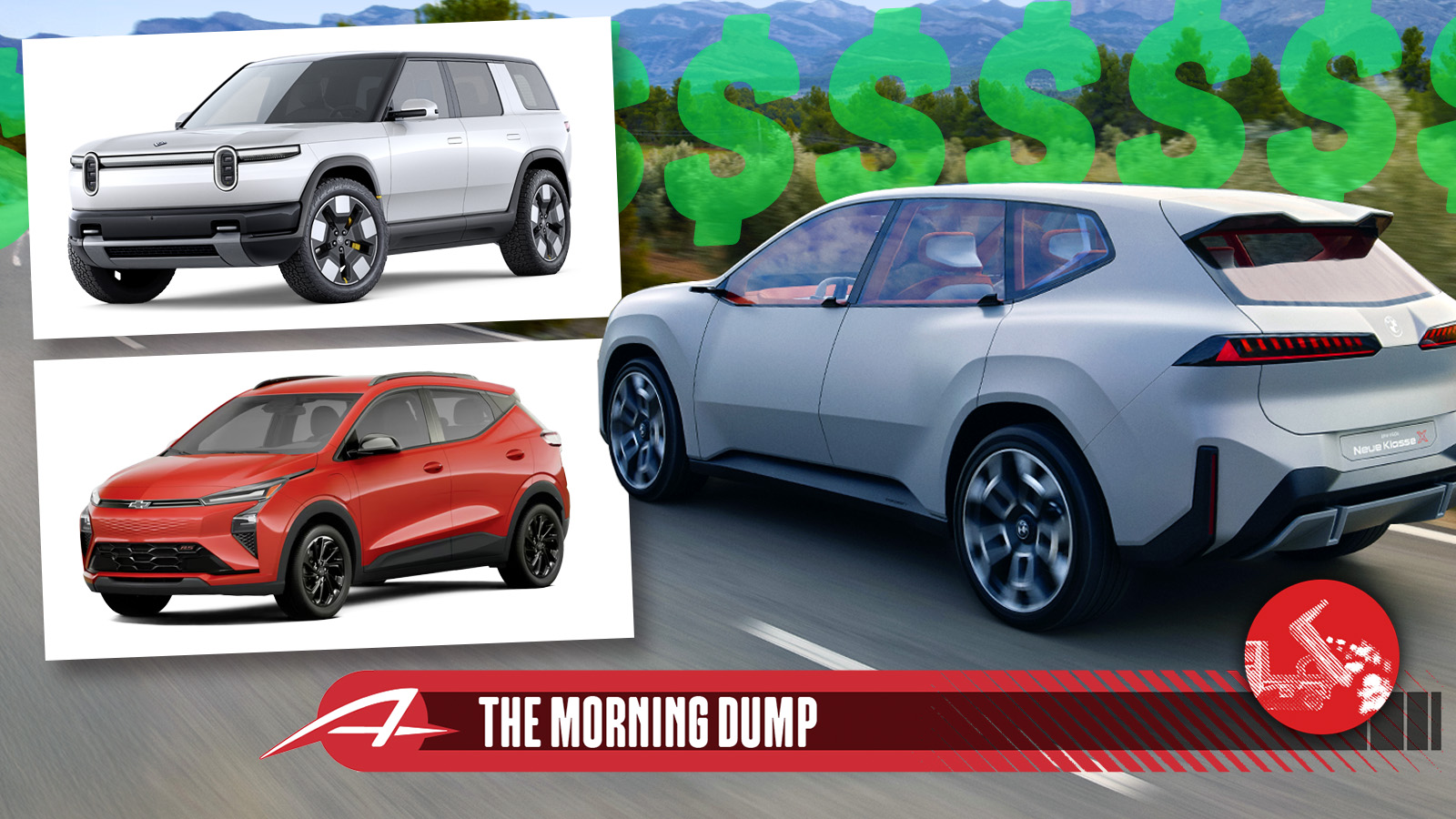
This year, the market is going to get fewer expensive two-row crossovers and more interesting cars. There’s the return of the Chevy Bolt, which starts below $30,000 without the credit. The new Leaf is a little more expensive, but it’s good. The BMW iX3 is going to slot in lower than BMW’s other popular EV offerings, and do so with 400 miles of range.
While I’m desperate to try the Rivian R3 when it launches, I do think the Rivian R2 might be a nice place for people considering a gas-powered or hybrid two-row crossover. At $45,000ish it seems like a good deal.
While I’m optimistic, that optimism is qualified a bit. I don’t think EVs will increase share or even beat 2025. I see a relatively flat year, which is consistent with the market overall. I do see hybrids taking a greater share, but mostly from ICE vehicles and not EVs.
The market is maturing and getting rid of vehicles that exist merely to have an EV option, like the Acura ZDX, and are being replaced by 2nd or 3rd generation EVs that are probably better for more people.
Stellantis Will Probably Stick Together

I should probably start using a different photo of Stellantis CEO Antonio Filosa, mostly because MSN always flags it as being “violent.” It amuses me, so I won’t replace it until I find a new one.
Filosa has a tough job, and one of the challenges is that Stellantis has so many brands. All the brands. Should Stellantis kill some brands? It’s a discussion we’ve had, but it sounds like Filosa isn’t there yet, at least according to this interview in Bloomberg from the Detroit Auto Show, which may or may not have happened yesterday.
“We want to stay together,” he said Wednesday. “It’s a good combination.”
The comments are the latest indication that Stellantis’ leaders plan to largely continue the company’s current construction, formed through the 2021 merger of Fiat Chrysler and France’s PSA Group that created a portfolio of 14 brands.
Stellantis Chairman John Elkann similarly downplayed a potential breakup last February, saying the carmaker’s global reach and sale in major markets is a “big strength.”
Filosa is focused on turning sales around in the United States and fixing the mess the last guy made, so perhaps chucking out brands isn’t the best first step. Viva Lancia!
Honda Will Have A Sporty Version Of Most Of Its Cars
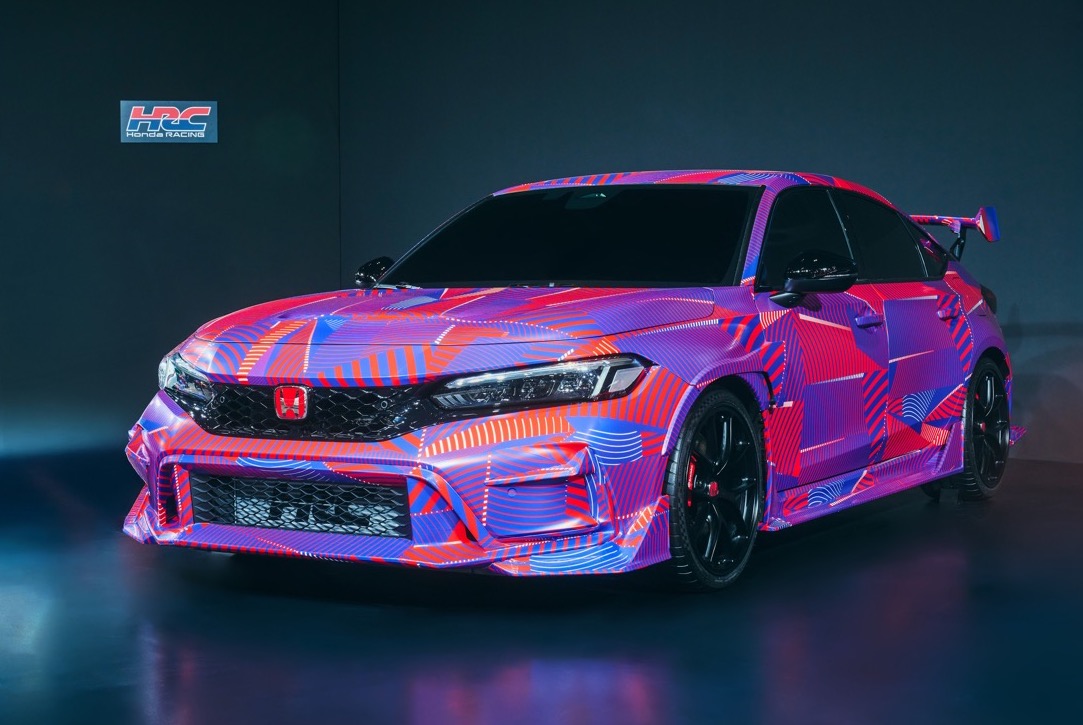
The Tokyo Auto Salon last week, and Honda announced that it was introducing a “SportLine” trim and “TrailLine” trim for basically everything. To clarify, “Sport Line” for the cars and “Trail Line” for the crossovers, although it would be great if Honda swapped those (Trail Line Accord?). This is the middle option in terms of performance, seemingly similar to Audi’s S-Line.
Based on Honda Sports DNA, Honda will expand its lineup of more exciting sport-type models, for both on-road and off-road driving. In addition, as the key pillar of its initiative to further enhance its sport-type model lineup, Honda will introduce HRC-spec models for a wider range of production models by leveraging technologies HRC has amassed through racing activities and feedback from its race drivers.
Honda has always been a company that loves motorsports, which is endearing. What’s more interesting to me is the HRC versions, as mentioned in this Automotive News article:
Honda’s upcoming TrailSport HRC offerings are expected to be priced higher than their standard-trim counterparts, spokesman Yuzo Mori said.
The HRC trim builds upon the TrailSport grades already offered in the U.S. on such nameplates as the Passport and CR-V crossovers, as well as the Ridgeline pickup.
TrailSport HRC offerings will incorporate sporty design cues and technologies amassed through Honda’s racing activities to differentiate them from existing TrailSport trims, Honda said.
What would a TrailSport HRC HR-V even do?

I don’t know, but I’m curious.
Mary Barra Doesn’t Think People Plug In Plug-Ins

I feel like David and I are always getting into arguments with our peers over the concept of vehicles with a gas engine and battery pack. Basically, one side thinks that no one plugs them in, and the other side thinks they do, but a lack of data means none of us know for sure.
The reality is probably somewhere in between and is likely highly dependent on the vehicle. Do I think Wrangler 4Xe owners are plugging in regularly? I doubt it. Are people who buy a Mercedes or BMW plug-in charging at home? Probably, yes.
There is some portion of the pro-EV crowd that’s still angry that their rosy projections for EV adoption turned out to be wrong, and this makes them lash out at hybrids, EREVs, and PHEVs. In fairness to them, the data on PHEV usage is hard to come by, and the fact that automakers are not anxious to share isn’t a good sign.
As reported by InsideEVs, GM CEO Mary Barra isn’t that keen on them either:
“What we also know today with plug-in hybrids is that most people don’t plug them in,” she said. “So that’s why we’re trying to be very thoughtful about what we do from a hybrid and a plug-in hybrid perspective.”
That’s kind of a bummer because vehicles like the Equinox Plus that GM sells in China are interesting. [Ed Note: I wouldn’t be surprised if people didn’t plug in their PHEVs (though I’m not convinced they don’t), as America’s PHEVs aren’t good enough. -DT].
What I’m Listening To While Writing TMD
If you are not a younger Millennial or a GenZer or whatever, you may have missed all of the Geese discourse. What you need to know is that it’s a rock band fronted by a guy named Cameron Winter, who is both handsome and talented, which means the Internet loves him. He’s got a sort of Rufus Wainwright thing to him as well that sounds a little different than what’s out there now. “Au Pays du Cocaine” is a good entry into the world of Geese.
The Big Question
Will people plug-in EREVs, which offer much more electric range than current PHEVs? [Ed Note: And to add to that question: If they don’t like plugging in their EREVs for whatever reason, would these customers have been happy with a BEV that has to be plugged in? -DT]
Top photo: BMW, Rivian, GM, depositphotos.com





As a recent purchaser of a Lexus PHEV, I don’t understand why someone would pay $$$ for a plug-in, and NOT plug it in. We’ve owned 2 EV and 2 Hybrids. Since we now travel by car vs motorhome, pure EV was out of the question. We have a Level 2 charger so… The Lexus gets around 40 miles pure EV and we live in a small town, For us, this is the ideal solution, albeit not cheap. We didn’t buy a PHEV for the economics. As our local electricity rate is around $.09 per KWH, the Lexus operates at about 2.5 cents per mile. Will we live long enough to make up the difference in purchase price between the standard hybrid and the plug-in? Nope!
If the Rivian R2 actually comes in on price, I think it would make for a really compelling vehicle for an enormous number of people. Obviously lots has been said about EVs, but I think there’s something to be said about an EV that isn’t weird and just nice, practical, and slightly off-road oriented. Not everyone wants to drive something that looks like the new Leaf.
Furthermore, I think Hardigree is spot on, consumers being brand snobby makes a big difference. Most people are smart enough to do the cost analysis; but if the cost analysis requires me to drive a Chevy I’ll just go get the RAV4 hybrid and be done with the matter.
Lastly, unless dealerships are being grossly misleading and intentionally selling Phevs as basic Hevs, I don’t buy that most Phev owners don’t plug in. If you’re going to spend the extra few thousand for the Phev, you made that decision for a reason.
In many cases, the reason has been a tax credit or a carpool lane sticker.
Don’t forget, the best selling PHEV, the sundry Jeeps, were actually cheaper than the equivalent non-PHEV version if you could take full advantage of the credit, or were leasing.
Though IMHO, in something that gets as appalling around town mileage as a Jeep, 20 or so miles of electons makes WAAAAAY more sense than being able to do 40 miles electrically in a Prius that get 5X better fuel economy anyway. It’s the same dumb math that made people think that the hybrid Tahoes were nothing to get excited about when actually they would save you a legit amount of money in urban driving. MPG is a crappy way of measuring relative efficiency.
Those are all really good points. I did not consider many of the points you raised.
Side note, there used to be a white Tahoe hybrid in the small bedroom community I grew up in. And for whatever reason, the extra body-matched aero-skirting looked really cool to a much younger me. I don’t think I’ve seen a Tahoe hybrid since.
Especially since most of those numbers are some garbage estimates that originate in the manufacturer’s figures, which can range from wishful thinking to full-out lies.
If we didn’t have regulatory capture of every single govt agency (on top of defunding and chipping away at their regulatory power), they should publish TEST results, instead of rubber-stamping OEM figures..
Why does it matter? You can pretty easily look at the specs of a vehicle and have a pretty damned good idea what it’s real-world efficiency is going to be in your particular driving, at least once you have owned a few cars. There really are very few outliers and surprises. And the driver matters more than the car does anyway.
I will argue that EPA mpg numbers are pretty close to the real life number. My 90’s car was off by multiple mpg. My cars from last decade are giving me real life results within 1mpg of their estimate.
If you want wishful thinking go look at China’s CLTC, what a lie that one is.
Last year I had a Subaru Forrester rental from SeaTac for a week, after noticing the abysmal fuel economy numbers I looked up the mpg on the fueleconomy.gov website, sure enough my real-world numbers were less than 2/3 than what they published there.
Pretty new car (2024 model), CVT (the most efficient trans type), just driving it around Seattle (city driving) and a trip up to Vancouver (hwy driving), no hooning (on a work trip with a slow, heavy, boring SUV).
At the same time I beat the posted economy numbers in my TDI by about 1/3, so it goes both ways.
I just can’t get past the headlight treatment of the Rivians.
I’ve heard this a lot, but I actually find the clean lines of the Rivian design language quite appealing.
To each their own. I don’t need or want anything that big anymore. Heck, my Accord clears my condo’s garage door opening by two inches on either side. If I navigate it properly. The door is on an alley and if it’s garbage or recycling day, there are bins to also navigate around. I’ve almost gotten to parking on the street on those days.
Solution to plugging-in the PHEV – add warning light and chime when battery is low. Like the Eddie Murphy sketch:
“Ding! Your Batt’ry is low, plug in MF”
All I can think of is Eurotrip’s e-mail sound:
*Ding*
“MAIL, MUTHAFUCKA”
The 2nd-gen Volt does a variation of this – the NVH on the gas engine’s kind of atrocious, and getting used to whisking along in silence makes it even worse to the point that it’s genuinely a bit irritating at anything under freeway speeds.
Not going to lie, that TrailSport HRC HR-V actually looks good. A vehicle that size with genuine offroad capability and ~30mpg would likely be a hit.
It could be the first legit competitor to the Crosstrek.
“genuine offroad capability” meaning occasional dirt roads or unplowed streets?
Rougher dirt roads, like the stuff people tend to take Subarus on.
I understand the actual HR-V does not possess that capability, but I could be a fun little vehicle if it could.
I really just want a modern Lada Niva.
same! I would love like an old fiat panda. I would wheel it to death.
A Lada Niva is basically as or more capable as a base Jeep Wrangler. And not anything you want to drive on the street if you can help it. BTDT, all over Hungary. Actually, current Wranglers are WAAAAY better to drive. The Niva is on-par with an old leaf-sprung one.
They may look kinda like a Panda, but they are a completely different animal.
Geese is one of those bands that feels like I should like them, but I just can’t.
I think people will only plug in if the mpg’s are abysmal if you don’t. Our IT guy has a 4XE and he plugs in at night and at work because he said it’s hard to justify the terrible gas mileage without the electric range.
People will almost certainly plug in EREVs. Realistically, plugging in PHEVs doesn’t save much money. Gas in the US is cheap, so driving on electricity for 15-20 miles won’t even save $1. The math works out differently if you are saving a few cents per mile over 150+ miles, especially considering this means most drivers will be using electricity for the vast majority of their driving. People will plug in if it saves money, but many will not bother if it doesn’t.
Also, PHEVs aren’t much more expensive than other hybrids. I could see people buying a PHEV without putting much thought into plugging it in (and promptly forgetting about plugging it in when they find out it is inconvenient). I presume (or at least hope) people put more thought into how they will use an EREV since they will be sold at a substantial premium over ICE or hybrid vehicles.
To DT’s question, I highly doubt that people unwilling to plug in EREVs would have been happy with a BEV. Frankly, I doubt someone unwilling to consistently plug in an EREV would have even considered a BEV.
I assume EV owners will rebuy EVs because they already had the charger built in their house. That expense won’t amortize itself! (Well, it will.)
I will. Work and home.
Ford just installed a Level 2 charger in my buddy’s house as part of the vehicle purchase. Which he bought significantly below MSRP with a set of winter tires included.
Yes, that includes the cost of wiring the charger all the way to the panel.
My L2 charger was free from my utility. They know how their bread is buttered.
I rented a Jeep PHEV from Budget. It had “<1%” of electric charge when I picked it up, as if they expected me to PAY and charge it for 2 hours!
Damn thing got 17MPG. I drove about 50 miles in it for the day. It never recharged due to braking or regeneration over “<1%”. Pretty pathetic for both car and rental company. In Seattle, where electricity is pretty cheap. Had to top off the tank at $15.
same thing happened to me in San Diego. At least provide a cord to L1 charge from a plug overnight.
I rented a Polestar and they didn’t even give an L1 plug for it! Had to borrow one from my uncle’s Rivian.
The rental company’s purpose for that PHEV was fulfilled when they collected the subsidy money. After that, they want it to exist in their ecosystem exactly like all the other combustion cars.
My .02 is that unless one can plug it in at home overnight and only take trips of 20 miles or less, the 4XE is the worst of both worlds. With no charge, it’s a more expensive, heavier, slower, and thirstier version of the normal 4cyl Jeep.
I thought the idea of them was great at first, and for that very limited use case it may be, but not for the normal driver and def not as a rental. I’m sure Budget had it because they got some kind of tax credit on it.
I wouldn’t call it a limited use case if you’re commuting electric and only use gas when you use the Jeep capability on weekends. Specific-ish but not limited.
Well Jeep will be Jeep and some how end up with a PHEV that gets lower MPG when operating in hybrid mode than the ICE version.
Despite all of that even if one had a 40 mi daily commute plugging it in daily would still lower commuting cost and cut emissions. Since in many cases they were cheaper than the ICE version it seemed like a good deal, well at least until it turned out to be way way less reliable than an ICE Jeep.
Unless you dig into the menus and specifically tell them to do so, PHEVs will never charge up the battery via braking. They continuously use the recovered energy they build up to help the engine the way a regular hybrid does, and hide the true state of change from you. There’s usually an option to try to build up SOC, but it’ll make the fuel consumption worse.
Same basic experience in the same city the other year. GC 4xe that was “empty” SOC when I drove out of the garage. I did play around a bit, and was able to increase the SOC a bit as I was driving around. On the last day, I told the thing to only use the gas engine, and got the SOC to 100%. Filled up the tank the night before, and drove to the airport on all electric.
I didn’t ask for the PHEV, it was just what they had, and it was a neat experience, but like some others, figured it was an accounting thing, and/or a thing they could “sell” to a customer, and moved on with no further thought on the matter.
I would never plug in a hybrid. It’s a waste of effort. Just turn on the engine and go.
Even if it wasn’t cheaper the less frequent visits to the gas station saves much more time than the few seconds it takes to plug it in every day.
But you can’t get impulsive snacks then.
Well I usually buy my gas at Costco, so no candy, chips, or roller dogs for me either way.
Beef jerky, donuts, and a Coke. Now that’s breakfast!
With electricity rates so high with a combo of low gas prices in many parts of the US, it may be cheaper to not plug in PHEV’s and maybe even EREV’s.
Pure EV’s may cost more in electricity than cas to move in theses areas, but the overall cost of ownership should still work out.
As for GM’s EV strategy, they’re on a pretty good track, however, I think ending Brightdrop was a mistake.
The Brightdrop had too much range and capacity vs. what many potential buyers need. This made them too expensive and the business case fell apart for the buyers.
Instead, GM should have made a “basic” version at a lower selling point and expanded the market.
As for Stellantis, I’m worried we’re going to see “we should stay together for the kids” instead of a divorce where everyone ends up worse.
I haven’t crunched the numbers for everywhere, but our power is moderately pricey, but still 1/3 the cost (per mile) of our relatively cheap gas. If you use a pay charger, that gap shrinks quite a bit, but the economics of this entire decision are pretty localized.
Here in Ontario, Canada, the electricity argument is easy to make. off-peak rates are $0.098/kWh, $0.039 if you use the “Ultralow Overnight” plan. Compare that with 87 octane hovering between $1.20-1.60/liter depending on your location.
Friends of mine are all collectively seeing about a $30/mo increase in their electricity bill. I burn that weekly in my Sorento, and I work from home 2-3 days a week.
That is incredible. My overnight rates are US$0.20/kWhr. Regular gas is $2.50/gallon, making the break-even roughly 25 MPG in winter, or 35 in summer.
Granted, gas isn’t always so cheap, but at least it comes down after it goes up. Electricity just keeps going up forever.
A hair under 10¢/KWh CAD here in Quebec (7¢ USD), anytime of day. There’s a reason EV’s are close to 30% of new care sales here now.
Ahhh the beauty of hydro.
Or, as our esteemed President calls it, unfair advantage the Canadians use for their industries.
The idea of people buying a PHEV and not plugging it in is baffling.
If you don’t have a space to plug it in, why buy the PHEV over a hybrid? If you do have the space, why do you hate money!?!
I’ve owned a PHEV for 6 years (at the end of this month). It’s probably been charged 1500 times at least, any day it’s driven more than a mile or two, and on run-about days, multiple times.
But this goes along with DT’s kicker in the Big Question, if people are dumb enough to buy a PHEV without plugging it in, what’s to stop them from being as dumb with an EREV?
And on the first topic, I don’t see many people who have settled into the changes necessary for driving an EV ever going back. Charging can require extra effort, but the rest of the package is such an improvement, “propulsion loyalty” is going to be high. I’m still holding out hope that Slate will actually make and sell vehicles, because my FR-S is getting long in the tooth and that’s my current replacement target.
Maybe that particular vehicle doesn’t come in any other powertrain?
Or perhaps they tried it a few times and realized the juice wasn’t worth the squeeze.
I just don’t buy that. Other than the Volt, which vehicle was exclusively Phev? I don’t own an EV or a Phev, but is it really that labor intensive to plug a cord in?
No idea if that’s even a thing, it was just an idea.
Do you need a special charger to charge them, or can you plug them into a regular outlet? My BIL plugs in his ID4 into a standard 120V at home, and he said it gets him about 12 miles of range overnight. If that’s the case with the PHEV, then I can see it not being worth the trouble.
According to Toyota, a Prius Prime can be fully charged 5.5 hours on a standard household plug.
You can plug any PHEV/EREV/EV into any old plug, but it will indeed be slow. But a 240V plug fills my PHEV in about 2.5 hours from empty. It depends on your charger, but mine tops out at 7.2kW and was free from my utility (in 2019).
Regular outlet will generally do fine. My Volt would take about 14 hours to fill the battery for 45ish miles of range. I did finally get a level 2 charger, so now it’s more like 4-5 hours to fill up (or about half that for the 2019).
I’m surprised the ID4 only gets 12 miles. It’s either limiting way below the limit of one circuit, or your BIL exclusively drives at 90mph.
Most people can’t tell you how many cylinders their car has. They probably don’t even know they can plug it in.
To me that’s a salesperson failure. But add it to the long list…..
“The idea of people buying a PHEV and not plugging it in is baffling.”
I suspect a lot of these people are new to driving plug-in vehicles and don’t realize it plugging in can be inconvenient. I suspect many buyers intend to plug in their PHEVs when they buy them, but give up when they realize they aren’t saving enough money to justify the inconvenience.
Plus, I suspect some people just get out of the habit of plugging in their vehicles. Forgetting to plug in a PHEV has almost no consequences; forgetting to plug in an EV can really suck depending on your local charging infrastructure.
Rich Rebuilds on You Tube did a series of episodes on an i3 bought as “unfixable” due to cost. From what they were able to ascertain about the vehicle while trying to diagnose and repair it, it appears the owner never plugged the thing in, ever; and after about 60K miles of running purely on the REX powertrain the poor little car just gave up. They had to do a whole lot of rigmarole to just get the EV system charging again, and the REX engine was totally fixable. If you ignore dealer tech labor, and were willing to cut a hole in the carbon fiber tub to replace a sensor. I think it was a Cam Position Sensor…
The gooning on Rich Rebuilds got too much for me, but I might have to check that series out.
Yeah, I checked out for a while too, but he seems to have pulled it back quite a bit.
It seems baffling to me too, and I’m plugging in using a 120V level 1 charger without a garage every day! But, I also baffle others often enough in other habitual behaviors that maybe I am the odd one? I do like the fact that every morning I have a full battery and 30 miles of driving available, and have used that to put off for 1 or more weeks the bother of going to the gas station in the winter when the gas needle is on ‘E’. And at 0.013/kWhr, I recall doing the math and confirming I’m coming out a little ahead on monthly fuel cost, as well as the long term savings from minimizing wear and tear on the gas engine. I think I changed the oil per the oil life monitor once or twice last year.
I imagine it’s a similar scenario with things like boats and RVs. People think they’re going to use it a lot, and at first they do. Then they don’t because it’s more effort. So they buy the PHEV, plug it in at the beginning, then get lazy and stop doing it because it “eh the engine will take care of it”, and the habit dies. Maybe some were cash-on-the-hood buys that brought the price delta to something small enough to be noise, and they just assume the PHEV is better because it’s pricier.
We can speculate all day, but I think it really comes down to humans being lazy.
Out of curiosity, do PHEVs also offer similar MPG savings as a regular hybrid by using the engine to power the battery as a generator for some savings? Or is it only through plugging in that you get any benefit?
I have considered PHEVs before and like you I’m confused by people that don’t plug in and wonder if this is overstated. But with only getting ~40 miles or so of electric range maybe the savings of a single gallon or maybe 2 of gas per tank just isn’t worth it to most people. Still seems odd given the cost premium.
The average American commute is 17 miles. If that is mostly your weekly driving, you are using zero gas to go about your life. That is a substantial savings over the life of the car. Operating costs for my ancient 500e at my electric rates are 3 cents a mile.
The PHEV has similar efficiency benefits to a standard hybrid, but they cost extra, and are carrying more weight.
Of course, because it can all be controlled through software, there are as many different configurations of PHEV systems as there are manufacturers of PHEVs. Some offer little flexibility, just works like a hybrid with a plug and bigger battery. Some offer different modes so you can ‘tweak’ your usage to optimize. I have an Outlander, and it lets you control things like EV-only mode (run the battery dry), normal operation (charges on regen), sustain (keeps battery level constant and runs ICE to propel) or charge (ICE both propels and charges the battery while you’re driving so you can use battery only in city centers).
Depends.. the Jeep 4xe apparently somehow manages to be worse than a regular Wrangler once the battery’s gone, but the Volt gets 42mpg on gas. I guess the closest comparison would be the Cruze at 34mpg, though the Volt’s also a notch quicker.
You got a federal rebate and HOV stickers on the plug in and not the hybrid.
While I agree with you, here are two quick examples to show why people might buy a PHEV and never plug it in. Toyota Grand Highlander needs the Prime PHEV to get the higher towing rating and faster acceleration. The Wrangler Rubicon 4xe PHEV was cheaper than the normal V6 for a while.
Honda previewed a bunch of HRC Branded parts at SEMA this year, and I really want the Multimatic lift kit for my wife’s Pilot Trailsport. Realistically though that thing won’t ever see more than a fire road, so it doesn’t need it. We only got the Trailsport to get the light blue paint that is only offered on that trim.
If people aren’t plugging in their PHEVs overnight, I’d be curious to know why. They seem like a great compromise to me–no range anxiety, infinity miles per gallon for your first 30-50 miles a day (which for me would mean rarely firing the gas engine), and most are fairly quick. But given how much the average person seems to understand about cars in general, maybe this is just a natural outcome. “What do you mean ‘plug it in’? It’s a hybrid”.
Not optimistic about Honda’s “Sportline” unless it is more substantive than it appears here. Isn’t the Si is already the middle performance line? Sounds more like Ford’s ST Line (an appearance package) than Hyundai’s N Line (which provides middling powertrain and handling upgrades). The CR-V TrailSport is a joke, it will be interesting to see what “technologies amassed through Honda’s racing activities” actually translates to.
I’ve met a few of them, and the answer is a baffling “I just don’t feel like it” non-answer. One looked at me like I was stupid and explained that they never plugged it in because “you don’t HAVE to plug it in.” One neighbor had a PHEV parked in his driveway for roughly a decade. Had a three-car garage. I was excited to bump into somebody else with one of the earliest PHEVs, and I was curious how he charged it outside. The answer was literally “I don’t ever charge it.”
I could understand it if you somehow ended up with a PHEV and had nowhere to charge it, like if you were a college kid with a hand-me-down car from your parents or something… but this is a person who bought it new, knew what it was, had a place to charge it… and simply never did, for a decade.
I owned one for a very long time. I thought (like many people do) that they were a great idea for transitioning to EVs, but it turns out that people are (as usual) the problem with everything in practice. If you take away the need to charge, a surprisingly large number of otherwise-functional adult human beings will simply shrug and not charge them at all, “because you don’t have to.”
I would bet that a lot of PHEV owners just bought them because they were on the lot, had the features/color they wanted, or had a great discount.
It’s possible, but the folks I’ve met and talked to who did this picked these cars intentionally and knew what they had. Anecdotes aren’t data, of course, but it’s truly baffling.
The gist of it is almost literally “I know I could charge it, but I don’t have to.”
Kinda like dieting.
This, with the rebates PHEVs usually had and then the resulting depreciation leading to the same on the used market. Haven’t looked in a while but I feel like prices of a used PHEV aren’t really more than a regular hybrid of the same model. So they come off as like a hybrid, and as long it isn’t something you HAVE to plug in, people aren’t scared off.
Well written story about how dumb most Americans really are.
When I had my PHEV (and the OEM wasn’t actively telling me to not charge it) I plugged it in. The first year I had a daily commute that was just under the range, so I would treat it as an EV. Ran on Electric only mode, plugged in every night, charged and ready to go by the time I went to work the next morning on a Level 1 charger. That behavior is what I saw as the whole point of buying a PHEV. After I left that job and worked from home, yeah, I got a little lazy about plugging it in all the time because I was driving so little.
PHEVs are absolutely the gateway for people to get comfortable with EVs. Biggest difference with charging from a daily perspective is that it likely won’t be required to charge every day once you get to the EV.
The TrailSport HRC HR-V is somewhat reminiscent of the Rover Streetwise.
Honda: Put the 2.0T back in the Accord, then worry about the trim, cowards.
Since Honda botched the TLX and it’s now dead, why not make an Accord Si with the SH-AWD system, the 2.0T, and a manual transmission? That would be a nice proposition.
Sounds pretty Legend-ary.
Only if they mount the engine longitudinally!
I’m hoping the death of the TLX, plus the changes in the regulatory environment mean a 2.0T Accord is coming back.
One can hope. Honda needs to do something big for the midcycle refresh, sales have been abysmal. Ford and Chevy canceled their midsize sedans when sales had slumped to this level.
The new Accord is really nice. I test drove a Sport L Hybrid and enjoyed it, but elected to buy a pre owned 10th gen with the 2.0T. I just liked the way it drove so much better. I prefer the 11th gen’s interior though (especially having a real shifter instead of the buttons).
It does look nice in the upper trim hybrids with the better sound insulation. Below that it looks a bit cheap and austere to me, and I’d avoid that 1.5t engine unless I was planning to sell before the warranty expired.
Yeah I have no interest in a 1.5 and a CVT
Frankly I’m not. We finally figured out a standard plug and port for charging EVs (whereas the EU decreed their standard) and Automakers apparently cannot be assed to actually adopt it after pledging to do so.
How do they expect to pull off any of the shit that requires serious engineering and serious tooling if they can’t figure out how to install a plug and how to wire it?
“What would a TrailSport HRC HR-V even do?”
My guess would be that most will just be silly looking vehicles that just are used for errands, and a select few will be pushed to their limits offroad. Kind of like Wrangler Rubicons, just with a lot less capability and a lot more efficiency.
TrailSport HR-V is for when the sorority house parking lot is full and you have to hop the curb and park on the grass.
Demographic observations may vary based on your local HR-V clientele
I like Loudon and Rufus Wainwright both, but never heard of Geese due to my age I guess. I’ll give it a listen. Thanks Matt. 🙂
“…sturm und drang…” Why are we talking about Destiny guns?
Curious what you base this on, as the median Wrangler owner that I know is more connected to and aware of their vehicle than the median German lessor.
Yes, because the types of vehicles this powertrain type usually comes in are inherently inefficient (trucks, mostly) and the difference between plugging in vs not will be very noticeable.
I’m astonished that people aren’t plugging in. Even if it’s only the first twenty miles, why would people leave money on the table? I know my fleet at work is different than private vehicles, but even leaving aside the money, my drivers realized pretty quickly that they have to make less trips to the pumps if they charge every night. So you’re telling me there are still significant numbers of Americans who BOUGHT PHEVs and are neither cheap NOR lazy enough to charge?
People not plugging in their PHEVs is the equivalent of those people who never plug in their phones overnight, then they spend the entire next day looking for cords, carrying power banks around, and topping off an extra 5% in the car between errands.
I may or may not be married to someone like this, and it’s more widespread than I thought.
Also, the EV people being made at PHEVs, and the ICE people being mad at EVs, is all completely insane and might be the purest version of the idiotic polarization that’s been driving our society crazy for 10+ years.
But at least PHEV, EREV, EV, and ICE represent a multi-party system.
Somehow I think the coal-rolling truck people just see it as “ICE vs Everyone Else.”
I call that the Minneapolis Dilemma.
Oh my, I also may or may not be married to such a person, which also is baffling to me. The failure to charge phone overnight part, not the married part. Or…?
You’re gonna use sturm und drang and not have this song?
I’ll never forget the review I read that referred to “Lead Throat Randy Blythe.”