

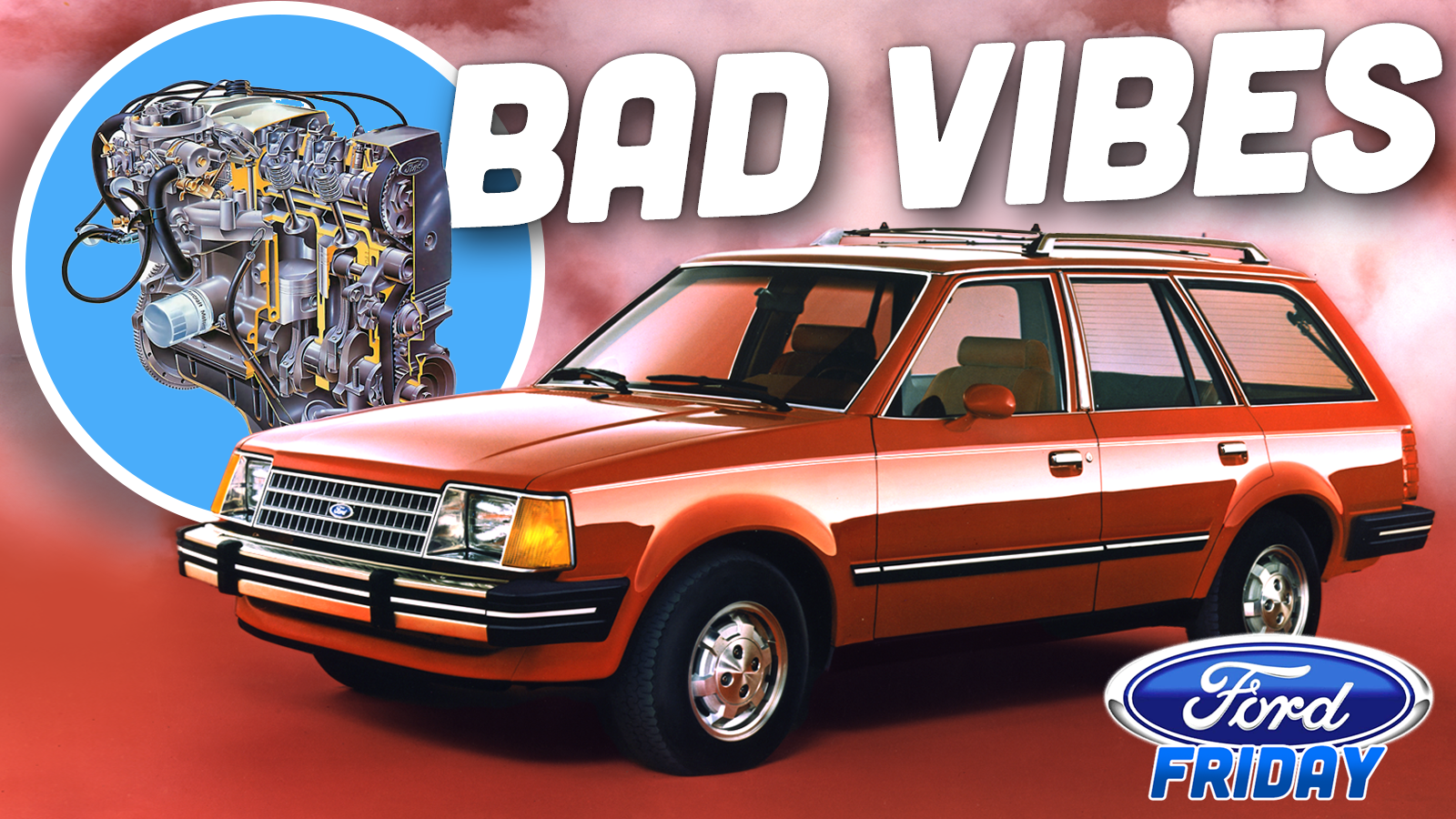
Ford’s Compound Valve-angle Hemispherical (CVH) engine, produced for a quarter of a century, was its world car engine from the ’80s onwards. It lasted the same time period as the American market Ford Escort, and Ford also installed it in various other cars. Designed to provide dependable everyday motoring for compact car drivers, it was among the more disappointing aspects of anything it was mounted in, despite good intentions.
Ford’s first “world car” was to be the 1981 Escort, at first developed under the code name C-Car. Lee Iacocca’s initiative, it brought the European Escort into the futuristic age of front-wheel-drive, a layout which the “Bobcat” Fiesta Mk1, also sold in North America, had already accepted from the get-go. Ford had been building European Escorts since the late 1960s, but those had been rear-wheel-drive and largely similar over the first two generations, and they were beginning to look old next to the Volkswagen Golf. Meanwhile, Ford USA sought to replace the Pinto and the Mercury Bobcat with something sharper looking.


The Escort Lands On Both Shores
The single overhead cam, four cylinder, 1.6-liter CVH (Compound Valve-angle Hemispherical) engine ended up being the only thing shared by the American and European Escorts, as development started around one car and ended with two different cars sharing the name, silhouette, and base engine. Few photos exist of the U.S. and European cars parked next to each other, but I’ve managed to find these ones from the early 1980s.

The CVH name came from the engine’s combustion chamber design, which gave the fuel mixture a swirl that would enable a leaner, cleaner burn. Ford built CVH engines for the American cars in Dearborn, while the European cars got their engines from Wales in the UK.
Road tests and comparison tests of the time noted the engine’s lack of refinement compared to the competition, with Car and Driver calling it “very slow” and making comparisons to a weed eater:
Ford went to a lot of trouble with the hardware parts of this engine—an aluminum head, an electron-beam-welded intake manifold, a crossflow port arrangement with angled valves and fully machined combustion chambers—but then tried to get by without the sophisticated on-board computers that all GM and many Chrysler models are using to optimize fuel flow, spark advance, EGR, and the like. The results have been nearly disastrous. The Escort does reasonably well in economy—30 mpg EPA with a four-speed manual transmission and a short options list—but the sacrifices necessary to get economy and meet emissions without the aid of a computer have killed performance dead as a hammer. The car is very slow—zero to sixty in 14.6 seconds, standing quarter-mile in 19.4 seconds at 69 mph. This is more leisurely performance than even the Honda Accord’s, which typically brings up the rear in small-car acceleration.
Moreover, the Escort labors mightily to attain whatever speed it can. Under hard acceleration, the engine climbs through several stages of roar—like a Weed Eater progressing from quack grass through the petunia patch and into a stand of maple saplings. This mastication is accompanied by vigorous buzzings transmitted up through your leg by the accelerator. The sound-level meter reports 89 dBA at the driver’s ear during such a forced march, and that is louder than almost any other small car in the class
Yet here’s the contradiction. We think Mr. and Mrs. America will find the Escort a quiet car. For one thing, they won’t run it to 50 mph in second gear in fits of enthusiastic driving. And that sort of flat-out operation is the only circumstance in which it is really noisy. Everyday driving for everyday citizens consists mostly of idling at traffic lights and constant-speed cruising at speeds below 65 mph. Here the Escort is quieter than most of the competition. And this, in turn, means that one of the main annoyances associated with travel in small cars—the auditory assault factor—just isn’t a problem in an Escort.

[Ed Note: It seems NVH was an issue with American automakers trying to compete with newer, more efficient Japanese overhead cam motors. As I wrote years ago about GM’s Quad-4:
The Quad 4 didn’t have balance shafts, which are shafts built into the engine specifically to offset secondary forces that can yield engine imbalance and thus vibration. It wasn’t the only engine lacking this technology, but it was also fairly large, and this, some thought, was the source of the Quad 4’s refinement problems.
This CVH also reminds me of the Iron Duke — loud, slow, but solid. – DT]
The first-generation American Escort and its Mercury Lynx sibling lasted until the end of the 1980s, as did the European Escort. The American version was facelifted for 1985, with the European car following suit for 1986: the latter in its updated form was called the Mk4 Escort to differentiate it from the earlier, third-generation car, but it was by all means a large facelift. Around this time, the combustion chamber shape was altered from hemispherical to more heart-shaped.
Escorts Go Their Separate Ways, The CVH Continues

When these two cars ended production in the early ‘90s, Escorts went their separate ways: Ford used a Mazda platform, shared with the 323, for its future American market Escorts and Mercury Tracers.
Ford Europe developed a more aerodynamic and Sierra-shaped fifth-generation car, but retained the same engines the old cars had used, alongside more modern Zetec engines. That meant the CVH continued service on both sides of the Atlantic despite the cars already being significantly different. These light blue wagons look superficially the same, but they weren’t on the same platform anymore.
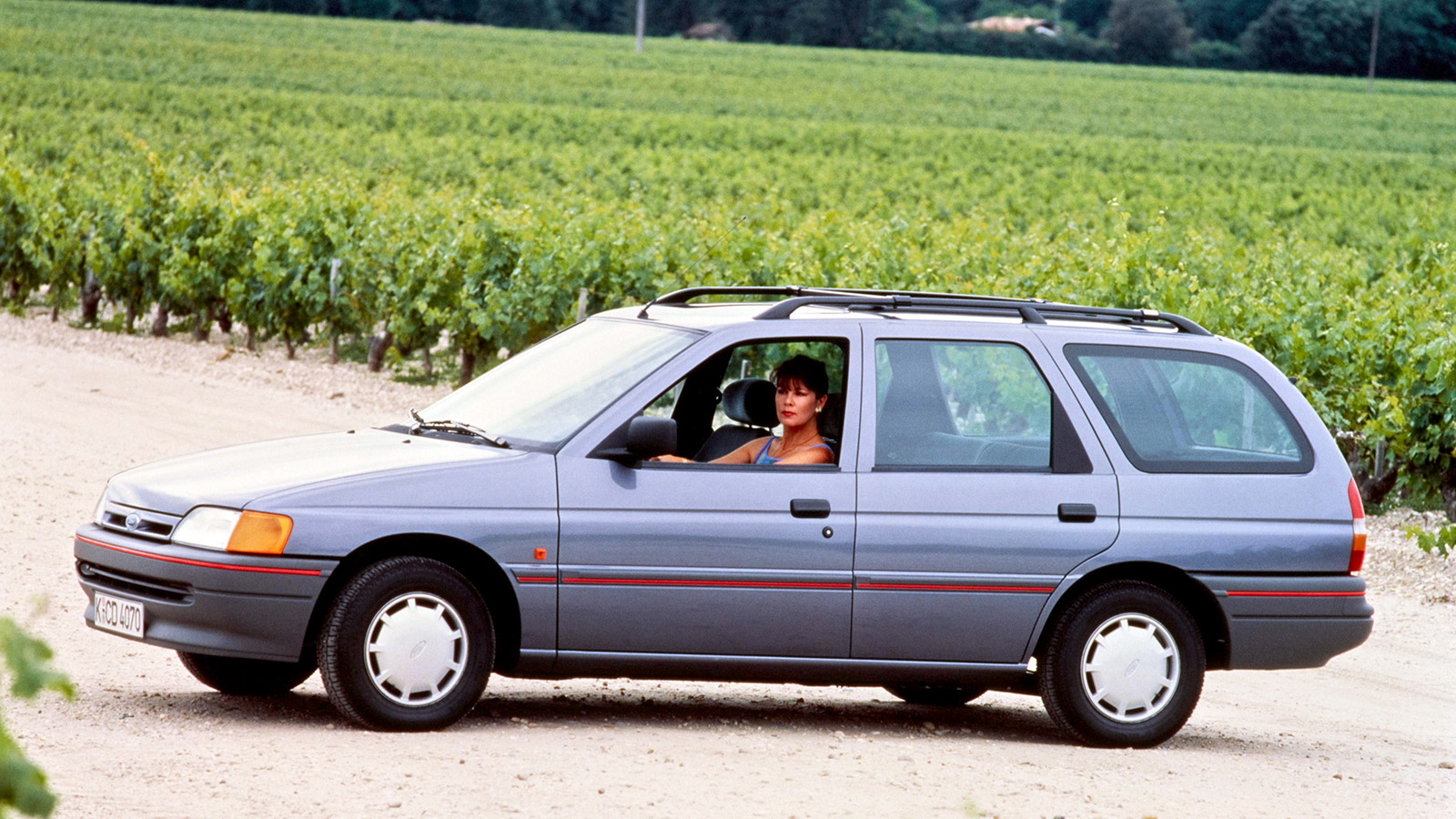
The base Euro Escort ran the pushrod HCS engine, which was introduced in its earliest form in 1959 as the Ford Kent, and would also still be used in the Ford Ka supermini as the Endura-E. When the CVH is considered an improvement, you know you’re using some vintage Ford engines in your 1990s hatchback.
You could get Mazda engines for the American Escort, as the hot GT versions used a 1.8-liter Mazda BP; the European fifth-generation Escort relied on Ford tech and the DOHC engine. European Fords never got any bigger CVHs than 1.8-liter units, but American CVH developments could be as big as 1.9- or 2.0-liter.
The CVH also went into the Ford Sierra in the late ‘80s, replacing the Pinto OHC engine in some markets. This made a lot of people very angry (well, me), and has been widely regarded as a bad move (by me, as well). Context, you ask?
My Personal Beef With The Ford CVH
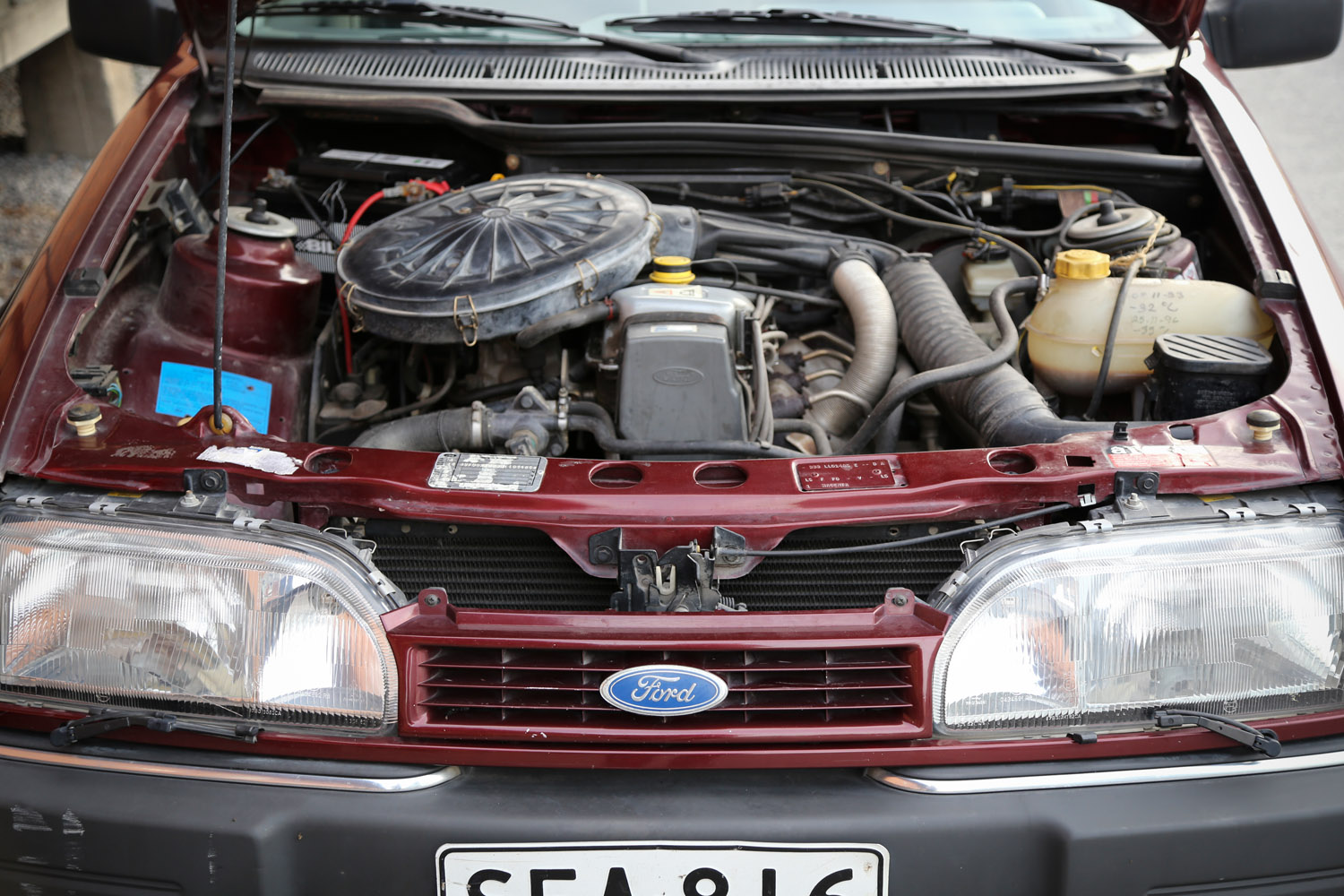
I bought a Belgian-built 1990 Ford Sierra a little over a decade ago, before my 30s crisis truly hit me. I wanted a cheap rear-wheel-drive car to supplement my cheap front-wheel-drive cars, and I ended up with a very cheap and road-legal, base-model, three-door Sierra with the 1.6-liter CVH and monopoint fuel injection.
The car produced 80 horsepower and 119 Nm (87.8 ft-lbs), and the engine didn’t really rev smoothly, nor did it have good grunt in the lower rev range.
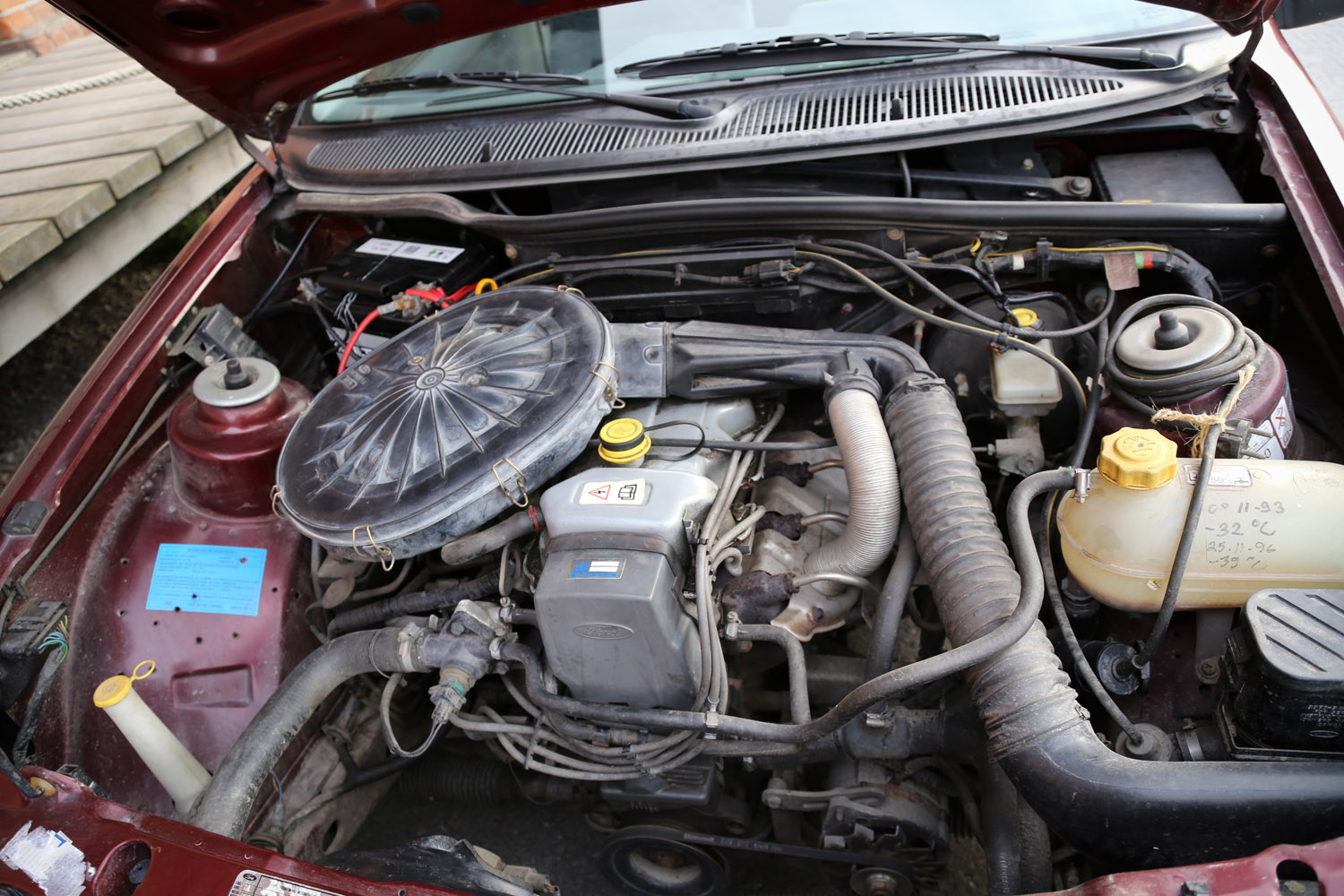
And this is where we again get into the core issue of the CVH: It sounds and feels terrible. Of course, in the Sierra, we’re talking about a compact car engine in a mid-size car; the Merkur XR4Ti, which shared the bodyshell, was classified as a compact in the United States but also had nearly 100 more horsepower than my car. In the Escort and especially the smaller Fiesta, it probably fared better in everyday driving.
As a result, I never really wanted to rev the engine enough to extract any meaningful performance from it, but I also couldn’t rely on low-range power to lug the car along. It did go sideways in a completely acceptable manner on slippery surfaces, but the slow steering also acted as a barrel-washing simulator. You really did have to put an effort into it, and the cockpit was generally full of hands when drifting the Sierra on ice.
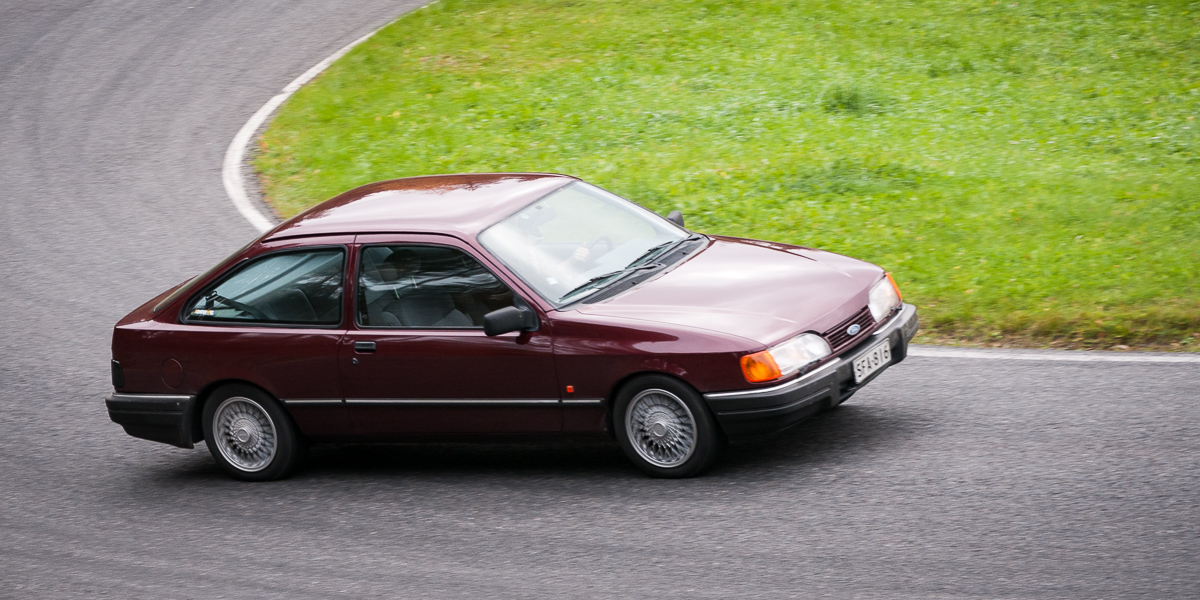
I also put some race track miles under its belt at the Ahvenisto track in Finland. The lurchy slide above took a lot of doing.
The gearshift also made it feel like I expected the Sierra-derived P100 pickup to feel, which makes me think I should have simply bought one of those instead: I would have gotten an OHC engine instead, even if I would’ve missed out on the Sierra’s completely fine ride, which the leaf-sprung P100 couldn’t deliver.
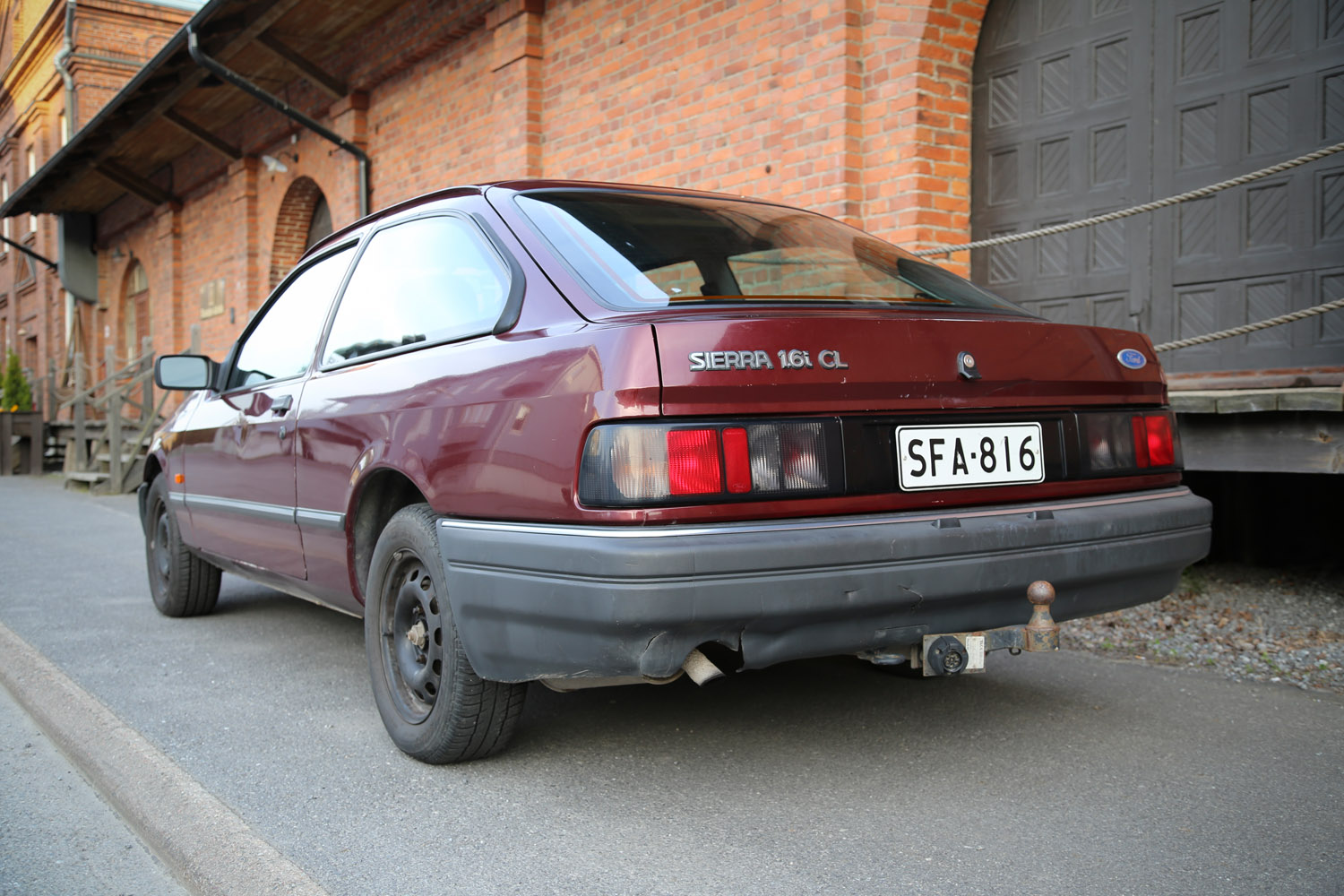
The older OHC engine would probably have been far more satisfying, but this dawned on me only after I had bought the car.
After a couple of years, I ended up buying a Miata to get me out of the funk I had driven myself into and sold the Sierra to a friend at a bar. He solved the car’s issues by fitting a three-liter Jaguar S-type V6 in it, which I also felt was the right thing to do. The car still lives; the CVH motor is probably providing reliable service as a boat anchor.
Ford Europe Lets The CVH Go, Ford USA Keeps It
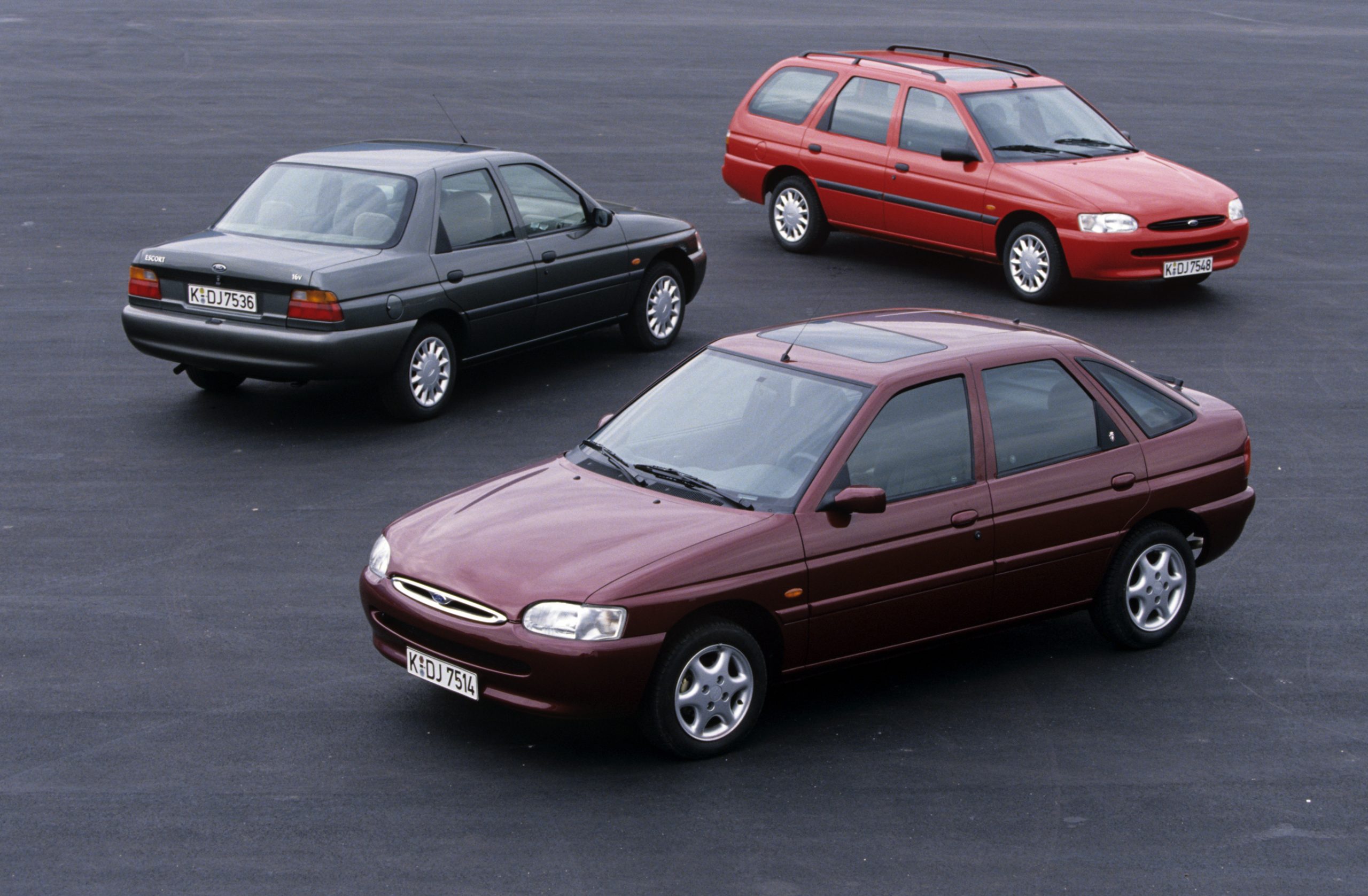
The 1990s European Escort also received a lot of stick in the day for its undesirable powertrains, which were largely rectified by Ford introducing the Zetec line of engines for it and gradually phasing out the CVH, which had been offered in 1.4-liter and 1.6-liter form.
Ford got the Euro Escort quite right during the 1990s, with the “Mk6” brought out in 1995, but the introduction of the Focus in 1998 just showed how fuddy-duddy the Escort had been – enough for Ford to wisely rebrand the successor, even if the company took so long to secure the name that the cars didn’t actually have Focus badges at the 1998 Geneva Motor Show where they were unveiled.
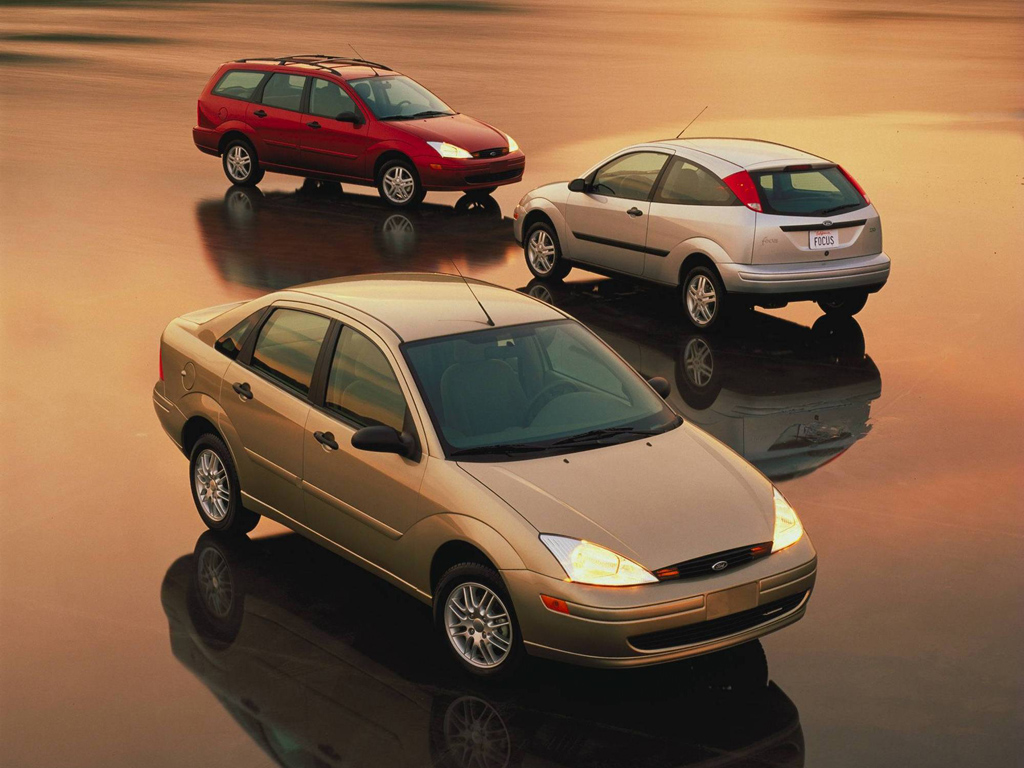
The American Focus, however, retained the CVH as the standard engine, with the solid Zetecs and Duratecs above it, up until 2005. The Focus, again serving as a world car of sorts, was built in Michigan and Mexico as well as Germany and Spain, and it was positioned differently depending on which side of the Atlantic you were on. In the States, it was the cheap hatchback for students that the Escort had been, while in Europe, it gunned for the top of the hotly contested family car segment that increasingly valued driver involvement. Ford also kept building the American Escort as a fleet model alongside, or below the Focus, with the last Escorts leaving the production line in June 2002.
The Euro Escort hadn’t been terrible to drive, but since Ford couldn’t beat Volkswagen’s Golf with interior quality, it had to do it with handling and driveability. For the Focus, this included the engine palette, which had to appeal to drivers who had such gems as the Peugeot 306 to choose from.
The Weird And Wonderful CVH Years
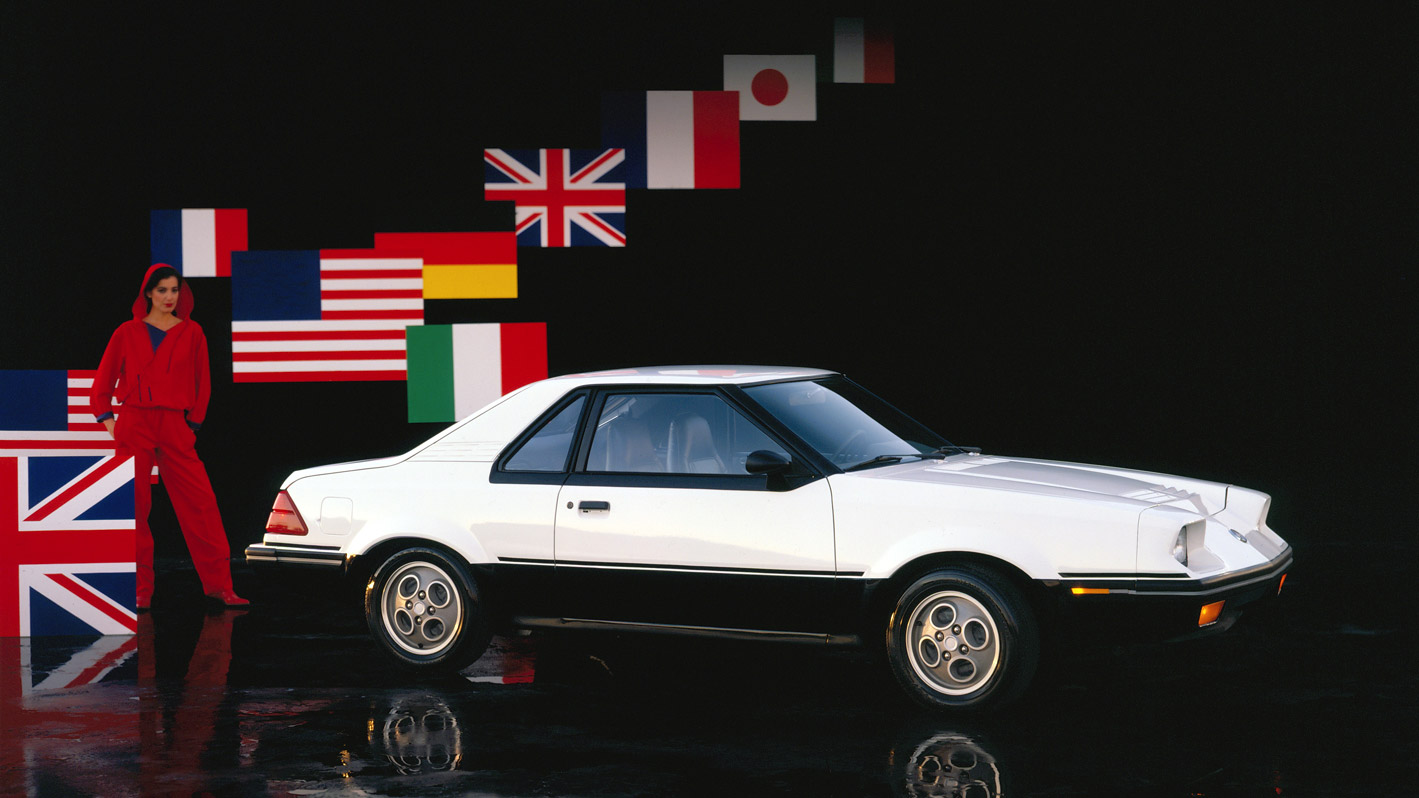
The CVH ended up in some very weird cars as well. It was the only engine choice for the Ford EXP, Ford’s two-seater sports hatchback that was also sold as the Mercury LN7. In the first cars, the CVH was mainly doing its job for fuel efficiency’s sake, which meant as little as 70 horsepower from the 1.6-liter motor. Ford rectified that with a turbocharged version that was sold until 1985. 120 horsepower was certainly a lot better, and the facelifted, 1.9-liter naturally aspirated second-gen EXP could only reach 115 hp for the last cars.
The EXP’s spiritual successor was the Escort ZX2 (1997-2003); while the ZX2 was the final American Escort to be built, it never got the CVH but used a Zetec engine instead.
In one of my favorite vaporwave YouTube clips, a Luxury Elite remix has been set to a Mercury LN7 commercial. It’s extremely cool.

The CVH was also turbocharged for European Escorts, for the RS Turbo, offered in the Mk3 and Mk4 Escorts. Especially the Mk3 RS Turbo, which was only produced in limited numbers, has become a relatively rare and valuable youngtimer classic in the UK. The most expensive one, of course, was the custom black RS Turbo originally owned by Princess Diana. It was auctioned for nearly a million dollars a few years back.
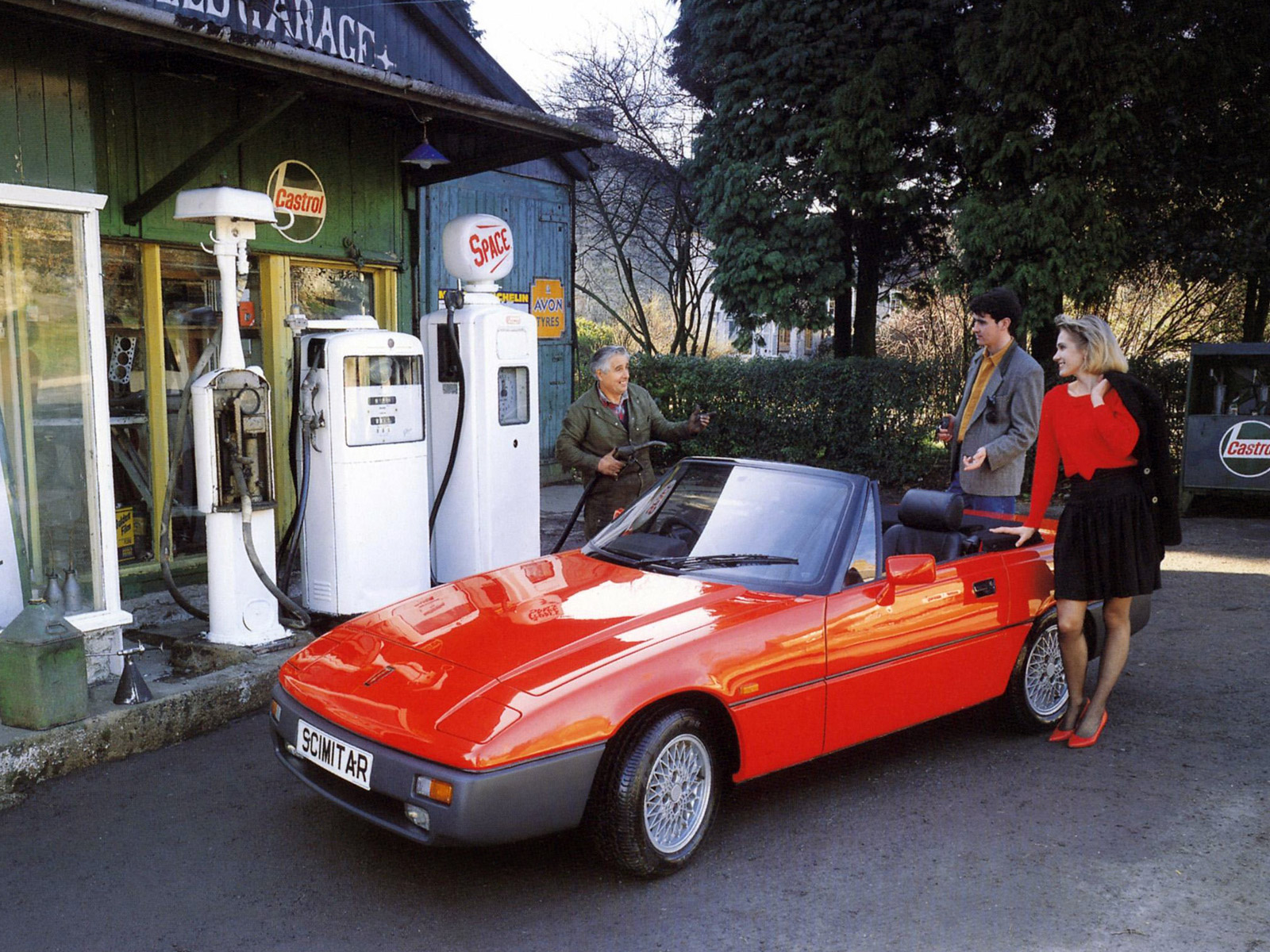
But those weren’t the only sporty cars on the market to have CVH power, as the Reliant Scimitar SS1, a plastic-bodied, Michelotti-designed roadster, was also fitted with a CVH engine – as small as 1.3 liters. You could get the SS1 turbocharged, too, but that meant picking the CA18T engine from the UK-produced Nissan Bluebird Turbo. The above photo shows the facelifted SST version. Note, the T doesn’t stand for Turbo but for William Towns, who redesigned the car.
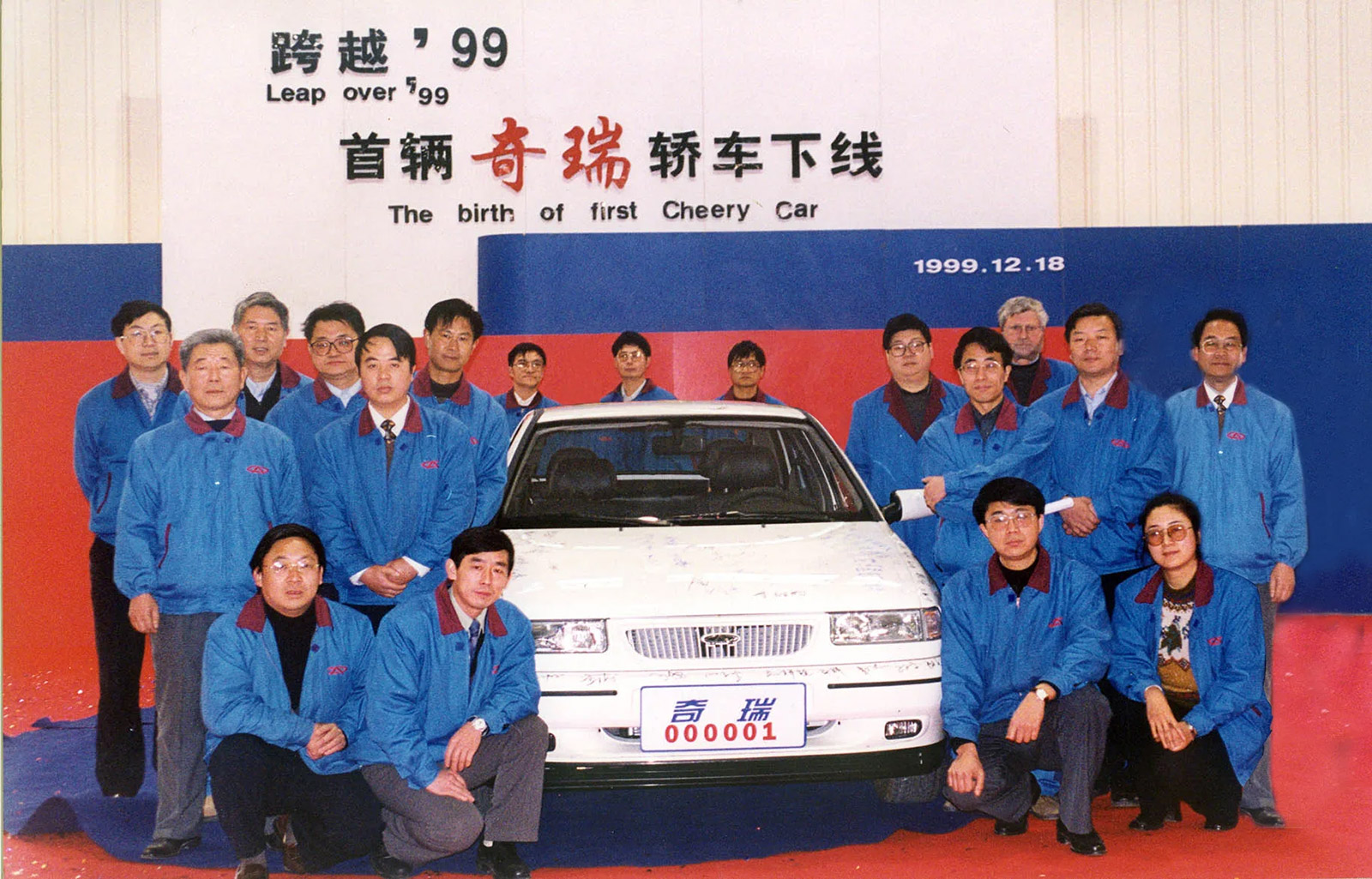
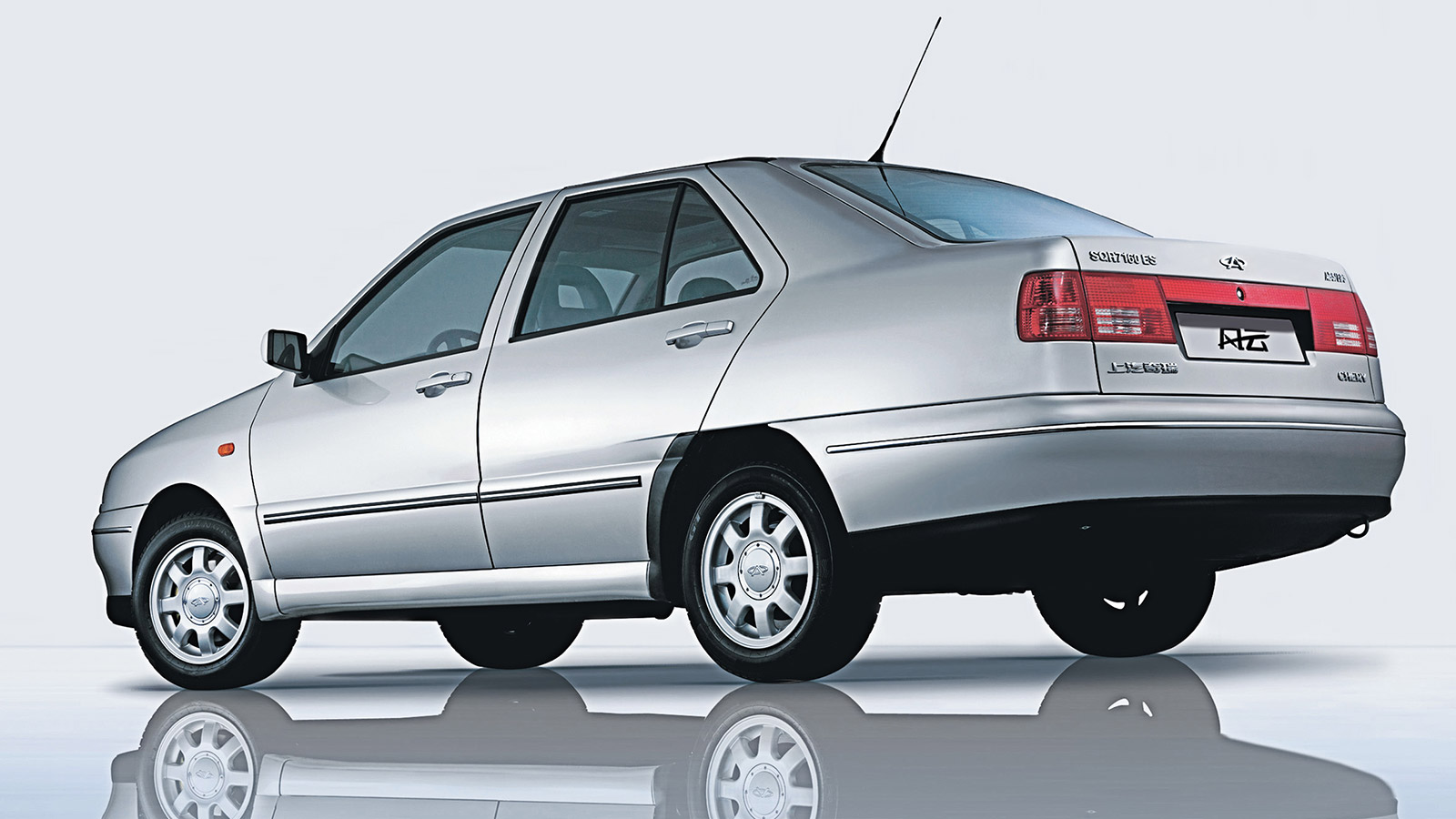
Caterham and Morgan used the CVH too in their roadsters in the ‘80s and ‘90s, as they were easy to procure from Ford. It was also the UK engine production line that ended up being sold to China, where they put the CVH engine back into service in Chery’s first car, the Fulwin.
The Windcloud, as the name translates, was a carbon copy of the first-generation Seat Toledo, produced using blueprints secured from Volkswagen Group’s parts suppliers instead of Volkswagen itself. Chery eventually developed its own engines, putting the CVH to long-deserved pasture. The Toledo’s Chinese variants were produced up to 2016 through numerous facelifts.
Is The Ford CVH Bad? You Tell Me
Over the years, the CVH’s letters have been said to stand for Considerable Vibration and Harshness instead of Compound Valve-Angle Hemispherical. Even so, it is likely not Ford’s worst engine. At its worst, it was underwhelming, giving the same sort of feeling as some Ford interiors at their cheapest. Over the years, it proved to be a reliable engine if maintained, as skipping the oil change interval on the CVH means it’ll start sludging up, which starves the top end.
Engine builders and tuners favor the CVH for its lightness and general simplicity compared to Ford’s Pinto and Crossflow engines. As a British tuner, David Baker says, “Cam wear is a fact of life with the CVH”, but he notes how cheap oil and infrequent oil changes are often the culprit. Another issue is the later CVH and SPI engines dropping valve seats, but that is exacerbated by overheating.
The often naturally aspirated CVH dates back to the time when fuel efficiency for basic economy cars was done by fiddling with lean burn, valve angles, and combustion chamber shapes, compared to the downsized, one-liter, three-cylinder, turbocharged EcoBoost of recent years. That’s a completely different can of worms, especially with a timing belt swimming in oil; at least the CVH was somewhat simple, relatively reliable, and took forced induction well.
What do you think is Ford’s worst engine? Feel free to sound off in the comments.
Top graphic images: Ford


In the 80’s I knew a lady who owned an EXP. When I drove it I got so frustrated that nothing I could do would wring any performance from it. It was either boringly slow, or if you really tried it made an annoying droning racket and you went ever so slightly less slowly. One of the few cars I’d rather be a passenger than drive, and it was because of the engine.
> Is The Ford CVH Bad? You Tell Me
Yes.
In ’96 had a ’83 Lynx wagon with silly low miles (20k? Grandma grocery getter type deal), well maintained, service records, etc. That car was a piece of shit. The head gasket blew within about a year of my ownership. Overheating severely and constantly. Unable to get past 45 mph, sometimes, for reasons (I got pulled over by LA’s finest for driving too slowly). Drank oil but didn’t leak it. The axle boots were shot. Etc. Garbage. Still not the worst car I’ve owned.
I loved the wagon aspect and it allowed me to move 2-3 times in a couple years (the joy of being a broke-ass grad student). But it caused me severe financial and mental stress for 2 years and I will never forgive Ford.
When my ex-wife and I started dating, she had an early Escort and I had a 77 Celica GT. The Escort was a tin can compared to the Celica and drove like a pig. The Escort’s engine did not even come close to the how well the 20R engine ran. She was a much better escort than the Escort.
My first car was an 84 Escort.We were a ford family from Detroit. I got it used. I wanted a big old car. My Dad wouldn’t have it. 1.6s all, all, all, blew their head gaskets at exactly 62,231.2 miles. And yes, it was and automatic and it was sssssssloooow. Better yet, apparently, there was some water in the interior because the first snow, the snow wouldn’t scrape off the window. I then scrapped it from the inside and it snowed in my car. Not my last ford but definitely my worst. My friends toyotas may have had large rust holes in the floors and fenders, but they ran.
My wife owned a 1995 Ford Escort wagon many years ago. It had the 1.9 with an automatic. I had no idea the engine had such a storied history. I remember specifically one time, driving down the eastern seaboard, destination by west. In 32 hours of driving, on one fuel tank fill up, I tried to get the best mileage i could. Hyper miling before hyper miling was cool, and there was nothing cool about that car. I did get over 42 mpg, all high way, with that 4 speed auto. Not damn bad. Overall, the car was kind of great. Just cheap, honest, straight forward, transportation. And the wagon was super convenient for such small car. Parts were damn near free, and you didn’t need them often. Two thumbs up.
This is the 1st time I’ve read about an engine being compared to a weedeater, and it’s fits for such a trash car! Ha ha
I’d rather have a sexy “escort”
I once encountered a guy at a car place who spotted my ’83 Subaru FWD 5MT sedan and came over to talk. He said he was behind me on the highway a short while back in his 1.9 Escort (with the CVH), to which he had done some minor performance work, and said he couldn’t get near me. I didn’t recall any kind of tangle with an Escort, so I was probably just driving the way I normally did. He asked what I had done to the Subaru and I asked if he wanted the truth or to feel good ad I did nothing to it. Yeah, I’d say these engines sucked.
Sharing the same car platform for different markets, like the mk3 Escort, seems like the best, cheapest option for car makers. Yet, the number of times Ford or GM developed basically the same kind of car on two different shores is like counting the stars. I’ve never understood that.
That’s because essentially the two markets are looking for different things. The world car is a great theoretical idea, but hardly ever works especially at the lower end of the market.
BMWs and Mercs get a pass because even if they are European-mindset based, they do “everything well”.
Let’s focus on two factors: fuel prices and geography. Those two factors shape what buyers look for in a car.
That is why European cars tend to be smaller and lower powered but tauter while American cars are bigger, more powerful and with more convenience features.
Automakers on each side of the pond invested on what mattered most to their buyers. This can be clearly seen in sales charts, even today.
In 2025 the best selling car in Europe was the Renault Clio. Whereas in the US of course it was the Ford F-Series.
With that in mind, of course a European Escort and an American Escort are going to be different.
I get some of that. Making, say, a small car on 2 shore, they aren’t really that different. I’m not talking about Americans buying F series versus a Smart Car.
Certainly, but that shapes every other car / car category.
Even the cars that are “the same” on many occasions have different engines (for example the 2.5-litre five cylinder in the USDM Golf that was never offered in Europe).
You could achieve all of that on the same platform with different engines and different shocks and springs. Convenience features aren’t platform dependent. Except size, but both Escorts were within inches of each other. There was truly no reason for them to have different platforms.
True. With the Focus they did it, but the models quickly drifted apart in subsequent generations.
The Contour / Mondeo is another example of a world car that ended being a flor and / or having no continuity. I guess that the later Fusion / Mondeo twins fared better, but by then nobody cared for saloons from mainstream manufacturers.
I was going to say there was an example in the Kuga / Escape twins… but the Escape has been discontinued.
Incredibly the roofline is different between Contour and Mondeo, it’s swoopier in the American version. I know the tight cabin space was complained about, but they even offered less headroom in the American car…
I would argue, unnecessarily once again.
The Contour was never really marketed. It was never going to compete with the name recognition of the Taurus unless they actually committed to replacing the Taurus with it. Instead, they cannibalized their own sales.
The only hard limitation is size, which many will say hampered the Contour’s success, but just look at the sales figures for similarly sized Grand Ams and Accords. The Contour just wasn’t given Ford’s full backing. Same as the Cadillac Catera, it was a half-assed effort. The CTS was every bit as European if not more, but was a hit because it wasn’t half-assed.
And at the same time these cars were marketed, from the Escort to the Focus, you had Americans buying more and more European cars.
There are too many factors involved in any model’s failure to point at a Eurpoean platform as the key failure point. The Escape was discontinued to shift to EVs, according to Ford. Americans certainly had a liking for it, since they sold hundreds of thousands. You could also see how the Transit overtook the Econoline.
Albert Ferrer has a great response, to which I’ll add that the US makers have nearly always viewed the post war bottom of the market as the bottom of the barrel even while the Japanese were Pac Manning their market shares. Profits were low for the volumes they’d sell, made worse by having fewer major parts to share as they tended to revolve their manufacturing around larger vehicles with bigger engines. In Europe, taxes of all kinds, narrower winding roads, fewer freeways, and shorter distances travelled, meant that smaller cars weren’t seen as penalty boxes to punish losers and people would pay more for better build and features in their small cars. Occasionally, the US makers would sell the Euro version in the US and most of them flopped because they were too expensive for small car buyers and people who could afford them tended to prefer a bigger vehicle with lazier power for the same price. I can’t recall the reverse, but I imagine a US market economy* car would get wiped out in the European market.
*Typing that, I realized a distinction right there: in the US, smaller cars are traditionally commonly referred to as “economy” cars for cheapskates and poors, while in Europe, from my time reading UK magazines, it seems like they were commonly referred to as sized in comparison to the big sellers, eg. “Golf sized” before going to a simple letter classification (A, B, C… segment).
The letter-segment classification has more continental usage while brits usually refer to cars based on size. For example B-segment v supermini, refer to the same type of car.
I cannot think of any examples of proper US-origin small / compact cars being sold in Europe in meaningful numbers.
The Spark /Aveo / Cruze could be options, but those were primarily developed by GM Korea.
But thinking a bit deeper, there were some Chrysler, the Neon was sold here and the Dodge Caliber. But those were not successful in Europe.
The Neon offered a (terrible) automatic as a no-cost option in Europe, so it had that going for it. And next to Escorts and Astras, it had a quite powerful 133-hp engine. It rusted quickly, as did Calibers, so not many survive.
I remember we once looked at it, with the 2 litre and manual. Must have been around the same time we got the Focus, so early second gen?
Needless to say, we didn’t get one.
I think the Neon is a good example of what should have been a good car let down by typical US market cost cutting. Not surprised it did poorly in Europe.
The Focus was kind of an opposite in that it was developed in Europe, then cost-cut for the US market so that the Lotus-designed chassis (maybe just the rear suspension) didn’t handle as it should have and it had this awful ancient CVH base engine. My sister had a friend with a mk1 and, after reading all the UK magazines praising it, I was shocked by how bad it drove until I found out why. We didn’t get the mk2, but for the mk3, they cheaped out on transmissions, using a dry clutch DCT that was infamously short lived and disappointed people with its drivability. Otherwise, it was a great car for its class at the time, probably the best when it was introduced. I had a manual and it was bulletproof and seemed a lot better built than my Mazda3 that was the same platform, plus it got significantly better mileage for the same power (2.0 GDI vs 2.3 MPFI). Then they let it go for too long before replacing it with the POS Ecosport which didn’t last.
My mother had an early Mk1 Focus 1.6 Zetec 5 door. It was a great family car.
When the time came to replace it there was a choice between a 3 door Focus Mk1 with the 2 litre 16V engine or a Puma with the Yamaha 1.7 litre.
We ended up with the Puma, which was a superb drive but not very well built (door carda started falling off after around 30,000 miles…).
I really wanted a Puma, but we didn’t get them, of course. I guess it’s for the better if the build quality was that bad.
Yeah, the Focus my sister’s friend had would have been the base engine, which I didn’t realize until this article was the CVH engine, which seemed to struggle and protest at normal highway speeds. In retrospect, being familiar with Escorts, I should have connected the dots, but I thought they were all Zetecs. The chassis was disappointing, too, but I read a long while back that the US model had cheaper bushings or something that allowed too much slop in the suspension. I just remember being quite happy with my ’90 Legacy that drove like it was 20 years newer rather than about a decade older.
The same thing happens with shared multinational military procurement, starts with good intentions to save money and time and improve efficiency, then turns into a quagmire as countries refuse to compromise on their own requirements, the Europa Jeep project is a classic example
It can also happen within the same country, when different branches try to collaborate
Plus there’s Saab’s approach, where they got access to a platform to save cost and ended up building a completely different car, eradicating the cost benefit.
Also Honda and Rover with the Legend/800, somehow they came out not sharing a single body panel
Even within differing European philosophies that has happened. Such as the Tipo 4 saloons.
To be fair, noise vibration and harshness are half the slow car fast formula. The other half of course is skinny tires.
The pinto engine is so elegant, and this has so much stuff thrashing around in the valve train. It seems like putting the cam over the valves with symmetrical rocker arms like some Honda engines, or a DOHC design would be simpler.
This looks like the Bristol engine they took from BMW as war reparations but with the cam moved into the head like the Opel engines of the period.
Not an obvious design choice to say the least.
I had one of them, an escort. I think it was an 89. It was awesome. It survived every sort of abuse imaginable. Multiple jumps, offroading, river crossings. Hundreds of wheel spinning clutch dumps, thousands of foot to the floor power shifts. Highway bump drafting, ebrake slides on every corner. You name it we did it to that little car for years for entertainment and it never broke.
My takeaway from this is that sliding around and general hooliganism in a vibrating escort is highly entertaining, and the escort never went broke. Sounds about right.
Ford 4 cylinders were dreadful things. Truly awful. The CVH Escort engine deserves all the hate that is usually reserved for the GM Iron Duke. It made less power and torque than the Duke, but at least its OHC timing belt snapped like clockwork every 60,000 miles, and being an interference engine (the early ones, anyway) that means it wrecked the whole engine when that happened. But pushrods bad, mmkay?
I did some research* to try and find a bright spot in Ford’s USDM 4 cylinder lineup of the 80’s and 90’s, and failed to reach my goal. Here’s the complete rundown of offerings: Pinto OHC as used in the Ranger – 2.3L, 90 hp. Escort CVH – 1.9L, 90 hp. Tempo/Topaz/short-lived poverty-spec Taurus pushrod HSC 4 cylinder – 2.3L, 95 hp. End of list.
It takes some real effort to make the Chrysler K-car engine look like a performance proposition: 96 horses for the 2.2, a screaming 100 for the 2.5 – with balance shafts!.
The most wild comparison for me, though, is the AMC 2.5 liter 4 cylinder out of the base Jeep Wrangler – 117 horsepower! And they really did drive nicely (albeit slowly) in the Wrangler, sounded fine, weren’t harsh… it’s almost as if the other car companies were actively trying to make their small engines horrible to live with. I’ll never understand it.
*This comparison was for naturally aspirated 4 cylinder engines from US domestic car manufacturers available in the 1988 model year, but is reasonably representative of the landscape through ~1995. Things started to get significantly better in the latter half of the 90’s, when new generations of multi valve MPFI engines became mainstream here, as was necessary to catch up with import competitors.
The Lima/Pinto engine made a pretty nice racing engine.
I saw a guy in a pinto powered Lola beat a McLaren M8D at a vintage race- the McLaren driver was admittedly terrible.
The pinto can make 270 horsepower naturally aspirated, and is a tough engine.
I think it’s still a big deal in dirt track racing.
Well YB Cosworths were based on Pinto engines, so there’s that too.
Huh, I always assumed they were Kent short blocks like the Lotus twin cam
I could be pedantic and say that there were other 4-cylinder engines available in USDM Fords… but they weren’t Ford engines! Escort and Tempo got made-in-Japan Mazda Diesel engines, as did Ranger.
The Saturn LL0 DOHC of 1991 would like to have a word – 1.9L with 124hp/122lb-ft from GM, surprisingly zippy in the manual.
Yep, as the 90s wore on things got better, and GM doesn’t get much credit for leading the way; the quad 4 in 87, the Saturn engines were good and innovative, too; pioneered things like aluminum lost foam casting for cylinder heads, etc. They were very light for the power output, too.
As a kid in the 80s, I recall asking my dad about an Escort that had been sitting outside his auto repair shop for quite a while. He said that the owner couldn’t decide whether to spend the money to replace the engine. That’s when I learned about timing belts, and interference engines, and what happens when the timing belt snaps while driving down the highway at 55mph.
It wasn’t a bad engine, stout enough and easy to work on. Cam cover gasket would leak a lot though.
My ’86 Escort had the CVH with a four-speed, and I never noticed anything particularly raucous about it…and as a teenager, I was trying to eek ever. single. pony. out of my Pony that I could…
I bought my ’01 Focus in MA, and if I’m not mistaken I think this was a CARB engine and not the Zetec…but I’m not sure and that means it may have been a CVH?
Did the Sierra come with a 1.6 cvh? Been a long time since I had one but think it was a 1.8 cvh that replaced the 1.8 pinto in the Sierra and the 2 litre twin cam 8 valve replaced the 2 litre pinto.
Yep, 1.6. The German market retained the 2.0 OHC for a little longer, as it was sold alongside the 2.0 DOHC for a bit. The 1.8 CVH is supposedly the rarest, and I guess it sold well in the UK for fleets.
Detroit just didn’t care about four-cylinder engines and it showed during the 1980s and early 1990s.
They were mostly all kind of crud in one form or another, a reminder that you bought the cheapest version of a car and should have sprung for the V6, skinflint. They were usually fine (at best) in terms of reliability, but just not very pleasant engines.
The handful of examples that were something notable (Quad4, Chrysler Turbo K-car engines) always seemed to have an Achilles heel.
A list of good Detroit four-cylinders of the era might be the easier task than listing the indifferent/cruddy ones. Or at least a much shorter list.
About the only one I could think of would be the Chrysler K-car 2.2/2.5 turbo engines, which could be boosted to the moon. Videos of boxy Chrysler minivans doing 12 second 1/4 mile times was entertaining in the early 2000s.
Was there a period were there would be no American four cylinder engines made at all (or at least the big three)?
Maybe with oddballs like the Tempest Trophy 195 and the Pinto’s and Vega’s four cylinders it isn’t the case, but sure feels like so from Europe.
Yes the CVH was a good engine, especially when you consider its origins. When the world car was under development they originally chose to outsource the power train. So there was zero money set aside to develop an engine or manual transmission. Instead they were to be powered by engines and transmissions supplied by Honda. The team continued far down that path including signing contracts. That news eventually made it to The Duce who reportedly said “No way in hell is a car with my name on it going to have a goddam Japanese engine in it”, or words to that effect. (Never mind the fact that they had been selling entire fucking Japanese trucks with his name on them for several years).
That resulted in the contract being canceled and the development team w/o a power train for a vehicle that was close to done and was due to be on sale very soon. The EAO (Pinto) engine was too long and tall, not sure why they deemed the Kent unsuitable but they did. The CVH was conceived, designed, tooled and put into production in record time on a limited budget. So yes it was a good engine that turned out to be pretty reliable, durable and had a good production run.
I worked on a shit load of these.
They weren’t terrible, they were just ok. But the 1.6’s were interference engines and did go boom if the belt/tensioner/water pumps weren’t replaced at correct intervals. When they went to 1.9/2.0 they were non-interference but they still did drop valve seats on a lot of them between 150-200k. 2.0 Zetec’s were sooo much better, and almost never broke in terrible ways.
Also a lot of the 1.9/2.0 CVH’s from the late 90s/early 2000s would have their harmonic balancers split in two causing an awful noise.. but easy repair.
Overall they were about a 6/10 for Ford engines.
I learned to drive stick shift on my parents handed down to my brother’s 86 Escort LX. Never noticed any NVH different than any other car from the time. They were mostly all crap back then.
I think it is interesting how much cars have evolved that we consider now those 80s and 90s cars to have terrible NVH when back then they were perfectly acceptable.
My mun ran a brand new Renault 11 GTL from 1986 to I believe 2000 or 2001 (incidentally replaced by a Mk1 Focus 1.6 with the Zetec engine) and I never felt it was unbearable. It would start to disintegrate itself if you went over 140km/h (around 85mph or so?) but that’s another story.
I am sure that if I drove or rode on it today I would think it is absolutely terrible.
What I mostly remember about the CVH engine is that the head gaskets in the 1st generation Escorts, including the facelifted versions, tended to go out like clockwork after 70,000 miles. In general, though, change the timing belt and head gaskets on schedule and the engine would outlast the rest of the car. The head gasket problem seemed to fade away, probably due to better materials becoming available.
It was a perfectly cromulent engine for its purpose when it was introduced in the Malaise era. But then it soldiered on into the 90s and beyond, while other automakers were making significant advances in small-car power. It didn’t keep pace with the times.
To be fair, I also have no particular love for the “Cologne” V6 or really any of Ford’s non-V8 engines from the 80s and onward. They do their jobs well, but I can point to various import engine designs that do so much better in similar cars.
100% about the head gaskets. Ask me how I know. lol.
Same. 🙁
> the head gaskets in the 1st generation Escorts, including the facelifted versions, tended to go out like clockwork after 70,000 miles
*Raises hand*
Mine went around 45-50.
Had a US/NADM 82 or 83, carburated. It was nicer than a Chevette, I’ll give it that. The biggest headache for me was it ate ignition modules for breakfast, lunch, and dinner. Yes it was bought used and probably had not been well maintained, but it was profoundly unreliable and could not be trusted. This is the days before cell phones mind you. That car left me stranded at least 3 times and was dead in the driveway at least once or twice. Also, it was an interference engine, so for many budget car buyers, timing belt maintenance was not a high priority, so these were junked often and early. Turned me off from Ford for decades. On the other hand, my ugly ’10 Focus was quite good, and while I bought it in a somewhat distressed period of “life”, I grew to love it and it’s basic easy-to-fix and maintain engineering. The CVH ain’t no Duratec that’s for sure.
So the CVH had NVH issues.
Got it.
Car Vibration and Harshness.
Coarseness, Vibration and Harshness.
Crappy Vehicle from Hell.
We raced a ’91 Escort with the CVH in 24 Hours of Lemons. I’ll never forget going into tech inspection with my binder of receipts only for Murilee to pop the hood, audibly laugh at what was there, and tell us we’re good to go. We could have spent $1000 and he didn’t care: we weren’t coming anywhere close to winning.
He was right. My best competition out there was a Toyota Tercel; just about everything else was able to handily pass us. But, on the other hand, we wrung everything out of that engine that it could give and it honestly ran better after the race than it had before.
I liked to joke that it didn’t make enough horsepower to hurt itself; can’t say I was wrong.
I’m sure there’s been something worse than the CVH. Any Ecoboost engine with a timing belt in oil comes to mind.
Escorts seem to die to rust, not engine failure. I don’t think it was bad, just not sophisticated. And that worked for many people looking for basic transportation back in the day. They rack up mileage into the 200-300,000 mile range with ease so long as salt doesn’t take them. they’re kind of like the longtime GM cockroach engines in that regard.
The facelifted 1st Gen (US) Escorts were semi-ok, but the early ones were really bad. The transition to the Mazda platform was a good move, and by then Ford seems to have gotten the engine and electronics sorted out. (edit: EFI probably had a lot to do with that)
“and by then Ford seems to have gotten the engine and electronics sorted out.”
It was Mazda that sorted that out for Ford. There was a lot of Mazda in the 1991+ Escort… even if you had the CVH engine.
The 2nd Gen (91+) *was* Mazda, using the BG platform though it still had the CVH. However the 1st Gen “85 1/2” facelift and revamp helped a lot, and I don’t think were was much if any Mazda DNA in the 1st Gens. A lot of CVH updates that happened in the late versions of the 1st Gens (1.9 upsize, non-interference design, diff’t camshaft, TBI) really helped make both the Escort and the CVH way, way better than the early versions.
I had to go back and check, and the only Mazda item I can find in the 1st gen cars is the 2.0 diesel.
“I’m sure there’s been something worse than the CVH.”
The original aluminum 2.3L engine in the Vega was definitely worse.
“The single overhead cam, four cylinder, 1.6-liter CVH (Compound Valve-angle Hemispherical) engine”
Wait! Are you saying THAT THING’S GOT A HEMI?!?!?!
That joke never dies… I snickered about it in the 80s.