

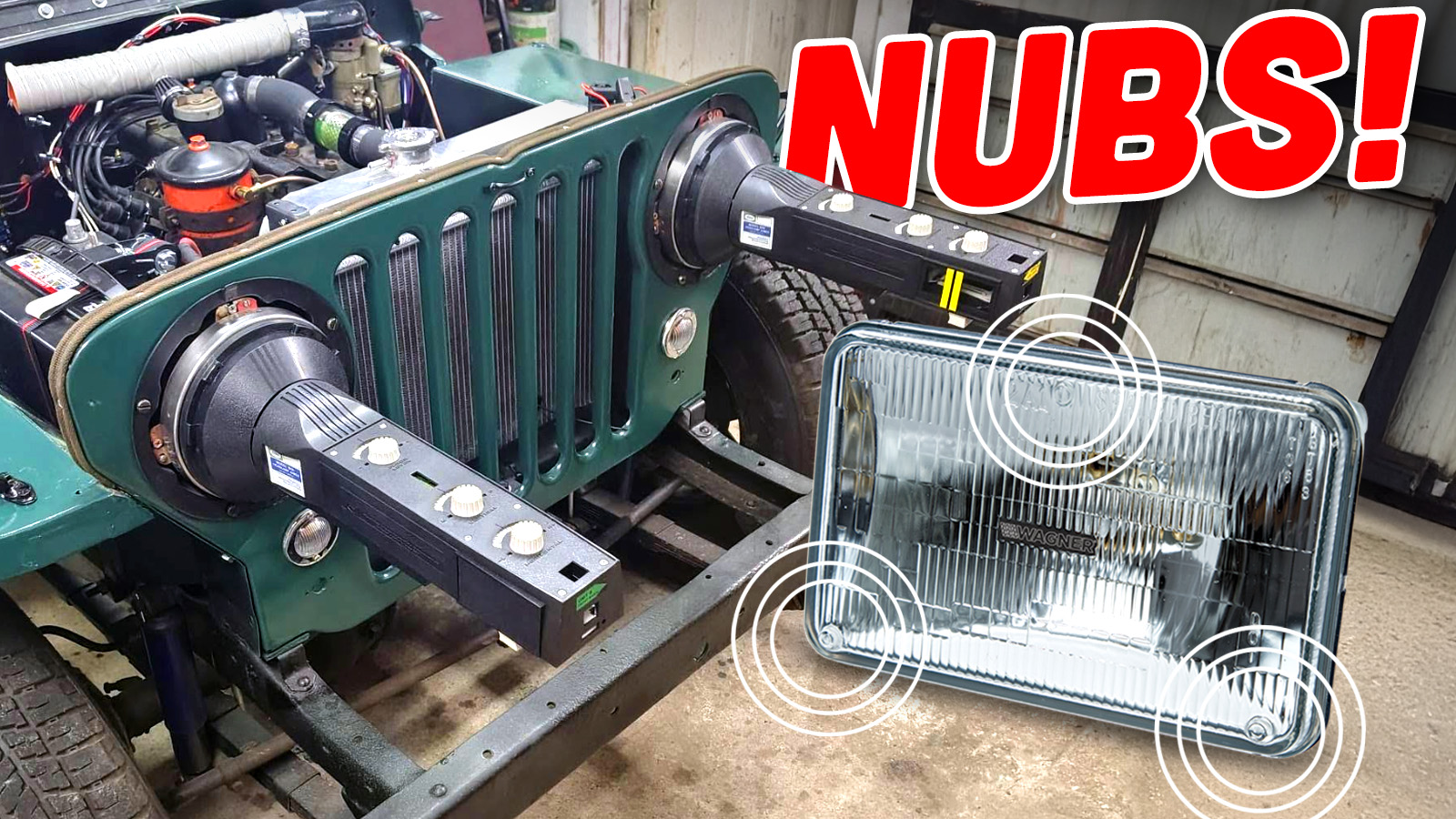
In the classic comic strip Calvin and Hobbes, Calvin’s dad was a mental terrorist, giving calm, rational, and entirely wrong answers to mess with Calvin. Gems like the world was black and white until the 1930s, that Calvin came as a kit from K-Mart, or that the Sun is only the size of a quarter. Cars and curious kids provide plenty of opportunity to mis-answer honest questions, and many a dad probably had a go at “Why are there little bumps on the family minivan’s headlights?”
These little nubs (nubbins? nubbles?) on car headlights were real close to eye level for those of us under 4′ tall in the 1980s. “Those are for pinpoint illumination of deer eyeballs, so you see them shine and don’t hit Bambi,” an obfuscatory father might tell you with a smirk.


Or “they swirl the air around the flatter parts of the lens surface to keep it clean.”
It appears some Redditors have attempted to Calvin and Hobbes the headlight nub question:
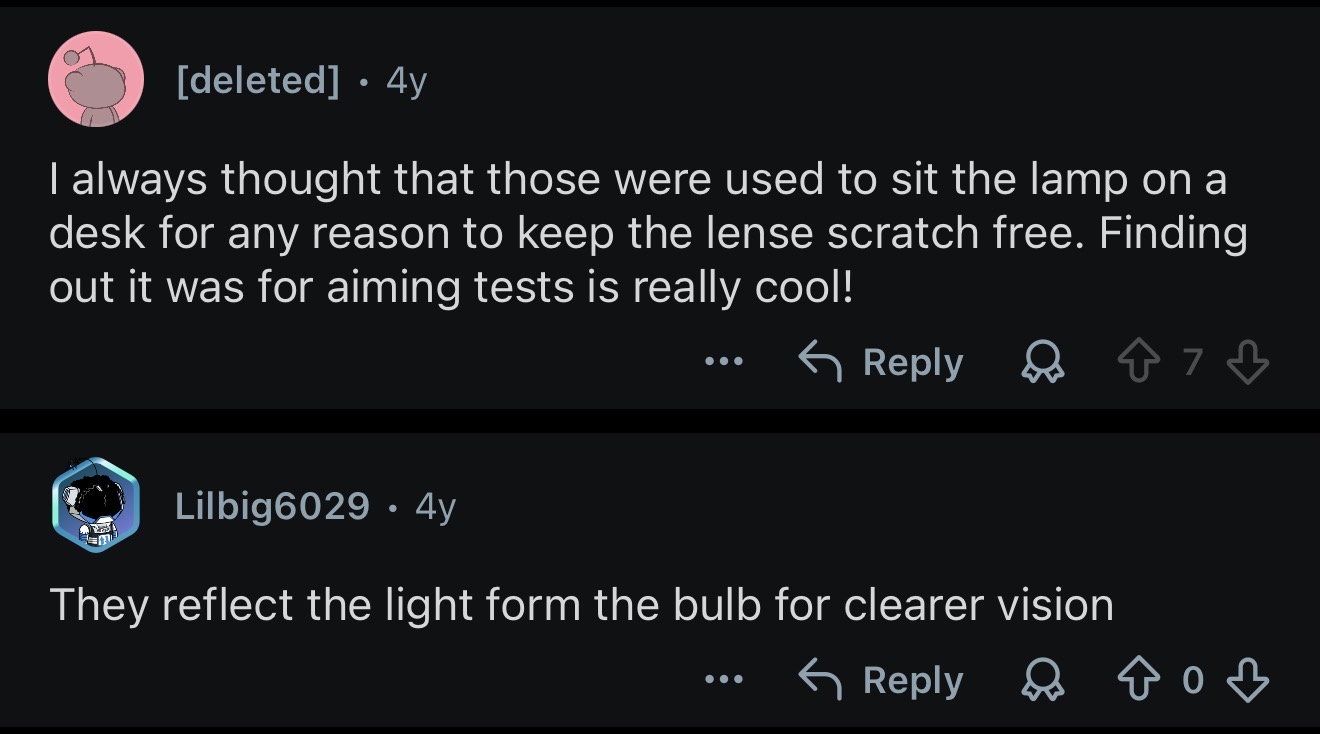
Those sound pretty plausible, but the real answer is even more interesting, mostly because of how those nubs enable the car to look like something from a cartoon like Calvin and Hobbes. I’ll explain.

Lights were different then – every car used the same standardized units; sealed beam headlights in round or rectangular formats, arranged as a pair or, beginning in 1958, a quartet. “Each lamp consists of a filament, reflector, and lens made into a permanently sealed unit,” The New Yorker explained in 1939. Sealed Beams were a joint development between industry, regulators, and safety advocates, and, as detailed in the October 1940 issue of Motor Age, there were seven major objectives:
(1) It must provide the safest possible seeing under all night-driving conditions, hence a two-base system; (2) must provide relief from glare when meeting other cars, hence a passing beam; (3) must be easy to operate, hence a left foot switch for changing and an upper beam indicator (4) must maintain its lighting efficiency; (5) must be simple to adjust (6) must have simplified parts distribution to facilitate immediate replacement service; (7) must simplify work of officials responsible for laws and traffic regulations.
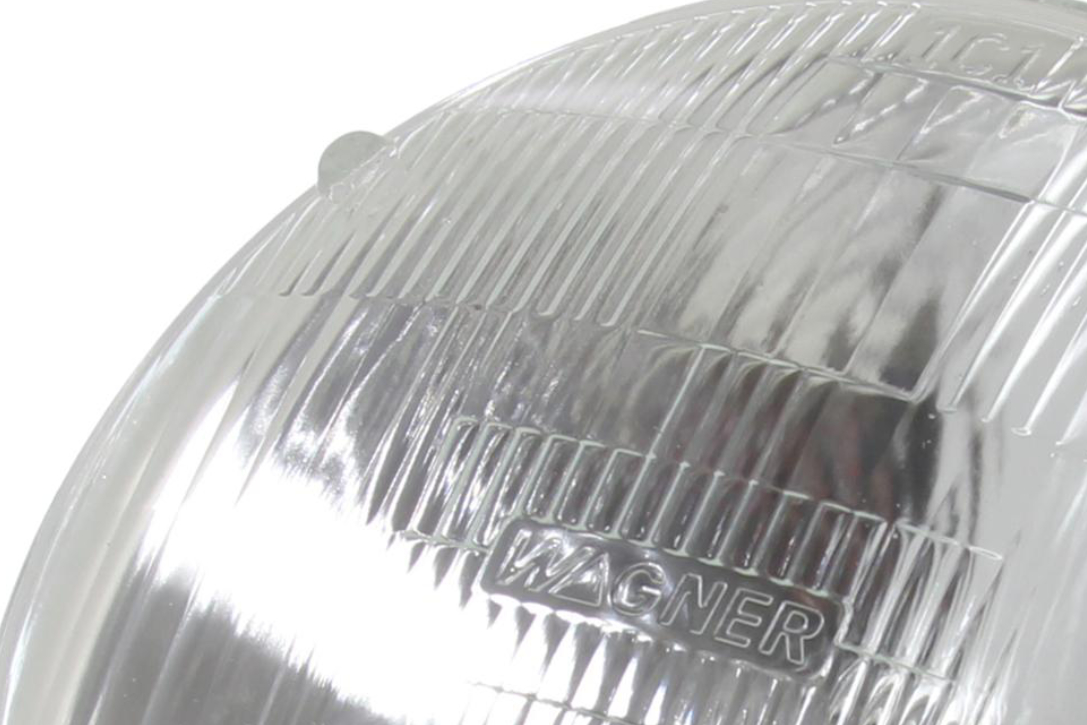
Sealed beams were pretty good (Jason says so) at achieving those objectives. But they were also easy to mis-adjust – or just ignore. That’s where the nubs come in. They’re basically alignment pins for aiming tools, which are cool as hell in their own right.
Side note: You can still buy sealed beam lamps today, the ones from Sylvania don’t appear to have aiming nubs, but Wagner sealed beams have them.

Unhappy Hoppy
If you’re looking at a headlight aimer, it’s probably a “Hoppy” brand made by Hopkins Manufacturing. From Zoominfo:
“Hopkins, founded in 1953 and headquartered in Emporia, Kansas, develops, manufactures, and markets towing products and functional accessories. The Company offers braking alerts, back-up cameras and sensors, tire pressure monitoring systems, booster cables, towing electrical products, and ice scrapers and chippers.”
Well, they did offer this equipment. Zoominfo estimates company revenue at $296.1M, and you can see the interesting product and brand mix at the Wayback Machine snapshot of the hopkinsmfg.com site from last January. Today, the Hopkins site is dead, and so is the company. According to the Emporia Gazette, on February 23, 2026:
“The proposed sale of Hopkins Manufacturing has reportedly fallen through, and employees have been informed of their termination, according to several anonymous employees.”
The Gazette explained this dastardly move that doomed the deal:
“Potential buyers learned late in the process of a potential sale that the company’s intellectual property, including patents, trademarks, product line names, and copyrights, would not be included in any sale. This means that any potential buyer could not legally operate under the Hopkins name or make products that are under patents”
It turns out, you can’t get new headlight aimers because of the First Brands blast radius, an avoidable bomb dropped on the auto industry and aftermarket. According to The Gazette, it all started when…
The sales process first began when Hopkins Manufacturing’s parent company, First Brands Group LLC, underwent bankruptcy proceedings following criminal charges against two former executives.
How it works
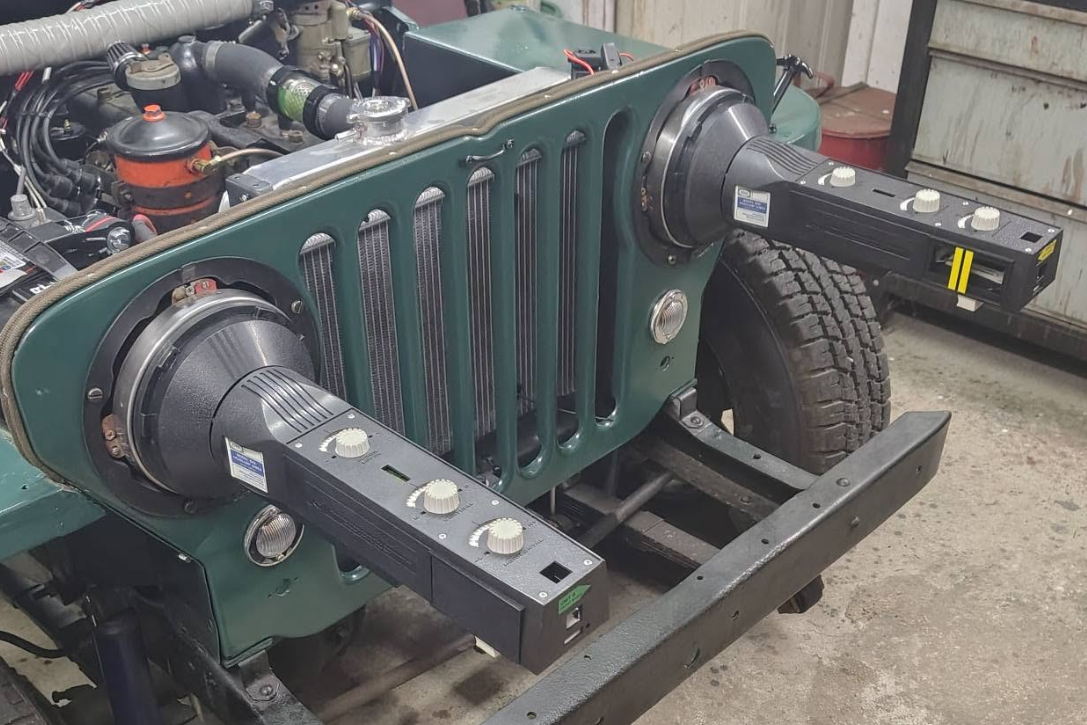
The tools and aiming process are cool and cartoon-ish (see image above), and even though the company’s not around any longer, it’s probably very satisfying to aim your headlights output at the road, where it belongs.
The Hoppy tools use the nubs on the lights to position what’s basically a calibrated spirit level and split-prism combo for dialing in the horizontal and vertical adjustment of the headlamps.
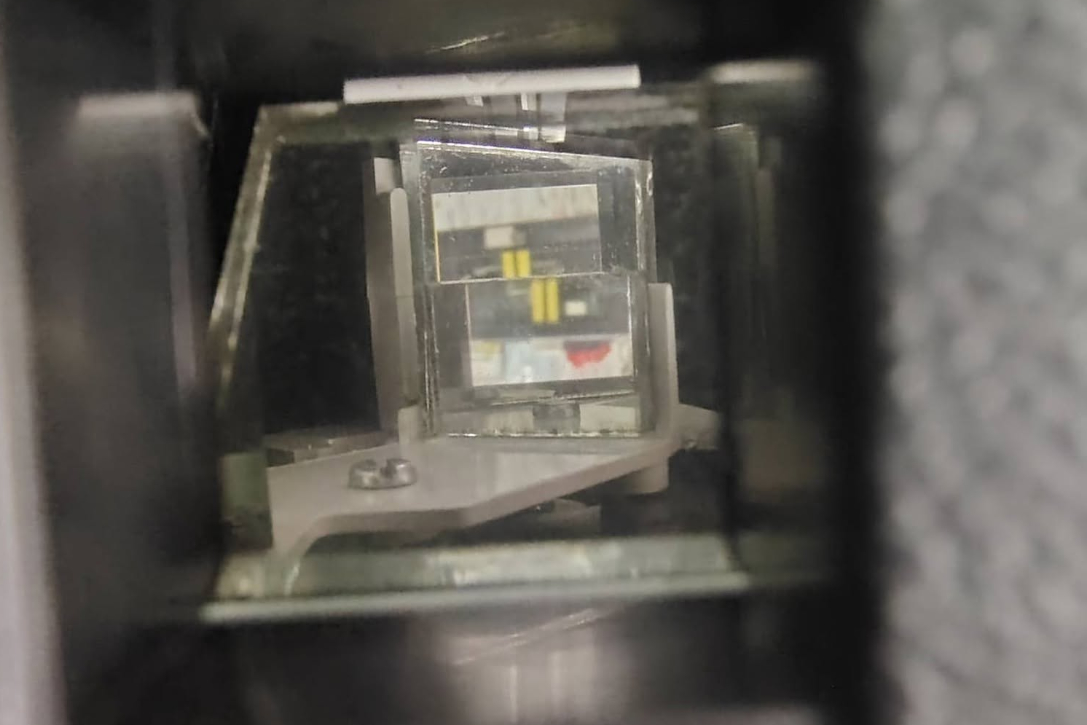
In the box, Hopkins included a pair of alignment tools, plus adapters to work with the different lamp styles, as well as floor calibration stands. You’d do a pair of lights at a time, repeating the steps for quad-lamp setups.
This outstanding Hoppy training video walks through the whole process:
The first step is calibrating the tools themselves, kind of like how recording engineers at the Record Plant carefully aligned the multitrack tape machine before The Captain & Tenille laid down Muskrat Love. You’ve got to make sure the tool is trustworthy.
- Properly inflate the tires
- Perform the “floor calibration” by placing the units next to the indicated wheel and adjusting a thumbscrew until the level is centered. This adjustment will generate settings for cancelling out any variation in the floor’s surface.
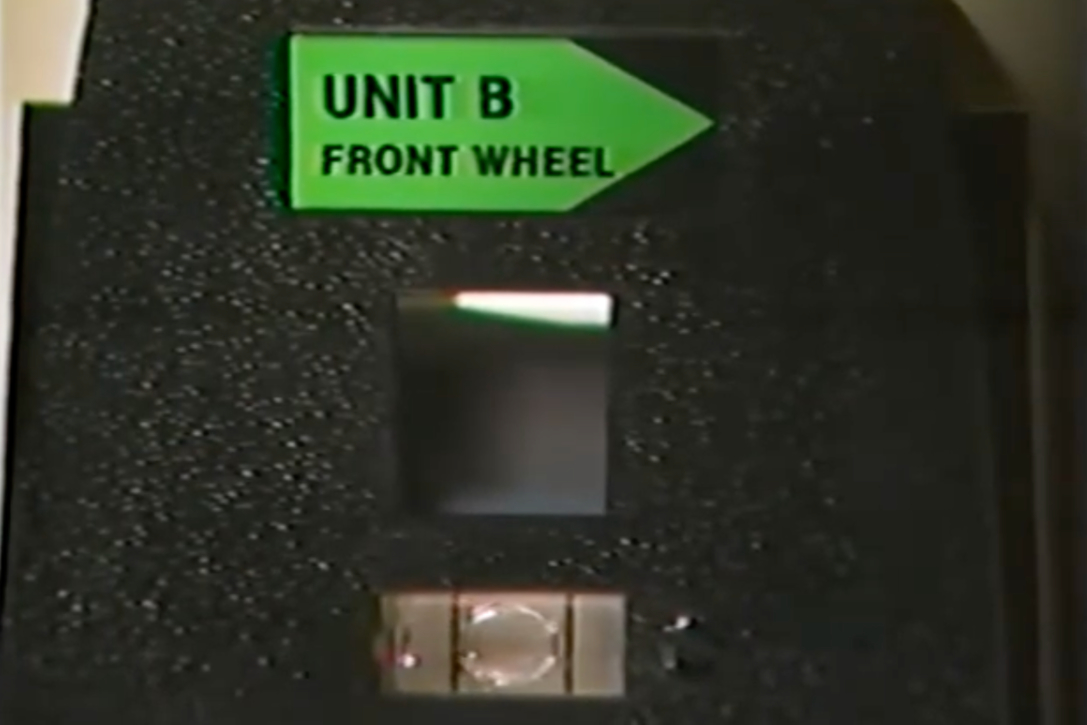
- The proper adapter plate snaps on the aimer and is placed on the nubs.
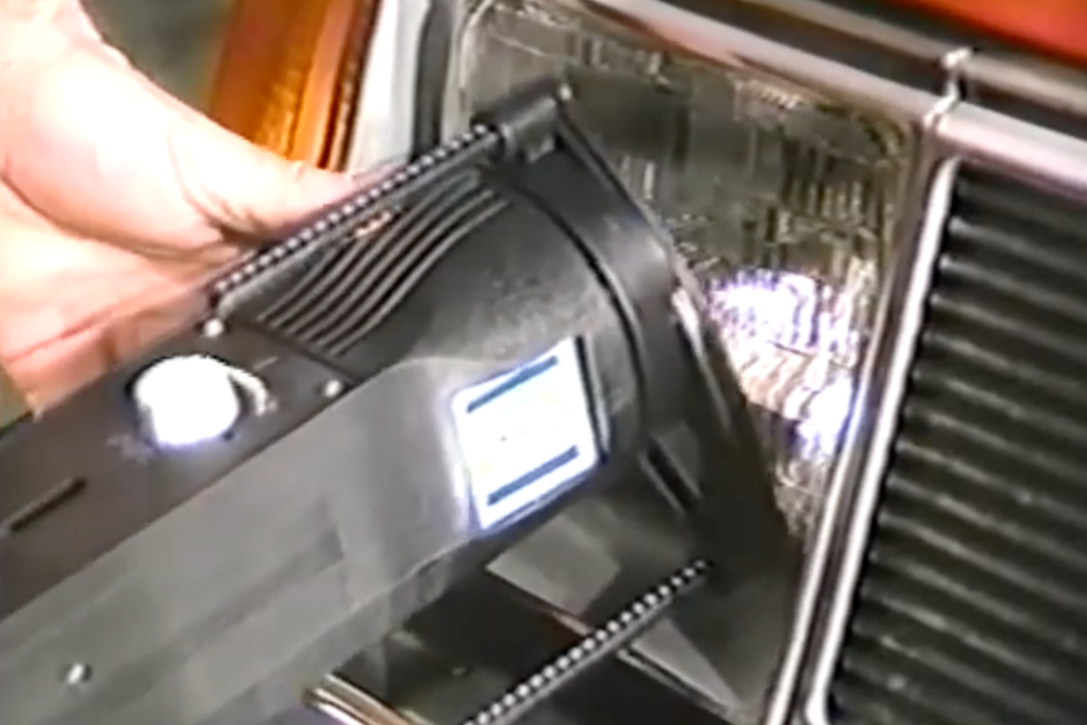
- Then a suction cup is used to secure the assembly to the headlight. Adjustment rods are used to fine-tune the “attitude” of the tool.
BONUS FACT! Sealed beam lights have numbers cast into the lenses that are used to adjust the headlight aimer rods for a proper position on the face of a lamp.
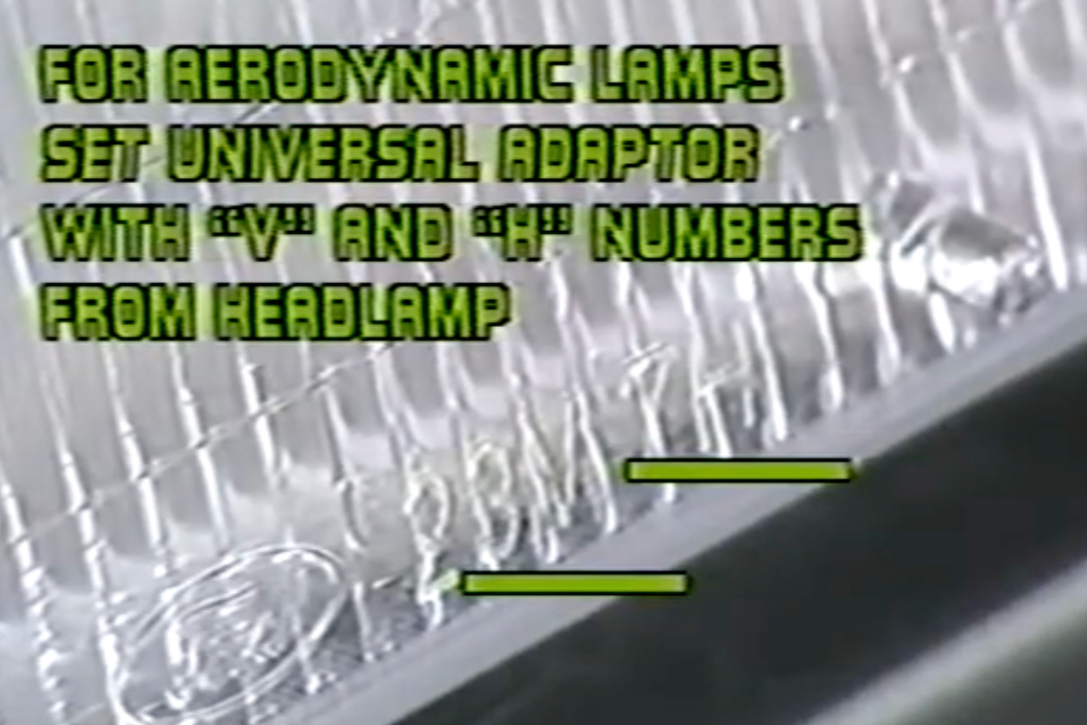
As you can see from this screenshot, early composite lamps had nubs, too, like this Escort GT.
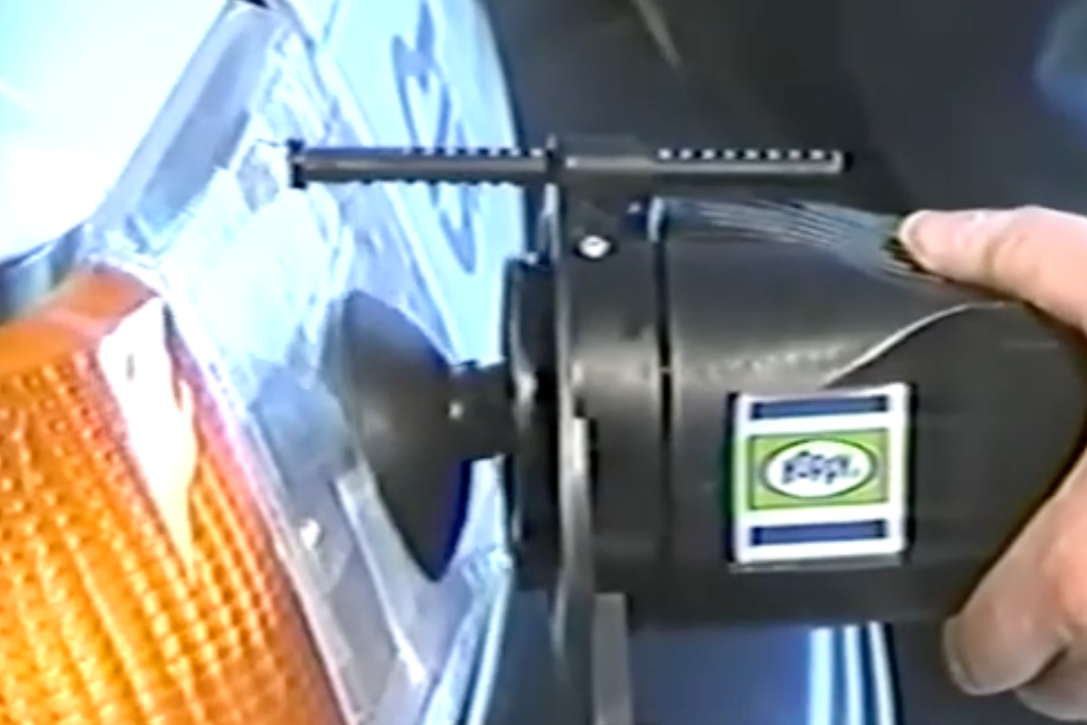
Once the tool is in place, it’s a matter of getting the left-right set before you adjust the up-down. So you adjust the horizontal position to bring the split image into alignment, and then use the vertical adjustment to center the bubble level.

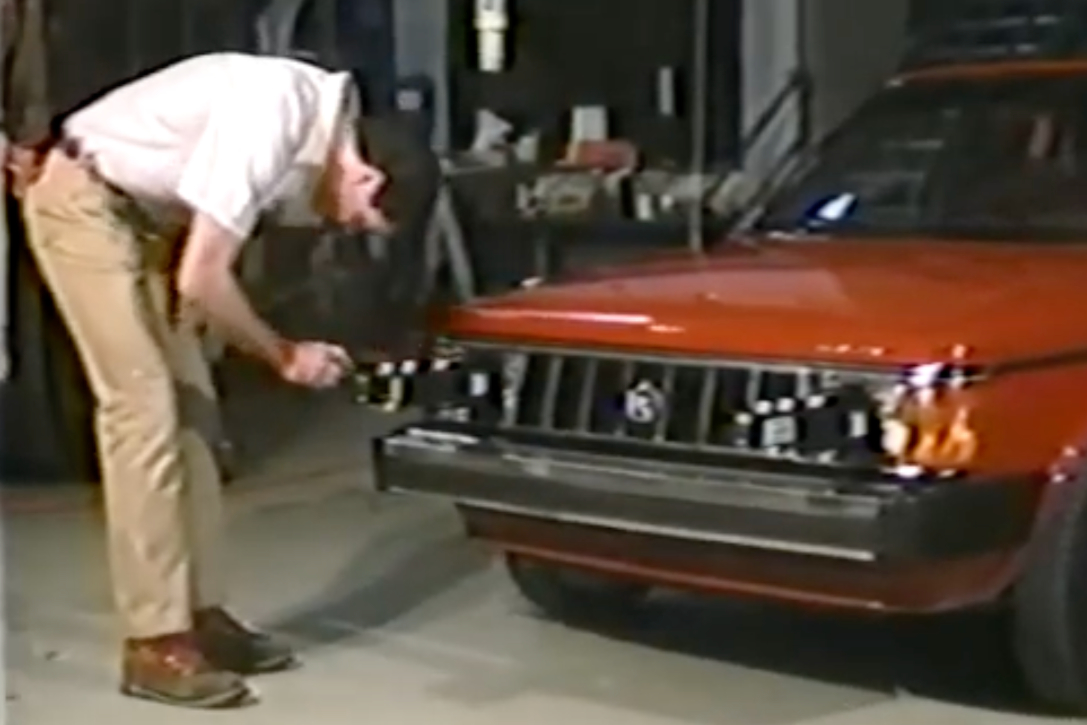
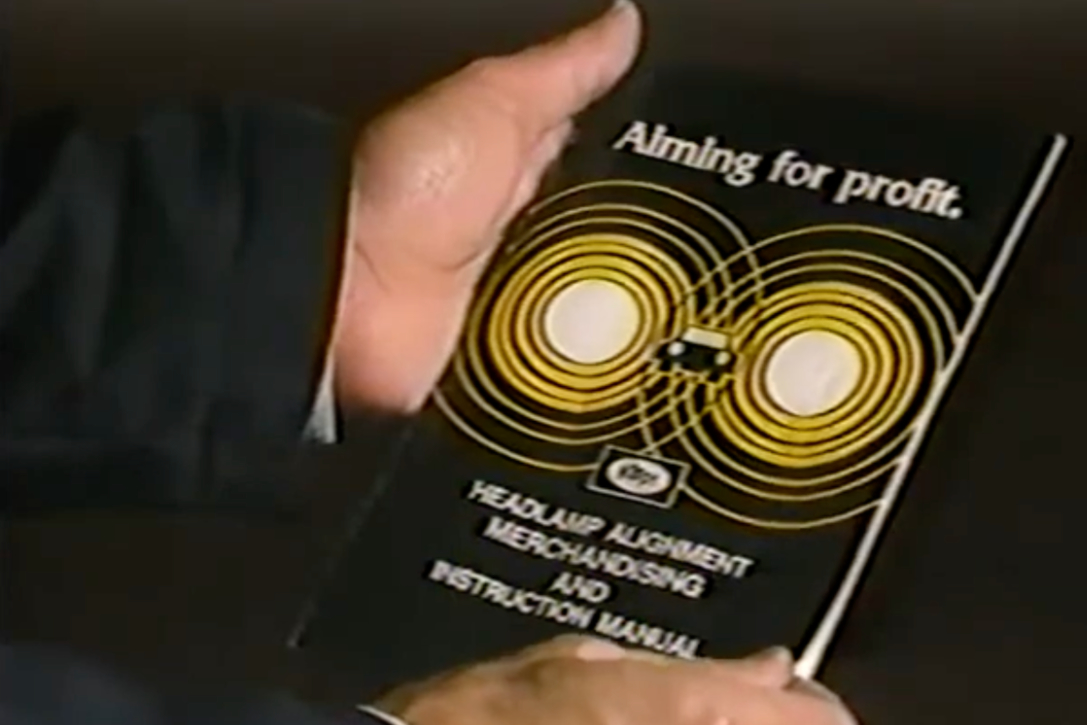
This may be an obsolete process, but it could be a source of automotive zen. And you could get pretty fast at it, and Hopkins encouraged shops to use it as a profit-driving lure. Bring ’em in for the headlight aim, sell a set of new leaf springs or shocks when the car’s too saggy.
Lackluster build precision or accident damage may have caused problems, too. AACA forum member Wayne Sheldon said his dad hated these things.
“The problem with the design was, that they had an alignment sight between the right and the left which ASSUMED (you KNOW how that word is spelled!) that both headlamps were perfectly placed at the factory and that NOTHING had ever happened to the car to alter their placement.”
Maybe that’s a bit of karmic revenge for telling your kids weird stories for your own sadistic amusement. You know, pops, we probably would have gotten out of your hair if we’d had one of these rigs – you’d find us going around the neighborhood on our BMX bike, adjusting every headlight in sight, instead.


I am sure there are going to be some templates up on 3D printing sites for adapters to lock onto the nubs and help with alignment. If I am wrong, I hope there are soon.
(Immediately goes to eBay to try to buy a used set of headlight aiming tools for… reasons)
Bothering to properly aim headlights in 2026. LOL
I remember adjusting a few headlights some nights with raucous pals. Well, adjusting might be more of a euphemism.
I recall dad adjusting lamps in my childhood aimed at the garage door on a dark night
I remember going with my dad in his stage rally Opel Manta to my elementary school and adjusting 4 giant Cibie lights on the playground. No garage, guess the house wasn’t good enough? (Then again we had to go test them in Mt Airy forest nearby and they turned night into day.)
Sometimes we forget just how much more regular a maintenance older ’70s and ’80s cars really needed to run well every day. Spark plugs, cap, rotor and maybe wires every 30k. 3k oil changes, regular coolant flushes. Re-packing and setting wheel bearings each brake rotor replacement. Exhaust systems that rotted out every 2 years. Recalcitrant carbs and 2 miles of vacuum lines. Plugged EGR and PCV…
From the 90’s on I would argue the expectation was you get in and it starts every damn time. Thank reliable EFI and OBDII.
Somebody give that Jeep a jacket, it looks cold.